INTRODUCTION
Given the increasingly important role of immigrants in the United States, their political integration is a critical concern. Despite comprising 13% of the United States population (“American Community Survey” 2011), many immigrants remain politically unincorporated. Latinos and Asian-Americans account for the largest share of immigrants, and only about 44% of both groups identify with either of the two major political parties (Hajnal and Lee Reference Hajnal and Lee2011, 88). In contrast, about 62% of African-Americans and 61% of non-Latino whites identify with a party. Moreover, among nonpartisans, Latinos and Asian-Americans are more than three times as likely as African-Americans and 12 times as likely as whites to be strict nonpartisans as opposed to partisan leaners or pure independents (Hajnal and Lee Reference Hajnal and Lee2011, 264).
Though many scholars have overlooked the impact of nonpartisanship among racial and ethnic minorities (Keith et al. Reference Keith, Magleby, Nelson, Orr and Westlye1992), nonpartisanship has important consequences. Without partisanship, individuals lack access to many of the material and informational resources that parties provide to members. Partisanship can also serve as a heuristic in political decision-making, which reduces information costs. Already severely impeded from political engagement, nonpartisanship only further constrains the electoral participation of Latinos and Asian-Americans: 47% of Latino nonpartisans and 59% of Asian-American nonpartisans fail to vote in presidential elections (Hajnal and Lee Reference Hajnal and Lee2011, 261).
This study seeks to explain the formation of partisan attachments among Latino immigrants, the largest population of immigrants in the United States. Partisanship can be conceptualized as a socialized attachment that makes up a part of one's political identity (Campbell et al. Reference Campbell, Converse, Miller and Stokes1960). Therefore, Latino immigrants likely lack partisan attachments due to not experiencing the pre-adult and early adult socialization that drives partisanship for many native-born Americans.
However, Latino immigrants can and do form new identities and attachments in the United States as part of their daily lives outside the political sphere. In 2013, 16% of Latino immigrants said they had converted since coming to the United States (“The Shifting Religious Identity of Latinos in the United States” 2014, 12). The percent of foreign-born Latino Catholics decreased by 15% between 2010 and 2014, while the percent of foreign-born Latino evangelicals increased by 6% (“The Shifting Religious Identity of Latinos in the United States” 2014, 9). This rate of change significantly outpaces that of native-born Latinos, which emphasizes the need to better understand how religious change affects Latino immigrants. I contend that religious conversion serves as an adaptation of an immigrant's identity and can facilitate the subsequent development of a partisan identity via the formation of psychological attachments and the establishment of new social ties.
In the proceeding study, I begin by reviewing existing explanations for Latino immigrant partisanship. I devote special attention to prior research pointing to religious explanations. I then build on these preexisting theories by introducing a theory of adaptive identity formation that provides a new link between immigrants' religious and political lives. I then test this theory using data from the 2006 Pew Hispanic Religion Survey. I conclude by discussing the broader implications for the political incorporation of Latino immigrants in the United States.
LATINO IMMIGRANT PARTISANSHIP
Because large segments of the Latino population are foreign-born, they face distinct impediments to partisan identification. Latino immigrants to the United States must familiarize themselves with an almost entirely new political system, including actors, organizations, issues, and parties that differ from those with which they may have been familiar in their countries of origin. As a result, foreign-born Latinos are about one and a half times more likely to be nonpartisan than native-born Latinos (“The Shifting Religious Identity of Latinos in the United States” 2014, 24).
Partisanship is frequently construed as either an affective attachment or a rational calculation of party performance. To those viewing partisanship as an attachment, citizens form partisan identities either through a process of socialization (Campbell et al. Reference Campbell, Converse, Miller and Stokes1960; Green, Palmquist, and Schickler Reference Green, Palmquist and Schickler2002) or via pressures from social networks to conform (Berelson, Lazarsfeld, and McPhee Reference Berelson, Lazarsfeld and McPhee1954). According to the camp who see partisanship as a rational calculation, citizens react to short-term changes in party performance and choose to identify with the party that better represents their interests (Downs Reference Downs1957; Fiorina Reference Fiorina1981). Given their lack of political socialization and partisan social ties and the extent to which their needs and interests are poorly served or ignored by the two major political parties (Hajnal and Lee Reference Hajnal and Lee2011), immigrants could reasonably be expected to lack partisanship as it is conceptualized by any of these three theories.
Many Latino immigrants view American politics through the lens of their own political socialization in their country of origin (Wals Reference Wals2011). For instance, immigrants from Mexico must translate their home-country political identities into the context of the American two-party system (Leal and McCann Reference Leal and McCann2010). This process of political incorporation involves not only the transition from a multi-party system to a two-party system; the packaging of political issue preferences in the United States differs from the ideological “packages” offered in many immigrants' home countries (Lipset and Rokkan Reference Lipset, Rokkan, Lipset and Rokkan1967). Furthermore, the salience of particular issues varies substantially from one country to another (Givens and Luedtke Reference Givens and Luedtke2005).
Political parties also fail to reach out to Latino immigrants directly (Wong Reference Wong2006). While political parties do engage in some recruitment efforts, these are greatly diminished compared to the 19th century. Schier (Reference Schier2002) points out that “nineteenth-century immigrants arrived to find important political groups eager to satisfy their material needs. Political parties, especially the many urban political machines, needed immigrants' votes and did their best to get them — accelerating the newcomers' political assimilation in the process. Today, the American political system … does little to bring them into the world of campaigns and elections.”
However, the political behavior of both native-born and foreign-born Latinos is influenced by a range of additional factors, and partisanship is more likely among certain subgroups of the Latino population than others (Fraga et al. Reference Fraga, García, Hero, Jones-Correa, Martinez-Ebers and Segura2012). Portes, Escobar, and Arana (Reference Portes, Cristina and Renelinda2009) show that older, educated, higher-status Latino immigrants with longer periods of United States residence are more likely to acquire citizenship and participate in American politics. Newer and younger Latinos, in contrast, tend to lean toward political independence (Alvarez and Bedolla Reference Alvarez and Bedolla2003). National origin also plays a role in driving partisanship in a particular direction: Cubans tend to vote more Republican while Mexican-Americans and Puerto Ricans tend to be more supportive of Democrats (Uhlaner and Garcia Reference Uhlaner, Garcia, Segura and Bowler2005). Similarly, Latinos are more likely to support the Republican Party if they are conservative on issues of abortion, affirmative action, school vouchers, and government-funded health insurance, and they are more likely to support the Democratic Party if they are liberal on these issues (Alvarez and Bedolla Reference Alvarez and Bedolla2003). Religious differences have also been explored as determinants of Latino political incorporation and partisanship, which I discuss in the next section.
RELIGION AND THE POLITICAL INTEGRATION OF LATINO IMMIGRANTS
Religious factors have been shown to structure Americans' political attitudes and behaviors on an array of issues (Layman Reference Layman2001; Leege and Kellstedt Reference Leege and Kellstedt1993; Putnam and Campbell Reference Putnam and Campbell2010), and religious congregations facilitate political learning and mobilization (Djupe and Gilbert Reference Djupe and Gilbert2006; Wald, Owen, and Hill Jr. Reference Wald, Owen and Hill1988). Furthermore, churches can and frequently do serve to politically mobilize disadvantaged groups through the transmission of civic skills, and church membership and attendance increase the likelihood that members of minority groups will register to vote and turnout in elections (Calhoun-Brown Reference Calhoun-Brown1996; Harris Reference Harris1999; Jones-Correa and Leal Reference Jones-Correa and Leal2001; Verba, Schlozman, and Brady Reference Verba, Lehman Schlozman and Brady1995).
In the same vein, religion can play an important role in the adaptation of Latino immigrants in the United States (Cadge and Ecklund, Reference Cadge and Howard Ecklund2007; Hirschman Reference Hirschman2004). To begin, many churches actually assist in the migration process (Chafetz and Ebaugh Reference Chafetz, Ebaugh, Ebaugh and Saltzman2002). Once here, churches can provide both practical resources such as language training and a sense of community through social connections (Cadge and Ecklund, Reference Cadge and Howard Ecklund2007; Hirschman Reference Hirschman2004). Partially as a result, Latino immigrants are more likely to say they belong to a religion and to attend religious services regularly than most Americans (“National Survey of Latinos” 2011).
Several scholars have also argued that religious engagement influences both native-born and foreign-born Latinos' political engagement (Diaz-Stevens and Stevens-Arroyo Reference Diaz-Stevens and Stevens-Arroyo1998; Foner and Alba Reference Foner and Alba2008; Kelly and Morgan Reference Kelly and Morgan2008; Leal Reference Leal, Wolfe and Katznelson2010). Kelly and Kelly (Reference Kelly and Morgan Kelly2005) show that religious diversity within the Latino community accounts for a substantial amount of political variation. They found that identification as an evangelical or mainline Protestant increased identification with the Republican Party. On the other hand, religiously unaffiliated and Catholic Latinos were more likely to identify as Democrats. Pantoja (Reference Pantoja2010) also finds that both identification as an evangelical and frequent church attendance is associated with a greater probability of identifying as a Republican.
Some scholars have also examined the impact of dynamics within the church on the political participation of Latinos. The evangelical church is often held up in contrast with Catholicism by those who argue the hierarchical structure of the Catholic Church fails to impart the same kinds of civic skills that Protestant churches pass on to their parishioners (Verba, Schlozman, and Brady Reference Verba, Lehman Schlozman and Brady1995). This has been cited as one important reason for political inaction among Latinos, who are predominately Catholic. However, Verba, Schlozman, and Brady's criticism has been refuted by later authors who do not find differing levels of participation by religious tradition (Jones-Correa and Leal Reference Jones-Correa and Leal2001). Djupe and Grant (Reference Djupe and Grant2001) show no differences between the traditions when controlling for skill building, activities, and recruitment to politics. Nevertheless, Djupe and Neiheisel (Reference Djupe and Neiheisel2012) show that Latino Catholics are less active within the church, and that the lack of civic skill development hinders non-electoral forms of participation more than electoral political activities.
These differences highlight the importance of understanding the role of intra-Latino religious differences in their political integration. However, further study is necessary to understand religion's role in the political lives of Latinos. In particular, it is necessary to look not just at differences between religious affiliations, but the effect of changing these affiliations. This is especially important for immigrants, who must adapt to new religious and political challenges upon entering the United States. In the next section, I explain the link between identities in these two spheres.
RELIGIOUS CONVERSION AND ADAPTIVE IDENTITY FORMATION
Both partisanship and religious affiliation function as group identities, in which identification with a group represents a sense of belonging or psychological attachment (Conover Reference Conover1988; García Bedolla Reference García Bedolla2005; McClain et al. Reference McClain, Carew, Walton and Watts2009; Miller et al. Reference Miller, Patricia, Gurin, Gerald, Gurin and Malanchuk1981). To illustrate the strength of partisanship as a core social identity, Green, Palmquist, and Schickler drew comparisons with religious affiliation, pointing out that “one generation may be more enamored of the Republican Party or the Lutheran church than the last, but the pace at which adults change their group attachments tends to be slow” (Green, Palmquist, and Schickler Reference Green, Palmquist and Schickler2002, 2). One's attachment to a party and a church are both forms of attachments that go deeper than mere membership, involving one's core identity.
However, Green, Palmquist, and Schickler overstate the stability of religious affiliation. Putnam and Campbell (Reference Putnam and Campbell2010, 159) actually show that between one-third and 40% of all Americans are converts to a religion different than the one in which they were raised, suggesting religious identities are relatively malleable. Religious conversion can include a wide range of alterations in one's identity and religious attachments. It includes both small shifts such as conversion from one Christian denomination to another and larger swings such as a conversion from a Christian religion to a non-Christian religion. It might also include disaffiliating from religion altogether. While the level of difficulty and adjustment may vary widely, each mode of conversion requires one to disaffiliate from both the label and social network with which one was previously affiliated and reconstruct new attachments.
Reasons for religious conversion vary, but the nature of the American religious marketplace appears to facilitate “religious shopping.” Finke and Stark (Reference Finke and Stark2005) describe a pluralistic religious marketplace consisting of niche sects that cover the full range of potential religious preferences. Beyond religious beliefs, a number of other factors influence the likelihood of conversion, including marriage (Sherkat Reference Sherkat2004), indirect conversion across generations (Nelsen Reference Nelsen1990), nationality (Barro, Hwang, and McCleary Reference Barro, Hwang and McCleary2010), age, gender, and race (Greeley and Hout Reference Greeley and Hout1988; Loveland Reference Loveland2003; Sherkat and Wilson Reference Sherkat and Wilson1995; Sherkat Reference Sherkat2001).
The United States offers immigrants new opportunities for religious conversion. The American religious landscape is incredibly diverse compared to many of the largest immigrant-sending countries. While Catholics comprise 85% of the population of Mexico, only 24% of Americans identify as Catholics (“Global Christianity” 2011). To succeed in this competitive religious economy, many of these religious institutions recruit heavily among immigrant communities (Wong Reference Wong2006). Although many immigrants retain their pre-migration religious identities, Latino immigrants increasingly adapt their religious identities to the challenges and opportunities presented in this new environment. The number of Latino immigrants who say they have converted doubled from 15% to 30% between 2006 and 2013 (“Changing Faiths: Latinos and the Transformation of American Religion” 2007, 41; “The Shifting Religious Identity of Latinos in the United States” 2014, 12). These data highlight the importance of understanding how religious conversion shapes the political engagement of Latino immigrants.
The process of forming new religious group attachments in the United States can facilitate the formation of partisan group attachments. Djupe (Reference Djupe2000) offers evidence that religious and partisan loyalties are linked, with religious brand loyalty promoting loyalty to political parties. This conception of religious loyalty entails both a psychological attachment to the religious brand and a set of dense social ties with other congregants. While Djupe found that religious disloyalty, measured as conversion, was associated with lower political loyalty, measured as nonpartisanship, there is good reason to expect religious conversion to function differently for immigrant populations. Immigrants' conversion to a new faith in the United States may be less representative of generalized disloyalty and more reflective of realigning loyalties in response to a radically altered social context. They may be no less inclined toward brand loyalism, but rather trading in one set of brands for another.Footnote 1 In this vein, Yang (Reference Yang1999) shows evidence that Christian churches influence the identity formation and assimilation of Chinese immigrants.
There is good reason to believe religious conversion precedes the acquisition of partisanship among many Latino immigrants. Churches are more numerous, meet more frequently, and address more routine needs than parties. There are far more opportunities to end up in a pew than a voting booth. Churches also regularly engage in recruitment efforts, subsidizing the conversion process with information and social connections. Many churches also make services available in Spanish. Wong (Reference Wong2006, 112–116) argues that religious institutions actually serve immigrants overlooked by political parties as alternative venues for political mobilization. This suggests churches may be more accessible to immigrants than political parties, making it more likely that Latino immigrants will encounter an opportunity to convert than to join a party in the course of their daily lives.
While Latino immigrants who retain their religious affiliations after immigrating enter churches largely on the basis of pre-migration beliefs and ties, post-migration converts are engaged in a process of adapting to their new religious environment. For Latino immigrants, any form of conversion also requires a break with an attachment formed in their country of origin. As an adaptation to the unique features of the American religious marketplace, this identity realignment represents a shift in identity shaped by their new environment and requires immigrant converts to declare loyalty to an American church and adapt to new practices and traditions.
I contend that this process of post-migration conversion facilitates the acquisition of partisanship via both psychological and social mechanisms. First, converts sever a deeply held psychological attachment formed in their country of origin while simultaneously establishing a uniquely American religious identity, initiating a process of shifting psychological loyalties. The new attachment to an American religious institution may also comprise a secondary connection to the broader environment in which the attachment was formed, which makes it easier to form attachments to other institutions in the environment such as political parties. Green, Palmquist, and Schickler themselves acknowledge that “identification with political parties is a minor part of the typical American's self-conception. Race, sex, ethnicity, religion, region, and social class come immediately to mind as core social identities [emphasis added]” (Green, Palmquist, and Schickler Reference Green, Palmquist and Schickler2002, 2). The adaptation of a core social identity such as religion provides converts with the psychological resources and connections that facilitate the formation of other — potentially less essential — identities such as partisanship.
Second, social ties gained through one's new religious identity embed one within a new social network with more opportunities for recruitment into political parties. The act of joining a new organization is in and of itself a powerful tool for shaping and bridging political ties. Putnam (Reference Putnam1995; Reference Portes, Cristina and Renelinda2000) demonstrated this in his study of the decline of civic organizations and his emphasis on their ability to foster the personal and civic ties in American social life. Many of these ideas about bridging through social group membership were extended further by Putnam and Campbell (Reference Putnam and Campbell2010) into the realm of American religion. These dynamics serve to ease the transition into the American system of partisanship.
DATA AND RESEARCH DESIGN
In order to measure the effect of religious conversion on Latino immigrant partisanship, I utilize data from the 2006 Pew Hispanic Religion Survey, a survey conducted by the Pew Hispanic Project and the Pew Forum on Religion and Public Life. The survey included a nationally representative sample of 4,016 Latino adults and was conducted via bilingual telephone interviews from August 10 to October 4 in 2006. Most importantly for my purposes, the survey included an oversample of 2,000 non-Catholics, which permits me to conduct a more detailed examination of evangelical converts. Below, I describe the independent, dependent, and control variables I include and explain the method used to test my hypothesis.
Religious Conversion
Because I only expect religious conversion to serve as an adaptation for those who were not born in the United States, I restrict my analysis to this immigrant subsample.Footnote 2 In total, the weighted percentage of respondents who were foreign-born was approximately 62%. Of the immigrant subsample, approximately 74% remained Catholic after entering the United States, 9% were already evangelicals before entering the United States, and 5% converted to Evangelicalism after immigrating. An additional 7% of immigrants identified as nonreligious, but they were not asked whether they disaffiliated before or after entering the United States.Footnote 3 The number of respondents in all other categories is insufficient to draw generalizable inferences.Footnote 4 Although I am only able to measure the impact of conversion to evangelicalism in this study, it is not evangelical conversion per se that generates partisan ties. Evangelicalism has also grown substantially in Latin America, and I would not expect lifelong evangelicals or those who converted in their country of origin to be more likely to develop an attachment to an American political party. The role of the evangelical church abroad is not so clear-cut and tied to American politics; for instance, Evangelicalism is not as associated with conservatism in Latin America (McAdams and Lance Reference McAdams and Lance2013). Thus, an evangelical identity formed abroad should not represent the same shift in loyalties as one formed in the United States. Nor is the relationship I hypothesize here necessarily unique to Evangelicalism. Indeed, the evidence indicates that Evangelicalism is less associated with partisan affiliation among Latinos than it is among whites (McDaniel and Ellison Reference McDaniel and Ellison2008).
Using data on the length of time respondents have lived in the United States, their current age, and the age at which they converted to their current religion, I was able to calculate the proximity of their religious conversion to their immigration. Because I am interested in the impact of conversion into a new religion in the United States on the political incorporation of Latino immigrants, I then used this data to generate a dummy variable for post-immigration religious conversion. I link this variable with measures of affiliation. Respondents who reported being Protestant or another type of Christian and described themselves as “born-again” or evangelical Christians were coded as evangelical. Thus, my model compares those who switched their religious affiliation to Evangelicalism after entering the United States against Latino immigrants who remained Catholic or who were evangelicals prior to immigrating.
Partisan Identification
To measure partisan identification, I use two questions: one asks respondents to identify themselves as Republicans, Democrats, independents, or other, and the other asks independents and others whether they lean toward the Democratic or Republican parties. I combine these two measures into a categorical variable with three groups: true independents that identified with neither of the two major parties, Republicans and those who leaned Republican, and Democrats and those who leaned Democratic. While there is some debate as to whether or not leaners should be categorized as partisans (Keith et al. Reference Keith, Magleby, Nelson, Orr and Westlye1992), the weak nature of Latino partisanship makes partisan leaning more meaningful.Footnote 5
The Pew Hispanic Religion Survey does not ask respondents when they formed their partisan identities, so it is impossible to determine with certainty whether religious conversion precedes partisan affiliation. However, I can gain some leverage on the question by looking at conversion and partisanship among recent immigrants in the sample. The majority of the overall sample of converts converted within their first 10 years in the United States. Among immigrants in the sample who have been in the United States less than 10 years and converted during that period, most are still nonpartisan. While the small number of respondents in this category prohibits statistical analyses, these results suggest that partisanship does not precede conversion for many Latino immigrants. Their explanations for converting further reinforce this. When asked why they joined the evangelical church, approximately 87% said it was because they wanted “a more direct personal experience of God.” This suggests that religious, rather than political, reasons led them to convert.
Covariates
I also include a variety of covariates in my model to control for any potential confounding variables. These are roughly grouped into four categories: religious, political, socioeconomic, and demographic. Because I am interested specifically in the impact of conversion itself, I use a dummy for Latino immigrants who were evangelicals prior to entering the United States. The number of post-migration Catholic converts in the sample was insufficient for analysis, so they are excluded from this analysis. Furthermore, I include a measure of church attendance, because bivariate analysis did suggest some small differences between converts and non-converts. This is a six-point scale ranging from those who never attend religious services to those who attend more than once per week.
Among the various political covariates in my model, I include a measure of ideology. “Very conservative” and “conservative” are collapsed into one category, conservative, which I treat as a dummy variable. I also include a dummy variable for liberals. I include the ideological controls, because they are a form of political identification that might actually translate across national boundaries and thus influence the formation of a partisan attachment in the United States. To measure political engagement with the cause of immigration reform, I also included a dummy variable for whether or not respondents participated in the 2006 immigration protests. Furthermore, I have included measures of whether the respondent believes the Democratic or Republican Party will perform better on a variety of issues, including immigration, civil rights, education, the Iraq War, morality, and the environment. Positive coefficients indicate that respondents feel the Republican Party is likely to do a better job handling the issue. This speaks to research arguing voters affiliate with parties based on prospective evaluations of their performance (Achen Reference Achen1992; Gerber and Green Reference Gerber and Green1998).
Furthermore, I include measures of income, education, and marriage to capture a variety of socio-economic factors that may affect both one's likelihood of converting after migrating to the United States and one's likelihood of affiliating with a particular political party. Income is measured with a six-point scale with roughly regular increments. Education is measured via a dummy for whether or not the respondent has received a college degree. Marriage, measured as whether or not the respondent is currently married, is included due to spouses' strong incentives to convert in interreligious marriages (Barro, Hwang, and McCleary Reference Barro, Hwang and McCleary2010).
Finally, I also include a range of other demographic variables. These include age, gender, whether the respondent is a naturalized citizen, whether the respondent lives in a rural area, whether the respondent lives in the South, and whether the respondent emigrated from Cuba. Naturalization is a proxy for assimilation and political incorporation that may also affect partisanship. Living in a rural area and the South speaks to the immigrant's receiving community, which is likely correlated with both community religiosity and community partisanship. Similarly, emigrating from Cuba is associated with a greater likelihood of affiliating with the Republican Party.
As many scholars have argued Latinos cannot be situated upon the traditional uni-dimensional understanding of partisanship (Alvarez Reference Alvarez1990; Hajnal and Lee Reference Hajnal and Lee2011), I use a multinomial logistic regression model to estimate the effect of each independent measure on the relative probability that a voter would identify as an independent or Republican, or as a Republican or Democrat. The multinomial logistic regression estimates allow for tests of the effects of each specific outcome relative to other outcomes within the same model. This allows me to determine the likelihood of partisanship versus nonpartisanship, while also ensuring the effect is not unidirectional.
THE IMPACT OF RELIGIOUS CONVERSION ON PARTISAN IDENTIFICATION
To begin, Figure 1 displays the bivariate relationship between partisanship and religious conversion. Among Latino immigrants, there is a significant differenceFootnote 6 in partisanship between pre-migration Catholics and evangelicals, who retained their affiliations after entering the United States, and post-migration evangelical converts, who converted to Evangelicalism after immigrating. More converts identify with a party, and they are about evenly split between the Republican and Democratic parties. To emphasize the unique function of post-migration conversion, Figure 2 compares partisanship between lifelong evangelical immigrants, immigrants who converted to Evangelicalism prior to immigration, and post-migration evangelical converts. Again, post-migration converts are more partisan. This suggests that, beyond simple evangelical membership, conversion facilitates immigrant politicization.
Religious conversion and partisan identification. Source: 2006 Pew Hispanic Religion Survey.

Evangelical conversion, immigration, and partisan identification. Source: 2006 Pew Hispanic Religion Survey.

One alternative hypothesis might be that converts are converting into more Americanized churches. However, this does not appear to be the case. As shown in Figure 3, 79% of converts say the majority of their fellow parishioners are Latino, 69% say their church maintains close ties to a Latin American country, 89% say their church offers Spanish-language worship services, and 89% say their church has a Latino pastor or clergy member. A large majority of converts are in Latino congregations, and these figures do not differ systematically from those of Catholics and pre-migration evangelicals.
Differences in ethnic makeup of congregations. Source: 2006 Pew Hispanic Religion Survey.

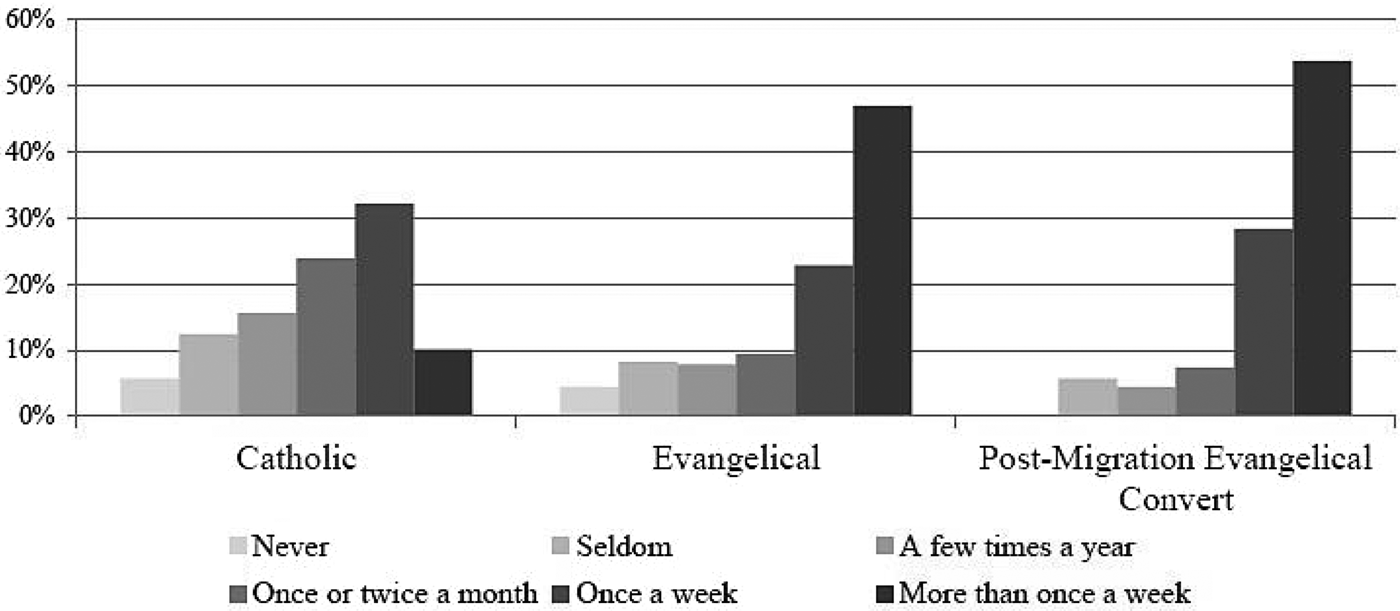
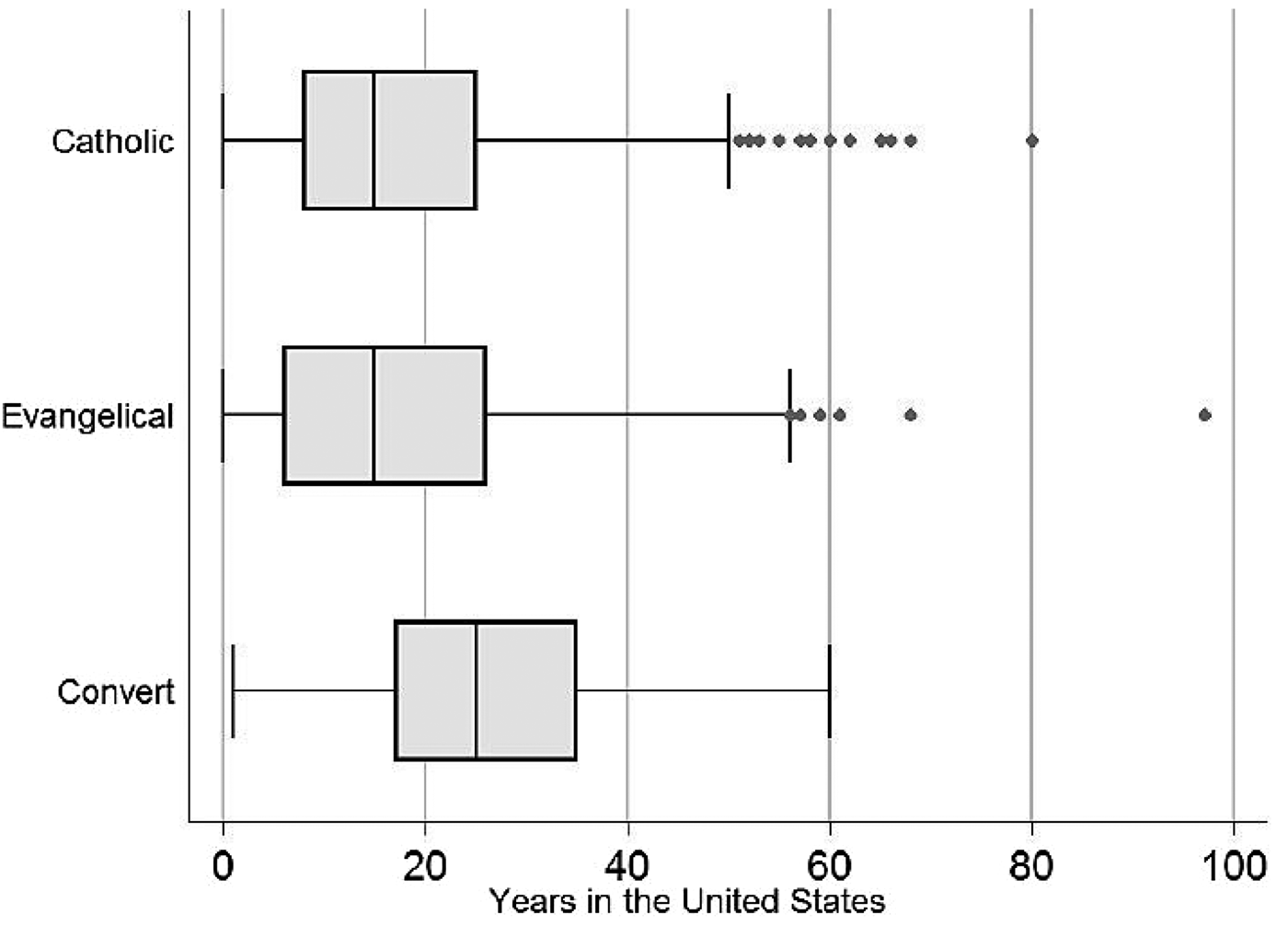
Other bivariate analyses do not appear to explain the observed relationship between conversion and partisanship. The effect of conversion does not appear to be driven by differences in religious participation; while there are differences in church attendance between converts and non-converts, post-migration evangelical converts are not drastically more participatory than Catholics, and they are almost identical to pre-migration evangelicals.Footnote 7 They have also not been in the United States substantially longer than immigrants who have not converted.Footnote 8
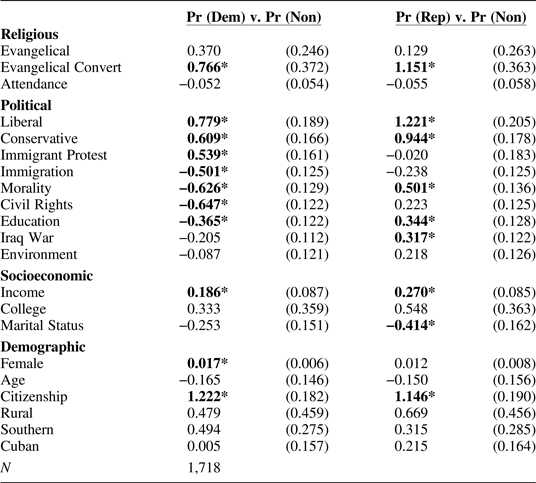
To examine the effect of religious conversion on partisanship while controlling for other variables, Table 1 displays the results of the multinomial logistic regression. The coefficients are somewhat difficult to interpret, because the multinomial logistic regression model produces nonlinear estimates. The impact of a particular variable depends on the values of the other variables in the model. However, the emboldened coefficients indicate the variables that have statistically significant effects. A coefficient in the left-hand column represents the estimated effect of a given variable on the probability of identifying with the Democratic Party instead of as an independent, while the right-hand column shows similar results for the Republican Party. In both columns, a positive coefficient indicates a greater probability of being affiliated with the party instead of being independent.
Religious conversion and partisan identification

Source: 2006 Pew Hispanic Religion Survey.
Note: Left-hand entries are multinomial logit coefficients. Right-hand entries in parentheses are standard errors.
*p < 0.05, two-tailed.
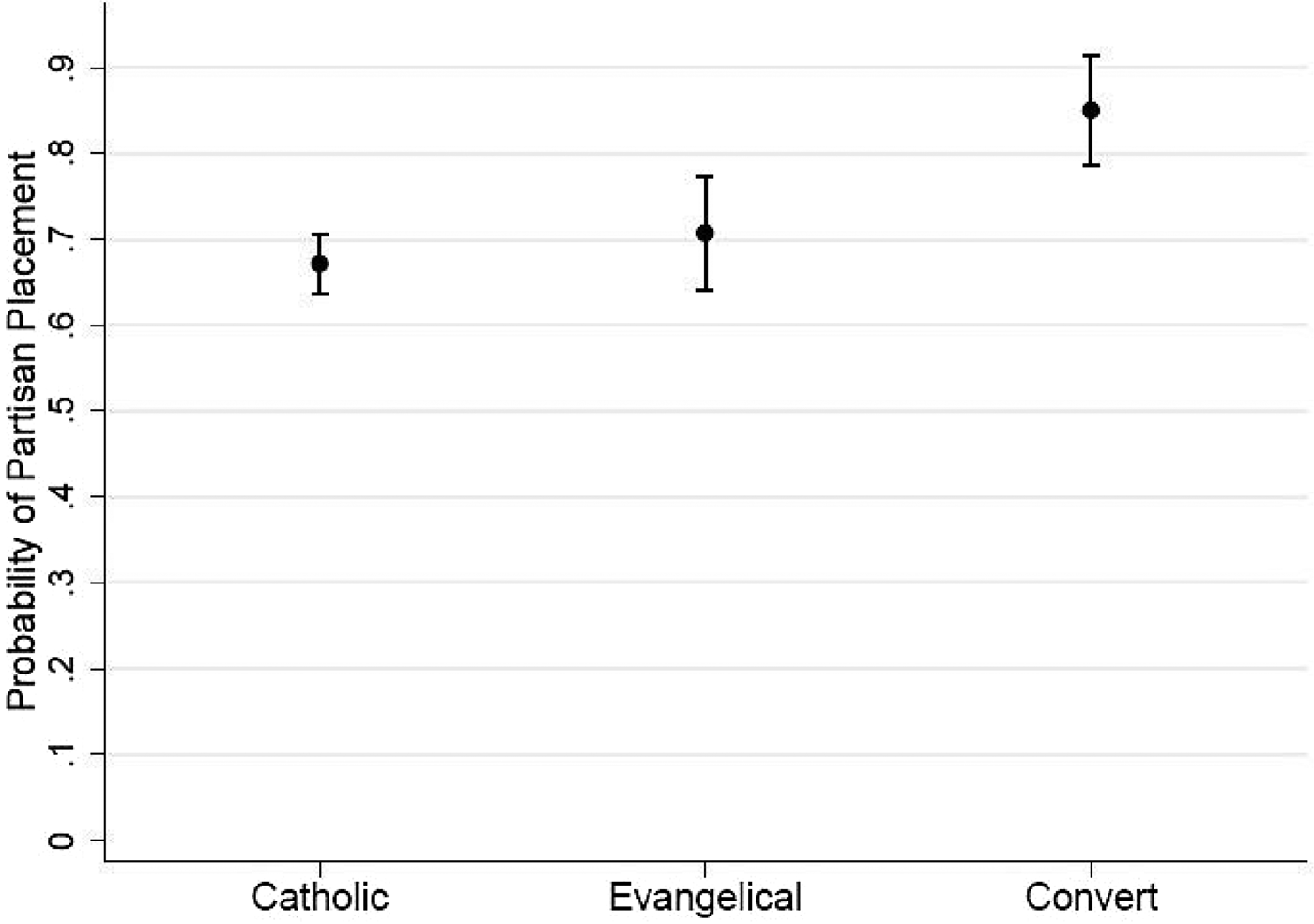
To begin, the test confirms my hypothesis about the relationship between religious conversion and partisanship. Controlling for the religious, political, socioeconomic, and demographic covariates detailed above and compared against pre-migration Catholics, post-migration evangelical converts are significantly more likely to identify as partisan than they are to identify as independents. Importantly, there is no statistically significant difference between pre-migration evangelicals and pre-migration Catholics. This indicates that the observed effect is not simply a product of evangelical affiliation, because pre-migration evangelicals are still members of the same types of American evangelical churches as converts. It is also important to note that, though the results are not shown, converts are no more likely to be Republicans than they are to be Democrats.Footnote 9 The effect is not driven by affiliation with a particular party. This suggests that, as hypothesized, adaptive conversion increases the general likelihood of partisanship in both directions.
Certain factors also motivate partisanship generally. For instance, immigrants who have attained citizenship are more likely to identify with either political party than they are to identify as independents. Citizenship allows one to vote, which both makes political recruitment more likely and provides greater incentives for political engagement. Similarly, income increases the general likelihood of partisan affiliation. Again, the more affluent are both more likely to be pursued by the two major parties and more likely to be invested in the outcome of the election.
Interestingly, just having an ideology, whether liberal or conservative, makes one more likely to be a partisan of either stripe. While somewhat counter-intuitive, it is important to note that even understanding oneself in ideological terms requires a relatively high level of political sophistication. Thus, those who place themselves on an ideological spectrum are unlikely to be apolitical.
Many of the measures of prospective party evaluations run in the expected direction. Latino immigrants are more likely to be Democratic than independent if they think the Democratic Party will do a better job on immigration, civil rights, education, and the Iraq War, but they are more likely to be Republican than independent if they think the Republican Party will do a better job on civil rights, the Iraq War, and morality.Footnote 10 Also of note is that participating in the 2006 immigration marches was associated with a greater likelihood of Democratic identification, but not with Republican identification.
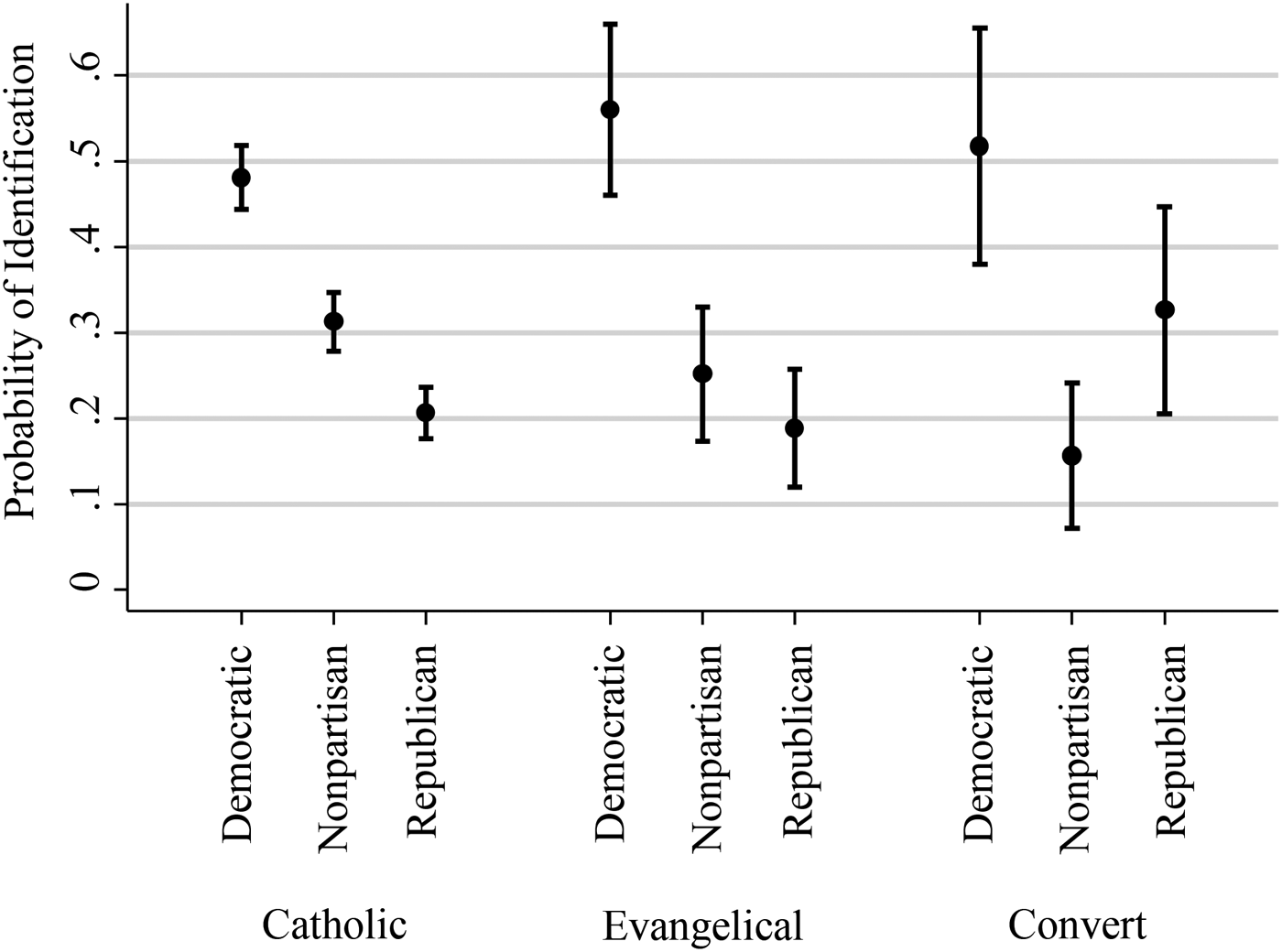
Figure 4 shows the results in a format that makes it easier to understand the substantive effects of conversion on partisanship. Each graph shows the probability of being a Democrat, a Republican, or an independent for Catholics, evangelicals, and evangelical converts, holding the values of all other variables constant at their means. While the effects of conversion are not drastic, they are substantively significant. Converts are significantly less likely to be nonpartisan (17%) than either Catholics or other evangelicals, who are as likely to be Democrats but significantly less likely to be Republican. This further supports my hypothesis that conversion facilitates partisan identification.
Religious conversion and probability of partisan identification. Source: 2006 Pew Hispanic Religion Survey.

DISCUSSION AND CONCLUSION
These findings have important implications for the future incorporation of immigrants in our political system. The number of immigrants residing in the United States has increased drastically over the past few decades. Immigrant politicization, among Latino immigrants in particular, must be better understood if we are to predict the long-term political implications of this demographic shift. Entering the United States without a full understanding of the issues, actors, and institutions that comprise American politics can make it difficult to orient oneself. Because ideological and partisan categories in the United States differ drastically from those of sending countries, most immigrants possess neither the socialization nor social networks that help native-born Americans develop partisanship. In many cases, there is also the additional hindrance of navigating a political system without full legal recognition as either undocumented immigrants or legal residents without citizenship. Given the additional financial, legal, and social burdens most immigrants must face, it is not surprising that they are less likely to develop partisan identities (Hajnal and Lee Reference Hajnal and Lee2011).
As the evidence above shows, however, the Latino immigrants can and do form partisan ties. Moreover, they may be aided in doing this through the adaptation of their religious identities. Those who convert after entering the United States are significantly more likely to develop an attachment to either party rather than remaining independent. The gap in partisanship between converts and non-converts persists despite controlling for potential confounding variables. In contrast to political parties, religious organizations are more accessible, more proximate to immigrants' daily lives, and actively attempt to recruit them. Those who respond to these religious opportunities by converting form psychological attachments and social ties that are particular to the United States. As a result, religious conversion can serve as an intervening adaptation that facilitates the acquisition of partisanship. Changes in one's identity in response to religious stimuli in one's new environment can make it easier to adapt in other ways in the same environment. Given the increasing rate of religious conversion among Latino immigrants, this relationship may have broader political implications for the role of Latinos in American politics. Thus, conversion represents a potential route to greater immigrant politicization.
This research raises a number of additional questions that warrant further investigation. First, it remains to be seen whether this effect persists across other immigrant groups and other religious categories. In particular, it is important to understand how this theory holds for Asian immigrants, another major portion of the American immigrant population, who differ more drastically in some instances from the Judeo-Christian religious traditions that dominate much of the American and Latin American religious landscapes. Chen (Reference Chen2008) shows evidence that Asian immigrants do adapt to American religious practices by both converting and incorporating Christian worship practices into their own native religious practices, but the effect of these adaptations on political identities remains underexplored.
Furthermore, the theory of adaptive identity formation developed herein has potential implications for other types of identity changes for foreign-born groups. While these data do not allow me to test the effects of other kinds of identity adaptations, the theory would suggest that changes in other strongly held identities should affect subsequent identity adaptations. For instance, membership in a labor union or feminist organization may have a similar impact on immigrants as religious conversion. Changes in perceived social class through advanced education, career changes, or wealth acquisition may produce similar changes. This line of research should be pursued further, as these results suggest that identity changes can inform one another. Understanding how changes in one identity affect changes in others may help us better understand the linkages that help tie identities together at the individual level.
APPENDIX
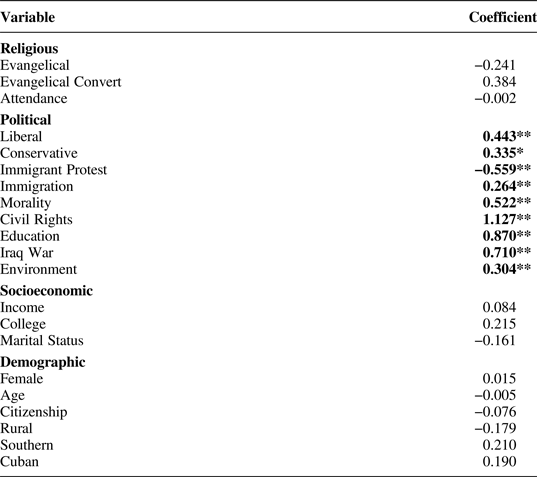
Pr(Republican) v. Pr(Democratic)

Conversion and church attendance. Source: 2006 Pew Hispanic Religion Survey.

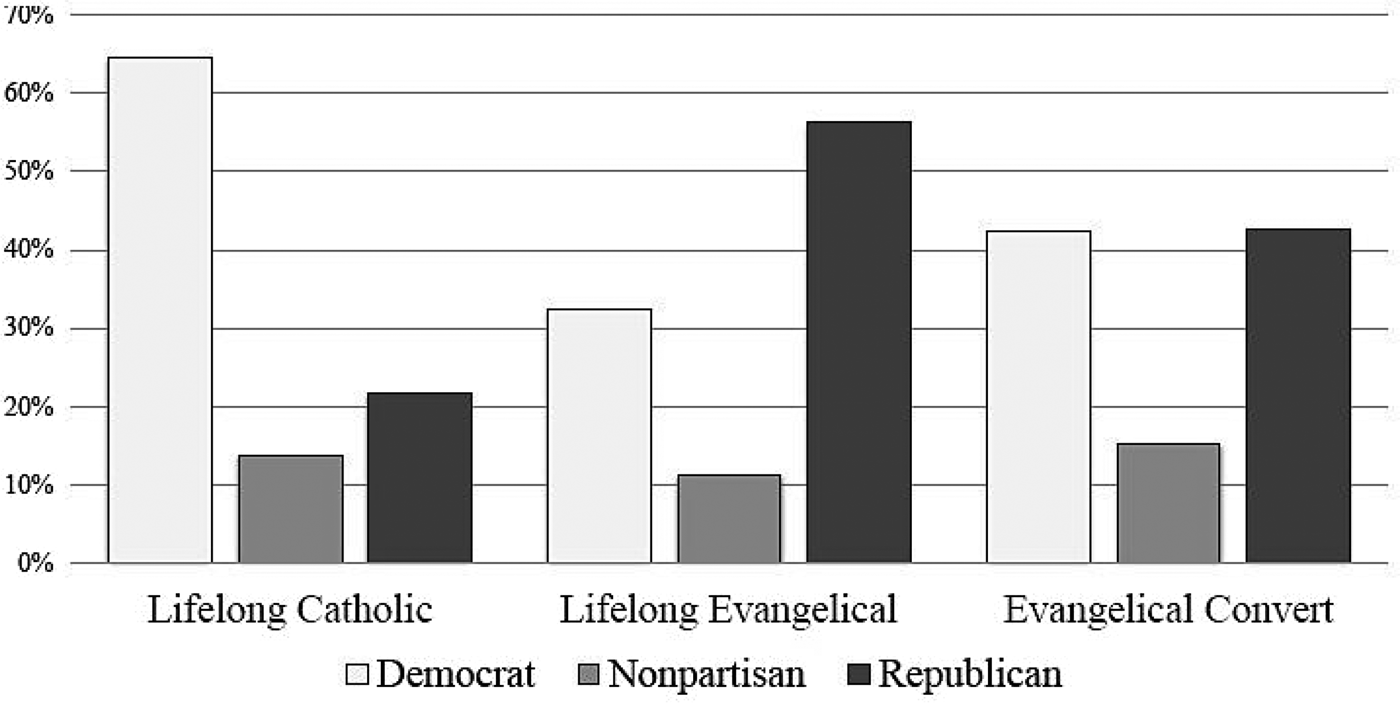
Native-born Latino conversion and partisan identification. Source: 2006 Pew Hispanic Religion Survey.

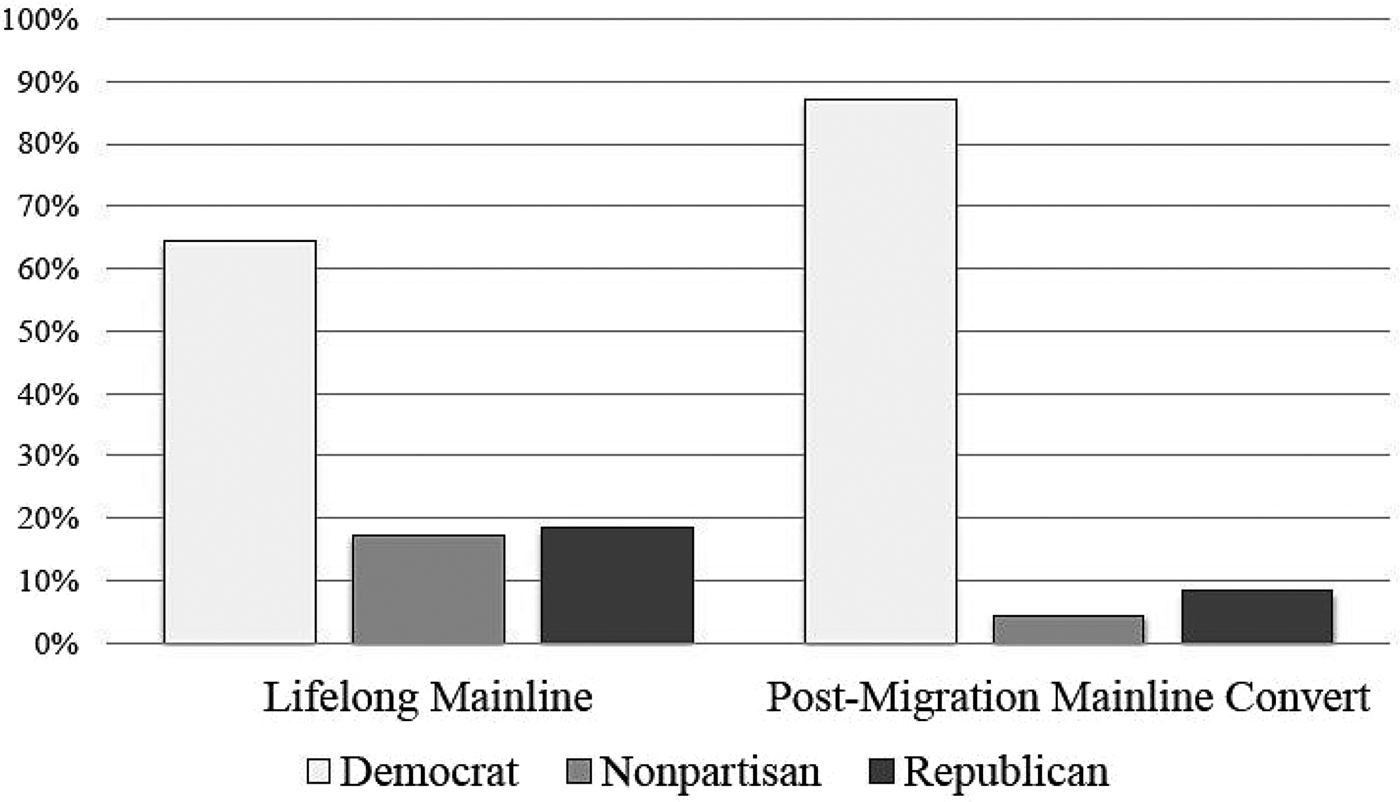
Foreign-born mainline Protestants and partisan identification. Source: 2006 Pew Hispanic Religion Survey.

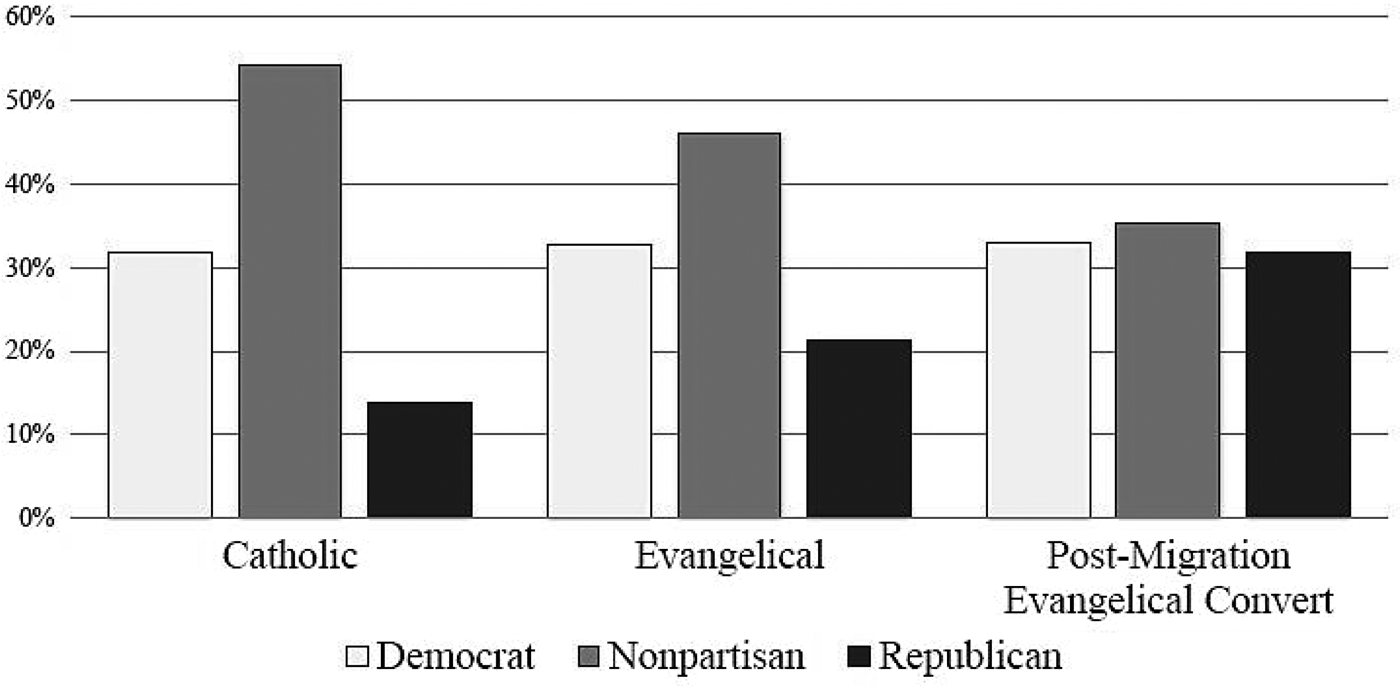
Conversion and partisan identification (first response). Source: 2006 Pew Hispanic Religion Survey

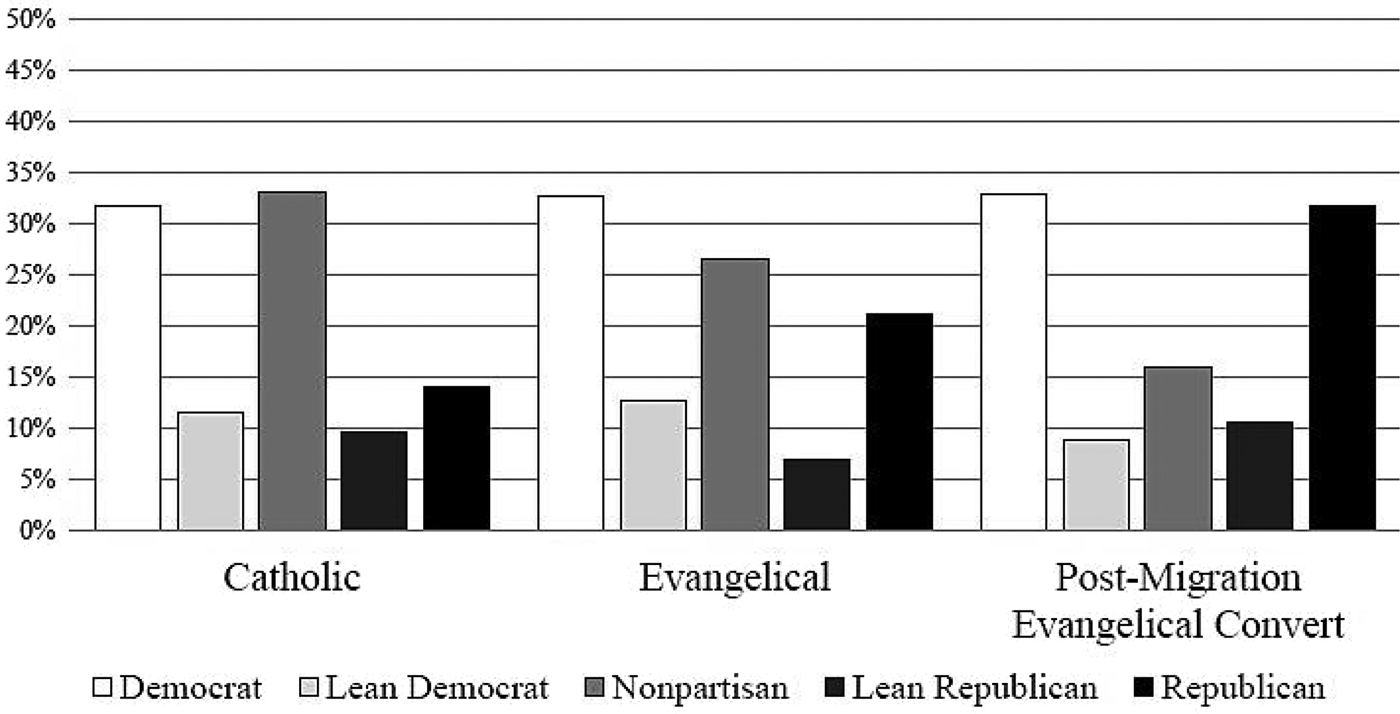
Conversion and partisan identification (w/ leaners). Source: 2006 Pew Hispanic Religion Survey.

Probability of nonpartisanship. Source: 2006 Pew Hispanic Religion Survey.

Conversion and years in the United States. Source: 2006 Pew Hispanic Religion Survey.