








1 Introduction
Let
 $\omega (n)$
be the number of distinct prime factors of a natural number n. Because the probability that a prime number
 $p\leqslant n$
divides n is considered to be
 $1/p$
, the expected value of
 $\omega (n)$
is
 $$ \begin{align*} \sum_{p\leqslant n}\frac{1}{p}, \end{align*} $$
which is asymptotic to
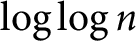
 $\log \log n$
by Mertens’ theorem [Reference Montgomery and Vaughan15, Theorem 2.7(d)]. The first moment of
 $\omega (n)$
can be considered to be a way of verifying this heuristic on average. Due to the studies of Sathe [Reference Sathe18], Selberg [Reference Selberg19], Delange [Reference Delange2, Reference Delange5], and Saidak [Reference Saidak17, equation (6)], the behavior of the function
 $\omega (n)$
on average is known by the estimate
 $$ \begin{align} \sum_{n\leqslant x}\omega(n)=x\log\log x+bx+\sum_{j=1}^{m}\frac{(-1)^{j-1}G^{(j)}(1)}{j}\frac{x}{\log^{j}x}+O\left(\frac{x}{\log^{m+1} x}\right), \end{align} $$
where
 $$ \begin{align} b&:=\gamma_0-\sum_{p}\sum_{j=2}^{\infty}\frac{1}{jp^j}, \quad \quad G(s):=\frac{(s-1)\zeta(s)}{s}, \end{align} $$
 $\gamma _0$
denotes the Euler–Mascheroni constant, the sum
 $\sum _p$
runs over all prime numbers, and m is a fixed natural number. Thus, the behavior of
 $\omega (n)$
on average is similar to
 $\log \log n$
, and a natural question to ask is how large the deviation
 $\left |\omega (n)-\log \log n\right |$
on average can be. For this purpose, the concept of normal order is defined as follows [Reference Hardy and Ramanujan10]. Let
 $f,F:\mathbb {N}\rightarrow \mathbb {R}_{\geqslant 0}$
be two functions such that F is nondecreasing. Then,
 $f(n)$
is said to have normal order
 $F(n)$
if for any
 $\epsilon>0$
, the number of
 $n\leqslant x$
that do not satisfy the inequality
 $$ \begin{align*} (1-\epsilon)F(n)<f(n)<(1+\epsilon)F(n) \end{align*} $$
is
 $o(x)$
as
 $x\rightarrow \infty $
. The original definition in [Reference Hardy and Ramanujan10] is given for increasing F; here, we extend this definition in order to include constant functions.
In [Reference Hardy and Ramanujan10] (see also [Reference Hardy and Wright11, Section 22.11]), Hardy and Ramanujan proved that
 $\omega (n)$
has normal order
 $\log \log n$
. In [Reference Turán22], Turán showed that
 $$ \begin{align*} \sum_{n\leqslant x}(\omega(n)-\log\log x)^2\ll x\log\log x \end{align*} $$
from which it follows that the number of
 $3\leqslant n\leqslant x$
satisfying the inequality
 $$ \begin{align*} \frac{\left|\omega(n)-\log\log n\right|}{\sqrt{\log\log n}}>h(x) \end{align*} $$
is
 $o(x)$
as
 $x\rightarrow \infty $
for any increasing function
 $h(x)\rightarrow \infty $
as
 $x\rightarrow \infty $
, which again implies that
 $\omega (n)$
has normal order
 $\log \log n$
. Moreover, in [Reference Erdős and Kac8], Erdős and Kac proved the remarkable result that the function
 $\left (\omega (n)-\log \log n\right )/\left (\log \log n\right )^{1/2}$
,
 $n\geqslant 3$
, has a normal distribution. More precisely, for
 $a,b\in \mathbb {R}$
with
 $a\leqslant b$
, they proved that
 $$ \begin{align*} \lim_{x\rightarrow \infty}\frac{1}{x}\left|\bigg\lbrace 3\leqslant n\leqslant x:\, a \leqslant \frac{\omega(n)-\log\log n}{\sqrt{\log\log n}}\leqslant b \bigg\rbrace\right|=\frac{1}{\sqrt{2\pi}}\int_{a}^{b}e^{-u^2/2}\, du. \end{align*} $$
The idea behind Erdős–Kac’s proof was essentially probabilistic. One can find a probabilistic proof of their result in the paper of Billingsley [Reference Billingsley1]. One can also see the approaches using the method of moments in the work of Delange [Reference Delange3, Reference Delange4], Vilkas [Reference Vilkas23], Misevičius [Reference Misevičius14], and Granville and Soundararajan [Reference Granville and Soundararajan9]. In addition, further developments of probabilistic ideas led Kubilius [Reference Kubilius13] and Shapiro [Reference Shapiro20] to prove a generalization of the Erdős–Kac theorem independently. Their result is applicable to what are called strongly additive functions. An interested reader can find a comprehensive treatment of it in the monograph of Elliott [Reference Elliott6, Reference Elliott7].
In this work, we consider some refined versions of the
 $\omega (.)$
function through the following setup. For a prime number p and a natural number
 $n\geqslant 1$
, let
 $\nu _p(n)$
be the multiplicity of p in the unique factorization of n, that is,
 $\nu _p(n)$
is the unique integer such that
 $p^{\nu _p(n)}\mid n$
but
 $p^{\nu _p(n)+1}\nmid n$
. For natural numbers
 $k,n\geqslant 1$
, define
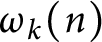
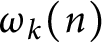
 $$ \begin{align*} \omega_k(n)&:=\sum_{\substack{p\mid n\\\nu_p(n)=k}}1, \end{align*} $$
which counts the number of prime factors of n with multiplicity k. Note that the usual
 $\omega (.)$
function can be partitioned into the functions
 $\omega _k(.)$
with
 $k\geqslant 1$
as
 $$ \begin{align*} \omega(n)=\sum_{k\geqslant1}\omega_k(n), \end{align*} $$
for all
 $n\in \mathbb {N}$
. We first prove the following result about the summatory functions of
 $\omega _k(.)$
with
 $k\geqslant 1$
.
Theorem 1.1 Define
 $$ \begin{align} P(k):=\sum_{p}\frac{1}{p^k} \quad (k\geqslant 2), \end{align} $$
where the sum runs over all prime numbers. Let the constant b and the function
 $G(s)$
be defined by (1.2). We have
 $$ \begin{align*} \sum_{n\leqslant x}\omega_1(n)&=x\log\log x+(b-P(2))x+\sum_{j=1}^{m}\frac{(-1)^{j-1}G^{(j)}(1)}{j}\frac{x}{\log^{j}x} \\&\quad +O\left(\frac{x}{\log^{m+1} x}\right), \end{align*} $$
for any fixed
 $m\in \mathbb {N}$
. Moreover, for
 $k\geqslant 2$
, we have
 $$ \begin{align*} \sum_{n\leqslant x}\omega_k(n)=(P(k)-P(k+1))x+O\left(x^{\frac{k+1}{3k-1}}\log^2x\right). \end{align*} $$
Next, we consider the second moments of the functions
 $\omega _k$
with
 $k\geqslant 1$
and prove the following theorem.
Theorem 1.2 Let
 $P(k)$
be defined by (1.3) and define
 $$ \begin{align} C_1:=(b-2P(2))(b+1)+\frac{\pi^2}{6}+P^2(2)+2P(3)-P(4) \end{align} $$
and
 $$ \begin{align*} C_k:=\left(P(k)-P(k+1)\right)\left(P(k)-P(k+1)+1\right)-P(2k)+2P(2k+1)-P(2k+2). \end{align*} $$
We have
 $$ \begin{align*} \sum_{n\leqslant x}\omega_1^2(n)&= x\left(\log\log x\right)^2+\left(1+2b-2P(2)\right)x\log\log x +C_1x \\& \quad+O\left(\frac{x\log\log x}{\log x}\right) \end{align*} $$
and
 $$ \begin{align*} \sum_{n\leqslant x}\omega_k^2(n)= C_kx+O\left(x^{\frac{k+1}{3k-1}}\log^2x\right) \quad (k\geqslant 2). \end{align*} $$
Analogous to the usual
 $\omega (.)$
function, we have the following corollary about the function
 $\omega _1(.)$
and its normal order.
Corollary 1.1 Let
 $C_1$
be defined by (1.4). We have
 $$ \begin{align*} \sum_{ n\leqslant x}\left(\omega_1(n)-\log\log n\right)^2= x\log\log x +C_1x+O\left(\frac{x\log\log x}{\log x}\right). \end{align*} $$
Let
 $h(x)$
be an increasing function such that
 $h(x)\rightarrow \infty $
as
 $x\rightarrow \infty $
. Then, the number of natural numbers
 $3\leqslant n\leqslant x$
such that
 $$ \begin{align*} \frac{\left|\omega_1(n)-\log\log n\right|}{\sqrt{\log\log n}}\geqslant h(x) \end{align*} $$
is
 $o(x)$
, and thus,
 $\omega _1(n)$
has normal order
 $\log \log n$
.
Similar to the Erdős–Kac theorem, we also prove that the function
 $(\omega _1(n)-\log \log n)/(\log \log n)^{1/2}$
,
 $n\geqslant 3$
, has a normal distribution.
Theorem 1.3 Let
 $a,b \in \mathbb {R}$
with
 $a\leqslant b$
. We have
 $$ \begin{align*} \lim_{x\rightarrow \infty}\frac{1}{x}\left|\bigg\lbrace 3\leqslant n\leqslant x:\, a \leqslant \frac{\omega_1(n)-\log\log n}{\sqrt{\log\log n}}\leqslant b \bigg\rbrace\right|=\frac{1}{\sqrt{2\pi}}\int_{a}^{b}e^{-u^2/2}\, du. \end{align*} $$
Here, we would like to note that because the function
 $\omega _1(.)$
is not strongly additive, Theorem 1.3 is not covered by the aforementioned result of Kubilius and Shapiro.
Recall that the main terms for the summatory functions of
 $\omega _1$
and
 $\omega _1^2$
are
 $x\log \log x$
and
 $x(\log \log x)^2$
, respectively. Because
 $$ \begin{align} \sum_{ n\leqslant x}\left(\omega_1(n)-\log\log n\right)^2=\sum_{n\leqslant x}\omega_1(n)^2-2\sum_{n\leqslant x}\omega_1(n)\log\log n+\sum_{n\leqslant x}(\log\log n)^2, \end{align} $$
the main terms of the three sums on the right-hand side of (1.5) cancel out by partial summation and we obtain the first assertion of Corollary 1.1. However, we do not have such a cancelation for
 $\omega _k$
with
 $k\geqslant 2$
. The average value of
 $\omega _k$
with
 $k\geqslant 2$
is
 $(P(k)-P(k+1))$
by Theorem 1.1, and we have
 $$ \begin{align*} \sum_{n\leqslant x}\left(\omega_k(n)-\left(P(k)-P(k+1)\right)\right)^2 &=\left(C_k-(P(k)-P(k+1))^2\right)x \\& \quad +O\left(x^{\frac{k+1}{3k-1}}\log^2x\right) \end{align*} $$
by Theorems 1.1 and 1.2. Because
 $$ \begin{align*} C_k-(P(k)-P(k+1))^2=\sum_{p}\left(\left(\frac{1}{p^k}-\frac{1}{p^{k+1}}\right)-\left(\frac{1}{p^k}-\frac{1}{p^{k+1}}\right)^2\right)\neq 0, \end{align*} $$
the analogous sum to (1.5) for
 $\omega _k$
with
 $k\geqslant 2$
is
 $\gg x$
, which is of the same order of magnitude as the second moment of
 $\omega _k$
. This makes us wonder whether the functions
 $\omega _k(n)$
with
 $k\geqslant 2$
have normal order
 $F(n)$
for some nondecreasing function
 $F:\mathbb {N}\rightarrow \mathbb {R}_{\geqslant 0}$
, which is the content of the following theorem.
Theorem 1.4 Let
 $k\geqslant 2$
be a fixed integer. Then, the function
 $\omega _k(n)$
does not have normal order
 $F(n)$
for any nondecreasing function
 $F:\mathbb {N}\rightarrow \mathbb {R}_{\geqslant 0}$
.
Let
 $\Omega (n)$
be the number of prime factors of n counted with multiplicity. Hardy and Ramanujan [Reference Hardy and Ramanujan10] and Turán [Reference Turán22] showed that the function
 $\Omega (n)$
has normal order
 $\log \log n$
. Let
 $\Omega _k(n)$
be the number of prime factors of n with multiplicity k, counted with weight k. Then,
 $$ \begin{align*} \Omega(n)=\sum_{k\geqslant1}\Omega_k(n). \end{align*} $$
Because
 $\Omega _k(n)=k\omega _k(n)$
, similar deductions can be made for the function
 $\Omega _k(n)$
by our results above, such as the function
 $\Omega _1(n)$
has normal order
 $\log \log n$
and the function
 $\left (\Omega _1(n)-\log \log n\right )/\left (\log \log n\right )^{1/2}$
,
 $n\geqslant 3$
, has a normal distribution. We can also show that the functions
 $\Omega _k(n)$
with
 $k \geqslant 2$
do not have normal order
 $F(n)$
for any nondecreasing nonnegative function F. Finally, we remark that one can consider analogous questions for the set of shifted prime numbers instead of the set of natural numbers. We intend to investigate such prime analogues of our results on a future occasion.
2 Proof of Theorem 1.1
The proof of Theorem 1.1 relies on the following general result.
Proposition 2.1 Let
 $g:\mathbb {N}\rightarrow \mathbb {C}$
be a function such that
 $|g(p)|\leqslant 1$
for all prime numbers p. For a natural number
 $k\geqslant 1$
, define
 $$ \begin{align} a_{g,k}(n)&:=\sum_{\substack{p\mid n \\ \nu_p(n)\geqslant k+1}}(1+g(p)+g(p)^2+\cdots+g(p)^{\nu_p(n)-(k+1)}) \end{align} $$
with the convention that empty sum is taken to be zero. Define
 $$ \begin{align*} c_{g,k}:=\sum_{p}\frac{1}{p^k(p-g(p))}. \end{align*} $$
Then, we have
 $$ \begin{align} \sum_{n\leqslant x}a_{g,k}(n)=c_{g,k}x+O\left(x^{\frac{k+2}{3k+2}}\log^2x\right), \end{align} $$
where the implied constant is absolute.
Proof. Let
 $s=\sigma +it$
,
 $\sigma ,t\in \mathbb {R}$
, and define
 $$ \begin{align*} A_{g,k}(s):=\sum_{n=1}^{\infty}\frac{a_{g,k}(n)}{n^s} \quad (\sigma>1). \end{align*} $$
First, we show that
 $$ \begin{align} A_{g,k}(s)=\zeta(s)\sum_{p}\frac{1}{p^{ks}(p^s-g(p))} \quad (\sigma>1). \end{align} $$
Note that
 $$ \begin{align} \sum_{p}\frac{1}{p^{ks}(p^s-g(p))}= \sum_{p}\left(\frac{1}{p^{(k+1)s}}+\frac{g(p)}{p^{(k+2)s}}+\frac{g(p)^2}{p^{(k+3)s}}+\cdots\right)=\sum_{n=1}^{\infty}\frac{b_{g,k}(n)}{n^s}, \end{align} $$
where
 $$ \begin{align*} b_{g,k}(n):=\begin{cases} g(p)^{\alpha-(k+1)}& \text{if} \, \,\, n=p^\alpha, \, \alpha\geqslant k+1,\\ 0 & \text{otherwise}. \end{cases} \end{align*} $$
Because
 $$ \begin{align*} \zeta(s)\sum_{n=1}^{\infty}\frac{b_{g,k}(n)}{n^s}=\sum_{n=1}^{\infty}\frac{\sum_{d\mid n}b_{g,k}(d)}{n^s} \end{align*} $$
and
 $$ \begin{align*} \sum_{d\mid n}b_{g,k}(d)=\sum_{\substack{p\mid n}}\sum_{j=k+1}^{\nu_p(n)}g(p)^{j-(k+1)}=a_{g,k}(n), \end{align*} $$
the identity in (2.3) follows for
 $\sigma>1$
. Because the series in (2.4) is absolutely convergent for
 $\sigma>1/(k+1)$
, by (2.3), we obtain an analytic continuation of the Dirichlet series
 $A_{g,k}(s)$
for
 $\sigma>1/(k+1)$
.
Now, we apply Perron’s formula [Reference Titchmarsh21, Lemma 3.12]. Note that
 $$ \begin{align} \left|a_{g,k}(n)\right|\leqslant\sum_{\substack{p\mid n \\ \nu_p(n)\geqslant k+1}}(\nu_p(n)-k)\ll \log n \end{align} $$
and
 $$ \begin{align*} \sum_{n=1}^{\infty}\frac{|a_{g,k}(n)|}{n^\sigma}\leqslant \sum_{n=1}^{\infty}\frac{1}{n^\sigma}\sum_{\substack{p\mid n \\ \nu_p(n)\geqslant k+1}}(\nu_p(n)-k)= \zeta(\sigma)\sum_{p}\frac{1}{p^{k\sigma}(p^\sigma-1)}\ll \frac{1}{\sigma-1}, \end{align*} $$
as
 $\sigma \rightarrow 1^+$
. Let
 $x> 2$
be half of an odd integer, and let T be a real number with
 $2\leqslant T \leqslant x$
. By Perron’s formula, we have
 $$ \begin{align*} \sum_{n< x}a_{g,k}(n)=\frac{1}{2\pi i}\int\limits_{1+\frac{1}{\log x}-iT}^{1+\frac{1}{\log x}+iT}A_{g,k}(s)\frac{x^s}{s}\, ds+O\left(\frac{x\log^2x}{T}\right). \end{align*} $$
By moving the line of integration above to the left and applying the residue theorem, we have
 $$ \begin{align*} \sum_{n< x}a_{g,k}(n)=c_{g,k}x-(I_1+I_2+I_3)+O\left(\frac{x\log^2x}{T}\right), \end{align*} $$
where
 $$ \begin{align*} c_{g,k}&:=\sum_{p}\frac{1}{p^k(p-g(p))}, \\I_1&:=\frac{1}{2\pi i}\int\limits_{1+\frac{1}{\log x}+iT}^{\frac{1}{k+1}+\frac{1}{\log x}+iT}A_{g,k}(s)\frac{x^s}{s}\, ds, \\I_2&:=\frac{1}{2\pi i}\int\limits_{\frac{1}{k+1}+\frac{1}{\log x}+iT}^{\frac{1}{k+1}+\frac{1}{\log x}-iT}A_{g,k}(s)\frac{x^s}{s}\, ds, \\I_3&:=\frac{1}{2\pi i}\int\limits_{\frac{1}{k+1}+\frac{1}{\log x}-iT}^{1+\frac{1}{\log x}-iT}A_{g,k}(s)\frac{x^s}{s}\, ds. \end{align*} $$
For
 $\sigma \geqslant \frac {1}{k+1}+\frac {1}{\log x}$
, we have
 $$ \begin{align*} \left|\sum_{p}\frac{1}{p^{ks}(p^s-g(p))}\right|\ll\sum_{p}\frac{1}{p^{(k+1)\sigma}}\leqslant \sum_{p}\frac{1}{p^{1+\frac{1}{\log x}}}\leqslant \zeta\left(1+\frac{1}{\log x}\right)\ll \log x. \end{align*} $$
For
 $|t|\geqslant 2$
, we know [Reference Ivić12, p. 25] that
 $$ \begin{align*} |\zeta(s)|\ll \begin{cases} 1 & \text{if }\sigma> 2, \\ \log |t| & \text{if }1\leqslant\sigma\leqslant 2, \\ |t|^{\frac{1-\sigma}{2}}\log |t| & \text{if }0\leqslant \sigma\leqslant 1, \\ |t|^{\frac{1}{2}-\sigma}\log |t| & \text{if }\sigma\leqslant 0. \end{cases} \end{align*} $$
Thus, we have
 $$ \begin{align*} I_1&\ll \frac{T^{1/2}(\log x)\log T}{T}\int\limits_{\frac{1}{k+1}+\frac{1}{\log x}}^{1}\left(\frac{x}{T^{1/2}}\right)^{\sigma}\, d\sigma+ \frac{\log T}{T}\int\limits_{1}^{1+\frac{1}{\log x}}x^{\sigma}\, d\sigma \\&\ll \frac{x\log^2 x}{T}. \end{align*} $$
Similarly, we have
 $I_3\ll \frac {x\log ^2 x}{T}$
. For
 $I_2$
, we have
 $$ \begin{align*} I_2&\ll x^{\frac{1}{k+1}}\log x\int\limits_{0}^{2}\left|\frac{1}{k+1}+\frac{1}{\log x}+it\right|^{-1}\, dt+ x^{\frac{1}{k+1}}(\log x)(\log T)\int\limits_{2}^{T}t^{\frac{1-\frac{1}{k+1}-\frac{1}{\log x}}{2}}\frac{1}{t}\, dt. \end{align*} $$
Note that
 $$ \begin{align*} \left|\frac{1}{k+1}+\frac{1}{\log x}+it\right|^{-1}\leqslant\left|\frac{1}{k+1}+\frac{1}{\log x}\right|^{-1}\leqslant \log x \end{align*} $$
and
 $$ \begin{align*} \int\limits_{2}^{T}t^{\frac{1-\frac{1}{k+1}-\frac{1}{\log x}}{2}}\frac{1}{t}\, dt&=\frac{2}{1-\frac{1}{k+1}-\frac{1}{\log x}}\left(T^{\frac{1-\frac{1}{k+1}-\frac{1}{\log x}}{2}}-2^{\frac{1-\frac{1}{k+1}-\frac{1}{\log x}}{2}}\right) \\&\ll T^{\frac{1}{2}\left(1-\frac{1}{k+1}\right)}, \end{align*} $$
where the implied constant is absolute. Thus, we have
 $$ \begin{align*} I_2\ll x^{\frac{1}{k+1}}\log^2 x+ x^{\frac{1}{k+1}}T^{\frac{1}{2}\left(1-\frac{1}{k+1}\right)}\log^2x \ll x^{\frac{1}{k+1}}T^{\frac{1}{2}\left(1-\frac{1}{k+1}\right)}\log^2x. \end{align*} $$
By combining the bounds for
 $I_1, I_2$
, and
 $I_3$
, we have
 $$ \begin{align*} \sum_{n< x}a_{g,k}(n)=c_{g,k}x+O\left(\frac{x\log^2 x}{T}\right)+O\left(x^{\frac{1}{k+1}}T^{\frac{1}{2}\left(1-\frac{1}{k+1}\right)}\log^2x\right). \end{align*} $$
Taking
 $T=x^{\frac {2k}{3k+2}}$
equates the error terms above, and we obtain
 $$ \begin{align*} \sum_{n< x}a_{g,k}(n)=c_{g,k}x+O\left(x^{\frac{k+2}{3k+2}}\log^2x\right), \end{align*} $$
where the implied constant is absolute. By (2.5), adding the single term
 $a_{g,k}(\lfloor x \rfloor +1)$
to the left-hand side of the estimate above has contribution
 $\ll \log x$
, and thus, Proposition 2.1 follows.▪
Now, we deduce Theorem 1.1 from Proposition 2.1.
Proof of Theorem 1.1
Let
 $g(p)=-1$
for all prime numbers p. Then, with this choice of
 $g(.)$
, we have
 $$ \begin{align} a_k(n):=a_{g,k}(n) =\sum_{\substack{p\mid n \\ \nu_p(n)\geqslant k+1\\\nu_p(n)-k\,\, \text{odd}}}1, \end{align} $$
which counts the number of prime factors of n whose multiplicities are of the form
 $k+l$
for some odd natural number l. By Proposition 2.1, we have
 $$ \begin{align} \sum_{n\leqslant x}a_{k}(n)=c_{k}x+O\left(x^{\frac{k+2}{3k+2}}\log^2x\right) \quad (k\geqslant 1), \end{align} $$
where
 $$ \begin{align*} c_{k}:=\sum_{p}\frac{1}{p^k(p+1)}. \end{align*} $$
Note that
 $$ \begin{align} \omega_1(n)&=\omega(n)-a_1(n)-a_2(n), \\\nonumber\omega_k(n)&=a_{k-1}(n)-a_{k+1}(n) \quad (k\geqslant 2). \end{align} $$
Hence, the desired result in Theorem 1.1 follows from (1.1) and (2.7).▪
3 Proof of Theorem 1.2
We start with the second moment of
 $\omega _1.$
We have
 $$ \begin{align*} \sum_{n\leqslant x}\omega_1^2(n)=\sum_{n\leqslant x}\left(\sum_{\substack{p\mid n\\p^2\nmid n}}1\right)^2 =\sum_{n\leqslant x}\sum_{\substack{p\mid n,\,q\mid n\\p^2\nmid n,\, q^2\nmid n}}1 =\sum_{n\leqslant x}\omega_1(n) +\sum_{\substack{p,q\leqslant x\\p\neq q}}\sum_{\substack{n\leqslant x\\p\mid n,\, q\mid n\\ p^2\nmid n,\, q^2\nmid n}}1. \end{align*} $$
Let
 $$ \begin{align*} S(x):=\sum_{\substack{p,q\leqslant x\\p\neq q}}\sum_{\substack{n\leqslant x\\p\mid n,\, q\mid n\\ p^2\nmid n,\, q^2\nmid n}}1=\sum_{\substack{p,q\leqslant x\\p\neq q}}\left(\bigg\lfloor\frac{x}{pq}\bigg\rfloor-\bigg\lfloor\frac{x}{pq^2}\bigg\rfloor-\left(\bigg\lfloor\frac{x}{p^2q}\bigg\rfloor-\bigg\lfloor\frac{x}{p^2q^2}\bigg\rfloor\right)\right) \end{align*} $$
and
 $$ \begin{align*} S_1(x)&:=\sum_{\substack{p,q\leqslant x\\p\neq q}}\bigg\lfloor\frac{x}{pq}\bigg\rfloor, \\S_2(x)&:=\sum_{\substack{p,q\leqslant x\\p\neq q}}\bigg\lfloor\frac{x}{pq^2}\bigg\rfloor, \\S_3(x)&:=\sum_{\substack{p,q\leqslant x\\p\neq q}}\bigg\lfloor\frac{x}{p^2q^2}\bigg\rfloor. \end{align*} $$
Then, by symmetry, we have
 $S(x)=S_1(x)-2S_2(x)+S_3(x)$
. Now, we consider
 $S_1(x)$
by closely following the argument in [Reference Saidak17] due to Saidak. We have
 $$ \begin{align} S_1(x)=\sum_{\substack{pq\leqslant x\\p\neq q}}\bigg\lfloor\frac{x}{pq}\bigg\rfloor=\sum_{\substack{pq\leqslant x\\p\neq q}}\left(\frac{x}{pq}+O(1)\right). \end{align} $$
For
 $pq\leqslant x$
and
 $q\geqslant 2$
, we have
 $p\leqslant x/2$
and
 $$ \begin{align*} \sum_{p\leqslant x/2}\frac{1}{p\log(x/p)}\ll \frac{\log\log x}{\log x} \end{align*} $$
by [Reference Murty16, Exercise 9.4.4]. Thus, the contribution of the
 $O(1)$
term in (3.1) is
 $$ \begin{align} \ll\sum_{p\leqslant x/2}\sum_{ q\leqslant x/p}1\ll x\sum_{p\leqslant x/2}\frac{1}{p\log (x/p)}\ll \frac{x\log\log x}{\log x}. \end{align} $$
We have
 $$ \begin{align*} \sum_{\substack{pq\leqslant x\\p\neq q}}\frac{1}{pq}=\sum_{\substack{pq\leqslant x}}\frac{1}{pq}-\sum_{p\leqslant \sqrt{x}}\frac{1}{p^2} =\sum_{pq\leqslant x}\frac{1}{pq}-\sum_{p}\frac{1}{p^2}+O\left(\frac{1}{\sqrt{x}}\right), \end{align*} $$
and by a result of Saidak [Reference Saidak17, Lemma 3], we have
 $$ \begin{align*} \sum_{pq\leqslant x}\frac{1}{pq}=(\log\log x)^2+2b\log\log x+\frac{\pi^2}{6}+b^2+O\left(\frac{\log \log x}{\log x}\right). \end{align*} $$
Thus,
 $$ \begin{align*} S_1(x)=x(\log\log x)^2+2bx\log\log x+\left(\frac{\pi^2}{6}+b^2-P(2)\right)x+O\left(\frac{x\log \log x}{\log x}\right). \end{align*} $$
For
 $S_2(x)$
, we have
 $$ \begin{align*} S_2(x)=\sum_{\substack{pq^2\leqslant x\\p\neq q}}\bigg\lfloor\frac{x}{pq^2}\bigg\rfloor=\sum_{\substack{pq^2\leqslant x\\p\neq q}}\left(\frac{x}{pq^2}+O(1)\right). \end{align*} $$
The contribution of the
 $O(1)$
term above is
 $$ \begin{align*} \ll \sum_{\substack{pq^2\leqslant x\\p\neq q}}1\leqslant \sum_{\substack{pq\leqslant x\\p\neq q}}1\ll \frac{x\log\log x}{\log x} \end{align*} $$
by the estimate in (3.2). Thus,
 $$ \begin{align*} S_2(x)=x\left(\sum_{pq^2\leqslant x}\frac{1}{pq^2}-P(3)\right)+O\left(\frac{x\log\log x}{\log x}\right). \end{align*} $$
We have
 $$ \begin{align*} \sum_{pq^2\leqslant x}\frac{1}{pq^2}&=\sum_{p\leqslant x/4}\frac{1}{p}\left(P(2)-\sum_{q>\sqrt{\frac{x}{p}}}\frac{1}{q^2}\right). \end{align*} $$
Let
 $$ \begin{align*} L(u):=\sum_{q\leqslant u}\frac{1}{q}=\log\log u+b+R(u), \end{align*} $$
where
 $$ \begin{align*} R(u)\ll \frac{1}{\log u} \end{align*} $$
by [Reference Montgomery and Vaughan15, Theorem 2.7(d)]. For
 $p\leqslant x/4$
, we have
 $$ \begin{align*} \sum_{q\geqslant \sqrt{\frac{x}{p}}}\frac{1}{q^2}=\int_{\sqrt{\frac{x}{p}}}^{\infty}\frac{1}{u}dL(u) &=\int_{\sqrt{\frac{x}{p}}}^{\infty}\frac{du}{u^2\log u}+R\left(\sqrt{\frac{x}{p}}\right)\frac{1}{\sqrt{\frac{x}{p}}}+\int_{\sqrt{\frac{x}{p}}}^{\infty}\frac{R(u)}{u^2}\,du \\&\ll \frac{1}{\log \left(\frac{x}{p}\right)}. \end{align*} $$
Thus,
 $$ \begin{align*} \sum_{pq^2\leqslant x}\frac{1}{pq^2}&=\sum_{p\leqslant x/4}\frac{1}{p}\left(P(2)+O\left(\frac{1}{\log \left(\frac{x}{p}\right)}\right)\right) \\&=P(2)\left(\log\log \left(\frac{x}{4}\right)+b+O\left(\frac{1}{\log x}\right)\right)+O\left(\sum_{p\leqslant x/4}\frac{1}{p\log\left(\frac{x}{p}\right)}\right) \\&=P(2)\log\log x+bP(2)+O\left(\frac{\log\log x}{\log x}\right). \end{align*} $$
Thus, we have
 $$ \begin{align*} S_2(x)=x\left(P(2)\log\log x+bP(2)-P(3)\right)+O\left(\frac{x\log\log x}{\log x}\right). \end{align*} $$
For
 $S_3(x)$
, we have
 $$ \begin{align*} S_3(x)=x\sum_{\substack{p^2q^2\leqslant x\\p\neq q}}\frac{1}{p^2q^2}+O\left(\sqrt{x}\log\log x\right) \end{align*} $$
and
 $$ \begin{align*} \sum_{\substack{p^2q^2\leqslant x\\p\neq q}}\frac{1}{p^2q^2}&=\sum_{\substack{p^2q^2\leqslant x}}\frac{1}{p^2q^2}-\sum_{p^4\leqslant x}\frac{1}{p^4} \\& =\sum_{p\leqslant \sqrt{x}}\frac{1}{p^2}\left(P(2)+O\left(\sum_{q>\frac{\sqrt{x}}{p}}\frac{1}{q^2}\right)\right)-P(4)+O\left(\frac{1}{x^{3/4}}\right) \\&=P^2(2)-P(4)+O\left(\sum_{p\leqslant \sqrt{x}}\frac{1}{p^2}\frac{p}{\sqrt{x}}\right)+O\left(\frac{1}{x^{1/2}}\right) \\&=P^2(2)-P(4)+O\left(\frac{\log\log x}{\sqrt{x}}\right). \end{align*} $$
Thus,
 $$ \begin{align*} S_3(x)=\left(P^2(2)-P(4)\right)x+O\left(\sqrt{x}\log\log x\right). \end{align*} $$
By using the first moment of
 $\omega _1$
and the estimates above for
 $S_1(x),\, S_2(x)$
, and
 $S_3(x)$
, we obtain the desired result for the second moment of
 $\omega _1(.)$
.
Let
 $k\geqslant 2$
. We have
 $$\begin{align*}\sum_{n \leqslant x}\omega^2_k(n)=\sum_{n \leqslant x}\omega_k(n)+\sum_{\substack{p,q\\ pq \leqslant x^{1/k}\\ p\neq q}}\sum_{\substack{n \leqslant x\\ \nu_p(n)=\nu_q(n)=k}} 1. \end{align*}$$
For a natural number
 $\ell \geqslant k$
and distinct prime numbers p and q with
 $pq\leqslant x^{1/k}$
, define
 $$ \begin{align*} h(\ell,p,q,x):=\biggl\lfloor\frac{x}{p^{\ell}q^k}\biggr\rfloor-\biggl\lfloor\frac{x}{p^\ell q^{k+1}}\biggr\rfloor, \end{align*} $$
which counts the number of
 $n\leqslant x$
such that
 $p^\ell \mid n$
and
 $\nu _q(n)=k$
. Then,
 $$ \begin{align} \sum_{\substack{p,q\\pq\leqslant x^{1/k}\\p\neq q}}\sum_{\substack{n\leqslant x\\\nu_p(n)=\nu_q(n)=k}}1 =\sum_{\substack{p,q\\pq\leqslant x^{1/k}\\p\neq q}}\left(h(k,p,q,x)-h(k+1,p,q,x)\right). \end{align} $$
Because
 $$ \begin{align*} h(\ell,p,q,x)=\frac{x}{p^\ell}\left(\frac{1}{q^k}-\frac{1}{q^{k+1}}\right)+O(1), \end{align*} $$
we have
 $$ \begin{align} \nonumber\sum_{\substack{p,q\\pq\leqslant x^{1/k}\\p\neq q}}\sum_{\substack{n\leqslant x\\\nu_p(n)=\nu_q(n)=k}}1&=\sum_{\substack{p,q\\pq\leqslant x^{1/k}\\p\neq q}}\left( \frac{x}{p^k}\left(\frac{1}{q^k}-\frac{1}{q^{k+1}}\right)-\frac{x}{p^{k+1}}\left(\frac{1}{q^k}-\frac{1}{q^{k+1}}\right)+O(1)\right) \\&=x\sum_{\substack{p,q\\pq\leqslant x^{1/k}\\p\neq q}}\left(\frac{1}{p^k}-\frac{1}{p^{k+1}}\right)\left(\frac{1}{q^k}-\frac{1}{q^{k+1}}\right) +O\left(x^{1/k}\log\log x\right). \end{align} $$
For a real number r and a statement S, define
 $$ \begin{align*} \mathbb{1}_S(r):=\begin{cases} r & \text{if S is true}, \\ 0 & \text{otherwise.} \end{cases} \end{align*} $$
We have
 $$ \begin{align*} &\nonumber\sum_{\substack{p,q\\pq\leqslant x^{1/k}\\p\neq q}} \left(\frac{1}{p^k}-\frac{1}{p^{k+1}}\right)\left(\frac{1}{q^k}-\frac{1}{q^{k+1}}\right)\\& \quad=\sum_{p\leqslant x^{1/k}}\left(\frac{1}{p^k}-\frac{1}{p^{k+1}}\right)\left(P(k)-P(k+1)-\mathbb{1}_{p\leqslant x^{\frac{1}{2k}}}\left(\frac{1}{p^{k}}-\frac{1}{p^{k+1}}\right)+O\left(\frac{p^{k-1}}{x^{(k-1)/k}}\right)\right). \end{align*} $$
For the contribution of the error term above, we have
 $$ \begin{align*} \sum_{p\leqslant x^{1/k}}\left(\frac{1}{p^k}-\frac{1}{p^{k+1}}\right)\frac{p^{k-1}}{x^{(k-1)/k}}\ll \frac{1}{x^{(k-1)/k}}\sum_{p\leqslant x^{1/k}}\frac{1}{p}\ll \frac{\log \log x}{x^{(k-1)/k}}. \end{align*} $$
For the remaining terms, we have
 $$ \begin{align*} \nonumber\sum_{p\leqslant x^{1/k}}&\left(\frac{1}{p^k}-\frac{1}{p^{k+1}}\right)\left(P(k)-P(k+1)-\mathbb{1}_{p\leqslant x^{\frac{1}{2k}}}\left(\frac{1}{p^{k}}-\frac{1}{p^{k+1}}\right)\right) \\&\nonumber=\left(P(k)-P(k+1)\right)^2+O\left(\frac{1}{x^{(k-1)/k}}\right)-\sum_{p}\left(\frac{1}{p^k}-\frac{1}{p^{k+1}}\right)^2+O\left(\frac{1}{x^{(2k-1)/(2k)}}\right) \\&=\left(P(k)-P(k+1)\right)^2-P(2k)+2P(2k+1)-P(2k+2)+O\left(\frac{1}{x^{(k-1)/k}}\right). \end{align*} $$
By (3.4) and the estimate above, we have
 $$ \begin{align} \nonumber\sum_{\substack{p,q\\pq\leqslant x^{1/k}\\p\neq q}}\sum_{\substack{n\leqslant x\\\nu_p(n)=\nu_q(n)=k}}1&=\left(\left(P(k)-P(k+1)\right)^2-P(2k)+2P(2k+1)-P(2k+2)\right)x \\& \quad +O\left(x^{1/k}\log\log x\right). \end{align} $$
By (3.3), (3.5), and Theorem 1.1, we obtain the desired result.▪
4 Proof of Corollary 1.1
The first assertion in Corollary 1.1 follows immediately by the first and second moments of
 $\omega _1$
and partial summation. For the second part, let
 $h(x)$
be an increasing function such that
 $h(x)\rightarrow \infty $
as
 $x\rightarrow \infty $
, and let
 $\mathcal {E}$
be the set of natural numbers n with
 $\frac {x}{\log x}\leqslant n\leqslant x$
such that
 $$ \begin{align*} \frac{\left|\omega_1(n)-\log \log n\right|}{\sqrt{\log\log n}}\geqslant h(x). \end{align*} $$
Let
 $\left |\mathcal {E}\right |$
be the cardinality of
 $\mathcal {E}$
. Then,
 $$ \begin{align} \nonumber\sum_{ 3\leqslant n\leqslant x}\left(\omega_1(n)-\log\log n\right)^2&\geqslant \sum_{\substack{ n\in\mathcal{E}}}\left(\omega_1(n)-\log\log n\right)^2 \\\nonumber&\geqslant h^2(x/\log x)\sum_{n\in \mathcal{E}}\log\log n \\&\geqslant h^2(x/\log x)\left|\mathcal{E}\right|\log\log \left(x/\log x\right). \end{align} $$
By (4.1) and the fact that the left-hand side of (4.1) is
 $\ll x\log \log x$
, we have
 $$ \begin{align*} \frac{\left|\mathcal{E}\right|}{x}\ll\frac{\log\log x}{h^2(x/\log x)\log\log (x/\log x)}\rightarrow 0 \end{align*} $$
as
 $x\rightarrow \infty $
, because
 $h(x)\rightarrow \infty $
as
 $x\rightarrow \infty $
. This finishes the proof of the second assertion of Corollary 1.1, because the remaining set of natural numbers with
 $n<x/\log x$
is already of size
 $o(x)$
.▪
5 Proof of Theorem 1.3
For
 $f=\omega , \omega _1$
, let
 $r_f(n)$
be the ratio
 $$ \begin{align*} r_f(n):=\frac{f(n)-\log\log n}{\sqrt{\log\log n}} \quad (n\geqslant 3), \end{align*} $$
and for
 $b\in \mathbb {R}$
, let
 $$ \begin{align*} D(f,x,b):=\frac{1}{x}\left|\lbrace 3\leqslant n\leqslant x: r_f(n)\leqslant b\rbrace\right| \end{align*} $$
be the corresponding density function for sufficiently large x. Because
 $\omega (n)\geqslant \omega _1(n)$
, we have
 $r_{\omega _1}(n)\leqslant r_{\omega }(n)$
for all
 $n\geqslant 3$
. Thus,
 $\lbrace 3 \leqslant n\leqslant x: r_\omega (n)\leqslant b\rbrace \subset \lbrace 3 \leqslant n\leqslant x: r_{\omega _1}(n)\leqslant b\rbrace $
and
 $$ \begin{align} D(\omega,x,b)\leqslant D(\omega_1,x,b) \end{align} $$
for all
 $x\geqslant 3$
. Let
 $$ \begin{align*} \Phi(b):=\frac{1}{\sqrt{2\pi}}\int_{-\infty}^{b}e^{-\frac{u^2}{2}}\, du. \end{align*} $$
Then, by (5.1) and the Erdős–Kac theorem, we have
 $$ \begin{align} \Phi(b)\leqslant\liminf_{x\rightarrow \infty}D(\omega_1,x,b). \end{align} $$
Let
 $\epsilon>0$
and define the set
 $$ \begin{align*} \mathcal{A}(x,\epsilon)&:=\bigg\lbrace 3 \leqslant n\leqslant x: \frac{\omega(n)-\omega_1(n)}{\sqrt{\log\log n}}\leqslant \epsilon\bigg\rbrace. \end{align*} $$
Let
 $ \mathcal {A}^c(x,\epsilon )$
denote the complement of
 $\mathcal {A}(x,\epsilon )$
inside natural numbers up to x. Because
 $$ \begin{align*} r_{\omega_1}(n)=r_\omega(n)+\frac{\omega_1(n)-\omega(n)}{\sqrt{\log\log n}}, \end{align*} $$
we have
 $$ \begin{align*} \lbrace 3 \leqslant n\leqslant x: r_{\omega_1}(n)\leqslant b\rbrace&=\bigg\lbrace 3 \leqslant n\leqslant x: r_\omega(n)+\frac{\omega_1(n)-\omega(n)}{\sqrt{\log\log n}}\leqslant b \bigg\rbrace \\&=\bigg\lbrace 3 \leqslant n\leqslant x: n\in \mathcal{A}(x,\epsilon),\, r_\omega(n)+\frac{\omega_1(n)-\omega(n)}{\sqrt{\log\log n}}\leqslant b \bigg\rbrace \\&\quad \cup \bigg\lbrace 3 \leqslant n\leqslant x: n\in \mathcal{A}^c(x,\epsilon),\, r_\omega(n)+\frac{\omega_1(n)-\omega(n)}{\sqrt{\log\log n}}\leqslant b \bigg\rbrace \\&\subseteq \bigg\lbrace 3 \leqslant n\leqslant x: r_\omega(n)\leqslant b+\epsilon \bigg\rbrace \cup \lbrace 3 \leqslant n\leqslant x: n\in \mathcal{A}^c(x,\epsilon) \rbrace. \end{align*} $$
Thus,
 $$ \begin{align} D(\omega_1,x,b)\leqslant D(\omega,x,b+\epsilon)+\frac{1}{x}\left|\lbrace 3 \leqslant n\leqslant x: n\in \mathcal{A}^c(x,\epsilon) \rbrace\right|. \end{align} $$
Now, we show that
 $$ \begin{align} \lim_{x\rightarrow\infty}\frac{1}{x}\left|\lbrace 3 \leqslant n\leqslant x: n\in \mathcal{A}^c(x,\epsilon) \rbrace\right|=0. \end{align} $$
By (1.1) and Theorem (1.1), we have
 $$ \begin{align*} \sum_{n\leqslant x}(\omega(n)-\omega_1(n))\ll x. \end{align*} $$
Because
 $$ \begin{align*} \sum_{n\leqslant x}(\omega(n)-\omega_1(n))&\geqslant\sum_{\substack{\frac{x}{\log x}\leqslant n\leqslant x\\n\in\mathcal{A}^c(x,\epsilon)}}(\omega(n)-\omega_1(n)) \\&> \epsilon \sum_{\substack{\frac{x}{\log x}\leqslant n\leqslant x\\n\in\mathcal{A}^c(x,\epsilon)}} \sqrt{\log\log n} \\&\geqslant \epsilon \sqrt{\log\log(x/\log x)}\left|\lbrace x/\log x\leqslant n\leqslant x: n\in \mathcal{A}^c(x,\epsilon) \rbrace\right|, \end{align*} $$
we have
 $$ \begin{align*} \left|\lbrace x/\log x\leqslant n\leqslant x: n\in \mathcal{A}^c(x,\epsilon) \rbrace\right|\ll \frac{1}{\epsilon} \frac{x}{\sqrt{\log\log(x/\log x)}}, \end{align*} $$
which gives (5.4), because the size of the remaining set
 $\lbrace n<x/\log x: n\in \mathcal {A}^c(x,\epsilon ) \rbrace $
is already
 $o(x)$
as
 $x\rightarrow \infty $
. By (5.3), (5.4), and the Erdős–Kac theorem, we have
 $$ \begin{align} \limsup_{x\rightarrow\infty}D(\omega_1,x,b)\leqslant \Phi(b+\epsilon). \end{align} $$
Because
 $\epsilon $
is arbitrary, by (5.2) and (5.5), we have
 $\lim _{x\rightarrow \infty }D(\omega _1, x,b)=\Phi (b)$
, and this finishes the proof of Theorem 1.3.▪
6 Proof of Theorem 1.4
Now, we prove that the functions
 $\omega _k(n)$
with
 $k\geqslant 2$
do not have normal order
 $F(n)$
for any nondecreasing function
 $F:\mathbb {N}\rightarrow \mathbb {R}_{\geqslant 0}$
.
First, we assume that there exists
 $n_0\in \mathbb {N}$
such that
 $F(n_0)>0$
. Then,
 $F(n)>0$
for
 $n\geqslant n_0$
, because F is nondecreasing. Thus,
 $$ \begin{align*} \lim_{N\rightarrow \infty}\frac{\left|\left\lbrace n\leqslant N: F(n)> 0\right\rbrace\right|}{N}=1. \end{align*} $$
For a natural number N, define the set
 $$ \begin{align*} \mathcal{N}_0(N)&:=\lbrace n\leqslant N: \omega_k(n)=0\rbrace. \end{align*} $$
Because
 $$ \begin{align*} \sum_{\substack{n\leqslant N\\n\notin \mathcal{N}_0(N)}}1=\sum_{p}\sum_{\substack{n\leqslant N\\p^k\mid n\\p^{k+1}\nmid n}}1\leqslant \sum_{p}\sum_{\substack{n\leqslant N\\p^k\mid n}}1\leqslant N\sum_{p}\frac{1}{p^k}, \end{align*} $$
we have
 $$ \begin{align*} \frac{\left|\mathcal{N}_0(N)\right|}{N}\geqslant \frac{N - N\sum_{p}\frac{1}{p^k}}{N}&=1-\sum_{p}\frac{1}{p^k}\geqslant 1-\sum_{p}\frac{1}{p^2}>1-\left(\zeta(2)-1\right)=2-\frac{\pi^2}{6}>0. \end{align*} $$
Thus,
 $$ \begin{align*} \liminf_{N\rightarrow \infty}\left(\frac{\left|\left\lbrace n\leqslant N: F(n)> 0\right\rbrace\right|}{N}+\frac{\left|\mathcal{N}_0(N)\right|}{N}\right)>1, \end{align*} $$
and the cardinality of the set of
 $n\leqslant N$
for which
 $F(n)> 0$
and
 $\omega _k(n)=0$
is not
 $o(N)$
. Because for such n, the inequality
 $$ \begin{align*} \left|\omega_k(n)-F(n)\right|>\frac{F(n)}{2} \end{align*} $$
is satisfied, we deduce that
 $\omega _k(n)$
does not have normal order
 $F(n)$
.
Now, assume that
 $F(n)=0$
for all
 $n\in \mathbb {N}$
. Then,
 $$ \begin{align*} \lim_{N\rightarrow \infty}\frac{\left|\left\lbrace n\leqslant N: F(n)= 0\right\rbrace\right|}{N}=1. \end{align*} $$
Define
 $$ \begin{align*} \mathcal{N}_1(N)&:=\lbrace n\leqslant N: \omega_k(n)=1\rbrace. \end{align*} $$
Because
 $$ \begin{align*} \left|\mathcal{N}_1(N)\right| \geqslant \sum_{\substack{ n \leqslant N\\ \nu_2(n)=k\\ \nu_p(n) < k \text{ for all }p \geqslant 3}}1&=\sum_{\substack{ n \leqslant N\\ \nu_2(n)=k}}1-\sum_{\substack{ n \leqslant N\\ \nu_2(n)=k\\ \nu_p(n) \geqslant k \text{ for some }p \geqslant 3}}1 \\&=\left\lfloor \frac{N}{2^k}\right\rfloor-\left\lfloor \frac{N}{2^{k+1}}\right\rfloor-\sum_{p \geqslant 3}\sum_{\substack{n \leqslant N/2^k\\ p^k\mid n\\ n \text{ is odd}}}1 \\& \geqslant \frac{N}{2^k}-\frac{N}{2^{k+1}}-\frac{N}{2^k}\sum_{p \geqslant 3}\frac{1}{p^k}-1, \end{align*} $$
we have
 $$ \begin{align*} \liminf_{N\rightarrow \infty}\frac{\left|\mathcal{N}_1(N)\right|}{N}\geqslant \frac{1}{2^k}\left(\frac{1}{2}-\sum_{p\geqslant 3}\frac{1}{p^k}\right)&\geqslant \frac{1}{2^k}\left(\frac{1}{2}-\sum_{p\geqslant 3}\frac{1}{p^2}\right) \\&>\frac{1}{2^k}\left(\frac{1}{2}-\left(\frac{\pi^2}{6}-1-\frac{1}{4}\right)\right) \\&>0. \end{align*} $$
Thus,
 $$ \begin{align*} \liminf_{N\rightarrow \infty}\left(\frac{\left|\left\lbrace n\leqslant N: F(n)= 0\right\rbrace\right|}{N}+\frac{\left|\mathcal{N}_1(N)\right|}{N}\right)>1, \end{align*} $$
and the cardinality of the set of
 $n\leqslant N$
for which
 $F(n)= 0$
and
 $\omega _k(n)=1$
is not
 $o(N)$
. Because for such n, the inequality
 $\left |\omega _k(n)-F(n)\right |>F(n)/2$
is satisfied, we deduce that
 $\omega _k(n)$
does not have normal order
 $F(n)$
.▪
Acknowledgment
We would like to thank the anonymous referees for their valuable comments on the manuscript. Some results in this paper are part of the first author’s Ph.D. thesis. We would also like to thank the committee members, J. Friedlander, D. Jao, W. Kuo, M. Rubinstein, and C. Stewart for their valuable comments.



