

Regional Ant Biodiversity of the Midwest
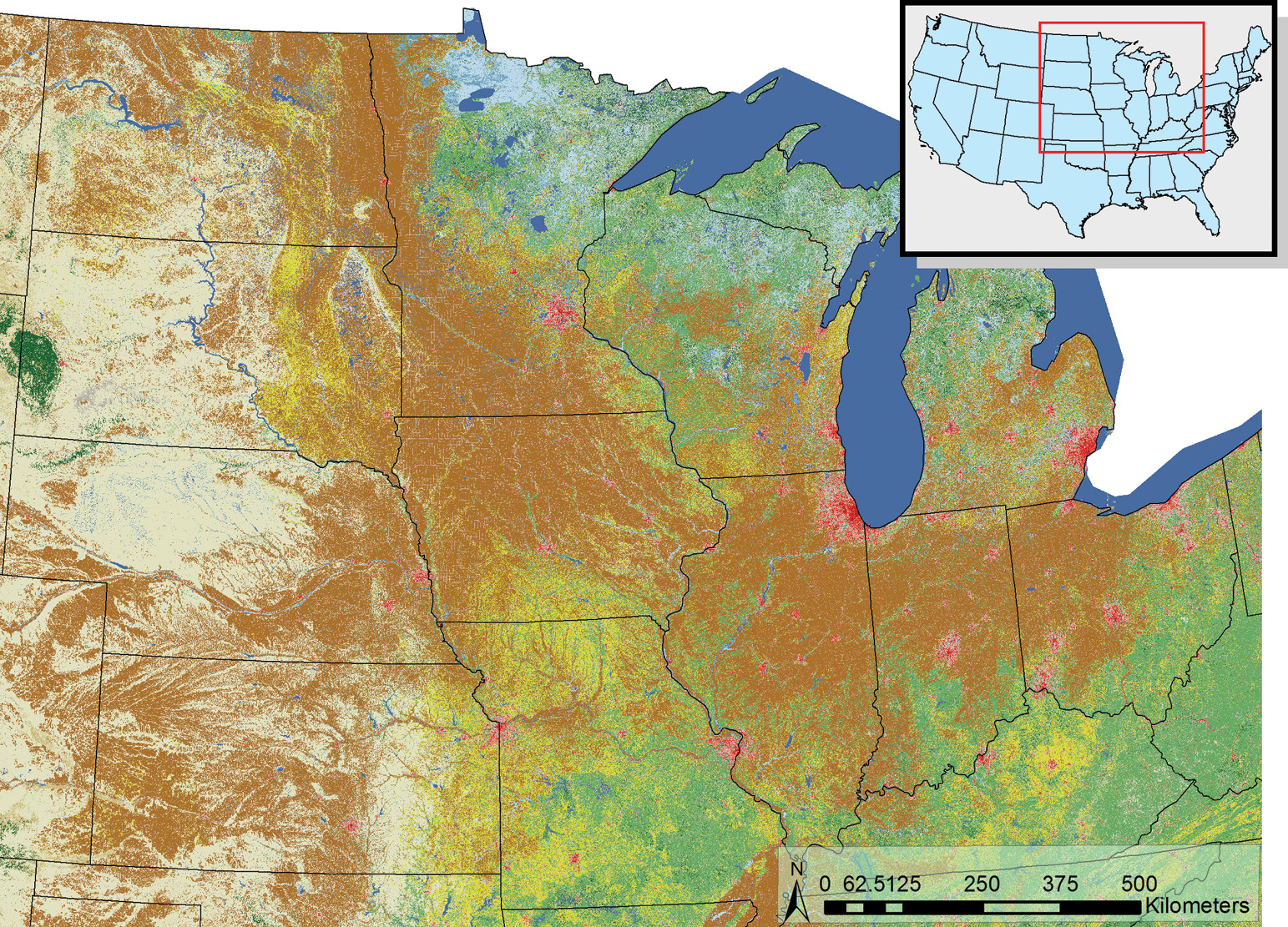
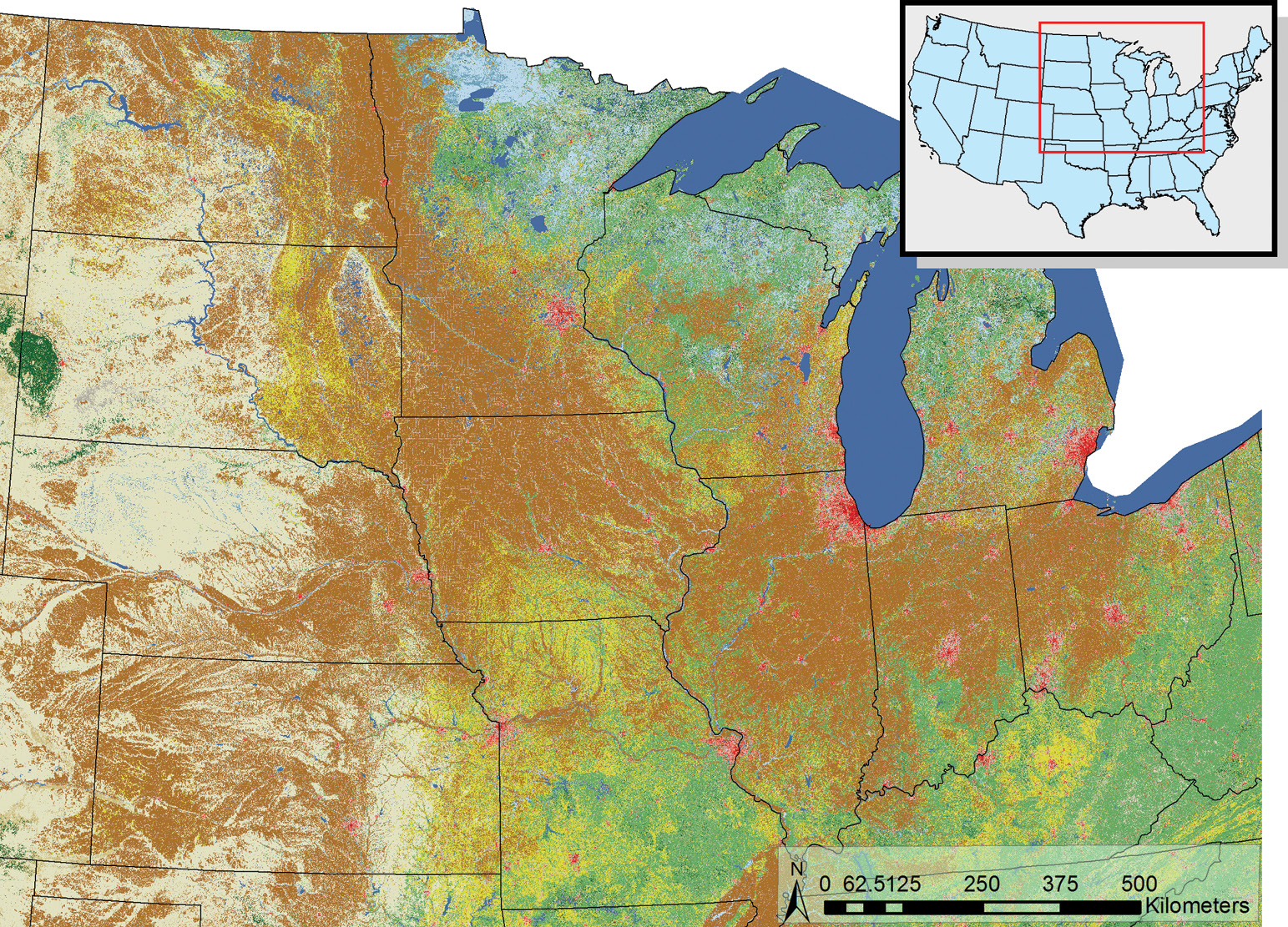
The native grassland and forest ecosystems of the north-central United States – a region that is historically and culturally called “the Midwest” or “Midwestern United States” – are highly modified by agricultural and urban development (Figure 1.1). Most of the native grasslands in the western Great Plains were replaced by cultivation or are now managed as grazing lands (Reference Samson and KnopfSamson & Knopf, 1994). In the Allegheny Plateau to the east, over a century of logging and mining in mixed oak and mesophytic forests continues until present despite gradual increases in second-growth forest (Reference Strittholt and BoernerStrittholt & Boerner, 1995). The native beech-maple forests of the northern Till Plain are now dominated by intensive agriculture – largely corn and soybeans – with smaller areas of riparian forest, scattered woodlots, remnant prairies, or reconstructed grasslands (Medley et al., Reference Medley, Okey, Barrett, Lucas and Renwick1995; Renwick et al., Reference Renwick, Vanni, Zhang and Patton2008). Exurban expansion around the industrial cities of the Midwest continues to modify landscapes along urban corridors and the urban-rural fringe (Grimm et al., Reference Grimm, Foster and Groffman2008). The resulting landscape mosaics of agricultural, natural, and urban ecosystems have sharp habitat gradients in vegetation structure and soil disturbance, resulting in ant species assemblages that are admixtures of habitat specialists and cosmopolitan generalists.
Land use and land cover map of the Midwest US region of North America. The major land cover types in this region include cultivated crops (brown), deciduous forest (green), pasture/hay (yellow), grassland (tan), low-intensity developed (pink), and high-intensity developed (red).
The ants of the Midwest are well-described and comprise about 200 species, a relatively small fauna compared to those in the highly diverse tropics. Two valuable keys to the ants of Ohio (Coovert, Reference Coovert2005) and New England Reference Ellison, Gotelli, Farnsworth and Alpert(Ellison et al., 2012) and a checklist of the Michigan ant fauna (Wheeler et al., Reference Wheeler, Wheeler and Kannowski1994) provide estimates for species richness of the Midwest and neighboring regions. Reference Ellison, Gotelli, Farnsworth and AlpertEllison et al. (2012) recorded 132 species (32 genera) and estimates 153 species for the New England states. Similarly, Coovert (Reference Coovert2005) documented 118 species (36 genera) in Ohio, with an estimated 178 species. Reference Wheeler, Wheeler and KannowskiWheeler et al. (1994) noted 113 species (27 genera), 87 of which could be found in one large nature reserve (Talbot, Reference Talbot1975). The majority of the ant species of the Midwest fall into two subfamilies, Myrmicinae and Formicinae, with only a few species in subfamilies Dolichoderinae, Ponerinae, Amblyoponinae, Proceratiinae, and Dorylinae. Although we focus on the Midwest region, we draw upon studies from surrounding regions that have overlapping ant faunas.
Habitat Associations of Ants
Forests and Grasslands
Many ant species specialize in forests or open habitats. For example, Reference Hill, Summerville and BrownHill et al. (2008) found distinct compositional and functional group differences between ants in open (prairie and pasture) and forest habitats in Mississippi but more subtle differences in species composition between prairie and pasture. Ant communities may also differ among patches of similar habitats, depending on soils, disturbance, or surrounding land uses (Menke et al., Reference Menke, Gaulke, Hamel and Vachter2015; Campbell & Crist, Reference Campbell and Crist2017).
Ants specialized in open, grassland habitats tend to be ground-dwelling ants including Dolichoderinae, Lasius and Formica species (Formicinae), and small heat-tolerant Myrmicinae (e.g., Monomorium, Pheidole, Solenopsis) (Reference Hill and BrownHill & Brown, 2010; Moranz et al., Reference Moranz, Debinski and Winkler2013; Campbell & Crist, Reference Campbell and Crist2017). In contrast, forests harbor diverse assemblages of cryptic litter-dwelling ants (e.g., Strumigenys, Proceratium, Stenamma) and are dominated by opportunists such as Aphaenogaster, Nylanderia, and Myrmica and several species of carpenter ants (Camponotus) (Lessard et al., Reference Lessard, Dunn, Parker and Sanders2007; Ivanov et al., Reference Ivanov, Milligan and Keiper2009; Reference Mahon, Campbell and CristMahon et al., 2017). Species richness in regional studies of these two habitats range from 14–53 species in restored and remnant grasslands (Phipps, Reference Phipps2006; Friedrich, Reference Friedrich2010; Reference Hill and BrownHill & Brown, 2010; Reference Campbell and CristCampbell & Crist, 2017) and 17–40 species in forest fragments (Talbot, Reference Talbot1934; Wang et al., Reference Wang, Strazanac and Butler2001; Ivanov et al., Reference Ivanov, Milligan and Keiper2009; Mahon et al., Reference Mahon, Campbell and Crist2017) to 53 species in large preserves of the Great Smoky Mountains to the southeast (Lessard et al., Reference Lessard, Dunn, Parker and Sanders2007) (Table 1.1).
| Habitat Type | State | No. Sites | Mean Richness | Total Richness | Dominant Species | Reference |
|---|---|---|---|---|---|---|
| Northern hardwood forest | NY | 1 | – | 33 | Aphaenogaster rudis, Myrmica punctiventris, Formica neogagates | Ellison et al., Reference Ellison, Record, Arguello and Gotelli2007 |
| Urban forest fragments | OH | 9 | – | 31 | Aphaenogaster picea, Lasius alienus, Myrmica punctiventris | Ivanov et al., Reference Ivanov, Milligan and Keiper2009 |
| Mixed hardwood forest | TN | 22 | – | 53 | Aphaenogaster rudis | Lessard et al., Reference Lessard, Dunn, Parker and Sanders2007 |
| Hardwood and pine forest | TN | 4 | 14.7 | 23 | Aphaenogaster rudis, Ponera pennsylvanica, Nylanderia faisonensis, Crematogaster cerasi | Martelli et al., Reference Martelli, Ward and Fraser2004 |
| Mixed oak forest | VA, WV | 18 | – | 31 | Camponotus pennsylvanicus, Aphaenogaster rudis, Formica neogagates | Wang et al., Reference Wang, Strazanac and Butler2001 |
| Mixed oak forest | NC | 6 | – | 17 | Aphaenogaster rudis, Prenolepis imparis, Myrmica punctiventris | Lessard et al., Reference Lessard, Dunn and Sanders2009 |
| Mixed hardwood forest | OH, IN | 5 | 15.3 | 25 | Camponotus, Aphaenogaster | Campbell & Crist, in preparation |
| Mixed hardwood forest | OH | 5 | 20 | 34 | Aphaenogaster rudis, Lasius alienus, Tapinoma sessile, Temnothorax curvispinosus, Ponera pennsylvanica | Mahon et al., 2017 |
| Oak-hickory forest | MS | 6 | 25 | – | – | Hill et al., Reference Hill, Summerville and Brown2008 |
| Urban forest fragments | OH | 8 | – | 26 | Tetramorium caespitum, Lasius neoniger | Uno et al., Reference Uno, Cotton and Philpott2010 |
| Mixed hardwood and pine forest | NC | 10 | 9.8 | 31 | Aphaenogaster carolinensis | Menke et al., Reference Menke, Guénard and Sexton2011 |
| Mixed hardwood and pine forest | AR | 14 | 20.6 | 40 | – | Reference General and ThompsonGeneral & Thompson, 2008 |
| Remnant prairies | NE | 65 | – | – | Lasius, Myrmica (genus level only) | Jurzenski et al., 2012 |
| Restored and remnant savannah | IL | 21 | 13.7 | 37 | Lasius alienus, Aphaenogaster picea, Camponotus pennsylvanicus | Menke et al., Reference Menke, Gaulke, Hamel and Vachter2015 |
| Restored and remnant prairies | IL | 47 | 10.5 | 42 | Lasius neoniger, Myrmica fracticornis, Solenopsis molesta | Menke et al., Reference Menke, Gaulke, Hamel and Vachter2015 |
| Prairie remnants | AL, MS | 23 | 12.4 | 53 | Forelius mccooki, Monomorium minimum, Solenopsis molesta, Pheidole tysoni | Reference Hill and BrownHill & Brown, 2010 |
| Restored and remnant Prairies | IA, MO | 12 | – | 14 | Formica montana, Temnothorax ambiguus | Moranz et al., Reference Moranz, Debinski and Winkler2013 |
| Restored grassland | IL | 1 | – | 11 | Lasius alienus | Peterson et al., Reference Peterson, Zwolfer and Frandkin1998 |
| Constructed grasslands | OH | 23 | 10.6 | 31 | Lasius neoniger, Monomorium minimum, Myrmica americana | Reference Campbell and CristCampbell & Crist, 2017 |
| CRP grasslands | MO | 12 | 13.5 | 28 | Tapinoma sessile, Lasius neoniger, Temnothorax ambiguus | Phipps, Reference Phipps2006 |
| Remnant prairies | OH | 17 | 7.3 | 32 | Aphaenogaster treatae, Formica dolosa, Nylanderia parvula, Lasius neoniger | Friedrich, Reference Friedrich2010 |
| C3 grassland pastures | MS | 3 | 5.2 | – | – | Hill et al., Reference Hill, Summerville and Brown2008 |
| Remnant prairies | MS | 3 | 17.1 | – | – | Hill et al., Reference Hill, Summerville and Brown2008 |
| Grasslands | OK | 1 | – | 7 | Crematogaster punctulata, Lasius neoniger, Monomorium minimum, Pheidole dentata | Reference Albrecht and GotelliAlbrecht & Gotelli, 2001 |
| Park – prairie | AR | 2 | 13 | 17 | – | Reference General and ThompsonGeneral & Thompson, 2008 |
| Business | NC | 10 | 8.5 | 27 | Pheidole dentata, Solenopsis invicta | Menke et al., Reference Menke, Guénard and Sexton2011 |
| Greenway | NC | 9 | 6.6 | 25 | Solenopsis molesta, Lasius alienus, Aphaenogaster carolinensis | Menke et al., Reference Menke, Guénard and Sexton2011 |
| Park | NC | 10 | 7.5 | 32 | Solenopsis molesta, Monomorium minimum, Aphaenogaster carolinensis | Menke et al., Reference Menke, Guénard and Sexton2011 |
| Industrial | NC | 10 | 5.8 | 24 | Solenopsis invicta, Nylanderia vividula, Monomorium minimum | Menke et al., Reference Menke, Guénard and Sexton2011 |
| Habitat Type | State | No. Sites | Mean Richness | Total Richness | Dominant Species | Reference |
| Residential | NC | 30 | 7.2 | 32 | Pheidole dentata, Solenopsis molesta, Tapinoma sessile | Menke et al., Reference Menke, Guénard and Sexton2011 |
| Traffic medians | NY | 44 | – | 13 | Tetramorium caespitum, Lasius neoniger | Pecarevic et al., Reference Pećaravić, Danoff-Burg and Dunn2010 |
| Vacant lots | OH | 8 | – | 20 | Tetramorium caespitum, Lasius neoniger | Uno et al., Reference Uno, Cotton and Philpott2010 |
| Gardens | OH | 8 | – | 14 | Tetramorium caespitum, Lasius neoniger | Uno et al., Reference Uno, Cotton and Philpott2010 |
| Park – mowed | AR | 4 | 10.8 | 19 | – | Reference General and ThompsonGeneral & Thompson, 2008 |
| Soybeans and corn | OH | 5 | 15.6 | 26 | Lasius neoniger, Prenolepis imparis, Tetramorium caespitum | Cunningham-Minnick and Campbell, unpublished data |
| Corn | NC, VA | 17 | 2* | 19 | Lasius alienus, Forelius pruinosus, Monomorium minimum | Peck et al., Reference Peck, McQuaid and Campbell1998 |
| Soybeans | NC, VA | 10 | 1.5* | 8 | Lasius alienus, neoniger, Pheidole bicarinata | Peck et al., Reference Peck, McQuaid and Campbell1998 |
| Hay | NC, VA | 17 | 4* | 23 | Solenopsis texana, Lasius alienus | Peck et al., Reference Peck, McQuaid and Campbell1998 |
| Wheat | NC, VA | 6 | 3* | 18 | Lasius alienus, neoniger, Pheidole bicarinata | Peck et al., Reference Peck, McQuaid and Campbell1998 |
| Agriculture (various) | NC | 10 | 9 | 27 | Lasius neoniger, Monomorium minimum, Pheidole bicarinata | Menke et al., Reference Menke, Guénard and Sexton2011 |
* Denotes median species richness rather than mean.
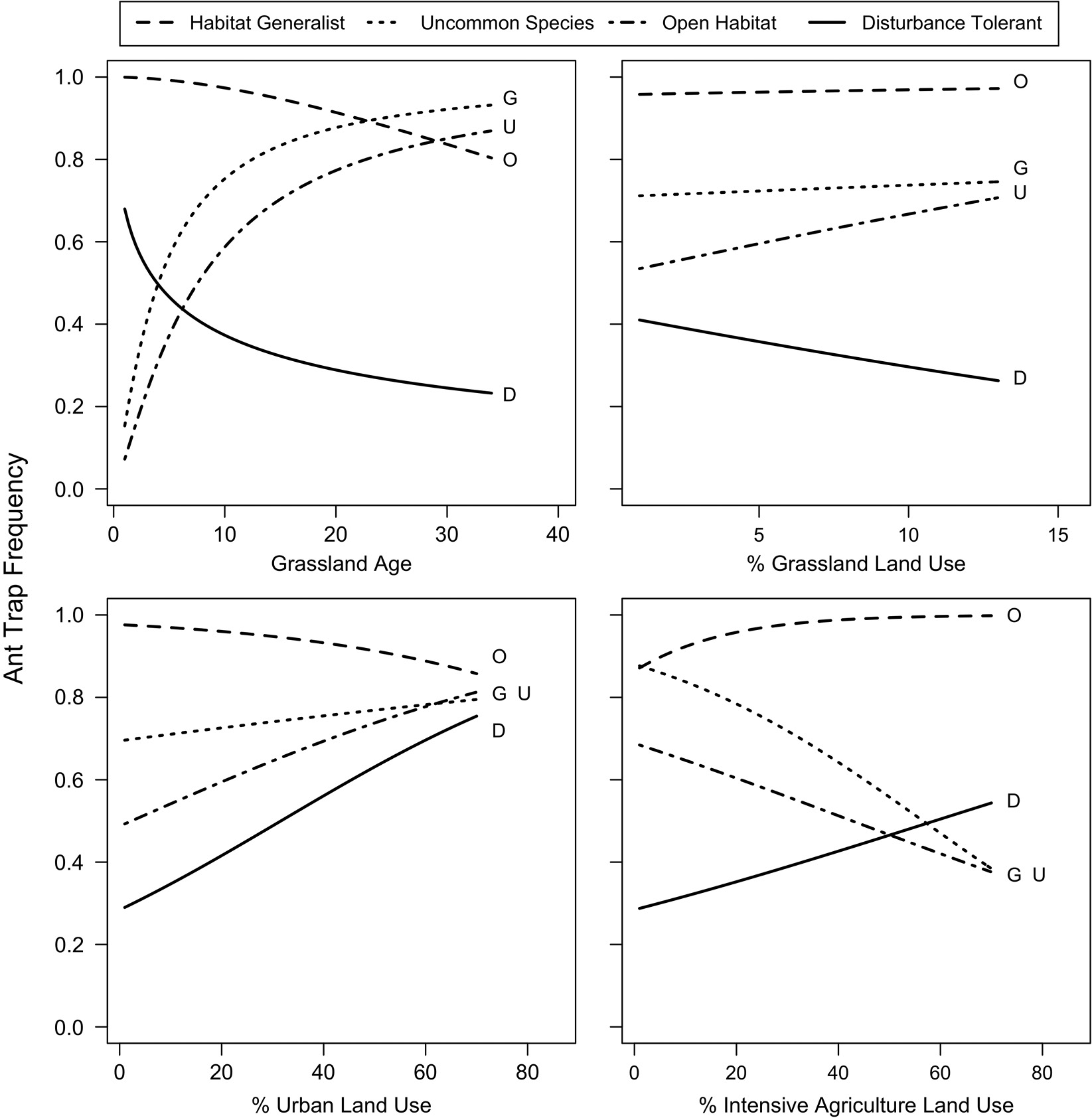
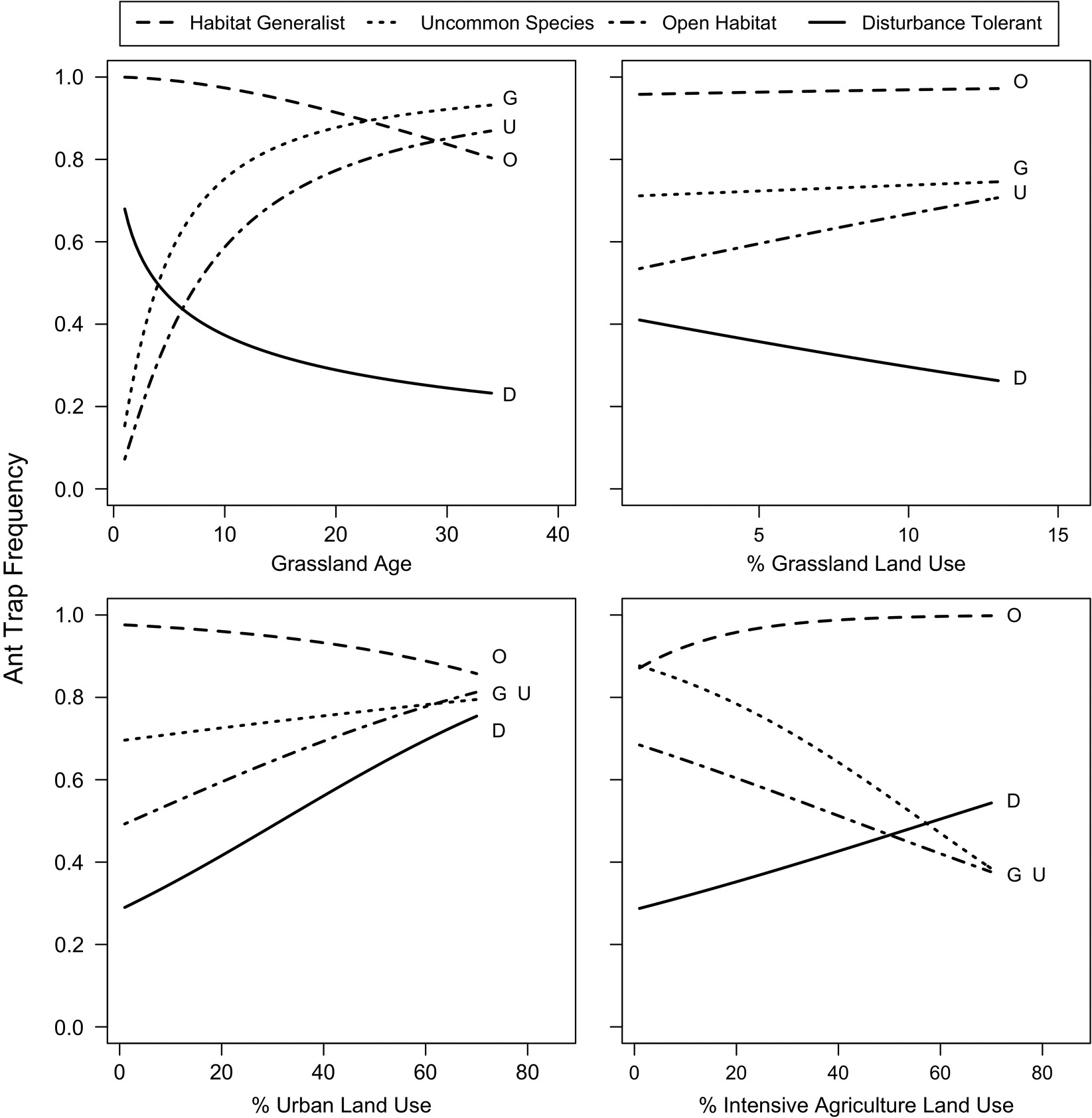
Native prairies may have hundreds of plant species, but restored and constructed grasslands usually have much lower plant species richness (Nemec, Reference Nemec2014; Peters et al., Reference Peters, Campbell and Dienno2016). The Conservation Reserve Program (CRP) and other programs provide incentives for farmers to retire crop fields on highly erodible land and seed them with native plants (USDA, 2016). Although constructed grasslands have lower plant diversity than native prairies, plant species richness is often unrelated to ant species richness in restored and constructed grasslands (Dahms et al., Reference Dahms, Wellstein, Wolters and Dauber2005; Peters et al., Reference Peters, Campbell and Dienno2016). Instead, the duration since disturbance, soil characteristics, or surrounding land cover types are more important determinants of the diversity and composition of grassland ant communities (Phipps, Reference Phipps2006; Menke et al., Reference Menke, Gaulke, Hamel and Vachter2015; Campbell & Crist, Reference Campbell and Crist2017). As the site recovers from disturbance, species composition and functional group dominance shift toward habitat specialists and subterranean foragers (Reference Dauber and WoltersDauber & Wolters, 2005; Campbell & Crist, Reference Campbell and Crist2017) (Figure 1.2).
Changes in ant species occurrences among constructed grasslands along gradients of grassland age (time since planting) and different amounts of surrounding land use/land cover types in agricultural landscapes of southwest Ohio. Ant trap frequency represents the proportional occurrence of ant species among pitfall traps at each site, with ant species grouped according to their habitat affinities.
Urban and Agriculture
Relatively few studies have quantified ant biodiversity of urban and agricultural environments in the Midwest, despite the importance of these environments in the region and around the globe. Many ant species thrive in urban environments because of the diversity of habitat types and the heterogeneity of environmental conditions. Unlike most vertebrates, which require extensive habitat areas, ants can inhabit small patches, and several species occur in isolated groups of trees, small plantings, or vacant lots (Uno et al., Reference Uno, Cotton and Philpott2010; Reference Guénard, Cardinal-De Casas and DunnGuénard et al., 2015). A citizen science project in urban North Carolina has recorded over 140 species, including both rare and invasive ants (Lucky et al., Reference Lucky, Savage and Nichols2014). Another study found 79 ant species, ranging from the expected exotic species, Solenopsis invicta and Tetramorium sp. E, to rarely recorded hypogaeic ant genera such as Discothyrea and Proceratium (Reference Guénard, Cardinal-De Casas and DunnGuénard et al., 2015). At smaller scales, the urban street medians of New York City host at least 13 species of ants, with patterns of species occurrence and richness that depend on median area (Reference Pećaravić, Danoff-Burg and DunnPećaravić et al., 2010). Some less-disturbed sites such as the urban forests, gardens, and vacant lots of Detroit, Michigan, and Toledo, Ohio, have 33 and 28 ant species, respectively, with significant differences in ant species composition among habitats due to the heterogeneity and isolation of urban habitat islands (Uno et al., Reference Philpott, Perfecto, Armbrecht, Parr, Lach, Parr and Abbott2010).
The opposite is true for the agroecosystems in the Midwest, characterized by crop monocultures (primarily corn-soybean rotations), high chemical input, and frequent soil disturbance. The agricultural biodiversity of ants in the Midwest, and the United States in general, has not been quantified beyond species records and anecdotal observations. Reference Peck, McQuaid and CampbellPeck et al. (1998) found 41 species of ants in 90 fields (10 crop varieties) across North Carolina and Virginia, with 18 ant species occurring across 27 corn and soybean fields. Cunningham-Minnick and Campbell (unpublished data) recorded 26 ant species across 5 corn and soybean fields in Ohio, the most abundant of which were Lasius neoniger, Prenolepis imparis, and Tetramorium caespitum. Ants respond negatively to disturbance by pesticides and intensive tillage. House (Reference House1989) found that fields with conservation tillage have higher structural complexity, less soil disturbance, and increased food resources, such as soil arthropods. Together, these factors result in higher ant richness, biomass, and predaceous activities in fields with conservation compared to conventional tillage (Reference House and StinnerHouse & Stinner, 1983; Peck et al., Reference Peck, McQuaid and Campbell1998; Haddad et al., Reference Haddad, Cividanes and Martins2011).
Invasive Ant Species
Interestingly, the Midwest has few exotic species and none of the dominant invasive species, such as the Red Imported Fire Ant (Solenopsis invicta) and the Argentine Ant (Linepithema humile), which are common in southern and western United States. Several exotic species (Cardiocondyla obscurior, Tapinoma melanocephalum, Hypoponera punctatissima, Monomorium pharaonis, Monomorium floricola, Paratrechina longicornis, and Pheidole flavens) are found in greenhouses and other heated buildings, but have not become established beyond these structures. The most abundant introduced species is Tetramorium sp. E (formerly Tetramorium caespitum), the pavement ant, first introduced in the 1800s from Europe. It has become established across most of the United States where it dominates disturbed habitats, especially urban spaces (Uno et al., Reference Uno, Cotton and Philpott2010; Penick et al., Reference Penick, Savage and Dunn2015). Tetramorium sp. E also displaces other ants in sites that are already disturbed Reference Steiner, Schlick-Steiner and Vanderwal(Steiner et al., 2008; Uno et al., Reference Uno, Cotton and Philpott2010), and may be an agricultural pest (Reference Merickel and ClarkMerickel & Clark, 1994). Because Tetramorium sp. E has been naturalized for over a century, impacts are limited primarily to highly disturbed habitats. A more aggressive Tetramorium species (T. tsushimae) has recently been discovered as an invasive species in Missouri and Illinois,and could potentially spread throughout the Midwest with greater impacts on native ant communities (Steiner et al., Reference Steiner, Schlick-Steiner and Trager2006). Nylanderia flavipes, introduced in the early 1900s from Asia, has been detected in the Midwest and Great Lakes regions but seems to blend into the community with little recorded impact beyond displacing the ecologically similar Nylanderia faisonensis (Wetterer, Reference Wetterer2011). Myrmica rubra and M. scabrinodis, invasive in New England (Reference Wetterer and RadchenkoWetterer & Radchenko, 2011; Ellison et al., Reference Ellison, Gotelli, Farnsworth and Alpert2012), have not been detected in the Midwest but may also spread to this region with time.
Landscape Variation in Ant Diversity
Landscape-level variation in topography, soils, and vegetation structure act as strong environmental filters of the regional species pool to limit ant species richness in local ecosystems (Reference Bestelmeyer and WiensBestelmeyer & Wiens, 2001; Reference Spiesman and CummingSpiesman & Cumming, 2008). Land use, management practices, and invasive species are superimposed on these natural drivers of ant species diversity, and may have strong effects on ant communities (Holway et al., Reference Holway, Lach, Suarez, Tsutsui and Case2002; Morrison, Reference Morrison2002; Crist, Reference Crist2009; Chapter 5). The ant species richness and composition found in local remnant ecosystems, such as a grassland or forest, are therefore shaped by historical factors as well as more recent land-use changes (Dunn et al., Reference Dunn, Guénard, Weiser, Sanders, Lach, Parr and Abbott (2010; Philpott et al., Reference Philpott, Perfecto, Armbrecht, Parr, Lach, Parr and Abbott2010). In more mesic areas of the Midwest, forests now occur primarily as riparian buffers or small woodlots (Medley et al., Reference Medley, Okey, Barrett, Lucas and Renwick1995). Likewise, grasslands established through conservation incentives are often on marginal agricultural lands that are too wet or sloping for cultivation. Most ground-nesting ant species prefer well-drained soils, so that topography and soil texture may act as a strong filter for establishment (Reference Campbell and CristCampbell & Crist, 2017). The surrounding land uses also differ in their suitability to ant species, which may further limit the ant species that are available to colonize isolated forest or grassland habitats.
Variation in structure of natural habitats and surrounding land use may limit the number of ant species found within habitats (alpha diversity) and cause large turnover in species composition among habitats (beta diversity) (see Anderson et al., Reference Anderson, Crist and Chase2011, for a review of these concepts). Crist (Reference Crist2009) found that fragmented habitats averaged 75 percent turnover in ant species composition (as measured by an additive measure of beta diversity), a pattern that was consistent across habitat type, spatial extent, and region. In studies from the Midwest and eastern United States (Table 1.1), turnover in ant species composition averages 49 percent of the total species richness in forest habitats, and 70 percent of the total richness in grassland and urban habitats. Crist (Reference Crist2009) focused on studies of fragmented habitats that are predicted to have greater levels of beta diversity, whereas those in Table 1.1 include both large, continuous habitats as well as fragmented patches. The lower turnover in species composition among forests than in grassland patches may also be due to a greater size or age of forest compared to grassland patches. Land uses in the surrounding landscape may also influence local ant diversity and turnover in species composition among habitats. Our studies in constructed grasslands showed that groups of ant species had contrasting responses to surrounding land uses in ways that reflected their known habitat affinities (Figure 1.2). In other regions, the surrounding landscape configuration and composition explained significant variation in ant species composition (Reference Spiesman and CummingSpiesman & Cumming, 2008). Studies of reconstructed or restored habitats show that habitat age may also be important to developing a diverse local ant community (Phipps, Reference Phipps2006; Menke et al., Reference Menke, Gaulke, Hamel and Vachter2015; Campbell & Crist, Reference Campbell and Crist2017). This suggests that dispersal of alates from other suitable habitats in the landscape is a limiting factor to local ant diversity, and may contribute to high levels of species turnover among isolated habitats (Crist, Reference Crist2009).
Ant Functional Roles in Ecosystems
Forests
Forest ant communities can be divided into three layers of vertical stratification: (1) ants that forage within and beneath the leaf litter (hypogaeic); (2) ants that forage above the leaf litter (epigaeic); and (3) ants that forage on tree trunks and into the canopy. Subterranean ants include root-aphid tenders in the genus Lasius (subgenera Cautolasius, Chthonolasius, and Acanthomyops) and predatory Ponera and Stigmatomma ants. Inhabiting the leaf litter layer are small predatory and cryptic species, especially Temnothorax curvispinosus, which often makes its nests in acorns, and tiny trap jaw ants in the genus Strumigenys that are specialist predators of springtails. The epigaeic community is dominated by several Aphaenogaster species, Lasius alienus, and Camponotus, especially large species in the subgenus Camponotus. Aphaenogaster species are important seed dispersers for elaiosome-bearing understory herbs, including bloodroot, violets, and wild ginger, although several other medium- and large-bodied ants also contribute to myrmecochore dispersal (Reference Beattie and CulverBeattie & Culver, 1981).
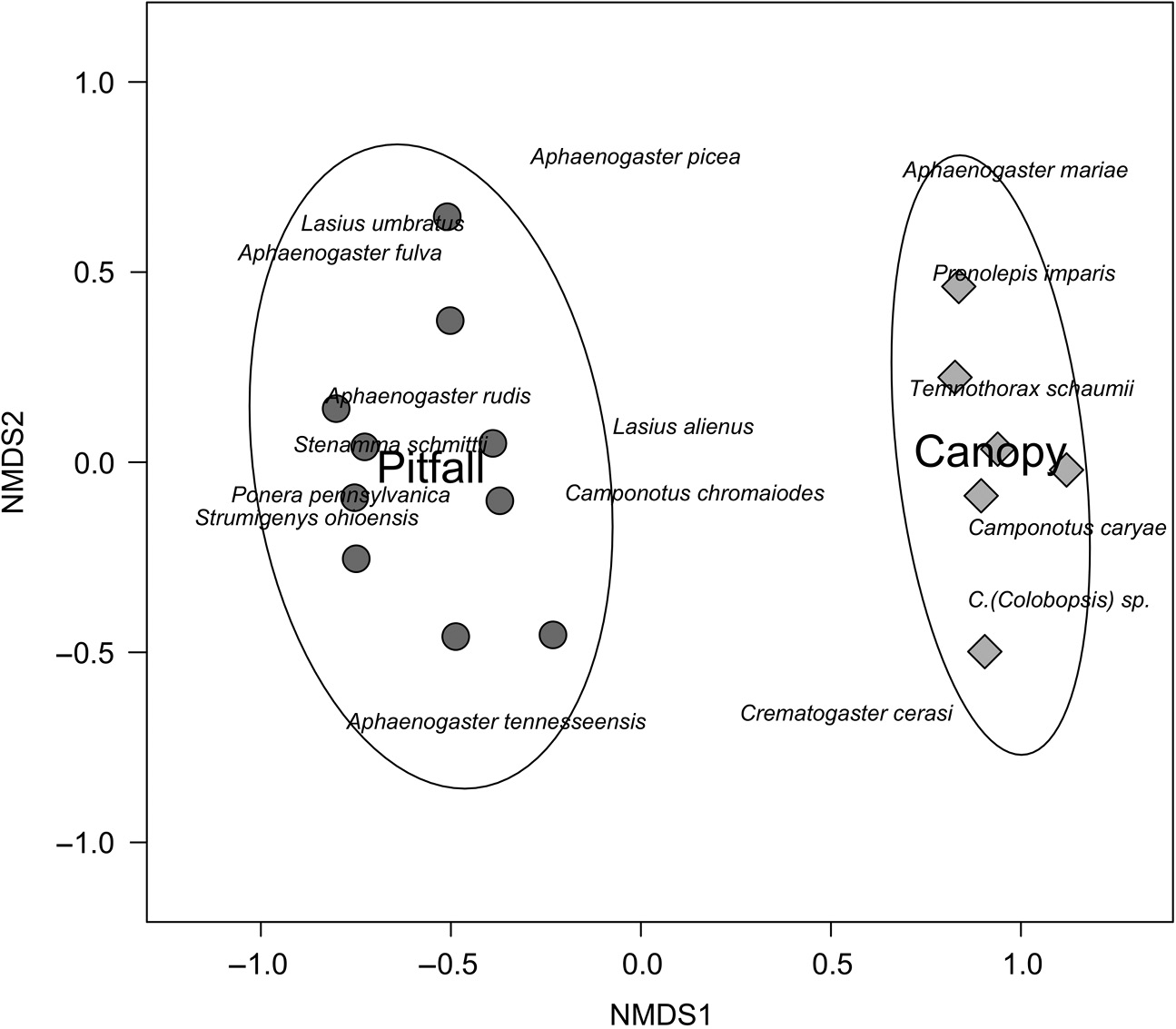
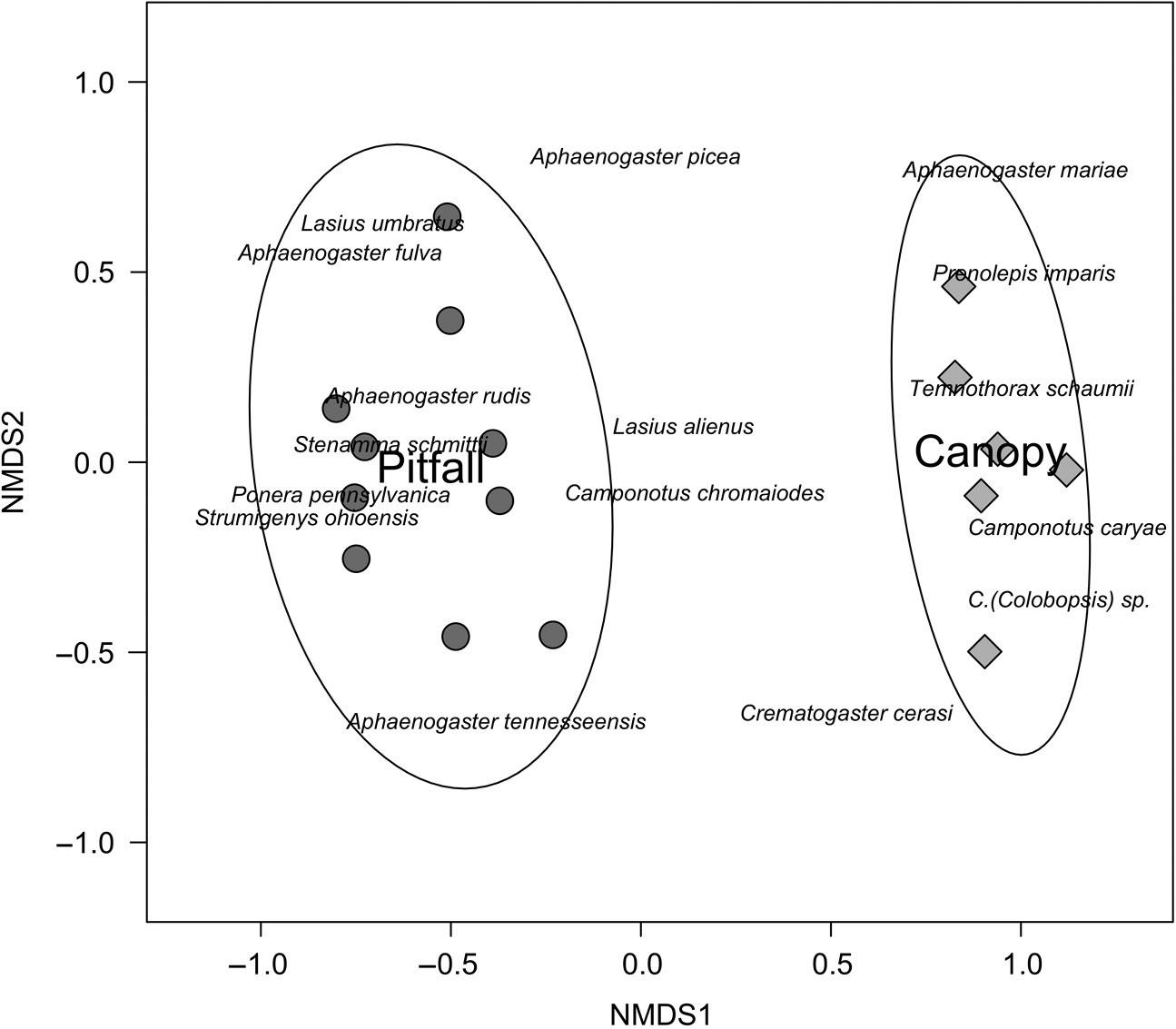
Ant communities in the forest canopy are poorly known. In a regional study of southern Ohio, we found 25 species in 96 trees and 24 forest stands using canopy fogging techniques (Campbell & Crist, unpublished data). The most numerically dominant members of the canopy community were Camponotus (Myrmentoma). Several species including C. caryae and Colobopsis spp., and Aphaenogaster mariae are exclusively found in the canopy or on tree trunks. Vertical stratification of tropical ant communities is well documented (Reference Longino and NadkarniLongino & Nadkarni, 1990); our work suggests that temperate regions may also have distinct litter, ground, and canopy specialists with a greater degree of overlap among strata (Figure 1.3).
Non-metric multidimensional scaling of ant species composition using Bray-Curtis dissimilarities of log-transformed ant abundances in pitfall traps (60 traps from 10 plots in 5 forest stands) and canopy fogging samples (24 trees from 6 forest stands) in deciduous forests of SW Ohio. Sample scores are derived from ant species abundances in six pitfall traps in 20 × 20 m plots and fogging four tree species in each forest stand. Species scores are shown for the most common ant species in each stratum. Ellipses are 95 percent confidence intervals among sample scores.
Grasslands
Ants may affect the diversity and productivity of plants indirectly as ecosystem engineers and herbivore mutualists. Many ground-dwelling ants create hot spots of soil nutrient deposition, mineralization, and aeration by tunneling and storing resources in and around their nests. The most significant soil engineers in grasslands are those that create large mounds including multiple Formica species and Lasius (Acanthomyops) claviger (Reference Lane and BassiriRadLane & BassiriRad, 2005). Formica mounds, including those of F. montana, a known prairie associate, can structure plant community composition on and around nest mounds, enrich soil nutrients, and alter soil bulk density and moisture (Reference Henderson and JeanneHenderson & Jeanne, 1992; Reference Lane and BassiriRadLane & BassiriRad, 2005). Over 18 ant species tend and protect native aphids in grasslands, including Lasius neoniger, which will interfere with parasitism by braconid wasps (Wyckhuys et al., Reference Wyckhuys, Koch and Heimpel2007), and F. montana, which has higher aphid infestations on plants near nests (Reference Henderson and JeanneHenderson & Jeanne, 1992). Formica also are facultative hosts of butterfly caterpillars (Lycaenidae) (Fiedler, Reference Fiedler2001; Coovert, Reference Coovert2005).
Some grassland ants can directly affect the diversity of plants through seed predation and dispersal. The midwestern seed predators are primarily in the genus Pheidole. Despite the hyperdiversity of this ant genus worldwide, midwestern Pheidole are not speciose, dominant, or conspicuous members of the ant community. Pheidole are often restricted to sandier soils and are more abundant in grasslands than in other habitats because of this preference for well-drained, dry habitats (Wilson, Reference Wilson2003; Coovert, Reference Coovert2005; Nemec, Reference Nemec2014; Reference Campbell and CristCampbell & Crist, 2017). The most common Pheidole species make use of alternative food sources including sugars from aphids and floral sources and insect carrion (Wilson, Reference Wilson2003; Coovert, Reference Coovert2005).
Agroecosystems
Ants in agricultural fields can affect both above- and belowground communities by interacting with multiple trophic levels including parasites, herbivores, pollinators, predators and soil organisms (Chapters 16, 17). Through these interactions, ants may be beneficial or detrimental to crop yield, and their net effects have been tested in only a few studies. Cacao plantations in Indonesia with diverse ant communities had significantly higher yields than those where the ant community was dominated by an invasive ant that reduced native ant species richness and evenness (Wielgoss et al., Reference Wielgoss, Tscharntke and Rumede2014). In the southern United States, cotton and soybean crops are often dominated by the invasive red imported fire ant (Solenopsis invicta). Eubanks (Reference Eubanks2001) found that, although S. invicta eliminated other biocontrol agents through intraguild predation, there was a net reduction of all herbivorous insects, including some of the most severe insect pests.
Ants tend, disperse, and protect a diversity of aphid species and other sap-sucking hemipteran insects in return for honeydew secretions, and can indirectly affect plant growth and crop yield through these mutualistic relationships. Aphid tending by ants increases aphid population sizes by shifting aphid growth rates from density dependent to density independent growth (Johnson, Reference Johnson2008). The soybean aphid (Aphis glycines) emerged as a serious economic pest for the $27 billion USD soybean industry, since its detection in the agricultural Midwest in 2000 (Reference Ragsdale, Landis, Brodeur, Heimpel and DesneuxRagsdale et al. 2011). Many ant species will tend soybean aphids including those commonly found in agricultural fields: Monomorium minimum, Lasius neoniger, Prenolepis imparis, and Formica subsericea (Cunningham-Minnick & Campbell, unpublished data). M. minimum also harasses or kills beneficial insects including predators and parasitoids such as lady beetles, pirate bugs, and braconid wasps (Reference Herbert and HornHerbert & Horn, 2008).
Ant modification of the agricultural soils can alter soil characteristics and belowground communities. Lasius neoniger, one of the most abundant ants in agricultural fields, can have up to 30,000 nest openings ha-1, and dig 70 cm deep (Wang et al., Reference Wang, McSweeney, Lowery and Norman1995). L. neoniger nests represent localized regions of decreased soil bulk density and increased organic matter, phosphorus, and potassium levels (Wang et al., Reference Wang, McSweeney, Lowery and Norman1995). Ant engineering of soils alters water movement, nutrient availability, mineralization, density, and turnover rates (Reference Lobry de BruynLobry de Bruyn, 1999; Chapter 18).
Urban Ecosystems
A handful of ant species are significant structural pests in our region such as Camponotus species, Tapinoma sessile, and Tetramorium cf. caespitum (Klotz et al., Reference Klotz, Hansen, Pospischil and Rust2008). These ants are higher in abundance in anthropogenic than in native habitats and can cause damage to houses by living in wood or entering houses for food and water. Some ant species, for example T. cf. caespitum, have become so integrated into human habitats that their use of human food can be detected through stable isotope enrichments of δC13 and δN15 (Penick et al., Reference Penick, Savage and Dunn2015). Ants like these are the most familiar to humans because they are encountered on a daily basis; however, they give ants a bad reputation. Most of the ant species in urban environments do not directly interact with humans and may provide ecosystem services, such as seed dispersal in forest patches and parks (Reference Thompson and McLachlanThompson & McLachlan, 2007), soil aeration and nutrient deposition (Sanford et al., Reference Sanford, Manley and Murphy2009), and suppression of herbivore pests (Klotz et al., Reference Klotz, Hansen, Pospischil and Rust2008).
North Temperate Ants in a Changing World
Climate Change
As the anthropogenic drivers of climate change, land use, and species invasions continue to alter regional ant faunas and local community structure, significant changes are predicted in ant biodiversity and functional roles in natural and managed ecosystems. Reference Fitzpatrick, Sanders, Ferrier, Longino, Weiser and DunnFitzpatrick et al. (2011) used species distribution models (SDM) and generalized dissimilarity modeling (GDM) to predict changes in richness and composition of 66 genera of North American ants. The greatest changes in the composition of ant genera were predicted to occur in the southern United States, with 0.30–0.55 changes in Bray-Curtis dissimilarity compared to present-day distributions in those regions. The Midwest was predicted to show a 0.20–0.30 change in dissimilarity compared to current distributions of ant genera. Ant genera that included social parasites or litter and soil predators were expected to decrease in the Midwest suggesting ecosystem changes in the importance of these functional groups (Fitzpatrick et al., Reference Fitzpatrick, Sanders, Ferrier, Longino, Weiser and Dunn2011). A more focused study on range shifts in ants of eastern deciduous forests using more finely resolved ant functional groups predicted that ant species with roles as wood decomposers, seed dispersers, and leaf-litter regulators would undergo range contractions as well as northward range expansions (Reference Del Toro, Silva and EllisonDel Toro et al., 2015).
The Midwest US climate is projected to become warmer and wetter during winter, and warmer with more highly variable precipitation in summer, resulting in shifts in tree species composition in forests (Pryor et al., Reference Pryor, Scavia, Downer, Melillo, Richmond and Yohe2014). Range shifts in ant species are also likely, but may depend strongly on dispersal limitation between suitable habitats (Fitzpatrick et al., Reference Fitzpatrick, Sanders, Ferrier, Longino, Weiser and Dunn2011) and the degree to which the surrounding land use types may act as barriers to dispersal between isolated forest or grassland ecosystems, factors which are poorly known for most ant species.
At finer scales, laboratory and field experiments are beginning to elucidate temperature responses of individual ant species under climate change scenarios. Reference Pelini, Diamond and MacLeanPelini et al. (2012) conducted laboratory experiments with Aphaenogaster rudis and Temnothorax curvispinosus colonies collected along a latitudinal gradient. Ants in these common garden experiments were exposed to summer temperature regimes from their source locations as well as those predicted in the future by climate change models. A. rudis colonies had very low survival at elevated temperatures; however, the response of T. curvispinosus depended on source location, with those from cooler source locations showing decreased survival compared to those from warmer locations. These laboratory results largely confirmed initial results from a long-term field-warming experiment on ant communities demonstrating declines in the activities of seed-dispersing ants, like A. rudis (Pelini et al., Reference Pelini, Boudreau and McCoy2011).
Together, the macroscale species-distribution models and community-level experiments in eastern forests suggest that climate change will result in substantial changes to ant species diversity and their roles in ecosystem functioning over the next 50 years. Ant communities and tree composition of eastern Atlantic forests are similar to those of the Midwest United States, but the climate-change predictions for summer precipitation are more variable and extreme for the continental Midwest (Horton et al., Reference Horton, Yohe, Easterling, Melillo, Richmond and Yohe2014; Pryor et al., Reference Pryor, Scavia, Downer, Melillo, Richmond and Yohe2014). Species distribution models also predict differences in the responses of ant functional groups between the two areas of eastern deciduous forests (Fitzpatrick et al., Reference Fitzpatrick, Sanders, Ferrier, Longino, Weiser and Dunn2011). Dispersal limitation of forest ants and other species may play a greater role in the range shifts in the Midwest, where forests are more isolated by agriculture.
Agricultural Intensification
Agriculture is the predominant land use in the Midwest (Figure 1.1) but most changes over the past 50 years have been intensification of agricultural practices and reduced crop diversity rather than extensification in the amount of land in cultivation (Lubowski et al., Reference Lubowski, Bucholtz and Claassen2006). There have even been slight declines in area under cultivation over the past 20 years, mostly through conservation incentives to convert cropland to CRP grasslands, riparian forests, or pasture and hayfields (Lubowski et al., Reference Phipps2006; Renwick et al., Reference Renwick, Vanni, Zhang and Patton2008). During the same time, however, intensification of practices has increased considerably, with larger field sizes, increased use of fertilizers and pesticides, fewer crop types, and greater use of genetically modified corn and soybeans (Renwick et al., Reference Renwick, Vanni, Zhang and Patton2008). Despite increased intensification, the use of no-till or conservation tillage practices have increased significantly in the past 20 years (Renwick et al., Reference Renwick, Vanni, Zhang and Patton2008). Reduced tillage has positive effects on ants and beneficial arthropods, such as spiders and carabid beetles (e.g., Menalled et al., Reference Menalled, Smith, Dauer and Fox2007; Haddad et al., Reference Haddad, Cividanes and Martins2011), although these benefits may be partially offset by the increased use of herbicides with conservation tillage (House, Reference House1989). In addition to the roles of ants in soil modification and food-web interactions, no-till crop management may support a more diverse and abundant ant community, and facilitate dispersal between isolated natural habitats.
Urbanization
The large cities of the Midwest were major industrial centers in the twentieth century, and in recent decades have continued to expand through exurban development (Theobald, Reference Theobald2002; Grimm et al., Reference Grimm, Foster and Groffman2008). The changing boundaries of the urban-rural fringe in the Midwest usually involve the conversion of farmland into urban development (Theobald, Reference Theobald2002). Exurban development is characterized by large residential parcels that form mosaics of low-intensity housing, pasture and forest, and farmland. These landscapes differ significantly from the habitats of urban cores comprising industrial areas, high-density housing, parks, boulevards, and vacant lots. We would therefore predict diverse and heterogeneous ant assemblages in Midwest exurban landscapes with urban, disturbance-tolerant, grassland, and forest species present in different landscape elements. Where invasive ant species are more important, however, a different set of ant community dynamics may occur. For example, studies of ant communities in remnant scrub habitat of California revealed important influences of surrounding urbanization on local ant communities, particularly in how they were influenced by the invasive Argentine ant, Linepithema humile (Holway et al., Reference Holway, Lach, Suarez, Tsutsui and Case2002; Bolger, Reference Bolger2007).
Invasive Species
Few exotic ant species in the Midwest exhibit the dominant effects on native ant communities found in warmer climates, such as S. invicta and L. humile. Future climate change, however, is likely to result in significant range expansions of invasive ant species. For example, Reference Morrison, Korzukhin and PorterMorrison et al. (2005) predicted S. invicta to spread into the lower Midwest region under future climate conditions. The ecological impacts of invasive fire ants are well documented in southeastern ecosystems, where they range from strong negative to positive effects on native ant communities, depending on habitat type, disturbance, and productivity (Reference Morrison and PorterMorrison & Porter 2003; Chapters 13–15).
Ant communities in Midwest forests are also likely to change due to direct and indirect effects of tree mortality from invasive forest insect pests. The emerald ash borer (Agrilus planipennis) has caused almost complete mortality of native ash trees (Fraxinus spp., Oleaceae) in the Midwest as it spreads from the Great Lakes southward (Reference Herms and McCulloughHerms & McCullough, 2014). The treefall gaps created by ash mortality are anticipated to have multiple ecological impacts in forests, including alteration of microclimate, increased coarse woody debris, and facilitation of invasive understory plants (Reference Herms and McCulloughHerms & McCullough, 2014). The consequences for ant communities in maple-ash forests could be substantial and are likely to cause shifts in ant species composition that depend on the thermal tolerances and nesting habitats of different ant species. In addition, canopy-dwelling ants, such as some Camponotus spp., may be directly affected by the loss of host trees.
Conclusions and Future Directions
The ant fauna of Midwest North America is well described and we know a great deal about the ant species diversity and composition in natural and managed ecosystems of the region. Nonetheless, our knowledge of the regional ant fauna and patterns of species diversity belies our understanding of the roles of ants in ecosystems and their community responses to disturbance and management practices. On the basis of known ant species ranges and habitat associations, efforts are underway to predict how species distributions will shift with climate change, land use, or invasive species. Given the ubiquitous nature of ants, these changes in ant species distribution and abundance are likely to have important consequences for human-dominated ecosystems.
We identify three areas of inquiry for future study: (1) ant communities and functional roles in crop systems, especially given the potential for increasing importance of ants in conservation tillage and no-till systems; (2) ant functional roles and species interactions in multiple strata in forest ecosystems (soil, leaf litter, canopy), and how these are modified by tree mortality from invasive forest insect pests; and (3) evaluation of ants as bioindicators in constructed or restored grassland and forest habitats.
Our knowledge of ant biodiversity and functional roles in agricultural production areas is limited to a handful of papers in regions with dissimilar ant faunas, climate, and crop systems (i.e. South America, southeastern United States, Europe). Most studies to date consider specific roles in predation, plant protection, or aphid interactions, but the combined or net effects of ant communities in crop systems remains unexplored (but see Eubanks, Reference Eubanks2001; Wielgoss, Reference Wielgoss, Tscharntke and Rumede2014). Additional research is needed to determine the effects of agricultural practices (cover crops, pesticides, and decreased tillage regimes, use of genetically modified crops) on ant biodiversity and ecosystem services (especially crop yield). In particular, we need a clearer understanding of the net effects of species interactions by various ant species involved in plant protection from herbivores and the possible disservices of ants that occur from aphid protection.
Ground-foraging ants in temperate forests are well studied, and their significance as seed dispersers links them to understory herbaceous plant communities. There are substantial gaps in our knowledge, however, in how different ant species interact with herbivores and predators in the forest canopy, and how ants interact with belowground detrital food webs. Future work could explore several questions on the roles of canopy ants (Chapters 2 and 3). How do ants, such as Camponotus and Formica species, mediate plant-herbivore and plant-homopteran interactions? What is the role of host trees in determining the species diversity and functional roles of canopy ants? How will changes in tree composition and forest structure due to climate change and forest invaders (e.g. emerald ash borer, Asian longhorn beetle, invasive shrubs) alter ant biodiversity and functional roles in forests? Similarly, several interesting questions remain about the roles of ants in leaf litter and soils. What are the effects of subterranean ant species on litter and detrital food webs, or rates of litter decomposition and nutrient cycling? Controlled removals or mesocosm experiments may help determine the extent to which cryptic ant species influence the soil and litter food webs, the microbial community, and ecosystem fluxes such as decomposition, respiration, and mineralization.
Ants are increasingly used as bioindicators of environmental change, restoration success, or the diversity of other taxa. The majority of work has focused on ant functional groups in Australia and South America (Andersen, Reference Andersen1995; Reference Bestelmeyer and WiensBestelmeyer & Wiens, 1996; Reference Andersen and MajerAndersen & Majer, 2004; Reference Underwood and FisherUnderwood & Fisher, 2006). In these studies, ant functional groups are determined at the genus level, based on thermal tolerance and interspecific behavioral interactions of ants. The goals of this approach are to characterize and predict ant community responses to environmental gradients, anthropogenic disturbance (mining or farming), or management practices (grazing or logging). These efforts have been successful in using ants as bioindicators of environmental change (Reference Andersen and MajerAndersen & Major, 2004). Ant functional groups based on genera have also been applied in some regions of North America (Andersen, Reference Andersen1997; Ellison, Reference Ellison2012; Reference Moranz, Debinski and WinklerMoranz et al., 2013). In constructed grasslands of the Midwest, we found that ant indicators based on habitat fidelity and life history traits were better predictors of grassland habitat quality as measured by the biodiversity of several other animal taxa. In addition, ants and plants were complementary indicators, each predicting the biodiversity of different taxa and species that were habitat specialists (Peters et al., Reference Peters, Campbell and Dienno2016).
Ant functional groups based on genera, thermal tolerance, and behavior differ from functional groups defined by species traits that relate to specific ecosystem functions, such as predation, seed dispersal, or plant protection (Crist, Reference Crist2009). For example, the ant species that disperse seeds in temperate forests fall into Opportunists, Generalized Myrmicines, Subordinate Camponotini, and Cold-Climate Specialists functional groups, making it difficult to observe how shifts in any one of these functional groups might alter ecosystem function. One might use either approach to functional group classification depending on the study objectives, but ecological studies of most taxa use functional groups to represent species with similar patterns of resource use or similar roles in ecosystem processes. Plant functional groups, for example, are based on growth form, growth rate, reproductive strategies, nitrogen fixation, and life history traits (Voigt et al., Reference Voigt, Perner and Hefin Jones2007). Bee functional groups are determined by plant specificity, tongue length, body size, or sociality (Hoehn et al., Reference Hoehn, Tscharntke, Tylianakis and Steffan-Dewenter2008). Ground beetles are used in Europe to assess restoration and environmental quality with functional groups based on species traits including body size, dispersal abilities, and reproduction (Homburg et al., Reference Homburg, Homburg, Schäfer, Schuldt and Assmann2013). Because ant species are well known in temperate systems, it should be possible to build on our knowledge of species and ecological traits that reflect resource use and functional roles in ecosystems, and use them to understand how ant functional diversity changes in response to climate change or land use (e.g. Fitzpatrick et al., Reference Anderson, Crist and Chase2011; Reference Del Toro, Silva and EllisonDel Torro et al., 2015).
Climate change, agricultural intensification, and urbanization pose significant challenges in predicting shifts in species ranges because climatic niche models typically assume that suitable habitat is available as species ranges shift over time. Ants exhibit a wide range of habitat affinities and thermal tolerances, making them good models for understanding the interactions between climate, land use, and invasive species. The great numerical abundance of ants also means that we can be assured they will have important roles in the novel ecosystems of the future.