Maltreatment is a persistent and pervasive social problem with devastating long-term effects on children's social, emotional, and cognitive development. Maltreating families constitute one of the highest risk populations, often showing extreme levels of poverty, social isolation, stressful life events, and parental and child psychiatric symptomatology (Trocmé et al., Reference Trocmé, Fallon, MacLaurin, Daciuk, Felstiner and Black2005). Maltreated children are at high risk for the development of behavior problems of a dual externalizing and an internalizing nature, delinquency, and substance abuse, in addition to academic underachievement and school drop-out (Salzinger, Feldman, Hammer, & Rosario, Reference Salzinger, Feldman, Hammer and Rosario1993; Shonk & Cicchetti, Reference Shonk and Cicchetti2001; Toth, Cicchetti, Macfie, Rogosch, & Maughan, Reference Toth, Cicchetti, Macfie, Rogosch and Maughan2000). Maltreatment has also been associated with the adoption of negligent parental conduct and violence in adulthood, therefore contributing to the establishment of an intergenerational cycle of neglect and abuse (Egeland, Jacobvitz, & Sroufe, Reference Egeland, Jacobvitz and Sroufe1988).
Despite these documented negative effects linked to maltreatment, and the enormous human, social, and health-related costs associated with this problem, there are relatively few theoretically driven, well-designed, and evaluated programs that target maltreating parents (Cicchetti & Valentino, Reference Cicchetti, Valentino, Cicchetti and Cohen2006; MacMillan et al., Reference MacMillan, Wathen, Barlow, Fergusson, Leventhal and Taussig2009). Following the documented failure of programs offering didactic instruction to maltreating parents (Daro, Reference Daro1988), efforts have focused on developing home visitation programs offering social support and interactive coaching. However, in general, these programs have not included an intensive theoretically based model for changing the early dysfunctional interactive patterns of maltreating caregivers and their children that lead to the compromised developmental attainments that accompany maltreatment. It is of the most importance that few intervention programs in the field of maltreatment have been tested using randomized control designs and targeting children under school age (Schonkoff & Philips, Reference Schonkoff and Philips2000). In addition, many studies rely exclusively on outcome measures assessing parental change in attitudes or stress levels or institutional measures of out of home placement time or type. These outcome measures do not provide evidence of the quality of the caregiver–child relationship or of child functioning. Although the mission of the child welfare system is to protect children's development, there are very few studies that have included assessments of core developmental constructs when evaluating intervention outcomes (see MacLeod & Nelson, Reference MacLeod and Nelson2000). Attachment theory provides a solid foundation for both understanding the risk and resiliency factors involved in the development of maltreated children, and guiding the development and evaluation of intervention programs for this multiple-risk population. Accordingly, this is the first study to evaluate the efficacy of a short-term attachment-based intervention program aimed at increasing maternal sensitivity and child attachment security and reducing child attachment disorganization and behavior problems among maltreated children.
According to attachment theory, infants’ experiences linked to using the parent or other attachment figure for comfort and protection in times of distress form the basis for the development of internal working models, which have far-reaching consequences for child socioemotional development. Thus, a child who has experienced a secure relationship with his parent, that is, he has been able to use the parent as a safe haven in times of need, is expected to develop a capacity for self-regulation and an internal model of himself as being a competent individual and of others as being dependable (Bretherton, Reference Bretherton, Bretherton and Waters1985). In support of this model are results of several longitudinal studies linking the quality of children's early attachment relationships to socioemotional functioning in close relationships, peer, and educational contexts throughout development (see Grossmann, Grossmann, & Waters, Reference Grossmann, Grossmann and Waters2005). Insecure attachment, particularly in the context of multiple biological and ecological risk factors, has been shown to increase the risk for externalizing or internalizing psychopathology (De Klyen & Greenberg, Reference De Klyen, Greenberg, Cassidy and Shaver2008). One type of child attachment insecurity, disorganization, has been consistently shown to be quite stable in the absence of intervention, to be a significant risk factor for psychopathology, and to longitudinally predict maladaptation between early childhood and young adulthood (Lyons-Ruth & Jacobvitz, Reference Lyons-Ruth, Jacobvitz, Cassidy and Shaver2008; Moss, Cyr, Bureau, Tarabulsy, & Dubois-Comtois, Reference Moss, Cyr, Bureau, Tarabulsy and Dubois-Comtois2005). Children with disorganized attachment to their primary caregiver demonstrate an absence or breakdown of an organized attachment strategy for seeking proximity to the caregiver in times of distress (Main & Solomon, Reference Main, Solomon, Greenberg, Cicchetti and Cummings1990). Attachment disorganization is also highly prevalent among maltreated children, with some 32% to 86% classified in this category (van IJzendoorn, Schuengel, & Bakermans-Kranenburg, Reference Van IJzendoorn, Schuengel and Bakermans-Kranenburg1999).
A central tenet of attachment theory is that the quality of the attachment relationship is dependent on the sensitivity of the caregiver's responsiveness to the needs of the offspring (Ainsworth, Blehar, Waters, & Wall, Reference Ainsworth, Blehar, Waters and Wall1978). Sensitive caregivers both accurately perceive children's emotional signals that govern their proximity-seeking behavior, and respond in an appropriate and contingent manner. Extreme parental insensitivity, frightened/frightening behavior, and atypical caregiving have been linked to the development of disorganized attachment in infants and preschoolers (Lyons-Ruth, Bronfman, & Parsons, Reference Lyons-Ruth, Bronfman and Parsons1999; Madigan et al., Reference Madigan, Bakermans-Kranenburg, van IJzendoorn, Moran, Pederson and Benoit2006; Schuengel, Bakermans-Kranenburg, & van IJzendoorn, Reference Schuengel, Bakermans-Kranenburg and van IJzendoorn1999). Experimental studies with both animal and human populations have shown that early parental sensitivity to child needs and signals, and the parent's capacity to respond to them appropriately, is a key mechanism in shaping brain development and the substrate of mental processes involved in different aspects of cognitive functioning related to emotion regulation and communication (for a review, see Schore, Reference Schore2001). Longitudinal studies with human populations have demonstrated that both sensitive caregiving behavior and secure attachment relationships at infancy and preschool are associated with significantly lower risk for development of psychopathology and school underachievement (Carlson, Reference Carlson1998; Moss & St-Laurent, Reference Moss and St-Laurent2001; NICHD Early Child Care Research Network, 2005).
Evidence for the role of maternal sensitivity in the development of secure attachment has been provided by a number of prevention and intervention trials, conducted with clinical and nonclinical samples aimed at improving the quality of early parent–child interaction and child attachment. These programs have generally involved mother–infant dyads in shorter (5–16 weeks) or longer term (20 weeks to 1 year) programs generally involving weekly visits in the home setting. In the shorter term model, interveners focus primarily on modifying caregiver's interactive behavior with the child toward greater sensitivity, often by providing video feedback (e.g., Bakermans-Kranenburg, Juffer, & van IJzendoorn, Reference Bakermans-Kranenburg, Juffer and van IJzendoorn1998; Dozier et al., Reference Dozier, Peloso, Lindhiem, Gordon, Manni and Sepulveda2006; Moran, Pederson, & Krupka, Reference Moran, Pederson and Krupka2005), whereas more long-term approaches include psychotherapy and social support, with a focus on mothers’ reinterpretation of childhood experiences in relation to their current caregiving (e.g., Cicchetti, Rogosch, & Toth, Reference Cicchetti, Rogosch and Toth2006; Egeland & Erickson, Reference Egeland, Erickson, Kramer and Parens1993; Heinicke et al., Reference Heinicke, Fineman, Ruth, Recchia, Guthrie and Rodning1999; Lyons-Ruth, Connell, Grunebaum, & Botein, Reference Lyons-Ruth, Connell, Grunebaum and Botein1990; Slade, Sadler, & Mayes, Reference Slade, Sadler, Mayes, Berlin, Ziv, Amaya-Jackson and Greenberg2005).
An important meta-analysis of attachment-based intervention aimed at promoting secure attachment showed that short-term programs oriented directly at increasing the predictability, consistency, and warmth of parental behavior toward the child were more effective than the longer term, representational approaches (Bakermans-Kranenburg, van IJzendoorn, & Juffer, Reference Bakermans-Kranenburg, van IJzendoorn and Juffer2003). A subsequent meta-analysis (Bakermans-Kranenburg, van IJzendoorn, & Juffer, Reference Bakermans-Kranenburg, van IJzendoorn and Juffer2005) suggested that brief, sensitivity-based intervention programs are also more effective in changing disorganized attachment. Despite the demonstrated success of short-term attachment-based intervention for high-risk populations including mothers and children at risk for externalizing problems (Van Zeijl et al., Reference Van Zeijl, Koot, Mesman, van IJzendoorn, Bakermans-Kranenburg and Juffer2006), highly reactive infants (Klein Velderman et al., Reference Klein Velderman, Bakermans-Kranenburg, Juffer, van IJzendoorn, Mangelsdorf and Zevalking2006) and depressed mothers and their infants (Van Doesum, Riksen-Walraven, Hosman, & Hoefnagels, Reference Van Doesum, Riksen-Walraven, Hosman and Hoefnagels2008), no study has yet demonstrated the efficacy of this program for maltreating families.
However, several studies (Cicchetti et al., Reference Cicchetti, Rogosch and Toth2006; Lieberman, Gosh Ippen, & Van Horn, Reference Lieberman, Ghosh Ippen and Van Horn2006; Lieberman, Van Horn, & Gosh Ippen, Reference Lieberman, Van Horn and Ghosh Ippen2005; Lyons-Ruth et al., Reference Lyons-Ruth, Connell, Grunebaum and Botein1990; Osofsky et al., Reference Osofsky, Kronenberg, Hammer, Lederman, Katz and Adams2007; Toth, Maughan, Manly, Spagnola, & Cichetti, Reference Toth, Maughan, Manly, Spagnola and Cichetti2002) have tested the efficacy of long-term (M = 46 weeks) attachment-based preventive intervention with mother–child dyads from maltreating families (the Lyons-Ruth et al. sample, which was primarily high risk, included 32% maltreating families). The intervention models in all these studies use the child–parent relationship as the primary vehicle for improving child outcomes with additional elements of maternal and child psychotherapy. The results of the Cicchetti et al. study, notable for its use of random assignment and outcome measures of the quality of the caregiver–child relationship and of child functioning, showed a substantial reduction in infant disorganized attachment and increase in secure attachment for the intervention group. Both Lyons-Ruth et al. and Osofsky et al. found improvements in parental sensitivity and infant positive affect, but neither study involved random assignment. Toth, Maughan, et al. (Reference Toth, Maughan, Manly, Spagnola and Cichetti2002) and Lieberman et al. (Reference Lieberman, Van Horn and Ghosh Ippen2005, Reference Lieberman, Ghosh Ippen and Van Horn2006) used randomized designs with preschool-aged samples. Toth, Maughan, et al. found substantial decreases in maltreated children's negative representations of self and mother, as well as increases in their positive mother–child relationship expectations. The results of the Lieberman et al. (Reference Lieberman, Van Horn and Ghosh Ippen2005) study showed improvements in children's behavior problems, traumatic stress symptoms, and diagnostic status as well as mothers’ avoidance and distress (marginal) symptoms at posttest. A 6-month follow-up of this sample revealed durability of improvement in child behavior problems and maternal distress (both mother reported).
In numerous randomized trials, Olds and colleagues tested a long-term home-visiting intervention strategy conducted by nurses, which targeted multiple outcomes for mothers and children (Olds et al., Reference Olds, Eckenrode, Henderson, Kitzman, Powers and Cole1997, Reference Olds, Henderson, Cole, Eckenrode and Kitzman1998; Olds, Sadler, & Kitzman, Reference Olds, Sadler and Kitzman2007). More recent trials have integrated attachment theory in emphasizing both the promotion of sensitive and responsive caregiving in parent–child interactions, discussion concerning mothers’ own childrearing history and development of an empathic nurse–client relationship. Results have shown improvements in maternal sensitivity and responsiveness and in infant responsiveness and mental development. Long-term follow-up effects of nurse home visitation have shown reductions in children's behavior problems, serious antisocial behavior, and emergent substance abuse (Olds et al., Reference Olds, Henderson, Cole, Eckenrode and Kitzman1998). Follow-up of the Elmira trial, which included mothers at high risk for child maltreatment (low income, adolescent, single), showed that those visited by nurses in pregnancy and infancy had significantly fewer state-verified reports of child abuse and neglect during the 15-year period following the birth of the child. Given the diversity of services embedded in the home visiting program, it is not clear what component of the program is responsible for different effects. In addition, it is not clear that child attachment security or disorganization was influenced, as these constructs were not measured.
Parental child interaction therapy (PCIT), a long-term mother–child intervention program based on social learning theory, has demonstrated efficacy in changing outcomes for maltreated children (Chaffin et al., Reference Chaffin, Silovsky, Funderbunk, Valle, Brestan and Balachova2004). PCIT resembles the attachment-based approaches described above in focusing on improving the quality of parent–child interactions (e.g., reducing coercive cycles, increasing praise) through involvement in 25- to 28-week sessions, the majority of which include the parent–child dyad. Chaffin et al. conducted a randomized trial to test the efficacy of PCIT in preventing rereports of physical abuse among abusive parents of 4- to 12-year-olds. Results indicated that participants in PCIT were less likely to be rereported for abuse at follow-up (mean = 2.3 years). It is interesting that participants in a PCIT treatment group who also received individualized services targeting parental depression, substance abuse, and marital dysfunction did not have more favorable outcomes than those receiving only PCIT.
These studies have suggested that long-term interventions targeting improvement in the quality of the parent–child relationship may modify the early developmental trajectory of maltreated children. However, given the recent meta-analytic findings cited previously suggesting that “less is more,” and limitations in available funding for intervention, it is important to test whether improvements in both maternal and child behavior can occur following short-term attachment-based intervention. A more general limitation of the existing literature is that studies testing the effects of attachment-based intervention programs have largely been conducted with infants, although the majority of clinical referrals for disrupted parent–child relationships occur during the preschool period. Because there is relative continuity in organized attachment patterns (secure, avoidant, and ambivalent) between infancy and early school age, the basic intervention components of sensitizing parents to children's needs for comfort in stressful situations, and building appropriate responses to child attachment needs are consistent for both infants and preschoolers. However, the majority of young children with disorganized attachment to the caregiver radically change their proximity-seeking behavior with the caregiver during the preschool period and develop controlling, role-reversed relationships of a punitive or caregiving type (Main & Cassidy, Reference Main and Cassidy1988; Moss, Cyr, & Dubois-Comtois, Reference Moss, Cyr and Dubois-Comtois2004). Interveners conducting attachment-based interventions with children of preschool age must be trained to identify controlling child and accompanying parental behavior in order to meaningfully address dyadic patterns. Intervening to change disorganized/controlling behavior at preschool age is critical as it is both highly stable across the preschool period and predictive of clinical levels of externalizing and internalizing behavior problems, and later school underachievement (Moss, Cyr, et al., 2004; Moss et al., Reference Moss, Smolla, Cyr, Dubois-Comtois, Mazzarello and Berthiaume2006; Moss & St-Laurent, Reference Moss and St-Laurent2001). Successful intervention efforts during this period may serve to interrupt this problematic developmental trajectory.
Two studies have tested the effects of longer term attachment-based models with postinfancy high-risk children and their parents (Hoffman, Marvin, Cooper, & Powell, Reference Hoffman, Marvin, Cooper and Powell2006; Osofsky et al., Reference Osofsky, Kronenberg, Hammer, Lederman, Katz and Adams2007). Both studies reported positive treatment effects on child attachment, caregiver sensitivity, and parent–child communication, but were limited in that neither included a control group. Van Zeijl et al. (Reference Van Zeijl, Koot, Mesman, van IJzendoorn, Bakermans-Kranenburg and Juffer2006), using a randomized control design with mothers and children with externalizing problems, found that a short-term six-session program, which included sensitivity and discipline training, was effective in improving maternal attitudes toward sensitivity, in promoting sensitive discipline interactions, and reducing child overactive problem behavior; but it did not change maternal sensitivity or child aggressive and oppositional behavior. Thus, studies have shown the efficacy of attachment-based interventions in modifying insecure and disorganized attachment in diverse samples. However, few studies have included children beyond infancy or included pre- and posttest measures of key constructs such as maternal sensitivity and child attachment. Such measures provide evidence of change in maternal and child behavior. Results are inconsistent with respect to the impact of intervention on changing more broadband indices of child development such as behavior problems. It is most important that no study has yet demonstrated the efficacy of short-term attachment-based intervention with maltreating families.
Accordingly, this is the first study that evaluates the efficacy of a short-term attachment-based intervention with maltreating parents and their children using a randomized control trial design. We tested the following hypotheses: at posttest, in comparison with the control group, the intervention group will show an increase in parental sensitivity, an increase in the proportion of children showing secure (B) versus insecure (A, C, and D combined) attachment to the caregiver, and a decrease in the proportion of children showing disorganized (D) versus organized (B, A, and C combined) attachment. We also examined secondary effects of the intervention with respect to child behavior problems. We hypothesized that the intervention would act as a protective factor in decreasing the vulnerability of maltreated children to the development of behavior problems. Because of the inclusion of a wide age range of children in the study, we also examined the moderating role of child age on outcome measures.
Method
Participants
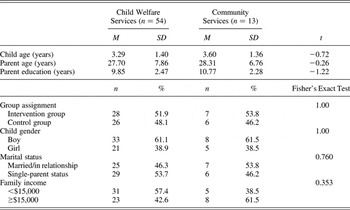
Sixty-seven French-speaking parent–child dyads were recruited through child welfare or community services in the province of Quebec (Canada) to participate in a study evaluating the efficacy of a home-visiting relationship-based intervention program. Agencies were asked to refer clients who (a) were the primary caregiver (biological mother or father) of a child between 12 and 71 months of age and were presently living with the child, (b) were primarily French speaking, (c) were not participants in any other parent–child oriented treatment program, and (d) were presently being monitored by a community (n = 13) or child welfare agency (n = 54) for child maltreatment. Concerning cases referred by the child welfare agency, maltreatment was substantiated and legally documented by intake staff of the child protective services. Identification of families was accomplished through liaison with an employee of the Child Protective Services who had legal access to family records. In cases of community monitoring, maltreatment was reported by a parent or clinical worker and the family agreed to receive parenting services and monitoring by a specially designated community organization. In these cases, legal involvement is not considered necessary. Table 1 presents the breakdown of group assignment and sociodemographic and risk variables as a function of referrals from the community and child welfare agencies. No differences between these two sources of referrals were found for any of these variables.
Comparison of families at pretest as a function of recruitment through child welfare and community services

The following types of maltreatment, corresponding to widely accepted definitions (Cicchetti & Valentino, Reference Cicchetti, Valentino, Cicchetti and Cohen2006), were documented for the sample based on case records or as reported by the parent or the clinical worker: (a) sexual abuse: sexual contact or attempted sexual contact between a caregiver or other responsible adult and a child; (b) physical abuse: injuries inflicted by an adult on a child by nonaccidental means; (c) neglect: failure to provide minimum standards of physical care; and (d) emotional abuse: failure to provide for basic emotional needs of psychological safety and security. Seventy-two percent of sample children had experienced neglect before starting the program, 7% physical abuse, and 3% sexual abuse. In addition, 16% had been both neglected and physically abused, and 2% were both neglected and sexually abused.
The study was approved by the ethics committee of the Research Institute of Child Protective Services of Quebec. A clinical project coordinator, who worked independently of the research evaluation team, contacted each eligible family to explain the research procedure and to obtain written consent for the parent and child's participation. Parents who agreed to participate all signed an informed consent form, which explained randomization to the program and which asked for participant consent to use data from all sessions for research purposes.
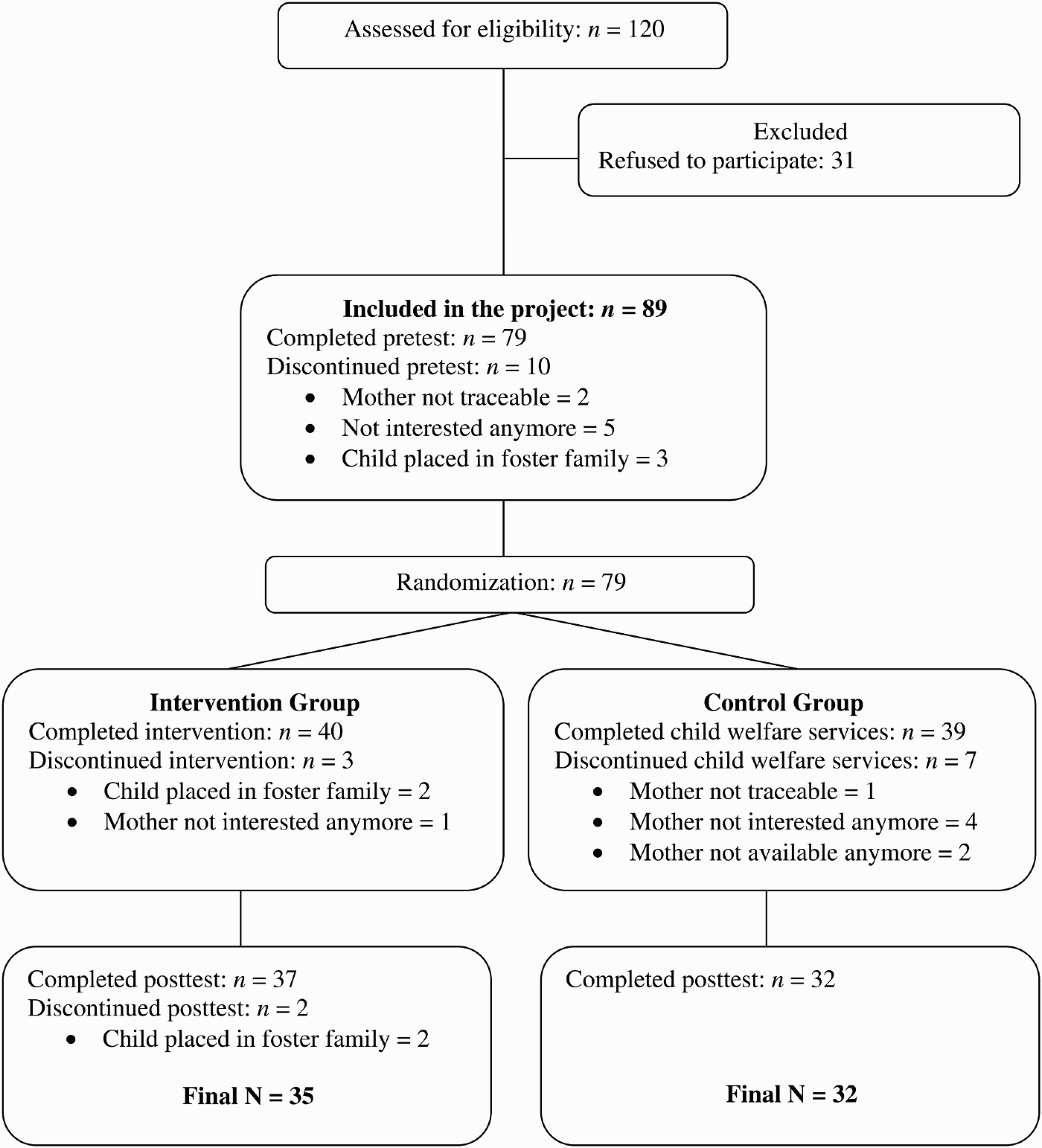
The flow chart in Figure 1 shows participant progress through the phases of the randomized trial, which lasted for 2.5 years including posttest assessment. Of the 120 participants referred to the study prior to pretest assessment and meeting study criteria, 31 (26%) refused to participate. Of the 89 participants included in the project, 79 (89%) completed the pretest assessment while 10 (11%) discontinued pretest. Seventy-nine participants were then subject to randomization: 40 in the intervention group and 39 in the control group. Out of these 79 participants, 10 (13%) dropped out during the intervention period (3 dropped out of the intervention group and 7 dropped out of the control group) and 2 other children in the intervention group discontinued the posttest. The final sample included 67 participants (94% were mothers and 61% were parents of boys): 35 in the intervention group and 32 in the control group.
A flow chart of the study's progress, detailing participant numbers during recruitment, inclusion, randomization, and experimentation processes.
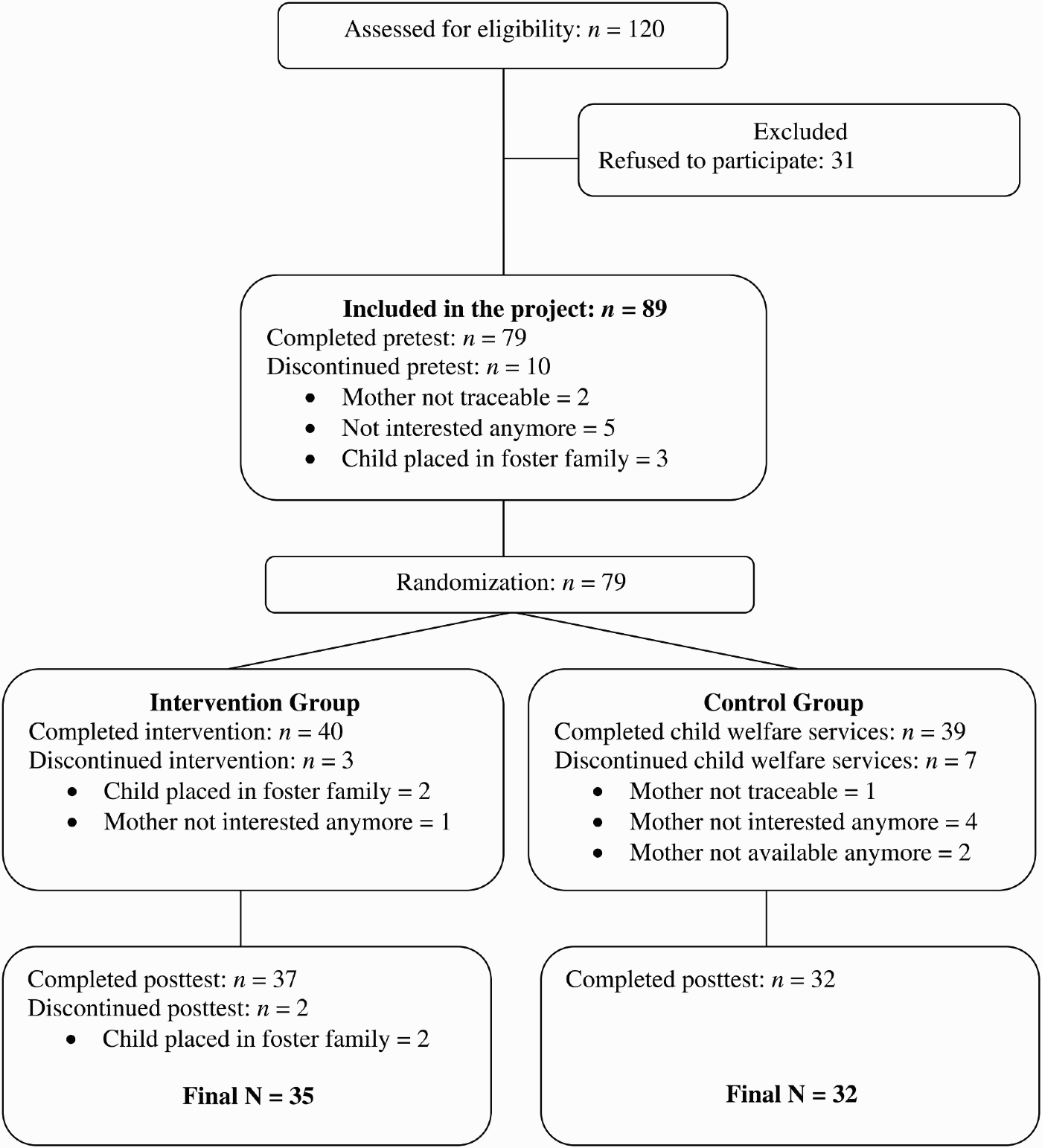
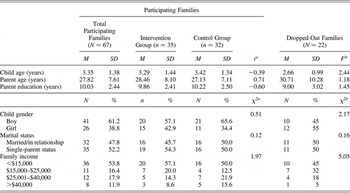
Table 2 presents values of the baseline demographic variables (including child gender and age, parent age, marital status, family income, and parental education). At pretest, children were on average 3.35 years of age (SD = 1.38 years, range = 12–71 months of age) and parents ranged in age from 18 to 49 years (M = 27.82 years, SD = 7.61 years). Fifty-four percent of families had an income (in Canadian dollars) under $15,000, 16% earned between $15,000 and $25,000, 18% earned between $25,000 and $40,000, and 12% earned $40,000 or more. Fifty-two percent of children were living in a single parent family and 54% of parents did not finish high school. The poverty threshold in Canada in 2006 was approximately $25,000 for a family of one adult and one child, and approximately $30,000 for a family of two adults and one child (Statistics Canada, 2008). According to these norms, our sample clearly constitutes a very high-risk sample, comparable to other maltreating samples (for a review, see Cicchetti & Valentino, Reference Cicchetti, Valentino, Cicchetti and Cohen2006), with only a third of participating families earning more than $25,000. The t test and chi-square analyses did not show any significant differences between the intervention and control groups on any demographic variables. Analyses comparing participants who completed the project with those who dropped out following baseline assessments (demographic, sensitivity, child behavior problems) revealed no significant differences between the groups on any of these variables (see Table 2 and Table 3).
Comparison of the intervention and control groups on sociodemographic variables at pretest
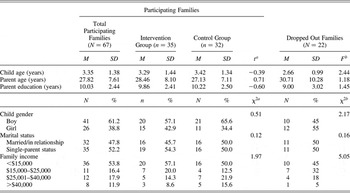
aStatistical analyses performed on participating families only (N = 67), in which the intervention group was compared to the control group.
bStatistical analyses performed on all participants included in the project (N = 89), which were compared to the dropped out participants, intervention, and control groups.
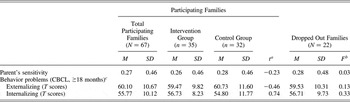
Comparison of intervention and control groups on target variables at pretest

Note: CBCL, Child Behavior Checklist.
aStatistical analyses were performed on participating families only (N = 67), in which the intervention group was compared to the control group.
bStatistical analyses were performed on all participants included in the project (N = 89), which were compared to the dropped out participants, intervention, and control groups.
cCBCL intervention group, n = 30; control group, n = 29.
Measures and procedure
Participating families completed pretest measures during a 2-hr home and a 1-hr lab visit, scheduled approximately 1 week apart. During the home visit conducted by two trained research assistants, the child's primary attachment figure completed a demographic questionnaire and the Child Behavior Checklist (CBCL; Achenbach & Rescorla, Reference Achenbach and Rescorla2000). Immediately following the home visit, caregiver sensitivity was assessed using the Maternal Behavioral Q-Sort, based on observations performed throughout the visit. The attachment separation–reunion procedure was conducted during the subsequent lab visit. Following the pretest assessments, families were randomly assigned to the intervention or control group using a simple 1:1 block allocation sequence.
One week after completion of pretesting, the 8-week home-visiting program began for the intervention group. Both the intervention and control groups received the standard agency services, which consisted of a monthly visit by a child welfare caseworker. Agency standards for these meetings are not uniform and usually consist of general monitoring of family conditions with respect to neglect and abuse (e.g., adequacy of nutrition and hygiene, use of noncoercive discipline). Caseworkers from the agency were also available to respond in crisis situations (e.g., separation or abandonment, episode of violence perpetrated by parent or other).
Approximately 10 weeks after the second pretest visit, the posttest evaluation, identical to the pretest visits, took place for both the intervention and control groups. Different research assistants conducted the pre- and posttest assessments. All assistants were blind to study hypotheses, assignment of dyads to either the intervention or control group, and to all test results. Interveners were blind to study hypotheses (excluding those concerning changing sensitivity) and pretest results.
Intervention
The intervention program, inspired by the work of Bakermans-Kranenburg et al. (Reference Bakermans-Kranenburg, Juffer and van IJzendoorn1998), Dozier et al. (Reference Dozier, Peloso, Lindhiem, Gordon, Manni and Sepulveda2006), and Moran et al. (Reference Moran, Pederson and Krupka2005) is based on enhancing maternal sensitivity to child emotional and behavioral signals, in order to promote greater child security. Essentially, sensitivity involves: (a) responding to child distress signals with comfort and appropriate structuring and (b) promoting and supporting active child exploration when the child is not distressed. Because we were dealing with a wide age range, we also adapted principles of attachment theory and results of attachment-based empirical studies particularly relevant to preschool children (Marvin, Reference Marvin, Segal, Weisfeld and Weisfeld1977; Moss, St. Laurent, & Parent, Reference Moss, St. Laurent, Parent, George and Solomon1999). Thus, intervention focused equally on verbal as well as nonverbal exchanges representative of the secure, insecure–organized, and disorganized/controlling attachment patterns and on containing parent–child role reversed behavior. All intervention sessions were primarily focused on reinforcing parental sensitive behavior by means of personalized parent–child interaction, video feedback, and discussion of attachment/emotion regulation-related themes (e.g. child negative emotion, discipline, separation anxieties). The program consisted of eight home visits of approximately 90 min structured in four sequences as follows:
1. A 20-min discussion on a theme chosen by the parent: These discussions included parents relating events that happened that week in their own lives, asking various child-related questions, discussing child-related issues, and developing alternative responses to problematic parent–child interactions.
2. A 10- to 15-min videotaped interactive session with toys provided by the intervener: The activity was individually chosen by the intervener as a function of child age and dyadic needs (e.g., building reciprocity or child proximity seeking, encouraging parent to follow child's lead, increasing parent's ability to assume parenting role).
3. A 20-min video feedback session during which the intervener played back the just-completed filmed sequence and discussed the parent's feelings and observations of self and child during the interaction: The intervener's probes focused on positive sequences and providing feedback that reinforced parental sensitive behavior toward the child and its impact on child behavior.
4. A 10- to 15-min wrap-up session during which progress was highlighted and the parent was encouraged to continue similar activities with the child during the coming week.
Four clinical workers with experience in child welfare settings were trained by attachment experts to observe and understand attachment behavior in infants, toddlers, and preschoolers. Interveners had varied academic qualifications: three had bachelor level degrees in psychology and one had a master's degree. Three had extensive experience (>10 years) in working in youth protection settings, whereas one had less than 5 years experience. Training consisted of readings on attachment theory and viewing videotaped segments of infant and preschool attachment behavior with an expert who focused on identifying functional and dysfunctional patterns. An intervention manual published in French (Larin, St-Georges, Jacques, Otis, & Desaulniers, Reference Larin, St-Georges, Jacques, Otis and Desaulniers2006) described the rationale and components of the program, and listed age-appropriate parent–child activities and discussion themes. To ensure treatment integrity, interveners were supervised on a weekly basis by a member of the project staff with expertise in the intervention method. To check treatment delivery against training standards, some sessions were videotaped for use in supervision.
Maternal sensitivity
The Maternal Behavior Q-Set (MBQS; Pederson & Moran, Reference Pederson and Moran1995) is a 90-item instrument for measuring the quality of caregiving behavior during parent–child interactions in the home. The instrument is designed to be applicable to a wide developmental range (3 months to 5 years; G. Moran, personal communication, 2007). Each item describes potential maternal behaviors. Items are first sorted as being most-like, neutral, or unlike the parent under observation. Each group of items is then sorted again into three groups, yielding a total of nine clusters of items. Items in the first cluster, perceived as most descriptive of the mother, are assigned a score of 9; items in the second group receive a score of 8, and so on. Correlations, corresponding to the score for parental behavior, are calculated between observer sorts and a criterion sort for the prototypically sensitive and responsive parent provided by the developers of the instrument. Thus, scores vary from −1.0 (least sensitive/responsive) to 1.0 (prototypically sensitive/responsive). Several studies have demonstrated the validity of the MBQS in predicting attachment security in infants and preschoolers, and associations with other assessments of caregiving behavior, such as the Ainsworth maternal sensitivity scales (Ainsworth et al., Reference Ainsworth, Blehar, Waters and Wall1978; Pederson, Gleason, Moran, & Bento, Reference Pederson, Gleason, Moran and Bento1998; Tarabulsy et al., Reference Tarabulsy, Bernier, Provost, Maranda, Larose and Moss2005). Intraclass correlations between pairs of observers averaged .84 at pretest and .81 at posttest.
Child attachment
The extensively validated Ainsworth Strange Situation Procedure (Ainsworth et al., Reference Ainsworth, Blehar, Waters and Wall1978) was conducted during a lab visit to assess child attachment in infants aged 12 to 24 months. This procedure consists of eight 3-min separation–reunion episodes between the parent and the child and involves a female stranger: (a) parent and child are introduced to the experimental room and procedure, (b) parent and child alone, (c) stranger comes in and has contact with the parent and child, (d) first separation between parent and child, (e) first reunion: parent comes back and stranger leaves, (f) second separation between parent and child, (g) stranger comes in, and (h) second reunion: parent comes back. The Preschool Separation–Reunion Procedure (Cassidy, Marvin, & the MacArthur Working Group on Attachment, Reference Cassidy and Marvin1992) was conducted to assess child attachment in children aged 2 to 6 years of age. This procedure was chosen because it has been validated in studies with children in this age range (Moss, Bureau, Cyr, Mongeau, & St-Laurent, Reference Moss, Bureau, Cyr, Mongeau and St-Laurent2004; NICHD Early Child Care Research Network, 2001) and because the attachment procedures and coding systems of the infancy and preschool systems are highly compatible both conceptually and technically. Any differences between the two account for developmental changes in the child (e.g., greater emphasis on verbal behavior in the preschool system; inclusion in the disorganized classification of new forms of behavior, i.e., controlling) not seen in infants. The Preschool Separation–Reunion Procedure consists of four episodes lasting 3 to 5 min each (in this study, 5 min): (a) separation between mother and child, (b) reunion, (c) second separation, and (d) second reunion. During both separations, the child was left alone. Following the separations, the mother was told to rejoin the child but received no specific instructions concerning the reunions.
Both infant and preschool procedures were conducted in the same room in which age-appropriate toys were scattered. The child's attachment classification was based on behavior observed during both reunions. In addition, classification of child attachment behavior for both infants and preschoolers was based primarily on observer evaluations of the child's physical proximity to the parent and affective expression during the reunion episodes. Conversational patterns assume increasing importance as a function of child age. Both the infant and preschool systems use a four-category coding system as presented below. Further details concerning coding of infants or preschoolers can be found respectively in Ainsworth et al. (Reference Ainsworth, Blehar, Waters and Wall1978) or in Cassidy and Marvin with the McArthur Working Group on Attachment (Reference Cassidy and Marvin1992). Eleven children completed the infant procedure while 56 children completed the preschool procedure. No children changed procedures between the pre- and posttest assessments.
The secure (B) child uses the caregiver as a base that facilitates exploration of the environment and will enhance proximity to the parent in times of stress. The insecure avoidant (A) pattern is characterized by the child's physical and affective avoidance of the parent. Children classified as insecure ambivalent/dependent (C) show resistance, anger or excessive fussiness that interfere with child exploration and deriving comfort from the caregiver. Children are classified as insecure disorganized (D) or insecure other (IO) if they display inexplicable, contradictory or odd behavior in the presence of the caregiver. In the preschool system, children can also be classified as insecure controlling (Dcont) if they attempt to control their parent's behavior in a caregiving or punitive manner. Because disorganized, insecure other, and insecure controlling children all lack a coherent strategy to organize emotions and behaviors toward the caregiver at the time of the reunion, they are typically combined with the disorganized group for analyses (Moss et al., Reference Moss, Cyr, Bureau, Tarabulsy and Dubois-Comtois2005).
Videotaped reunion behavior was coded by four raters who were blind to participants’ scores on any other study measures and group assignment. Coders (two for infant and two for the preschool system) were trained by experts in each procedure, and achieved reliability with experts on a separate sample of tapes. Interjudge reliability (κ) for four-way classification (A, B, C, D) calculated on 20% of sample cases was 0.84 (infancy) and 0.82 (preschool). To assess the efficacy of the intervention, only dichotomous scores of attachment were retained, that is secure/insecure and organized/disorganized.
CBCL
Child behavior problems were evaluated by the caregiver using the CBCL (Achenbach & Rescorla, Reference Achenbach and Rescorla2000). This instrument, validated for children 18 months and older, consists of 99 items scored on a 3-point scale (not true, somewhat or sometimes true, very true or often true). The CBCL generates scores on six subscales, four of which are grouped into an internalizing dimension, that is, emotionally reactive, anxious/depressed, somatic complaints, and withdrawn syndromes, and an externalizing dimension, including aggressive behavior and attention problem syndromes. Scores are summed and then converted into normalized T scores. Adequate validity and test–retest reliability were demonstrated by Achenbach and Rescorla. The Cronbach α values for the sample were between 0.82 and 0.90 for the internalizing and externalizing scales at pretest and posttest, indicating excellent internal consistency.
Family background
A family background questionnaire containing items regarding demographic information (e.g., family income, parental education and occupation, marital status, and numbers of persons in the household) was completed by the participating parent.
Results
Preliminary analyses
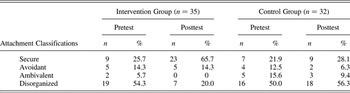
Means, standard deviations, and t test values for comparisons between the intervention and control groups at pretest on outcome measures (Q-sort sensitivity, CBCL) are presented in Table 3. Simple t test comparisons conducted on outcome measures at pretest revealed no differences between the two groups. Table 4 presents a description of the distribution of the four-way attachment classifications at pretest and posttest as a function of intervention and control groups. In order to assess whether proportions of secure or disorganized attachment classifications differed according to intervention and control groups, two 2 × 2 chi-square analyses were performed. Pretest results revealed no differences according to group assignment (intervention vs. control) on attachment security/insecurity, χ2 (2, N = 67) = 0.14, p = .71, and organization/disorganization, χ2 (2, N = 67) = 0.12, p = .73 (see attachment pretest data in Table 4).
Distribution of attachment classifications at pretest and posttest as a function of intervention and control groups

Further analyses were undertaken to identify covariates (child gender, parental age, and family socioeconomic status [SES] risk index) that were significantly related to posttest outcome measures. The SES risk index was computed by giving 1 point for the occurrence of any of these indices: family income under $15,000, parent did not complete high school, and single parent status. A higher score on the SES risk index indicates greater vulnerability. Because of the variability in child age (range = 1–5 years), this variable was not considered as a potential covariate, but as a possible moderating factor on outcome variables (sensitivity, child attachment, and behavior problems). Parental sensitivity at posttest was not associated with child gender (t = 1.27), but it was related to parental age and SES risk index (r = .26, p < .05, and r = −.24, p < .05, respectively). Therefore, the latter two variables were included as control variables in all analyses on sensitivity. No covariates were found for child externalizing or internalizing behavior problems (r = .01–.15, and t = 1.07 and 1.48). Finally, t test and chi-square analyses on attachment security and disorganization revealed no potential covariates (t = −0.19 to −0.59), χ2 (2, N = 67) = 0.47, ns, and χ2 (2, N = 67) = 0.84, ns.
Intervention effects
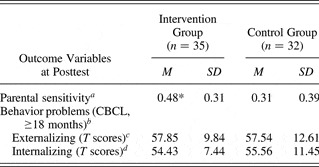
In order to test the efficacy of the intervention on the outcome measures, three separate univariate analyses of covariance (ANCOVAs) were performed on posttest measures of parental sensitivity and child externalizing and internalizing problems, with the intervention/control groups as the between-subject factor. Only analyses involving behavior problems included 59 children instead of the full sample of 67, because the CBCL has not been validated for infants under 18 months of age. These analyses were used to examine group differences at posttest, with initial scores (pretest) on each variable being entered as a covariate. In addition, family SES risk index and parental age were also included as covariates for analyses on parental sensitivity. The use of the ANCOVA is recommended when testing treatment efficacy (Gliner, Morgan, & Harmon, Reference Gliner, Morgan and Harmon2003) and has been used in comparable studies assessing the efficacy of interventions (e.g., Drew et al., Reference Drew, Baird, Baron-Cohen, Cox, Slonims and Wheelwright2002; Klein Velderman et al. Reference Klein Velderman, Bakermans-Kranenburg, Juffer, van IJzendoorn, Mangelsdorf and Zevalking2006). Descriptive statistics for each ANCOVA are presented in Table 5.
Means and standard deviations of outcome variables at posttest according to intervention and control groups

Note: Means are adjusted for covariates. CBCL, Child Behavior Checklist.
aCovariates for parental sensitivity: sensitivity at pretest, family socioeconomic status, and parent age.
bFor CBCL intervention group, n = 30; control group, n = 29.
cCovariates for CBCL externalizing: CBCL externalizing at pretest.
dCovariates for CBCL internalizing: CBCL internalizing at pretest.
*p < .05.
Furthermore, hierarchical linear regression analyses were undertaken to examine whether child age moderated intervention effects. All variables were first centred. Covariates (same as in the ANCOVA) and baseline values of the dependent variables were entered at the first step. The intervention/control group variable and child age were entered at the second step. The third step included the Group × Moderator (child age) term.
Parental sensitivity
An ANCOVA performed on sensitivity scores at posttest, with sensitivity scores at pretest, parent age and family SES risk index as covariates, revealed that parents in the intervention group exhibited higher levels of sensitivity following intervention than those in the control group, F (1, 62) = 4.85, p < .05, d = 0.47.
The results of the analyses testing whether child age moderated intervention effects revealed a non significant Group × Moderator term, R 2 = .32, ΔR 2 = 0.01, F (1, 60) = 0.86, ns; β = −0.10, ns.
Child behavior problems
The results of an ANCOVA on externalizing problems at posttest, with externalizing problems at pretest as a covariate, revealed no significant difference between the intervention and control groups, F (1, 56) = 0.03, ns, d = 0.03. The results of a second ANCOVA on internalizing problems at posttest, with internalizing problems at pretest as a covariate, revealed no significant difference between the intervention and control groups, F (1, 56) = 0.29, ns, d = −0.11.
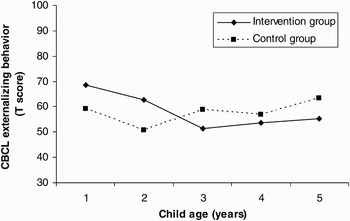
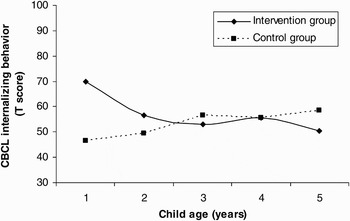
The results of the analyses testing whether child age moderated intervention effects on behavior problems, revealed that child age significantly moderated the impact of the intervention on both child internalizing (R 2 = .64, ΔR 2 = .09), F (1, 54) = 8.16, p < .01 (β = 0.31, p < .01) and externalizing problems (R 2 = .80, ΔR 2 = .07), F (1, 54) = 10.18, p < .01 (β = 0.27, p < .01). In order to more fully understand the impact of the intervention on change in behavior problems as a function of age, we tested the correlation between age and behavior problems in the intervention and control groups. Analyses of simple effects revealed that, for the intervention group, externalizing and internalizing problems decreased as children got older (r = −.41, p < .05 and r = −.44, p < .05, respectively). Conversely, in the control group, externalizing and internalizing problems marginally increased with age (r = .36, p < .10 and r = .32, p < .10, respectively). Figure 2 and Figure 3 present externalizing and internalizing behavior scores at posttest (controlling for pretest values) for each of the intervention and control groups as a function of child age.
The externalizing behavior at posttest (controlling for pretest value) for the intervention and control groups as a function of child age. CBCL, Child Behavior Checklist.

The internalizing behavior at posttest (controlling for pretest value) for the intervention and control groups as a function of child age. CBCL, Child Behavior Checklist.

Child attachment behavior
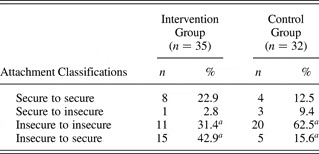
To assess the efficacy of the intervention on attachment behavior, two chi-square analyses were conducted on attachment change scores (secure/insecure and organized/disorganized) as a function of the intervention and control groups. To perform these analyses, four attachment change groups (from pretest to posttest) were computed for security/insecurity (secure to secure, secure to insecure, insecure to insecure, and insecure to secure), and four similar ones for organization/disorganization (organized to organized, organized to disorganized, disorganized to disorganized, and disorganized to organized). According to Reynolds (Reference Reynolds1984), this is the analysis of choice to examine change using dichotomous classifications. This analytic technique was also used by Cicchetti et al. (Reference Cicchetti, Rogosch and Toth2006). The first chi-square analysis (see Table 6) on security scores was significant, χ2 (3, N = 67) = 9.83, p < .05 (effect size: r = .36). Post hoc analyses conducted using standardized adjusted residual scores (z) revealed that a greater proportion of insecure children in the intervention group became secure (42.9%, z = 2.40) in comparison with the control group (15.6%, z = −2.40). In addition, a smaller proportion of children in the intervention group remained insecure (31.4%, z = −2.50) in comparison with the control group (62.5%, z = 2.50).
Distribution of change patterns in attachment security as a function of intervention and control groups

Note: χ2 (3, N = 67) = 9.83, p < .05.
az ≥ 1.96.
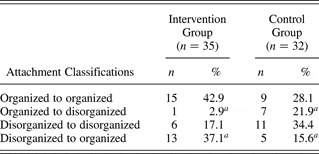
The second chi-square analysis (see Table 7) on disorganization was also significant, χ2 (3, N = 67) = 10.91, p < .05 (effect size: r = .37). Post hoc analyses revealed that a greater proportion of disorganized children in the intervention group became organized (37.1%, z = 2.00) in comparison with the control group (15.6%, z = −2.00). In addition, only one child in the intervention group became disorganized (2.9%, z = −2.40) in comparison with seven in the control group (21.9%, z = 2.40).
Distribution of change patterns in attachment organization as a function of intervention and control groups

Note: χ2 (3, N = 67) = 10.91, p < .05.
az ≥ 1.96.
Two hierarchical logistic regression analyses were undertaken to examine whether child age moderated intervention effects. One regression analysis was performed for each attachment change variable (one for attachment security/insecurity and a second for attachment organization/ disorganization). Because there were only four secure children that changed to insecure, and only eight organized children that changed to disorganized, two dichotomized variables of attachment were computed: (a) insecure to secure children versus others, and (b) disorganized to organized children versus others. This allowed us to test whether child age moderated intervention effects on children's improvement in attachment either toward security or organization. The intervention/control group variable and child age were centered, and entered at the first step, followed by their interaction term in a second step. Analyses yielded no significant interaction terms. Child age is therefore not a significant moderator of the intervention on attachment change toward security, χ2 (3, N = 67) = 6.19, ns, B = 0.06 (SE = 0.31), Wald = 0.04, ns, or organization, χ2 (3, N = 67) = 4.31, ns, B = 0.13 (SE = 0.31), Wald = 0.18, ns.
Discussion
This is the first study to demonstrate that a short-term (8 weeks) intervention designed to enhance parental sensitivity and child attachment can be effective with parents who have been reported for child abuse and/or neglect. In addition, this is one of the first studies to demonstrate the efficacy of an attachment-based intervention program that included children in the postinfancy period using a randomized control design with pre- and posttest assessments on all dependent variables. Our results indicated that the intervention was effective in enhancing parental sensitivity, improving child security of attachment, and reducing disorganization for children in the early childhood period (12–71 months). This is especially important because the majority of maltreatment intervention programs in child welfare agencies are designed for similarly wide age ranges (e.g., early childhood, adolescence).
These results, in conjunction with those of other studies conducted with older children (e.g., Hoffman et al., Reference Hoffman, Marvin, Cooper and Powell2006; Toth et al., Reference Toth, Cicchetti, Macfie, Rogosch and Maughan2000; Van Zeijl et al., Reference Van Zeijl, Koot, Mesman, van IJzendoorn, Bakermans-Kranenburg and Juffer2006), strongly support the inclusion of preschoolers, as well as infants, in home-based, video-feedback programs anchored in attachment theory. It is important to point out that, in this study, training for the interveners focused on conceptual understanding and observation (using videotapes) of preschool, as well as infant manifestations of secure and insecure attachment strategies. Therefore, interveners were trained at helping parents recognize and interrupt role-reversed, insecure–controlling patterns of parent–child interaction, which are highly predictive of development of externalizing and internalizing problems in middle childhood (Lyons-Ruth & Jacobvitz, Reference Lyons-Ruth, Jacobvitz, Cassidy and Shaver2008; Moss, Cyr, et al., 2004; Moss et al., Reference Moss, Smolla, Cyr, Dubois-Comtois, Mazzarello and Berthiaume2006). It is important to note that all interveners were professionals with a minimum of a bachelor's level degree in psychology, and three of the four had extensive experience in child welfare settings. We concur with Cicchetti et al. (Reference Cicchetti, Rogosch and Toth2006) that basic theoretical knowledge of principals of the intervention and experience in working with low-income maltreating families are important to the success of attachment-based interventions with this population. However, in addition to these, we feel that extensive observational training in identifying maternal sensitive and insensitive behaviors in the context of infant and preschool attachment patterns followed by supervision of such attempts by interveners is an essential ingredient in training. Many students of psychology, although familiar with attachment theory, have not been exposed to videotaped examples of insensitivity and insecurity. We suggest that videobased training programs, such as those developed to train reliable coders in classifying types of insensitivity and attachment, be adapted for interveners.
Our preliminary analyses indicated that the average parental sensitivity score for the sample was 0.27, a level comparable to that of other samples primarily composed of high-risk parents, and for which similar home observation procedures were used (Cicchetti et al., Reference Cicchetti, Rogosch and Toth2006; Tarabulsy et al. Reference Tarabulsy, Provost, Larose, Moss, Lemelin and Moran2008), and considerably below the often reported mean (0.50) for normative samples (Tarabulsy et al., Reference Tarabulsy, Provost, Larose, Moss, Lemelin and Moran2008). Analyses also indicated that higher pretest scores of parental sensitivity were associated with older parental age and higher SES level. These associations have been frequently demonstrated in the literature (e.g., Lemelin, Tarabulsy, & Provost, Reference Lemelin, Tarabulsy and Provost2006). Younger mothers have fewer material and social resources available to them, are more often involved in stressful circumstances, such as conflictual relationships, have lower levels of education and professional opportunities available to them, and often have more frequently experienced traumatic events in their own developmental history. Some have suggested that lower SES may be linked to lower levels of cognitive competence as well (NICHD Early Child Care Research Network, 2005). All such factors have, in different reports, been linked to the quality of maternal sensitivity (Tarabulsy et al., Reference Tarabulsy, Provost, Larose, Moss, Lemelin and Moran2008).
Although no initial differences were evident between the intervention and control groups on parental sensitivity, following the 8-week intervention, the experimental group had a significantly higher mean level of sensitivity (0.48), a level that resembled that of lower risk populations. By contrast, no change was evident for the control group. On a clinical level, these findings are of key importance because they support the “less is more” idea set forth by the meta-analytic findings of Bakermans-Kranenburg et al. (Reference Bakermans-Kranenburg, van IJzendoorn and Juffer2003) indicating that short-term, well-timed programs oriented directly at increasing the predictability, coherence, and warmth of parental behavior toward the child can be highly effective even with extremely high-risk populations. It will be important in future research to conduct randomized control trials to compare longer and shorter term sensitivity-focused interventions with maltreating samples in order to examine the issue of dosage. In addition, the role of factors that have been shown to moderate effects in the broader home-visiting literature (e.g., Olds et al., Reference Olds, Eckenrode, Henderson, Kitzman, Powers and Cole1997, Reference Olds, Henderson, Cole, Eckenrode and Kitzman1998, Reference Olds, Sadler and Kitzman2007; Toth, Maughan, et al., 2002), such as depression, substance use, or partner violence, should be examined in such studies.
Consistent with hypotheses, analyses of child outcome variables revealed that following intervention, children in the intervention group were more likely to develop a secure attachment pattern than those in the control group. This is one of the few studies that assessed attachment both before and after intervention, allowing us to report on percent change. Overall, both the control and intervention groups had equally low proportions of security at pretest, respectively 26% and 22%, levels that are consistent with statistics for maltreating samples (Barnett, Ganiban, & Cicchetti, Reference Barnett, Ganiban and Cicchetti1999; Lyons-Ruth et al., Reference Lyons-Ruth, Connell, Grunebaum and Botein1990). However, by posttest, although the proportion of secure children in the control group (28%) had not changed significantly, 66% of the children in the intervention group had secure classifications, a proportion resembling that of low risk populations. Forty-three percent of intervention children moved to security in comparison with only 16% in the control group.
These pre- and posttest patterns were consistent not only for insecurity/security but also for disorganization/organization. Before intervention, a high proportion of children in both the intervention (54%) and control groups (50%) were disorganized/controlling with respect to their attachment to their primary caregiver. These high levels, comparable to those reported for other maltreated samples (e.g., Barnett et al., Reference Barnett, Ganiban and Cicchetti1999), are particularly troubling, given the stability of disorganization, in the absence of intervention (Moss et al., Reference Moss, Cyr, Bureau, Tarabulsy and Dubois-Comtois2005). Following intervention, the percentage of children with disorganized attachments was reduced to 20%, whereas 56% of children in the control group were coded in this category. Apart from a positive shift in the intervention group toward organization, it is notable that the intervention also protected children against a shift toward disorganization, which occurred for 22% of the control group.
These results are particularly important because previous attachment-based intervention programs have shown mixed results in changing disorganized attachment (Bakermans-Kranenburg et al., Reference Bakermans-Kranenburg, van IJzendoorn and Juffer2005). We attribute the success of this intervention program to the fact that interveners were trained to help mothers recognize and alter not only the insensitive maternal behavior associated with organized–insecure attachment but also the frightening, extremely intrusive, or unresponsive behaviors that have been associated with disorganized and controlling attachment in infants and preschoolers (Hesse & Main, Reference Hesse and Main2006; Lyons-Ruth et al., Reference Lyons-Ruth, Bronfman and Parsons1999). As part of their training, interveners were taught to focus on contingencies between maternal behavior and child disorganized and controlling behavior by viewing many videotaped segments involving parent–child interactions. Interveners then applied a similar technique to working with the parents themselves while doing video feedback using the parent's interactions with their own child. We believe that the program's focus on building a positive repertoire of interactive competencies by focusing mothers on the child's positive behavior following adequate structuring and supportive maternal behaviors was a key component in changing disorganized behavior, particularly in the older children.
Anecdotal evidence also suggests that the children themselves were key players in the change process. As the majority of children with disorganized attachment approach school age, they seem to seek ways of assisting the parent to assume a more appropriate parental role (Main & Cassidy, Reference Main and Cassidy1988; Moss, Cyr, et al., Reference Moss, Bureau, Cyr, Mongeau and St-Laurent2004). In the absence of intervention, this attitude often leads to child attempts to control an acquiescent parent with role reversal as the result. The increase in controlling behavior with the caregiver during the preschool period may be linked to attempts by disorganized children to reduce stress levels, which cannot be regulated through child dependency on the caregiver (Moss et al., Reference Moss, St. Laurent, Parent, George and Solomon1999). In the absence of intervention, the controlling child's strategy of orienting away from seeking comfort, protection, and the meeting of their own needs and toward maintaining engagement with the parent on the parent's terms is likely to increase the likelihood of child psychopathology (Main & Cassidy, Reference Main and Cassidy1988). However, in the context of intervention focused on changing parental sensitivity, it is possible that the desire to assist the parent may lead some disorganized preschool children to become an “ally” of the intervener, telling their parent about their own needs and feelings and focusing on their relationship. It is also possible that children may vary in their susceptibility to adverse and beneficial effects of rearing influences (Belsky, Bakermans-Kranenburg, & van IJzendoorn, Reference Belsky, Bakermans-Kranenburg and van IJzendoorn2007) and to attempts to alter rearing conditions. For example, Bakermans-Kranenburg, van IJzendoorn, Pijlman, Mesman, and Juffer (Reference Belsky, Bakermans-Kranenburg and van IJzendoorn2007) showed that toddlers with the dopamine receptor D4 7-repeat allele were more likely to show decreases in externalizing behavior problems following short-term video-feedback intervention to promote positive parenting than children without the allele. Their mothers also showed larger increases in positive discipline.
As described previously, the range of maternal behavior targeted in the intervention was actually much broader than that measured in the MBQS. In future studies, it will be important to carefully document the maternal and child behavioral changes that occur during and following treatment using a broader range of measures, which permit measurement of changes in maternal frightened, frightening, and hostile/helpless behaviors, specific child responses to the intervention, and possible genetic moderation effects. It is likely that variations in parenting behavior activate a chain of Person × Environment interactions involving the interplay of behavioral and/or biological mechanisms in both mother and child, as has recently been suggested by Hane and Fox (Reference Hane and Fox2006) in human research and Meaney (Reference Meaney2001) in his work with rodents. As these authors have indicated, given the important function of the attachment system in the regulation of stress, improvements in maternal sensitivity may result in phenotypic changes to child neurological systems, which may have more long-term positive effects on child stress reactivity.
Because it is important both clinically and developmentally to evaluate the efficacy of an intervention program as a function of child age, age was examined as a potential moderator of intervention outcomes. The fact that no moderation effects were found for maternal sensitivity or child attachment supports the efficacy of the intervention in changing these key variables across the early childhood period (age 1 to 5). Although no overall effects were evident for child behavior problems, moderational analyses examining change in behavior problem levels following intervention revealed a significant Age × Treatment interaction effect. Follow-up analyses revealed that reduction in child externalizing and internalizing problems was associated with increasing age in the intervention group, whereas a marginal increase in behavior problems was found with age for the control group. Developmental longitudinal studies have shown not only that maltreated children show higher levels of both externalizing and internalizing symptomatology than their nonmaltreated peers from normative samples, but also that the maladaptive trajectories of the former group diverge from those of the latter over time, becoming more severe as children get older (Cicchetti & Valentino, Reference Cicchetti, Valentino, Cicchetti and Cohen2006). An important developmental transitional point is the preschool period, during which the majority of children develop more socially and verbally competent modes of interaction reducing maladaptive behavior, whereas maltreated and other high-risk groups maintain increasingly socially dysfunctional patterns of aggression and social withdrawal. Therefore, the fact that the intervention had a significant effect on reducing behavior problems for preschool aged children suggests that it may possibly interrupt this trajectory for maltreated children. However, this remains to be demonstrated in longitudinal follow-up studies. Parents’ increased sensitivity and changes in child attachment security may have positively influenced children's ability to regulate stressful emotional states. Emotional dysregulation has been shown to mediate the relation between maltreatment and development of internalizing and externalizing symptomatology (Toth, Cicchetti, & Kim, Reference Toth, Cicchetti and Kim2002). These results are consistent with the widely acknowledged idea that enhancing child security may operate as a protective risk factor reducing the vulnerability of high-risk children to development of behavior problems (Cicchetti, Toth, & Lynch, Reference Cicchetti, Toth and Lynch1995).
Study limitations and strengths
It is important to note the limitations of the study. Given the challenges of conducting research with a maltreating population of such a wide age range, expected attrition, instability, and measurement suitability reduced sample size and the power of some analyses. Although attrition was slightly greater in the control group, this likely strengthened rather than weakened findings, given that the most troubled cases tend to fall out of a study elevating the general level of functioning in the control group. Further studies with larger samples of children in more restricted age ranges would greatly strengthen possible conclusions that can be drawn. Not only will it be important to replicate the short-term efficacy of this program, but it will also be essential to demonstrate the long-term durability of the effects reported here, particularly given the highly unstable and traumatic family contexts of the maltreating population. Further studies will also be needed to determine the suitability of the program for larger groups of fathers. Only four fathers were included in the study because our criterion for inclusion of parental figures in the study was that they be the primary caregiver of the target child. Although we see no theoretical reason why the intervention program should not be equally effective with either a father or mother primary attachment figure, given the preponderance of mothers in this sample, it is impossible to generalize findings to fathers. Further studies with larger samples of participating fathers will be necessary to answer questions concerning the efficacy of this model for mother versus father participants. Finally, the intervention program needs to be tested in other cultures in order to generalize beyond this French-speaking Quebec sample. However, it should be noted that similar programs have proven to be effective in diverse cultures (e.g., Juffer, Bakermans-Kranenburg, & van IJzendoorn, Reference Juffer, Bakermans-Kranenburg and van IJzendoorn2008).
Despite these limitations, we feel that the study has several strengths. The attachment-based manualized intervention described here was rigorously tested using a randomized control design that included both observational and parent-reported measures of child adaptation. Strange Situation assessments, the gold standard in attachment research, were conducted both at pretest and posttest, considerably increasing the causal inference that can be made regarding the intervention's efficacy. In many studies evaluating the effects of attachment-based programs on high-risk samples, Strange Situation assessments were not used or used only at posttest (e.g., Klein Velderman et al., Reference Klein Velderman, Bakermans-Kranenburg, Juffer, van IJzendoorn, Mangelsdorf and Zevalking2006). Efficacy was demonstrated not only for specific attachment constructs such as parental sensitivity and child security and disorganization, which have been linked longitudinally to development of psychopathology and other forms of maladaptation, but also for internalizing and externalizing behavior problems. Moreover, the medium effect sizes that were obtained mean that results were indicative of meaningful improvement following the intervention.
Conclusion
In conclusion, these changes in maternal sensitivity, child attachment security and organization, and problem behavior following a short-term attachment-based intervention are of considerable theoretical and clinical importance. On a theoretical level, the changes in child attachment security following sensitivity-based intervention are consistent with the associations between caregiving quality and child attachment found in the developmental literature. These results also support findings underscoring the importance of sensitive maternal caregiving behavior as a catalyst in the promotion of optimal development in both human and animal populations. The short-term effects found here on attachment security and disorganization, and child behavior problems may have more long-term sequellae, which may contribute to reducing health and behavioral risk for maltreated children.
On a social policy level, it is important to call attention to the potential consequences of not doing direct intervention focused on the parent–child dyad with the extremely high-risk population of maltreated children. Our results clearly demonstrate that case management, which is the typical intervention service offered to families reported for maltreatment, is insufficient to prevent them from embarking on the negative developmental trajectory associated with maltreatment, involving increasing levels of aggressive and delinquent behavior problems. In this respect, the attachment-based model tested in this study may be an effective intervention tool for maltreated children and their parents.