Introduction
Over the last decade, anthropologists have explored the everyday routines of moral self-formation – and the active internalization of values – in educational settings. They have shown how moral norms – as well as the awareness of the social, political and economic orders in which schools operate – shape the subjectivities and everyday interactions of students and teachers (Fumanti Reference Fumanti2006; Coe Reference Coe2005; Stambach Reference Stambach2009; Simpson Reference Simpson2003). They have also highlighted how a nation's or a society's values become embodied in the lives of young people as well as in those of their teachers and families (Rydstrøm Reference Rydstrøm2003), and how children themselves are involved in the formation of their own moral worlds. In this latter regard, ethnographic studies of education have transcended assumptions that young people ‘reproduce’ moral virtues simply by ‘being exposed to them’ and have shown instead that children ‘actively construct morality rather than absorb it from their culture’ (Woods Reference Woods2013: 6–7).
In this article, I build on ethnographic research in five Christian and Muslim schools in Dar es Salaam that were established in the wake of transnationally induced reform programmes and the liberalization of Tanzania's education sector from the mid- to late 1990s onwards (Dilger Reference Dilger2013). These religiously oriented schools stand out in Dar es Salaam's educational landscape today due to their claims to provide both secular and moral-ethical training.Footnote 1 The establishment of these Christian and Muslim schools has thus become part and parcel of a larger process of making ethical (self-)formation ‘explicit’ (Bochow et al., this issue) in Tanzanian society, and of providing new avenues for the appropriation and cultivation of values among children and youths in the country's urban settings. Furthermore, these schools engage in ‘ethical boundary work’ (ibid.) in that they formulate specific value frameworks for their students and staff which distinguish them from other educational institutions. For instance, Christian and Muslim schools articulate their ethical orientations in mission statements, in public advertisements, in lessons on religion and/or morality, in morning assemblies or in services in churches and mosques attached to the schools, thereby positioning themselves as distinct moral and ethical spaces within the wider cityscape (cf. Dohrn Reference Dohrn2014; Reference Dohrn, Stambach and Hall2017).
However, while new Christian and Muslim schools in Dar es Salaam provide explicit settings and occasions for ethical learning, the teaching and appropriation of values also happens implicitly: that is, in the more informal interactions between and among teachers and students, for instance during class breaks, in the schools’ boarding sections, or during leisure time. The boundaries between formal and informal settings are furthermore porous and often dissolve altogether in the actual life worlds of students and teachers. Moreover, the pupils and staff of religiously oriented schools themselves rarely make an analytical distinction between (explicit) ethical frameworks, on the one hand, and actual moral practices, on the other; they refer instead consistently to the terms ‘morality’ or ‘morals’ (or the Kiswahili equivalents, especially maadili) as a distinguishing feature of their educational settings. In this article, I differentiate heuristically between the explicit (largely discursive) ethical frameworks of religiously oriented schools and the way they become embodied in the moral practices of students and teachers. At the same time, however, if not indicated otherwise and in line with my interlocutors’ own preference, the terms ‘morality’ and ‘moral values’ in this article refer both to institutional discourse on ethical and moral values and to their appropriation in the everyday interactions and performances at particular schools.
With regard to the ethnographic data from my field sites, I argue that the explicit and implicit learning and appropriation of values in Dar es Salaam's Christian and Muslim schools are shaped by three dimensions. First, it is a highly embodied process that orients the students’ and teachers’ bodies and minds in regard to the specific settings of their schools, as well as in relation to the wider world. The embodiment of moral values and ethical frameworks (cf. Rydstrøm Reference Rydstrøm2003) in the schools of my study can thus be understood as the formation of a ‘moral habitus’ (Winchester Reference Winchester2008: 1755) that establishes specific relationships between individual actors and their socio-economic and religious environments (which can be a particular school, a certain discourse on the religious and moral self, a group or class of people, or the Tanzanian history and nation). At the same time, the embodiment of values in Christian and Muslim schools contributes to the active building of such environments as socio-moral spaces that are both locally ‘emplaced’ (Faubion Reference Faubion2011: 144) and simultaneously entwined with national development, urban stratification and class formation.Footnote 2
Second, I argue that the embodiment of ‘moral selfhood’ (Winchester Reference Winchester2008: 1756) is a highly situated process that includes both the non-conscious performance and the intentional – partly strategic – enactment of moral and ethical values in everyday encounters. It is also a highly fluid and often fragmented process, as, for instance, dynamics of moral embodiment in religiously oriented schools are structured by the partially deliberate and partially enforced mobilities that the quest for ‘good’ education and employment in the market economy entails (Dilger Reference Dilger2013: 455–6). In all these regards, I demonstrate that the embodiment of values is a ‘discontinuous’ and ‘partial’ process as moral and ethical commitments can shift over time (Lambek Reference Lambek2015: 309) and/or are performed for specific purposes. As Jane Turner (Reference Turner, Perry and Medina2015: 59) has argued, the notion of embodiment can refer to both a ‘transitory, temporary, and partial experience’ and ‘a psychophysical transformation that generates a level of cognitive understanding and bodily knowing derived from intense experience that constitutes embodied knowledge’.
Finally, the article shows that the embodiment of values in Christian and Muslim schools involves an affective orientation that guides a person's ways of being in the world. As Throop (Reference Throop and Fassin2012) has argued, the concept of ‘moral sentiments’ refers to the way in which people embody certain affective sensibilities and values in regard to their wider social and political environments. In contrast to short-term emotional sensations – which are felt in relation to specific events and episodes in a person's life – such sentiments can be conceived as ‘affective dispositions’ that ‘refer to an individual's conscious anticipation of an event and justify the appearance of a corresponding response’ (Reihling Reference Reihling2013: 31). In the context of Christian and Muslim schooling in Dar es Salaam, it is therefore important to highlight that moral sentiments have an ambiguous dimension in that they do not only cultivate attitudes and practices towards a ‘good life’ (Robbins Reference Robbins2013), but also include instances of resentment – that is, sensations of anger and frustration – which may become central for students’ and teachers’ perceptions of situations of injustice and injury (Fassin Reference Fassin2013).
New Christian and Muslim schools in Dar es Salaam: an emerging field
This article is based on ethnographic fieldwork in five Christian and Muslim schools in Dar es Salaam – all on the advanced primary and mid- to upper secondary level – between 2008 and 2010 (Dilger Reference Dilger2013).Footnote 3 The recentFootnote 4 boom in religiously oriented (and especially ChristianFootnote 5 ) schools in Tanzania has to be understood in the context of the national government's growing support for private schools since the mid-1990s (Lassibille and Tan Reference Lassibille and Tan2001; Dilger Reference Dilger2013). In addition, private schools received a significant boost with a World Bank programme in 2004 for state-funded ‘community schools’, whose number quadrupled between 2001 and 2008; by 2008 they amounted to a total of 2,893. The overall low quality of these community schools corresponded with a steep increase in non-government and privateFootnote 6 schools in the secondary school sector – numbers doubled from 400-plus in 2001 to 755 in 2008, including a significant number of religiously oriented schools.
New Christian and Muslim schools in Dar es Salaam represent a heterogeneous field. Many of them comprise the newly established educational institutions of the former Catholic and Protestant mission churches, but there are also mosques and churches from revivalist strands of Islam and Christianity (Stambach Reference Stambach2009; Dilger Reference Dilger, Schulz and Seebode2010; Reference Dilger2013; Dohrn Reference Dohrn2014; Reference Dohrn, Stambach and Hall2017). Furthermore, some of these schools had been former mission schools and were returned to the churches in the wake of privatization; others are owned by individuals from neither of these religious fields and are run like a business rather than as a charity-oriented religious project.Footnote 7 However, while especially these latter schools claim to have no explicit denominational agenda and are open to students from all (Christian and Muslim) religious backgrounds, their symbolism and imagery are often closely related to the Pentecostal field and simultaneously geared towards academic excellence.Footnote 8
The language used by the Catholic and (‘mainline’) Protestant schools does not diverge from the marketing strategies of Pentecostal schools entirely: it, too, is partly shaped by notions of ‘excellence’. However, it also differs in part, as many of these schools operate under the Christian Social Service Commission (CSSC), which has coordinated development-related activities between the Tanzanian government and the major Catholic and Protestant churches since 1992 (Dilger Reference Dilger, Schulz and Seebode2010). One of the main goals of the CSSC is to fight ‘poverty, diseases and illiteracy’. However, de facto, many CSSC schools sustain their work by charging high school fees – thereby reinforcing a growing social gap that is associated with an alleged ‘decline’ of government schools on the one hand, and the strong performance of Christian schools on the other (ibid.).Footnote 9
Finally, many of the new Muslim schools have been established by actors from the revivalist Sunni spectrum and usually admit exclusively Muslim students.Footnote 10 They sustain their work partly through a combination of comparatively low school fees with charitable donations from the Arab world. The Muslim revivalist schools do not claim to be particularly ‘excellent’ and do not figure prominently in the national school rankings.Footnote 11 They are also not represented strongly in the public discourse on educationFootnote 12 and distance themselves from BAKWATA, the Supreme Council for Tanzanian Muslims (Loimeier Reference Loimeier2009: 72–3). At the same time, however, several of them are strongly aware of the need to network with other Muslim (revivalist) and secular schools in order to boost their usually weak performance. In this regard, they have become part of an educational network which is defined – at least partly – through its common identification with a morally and socio-politically circumscribed framework of religious belonging.Footnote 13
Common grounds: embodying morality in a religiously diverse city
As Larkin and Meyer (Reference Larkin, Meyer and Akyeampong2006: 286) have remarked, Christian and Muslim organizationsFootnote 14 ‘share a great deal of common ground’ in contemporary Africa, and while they often compete and oppose each other, they ‘overlap strikingly in the procedures in which they have come to prominence, the practices on which they depend, and the social processes they set in motion’.
The common ground of new Christian and Muslim schools in urban Tanzania has to be understood, first and foremost, against the backdrop of the history of Christian and Muslim relations in the country and the way the encounters between the two highly diversified faiths were shaped over time by their adherents’ unequal access to cultural and economic capital. Thus, while the dominant status that Christians have secured in contemporary Tanzania can only be understood in the context of the intertwined histories of religious difference and social inequality, revivalist Muslims have felt – and continue to feel – marginalized due to the allegedly higher social and educational status that Christians have secured since colonial times (Dilger Reference Dilger2013). Muslim revivalists have also launched several initiatives to overcome social inequalities that are closely linked with the articulation of religious difference (Loimeier Reference Loimeier, Soares and Otayek2007; Dilger Reference Dilger, Parkin, Krause and Alex2014a; Reference Dilger, Schmitt and Vonderau2014b; Becker Reference Becker2015).
Second, the founding of schools by both Christian and Muslim organizations and individuals has to be understood in relation to the privatization and stratification of the educational sector during the last decades. The teachers and students of the Muslim school in my study in particular compared themselves persistently with their ‘Christian counterparts’ whose schools, they claimed, operated successfully in the highly diversified educational market.
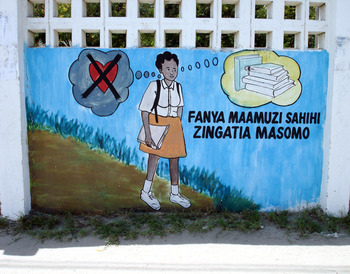
Third, what unites the approaches of both the new Christian and Muslim schools is that their promise of teaching ‘morals’ makes them attractive to their target groups. In the context of growing competition between different types of schools, families and students opt for a certain school due to the concrete options they have – for example, whether a child has been selected for a well-performing government school due to his or her previous performance – and also whether they have the financial means to attend a particular school. Furthermore, many parents and children consider the teaching of ‘morals’ to be equally important for selecting a school, especially in the light of a widespread discourse regarding the moral laxity of government schools (see Figure 1).Footnote 15 Thus, ‘teaching morality’ becomes a strongly valued social and economic asset among religiously oriented schools that depend largely on continuously rising school fees in order to sustain themselves in the educational marketplace.
‘Make a true decision: keep your education in mind!’ Mural in Dar es Salaam, 2010.

How can the embodiment of moral values be grasped analytically? Anthropologists and psychologists have emphasized that children are actively involved in their moral self-formation, and that the dynamics of moral socialization and learning can only be understood by focusing on the way in which ‘children actually behave in moral situations’ (Woods Reference Woods2013: 9). Rydstrøm (Reference Rydstrøm2001; Reference Rydstrøm2003) has expanded this emphasis on children's agency in their own moral socialization by an explicit focus on the bodyFootnote 16 in the moral upbringing of young people in northern Vietnam. In her field site, the education of children was geared towards a nationalist discourse on morally desirable members of the family and polity – thereby aiming to keep them from ‘social evil’ and ‘morally backward’ ideologies. At the same time, children were also actively involved in learning the socio-moral foundations of their community through a range of practices including verbal and non-verbal interaction as well as direct requests, children's play and mutual joking. In this way, gender-specific qualities, such as the place of a child in his or her lineage, specific styles of body and dress, or the display of certain emotions, were actively embodied in the lives of young girls and boys and revealed particular constructions of femininity and masculinity (Rydstrøm Reference Rydstrøm2001; Reference Rydstrøm2003).
In this article, I argue that students and teachers in the new Christian and Muslim schools in Dar es Salaam embody and perform moral values in particular ways that orient them in relation to the highly diverse educational market and the increasingly stratified urban society. I show that the learning and embodiment of moral values – and the way these values position students and teachers affectively towards their larger socio-urban environments – are bound to specific institutional settings whose religious and ethical frameworks and structural location in society define not only the application of particular pedagogical techniques (Fung and Smith Reference Fung, Smith, Lancy, Bock and Gaskins2010: 265–6; Grant Reference Grant1997) but also the kind of values that the students and teachers embody. These values, and the sentiments that are attached to them, include relations with, and consciousness of, the self and others; body and dress; social status and difference; the presence of religious difference in school and everyday life; the notions of doing good and bad; the ethos of learning and work; and relationships of affect and belonging. I argue that the learning and embodiment of moral values is not the outcome of one-sided pedagogical processes, but is part and parcel of intersubjective, intercorporeal and self-reflexive encounters between and among teachers and students. In this regard, the agency and experiences of children and young people need to be taken into account as they participate actively in the creation and transformation of moral meanings and practices (Fung and Smith Reference Fung, Smith, Lancy, Bock and Gaskins2010: 267ff.), thereby becoming involved in shaping the socio-moral spaces of their own educational and urban environments.Footnote 17
‘The parents have trusted us’: disciplining future citizens
In Christian and Muslim schools in Dar es Salaam, the bodies of children and young people play a central role in the moral self-formation of students. The Christian schools in particular felt a strong responsibility towards their pupils’ parents, who were expecting them to educate their children morally. As the headmistress of one of the Catholic schools remarked, Christian schools are increasing their value in the educational marketplace through their promise to train students academically as well as morally, and parents invest significant amounts of money in their children's ‘high-quality’ education. She said: ‘You know, the parents have trusted us, so we have a responsibility.’
One of the educational goals of the Christian schools was to turn their students into ‘good citizens’ (Fumanti Reference Fumanti2006; Coe Reference Coe2005). Thus, one of the Catholic schools had the motto ‘For God and our Nation’ and aimed to ‘enable the pupil the development of oneself, others and the nation’. Similarly, the close connection between the students’ ‘total development’ and the aim of forging ‘well-adjusted, knowledgeable and responsible citizens’ was expressed in two Pentecostal schools whose owner was a well-known pastor and member of parliament. One of her secondary schools’ mission statements read:
We endeavour to achieve our vision of ‘Forward ever, backward never’ by always seeking not only academic perfection but also the total development: physically, intellectually, emotionally, socially and spiritually. We strive to develop in [our pupils] a sense of belonging, high self-esteem and self-confidence; to ensure that they are disciplined and respect their peers, juniors and seniors, appreciate and respect their difference in cultures, ideas and religious beliefs. By so doing we hope, we will realize our goal of producing well-adjusted, knowledgeable and responsible citizens.
The active appropriation and embodiment of ethical (discursive) frameworks in the Christian schools was enhanced by the application of everyday rituals and disciplinary measures that were partly similar across the school settings and partly unique with regard to the enactment of values in interactions between teachers and students (Grant Reference Grant1997). For example, the Pentecostal primary school started its day with morning assemblies on the central courtyard where all students were screened carefully to check the cleanliness of hands, fingernails, hair and dress.Footnote 18 Furthermore, the students learned to respect the strong value that Tanzania ascribed to the coexistence of different cultural and religious groups in the nation state, for example by performing songs and dances in Maasai dress and by singing the national anthem and the school's own anthem, which all emphasized the commitment to God and the ‘motherland’.
In the Catholic primary school, the ritual of bodily screening was also performed at the morning assemblies, but, in contrast to the Pentecostal school, non-complying pupils had to stand apart from the group for the rest of the ceremony.Footnote 19 In one instance, one of the teachers pointed to the best-performing students during the preceding month and said: ‘I am happy with these.’ He subsequently indicated those who had ‘failed’: ‘But I am not happy with those.’ The other students applauded collectively by clapping their hands in alternating rhythms, whereas the ‘bad’ pupils were ‘rewarded’ with a collective stamping of their feet. Finally, the well-performing pupils proceeded towards the headmistress, a sister of the order that ran the school, who stood next to the pole with the Tanzanian flag and blessed the pupils individually by shaking their hands and putting her hand on their head. The subsequent reading from the Bible was usually followed by a statement from one of the students that revealed how the ethical value of moral (self-)surveillance had become embodied by some of the children. This statement by thirteen-year-old Christopher shows how the boundary between the ethical framework of his school and his personal moral practice converged in his striving towards a ‘good’ life:
The Bible tells us that God sees us everywhere and that he knows everything what we are doing. When I was young, I thought that God cannot see me when I enter the house. [The teachers and other pupils laughed quietly.] But later I learned that he can see me. So please let us do good things so that God can bless us.
The moral disciplining in the Muslim boys’ seminary differed somewhat from that in the Christian schools. The fact that national symbolism of any kind was explicitly absent from the morning assemblies (and the space of the seminary as a whole) and no reference to the Tanzanian nation was made in the teachers’ speeches was indicative of the uneasy relationship between Muslim revivalist organizations and the Tanzanian state. Furthermore, there was no singing of the national anthem (or any other songs, for that matter), and while the students’ bodies were screened carefully for adherence to the school regulations regarding dress and hygiene, the young men were neither involved in religious readings or prayers nor encouraged to speak in front of their teachers and fellow students.
With regard to the aspects of moral disciplining, however, the Muslim seminary shared some of the practices that were applied in the Christian schools. Thus, while all the schools formulated detailed moral and ethical frameworks for the behaviours of their students – partly in written mission statements, partly informally in the interactions between teachers and pupils – not all the students complied with these codes. Failure to comply with the moral and ethical standards of a school included poor academic performance; the failure to dress properly, to speak English consistently or to stay silent in class; or engaging in ‘immoral behaviours’ such as illicit love affairs.Footnote 20 While some of these failures were the result of a deliberate choice on the part of the students, others were the outcome of negligence or ignorance; in all cases, however, the schools deployed various disciplinary measures for ‘correcting’ the students.
At both the Christian and Muslim schools, measures of moral disciplining included the temporary or permanent suspension of a pupil, various forms of public shaming (such as at the morning assemblies noted above)Footnote 21 and different kinds of corporal punishment. In the Muslim school, teachers caned students in front of others or had them crawl through the courtyard. In the Catholic secondary school, in addition to being caned, misbehaving pupils had to kneel down next to the classroom door or the student dean's office, where they had to stay motionless for an extended period of time under the burning sun. In both schools, the architecture of the buildings echoed the image of the panopticon (Foucault Reference Foucault1994), in that the pupils’ co-students and teachers were able to observe these harsh forms of disciplinary action from their respective vantage points.
Among the students and teachers of the Catholic and Muslim schools, there was no consensus regarding the ‘value’ of corporal punishment.Footnote 22 Some students were explicitly resentful of the practice and said that caning was ‘discouraging’ and ‘destroying them’. Eighteen-year-old Aziz, for example, stated: ‘[To be caned] is truly a humiliation;Footnote 23 it hurts you psychologically very much. To be caned, I don't know how to say it, first of all it is a disgrace [aibu]; it humiliates [inafedhehesha].’ However, other students and teachers described the practice of caning as ‘necessary’ and ‘just’ and even as essential for inculcating moral and ethical values in young people. In this regard, several students and teachers at the Muslim seminary supported the view of the teacher who applied the cane most prominently. He claimed that the caning of students was part of ‘Tanzanian culture’ and necessary in order ‘to correct them’:
You know, in our Tanzanian culture, if a child doesn't get threatened it can't leave certain behaviours, it needs to be scared … You will see that there are children who abuse us, they fight with each other, they become the most bizarre thieves. Now we correct them [tunawarekebisha]. With the stick [bakola]. To cane is to build our culture.Footnote 24
Enhancing the ethos of work: academic distinction and the pressure of belonging
In an increasingly stratified educational market, Christian and Muslim schools present themselves as morally and academically distinct spaces and articulate clear-cut boundaries not only between each other, but also, most significantly, between religious-oriented and (secular) government schools. The pupils and teachers in the Christian schools in particular emphasized such differences eloquently; one female student of the Catholic secondary school said:
They try to teach us a lot concerning morals [here] and we engage a lot in spiritual stuff … [T]he government schools … just teach students as a job. What they have to do is complete the curriculum, that's it. I interacted with government school students and they tell me they haven't seen the chemistry teacher for three months … But [in this school] teachers are trying to deliver best.
In the context of enhancing their employees’ work ethos, schools cultivated relationships of belonging among fellow colleagues and in the school that in turn were said to make teachers see their employment as more than ‘just a job’ or their school as ‘yet another educational institution’. At the same time, however, such sentiments of belonging were not uncontested and were revealing both of the particular social status of a school and of the way in which teachers were able to negotiate their market value in the highly stratified educational landscape.
In the Muslim boys’ school, many teachers valued their job especially due to the benefits that the NGO to which their school was attached provided as compensation for the comparatively low salaries that the organization was able to pay. In particular, some teachers appreciated their families receiving sponsorship for further education and/or paying reduced fees in the NGO-owned health centre. At the same time, however, many teachers felt that they were not paid properly and criticized the larger ethical goal of Muslim schooling, which, they claimed, disguised low-paid employment as a ‘work of volunteering’ (kazi ya kujitolea) or a ‘work for God’ (kazi kwa ajili ya Mungu). One of the Muslim teachers stated that employment in a Muslim school hindered him in his personal and professional development as it had a low reputation in society and in the educational market. He said: ‘This is a work for the society [kazi ya jamii] … You work for the benefit of the society – not for your own benefit.’
The charitable benefits of the Muslim school were more appreciated, however, by some of its students, especially when their education was sponsored by the NGO running the seminary. Eighteen-year-old Khalid, for example, had been sponsored by the NGO since his father died, and had resided in the seminary's boarding section since he was eleven years old. However, while Khalid claimed to ‘love’ his school, he conceded that he would have preferred to attend the government secondary school for which he was selected after primary school – had it not been for his relatives who valued the full sponsorship they received through the NGO.Footnote 25 Studying in a government school would have given him better life chances and job prospects, Khalid argued. In a similar vein, ties of affective and moral belonging – and the concurrent commitment to the larger charitable framework of the school – were regarded as only temporary among other teachers and students at the Muslim school, who quickly moved on once they received better opportunities in the competitive educational market.
Overall, in the Christian schools, ties of affective and moral belonging among teachers seemed to be more pervasive. In both the Pentecostal and the Catholic schools, there were regular interactions among the teachers that extended well beyond the space of the school. Mr Mlango, one of the leading teachers at the Catholic secondary school, summarized eloquently how important it was to strengthen the teachers’ ‘morale’ by attending joint events such as colleagues’ send-offs or wedding parties, and even funerals:
We are building their morale through events like these. We are making a community. This is important so that they feel motivated to work here. You should also use a polite language if you are speaking to them so that they are not discouraged. The management is so important for building a school. This helps to establish a sense of belonging.
In the Christian schools, the highly personalized work ethos – which was partly evoked by the school leaders and partly a result of the teachers’ own initiatives – was valued strongly among the teachers, who were aware that they were employed in highly competitive schools and could find employment in other high-ranked institutions. At the same time, however, teachers in the Pentecostal schools in particular complained that strong pressure was put on them to deliver ‘good results’. Along with the fact that the school did not issue work contracts, there was a continuous perception of the risk of being dismissed. One of the leading personnel explained how they enhanced the teachers’ work ethos by issuing warnings in the case of weak performance (for example, a class's poor results in national exams): ‘Usually, whenever a teacher receives a letter of warning, she or he will work hard to improve. This will be an eye-opener for the teacher.’ On the other hand, however, a strong performance would result in higher salaries: ‘The salaries and the motivation factor go hand in hand. We strive to reciprocate performance.’
The way of the cross: performing values in interreligious settings
In the Christian schools, a sense of belonging to a distinct educational setting was enhanced not only through a (partly repressive) work ethos, but also through the joint performance of religious rituals. The degree to which the enactment of religious values was formalized differed across the schools and, in the case of the Pentecostal institutions, it was restricted mostly to informal interactions between teachers and students and the joint ‘fellowshipping’ (praying to and worshipping God) among some of the teachers (Dilger Reference Dilger2013: 469). Ms Williams from Uganda, for example, reported that her move to Dar es Salaam had challenged her both morally and spiritually and that her employment in the Pentecostal school provided her with a ‘spiritual home’:
[When we moved here] things were different. This is a coastal region, there are many foreigners, there are things like witchcraft, so I decided to give my life to Jesus … In a Christian school, I feel at home … I feel like I am at home spiritually.
In the Catholic schools, participation in religious rituals included regular prayers, the singing of songs and attendance at church services. For example, on each of the four Fridays preceding Easter Sunday in 2010, the students and teachers attended the neighbouring cathedral where they prayed the ‘Way of the Cross’. These prayers served to recall and ‘feel’ the fourteen stations of the passion and death of Jesus Christ and involved comprehensive bodily activity – such as repeated kneeling, crossing oneself and turning towards the fourteen corresponding icons. This exercise was not necessarily a bodily or emotionally awkward experience for my interlocutors.Footnote 26 When I asked children and teachers from varying denominational backgrounds (who, to some extent, practised a different religion outside school) how they felt during the service, they emphasized that it was ‘normal’ for them. Laura, a seventeen-year-old devout Catholic, claimed that all students at her secondary school were free to refrain from attending church services. She also suggested that religious values and affective states were not necessarily ‘fully embodied’ by those who practised them – but that they became embodied only in the sense that they could be activated for an appropriate performance while maintaining simultaneously a critical, cognitive distance from them:
It's not that [Muslim students, for example] are forced to [pray the Way of the Cross]. If they feel like going, they can. [At this other Catholic school I attended previously], we did have Muslims and they also went to church like us. But they usually prayed according to their religion. They just followed the prayers and all that. That's what they told me: ‘We go there, we sing the Lord's prayer, but deep inside we pray our religion.’
This rather pragmatic stance towards participation in Catholic rituals was confirmed by Muslim teachers and students at the Catholic secondary school who reported that they had several Christian family members and were used to attending Christian events or prayers. When I asked eighteen-year-old Karim whether he found it challenging to pray the ‘Way of the Cross’ he denied this and said that he made sure to pray ‘the Muslim way’ in his shared room in the school's boarding section. He thereby established a clear boundary between the overall ethical orientation of the Catholic ritual – in which he participated – and his personal relationship to it. Furthermore, he engaged in a different religious (and moral) practice when he was alone in his room – but still in the space of the school.
In other instances, however, the imprint that a particular religious and moral framework – and the corresponding sensation – left in the minds and bodies of young people was experienced more deeply. At the Pentecostal schools, it was particularly female Muslim students who were time and again diagnosed by teachers and fellow students as being possessed by evil spirits. One twelve-year-old student named Precious, who lived in the boarding school section of the primary school, reported that in 2008 she experienced troubling dreams of her late Muslim grandfather, which were subsequently identified as requests from a malevolent jini (spirit) who wanted to eat her flesh and blood. After consultations with Precious's grandmother and a ‘witchdoctor’ in her home village in Northern Tanzania, the girl was taken to a healing church to be prayed for, and was also healed during prayers at the school:
Precious: It was when I was doing exams, they were coming – they were just meeting me and wanted me to eat the blood and meat from someone. At night, I was talking to my [late] grandfather. [My mother] went to my grandmother in the village and my grandmother went to a witchdoctor. He said that I must eat the blood of someone. But my mother said: ‘You must go to church and pray’. I went to a … Lutheran church, and they prayed for me …
Author: Were you scared by the majini [spirits]?
Precious: Yes, I was scared. But then I started to pray.
When I asked the male students of the Muslim seminary whether instances of spirit possession had ever occurred in their school, they denied this. However, some of them were quick to come up with an explanation of the phenomenon of spirit possession in the ‘Pentecostal schools’. One of the boys argued that the bodies of Muslim girls at these schools had become vulnerable to spirit attacks because the girls in question did not cover their hair and skin as prescribed by the Qur'an, thereby ascribing their infliction to the students’ alleged moral failure to observe the norms of their religious and ethical frameworks. The male students of the Islamic seminary felt protected against the moral and spiritual challenges of everyday life due to the fact that they were studying in an Islamic environment and prayed regularly in the on-site mosque. At the same time, however, the pupils’ discourses on religion and morality in the Muslim school were connected to a deep feeling of marginality and social exclusion that they shared with other Tanzanian Muslims in the context of the country's history (Loimeier Reference Loimeier, Soares and Otayek2007). This sentiment of vulnerability and marginality became central to the way in which this group of young men articulated their embodied experiences of moral and ethical self-formation in relation to their peers and teachers, as well as to the wider urban and social environments in which they lived.
‘We are the people from below’: embodying social status in religiously oriented schools
At the Muslim boys’ school, perceptions of religious difference in relation to socio-economic status were discussed in various ways. The students compared themselves frequently with pupils at Christian schools and described how their comparatively poor socio-economic backgrounds, as well as their school's weak position in the educational market, put them at a disadvantage. Several students talked of how their low status became embodied in the daily use of public transport and reported long waiting and travel times as part of their daily trip to school, and that this made their body ‘hurt’ (kuumiza). They compared this with the Christian schools, which were described as ‘taking care of their students’ by providing school buses. However, such feelings of being ‘different’ did not necessarily give rise to complaint, but were described as an unchangeable fact: ‘We are the people from below [sisi ni watu wa chini],’ said one of the students. ‘Ordinary people are just moving like this.’
The feeling of being religiously and socio-economically different was a persistent theme among the Muslim students and teachers. For instance, one teacher reported how the sensation of being different had become part of his bodily experience in his everyday encounters with Christians and other people in Dar es Salaam: ‘Sometimes you sense that they greet you differently because you are a Muslim – for instance, when they shake your hands.’ Some of the students put it even more dramatically and claimed that the public perceived Islamic schools as being the educators of ‘future terrorists’. However, perceptions of religious difference also gave rise to more positive assessments in the Muslim seminary. Thus, many students and teachers said that the continued affirmation of religious and moral values in school was a protection against the vagaries of everyday life, especially with regard to the socio-economic environments in which they lived. One teacher claimed that the ‘good morals’ (maadili mazuri) that were taught and enacted at the Muslim school were important for meeting the challenges of a ‘changing world’ in which ‘different cultures’ interacted and ‘drunkenness’, ‘crime’ and ‘disobedience’ prevailed. The male students’ parents, he said, expected the school to ‘shape their children’ and ‘turn them into human beings’ (wamtengeneze mtu) who ‘fear evil’ (kuogopa maovu). Another teacher claimed that the pupils at the Muslim school were ‘wahuni’ (‘vagabonds’; see Setel Reference Setel1999: 166; Dilger Reference Dilger2000: 175) who had to be disciplined by caning: ‘Without the stick, they do not comply [bila fimbo hawaendi].’
Similarly, the male students of the Muslim school painted bleak visions of their future, with some of them concerned about being exposed to the ‘moral temptations’ (vishawishi) and risks of everyday urban life. They claimed that it was important – and, simultaneously, a pressure from their parents – that they married early in order to protect themselves against the use of drugs and against diseases such as HIV/AIDS. At the same time, they reassured each other of their moral strength in everyday interactions, for instance when they jokingly addressed each other as ‘mashehe’ (sheik or religious leader), thereby reminding each other of the religious and moral values to which they were presumably committed. In another instance, we were walking together to a football game in one of the urban neighbourhoods when a young woman wearing a revealing dress walked past. When one of the students mumbled ‘mtihani’ (‘examination’), the rest of the group laughed about the fact that withstanding sexual temptation was one of the ‘challenges’ they shared in their everyday lives.
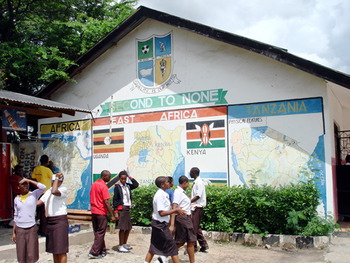
In the Christian schools, socio-economic differences were discussed quite differently and students and teachers described themselves as being in a more privileged position than their Muslim counterparts and compared with other, socially weaker groups in Tanzania (see Figure 2). However, this awareness of ‘doing better’ was not an untroubled experience for some of them and several students were well aware that wealth and social status might be transitory. In one of the Pentecostal schools, I talked to a family whose children were no longer able to cover the costly tuition fees, as the father – a well-earning government employee – had been charged with embezzlement of government money and sent to prison. In another family, the children had to switch from the same Pentecostal school to a less costly government school when their father lost his job due to a chronic illness. At the Catholic secondary school, in turn, some of the teachers felt belittled by the attitudes and behaviours of some of their students who originated mostly from middle- and upper-class homes. Thus, one of the male teachers described how challenging the teaching of students with an elevated social background could be:
Actually, teaching kids from wealthy families or who have money is a bit challenging, because they believe in the power of money … So when we teach them sometimes they … look down at you … maybe you [are] wearing jeans, your clothes or whatever. And he or she wears maybe a watch of fifty thousand [Tanzanian shillings], so [they think that] ‘In fact I am taught by a … very poor teacher’ … Even the parents themselves, they [say]: ‘Do this, do this, we got the [money].’
‘Second to none’: social status and notions of excellence in a secondary school attached to the Neo-Pentecostal spectrum, 2010.

In other contexts, however, the teachers at the Catholic school shared with their students an ethos of taking care of ‘poor’ and ‘needy’ children that has come to shape not only the work of transnational charity organizations (Bornstein Reference Bornstein2001) but also the attitudes and behaviours of the predominantly Christian middle and upper classes in Dar es Salaam (Dilger Reference Dilger, Parkin, Krause and Alex2014a). In the following, I present a case study of a charitable trip that the pupils of the Catholic primary school undertook to a local orphanage in March 2010, thereby claiming responsibility for taking care of the ‘poverty’ and ‘happiness’ of less privileged children in the city. The case study shows how the children of the school were embodying and performing the self-perceptions and values of a growing middle and upper class in urban Tanzania that not only enjoys socio-economic privileges but also cultivates an ethos of helping and being charitable, which had started to be enacted in the daily routines and practices of their educational environments.Footnote 27
‘We love you so, so much, our orphans’: performing the value of charity
During the days preceding the Easter holidays in March 2010, I noticed a growing excitement among the pupils of the St Joseph primary school who were preparing for their annual trip to the local orphanage, where they aimed to bring ‘gifts’ (zawadi) to ‘children in need’. Some of the children were brimming over with enthusiasm about the excursion and brought clothes, food and used schoolbooks from their homes; these were stored in large plastic bags in the school library. The headmistress was pleased with the children's commitment and remarked: ‘[These pupils] are good in giving. We are going to the poor. Today there are so many [charitable] organizations [in Dar es Salaam], so we go to the really needy.’ She invited me to accompany the pupils and teachers on this trip, which was announced in classes as ‘charity day’ or, alternatively, as having the purpose of ‘serving the nation’.
On the morning of 18 March, the boys and girls of Standards 3 and 4 loaded the bags with the gifts in three of the school-owned buses, their sweating bodies indicating their strong moral and affective commitment to the day ahead. One hour later, around forty pupils and four teachers were on their way to the Kurasini National Children's Home, the children singing and highly excited. We were received by one of the orphanage's leaders, who expressed his hope for a lasting ‘friendship’ (urafiki) between St Joseph's pupils and the Kurasini orphans (who had not appeared so far). As we were given a tour around the orphanage, the excursion turned from a pure ‘friendship’ or charity event into a learning experience for the St Joseph pupils and teachers about the socio-moral reality of urban life and the less privileged backgrounds of the majority of Dar es Salaam's population. We visited one of the girls’ dormitories, in which there were around forty beds, as well as the boys’ bedrooms, which comprised cubicles with four to six beds each. While the teachers were interested in the big charcoal oven on which large pots of beans were boiling, the children were fascinated by one of the cows grazing next to the kitchen building – but jumped back with a horrified ‘Iih!’ when the cow began to defecate. Finally, they ran into the playground, where they were observed, from a distance and with a certain impassiveness, by the ‘orphans’ and the orphanage staff. To the disappointment of the school's headmistress, it turned out that only the pre-school children of the Kurasini Home were present that day; the older children – who would have been more compatible in age with the Catholic school's pupils – were attending their respective primary and secondary schools.
Towards the end of our visit, we gathered in the assembly room where the pre-school children were expecting us, dressed in their neat red dresses and sitting in rows on small wooden chairs. The pupils of the Catholic school were lined up facing the ‘orphans’ and started to sing songs in Kiswahili and English. One of these songs praised their school, parents, teachers, the nuns – and the orphans themselves – in several verses and culminated in the line: ‘We love you so, so much, our orphans.’ While the ‘orphans’ were too young to understand the English songs, and probably would have found the line of the subsequent prayer (‘God bless Mum and Dad’) challenging, they clapped eagerly after each performance and responded with the song ‘Karibuni Wageni’ (‘Welcome, our guests’) as a sign of appreciation.
The subsequent distribution of gifts, which was administered by the Kurasini staff, was observed critically by the headmistress, who expressed slight disappointment about the event later on. She said that the children of the orphanage had not been prepared as well for the visit as they had been for the preceding year's event; furthermore, and contrary to what she had told me previously, the pupils of her school had not been as forthcoming with donations as they had been at comparable events. In fact, the students themselves did not seem very interested in the actual distribution of gifts and ran quickly back to the playground as soon as they were given permission to do so. However, back in the bus to their school in the inner-city area they appeared extremely cheerful and looked forward to sharing their experiences with their fellow students, who received them eagerly with the question: ‘Were they [i.e. the children at Kurasini] happy?’
This short description highlights that the heuristic distinction drawn in the introduction between the way in which ethical values are made explicit in the formalized (discursive) frameworks of Christian and Muslim schools, on the one hand, and the implicit (largely informal) settings and moral practices of students and teachers, on the other, is often challenged when it comes to ‘real life’ situations and practices. Thus, the trip to the orphanage demonstrates that the boundary between various conceptual clusters of moral self-formation – ethical, formal, discursive, institutional, public versus moral, informal, practical, individual, private – are constantly drawn and redrawn, and may both diverge and collapse in the actual life worlds and biographies of students and teachers. Thus, for instance, the leaders of the Catholic school framed the excursion as an act of ‘charity’ and ‘nation building’, hoping that their students and teachers would become engaged in new discourses and practices surrounding the value of friendship and making those with less social and economic capital ‘happy’. While the teachers and pupils of St Joseph were certainly committed to these larger goals – as confirmed, for instance, by the excitement with which the students prepared for the day – the excursion itself brought to the fore other priorities, which were not always congruent with the school's official agenda. The teachers’ curiosity about the way in which ‘the needy’ actually lived seemed to diverge from the idea that they were driven primarily by ‘compassion’ with regard to the lives of ‘the poor’. The pupils, on the other hand, enjoyed opportunities for playing and socializing with each other in the orphanage's playground as much as the actual encounters with the ‘beneficiaries’ or the distribution of gifts.
Throughout my research, there were many other instances in which discrepancies were evident between the official (ethical) discourse of educational institutions and the actual (moral) practices of students and staff. These could be seen, for example, during prayers in interreligious settings; when teachers were dissatisfied with their working environment; or when individual students reflected on their (not always straightforward) life course. However, there were also many situations in which the boundaries between these domains became so blurred as to dissolve entirely in the actual experiences and practices of teachers and students, and where the distinction between the institutional and individual commitments to certain values became impossible to maintain. I have therefore defined the appropriation (or contestation) of values in religiously oriented schools in Dar es Salaam as an embodied moral practice that is always situated and has to be analysed not only in the context of its affective dimensions, but also in relation to its partiality (Turner Reference Turner, Perry and Medina2015) and discontinuity (Lambek Reference Lambek2015).
Conclusion: embodied moral practices in an interreligious perspective
In this article, I have argued that the moral and ethical self-formation of students and teachers in the new generation of Christian and Muslim schools in Dar es Salaam is an embodied process that is tied to the ideological and institutional frameworks of specific schools, and has given rise to distinct forms of moral learning and affective belonging. These include not only particular disciplinary practices and work ethics, but also specific ways of cultivating the moral self (for example, through praying and attempts to secure protection from evil spirits). Furthermore, I have described how moral learning and the notion of ‘being religiously and morally distinct’ are articulated and embodied in relation to the larger social and material environments in which these schools are situated. Thus, affirmations and performances of religious and moral values are closely intertwined with perceptions of the wider socio-economic context of urban Tanzania. This, in turn, has been shaped by growing social inequalities as well as by an evolving ethos of social status, charity, power and dependency in the market economy. In conclusion, I want to highlight which particular aspects the comparative study of embodied morality in new Christian and Muslim schools in Dar es Salaam – and the sentiments that are attached to moral practices (Throop Reference Throop and Fassin2012) – can contribute to the study of moral self-formation in religiously diverse settings (on the growing interest in the study of Christian–Muslim encounters in Africa, see Soares Reference Soares and Soares2006; Larkin and Meyer Reference Larkin, Meyer and Akyeampong2006; Dilger and Schulz Reference Dilger and Schulz2013; Dilger Reference Dilger, Parkin, Krause and Alex2014a; Reference Dilger, Schmitt and Vonderau2014b; Janson and Meyer Reference Janson and Meyer2016).
First, the schools I studied should not be seen as environments in which monolithic ethical frameworks are learned or embodied in uniform ways. While each of the schools produces specific moral practices and ethical orientations (such as kneeling in the Catholic schools or the strongly gendered spiritual attacks and healings in the Pentecostal schools), the teachers and students in these schools usually have highly diverse religious backgrounds and do not subscribe to an overarching ideological and/or moral agenda. This is even the case in the Muslim seminary, which employs exclusively Muslim teachers; they rarely emphasize the value of religion in their professional trajectories and do not subscribe to one particular strand of Islam or set of moral values connected to it. In fact, the majority of them would even deny that such intra-religious differences exist at all – or, at least, this is how they expressed it to me. At the same time, however, interreligious settings afford very similar opportunities for the individual contestation of institutionally dominant ethical frameworks, as the example of students and teachers with divergent religious backgrounds in the Catholic school shows.Footnote 28
Second, the comparison between different educational settings has shown that the embodiment of values in Christian and Muslim schools is closely entwined with their specific position in the wider socio-urban environments of Dar es Salaam. Thus, the students of the Pentecostal and the Catholic schools have come to understand from an early age what their structural position in society is. Many of them have come to accept – given that ‘education is power’ and some of the schools ‘strive for excellence’ – that they will be ‘second to none’. In the Muslim school, on the other hand, the male students – and their teachers – emphasized that they were strongly exposed to the moral and economic downsides of life in Dar es Salaam, including the prevalence of crime and lethal diseases and the risk of dying at an early age, and they were therefore in need of particularly rigid moral discipline. These discourses – which emphasize success and progress in life as well as its moral and socio-economic pitfalls – are strongly shaped by Christian and Muslim notions of leading a ‘good life’ and are simultaneously intertwined with perceptions of, or resentment about, past and contemporary configurations of socio-religious difference in Tanzania (Dilger Reference Dilger2013).
Finally, and closely related to the second point, the partiality and (dis)continuity of moral practices in Christian and Muslim schools are closely entwined with the way in which these institutions have become entrenched in the logics of mobility and movement in the highly competitive market of education. Especially in the Muslim school, which has a low reputation in the wider educational landscape, but also in the privately run Pentecostal schools, where staff are not offered work contracts, teachers either are continuously on the lookout for ‘greener pastures’ and the chance to move on to a ‘better school’, or suffer the ignominy of being replaced by better-qualified colleagues. Equally, pupils in these educational settings move on to different religious and/or secular schools if their families are no longer able to afford the costly school fees, or once they have found a place in one of the better-performing schools in the country. In this context of market dependency, the Catholic schools of my study – which are run by an order of nuns and rank consistently highly in the annual school rankings – had the most stable clientele among the urban middle and upper classes and provided the most continuous framework for the moral self-formation of teachers and students.
We need, then, to take account of the multiple (partly enforced, partly deliberate) mobilities, and the fragmented experiences that shape these mobilities, in the increasingly stratified, highly competitive educational landscape of contemporary urban Tanzania. Only by doing so will we be able to understand specific forms of ‘embodied moral learning’ in the new Christian and Muslim schools in Dar es Salaam.
Acknowledgements
This article was partly written during a fellowship at the Centro Incontri Humani in Ascona in July and August 2015. I gratefully acknowledge the stimulating comments that I received on my work from my co-fellows and the centre's director, Angela Hobart. I am also grateful for the very helpful and constructive comments that I received on earlier versions of this article from the guest editors of this special issue and the two anonymous reviewers of Africa, as well as during seminars at the University of Constance, Wits University, the University of Vienna, the University of Hamburg, the University of Leipzig, and the London School of Economics and Political Science.