Introduction
Usage of antibiotics concerning animal nutrition and as antimicrobial growth promoters is undoubtedly beneficial for the improvement of zootechnical performance parameters and prevention of disease. Nevertheless, because of the bio-security threats for human and animal health which come from escalating resistance of pathogens to antibiotics and the accumulation of antibiotic residues in animal products and the environment (Bampidis et al., Reference BAMPIDIS, CHRISTODOULOU, FLOROU PANERI, CHRISTAKI, VHATZOPOULOU, TSILIGIANNI and SPAIS2005; Stanaćev et al., Reference STANAĆEV, GLAMOČIĆ, MILOŠEVIĆ, PUVAČA, STANAĆEV and PLAVŠA2011a), there is a global need to remove antimicrobial growth promoters from animal diets. The pioneer of the complete ban of all antimicrobial growth promoters since 2006 has been the European Union (the initial bans originating in Scandinavia), while according to regulation EC 1831/2003 on feed additives, coccidiostats and histomonostats should be also phased out by the end of 2012. As a result, the demand for alternative products to antibiotics that can be used as prophylactic and growth promoting agents is very high. The intensive broiler production sector of the poultry industry is keen to optimise performance and minimise economic losses as a result of antimicrobial growth promoter removal, as well as ensuring the safety of broiler meat via the control or elimination of foodborne pathogens.
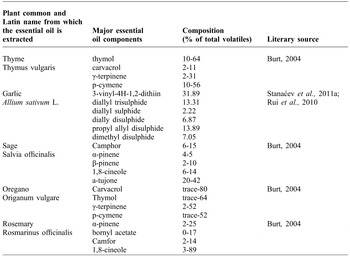
The beneficial potential of various microbes and bioactive compounds have been highlighted in enhancing animal performance and health. Examples include probiotics, prebiotics, enzymes, organic acids and phytogenic compounds (Stanaćev et al., Reference STANAĆEV, KOVČIN, ARAPOVIĆ, Ž., MILOŠEVIĆ, FILIPOVIĆ, BOŽIĆ and STANAĆEV2008; Reference STANAĆEV, GLAMOČIĆ, MILOŠEVIĆ, PUVAČA, STANAĆEV and PLAVŠA2011a). The term ‘phytogenic compound’ refers to the parts (e.g. seeds, fruits, roots and leafs) of various aromatic herbs and spices (e.g. garlic, oregano, thyme, rosemary, coriander and cinnamon) as well as to their respective plant extracts in the form of essential oils (Windisch et al., Reference WINDISCH, SCHEDLE, PLITZNER and KROISMAYR2008). Many beneficial properties of phytogenic compounds derive from their bioactive molecules (e.g. carvacrol, thymol, cineole, linalool, anethole, allicin, capsaicin, allyl isothiocyanate and piperine). The biological activities of these phytomolecules are well documented, as are their antibacterial and antioxidant functions (Ruberto et al., Reference RUBERTO, BARRATA, SARI and KAABEHE2002; Burt, Reference BURT2004; Puvača, Reference PUVAČA2008; Windisch et al., Reference WINDISCH, SCHEDLE, PLITZNER and KROISMAYR2008). Their antiviral, antitoxigenic, antiparasitic and insecticidal properties have been reported additionally by Burt (Reference BURT2004). Currently there is a rising interest in essential oils for animal nutrition, as they have a much higher biological activity compared to the raw material they were extracted from. Examples of aromatic plants and their composition in major active components are shown in Table 1.
An issue with essential oils is their complexity of mixtures of plant bioactive compounds along with variable chemical composition and concentrations. Essential oils consist basically of two classes of compounds, the terpenes and phenylpropenes (Lee et al., Reference LEE, EVERTS and BEYNEN2004). There is a dependency regarding content and composition of essential oils on the interaction of many factors in the plant raw material and the essential oils production process. For example, plant species and growth stage, the environment (e.g. harvest season, climate and stress condition), agricultural practices (e.g. plant density per cultivated area, fertilization, irrigation level) and growing region will all affect essential oil content and composition of the raw extract (Mert et al., Reference MERT, KIRICI and AYANOGLU2002; Daferera et al., Reference DAFERERA, ZIOGAS and POLISSOU2003). As a result, the raw materials for essential oil production contain considerable variation, and the same applies to the resulting essential oil products. The processing methods applied in essential oil production, such as hydrodistillation or solvent extraction, can have a significant effect on the amount and composition of the extracted oil (Russo et al., Reference RUSSO, GALLETTI, BOCCHINI and CARNACINI1998). In the past fifteen years, phytoadditive compounds have attracted a lot of attention regarding their potential role as alternatives to antibiotic growth promoters in animal nutrition. During that period, phytoadditive compounds have become popular as feed additives in broiler diets. The aim of this work is to review current scientific literature on the use of phytoadditives in broiler nutrition.
Examples of aromatic plants and their major bioactive components.

Commonly used phytoadditive compounds in broiler diets
Aromatic herbs such as oregano, garlic, thyme, rosemary and sage are listed among the most commonly researched phytogenic compounds in broiler nutrition, not only in terms of aromatic plants or their respective essential oils extracts but also as blended combinations of multiple phytogenic compounds. They therefore represent very important part of the current literature on phytoadditive applications in broiler nutrition (Horosova et al., Reference HOROSOVA, BUJNAKOVA and KMET2006; Cross et al., Reference CROSS, MCDEVITH, HILLMAN and AGAMOVIC2007; Puvača, Reference PUVAČA2008; Stanaćev et al., Reference STANAĆEV, MILOŠEVIĆ, PLAVŠA, BJEDOV, STANAĆEV, PUVAČA, ARAPOVIĆ and Ž.2010; Reference STANAĆEV, GLAMOČIĆ, MILOŠEVIĆ, PUVAČA, STANAĆEV and PLAVŠA2011a).
Garlic as a phytoadditive in broiler nutrition and its effect on the cholesterol content in the tissue of the broilers
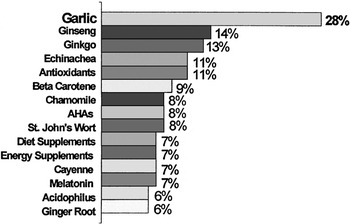
A significant risk factor for the appearance of atherosclerosis, ischemic heart disease and cerebrovascular ailments is increased levels of cholesterol in the blood (hypercholesterolemia). Cholesterol is an alcohol, included in the zoosterols because it is a typical product of animal metabolism and it appears in foods of animal origin. It represents a building material of cell walls, and is of importance in the normal functioning of the endocrine glands, especially the gonads and adrenal glands. Live cells of human and animal organisms, especially hepatocytes, have the ability to synthesise about two thirds of endogenous cholesterol, while the smaller amounts are taken in with food (Božić, Reference BOŽIĆ1997). Once in the organism, it binds to proteins, dissolves in blood plasma and circulates in the bloodstream. There are two forms of cholesterol bound to proteins, LDL and HDL (cholesterol of low and high density respectively). The difference between them is of importance, because the level of LDL cholesterol in plasma defines the risk for atherosclerosis, which is more acute if the concentration is higher. HDL particles do not have atherogen potential but in some way represent protectors of blood vessels (Stanaćev et al., Reference STANAĆEV, KOVČIN, STANAĆEV, PUCAREVIĆ and PUVAČA2011b). Based on the results of Stanaćev et al. (Reference STANAĆEV, MILOŠEVIĆ, PLAVŠA, BJEDOV, STANAĆEV, PUVAČA, ARAPOVIĆ and Ž.2010; Reference STANAĆEV, GLAMOČIĆ, MILOŠEVIĆ, PUVAČA, STANAĆEV and PLAVŠA2011a), it can be stated that the addition of garlic powder significantly lowers the level of cholesterol in the tissues of chickens. Garlic is most efficient in red meat, where there is a decrease of cholesterol (83.53%), followed by levels in skin (72.53%), while in white meat (24.16%) the effect of garlic in decreasing cholesterol is the lowest. The increased level of cholesterol in the blood raises a series of questions connected to atherosclerosis, and the most important question is how to treat the resulting state. The most rational is via prevention with dietetic measures (Ankri and Mirelman, Reference ANKRI and MIRELMAN1999; Sivam, Reference SIVAM2001). Because chicken meat is the most represented dietetic product in nutrition when hypercholesterolemia is in question (Konjufka et al., Reference KONJUFKA, PESTI and BAKALLI1997), it is desirable to reduce the whole cholesterol level in the muscular tissue if possible. It has also been proven that garlic shows hypoallergic effects (Kumar and Berwal, Reference KUMAR and BERWAL1998) in chickens by inhibiting the most important enzymes that participate in the synthesis of cholesterol and lipids (three-hydroxyl-three-methl-glutaril-coenzyme-A-reductase, cholesterol-7-hydroxylase and synthesis of fatty acids) (Stanaćev et al., Reference STANAĆEV, GLAMOČIĆ, MILOŠEVIĆ, PUVAČA, STANAĆEV and PLAVŠA2011a). Besides that, this additive is relatively cheap commercially, can be added in small amounts of 1-2% and hence does not increase the cost of production, which is important for producers (Figure 1).
Top supplements used by U.S. households in 1997; of 91 herbal supplements, garlic was found to be used more than twice as much as other supplements (Wyngate, Reference WYNGATE1998).

Inclusion levels of phytoadditives in chicken feed
There are reports of a wide range of phytogenic feed inclusion levels. Depending on the usage of aromatic plants or their respective essential oils, up to ten fold differences in feed inclusion levels have been used. When aromatic plant parts were used, feed inclusion levels ranged from 0.01-30 g/kg of diet. Examples include oregano addition at 30 g/kg feed (Young et al., Reference YOUNG, STAGSTED, JENSEN, KARLSSON and HECKEL2003) or 10 g/kg feed (Cross et al., Reference CROSS, MCDEVITH, HILLMAN and AGAMOVIC2007), garlic at 1.5-2 g/kg feed (Stanaćev et al., Reference STANAĆEV, MILOŠEVIĆ, PLAVŠA, BJEDOV, STANAĆEV, PUVAČA, ARAPOVIĆ and Ž.2010; Reference STANAĆEV, GLAMOČIĆ, MILOŠEVIĆ, PUVAČA, STANAĆEV and PLAVŠA2011a), rosemary at 5-10 g/kg feed (Govaris et al., Reference GOVARIS, FLOROU PANERI, BOTSOGLOU, GIANNENAS, AMBROSIADIS and BOTSOGLOU2007) and rosemary powder at 0.5 g/kg feed (Spernakova et al., Reference SPERNAKOVA, MATE, ROZANSKA and KOVAC2007). Lower feed inclusion levels than the above have been reported for essential oils. Examples include rosemary and sage extracts at 500 mg/kg of feed (Lopez-Bote et al., Reference LOPEZ-BOTE, GRAY, GOMAA and FLEGAL1998), oregano essential oil at 50-100 mg/kg of feed (Govaris et al., Reference GOVARIS, BOTSOGLOU, FLOROU PANERI, MOUTAS and PAPAGEORGIOU2005) or 300 mg/kg feed (Giannenas et al., Reference GIANNENAS, FLOROU PANERI, PAPAZAHARIADOU, CHRISTAKI, BOTSOGLOU and SPAIS2002), thymol at 100 mg/kg feed (Lee et al., Reference LEE, EVERTS and BEYNEN2004) and essential oils from other herbs at various levels. Since actual plant or essential oil composition in active components may vary substantially between different studies, it should be noted that the above inclusion levels should be considered as indicative only.
Effects of phytoadditives in broiler feed on growth parameters
Among the growth parameters that have been studied include broiler body weight, growth, feed intake and feed conversion ratio. The usage of oregano essential oils at 50 and 100 mg/kg in a wheat-soybean meal basal diet fed to Cobb broilers had no effect on overall body weight and feed conversion ratio, and did not differ from the unsupplemented control treatment and from a treatment supplemented with 200 mg α-tocopheryl acetate (Lee et al., Reference LEE, EVERTS and BEYNEN2004). The addition of two commercial three-component mixtures (i.e. one consisting of oregano, cinnamon and pepper and the other consisting of sage, thyme and rosemary) of phytogenic essential oil products in a wheat-corn-soybean meal basal diet at 200 mg/kg and 5000 mg/kg levels did not improve overall body weight gain, feed intake and feed conversion ratio compared to an unsupplemented control or an avilamycin treatment (Hernandez et al., Reference HERNANDEZ, MADRID, GARCIA. V., ORENGO and MEGIAS2004). Additionally corn-soybean meal or wheat-barley-soybean meal diets fed to male Hubbard broilers with 100 mg/kg of a plant extract containing carvacrol, cinnamaldehyde and capsicum oleoresin significantly improved the feed conversion ratio by 3.9% in a maize-based diet (Jamroz et al., Reference JAMROZ, WILICZKIEWICZ, WERTELECKI, ORDA and SCORUPINSKA2005). Spernakova et al. (Reference SPERNAKOVA, MATE, ROZANSKA and KOVAC2007) have reported that the addition of rosemary powder at 500 mg/kg in poultry diets gave higher body weight gain compared to an unsupplemented control group. Feed inclusion of five herbs (i.e. thyme, oregano, marjoram, rosemary and yarrow) or their associated essential oils at 10 g/kg and 1 g/kg respectively, in a wheat-soybean meal diet for female Ross broilers had different effects on broilers performance. In particular, the oregano herb and oil treatments reduced average body weight gain and the values of feed intake were ranked among the poorest, but the group on thyme oil treatment showed the best results.
Phytoadditive effects on gut function and nutrient digestibility
Mechanisms thought to influence gut function include transit time, digestive secretions and enhancement of digestive enzyme activities, as the combination of all these effects will impact nutrient digestibility. Lee et al. (Reference LEE, EVERTS and BEYNEN2004) have shown that phytogenic compounds enhance the intestinal activities of trypsin, lipase and amylase in broilers. The addition of plant extracts to feed mixtures for 41 day old broiler chickens enhanced lipase activity by 38-46% (Jamroz et al., Reference JAMROZ, WILICZKIEWICZ, WERTELECKI, ORDA and SCORUPINSKA2005). Additionally, potential effects of phytoadditives on gut morphological characteristics have been reported by Jamroz et al. (Reference JAMROZ, WERTELECKI, HOUSZKA and KAMEL2006). Results show no differences between the non-supplemented control and the phytoadditive treatments regarding the apparent ileal digestibilities of crude protein and starch as well as for the total tract fat digestibility at the age of 21 and 40 days in an experiment with female Cobb broilers fed a corn-soybean meal basal diet supplemented with thyme, cinnamaldehyde or a commercial essential oils preparation at 100 mg/kg diet (Lee et al., Reference LEE, EVERTS and BEYNEN2004). Inclusion of two three-component commercial essential oil products in a wheat-corn-soybean meal basal diet fed to Ross male broilers, showed improvements in ileal digestibility of dry matter and starch and the total tract apparent digestibility of dry matter, crude protein and fat compared to the un-supplemented control (Hernandez et al., Reference HERNANDEZ, MADRID, GARCIA. V., ORENGO and MEGIAS2004). Plant extract products containing carvacrol, cinnamaldehyde and capsicum oleoresin included in corn-soybean meal or wheat-barley-soybean meal diets fed to male Hubbard broilers did not significantly increase the apparent ileal digestibility of nutrients (i.e. crude protein, crude fibre and amino acids) compared to unsupplemented controls. None of these five herbs or their respective essential oil treatments tested that were used in the study by Cross et al. (Reference CROSS, MCDEVITH, HILLMAN and AGAMOVIC2007) had an effect on the apparent metabolisable energy and the total tract apparent digestibility coefficients of dry and organic matter. Supplementary to that, none of the dietary treatments that affected the intestinal endogenous losses were determined by the concentration of sialic acid in the excreta. By the reports of Theron and Lues, (2007) the addition of corn-soybean meal diets with a blend of essential oils derived from oregano, anise and citrus at 125 mg/kg diet increased ileal apparent fat digestibility in male Cobb broilers, and Stanaćev et al. (Reference STANAĆEV, KOVČIN, STANAĆEV, PUCAREVIĆ and PUVAČA2011b) came to similar conclusions in their research with the inclusion of rapeseed oil in broiler diets.
Meat quality and safety
In terms of quality, the dietary intake of phytoadditive compounds has shown beneficial effects on stored meat quality, an effect related to their antioxidant properties in the case of the reduction or delaying of lipid oxidation. Examples of phytoadditive compounds tested in this respect include rosemary and sage extracts (Lopez-Bote et al., Reference LOPEZ-BOTE, GRAY, GOMAA and FLEGAL1998), oregano oil, oregano (Young et al., Reference YOUNG, STAGSTED, JENSEN, KARLSSON and HECKEL2003), rosemary (Govaris et al., Reference GOVARIS, FLOROU PANERI, BOTSOGLOU, GIANNENAS, AMBROSIADIS and BOTSOGLOU2007), rosemary powder (Spernakova et al., Reference SPERNAKOVA, MATE, ROZANSKA and KOVAC2007) and garlic powder (Stanaćev et al., Reference STANAĆEV, MILOŠEVIĆ, PLAVŠA, BJEDOV, STANAĆEV, PUVAČA, ARAPOVIĆ and Ž.2010; Reference STANAĆEV, GLAMOČIĆ, MILOŠEVIĆ, PUVAČA, STANAĆEV and PLAVŠA2011a). There are no indications of significant beneficial effects of phytogenic feed additives in terms of carcass yield. Supplementation with plant extracts enhanced the breast muscle proportion of the eviscerated carcass by only 1.2% when compared with the control group, while supplementation with anise seeds did not improve carcass dressing percentage (Jamroz et al., Reference JAMROZ, WILICZKIEWICZ, WERTELECKI, ORDA and SCORUPINSKA2005; Soltan et al., Reference SOLTAN, SHEWITA and KATCHA2008). It is widely acknowledged that the addition of phytoadditive compounds such as herbs, spices or essential oils in foods of animal origin contribute to food microbiological safety and quality upon food storage in the raw or cooked stages through their antimicrobial and antioxidant functions (Soltan et al., Reference SOLTAN, SHEWITA and KATCHA2008). Beside the phytoadditives that are used as to supplement broilers diet, Stanaćev and Puvača (Reference STANAĆEV, V and PUVAČA2011) showed that even microminerals in certain amounts positively affect quality and carcass meat safety when they are added to broiler diets. Based on this principle, the dietary intake of phytogenic feed additives could contribute to food safety in a couple of ways. In the first instance it could achieve this through the reduction of pathogens in the gut, thus promoting a healthy gut environment, which in turn could contribute to a reduction of carcass contamination at slaughter. According to the European Food Safety Authority (EFSA) this should be considered as one of the most effective ways of reducing the contamination of foodstuffs and the subsequent number of foodborne illnesses in humans. Secondly, it may be accomplished through the growth inhibition of spoilage or pathogenic bacteria as a result of potential accumulation of essential oil active components in metabolic tissues.
Conclusions
Based on the available data it can be concluded that phytoadditive compounds can be used as natural non-antibiotic growth promoters in broiler nutrition. Nevertheless, there is scarcity in the evidence of the beneficial effects in nutrient digestibility and gut function in broilers. The efficacy of phytogenic applications in poultry depends on many factors. The most important consideration is the differences in composition of the active components and feed inclusion levels, bird genetics and overall diet composition. The advancement of knowledge and understanding of the complex poultry gut ecosystem in order to be able to fully explore the precise modes of action of phytogenic compounds represents a clear prerequisite for the design of highly efficacious phytogenic products. In general, phytoadditives have positive effects, but the knowledge of their use in poultry nutrition is still limited and requires further research.
Acknowledgments
This paper is a part of the project III 46012 which is financed by Ministry for Science and Technological development of the Republic of Serbia.