INTRODUCTION
Integrated Food-Energy Systems (IFES) optimise scarce resources by simultaneously addressing the demand for energy and food. In sub-Saharan Africa (SSA), high rates of population growth and pressure on natural resources have increased the need for innovative IFES that can reduce the demand for energy and increase the supply of fuelwood from crops without compromising household food security (Bogdanski et al., Reference Bogdanski, Dubois, Jamieson and Krell2010).
The need for innovative IFES is particularly acute in southern Malawi, where high population density (185 persons/km2) and small average farm size (0.6 ha) have increased pressure on the natural resource base. Although demand for fuelwood is no longer regarded as the main cause of de-forestation in Malawi, it remains an important contributory factor (Arnold et al., Reference Arnold, Kohlin and Persson2006). Ninety-five percent of rural households rely on fuelwood for cooking (European Union Energy Initiative (EUEI), 2009) and virtually all energy consumption consists of biomass, of which 97% is from fuelwood and charcoal and 3% from crop residues (EUEI, 2009). Moreover, fuelwood collection is time-consuming. Rural women in Malawi spend one and a half hours per day collecting firewood (Bandhyopadhyay et al., Reference Bandhyopadhyay, Shyamsundar and Baccini2011).
Improved cookstoves have a long history of research and extension in developing countries. In spite of reportedly reducing fuelwood requirements and collection time, however, adoption remains limited and most rural households continue to use the traditional three-stone fire. Programmes to promote improved cookstoves have been successful where fuelwood prices or collection times are high, stoves can be manufactured by local artisans and distribution is profitable for the private sector (Barnes et al., Reference Barnes, Openshaw, Smith and van der Plas1993; Hyman, Reference Hyman1987). In Malawi, improved stoves have been developed and promoted by both government agencies and bilateral projects. The Integrated Food Security Programme (IFSP) in Mulanje district, southern Malawi (1997–2004) used stove designs imported from Kenya and Tanzania to develop the ‘protecting stove’ (chitetezo mbaula in Chichewa). The chitetezo mbaula is a fired, portable clay stove that can be made by village artisans. By 2004, over 10,000 households in the project area had acquired improved stoves.
Pigeonpea (Cajanus cajan L. Millsp.) is a grain legume widely grown in the tropics and subtropics. Pigeonpea grains, which are high in protein (20–30%), may be eaten cooked or as raw pods, or sold to earn cash income. About 65% of production in Malawi is consumed on-farm, while 35% of production is sold, with three-quarters of that being exported (Simtowe et al., Reference Simtowe, Asfaw, Shiferaw, Siambi, Monyo, Muricho, Abate, Silim, Ganga Rao and Madzonga2010a). Malawi was formerly the world's largest exporter of pigeonpea but its share in the world market has fallen because of yield losses from Fusarium wilt. Pigeonpea exports from Malawi reach Mumbai, India before the Indian harvest in October, when prices are highest. Exports comprise both dry grain and de-hulled and split grain (Tur dhal). India's imports of pigeonpea are projected to reach 636,000 tonnes by 2020 (Abate et al., Reference Abate, Alene, Bergvinson, Shiferaw, Silim, Orr and Asfaw2012), providing Malawian growers an opportunity to increase exports. However, inefficiencies in the pigeonpea value-chain result in low farmgate prices, and variable world prices reduce the incentive to increase production to meet this growing demand (Makoka, Reference Makoka2004). For example, Malawi exported no pigeonpea in 2000 and 2001 because of declining world prices (Simtowe et al., Reference Simtowe, Shiferaw, Kassie, Abate, Silim, Siambi, Madzonga, Muricho and Kananji2010b). Consequently, pigeonpea remains primarily a food crop consumed by rural households.
Crop improvement for pigeonpea in Malawi has focused on developing improved varieties with higher grain yield, resistance to Fusarium wilt, a range of field durations appropriate for different agro-ecologies and desired market traits such as white colour, bold grains that cook fast and round grains that are easy to dehull. Since 1987 Malawi has released six improved varieties of pigeonpea. The most widely adopted is ICEAP 00040 (Kachangu), a long duration variety (of over 200 days) that is resistant to Fusarium wilt and has desirable market traits. Recently, however, smallholders have replaced both improved and traditional pigeonpea varieties with a variety known as Mthawajuni. The provenance of Mthawajuni is not known, but it may be an advanced line that ‘escaped’ from a research trial. Mthawajuni is a medium duration variety (of 150–200 days) that owes its popularity to early maturity (Mthawajuni in Chichewa means ‘escapes cold’), high grain yield and thick, bushy stems that make it a valuable source of fuelwood.
This paper reviews experience with an innovative IFES promoted in southern Malawi as part of the Msamala Sustainable Energy Project (MSEP), a five-year project (2007–2012) implemented by Concern Universal (CU), an international non-governmental organisation (NGO). Concern Universal promoted an IFES that combined the use of the chitetezo mbaula and pigeonpea stems for fuel. Over three years (2008–2010), approximately 9000 stoves were produced by groups of village artisans and purchased by smallholders at a retail price of Malawi Kwacha (MK) 300 (US$3). Households that bought an improved cookstove were rewarded with free seed of Mthawajuni. In 2008/2009, the project distributed 2 kg of pigeonpea seed each to 3000 households that participated in its tree nursery programmes. In 2009/2010, the project distributed 3 kg of pigeonpea seed each to 6000 households that had purchased an energy-efficient stove. In total, 24 tonnes of seed was distributed to 9000 smallholder households. In combination, these interventions were expected to simultaneously increase the supply of food and reduce the demand for scarce fuelwood.
The purpose of this paper is to identify socio-economic differences between adopters and non-adopters of IFES, and relationships between IFES adoption, fuelwood use and pigeonpea consumption. This study is based on observational data. Attempts to replicate a randomized experiment using Propensity Score Matching (PSM) were unsuccessful since we were unable to obtain a balanced sample of IFES adopters and non-adopters. Consequently, the results are based on regression analysis that control only for observed bias and not for unobserved bias between adopters and non-adopters. While this does not invalidate our results, it suggests the need for further research to confirm our conclusions. The IFES model in southern Malawi predicts that the adoption of improved cookstoves and pigeonpea will increase food supply and will reduce the demand for fuelwood from forest reserves. We used survey data to test the hypotheses that the IFES had been adopted primarily by poorer households. We develop a simple model of fuelwood use and frequency of collection from forests and hills, and compare consumption of pigeonpea among IFES adopter and non-adopter households.
Two caveats apply. Budget and time constraints meant that results are based on a single-visit survey that did not capture seasonal variation in the demand for fuelwood, while information on fuelwood consumption and collection was based on farmer recall rather than physical measurements.
DATA AND METHODS
Research was conducted in Balaka district, southern region. Balaka district falls within the Middle Shire Valley Livelihood Zone (Malawi Vulnerability Assessment Committee (MVAC), 2005). Rainfall is unimodal ranging from 200–1000 mm per year, and there is a single growing season. The predominant farming system is maize-based with legume intercrops. Traditionally, pigeonpea was not widely grown because the long field duration of local varieties exposed them to the risk of yield loss from free grazing after the harvest of maize. Poverty in Balaka district is above average with 68% of the population living below the poverty line of MK 37,002 per person per year compared with 57% for rural Malawi as a whole (GoM, 2012).
Household survey
The villages where households had received pigeonpea seed from CU in 2008/2009 were listed. A sample of nine villages was then purposively selected, based on walking distance from the hills and forest reserve that provide the main source of fuelwood for the area. Of these, five villages were located less than one hour's walking distance from the hills and forest reserve, while four villages were located above one hour's walking distance. Next, the households in these villages were listed. A sample of households that had received seed from CU in 2008/2009 and that had purchased improved cookstoves was randomly selected from this list, together with the same number of households that had not received seed or purchased an improved cookstove. A total sample of 230 households was surveyed in November 2011, after the harvest of the pigeonpea crop planted in 2010/2011 and just before the start of the planting season for 2011/2012. Of these, 155 households lived within one hour (average 58 minutes), and 75 households lived more than one hour (average 1.41 hours) from the hills and forest reserve (p < 0.000).
Fuelwood consumption
Consumption of fuelwood from forest and hills was measured by asking households to estimate the number of times per month they collected fuelwood. This was multiplied by the number of family members who participated in collecting fuelwood to estimate the number of bundles collected each month. Malawian girls who collect firewood carry the same headload weight of firewood as their mothers (Biran et al., Reference Biran, Abbot and Mace2004). The average weight of one headload of fuelwood has been variously estimated as 33 kg (Fleuret and Fleuret, Reference Fleuret and Fleuret1978), 27–31 kg (Biran et al., Reference Biran, Abbot and Mace2004) and 30 kg (Jumbe and Angelsen, Reference Jumbe and Angelsen2011). We used a mean weight of 30 kg, which was multiplied by the number of bundles collected each month to give an estimate of the weight of fuelwood collected from forests and hills (variable COLL_CONS). Households were also asked to estimate the number of bundles of firewood bought per month. The average weight of one bundle of purchased firewood, based on physical measurement in Balaka market, was 9.4 kg, which was used to obtain the weight of bundles purchased per month (variable BUY_CONS). The combined weight (COLL_CONS + BUY_CONS) was used to represent fuelwood consumption per household per month (FW_CONS). However, this is a partial estimate of total consumption because it does not capture the quantity of fuelwood collected from other sources such as own trees or woodlots.
Regression analysis
Of the 230 sample households, 115 households (50%) owned an improved cookstove and grew pigeonpea in 2010/2011. Of the remaining 115 households, 56 (24% of the sample) were partial adopters that grew pigeonpea but did not have an improved cookstove, while 59 households (26%) were non-adopters with neither an improved cookstove nor pigeonpea. Since the sample households fell into three categories, we used multinomial logistic regression to identify the factors that determined IFES adoption. To facilitate the interpretation of results, the non-adopter group was used as the referent group. Multinomial regression requires a large sample size because it uses a maximum likelihood estimation method and has multiple equations. The case-to-variable ratio was 20:1, which is above the guideline of 10:1 (Hosmer and Lemeshow, Reference Hosmer and Lemeshow2005). Identification of outliers in logistic regression is problematic because standardized residuals do not behave like those in linear regression (Jennings, Reference Jennings1986). Following Hosmer and Lemeshow (Reference Hosmer and Lemeshow2005), binary logistic regressions were run for full-adopters–non-adopters and partial adopters–non-adopters to identify outliers. Five cases with studentised residuals greater than two were omitted from the multinomial regression. The fit of the multinomial model was tested by the likelihood ratio, Chi-square test and by comparing predicted with actual group membership. The statistical significance of independent variables was tested using the t-test. Since demand for fuelwood and frequency of fuelwood collection are metric variables, their determinants were estimated using linear regression. Outliers with standardised residuals above two were omitted from the analysis. The fit of the models was tested using the F-test, while the t-test was used to test the statistical significance of independent variables.
RESULTS
Adopter and non-adopter groups
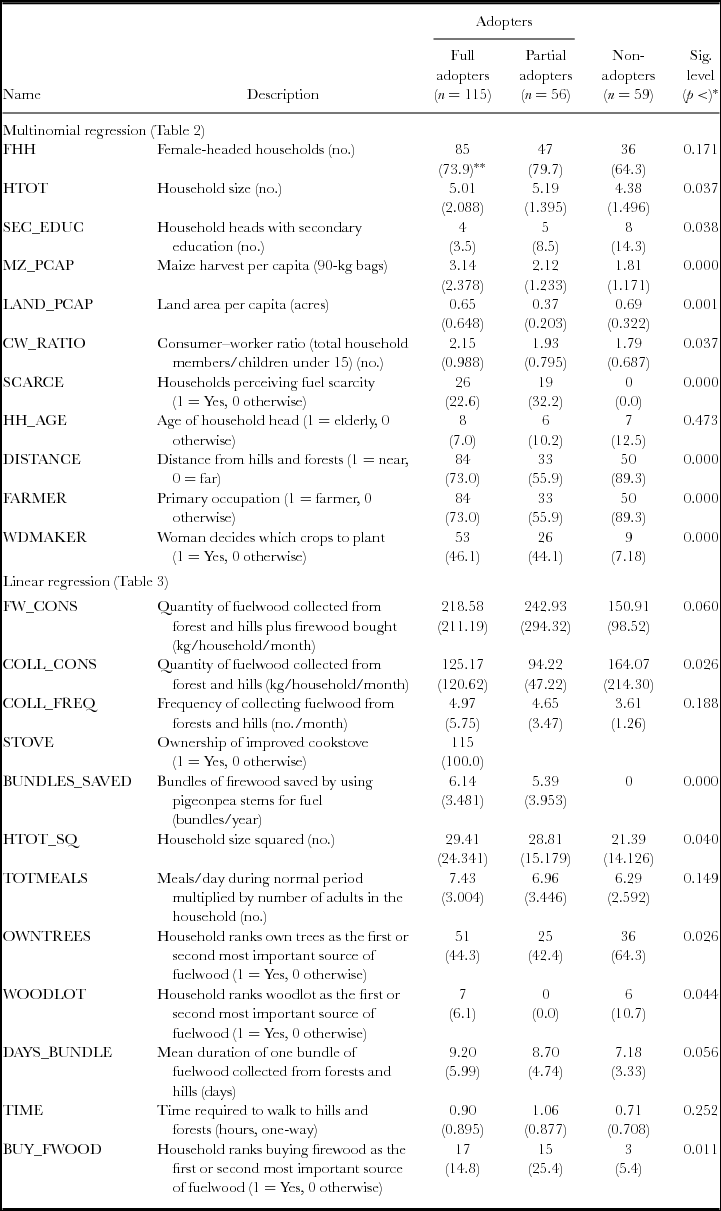
Table 1 defines the variables used in the regression analyses and shows the mean values of the variables for each of the three groups. Statistical tests showed some significant differences in mean values, notably in the socio-economic and demographic indicators.
IFES adoption
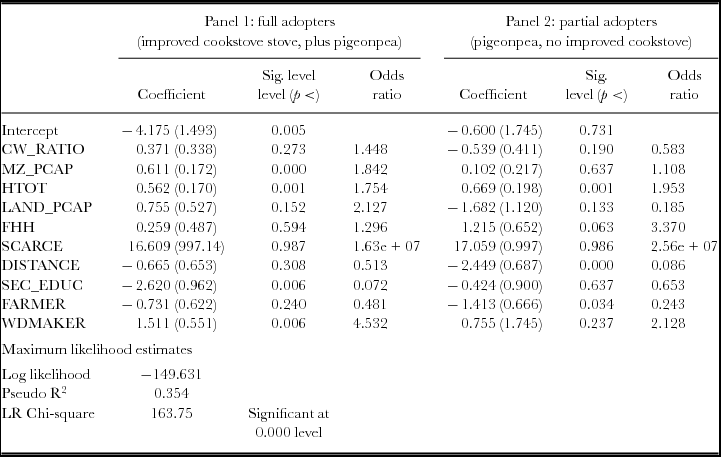
Adoption of the complete IFES (both improved cookstove and pigeonpea) was specified to depend on 10 independent variables: CW_RATIO, MZ_PCAP, HTOT, LAND_PCAP, FHH, SCARCE, DISTANCE, WDMAKER, SEC_EDUC and FARMER, as shown in Table 2.
Multinomial logistic analysis for non-adoption and partial adoption compared with full adoption of Integrated Food-Energy System (IFES) (n = 223). Referent category: IFES non-adopters (no improved cookstove and no pigeonpea).

Panel 1 compares households that had adopted the full IFES (improved cookstove plus pigeonpea) with the referent group of non-adopter households. The coefficients are the multinomial logit estimates for a one-unit change in independent variable, holding other variables in the model constant. Recall that the parameter estimates are interpreted in relation to the referent group of IFES non-adopters. A positive coefficient implies that a one-unit increase in the independent variable will increase the likelihood that the household will remain in the full IFES adopter group, while a negative coefficient indicates that a one-unit change will reduce the likelihood that the household will remain in the full adopter group. To make the coefficients easier to interpret, we take the exponent of log odds, or the odds ratio. Thus, an independent variable with an odds ratio of above one means that a change in this variable reduces the odds of being included in the referent group of non-adopters, while an odds ratio of less than one increases the odds of being included in the referent group.
The significance test for the model Chi-square was statistically significant at the 1% level, suggesting that the model gave a reasonable fit. The model correctly predicted 66% of the cases. Four of the 10 independent variables (MZ_PCAP, HTOT, SEC_EDUC and WDMAKER) were statistically significant at the 0.05 level or above. Interestingly, although the coefficient for DISTANCE from forests and hills displayed the expected negative sign, it was not statistically significant. The positive signs for MZ_PCAP and HTOT indicated that households with bigger maize harvests per head and bigger families were more likely to be full IFES adopters. The SEC_EDUC variable had a negative sign, indicating that household heads with secondary schooling were more likely to be non-adopters. The coefficient for the WDMAKER variable had a positive sign, indicating that in households where women made decisions about which crops to plant were more likely to be full adopters. The odds ratios show that if household size increased by one unit, the relative chance of being a full adopter was 1.75 times more likely when other variables in the model were held constant. The highest odds ratio was for WDMAKER (4.53), indicating that women's decision-making was critical for adoption of the full IFES.
Panel 2 compares partial adopters (or households that had adopted only pigeonpea) with the referent group of non-adopters. Four of the 10 independent variables (HTOT, FHH, DISTANCE and FARMER) were statistically significant at the 5% level or above. The coefficients for the HTOT and FHH variables were positive, indicating that bigger households and households headed by women were more likely to adopt pigeonpea. Finally, the coefficient for DISTANCE was negative, indicating that households situated near forests and hills (DISTANCE = 1) were more likely to be non-adopters. The coefficient for FARMER was also negative, indicating that households where the head was a full-time farmer were less likely to be partial adopters and more likely to be non-adopters.
Demand for fuelwood
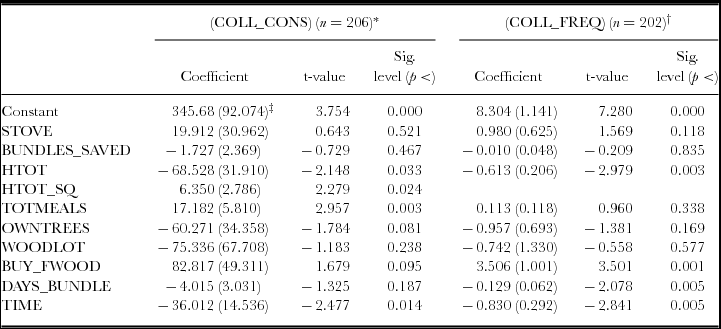
The IFES was expected to reduce the total demand for fuelwood from forests and hills (COLL_CONS) and the frequency of collection (COLL_FREQ) (Table 3). We hypothesized that consumption and frequency of collection were negatively related to adoption of IFES (STOVE, BUNDLES_SAVED), the average number of days that one bundle of fuelwood lasted (DAYS_BUNDLE), use of alternative sources of fuelwood (BUY_FWOOD, WOODLOT, OWNTREES), and the time required to walk to forests and hills (TIME). Consumption and frequency of collection were hypothesized to be positively related to the total number of adult meals cooked per day during normal periods (TOTMEALS) and the size of household (HTOT). Since evidence suggests that consumption per head declines with increasing household size (Fleuret and Fleuret, Reference Fleuret and Fleuret1978), household size squared (HTOT_SQ) was also included in the demand equation.
Determinants of demand for fuelwood (COLL_CONS) and frequency of fuelwood collection (COLL_FREQ) from forests and hills.
*Adjusted R2: 0.127; F-statistic: 3.988; significant at 1% level.
†Adjusted R2: 0.188; F-statistic: 6.206; significant at 5% level.
‡Figures in parentheses are standard errors.
For COLL_CONS, the F-statistic was significant at the 1% level, and the specification explained 13% of variation in monthly fuelwood consumption. Six of the 10 independent variables were statistically significant at the 5% level, and one at the 10% level. The STOVE variable was not statistically significant, indicating that the improved cookstove had no measurable effect on household demand for fuelwood. The BUNDLES_SAVED variable displayed the expected negative sign, but was not statistically significant. As expected, the total number of adult meals cooked during normal periods (TOTMEALS) was associated with higher fuelwood consumption. The time required to walk to sources of fuelwood (TIME) was negatively related to demand, suggesting that households further from forests and hills had to find an alternative source of supply. The coefficient of HTOT_SQ was statistically significant and indicates that the relationship between FWOOD_CONS and HTOT was non-linear. Adding the squared term means that the two HTOT coefficients cannot be interpreted separately. The positive coefficient for HTOT and the negative one for HTOT_SQ could indicate a monotonic increasing function of fuelwood demand by the size of household until a turning point is reached, from which point the function starts to decrease. This suggests that bigger households enjoy economies of scale in the use of fuelwood. Travel time (TIME) reduced demand for fuelwood by 36 kg/month because households living further away were forced to carry lighter loads or they found alternative sources closer to home. The OWNTREES variable was negative and statistically significant, indicating that households using their own trees for fuelwood used less fuelwood from forests and hills. However, the coefficient for the BUY_FWOOD variable was positive and significant, suggesting that firewood purchased in the market complemented fuelwood from forests and hills rather than being a substitute. The size of the coefficient suggests that using own trees reduced demand from forests and hills by 60 kg/month, equivalent to two 30 kg bundle sizes of firewood. One additional meal per adult per day added 17 kg/month to the household's total demand of fuelwood, equivalent to an additional 0.6-kg firewood per day. Households that relied heavily on buying firewood consumed an additional 83 kg/month, or almost three average-sized bundles of fuelwood.
Frequency of fuelwood collection
For COLL_FREQ, the F-statistic was significant at the 1% level, and the specification explained 19% of variation in the frequency of collection per month. Four of the nine independent variables were statistically significant at the 5% level or above. Surprisingly, neither the STOVE nor BUNDLES_SAVED variables were statistically significant, implying that IFES adoption had no measurable effects on the frequency of collection. Although the OWNTREES and WOODLOT variables displayed the expected negative signs, they were not statistically significant. This time, the total number of meals cooked per day (TOTMEALS) had no measureable influence on the frequency of collection, perhaps because these households could mobilise more family members to collect fuelwood.
Several variables reduced the frequency of collection. As expected, households that made firewood last longer (DAYS_BUNDLE) collected fuelwood less frequently. On average, adding one day to the average duration of one bundle (nine days) reduced the frequency of collection by two trips per month. Bigger households (HTOT) also collected less frequently, presumably because with more people collecting fuelwood, they required fewer visits. Finally, the BUY_FWOOD variable had an unexpected positive sign, indicating that households buying firewood made three more trips per month. Thus, buying firewood was used not as an alternative to fuelwood from forests and hills but as a last resort by households that were already collecting more frequently than others. Finally, households that required more time to walk to forests and hills (TIME) collected less frequently than others, reflecting the need to find alternative fuelwood closer to home.
Adoption and fuelwood consumption by wealth category
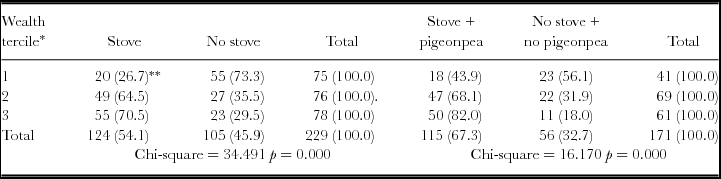
Table 4 shows IFES adoption by wealth category, defined as the mean number of meals per day during the hungry period before the maize harvest. Adoption of the improved cookstove was significantly higher (71% of households) in the wealthiest category (Tercile 3) compared with only 27% in the poorest category (Tercile 1). Similarly, 82% of households in the wealthiest category had adopted the full IFES compared with only 44% in the poorest category. These results confirm the previous finding that IFES adopters were primarily drawn from better-off households.
Adoption by wealth category (average meals/day during hungry period (no. of households).
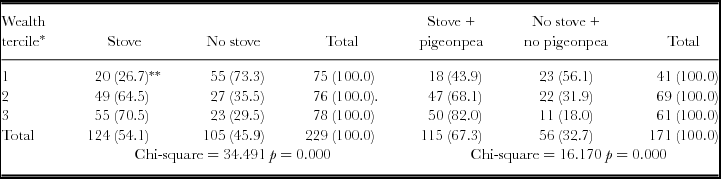
*Tercile 1, 1.27 meals/day; Tercile 2, 2.0 meals/day; Tercile 3, 2.82 meals/day; average 2.04 meals/day.
**Percentage values.
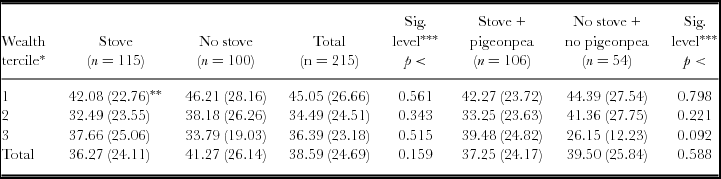
If better-off households consume more fuelwood, this might explain high fuelwood consumption among IFES adopters. Table 5 shows mean fuelwood consumption per head by wealth tercile, defined as the mean number of meals per day during the hungry period before the maize harvest. There was no significant difference in fuelwood consumption between the three groups. Moreover, within wealth terciles we found no significant difference in fuelwood consumption per head between adopters and non-adopters. In the highest wealth category (Tercile 3), full IFES adopters had higher mean fuelwood consumption than non-adopters in the same group. However, the sample size (11 non-adopters in Tercile 3) was too small to test the statistical significance of this result.
Per capita fuelwood consumption by wealth category (average meals/day during hungry period) (monthly consumption of fuelwood: kg per capita).
*Tercile 1, 1.27 meals/day; Tercile 2, 2.0 meals/day; Tercile 3, 2.82 meals/day; average 2.04 meals/day.
**Standard deviations.
***2-tailed t-test.
Consumption of pigeonpea
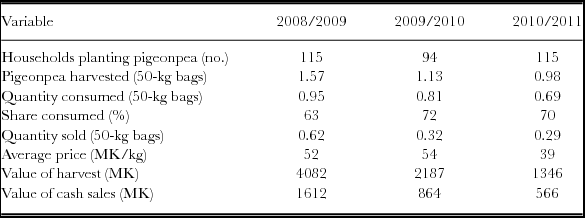
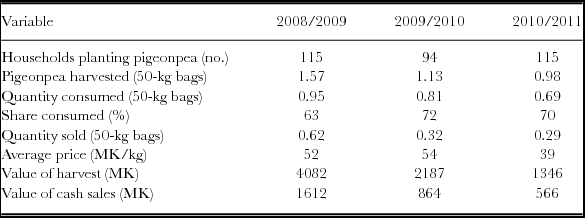
The quantity of pigeonpea grain harvested ranged from 1.57 bags in 2008/2009 to 0.98 bags in 2010/2011. About 70% of the pigeonpea harvested was kept by the farm household as food, while only 30% was sold. Hence, farmers grew pigeonpea primarily for home consumption rather than for cash income. Over the three-year period the price of pigeonpea grain fell by one-quarter, from MK 52/kg in 2008/2009 to MK 39/kg in 2010/2011. Consequently, the value of pigeonpea grain harvested in 2010/2011 was only MK 1346. Of the 174 households that grew pigeonpea, 75 (43%) had children aged five or less than five years. Of these 75 households, 68 (91%) fed pigeonpea to their less than five-year-old children. By contrast, of the 22 households that did not grow pigeonpea, only five (23%) fed pigeonpea to their less than five-year-old children.
DISCUSSION
Adoption of the IFES was expected to reduce the average consumption of fuelwood and the frequency of fuelwood collection. However, the results show that for full IFES adopters, the mean quantity of fuelwood collected from forests and hills (125 kg/month) was not significantly different from that for non-adopters (164 kg/month) (Table 1). Likewise, there was no significant difference in total fuelwood consumption (collected plus bought) between full IFES adopters (212 kg/month) and non-adopters (204 kg/month) (Table 1). Finally, regression analysis showed that neither the adoption of an improved cookstove nor fuelwood saved by using pigeonpea stems had a significant effect on either the demand for fuelwood or the frequency of fuelwood collection (Table 3).
These were unexpected results. Previous impact assessments of the same improved cookstove in Malawi have shown that the chitetezo mbaula reduced fuelwood consumption by as much as 50%, the frequency of collection by up to 44%, and the time required for fuel collection by six to eight hours/month (Brinkmann, Reference Brinkmann2004; Concern Universal Malawi, 2012; Malinski, Reference Malinksi2008). How can we explain this? In fact, there is no contradiction between these two sets of findings. Earlier studies focused primarily on changes in fuelwood consumption by adopters, and used qualitative methods (Brinkmann, Reference Brinkmann2004) or univariate analysis (Malinski, Reference Malinksi2008). By contrast, the present study compares fuelwood consumption between adopters and non-adopters, and measures impacts using multivariate analysis. It is quite possible for adopters to use less fuelwood than before and for their fuelwood consumption to remain higher than for non-adopters. However, we are still left with the puzzle of why fuelwood consumption should be higher among IFES adopters.
We explore three possible explanations. Firstly, the improved cookstove did not actually use less fuelwood than the three-stone fire. Secondly, fuelwood consumption was based on farmer recall and was not sufficiently accurate to capture the reduction in fuelwood due to the improved cookstove. Thirdly, fuelwood consumption at household level was determined by factors other than the adoption of the IFES.
The first explanation seems least likely. Tests under controlled conditions showed that the chitetezo mbaula reduced fuelwood consumption by 43% over the three-stone fire (Malakini and Maganga, Reference Malakini and Maganga2011). Obviously, the reduction will be lower in practice but stove adopters clearly believe that the reduction is real (Brinkmann, Reference Brinkmann2004; Concern Universal Malawi, 2012; Malinski, Reference Malinksi2008). The second explanation carries more weight. Our estimate of fuelwood consumption is based on recall, not physical measurements. The mean value for fuelwood consumption obtained by recall (209 kg per household per month) seems reasonably accurate (Table 1). Field research that physically measured fuelwood consumption in Malawi reported average fuelwood use of 10.1 kg/head/week, equivalent to 202 kg/month for a family of five (Abbott and Homewood, Reference Abbot and Homewood1999). Nevertheless, fuelwood consumption, as we have defined it, excludes fuelwood collected from own trees, woodlots or other sources. This is a serious omission, since non-adopters were more likely to rely on fuelwood from own trees (Table 1). Consequently, fuelwood consumption among non-adopters is under-estimated, which may explain why we found no difference with IFES adopters.
The third explanation – other determinants of fuelwood consumption – is also probable. Compared with non-adopters, IFES adopters were more likely to be better off, whether measured in terms of maize harvest per head (Table 2) or the number of meals during the hungry period (Table 5). Villagers in Malawi identify food-secure households as those that eat three meals per day (Ali and Delisle, Reference Ali and Delisle1999). Households in the highest wealth tercile were twice as likely to adopt the full IFES as households in the lowest tercile (Table 5). Similarly, only 31% of full IFES adopters reported participation in casual labour (ganyu), compared with 50% of full IFES adopters (p < 0.014). In Malawi, household food insecurity, fewer meals per day during the hungry period and ganyu are indicators of poverty. In sum, the evidence suggests that IFES adopters were better off than non-adopters. Why was this?
One reason might be that only better-off households could afford to buy an improved cookstove. Even a MK 300 (US$3) price-tag may have been prohibitive for poorer households, and price was cited as a reason for the non-adoption of the chitetezo mbaula (Malinski, Reference Malinksi2008). Furthermore, unlike the traditional three-stone fire, the chitetezo mbaula needs to be replaced every two years (Malinski, Reference Malinksi2008). Frequent breakages were a common reason why some adopters did not replace their chitetezo mbaula (Brinkmann, Reference Brinkmann2004). All these factors may have discouraged poorer buyers. Other improved cookstove programmes in SSA have shown that cost influences adoption (Barnes et al., Reference Barnes, Openshaw, Smith and van der Plas1993). Conversely, where villagers do not value the benefits from improved stoves, price experiments in Bangladesh have demonstrated that reducing the price has only a limited effect on demand (Mobarak et al., Reference Mobarak, Dwivedi, Bailis, Hildemann and Miller2012). Another possible reason that adoption of the IFES was higher among better-off households is because they had higher demand for fuelwood. However, fuelwood demand per capita was actually lower among wealthier households (p < 0.027) (Table 5). Moreover, among households in the highest wealth category, there was no significant difference in fuelwood demand per capita between IFES adopters and non-adopters (Table 5).
This suggests that other factors were driving fuelwood consumption among IFES adopters, which are as follows:
More stoves per household: Forty-three percent of the adopters of improved cookstoves had more than one cookstove, compared with just 10% of non-adopters (p < 0.000). This allowed them to save time by cooking nsima (maize porridge) and relish simultaneously, cook indoors or outdoors, move chitetezo mbaula indoors to provide heating, and use larger pots for heating water or brewing beer (Brinkmann, Reference Brinkmann2004; Malinsky, Reference Malinksi2008). Furthermore, adopters did not immediately switch from traditional to improved stoves but combined the use of both stoves, a pattern of adoption known as ‘stacking’. Of the 115 adopters, 41 (36%) used only the improved cookstove, while 74 (64%) continued to use open three-stone fires. As one impact assessment of the chitetezo mbaula noted, the ‘challenge is getting households to use the stoves all the time rather than as a complement to three-stone fires’ (Concern Universal Malawi, 2012: 13). ‘Stacking’ may actually increase energy use (Masera et al., Reference Masera, Saatkamp and Kammen2000).
Cooking habits: The chitetezo mbaula is considered safer than the three-stone fire and adopters tended not to extinguish the stove as they did with the three-stone fire, but kept topping it up. Villagers explained that they preferred to keep the fire burning, as it was easier and cheaper than starting a new fire every time they wished to cook or heat water.
However, this is a speculation. Explaining why demand for fuelwood remains high among IFES adopters will require an experimental design that compares treatment and control groups among better-off households as well as a more complete and accurate measure of fuelwood consumption.
Similar to the improved cookstove, pigeonpea was not associated with either the reduced demand for fuelwood or the reduced frequency of fuelwood collection (Table 3). On average, IFES adopters used pigeonpea stems for fuel for 2.4 months, and saved a total of six bundles of firewood (180 kg). The modest quantity of fuelwood savings reflects the small area planted to pigeonpea among the sample (0.28 ha), which in turn reflects the small average farm size in southern Malawi. On-farm trials of three improved pigeonpea varieties intercropped with maize over three seasons at two sites in southern and central Malawi gave pigeonpea grain yields of 370 kg ha−1 and stem yields of 1977 kg ha− 1 (Hogh-Jensen et al., Reference Hogh-Jensen, Myaka, Sakala, Kamalongo, Ngwira, Vesterager, Odgaard and Adu-Gyamfi2007). Fuel savings from pigeonpea stems might be increased by denser planting.
The IFES increased the consumption of pigeonpea. On average, IFES adopters harvested one 50-kg bag of pigeonpea grain with a value of MK 2417 (US$16). About two-thirds of pigeonpea harvested was consumed by the household (Table 6). Three-quarters of pigeonpea growers reported that they now consumed pigeonpea weekly, compared with just half before the introduction of the IFES (p < 0.000). Nine in 10 pigeonpea growers with children aged less than five years fed them pigeonpea, usually as porridge, suggesting that the nutrition benefits of pigeonpea were widely shared within the household (Table 7). Other benefits included improved soil fertility. Pigeonpea fixes atmospheric nitrogen and makes iron-bound phosphorous soluble, which improves soil fertility and benefits subsequent crops. On-farm trials in Malawi have shown that intercropped pigeonpea fixes 50 kg N ha−1 per year (Snapp et al., Reference Snapp, Rohrbach, Simtowe and Freeman2002). However, this includes incorporation of all pigeonpea residues, including stems, and refers to indeterminate, long-duration varieties. Clearly, there is a trade-off in using stems for fuelwood or for enhancing soil fertility. Although our survey did not measure the benefits to soil fertility, a significantly higher share of households that had planted pigeonpea for three consecutive years observed darker leaf colour, bigger maize cobs and higher maize yields, presumably because nitrogen from pigeonpea leaves improved soil fertility (Orr et al., Reference Orr, Kabombo, Roth, Harris and Doyle2013).
Pigeonpea consumption, 2008/2009 to 2010/2011.
Consumption of pigeonpea by children aged less than five years.

*For households with children aged less than five years.
Other interventions to reduce pressure on forest reserves included community woodlots. Farmers in Malawi are reluctant to plant trees because land is scarce and food supply is a higher priority than fuelwood (Walker, Reference Walker2004). Moreover, because rural households have developed effective strategies for coping with scarcity, interventions to increase the supply of fuelwood will not have much effect on household welfare. A 10% increase in biomass per hectare in southern Malawi would raise average rural household income by only 0.2% (Bandyopadhyay et al., Reference Bandhyopadhyay, Shyamsundar and Baccini2011). This helps to explain why use of woodlots (WOODLOT) did not significantly reduce demand for fuelwood from forests and hills (Table 3). However, households that used their own trees for fuelwood (OWNTREES) reduced demand for fuelwood from forests and hills by 60 kg/month, equivalent to two bundles of fuelwood.
What are the implications of these findings? Concern Universal has promoted the chitetezo mbaula with the twin objectives of conserving forests and poverty reduction. However, the primary cause of de-forestation in Malawi is clearing land for agriculture, not the demand for fuelwood (Arnold et al., Reference Arnold, Kohlin and Persson2006). Consequently, the impact of improved cookstoves on de-forestation will be limited, at least at national level. Even if improved cookstoves raised combustion efficiency by 50% and were adopted by half the rural households in Malawi, at most this would save only 2% of the trees cut each year (French, Reference French1986). The main threat to forest reserves from demand for fuelwood is from commercial rather than domestic users. For example, domestic users living next to Lake Malawi National Park collected primarily dead and fallen wood, and the quantity consumed each year was less than half the total quantity of fallen and dead wood produced in the park. By contrast, commercial fish smokeries used mature trees, which did threaten sustainability (Abbot and Homewood, Reference Abbot and Homewood1999). Similarly, commercial use of fuelwood for charcoal accounts for about one-third of total de-forestation in Malawi (Kambewa et al., Reference Kambewa, Mataya, Sichinga and Johnson2007).
Improved cookstoves may have other benefits, however. They can reduce pressure on forest reserves in specific areas where demand for fuelwood outstrips supply. Annual wood growth in southern Malawi meets only 90% of the demand for fuelwood; the rest has to come from clearing woodland, crop residues or animal dung (EUEI, 2009). Secondly, they may reduce the time spent collecting fuel. Households in Ntcheu district, central Malawi, which is an area of ‘moderate’ fuelwood scarcity, spend six to eight hours per week collecting fuelwood (Brouwer et al., Reference Brouwer, Hoorweg and van Liere1997). Adopters of the chitetezo mbaula reported collecting fuelwood less frequently than before (Malinsky, Reference Malinksi2008). Although adopters reported otherwise, tests under controlled conditions showed that the chitetezo mbaula did not significantly reduce cooking time over the three-stone fire (Malakini and Maganga, Reference Malakini and Maganga2011; Malinsky, Reference Malinksi2008). Thirdly, higher combustion efficiency with improved cookstoves may also reduce indoor air pollution (IAP), which causes respiratory infections, particularly pneumonia. However, the reduction in emissions from the chitetezo mbaula over the three-stone fire was not large enough to meet the level recommended by the World Health Organisation (Concern Universal Malawi, 2012).
An ex ante cost-benefit analysis for improved cookstoves in Eastern Africa, which assumed that half of all rural households had them by 2015, estimated total benefits of $3850 million for rural areas. Of this, only 6% came from savings in de-forestation, while 84% came from time saved collecting fuelwood and cooking (Hutton et al., Reference Hutton, Rehfuss, Tediosi and Weiss2006). Unfortunately, there is no cost-benefit analysis for the chitetezo mbaula in Malawi. However, the results from the household survey suggest that the primary benefit of improved cookstoves may be to reduce the drudgery of fuel collection for women. Households headed by women, or where women were key decision-makers, were also more likely to adopt improved cookstoves (Table 2). Similarly, the longer women had to walk to forests and hills, the less frequently they used fuelwood from this source (Table 3).
Researchers recognise that smallholders require a range of pigeonpea varieties to match different agro-ecologies, and specific traits that meet farmer preferences (Snapp and Silim, Reference Snapp and Silim2002). Early maturity is an important trait since it provides food for the household in the shortest possible time. This helps explain the popularity of Mthawajuni over improved varieties like ICEAP 00040, which takes longer to mature. Similarly, the local landrace Chilinga is widely grown in the Blantyre Shire Highlands because it produces edible fresh pods as early as May, hence the nickname mchotsa njala in Chichewa for ‘scares away hunger’ (Mwale et al., Reference Mwale, Orr, Saiti, Ritchie and Muyaso1999). A survey of pigeonpea production in four districts (including Balaka) in 2007/2008 showed that 44% of farmers had planted Mthawajuni, compared with just 13% that had planted ICEAP 00040 (Simtowe et al., Reference Simtowe, Asfaw, Shiferaw, Siambi, Monyo, Muricho, Abate, Silim, Ganga Rao and Madzonga2010a). Studies of farmer preferences for pigeonpea suggest that the ability to produce fuelwood is a ‘secondary benefit’ (Snapp and Silim, Reference Snapp and Silim2002). Among our sample households, however, the second most important reason for preferring Mthawajuni, after early maturity but before yield or taste, was fuelwood (Orr et al., Reference Orr, Kabombo, Roth, Harris and Doyle2013). The total value of pigeonpea stems harvested was MK 832 (US$5.6), or 34% of the value of harvested grain (Table 6). Thus, earliness trumps yield while earliness plus fuelwood is a winning combination. Currently, the research trials conducted by Malawi's pigeonpea breeding programme do not measure the production of fuelwood from stems. However, the popularity of Mthawajuni suggests that fuelwood is a more important trait than previously thought and deserves to be evaluated along with earliness and grain yield.
ICEAP 00040 was the product of a lengthy breeding programme designed to recover Malawi's lost export market for pigeonpea (Jones et al., Reference Jones, Freeman and Lo Monaco2002). Twenty years after its release, however, ICEAP 00040 occupied only 9% of the area planted to pigeonpea, while Mthawajuni occupied 52% (Simtowe et al., Reference Simtowe, Asfaw, Shiferaw, Siambi, Monyo, Muricho, Abate, Silim, Ganga Rao and Madzonga2010a). Researchers have blamed limited adoption of improved varieties on lack of access to information and seed (Simtowe, Reference Simtowe2011). But Mthawajuni has spread farmer-to-farmer without official sanction. Although Mthawajuni lacks the desirable market traits of ICEAP 00040, these traits assume the existence of price incentives. Where farmgate prices and export markets are uncertain, such traits may have limited value for growers. Over a three-year period, the farmgate price of pigeonpea grain received by our survey households dropped by 25%, while the value of cash sales varied by 65% (Table 6). In the absence of reliable markets and price incentives, therefore improved varieties with desirable market traits are a necessary but not a sufficient condition for upgrading the value chain for pigeonpea in Malawi.
CONCLUSIONS
The aim of the IFES was to reduce demand for fuelwood from forests and hills while improving household food supply. Adopters of the full IFES were better-off households, with bigger families, more maize per head and with more frequent meals during the hungry period. These households had the greatest incentive to adopt improved cookstoves because they had a high demand for fuelwood. However, among better-off households, adoption of the IFES did not reduce demand per head. For households in the highest wealth category, there was no significant difference in fuelwood use per head between IFES adopters and non-adopters. Similarly, the use of pigeonpea stems for fuel did not significantly reduce demand for fuelwood from forests and hills or the frequency of collection, reflecting the relatively small amount of fuelwood saved by pigeonpea stems. However, households that had adopted the food supply component of the IFES had significantly increased their consumption of pigeonpea, including consumption by children aged less than five years.
These findings suggest that the IFES model under review has had mixed results. The food component seems to have performed well, although further work is needed to measure benefits for nutrition. However, the energy component is more problematic. At the household level, adopters of improved cookstoves still use as much fuelwood from forests and hills as non-adopters. At the national level, improved cookstoves will have very little impact on de-forestation because the main driver is growing demand for agricultural land. Similarly, the amount of fuelwood from pigeonpea stems was too small to significantly reduce the use of fuelwood from forests and hills. However, the widespread adoption of Mthawajuni suggests that farmers do perceive benefits from fuelwood, and that the pigeonpea breeding programme in Malawi that has focused on grain yield, resistance to Fusarium wilt and market traits, should pay more attention to the importance of pigeonpea stems as a source of fuel for resource-poor households.
Acknowledgements
We wish to thank the farm households that participated in the household survey, Said Silim and N.V.P.R. Ganga Rao for supplying information on pigeonpea, and three anonymous reviewers whose comments greatly improved the quality of this paper. The authors are responsible for all remaining errors and omissions.