Introduction
Aluminum matrix composites (AMCs), a class of metal matrix composites (MMCs), exhibit excellent physical and mechanical properties, such as high specific strength, low coefficient of expansion, and better tribological properties, rendering these materials very promising for various structural applications in automotive, aerospace, and electronic equipment industries and other manufacturing industries [Reference El-Ghazaly, Anis and Salem1, Reference Geng, Qiu and Jiang2, Reference Baradeswaran and Elaya3, Reference Shao, Yang, Zhang, Meng, Tan, Xiu and Wu4, Reference Lei, Jiang, Bi, Du and Pang5, Reference din, Shafqat, Shahzad, Ejaz, Asghar, Nouman, Qureshi, Waqar and Riffat6, Reference din, Shafqat, Shahzad, Ejaz, Asghar, Zahid, Basit, Qureshi, Tanvir and Muhammad7, Reference Asghar, Muhammad, Din, Zeeshan, Fahad, Basit, Badshah and Subhani8, Reference Rashad, Pan, Tang and Asif9, Reference Xiang, Wang, Gupta, Wu, Hu and Zheng10]. AMCs reinforced with ceramic/carbonaceous phases have attracted great interests owing to the combined effects of metallic and ceramic/carbonaceous materials [Reference El-Ghazaly, Anis and Salem1, Reference Geng, Qiu and Jiang2, Reference Baradeswaran and Elaya3, Reference Shao, Yang, Zhang, Meng, Tan, Xiu and Wu4, Reference Lei, Jiang, Bi, Du and Pang5, Reference din, Shafqat, Shahzad, Ejaz, Asghar, Nouman, Qureshi, Waqar and Riffat6, Reference din, Shafqat, Shahzad, Ejaz, Asghar, Zahid, Basit, Qureshi, Tanvir and Muhammad7, Reference Asghar, Muhammad, Din, Zeeshan, Fahad, Basit, Badshah and Subhani8, Reference Rashad, Pan, Tang and Asif9, Reference Xiang, Wang, Gupta, Wu, Hu and Zheng10]. Typically employed reinforcements are silicon carbide (SiC), boron carbide (B4C), aluminum oxide (Al2O3), titanium carbide (TiC), aluminum nitride (AlN), intermetallic quasicrystals, carbon fibers, carbon nanotubes (CNTs), and graphene nanoplatelets (GNPs) [Reference El-Ghazaly, Anis and Salem1, Reference Geng, Qiu and Jiang2, Reference Baradeswaran and Elaya3, Reference Shao, Yang, Zhang, Meng, Tan, Xiu and Wu4, Reference Lei, Jiang, Bi, Du and Pang5, Reference din, Shafqat, Shahzad, Ejaz, Asghar, Nouman, Qureshi, Waqar and Riffat6, Reference din, Shafqat, Shahzad, Ejaz, Asghar, Zahid, Basit, Qureshi, Tanvir and Muhammad7, Reference Asghar, Muhammad, Din, Zeeshan, Fahad, Basit, Badshah and Subhani8, Reference Rashad, Pan, Tang and Asif9, Reference Xiang, Wang, Gupta, Wu, Hu and Zheng10, Reference Khan, Amjad, Khan, din, Ahmad and Subhani11, Reference Jeyasimman, Sivasankaran, Sivaprasad, Narayanasamy and Kambali12, Reference Fogagnolo, Velasco, Robert and Torralba13, Reference Şenel, Gürbüz and Koç14, Reference Khan, Rehman, Aziz, Naveed, Ahmad and Subhani15, Reference Khan, Zulfaqar, Fahad and Subhani16]. Among individually reinforced particles in AMCs, boron carbide (B4C) exhibits the unique combination of extremely high hardness, low specific gravity, high elastic modulus, high melting point, high thermal conductivity, good wear resistance, excellent chemical resistance, and high capability for neutron absorption. During recent years, hybrid aluminum matrix composites (HAMCs) are attracting increasing attention because of their superior performance [Reference Singh and Chauhan17, Reference Bodunrin, Alaneme and Chown18]. They are considered a new generation of composite materials and can potentially be used as substitutes for single-reinforced AMCs. In HAMCs, incorporation of at least two reinforcements provides an opportunity to tailor the properties of composites superior to those of individually reinforced AMCs [Reference Singh and Chauhan17, Reference Bodunrin, Alaneme and Chown18, Reference Radha and Vijayakumar19, Reference Zeng, Yu, Fu, Zhang and Teng20, Reference Tang, Meng, Zhan, Jian, Li, Yao and Han21, Reference Meysam, Ferguson, Schultz, Chang-Soo, Kyu and Pradeep22, Reference Alizadeh, Hossein, Ghaffari and Amini23, Reference Gode24, Reference Rejil, Dinaharan, Vijay and Murugan25]. The hybrid composites of aluminum–boron carbide are fabricated with many other materials such as Al2O3 [Reference Alizadeh, Hossein, Ghaffari and Amini23], SiC [Reference Gode24], TiC [Reference Rejil, Dinaharan, Vijay and Murugan25], and CNTs [Reference Khan, Rehman, Aziz, Naveed, Ahmad and Subhani15].
During recent years, it has been concluded that graphene can outperform other carbon-based materials, like graphite, CNTs, and fullerenes, due to its unique properties. Graphene exhibits extraordinary mechanical, electrical, and thermal properties and tribological behaviors, which render it a great reinforcement in AMCs [Reference Papageorgiou, Kinloch and Young26, Reference Mishra and Balasubramaniam27]. The use of GNPs in AMCs has significantly improved mechanical and tribological properties by creating a solid lubricant layer between the sliding surfaces [Reference Radha and Vijayakumar19, Reference Zeng, Yu, Fu, Zhang and Teng20, Reference Tang, Meng, Zhan, Jian, Li, Yao and Han21, Reference Meysam, Ferguson, Schultz, Chang-Soo, Kyu and Pradeep22]. However, investigations about the effects of use of graphene as solid lubricant in MMCs are limited. Meysam et al. [Reference Meysam, Emad, Pradeep and Pradeep28] have synthesized the aluminum/graphene composites by employing powder metallurgy (PM) technique and studied the effects of graphene as solid lubricant in these composites. Among all reinforcement systems in HAMCs, systems consisting of a solid lubricant exhibiting high mechanical properties and a hard ceramic phase have gained much more attention due to their superior mechanical and tribological properties. These characteristics make them a great alternative for applications in automobile and other industries. Recently, Şenel et al. have fabricated HAMCs containing GNPs and silicon carbide (SiC) by PM method [Reference Şenel, Gürbüz and Koç14]. They have found that the use of two reinforcements has ameliorated the mechanical properties of composites. Zeng et al. have demonstrated that HAMCs containing reduced graphene oxide nanosheets and silicon carbide (SiC) have exhibited improved wear resistance compared with that of single reinforced AMCs [Reference Zeng, Yu, Fu, Zhang and Teng20]. Recently, a novel HAMC containing graphene encapsulating SiC particles (Al-Gra-SiC) is prepared through the PM route [Reference Tang, Meng, Zhan, Jian, Li, Yao and Han21]. These composites have shown enhanced yield strength and tensile ductility compared with traditional Al–SiC composites. During the recent years, some valuable researches have been made regarding the hybrid effects of pure SiC and GNPs reinforced aluminum composites, and a few works are available in the literature focusing on other HAMCs. However, to our knowledge, hybrid combination of graphene with B4C and its combined effects on mechanical and tribological performances of aluminum have not been addressed so far.
It is generally observed that the addition of B4C particles into Al 6061 alloy deteriorates the corrosion resistance of alloy, which is of considerable concern for nuclear and other industrial applications. In the past, various compounds have been reported for the corrosion inhibition of AMCs [Reference din, Shafqat, Shahzad, Ejaz, Asghar, Nouman, Qureshi, Waqar and Riffat6, Reference Mishra and Balasubramaniam27]. However, corrosion studies of Al–B4C composites in highly aggressive environment such as NaCl and mildly corrosive environment such as H3BO3, are still very limited. The Cl− ion in NaCl plays a key role in both the initiation and the propagation of pitting [Reference din, Shafqat, Shahzad, Ejaz, Asghar, Nouman, Qureshi, Waqar and Riffat6, Reference Mishra and Balasubramaniam27]. Migration of Cl− to the active sites sustains pitting. On the other hand, boric acid is a weak acid, but it is still mildly corrosive [Reference din, Shafqat, Shahzad, Ejaz, Asghar, Nouman, Qureshi, Waqar and Riffat6]. Recently, we have investigated the inhibitor effects of sodium benzoate on corrosion resistance of Al 6061–B4C composites in NaCl and H3BO3 solutions [Reference din, Shafqat, Shahzad, Ejaz, Asghar, Nouman, Qureshi, Waqar and Riffat6]. During recent years, several studies have demonstrated that graphene is an excellent anticorrosion barrier for the electrochemical corrosion of metals [Reference Hu, Ji, Shi, Hui, Duan and Lanza29, Reference Kirkland, Schiller, Medhekar and Birbilis30]. There are some reports involving the electrochemical studies of AMCs containing only GNPs [Reference Rashad, Pan, Zhengwen, Asif, Han and Rongjian31]. However, the electrochemical studies of HAMCs containing both B4C and GNPs are reported for the first time in the present work.
Among many methods used to prepare AMCs or HMACs [Reference Baradeswaran and Elaya3, Reference Shao, Yang, Zhang, Meng, Tan, Xiu and Wu4, Reference Lei, Jiang, Bi, Du and Pang5, Reference din, Shafqat, Shahzad, Ejaz, Asghar, Nouman, Qureshi, Waqar and Riffat6, Reference din, Shafqat, Shahzad, Ejaz, Asghar, Zahid, Basit, Qureshi, Tanvir and Muhammad7, Reference Asghar, Muhammad, Din, Zeeshan, Fahad, Basit, Badshah and Subhani8, Reference Rashad, Pan, Tang and Asif9, Reference Xiang, Wang, Gupta, Wu, Hu and Zheng10, Reference Khan, Amjad, Khan, din, Ahmad and Subhani11, Reference Jeyasimman, Sivasankaran, Sivaprasad, Narayanasamy and Kambali12, Reference Fogagnolo, Velasco, Robert and Torralba13, Reference Şenel, Gürbüz and Koç14, Reference Khan, Rehman, Aziz, Naveed, Ahmad and Subhani15, Reference Khan, Zulfaqar, Fahad and Subhani16, Reference Zeng, Yu, Fu, Zhang and Teng20, Reference Tang, Meng, Zhan, Jian, Li, Yao and Han21, Reference Meysam, Ferguson, Schultz, Chang-Soo, Kyu and Pradeep22, Reference Alizadeh, Hossein, Ghaffari and Amini23, Reference Gode24, Reference Rejil, Dinaharan, Vijay and Murugan25], PM is a viable route that is commonly used for the preparation of composite materials. Akçamlı et al. and Meysam et al. [Reference Meysam, Emad, Pradeep and Pradeep28, Reference Nazli and Deniz32] have successfully synthesized aluminum/graphene composites by employing mechanical alloying and PM technique. However, despite the potential of GNPs to improve the mechanical properties, dispersion of GNPs is still challenging because of their large surface area, which can cause the clustering and agglomeration and consequently can deteriorate the mechanical performance. Therefore, in the present work, a combination of ultrasonic dispersion and PM method is employed for the synthesis of HAMCs containing B4C and GNPs. This study aims to investigate the effect of binary B4C–GNPs addition on the hardness, compression strength, wear resistance, and electrochemical properties of aluminum hybrid composites. The mechanical and tribological behaviors of the synthesized HAMCs with various GNPs contents are evaluated in detail under various conditions. Scanning electron microscopy (SEM), energy-dispersive X-ray spectroscopy (EDS), and EDS mapping are utilized to examine the distribution and fracture and worn surfaces of the synthesized HAMCs and the debris produced. The possible fracture, wear, and strengthening mechanisms of the Al alloy 6061/B4C/GNPs hybrid composites are also discussed. Moreover, the corrosion susceptibility of the synthesized HAMCs with respect to different GNP contents in H3BO3 and NaCl solutions is tested by employing potentiodynamic polarization (PDP) and electrochemical impedance spectroscopy (EIS) techniques.
Results and discussion
Raman spectroscopy is employed to identify the synthesized graphene. Figures S1(a)–S1(c) show the Raman analysis for graphite, graphene oxide, and graphene, respectively. It is observed that the D, G and 2D band peak intensities for graphene are very small and shifted left in comparison with graphene oxide and graphite. Moreover, the small intensity of 2D band shows the multilayers of graphene. It is also observed that no definite large difference has been found in I D/I G ratio in graphene, graphene oxide, and graphite, ∼0.99, indicating that defects are less in synthesized graphene. X-ray diffraction (XRD) pattern of synthesized graphene is presented in Fig. S1(d). Figure S2 shows the SEM micrographs of synthesized graphene. The results indicate that the GNPs are irregular, entangled, layered, and folded. Figure S2(a) also shows some entangled graphene layers at the top left corner. It was seen that the layers are stuck with each other, providing sufficient information for graphene identification. Perez-Bustamante et al. have also observed few layers of GNPs using modified Hummers’ method [Reference Perez-Bustanmante, Bolaños-Morales, Bonilla-Martínez, Estrada-Guel and Martínez-Sánchez33].
Figure 1(a) shows phase identification analysis of Al alloy 6061/B4C/graphene composite. The results of XRD indicate that the main phases present are Al (largest peak), B4C (second largest peak), and C (lowest peak). The Al, B4C, and graphene are identified by JCPDS card Nos. 89-4037, 35-0798, and 75-1621, respectively. It is obvious that no peaks corresponding to the presence of aluminum carbide (Al4C3) appear. It implies that aluminum does not react with either B4C or GNPs to form Al4C3. Figure 1(b) indicates that the addition of B4C and GNPs results in a drastic improvement in the average hardness values of Al 6061 alloy/10 wt% B4C/GNPs composites and shows highest hardness values for 0.25 (82 HRB), 0.6 (89 HRB), and 1.2 (91 HRB) weight fractions of graphene compared with unreinforced Al 6061 alloy (28 HRB) and Al 6061 alloy/10 wt% B4C (73 HRB). The expected increase in hardness after the addition of only hard dispersoid B4C particles may be due to higher dislocation density. This increased dislocation density is responsible for additional increase in hardness of composites [Reference Khan, Amjad, Khan, din, Ahmad and Subhani11, Reference Jeyasimman, Sivasankaran, Sivaprasad, Narayanasamy and Kambali12, Reference Fogagnolo, Velasco, Robert and Torralba13, Reference Rashad, Pan, Zhengwen, Asif, Han and Rongjian31, Reference Perez-Bustanmante, Bolaños-Morales, Bonilla-Martínez, Estrada-Guel and Martínez-Sánchez33]. Addition of graphene increases the hardness by the formation of fine grains. The role of graphene is more as a grain growth inhibitor compared with B4C due to difference in the specific surface areas. This difference results in pinning at grain boundaries, resulting in a more refined compacted structure.
(a) XRD pattern of AA 6061–B4C–GNPs composite; (b) comparison of hardness values of all specimens; (c) stress–strain curves of reference AA 6061 and composites with and without GNP; and (d) comparison of compressive strength values of all specimens.

Figure S3 shows the SEM micrographs of AA 6061/10 wt% B4C/0.6 wt% GNPs composite powders after wet mixing and ball milling. The GNPs seem to get adhered to the surface of aluminum particle. It can be seen that after ball milling, the layers of GNPs have been embedded on aluminum powder following shearing action.
Figure S4 shows the SEM images of AA 6061/B4C/GNPs composite samples after sintering. It is obvious in Fig. S4(a) that GNPs in AA 6061/10 wt% B4C/0.6 wt% GNPs composite are uniformly dispersed without any cluster formation. The magnified image in Fig. S4(b) shows that the GNPs are homogenously distributed and embedded in the Al matrix. Moreover, micrograph clearly shows the absence of any kind of defect or discontinuities at the interface of aluminum/graphene. A clean interface clearly indicates that there is no interfacial reaction between the matrix and reinforcement. This is also confirmed by XRD results in Fig. 1. However, homogeneous dispersion of GNPs deteriorates with an increase in the loading of GNPs, attributed to van der Waals forces between individual GNPs [Reference Radha and Vijayakumar19]. With increase in GNP content to 1.2 wt%, GNPs agglomeration becomes evident, which can be observed in Figs. S4(c) and S4(d). An increase in GNP contents leads to a decrease in the mean free path between the neighboring GNPs, which results in increase in van der Waals force, rendering agglomeration of GNPs. The homogenous dispersion of GNPs has been reconfirmed by performing EDS mapping. It is clearly visible that there is a uniform dispersion of GNPs in the matrix material, as shown in Fig. S5.
Theoretical and experimental densities of pure aluminum alloy and composites are listed in Table SI. Experimental densities are found by buoyancy method. To calculate the theoretical densities of the composites by the rule of mixtures, the densities of the three constituents of composites, i.e., aluminum, boron carbide, and GNPs, were taken to be 2.7 g/cm3, 2.52 g/cm3, and 1.8 g/cm3, respectively. Since the density of GNPs is much lower than that of pure Al alloy, composites exhibit lower density than pure aluminum alloy. Measured experimental densities are slightly lower than the theoretical densities of GNP contents up to 0.6 wt%. However, at higher content of GNPs, the decrease in experimental density becomes significant due to agglomeration and clustering phenomenon, as evident in Figs. S4(c) and S4(d).
Typical compressive strength curves and the corresponding results of the sintered Al alloy and its composites are shown in Figs. 1(c) and 1(d). The derived elastic moduli values of the sintered Al alloy and its composites are shown in Fig. S6. The results show that the effects of low content of GNPs (0.6 wt%) are large due to better dispersion of GNPs in aluminum matrix without coagulation and overlapping. The compressive strength increases by 154% and 48.5% compared with pure 6061 aluminum alloy and Al alloy 6061/B4C composite, respectively. Similar behavior is found for elastic moduli. In contrast, the effects of higher contents (1.2 wt%) of GNPs on compressive properties of Al 6061 Alloy/B4C composite are not conducive. The higher contents of GNPs may result in overlapping of GNPs and strong pi–pi attractions between graphene sheets [Reference Perez-Bustanmante, Bolaños-Morales, Bonilla-Martínez, Estrada-Guel and Martínez-Sánchez33]. In the present case, it is envisaged that the adhesion of GNPs with Al matrix is purely a mechanical one. As XRD results have not shown any formation of Al4C3 or any other intermetallic compounds, it can be assumed that a strong mechanical bonding exists, which actually increases the bonding strength at the Al alloy/B4C/GNP interface. This mechanical bonding is dominant over van der Waals attractions in composites containing low contents of GNPs, thus resulting in high compressive strength values of composite caused by efficient load transfer from soft matrix to hard reinforcements. At higher graphene contents, the severe agglomeration becomes inevitable because even a low mass fraction may result in a high volume fraction due to the low density of graphene with the addition of relatively large alloy powders (29 μm) and B4C powders (8 μm). Therefore, both the compressive strength and strain decrease significantly when the graphene contents reach 1.2 wt%. The agglomeration of GNPs and the deteriorated mechanical properties of the composites caused by the excessive addition of graphene to the metal matrix have been reported in many studies [Reference Rashad, Pan, Zhengwen, Asif, Han and Rongjian31, Reference Perez-Bustanmante, Bolaños-Morales, Bonilla-Martínez, Estrada-Guel and Martínez-Sánchez33, Reference Jeon, Jeong, Seo, Tien, Hong, Yum, Hur and Lee34].
Four possible strengthening mechanisms that can be considered based on the geometry and physical properties of graphene are grain refinement (Hall–Petch relation), thermal mismatch, Orowan bypass mechanism, and load transfer. No appreciable grain refinement is evident in Fig. S4 (initial d 50 for Al alloy was 29 µm). Therefore, strengthening due to grain refinement can be ruled out. It is documented that thermal expansion mismatch is expected to increase the strain hardening rate especially for the samples that are prepared by sintering [Reference Fattahi, Gholami, Eynalvandpour, Ahmadi, Fattahi and Akhavan35]. Therefore, the dislocations are mainly formed due to difference in the coefficient of thermal expansion of aluminum (23.6 × 10⁻⁶/K), boron carbide (5.3 × 10⁻⁶/K), and graphene platelets (10−6/K). Moreover, the elastic moduli of aluminum, graphene, and boron carbide differ to large extent. These CTE mismatches and difference in elastic moduli lead to prismatic punching of dislocations at the interface, which renders the strengthening of the composite.
Orowan bypass mechanism also plays an important role in strengthening of aluminum alloys. In this mechanism, the residual dislocation loops are formed by insertion of nanometer scale particles, such as GNPs. These residual dislocation loops produce a back stress, which repels the dislocation motion and leads to an increase in the compressive strength [Reference Saboori, Dadkhah, Fino and Pavese36].
Load transfer from the matrix to the reinforcement can also result in an increased strength of the composite. It depends largely on interfacial bonding between the matrix and the reinforcement by interfacial shear stress. Moreover, high aspect ratio reinforcements, such as GNPs, are favored with this mechanism. Furthermore, graphene with two-dimensional structure and crumpled surface of graphene is beneficial to enhance the interfacial contact with the aluminum matrix. Figures S3–S5 clearly indicate that GNPs are uniformly embedded in the matrix, which results in efficient load transfer form matrix to reinforcement, leading to an increased strength of composites.
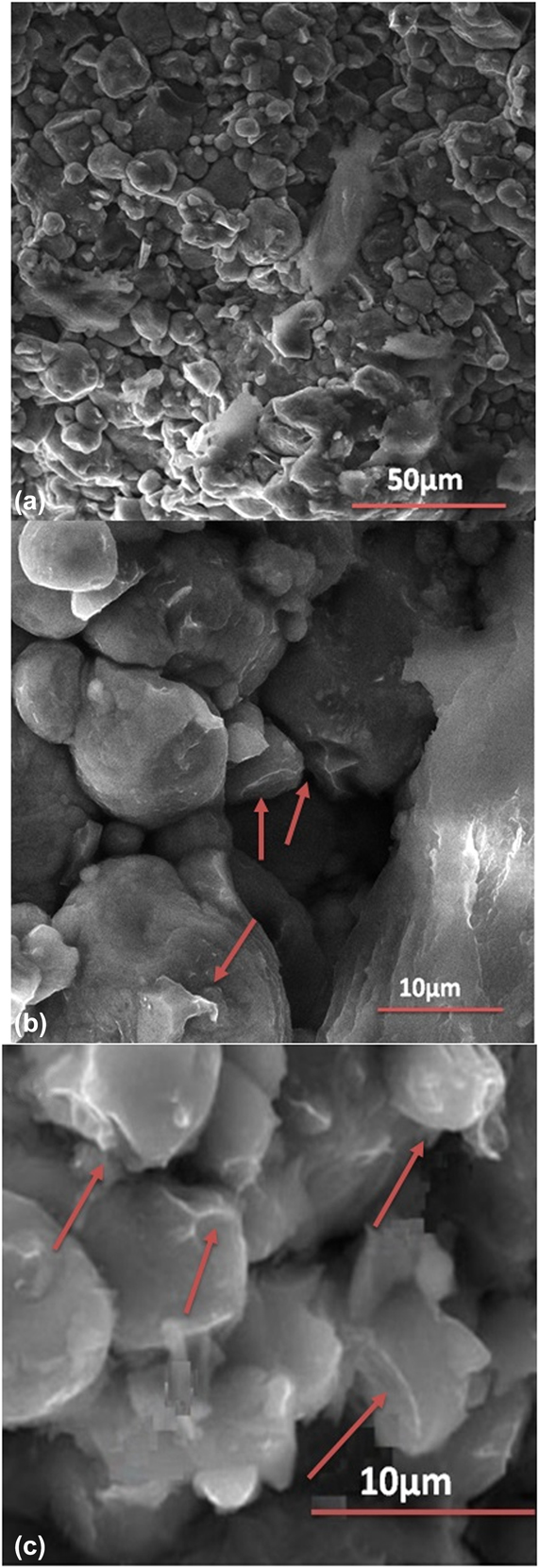
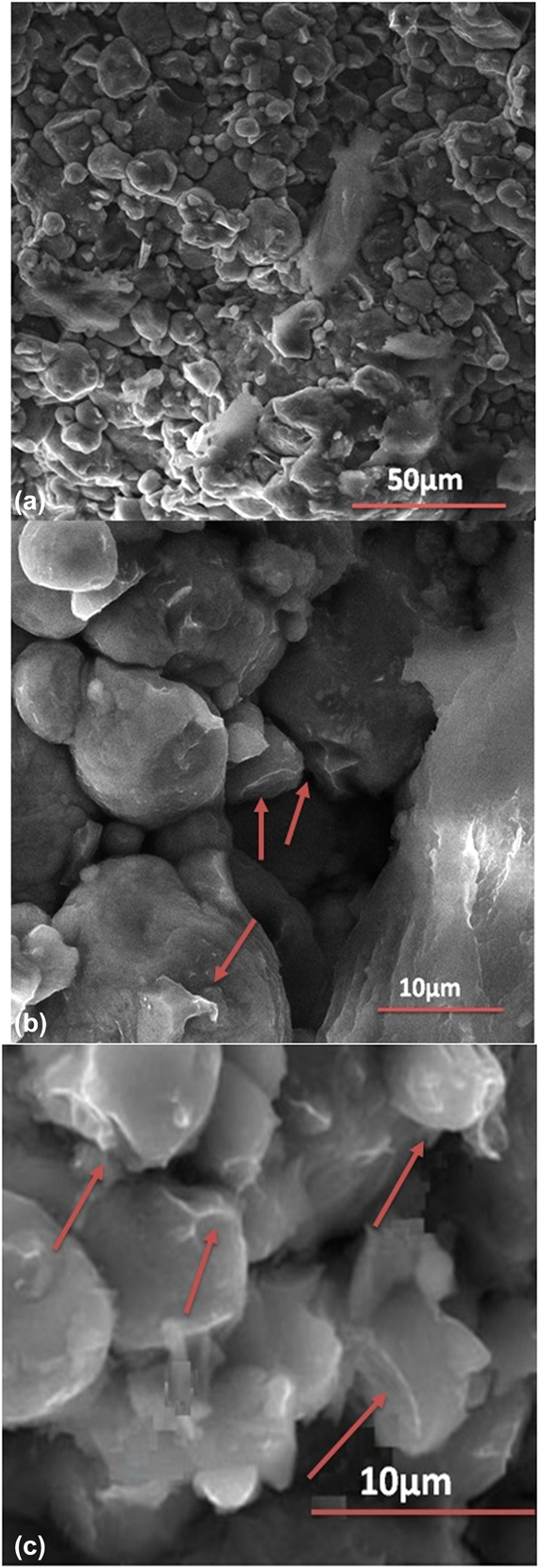
To further investigate the effect of GNPs on the fracture of composites, the fracture surfaces of the compression tested specimens are observed under SEM. Figure 2 indicates that fracture surfaces present a surface morphology comprising pultruded features. During the application of stress, GNPs may either pull out of the matrix or shear, resulting in their separation while still sticking on the aluminum matrix. This phenomenon is evident in composites containing 0.6 wt% and 1.2 wt% GNPs [Figs. 2(a)–2(c)]. Therefore, these features may be sheared graphene layers attached to the aluminum matrix along the fracture surface. The Al alloy 6061/B4C/1.2 wt% GNP composite exhibits more sheared pultruded graphene compared with that of the composites containing 0.6 wt% GNPs [Figs. 2(a) and 2(b)]. This change in the fracture surface is accompanied by a change in the mechanical behavior, as discussed and shown in Fig. 1. Therefore, it is concluded that the content of 1.2 wt% of GNPs is too much and is not convenient to be uniformly dispersed throughout the matrix, resulting in less enhancement in the compressive strength.
Fracture surfaces of (a) and (b) AA 6061–10 wt% B4C–0.6 wt% GNPs and (c) AA 6061–10 wt% B4C–1.2 wt% GNPs after compression tests.
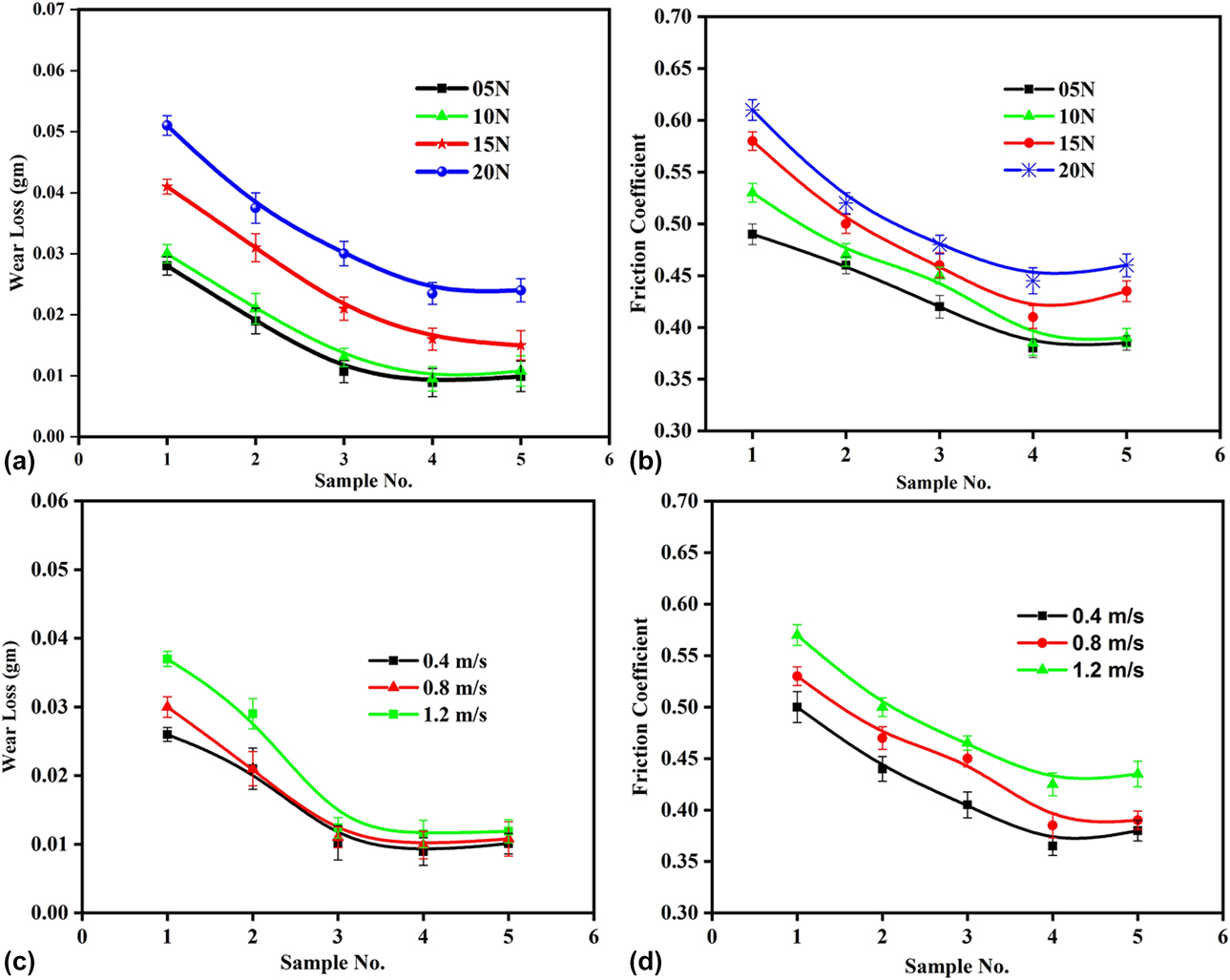
The tribological results of all samples, calculated in terms of wear loss and coefficient of friction (COF), are shown in Fig. 3. It is evident that the increase in load enhances the wear loss for all specimens. This is due to the formation of wear debris rendered by the occurrence of higher extent of plastic deformation at higher loads. Under all the testing conditions it is obvious that the wear loss of unreinforced Al 6061 alloy is maximum. It has already been discussed that the hardness increases with the addition of boron carbide and hence the wear loss and COF decrease. Addition of B4C particles results in decrease in direct metal to metal contact between the surface of the composite and the counter disc surface and thus reducing the wear loss. The plots of wear loss and COF versus sliding speed are shown in Fig. 3. The wear loss and COF of unreinforced Al 6061 alloy are found to increase significantly as speed increases, whereas wear loss and COF of composites decrease to large extent with the addition of B4C and GNPs. At low sliding speed, the increase in strain rate increases hardness or flow strength, which reduces the true area of contact, leading to reduction in wear losses and COF. On the contrary, at higher speeds, frictional heating causes the micro thermal softening of matrix material, which may lower the bonding effect of the reinforced particles with the matrix material. The addition of the reinforcement particles controls higher plastic deformation rate and abrasion between the sample and counterface surfaces and hence reduces the amount of material removed [Reference Radha and Vijayakumar19, Reference Rejil, Dinaharan, Vijay and Murugan25, Reference Mazahery and Shabanim37]. Improvement in wear properties with the addition of only B4C even at higher loads and sliding speeds is ascribed to the fact that B4C itself being hard can resist abrasion, thereby reducing the wear losses and friction coefficients. With the addition of the graphene contents to the Al 6061 alloy/B4C composites, a further significant decrease in the wear loss and friction coefficient is observed. The maximum wear resistance is observed for the composites containing 0.25 wt% and 0.6 wt% GNPs. The wear loss of 0.6 wt% GNPs decreases by 69% compared with that of unreinforced Al 6061 alloy and 54% compared with that of Al 6061 alloy/10 wt% B4C composite. This extensive reduction in the wear loss and friction coefficient is attributed to the strengthening of composites by an addition of graphene [Reference Rashad, Pan, Tang and Asif9, Reference Radha and Vijayakumar19, Reference Zeng, Yu, Fu, Zhang and Teng20, Reference Tang, Meng, Zhan, Jian, Li, Yao and Han21, Reference Meysam, Ferguson, Schultz, Chang-Soo, Kyu and Pradeep22], by virtue of formation of a thin dry lubricant layer between mating surfaces. On the other hand, the presence of higher content (≥1.2 wt%) of graphene may lead to agglomeration, thereby resulting in porosity and cracks, which lead to the weakening of structural properties.
(a) and (b) Wear loss and COF at various loads at fixed sliding speed and sliding distance. (c) and (d) Wear loss and COF at various sliding speeds at fixed load and sliding distance.
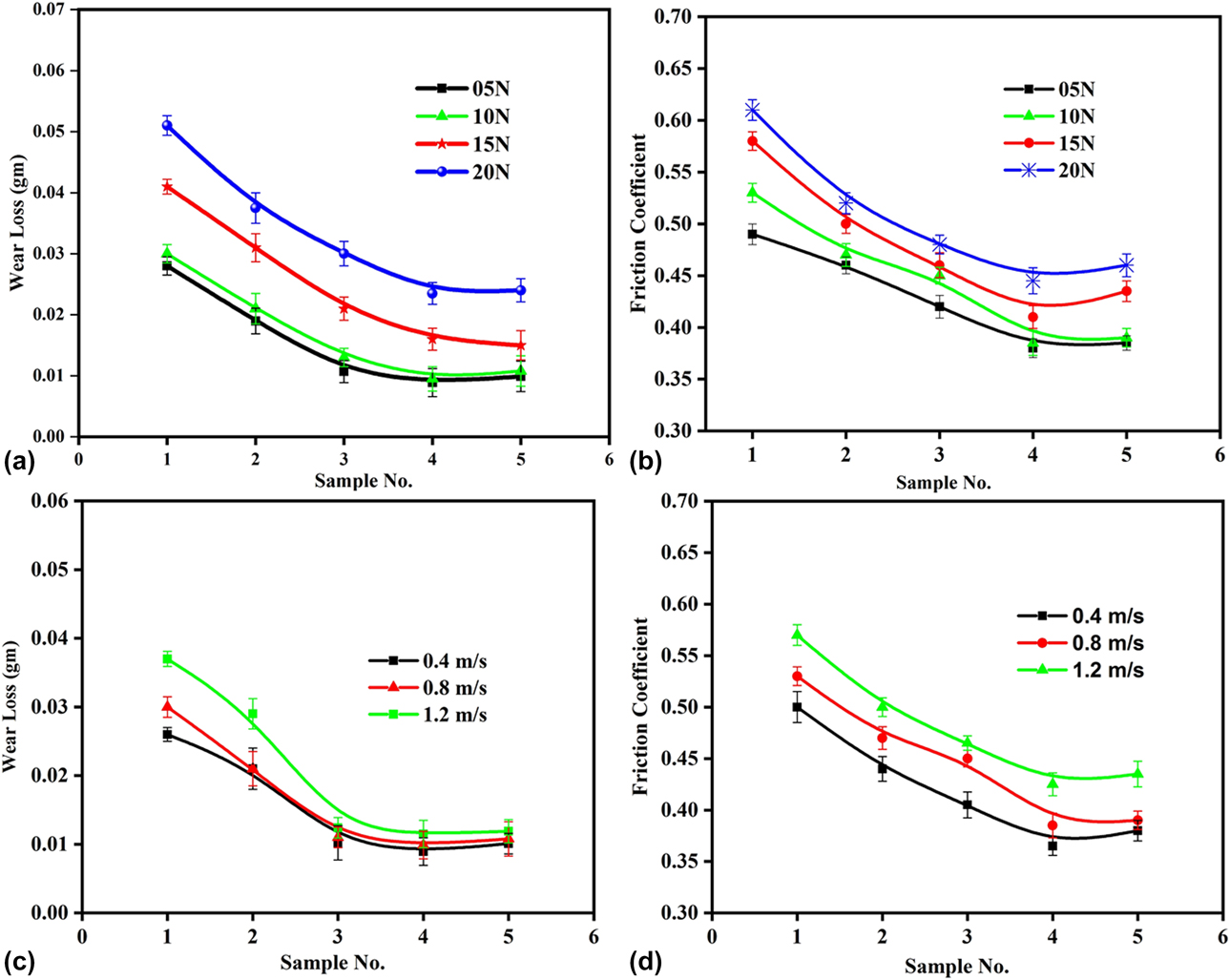
The COF of all samples under various loads and sliding speeds is shown in Figs. 3(b) and 3(d). The COF value of 0.6 wt% GNPs composite is found to be 0.38–0.45, which is very less compared with that of Al 6061 alloy/10 wt% B4C composite (0.46–0.52) irrespective of applied normal loads. It is generally considered that the friction values depend on the mating materials and their relative hardness. The B4C and GNPs can act as load bearing in the hybrid composites and results in the formation of more stable lubricating film. The dry lubrication tribofilm provided by the graphene reduces the shear stress, resulting in less plastic deformation in the subsurface region below the sliding contact area and hence improves the wear resistance of hybrid composites.
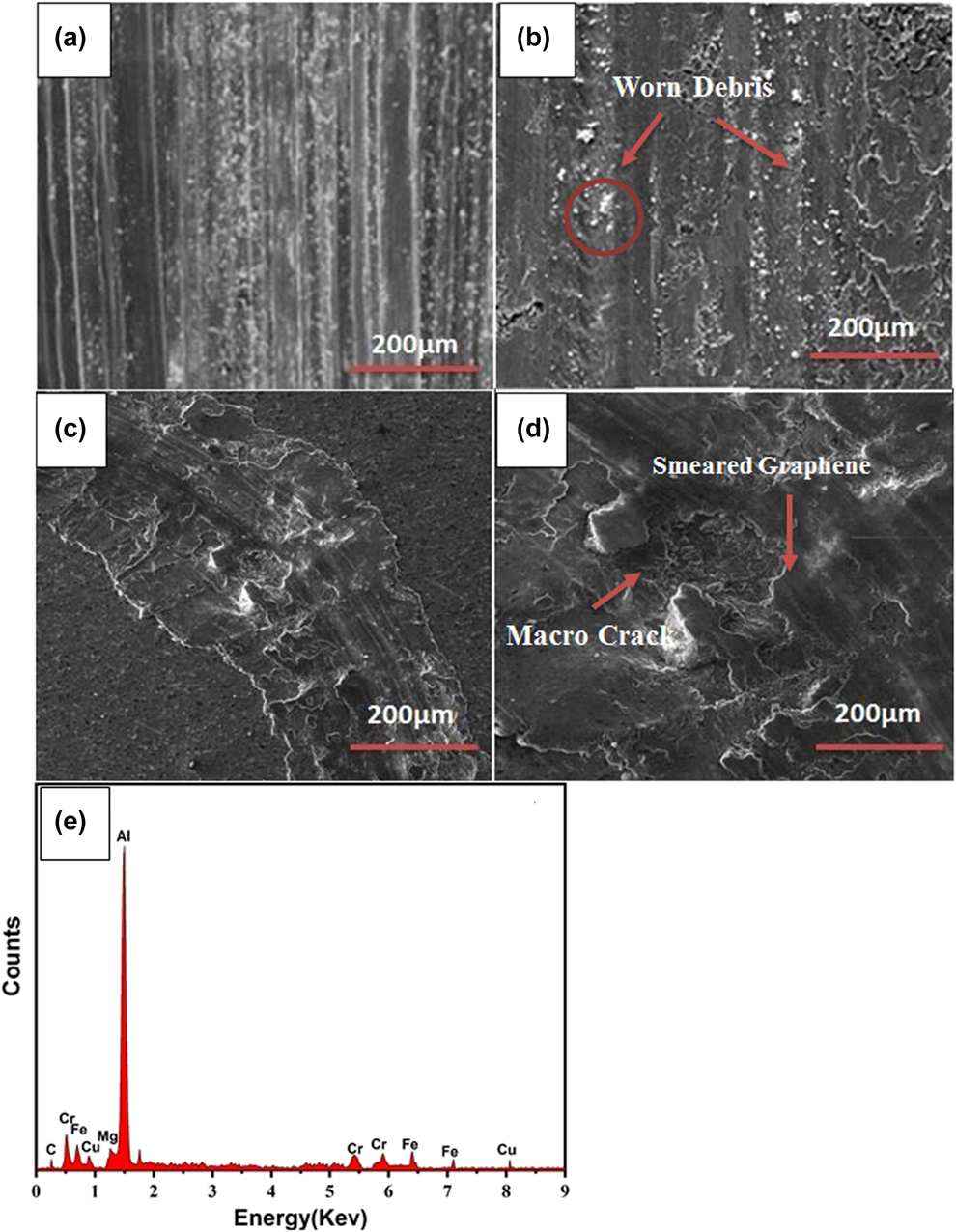
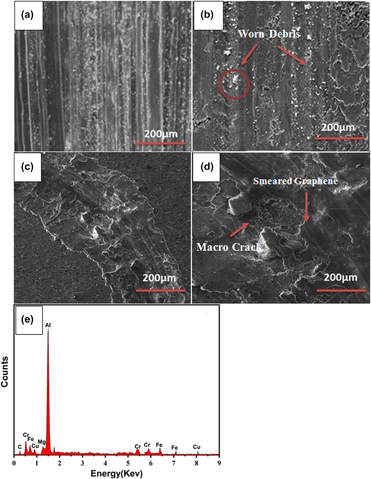
Figure 4 shows the SEM images of worn surface of unreinforced Al 6061 alloy and Al 6061 alloy/10 wt% B4C and Al 6061 alloy/10 wt% B4C/0.6 wt% GNPs composites. Extensive erosion wear and shearing can be observed on the worn surfaces of the Al alloy due to metal to metal contact between mating surfaces. The worn surface of composite shows some worn debris, which may be formed due to the material transfer from counterface of the steel disc [Reference Mazahery and Shabanim37, Reference Hocheng, Yen, Ishihara and Yen38]. It is envisaged that the presence of hard B4C particles can withstand the load and renders churning of disc materials and plowing out the disc material from the counterface, resulting in the formation of worn debris on the pin material [Reference Baradeswaran and Elaya3]. The scattered worn debris can also be seen throughout the worn surface of Al 6061 alloy/10 wt% B4C composite. The energy-dispersive X-ray analysis of worn surface of Al 6061–B4C composite (circled) shows higher concentration of iron, which must come from the counterface, as shown in Fig. 4. Figures 4(c) and 4(d) represent the worn out surface of Al 6061 alloy/10 wt% B4C/0.6 wt% GNPs composite, indicating a different surface morphology with much less worn debris. The morphology indicates the smeared graphene layer with some macrocracks or grooves. The smeared graphene layer is considered to be beneficial (as a dry lubricant) layer in the composites, preventing the abrasive wear by protecting the surface. The addition of graphene and its combination with hard B4C has a significant advantage in bringing down the wear losses and friction coefficients by lowering the frictional heat. Furthermore, apart from role of graphene acting as a solid lubricant between the wearing surfaces, the presence of B4C particles will also create the point contact by reducing the third body abrasion. So it can be concluded that the combination of GNPs and B4C leads to enhancing the tribological properties.
SEM of worn out surface of (a) AA 6061, (b) AA 6061–B4C Composite, and (c) and (d) AA 6061–10 wt% B4C–0.6 wt% GNPs composite. (e) EDS of circled point in (b).

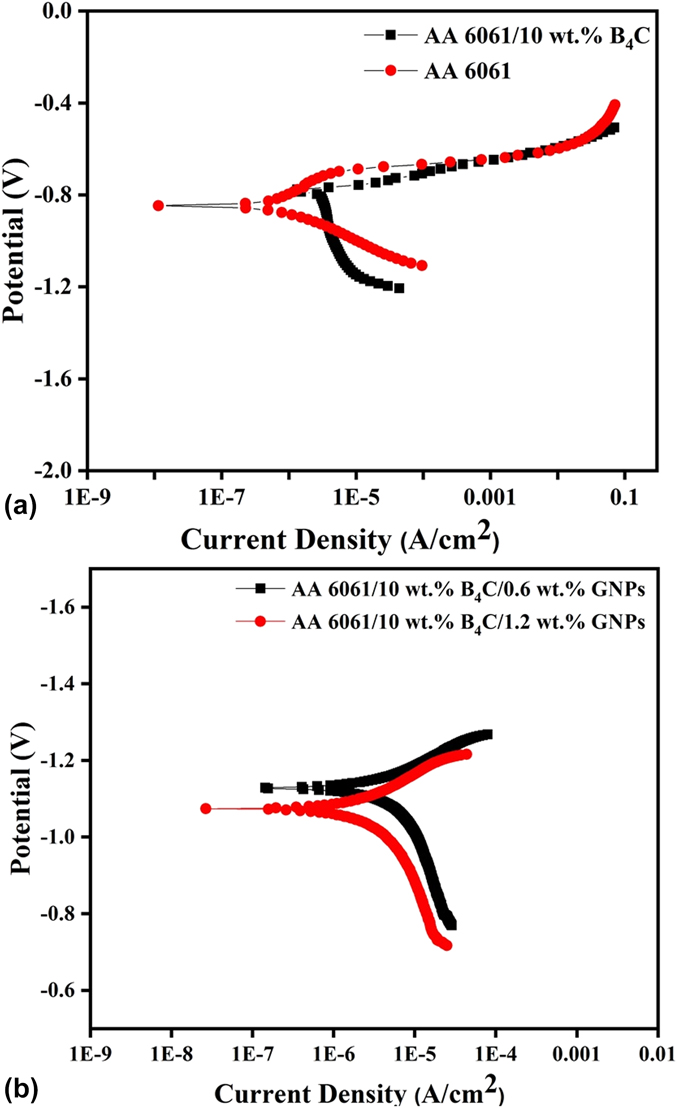
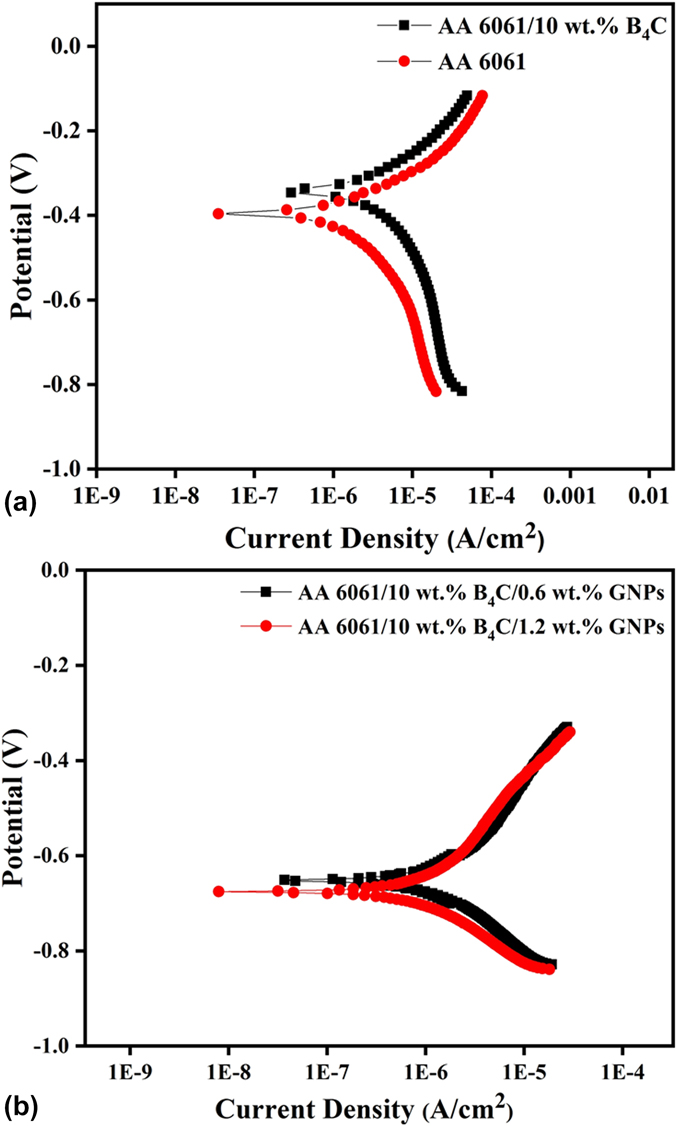
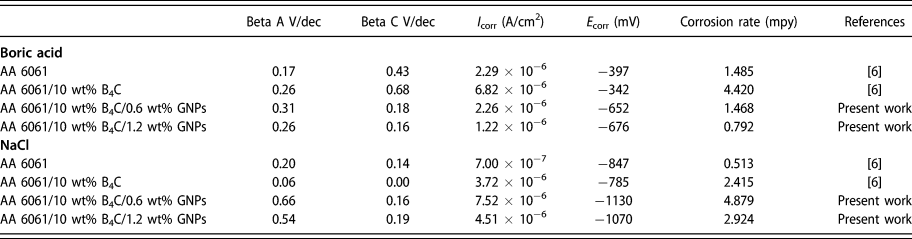
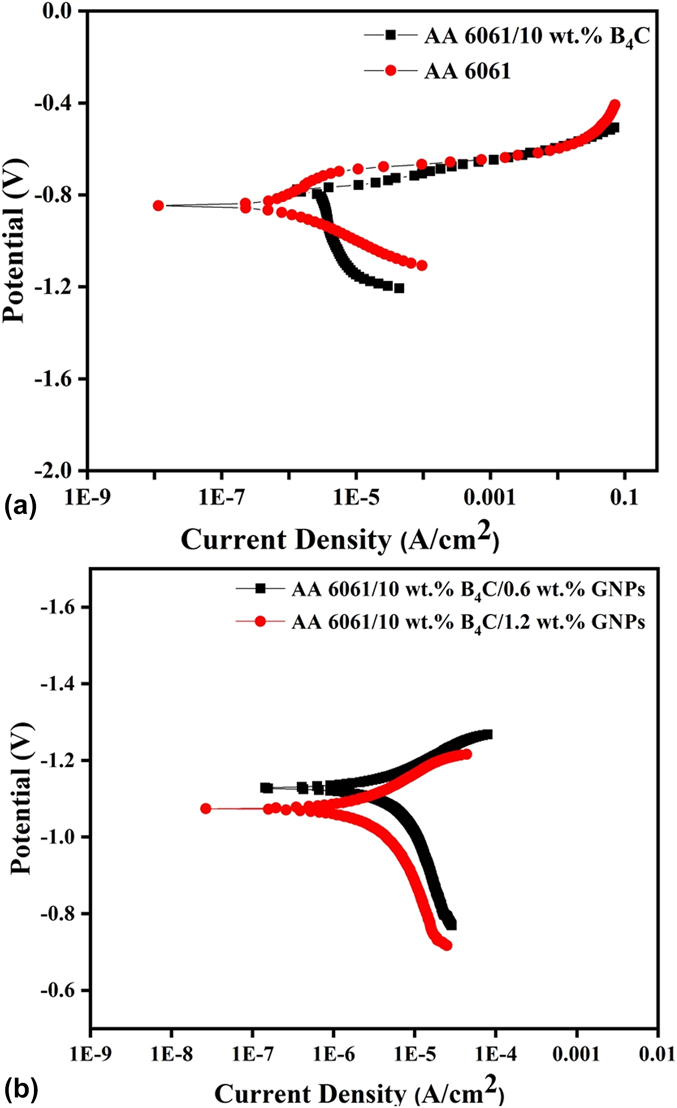
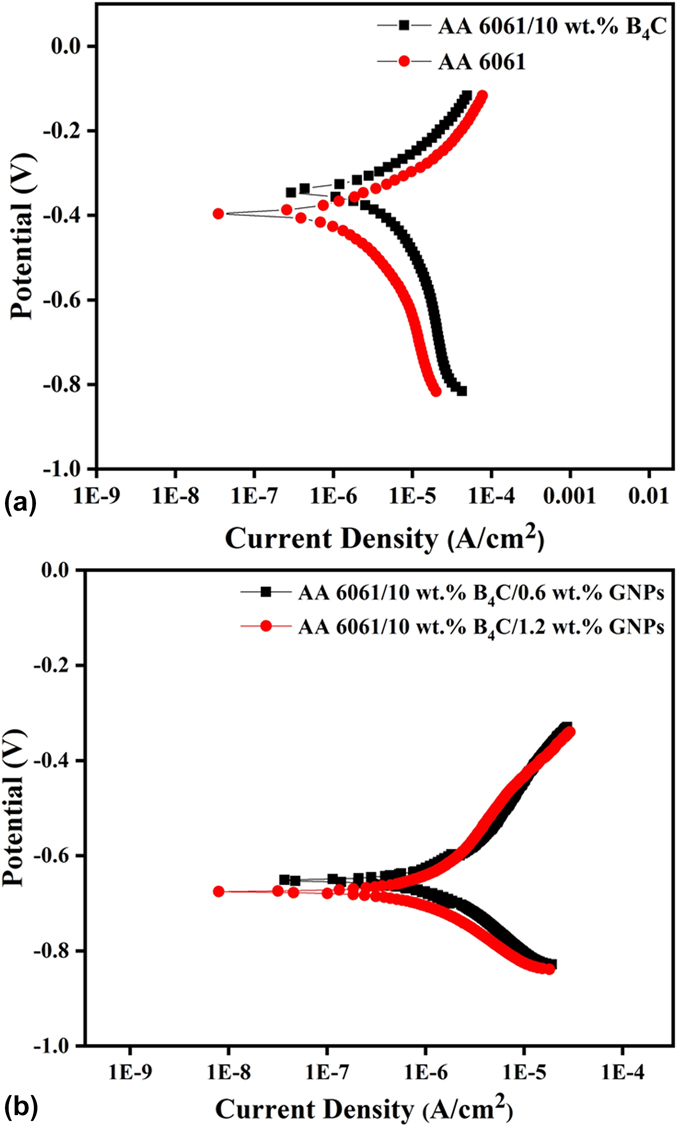
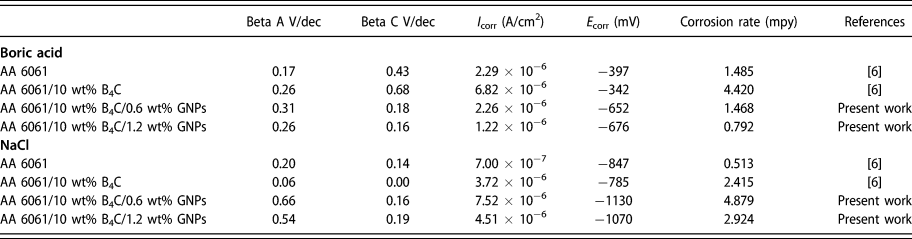
The PDP curves of unreinforced Al 6061 alloy, Al 6061 alloy/10 wt% B4C, Al 6061 alloy/10 wt% B4C/0.6 wt% GNPs, and Al 6061 alloy/10 wt% B4C/1.2 wt% GNPs composites in sodium chloride and boric acid solutions are shown in Figs. 5 and 6. It is obvious that the addition of only B4C to alloy increases the anodic behavior of free corrosion potential in both solutions. It means that the addition of B4C increases the corrosion and oxidation of alloy. The Tafel analysis (Table I) also shows the similar behavior. The addition of graphene lowers the corrosion rate more in boric acid solution than in NaCl solution. The PDP curves of the Al 6061 alloy/10 wt% B4C/0.6 wt% GNPs and Al 6061 alloy/10 wt% B4C/1.2 wt% GNPs composites in chloride and boric acid solutions are shown in Figs. 5(b) and 6(b) and the corresponding Tafel fit data are shown in Table I. The free corrosion potential of the composites is more negative in NaCl solution than in boric acid solution. The addition of more graphene makes the free corrosion potential of the composite more negative in NaCl solution, as observed in a previous study [Reference Victor, Svetlana, Alexandr and Alexey39], while in boric acid solution, more graphene addition shifts the free corrosion potential of the composite to more positive value. Similarly, the corrosion rate increases with the addition of graphene in NaCl solution and decreases in boric acid solution. The slopes of cathodic parts of the curves are not much affected by the addition of more graphene and remain comparable even in the two solutions. However, the anodic slopes are affected by both the addition of graphene and the type of solution and follow the same trend as that of free corrosion potential and corrosion rate. Thus, the anodic part of the reaction is what makes all the difference in the corrosion behavior of these composites. An earlier study [Reference Rashad, Pan, Zhengwen, Asif, Han and Rongjian31] has also observed that the anodic polarization behavior of Al–graphene composites is different from the pure Al alloy and depends on the fabrication route and dispersion of graphene in the composite. It is believed that the addition of graphene weakens the stable oxide layer on Al and increases the corrosion rate in NaCl solution. Higher corrosion rates with more graphene addition have also been observed in other systems, which rely on corrosion protective oxide layer, such as copper-based composites [Reference Mišković-Stanković, Jevremović, Jung and Rhee40]. It is observed in the same study that for same increase in graphene content, the increase in corrosion rate is higher in Al-based composites than in the Cu-based composites. The higher corrosion rate of composites than the aluminum itself is possibly due to the graphene particles being cathodic relative to the matrix, thus leading to galvanic corrosion in the presence of an electrolyte [Reference Rashad, Pan, Zhengwen, Asif, Han and Rongjian31]. In the case of boric acid solution, the oxidizing conditions favor the stability of the oxide layer. Therefore, there is no deterioration of the oxide layer and the superior corrosion resistance is achieved with higher graphene contents.
PDP curves of (a) AA 6061 and AA 6061–B4C composites and (b) AA 6061–B4C–GNPs composites in 3.5% NaCl solution.
PDP curves of (a) AA 6061 and AA 6061–B4C composites and (b) AA 6061–B4C–GNPs composites in boric acid solution.
Tafel analysis derived from polarization curves.
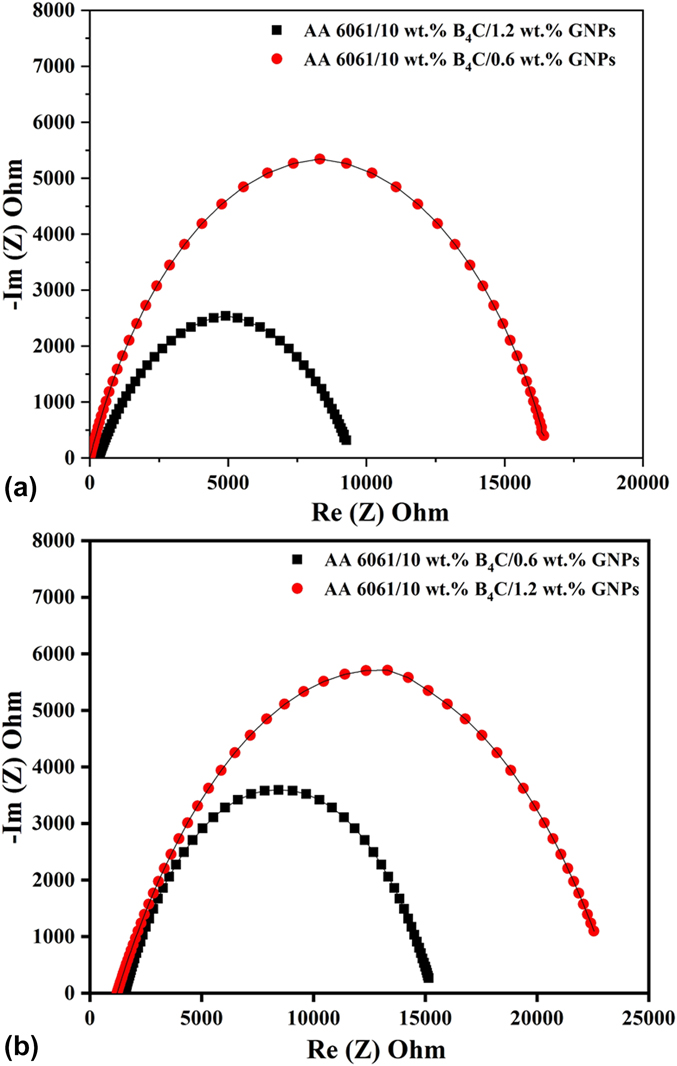
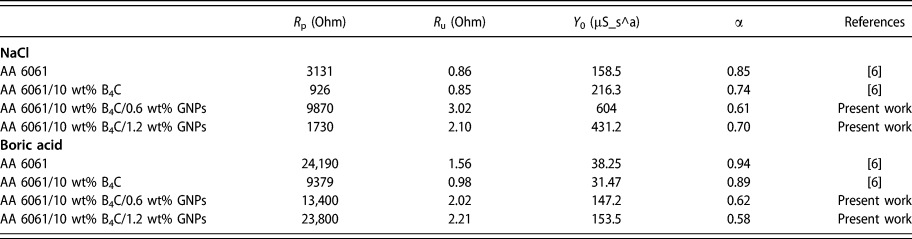
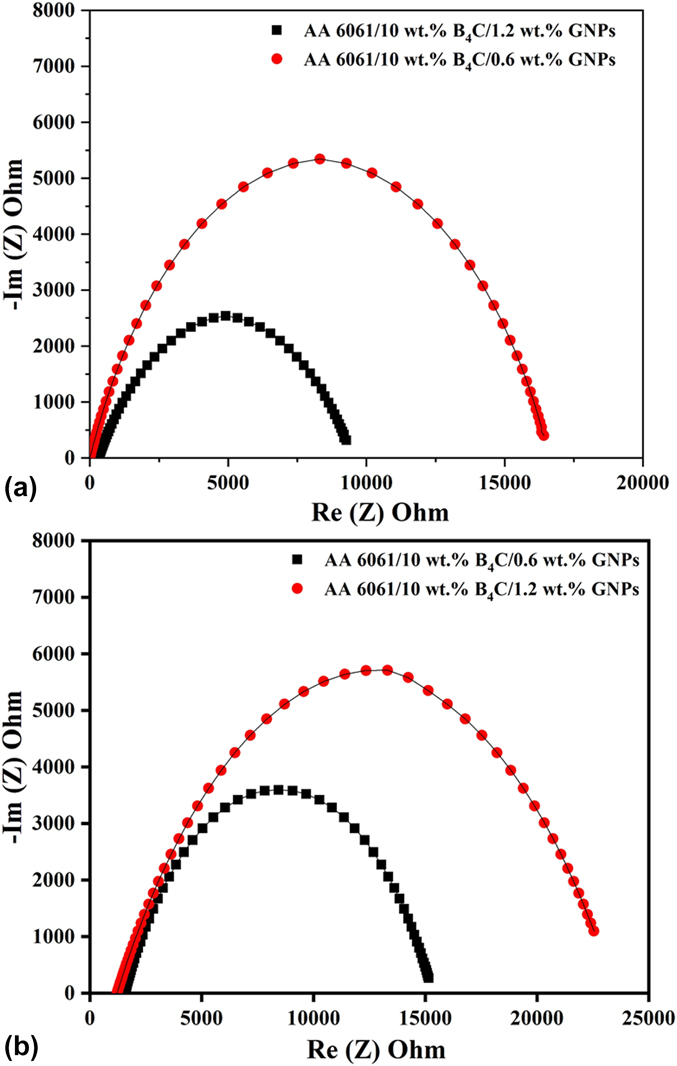
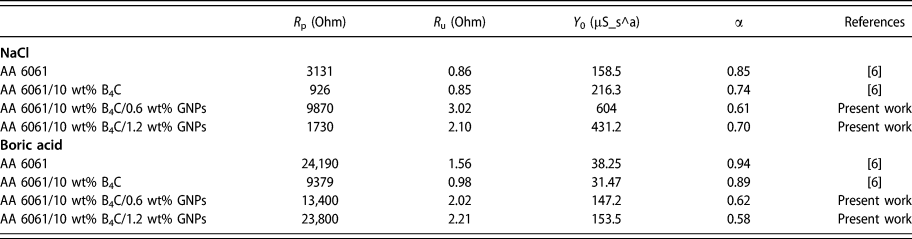
The results of EIS curves of Al 6061 alloy/10 wt% B4C/0.6 wt% GNPs and Al 6061 alloy/10 wt% B4C/1.2 wt% GNPs composites in sodium chloride and boric acid solutions are given in Fig. 7. In our previous work, it is deduced that the quantitative value of corrosion resistance, calculated from area of impedance spectra, in boric acid solution is higher for Al 6061 alloy and it degrades with the addition of boron carbide [Reference din, Shafqat, Shahzad, Ejaz, Asghar, Nouman, Qureshi, Waqar and Riffat6]. Nevertheless, it is evident that the addition of GNPs increases the area under impedance spectra for all three conditions compared with our previous work [Reference din, Shafqat, Shahzad, Ejaz, Asghar, Nouman, Qureshi, Waqar and Riffat6], which implies that the corrosion resistance of composites is enhanced by the addition of GNPs. The fitted model is shown in Fig. S7. All data in plots well fit to a model consisting of resistances R u and R p and constant phase element (Ø). R u is uncompensated resistance, R p is polarization resistance, and Ø is the constant phase element, which acts like an imperfect capacitor. The impedance (Z) of constant phase element (Ø) is given by the following formula:
 $$Z = {1 \over {{{\left( {j\omega } \right)}^\alpha }{Y_0}}}\quad ,$$
where Y 0 is capacitance and α is exponent, which is zero for capacitor. The fitted parameters of the models are given in Table II. It is deduced that constant phase element imperfection is due to the presence of double layer capacitance, surface roughness and non-uniform current distribution. In case of boric acid solution, the addition of GNPs decreases the imperfection of the capacitor due to oxidizing environment. On the contrary, in a chloride environment, the addition of GNPs increases the imperfection of the capacitor due to breakage of the oxide film.
Fitted Nyquist plot of AA 6061–B4C–GNPs composites in (a) NaCl solution and (b) boric acid solution.
Parameter values of the fitted model.
Conclusions
In the present study, mechanical, tribological, and electrochemical behaviors of HAMCs consisting of aluminum alloy 6061 matrix (AA 6061) with boron carbide (10 wt%) and various GNPs (0.25–1.2 wt%) contents are investigated. The Al alloy 6061 hybrid composites are fabricated by a combined solution mixing and PM route. The corrosion properties of composites are investigated as a function of GNPs contents by using PDP and electrochemical impedance techniques. Key experimental findings are as follows:
(1) The hardness of AA 6061–B4C–GNPs increases from 28 HRB (AA 6061) and 73 HRB (AA 6061–B4C) to 91 HRB (AA 6061–10 B4C–1.2 GNPs). Increase in hardness with the addition of GNPs above 0.6 wt% is not significant due to the agglomeration and clustering tendency of GNPs.
(2) Compressive strength of the hybrid composites for AA 6061–10 B4C–0.6 GNPs increases to 271 MPa compared to that of 110 MPa for AA 6061 and 251 MPa for AA 6061–B4C composites. The strength of these composites deteriorates above 0.6 wt% GNPs. It is envisaged that severe agglomeration becomes inevitable because even a low mass fraction of GNPs may result in a high volume fraction, due to the low density of graphene with the addition of relatively large alloy powders (29 μm) and B4C powders (8 μm). The morphology of fracture surfaces has indicated that the composite containing 1.2 wt% GNPs has exhibited more sheared pultruded graphene.
(3) The tribological results have indicated that AA 6061–B4C–GNPs hybrid composites exhibit decreased wear rates and COF compared with monolithic AA 6061 as well as AA 6061–B4C composites. In the case of AA 6061–B4C composites, the main wear mechanism is abrasive wear. However, in the case of AA 6061–B4C–GNPs hybrid composites, delamination wear is dominant.
(4) Both polarization and impedance results show that the addition of graphene lowers the corrosion rate more in boric acid solution than in NaCl solution, probably due to the more stability of the oxide layer on the aluminum matrix in the presence of an oxidizing environment (boric acid solution).
Materials and methods
Materials
Fine, gas atomized 6061-Al alloy powder with a mean particle size of 29 μm and a purity level of 99.5% was purchased from Shanghai Customs Golden Powder Material Co., Ltd., Shanghai, China. The boron carbide powder with a mean particle size of 8 μm and a purity level of 99.5% was purchased from Mudanjiang Qianjin Boron Carbide Co., Ltd., Mudanjiang, China. GNPs were produced by Hummers’ method using fine graphite flakes as the starting material (Figs. S1 and S2) The diameter of GNPs was 10–20 µm with a thickness of >15 nm.
Manufacturing
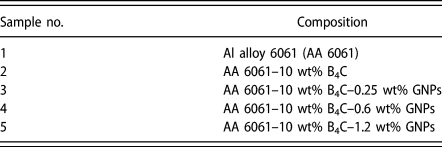
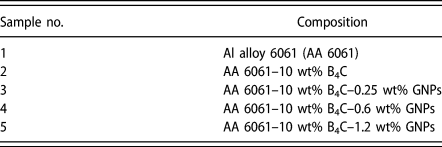
The mixing of composite powders (AA 6061 + 0 wt% B4C, AA 6061 + 5 wt% B4C, AA 6061 + 10 wt% B4C) was carried out in a planetary ball mill PM 4 RETSCH up to 1 h. During milling, a charge ratio (weight of the powder to the weight of the balls) of 1:10 was used. Stearic acid (0.02 wt%) was added as process control agent (PCA) and milling was performed at 200 rpm under argon atmosphere to avoid oxidation of newly exposed surface. To produce GNP-containing AA 6061–10 wt% B4C hybrid composites, various wt% of GNPs (0.25, 0.6, and 1.2 wt%) with 10 wt% B4C were dispersed in acetone and ultrasonicated for 1.5 h using a probe sonicator (Hielscher UP400S, Hielscher Ultrasonics GmbH Oderstr, Teltow, Germany). Subsequently, Al alloy powder was added to the suspension of GNPs and B4C and sonicated for 1 h. The suspension was later filtered and dried at 90 °C for 4 h in a vacuum oven. The dried GNP-containing composite powders were milled in planetary ball mill with same parameters mentioned above. After mechanical milling, the composite mixture was placed in a clean and dried vial and properly sealed to avoid the absorption of moisture and the inclusion of contamination. The milled composite powders were uniaxially pressed by using a hydraulic pelleting press under a pressure of 125 MPa. Sintering was performed in two stages. In the first stage, the green compacts were heated in a tubular furnace (KJ-1600 G; Zhengzhou Kejia Furnace Company, Zhengzhou, China) under vacuum of 1 × 10⁻¹ mbar up to 400 °C for 1 h to remove volatile species produced during burning of PCA. In the second stage, sintering was performed at various temperatures under N2 atmosphere using a flow rate of 5 L/min and a dew point temperature of less than −42 °C. After 1 h holding time, the furnace was cooled to room temperature in N2 atmosphere. The identification codes of each composite as function of the GNP concentration are shown in Table III.
Specimen’s identification.
Characterization
Hardness of the samples was determined using Karl Frank Rockwell Hardness Tester. Rockwell’s B scale was used in these measurements. An average of five readings has been reported in the results. SANS UTM was used for compression testing of composite pellets. ASTM E9-1989a standard was adopted for compression testing. XRD patterns of synthesized graphene and sintered composites were obtained using an X-ray diffractometer (X-ray Bruker D8, BRUKER AXS, Inc., Wisconsin) using Cu Kα radiation. Dry sliding wear tests for composites have been conducted using pin-on-disc machine. Wear tests were performed using ASTM G-99 standards. The surfaces of test samples and disc were polished with 600 grit silicon carbide emery paper to allow smooth contact interface before the beginning of each test trial. Prior to testing, the cleaning of tribo-couple was carried out using acetone in an ultrasonic water bath and thoroughly dried. The pin is fixed to the holder and is held stationary against the rotating disc. Wear tests are conducted in two sets. The first set involves the use of various loads of 5 N, 10 N, 15 N, and 20 N at a fixed sliding speed of 0.8 m/s and sliding distance of 600 m. Different loads are applied through dead weight loading system. In the second set, the wear test is carried out at different sliding speed of 0.4 m/s, 0.8 m/s, and 01.2 m/s at a constant load of 10 N and sliding distance of 600 m. After each run, the pin is removed from the holder and pin weight loss has been measured. The weight loss was found by measuring the specimen before and after the experiment on an electronic balance with an accuracy of 0.1 mg. The samples and wear track of disc were cleaned with acetone prior to and after each trial to remove debris. To confirm the repeatability of the results, all the compression and wear tests were repeated three times and the average value is taken for analysis. SEM of the composites was performed on a microscope (TESCAN, MIRA-III, FEG-SEM, Kohoutovice, Czech Republic). The sintered, fracture, and worn surfaces of the samples were observed under SEM to investigate the fracture morphology and wear mechanism.
Electrochemical measurements were performed at ambient temperature in a three-electrode electrolytic cell. Prior to testing, the specimens were ground, degreased, and dried in warm air. The solutions employed were 2500 ppm boron-containing H3BO3 and 3.5% NaCl. The working electrode was a rectangular composite sample with a working area of 1 cm2. An Ag/AgCl electrode and a platinum electrode were used as the reference and counter electrodes, respectively. Prior to EIS and the PDP measurements, the samples were immersed in the solution for 15 min to reach a steady open circuit potential. Electrochemical impedance curves were obtained by applying a sinusoidal potential of 10 mV in amplitude, in the frequency range from 100 mHz to 1 MHz. PDP tests were performed within the range of −0.25 V to +0.25 V at a scan rate of 1 mV/s.
Supplementary material
To view supplementary material for this article, please visit https://doi.org/10.1557/jmr.2019.242.
Acknowledgments
The authors would like to thank Head, Materials Division, PINSTECH, Islamabad, for permitting us to utilize the facilities and resources for this work. The authors also feel indebted to the Chairman, Materials Division, IST, Islamabad, for the generous support in tribological, mechanical, and microstructural characterization.