




No CrossRef data available.
Article contents
- Extract
- President-Elect 2004-2005
- Vice President 2004-2005
- Vice President 2004–2005
- Vice President 2004–2005
- Secretary 2004–2005
- President 2004–2005
- Treasurer 2004–2006
- Council 2004–2006
- Council 2004–2006
- Council 2004–2006
- Council 2004–2006
- Council 2004–2006
- Council 2004–2006
- Council 2004–2006
- Council 2004–2006
- Continuing Officers and Council: Council 2003–2005
- Council 2003–2005
- Council 2003–2005
- Council 2003–2005
- Council 2003–2005
Nominating Committee Offers Slate for 2004-2005 Officersand Council Members
Published online by Cambridge University Press: 01 July 2004
Article contents
- Extract
- President-Elect 2004-2005
- Vice President 2004-2005
- Vice President 2004–2005
- Vice President 2004–2005
- Secretary 2004–2005
- President 2004–2005
- Treasurer 2004–2006
- Council 2004–2006
- Council 2004–2006
- Council 2004–2006
- Council 2004–2006
- Council 2004–2006
- Council 2004–2006
- Council 2004–2006
- Council 2004–2006
- Continuing Officers and Council: Council 2003–2005
- Council 2003–2005
- Council 2003–2005
- Council 2003–2005
- Council 2003–2005
Extract
The Association's 2004 Nominating Committee convened at the nationaloffice and agreed upon the following slate of officers and Councilmembers. Members of the Association will have an opportunity to meetthe nominees at the 2004 Annual Meeting in Chicago. Elections willbe held at the Business Meeting. The Annual Meeting Final Programwill have the room location for each event.
Information
- Type
- Association News
- Information
- Copyright
- © 2004 by the American Political Science Association
The Association's 2004 Nominating Committee convened at the national office and agreed upon the following slate of officers and Council members. Members of the Association will have an opportunity to meet the nominees at the 2004 Annual Meeting in Chicago. Elections will be held at the Business Meeting. The Annual Meeting Final Program will have the room location for each event.
Serving on the 2004 Nominating Committee were Margaret Keck (chair), Johns Hopkins University; Frank Baumgartner, Pennsylvania State University; Stephen Holmes, New York University; Edmond Keller, University of California-Los Angeles; Valerie Martinez-Ebers, Texas Christian University; and Richard Synder, University of Illinois-Urbana-Champaign.
President-Elect 2004-2005
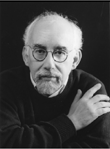
Ira Katznelson, Columbia University
Ira Katznelson is Ruggles Professor of Political Science and History at Columbia University, where he received his B.A. in 1966 and first taught after completing his Ph.D. in History at Cambridge University in 1969. Before returning to Columbia in 1994, he was a member of the departments of political science at the University of Chicago (where he was chair) and the New School for Social Research (where he was dean of the graduate faculty). In the 2003-2004 academic year, he has been acting vice president for arts and sciences and dean of the faculty at Columbia University.

Ira Katznelson
His scholarship at the boundary of political science and history on the liberal state, race, cities, inequality, social knowledge, and institutions primarily has been concerned with the United States, but is indebted, and seeks to contribute to, the discipline's other subfields. Katznelson has recently finished When Affirmative Action Was White (forthcoming, Norton Publishers 2005), and is completing a collection of essays on modern social knowledge and a volume on the role of the South in shaping the New Deal. His other books include Black Men, White Cities (Oxford University Press, 1973), City Trenches (Pantheon Books, 1981), Schooling for All (with Margaret Weir, Basic Books, 1985), Marxism and the City (Oxford University Press, 1992), Liberalism's Crooked Circle (Princeton University Press, 1996), which won the Michael Harrington and Lionel Trilling Book Awards, and Desolation and Enlightenment: Political Knowledge after Total War, Totalitarianism, and the Holocaust (Columbia University Press, 2003). He also has co-edited Working Class Formation (with Aristide Zolberg, Princeton University Press, 1986), Paths of Emancipation: Jews, States, and Citizenship (with Pierre Birnbaum, Princeton University Press, 1995), and Shaped by War and Trade: International Influences on American Political Development (with Martin Shefter, Princeton University Press, 2002).
In 1970, he was the founding editor of Politics and Society, on whose editorial board he continues to serve. With Martin Shefter and Theda Skocpol, he has edited “Princeton Studies in American Politics: Historical, International, and Comparative Perspectives.” With Helen Milner, he co-chaired the APSA 2000 Program Committee and edited Political Science: The State of the Discipline, Centennial Edition (Norton Publishers, 2002). He has also served as president of the Politics and History Section of APSA, president of the Social Science History Association, and chair of the Russell Sage Foundation Board of Trustees. He has been a Guggenheim Fellow, and is a fellow of the American Academy of Arts and Sciences and a member of the American Philosophical Society.
Vice President 2004-2005
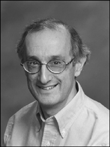
Robert Axelrod, University of Michigan
Robert Axelrod is the Arthur W. Bromage Distinguished University Professor of Political Science and Public Policy at the University of Michigan. He has appointments in the department of political science and the Gerald R. Ford School of Public Policy. Prior to coming to Michigan he taught at the University of California, Berkeley (1968-1974). He holds a B.A. in mathematics from the University of Chicago (1964), and a Ph.D. in political sicence from Yale (1969).

Robert Axelrod
He is best known for his interdisciplinary work on the evolution of cooperation that has been cited in over three thousand articles. His current research interests include complexity theory (especially agent-based modeling) and international security. Axelrod has been elected to the National Academy of Sciences, the American Academy of Arts and Sciences, and the Council on Foreign Relations. Among his honors are a five-year MacArthur Prize Fellowship, the Newcomb Cleveland Prize of the American Association for the Advancement of Sciences for an outstanding contribution to scince, and the National Academy of Sciences Award for Behavioral Research Relevant to the Prevention of Nuclear War.
Recently, Axelford has consulted and lectured on promoting cooperation and harnessing complexity for the United Nations, the World Bank, the U. S. Department of Defense, and various organizations serving health care professionals, business leaders, and K-12 educators.
Axelrod's service contributions to APSA include service as Secretary of the Association, member of the Nominating Committee, and chair of the APSA panel on the Perestroika debate.
Vice President 2004–2005
Joan Tronto, Hunter College and CUNY
Joan C. Tronto received her A.B. at Oberlin College in 1974 and her Ph.D. at Princeton University in 1981. She has held visiting appointments at Yale University, the University of Humanist Studies, the Netherlands, and at Goethe University in Frankfurt-am-Main. She has been a fellow at the Institute for Human Sciences in Vienna and at the University Center for Human Values at Princeton.

Joan Tronto
Tronto has authored numerous articles and Moral Boundaries: A Political Argument for an Ethic of Care (1993). She is the co-editor, with Cathy Cohen and Kathy Jones, of Women Transforming Politics: An Alternative Reader (1997).
Among her professional activities, Tronto has served as the book review editor for Polity (2000–2004) and on the editorial boards of Contemporary Political Theory (1999–), Acta Political (1999–), Women and Politics (2000–2003), and International Feminist Journal of Politics (1999–).
In 1997–1999, she served on the APSA Council and the Administrative Committee. She served as a member of the Strategic Planning Committee in 2000 that recommended the creation of Perspectives on Politics. In 1993–1994, she served as chair for the Gay, Lesbian, Bisexual Caucus. She has served various roles in the Women's Caucus and in the Organized Section for Women and Politics, and in the Organized Section for Foundations in Political Theory. She also organized the section on “Gender and Politics” at the MPSA in 1997 and served on the MPSA Council, 2001–2003.
She chaired the Leo Strauss Prize Committee in 1997 and the Foundations for Political Thought's First Book Prize Committee in 1995.
Tronto presented at the “Frontiers in Research” MiniCourse organized by the Women and Politics Section, 2000, and at the “Workshop on Women of Color and Political Science Research” held in conjunction with the 2002 APSA meeting. Tronto has also co-coordinated faculty development seminars at the City University of New York, for a seminar on “Balancing the Curriculum for Race, Class and Gender” and on “Considering Care.”
Tronto received Hunter College's Faculty Award for Teaching Excellence in 1991, and served as the founding director of the College's Teaching Learning Center from 2001–2003. Tronto is currently chair of the Hunter College Senate.
She would welcome the opportunity to continue to make political science a more inclusive discipline committed to intellectual and academic pluralism. She also hopes to represent in the APSA the concerns of faculty who work in underfunded public universities.
Vice President 2004–2005
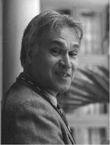
John Garcia, University of Arizona
John A. Garcia is professor of political science in the department of political science at the University of Arizona. He has been a member of the faculty since 1972, having served as department head from 1988–1993 and 1995–1996. He also served as acting director of the Mexican American Studies and Research Center in 1996–1996. Garcia received his B.A. from the University of Texas, Austin (1966), M.A. from the University of Houston (1968), and Ph.D. from Florida State University (1971).

John Garcia
Garcia is an Americanist, focusing on minority and urban politics with specific public policy areas (i.e., immigration, labor markets, education, and health). Much of his research efforts have concentrated upon the Mexican origin community, and other Latino groups, in relation to political community, mobilization and participation, political behaviors, and local politics. His work has appeared in Social Science Quarterly, National Journal of Political Science, Publius, International Migration Review, and other refereed journals, as well as many chapters in edited volumes. His most recent book, Latino Politics: Community, Culture and Interests, was released for publication by Rowman and Littlefield Press in May, 2003.
His professional involvement in the discipline is extensive. For APSA, he has served on the executive council; Program Committee Co-Chair for the 1999 Annual Meeting; section chair of Public Opinion and Elections; Ralph Bunche Award Committee; Best Dissertation in State and Local Politics Award Committee; member of the Chicano/Latino status committee; APSA task force member on minority programs; Urban Politics Best Book Award Committee; and APSA secretary (2001–2002). In addition, he has served as a member of the executive council of the Inter-University Consortium for Political Research and a member of the Advisory committee to the NSF Directorate for Social, Behavioral, and Economic Sciences.
Secretary 2004–2005
Christine Marie Sierra, University of New Mexico
Christine Marie Sierra is associate professor of political science at the University of New Mexico. She received a B.A. with honors from the University of Texas at Austin and an M.A. and Ph.D. from Stanford University. She previously taught at Colorado College and held a postdoctoral fellowship at the Brookings Institution. She has been a visiting professor at the University of Arizona and at the Center for American Women and Politics at Rutgers University.

Christine Marie Sierra
She teaches and researches in American politics with a focus on race, ethnicity, and gender. She publishes on Latino political participation, immigration politics, and Hispanic politics in New Mexico. She has been at the forefront in the study of Latina women in the United States. Publications include Chicana Voices: Intersections of Class, Race, and Gender (University of New Mexico Press, third printing, 1993) and articles in the National Political Science Review and Intercambios Femeniles (Stanford University). She also wrote and produced a highly acclaimed documentary, This Town Is Not For Sale! (1999) on the election of a Chicana activist as the first woman mayor of Santa Fe. She is currently directing a major study of African American, Latino/a, and Asian American elected officials, with a special focus on women of color. Collaborators on the three-year project include Carol Hardy-Fanta (University of Massachusetts-Boston), Pei-te Lien (University of Utah), and Dianne Pinderhughes (University of Illinois-Urbana).
She was a consultant in the establishment of a Latino Studies program at Williams College and the University of Notre Dame. From 1994 to 1997, she served as a presidential appointee to the Good Neighbor Environmental Board to address environmental and infrastructure needs of the U.S.-Mexico border region.
Service in the profession includes membership on the APSA Executive Council (2000–2002) and the Editorial Board of PS (1999–2001). A founding member of the APSA Organized Section on Race, Ethnicity, and Politics, she served as co-president (1999–2000) and on the book awards committee (1999). Additional service in APSA includes the Committee on the Status of Latinas/os in the Profession (1996–1998), the Women's Caucus for Political Science, and the Ralph Bunche Award for Best Book on Cultural Pluralism (1996).
She has numerous appearances on radio and television as an expert in American and Latino/a politics and has lectured extensively on college campuses across the country. In 2000 and 2002, she served as election night analyst and commentator for the NBC affiliate in Albuquerque.
President 2004–2005
Margaret Levi, University of Washington
Margaret Levi is the Jere L. Bacharach Professor of Political Science and International Studies at the University of Washington, Seattle. She was formerly the Harry Bridges Chair and director of the Center for Labor Studies. Levi earned her B.A. from Bryn Mawr College in 1968 and her Ph.D. from Harvard University in 1974, the year she joined the faculty of the University of Washington.

Margaret Levi
Levi has authored three books, including Of Rule Revenue (University of California Press, 1988) and Consent, Dissent, and Patriotism (Cambridge University Press, 1997), and has co-edited five others. She is the joint author of Analytic Narratives (Princeton University Press, 1998). In progress is a coauthored volume with Karen Cook and Russell Hardin, building on a multi-year Russell Sage Foundation project on trust and trustworthiness. Concurrently, she is working on a range of issues having to do with labor unions and with global justice campaigns. Some of the work builds on the WTO History Project <www.wtohistory.org>, which she co-directed, and some derives from joint research with David Olson on union democracy. She also continues to write on issues concerning the analytic narrative approach to the study of complex historical and comparative processes.
Previous APSA responsibilities include serving as vice-president, president of the Organized Section on Political Economy, as Annual Meeting Program cochair with James Alt, on the Executive Council, and on the Civic Education Task Force. In 1999, she became the general editor of Cambridge Studies in Comparative Politics. She also is on the editorial boards of Politics & Society, the Annual Review of Political Science, Rationality and Society, and Political Studies. She has served on the board of the ICPSR and currently is on the boards of the Society for Comparative Research and of the Center for Advanced Study in the Behavioral Sciences.
Levi maintains numerous community commitments. She serves on the Jobs for Justice workers' rights board. She was a member of the first coordinating committee of SAWSJ (Scholars, Artists, and Writers for Social Justice). With her husband, Robert D. Kaplan, she has developed a substantial collection of Australian aboriginal art, part of which is on loan to the Seattle Art Museum.
Her awards include the S. Sterling Munro Public Service Teaching Award in 2001. She was a fellow of the Center for Advanced Studies in the Behavioral Sciences in 1993–1994 and a John Simon Guggenheim Fellow, 2002–2003. She was elected to the American Academy of Arts and Sciences in 2001. She has lectured and been a visiting fellow at the Australian National University, the European University Institute, the Max Planck Institute in Cologne, the Juan March Institute, the Budapest Collegium, Cardiff University, and Oxford University.
Levi has two strong professional commitments. The first is to the building of communities of scholars who take on significant social science questions by bridging sub-disciplines, disciplines, and theoretical approaches. The second is to improving our capacity to address important political and policy issues in the classroom and with the public.
Treasurer 2004–2006
Henry Brady, University of California, Berkeley
Henry Brady is the Class of 1941 Monroe Deutsch Professor of Political Science and Public Policy at the University of California, Berkeley with appointments in the department of political science and the Goldman school of Public Policy. His scholarly interests include electoral politics and political participation, social welfare policy, political polling and policy-oriented surveys, statistical methodology, and the use of computers in management of social programs.

Henry Brady
Brady has worked for the federal Office of Management and Budget and other organizations in Washington, D.C. Brady is the principal investigator for the California Work Pays Demonstration Project, which is developing and archiving public databases on California's welfare program. He is past president of the Political Methodology Group of the American Political Science Association, 2003 Annual Meeting Co-Chair, associate editor of Perspectives on Politics, and director of the University of California Data Archive and Technical Assistance Program, which provides academic researchers, state agencies, and others with technical assistance on computerized data including the census and sample surveys. He is co-author, with Sidney Verba and Kay Schlozman, of Voice and Equality: Civic Voluntarism in American Politics (Harvard University Press, 1995), editor of Rethinking Social Inquiry: Diverse Tools Shared Standards (Roman and Littlefield, September 2004), and has written on political participation and elections in America, Canada, Estonia, and Russia.
Council 2004–2006
Lisa Anderson, Columbia University
Lisa Anderson is professor of political science and, since 1997, dean of the School of International and Public Affairs at Columbia University. She has taught at Columbia since 1986, serving as director of the Middle East Institute (1990–1993) and chair of the Political Science department (1993–1997). Before coming to Columbia, she taught in the Government and Social Studies Departments at Harvard University. She received her B.A. from Sarah Lawrence College, an M.A.L.D. from the Fletcher School of Law and Diplomacy at Tufts University, and both a certificate in Middle East studies and Ph.D. in political science from Columbia.

Lisa Anderson
In addition to managing a school of over 1,000 public policy masters' and doctoral students from over 100 different countries, Anderson retains an active research portfolio. Her research interests lie at the convergence of international relations and comparative politics, particularly as they illuminate politics in the Middle East and North Africa, and at the intersection of scholarship and public policy around the world. She is working on a book on the fortunes of liberalism in the Middle East as well as developing several projects reflecting on both the rapid globalization of social science and the changing audiences for social science research at the beginning of the twenty-first century. Her most recent book is Pursuing Truth, Exercising Power: Social Science and Public Policy in the Twenty-first Century (2003). Her other publications include the edited volume, Transitions to Democracy (1999); the co-edited volume, Origins of Arab Nationalism (with Rashid Khalidi and others, 1991); The State and Social Transformation in Tunisia and Libya, 1830–1980 (1986), and numerous articles, many book chapters and much newspaper commentary.
She has served on the selection committee of APSA's Gabriel Almond Award in Comparative Politics, on the editorial committees of Comparative Politics and Ethics and International Affairs, and as a member of the Committee on Studies, Council on Foreign Relations. In 2001 she was elected president of the Middle East Studies Association of North America and served her term in 2003. She is currently chair of the board of directors of the Social Science Research Council and member of the boards of directors of the Carnegie Council on Ethics and International Affairs and of Human Rights Watch. In 2002 she was awarded an honorary doctorate by Monmouth University.
Council 2004–2006
Andrew Aoki, Augsburg College
Andrew L. Aoki is associate professor and chair of the political science department, and also a member of the urban studies program at Augsburg College (Minneapolis). He received his B.A. from the University of Oregon, and M.A. and Ph.D. from the University of Wisconsin-Madison.

Andrew Aoki
His current research focuses on the politics of immigration. He is working with three colleagues on a manuscript which examines the ways that the new immigration is transforming American racial politics, and also on an Asian American politics textbook. He has published works on Asian American politics, immigration, and multiculturalism, and is a co-editor of the Encyclopedia of Minorities in American Politics.
He is currently co-president of the APSA organized section on Race, Ethnicity, and Politics (REP), and has served as the REP co-program chair, and on the REP best book committee. He was a co-founder and one of the initial co-chairs of the Asian Pacific American Caucus (APAC), an APSA related group, and is currently the APAC electronic discussion list moderator. He is also currently a member of the APSA Committee on the Status of Asian Pacific Americans in the Profession.
As a council member, his interests would include seeing that APSA continues its efforts to respond to the full range of its diverse membership, including faculty at small teaching schools, who often seem to exist on the margins of APSA.
Council 2004–2006
Pradeep Chhibber, University of California, Berkeley
Pradeep Chhibber is associate professor of political science and the Indo-American Community Chair in India Studies at the University of California, Berkeley. Prior to coming to Berkeley, Pradeep taught at Ohio State University and the University of Michigan. He has a B.A. in economics and M. Phil. in political science from the University of Delhi and a Ph.D. in political science from UCLA in 1991. He is currently the chair of the political science department at Berkeley.
Pradeep's research centers on political parties and the politics of India. He is the author of The Formation of National Party Systems: Federalism and Party Competition in Canada, Great Britain, India and the United States (with Ken Kollman, forthcoming 2004, Princeton University Press) and Democracy without Associations: Transformation of the Party System and Social Cleavages in India (1999, University of Michigan Press) which was awarded the Leon Epstein Prize by the Political Parties and Organizations section of the APSA for 2000. His articles have appeared in a variety of area studies, development, economics, and political science journals.
Pradeep has been active in the profession, serving on the Political Organization and Parties Board and the executive committee of the Comparative Politics Section of the APSA.
Council 2004–2006
Neta Crawford, Brown University and University of Massachusetts, Amherst
I am an associate professor (research) of international studies at Brown University and associate professor of political science at the University of Massacusetts, Amherst. I am currently on the editorial board and executive committee of the American Political Science Review. I am also on the Committee on Slavery and Justice at Brown which seeks to examines the university's relationship to slavery and the slave trade.

Neta Crawford
My research interests include international relations theory, normative theory, foreign policy decisionmaking, African foreign and military policy, sanctions, peace movements, discourse ethics, research design, utopian science fiction, and emotion. I have a Ph.D. in political science from MIT and a bachelor of arts from Brown University. At Brown my independent concentration was “The War System and Alternatives to Militarism.” I wrote my senior thesis on the genesis and effects of military rule in Ghana from 1960–1984.
I am the author recently of Argument and Change in World Politics: Ethics, Decolonization, Humanitarian Intervention (Cambridge University Press, 2002) which was a co-winner of the 2003 APSA International History and Politics section Jervis and Schroeder Award for best book. I am co-editor of How Sanctions Work: Lessons from South Africa (MacMillan, 1999). My articles have been published in books and journals such as International Organization, Security Studies, Perspectives on Politics, International Security, Ethics & International Affairs, Press/Politics, Africa Today and, most recently, Qualitative Methods.
I do some community and professional service related to my research interests. For example, I am a member of the advisory board of the Project on Defense Alternatives, based in Cambridge, MA. In 2000, I co-organized a research meeting in South Africa for the SSRC of young African and N. American scholars of security so that both sides could get to know each other, and hopefully stimulate each other's research. I have appeared on radio and TV and written op-eds on U.S. foreign policy and international relations for newspapers including the Boston Globe, Newsday (Long Island), The Christian Science Monitor, and the LA Times.
I became a political scientist because I am interested in making the world a better place. Of course, APSA is not the “world” but only a small part of it. I would view my participation in the council, if elected, as part of the larger ongoing effort to make APSA better—more inclusive, relevant, effective, and engaged in contemporary problems facing political scientists and the world.
Council 2004–2006
James Gibson, Washington University, St. Louis
James L. Gibson earned his B.A. in political science from Emory University in 1972 (with highest honors, and membership in Phi Beta Kappa), and his Ph.D. in 1975, from the University of Iowa. After teaching at the University of Wisconsin, Milwaukee, and the University of Houston, Gibson became the Sidney W. Souers Professor of Government at Washington University in St. Louis in 1999.

James Gibson
Gibson became president of the Midwest Political Science Association in 1998 1999, has served on various APSA committees, and has been active in the Association's Centennial Campaign. He is also the recipient of several research awards, including the APSA's Burdette Pi Sigma Alpha Award and the Eulau Award, and awards from three Organized Sections: Political Organizations/Parties, Comparative Politics, and Law and Politics. The International Society of Political Psychology recently recognized his Overcoming Intolerance in South Africa (with Amanda Gouws) with the Alexander L. George Award for the best book published in political psychology. Gibson spent 2001 2002 as a visiting scholar at the Russell Sage Foundation.
Gibson has long been actively involved in the affairs of the National Science Foundation. He was a member of the first formal committee to call for a separate social sciences directorate, and then served on the Advisory Committee for the Directorate for Social, Behavioral and Economic Sciences from 1992 until 1998.
Gibson has published approximately 100 refereed articles. About one-third of these have appeared in the American Political Science Review, the American Journal of Political Science, or the Journal of Politics. He has also published five books, with his Overcoming Intolerance in South Africa: Experiments in Democratic Persuasion (with Amanda Gouws) published in 2003 (Cambridge University Press), and his Overcoming Apartheid: Can Truth Reconcile a Divided Nation? published in 2004 (Russell Sage Foundation).
Gibson has eclectic research interests, but his recent work focuses on mass psychology and behavior and democratization in the United States, Europe, and Africa. He is interested in understanding how and why ordinary people think the way they do about political issues (especially political tolerance and issues of justice) and how such thinking translates into public policy and democratic reform. In addition to his continuing research on democratization in Russia and truth, justice, and reconciliation in South Africa, Gibson is working on a new study of the problem of historical injustices and “land reconciliation” in South Africa, and is beginning a new project on public reactions to the Greensboro (North Carolina) Truth and Reconciliation Commission.
Council 2004–2006
Rogers Smith, University of Pennsylvania
Rogers M. Smith is the Christopher H. Browne Distinguished Professor and Chair of Political Science at the University of Pennsylvania. He has been active in the Perestroika movement in political science in order to assist in the further development of a substantively rich, methodologically pluralist discipline and a fully representative, responsive American Political Science Association, served by officers selected through competitive elections.

Rogers M. Smith
Smith teaches American constitutional law and American political thought, with special interests in issues of citizenship and racial, gender, and class inequalities. He has published over 90 essays in academic journals, edited volumes and public interest publications, including the American Political Science Review, the Western Political Quarterly, Studies in American Political Development, Daedalus, Social Research, Yale Law Journal, the American Prospect, the Nation, and others. He is author or co-author of five books: Stories of Peoplehood: The Politics and Morals of Political Memberships_(Cambridge University Press, 2003); The Unsteady March: The Rise and Decline of Racial Equality in America (with Philip A. Klinkner, 1999); Civic Ideals: Conflicting Visions of Citizenship in U.S. History (1997); Citizenship without Consent: The Illegal Alien in the American Polity (with Peter H. Schuck, 1985); and Liberalism and American Constitutional Law (1985, rev. ed. 1990).
Civic Ideals received six “best book” awards from divisions of the American Political Science Association, the Organization of American Historians, the Social Science History Association, and the Association of American Publishers. It was also a Finalist for the 1998 Pulitzer Prize in History. The Unsteady March received the 2000 Horace Mann-Bond Book Award of the W. E. B. Du Bois Institute, Harvard University.
Formerly the Alfred Cowles Professor of Government at Yale University, where he taught from 1980 to 2001, Smith also received a Yale College Prize for Distinguished Teaching in the Social Sciences in 1984. He received a Carnegie Corporation of New York “Scholar's Grant” in 2001–2003 to research a book to be entitled Civic Horizons: Achieving Democratic Citizenship in Modern America. He was a Phi Beta Kappa Visiting Scholar in 2002–2003 and was recently elected a Fellow of the American Academy of Arts and Sciences
Council 2004–2006
Aili Tripp, University of Wisconsin, Madison
Aili Mari Tripp is associate dean of international studies at the University of Wisconsin-Madison, director of the Women's Studies Research Center, and professor of political science and women's studies. Tripp received her B.A. and M.A. from the University of Chicago and her Ph.D. from Northwestern University in 1990. She worked for two years as a program officer at the John D. and Catherine T. MacArthur Foundation until 1992, when she joined the faculty at the University of Wisconsin-Madison.

Aili Tripp
Her publications include Changing the Rules: The Politics of Liberalization and the Urban Informal Economy in Tanzania (1997) and Women and Politics in Uganda (2000). The latter book was co-winner of APSA's 2001 Victoria Schuck Award and a 2001 Choice Outstanding Academic Titles Award. Tripp edited Sub-Saharan Africa: The Greenwood Encyclopedia of Women's Issues Worldwide (2003), and co-edited The Women's Movement in Uganda: History, Challenges and Prospects (2002), and What Went Right in Tanzania? People's Responses to Directed Development (1996). She has published many articles and book chapters on women and politics in Africa; societal responses to economic reform in Africa; and the political impact of transformations of associational life in Africa.
Tripp has won numerous awards, including grants from the Rockefeller Foundation, Social Science Research Council, American Council of Learned Societies, MacArthur Foundation, American Association of University Women, United Nations World Institute for Development Economics Research, the United States Information Agency, and the American Scandinavian Foundation.
She has served on the Executive Board of the African Studies Association and the Tanzanian Studies Association, on APSA's Gabriel A. Almond Award Committee, and is a member of the APSA Women's Caucus.
Tripp is co-editor of the University of Wisconsin Press series, Women in Africa and the Diaspora, and is member of several editorial boards, including Politics & Gender Journal, African Studies Quarterly, Africa Contemporary Record, and a Lynne Rienner book series, Challenge and Change in African Politics.
Having lived in Tanzania between 1960 and 1974, she returned to East Africa in 1987 and since that time has carried out extensive fieldwork in Tanzania and Uganda on a regular basis. Her research has involved close and varied collaborations with African scholars. In her scholarship, she has sought to recognize those aspects of African realities that are part of global trends, identify those distinct to Africa, and bring African and global women's experiences more into the field of vision of political scientists in the U.S. Her homepage can be found at http://www.polisci.wisc.edu/~tripp.
Council 2004–2006
David Vogel, University of California, Berkeley
David Vogel is professor in the department of political science and the Haas School of Business at the University of California, Berkeley. He received his Ph.D. from the department of politics at Princeton University and has taught at Berkeley since 1973. Vogel's research focuses on business-government relations, business political activity, and government regulation. He has made contributions to the fields of American politics, comparative politics, and international political economy.

David Vogel
Vogel's books include Lobbying the Corporation: Citizen Challenges to Business Authority (Basic Books, 1978); National Styles of Regulation: Environmental Policy in Great Britain and the United States (Cornell, 1986); Fluctuating Fortunes: The Political Power of Business in America (Basic Books, 1989); Trading Up: Consumer and Environmental Regulation in a Global Economy (Harvard 1995); Kindred Strangers: The Uneasy Relationship Between Business and Politics in America (Princeton, 1996); and Benefits or Barriers? Regulation in Transatlantic Trade (Brookings, 1998). He is also co-editor (with Robert Kagan) of The Dynamics of Regulatory, Change: How Globalization Affects National Regulatory Policies (UC Press, 2004). Vogel has also published more than 50 scholarly articles and essays.
He is currently working with Chris Ansell on an edited volume on food safety regulation in Europe as a case-study of contested governance, (MIT Press, forthcoming), and a monograph comparing changes in risk regulation in the United States and the European Union. Vogel is also writing a study of the potential and limitations of corporate social responsibility.
He has served on the editorial boards of the Journal of Policy History, Political Research Quarterly, Business and Politics, Business Ethics Quarterly, and the Journal of Public Affairs. Since 1982, he has edited the California Management Review.
Vogel has served on six award committees for the APSA and the History and Politics Section and as program co-chair for the History and Politics Section.
He has held the Jean Monnet Chair and the BP Chair in Transatlantic Relations at the European University Institute and been a visiting professor at INSEAD, Sciences Po, the Bren School of Environmental Management, and the Hebrew University.
Continuing Officers and Council: Council 2003–2005
John Aldrich, Duke University
John H. Aldrich is the Pfizer-Pratt University Professor of Political Science at Duke University, and adjunct professor at the University of North Carolina, Chapel Hill. He previously taught at Michigan State University and the University of Minnesota, before moving to Duke in 1987. Aldrich received his Ph.D. from the University of Rochester in 1975. He is a member of the American Academy of Arts and Sciences, and has been a Fellow at the Center for Advanced Studies in the Behavioral Sciences and at the Rockefeller Center, Bellagio.

John Aldrich
Aldrich is the author of Before the Convention and Why Parties? (both published by the University of Chicago Press) and co-author with Paul Abramson and David Rohde of the election series, the most recently published of which is Change and Continuity in the 2000 and 2002 Elections (CQ Press), among other books. He is currently co-writing three book-length manuscripts, including one on political parties and the U.S. Congress with Rohde, one on party competition in the South with John Griffin, and one (with numerous co-authors) on economic globalization and democratic politics. He is also author of numerous articles and book chapters. He is the recipient or co-recipient of the Eulau, Kammerer, CQ Press, and Pi Sigma Alpha awards.
Aldrich has served as Secretary of this Association, chair of the Woodrow Wilson Book Award Committee, and as member and chair of this Association's Nominating Committee. He is past president of the Southern Political Science Association and is currently president-elect of the Midwest Political Science Association. He and John Sullivan edited the American Journal of Political Science.
Council 2003–2005
Manuel Avalos, Arizona State University, West
Manuel Avalos is associate professor of political science in the department of social and behavioral sciences, associate vice provost for research and faculty development, and associate director of the Hispanic Research Center at Arizona State University, West. He received his doctoral degree at the University of New Mexico and did postdoctoral work at the Center for Mexican American Studies at the University of Texas at Austin.

Manuel Avalos
His current research focuses on questions of facial inequality in the Americas, and the political incorporation of the Latino electorate at the state, local, and national level. He is currently working on the completion of an analysis of the impact of the Latino vote on the 2000 Presidential election with special emphasis on Arizona and the impact of the 2000 political redistricting process on Latino political representation in Arizona. He teaches courses on American national government, quantitative research methods, Latino politics, race and politics, and on the ways in which science fiction literature impacts political futures.
His publications have appeared in Sociological Perspectives, Harvard Journal of Hispanic Policy, Policy Studies Journal, as well as articles in edited volumes by Roberto de Anda, Chicanas and Chicanos in Contemporary Society and in Rodolfo de la Garza and Louis DeSipio, eds. Ethnic Ironies and Awash in the Mainstream: Latino Politics in the 1996 Elections.
He is one of founding members of the APSA organized section on Race, Ethnicity, and Politics (REP) and has served as the section co-president, section co-program chair, moderator for the section list server (RACE-POL), on the REP best book awards committee, and is currently the chair of the best dissertation awards committee of REP. He has also served as co-chair of the Latino caucus within APSA, served on the APSA Committee on the Status of Latina/os in the Profession, and contributed to the proposal to establish the Latino Fund as part of the APSA centennial campaign. In 2001, he was awarded the first APSA Ada Sosa Riddell Award for the mentoring of undergraduate Latina/o students.
As a member of the council, he will work to insure that the needs and perspectives of relatively underrepresented voices will be considered in the decision-making apparatus of the APSA.
Council 2003–2005
Judith Baer, Texas A&M University
Judith A. Baer is professor of political science at Texas A&M University. Before coming to A&M in 1988, she taught at California State Polytechnic University, Pomona, and the State University of New York at Albany. She received her Ph.D. in political science from the University of Chicago in 1974.

Judith Baer
Baer specializes in public law and feminist jurisprudence. Her scholarship is guided by the principle that passionate commitment is compatible with dispassionate inquiry. Her books and articles include Our Lives before the Law: Constructing a Feminist Jurisprudence (Princeton, 1999), which received the Victoria Schuck Award from the APSA and honorable mention for the C. Herman Pritchett Award from the Organized Section in Law and Courts. She held a Fulbright lectureship at Bogazici University, Istanbul, Turkey in 1997–1998 and a fellowship at the Woodrow Wilson International Center for Scholars in Washington, D.C. in 1995–1996. She is committed to writing for scholarly, student, and general audiences. The third edition of her undergraduate textbook, Women in American Law, was published in 2002.
Baer has been active in the political science profession. Most recently, she was president of the Women's Caucus for Political Science in 2002–2003. She served on the Council of the Southwestern Political Science Association, 1993–1995, as secretary-treasurer of the Organized Section on Law and Courts, 1993–1996, and as chair of the Edward S. Corwin Award Committee in 1997. She has been a member of the program committees of the American, Western, and Midwest Political Science Associations. She has served on the editorial board of Women and Politics for several years.
Baer is committed to pluralism and diversity in political science. She is eager to participate in discourse on proposed changes in APSA's election structure.
Council 2003–2005
Shirley Geiger, Savannah State University
Shirley Geiger is an associate professor of public administration and political science at Savannah State University, where she has taught for the past seven years. Dr. Geiger formerly served as interim director of the MPA program and is currently coordinator of the University's Community Development Work Study Program grant that prepares graduate students for careers in community building. Before beginning her academic career in 1990, Dr. Geiger worked in housing and community development at the state, local, and federal levels. Prior to joining the SSU faculty, she taught at the University of South Carolina at Columbia, McMurray College (Abilene, TX), and Columbia College (Columbia, SC). She is a graduate of the University of South Carolina (Ph.D. and MPA) and Howard University (BA) and participated in a post-doctoral fellowship in public policy and minority communities at the Roy Wilkins Center for Social Justice at the Humphrey Institute, University of Minnesota. Additional training includes completion of an executive seminar on Budgeting and Finance in the Public Sector at the John F. Kennedy School of Government, Harvard University, and advanced leadership training seminars at the Center for Creative Leadership, Greensboro.
Dr. Geiger's research focuses on public budgetary decision making, women and public policy, non-traditional leaders, affirmative action, conflict resolution in the public sector, and housing and community development. Her work has appeared in Legislative Quarterly; Leadership Journal; PS; National Women's Studies Association Journal; and The Proceedings of the Tenth Annual Conference on Housing, and she recently co-edited a special issue of Politics and Policy.
As a member of the APSA Council, Dr. Geiger will bring her interest in issues of work and family for women in the academy, community-university linkages, and the continued importance of HBCU's in preparing the next generation of political scientists and public administrators.
Council 2003–2005
John Harbeson, CUNY, City College of New York
John W. H. Harbeson is professor of political science in the Graduate Center and at City College in the City University of New York, chairing the College department from 1999–2001. Prior to 1985, he was professor of political science at the University of Wisconsin-Park-side. At both universities he has served as Director of International Studies. He received his B.A. from Swarthmore College, his M.A. from the University of Chicago, and his Ph.D. from the University of Wisconsin-Madison.

John Harbeson
Harbeson's research has centered on the comparative study of political change and the political economy of development in less developed countries, with a concentration on sub-Saharan Africa. His books include: The Ethiopian Transformation: The Quest for the Post-Imperial State, Nation Building in Kenya: The Role of Land Reform, Civil Society and the State in Africa (co-edited with Donald Rothchild and Naomi Chazan), Africa in World Politics (3rd. edition, co-edited with Donald Rothchild), The Military in African Politics (ed.), and Responsible Government: The Global Challenge (co-edited with Raymond Hopkins and David Smith). He has written over 70 articles and book chapters and an equal number of conference papers. His teaching interests include political theory and international relations as well as comparative politics.
He has been a Jennings Randolph Senior Fellow at the U.S. Institute of Peace and a Visiting Fellow of the Center of International Studies at Princeton University. While on leave from his academic positions, he twice served in the U.S. Agency for International Development, most recently as Regional Democracy and Governance Advisor for Eastern and Southern Africa. Harbeson received grants from the MacArthur Foundation and the American Council of Learned Societies. He has taught at the Universities of Addis Ababa, Ethiopia and Nairobi, Kenya and as a professorial lecturer at the Johns Hopkins University Paul Nitze School of Advanced International Studies. He chairs the editorial board for the Lynne Rienner series on Challenge and Change in Contemporary African Politics. Combining the study of politics with its practice, he was twice elected to the Board of Trustees (city council) of Croton-on-Hudson, NY, where he resides.
Within APSA, Harbeson is cofounder (with Cynthia McClintock) of the Comparative Democratization section and the section's current chair. He is also the founder and current chair of the African Politics Conference Group, a related group within APSA and a sponsored organization within the African Studies Association. A central objective of both groups has been to broaden the contributions to theory and to leading paradigms of comparative politics so as to be more inclusive of insights from research in all world regions, particularly historically marginilized, less developed country regions. He has been a member of APSA's Area Studies Liaison Group since its establishment.
John Harbeson is committed to methodological pluralism, to a market place of ideas and conceptual approaches, and to employing insights from the experience of all world regions in the quest for sound theory. He believes in, and seeks to advance, mutually fruitful dialogue between the academic and policymaking worlds.
Ira Katznelson
Robert Axelrod
Joan Tronto
John Garcia
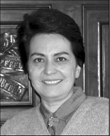
Christine Marie Sierra
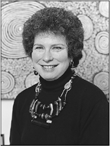
Margaret Levi
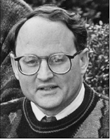
Henry Brady
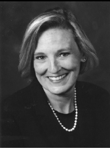
Lisa Anderson

Andrew Aoki
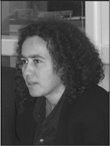
Neta Crawford

James Gibson
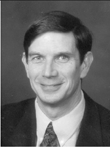
Rogers M. Smith
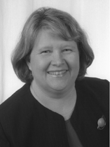
Aili Tripp

David Vogel
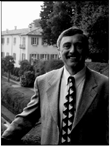
John Aldrich
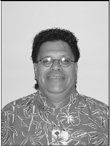
Manuel Avalos
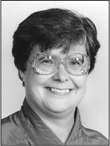
Judith Baer
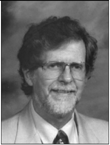
John Harbeson
 You have Access