1. Introduction and background
Sri Lanka is a tropical island located in the Indian Ocean. It is an attractive destination for tourists as it offers a combination of spectacular landscapes, long beaches, rich coral covered sea-beds, high biodiversity and ancient cultural heritages. Tourism is one of the core sources of foreign exchange earnings in the national economy, and statistics reveal that the tourism industry ranked third among foreign exchange earning sectors in 2016 (Sri Lanka Tourism Development Authority, 2016). Tourism in Sri Lanka is multifaceted and ecotourism is one segment that is expected to increase in the future (Daily Mirror, 2017).
Ecotourism includes nature-based recreation and thus will be influenced by climate change (CC), both directly and indirectly (Richardson and Loomis, Reference Richardson and Loomis2004; Richardson et al., Reference Richardson, Loomis and Weiler2006; Scott et al., Reference Scott, Jones and Konopek2007). Increases in temperature, changes in rainfall patterns, and sea-level rise are the direct influences of CC, inducing changes in biodiversity, mangroves, and coral cover (indirect effects). CC alters nature by changing the composition and quality of the ecosystems on which ecotourism depends. These types of climate-induced biophysical changes may in turn affect the visitation behavior of tourists (Scott et al., Reference Scott, Jones and Konopek2007). Hence, climate is a salient feature in tourist decision-making with regard to destination choice, time of travelling, and activity planning at the destination (Scott and Lemieux, Reference Scott and Lemieux2010).
According to predictions of the Intergovernmental Panel on Climate Change (IPCC), the Sri Lankan coastal zone is highly vulnerable to changes in climatic conditions. As a result of CC induced sea-level rise (SLR), important sectors of the economy, such as tourism and fisheries, could be affected (Senaratne et al., Reference Senaratne, Perera and Wickramasinghe2009; Ministry of Environment and Renewable Energy, 2011). In the report ‘National Adaptation Plan for Climate Change Impacts in Sri Lanka’, research studies on tourism and recreation have been identified as one of the prioritized actions to be taken while putting the major focus on nature-based tourism in the coastal zone (Ministry of Mahaweli Development and Environment of Sri Lanka, 2015). However, in spite of its current and growing significance to the national economy (Ministry of Mahaweli Development and Environment of Sri Lanka, 2015), compared to sectors like agriculture and fisheries (Eriyagama et al., Reference Eriyagama, Smakhtin, Chandrapala and Fernando2010; Esham and Garforth, Reference Esham and Garforth2013; Harkes et al., Reference Harkes, Drengstig, Kumara, Jayasinghe and Huxham2015), tourism has received less attention from researchers in the field of CC. Hence, this study can be considered an early attempt to investigate the impacts of CC on ecotourism in Sri Lanka.
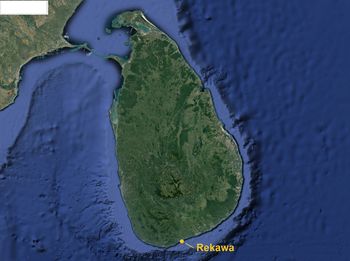
The Sri Lankan southern coastal belt is attractive to tourists due to its scenic natural and cultural landscape. Many types of ecosystems, such as beaches, coral reefs, wetlands and national parks along the Southern coast, contribute to this attraction. Rekawa coastal wetland is a tourism destination located in the Hambantota district of the Southern province, providing opportunities for ecotourism (figure 1). Due to the presence of the Rekawa Lagoon and its surrounding wetland habitat, the area is rich in biodiversity, including mangroves, coral reefs, about 104 bird species, and nesting sites for five species of globally threatened marine turtles (IUCN and CEA, 2006). Currently, the main attraction of this destination is turtle watching. To facilitate the natural egg-laying process of turtles, the Rekawa coastal belt was declared a sea turtle sanctuary by the Department of Wildlife Conservation in 2006.
Location of the study area in Sri Lanka.

There is a potential for increased ecotourism in Rekawa coastal wetland. The Ruhuna Tourism Bureau of Sri Lanka has discussed tourism-related projects with the Rekawa community to develop the ecotourism industry and thus upgrade the living standards of the community. In evaluating a future tourism destination, planners may take potential effects of CC into consideration (de Freitas et al., Reference de Freitas, Scott and McBoyle2008). Analyzing future visitation behavior of tourists under anticipated CC scenarios for Rekawa may serve as input to tourism-related projects in Rekawa, and guide them regarding proactive actions for adapting to CC impacts.
The economic literature on CC impacts on tourism has primarily focused on winter tourism, with a geographical concentration in the European Alps and North America (Becken, Reference Becken2013). Although the geographic diversity of CC impacts and adaptation studies have broadened, it still has a bias towards winter sports tourism and relatively less attention has been paid to coastal tourism (Becken, Reference Becken2013). The contingent behavior method has been employed in a limited number of recreational studies to assess the effect of CC impacts on future visitation behavior of tourists (Richardson and Loomis, Reference Richardson and Loomis2004).
The objective of this study is to investigate the future visitation behavior of both foreign and domestic tourists in light of the anticipated CC impacts on Rekawa coastal wetland in Sri Lanka. In this pursuit we, based on IPCC predictions, develop a Climate Change Induced Environmental Index (CCIEI) for the Rekawa region. The contribution of this paper to the CC literature is threefold. First, this case study provides a regional perspective on potential future visitation behavior of tourists under CC impacts in a coastal wetland in Sri Lanka. Second, it demonstrates how to develop a site-specific CCIEI including both direct and indirect climate variables, based on IPCC scenarios. This is crucial for countries and regions where there is a lack of CC prediction data, as is often the case in developing nations. Third, this study contributes to the existing literature on stated preference techniques in the form of the contingent behavior method in general, while having a special focus on CC impacts on ecotourism in a developing country.
The layout of the paper is as follows. Section 2 explains the methodology, and presents the data and the data collection procedure. Section 3 presents the results. The discussion and conclusions presented in section 4 end the paper.
2. Data and methods
2.1 Developing two IPCC future scenarios for the study site
In developing the CC scenarios, we considered both climatic variables and climate-induced biophysical variables. We chose air temperature, rainfall and sea level rise (SLR) as direct climatic variables as they are on the list of most widely applied direct climatic variables in the CC research, in addition to being relevant to our case studyFootnote 1 (Maunder, Reference Maunder1962; McConnell, Reference McConnell1977; Mieczkowski, Reference Mieczkowski1985; Richardson and Loomis, Reference Richardson and Loomis2004; Whitehead et al., Reference Whitehead, Poulter, Dumas and Bin2009; Becken, Reference Becken2013).
Rainfall and air temperature climatic variables for the Rekawa baseline scenario and future scenarios are taken from the national wetland directory of Sri Lanka and Wijesekara (Reference Wijesekaraundated), respectively. Future temperature and rainfall values for the Rekawa site were adopted from the Hambantota district and maximum values were taken from the HadCM3 (Hadley Centre General Circulation Model- Version 3) model. Attribute levels for SLR for Rekawa were taken from prediction values for Sri Lanka for 2025 and 2050 (UNDP, 2012).
Given the touristic attractions of our study area, we selected three climate-induced biophysical variables: the number of turtle nesting sites, mangrove cover and area of beach inundation. The Rekawa coast in southern Sri Lanka is the prime nesting habitat of turtles in Sri Lanka (IUCN, 2005). The Rekawa beaches provide an ideal environment for turtle nesting (Ganewatta et al., Reference Ganewatta, Samaranayake, Samarakoon, White and Haywood1995) and every year thousands of turtles reach Rekawa beach to lay eggs (Rathnayake, Reference Rathnayake2016). The Rekawa mangroves support ecotourism by providing habitats for local and migratory birds and for many species of mammals and reptiles (Ganewatta et al., Reference Ganewatta, Samaranayake, Samarakoon, White and Haywood1995). The Rekawa lagoon-mangrove ecosystem stretches into a sandy beach, which is approximately 10 km in length (Gunawardena and Rowan, Reference Gunawarden and Rowan2005). Focus group discussions revealed that foreign tourists select Rekawa beach for relaxation due to its serene, beautiful and salubrious nature. While changes in direct climatic variables are already adopted for Rekawa based on prediction values for Sri Lanka, data do not exist for the climate-induced biophysical variables. Hence, we constructed estimates for the climate-induced biophysical variables in the two scenarios. We did this by taking into consideration the impact of SLR. First, we applied a standard survey and levelling technique to measure the present beach elevation. Next, using predicted levels of SLR for Rekawa, we predicted beach inundation for the two scenarios using Geographical Information System ArcView software. These predictions were made assuming that the current beach profile and topography would not change.
Finally, nesting site locations were marked using Global Positioning System. At the time of the preliminary investigation, we found 342 turtle nesting sites along the Rekawa coastal belt. Superimposing Google Earth satellite maps for the Rekawa coastal belt for several years, 55 nesting sites were identified as vulnerable to sea-wave actions. Based on this, a direct potential risk factor was developed, i.e., 16.08 per cent. Then, the indirect risk of losing turtle nesting sites was adopted from predictions based on beach inundation, i.e., 13 and 17 per cent for 2025 and 2050 respectively. Total potential risk of losing nesting sites for 2025 and 2050 was found to be 29 per cent and 33 per cent respectively, by summing up both direct and indirect risks. Hence, of a total of 342 nesting sites, there is a potential risk of losing approximately 100 and 113 nesting sites along Rekawa beach, leaving 242 and 229 sites for 2025 and 2050 respectively. From the pre-testing of the survey, we learned that respondents preferred round numbers. Thus, we rounded these numbers in a subjective manner, with the intention of making a clear difference in changing nesting sites in two scenarios. The number of nesting sites in 2025 and 2050 are rounded up to 250 and rounded down to 200 respectively, considering the adverse CC effects in the long term compared to the short term.
Changes in mangrove cover in Rekawa were predicted by adapting the mixed mangrove area reduction rate worked out by Jayatissa et al. (Reference Jayatissa, Guero, Hettiarachchi and Koedam2002) for the nearby Kalametiya Lagoon. It is reasonable to assume that this mangrove reduction is merely due to CCs, as felling mangrove trees around the lagoon is prohibited.
2.2 Developing a climate change induced environmental index
Climate change may have profound implications for tourists' visitation behavior due to the potential effects on comfort level. For example, CC may increase the average air temperature to a level above what most people perceive as comfortable. In order to capture the multidimensional nature of CC effects on human comfort level, changes in visitation behavior may be derived using a climate index, which is based on existing scenarios of CC (Rosselló-Nadal, Reference Rosselló-Nadal2014). Mieczkowski (Reference Mieczkowski1985) was one of the pioneers in the development of a climate index for tourism.
The development of Mieczkowski's Tourism Climate Index (TCI) originally encompassed twelve climatic variables, but five variables were omitted due to lack of meteorological data for some developing countries. The remaining seven variables – maximum daily temperature, mean daily temperature, minimum daily relative humidity, daily relative humidity, precipitation, daily duration of sunshine and wind speed – were used to create sub-indices of thermal comfort, daytime comfort, and daily comfort. These variables were allocated weights assuming their relative importance for tourists' wellbeing, to formulate the TCI. A common criticism of the existing climate indices for tourism, including Mieczkowski's TCI, is that assigning weights to various climate factors within the index is based on the researcher's subjective opinion and are not tested empirically against the preferences of tourists (de Freitas, Reference de Freitas2003; Gómez-Martin, Reference Gómez-Martín2006).
Mieczkowski's TCI was originally designed to evaluate the global climate with respect to tourism, but not to assess impacts on tourism from CC. However, it was later used to evaluate the attraction of tourism destinations under anticipated CC scenarios (Rosselló-Nadal, Reference Rosselló-Nadal2014). Morgan et al. (Reference Morgan, Gatell, Junyent, Micallef, Özhan and Williams2000) used Mieczkowski's TCI with a slight modification, to use it in a beach environment. Studies using the TCI to evaluate the attraction of tourism destinations under anticipated CC scenarios have been made for Europe (Moreno and Amelung, Reference Moreno and Amelung2009), North America (Scott et al., Reference Scott, McBoyle and Schwartzentruber2004), and some Mediterranean countries (Amelung and Viner, Reference Amelung and Viner2006).
So far, climate indices applied in tourism studies have been based solely on direct climatic variables. We propose an extension to capture both direct climatic and climate-induced biophysical variables. A main reason for using such a CCIEI in our study is the presence of strong correlations between climatic and climate-induced variables in the econometric model. By converting climatic and climate-induced variables into a common CC index in a systematic way, we avoid such correlations. The climatic and climate-induced variables were converted into the CCIEI by using weights given by participants in focus groups when asked which factors were more or less important when deciding to visit Rekawa.
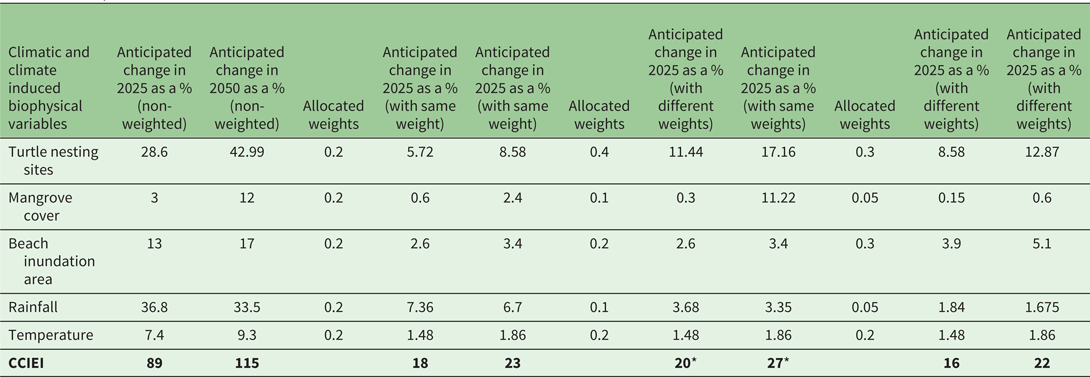
In composing the CCIEI, we excluded the SLR variable, as this variable was used to estimate the indirect variables ‘changes in turtles’ nesting sites’ and ‘beach inundation’. For the remaining five direct and indirect climatic variables, we estimated the percentage change from the present situation to the scenario level. As all changes were of the same sign, i.e., a deterioration, we added up these changes to give a composite CC index. In order to test for the robustness of the CCIEI as a predictor of visitation behavior, we made various assumptions about the weights of each variable when constructing the CCIEI. First, we calculated the CCIEI without using weights, and next we calculated the CCIEI allocating equal weights (0.2) to each variable. These calculations were repeated allocating various weights to the variables. The weights were based on results from focus group interviews with tourists and expert opinion, but are ultimately subjective, as was also the case in Mieczkowski (Reference Mieczkowski1985). As focus groups revealed that foreign tourists especially come to Rekawa mainly for turtle watching, with beach recreation as the second most important activity, we allocated the highest weight to the turtle nesting site variable. We allocated the second highest weight to the air temperature and beach inundation variables. The remaining variables were allocated equal weights. Table 1 yields information of the CCIEI number for the various weight allocations.Footnote 2
Development of CCIEI

*Value used for CCIEI in data analysis.
2.3 Contingent behavior method
The contingent behavior method (CBM) is a survey-based methodology involving the construction of hypothetical changes in the environment and asking respondents about their intended behavior contingent on such changes. CBM has been used in valuing environmental resources for recreational purposes (Chase et al., Reference Chase, Lee, Schulze and Anderson1998; Eiswerth et al., Reference Eiswerth, Englin, Fadali and Shaw2000; Richardson and Loomis, Reference Richardson and Loomis2004; Richardson et al., Reference Richardson, Loomis and Weiler2006; Scott et al., Reference Scott, Jones and Konopek2007). Still, there is a growing demand for estimation of changes in consumer welfare from recreation due to changing environmental quality or management of natural resources (Grijalva et al., Reference Grijalva, Berrens, Bohara and Shaw2002). The seminal paper of Loomis (Reference Loomis1993) verified the reliability of CBM by implementing a test-retest procedure. Grijalva et al. (Reference Grijalva, Berrens, Bohara and Shaw2002) also tested the validity of CBM for outdoor rock-climbing demand and suggested that when a future project has implications beyond current and historical range, CBM data may be a useful supplement to revealed preferences data.
Two types of format have been used in CBM studies: reassessed contingent behavior and intended contingent behavior. When the reassessed contingent behavior format is used, respondents are asked to reassess their visitation behavior: that is, how they would have behaved in the past (i.e., number of visits they would have made) had hypothetical changes taken place (Simões et al., Reference Simões, Barata and Cruz2013). In the intended contingent behavior format, respondents are requested to indicate their intended future visitation behavior for proposed hypothetical changes. In this format, instead of reassessing their former behavior, respondents are asked to predict how they will behave under future proposed conditions (Christie et al., Reference Christie, Hanley and Hynes2007). According to Simões et al. (Reference Simões, Barata and Cruz2013), these two formats vary in terms of reference period considered for the contingent behavior question. In this study, the intended contingent visitation behavior format is used for two reasons. First, during the preliminary investigations we found that a majority of the foreign tourists are visiting this destination for the first time in their life, and thus it is difficult for them to reassess how they would have behaved regarding previous visits. Second, CC scenarios are predictions into the future, which in turn demands the use of forward-looking survey methods. We developed two climate scenarios and asked respondents whether the changes described by the scenarios would increase, decrease or not change their future visitation to Rekawa.
2.4 Data collection
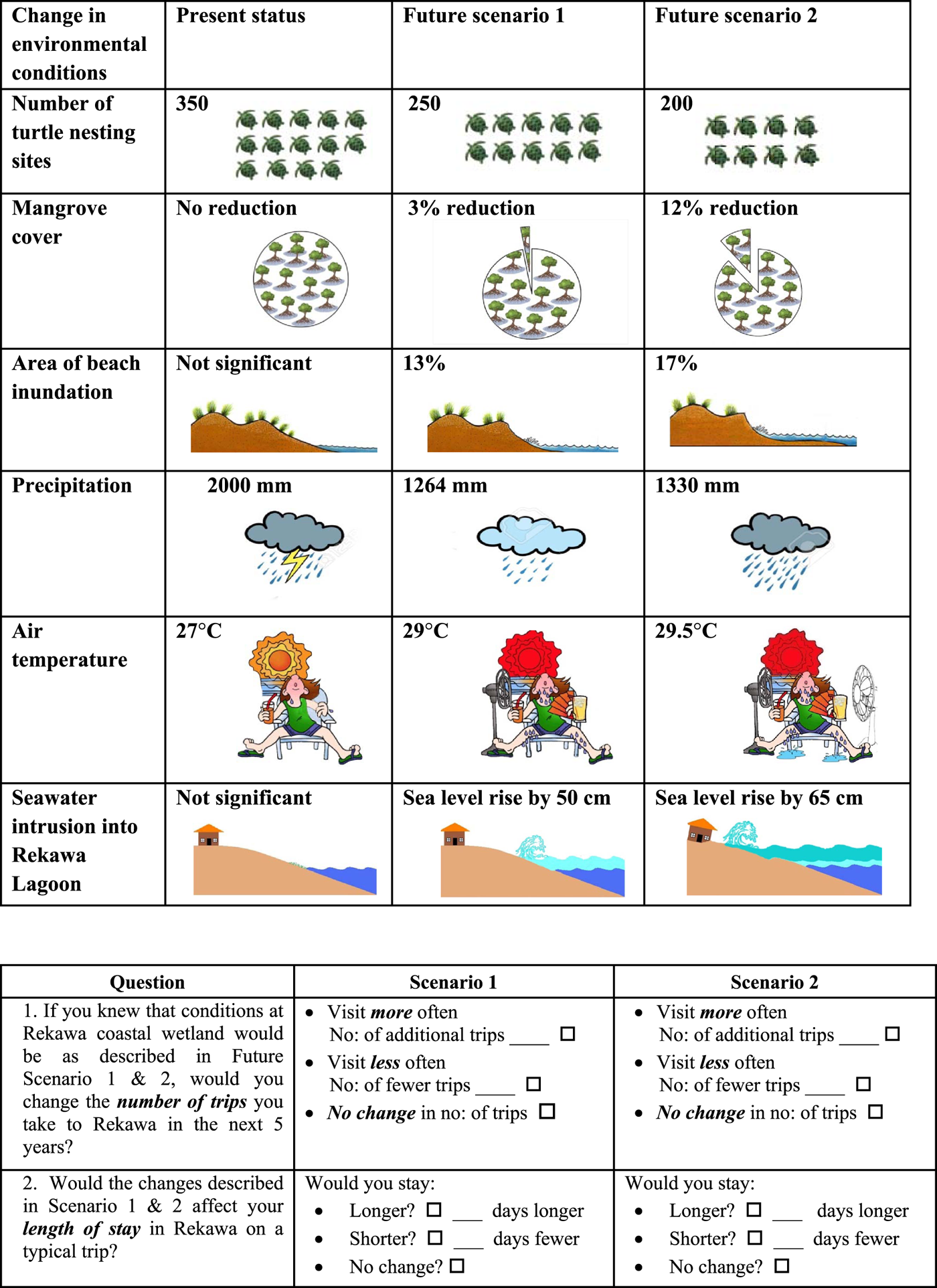
Using two future climate scenarios, one based on IPCC predicted values for Sri Lanka for the year 2025 and one for the year 2050, we designed a survey asking people to answer a hypothetical question about destination visitation in the future under the two scenarios. Figure 2 shows how the scenarios were presented and the framing of the future visitation question.
Choice card and contingent visitation question as used in the survey.

The timeframe of the scenarios was not explicitly mentioned as it may extend beyond the life span of many tourists to be interviewed. In addition, the survey encompassed demographic questions and questions on their concern about CC when selecting a destination and personal view on CC and its consequences for Rekawa.
The survey was pre-tested with tourists, tour guides and Rekawa community inhabitants, including staff members of a turtle conservation project. Based on their comments, modifications were made. The final survey was translated into the local language Sinhala, to be used for domestic tourists, whereas an English version of the survey was used for foreign tourists. We trained a team of five Sri Lankan graduate students in data collection. The training included how to approach potential respondents, briefly explain the objectives of the study and obtain their consent to participate. Face-to-face field interviews were made during December 2016 – February 2017, covering one of the peak seasons of tourists to this site. Weekends were selected for domestic tourists, while weekdays were used to reach foreign tourists.
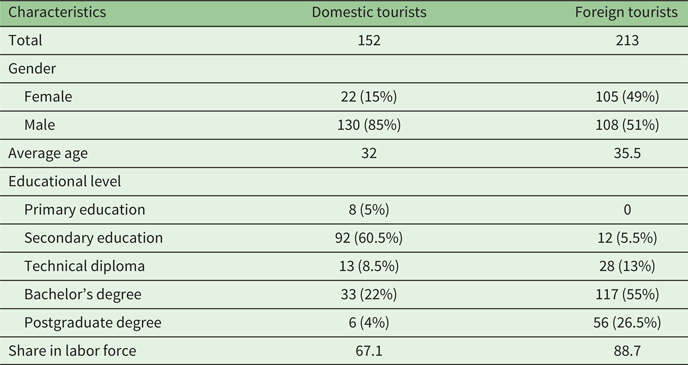
Every second tourist or tourist group at each chosen sampling site was randomly selected for the interview. After the introduction, the respondent received the survey, and the future climate scenarios for Rekawa coastal wetland were explained. Next, the respondents were asked to answer the contingent visitation behavior question. Preliminary investigations revealed that this destination is visited once in a lifetime or every few years by the tourists, especially foreign tourists. Therefore, the contingent visitation behavior question was asked for a period of 5 years instead of number of annual trips. The data collection resulted in 365 completed questionnaires for data analysis, including 213 foreign and 152 domestic tourists. A summary of descriptive statistics for the respondents is provided in table 2. As can be seen, there are distinct differences in socio-demographic characteristics of domestic and foreign tourists. Each respondent answered two contingent visitation behavior questions, and thus the number of observations is 730.
Descriptive statistics for respondents divided on domestic (Sri Lankan) and foreign tourists

2.5 Two-stage regression using instrumental variables
The fact that domestic and foreign tourists differ when it comes to socio-demographic characteristics complicates the statistical analysis of relevant explanatory variables for change in visitation behavior under CC. Using both tourist type and other socio-demographic characteristics as predictors will cause problems in the form of multicollinearity, while excluding either tourist type or the socio-demographic characteristics will cause correlation between remaining predictors and the error term (Angrist and Krueger, Reference Angrist and Krueger2001). One method to solve for these problems simultaneously is to use instrumental variable estimation, which is one type of a two-stage regression procedure (Angrist and Krueger, Reference Angrist and Krueger2001). Applying the instrumental variable technique, the predictors possibly correlated with the error term must have at least one, but can have more, instrument. We use tourist type as a predictor, along with the CCIEI and attitudes toward climate change impacts (CCimp). The latter is strongly correlated with tourist type because a large share of foreign tourists answer ‘don't know’ to the question of whether CC impacts are visible at Rekawa. Eliminating the ‘don't know’ answers, foreign and domestic tourists are relatively similar when it comes to attitudes toward CCimps at Rekawa. Hence, in a reduced model, eliminating the ‘don't know’ answers, we use CCimp as a predictor.
The model we apply is thus the following:

where ASCi, i = 1, 2 are alternative-specific constants, $\varepsilon$ and ∈ are error terms respectively, and ${b_1} - {b_3}$
 are parameters to be estimated. Subscript i is a running index for the respondent and subscript j, $j\in 1,2$
 , indicates the scenario (scenario 1 or 2). The CCIEI is the CC environmental index, as explained above. The predictor CCimp is a measure of how respondents perceive CC effects in Rekawa. It takes the value 0 if the respondent indicates (s)he doesn't know, the value 1 if the respondent doesn't think CC takes place in Rekawa, the value 2 if the respondent thinks CC takes place in Rekawa but that it is not visible, and the value 3 if the respondent thinks that CC takes place in Rekawa and that it is visible. The tourist type variable (TT) takes the value 1 for foreign tourists and 0 for domestic tourists.
To determine the effects of socio-demographic characteristics on changes in visitation behavior, which works through the tourist type variable, we estimate the following model:

The gender variable takes the value 1 if the respondent is a woman and 0 if a man. Education level of the respondent is coded as 1 for no formal education, 2 for primary education, 3 for secondary education, 4 for technical diploma, 5 for bachelor's degree, and 6 for postgraduate degree. The occupation variable takes the value 1 if the respondent has paid work and 0 if not. Only age is a numeric variable indicating the actual age of the respondent in number of years. The rest are categorical and binary (dummy) variables. ASC2 is an alternative specific constant, and ${\beta _1} - {\beta _4}$ are coefficients to be estimated.
3. Results
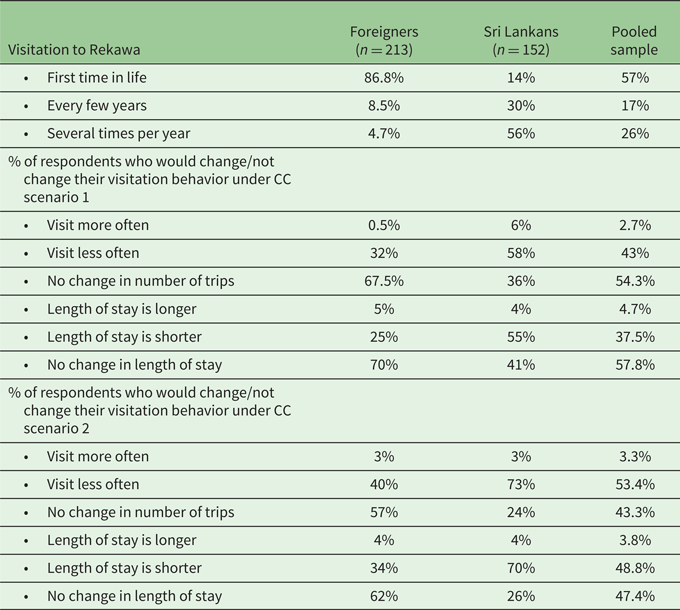
Just as with the socio-demographic characteristics, foreign and domestic tourists differ substantially regarding their actual and intended visitation to Rekawa. This is shown in table 3. Not surprisingly, the majority of the foreign tourists visit Rekawa for the first time, while most domestic tourists visit more regularly. Although most tourists, independent of type, selected Rekawa purposely, only 4 (2 per cent) of foreign tourists selected Rekawa as the ‘sole destination’ or ‘primary purpose’ of their trip. The corresponding number for domestic tourists was 83 (55 per cent). A majority of the tourists came to Rekawa for turtle watching (data not shown in table 3).
Current visitation and hypothetical visitation behavior of foreign and domestic tourists under climate change scenarios

Regarding intended future visitation, the number of trips to Rekawa in the short-term and long-term CC scenarios is reduced by 43 and 53 per cent, respectively, for the pooled sample. The Wilcoxon signed-rank test shows no statistically significant difference between short-term and long-term visitation behavior (p-value = 0.99, (pseudo) median = −0.5000644). Hence, in the remainder of this section we do not distinguish between short- and long-term visitation behavior. Also, for intended future trips the two tourist types differ. While two-thirds of the foreign tourists will not change their visitation behavior, this is the case only for one-third of the domestic tourists. Almost 60 per cent of the domestic tourists will reduce their visitation under CC, whereas only one-third of the foreign tourists will do so.
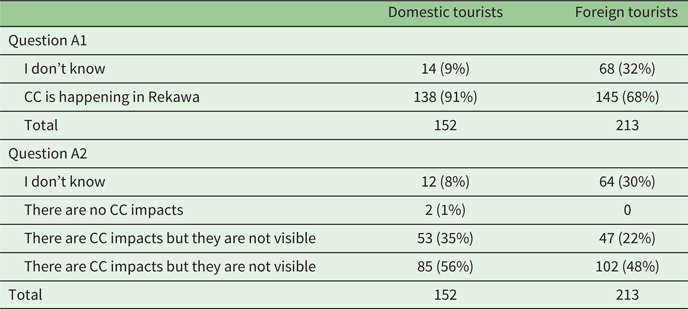
When it comes to beliefs and attitudes regarding CC and its impacts at Rekawa, the two tourist types also differ. Table 4 shows the results for the two attitudinal questions ‘Do you believe that CC is happening in Rekawa?’ (A1), and ‘Are impacts of CC visible in Rekawa?’ (A2).
Results for attitudinal questions A1: ‘Do you believe that climate change is happening in Rekawa?’ and A2: ‘Are impacts of climate change visible in Rekawa?’

The most distinct difference between domestic and foreign tourists is that foreign tourists to a far larger degree ‘do not know’ whether CC takes place and/or is visible in Rekawa. While 32 per cent of foreign tourists do not know whether CC is happening in Rekawa and 30 per cent do not know whether there are (visible) CC impacts, less than 10 per cent of domestic tourists feel the same. However, if we correct for those who do not know, the number of domestic and foreign tourists who think that CC takes place in Rekawa, visibly or not, are relatively equal.
Starting out with a model including both tourist type and socio-demographics, in addition to the CC environmental index and attitudinal variable, this model demonstrated a high degree of multicollinearity. The Farrar–χ 2 test, with a test statistic equal to 1,884.4, identified multicollinearity in the set of predictors, and further investigation confirmed that all socio-demographic and attitudinal predictors, but not the CC environmental index, may be non-significant in a regression model with change in the number of visits as the dependent variable due to multicollinearity problems. If we remove the ‘do not know’ answers from the attitudinal variable, this variable no longer causes multicollinearity and thus can be used as predictors in a model with change in number of visits as the dependent variable.
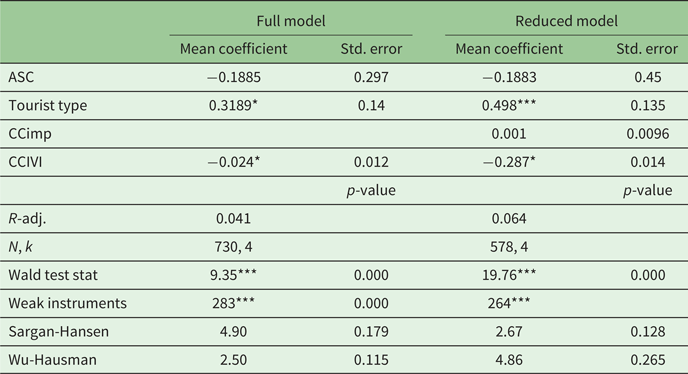
Explaining the change in intended future visitation (dependent variable) by the CC environmental index, attitudes to CC impacts at Rekawa, and tourist type, where for the latter we use socio-demographic characteristics (gender, age, education and participation in labor force) as instruments, yields the results shown in table 5. The full model applies all responses from the 365 respondents, while the reduced model applies responses only from those respondents who have given an answer different from ‘do not know’ to the attitudinal question (A2). Both models are solved by the instrumental variable maximum likelihood method, in R-Studio, specified in package AER.
Change in number of visits explained by tourist type, change in climatic conditions (CCIVI) and respondents' attitudes to CC visibility (CCimp-only reduced model), using gender, age, education and participation in labor force as instruments for tourist type

* = significant at 10% level, *** = significant at 1% level.
Tourist type and the CCIEI explain changes in visitation behavior while beliefs about whether CC takes place and is visible in Rekawa does not. Note also that the ASC is insignificant, indicating that error terms are on average zero, and thus that there is no systematic influence on the dependent variable lacking in the model. The sign of the CCIEI indicates that higher index numbers yield lower numbers for intended change, and as the dependent variable runs from −10, indicating a reduction of 10 trips, to +5, indicating an increase of 5 trips, the negative sign means that more severe CC effects (higher CCIEI) lead to larger reductions in intended future visits. The tourist type variable takes the value 1 for a foreign tourist and 0 for a domestic tourist. Hence, the sign for tourist type indicates that tourists with characteristics more like a foreign tourist are more inclined either not to change intended future visits (dependent variable 0) or to increase them (dependent variable positive) compared to domestic tourists. Finally, the attitudinal variable takes higher positive values the more CC effects the respondent believes there are in general, and at Rekawa. Hence, the negative sign indicates that respondents who believe there are severe effects from CC are more likely to reduce their intended future visits.
Furthermore, the hypothesis of weak instruments is rejected, indicating that the instruments, i.e., gender, age, education and being in the labor force, are strong instruments for the tourist type variable. The two other tests, Sargan-Hansen and Wu-Hausman, both indicate that the null hypothesis cannot be rejected. For the Sargan-Hansen test this indicates that the instruments are uncorrelated with the error terms in the regression model. For the Wu-Hausman test it indicates that there is no correlation between any of the predictors and the error terms.
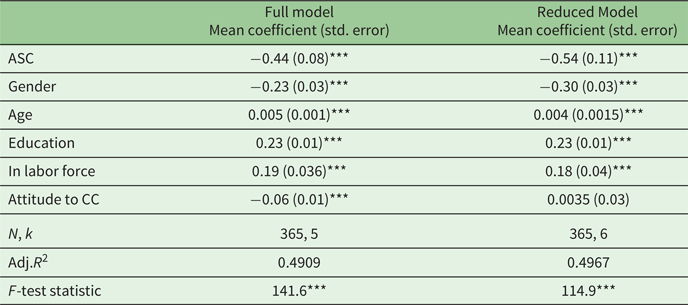
To fully understand the effect of the instruments, i.e., the socio-demographic characteristics, on intended future visitation under the CC scenarios, we run the model in equation (2), first on the full dataset and next on the reduced dataset. The model is estimated by the maximum likelihood method with R Studio software. Table 6 presents the results of this model.
The probability of being a foreign tourist as dependent of gender, age, education, being in the labor force and attitudes towards climate change

*** = significant at 1% level.
All socio-demographics are significantly correlated with tourist type, but when we remove those tourists who say ‘do not know’ when asked about CC and visibility in Rekawa, there is no difference between domestic and foreign tourists.
Combining the results from tables 5 and 6 shows that foreign tourists are more likely to be female and foreign tourists are less likely to change or reduce intended future visits, and female tourists are less likely to change or reduce future visitation than are male tourists as a consequence of CC impacts. Applying the same logic for the other socio-demographic characteristics shows that older people, more educated people, and people in the labor force, all increasing the likelihood of being a foreign tourist, increases the probability that the tourist will not change or increase the future number of visits. Hence, domestic tourists, who are more males than females, younger, less educated, and with lower participation in the labor force, are more likely to reduce their future visitation to Rekawa in the presence of the two CC scenarios.
4. Discussion and conclusions
This study investigates the potential impacts of CC on ecotourism at Rekawa coastal wetland in southern Sri Lanka. Two CC scenarios were developed for the short term (2025) and the long term (2050), encompassing three direct climatic variables (temperature, rainfall, and sea level rise based on IPCC predictions) and three climate-induced biophysical variables (number of turtle nests, mangrove cover and beach inundation). Due to strong interdependencies among the climatic and climate-induced variables, we could not estimate marginal utilities for each of these variables. Instead, we constructed a CC environmental index. Richardson and Loomis (Reference Richardson and Loomis2004) probably faced a similar problem, as they used only three out of 12 climatic and climate-induced variables displayed in the contingent visitation survey as explanatory variables in their regression model. Scott et al. (Reference Scott, Jones and Konopek2007) used the same type of model as Richardson and Loomis (Reference Richardson and Loomis2004) in assessing intended behavior of tourists visiting mountain regions in the western USA under CC forecasting scenarios towards the end of the 21st century, but did not differentiate between direct and indirect climatic variables.
Survey respondents were asked to state their intended change in visitation to Rekawa under the two CC scenarios. In the short-term scenario, a majority of the respondents, 54 per cent, would not change their visitation to Rekawa, whereas 43 per cent would. In the long-run scenario, these numbers were reversed: 43 per cent would not change their visitation behavior whereas 53 per cent would. This is as expected because the climate-induced variables were more adverse in the long run compared to the short run.
The model results show that the environmental index, being a proxy for the CC scenarios, significantly and negatively affects tourists' intended visitation behavior. Although this is bad news for the tourism industry in Sri Lanka, it is not unexpected. The CC scenarios predict higher maximum temperature, from 27°C today to 29°C and 29.5°C in the two scenarios. They also predict less precipitation and higher sea level, the latter leading to a lower number of turtle nests and more beach inundation. Finally, they predict less mangrove cover. The three climate-induced variables – number of turtle nests, mangrove cover and beach inundation – are all shown to contribute to tourists' welfare (Fish et al., Reference Fish, Côté, Gill, Jones, Renshoff and Watkinson2005; Uddin et al., Reference Uddin Md, de Ruyter van Steveninck, Stuip and Shah2013; Sommerville, Reference Sommerville2016), and they are all changed in a detrimental way in both CC scenarios.
At first glance, model results indicate that domestic tourists are more inclined to reduce visitation behavior under CC than are foreign tourists. However, as the two groups differ substantially with respect to socio-demographic characteristics and attitudes towards CC impacts at Rekawa, these effects are not straightforward. We applied a two-stage estimation procedure, where socio-demographic characteristics were used as instrumental variables for tourist type, which in turn was used as a predictor for change in number of visits together with the CC environmental index and attitudes towards CC at Rekawa, This showed that the socio-demographic characteristics only work through tourist type in their effect on visitation behavior. Furthermore, when corrected for those answering ‘do not know’, the attitudinal variable does not distinguish between domestic and foreign tourists, nor does it explain changes in visitation behavior. A separate regression of tourist type on the socio-demographic characteristics shows that foreign tourists tend to be older, better educated, more likely to be in the labor force, and more likely to be female. Indirectly, this tells us that women, older people, better educated people, and people in the labor force are less likely to reduce future visits to Rekawa, contingent on the CC scenarios presented in the survey.
These results are not unexpected. When it comes to domestic tourists, the younger may be less dedicated to one specific place than older people, for example because they have not yet developed a preference for one particular place like Rekawa, and thus are more likely to substitute Rekawa for alternative destinations (Vigolo, Reference Vigolo2017). Foreign tourists are less likely to change their visitation behavior, which may be due to the fact that for these tourists a visit to Rekawa is a once-in-a-lifetime experience, so climatic and climate-induced variables are not so important (Hamilton et al., Reference Hamilton, Maddison and Tol2005).
This paper provides some insights into the development of a CCIEI for site-specific case studies. However, we acknowledge that there is a subjective element in developing a CCIEI for Rekawa wetland. The problem of weighting the importance of the variables included in the CCIEI is stated by, for example, Maunder (Reference Maunder1962: 5): ‘Unfortunately, in deciding both what to include, and how important the elements are in relation to the total climate, one is forced to rely primarily on personal experience and observations for there is no measurable basis for deciding such issues. Nevertheless, some choice of the elements, and some weighting of the elements chosen must be decided upon, even though it is realized that there will be many who will disagree’. Still, we believe that our efforts in this paper are an early attempt to develop a site-specific CCIEI for tourism, and that further research is needed to test both the formulation of such CCIEIs and their robustness in explaining how the CC index may affect visitation behavior for tourists.
Although our results indicate that future visitation to Rekawa will decrease, the survey results should be interpreted with caution. Because of greater uncertainties in CC projections, there is a greater uncertainty in developed CC scenarios (IPCC, 2001). Also, tourists' preferences when selecting a destination evolve over time, and typically follow global trends (Nordin, Reference Nordin2005).
The CCIEI was found to be a significant determinant of tourists' intended visitation behavior. As Rekawa beach is famous among tourists for turtle watching, in addition to beach recreation and enjoying biodiversity in mangrove ecosystems, the findings of this study provide important insights to the Rekawa community and authorities to take proactive measures to protect this coastal wetland from CC impacts. Taking actions to minimize beach erosion, increase mangrove protection, and maintain the land next to the turtle-nesting beach without construction of any buildings are proposed as some of the adaptation strategies to minimize the CC impacts. If adaptation measures are not taken to reduce CC impacts, Rekawa coastal wetland is at risk for two reasons. First, because this will reduce the number of tourists visiting the beach and, second, because fewer tourists means less income, which in turn is used to take adaptive measures.
Acknowledgements
The first author wishes to thank the University of Ruhuna, Sri Lanka for selecting her as the candidate from Sri Lanka for the PhD position at UiT-The Arctic University of Norway. The Norad NORHED CC Project (SRV/13/0010) is acknowledged for funding this research. We wish to thank Mr. Pushpitha Palliyaguru and Mr. Sameeth Warnasuriya, Lecturers attached to the Faculty of Fisheries and Ocean Science of Ocean University of Sri Lanka for survey and levelling and GIS mapping of Rekawa beach respectively. We appreciate the data collection support given by the students of Ocean University of Sri Lanka attached to the Faculty of Fisheries and Ocean Science. We would like to thank Professor Claire Armstrong from UiT-The Arctic University of Norway for providing feedback for improving the paper. Anonymous reviewers are acknowledged for useful comments to improve the paper.