The family Caryophylliidae Gray, 1847 (Cnidaria: Scleractinia), has almost 300 species in 42 genera (Cairns, Reference Cairns1999); these corals occur in all world oceans and at depths from less than 10 m to over 5000 m (Cairns, Reference Cairns2004). In this paper we report the finding of three species of this family from the southern California abyssal plain (off San Diego, California, USA) and in the Galápagos Islands, Ecuador, all of which represents new distribution records.
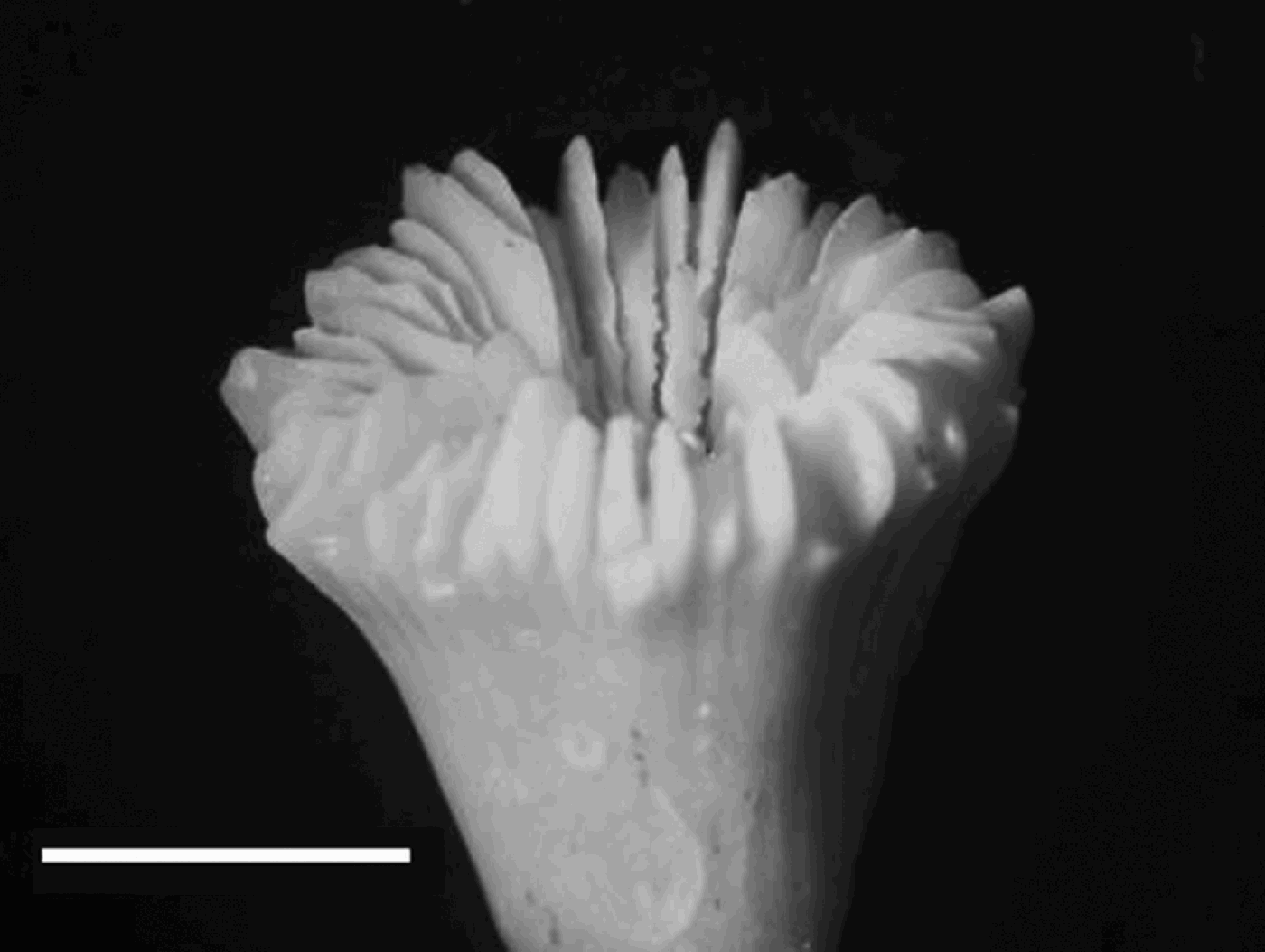
Two colonies of the coral Caryophyllia diomedeae Marenzeller, 1904 (Figure 1) were collected in February 2006 by the ROV ‘Tiburon’ of the Monterey Bay Aquarium Research Institute (MBARI) off California, at San Marcos Seamount (32.637923°N 121.505619°W; Station T669, samples A13 and A14) in a depth of 2133 m. This is a cosmopolitan species present in the Mediterranean, the north-east Atlantic, Australia, New Zealand, and around Antarctica, at depths from 35–2500 m (Zibrowius, Reference Zibrowius1980; Cairns, Reference Cairns1982, Reference Cairns1995, Reference Cairns2004). In the eastern Pacific, C. diomedeae previously has been reported from the following localities: Panamá, Costa Rica (Cocos Island), Ecuador (Galápagos Islands) at 245–1043 m (Cairns, Reference Cairns1991), Chile at 1760 m (Cairns et al., Reference Cairns, Haussermann and Försterra2005), and México (at Los Angeles Bay, northern Gulf of California) at 396–612 m, and 2034–2086 m (south of Ensenada, western Baja California; Parker, Reference Parker1963; Reyes-Bonilla & Cruz-Piñón, Reference Reyes-Bonilla and Cruz-Piñón2000; Reyes-Bonilla et al., Reference Reyes-Bonilla, Calderón-Aguilera, Cruz-Piñón, Medina-Rosas, López-Pérez, Herrero-Perezrul, Leyte-Morales, Cupul-Magaña and Carriquiry-Beltran2005, Reference Reyes-Bonilla, González-Romero, Cruz-Piñón, Calderón-Aguilera, Danemann and Excurra2008). The record from the San Marcos Seamount is the first of the presence of this species in the United States, as well as a new depth record off the western coast of the Americas.
Caryophyllia diomedeae (MBARI T669-A14). Scale bar: 5 mm.

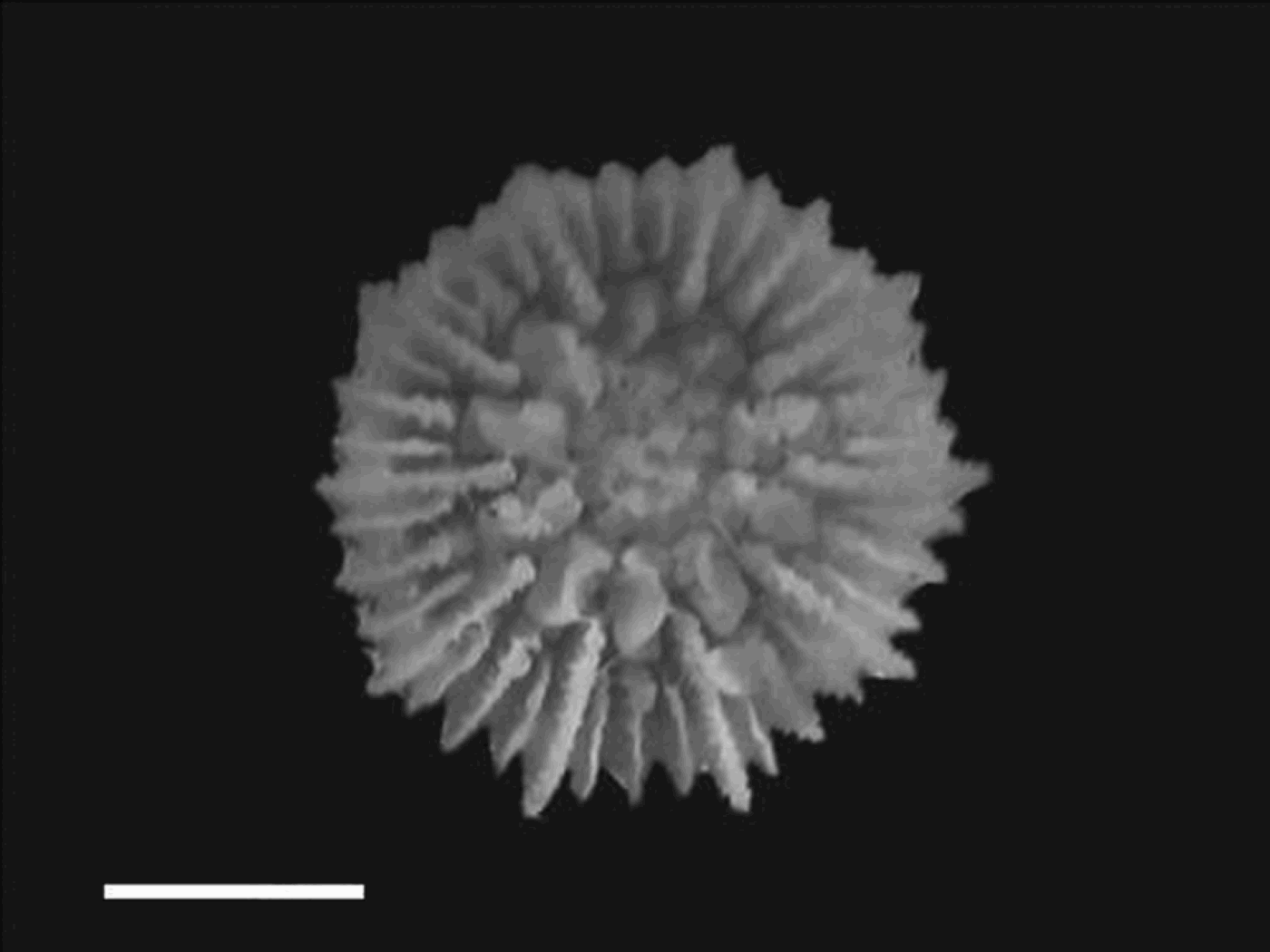
During the same ROV ‘Tiburon’ expedition, the abyssal species Caryophyllia quadragenaria, Alcock, 1902 (Figure 2) was found on San Juan Seamount (33.133973°N 120.900608°W; Station T664, sample R28), at a depth of 1669, and in Rodriguez Seamount (33.991677°N 121.116952°W; Station T670, sample, R21), at a depth of 986 m. This is the second documentation of this coral in the eastern Pacific, following that of Cairns et al. (Reference Cairns, Haussermann and Försterra2005) from Chile at 705–730 m depth, and extends the bathymetric and latitudinal range of the species about 1000 m and 65 latitude degrees in this region. Worldwide, C. quadragenaria is known from the western Pacific (Japan, Korea, Indonesia, Western Australia and New Zealand) at depths of 54–430 m (Cairns, Reference Cairns1995, Reference Cairns1998, Reference Cairns2004).
Caryophyllia quadragenaria (MBARI T664-R28). Scale bar: 2 mm.

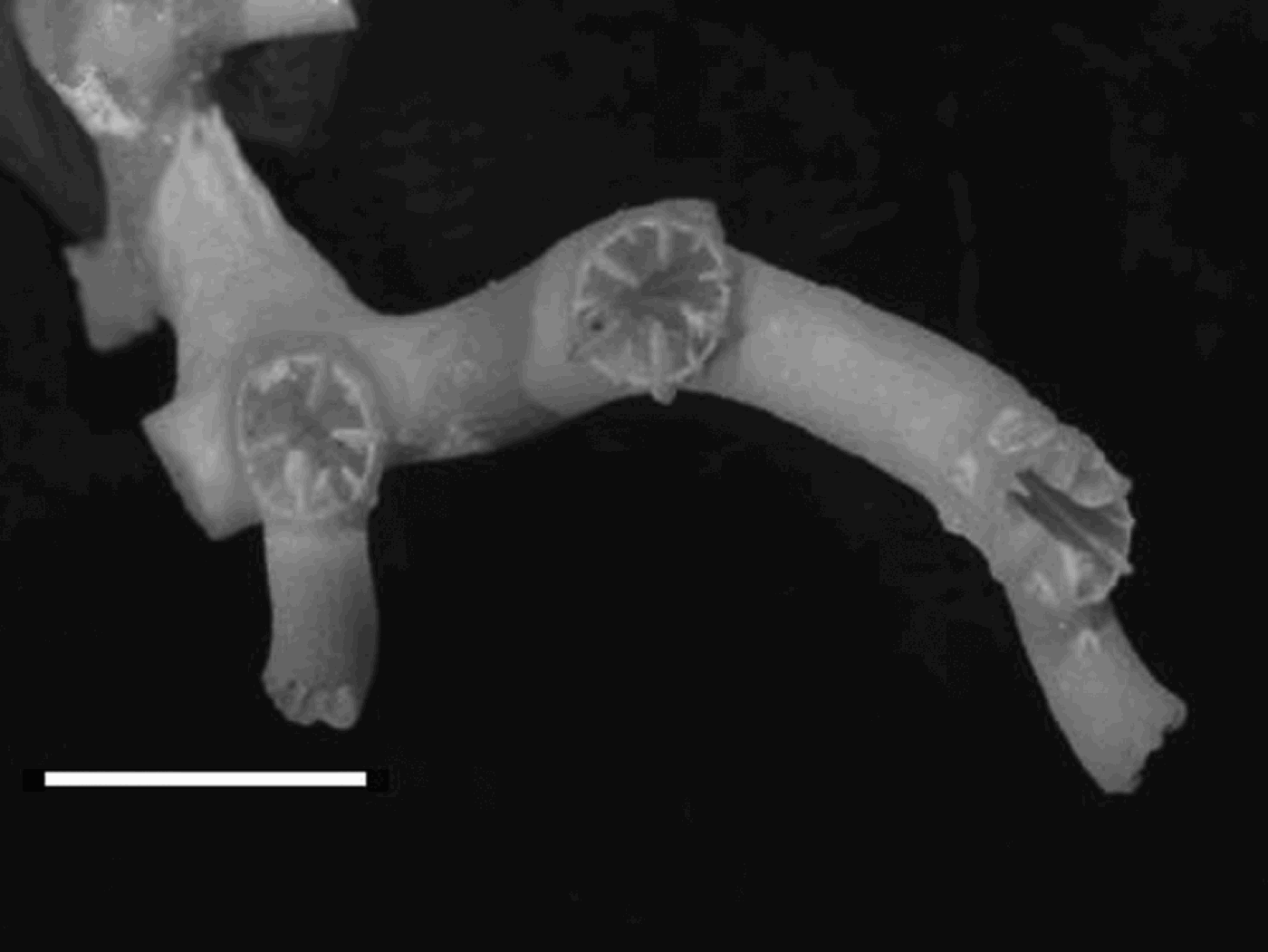
Finally, the unusual coral Goniocorella dumosa Alcock, 1902 (Figure 3), was collected at Pinta Island, Galápagos, Ecuador (0°34′N 90°34′W), at 268 m, by the Johnson Sea Link research submersible on 19 October 1995 (JSL19-X-95, samples 3–9). The colony is deposited in the collection of the Department of Invertebrate Zoology at the National Museum of Natural History, Smithsonian Institution, Washington (USNM 98446). This species builds deep-water bioherms and it was considered exclusive to the Indian Ocean and western Pacific as is reported only from Japan, Korea, New Zealand and South Africa, at depths of 88–1488 m (Cairns, Reference Cairns1995); however, Cairns (Reference Cairns1999) and Reyes-Bonilla (Reference Reyes-Bonilla2002) included G. dumosa in their eastern Pacific listings of scleractinian corals, although no detailed information on distribution was given. With this addition to the eastern Pacific azooxanthellate coral fauna, the total number of known species is increased to 97 (Reyes-Bonilla, Reference Reyes-Bonilla2002; Cairns et al., Reference Cairns, Haussermann and Försterra2005).
Goniocorella dumosa (USNM 98446). Scale bar: 8 mm.

ACKNOWLEDGEMENTS
The visit to the Smithsonian Institution by the first and second authors was supported by Comisión Nacional para el Conocimiento y Uso de la Biodiversidad of México, grant DK006 (to HRB). We thank Lonnie Lundsten (MBARI) for loan of the specimens of Caryophyllia spp., and information on their reference numbers.