

In the summer of 1974, at a picnic with friends, Doris Janzen Longacre was worrying, like many Americans at the time, about the “world food crisis.” As the picnickers wondered aloud what could be done, someone suggested that “[m]aybe it was time for a new Mennonite cookbook.”Footnote 1 The idea caught Longacre's ear, and, by September, she had submitted proposals to her denomination's relief and development agency, the Mennonite Central Committee (MCC), and its publishing house, Herald Press, to help her bring the new cookbook to fruition. A year and a half later, she published More-with-Less, which brought together more than five hundred recipes, drawn from international cuisine and traditional Mennonite cooking. Recipes for African groundnut stew and Indian curry, submitted by MCC workers living around the world, appeared alongside Old Order Mennonite fare like scrapple and ruggenbrot. A single page featured recipes from missionaries in Zambia and Brazil next to a mashed potato recipe known to fill “hungry Pennsylvania Dutch stomachs.”Footnote 2
At face value, the eclectic mix of recipes could seem random, but Longacre drew them together toward a single end: to “provide every North American household with a way of responding to the needs of a hungry world.”Footnote 3 In the early 1970s, news reports of a world food crisis were capturing the moral imaginations of many Americans. A high-profile United Nations conference on the issue was followed by a Time magazine special report replete with apocalyptic imagery.Footnote 4 Christian institutions across the denominational spectrum called their constituents to act and, as Longacre put it, “people are responding with a kind of holy frustration. ‘We want to use less,’ they say. ‘How do we begin?’”Footnote 5 More-with-Less, she hoped, would provide the practical steps they sought. When the cookbook hit shelves in April of 1976, Herald Press hoped sales might eventually exceed 75,000. To their surprise, More-with-Less was a runaway success. Reviewed in the Los Angeles Times and Chicago Tribune, and promoted by the official outlets of the large mainline denominations, the cookbook eventually sold more than 850,000 copies.Footnote 6
Despite selling so well, More-with-Less has gone largely unexamined by historians. When it is mentioned, it is treated either as a minor idiosyncrasy of the 1970s evangelical left or as a text that circulated narrowly within Anabaptist networks.Footnote 7 Both approaches fail to account for its success in broader Protestant circles and its unique reflection of the historical trends and cultural impulses of the last half-century. What explains the success of this cookbook, dreamed up at a picnic with friends and produced by a small denominational publishing house? What can the beliefs and practices espoused in More-with-Less tells us about more widespread notions of religious responsibility and ethical behavior that have come after? What might its message and success reveal about modern religion, especially religion among the traditional churchgoers Longacre hoped to reach, in the context of late twentieth-century America?
Answers to these questions contribute to current conversations about religion produced under conditions of American modernity, especially those concerned with the intersections of religion, secularism, and capitalism.Footnote 8 Recent work on American spirituality has developed useful models for thinking about the individuated, consumer-oriented, and extrainstitutional religious forms that rose to prominence in the second half of the twentieth century.Footnote 9 This literature, however, has tended to focus on the “spiritual but not religious,” paying less attention to the ways these broad shifts shape the religion of the affiliated and unaffiliated alike.Footnote 10 More-with-Less is significant, then, because it provides a helpful window into those forms of spirituality that modern Americans have produced in and through secular institutional formations associated with the twentieth century's globalizing, capitalist political economy, without jettisoning their traditional denominational attachments. Viewing these new patterns of religion among denominationally affiliated Protestants under the rubric of spirituality sheds light on how their religious worlds, like those of the spiritual but not religious, are constructed within and shaped by the consumer capitalism, mass media, and globalization that characterize the last half-century.
This article places More-with-Less in broad historical context, driven by these three forces and characterized both by growing anxieties about global crises and an incipient interest in the consumer discourse of “lifestyle.” It then assesses the cookbook as a response to Protestant demands for practical ways to make a personal, authentic, religious response to global problems. Finally, it analyzes its specific recommendations as an example of Protestant environmental spirituality. In so doing, it argues that More-with-Less reflects a form of spirituality that cultivates patterns of individuation, consumer orientation, and mediated cosmopolitanism that parallel other forms of American spirituality even as it avoids those more liberal forms' tendency to challenge Protestant institutional or theological commitments.
“The failures of a now global Western civilization were so evident”: America in 1970
As the 1960s drew to a close, many Americans felt that some soul searching was in order. A half-century prior, a growing white middle class was enthusiastically enjoying the consumer comforts of a burgeoning American empire.Footnote 11 For many, their nation's heroic efforts in World War II and the prosperity that followed apotheosized their vision of America's virtuous and influential position in an increasingly interconnected world. Unparalleled prosperity and newly prominent talk of universal rights set the tone for several decades of optimism about the American Century.Footnote 12 By 1970, however, the Civil Rights movement, the Vietnam War, and the counterculture in general were revealing cracks in this consensus long held by the white middle class that most enjoyed its benefits. As one Christian Century writer opined in 1970, “in spite of its vast achievements, the failures of a now global Western civilization were so evident and profound that it was rejected by many … of the generation that came to maturity during the [1960s].”Footnote 13 Although most of the white middle class had not been directly affected by the unrest, many looked on with growing unease around what felt increasingly like a world in crisis.
By the early 1970s, new economic stresses were providing a concrete, material basis for this nagging sense of American shortcomings. In these years, stagnating wages and inflating prices caused the first major spike in unemployment and consumer costs in more than two decades.Footnote 14 Global economic forecasts only deepened these anxieties, as warnings circulated that a population boom in the decolonizing world was certain to result in environmental disaster and mass starvation. In 1968, the cover of Paul Ehrlich's bestselling The Population Bomb warned in highlighted, capitalized letters: “WHILE YOU ARE READING THESE WORDS FOUR PEOPLE WILL HAVE DIED FROM STARVATION. MOST OF THEM CHILDREN.”Footnote 15 Closely watching the mediated unrest while feeling their own pangs of economic stagnation, many white, middle-class Protestants began to embrace talk of global crisis as a key idiom for engaging these issues.
This language of crisis emerged in the overlap of mass media, globalization, and consumer culture, and soon came to occupy the moral imaginations of many. Although mass media have long shaped American culture, the midcentury rise of television brought about major transformations in its role and influence. This was especially so in the case of national network news, whose ascendancy in the late 1960s and 1970s transmitted a regular stream of social and political unrest into American living rooms.Footnote 16 The major events happening around the world could be presented to American viewers unscripted and in real time.Footnote 17 By 1960, TVs were evoking these feelings of immediacy and simultaneity between viewers and the people and events of the world in 90 percent of American households.Footnote 18 Although relatively few white, middle-class Americans had direct, material reasons to fear the unrest and suffering taking place in the world around them, the expansion of mass media, especially network news, contributed to these growing anxieties through a newfound sense of connection to those problems.Footnote 19
At the start of the 1970s, mass media combined with a period of rapid globalization to give this sense of crisis a global scale among the American middle-class Protestants watching from afar. Although the United States has always existed in a globalized world, postwar decolonization and an inchoate notion of the “Third World” began to raise questions about America's global role and responsibility.Footnote 20 The chairperson of a National Council of Churches antihunger campaign articulated precisely these questions in 1974: “Can we watch millions die in color on television and ever again find our divine humanity? … How will we respond to the colloquy of calamity that confronts us now?”Footnote 21 Globalization, encountered with growing regularity through constant engagement with mass media, was no longer some distant reality. It felt like a “colloquy of calamity,” immediate and pressing. Occupying the imaginations of many American Christians, globalization's ills came to feel like a direct confrontation, demanding a response.
Consumer culture, a third fixture of midcentury America, only deepened this sense of global interconnectedness and responsibility. In the late nineteenth and early twentieth century, with the economy's growing dependence on the buying power of its citizens, consumer culture's political edge took center stage. During this period, Americans became increasingly keen to leverage it as a means of cultivating solidarity and placing pressure on the state and private enterprise.Footnote 22 Around the same time, advertising firms and department stores added new levels of cultural significance and moral power to consumption by tying it closely to the fulfillment of the American dream at the site of individual longing, ultimately making consumption an integral part of Americans' conceptions of self and desire.Footnote 23 These two strands of American consumer culture—its political power and its moral meaning—were given a new synthesis in the 1970s, as an emphasis on “lifestyle consumption” was trafficked both by advocates of politically charged subcultural identities and advertisers looking for new ways to segment markets.Footnote 24 With the concept of lifestyle, the moral power of consumption shifted away from collective endeavor, instead becoming increasingly contained within the realm of individual action and identity.
The practices of lifestyle consumption—buying, wearing, and eating commodities seen as authentic reflections of one's identity and commitments—were often tied to an ambivalence about American consumer culture itself. This ambivalence combined consumer culture's sense of political power and moral meaning with an emphasis on the interpersonal connections produced by capitalist systems.Footnote 25 As images of global events circulated in American mass media, consumer culture could serve as a site of concrete engagement with the world, producing a deepened sense of interconnectedness and even causation between individual choices and international realities. Whereas, during the 1960s, critiquing American consumer culture's connection to global problems was mostly within the counterculture's purview, broader soul searching in the early 1970s made it widespread enough to begin appearing in mainstream Christian publications.Footnote 26 In a 1970 article on growing global crises, a Christian Century writer critiqued America as “an acquisitive society which awakens false desires through the deliberate creation of new cravings,” so that the average “American uses up resources faster than a hundred or more citizens of India.”Footnote 27 With this combination of political power, moral significance, and global interconnection, 1970s consumer culture became a key site for interpreting and responding to mediated encounters with the crises of globalization, elevating notions of individual lifestyle consumption to the fore as Americans searched for ways to act.
“Disaster is on our doorstep”: American Christian Responses
In the early 1970s, anxieties about global crises and America's responsibility for them coalesced around talk of world hunger, which grew especially prominent in middle-class, Christian discussions of religious responsibility. The Christian Century opened the decade with a special issue on ecological crisis, which it explicitly defined as a combination of “pollution and poverty,” both equally “products of our failure.”Footnote 28 Between 1971 and 1974, the situation in the so-called Third World worsened, giving rise to the specific language of a “world food crisis.” A special report in the Presbyterian journal Church and Society explained the situation in economic terms:
[I]n 1971 and 1972 unfavorable weather conditions in many parts of the world led, for the first time, to a reduction of four percent in the world production of wheat, legumes and rice on that of the previous year. Bulk purchase by deficit countries sent food prices rocketing and reduced world grain stocks to … enough for thirty-seven days supply.Footnote 29
With rising prices and bad weather in 1974, the situation worsened, leading the report to conclude that “disaster is on our doorstep.”Footnote 30
The United Nations responded to these growing concerns by convening a World Food Conference in Rome in 1974. Henry Kissinger spoke to the urgency of crisis and reality of interconnectedness when he addressed the conference, saying, “Our challenge goes far deeper than one area of human endeavor or one international conference. We are faced not just with the problem of food but with the accelerating momentum of our interdependence.”Footnote 31 Although America's connection to the crisis was acknowledged and resolutions were passed, creating long-term structures to prevent future scarcity, delegates from Protestant denominations returned home disappointed that emergency aid measures had failed, meaning little would be been done to quell the crisis at hand.Footnote 32 Disaster was still on the doorstep of America's churches and America was still at fault. Many Protestants felt the time had come for their religious communities to fashion their own response.
With the United Nations making the world food crisis official, television reports and magazine articles about world hunger appeared with increasing regularity. Mass media in general and television in particular helped give a sense of immediacy and urgency to this suddenly live crisis. As one NBC reporter put it, “[O]nly a year or so ago, hardly anybody talked about the world running out of food. But because this conference has been reported fully on television and radio and in newspapers and magazines all over the world, billions of people who never gave it a thought have begun to think about it.”Footnote 33 The world food crisis made multiple appearances on NBC, CBS, and ABC evening news programs, with reporters traveling to Rome to report on the World Food Conference and to places like Calcutta to witness India's famine first hand.Footnote 34
In the years that followed, dozens of articles on the crisis appeared in mainstream Protestant magazines like the Christian Century and Christianity Today. Entire special issues on world hunger became common: A Presbyterian journal issued one in the spring of 1975 and Christianity Today did the same in the summer of 1976.Footnote 35 The Christian Century alone ran more than twenty articles addressing the theme of world hunger between 1975 and 1980. During these years, world hunger came to be cited frequently in articles ostensibly concerned with a whole range of other religious issues, from an opinion piece on the status of laypeople and reports on various mainline denominations to articles tracing the rise of the religious right.Footnote 36 By the second half of the decade, as the mass media circulated images of globalization's ills, the world food crisis had come to dominate the minds of evangelicals and mainline Protestants alike as they considered the state of the world and their own moral and religious connection to it.
As people considered their churches' role and responsibility in connection to this globalized, mass-mediated crisis, the growing emphasis on individual lifestyles in 1970s consumer culture helped shape the response. For their part, the major Christian denominations responded to this aspect of environmental crisis in typical fashion, by repeatedly adopting formal resolutions on the matter.Footnote 37 Throughout the 1970s, nearly every major Christian denomination released a statement on the necessity of individual economic responsibility. Notions of lifestyle choice supplied a register for calling individuals to action. The Southern Baptist Convention, for example, resolved in 1974, “that we assume our individual and corporate responsibilities as faithful stewards by establishing personal, family, business, civic, and church priorities in the conservation of our resources.”Footnote 38 In 1979, the Episcopal Church used similar language to state the importance of “understanding our Christian responsibilities and actions as we are confronted with increasing consumptions and dwindling resources throughout the world.”Footnote 39 Through the language of economically responsible lifestyle, religious groups began recommending a response to growing concerns about global crisis that worked within the channels of consumer culture and global flows of media and capital.
Nonetheless, although the lifestyle discourse appeared to be a natural response to a crisis that had grown out of the context of mass media, globalization, and consumer culture, denominational resolutions rarely clarified what actual actions someone seeking to live a responsible lifestyle might take.Footnote 40 Groups like Ron Sider's Evangelicals for Social Action and Jim Wallis's Sojourners took a radical stance by moving into communes, giving up automobiles, and embracing strict vegetarian diets.Footnote 41 The evangelical left's annual Thanksgiving workshops in Chicago proclaimed the importance of simplicity, convening a “lifestyle caucus” and urging all Christians in 1974 to live a “life of creative simplicity and ecological responsibility, continually evaluating [their] standard of living in relation to [their] genuine needs and those of others.”Footnote 42 In 1977, Sider's Rich Christians in an Age of Hunger garnered widespread media attention, making a book-length call for Christians to embrace a simple lifestyle to reduce their direct effect on the poor in the Third World.Footnote 43 Sider's manifesto was an extreme extension of this religious discourse of responsible lifestyles in light of global crises. Every consumer decision, no matter how miniscule, was morally charged. Americans who consumed imported products like tuna and bananas were reminded that their “affluent eating patterns” were maintained “by net imports from lands where millions are starving”; furthermore, beer was a “flagrant misuse of grain” and “virtually no reader” should “buy any clothes” for two to three years.Footnote 44
Although Sider and the rest of the evangelical left attracted significant media attention, their recommendations for responsible lifestyles were intentionally and proudly modeled on the style and taste of a “secular” counterculture that many mainstream, middle-class Christians avoided.Footnote 45 Communes, house churches, dumpster diving, and protests were all part of the evangelical left's vision for a responsible lifestyle. Although the mainline denominations were proclaiming a commitment to economic responsibility through consumer and lifestyle choices, many churchgoers felt lost when it came to concrete, realistic practices that aligned with their middle-class, Protestant sensibilities. The practical guide they sought would finally come in 1976 from an unexpected corner of the Protestant world: a Mennonite cookbook, compiled by a former missionary and printed by a small denominational publishing house.
A Cookbook to “provide every North American household with a way of responding”
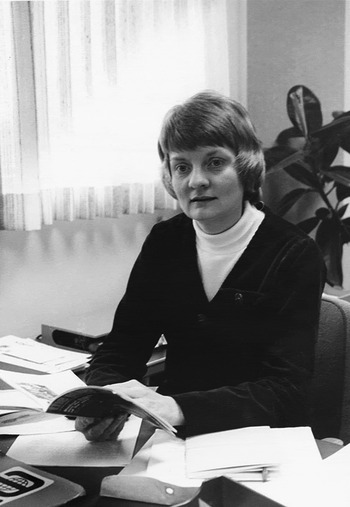
In many ways, the American Mennonites who came of age in the 1950s and 1960s were perfectly positioned to mediate an antiestablishment message of simplicity to moderate, middle-class Protestants. Born in 1940, Doris Janzen Longacre (Figure 1) grew up during pivotal years for the American Mennonite community. Their tradition of nonconforming pacifism allowed a level of ambivalence about America's role in the world that few others were open to in the years surrounding World War II. Simplicity maintained its importance in Mennonite households like Longacre's long after the economic struggles of the Depression had faded for most white, middle-class families.Footnote 46 Years later, Longacre would repeatedly recall the lessons of frugality and simplicity she had learned from her grandmother and mother as key resources for contemporary responses to world hunger.Footnote 47 On the evangelical left, advocates of simple living more often appealed to countercultural ideas from the 1960s; Longacre's appeal to mothers and grandmothers made the message much more accessible to the broad audience of church women she hoped to reach.Footnote 48
©MennoMedia

Soon after graduating from university, Longacre and her husband went on two overseas placements through the MCC. Founded in 1920 primarily to provide aid for Mennonites in the Soviet Union, the MCC shifted its focus toward the Third World in the 1950s. Through the formation of the Pax program, the MCC sent thousands of young Mennonites on two- or three-year service placements in Africa, Asia, and Latin America through the 1950s, 1960s, and 1970s. Thanks to this new type of MCC service placement, Longacre and her husband lived as a young married couple in Vietnam from 1964 to 1967 and Indonesia in 1971. For Longacre and other young Mennonites, their face-to-face encounters with the Third World, combined with a tradition of nonconformism and pacifism, instilled serious doubts about the American way of life and America's role in the world.Footnote 49 Like her references to lessons learned from mothers and grandmothers, Longacre's ability to appeal to religious tradition and missionary experience made her message more credible to a mainstream audience of moderate churchgoers than the appeals of leaders associated with Evangelicals for Social Action who had developed similar perspectives through their experiences with officially secular, leftist organizations like Students for a Democratic Society.Footnote 50
Back in the United States, following placements in southeast Asia, with her husband Paul serving as assistant executive secretary of the MCC, Longacre found herself surrounded by talk of crisis: “From an almost overnight awareness of diminishing world food reserves came the 1974 term ‘food crisis.’”Footnote 51 In late 1973, Paul Longacre drafted a Resolution on the World Food Crisis; it was officially adopted by the MCC in January of 1974, and quickly became known as the Hillsboro Resolution.Footnote 52 In it, the MCC called on each household in its constituency “to examine its lifestyle” to reduce food consumption and expenditures by 10 percent.Footnote 53 The resolution also called for educational efforts focusing on “the relationship between overconsumption on the part of North Americans and its effect on needy people in the developing countries.”Footnote 54 Trained as a home economist, recently returned from placements in the developing world, and in close company with the drafter of the resolution, Doris Longacre was well positioned to play a key role in those educational efforts. In informal conversations with friends and more formal exchanges with missionary networks, she became aware of widespread demand for a concrete set of practices to respond to the crisis: “‘How shall we change?’ is a question MCC personnel are hearing in food crisis discussions across the church.”Footnote 55
In the summer of 1974, Longacre proposed a cookbook to the MCC and the Mennonite publishing house Herald Press that would meet the demand she was observing with a practical set of instructions for Christian women across the country to respond to the world food crisis through home cooking, allowing them to “establish a climate of concern and joy” in their homes and “feel a greater sense of purpose and fulfillment as [they gathered] each day at meal time.”Footnote 56 The project would combine the “traditional assets” of Mennonites like “gardening and food preservation, household thrift, talent for cooking creatively—from scratch and with what we have on hand” with the simple diets of the Third World poor, as encountered firsthand by MCC missionaries on placements throughout Africa, Asia, and Latin America.Footnote 57 Longacre issued a call in various Brethren and Mennonite media outlets for tips and recipes from both of these sources, and the cookbook's contents were deeply shaped by global and traditional Mennonite sensibilities. In its published form, the cookbook brought together joyful images of Third World children; poems, proverbs, and scripture verses about hunger and simplicity; a simple visual motif of measuring spoons meant to evoke “apportioning, conserving” through the commitment and intentionality of the individual user; and a host of globally inspired recipes. In so doing, More-with-Less provided a coherent set of ideas and practices seeking to “provide every North American household with a way of responding to the needs of a hungry world.”Footnote 58
By seeking to provide every household with a way of responding, Longacre was meeting demand for individualized religious practice. As a number of scholars have observed, American religion in the second half of the twentieth century was characterized by greater and greater emphasis on personal authenticity and individuation. To use Charles Taylor's characterization of this “Age of Authenticity,” “the religious life or practice that I become part of must not only be my choice, but it must speak to me, it must make sense in terms of my spiritual development as I understand this.”Footnote 59 Although many understand this culture of expressive individualism as the polar opposite of traditional institutional religion, More-with-Less reflects a parallel impulse to develop individuated and personally authentic religious practice among those who remain affiliated with traditional religious institutions like the mainline Protestant denominations.Footnote 60 In this context, large-scale institutional actions like denominational fundraising or policy advocacy could seem unsatisfactory as responses to the world food crisis. By contrast, More-with-Less promised that every household, indeed every person, could make a religious response on an individual basis. It did so by leveraging a sense of worldwide interconnectedness, made newly prominent through the markers of globalization circulating through mass media and by working through the medium of consumer lifestyle to position users as active participants in the networks of global capital, responding with religious intention to their feeling that the world was in crisis.
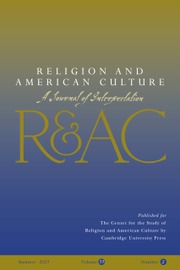
In this ambition to reach every North American household, the production and design of the cookbook was crucial for successfully mediating a fundamentally Mennonite message to a wider Christian audience. The Herald Press encouraged Longacre to “avoid language which would detract from its acceptability on the general market” hoping that “half the sales [would] be from beyond the MCC constituency.”Footnote 61 For her part, Longacre was also confident of demand beyond the Mennonite church, refraining “from using in-house language” in her manuscript because of her belief that “many non-Mennonite North Americans are eager to be responsible to the rest of the world as long as the message comes through as good news, joy.”Footnote 62 In early memos circulating between Herald Press, MCC, and Longacre, the stakeholders struggled to create a title and cover design that might draw wider appeal. Early outlines called the cookbook Simple Food for Plain People (a reference to the Anabaptist tradition of plain dress).Footnote 63 Eventually, Longacre selected More-with-Less, hoping to broaden her audience beyond “plain people” by “blend[ing] joy-good news with the concept of caring about what happens to the rest of the world,” and perhaps seeking to avoid the darker tone of environmentalist publications like the Population Bomb. Longacre also hoped that “the MCC symbol [could] be woven into cover design to identify the book for Mennonites” without using the name of the organization on the cover at all.Footnote 64 With the help of a well-known graphic designer, a front cover was produced that cleverly disguised the MCC logo (a cross transforming into a dove) in a photographic array of non-meat protein sources so that Mennonites would recognize it as a Mennonite publication but others could conceivably miss the reference altogether (Figure 2).Footnote 65
Doris Janzen Longacre, More-with-Less (Scottdale, PA: Herald Press, 1976)

In addition to her concern that in-house Anabaptist language might narrow her audience, Longacre was likewise aware that the cookbook's links to ideas from the left-leaning counterculture and environmental movement might too create barriers for her hoped-for constituency of middle-class, church-going mothers. Longacre explicitly modeled More-with-Less on Francis Moore Lappé’s 1971 Diet for a Small Planet and similar environmentalist cookbooks, drawing on their statistical data to explain the world food crisis and America's connection to it. Even so, she reflected that those previous books would have little appeal to a mainstream Protestant audience: “Recipes have a strong ‘natural foods’ bent and call for many ingredients known only to persons who shop at health food stores.”Footnote 66 Her own experiences as a working mother informed her understanding of what would be realistic and practical; she attempted to always “relate food and energy conservation to the busy life-style most mothers experience.”Footnote 67 In addition to avoiding the high costs of her source texts' approach, Longacre carefully translated their countercultural associations. On a cassette tape introducing the philosophy of More-with-Less, she walked her audience of middle-class church women through the idea that some of these practices would run counter to mainstream culture, doing so in a gentle, deliberate tone of voice: “We should deal with the fact that if we are really committed to making more with less, we're doing something that runs counter to the prevailing trend of our society. We're being different. That will be rather frightening to some people. But we'd better admit it and face it head on. Maybe then we can even be cheerful about it.”Footnote 68
Overall, Longacre's attempts to mainstream these countercultural dietary practices came primarily through the selection and presentation of recipes. In those recipes, she carefully modeled a reduced-meat diet that would seem accessible to her intended audience of middle-class, Protestant mothers. In Longacre's mind, Lappé’s use of natural food store cuisine and insistence on total vegetarianism were “unrealistic for our constituency.”Footnote 69 Lappé and Longacre both wrote during the moment of the natural foods store's ascendance, meaning its countercultural associations and high prices were becoming increasingly visible across the country.Footnote 70 Whereas Lappé eagerly included products primarily available in natural foods stores in her recipes, Longacre tried to avoid anything not available at a regular grocery store. In the few cases when she did include unfamiliar ingredients, she carefully introduced them to the reader, hedging against any sense of elitist inaccessibility. With soy products in general, she reminded readers that, although they may seem foreign or unfamiliar, they had a history of use in previous generations: “[O]lder people remember eating soybeans during Depression days. Several have said to me, ‘You know, we ate soybeans when I was young. We just cooked them up, poured on a little milk or butter, and that's what we ate.’”Footnote 71 She included them sparingly, and was careful to recommend them only as one option among others for reducing meat consumption: “If such products are not overpriced or over packaged, give them a try.”Footnote 72
In this way, Longacre's tone contrasted sharply with Lappé’s, who briefly acknowledged the possible difficulties of changing a household's eating habits in a concluding paragraph, but otherwise presented her long list of recipes with no commentary or explanation of the many unfamiliar, expensive, hard-to-find ingredients.Footnote 73 Longacre, on the other hand, couched the recipes in a pastoral tone, introducing new or unfamiliar items gently and always acknowledging the possible challenges involved. In another passage on soybeans, Longacre framed the challenges of changing diets in terms of her own personal process:
My own experience with soybeans was the same. The first time they simmered all morning on my stove I found their odor a little objectionable. The next few times I did not mind it. Now when I return from outdoors to the kitchen aroma of cooking soybeans, I respond unconsciously with the same good feeling I have for any food smell that signals mealtime. Trying to change too many things at once will only make a household defensive. A slower approach which gives people time to adjust their tastes goes more smoothly.Footnote 74
Whereas Lappé’s introduction modeled an intellectual shift, suggesting that her audience convert immediately to globally responsible diets based on new understandings gained through her book, Longacre framed the change as a slow, embodied process of growing to love the new foods associated with global responsibility. By generally avoiding ingredients associated with an expensive and unfamiliar subculture, and introducing those she did use in careful, qualified fashion, Longacre developed a different tone that acknowledged the embodied habits of taste, the emotional difficulties of change, and the interpersonal problems of defensiveness and resistance often involved in household eating.
In addition to her careful approach to ingredients associated with natural foods stores, Longacre also presented recipes that could reduce meat consumption without insisting on vegetarianism. This was again a decision about accessibility: “[W]e expect that most people will continue to eat meat … but we are calling for lower-meat diets.”Footnote 75 Of the 250 recipes from categories that typically involve meat, around 140 included it, and 110 were strictly vegetarian. As Longacre noted, even this ratio would be a major change for many families who were accustomed to eating meat daily. Beyond those vegetarian recipes, Longacre's biggest emphasis was on reducing the amount of meat used in meals that did include it. On a sidebar titled “Bean, Soybean, and Lentil Discoveries,” for example, she suggested that readers use “soybeans in a chili recipe and reduce ground beef to just enough for flavoring.”Footnote 76 Many recipes followed this pattern, incorporating the plant-based meat substitutes that were often the main ingredients of Diet for a Small Planet recipes into meat-based dishes to reduce the amount of meat consumed. Whereas Lappé included several recipes for rice or other plant-based loaf entrees, Longacre kept the meat in meat loaf while reducing the volume, with recipes like “Soy, Cheese, and Meat Loaf.”Footnote 77
Even as the publisher, designer, and Longacre worked together to reach a broader audience, their expectations for actual sales were relatively low. For the first printing in the spring of 1976, Herald Press ordered ten thousand copies with the hopes of eventually selling between seventy-five thousand and one hundred thousand.Footnote 78 To their surprise, the cookbook was a runaway success and Herald Press struggled to keep up with demand for new printings.Footnote 79 The cookbook was quickly reviewed and recommended by the Methodist, Lutheran, and Presbyterian churches, along with various high profile antihunger organizations like UNICEF, Bread for the World, and CROP Hunger Walk.Footnote 80 Soon, it was the subject of requests for radio and television specials, including, despite Paul Longacre's “mixed feelings about legitimizing” the program, a feature on Pat Robertson's fundamentalist television show, the 700 Club.Footnote 81 The cookbook was eventually reviewed in the Los Angeles Times, the Chicago Tribune, Publisher's Weekly, the National Courier, and a variety of other nonreligious media outlets.Footnote 82 To the amazement of all involved, rapid sales continued and printings surpassed a quarter-million within four years.Footnote 83
Eventually, More-with-Less grew into something larger than a cookbook. Longacre called it a philosophy, but it might just as well have been called a brand.Footnote 84 The MCC and Herald Press published workshop guides for congregations and retreats, related children's educational materials, cassette tapes featuring Longacre describing the more-with-less philosophy, and instructions for organizing hunger-awareness dinners that took place in churches in a variety of denominations across the country.Footnote 85 Within a couple of years, Longacre began work on a sequel focusing on other lifestyle changes beyond food, and, in the decades that followed, Herald Press and MCC published two more cookbooks “in the more with less tradition.”Footnote 86 When Herald Press solicited testimonials on the twenty-fifth anniversary of More-with-Less, comments flooded in affirming the importance of the cookbook in the spiritual lives of users. One called the book her “cooking Bible” and the majority claimed that it was their most-used cookbook. Some had recently returned from overseas placements and were in search of a way “to continue serving in our own community.” More-with-Less allowed them to maintain their sense of global interconnectedness within their American homes. Others reflected that More-with-Less was their “first encounter with Mennonites” and more than one respondent said they had become Mennonite as a result of the cookbook. Beyond those who actually became Mennonite, Roman Catholics, Disciples of Christ members, Methodists, and others wrote in to express thanks.Footnote 87
“We also stand to gain”: The Spirituality of More-with-Less
What accounted for the surprising success of More-with-Less? In part, it can be explained by Longacre and her collaborators' identification of broad demand and their careful design choices to avoid in-house Mennonite language or off-putting countercultural overtones. On a deeper level, Longacre successfully tapped into a desire for a religious discourse and practice that could be fully individuated and still connected to global realities and traditional religious institutions. Using a spiritual language of interconnectedness to position food as a key mediator between cookbook users, the world, and the divine, Longacre met this demand while participating in the development of a form of Protestant environmental spirituality that has since come to enjoy wide influence.
By focusing on food, Longacre drew on a tradition of American dietary reform movements, appearing perennially as responses to public crises. In the first half of the twentieth century, frugal eating movements repeatedly arose to respond to the crises of the First and Second World Wars as well as the Great Depression.Footnote 88 In each case, communities looked at the world outside, saw it in crisis, and then turned inward to search for some practical response that could align their bodies with the solution. Through the embodied practice of eating, practitioners could experience a concrete, material connection to a translocal cause.
Although More-with-Less explicitly drew on memories of frugal diets in the tumultuous war years, it differed from these moments of dietary reform in its emphasis on lifelong change. Longacre's More-with-Less produced a permanent system to respond to a newly permanent sense of crisis. In Longacre's mind, “world food crisis” itself was a misnomer because “[a] crisis comes and goes. The hard facts give us no comfort, however, that this one will go away.”Footnote 89 Rather than recommending short-term change, the More-with-Less lifestyle was meant to respond to a permanent situation: “The world food crisis is not a fad which will disappear in a few years. There is a need for people to change their food habits and then stay that way ‘from now on.’”Footnote 90 In a sense, Longacre's predictions were right. World hunger is viewed as an ongoing crisis, so that on the cookbook's twenty-fifth anniversary, Herald Press commented that “food shortages still plague our world.”Footnote 91 In a broader sense, beginning in 1970 and continuing through the turn of the century, mass media and globalization combined to create a constant sense of crisis that has alternated through fears of war, terror, overpopulation, pollution, famine, and climate change. Several decades after its publication, one Herald Press staff member commented that the cookbook's model of lifestyle change was adaptable to any number of global problems.Footnote 92 With More-with-Less, Longacre espoused a spirituality that met demand for an individualized religious response to a newly permanent sense of a world in crisis.
The term spirituality is instructive here because its use draws attention to the institutional arrangements in which Protestant environmentalism is produced. It thus opens analysis of the way institutional settings are involved in shaping practitioners' understanding of their connection to God and God's purposes in a crisis-stricken world. The discourse and practices reflected in the book cultivated a spiritual connection between self, world, and divine like those observed in other forms of spirituality, doing so in this case through the putatively secular formations of mass media, globalization, and consumer culture. In her study of alternative spiritualities organized “within and adjacent to a variety of religious and secular institutional fields that inflect and shape various spiritual practices,” Courtney Bender suggests that as spiritual practitioners “learn to seek or experience the divine within these [institutional] settings,” they learn “to look toward the scientific, the experiential, and the self to access the divine.”Footnote 93 Seeking viable forms of religion in the context of American modernity, practitioners leverage their location within putatively secular networks to cultivate new channels of spiritual connection. In the case of the Protestant environmental spirituality of More-with-Less, what were these new channels through which self, world, and divine could become interconnected?
Longacre's central goal in More-with-Less was the transformation of an interconnectedness already in place, brought about by the global circulation of media, commodities, and capital. In Longacre's words, “Channels to the needy are long and circuitous. … The very complexity that frustrates easy answers also means that our decisions in the global family are interrelated.”Footnote 94 Directed squarely at transforming capitalism's global network of interconnection, the spirituality of More-with-Less connected middle-class American practitioners with God, God's people, and God's purposes through those same channels. For Longacre, American consumption in the globalized economy was already affecting the souls of the interconnected masses on both sides of the divide. The task of More-with-Less was to leverage that formation toward holy ends. It did so through visual signs of interconnection, an embodied register of transformation, and the sense of individual authenticity produced by the material object of the book itself.
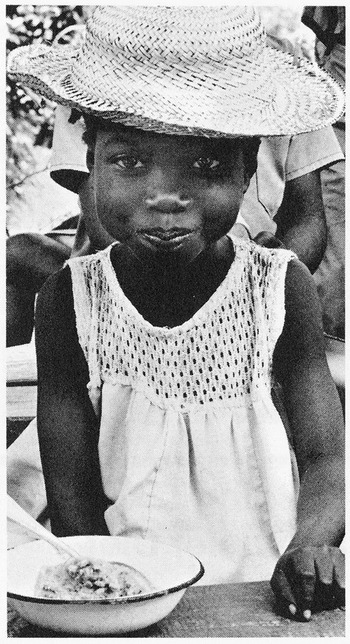
As Longacre put it, “If others alone stood to gain from our changes, hopefully the motivation of Christ-inspired sharing would see us through. But we also stand to gain.”Footnote 95 She hoped that the possibility of mutual transformation might further motivate her audience. The cookbook's visual scheme reinforced this message. Longacre and her collaborators were hesitant about using images of people from the Third World. They tried to avoid reproducing stereotypical images of suffering or hungry children increasingly common in the mass media's presentation of globalization's ills.Footnote 96 Those stereotypical images followed a tradition that David Morgan has dubbed “missive imagery,” which presented scenes and figures from daily indigenous life and the missionary activities that could transform it, in order to shape “the understanding of religious and racial otherness, the international stature of the United States, and the cultural burden of Christianity,” and mobilize support for American missionary endeavors to transform global others.Footnote 97 One of the few images Longacre and her graphic designer did include sought to rework the typical message of missive imagery, which portrayed Americans transforming the needy. Instead, the image pointed to the More-with-Less message of mutual transformation (Figure 3). In the photograph, an African child gazes at the viewer with a look of pleasure and contentment. Although her rustic straw hat and dress as well as the simple meal set upon a humble wooden table indicate simplicity, there are no signs of despair or lack. Here, simplicity is a virtue, rather than a problem to be solved. The child's intimate, immediate gaze invites the viewer to embrace rather than evade this virtue. The image is captioned by Proverbs 27:7, “One who is full tramples on virgin honey, but to the man who is hungry, any bitter thing is sweet,” suggesting that Americans who always eat their fill are more prone to foolishness and waste, whereas those who live with hunger possess an extra measure of wisdom and contentment.Footnote 98 Through this racialized gaze, the text imagines a refined whiteness, freed from the encumbrances of overcivilization through consumption of the foods that made black and brown bodies virtuous in their simplicity.Footnote 99 Through the sense of immediacy and emotional connection, such images mobilized a new, mutually transformative relationship between subject and viewer.
Doris Janzen Longacre, More-with-Less (Scottdale, PA: Herald Press, 1976)

For Longacre, the potential for interconnected transformation seemed most tangible and direct in the shape of practitioners' bodies. Through an embodied register, the disparity between American lifestyles and those of the Third World was most clear. After returning from their MCC placement in Vietnam, Longacre and her husband observed, “People here looked cumbersome, ungainly, plodding. We missed the lithe grace of the Asians.”Footnote 100 Like American spiritual practitioners who embrace yoga, the transformation of their bodies could be a spiritual act that tangibly connects their selves to a spiritual cause, a cause that seeks to protest American gluttony and indulgence in favor of a spiritual transformation into the firm, fit, or “lithe” virtue imagined through Asian bodies. If modernity's expansive, interconnected networks of trade and communication make crises feel out of reach and insurmountable through ordinary human agency, in More-with-Less, bodily transformation helped make the cause of reforming these global networks tangible and clear to practitioners.
Longacre and her colleagues at MCC and Herald Press further articulated the possibilities of spiritual transformation through the material object of the cookbook. As David Morgan has noted, for many American Christians, “the print network was more than a means of distributing information. It was a way of doing Christian good. More than communication, it was a formation of Evangelical community.”Footnote 101 Expanding globally, the material presence of print was “believed able to produce action at a distance” and physically instantiated translocal “emotional attachments”: “Paper bore the breath of God and the warm presence of a far-flung community of saints.”Footnote 102 Morgan focused on the early nineteenth-century expansion of evangelical print networks as “the chief manifestation of the body of Christ in the emerging visibility of the church as a global reality.” The material presence of More-with-Less in middle-class American homes reversed the directional flow of these established global networks.Footnote 103
As the material focal point of a redeemed global network connected by spirit and capital traversing the same circuits, the book itself became a sign of each user's embodied, faithful relationship to God, God's kingdom, and God's people around the world through cooking and eating.Footnote 104 Matthew Hedstrom has observed that “print culture facilitated the emergence of textual community centered on the home,” and as a cookbook, More-with-Less was especially successful at establishing community that flowed through private households.Footnote 105 Within the home, the material object of the book bore the physical marks of committed, consistent spiritual practice. References to torn or tattered front and back covers were the most common comments made in letters sent in to celebrate the twenty-fifth anniversary of More-with-Less. One woman refused to use a brand new replacement copy her mother gave her after seeing the “tattered, loose and stained pages,” preferring to “depend on my ‘old friend.’ As I turn the pages, the spots and stains and drips and smears continue to inform me about the value of a particular recipe. I call it my ‘scratch and sniff’ cookbook.”Footnote 106 The book had “helped to shape [her] world view” and to “realize for Christians, even the simple act of cooking a meal can be a testimony to faithfulness.”Footnote 107 The material object of the book, with its smells, stains, and tatters, bore the marks of the exact kind of individuated, authentic, embodied commitment that Longacre's audience sought. Print had extended an evangelical Christendom, serving as a material connection for those placed by missionary organizations in far flung places. With More-with-Less, the print object was redirected into American homes. Rather than forging new connections, the community of More-with-Less sought to transform and redeem existing translocal links in the overlap of religious and secular associations, intermingling global media networks, capital flows, and the consumption of goods with prayers, spiritual connections, and shared commitment to God's purposes.
The More-with-Less vision of translocal, spiritual communities of embodied transformation raised questions for some collaborators and stakeholders still embedded in more traditional sites of institutional and political intervention. Edgar Stoesz, a director of MCC's food and hunger programs and advisor for More-with-Less, confided in a letter to an ecologist who had publicly criticized the cookbook's focus on lifestyles that he did not believe that lifestyle change would end world hunger. He instead hoped to maintain focus on “a broader approach which also includes the all-important public policy issue without which the one less hamburger we might eat does very little for starvation in Bangladesh.”Footnote 108 Although major powerbrokers in organized Christian responses to hunger like Senator Mark Hatfield and World Vision director Stanley Mooneyham responded positively to the book, they too shied away from the message of spiritual transformation. Instead, their responses focused on the cookbook's consciousness-raising potential.Footnote 109
Anxiety that the message of personal spiritual transformation might distract from concrete political intervention is common among both scholarly and religious observers of the extrainstitutional, combinative religiosity called spirituality. The persistent question has been: Is twentieth-century American spirituality simply a form of modern, therapeutic false consciousness?Footnote 110 For Longacre's part, the message was never meant to be merely therapeutic. She insisted repeatedly that the embodied, spiritual transformation that would result was meant as a first step: “When we begin eating less, the job is not finished. It is only beginning. If we expect North American food conservation to totally solve world hunger, with good reason we sound naïve and even paternalistic.”Footnote 111 Her transformative vision included “food production and distribution programs,” and sought to “challenge oppressive government policy.”Footnote 112 Longacre proved beyond doubt her own personal commitment to larger-scale interventions when she contacted Herald Press and declined the enormous amount of unanticipated royalties she was owed as author of the runaway success, accepting only $10,000 as adequate compensation “to cover the year's time [she] gave to the project,” and requesting that the rest of the royalties be donated to the global development work of the MCC.Footnote 113 In the hands of consumers, however, whether More-with-Less served as a first step toward direct political action or whether it more often supported atomized, therapeutic spiritual practice is difficult to assess.
In the years immediately following the cookbook's publication in April 1976, as the philosophy and brand of More-with-Less was expanding, Longacre hoped to expand the message to encompass more radical action. Her follow-up to the cookbook, Living More with Less, extended the message to all aspects of Christians' lifestyles, looking again to the global poor for more lessons on how to transform the lives of American middle-class churchgoers. When the book was finished and released in 1980, Ron Sider's simple living manual, Rich Christians in an Age of Hunger, had attracted widespread attention, and Living More with Less began to elide the More-with-Less message with Sider's brand of simple living by citing his book, inviting him to author the introduction, and including many of his tips for creating a simpler lifestyle. Living More with Less brought the More-with-Less message to deeper conversation with the evangelical left, whose message of simple living had clear parallels with Longacre's, but embraced countercultural overtones. The book ultimately included tips for building geodesic domes and using composting toilets, things that were much less practical or realistic for the busy middle-class mothers Longacre had initially targeted with her cookbook.Footnote 114
Exactly how Doris Longacre would have marketed her lifestyle guide is impossible to know. Long plagued by health issues, Longacre suffered from severe illness while she worked to complete More-with-Less and Living More with Less. After a three-year struggle with cancer, Longacre died on November 10, 1979, at the age of thirty-nine.Footnote 115 Living More with Less was nearly finished and Paul Longacre assisted the Herald Press in bringing it to publication. Perhaps because of its more radical, less accessible message and perhaps because of the absence of Longacre's deftness in marketing the message to ordinary churchgoers, it did not sell nearly as well as the More-with-Less cookbook.
In the years following her death, the More-with-Less audience has diverged in two directions, both groups remaining relatively stable. On the one hand, the middle-class church women she targeted have continued to use the cookbook and a younger generation have now grown up with it as a fixture of their lives. One respondent commented on its fortieth anniversary, “I grew up with both my parents cooking and baking from this book. When I moved out on my own to go to university, they gave me a copy of the More-with-Less cookbook. It taught me how to cook. … Lately I've been learning about the idea of this book as a form of theology—a way of living out one's faith in everyday home and family life.”Footnote 116 On the other hand, More-with-Less has in some ways come to be identified with countercultural and progressive Christian communities, from its eventual association with Ron Sider to its significant influence on younger exemplars of progressive evangelicalism like Shane Claiborne, who commented that Living More with Less “was decades ahead of its time, and is just as relevant today as it was thirty years ago.”Footnote 117
Either way, More-with-Less’s staying power surely stemmed from its form of Protestant environmental spirituality, well adapted to American culture during the preceding forty years. Many observers note that the world has remained in crisis, whether through famine, overpopulation, poverty, pollution, or climate change. Longacre showed prescience when she predicted that “world crisis” would not be a fad. The book's publishers have counted on continued interest because that sense of global crisis has persisted. Lifestyle changes as a response to global crises, like the changes modeled in Protestant environmental spirituality, grow out of a cognitive style that emphasizes causal interconnectedness between middle-class Americans and their global neighbors, forged within globalized, consumer- and media-driven American modernity.
Conclusion
More-with-Less practitioners cultivate a connection to the world through coterminous flows of spirit and capital. Rather than give one priority over the other, they embrace practices in which spirit and capital do not conflict but coincide. Courtney Bender has suggested, “[W]e might understand spirituality as religion that is produced in secular institutions or settings”; here, we witness a form of spirituality that moves within putatively secular spaces as well as settings of traditional religious affiliation.Footnote 118 This spirituality maintains participants' traditional notions of God and God's purposes while creating new ways to connect with them. These new means of connection are produced within the institutional formations of globalization, consumer culture, and mass media that help fund participants' visions of an interconnected world in crisis. This secular context not only produces a particular vision of the world, but also shapes the channels through which practitioners experience connection and participation in God's care for it.
The story of More-with-Less also represents a crucial chapter in the emergence of modern Protestant environmentalism. Although historians of American religion have contributed much to debates on religion and the environment, historical studies have generally focused on nature spirituality and green religion as expressed in nontraditional or extrainstitutional settings.Footnote 119 Recently, however, scholars have shown renewed interest in engagements with environmental issues within more traditional religious spaces. These studies have tended to assess Christian environmentalism in primarily theological and ideological terms, neglecting the complex relations of political economy and secularism in the history of Christian environmentalism.Footnote 120 In large part, the development of this scholarly emphasis since the 1970s has been driven by the same set of concerns that shaped environmental engagement among ordinary churchgoers and denominational elite over the same years. In 1967, facing the very anxieties about global crisis that led to the publication of More-with-Less, the medieval historian Lynn White Jr. famously remarked that “Christianity bears a huge burden of guilt” in the present ecological crisis, basing his thesis on the assumption that “[w]hat we do about ecology depends on our ideas of the man–nature relationship.”Footnote 121 Privileging the role of ideas, White pointed to the Judeo-Christian teaching of humanity's mastery over nature as the root of the West's ecological sins.
In the decades that followed, White's thesis set a seemingly unshakable agenda for the often-overlapping scholarly assessments of and religious engagements with environmentalism in American Christianity, as scholars and denominational leaders alike sought to support or refute it. Indeed, White's emphasis on theological systems and religious worldviews as the “roots of our ecologic crisis” became so influential that the most visible forms of Protestant environmentalism since the late 1960s have comprised top-down intellectual and theological responses to White's critique.Footnote 122 Amanda Baugh thus identifies “religious environmentalism's academic roots,” noting that “academics and religious leaders reacted to White in the ensuing decades, returning to the roots of religious traditions in search of resources that could support an environmental ethic.”Footnote 123 As Robert Booth Fowler observed, this preoccupation often occurred through near-annual adoption of environmental resolutions at national denominational conventions with little organizational follow-up at the congregational level.Footnote 124
In the late 1960s and early 1970s, the mainstream environmental movement was undergoing a period of dramatic expansion in both goals and membership, leading to a period of constant negotiation over its direction and emphases.Footnote 125 During the same years, various denominational leaders and scholars of religion focused on articulating a set of abstract intellectual and theological formulations through which to align themselves with a rapidly changing environmental movement.Footnote 126 Whereas these religious elites went about formulating and reformulating their assent or dissent regarding the constantly shifting environmental movement, ordinary churchgoers were encountering reports and images about multiple, overlapping global crises, and with “holy frustration,” they felt impelled to respond, looking often for concrete practices through which to enact their religious convictions. More-with-Less represents one such response, and, although it did not directly adopt the language of ecology at the time, it has served as an important source for the Protestant environmental spirituality that has spread since, maintaining its focus on daily practices of simple consumption and domestic creativity.
Protestant environmental spirituality, broadly construed to include the daily practices through which middle-class churchgoers have sought to alter their lifestyles, identities, and even bodies as a moral response to planetary crises, has served as a key idiom for cultivating religion in a secular milieu. Scholars are increasingly interested in those versions of religion that thrive in modern secular culture, which have been dubbed alternately a “nova effect,” a “kaleidoscopic buffet,” “spiritual tinkering,” or “Sheilaism.”Footnote 127 In general, spirituality has become a useful banner under which to organize these religious forms, generally viewed as individualistic, therapeutic, apolitical, and extrainstitutional.Footnote 128 American culture in the twentieth century has increasingly enjoined consumer-friendly forms of personal authenticity and expressive individualism, well adapted to legal and institutional imperatives toward pluralism and the construction of attendant divisions between private religiosity and public secularity. Under these pressures, Americans have cultivated a variety of discourses and practices that attempt to hold their need for authentic individuation in tension with their desire for connection to some universal cause or sacred being.
Viewing More-with-Less as an early example of Protestant environmental spirituality provides insights into contemporary conversations about religion and secularity. For the “spiritual but not religious,” spirituality has generally constituted a reconfiguration of the sacred alongside new discourses and practices for connecting to it, often by looking to the East, to science, to metaphysics, or some combination of the three.Footnote 129 For many Protestant churchgoers on the other hand, their understanding of the sacred and the value of religious institutions have remained relatively stable. They have thus sought new discourses and practices that preserve their traditional conceptions of the divine and the church, while also cultivating a direct, authentic, and individuated connection between the individual and the universe dictated by the cultural and economic pressures of American modernity. More-with-Less is a telling case in point, carefully avoiding the countercultural associations of various other forms of spirituality while modeling spiritual practices whose real-world effects could move seamlessly through global markets. In so doing, this early version of twentieth-century Protestant environmentalism provided Protestants with means for maintaining their connection to the divine through putatively secular engagement with the globalizing political economy that could connect the middle-class churchgoer with the problems and causes of the world around them.
As Longacre prepared her follow up to More-with-Less, one MCC worker advised her, “If there is one word which should be before you night and day, it is the word HOW. People have been given enough facts and their consciences are troubled enough.”Footnote 130 In the twentieth century, people were not always looking for new ideas about humanity, the sacred, or the value of religious institutions. Many Protestant churchgoers felt relatively settled in that regard. Rather, they wanted to know “HOW” to connect with those things in ways that felt authentic and personal. In the preceding half-century, environmentalism has loomed large as a means for forging just that type of connection. Unsurprisingly, then, in the context of putatively secular American modernity, characterized by morally charged lifestyle consumption and globalized circulations of media and capital, Protestant environmental spirituality continues to gain currency.