Prehospital assessment and treatment is crucial to the provision of appropriate care to critically ill or injured patients (Reference Pakkanen, Virkkunen and Kamarainen1). The organization of prehospital emergency medical services (EMS) differs between countries, and the optimal organization, including optimal competences and educational level among the prehospital staff, remains controversial and subject to much debate (Reference Suominen, Baillie and Kivioja2–Reference Fischer, Kamp and Garcia-Castrillo Riesgo4). The debate centers around the issues of advanced or basic life support (ALS versus BLS) and whether ALS should be provided at the scene by a physician (anesthesiologist or EMS physician) or other healthcare providers. Several European countries have implemented the use of ALS, also called the “stay and play” approach. With this approach, advanced diagnosing and treatment procedures such as intravenous fluids, medication, and intubation are initiated by a physician or paramedic at the site of injury and continued until arrival at the hospital (Reference Suominen, Baillie and Kivioja2). In the United States, there is broad support for the BLS approach, also known as the “scoop and run” strategy, which mainly relies on the speed of response and transport to appropriate medical care (Reference Funder, Petersen and Steinmetz5). In this strategy, prehospital care is performed by medical technicians, nurses, or paramedics mainly with competences to perform BLS procedures.
Although it may seem evident that the use of highly skilled staff such as physicians and the use of ALS procedures would benefit patient outcome, evidence on its impact has been sparse and results have been conflicting. The controversies originate partially from the lack of large prospective randomized trials in the field; a lack resulting from the notorious difficulties in conducting RCTs in this field due to ethical and legal considerations about informed consent (Reference Bøtker, Bakke and Christensen6).
Recent years, however, have seen a growing body of evidence from controlled studies on the impact of educational and skills levels in prehospital care, and several systematic reviews summarizing the results have been published. However, systematic reviews exploring different angles of the impact of competences and educational level have not previously been synthesized. The present overview, therefore, aims to synthesize evidence from systematic reviews (rather than from individual trials) on the impact of competences and educational level among the prehospital staff in critical conditions requiring immediate prehospital management. This overview of reviews may provide policy makers and health professionals with quick and comprehensive access to current evidence. Due to the different organization and context settings of EMS, the results are not necessarily directly transferable from one country to another but the results can be used as a knowledge base to inform decision making regarding the organization and staffing of EMS. Furthermore, this overview allows for identification of gaps in the available evidence and can thereby assist in prioritizing future evidence synthesis and primary research in a controversial research field.
Methods
This overview of reviews is based on a systematic search, selection and quality assessment of the research literature in the field. The “Preferred Reporting Items for Systematic Reviews and Meta-Analysis” (PRISMA) statement was applied to guide the preparation of the overview (Reference Liberati, Altman and Tetzlaff7). A protocol, approved by an external expert panel, containing a priori defined inclusion and exclusion criteria was used for the search and selection of studies. The protocol in Danish is available in the supplementary material (Supplementary file 1).
Inclusion Criteria
For this overview of reviews, we included all published systematic reviews that examined the impact of physician-based prehospital care compared with non–physician-based care (paramedic, ambulance technician, nurse). A systematic review was, in this overview, defined as a review conducted on the basis of a comprehensive systematic literature search in at least two electronic sources (e.g., EMBASE and MEDLINE) and on the basis of a systematic selection of studies based on clear in- and exclusion criteria. As we anticipated that RCTs in this research field would be sparse, we also included reviews of cohort and case-control studies.
We excluded reviews that only included descriptive studies with a single level of care (e.g., only physician-based systems) without comparing these to staff groups with other levels of education. We also excluded reviews on different levels of care (ALS versus BLS) if it was unclear from the review what level of education and/or competence the providers of ALS and BLS, respectively, had. We included reviews that enrolled patients (children or adults) with one of the following five critical conditions that require a rapid response as identified by the European Resuscitation Council: cardiac arrest, chest pain, respiratory insufficiency, stroke, or severe trauma including severe head trauma (Reference Haugland, Rehn, Klepstad and Krüger8). The primary outcome of interest was mortality. Secondary outcomes of interest were all other patient-related endpoints. We excluded reviews that only described differences in the processes (e.g., response time) or frequency of intervention without reporting patient-related outcomes.
Search Methods Used for Identification of Reviews
A systematic search was conducted in the following databases: Medline, Embase, and Cochrane Library. The search strategy for all databases was developed in collaboration with an experienced research librarian and is presented in Supplementary file 2. The search was restricted to identify systematic reviews published between January 1, 2000, and November 1, 2017, by use of publication filters. These publication filters have limitations in identifying especially the most recent published studies. To supplement the search, additional reviews were, therefore, identified through consultation with experts and a review of the included studies' reference lists. No language restrictions were applied.
Data Collection and Management
The two authors independently assessed the titles and abstracts of the identified reviews. Reviews that were clearly not relevant were excluded. Inclusion of a review was agreed upon by consensus and, if necessary, by discussion with a third co-worker, knowledgeable of the subject. Data from the included reviews were extracted independently by the two authors using a standardized data extraction form. To assess the degree of overlap of the primary studies included in the systematic reviews, a citation matrix was conducted. The citation matrix is available in the supplementary material (Supplementary File 3). Where individual trials appeared in more than one review, the overlap was noted and the interpretations by the authors of each of the reviews were considered keeping the overlap in mind.
Assessment of Risk of Bias in the Included Reviews
The risk of bias in the included reviews was assessed by the two authors using the Risk Of Bias In Systematic reviews (ROBIS) tool (Reference Whiting, Savović and Higgins9). Disagreement in the judgment between the two assessors was resolved by consensus.
Data Synthesis and Analyses
The results are summarized in a narrative synthesis, and a data summary is presented in an overview of reviews table that provides details of the included reviews according to all relevant outcomes. Results from reviews of high quality were given the most emphasis in the synthesis.
Results
Results of the Literature Search
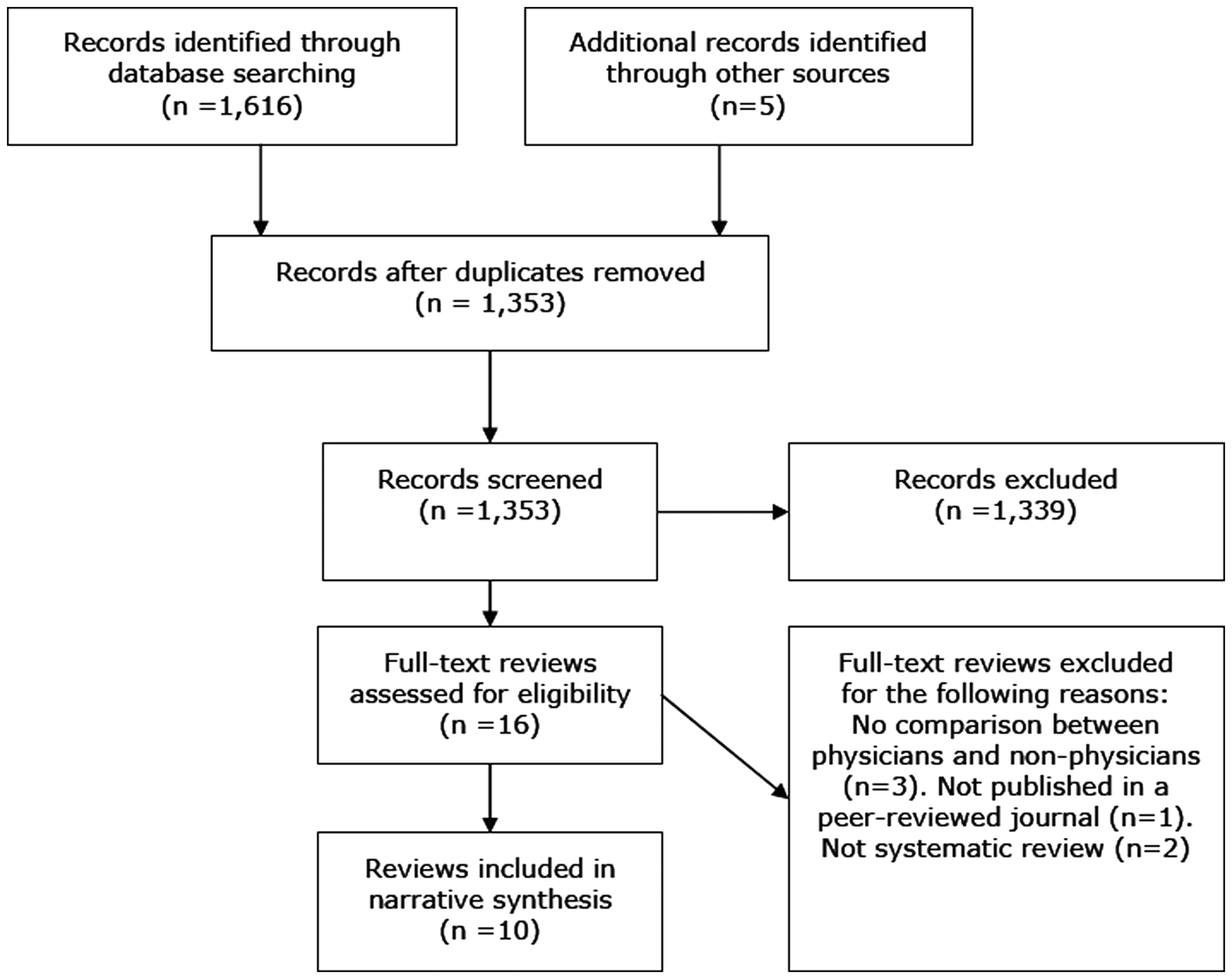
The search in the selected databases returned 1,616 references. A total of five references were identified through the additional search. After removing duplicates, 1,353 references remained. The 1,353 references were screened for eligibility and 1,337 records were excluded. The remaining sixteen reviews were read in full text; of these, six articles were excluded because they did not satisfy the inclusion criteria. A full list of excluded reviews with the reasons for their exclusion is available from the authors on request. A total of ten reviews satisfied the inclusion criteria and were included in the overview. See Figure 1 for a flow diagram of the included studies.
Flow diagram of the literature search.

Risk of Bias in the Included Reviews
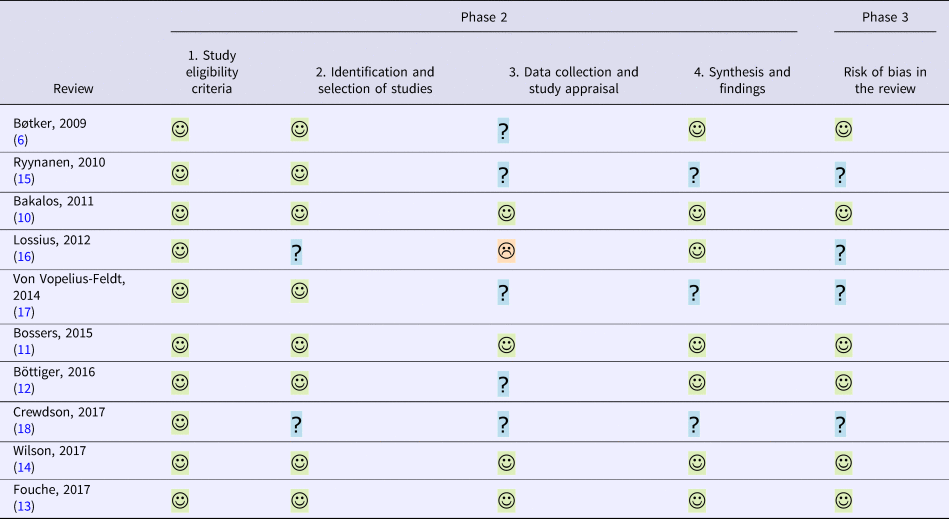
The risk of bias of the included reviews is presented in Table 1. Risk of bias is presented as separate ratings for each of the four domains and as one overall rating. Six reviews were judged as having low risk of bias (Reference Bøtker, Bakke and Christensen6;Reference Bakalos, Mamali and Komninos10–Reference Wilson and Gangathimmaiah14), and four as having unclear risk of bias (Reference Ryynänen, Iirola, Reitala, Palve and Malmivaara15–Reference Crewdson, Lockey, Roislien, Lossius and Rehn18).
Risk of Bias in the Included Reviews Assessed with the ROBIS Tool

 =low risk;
 =high risk;
 =unclear risk.
Description and Results of Included Reviews
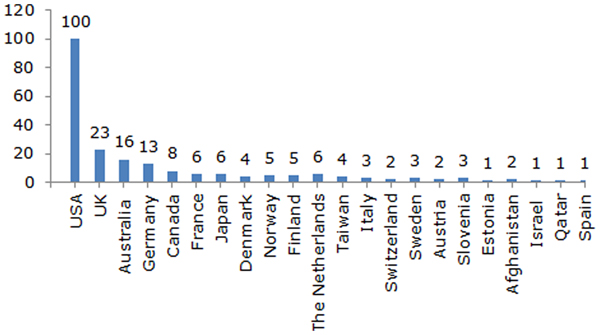
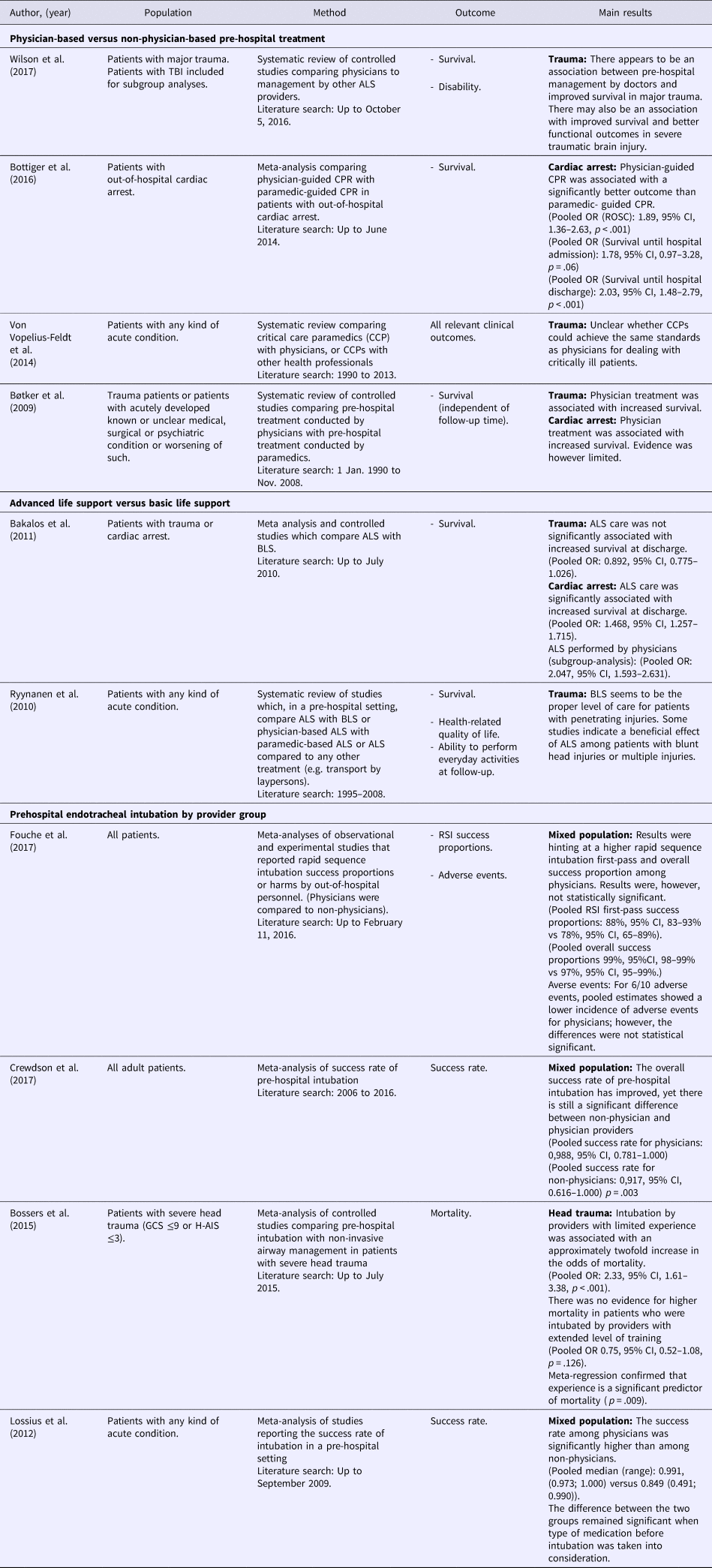
A summary of the included reviews is presented in Table 2. The ten reviews were published from 2009 to 2017 and comprised a total of 217 original primary studies. Sixty-five of the studies were included in at least two of the reviews (Supplementary File 3). All primary studies except two were observational cohort or case-control studies. The vast majority of the studies originated from the United States and Canada (50 percent), 35 percent were conducted in Europe, and 7 percent originated from Australia. A list of countries represented in the reviews can be found in Figure 2. The original aim of this overview was to assess the impact of physicians in prehospital treatment for patients in need of acute critical care. During the review process, it became clear that the reviews that fulfilled the inclusion criteria covered three different themes. Thus, the included reviews were divided into the following three categories based on their scope: (I) physician-based treatment versus non–physician-based treatment, (II) ALS versus BLS (physician-based ALS versus non–physician-based BLS or physician-based ALS versus non–physician-based ALS), and (III) physician-based prehospital endotracheal intubation (ETI) versus non–physician-based prehospital ETI.
Countries represented in the reviews.

Review Characteristics

ALS, advanced life support; BLS, basic life support; CI, confidence interval; GCS, Glasgow Coma Scale; H-AIS, Head Abbreviated Injury Score; OR, odds ratio; ROSC, Return of spontaneous circulation; RSI, rapid sequence induction; TBI, traumatic brain injury.
Physician-Based versus Non–Physician-Based Prehospital Treatment
Four of the included reviews studied the effect of physician involvement in prehospital treatment (Reference Bøtker, Bakke and Christensen6;Reference Bottiger, Bernhard, Knapp and Nagele12;Reference Wilson and Gangathimmaiah14;Reference von Vopelius-Feldt, Wood and Benger17). The reviews by Bottiger et al. (Reference Bottiger, Bernhard, Knapp and Nagele12), Bøtker et al. (Reference Bøtker, Bakke and Christensen6), and Wilson and Gangathimmaiah (Reference Wilson and Gangathimmaiah14) focused on comparing physician-based treatment with non–physician-based treatment, whereas the review by Von Vopelius-Feldt et al. (Reference von Vopelius-Feldt, Wood and Benger17) compared treatment by specially trained paramedics (critical care paramedics [CCPs]) with treatment by physicians or other health professionals (paramedics or nurses). In the review by Von Vopelius-Feldt (Reference von Vopelius-Feldt, Wood and Benger17), CCPs were defined as paramedics with critical care skills who were dispatched to severely ill or injured patients. The reviews by Bottiger et al. (Reference Bottiger, Bernhard, Knapp and Nagele12), Bøtker et al. (Reference Bøtker, Bakke and Christensen6), and Wilson and Gangathimmaiah (Reference Wilson and Gangathimmaiah14) were assessed as having low risk of bias, whereas the review by Von Vopelious-Feldt (Reference von Vopelius-Feldt, Wood and Benger17) was judged to have unclear risk of bias.
The three reviews by Bottiger et al. (Reference Bottiger, Bernhard, Knapp and Nagele12), Bøtker et al. (Reference Bøtker, Bakke and Christensen6), and Wilson and Gangathimmaiah (Reference Wilson and Gangathimmaiah14) found that physician involvement was associated with increased survival compared with non-physician treatment in selected patient groups.
For patients with out-of-hospital cardiac arrest, Bottiger et al. (Reference Bottiger, Bernhard, Knapp and Nagele12) found that the pooled survival-to-hospital admission rate for physician-guided cardiopulmonary resuscitation (CPR) was 30.1 percent compared with 19.2 percent for paramedics; pooled odds ratio (OR) 1.78 (95 percent confidence interval [CI], 0.97–3.28), p = .06. The pooled estimated survival-to-hospital discharge rate for physician-guided CPR was 15.1 percent and for paramedics it was 8.4 percent; pooled OR 2.03 (95 percent CI, 1.48–2.79) p < .001. The analysis was based on data from 14 prospective or retrospective studies including a total of 126,829 patients. The positive effect of physician involvement for patients with cardiac arrest was also found in the narrative review by Bøtker et al. (Reference Bøtker, Bakke and Christensen6) However, because four of the five included studies in that review were also reported in the review by Bottiger et al. (Reference Bottiger, Bernhard, Knapp and Nagele12), most emphasis is placed on the results from the review by Bottiger et al. (Reference Bottiger, Bernhard, Knapp and Nagele12) For patients with severe trauma including traumatic brain injury (TBI), physician involvement was also found to be associated with increased patient survival. This finding was based on two systematic reviews including a total of 24 primary studies (Reference Bøtker, Bakke and Christensen6;Reference Wilson and Gangathimmaiah14).
The review by Von Vopelius-Feldt et al. (Reference von Vopelius-Feldt, Wood and Benger17) found that available evidence indicated that CCPs provided superior care to critically ill patients compared with paramedics and nurses without special training and experience in dealing with critically ill patients. Whether CCPs could achieve the same standards for dealing with critically ill patients as physicians remained unclear due to sparse evidence. A total of twelve studies were included. Four of five studies regarding effectiveness of physicians versus CCPs were also included in the review by Bøtker et al. (Reference Bøtker, Bakke and Christensen6)
Advanced Life Support versus Basic Life Support
Two reviews focused on the effect of ALS as opposed to BLS (Reference Bakalos, Mamali and Komninos10;Reference Ryynänen, Iirola, Reitala, Palve and Malmivaara15). The reviews on the effectiveness of ALS versus BLS were included because ALS and BLS procedures are closely related to prehospital care providers’ educational and skills levels. In the review by Ryynänen et al. (Reference Ryynänen, Iirola, Reitala, Palve and Malmivaara15), all patient groups and all vehicles used for transportation (ground ambulances and helicopters) were covered. Bakalos et al. (Reference Bakalos, Mamali and Komninos10) included patients with severe trauma or cardiac arrest. The reviews by Ryynänen et al. (Reference Ryynänen, Iirola, Reitala, Palve and Malmivaara15) and Bakalos et al. (Reference Bakalos, Mamali and Komninos10) were categorized as having unclear and low risk of bias, respectively. Seven studies included in Bakalos et al. (Reference Bakalos, Mamali and Komninos10) were also included in the review by Ryynänen et al. (Reference Ryynänen, Iirola, Reitala, Palve and Malmivaara15).
Ryynänen et al. (Reference Ryynänen, Iirola, Reitala, Palve and Malmivaara15) found that results were contradictory and that the quality of the included studies was poor. Thus, no conclusion on the effectiveness of ALS versus BLS in an unselected patient cohort could be drawn. In patients with trauma most research favored BLS in case of penetrating trauma and where distances to hospitals were short. In patients with severe head injuries, ALS treatment by paramedics and intubation without anesthesia could even be harmful. ALS interventions provided by an experienced physician and by a helicopter EMS organization may be beneficial for patients with blunt head injury or multiple injuries; however, results were contradictory. A total of forty-six studies were included in the review.
Bakalos et al. (Reference Bakalos, Mamali and Komninos10) found an increased survival with ALS care compared with BLS care in patients with cardiac arrest (OR 1.468 [95 percent CI, 1.257–1.715]). A sub-analysis based on data from six studies in which ALS was performed by physicians showed that the probability of survival was even higher when ALS was provided by physicians (OR: 2.047). On the contrary, for patients with trauma, no statistically significant difference was found between the treatment groups (OR 0.892 [95 percent CI, 0.775–1.026]). The meta-analysis comprised eighteen controlled studies.
Prehospital ETI by Provider Group
The remaining four reviews focused on the effectiveness and safety of a specific ALS procedure, namely prehospital ETI, by different prehospital providers (physicians versus non-physicians) (Reference Bossers, Schwarte and Loer11;Reference Fouche, Stein, Simpson, Carlson and Doi13;Reference Lossius, Roislien and Lockey16;Reference Crewdson, Lockey, Roislien, Lossius and Rehn18). The reviews by Lossius et al. (Reference Lossius, Roislien and Lockey16), Crewdson et al. (Reference Crewdson, Lockey, Roislien, Lossius and Rehn18), and Fouche et al. (Reference Fouche, Stein, Simpson, Carlson and Doi13) synthesized the success rate of ETI by provider (physician versus non-physician). In the review by Fouche et al. (Reference Fouche, Stein, Simpson, Carlson and Doi13), the success rate was delimited to comprise rapid sequence intubation (RSI), which is an advanced airway management process where rapidly acting sedative and paralytic drugs are used to aid the placement of the endotracheal tube.
The review by Bossers et al. (Reference Bossers, Schwarte and Loer11) aimed to determine effects of prehospital intubation on mortality in relation to the EMS providers' skill and experience. The study population in Bossers et al. (Reference Bossers, Schwarte and Loer11) was restricted to patients with severe TBI. Studies comparing the effects of prehospital intubation versus noninvasive airway management on mortality in patients with TBI were eligible for inclusion. Mortality rate was calculated separately for the patient group treated by “limited experience” staff (i.e., emergency medical technicians and paramedics with limited scope of practice) and the patient group treated by “extended experience” staff (i.e., prehospital emergency physicians or CCPs). The reviews by Lossius et al. (Reference Lossius, Roislien and Lockey16) and Crewdson et al. (Reference Crewdson, Lockey, Roislien, Lossius and Rehn18) were judged to have unclear risk of bias, whereas the reviews by Bossers et al. (Reference Bossers, Schwarte and Loer11) and Fouche and Jennings (Reference Fouche and Jennings19) were categorized as having low risk of bias.
The reviews by Lossius et al. (Reference Lossius, Roislien and Lockey16) and Crewdson et al. (Reference Crewdson, Lockey, Roislien, Lossius and Rehn18) comparing the success rate of ETI by different providers both found significant differences in success rates between physicians and non-physicians in favor of physicians. Lossius et al. (Reference Lossius, Roislien and Lockey16) found an overall median success rate of 0.927 (95 percent CI, 0.882–0.961). When comparing physicians with non-physicians the corresponding ETI success rates were 0.991 (0.973; 1.000) versus 0.849 (0.491; 0.990). The success rates of 0.991 in the physician-based ETI corresponds to an average failure rate of one of 100 patients, whereas the non-physician success rate of 0.849 corresponds to an average failure rate of 15 of 100 patients.
When comparing physicians and non-physicians using muscle paralytics or RSI, there was still a significant difference in success rate in favor of the physicians (p = .047). A total of thirty-three studies published from 1994 to 2009 were included in the review by Lossius et al. (Reference Lossius, Roislien and Lockey16). Based on the most recent evidence published from 2006 to 2016, Crewdson et al. (Reference Crewdson, Lockey, Roislien, Lossius and Rehn18) found an overall median success rate for ETI of 0.95. The success rate by provider group was 0.988 (0.781;1,000) for physicians and 0.917 (0.616; 1,000) for non-physicians (p = .003).
Based on these results, Crewdson et al. (Reference Crewdson, Lockey, Roislien, Lossius and Rehn18) concluded that the overall success rate had improved over the years, but that there was still a significant difference in the success rate between physicians and non-physicians. A total of thirty-eight primary studies were included in the review by Crewdson et al. (Reference Crewdson, Lockey, Roislien, Lossius and Rehn18). Fouche et al. (Reference Fouche, Stein, Simpson, Carlson and Doi13) also found that physicians had a higher RSI first-pass (88 percent [95 percent CI, 83–93 percent] versus 78 percent [95 percent CI, 65–89 percent]) and overall success rate (99 percent [95 percent CI, 98–99 percent] versus 97 percent [95 percent CI, 95–99 percent]), as well as mostly lower adverse event rates for RSI in the out-of-hospital setting. The differences were, however, not statistical significant.
Bossers et al. (Reference Bossers, Schwarte and Loer11) found that prehospital ETI by providers with limited experience (primarily paramedics) were associated with an approximately twofold increase in the odds of mortality compared with noninvasive ventilation (OR 2.33 [95 percent CI, 1.61–3.38], p < .001). In contrast, there was no evidence for a higher mortality in patients intubated by providers with an extended level of training (OR 0.75 [95 percent CI, 0.52–1.08], p = .126). Meta-regression confirmed that experience was a significant predictor of mortality (p = .009). A total of twenty-four studies were included in the narrative review and six studies including data from 4,772 patients were included in the meta-analysis (Reference Bossers, Schwarte and Loer11).
Discussion
Summary of Main Results
In this overview, we have synthesized the results of ten systematic reviews assessing the impact of physician involvement in five critical conditions requiring immediate prehospital management. A total of six reviews with low risk of bias and four reviews with unclear risk of bias were included in this overview. There was no indication of conflicting results between reviews with low risk of bias and reviews with unclear risk of bias. It is important to state that, although the majority of the included reviews had low risk of bias, the underlying evidence is primary based on observational studies suggesting that the quality of evidence in this research field is low (see more under limitations of the overview).
To sum up the results, current evidence is hinting at a benefit of prehospital physician treatment in patients with out-of-hospital cardiac arrest and, albeit evidence is more limited, in patients with severe trauma. Due to a paucity of evidence, no conclusions can be drawn on the effectiveness of prehospital physician-based treatment in care for patients with the other three disease categories examined, that is, chest pain, respiratory insufficiency, or stroke. ALS procedures, especially when performed by physicians, were associated with increased survival in patients with out-of-hospital cardiac arrest. Results regarding the effectiveness of ALS versus BLS in patients with trauma were less unambiguous. The success rate of prehospital ETI has improved over the years, but ETI performed by physicians is still associated with higher success rate than ETI performed by paramedics. In patients with severe TBI, intubation by paramedics who were not well skilled to do so markedly increased mortality. These findings suggest that due to the high risk and complexity of prehospital advanced airway interventions, ETI should be abandoned in EMS in which providers do not have proper training and skills to perform this procedure.
Strength and Limitations
This overview represents a comprehensive review of the current evidence in this field. However, there are some limitations that should be addressed. Currently, there are no methodological standards or reporting guidelines for conducting overviews of reviews. Hence, we applied the PRISMA statement to guide this overview. We acknowledge that this checklist has been developed to guide systematic reviews rather than overviews. However, we found this checklist applicable for most part of the overview. Major deviations from the checklist were only warranted in the result section given that data in systematic reviews comes from primary studies as opposed to overviews were the unit of analysis is systematic reviews.
Hence, to guide the synthesis of the results the Cochrane Handbooks chapter on Overviews of Reviews was consulted (20). The literature search for this overview was conducted using a publication filter to identify systematic review instead of using a validated search filter for systematic reviews. The use of nonvalidated search filters can result in reduced sensitivity of the search strategy which increases the risk of missing relevant publications. Hence, this is a clear limitation in this overview. To account for this limitation, a thorough effort was made to identify additional reviews including consultation with experts and review of the included studies' reference lists.
Validity of the Results
Some limitations regarding the validity of the results in this overview should be taken into consideration. Most studies in the included reviews, except for two RCTs, were cohort or case-control studies, and comparison of results between such studies is often hampered by differences in case-mix and the organization of EMS services. Furthermore, observational studies are subject to inherent limitations. One serious limitation in this research field is the risk of “confounding by indication,” that is, that patients who are “sicker” receive an intervention preferentially causing the results to be biased (Reference Fouche and Jennings19). In this research field, confounding by indication may arise from the targeting of the limited resources of physicians to those patients who are most likely to benefit.
In patients with trauma, Osterwalder (Reference Osterwalder21) argues that the most severely injured patients (at highest risk of dying) more often receive physician-based prehospital treatment, leading to risk of underestimating the effectiveness of physician involvement. On the contrary, in patients with out of hospital cardiac arrest, Böttiger et al. (Reference Bottiger, Bernhard, Knapp and Nagele12) argue that, in some EMS systems, physician staffed ambulances may not be dispatched to cases of out-of-hospital cardiac arrest that were futile based on the assessment of an ambulance crew on the scene causing risk of overestimating the effectiveness of physician treatment. Different statistical approaches was applied in the primary studies to adjust for differences in baseline patient characteristics; however, there is a high risk that baseline confounding was not fully controlled, leading to risk of bias.
Another central point of attention regarding the validity of the results was the selection of patients into the study. In some of the primary studies, patients who died before arriving to the hospital were not included in the analyses. It is estimated that more than 50 percent of deaths from trauma occur immediately (at the site of the injury); while roughly 30 percent of trauma deaths occur within the first few hours after the accident (Reference Trunkey22;Reference Trunkey23). Thus, lack of information about the number of patients who died before arriving to the hospital, and, in particular, lack of information on the distribution of mortality in the two provider groups carries a significant risk of bias. If the proportion of patients who died in the prehospital phase varies by treatment provider (physician versus non-physician), this could introduce substantial bias (e.g., underestimation of the impact of prehospital physician care if physicians manage to keep critically ill patients alive until arrival at the hospital).
Transferability
Regarding the transferability (external validity) of the results to clinical practice, several factors should be considered. Transferability is affected by organizational structures, and because prehospital care is organized differently in different countries, it is important to be aware of the context in which the research was conducted when interpreting the results of that research. In particular, it is important to keep in mind that educational levels and training of prehospital staff differ markedly between countries. In some systems, education of ambulance staff consists in building up expertise through practice, supplemented by shorter educational courses. In other systems, education of ambulance staff takes place at the university. It is expected that the potential differences between the effect of physician versus paramedic prehospital care can be modified by the educational level and training of the non-physician staff.
Other factors that have an impact on the external validity of the results are means of transportation (ground ambulance versus helicopter), amount of population in the operation area, location and level of expertise at the receiving hospital, infrastructure, and communication technology. In conclusion, although there seems to be a benefit of physicians in selected aspects of prehospital EMS no definitive conclusions can be made due to poor methodological quality of the available research.
Agreements and Disagreements with Other Studies or Reviews
Many systematic reviews were excluded because they failed to meet the inclusion criteria. Some of the reviews included in the present overview were recently published. Still, we have identified a few new primary studies that were not included in these recent reviews. Thus, a large population-based observational study by Hamilton et al. published in 2016 (Reference Hamilton, Steinmetz and Wissenberg24) reported on the impact of prehospital physician involvement in more than 21,000 patients with out-of-hospital cardiac arrest based on data from the Danish Cardiac Arrest Registry. Hamilton et al. (Reference Hamilton, Steinmetz and Wissenberg24) found that prehospital physician involvement was associated with better 30-day survival and better ROSC than prehospital treatment with no physician involvement. A smaller study from Finland by Hiltunen et al. (Reference Hiltunen, Jantti, Silfvast, Kuisma and Kurola25) also published in 2016 found similar results, that is, that prehospital physician involvement was associated with increased survival in patients with out-of-hospital cardiac arrest. These results agree with the results from our overview and, thus, add to the evidence that physician involvement may have a positive effect on survival in patients with out-of-hospital cardiac arrest.
Future Research
In health science, RCTs are considered the gold standard and, hence, also the type of research that contributes with the highest quality of evidence. The fact that the scientific evidence for the effect of prehospital EMS is based mainly on a series of cohort studies of variable quality suggests that the quality of evidence is low. However, due to ethical considerations about informed consent, we cannot plausibly expect a range of future high-quality RCTs to be conducted in this area. Thus, to gain further knowledge on the effect of prehospital care, future research should strive to design population-based controlled studies that enable appropriate control of baseline confounding and that ensure follow-up data for the proportion of patients who die in the prehospital setting. Research on the impact of physician-based treatment in patients with chest pain, respiratory insufficiency or stroke is much needed. In addition, to further guide policy making, the cost-effectiveness of having physicians in the prehospital setting should be studied.
Supplementary Material
The supplementary material for this article can be found at https://doi.org/10.1017/S0266462318003616
Supplementary File 1: https://doi.org/10.1017/S0266462318003616
Supplementary File 2: https://doi.org/10.1017/S0266462318003616
Supplementary File 3: https://doi.org/10.1017/S0266462318003616
Conflicts of Interest
The authors have nothing to disclose.
Acknowledgements
The authors thank Karen Sigaard from the state university library for conducting the literature search and Morten Pilegaard for linguistic revision. This project received no specific grant from any funding agency in the public, commercial or not-for-profit sectors.