INTRODUCTION
The 1992 Rodney King riot/rebellion/crisis was the most costly and destructive instance of civil unrest in twentieth-century American history.Footnote 1 Following the 29 April acquittal of four police officers accused of beating black motorist Rodney King, the United States’ most diverse and multicultural city exploded, in an event which ultimately killed fifty-three and saw over 1,100 buildings destroyed. In the weeks that followed, the country debated how to rebuild Los Angeles and to prevent such a calamitous event from happening in America's cities again. “For a brief period,” commented the local activist group the Labor/Community Strategy Center, “the social explosion in L.A. … sparked a national discussion about urban policy.”Footnote 2
Yet formal responses from national and municipal institutions were found to be lacking. The Bush administration's Weed and Seed initiative, designed to invest $19 million in community policing and social-service programmes, met a vociferous backlash for linking these two components together. Critics argued that by placing social-service funding under the jurisdiction of the federal Department of Justice, activists may have been forced to silence their criticism of law enforcement in order to receive much-needed funding for social programmes.Footnote 3 In LA, the city's mayor, Tom Bradley, created the ‘Rebuild L.A.’ (RLA) organization. Led by former baseball commissioner and organizer of the 1984 LA Olympics, Peter Ueberroth, the group worked as a clearinghouse to foster local investment and development, and provide disaster-relief funding for those who had lost businesses.Footnote 4 Upon RLA's inception, however, the organization was heavily criticized for lacking inclusion of local minority leaders and community groups, and placing power in the hands of corporate executives instead of residents.Footnote 5 As local attention and funding shifted towards the predominately white San Fernando Valley following the devastating 1994 Northridge earthquake, RLA struggled to achieve sustained levels of private corporate investment that were required to make significant progress, and quietly disbanded in September 1996.Footnote 6
Much has been written regarding the long-term explanations for the Rodney King crisis, and the event stands as a seismic moment in the social and political history of late twentieth-century America.Footnote 7 Yet scholars need to pay greater attention to what happened following the crisis in Los Angeles. We need to evaluate the successes and failures of initiatives like RLA and Weed and Seed, but also to consider how those residents of areas destroyed during the crisis envisioned the reconstruction of their communities.
For some black and Latinx residents, the Rodney King crisis was not a catastrophic event at all. “For me,” the Compton activist Mollie Bell stated at a public hearing several months later, “what happened on April 29 was the best thing that happened to my community. All those Nick's Check Cashing, they're gone. All that Burger King and everything, they're gone.”Footnote 8 Another resident, an unidentified women in South Central, began to imagine how the area could be transformed: “five to ten years from now, this place is going to be so nice. All this down here is going to be Black-owned business … it's going to be our turn. It's our turn now.”Footnote 9 These examples suggest that the devastation created by the unrest offered some residents and activists an opportunity to imagine how Los Angeles could be rebuilt in ways that reflected the city's diverse population and benefited those who sat marginalized and dispossessed in the years preceding the crisis. This article will explore the story of one such grassroots organization, the Tourism Industry Development Council (TIDC), who sought to reimagine and reconstruct LA's communities of colour in the wake of destruction.
An impressive and expanding literature has shown how the consequential and relational geographies of race, class, and gender have underpinned the construction of social identities, and provided an impetus for resistance in the United States.Footnote 10 In particular, geographers and historians have shown how a “black spatial imaginary” empowered radical African Americans to claim urban space, and how this propelled myriad struggles to secure ownership and control of black communities.Footnote 11 This article broadens these concepts, to show that the spatialized foundations of social-justice organizing were prevalent across social and racial distinctions. Moreover, I argue that when faced with a crisis that destroyed swathes of the existing urban landscape, imagining spatial futures became a critical site for grassroots activists to envision and project new meanings of social justice in ways that had dramatic consequences for protest and politics in the city.
The TIDC formed in the wake of the King crisis as a loose coalition of activists who had been heavily involved in fighting for social justice for LA's communities of colour throughout the 1980s and early 1990s. The group was led by just one full-time organizer, Madeline Janis-Aparicio, who had previously campaigned to change immigration law and empower migrants as part of the Central American Refugee Center (CARECEN). The fourteen-member board was composed of a vibrant array of individuals. Reflecting that much of the TIDC's funding came from LA's Hotel Employees and Restaurant Employees Union (HERE) Local 11, President Maria Elena Durazo sat on the board alongside two other HERE organizers and two rank-and-file hotel employees. HERE had been leading a reinvigoration of LA's labour movement in the prior decade alongside the more recognized Justice for Janitors campaign. This “Latino–labor alliance” had been driven mainly by Latinx migrants working in the service industry, and had seen strikes in professions ranging from office janitors to drywallers.Footnote 12
In addition, environmental-justice campaigns were represented on the board, with Robin Cannon, president of Concerned Citizens of South Central Los Angeles, who had successfully prevented a dangerous waste incinerator from being built in her community and was now involved in low-income housing development.Footnote 13 Gilda Haas, David Hayes-Bautista, Manuel Pastor, and Kent Wong were all activist–scholars in UCLA's Geography Department, participating in and writing about campaigns to tackle social and economic inequality. These selections reflected the centrality of contested urban spaces to social movements in LA in the years prior to the King crisis. While the acquittal of officers accused of beating Rodney King sparked widespread unrest, the crisis had been preceded by decades of abuse against black and Latinx bodies which often fomented demands for greater community control of local neighbourhoods. This included the police shooting of black single mother Eula Love in 1979 and a spate of deaths as a result of police chokeholds, which raised questions about spatial inequalities within policing and the delivery of justice. The murder of schoolgirl Latasha Harlins in a liquor store at the hands of Korean worker Soon Ja Du in March 1991 and Du's subsequent light sentencing highlighted the vulnerability of black female bodies, but also triggered protests surrounding the proliferation of Korean-owned liquor stores in South Central and demands for African American control of local businesses.Footnote 14 So not only was the beating of Rodney King only the latest in a series of violent injustices committed against Angelenos of colour, it was also not the first time that activists had called for greater community control and a renegotiation of urban spaces.
The TIDC hosted several bus tours in 1994 and 1996, not to seek profit, but in an attempt to demonstrate the potential within underdeveloped areas such as South Central and East Los Angeles in order to foster economic investment and a remapping of traditional tourist sites within the city. While much of the daily management and strategizing of the TIDC, such as board or planning meetings, is not available, we have retained how the group marketed and sought funding for these bus tours. This provides a reflection of the Los Angeles, particularly communities of colour in South and East LA, that activists wished to create and wanted outsiders to see. Moreover, it reveals to us how a diverse range of grassroots campaigners involved in the TIDC framed demands for urban renewal not through private investment and neoliberal capitalism, but through spatial justice: the remapping of cultural geographies and the establishment of local control over the future of the built environment.
By examining how the TIDC looked to secure funding for the tours, and how these excursions actually operated, we do not see an objective overview of what activists believed these communities represented. Rather, we see how the TIDC sought to deconstruct the popular stereotypes and images that produced understandings of place in LA, and demonstrate what these communities could become. Through free bus tours, which introduced the likes of journalists and tourism professionals to neighbourhoods in LA often understood only through stereotypes in popular culture, the TIDC could convey their visions for an equitable and inclusive redevelopment of these communities. In doing so, the TIDC challenged the ideological underpinnings of Reagan–Bush-era neoliberalism in America, and sought to restructure LA's second-largest industry in ways that were attentive to the needs of the city's poorest people of colour and the spaces in which they lived.
The TIDC eventually morphed into the Los Angeles Alliance for a New Economy (LAANE) in the late 1990s. LAANE have since become widely recognized and celebrated for heralding a new renaissance of progressive activism in LA at the beginning of the twenty-first century. Their inclusive campaigns have mixed contests over the implementation of urban redevelopment schemes with demands for improved workers’ rights in the region. They have produced a range of victories, from winning wage increases for hotel workers in Long Beach in 2001 to organizing municipal waste disposal workers in 2008. Geographers such as Edward Soja and Manuel Pastor have praised LAANE's approach as “critically postmodern” for their focus on how socially produced spaces and places underpin inequality. Yet when the TIDC has been mentioned at all by scholars, it has often been solely in reference to their role as precursor to LAANE.Footnote 15 As this article suggests, however, the Tourism Industry Development Council played a vital role in formulating new directions for progressive organizing in LA in the wake of the Rodney King crisis. They established a precedent for how campaigns could intertwine demands for equitable urban development with the need for a strengthened labour movement. Exploring the TIDC bus tours as visions of LA's spatial future provides insight into how activists wrestled with the structural limitations of urban politics in America during the Reagan–Bush era. Yet it also demonstrates how efforts to imagine and construct inclusive urban space provided an engine for social-justice organizing as the city rebuilt itself.
ACCIDENTAL TOURISM ACTIVISTS
Tourism had always been a key part of the economic landscape of Los Angeles and southern California, utilizing the appeal of Hollywood and Disneyland to boost visitors and investment as a central component of urban and suburban development.Footnote 16 As theorists of global cities have suggested, however, tourism became an increasingly vital aspect of urban economies in the late twentieth century. Sharon Zukin and David Harvey have both argued that the postindustrial economic function of cities relied on the construction of imagery and symbolism. The competition between cities to secure investment capital led to increased emphasis on differentiated urban meanings, transforming cities into products and currency of their own.Footnote 17 Throughout the 1980s and 1990s, US cities developed tourism programmes as a means of combating the reverberations of America's “urban crisis,” both as a remedy to economic stagnation and to counteract the narrative of inner-city decline, crime, and conflict.Footnote 18
By the time of the Rodney King crisis, tourism was the second-largest industry within the city of Los Angeles, employing 400,000 Angelenos and generating six billion dollars in annual revenue.Footnote 19 The majority of those employed by the industry were precarious service workers, and primarily low-income people of colour. The tourism industry thus posed two key problems. First, like much of LA's service economy, tourism was rife with abuse and exploitation of workers, with the industry benefiting from the collapse of organized labour and the influx of Latinx and Asian migration into the city since the 1970s.Footnote 20 The average wage for those working in hotels and entertainment complexes was $5.35 per hour, one of the lowest of any major tourism market in the country, and far below the $9.91 per hour seen in New York.Footnote 21 Second, popular tourist destinations within LA were almost exclusively located in primarily white and wealthy areas of the city, and generally obscured the cultural diversity the city had to offer. Despite an estimated 80 percent of tourism workers residing in the city's communities of colour, such as South Central, East LA, Pico-Union, and Koreatown, these neighbourhoods were rarely the focus of tourist interest, and therefore did not receive the wider economic benefits associated with the industry.Footnote 22
The selective promotion of certain spaces and areas in the city continued the legacy of urban boosters who had constructed ideals and images of Los Angeles as “the nation's white spot” throughout the twentieth century.Footnote 23 The TIDC were not the first to attempt to diversify LA's tourist landscape. In 1986 Delores Hayden organized the Power of Place programme in an effort to appeal to a wide array of visitors by highlighting sites of black, immigrant, and women's history and their importance to the urban landscape of LA. Hayden's work influenced her groundbreaking theory of public history, also named The Power of Place, which argued for the empowerment of marginalized groups through the reclamation of “vernacular” landscapes and spatial histories.Footnote 24 Yet the project continued to focus on reconstructing urban meaning within the already prosperous Downtown area of Los Angeles. The programme declined an opportunity to invest in the Fire Station 30 in South Central – a site of historic importance owing to the struggle for integration of the fire service – fearing a lack of visitors who would be willing to venture into the neighbourhood.Footnote 25 Thus while Hayden and others had shown that there was great potential in promoting “minority” tourism in LA, the TIDC hoped to realize this potential through the economic and cultural rejuvenation of underdeveloped neighbourhoods within the city.
The TIDC was an organized response to the release of the 1992 report Accidental Tourism. The report had been produced by University of California, Los Angeles (UCLA) in the wake of the King crisis, and was a collaboration between eight graduate students and two professors at the school of urban planning alongside eight community organizers representing various unions and groups, such as Concerned Citizens of South Central LA, the South Central Organizing Committee, Little Tokyo Service Center, and Jobs With Peace. Accidental Tourism highlighted the interrelated problems of workers’ pay and conditions, and how tourism was planned and managed in the city. The report considered the large number of nonunion workers within the industry and their low wages comparative to those of other tourist hotspots in the US, but also how the city advertised tourism, which “promotes development for some and underdevelopment for others.”Footnote 26 The report was particularly derisive of the growing enthusiasm for municipal subsidies for redevelopment projects attached to the tourism and leisure industry. For example, the regeneration of the Los Angeles Convention Center would cost taxpayers $1.4 billion, but promised 3,000 jobs for local workers, a pledge which the authors found dubious.Footnote 27
These concerns reflected resistance to the political and economic restructuring of Los Angeles in the years preceding the Rodney King crisis. In the wake of deindustrialization and the curtailment of federal support for municipal welfare in the late 1970s, Tom Bradley, the city's first black mayor, undertook a programme of regeneration which redeveloped the Downtown nucleus of the city and transformed the area into a global financial and cultural flagship. Yet his vision of “world city liberalism” had spatially reproduced growing economic and social inequality, courting corporations to reconstruct the city's skyline, but ignoring the scarcity of vital services in communities of colour, and providing residents with few options beyond low-wage service work.Footnote 28 The authors of Accidental Tourism saw these contrasts in how the city was promoted, too. They pointed out that “great efforts, including those made by the [Los Angeles Convention and Visitors] Bureau, are made to promote large attractions” within southern California, such as Disneyland and Universal Studios, yet “no such effort is made to promote East Los Angeles and South Central.”Footnote 29 Accidental Tourism was therefore produced to challenge the overriding logic of trickle-down economics and critique the uneven redevelopment of Los Angeles, using the tourism industry as a key example of how redevelopment had juxtaposed wealth and poverty in the city, and had continued to reproduce privation for those within communities of colour.
Yet the report was not simply a list of criticisms directed towards municipal elites and the tourism industry. Accidental Tourism believed that if communities could gain greater control of this industry, then tourism held great potential to revitalize inner-city neighbourhoods. In the context of the King crisis, the report recommended that “the time has come to organize an economic development strategy on tourism that will provide better living conditions” for all workers and communities in Los Angeles.Footnote 30 In addition, they argued that the city should promote “ethnic” tourist attractions such as the Japanese American Museum, the Watts Towers, Olivera Street Market and the Dunbar Hotel. They recommended the creation of a Minority Advisory Council to assist with this, as had been utilized to great effect during efforts to develop an African American tourist itinerary in Philadelphia during the 1980s.Footnote 31 The authors also demanded that any urban redevelopment in aid of the tourism and leisure industry which received municipal subsidies should provide union jobs with living wages and benefits for workers, and should commit to hiring residents from neighbouring communities of colour.Footnote 32 Accidental Tourism therefore shows us how activists and scholars managed the constraints of 1990s American economic realities to plan for an urban future. By targeting the tourism industry, a sector which had been transformed and supported by the objectives of a neoliberal political consensus, the authors could demonstrate how greater community and worker control of the politicized production of space and place could dramatically alter urban landscapes and rejuvenate communities of colour.
REIMAGINING THE “HOOD” AND THE BARRIO
The Tourism Industry Development Council formed in November 1993 as an attempt to realize the advisory council recommended by Accidental Tourism, although they were not funded by the city as had been suggested by the report and as seen in Philadelphia.Footnote 33 Led by Janis-Aparicio, the group's board offered a diverse mix of organizing expertise, and comprised an alliance of the city's progressive activists. While the issue of municipal tourism policy was perhaps a narrow issue outside many activists’ purview, the TIDC enlisted these organizers’ expertise in understanding the deleterious consequences of urban development (or lack thereof), and fostering efforts to claim local space in black and Latinx communities. TIDC leaders recognized that if they were to reconceptualize these neighbourhoods as spaces which were appealing to tourists, then they had to deconstruct the pejorative stereotypes and assumptions made about South and East LA. The rise of West Coast hip-hop, and films such as Boyz N the Hood and Colours, had increasingly painted African Americans and Mexican Americans in Los Angeles as representative of America's urban crisis more generally.Footnote 34 News media “constructed Black Los Angeles as a site of grotesque cultural pathology” and revelled in South Central's spiralling crime and gang problems.Footnote 35 As one Universal Studios visitor commented when asked to describe South and East LA, “the pictures I have of these neighbourhoods are of gangs and crime and slums … I mean, is there another side?”Footnote 36 In contrast, positive perceptions of LA, which had been historically constructed by city boosters, municipal governments, and now the tourism industry, were often associated with affluent white areas of the region: Hollywood, Beverly Hills, or Malibu, which offered visions of “blue skies, beaches, palm trees, [and] Disneyland.”Footnote 37 The TIDC's mission was to illustrate this “other side” of black and Latinx communities in order to present them as appealing tourist destinations. These bus tours were not the first of such endeavours to reconstruct the meaning and representation of these neighbourhoods in efforts to secure economic development. A week following the Rodney King crisis, local financier John Bryant arranged for two luxury buses to escort forty banking executives and politicians around South Central in a three-hour tour. The excursion aimed to “sensitize” attendees to the reality of daily life in the area, and the need for support from financial institutions. This spawned Bryant's new financial-services organization, Operation Hope, with the tours becoming an annual event, helping to secure investment and loans for a number of local independent businesses.Footnote 38 The TIDC worked towards a similar goal as Bryant in seeking to remove the stigmas attached to communities of colour and introduce the more complex stories of everyday life in these neighbourhoods in attempting to reimagine how these communities were understood as “places” and utilized as urban spaces.
If the TIDC were to reconstruct urban meaning within black and Latinx areas of the city, then the images and values they conveyed required nuance and an acknowledgement of the complexity of urban life. They could not simply configure South and East LA to replicate the conventional perceptions of tourism in Los Angeles; they needed to present an alternative to these destinations which were simultaneously realistic portrayals of life in these communities while also appealing and deemed welcoming to tourists. As John Urry's concept of the “tourist gaze” details, visitors often hold certain expectations regarding the behaviour and actions of a local population, based on their desire to experience “authenticity.”Footnote 39 Yet with understandings of black and Latinx communities being produced through sensationalized media stories, LAPD fearmongering, and crude depictions in popular culture, what constituted “authentic” portrayals of life in these communities was often an intimidating picture of criminality and hopelessness. The TIDC were therefore required to invert this “tourist gaze”: to offer a legitimate, authentic experience of these communities while attempting to move away from the derogatory assumptions that had prevented them from being seen as tourist destinations in the past. Organizers had to deconstruct ideas of the city's black, Latinx, and immigrant communities as “little more than dangerous wastelands to be avoided en route to Disneyland or the beach.”Footnote 40 Yet they also had to “go beyond” the generic impressions of LA as “a palm-lined playground for the rich and famous, dotted with theme parks and populated by suntanned blondes” that were attributed only to the white spaces of the city, in order demonstrate the unique attractions available to tourists.Footnote 41
In an effort to alter how these understandings of place were produced, the TIDC looked to empower community members themselves to construct their own urban meaning. They hoped to promote the concept of “community-based tourism,” which for the TIDC meant “the notion that tourism can and should serve as an economic development tool for neighbourhoods.”Footnote 42 Community-based tourism, defined crudely by one scholar as “pro-poor tourism,” has since become popularized in the global South as an attempt to ensure community participation and management of tourism projects to help promote sustainability and economic development.Footnote 43 It also involved creating opportunities for residents and communities themselves to play a greater role in determining which sites and destinations should be promoted as tourist attractions, as well as how they should be marketed. To suggest that tourism strategies would involve the communities who lived within them may seem obvious, yet many previous attempts at “ethnic” tourism did not engage with residents’ concerns about how their neighbourhoods would be marketed. These problems became salient during efforts to redevelop and market the historic black district of Harlem in New York during the 1980s and 1990s. The corporatized tourist restructuring that followed resulted in a lost sense of community ownership by residents, who complained that their communities were subject to voyeurism from “whites on safari,” and believed that these tours were the romanticizing of social ills and invitations to tourists to observe daily life in these communities without engaging with residents or providing any money to local businesses.Footnote 44 As the critical race theorist Patricia Williams noted about these Harlem tours,
what astonished me was that no one had asked the people in the churches if they minded being stared at like living museums. I wondered what would happen if a group of blue-jeaned Blacks were to walk uninvited into a synagogue on Passover or St. Anthony's of Padua in the middle of High Mass. Just to peer, not to pray.Footnote 45
To help with their efforts to institute a more participatory tourism programme, the TIDC utilized their strong connections as organizers to work alongside over a hundred community groups in devising their tours. Organizations such as Mothers of East Los Angeles, an environmental-justice organization created and led by Mexican American women to tackle the placement of several hazards in their community, became closely involved in planning tours of East LA.Footnote 46 Others, such as antipoverty campaigners the Watts Labor Community Action Committee (WLCAC), actually became one of the tour destinations. In opening their headquarters to visitors on these tours, WLCAC president Teryl Watkins said she hoped to show that “good things happen in Watts every day.”Footnote 47 While unfulfilled, the TIDC ultimately aimed to create autonomous neighbourhood advisory committees in each community to organize their own tourism development strategies.Footnote 48 The TIDC believed that through community participation in these tours, they could transform the channels through which socially produced knowledge of both urban life and tourism were determined. They stated that their aim was “to measurably affect the terms of the debate about the tourism industry and its relationship to social equity for tourism workers and neglected communities.”Footnote 49 In highlighting the potential of these “neglected communities,” and attempting to stimulate interest in the city's tourism policy, the TIDC were presenting a condensed interpretation of how urban space could be reshaped and reimagined to improve the lives of those within low-income communities of colour.
One important way to promote LA's communities of colour as exciting tourist destinations came through celebrating Los Angeles as the nation's most diverse and multicultural city. While Mayor Bradley had made great efforts to designate LA as a “world city” in the 1980s, including the 1984 Olympics, the consequences of immigration were being questioned following the Rodney King crisis. Given the level of interethnic conflict and tension between African Americans and Korean and Latinx immigrants, both before and during the unrest, some commentators felt that the demographic changes the city had experienced in the previous two decades had created chaotic instability and inevitable violence.Footnote 50 As newspapers and municipal bodies ruminated on the significance of this “new” interethnic conflict, the TIDC drew on another tradition within LA's racial politics. Interracial cooperation and support had played a critical role in Los Angeles’ civil rights movement in the 1950s and 1960s, although this collaborative atmosphere had been strained by competition over limited War on Poverty funding.Footnote 51 Despite this, groups seeking improved relations between LA's myriad communities continued to organize throughout the 1970s, 1980s, and 1990s, often in response to flashpoints of racial conflict. The Black/Korean Alliance worked to improve understanding between Korean merchants and their African American customers in South Central in the years preceding the murder of Latasha Harlins, while the Korean Immigrant Worker Advocates network sought to encourage exploited Korean workers to “struggle in solidarity with other communities of colour.”Footnote 52
The TIDC saw this multicultural landscape as a potential attraction for visitors. They therefore felt that one of the innovations of their “new definition of tourism” was that it “celebrates rather than hides the city's diversity.”Footnote 53 Los Angeles housed the largest Mexican, Armenian, Korean, Filipino, Salvadoran, and Guatemalan populations outside of their respective countries, and the TIDC looked to capitalize on this. “You can experience the cultures of eighty countries in a half-hour drive through L.A.” became one of the slogans deployed by Janis-Aparicio as she promoted the tours.Footnote 54 The TIDC actively sought out examples of interracial cooperation. For instance, one of their South Central tour stops was the Watts/Century Latino Organization, the area's first community service organization for Latinx residents, who worked extensively with the black residents of Watts, and organized a multicultural Cinco de Mayo festival in 1990.Footnote 55 Thus organizers saw these bus tours as an opportunity to counteract the negative focus on interracial tension and violence with a vision for a collaborative multiracial future for Los Angeles. They believed that central to rebuilding the city was the inclusion and cooperation of all LA communities, working together to create just and equitable urban spaces.
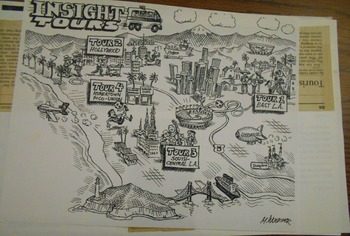
This did not mean that the TIDC automatically designated each community a site of intercultural unity. For their 1994 “Insight” tours, they generally assigned destinations and stops relevant to neighbourhoods’ predominant demographic and historical dimensions. The East LA journey, for instance, was joined by filmmaker Jesus Salvador Trevino as the tour guide, where he used the journeys between stops to explain the history of the Chicano/a movement and the displacement created by urban renewal, noting that “the story of Mexican Americans is the story of dislocation.”Footnote 56 The Pico-Union/Koreatown tour was marketed as an opportunity to meet LA's “newest community,” where half of all residents – Korean or Central American – had arrived into the area within the past decade.Footnote 57 Led by geographer Manuel Pastor, the tour offered the opportunity to watch the local high-school football team and “meet the players and their families after the game and learn about life in LA's immigrant communities,” and sample Korean cuisine at a food market.Footnote 58
Although widespread migration to South Central Los Angeles had resulted in Latinx people becoming the largest ethnic group in the area (as was recognized by the TIDC's visit to the Watts/Century Latino Organization), their tour of the area, titled “South Central Renaissance: The Struggle for Community,” focussed mainly on South Central's African American history. Their visits to the Watts Towers, a symbol of hope for African Americans following the 1965 Watts rebellion, and to “late-night jazz cafes, art galleries and African clothing boutiques,” reflected the TIDC's efforts to project a positive reinterpretation of a community closely associated with the black urban experience.Footnote 59 It was only their tour of Hollywood, named “The Hollywood Magnet – What's the Attraction?”, which looked to explore the multicultural reality of a neighbourhood within the city. This tour offered perhaps the clearest example of the TIDC's engagement with, and inversion of, typical stereotypes of the city's tourist destinations. The journey shunned the area's reputation as an entertainment capital and instead visited Casa Grande, a sanctuary for Central American refugees, noted that “80 languages and dialects are spoken at Hollywood High School,” and explored the reasons why 15,000 homeless youth were living in the area.Footnote 60 Thus the council did not look to portray Los Angeles as a simple tale of intercultural harmony. Instead, they celebrated the patchwork cultural heterogeneity of the city, demonstrating the insightful and engaging stories that lay within these communities, and projected an image of a complex but congruous urban landscape, working together for a new Los Angeles through the remaking of urban space. To the TIDC, the reclamation of urban space was not a goal to be attained by one racial or ethnic group alone. They saw the city's diversity as a “selling point,” and worked to bring these distinct communities together under the broader goal of securing spatial self-determination and autonomy for all residents throughout the city.Footnote 61
The TIDC conducted a total of eight bus tours. The first four were held in 1994, to coincide with the 1994 FIFA World Cup, where LA would be hosting eight tournament matches. The free tours were targeted at journalists arriving for the tournament, and they hoped that they would draw attention towards human-interest stories beyond the sporting spectacle, and provide more positive coverage concerning urban areas two years after the Rodney King crisis. In total, 103 local, national, and international journalists took part in these tours, alongside foreign dignitaries visiting LA for the World Cup. In 1996, the TIDC worked alongside the bureau to redesign and repeat the tours, as part of attractions available in aid of a large convention for 5,500 tourism professionals worldwide.
Illustrated map of Insight Tours offered by the TIDC in 1996, LAANE Files, Box 17, Folder 40.

In both instances, the tours hoped to debunk stereotypes regarding LA's communities of colour following the Rodney King crisis and demonstrate their potential as sites of tourist interest, as part of their wider efforts to reimagine how urban space was conceived, created, and utilized. This involved illustrating a less totalizing reality of everyday life in these communities, and promoting more “positive” stories obscured by newspaper headlines. For instance, their South Central tour visited the historic Dunbar Hotel. Originally opened in 1928 as the first hotel in Los Angeles designed specifically for African American patrons, the Dunbar Hotel hosted the leading black musicians, entertainers, and celebrities when they travelled to LA in the 1940s and 1950s. Despite being a national heritage site, the building fell into disrepair in the 1970s. Plans for its renovation were devised in 1978, but a number of financial and structural problems delayed this until 1990. Upon reopening, the Dunbar hosted both an African American history museum and seventy-two low-income housing units for residents and senior citizens, becoming the first residential accommodation to be built around the Central Avenue area of South Central for twenty-five years. Utilizing a site which both recognized the long history of economic and cultural vitality in South Central and simultaneously tackled the pressing contemporary issue of low-income housing encapsulated the innovative use of urban space and the “positive story” that the TIDC was attempting to convey.Footnote 62
In 1996, the South Central tour also visited the aforementioned headquarters of the Watts Labor Community Action Committee. Having seen their previous building destroyed during the crisis, the WLCAC rebuilt their home on South Central Avenue. The new centre housed a sculpture entitled Mother of Humanity, a ninety-nine-seat theatre, an art gallery, and a gift shop, sitting alongside the organization's main offices where employees attempted to secure social services for the local community.Footnote 63 It was created by the WLCAC with the hope of attracting visitors from outside the community, with President Teryl Watkins saying that they looked to “use art and culture as an economic base … if I bring you here to see this exhibit, when you leave you may need gas, you may stop to get a soda.”Footnote 64 This stop therefore sought to reflect upon, and support, the importance of the symbolic economy to the urban development of South Central. Moreover, the TIDC and WLCAC condensed the nuance and complexity of everyday life in South Central to demonstrate the wealth of experiences and stories within the community. The South Central tour was one of the most popular attractions offered by the Visitors Bureau to tourism professionals in 1996, second only to a tour of Disneyland.Footnote 65 In creating this success, the TIDC selected sites for their South Central tour that shared their vision and strategies for the future of Los Angeles. These were spaces that embraced the history, culture, and optimism of their community, whilst also looking to provide social services and foster economic development to help rebuild and improve the neighbourhood. It reconstructed popular images of the “place” of South Central as a viable tourist destination of interest to visitors, which in turn hoped to produce economic revitalization for the communities within the area.
By encouraging attendees to speak to activists themselves, and by engaging communities to discover what made residents proud of their neighbourhoods, the TIDC looked to foster greater participation in the creation of urban tourism policies. This reflected that the organization had broader goals beyond tourism development in the city, and wished to empower residents to claim urban space for the benefit of all residents. By demanding that areas such as South Central and East Los Angeles were marketed and promoted as tourism sites, activists were positioning residents of these communities as citizens amongst a much larger LA, equally valued by both the tourism industry and municipal politics more generally. As the TIDC explained, their work was designed to “empower minority communities, provide decent wages for workers, and thus make Los Angeles (all of Los Angeles) a nice place to visit, work and live.”Footnote 66 They argued that the tours created “a powerful ‘sense of place,’ and an equally powerful sense of confidence among the people who live and work in that place.”Footnote 67 Urban theorists from Jane Jacobs to Manuel Castells to Dolores Hayden have argued that the reclamation of urban space and the restoration of social identities within urban meaning provide the basis of dramatic political and economic change. Invigorated by a range of activist–scholars and years of experience in organizing grassroots urban movements, the TIDC utilized these bus tours not only to foster equitable tourism policies which focussed on poor communities of colour, but also to project their own visions of urban meaning which envisioned what social justice could look like for American cities in the 1990s.
REDEVELOPING ACTIVISM: THE LOS ANGELES ALLIANCE FOR A NEW ECONOMY
The TIDC's work to challenge inequalities within Los Angeles's tourist policies appears to have fostered some immediate changes to the industry. Moreover, their approach towards organizing around issues of space and place had important consequences for social justice and workers’ rights in LA. It is difficult to uncover detailed accounts regarding how either attendees, or residents, felt about the tours. Some community groups, however, indicated they were satisfied. Mothers of East Los Angeles (MELA) president Juana Gutierrez, who had helped to organize the East LA tour, was painfully aware of how negative perceptions and media stereotypes could impact the physical spaces of her community. MELA had become frustrated with typical portrayals of their community as “the worst area with nothing but gangs and people with tattoos,” and the group looked to challenge these stereotypes through their environmental campaigning.Footnote 68 Gutierrez commented that, following the tour, she was “glad people have come to see that our community is not as bad as it is painted.”Footnote 69 After attending this East LA tour, journalist Daniel Bernheim, who already lived in and reported on LA, stated that he had previously held a “certain image” of this community. He noted he was surprised when he visited East LA by the number of people walking on the streets, suggesting to him that they were neither afraid of gangs and crime, nor as reliant on cars as other residents.Footnote 70 His comments suggest that the TIDC's goals of removing the stigma of the inner city and revealing the cultural plurality of LA were being fulfilled, albeit on a limited scale.
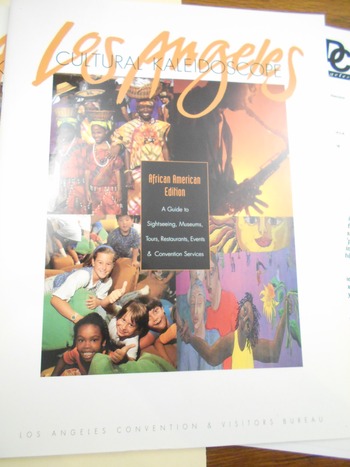
In terms of influencing municipally funded promotion of tourism, by 1997 the city's Convention and Visitors’ Bureau had created a cultural-tourism advisory board which sought to promote attractions in LA's communities of colour. The bureau also organized materials for self-guided tours of diverse neighbourhoods, creating “ethnic itineraries” for sites of cultural significance not on the usual tourist agenda. In total, over a million flyers advertising these were distributed to hotels, airlines, and other tourist centres.Footnote 71 While this evidence does not suggest a widespread or sweeping restructuring of the tourism industry in Los Angeles, it does demonstrate how efforts to reimagine and reshape the meaning of urban space held great potential to benefit low-income communities of colour.
Los Angeles Convention and Visitors Bureau, Los Angeles Cultural Kaleidoscope, African American Edition: A Guide to Sightseeing, Museums, Tours, Restaurants, Events & Convention Services, 1997, LAANE Files, Box 17, Folder 39.

Yet as the TIDC moved forward, their success in assembling a broad range of progressive activists to challenge issues related to the how urban space was understood and utilized would fundamentally alter the nature of social-justice organizing in LA. The TIDC's emphasis on the deficiencies surrounding state subsidies given to developers creating minimum-wage jobs was clearly applicable beyond the tourism industry. The board formed the Los Angeles Alliance for a New Economy (LAANE), an umbrella organization looking to tackle broad issues of social and economic justice, with Madeline Janis-Aparicio remaining as director. LAANE brought together academics, labour unions, block clubs, environmental groups, and progressive politicians to tackle regional issues, and primarily focussed on problems created by redevelopment and municipal subsidies.Footnote 72 Their first major victory came in 1997 when the council approved the city's Living Wage Ordinance, which mandated that any company holding contracts with the city worth $25,000 or above must pay their employees a living wage of at least $7.25 per hour with benefits (or $8.50 without).Footnote 73
LAANE's most common strategy to achieve what they called “accountable reinvestment” came through demands for “community benefits agreements.” Whenever contractors and developers agreed subsidies with the city regarding large developments, LAANE and their subsidiary groups protested to ensure that developers would “give back” to the communities they were building in. Taxpayer subsidies were becoming an increasingly popular policy on the part of local and state governments: in 1996, over $26 billion was given to private firms across the US. In 2001, California alone devoted $8 billion to these incentives.Footnote 74 LAANE believed that if the state was to provide such high levels of support to these private firms, then developers had a responsibility to improve the quality of life amongst low-income communities of colour. This meant more than agreeing to pay those who would work in these developments a living wage, but also included local hiring, as well as building housing, parks, childcare centres, and mitigation for the environmental impact of their developments.Footnote 75 Working alongside residents to design lists of priorities and desires for neighbourhoods, these community-benefit agreements were signed by developers of the Hollywood Boulevard project in 1998, the Staples Center expansion in 2000, and the North Hollywood Mixed-Use Redevelopment Project in 2002.Footnote 76
LAANE's most notable victory came through the prevention of a Wal-Mart being built in the primarily black neighbourhood of Inglewood in 2004. While, like many communities of colour in Los Angeles, Inglewood lacked retail facilities, Wal-Mart was a controversial employer that brought questionable economic benefits for communities owing to their vehemently antiunion stance. When Inglewood's city council attempted to pass a 2003 law banning the construction of “big-box” stores such as Wal-Mart, the corporation gathered enough signatures to place a ballot initiative before voters in April 2004. If passed, Measure 04-A would have allowed Wal-Mart to build a superstore the size of seventeen football fields, providing “virtual fiefdom” on the site.Footnote 77 LAANE led a broad coalition of local activists, including local chapters of ACORN and the Nation of Islam, in organizing a campaign to reject the measure. LAANE members found that residents’ concerns surrounding the Wal-Mart site reflected activists’ belief that communities should play a greater role in controlling development. After speaking to residents while leafleting the area, LAANE vice president Roxanna Tynan felt that people were angered that Wal-Mart refused “to get input on how to build or what to build.”Footnote 78 At the heart of this referendum, Tynan suggested, was “this basic, fundamental notion of a community's right to control its development.”Footnote 79 Despite spending over a million dollars on the campaign, and predictions of a comfortable victory, Wal-Mart were handily defeated in the referendum, with 60 percent of voters (over 7,000 residents) rejecting the measure.Footnote 80 As Tynan declared, it indicated a clear vote in favour of LAANE's policies, and a warning that “no longer should we be grateful to Wal-Mart or to other developers for providing our communities with poverty-level jobs and very little else.”Footnote 81
CONCLUSION
Therefore while LAANE has been celebrated for its success in rebuilding progressive organizing in southern California, this article has suggested that the often neglected Tourism Industry Development Council which preceded them were vital in helping to theorize and plan community organizing in the context of post-Rodney King Los Angeles and 1990s America. The TIDC's work to transform the tourism industry highlighted important questions regarding the material consequences of private redevelopment in the city. This challenged the assumptions and ideological basis which supported redevelopment substantially paid for by the taxpayer, and asked which groups and individuals benefited most from the development of urban community spaces.
Their campaigns therefore illustrated the important link between the production of urban space – both real and imagined – and problems of economic inequality and injustice in the city. These were issues which had been at the forefront of organizers’ concerns in the years preceding the King crisis as a result of the rapid respatialization of LA and the subsequent exacerbation of economic inequality. Crucially, the TIDC established workable strategies to tackle these problems and to improve the lives of those living within low-income communities of colour. Their “insight tours” provided one way of imagining the spatial future of Los Angeles, one in which these communities were integrated within the city's tourism strategy, and thus both subject to the economic benefits produced by tourism, and included, recognized, and celebrated as urban citizens.
Bus tours provided a means for the TIDC to communicate these visions of a future Los Angeles to a wider audience, to disrupt popular stereotypes and fictions regarding communities of colour, and to build support for their plans for a better city. It is therefore unsurprising that buses and bus tours continued to play an important role in grassroots campaigns in LA. The Bus Riders Union, organized by the Labor/Community Strategy Center, used the bus as a site of resistance throughout the late 1990s, creating “moving seminars on transit racism,” organizing fare strikes, and even suing the Los Angeles Metropolitan Transit Authority.Footnote 82
Furthermore, several former gang members created the nonprofit LA Gang Tours in 2010. Their service provides tourists with a three-hour luxury bus tour of Southern Los Angeles, which encompasses oral histories of gang life in the city, but also features visits to the Watts Towers and adjacent arts centre, and a discussion of the juxtaposition between the homeless slum of Skid Row and the city's financial district.Footnote 83 The company received criticism from white and black commentators alike, with the tours perceived as exploiting and profiting from the negative stereotypes and assumptions made about life in South Central.Footnote 84 Scholar Armond Towns – once a critic of the business – has instead argued that the tours have the potential to enact “radical change” through their “complex critique of institutional racism” which seeks to emphasize the humanity of black and Latinx people and challenge their exclusion from capitalism.Footnote 85
In a linguistically minor but symbolically significant change, South Central was renamed South Los Angeles in 2003 in a further effort to distance the neighbourhood from associations with crime and poverty.Footnote 86 The area has undergone substantial redevelopment in recent years: the expansion of Expo Park, new Metro rail links, and large stadia built to accommodate sports franchises have once again transformed the landscape of the neighbourhood.Footnote 87 Fears of “gentrification” have raised concerns surrounding how the low-income residents who have populated South Central for generations will be able to afford to remain in the area. These transformations have therefore also posed questions regarding who controls development, which sections of society benefit from the remaking of urban space, and what the social character of this “new” South LA will look like.Footnote 88 The TIDC, and later LAANE, were hopeful but extremely cautious about the benefits of such redevelopment. They used bus tours as a literal and metaphorical vehicle to present their visions for a new Los Angeles which mitigated the geographical consequences of political and economic change. Understanding their story and these visions not only illuminates a critical period of 1990s US history, but also helps us to imagine the possibilities of urban futures which deliver economic and social justice.