Introduction
Concussions or mild traumatic brain injury (mTBI) are common injuries for children and adolescents (Centers for Disease Control and Prevention, 2015). While estimates suggest that almost two million youth experience concussions due to recreational activities in the United States each year (Bryan, Rowhani-Rahbar, Comstock, Rivara, & Seattle Sports Concussion Research Collaborative, Reference Bryan, Rowhani-Rahbar, Comstock and Rivara2016), this is likely an underestimate due in part to limitations with assessment and diagnostic awareness in pediatric populations (Centers for Disease Control and Prevention, 2015; Langlois, Rutland-Brown, & Wald, Reference Langlois, Rutland-Brown and Wald2006). Symptoms of pediatric concussions, which include a range of physical, cognitive, sleep, and mood concerns, disrupt youth’s functioning over short- and long-term durations (Rose, Weber, Collen, & Heyer, Reference Rose, Weber, Collen and Heyer2015; Zemek, Farion, Sampson, & McGahern, Reference Zemek, Farion, Sampson and McGahern2013). Although the course of symptoms tends to be transitory, youth diagnosed with concussion often experience significant impairment in regard to academic and recreational performance, familial and peer relations, and general well-being during the recovery period (Centers for Disease Control and Prevention, 2015; Keightley et al., Reference Keightley, Côté, Rumney, Hung, Carroll, Cancelliere and Cassidy2014).
Following the general consensus for concussion rehabilitation (McCrory et al., Reference McCrory, Meeuwisse, Dvorak, Aubry, Bailes, Broglio and Vos2017), guidelines recommend a stepped recovery program that balances rest with gradual reintroduction of daily activities to promote youth’s return to pre-concussion functioning (DeMatteo et al., Reference DeMatteo, Lin, Foster, Giglia, Thabane, Claridge and Connolly2019; Gioia, Reference Gioia2015). Unfortunately, not all young patients follow these recovery guidelines (Hwang et al., Reference Hwang, Trickey, Lormel, Bradford, Griffen, Lawrence and Howell2014). Non-adherence to concussion rehabilitation guidelines (e.g., returning to daily activities too quickly, over-resting and failing to progress in recovery) can place child and adolescent patients at-risk for poor prognosis (e.g., aggravating concussion symptoms, risk of re-injury, secondary emotional/behavioral issues; Gioia, Reference Gioia2015; Hwang et al., Reference Hwang, Trickey, Lormel, Bradford, Griffen, Lawrence and Howell2014; Terwilliger, Pratson, Vaughan, & Gioia, Reference Terwilliger, Pratson, Vaughan and Gioia2016) and may likely impede a return to pre-concussion functioning. Thus, it is essential to understand factors that influence adherence to concussion treatment guidelines to optimize recovery in child and adolescent patients.
Self-efficacy has been shown to predict treatment adherence (Zebracki & Drotar, Reference Zebracki and Drotar2004) and positive health outcomes (Armbrust et al., Reference Armbrust, Lelieveld, Tuinstra, Wulffraat, Bos, Cappon and Hagedoorn2016; Steele, Daratha, Bindler, & Power, Reference Steele, Daratha, Bindler and Power2011) in youth with chronic medical conditions. Self-efficacy refers to an individual’s confidence in his or her own capabilities to organize and execute actions (Bandura, Reference Bandura1997). Young patients’ concussion self-efficacy, or confidence in their ability to manage their concussion symptoms, may play a critical role in their recovery. For instance, youth who have greater confidence in their ability to manage their concussion symptoms would demonstrate better adherence to rehabilitation guidelines and experience optimal post-concussion outcomes. Indeed, a small number of studies have linked positive outcomes (i.e., treatment engagement, adaptive coping) and self-efficacy among adults with traumatic brain injury (Belanger et al., Reference Belanger, Barwick, Silva, Kretzmer, Kip and Vanderploeg2015; Scheenen, van der Horn, de Koning, van der Naalt, & Spikman, Reference Scheenen, van der Horn, de Koning, van der Naalt and Spikman2017). However, limited research is available examining the relationship between concussion symptom severity and self-efficacy among children and adolescents. Determining the relationship between self-efficacy and concussion symptom severity in youth can pave a new way for interventions to optimize post-concussion recovery outcomes.
When examining self-efficacy and concussion symptom severity, it is important to consider how affective states like depression may impede self-efficacy (Kavanagh, Reference Kavanagh2014). Evidence suggests that children and adolescents who experience mTBI may be at elevated risk for developing depressive symptoms relative to healthy and non-head injured populations (Laliliberté Durish et al., Reference Laliliberté Durish, Pereverseff and Yeates2018). Depending on the timing of the assessment and the assessment instrument, rates of depression among youth aged 8–18 years old who have experienced mTBI varies from approximately 5.3–36%, (Laliliberté Durish et al., Reference Laliliberté Durish, Pereverseff and Yeates2018). Depressive symptoms, such as low mood, negative cognitive biases, and social withdrawal can be detrimental to self-concept, self-esteem, and influence self-confidence in the performance of daily activities (Maddux & Kleiman, Reference Maddux, Kleiman, Wood and Johnson2016). For example, a teenage soccer player recovering from a concussion may experience a markedly lower mood and social withdrawal alongside other concussion symptoms. Although a clinician follows evidence-based guidelines (Lumba-Brown et al., Reference Lumba-Brown, Yeates, Sarmiento, Breiding, Haegerich, Gioia and Timmons2018) and provides appropriate psychoeducation about the importance of treatment adherence, the patient’s depressive symptoms can impede self-efficacy and treatment adherence in several ways. The young person may experience hopelessness (i.e., a negative cognitive bias) about post-concussion outcomes, which leads to the belief that their actions do not actually influence concussion symptom severity (i.e., low self-efficacy) and results in poor treatment adherence. Although this is just one way in which depressive symptoms might impede self-efficacy, it highlights that the co-occurrence of depressive symptoms likely places child and adolescent concussion patients at-risk for lower self-efficacy, limited treatment adherence, and ultimately a poor prognosis.
Given these concerns, this study investigated the interrelationships among self-efficacy, depression, and concussion symptom severity among child and adolescent concussion patients. First, we characterized concussion symptom severity, depression, and youth’s self-efficacy for managing concussion recovery. Second, we examined whether self-efficacy predicted concussion symptom severity. Based on the extant literature regarding pediatric medical conditions, we hypothesized that greater levels of self-efficacy would predict lower levels of concussion symptom severity. Third, given that depressive symptoms may impede self-efficacy, we explored whether depressive symptoms moderated the relationship between self-efficacy and pediatric concussion symptom severity.
Method
Participants
In total, 105 children and adolescents (M = 14.0 years, SD = 2.1 years) who presented to a pediatric concussion specialty clinic were included in the study. Participants met the following inclusion criteria: 8–17 years of age (inclusive); diagnostic criteria for a concussion diagnosis as determined by a doctoral-level neuropsychologist based on criteria established by the Centers for Disease Control and Prevention (i.e., recent blow/force/jolt to head or body, onset of cognitive/mood/fatigue/sleep-related concussion symptoms following injury, rule out differential diagnoses; Centers for Disease Control and Prevention, 2019); occurrence of concussion injury within 30 days of presenting to the clinic; and one caregiver able to participate in the assessment. Youth were excluded from participation if they were unable to speak and/or understand the English language. While there was a similar distribution of gender in the sample (51% male), participants were predominantly Caucasian (69%). Youth completed the study evaluation approximately 12 days after concussion injury (M = 12.18 days, SD = 7.5 days, range: 2–30 days). Causes of injuries that resulted in concussions among participants included sports (68.6%), falls (14.3%), other activities (7.6%), assaults (5.7%), and motor vehicle collisions (2.9%). For most participants, this was the first concussion injury (n = 103, 98%).
Measures
Progressive Activities of Controlled Exertion- Self-Efficacy (PACE-SE; Gioia, Reference Gioia2015)
The PACE-SE is a novel 17-item measure that assesses children’s perceptions of self-efficacy for an active approach toward pediatric concussion recovery (Gioia, Reference Gioia2015). Child and adolescent participants rated statements on a 10-point dimensional scale (0 = “Not Confident I Can Do It,” 10 = “Highly Confident I Can Do It”) regarding their ability to manage concussion symptoms, ask for assistance, and remain optimistic about recovering from their concussion injury. Items are summed for a total score, with higher scores indicative of greater concussion self-efficacy. Internal consistency reliability for the PACE-SE scale was high in the study sample, (α = .90).
Post-concussion Symptom Inventory (PCSI; Sady, Vaughan, & Gioia, Reference Sady, Vaughan and Gioia2014)
The PCSI is a questionnaire that captures overall concussion symptom severity, assessing patients’ emotional, physical, cognitive, and fatigue concerns. Three developmentally validated versions of the measure were used in the study, including a 17-item self-report for children aged 8–12 years (3-point response scale), a 21-item self-report for adolescents aged 13–18 years (7-point response scale), and a 20-item parent report (7-point response scale; Sady, Vaughan, & Gioia, Reference Sady, Vaughan and Gioia2014). The PCSI total score has good internal consistency and convergent validity across versions of the measure (Sady et al., Reference Sady, Vaughan and Gioia2014). Two ratings are captured for each item on the questionnaire: symptoms before the injury/retrospective baseline (RBL) and current symptoms (yesterday and today). Retrospective-Adjusted Post-Injury Difference (RAPID) score totals were computed by subtracting the sum of the RBL symptom ratings from the sum of post-injury symptom ratings. Parent- and child/adolescent self-report PCSI RAPID score totals were utilized as outcome measures.
Revised Children’s Anxiety and Depression Scale (RCADS; Chorpita, Moffitt, & Gray, Reference Chorpita, Moffitt and Gray2005)
The RCADS is a 30-item questionnaire that assesses children’s affective symptoms both pre- and post-concussion injury (Chorpita et al., Reference Chorpita, Moffitt and Gray2005). Parent and child/adolescent raters indicate on a 4-point scale the degree to which the child has experienced a particular emotional concern (e.g., low mood) within the past week. Norms are used to derive standardized T scores, with higher scores indicative of greater levels of symptoms. T scores between 65 and 69 are considered to be “borderline” concerning, whereas T scores of 70 and above are considered to be “clinically-elevated” (Chorpita et al., Reference Chorpita, Moffitt and Gray2005). Evidence suggests that the RCADS has good internal consistency and convergent validity (Chorpita et al., Reference Chorpita, Moffitt and Gray2005; Ebesutani et al., Reference Ebesutani, Bernstein, Nakamura, Chorpita and Weisz2010). Current mood concerns were captured by parent- and child-reported ratings on the 10-item RCADS major depression index.
Procedures
The present study was approved by the local institutional review board. Research was completed in accordance with the Helsinki Declaration. Participants and their caregivers were recruited during an outpatient evaluation at the Safe Concussion Outcome Recovery & Education (SCORE) Program within Children’s National Hospital—a large regional hospital in the Washington, D.C. metro area. After obtaining consent to have information entered into a clinical research database, a doctoral-level neuropsychologist conducted a clinical interview with children and caregivers to establish the concussion diagnosis. Next, children and parents completed questionnaires assessing overall concussion symptom severity (PCSI), self-efficacy (PACE-SE), and children’s current depressive symptoms (RCADS).
Analytic Plan
Descriptive statistics and correlation analyses characterized the sample. Since the scaling of the child and adolescent versions of the PCSI were slightly different, all self-reported PCSI scores were transformed into Z scores for correlation and regression analyses. Given the significant correlation identified between participant sex and youth-reported PCSI Z scores, sex was controlled for in subsequent regression analyses with this particular outcome variable. Hierarchical regression models examined whether self-efficacy predicted parent- and self-reported concussion symptom severity with separate models run for each informant. Additionally, hierarchal regression models explored whether depression moderated the relationship between self-efficacy and concussion symptom severity. Continuous predictor variables (self-efficacy, depression ratings) were mean-centered to reduce multicollinearity for moderation regression analyses. For each report of concussion symptom severity, two-step hierarchical regression models were run. In the first step of each model, two main predictor variables were included: children’s self-efficacy ratings and either parent- or child-reported current depression symptom ratings. In the second step of each regression, an interaction term between self-efficacy and depression ratings was included in the model. Follow-up simple slope analyses were conducted to probe for significant interaction effects by examining the relationship between concussion symptom severity and mean-centered self-efficacy at moderator levels (parent- and child-reported levels of current depression), at 1 SD above and 1 SD below mean-centered depressive symptom scores.
Results
Participant Characteristics and Clinical Correlates
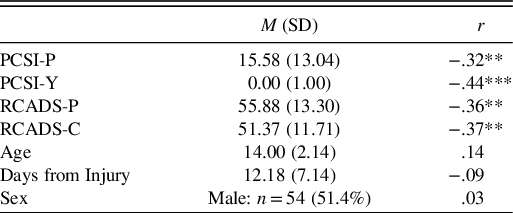
Participants reported moderate levels of concussion self-efficacy (M = 120.06, SD = 30.31) on the PACE-SE. Children (M = 11.82, SD = 7.19) and adolescents (M = 30.46, SD = 21.38) reported moderate concussion severity on respective self-report versions of the PCSI (Gioia, Vaughan, & Sady, Reference Gioia, Vaughan and Sady2019). In regard to RCADS ratings, 16.1% of parent-rated depression ratings and 8.3% of youth-reported depression ratings were at or above the clinical threshold. Child and adolescent self-reported concussion symptom severity was moderately correlated with parent-reported concussion symptom severity ratings, r = .49, p < .001. Youth-reported depression ratings were not significantly correlated with parent-reported depression ratings, r = .17, p = .221. Table 1 presents descriptive and correlational statistics between participant’s self-efficacy and clinical characteristics. Self-efficacy ratings exhibited small-to-moderate relationships with parent- (r = −.32, p<.01) and youth-reported (r = −.44, p<.001) concussion symptom severity, such that lower levels of concussion self-efficacy were associated with greater levels of overall concussion symptom severity. Additionally, self-efficacy ratings demonstrated small relationships with parent- (r = −.36, p<.01) and youth-reported (r = −.37, p<.01) depression ratings. Similarly, lower levels of self-efficacy were associated with higher levels of depression symptoms. Neither participants’ age nor number of days from injury were significantly correlated with key study parameters (overall concussion severity, depression ratings, self-efficacy). Neither parent- nor youth-reported retrospective baseline ratings on the PCSI were significantly associated with number of days from injury. Of note, participants’ sex was associated with participants’ self-report PCSI total adjusted Z scores, (r = −.20, p = .037). Specifically, female participants were more likely to self-report greater concussion symptom severity relative to male participants. Taken together, small-to-moderate significant relationships amongst concussion symptom severity, self-efficacy, and depression symptoms were present.
Descriptives of participant characteristics and their correlations with concussion self-efficacy

Note. Abbreviations: RCADS-P, C = Revised Children’s Anxiety and Depression Scale-Parent, Child Report; PCSI-P, Y = Post-concussion Symptom Inventory-Parent, Youth Report; PCSI-Y reported as a Z score; For significance values: ** denotes p < .01, *** denotes p < .001, all others n.s.
Self-Efficacy as a Predictor of Concussion Symptom Severity
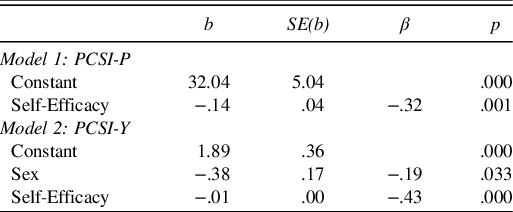
Table 2 presents the linear regression results of self-efficacy predicting parent- and child-reported overall concussion symptom severity. When examining whether self-efficacy predicted parent-rated PCSI scores, the overall model was significant, F(1,98) = 11.38, p = .001, R 2 = 0.10. Lower self-efficacy scores significantly predicted higher parent-reported ratings of concussion symptom severity. In a separate model, self-efficacy predicted youth-ratings of concussion symptom severity on the PCSI, F(2,101) = 14.78, p < .001, R 2 = 0.23. Controlling for sex, lower self-efficacy scores significantly predicted greater levels of youth-reported concussion symptom severity.
Self-efficacy as a predictor of concussion symptom severity

Note. Abbreviations: PCSI-P, Y = Post-concussion Symptom Inventory-Parent, Youth Report
Influence of Depression on the Relationship between Self-Efficacy and Concussion Symptom Severity
Parent-Reported Depression as a Moderator
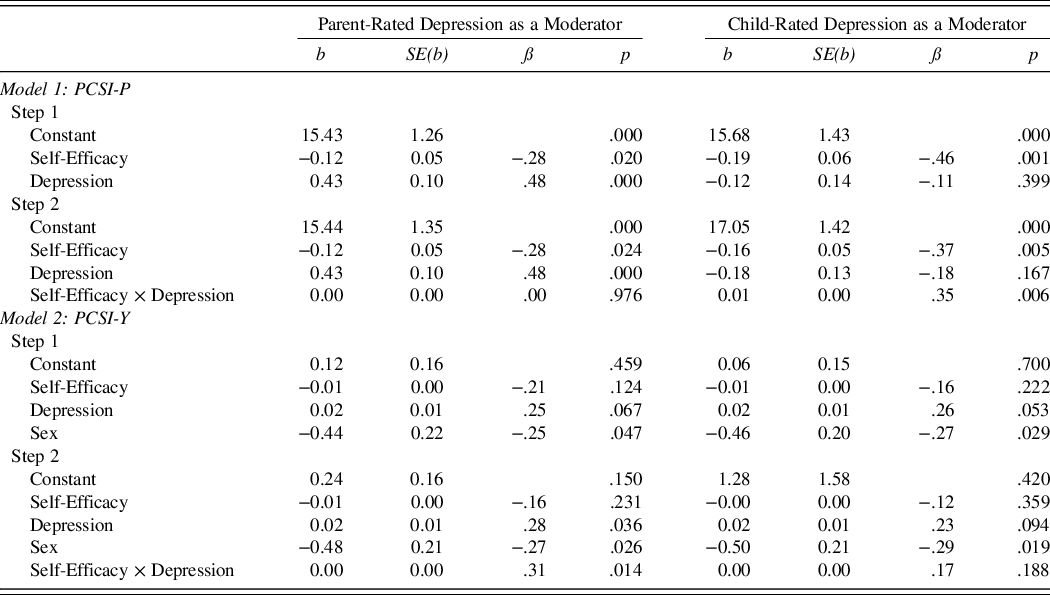
Table 3 presents the regression model examining whether parent-reported depression moderates the relationship between self-efficacy and parent-reported concussion symptom severity. The first step of the model included mean-centered self-efficacy and mean-centered parent-reported depressive symptoms as predictors of concussion symptom severity. The overall model was significant, F(2,52) = 17.94, p < .001, R 2 = 0.41. In the second step, the interaction term of depression × self-efficacy was added to the model. Although the overall model was also significant, F(3,51) = 11.73, p < .001, this step of the model did not account for more variance (ΔR 2 = 0, p = .976).
Depression, self-efficacy, and clinical characteristics as predictors of concussion symptom severity

A separate regression model examined whether parent-reported depression moderated the relationship between self-efficacy and child-reported concussion symptom severity (Table 3). The first step of this model included mean-centered self-efficacy and mean-centered parent-reported depressive symptoms, and controlled for participants’ sex due to its correlation with youth-reported concussion symptom severity. The overall model was significant, F(3,51) = 4.42, p = .008, R 2 = 0.21. In the second step, an interaction term of depression × self-efficacy was added to the model. The overall model was significant, F(4,50) = 5.27, p = .001, and accounted for additional variance (ΔR 2 = .09, p = .014). Stated plainly, parent-reported depression moderated the relationship between self-efficacy and concussion symptom severity. Follow-up simple slopes analysis revealed that participants with parent-reported depression 1 SD below the mean performed differently than participants at the mean and 1 SD above the mean. A negative relationship between self-efficacy and youth-reported concussion symptom severity was identified for youth with depressive symptoms 1 SD below the mean, b = −0.02, p = .003, confidence interval (CI) [−0.02 to −0.01]. However, self-efficacy was unrelated to youth-reported concussion symptom severity for youth with depressive symptoms at the mean (b = −0.01, p = .264, CI [−0.01 to 0.00]), and also for youth with depressive symptoms 1 SD above the mean (b = 0, p = .563, CI [−0.01 to 0.02]).
Child-Reported Depression as a Moderator
Table 3 presents the regression model investigating whether child-reported depression moderated the relationship between self-efficacy and parent-reported concussion symptom severity. The first step of the model included mean-centered self-efficacy and mean-centered self-reported depressive symptoms as predictors of parent-reported concussion symptom severity. The overall model was significant, F(2,55) = 5.94, p = .005, R 2 = 0.18. In the second step, the interaction term of depression × self-efficacy was added to the model. The overall model was significant, F(3,54) = 7.27, p < .001 and accounted for more variance (ΔR 2 = .11, p = .006). This shows that child-reported depression moderated the relationship between self-efficacy and parent-reported concussion symptom severity. Follow-up simple slopes analysis revealed that participants at the mean and participants 1 SD below the mean performed differently relative to participants 1 SD above the mean. Results displayed a negative relationship between self-efficacy and parent-reported concussion symptom severity for youth with depressive symptoms at the mean (b = –0.16, p = .005, CI [–0.28 to –0.05]) and for youth with depressive symptoms 1 SD below the mean [b = –0.30, p < .001, CI [−0.43 to −0.16]). However, self-efficacy was not related to parent-reported concussion symptom severity for youth with depressive symptoms 1 SD above the mean (b = −0.03, p = .634, CI [−0.17 to 0.10]).
A separate regression model evaluated whether self-reported depression moderated the relationship between self-efficacy and child-reported concussion symptom severity (Table 3). The first step of this model included mean-centered self-efficacy and mean-centered child-reported depression, and controlled for participants’ sex due to its correlation with concussion symptom severity. The model was significant and accounted for accounted for 22% of the variance, F(3,55) = 5.26, p = .003. In the second step, an interaction term of depression × self-efficacy was added to the model. Although the overall model was also significant, F(4,54) = 4.45, p = .004, this step of the model did not account for more variance (ΔR 2 = .03, p = .188).
Discussion
This study examined the relationship between self-efficacy and concussion symptom severity in a sample of children and adolescents who had sustained a concussion. Findings suggest that higher ratings of self-efficacy are predictive of lower levels of overall concussion symptom severity for youth patients. These findings are consistent with reports in other chronic medical conditions in pediatric populations (Armbrust et al., Reference Armbrust, Lelieveld, Tuinstra, Wulffraat, Bos, Cappon and Hagedoorn2016; Steele et al., Reference Steele, Daratha, Bindler and Power2011) and add to the work of Woodrome and colleagues (Woodrome et al., Reference Woodrome, Yeates, Taylor, Rusin, Bangert, Dietrich and Wright2011), who found that children diagnosed with mTBI who endorsed greater levels of problem-focused coping tended to indicate lower levels of self-reported post-concussive symptoms. Taken together, these results highlight the importance of self-efficacy in the pediatric concussion recovery process.
Moderation analyses indicated that depression impeded the relationship between self-efficacy and concussion symptom severity. While child-reported depression moderated the relationship between self-efficacy and parent-reported concussion symptom severity, parent-reported depression moderated the relationship between self-efficacy and child-reported concussion symptom severity. High levels of depressive symptoms (i.e., 1 SD above the mean) had deleterious effects and impeded the predictive relationship between self-efficacy and concussion symptom severity. Child and adolescent concussion patients with elevated depressive symptoms may experience more doubt and negative cognitive bias, which in turn could negatively affect self-confidence in their ability to manage their concussion recovery. However, this pattern of results was not observed across all of our moderation analyses—namely, there were no significant moderation effects when both depression and concussion symptom severity were reported by the same informant (e.g., child-reported depression, child-reported concussion symptom severity). Although this could be a statistical artifact, this pattern of results could be influenced by informants. Evidence points to the complementary nature of parent- and child-reported symptom ratings in pediatric concussion assessment, as each rater provides unique insight into specific concerns that the other rater may lack (Sady et al., Reference Sady, Vaughan and Gioia2014). It is possible that young participants demonstrated limited insight into current depressive symptoms on the RCADS relative to their parent raters (e.g., “I feel sad or empty”). Similarly, parents may have limited insight into the pervasive nature of concussion symptom severity. These findings underscore the importance of multi-informant assessment of pediatric concussion. While further research is needed, findings call attention to the value of screening for affective concerns amongst youth who have experienced concussion. In addition to understanding the impact of depressive symptoms among children and adolescents with concussion, future research should also explore the role of anxiety, given the co-occurrence of these affective concerns among other populations.
These results show promise for facilitating child and adolescent concussion patients’ recoveries. During a concussion evaluation, providers can incorporate assessments of patients’ self-efficacy and affective functioning. For young patients with low to moderate levels of depressive symptoms, providers can disseminate psychoeducation about pediatric concussion, check for young patients’ understanding, develop a plan for challenging moments, and collaboratively problem-solve barriers that may arise during recovery (Marks & Allegrante, Reference Marks and Allegrante2005). These steps could enhance young patients’ self-efficacy to improve adherence to rehabilitation guidelines, which in turn, optimize recovery outcomes. Indeed, Ponsford and colleagues (Reference Ponsford, Willmott, Rothwell, Cameron, Ayton, Nelms and Ng2001) found that providing psychoeducation to pediatric mTBI patients and their families was significantly associated with reduced anxiety and symptom burden later in recovery. Similarly, DeMatteo and colleagues (Reference DeMatteo, Lin, Foster, Giglia, Thabane, Claridge and Connolly2019) found that child and adolescent concussion patients’ knowledge of the concussion rehabilitation protocol positively predicted their adherence to treatment guidelines. Evidence suggests that child and adolescent patients who follow stepped recovery rehabilitation experience improvements in concussion symptoms and return to daily activities sooner (DeMatteo et al., Reference DeMatteo, Lin, Foster, Giglia, Thabane, Claridge and Connolly2019). Thus, by providing patients and their caregivers with a clear sense of what a typical pediatric concussion presentation looks like, clinicians can collaborate with families to build patients’ self-efficacy and optimism for a positive prognosis (e.g., patient may gradually return to sport over time following concussion, rather than being permanently restricted from sport). For child and adolescent concussion patients who exhibit elevated levels of depressive symptoms, it is important to consider whether the patient might benefit from evidence-based treatment [e.g., Cognitive behavioral therapy (CBT), medication management] to efficiently triage mood concerns alongside intervention efforts targeting self-efficacy (Gornall et al., Reference Gornall, Takagi, Clarke, Babl, Davis, Dunne and Anderson2019). In sum, clinicians should feel empowered to promote optimal recovery outcomes for child and adolescent concussion patients by fostering their self-efficacy and addressing affective concerns.
Several limitations exist concerning the present study. Although these findings are meaningful, it is important to acknowledge the significant overlap between concussion symptoms and depression among children and adolescents with concussion (Ho et al., Reference Ho, Hall, Noseworthy and DeMatteo2020). Investigators should make efforts to distinguish concussion and depression symptom phenomenology in future studies. Secondly, this project utilized cross-sectional data, which provided a relationship between these variables at one point in time. Although we found evidence that self-efficacy predicted pediatric concussion symptom severity, future longitudinal research is necessary to determine whether self-efficacy is predictive of child and adolescent concussion patients’ symptom presentations over time. Indeed, further investigations are needed to determine whether patients’ concussion self-efficacy may change over time, and how fluctuations in self-efficacy relate to depression and overall concussion symptom severity. While clinical characteristics (i.e., age, days from injury) were not significantly related to key parameters in the present sample, future research should consider the potential influence of these characteristics on self-efficacy, depression, and concussion outcomes. Additionally, reporting discrepancies across informants (parent versus youth) may have influenced results. For instance, parent raters may have misinterpreted youths’ concussion symptoms as depressive symptoms. Future research investigating concussion, self-efficacy, and depression among youth should aim to incorporate multi-informant and objective assessment measurements whenever possible. Multi-informant assessments should also account for potential rater effects (e.g., parent-rated depression may differ across mothers and fathers). Furthermore, the present study relied on participants’ subjective ratings of concussion self-efficacy. The inclusion of objective self-efficacy measures, such as ecological momentary assessment (EMA), would be beneficial to determine “in the moment” and/or “real world” ratings of self-efficacy in future research. For instance, EMA could provide clinicians with valuable insight into patients’ self-efficacy during day-to-day challenges involved in resuming regular activities post-concussion.
In summary, findings highlight the importance of self-efficacy on concussion symptom severity in children and adolescents. Given its relationship with concussion outcomes, interventions that target self-efficacy hold considerable promise to increase rehabilitation adherence and ultimately optimize recovery outcomes. For young concussion patients who experience elevated depressive symptoms, clinicians should consider addressing depression in addition to promoting patients’ self-efficacy.
Supplementary material
To view supplementary material for this article, please visit https://doi.org/10.1017/S1355617720001320
Funding
The authors report no financial interests with grant funding or commercial interests.
Conflicts of Interest
The authors report no conflicts of interest. Drs. Ramsey and Wagner report no disclosures. Dr. McGuire reports having received research or grant support from the Tourette Association of America, American Academy of Neurology, the Brain Research Foundation, American Psychological Foundation, and the Hilda and Preston Davis Family Foundation. He has received royalties from Elsevier, and has served as a consultant for Signant Health, Syneos Health, and Luminopia. Finally, Drs. Vaughan and Gioia report being co-authors of the PACE-SE and PCSI, two measures utilized in the present study. However, neither Dr. Vaughan nor Dr. Gioia receive financial benefits from these two measures.