


Introduction
Intolerance of uncertainty (IU) has been found to be a separate construct to other frequently reported dispositional characteristics of fear, such as anxiety sensitivity and illness sensitivity (Carleton et al., Reference Carleton, Thibodeau, Osborne, Taylor and Asmundson2014). It is also proposed to be distinct from anxiety (Carleton, Reference Carleton2012). Cognitive behavioural therapy (CBT) has long established the key role of threat appraisal in anxiety; however, research into a more newly established construct, that of IU, has largely concentrated on the contributions of trait IU to anxiety. This has made it difficult to establish the nature of the conceptual relationship between IU and threat appraisal in anxiety. Therefore, it seems important to determine their conceptual definitions and track the evidence in support of them independently prior to considering their relationship. Clinically, this would be important in terms of informing case conceptualization and treatments of anxiety. It is acknowledged that there are other constructs which are clearly are important in the conceptualization and experience of anxiety (including anxiety sensitivity, self-efficacy, distress tolerance and others), but these two constructs were selected as they were felt to be key in current theoretical and clinical developments in our understanding and treatment of anxiety, and the others were beyond the scope of the current review. In order to understand more fully each individual construct prior to considering their potential relationship, the paper will firstly state the working definitions of IU and TA and then outline the theoretical components of each construct.
Defining constructs
Fear and anxiety
Fear and anxiety are normal responses to the perceived dangerousness of certain situations that we all experience on occasions, to different degrees of intensity. These emotional responses are elicited when individuals are faced with danger, or threat, and motivate adaptive reactions to relieve the unpleasant emotional state (Rosen and Schulkin, Reference Rosen and Schulkin1998). There is generally an accepted distinction made between these responses. Fear is described as a response which quickly mobilizes protective reactions to direct danger or life-threatening situations (Barlow, Reference Barlow2000), and therefore is an immediate defensive response to identifiable threat (Barlow, Reference Barlow2002). By comparison, anxiety is described as an apprehensive emotional response that is produced by the anticipation of potentially dangerous events in the absence of any identifiable source (Beck et al., Reference Beck, Rush, Shaw and Emery1979; Rachman, Reference Rachman1990). Early cognitive accounts (Beck et al., Reference Beck, Emery and Greenberg1985) proposed that anxiety is an uncontrollable affective response dependent upon the interpretation of a situation and the appraisal of a possible threat of negative events (i.e. negative outcomes), so it is ‘the interpretation of a situation or stimulus as a sign of personal threat which is essential to the experience of this emotion’ (Salkovskis, Reference Salkovskis and Salkovskis1996; p. 50). At its core, the threat is uncertainty about a possible danger, thus possible responses to this potential threat are preparatory rather than defensive. Whilst anxiety is in many respects a normal and understandable response to potential threat, what remains a puzzle clinically is the maintenance of dysfunctional, unhelpful and distressing anxiety. Two key cognitive constructs that comprise our conceptualization of anxiety are threat appraisal (TA) and intolerance of uncertainty (IU).
Threat appraisal
Early studies on the appraisal or perception of threat or danger suggested that this process is a key component in the development and maintenance of anxiety disorders (Butler and Mathews, Reference Butler and Mathews1983; Carr, Reference Carr1974). TA is defined as an individual’s interpretation of both the probability and severity of a future negative event occurring (Carr, Reference Carr1974). It has been proposed that anxiety develops due to errors in the judgements or decision-making in terms of appraisal of the threat. This includes: the over-estimation of the probability of a dangerous incident occurring; an over-estimation of the negative impact or severity this event would result in if it actually happened; and an under-estimation of the coping resources and available rescue factors (Beck et al., Reference Beck, Emery and Greenberg1985; Salkovskis, Reference Salkovskis and Salkovskis1996). From this perspective, maladaptive or unhelpful anxiety is anticipatory in nature: it involves complex cognitive processes linked with the over-estimation of threat inherent in a given situation, and estimations of insufficient efficacy to cope with the potential situation.
Intolerance of uncertainty
Theoretically, it is proposed that an inability to tolerate uncertainty associated with unknown outcomes plays a role in the development and maintenance of clinically significant anxiety (Dugas et al., Reference Dugas, Gagnon, Ladouceur and Freeston1998; Freeston et al., Reference Freeston, Gagnon, Ladouceur, Thibodeau, Letarte and Rheaume1994). Within this early conceptualization, it is not the misappraisal of a situation that is seen as problematic; rather, it is that elements of a situation are uncertain, and this is experienced as difficult to tolerate. A recent review of IU’s conceptual foundations highlighted the ongoing evolving nature of the IU literature and its associated definitions (Shihata et al., Reference Shihata, McEvoy, Mullan and Carleton2016). Whilst IU was originally defined as a broad construct, according to Shihata et al. (Reference Shihata, McEvoy, Mullan and Carleton2016; p. 116) the current consensus describes IU as a ‘dispositional characteristic that reflects a set of negative beliefs about uncertainty and its implications’ (Dugas and Robichaud, Reference Dugas and Robichaud2007), and represents an underlying fear of the unknown (Carleton, Reference Carleton2016). This implies that uncertainty is aversive, and the fear of not knowing may lead to more negative beliefs about the possible outcomes of uncertain situations. Additionally, Shihata et al. (Reference Shihata, McEvoy, Mullan and Carleton2016) focused on a further definition of IU which described this concept as an ‘incapacity to endure the aversive response triggered by the perceived absence of salient, key, or sufficient information’ (Carleton, Reference Carleton2016; p. 31). This describes how reactions to IU are experienced very negatively, which in itself could enable a threat response. From these recent reviews, it appears that IU itself is aversive and threatening and it is this experience which contributes to significant anxiety; it may also be that this aversion to IU plays an influential role in the estimation of threat appraisals. However, IU remains a broadly defined construct with multiple co-existing definitions (Carleton, Reference Carleton2012), although it is proposed that at its core, IU represents fear of the unknown.
Relationship between threat appraisal and intolerance of uncertainty
Although TA and IU both appear to be closely related to anxiety, the potential theoretical relationship between these concepts in anxiety has not yet been explored. In the literature, there are many implicit links made between the constructs of IU and threat appraisal within our understanding of anxiety. However, most studies have not attempted to explore the relationship between the two constructs. Some researchers hypothesize that the construct of IU may simply be another form of TA, so the independence of the two constructs requires examination. Whilst the literature relating to TA has focused primarily on our estimations of subjective personal risk and the clinical utility of re-appraising over-estimations of threat, the IU literature appears much broader, exploratory in nature, with many studies looking at proof of the concept of IU itself, as well as the implications of these concepts located within both clinical and analogue samples. To consider the conceptual relationship between TA and IU, it is important to trace the changing theoretical developments within these two bodies of literature, prior to considering the conceptual relationship between these two constructs. It is anticipated that this will help to establish a clearer understanding of the conceptual foundations of each construct, and consider the evidence to support the contribution of both concepts to understanding anxiety.
Method
This review used a mixed methodology, employing systematic search techniques with a narrative method to synthesize the information. It was judged that the disjointed and fragmented nature of the literature required a narrative style for the review in order to synthesize different areas of knowledge and parts of the literature to better understand and integrate these areas. Employing only systematic searches using key terms may have resulted in the omission of relevant papers, as many of the constructs of interest may not appear in titles, abstracts or words. A range of strategies were therefore used and are described below. To help increase transparency and trustworthiness of this approach, complementary tools were used which included systematic searching to identify papers, extraction and summarizing of information from papers guided by theory, grouping of information in terms of similarities and differences, and critical reflection to build in steps to review the quality of data and guard against bias. These processes assisted with synthesizing the findings to enable drawing together of new interpretations and conclusions about the literature.
A range of electronic databases (MEDLINE, Embase, PsychINFO and Web of Knowledge) were used in the review to ensure a broad range of sources was captured via the search terms. Key terms were derived from key papers and database directory of terms (e.g. perceived threat). The review included a combination of peer-reviewed journals, books and grey literature. Searches were not limited by date or study type. Clinical and analogue populations were included in the search. Supplemental hand searches were conducted in order to follow up references from previously identified studies. Additional searches were conducted on named authors who, through the process of searching, were identified as key authors in the fields. Further articles were identified through citation searches for key articles. Tracking this literature forwards increased the likelihood of ensuring suitable searching of the field.
In terms of specifically identifying appropriate literature from the searches to include in the narrative review of the evidence base for the theoretical concepts of TA and IU, the selection criteria described below was used to determine what studies were applicable to this aim of the narrative review. Firstly, to ensure studies included measured and analysed any of the components of IU or TA, but threat was included only under the condition of appraisal (estimations of a situation or a stimulus at a cognitive level) rather than behavioural reaction (reaction to a present of possible threat, e.g. an electric shock). Secondly, to ensure that the reviewed studies were examining the key theoretical dimensions of the specific concepts of interest. For example, in the case of TA, this meant that studies were measuring and analysing data described in the theoretical framework of threat appraisal (either singular, or multiple components, which include estimates of probability, cost and coping) rather than threat as an overall term. Similarly, in terms of IU, it was important that studies were measuring and analysing data using a specific measurement of IU at either a dispositional or situational level.
In order to assess the quality of the literature within this narrative review, firstly studies meeting the criteria for inclusion were summarized in a data extraction phase that involved: locating relevant data in the text, extracting these data from studies into a brief summary description of the sample, relevant methods or measurements, key findings and implications. A second step in this was identifying the quality of the measurement of the theoretical concepts (TA or IU), which included assessing construct validity through identifying whether studies had included theoretical precedent in describing and measuring the concepts, and also whether there was a record of attempts to account for construct validity. Initial grouping and clustering aided the processes of description and synthesis by looking for patterns across groups of studies. Secondly, after grouping the studies it was possible to summarize the relationships within and between studies given the variability in study design (e.g. experimental, cross-sectional), and the over-arching design (e.g. in terms of populations with different anxiety disorders, trait versus situational measures).
Results
Theoretical development of the construct of threat appraisal
Carr (Reference Carr1974) was the first author to describe the components of TA as a process of ‘an individual’s evaluation of a situation in terms of its harmful implications’ (Carr, Reference Carr1974; p. 315). According to this definition, the degree of harm implied by a situation is dependent upon not only an individual’s estimates of the subjective probability and unpleasantness of harm occurring, but also the ‘multiplicative’ interaction of these variables. Carr (Reference Carr1974) was informed in the development of this framework by recent psychophysiological research which suggested that obsessive compulsive disorder (OCD) patients made elevated subjective probability judgements of negative outcomes (Carr, Reference Carr1971), and by the stress appraisal model of Lazarus (Reference Lazarus1966).
Carr (Reference Carr1974) suggested that OCD symptomology is an anxiety management response to TA, and proposed that compulsive symptoms in particular appeared to be a reaction to threat. This added explanatory value to these behaviours which, until that point had been considered a very difficult problem for both clinicians and researchers to understand and treat (see review by Rachman, Reference Rachman2015). The framework of TA proposed that in OCD compulsions develop as way to reduce threat, in particular to lower the probability of awful or catastrophic outcomes. The framework acknowledged the limitations of the conceptualization in terms of its inability to explain why people with compulsions actually did over-estimate the probability of future negative events occurring. Nevertheless, proposing these central features of the TA framework had significant clinical implications in terms of opening new avenues for treatment approaches to address threat misappraisals.
Beck’s contributions (Beck, Reference Beck1970; Beck et al., Reference Beck, Rush, Shaw and Emery1979) through the cognitive approach to the treatment of depression also had a profound impact on the developing understanding of anxiety disorders, and led to researchers and clinicians using cognitive models to understand anxiety. Building on his early observations that depression was associated with loss, and anxiety was associated with threat (Beck, Reference Beck1976), now recognised as the cognitive specificity hypothesis, Beck et al. (Reference Beck, Emery and Greenberg1985) detailed a theoretical account of anxiety. This hypothesis proposed that individual cognitive sets (including previous learning experiences, personal memories, personal interests, and predisposition) are influential in determining the manner in which a person extracts information and forms an initial impression, including TA, about a given situation. Beck et al. (Reference Beck, Emery and Greenberg1985) did not only advocate the process whereby appraisal of threat occurs, but they extended the understanding by introducing the idea of the impact of an individual’s idiosyncratic experiences on this cognitive conceptual process. Similar to Carr, they also suggested that the degree of anxiety an individual experiences is dependent not on one individual component of this process, but the overall estimation reached through a process of initial appraisal of severity and probability of potential danger, alongside judgements about abilities to buffer this danger utilizing coping resources. For Beck et al. (Reference Beck, Emery and Greenberg1985), the relationship between TA components was similar to Carr’s (Reference Carr1974) proposal. Threat appraisal was proposed to be dependent on ‘computating’ (Beck et al., Reference Beck, Emery and Greenberg1985; p. 42) the perceived severity of the danger, the probability of it occurring and the individual’s coping resources, which produced a final analysis about the degree of perceived damage expected. Consequently, responses are then proportional and dependent on this overall evaluation.
The work of Beck et al. was influential in emphasizing that it is the meaning that people attach to events, and the impact of their own previous experiences, which are viewed as instrumental in the interpretation of situations, rather than the situation itself. This was significant to the development of the construct of TA, as it emphasizes the complexity of the variables influencing threat appraisal, mainly through the introduction of the interplay between an individual cognitive set, the situation and threat appraisal components.
The threat appraisal equation
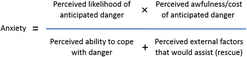
Following the work of Carr (Reference Carr1974) and Beck et al. (Reference Beck, Emery and Greenberg1985), a further description of TA by Salkovskis (Reference Salkovskis and Salkovskis1996) emphasized that the appraisal, or interpretation, of threat is the key to our understanding of anxiety (Salkovskis, Reference Salkovskis and Salkovskis1996). In part a synthesis of Beck’s writing on cognition and anxiety (Beck et al., Reference Beck, Emery and Greenberg1985), Salkovskis (Reference Salkovskis and Salkovskis1996) explicitly proposed an interactivity rather than additivity between perceived probability and perceived cost. Informed by clinical observations that if the interpretation of the perceived awfulness or cost of the appraisal could be directly reduced such as through the use of behavioural experiments, the individual’s probability estimate could be vastly reduced without any direct therapeutic intervention specifically for overestimation of probability (P. Salkovskis, personal communication, 13 January 2016). Salkovskis viewed TA as the subjective appraisal of the probability of danger interacting with the subjective perceived awfulness of the potential danger, mitigated by the perception of coping ability and ability to access external resources if required, termed the threat appraisal equation (Fig. 1). As with Beck et al. (Reference Beck, Emery and Greenberg1985), Salkovskis regarded the appraisal of potential personal resources to cope with threat as part of TA rather than a separate process.
Threat appraisal equation. Adapted from Frontiers of Cognitive Therapy by P. Salkovskis (Reference Salkovskis and Salkovskis1996, p. 53), with permission.

Although the components in Salkovskis’ equation had each been described previously in the literature (e.g. Beck et al., Reference Beck, Emery and Greenberg1985; Carr, Reference Carr1974), this framework demonstrated the importance of the multiplicative relationship between primary appraisal components (likelihood of danger × awfulness), rather than an additive relationship. As such it was an important development in our understanding about the relationship between components of threat. Although aware of Carr’s (Reference Carr1974) paper, which also suggests a ‘multiplicative’ relationship between probability and cost components, this did not directly inform writing of the equation (P. Salkovskis, personal communication, 13 January 2016). The coping component of this framework drew conceptually from the works of Lazarus and Folkman (Reference Lazarus1966), and Bandura (Reference Bandura, Flavell and Ross1981), which emphasized that judgements about coping are based on beliefs about the extent to which the individual feels they can change their environment, and how much this capacity is perceived to be within their control.
Few studies have theoretically tested the entire framework as a ‘multiplicative’ equation although some have investigated the different contributions of the individual components. There is a body of evidence which shows a differential role of the two key components in the primary appraisal of threat, with reported perceived probability and cost levels varying across different anxious presentations (e.g. Poulton and Andrews, Reference Poulton and Andrews1996; Uren et al., Reference Uren, Szabo and Lovibond2004; Smits et al., Reference Smits, Rosenfield, McDonald and Telch2006). A smaller number of studies have investigated the role of both components together of the primary appraisal process, and the relationship between them, using specific questionnaire-based measures developed to operationalize the model. An exploratory study by Butler and Mathews (Reference Butler and Mathews1983) was one of the first studies to experimentally examine the proposition that people with anxiety will make higher threat appraisals. Using Carr’s (Reference Carr1974) framework, they developed a measure of cost and probability estimations, of future-orientated aversive events, and computed the interaction between these variables (cost × probability) to test whether anxious patients made higher appraisals of threat. They asked small groups (n = 12) of individuals diagnosed with generalized anxiety disorder (GAD) and major depressive disorder with a benchmarking control group to rate cost estimates of a series of negative events, and to rate the perceived probability of both negative and positive events, in relation to both themselves and also others. They found significantly increased appraisals of probability and cost for negative threatening events amongst the anxious group and the depressed group (who almost met clinical caseness for anxiety), compared with the control group. They further identified a relationship between anxiety and the elevated estimation of personal risk amongst anxious populations only, which differed from the more pervasive appraisals made by the depressed group. For the multiplicative variable of threat appraisal (probability × cost), the overall threat score for the clinical groups was significantly higher than for the control group.
A more direct test of the multiplicative relationship of cost and probability was undertaken by Freeston et al. (Reference Freeston, Gagnon, Ladouceur, Thibodeau, Letarte and Rheaume1994) who recruited an analogue sample from general hospital waiting rooms, all of whom reported experiencing at least one health-related intrusive thought over the past month. The threat appraisal components, although based on Carr’s (Reference Carr1974) framework, were adapted to the appraisal of health-related intrusive thoughts. This study showed that both the specific probability and cost appraisal ratings accounted significantly for variance in worry, and related to difficulties in removing intrusive worrying thoughts. When the multiplicative components were added later in the hierarchical regression after the singular components of threat appraisal (probability and cost), the multiplicative or interaction threat term still accounted for significant additional variance in worry. The findings support the position that the singular TA terms and the interaction between them are closely linked to anxiety, and they suggest that adding the interaction term may improve the strength of the appraisal model. In a further study on worry by Berenbaum et al. (Reference Berenbaum, Thompson and Pomerantz2007), these authors found that the interaction term accounted for 2% above the independent effects of the individual components (cost and probability). Worry was associated with the interaction of appraisal components, and this interaction added a unique contribution beyond the independent components.
As noted previously, a theoretical elaboration by Beck et al. (Reference Beck, Emery and Greenberg1985) and synthesis by Salkovskis (Reference Salkovskis and Salkovskis1996) proposed that TA includes secondary, coping appraisal components. Partial support for the proposal that lower estimates of coping resources impacts upon or mitigates the critical response to the appraisal of likelihood of severity and costly negative outcomes was found in a study by Woods et al. (Reference Woods, Frist and Steketee2002) who attempted to operationalize Salkovskis’ (Reference Salkovskis and Salkovskis1996) equation, measuring and computing all components except the rescue variable. They utilized a semi-idiosyncratic measure to examine TA components in a group of individuals diagnosed with OCD (n = 18) and a non-clinical benchmarking group (n = 72). In the sample of OCD patients, no relationship between threat appraisal components and subsequent OCD symptoms were identified. The only variable that contributed significantly to the prediction of anxiety symptoms in the clinical sample was a low estimation of their ability to cope. In comparison, only the probability estimation of a negative outcome contributed to the prediction of symptoms of anxiety in the analogue sample. Whilst acknowledging the small sample sizes in this study, the results provide some support for the claim that lower perceived ability to cope may impact on the overall anxiety response during the appraisal processes of a future possible threat.
Treatment models incorporating the threat appraisal equation
Cognitive models of anxiety propose that the focus of CBT should be the re-appraisal of threat components in order to allow the re-evaluation of beliefs and hence ultimately reduce anxiety symptoms (e.g. Clark, Reference Clark1986; Salkovskis, Reference Salkovskis and Salkovskis1996). In support of this focus of treatment, there are studies which have found that threat re-appraisal is associated with a reduction in anxiety symptoms after CBT treatment (e.g. McNally and Foa, Reference McNally and Foa1987; Smits et al., Reference Smits, Rosenfield, McDonald and Telch2006). However, the inconsistencies across studies to test necessary criteria for causality have made it difficult to conclude definitively that threat re-appraisal is the main driver or active ingredient of symptom improvements (e.g. see systematic review by Smits et al., Reference Smits, Julian, Rosenfield and Powers2012). Thus although a reduction in the appraisal of probability and cost estimates infers a relationship between threat appraisal and anxiety symptoms, further and more rigorous testing is needed to determine if threat re-appraisal acts as the key change mechanism.
While the role of threat appraisal components (cost and probability) in anxiety have been identified, it is unclear if these variables act as triggers, or whether they act to perpetuate or maintain anxiety alongside other appraisal variables. The evidence to date does not eliminate the idea that these components could act in a causal way to lead to anxiety; however, further stringent tests of this model are needed to provide better justification for a rationale which reaches beyond the identified significant correlational relationship of probability and their interaction, to one of causation. The main findings suggest that the interactivity between probability and cost estimates may add additional predictive value in understanding anxiety rather than simply considering the singular or additive role of these processes. There is some evidence to suggest that coping efficacy (or lack thereof) is related to the level of anxiety; this is an important consideration within the cognitive appraisal model. However, research investigating the role of the coping appraisal process remains limited.
Clinically, one to two key dysfunctional cognitions or beliefs that are believed to be maintaining the unhelpful or incorrect assumptions about the world, the self or others are often targeted in CBT treatment for anxiety. The threat equation detailing subjective probability × subjective cost suggests that the level of harm implied in a situation is a result of the interaction of these threat elements. Carr et al. (Reference Carr1974) outlined how individuals struggling with OCD often make high subjective estimates of the probability of undesired outcomes and therefore utilize compulsive behaviours to reduce the perceived likelihood of the threatening outcomes occurring. However, individuals with OCD do not use compulsive behaviours in relation to every probable negative situation. Rather, it is suggested that where high cost estimates interact with pre-existing high probability estimates that this produces a high level of threat, necessitating threat reducing behaviour, e.g. compulsions (Carr et al., Reference Carr1974). In this framework the compulsive behaviours in OCD are perceived (incorrectly) as the most effective way to reduce the probability of an awful outcome happening. For example, where there is a belief that one is very likely to pass on a terrible infection to a young child through touch (high probability estimate and high evaluation of a negative outcome), extensive hand-washing rituals may be employed (to reduce the probability of the awful event occurring). The chosen strategy lowers the perceived threat level, which lowers the individual’s anxiety and thus reinforces the hand-washing behaviour. In such a case, interventions such as exposure and response prevention may be promoted to enable a client to tolerate reducing rituals in order to demonstrate that the feared event does not happen and/or that the individual can tolerate the discomfort of not responding to the threat through rituals. This model proposes that clinicians treating anxiety should not only be curious about subjective probability estimates, but also ensure specific predictions are elicited about the consequences of a situation, if they are to be successful in targeting the most acute symptoms.
Theoretical development of the construct of intolerance of uncertainty
The construct of IU originated in clinical observations of patients with GAD, as Freeston et al. (Reference Freeston, Gagnon, Ladouceur, Thibodeau, Letarte and Rheaume1994) noted that some individuals appeared to perceive uncertain elements of situations as threatening, and it seemed that it was the ‘not knowing’ with regard to uncertain events which underlined experiences of worry in clients. It was noted that, for some individuals who were highly intolerant of uncertainty, their appraisal or perception of threat was increased even in the absence of objective risk, difficulties or danger. This led to a proposed conceptual model of GAD which placed IU as a core feature underlining and intensifying features of GAD (Dugas et al., Reference Dugas, Gagnon, Ladouceur and Freeston1998).
Although the development of IU was originally associated with GAD (Freeston et al., Reference Freeston, Gagnon, Ladouceur, Thibodeau, Letarte and Rheaume1994), subsequent research has demonstrated that it is an important construct beyond this disorder implicated in many clinical presentations. Studies have found IU to be associated with symptoms of other emotional disorders, including various anxiety disorders such as OCD, social anxiety, health anxiety Boelen and Reijntjes, Reference Boelen and Reijntjes2009; Gentes and Ruscio, Reference Gentes and Ruscio2011; (Steketee et al., Reference Steketee, Frost and Cohen1998), as well as other disorders such as depression (Miranda et al., Reference Miranda, Fontes and Marroquin2008) and eating disorders (Brown et al., Reference Brown, Robinson, Campione, Wuesnch, Hildebrandt and Micali2017). Therefore, IU can be considered to be impacting on a range of transdiagnostic difficulties rather than being a disorder-specific construct.
While earlier research tended to examine levels of IU in clinically defined groups, later emerging studies sought to establish the composition and nature of this construct. Although original definitions of IU had been vague and evolving, the study by Birrell et al. (Reference Birrell, Meares, Wilkinson and Freeston2011) provided evidence that IU is one construct with distinct components. The systematic review established that IU consists of two distinct and stable factors: the desire for predictability, and paralysis of cognition and action in the face of uncertainty (Birrell et al., Reference Birrell, Meares, Wilkinson and Freeston2011; p. 1998). Further to this, a taxometric analysis of IU by Carleton et al. (Reference Carleton, Weeks, Howell, Asmundson, Antony and McCabe2012) concluded that IU acts more like a dimensional than a categorical construct. Various studies support this conclusion. For example, data from undergraduate samples indicate a strong association between IU and social anxiety (Carleton et al., Reference Carleton, Collimore and Asmundson2010). This evidence indicates that IU may be conceptualized as a continuous construct, varying in degrees from non-clinical to clinical populations and therefore is applicable to people in everyday life situations.
A recent literature synthesis by Carleton (Reference Carleton2016) suggested that IU may underpin anxiety, describing the ‘fear of the unknown maybe a, or possibly the, fundamental fear’ (p. 39). Previous studies have shown that IU robustly contributes to anxiety even after controlling for other fundamental fears which are significant predictors of anxiety, for example neuroticism, anxiety sensitivity, and positive and negative affect (Carleton et al., Reference Carleton, Norton and Asmundson2007a, b; Carleton et al., Reference Carleton, Thibodeau, Osborne, Taylor and Asmundson2014; McEvoy and Mahoney, Reference McEvoy and Mahoney2011). This conceptualization suggests that IU may underlie anxiety, and the evidence indicates that IU’s contribution is independent of other core fear-related constructs.
However, currently the understanding of the pathways through which IU both elevates and maintains anxiety is as yet a less well understood area. In contrast to the longstanding and well-established accepted models of threat appraisal in anxiety (e.g. Clark, Reference Clark1999), there are only a small number of papers which have modelled IU as a feature in anxiety through taking a transdiagnostic view of anxiety rather than disorder-specific (Einstein, Reference Einstein2014; Grupe and Nitsche, Reference Grupe and Nitsche2013). Grupe and Nitsche (Reference Grupe and Nitsche2013) proposed an integrated neurobiological and psychological model of anxiety with a focus on anticipatory responding to uncertainty. They identify five processes which under maladaptive control account for anxiety, including inflated estimates of threat cost and probability, increased attention to threat and hyper-vigilance, deficient safety learning, behavioural and cognitive avoidance, and heightened reactivity to threat and uncertainty. The presented evidence suggests that unhelpful or dysfunctional anxiety associated with uncertainty around a potential threat is central to anxiety at both a clinical and sub-clinical level. Within this model the neural basis of heightened reactivity to uncertainty is seen as separate but related to processes to inflated estimates of threat cost and probability. Einstein’s (Reference Einstein2014) transdiagnostic model, in contrast, suggests that IU only contributes to anxiety in the presence of elevated threat appraisal. This model proposes that where individuals are faced with uncertainty they make elevated threat estimations linked with aversive possible outcomes. Within this model, uncertainty in the context of threat estimations is aversive, and not uncertainty in and of itself. This view sits in opposition to the conceptualization of IU as ‘fear of the unknown maybe a, or possibly the, fundamental fear’ (Carleton, Reference Carleton2016) and the evidence which suggests that IU may contribute independently to anxiety. Although there has been increasing interest in the role of IU in the development and maintenance of anxiety symptoms there are therefore discrepant conceptual views around the ability of the concept of IU to account for the onset and maintenance of anxiety independently of threat estimations.
Theoretically, higher levels of dispositional or trait IU are proposed to impact negatively on cognitive processing under conditions of uncertainty (Buhr and Dugas, Reference Buhr and Dugas2002). There is evidence from correlational studies showing that clinical populations and non-clinical populations who score higher on measures of trait IU also score higher on symptom measures of anxiety (e.g. Freeston et al., Reference Freeston, Gagnon, Ladouceur, Thibodeau, Letarte and Rheaume1994; Mahoney & McEvoy, Reference Mahoney and McEvoy2012a; Tolin et al., Reference Tolin, Abramowitz, Brigidi and Foa2003). Given the early stages of the literature in modelling the contribution of IU in anxiety there is a requirement for further efforts to disentangle the relationship between TA and IU in anxiety which would help to clarify IU’s contribution to anxiety independently of TA.
Evidence for the role of intolerance of uncertainty in anxiety
Experimental tasks have investigated the association between an individual’s threshold of ability to tolerate uncertainty and the evaluation of aspects of an uncertain event. Ladouceur et al. (Reference Ladouceur, Gosselin and Dugas2000) developed a gambling task to experimentally manipulate IU in a non-clinical group. The group in the higher IU condition demonstrated higher levels of worry compared with the group in the lower IU condition on this task. This study was the first to demonstrate the negative impact of IU on cognitive processes (increased worry) and provided evidence consistent with the proposed IU model of GAD. A further series of studies has demonstrated that higher levels of uncertainty guides processing and contributes to the manifestation of worry (Koerner and Dugas, Reference Koerner and Dugas2008; Ladouceur et al., Reference Ladouceur, Talbot and Dugas1997). Given the strength of the relationship with worry, studies investigated a possible casual role in social anxiety and health anxiety-provoking tasks, with results demonstrating a similar trend (Carleton et al., Reference Carleton, Collimore and Asmundson2010; Rosen and Knauper, Reference Rosen and Knauper2009). This evidence supported a transdiagnostic view of IU as the studies demonstrate a link between levels of IU, changes in cognitive processes and experiences of anxiety relative to levels of uncertainty.
The described studies demonstrate evidence of an association between the manipulation of IU and changes in anxiety symptoms. In the recent literature, efforts have been made to investigate the mechanisms by which IU may contribute to anxiety. Mahoney and McEvoy (Reference Mahoney and McEvoy2012b) carried out a study to explore the indirect effects of IU across a range of clinical anxiety disorders. IU was found to account for unique variance in all specific symptom measures, and partially mediated the relationship between neuroticism and symptom measures. This evidence supports IU as a common factor across anxiety disorders, and in terms of its positioning in theoretical frameworks, the authors suggest that IU may be a lower-order cognitive factor influencing the relationship between personality variables and symptoms of anxiety. Although other anxiety constructs (e.g. anxiety sensitivity) were not included in the analysis, there is evidence to suggest that IU may contribute to anxiety beyond other core fear constructs (Carleton et al., Reference Carleton, Thibodeau, Osborne, Taylor and Asmundson2014). The authors suggest IU as a construct is perhaps contributing to anxiety symptoms through its relationship with high-order constructs (e.g. neuroticism).
Further enquiry into the mechanisms by which IU may have an impact on anxiety has considered the circumstances likely to activate this construct. Studies show that individuals high in IU may interpret information under conditions of uncertainty and ambiguity in a more threatening manner. In clinical samples, it has been shown that anxious populations rate ambiguous situations (e.g. using vignettes such as ‘you wake in the middle of the night, you think you have heard something but all is quiet’) as highly threatening (Butler and Mathews, Reference Butler and Mathews1983) and more concerning in comparison with non-ambiguous positive and negative situations (Anderson et al., Reference Anderson, Dugas, Koerner, Radomsky, Savard and Turcotte2012). These negative interpretation biases towards ambiguous situations have been shown in samples of individuals higher in trait levels of IU than those comparatively lower in trait IU (Dugas et al., Reference Dugas, Hedayati, Karavidas, Buhr, Francis and Phillips2005). A further study by Koerner and Dugas (Reference Koerner and Dugas2008) found a similar relationship between level of trait IU (high and low groups) and rating on ambiguous situations in an analogue sample. In this study, the high trait IU group rated all situations more negatively; however, between the low and high trait IU groups, there was only a significant group effect for the ambiguous situations. A more recent vignette-based study by Reuman et al. (Reference Reuman, Ryan, Fabricant, Herring and Jonathan2015) found that uncertain and threatening scenarios that had more explicit uncertainty provoked a higher rating of anxiety than situations in which uncertainty was more implicit. These results demonstrate that tolerance levels for uncertainty play an instrumental role in the negative interpretation of ambiguous situations, rather than unambiguous situations. Thus, IU may play a role in elevating threatening interpretations of uncertain situations and increasing negative reactions to uncertain outcomes.
However, a limitation across these studies is the lack of clear differentiation between ambiguity and uncertainty measures. It is proposed that IU is future orientated, whereas intolerance of ambiguity (IA) is concerned with unclear situations interpretable in the ‘here and now’ (Grenier et al., Reference Grenier, Barrette and Ladouceur2005). IU has been shown to continue to predict variance in worry after other constructs, including IA, have been added to regression analysis. It may be concluded from the evidence that individuals higher in dispositional IU are more likely to experience negative anxious affect in response to ambiguity or uncertainty (Koerner and Dugas, Reference Koerner and Dugas2008). These findings suggest that IU leads to a perception of threat, yet whether IU is contributing to anxiety over and above threat appraisals is not known, as this has not yet been empirically tested.
In addition to IU measured at a dispositional level, recent studies have begun to investigate the impact of uncertainty in situations, and findings suggest that intolerance to uncertainty at a situational level accounts for significant variance in anxiety symptom measures. Mahoney and McEvoy (Reference Mahoney and McEvoy2012a) developed and tested a new specific situational measure of IU (IUS-SS) in a sample of individuals diagnosed with clinical levels of anxiety and found that situational uncertainty – as opposed to the dispositional measure of IU – was reported more in the anxiety group than in the benchmarking control group. Over and above the IU measured at a dispositional level, situational uncertainty accounted for variance in anxiety symptom measures. This indicates that difficulty tolerating uncertainty in situations is closely related to negative affect experienced, and this may be more predictive of situation-specific anxiety than IU measured at a dispositional level. This illustrates that situational IU may be contributing significantly to presentations of anxiety. However, as with previous studies, this measure was based on ambiguous rather than uncertain scenarios, and hence the conceptual clarity is unclear.
An unpublished study has resolved some of the conceptual criticism in its exploration of the cognitive, behavioural and emotional appraisals of uncertain situations in a group of non-clinical adolescent participants. In the design stage of this study, M. Ford (unpublished doctoral thesis, Reference Ford2011) distinguished uncertainty and ambiguity in measure development, to ensure only the inclusion of uncertain situations. It was found that participants’ levels of trait IU were significantly impacted on by appraisal of arousal in situational IU. The measure of appraisal of affect and arousal together explained 23.8% variance in IU – over and above the appraisal of the ‘unpleasantness of the situation’, which was based on threat appraisal items (e.g. likelihood of awful outcome, severity of this outcome). This showed that increases in trait IU in uncertain situations appear to be accounted for by the evoked internal arousal which was interpreted negatively; this contribution was over and above the situation appraisal which was inclusive of estimations of threat. IU may therefore be linked with emotional experiences of uncertain stimuli that are aversive, and this may be independent of threat appraisal. This finding adds to the understanding of why uncertainty may be so intolerable through investigating various appraisals of uncertainty; however, the findings are limited in generalizability as an adolescent population only was used.
A more recent study by Pepperdine et al. (Reference Pepperdine, Lomax and Freeston2018) clearly distinguished between IU and intolerance of ambiguity using a vignette-based measure to look at the role of situational IU in predicting dispositional IU. Findings showed situational IU predisposed participants to see more threat in uncertain situations with a potentially negative outcome, a neutral outcome and even, in uncertain situations with a potential positive outcome. Situational IU was found to be bothersome across all situations even when threat appraisal was controlled for, and this intolerance to uncertainty in the situation contributed unique variance to IU at a dispositional level. Pepperdine et al. (Reference Pepperdine, Lomax and Freeston2018) for the first time clearly separated between threat and IU in personally salient but non-threatening situations. This provides evidence of the relative independence of IU and TA, as uncertainty was still bothersome even in positive situations (where there is not direct possible negative outcome). However, it is unclear how in salient anxiety-specific situations whether these two concepts would relate or inter-relate with one another, or whether they would operate as relatively independent constructs in anxiety.
Clinically, these data suggest that the ‘not-knowing’ component of a situation is difficult for people high in IU to tolerate and that it is important to reduce this bothersome and negative experience. Crucially, this can occur independently of threat (i.e. a probable negative outcome). However, we do not know if the bothersomeness of IU in possible negative situations may inflate subjective threat estimates. An example may be seen in social anxiety and interactions with others – such as, if an individual is uncertain how they may look asking a question and they are bothered by this uncertainty, this negative experience of IU could lead them to make a greater over-estimation of threat (e.g. I am not sure how my question will sound to others, I don’t like not knowing, this doesn’t feel ok > it is extremely likely that I am going to look stupid which will be humiliating and shameful). Although there is no evidence at present of this relationship between IU and TA in anxiety, a scenario such as this does seem plausible.
However, IU could be operating separately to threat appraisals, therefore it seems important to consider which construct (IU or TA) leads to more anxiety in specific situations, including whether there are situations where individuals are unable to identify negative or catastrophic outcomes, but still are distressed or impaired by their feelings. This may be evident in OCD where a significant sub-group of clients report seeking a ‘just-right’ feeling and are very distressed without it. Does this group experience high IU but are lower on evaluation of threat appraisal, which would imply an additional component to the TA equation is present? Additionally, in GAD it may be that high IU is present but that again individuals are unable to identify negative outcomes as a result of threat; rather it is the sensation of IU that is intolerable and aversive to them. This is important to ascertain in order to consider where to target interventions in anxiety, as it would suggest that exposure and response prevention (ERP) may not be effective for all individuals, and that a different target around IU might be more helpful.
Treatment studies incorporating intolerance of uncertainty
There are a small number of treatment studies which have looked at IU as a focus of intervention, most of which have concentrated on GAD. A study examining CBT for worry utilizing the IU model of GAD demonstrated changes in IU preceded or co-occurred with changes in worry, which evidences further the central role of IU in anxiety (Dugas and Ladouceur, Reference Dugas and Ladouceur2000). Similar findings have been demonstrated in CBT for illness anxiety that focus on the IU component (Langlois and Ladouceur, Reference Langlois and Ladouceur2004). Furthermore, a small number of CBT outcome studies which have used transdiagnostic treatments of anxiety have found that changes in IU predict outcome in levels of anxiety, although IU was not specifically targeted in these therapy protocols (Boswell et al., Reference Boswell, Thompson-Hollands, Farchione and Barlow2013; McEvoy and Ercer-Hurn, Reference McEvoy and Erceg-Hurn2016). This supports the suggestion that IU is a transdiagnostic cognitive behavioural process, contributing to a range of anxiety treatments. Although the above evidence suggests that IU may be key in the treatment of anxiety there are few treatment studies specifically aimed at treating IU, therefore further evaluation of the treatment of anxiety targeting IU is required.
In summary, there is now considerable research to suggest that IU is an independent construct that contributes to anxiety. Research has evidenced that IU plays a core role in the cognitive model of GAD (Dugas et al., Reference Dugas, Gagnon, Ladouceur and Freeston1998), a proposition that has been supported by research on worry (e.g. Dugas et al., Reference Dugas, Freeston and Ladouceur1997; Ladouceur et al., Reference Ladouceur, Gosselin and Dugas2000). Studies also evidenced that the manifestation of higher levels of uncertainty guides processing and contributes to a wide range of anxiety difficulties (e.g. Koerner and Dugas, Reference Koerner and Dugas2008). Nonetheless, the mechanisms through which IU may have an impact on anxiety symptoms remain unclear, although there is a suggestion that IU underpins concerning appraisals of uncertain situations, which may explain why people high in IU have been shown to react more negatively to uncertain anxiety-provoking situations than those low in IU. The impact of situational uncertainty on anxiety symptoms appears to be superior in explaining levels of anxiety symptoms in comparison with dispositional levels of IU (Mahoney and McEvoy, Reference Mahoney and McEvoy2012a). However, as most studies have not clearly distinguished uncertain situations from ambiguous ones, the extent these findings can be attributed to IU is limited. IU may be considered an important mechanism for intervention in anxiety, and treatment outcome studies reflect this as levels of IU have been shown to correspond to levels of symptom changes. However, in order to demonstrate causality, further experimental studies using a broader range of tasks across relevant anxiety situations are required to establish this link with anxiety beyond correlational evidence and novel experimental tasks.
Discussion
From a very early stage in their development, cognitive models of anxiety have considered threat appraisal to play a key role in the development and maintenance of anxiety, and a substantial body of empirical evidence supports this proposition. It has also long been known that individuals are more likely to appraise threat more highly or to identify situations as more threatening when they occur within conditions of ambiguity. Despite this, it was not until relatively recently that the potential impact of the conditions of uncertainty were specifically considered and conceptualized with respect to the development and maintenance of anxiety disorders. The construct of IU is likely to be an important addition to our understanding of anxiety, given the close relationship between the constructs. However, relatively little attention has been paid to specifically disentangling the relationship between threat appraisal and uncertainty within the context of anxiety. This has important implications in terms of developing models and hence treatment approaches to anxiety. Although there are well-established methods of clinically working with individuals to help them re-appraise inflated threat appraisals (e.g. behavioural experiments), as yet there are limited numbers of treatment studies that focus on targeting or re-appraising IU in order to explore the subsequent impact on anxiety levels.
The influential threat appraisal framework of Carr (Reference Carr1974) and Salkovskis (Reference Salkovskis and Salkovskis1996) has been important throughout our understanding of anxiety. However, the few studies which have tested the equation experimentally have been able to demonstrate a clear role for the individual elements of threat appraisal (probability and cost) in anxiety. A few studies have highlighted the potential importance of including the multiplicative relationship or interaction component between appraisal of the probability and costs of future negative events in predicting level of anxiety (e.g. Freeston et al., Reference Freeston, Gagnon, Ladouceur, Thibodeau, Letarte and Rheaume1994). The reviewed studies provide sufficient evidence to support the relevance of threat appraisal in anxiety. By contrast, other important potential components of the framework – the processes of coping, and perceived efficacy to cope in the face of a potential threatening outcome – have attracted much less attention in the literature although they draw on a strong tradition in transactional stress models. Although clinically highly intuitive, there is relatively little experimental evidence to support the proposal that beliefs about coping are likely to contribute to overall threat appraisal, and it is currently unclear how beliefs about coping may interact with other variables of threat appraisal. Further investigation is required to better understand this element of the threat appraisal framework and how it may interact with the other components.
The dominant cognitive models and frameworks used to understand and treat anxiety (e.g. Clark and Beck, Reference Clark and Beck2010) explicitly state a central role for threat appraisal processes in the understanding of anxiety. In relation to IU, an explicit role for this construct within anxiety was initially confined to worry and GAD. IU has been shown to have a central and substantial relationship with worry, and hence is a key component in a cognitive model and treatment for GAD (Dugas et al., Reference Dugas, Gagnon, Ladouceur and Freeston1998, Reference Dugas, Gosselin and Ladouceur2001). However, more recent evidence suggests that IU may be a significant cognitive vulnerability factor for the development and maintenance of anxiety more transdiagnostically (e.g. Gentes and Ruscio, Reference Gentes and Ruscio2011; Mahoney and McEvoy, Reference Mahoney and McEvoy2012a). The literature has suggested mechanisms through which IU may operate, although our understanding of these processes remains less well developed than that of the process of threat appraisal. Some research has demonstrated that there is an increase in threat appraisal where uncertain outcomes are indicated and where ambiguous stimuli are identified (Dugas et al., Reference Dugas, Hedayati, Karavidas, Buhr, Francis and Phillips2005; Koerner and Dugas, Reference Koerner and Dugas2008; Mahoney and McEvoy, Reference Mahoney and McEvoy2012a). This raised the question about how IU may differ from threat appraisal, or, indeed, whether IU may interact with threat in anxiety.
A body of evidence suggests that in the face of uncertainty, individuals who are intolerant of this may interpret ambiguous situations as concerning, aversive and distressing, and that this may lead to elevated TA. Thus, an individual’s capacity to tolerate uncertainty may influence how they appraise threat in uncertain situations. Recent research has examined the role IU may play in anxiety (Mahoney and McEvoy, Reference Mahoney and McEvoy2012b), and findings suggest that IU may operate as a lower-order construct mediating anxiety symptoms through higher-order factors. Although the exact nature and mechanisms by which IU may operate in anxiety remains somewhat imprecise, a small number of studies have found evidence to suggest that IU is an independent construct outwith other fundamental fears such as anxiety sensitivity (Carleton et al., Reference Carleton, Thibodeau, Osborne, Taylor and Asmundson2014).
Although IU is believed to be an independent construct, the extent to which uncertainty is distinct from threat appraisal in anxiety remains unclear. This is in part because of a lack of clear theoretical articulation of the links between them, and in part due to the current absence of research that has explored the relationship between these constructs. One of the mechanisms most strongly suggested currently is that IU may mediate symptoms through a vulnerability to experience uncertainty as intolerable, and to find this unpleasant, which perhaps increases the appraisal of threat. M. Ford (unpublished doctoral thesis, Reference Ford2011) suggested that dispositional IU is significantly associated with negative appraisal of affect and arousal in response to uncertain situations, and this may be independent of threat appraisal. This has not yet been empirically tested, but given Ford’s findings and the suggestion that uncertainty is threatening in itself, it is hypothesized that appraisals of uncertainty and intolerance to these may underlie and potentially exacerbate higher estimates of TA. From the current threat appraisal framework and related evidence there is no suggestion of a relationship between the established threat components and IU.
In terms of future attempts to clarify and disentangle the relationship between IU and TA in anxiety, it may be worth considering the use of situation-based measures of IU on situation-specific anxiety in order to examine whether IU may be independent of TA, or whether IU may interact with TA components. Further clarity on the nature of the relationship between these concepts in relation to anxiety could be achieved through the use of semi-idiosyncratic methodologies which have the specificity to simultaneously tap into the aspects of each construct and measure their contribution separately (and interactively) to anxiety.
This review employed a non-standardized methodology, utilizing a narrative review method coupled with systematic extraction and summarizing of the data. This method allowed for the broad area of literature around IU and TA to be summarized and critiqued in order to draw some conclusions. However, this methodology was not protocol-driven and the risk of subjective bias is acknowledged as a limitation of this study.
Finally, CBT focuses on unhelpful or dysfunctional beliefs and behaviours linked with potential negative outcomes (threat) and seeks to treat anxiety through a range of methods that modify or challenge the processes influencing the appraisals (Clark and Beck, Reference Clark and Beck2010). Consistent with the cognitive models, current treatment approaches give a primary focus to working on the individuals’ threat appraisals (Andrews et al., Reference Andrews, Creamer, Crino, Hunt, Lampe and Page2003). However, the reviewed evidence regarding IU (e.g. M. Ford, unpublished doctoral thesis; Mahoney and McEvoy, Reference Mahoney and McEvoy2012a) suggests it may also be important to learn to tolerate uncertainty, as IU impacts on the experience of anxiety. A clearer understanding of the relationship between the constructs and the role of IU separately to threat appraisal is important in furthering the specificity of cognitive models, and potentially leading to more effective interventions. Transdiagnostic CBT for anxiety has shown that changes in IU predict outcome, even when IU is not directly targeted through treatment. This suggests that IU is an important contributing mechanism in anxiety (e.g. Boswell et al., Reference Boswell, Thompson-Hollands, Farchione and Barlow2013).
Clinical implications
The data reviewed suggests there may be limitations with the widely accepted CBT threat appraisal conceptualization of anxiety. Pepperdine et al. (Reference Pepperdine, Lomax and Freeston2018) demonstrated that individuals who are bothered by the experience of IU find it aversive even in positive situations absent of a negative outcome. It appears that for some people an uncomfortable and unpleasant response is felt in the presence of uncertainty with the absence of any identifiable threat, which is contrary to the current threat model of anxiety widely described in CBT models. Clinically, this means that it is important to consider the tendency for anxiety to be associated with greater uncertainty and to be curious about the contribution of IU in anxiety alongside and possibly separately to threat appraisals.
Current CBT interventions for anxiety such as behavioural experiments suggest that threat elements are targeted to support a client in re-evaluating their over-estimation of threat elements, with the aim of changing their unhelpful beliefs and subsequently their anxiety. Certainly the data reviewed suggested that there is extensive support for the role of threat appraisal components (probability and cost) in anxiety, and there is some evidence that the interaction between these components may better account for presenting levels of anxiety (e.g. Freeston et al., Reference Freeston, Gagnon, Ladouceur, Thibodeau, Letarte and Rheaume1994). However, we know that clinically where clients are facing anxiety-provoking situations this leads to a high level of affect and often some use of safety behaviours to avoid the situation at some level which may get in the way of effective re-appraisal. Clearly it is understandable that people wish to avoid threat and threatening situations. The studies reviewed suggest that targeting IU and learning to tolerate uncertainty may assist with lowering overall threat estimations and this may be an initial target of treatment. Where IU may exist independent of threat, specific experiments targeted at IU are likely to be most helpful.
It is important to gain further understanding as to where IU is located in relation to threat appraisal in anxiety, in order to extend our current conceptualization of the threat appraisal framework and to incorporate IU appropriately. Future research which examines the individual and interactional contributions of threat components and IU in anxiety-provoking situations would assist with further understanding of the relationship between these components. This should contribute to our understanding of the development and maintenance of anxiety, and enable us to design potentially more targeted and hence effective treatment approaches for anxiety.
Acknowledgements
This study was conducted by the first author under the supervision of the second and third authors in part fulfilment of the Doctorate of Clinical Psychology.
Financial support
This research received no specific grant from any funding agency, commercial or not-for-profit sector.
Conflicts of interest
The authors of this paper have no conflicts of interest with respect to this publication.
Ethical statement
The authors have abided by the Ethical Principles of Psychologists and Code of Conduct as set out by the APA. Ethical approval was granted by Newcastle University’s Faculty of Medical Sciences Ethics Committee (reference 00852/2015).
Key practice points
(1) The reviewed literature provides sufficient support of the relevance of threat appraisal in anxiety.
(2) Specifically, there is extensive support for the role of threat appraisal components (probability × cost) in anxiety; there is some evidence that the interaction between these components may better account for presenting levels of anxiety.
(3) The evidence suggests that is a significant cognitive vulnerability factor for the development and maintenance of anxiety.
(4) The reviewed studies found that for some an uncomfortable and unpleasant response is felt in the present of uncertainty with the absence of any identifiable threat, which is contrary to the current threat model of anxiety widely described in CBT models. This evidence suggests that learning to tolerate uncertainty may assist with lowering threat estimations.
(5) The extent to which uncertainty is distinct from threat appraisal in anxiety remains unclear, partly due to the lack of clear theoretical articulation of the links between TA and IU and in part due to the absence of research to explore the relationship between these constructs.



Comments
No Comments have been published for this article.