Over the last several decades, parent report has become a popular method for assessing early communicative skills in children under the age of 3 years. Parent-report instruments have been available for young English-speaking children since the late 1980s, notably the MacArthur–Bates Communicative Development Inventories (CDIs; Fenson et al., Reference Fenson, Dale, Reznick, Thal, Bates and Hartung1993, Reference Fenson, Marchman, Thal, Dale, Reznick and Bates2007) and the Language Development Survey (Rescorla, Reference Rescorla1989; Rescorla & Alley, Reference Rescorla and Alley2001). The CDIs assess a range of communicative skills, including vocabulary comprehension and production, gesture use, early word combinations, and grammatical morphology. These instruments have been shown to be valid, cost-effective alternatives to traditional face-to-face methods for typically developing English-speaking children, and also for language delay and disordered populations (Charman, Auriol, Baird, & Baird, Reference Charman, Auriol, Baird and Baird2003; Luyster, Qiu, Lopez, & Lord, Reference Luyster, Qiu, Lopez and Lord2007; Mervis & Robinson, Reference Mervis and Robinson2000; Miller, Sedey, & Miolo, Reference Miller, Sedey and Miolo1995; Roberts et al., Reference Roberts, Long, Malkin, Barnes, Skinner and Hennon2005; Singer Harris, Bellugi, Bates, Jones, & Rossen, Reference Singer Harris, Bellugi, Bates, Jones and Rossen1997; Snyder & Scherer, Reference Snyder and Scherer2004; Thal, Reference Thal2000; Thal, De Jardin, & Eisenberg, Reference Thal, De Jardin and Eisenberg2007; Yoder, Warren, & Biggar, Reference Yoder, Warren and Biggar1997). Part of the success of the instruments is that they follow a recognition format, providing checklists of words or phrases that ask parents to judge their child's current behaviors.
Recently, there has been increased interest in the extension of the parent-report methodology to Spanish-learning children. This is timely because monolingual or bilingual Spanish speakers from Hispanic families now constitute a large and rapidly increasing proportion of the US population. Many of these children are more likely than their English-speaking peers to come from lower socioeconomic status (SES) backgrounds, and thus, may be at increased risk for language delays (Goldstein, Reference Goldstein and Goldstein2004). The interest in valid Spanish-language instruments also stems from the expansion of research and clinical programs that serve monolingual Spanish speakers living in their native countries in Latin America and Spain. Thus, the need for valid, reliable screening instruments for Spanish-language learners is paramount, especially those that offer norms from populations that include children from a diverse range of socioeconomic backgrounds.
Mexican Spanish versions of the CDIs, the Inventarios del Desarrollo de Habilidades Comunicativas MacArthur–Bates (S-CDIs),Footnote 1 were developed in 2003 (Jackson-Maldonado et al., Reference Jackson-Maldonado, Thal, Marchman, Newton, Fenson and Conboy2003). The S-CDIs consist of two forms. The first, Primeras Palabras y Gestos (First Words and Gestures) or S-CDI I, is designed for use with typically developing children between 8 and 18 months and assesses general comprehension (28 items), word comprehension and production (428 items), and early symbolic and communicative gestures (64 items). Palabras y Enunciados (Words and Sentences) or S-CDI II, appropriate for typically developing children between 16 and 30 months, is composed of checklists assessing vocabulary production (680 items), verb morphology (24 items), and phrase complexity (37 items). Parents are also asked to write in the three longest utterances they have recently heard their child produce.
The S-CDIs were adapted, not translated, from the English versions. Words were added that were linguistically and culturally appropriate to Mexican Spanish speakers, word classes were adapted to be language specific, and gestures were modified according to culturally relevant criteria (Jackson-Maldonado, Marchman, Thal, Bates, & Gutiérrez-Clellen, Reference Jackson-Maldonado, Marchman, Thal, Bates and Gutiérrez-Clellen1993). Normative data are available based on a large cross-sectional sample of 778 infants and 1,094 toddlers from several areas of Mexico (Jackson-Maldonado et al., Reference Jackson-Maldonado, Thal, Marchman, Newton, Fenson and Conboy2003). Studies have shown the reliability and validity of the instrument for monolingual Spanish (Thal, Jackson-Maldonado, & Acosta, Reference Thal, Jackson-Maldonado and Acosta2001) and bilingual English-Spanish speakers (Marchman & Martínez-Sussmann, Reference Marchman and Martínez-Sussmann2002). The S-CDIs have also been used successfully with late talkers (Jackson-Maldonado, Reference Jackson-Maldonado2004) and children with Down syndrome (Jackson-Maldonado, de Santiago, & Sánchez, Reference Jackson-Maldonado, de Santiago and Sánchez2010).
As noted by Fenson, Pethick, Cox, Dale, and Reznick (Reference Fenson, Pethick, Renda, Cox, Dale and Reznick2000), the comprehensive nature of the CDIs require that many parents devote a considerable amount of time to complete them (~30–45 min). This may limit the effectiveness of this method in educational, research, or clinical settings that desire a quick assessment of the child's communicative ability. For this reason, Fenson et al. (Reference Fenson, Pethick, Renda, Cox, Dale and Reznick2000) and Reznick and Goldsmith (Reference Reznick and Goldsmith1989) developed short-form versions of the English-language CDIs. The short forms have become popular alternatives to the long forms, particularly for users who are interested in using the CDIs as screening tools, rather than for obtaining in depth information about children's progress in vocabulary or grammar. Because of their simplicity, the short forms place fewer demands on the parents, and hence, may be more appropriate than the long forms for use with families from less educated backgrounds. The tradition of developing short forms has been followed by researchers in other languages. For example, Eriksson, Westerlund, and Berglund (Reference Eriksson, Westerlund and Berglund2002), in response to a health and educational government demand, developed a screening version of the Swedish Communicative Development Inventory (Berglund & Eriksson, Reference Berglund and Eriksson2000a, Reference Berglund and Eriksson2000b; Eriksson & Berglund, Reference Eriksson and Berglund1999; Westerlund, Berglund, & Eriksson, Reference Westerlund, Berglund and Eriksson2006) for use with 18-month-olds. Based on their Galician long form (Perez-Pereira & Soto, Reference Perez-Pereira and García Soto2003), Perez-Pereira and Resches (Reference Perez-Pereira and Resches2007) have now proposed two short forms that show similar developmental trends as the long versions.
THE SPANISH CDI SHORT FORMS
The current paper introduces the S-CDI short forms (S-CDI SFs). To our knowledge, the S-CDI SFs are the first published instruments specifically focusing on early language skills that are appropriate for use with Spanish-learning children under 3 years. Other screening instruments, such as the Ages and Stages Questionnaire (Squires & Bricker, Reference Squires and Bricker2009) are now available in Spanish, but they assess a wide range of general developmental areas and have only a few questions that address early language and communication. The few published language instruments that are currently available, for example, the Preschool Language Scale, Fourth Edition (PLS-4) Spanish Edition (Zimmerman, Steiner, & Pond, Reference Zimmerman, Steiner and Pond2002) for children 0 to 7, the Developmental Indicators for the Assessment of Learning, Third Edition (Mardell-Czudnowski & Goldenberg, Reference Mardell-Czudnowski and Goldenberg1998), and the Test de Vocabulario en Imágenes Peabody (Dunn, Jugo, Padilla, & Dunn, Reference Dunn, Jugo, Padilla and Dunn1986) are designed for children older than 2.5 or 3 years and require considerable time and effort to complete. Over the years, several attempts have been made at developing short forms of Spanish-language CDI instruments. For example, Pearson and Rojas (Reference Pearson and Rojas1995a, Reference Pearson and Rojas1995b), based on their extensively used long-form Cuban Spanish CDI, developed a draft of a short form for their own use. Aguado-Orea (Reference Aguado Orea2004) created a short grammar screener designed to identify children with language delay. However, the results and/or norms from these efforts are not publicly available.
Parallel to the long forms, the S-CDI SFs consist of two instruments: one designed for use with children who are 8 to 18 months (SFI), and the other for older toddlers who are 16 to 30 months (SFII). Each form contains a vocabulary checklist, constructed on the basis of responses by participants in the long-form norming study (Jackson-Maldonado et al., Reference Jackson-Maldonado, Thal, Marchman, Newton, Fenson and Conboy2003). As in the S-CDI long form, parents are asked to indicate on the SFI which words their child understands (“comprende”) as well as words their child understands and says (“comprende y dice”). The vocabulary checklist of the S-CDI SFII asks parents to indicate words their child understands and says (“comprende y dice”). Parents are also asked to provide examples of their child's longest utterances. We describe the development of these instruments in more detail below.
THE NORMING STUDY
Normative data for the S-CDI SFI were collected by a team of researchers from a major university in central Mexico, led by the first author. This effort sampled more than 600 participants across seven states, spanning a range of socioeconomic levels. Normative data for the S-CDI SFII were obtained via two parallel means. First, data from a sample of several hundred participants primarily from middle class families were collected following the same method as for the S-CDI SFI. Second, data were obtained through the Oportunidades program in Mexico, a poverty-alleviation initiative developed, administered and funded by the Mexican Government. Oportunidades is a conditional cash transfer program, which has as its main goal to pull families out of extreme poverty. The program is evaluated by a team of researchers from Mexico's National Institute of Public Health (Instituto de Salud Pública) and from universities around the world, and carries out assessments of medical, physical, and cognitive abilities at regular intervals. The CDI Advisory Board developed a short version of the S-CDI SFII for use as part of the evaluation of child development general assessment battery. The instrument was administered in a face-to-face interview by a trained interviewer (usually a nurse or other health practitioner).
The parallel data collection efforts resulted in normative information from a cross section of the Mexican population that is considerably more diverse than in earlier studies. Indeed, it is the first study, to our knowledge, that includes a sample that closely reflects the demographic characteristics of the country. For example, the Mexican 2005 Census (Instituto Nacional de Estadistica y Geografia [INEGI], 2005) reported that approximately 70% of women with children have middle school level of education or below. As we discuss in more detail below, this proportion is maintained in the sample for the S-CDI SFII study. The S-CDI SFI group has a smaller, yet still important, representation of low-SES families.
Much of what is known about early language development derives from studies of children from highly educated, middle-class homes. For example, in the norming sample of the English-language CDIs, 70% of the population was college educated and only a few of the participating parents had received less than a high school education. The norming data for the S-CDIs was from a more diverse population than that of the English, but samples for both long forms showed an upward educational bias compared to national demographics of Mexico.
It is becoming increasingly clear that English-speaking children from low-SES backgrounds tend to lag behind their peers from more advantaged backgrounds in vocabulary and grammatical development (Arriaga, Fenson, Cronan, & Pethick, Reference Arriaga, Fenson, Cronan and Pethick1998; Dollaghan et al., Reference Dollaghan, Campbell, Paradise, Feldman, Jansoky and Pitcairn1999; Hart & Risley, Reference Hart and Risley1995; Hoff, Reference Hoff2003, Reference Hoff2006). Similar findings have been found with Spanish-speaking children in Mexico and the United States using data from the S-CDI, language samples, as well as experimental measures (Jackson-Maldonado & Bárcenas Acosta, Reference Jackson-Maldonado and Bárcenas Acosta2006; Rodrigue, Reference Rodrigue2001, Reference Rodrigue2006). Nevertheless, obtaining adequate information from parents in low-SES families about their child's development, especially in the area of language, has proven particularly challenging.
Some findings suggest that parents from low-SES families may tend to overestimate their child's abilities compared to higher SES parents, especially for early comprehension (Dollaghan et al., Reference Dollaghan, Campbell, Paradise, Feldman, Jansoky and Pitcairn1999; Feldman et al., Reference Feldman, Dollaghan, Campbell, Janosky, Kurs-Lasky and Paradise2000, Reference Feldman, Dollaghan, Campbell, Colborn, Janosky and Kurs-Lasky2003; Fenson et al., Reference Fernald, Gertler and Neufeld1993; Reznick, Reference Reznick1990). Other studies have shown that low-SES parents are accurate reporters (Fish & Pinkerman, Reference Fish and Pinkerman2003; Furey, Reference Furey2011; Rodrigue, Reference Rodrigue2001, Reference Rodrigue2006). Still others suggest that parents under report their children's language level (Roberts, Burchinal, & Durham, Reference Roberts, Burchinal and Durham1999). Pan, Rowe, Spier, and Tamis-Lemonda (Reference Pan, Rowe, Spier and Tamis-Lemonda2004) found that vocabulary, using the English Short Form, was not as highly related to word types in a structured situation in low-SES children as it was for middle-class children, but this association was not exclusive to parental report and the relation between instruments, SES, and language changes with age. They suggest that maternal education is not the only factor that predicts future language and literacy abilities. Thus, factors beyond SES level per se should be considered when evaluating assessments for use with low SES families. Although caution should clearly be taken when interpreting data from these populations, our goal here is to obtain norming information from a large sample that reflects the full range of diversity in Spanish-learning children in Mexico.
Following Jackson-Maldonado et al. (Reference Jackson-Maldonado, Thal, Marchman, Newton, Fenson and Conboy2003), the norming data are presented in terms of fitted percentile scores. For all scales, vocabulary responses are presented as a function of gender, given that earlier studies have documented a slight, but reliable, advantage for girls over boys on most measures (Bauer, Goldfield, & Reznick, Reference Bauer, Goldfield and Reznick2002; Fenson et al., Reference Fernald, Gertler and Neufeld2007). We further follow the developers of the CDIs in recommending that percentile scores be computed on the basis of both age and sex, and percentile tables are provided for boys and girls separately for all measures. However, for the convenience of users who wish to score the forms without reference to gender, we also provide percentile tables for both genders combined.
CONTINUITY BETWEEN THE S-CDI SHORT AND LONG FORMS
In the final section, we examine the results of a third smaller scale data collection effort designed to assess the degree of concordance in the estimates provided by the short versus the long versions of the S-CDI instruments. Of interest here is whether the probability of parents’ choosing a word on the vocabulary checklists might vary as a function of the length of the lists. In one sense, this is a form of concurrent validity, in that we are examining the relation between parents’ report of their child's vocabulary on the short form in relation to that child's performance on another established measure of vocabulary, in this case, the long form. Looking at it in a slightly different way, one could frame the short and long forms as simply different versions of the same test. In this sense, a comparison of parents’ responses on the short versus the long forms of the S-CDIs is a type of test–retest reliability.
OVERVIEW OF THE CURRENT STUDY
The goals of this paper are to describe the development of the short forms of the S-CDIs and then present normative data from two large-scale cross-sectional studies in Mexico. For the SFI, we provide norms that reflect a similar demographic distribution as that for the original long forms (Jackson-Maldonado et al., Reference Jackson-Maldonado, Thal, Marchman, Newton, Fenson and Conboy2003). That is, the norms reflect a broad cross section of the Mexican population, but nevertheless overrepresent families from middle- to upper-SES levels relative to the Mexican population at large. For the SFII, in contrast, we have the opportunity to explore patterns of early vocabulary development in families from a broad but also representative cross section of socioeconomic backgrounds, ranging from extreme poverty to middle- and upper-middle class. Finally, we compare responses from an additional sample of participants who completed both forms, in order to provide information on the convergence between the long and short versions of the forms.
METHOD
Instrument development
Guidelines for generating short form versions of the S-CDI SFs were identical to those used for the English short forms outlined in Fenson et al. (Reference Fenson, Pethick, Renda, Cox, Dale and Reznick2000). To construct the vocabulary checklists, initial lists of words were selected based on item-response frequencies generated using the LEX Program (Dale & Fenson, Reference Dale and Fenson1996). Words were selected in order to achieve approximately 100-item length lists comprising words from a balance of semantic and linguistic categories (e.g., animals, vehicles) and frequency levels. Early appearing words were included so that floor effects could be avoided at each age range. In the same way, later appearing words were added to avoid ceiling effects for the higher scoring children. Words that had a strong dialectal or ethnic bias were avoided as were those that could fall in ambiguous categories. Based on this initial item selection, a simulated short form score was computed for each child in the Spanish norming study (Jackson-Maldonado et al., Reference Jackson-Maldonado, Thal, Marchman, Newton, Fenson and Conboy2003) as a subset of their long-form item responses (n = 1,872). Correlations between these simulated scores and the original vocabulary scores from the long forms were then examined. Items were substituted until a final set of items was identified that achieved the highest correlation between original long form and simulated short form scores across all ages and vocabulary levels.
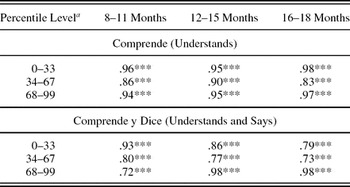
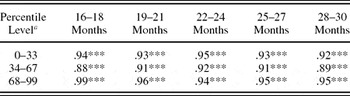
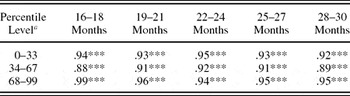
The final vocabulary checklist for S-CDI SFI consisted of 104 words (see Appendix A). Of these, 49% are nouns, 12.5% are verbs, 6.7% are adjectives, 7.7% are pronouns, 6.7% are social forms, 4.9% sound effects, and 12.5% are other linguistic categories (adverbs and prepositions). Correlations (n = 778) between the long form scores and the final simulated short form scores are presented in Table 1 for Comprende (Understands) and for Comprende y Dice (Understands and Says) in children falling in one of three age groups (8–11, 12–15, and 16–18 months) and one of three percentile levels (0–33rd, 34th–67th, 68th–99th) based on their long-form score. The final vocabulary checklist for the S-CDI SFII consisted of 100 words (see Appendix A) divided in 49% nouns, 16% verbs, 8% adjectives, 8% pronouns, 4% social forms, 5% sound effects, and 10% other linguistic categories (adverbs and prepositions). Correlations between the long-form scores and the simulated short form scores (n = 1,094) are presented in Table 2 for five age groups (16–18, 19–21, 22–24, 25–27, and 28–30 months) and three percentile levels (0–33rd, 34th–67th, 68th–99th). The S-CDI SFII also contains a section in which parents write in the three longest utterances (as in the long forms), but it will not be discussed in this paper.
Correlations between scores on the S-CDI I and the virtual scores on the S-CDI SFI by age and percentile rank (n = 778)

Note: S-CDII and SFI, MacArthur–Bates Spanish-Language Communicative Development Inventories Long Form I and Short Form I.
a The percentiles are based on long-form score norms in Jackson-Maldonado et al. (Reference Jackson-Maldonado, Thal, Marchman, Newton, Fenson and Conboy2003).
*** p < .001.
Correlations between scores on the S-CDI II and the virtual scores on the S-CDI SFII by age and percentile rank (n = 1,094)
Note: S-CDI II and SFII, MacArthur–Bates Spanish-Language Communicative Development Inventories Long Form II and Short Form II.
a The percentile levels are based on long-form score norms in Jackson-Maldonado et al. (Reference Jackson-Maldonado, Thal, Marchman, Newton, Fenson and Conboy2003).
*** p < .001.
Participants
Norming data for the S-CDI SFs were collected by asking parents of young children to complete either the S-CDI SFI or SFII versions, based on their child's age (8–18 months for the SFI and 16–30 months for the SFII).
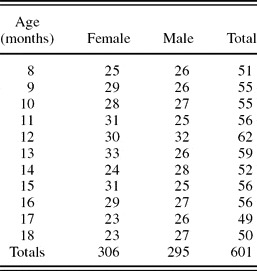
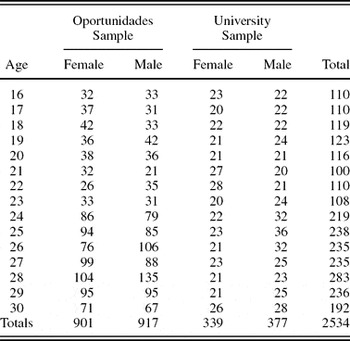
The sample for the S-CDI SFI consisted of 601 participants from families living in Central and Northern Mexico collected by the first author. Table 3 lists the number of participants by age in months and gender. For some analyses, children were categorized into younger (8–12 months) and older (13–18 months) age groups. For the S-CDI SFII, the norming sample consisted of data from a total of 2534 children. Data from 716 children from middle-class families, determined by mothers having a high school education or beyond, were collected by the first author. Data were also available for 1818 children from families living in poverty throughout seven states within Mexico who completed the form as part of their involvement in the Oportunidades program evaluation. In this subsample, mothers typically had less than a middle-school education (primarily elementary school or below), and lived throughout northern, central, southeast, and southwest Mexico (Fernald, Gertler, & Neufeld, Reference Fernald, Gertler and Neufeld2008, Reference Fernald, Gertler and Neufeld2009). Table 4 lists the number of children in each of the two subsamples by age in months and gender. For some analyses, children were subgrouped by age into three categories: 16–20, 21–25, and 26–30 months.
Number of participants by age and gender for MacArthur–Bates Spanish-Language Communicative Development Inventories Short Form I

Number of participants sample, age, and gender for MacArthur–Bates Spanish-Language Communicative Development Inventories Short Form II

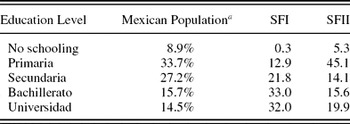
Table 5 describes mothers’ level of education for the final S-CDI SFI and SFII samples, presented as the proportion of mothers with no schooling or kindergarten only, primaria (elementary), secundaria (middle school), bachillerato (high school) or universidad (university). This table also presents the distribution of educational attainment for mothers in the Mexican population based on census information (INEGI II; Conteo de Poblacion y Vivienda, 2005). Note that the norms for the S-CDI SFI form show an upward educational bias relative to the national demographics. Specifically, nearly twice as many mothers in the S-CDI SFI norming sample are reported to have a high school or college education as seen in the census data. Thus, although a broad range of educational levels are represented, the norms for SFI, like the original norms for the long forms reported in Jackson-Maldonado et al. (Reference Jackson-Maldonado, Thal, Marchman, Newton, Fenson and Conboy2003, their table 4.3), need to be used with caution with low-SES children because they are not appropriately represented in the norms. Analyses of SES reported here group children in the SFI sample into two groups based on maternal education: bachillerato or lower (high school or below, ≤12 years, n = 406), and universidad (university, >12 years, n = 191).
Education level of mothers in the short-form norming samples (MacArthur–Bates Spanish-Language Communicative Development Inventories Short Forms I and II) compared with education level of mothers in the Mexican population

a As reported in the 2005 Mexican census (Instituto Nacional de Estadística, Geografía e Informática—INEGI II Conteo de Población y Vivienda) based on the percentage of women over 12 years of age with children. Mother's reported years of education are classified as follows: no schooling or kindergarten only (0–1 years); primaria (elementary: 2–6 years); secundaria (middle: 7–9 years); bachillerato (high school: 10–12 years); universidad (university: 13+ years).
As seen in Table 5, the distribution of maternal education for the S-CDI SFII sample shows much less of an upward trend than for the SFI sample, reaching distributions of educational attainment that are similar to that of the Mexican population. In particular, approximately 65% of the mothers in the SFII sample reported 9 years of education or less, nearly reaching the 70% level seen in the Mexican population. Thus, by combining the data from the university and Oportunidades samples, the norms reported here are more likely to be appropriate for use with children from families where the maternal educational attainment is typical of the Mexican population. Here, analyses of SES divided responses from children into two groups: none/primaria/secundaria (≤9 years, n = 1,340) versus bachillerato and higher (10+ years, n = 739). Information about years of maternal education was missing for 455 of the participants.
Finally, for purposes of comparing responses on the short versus long forms, an additional 62 families completed either the S-CDI I and SFI (n = 30) or the S-CDI II and SFII (n = 32). All participating mothers had at least a high school education and lived in central Mexico. The mean age of the children in the S-CDI I/SFI sample was 14.4 months, ranging from 12 to 17 months. The mean age of the children in the S-CDI II/SFII sample was 23.2 months, ranging from 19 to 27 months.
Procedure
Families were initially contacted either by a university research team or via their participation in a government program. For those families contacted through recreational and medical centers or personal/university contacts, a research assistant approached the parent and asked them if they would be willing to participate in a questionnaire study on language development. After obtaining consent, the research assistant gave the parents a brief explanation on how to fill out the S-CDI SF. Parents were also asked to complete a basic information questionnaire, asking about educational background, medical history, hearing and vision issues, family history of language/learning delays, and concerns about their child's language development. Children who were reported to have hearing problems or the mother reported concerns about their child's development were excluded from all analyses. In some cases, the research assistant waited while the parent filled out the forms; in others, the forms were left and picked up no later than 2 weeks after the initial contact. Families typically required about 15 min to complete the forms. For those families contacted through day care centers, the forms were given to the director who then explained them to the parents. Research assistants later picked up the forms from the day care directors. Nurse and health practitioners filled out a comprehensive battery of medical and cognitive assessments that included the S-CDI SFII with families who were contacted through the Oportunidades Project.
For those families who completed both a long and short version of the S-CDIs, families were contacted in person by research assistants through day care centers and personal contacts in two cities in Central Mexico. A brief explanation on how to fill out the two versions of the forms was given and parents were asked whether they would be willing and able to fill out both forms within a period of 2 weeks. Some families (n = 26) were asked to fill out the short form first and others were asked to complete the long form first (n = 36). Parents also completed the basic information form asking about educational and medical history. All instruments were picked up in person.
Data reduction and curve fitting
Following procedures outlined in Fenson et al. (Reference Fernald, Gertler and Neufeld2007) and Jackson-Maldonado et al. (Reference Jackson-Maldonado, Thal, Marchman, Newton, Fenson and Conboy2003), mean scores on the vocabulary checklists were computed for each child as a function of age and gender. For each age in months, percentile scores in increments of five, starting with the 5th percentile and ending at the 99th, were computed for both sexes combined and for boys and girls separately. Growth curve modeling at each percentile level was then used to calculate fitted or “smoothed” values over age at each percentile level. The logistic function was used for most of the data described here because logistic functions incorporate a minimum and maximum value. This function thus results in fitted values that typically begin with gradual incremental increases followed by a leveling off in rates of growth, a pattern that is often observed in the acquisition of language and other developmental domains (Burchinal & Appelbaum, Reference Burchinal and Applebaum1991).
RESULTS
The results from the current study are presented as follows. Developmental trends in vocabulary development are presented using fitted percentile scores for each age collapsing across genders. These fitted trajectories are presented in graphic form as a function of age in months for the 10th, 25th, 50th (median), 75th, and 90th levels. However, Appendix B provides the full tables listing values at each five percentile increments for females and males separately, as well as for both genders combined. Next, we present analyses that specifically examine patterns of gender differences as a function of age group using raw words understood and words produced scores. SES differences are examined using raw scores for children in younger and older age groups and lower and higher SES groupings. Finally, we examine correlations between short- and long-form scores in an independent sample of children not included in the normative sample.
Developmental trends
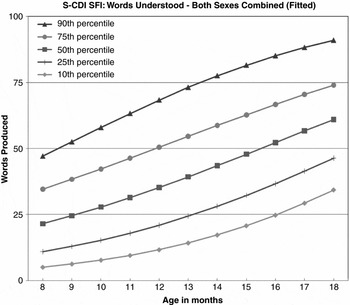
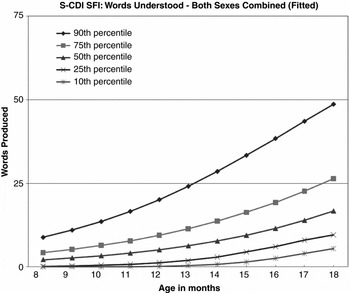
S-CDI SFI: Vocabulary comprehension and production. Figure 1 plots the fitted percentile values for words comprehended for both genders combined. As expected, word comprehension shows a steady increase with age across all percentile levels. Even though the checklist on the short form has considerably fewer words than that of the long form, substantial individual differences are still evident. Figure 2 presents fitted percentiles for word production for both genders combined. Again, considerable growth is evident, along with substantial individual variation. As observed on the long form, fitted scores in word production remain near floor until about 13 months with few differences in the percentile levels at these younger ages. After this point, there is greater separation between percentile levels in the top half of the distribution, as a greater number of children are reported to produce more of the words on the checklist in the older age groups.
Words understood as a function of age (months) and percentile level (10th, 25th, 50th, 75th, and 90th) for both sexes combined (Spanish-language MacArthur–Bates Communicative Development Inventories Short Form I [S-CDI SFI]).

Words produced as a function of age (months) and percentile level (10th, 25th, 50th, 75th, and 90th) for both sexes combined (Spanish-language MacArthur–Bates Communicative Development Inventories Short Form I [S-CDI SFI]).

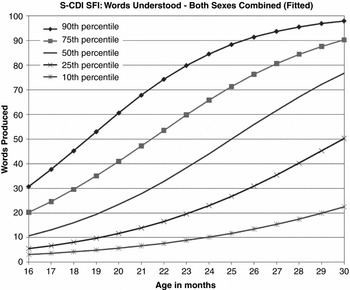
S-CDI SFII: Vocabulary production. Developmental trends for word production on the S-CDI SFII are presented in terms of fitted percentile values (10th, 25th, 50th (median), 75th, and 90th) in Figure 3. The patterns of age-related changes are quite similar to those observed on the long-form of the S-CDI, again showing considerable variability within each age group. Substantial growth is observed over the age range. Until about 19 months, word production is quite limited (below 20 words), most notably in the lower half of the distribution. After 20 months, vocabulary production takes off for all percentile levels. The higher percentile groups begin with higher production levels at the earliest ages and typically are reported to produce most words on the forms after about 27 months. Few ceiling effects are observed below the 50th percentile level throughout the age range. This suggests that the form may be appropriate for use with children older than 30 months if scores are falling in the lower half of the distribution. Use with higher performing children over 30 months would not be appropriate.
Words produced as a function of age (months) and percentile level (10th, 25th, 50th, 75th, and 90th) for both sexes combined (Spanish-language MacArthur–Bates Communicative Development Inventories Short Form II [S-CDI SFII]).

Gender differences
Although the data presented above provide a general pattern of developmental trends across all children, further inspection of the data suggests some evidence for gender differences in the vocabulary measures. Looking first at words understood on the S-CDI SFI, a Gender (2) × Age Group (2) analysis of variance (ANOVA) indicated a main effect of age group, F (1, 597) = 120.7, p < .001, η2p = 0.17, but no main effect of gender (p = .33, η2p = 0.002) and no Gender × Age Group interaction (p = .54, η2p = 0.001). In contrast, a 2 (Gender) × 2 (Age Group) ANOVA on words produced revealed a slight female advantage in the oldest age group. That is, as expected, older children were reported to produce more words than younger children, F (1, 597) = 70.1, p < .001, η2p = 0.11. The main effect of gender was not statistically significant (p = .22, η2p = 0.003), and there was a significant Age Group × Gender interaction, F (1, 597) = 4.8, p < .03, η2p = 0.01. This result reflects that 13- to 18-month-old females were reported to produce more words (M = 16.9, SD = 16.8), on average, than 13- to 18-month-old boys (M = 13.3, SD = 13.1). As expected, a reliable gender difference was not evident at the younger age group (girls M = 5.7 words vs. boys M = 6.7 words) as all children were producing very few words in this age group.
Gender differences were even more evident in word production assessed on the S-CDI SFII. To examine these effects, a 2 (Gender) × 3 (Age Group) ANOVA was conducted, including a dummy variable for sample as a covariate. A significant main effect of age, F (2, 2527) = 508.0, p < .001, η2p = 0.29, reflects that children of both genders were reported to produced more words in the older than younger age groups (adjusted marginal means: 16–30 months: M = 20.9, SE = 1.1; 21–25 months: M = 42.3, SE = 0.91; 26–30 months: M = 61.9, SE = 0.74). In addition, the main effect of gender was significant, F (1, 2527) = 25.7, p < .001, η2p = 0.01 (adjusted marginal means: males: M = 39.0, SE = 0.75; females: M = 44.4, SE = 0.74), but there was no Gender × Age Group interaction (p = .42, η2p = 0.001). Note that this gender effect, although statistically reliable, was much smaller in magnitude than the effect of age. These results reflect that, controlling for sample, girls were somewhat more likely to have more words reported as produced than boys and that this small, but reliable female advantage was evident at every age group.
Developmental trends as a function of SES
The large and diverse sample available in this norming study allowed us to examine whether vocabulary development as assessed in the S-CDI SFs systematically varied as a function of SES. For this analysis, as in Jackson-Maldonado et al. (Reference Jackson-Maldonado, Thal, Marchman, Newton, Fenson and Conboy2003), maternal education is adopted as an index of SES. Looking first at the SFI, Figure 4a presents mean vocabulary comprehension scores for children in the Less than Bachillerato and Universidad categories as a function of younger (8–12 months) and older (13–18 months) age groups. A 2 (Age) × 2 (SES) ANOVA revealed the expected main effect of age group, F (1, 593) = 134.8, p < .0001, η2p = 0.19, and a marginal main effect of SES, F (1.593) = 3.1, p < .08, η2p = 0.01. As shown in Figure 4a, the Age Group × SES Group interaction was significant, F (1, 593) = 10.7, p < .005, η2p = 0.02, reflecting that, in the younger age group, children from lower SES families were reported to have more words understood than children in the higher SES group. No differences were observed as a function of SES in the older age group. These findings are similar to those reported for the long form in Jackson-Maldonado et al. (Reference Jackson-Maldonado, Thal, Marchman, Newton, Fenson and Conboy2003).
(a) Word comprehension by socioeconomic status and age group (Spanish-language MacArthur–Bates Communicative Development Inventories Short Form I [S-CDI SFI]). (b) Word production by socioeconomic status and age group (S-CDI SFI).

A similar trend was seen in vocabulary production, plotted in Figure 4b. Looking first at age group differences, children in the older age group, regardless of SES group, were reported to have higher vocabulary production scores than children in the younger group, F (1, 593) = 73.1, p < .001, η2p = 0.11. Note that although the overall main effect of SES group was not reliable (p = .99, η2p = 0.001), there was a significant interaction of SES and age group, F (1, 593) = 5.2, p = .03, η2p = 0.01. As with vocabulary comprehension, this interaction reflected a different impact of SES on responses in the younger versus older children. For younger children, word production scores were lower on average in children from college-educated families and higher in children from less educated families. The opposite pattern was seen in the older group: children from higher SES families had higher word production scores on average than children from lower SES families.
Given the distribution of maternal education for the S-CDI SFI sample (see Table 5), it is important to ask whether these relations to SES would be substantively different if our sample was more representative of the Mexican population. To explore this question, we examined the extent to which mean vocabulary comprehension and production scores changed after statistically adjusting for sampling biases using a poststratification weighting technique. Here, scores for children in each of the maternal education categories in Table 5 were weighted such that the sample data would more closely conform to that of the Mexican population. Results indicated that we could expect a decrease of 0.3 words in overall mean vocabulary comprehension, a change of approximately 0.7%. The expected impact on production was somewhat higher but still minor, an increase of 0.4 words, or about 3%. These results suggest a relatively small impact on overall scores after adjusting sample data to conform to the parameters of the population's distribution of SES.
Recall that the distribution of maternal education for the S-CDI SFII sample closely resembled that of the Mexican population (see Table 5). The resulting pattern of SES effects is plotted as a function of age group in Figure 5. These data were analyzed in a 3 (Age Group) × 2 (SES Group) ANOVA. Here, the results revealed the anticipated significant main effect of age group, F (2, 2073) = 350.5, p < .001, η2p = 0.25, a significant main effect of SES group, F (1, 2073) = 21.1, p < .001, η2p = 0.01, but no SES Group × Age Group interaction (p = .85, η2p = 0.001). As seen in Figure 5, children from families with higher education were reported to produce significantly more words than children from families with less education at every age group. Thus, for measures of word production in the age range of the S-CDI SFII, the impact of SES consistently shows an advantage for children from higher SES backgrounds.
Word production by socioeconomic status and age (Spanish-language MacArthur–Bates Communicative Development Inventories Short Form II [S-CDI SFII]).

Continuity between the long and short forms
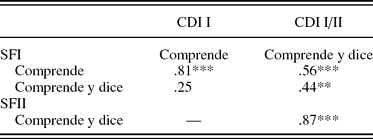
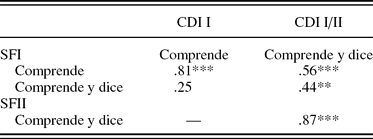
Our final question focuses on the degree to which parents’ responses on the newly developed short form align with responses from the long form. Table 6 presents partial correlations between short-form and long-forms scores for those participants who completed both forms, controlling for age in months. Note that the correlation between words understood on the long and short forms was quite strong, suggesting considerable overlap in the rank ordering of children when comprehension is assessed with either form. The correspondence between the short and long forms for word production was considerably weaker. This is likely due to the fact that most children are producing only a few words by this age, and small differences in reporting could have a considerable impact on the rank ordering of the children.
Correlations between scores on the S-CDI long and short forms, controlling for age
Note: S-CDI, MacArthur–Bates Spanish-Language Communicative Development Inventories; S-CDI I and II, long forms I and II; SFI and SFII, short forms I and II.
**p < .01. ***p < .001.
Turning now to the vocabulary production scores for older children derived from the S-CDI II/SFII, the correlations reported in Table 6 again show strong correspondence between the short and long forms. Although these results should be interpreted with caution given the small sample size and the relatively homogeneous demographic distribution of the sample, the generally strong correspondence shown here across the S-CDI I and II forms suggests that the S-CDI SFs have potential to be a useful alternative to the long forms when a global estimate of vocabulary comprehension or production is desired.
DISCUSSION
This paper presents results from a large-scale norming study of the recently developed short form versions of the Spanish-language CDIs. Following the development of the short forms of the English-language instruments, the S-CDI SFs consist of approximately 100-word vocabulary checklists designed to lexical development from 8 to 30 months in Spanish-learning infants and toddlers. Analyses of the fitted percentile scores revealed substantive developmental change in both word comprehension and word production across this important period of development, but also considerable individual variation. Despite the shortened vocabulary checklists, large ranges of scores were observed in the expected periods of development for both comprehension and production, with scores frequently spanning the full range of the instrument.
Several developmental trends observed in studies using the long-form S-CDIs could also be seen in the current study of the short forms. For example, as reported in Jackson-Maldonado et al. (Reference Jackson-Maldonado, Thal, Marchman, Newton, Fenson and Conboy2003) and Fenson et al. (Reference Fernald, Gertler and Neufeld2007), developmental change in word comprehension tended to occur earlier in the period than word production, resulting in little variation in production prior to 13–14 months of age. However, variation in word production increased after this age point. Using the S-CDI SFII, substantial variation in word production is seen throughout the period, consistent with patterns observed with the long-form versions. In general, these results suggest that, like the long forms, the S-CDI SFs can offer measures of early language that are sensitive to key developmental trends in vocabulary development. In addition, this form may be useful with at-risk children older than 30 months, given that ceiling effects were not observed at the 50th percentile level and below. More research is necessary to fully explicate the clinical utility of this tool, including its validity for use with delayed children who may be older than 30 months.
The analyses of gender effects also revealed patterns of development that were analogous to those seen using the long forms. In particular, girls were shown to have a consistent, but small, advantage over boys, especially in word production. Gender effects also tended to be more evident later, rather than earlier, in development. Small but consistent gender effects concur with the recommendation that users may wish to apply the fitted percentiles separately for boys and girls. Nevertheless, as in earlier studies, gender effects were not nearly as strong as those attributable to age and so, users may prefer to use percentiles that collapse over gender. As such, Appendix B provides fitted percentile tables for boys and girls separately, as well as for the genders combined.
These promising results suggest that the S-CDI SFs have the potential to be a cost-effective substitute for longer and more time-consuming methods of assessing early vocabulary in many research and clinical contexts. This conclusion is further substantiated by the fact that strong cross-form correlations were observed in a separate small-scale study in which parents completed both forms. Continuity across forms was equally strong for early lexical comprehension for the S-CDI SFI and word production for the S-CDI SFII, with much weaker relations seen for word production using the S-CDI SFI. However, it is likely that this modest across-form link was due to floor effects that are characteristic of the limited range in lexical production at this age.
The current study was uniquely positioned to offer a picture of early lexical development in a large and diverse population of Spanish-language learners across Mexico. By providing norms for the S-CDI SFII that mirror the broad range of educational levels seen in the Mexican population, the current study provides information that is more representative of the population of Spanish-language learners in Mexico than those of earlier studies and of most available language tests. For S-CDI SFI, the norming data oversampled children living in high school and college educated families, and undersampled children from families with only a primary school education. The analyses of SES differences found that the impact of SES was different depending on both the measure and the age group. For younger children, word comprehension scores tended to be higher in families where the mothers had less education than in families where the mothers had higher levels of education.
Although it would be important to further replicate these findings with a truly representative sample, analyses indicated relatively little impact on overall mean scores when sampling biases were corrected statistically. Thus, following Fenson et al. and others (Fenson et al. Reference Fenson, Pethick, Renda, Cox, Dale and Reznick2000; Jackson-Maldonado et al., Reference Jackson-Maldonado, Thal, Marchman, Newton, Fenson and Conboy2003; Reznick & Goldsmith, Reference Reznick and Goldsmith1989; Roberts et al. Reference Roberts, Burchinal and Durham1999; Rodrigue, Reference Rodrigue2001), we cautiously interpret this finding to suggest that less-educated mothers may tend to overestimate their child's level of word comprehension, especially early in development, whereas mothers with more education may tend to apply a higher standard when interpreting early comprehension than mothers with less education, resulting in lower scores in this group. Of interest, a recent study of English-language learners found that parents from lower SES backgrounds did not show a systematic reporting bias (Furey, Reference Furey2011). Nevertheless, the most prudent position is that the potential for reporting bias should be taken into consideration when assessing vocabulary development using parental report in diverse samples of young children. More specifically, although the differences were slight, low-SES children may be reported to comprehend more words that their middle class peers and to produce less words. These factors should be considered if the instruments are to be used for diagnostic purposes.
The opposite impact of SES was seen in word production on the S-CDI SFII. As in earlier studies, children from families where the mother had higher education consistently showed higher scores than children from families in which the mother had less education. Clearly, an important area of ongoing research is to more systematically evaluate the sources of influence that SES may have on vocabulary development. The development of the short forms of the S-CDIs, much shorter and potentially less-intimidating versions of the instruments, is a fruitful first step in this regard (Fenson et al., Reference Fenson, Pethick, Renda, Cox, Dale and Reznick2000; Reznick & Goldsmith, Reference Reznick and Goldsmith1989).
In general, these results indicate that caution should continue to be taken when evaluating results from this (and any) parent report instrument or observational technique with children from extremely low-SES families. It is the case that most assessment instruments do not have a high percent of low-SES families in their norming samples. Given the potential for reporting biases, particularly in the domain of comprehension, multiple assessment instruments should be applied to establish adequate language levels whenever possible. It may also be the case that the instruments are best completed in the presence of a facilitator, rather than leaving the forms to be filled out on their own. Examples of language behaviors can then be provided in a face-to-face context that may help parents better understand how to complete the form. It may also be particularly important to elaborate on instructions that help parents differentiate between early comprehension and production. Finally, studies that examine the validity of parent report in relation to other assessment tools in families from diverse backgrounds and from different language-learning groups remain an important research priority (e.g., Furey, Reference Furey2011).
Although a strong point of this S-CDI SFII norming study is the inclusion of a large and representative sample of low-SES families, this feature may work against us in specific contexts. Recall that the norms for the S-CDI II long form reported in Jackson-Maldonado et al. (Reference Jackson-Maldonado, Thal, Marchman, Newton, Fenson and Conboy2003) does not have a similar population of low-SES families. Thus, the two norming samples are not directly comparable in terms of SES. Nevertheless, very few uses of the instruments necessitates direct comparison of scores from the short and long forms, and thus this limitation is relatively minor and should not detract from the fact that the current S-CDI SFII norms have met the goal of representing the SES distribution of the Mexican population more broadly.
Despite all shortcomings that the different samples may have, it is the case that there are inconsistent findings using different instruments with low-SES families. There is a important need for more and better assessment tools that are adequate for this populations. Thus, it is necessary to find the best means to assess low-SES children. As Pan et al. (Reference Pan, Rowe, Spier and Tamis-Lemonda2004) have shown, despite inconsistencies, “maternal report can be a useful source” (p. 604)
The S-CDI SFs are likely to be appropriate for use with Spanish-speaking families when the goal is to obtain a quick means for determining whether a child is following typical developmental patterns or whether further testing is required. Clearly, further studies are needed in order to establish the clinical utility of the S-CDI SFs for screening purposes. Nevertheless, the current results demonstrate that the S-CDI SFs have considerable promise as effective vocabulary assessment instruments in Spanish-speaking children between 8 and 30 months. Of course, the short forms cannot replace the longer versions for all purposes. Although the checklists on the S-CDI SFs comprise words from a variety of lexical categories, only global measures are derivable. The numbers of items on the long forms allow the vocabulary checklists to be further subdivided into categories that may be particularly meaningful for some research questions (e.g., a comparison of developmental trends in nominals vs. closed class forms; Bates et al., Reference Bates, Marchman, Thal, Fenson, Dale and Reznick1994). This kind of item analyses is not possible with the considerably shorter checklists on the S-CDI SFs. Moreover, unlike the S-CDI I, the S-CDI SFI does not ask about general phrase comprehension, early signs of understanding, or children's use of symbolic/communicative gestures. Similarly, in contrast to the S-CDI II, which includes questions about children's use of particular grammatical morphemes and a section that assesses an overall measure of grammatical sophistication, the S-CDI SFII only asks parents to indicate whether their child has begun combining words and to provide examples of their three longest sentences. Although clearly more limited than the S-CDI II, this additional information could be particularly useful for identifying children with potential language delays. Normative data from these two sections are currently undergoing analyses.
In conclusion, the current paper introduced short-form versions of the S-CDIs, providing normative information based on a broad cross section of Spanish-learning children from throughout Mexico. Patterns of gender and SES effects were found that were analogous to those in earlier studies with the long forms. These findings suggest that the short forms are tapping into similar developmental trends of early lexical comprehension and production as the long forms across this important period of language growth. A small-scale study with middle-class participants demonstrated substantial convergence between scores on the short forms and the long forms. These results converge on the conclusion that the short forms may fill an important research and clinical need, offering alternatives to the long form when screening assessments are desired or when time constraints or the literacy levels of the parents preclude the use of the more comprehensive long forms. Although further research is needed to fully establish the utility of the form for identifying children at risk for later language delays, the current evidence suggests that these short forms may have considerable utility in a broad range of clinical and research applications.
APPENDIX A
Fundación MacArthur Versión Breve del Inventario del Desarrollo de Habilidades Comunicativas. Primeras Palabras y Gestos Palabras y Enunciados
Both forms are copyrighted by the CDI Advisory Board.


APPENDIX B
The following tables are from the MacArthur–Bates Spanish-Language Communicative Development Inventories Short Form I (SFI) and Short Form II (SFII).
SFI: Fitted percentile scores for words understood for females

SFI: Fitted percentile scores for words understood for males

SFI: Fitted percentile scores for words understood for both sexes combined

SFI: Fitted percentile scores for words produced for females

SFI: Fitted percentile scores for words produced for males

SFI: Fitted percentile scores for words produced for both sexes combined

SFII: Fitted percentile scores for words produced for females

SFII: Fitted percentile scores for words produced for males

SFII: Fitted percentile scores for words produced for both sexes combined

ACKNOWLEDGMENTS
Funding for this study was obtained from the CDI Advisory Board and the Secretaría de Salud Pública in Mexico. The Fundación MacArthur Versión Breve del Inventario del Desarrollo de Habilidades Comunicativas, Primeras Palabras y Gestos and Palabras y Enunciados, are copyrighted by the CDI Advisory Board. We give special thanks to the participating day care centers in the city of Querétaro, particularly Giocare, Allegretto, Rincón Infantil, Maud Mannoni, Islas Jónicas, and El Sueño de los Niños, and for the support of the administrators and staff of Mexico's Oportunidades program.