Introduction
Cancer is a serious public health burden especially in developed countries and regions including Hong Kong. Improvements in cancer survival have been identified in the past 20 years (Arnold et al., Reference Arnold, Rutherford, Bardot, Ferlay, Andersson, Myklebust and Bray2019), but they do not necessarily equate with better quality of life. Previous research found that suicide risk among cancer patients was higher compared to that in the general population (Henson et al., Reference Henson, Brock, Charnock, Wickramasinghe, Will and Pitman2019; Zaorsky et al., Reference Zaorsky, Zhang, Tuanquin, Bluethmann, Park and Chinchilli2019). Cancer metastasis (Rahouma et al., Reference Rahouma, Kamel, Abouarab, Eldessouki, Nasar, Harrison and Port2018; Zhong et al., Reference Zhong, Li, Lv, Tian, Liu, Li and Zhuo2017), other commonly reported physical and psychiatric comorbidities among cancer patients such as hypertension, diabetes, heart diseases and depression (Roy, Vallepu, Barrios, & Hunter, Reference Roy, Vallepu, Barrios and Hunter2018; Sarfati et al., Reference Sarfati, Gurney, Lim, Bagheri, Simpson, Koea and Dennett2016) were also documented as independent risk factors for suicide in previous research (Ahmedani et al., Reference Ahmedani, Peterson, Hu, Rossom, Lynch, Lu and Simon2017; Hu & Lin, Reference Hu and Lin2020; Ribeiro, Huang, Fox, & Franklin, Reference Ribeiro, Huang, Fox and Franklin2018; Wang, An, Shi, & Zhang, Reference Wang, An, Shi and Zhang2017). Palliative care, which is provided to patients with life-threatening diseases to improve their last-stage quality of life (Hong Kong Hospital Authority, 2020), was known to alleviate the risk of suicide among patients with advanced cancer (Sullivan et al., Reference Sullivan, Forsberg, Golden, Ganzini, Dobscha and Slatore2018).
Currently, the suicide prevention strategies in the Hong Kong medical system mainly focus on mental health screening and depression management (Ma & Mak, Reference Ma and Mak2012; Yeung, Reference Yeung2015). However, it may not be effective for Hong Kong cancer patients if there is no comprehensive understanding of their suicide risk and contributing factors. Inpatient services usually provide treatments such as chemotherapy, radiotherapy and symptom control to the cancer patients (Mix et al., Reference Mix, Granger, LaMonte, Niewczyk, DiVita, Goldstein and Freudenheim2017). Patients who require inpatient services may have different disease progress and experience compared to their counterparts using outpatient and accident and emergency (A&E) services (Hinz et al., Reference Hinz, Weis, Faller, Brähler, Härter, Keller and Mehnert2018; Joo, Rha, Ahn, & Kang, Reference Joo, Rha, Ahn and Kang2011). Moreover, as cancer patients with inpatient admission usually have a longer length of stay in hospital, hospitals should be considered as important sites for suicide prevention.
To date, the majority of suicide research among cancer patients focuses on suicide deaths and suicidal ideation (Henson et al., Reference Henson, Brock, Charnock, Wickramasinghe, Will and Pitman2019; Ravaioli et al., Reference Ravaioli, Crocetti, Mancini, Baldacchini, Giuliani, Vattiato and Falcini2020) as opposed to suicidal behaviors. Previous research also found mixed results regarding suicide risk by gender (Bowden et al., Reference Bowden, Walsh, Jones, Talukder, Lawson and Kruse2017; Komic et al., Reference Komic, Taludker, Walsh, Jones, Lawson, Bateson and Kruse2017; Smailyte et al., Reference Smailyte, Jasilionis, Kaceniene, Krilaviciute, Ambrozaitiene and Stankuniene2013). Regarding age, previous research identified age as a linear factor associated with suicidality among cancer patients (Anderson, Park, Rosenstein, & Nichols, Reference Anderson, Park, Rosenstein and Nichols2018; Samawi et al., Reference Samawi, Shaheen, Tang, Heng, Cheung and Vickers2017). However, we hypothesized that there would be different risk factors among different age groups especially between the young and the elderly since the suicide pattern and disease progress between the two groups are different (Barbas et al., Reference Barbas, Turley, Ceppa, Reddy, Blazer, Clary and Lagoo2012; Chou et al., Reference Chou, Chang, Lin, Chen, Jiang, Wang and Lin2011). Hence, we conducted stratified analysis based on age (before and after 60 years old) and gender.
As far as we know, this is the first research to systematically investigate suicidal/self-harm behaviors and the contributing factors among Chinese cancer patients. In detail, the first aim is to estimate the incidence of suicidal/self-harm behaviors among cancer patients within the first year of first cancer inpatient admission. Another aim is to identify risk and protective factors for suicidal/self-harm behaviors among cancer patients, including cancer severity, physical and psychiatric comorbidities and other sociodemographic factors, and how the impact of these factors varies by gender and age groups.
Methods
Data source
This study used the inpatient electronic medical records from the Hong Kong Hospital Authority (HA) Clinical Data Analysis and Reporting System (CDARS) between 1 January 2000 and 31 December 2010. According to the HA, the public hospitals covered approximately 90% of the inpatient services in Hong Kong, and the inpatient medical records were captured by CDARS (Leong, Reference Leongn.d.). On each record, essential clinical information such as patients' age at diagnosis, gender, hospital, admission and discharge date, number of days of stay at the hospital, up to 15 diagnoses and death status were included. To protect patients' confidentiality, each patient was assigned with a unique patient ID for data retrieval. The International Classification of Diseases, Ninth Revision (ICD-9) was used for diagnoses in the system. The CDARS medical records have been used in various epidemiological and population studies (Chai et al., Reference Chai, Luo, Wong, Tang, Lam, Wong and Yip2020; Wong et al., Reference Wong, Wong, Yuen, Tse, Luk, Yip and Chan2020; Yung et al., Reference Yung, Wong, Chan, Or, Chen and Chang2020).
Study population and records retrieval
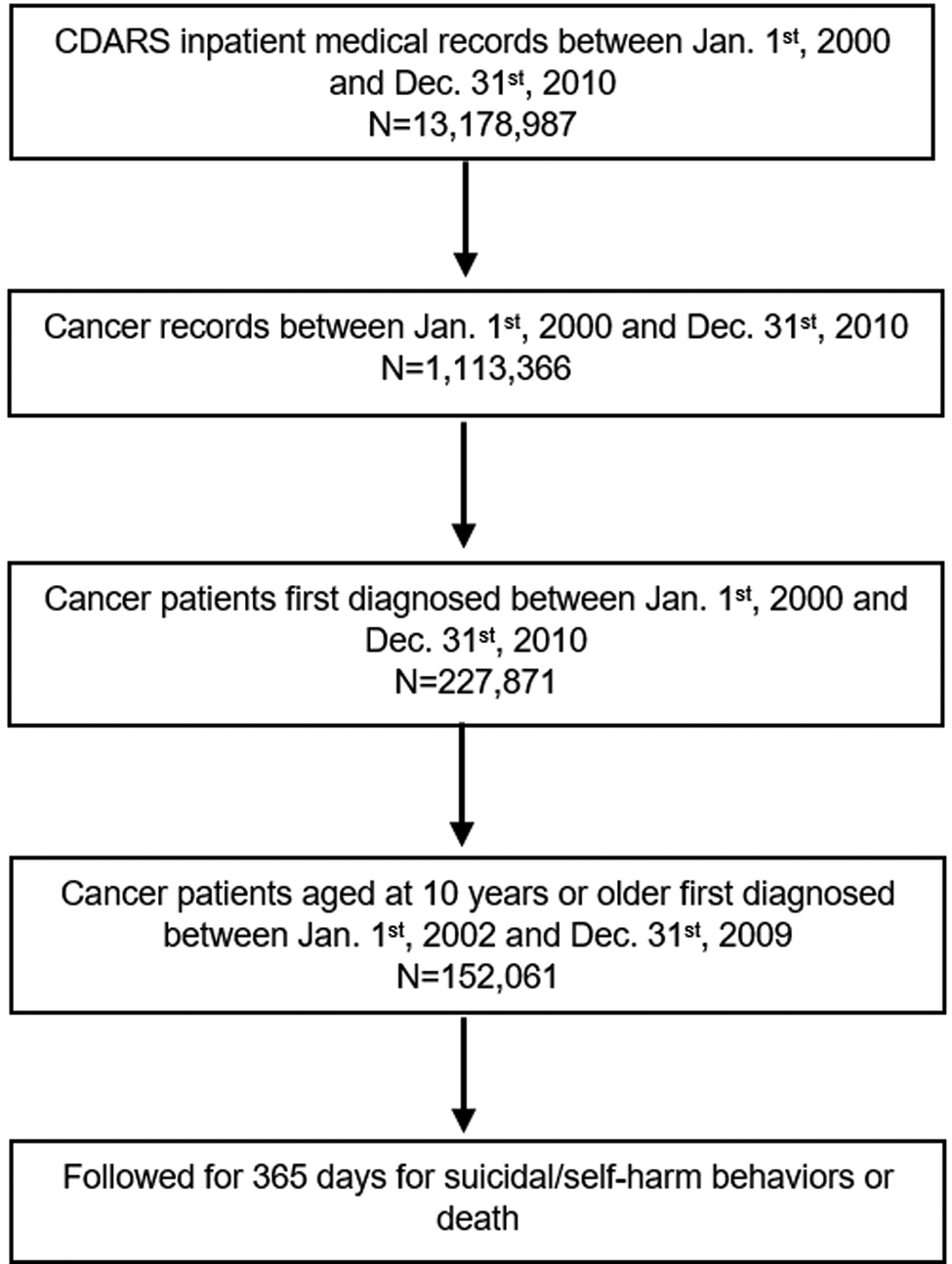
The study population was composed of any patients diagnosed of primary malignant tumor with their first cancer-related inpatient admission between 1 January 2002 and 31 December 2009 and were 10 years or older at the admission. For case selection, first, all the inpatient records with any primary malignant tumor diagnosis code (ICD-9 code: 140–208, exclude 196–198) between 1 January 2000 and 31 December 2010 were extracted. Then, all the cancer records were grouped by patients' reference ID, and the earliest cancer record of each patient was kept. This study focused on the impact of first cancer admission. Patients whose first admission was between 2000 and 2001 may have cancer admissions before 2000, and those records could not be captured by our data. To address this left censoring issue, patients whose first admission was in and after 2002 were included in the study. Patients who were first admitted in 2010 were excluded from the study because they did not have a full year of follow-up. Patients who were younger than 10 years at the time of admission were excluded from the study because young children do not have a basic understanding of suicide (Normand & Mishara, Reference Normand and Mishara1992) and suicidal ideation and attempts are rarely reported before adolescents in most countries (Borges et al., Reference Borges, Chiu, Hwang, Panchal, Ono, Sampson, Nock, Nock, Borges and Ono2012). For the remaining cancer patients, all of their inpatient medical records between 2000 and 2010 were retrieved and matched based on the reference ID (Fig. 1).
Study population selection process.

Outcomes
The main outcomes were being admitted for suicidal/self-harm behaviors or death within 1 year after the discharge of the first cancer inpatient admission. A broader diagnosis in ICD-9 was used in this study (E950–959: suicide and self-inflicted injury; E980–989: injury undetermined whether accidentally or purposely inflicted) as the number of strictly defined cases (E95X) in the sample was low (N = 198). Meanwhile, suicides are often underreported or misclassified as with undetermined intent or accidents in Asia because of stigma against suicide and cultural and religious influences (Chang, Sterne, Lu, & Gunnell, Reference Chang, Sterne, Lu and Gunnell2010; Chen, Wu, Yousuf, & Yip, Reference Chen, Wu, Yousuf and Yip2012). The date of the suicidal/self-harm behaviors was recorded as the admission date of the record. The date of death was recorded as the discharge date of the record indicating death.
Study variables
The severity of the cancer was the exposure of interest in the study. Since there was no detailed information on the stage of cancer in the diagnosis code, the 5-year relative survival rate for each cancer site was used as a proxy of cancer severity in our study. The 5-year relative survival rate for each cancer site by age group based on the 1996–2001 cancer cases in Hong Kong was identified in the World Health Organization database (Law & Mang, Reference Law, Mang, Sankaranarayanan and Swaminathan2011). Each cancer patient was matched with the corresponding 5-year relative survival rate based on their first primary cancer site and the age of the admission. If a patient had multiple primary cancer diagnoses on the first inpatient admission record, the lowest survival rate was used. Other cancer-related variables of interest included whether the patients received a metastatic cancer diagnosis (ICD-9 code: 196–198) or encounter for palliative care (ICD-9 code: V66.7) during the first inpatient admission and the number of days at the hospital during the first admission. The information could reflect the severity of the patients' cancer diagnosis.
Other physical and psychiatric comorbidities 730 days prior to the first cancer inpatient admission were also identified, including previous suicidal/self-harm behaviors, cardiovascular conditions, hypertension, renal problems, coagulopathy, diabetes, lipid metabolic problems, chronic obstructive pulmonary disease (COPD), depression, psychosis, drug and alcohol abuse. The diagnose codes for the abovementioned comorbidities were categorized based on Quan's Enhanced ICD-9-CM coding algorithms for Charlson comorbidities (Quan et al., Reference Quan, Sundararajan, Halfon, Fong, Burnand, Luthi and Ghali2005). Demographic information such as age at diagnosis and gender was also included.
Statistical analysis
The count with percentage or mean with standard deviation (s.d.) were reported for categorical and continuous variable of interest respectively. For the study population, the differences in those variables were compared between cancer patients with and without suicidal/self-harm behaviors within 1 year after the hospital admission. Independent t test and χ2 test were applied for continuous and categorical variables respectively. The Fine and Gray multivariable competing risk model was used to predict the probability of having suicidal/self-harm behaviors within 365 days of the first cancer hospitalization, taking into account the competing risk of death. It is preferred over the Cox proportional hazard regression model because cancer is a disease with high mortality rate and death precludes the occurrence of the primary outcome (suicidal/self-harm behaviors). The competing risk model provides more accurate estimation in this circumstance (Austin & Fine, Reference Austin and Fine2017). The follow-up time was calculated as the number of days between the discharge date of the first admission and the outcome events (suicidal/self-harm behaviors or death) within 365 days, or 365 days if the patient was event-free and censored. For cancer patients who received a diagnosis of suicidal/self-harm behaviors on the same record of the first cancer admission, this outcome event was not counted, and they were followed for future events within the study period.
First, the cumulative incidence function for the primary outcome was generated in the competing risk analysis. Then, the bivariate and multivariable competing risk models were run for all the variables of interest. A squared term of age was also included in the multivariable model to account for the non-linear association of age. Further subgroup analyses were performed to look at whether the risk of having suicidal/self-harm behaviors varied by gender or age group (younger than 60 years old; 60 years or older). The age of 60 was chosen as the cut-off point to maintain high statistical power for subgroup analyses as developing cancer is a rare event among young adults. In Hong Kong, the incidence of cancer became more prominent after turning 60 years old (Hong Kong Cancer Registry, 2017). The crude and adjusted cause-specific hazard ratios (HRs) and the corresponding 95% confidence intervals (95% CIs) for each model were reported. Due to the large number of hypothesis tests performed, a two-sided p value less than 0.01 (Bonferroni corrected for five multivariable competing risk models: overall, male, female, younger than 60, 60 and older) was considered statistically significant instead of the usual 0.05 level to reduce the possibility of type I error. SAS (version 9.4; SAS Institute, Inc., Cary, NC) was used for all statistical analyses.
Result
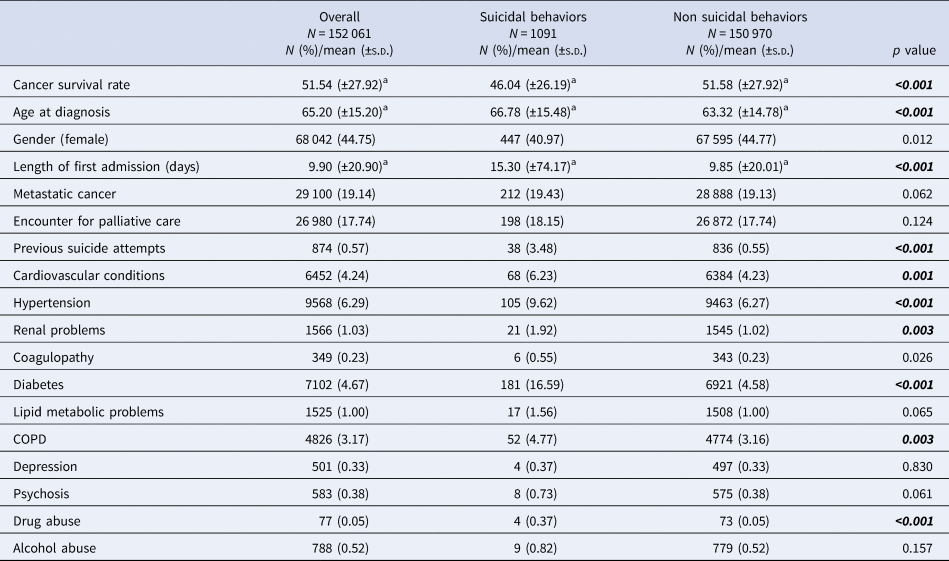
In total, 152 061 patients aged 10 years or older received their first cancer-related inpatient admission between 2002 and 2009, among which 44.75% were female. The mean and median age of the study population was 65.20 and 68 years, respectively, and the most prevalent type of cancer was lung cancer (18.84%). The study population contributed a total of 39 926 729 person-days (109 388.30 person-years), and the mean (s.d.) and the median of the follow-up time were 262.57 (145.24) and 365 days, respectively. During the 1-year follow-up period, 1091 (0.72%) patients had an admission of suicidal/self-harm behaviors, and 56 555 (37.22%) were dead. Among the dead cancer patients, 13 098 (out of the 152 061 patients in the study) died during their first cancer admission. The characteristics of the study population are summarized in Table 1.
The characteristics of the study population and the comparisons between cancer patients with and without suicidal/self-harm behaviors

Bold and italic indicate that the p value is significant (i.e. p < 0.01).
a Mean and s.d. are shown.
The baseline characteristics of the cancer patients with and without suicidal/self-harm behaviors are compared and summarized in Table 1. Compared to the cancer patients who were suicidal/self-harm free, those with suicidal/self-harm behaviors were generally older (p < 0.001) and more likely to be male (p = 0.012). They were more likely to be diagnosed with cancer with lower relative survival rate and their first cancer hospitalization was longer (p < 0.001). They were more likely to have a history of other physical conditions (p < 0.05) and more likely to have previous suicidal/self-harm behaviors (p < 0.001). The two groups did not differ statistically in prior 2-year psychiatric conditions.
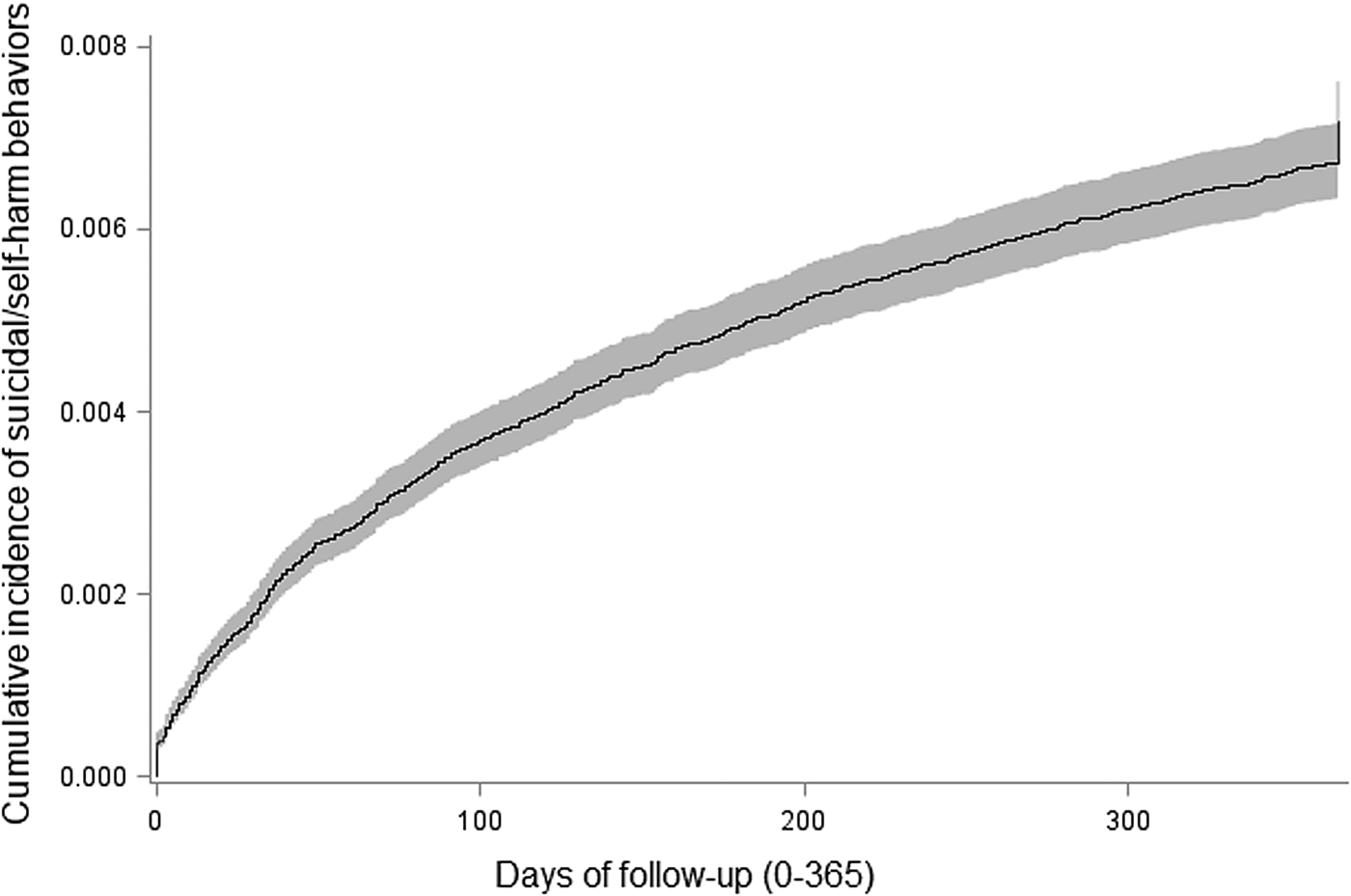
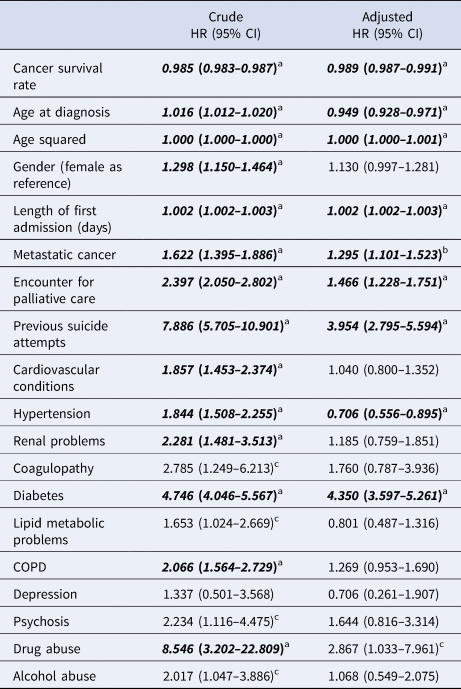
The cumulative incidence of suicidal/self-harm behaviors within 1 year was 717.48 per 100 000 person-years (95% CI 676.05–760.91). The cumulative incidence curve is shown in Fig. 2. The results from the crude and multivariable models are summarized in Table 2. In the crude competing risk model, the cancer severity was positively associated with the risk of suicidal/self-harm behaviors, and the relationship remained significant in the multivariable analysis. In the adjusted model, for every 1% decrease in the 5-year relative survival rate, the risk of suicidal/self-harm behaviors increased by 1.1% (HR = 0.989, [0.987–0.991]). Besides lower cancer survival, having a metastatic cancer diagnosis (HR = 1.295, [1.101–1.523]), an encounter for palliative care (HR = 1.466, [1.228–1.751]), and a longer stay during the first cancer hospital admission (HR = 1.002, [1.002–1.003]) were also strongly associated with increased risk of suicidal/self-harm behaviors.
Cumulative incidence curve and 95% CI of suicidal/self-harm behaviors among cancer patients within 1 year after inpatient hospital admission in Hong Kong, 2002–2009.

Crude and adjusted HRs and 95% CIs for the association between variables of interest and suicidal/self-harm behaviors among cancer patients

Bold and italic indicate that the p value is significant (i.e. p < 0.01).
a p value less than 0.001.
b p value between 0.01 and 0.05.
c p value between 0.001 and 0.01.
The increase in age at diagnosis was associated with elevated risk of suicidal/self-harm behaviors in the crude model (HR = 1.016, [1.012–1.020]). However, the relationship was reversed in the adjusted model. The significance of squared term of age indicated that there was a non-linear relationship between age and the risk of suicidal/self-harm behaviors after adjusting for all other variables of interest. The turning point was estimated by the derivative of the function with respect to age and setting the first derivative to zero. A positive second derivative (0.0009048) indicated a U-shaped curve with the inflection point being a minimum:


Hence, the increase in age among cancer patients was associated with decreased risk of suicidal/self-harm behaviors starting from age 10 years until about 58 years. The relationship then turned positive, indicating that the age increase was associated with elevated risk of suicidal/self-harm behaviors at older age.
Regarding prior physical and psychiatric comorbidities, in the crude models, cancer patients with previous diagnoses of physical conditions had a higher risk of developing suicidal/self-harm behaviors. The associations attenuated after adjusting for other covariates except diabetes, which was still strongly associated with increased risk of suicidal/self-harm behaviors (HR = 4.350, [3.597–5.261]). The influence of hypertension was reversed after adjusting for covariates, meaning that having a history of hypertension was associated with decreased risk of suicidal/self-harm behaviors (HR = 0.706, [0.556–0.895]). Previous psychiatric comorbidities did not associate with elevated risk of suicidal/self-harm behaviors among cancer patients in the crude models, except for drug abuse (HR = 8.546, [3.202–22.809]). However, its influence weakened to marginal significant (0.01 < p < 0.05) in the multivariable model.
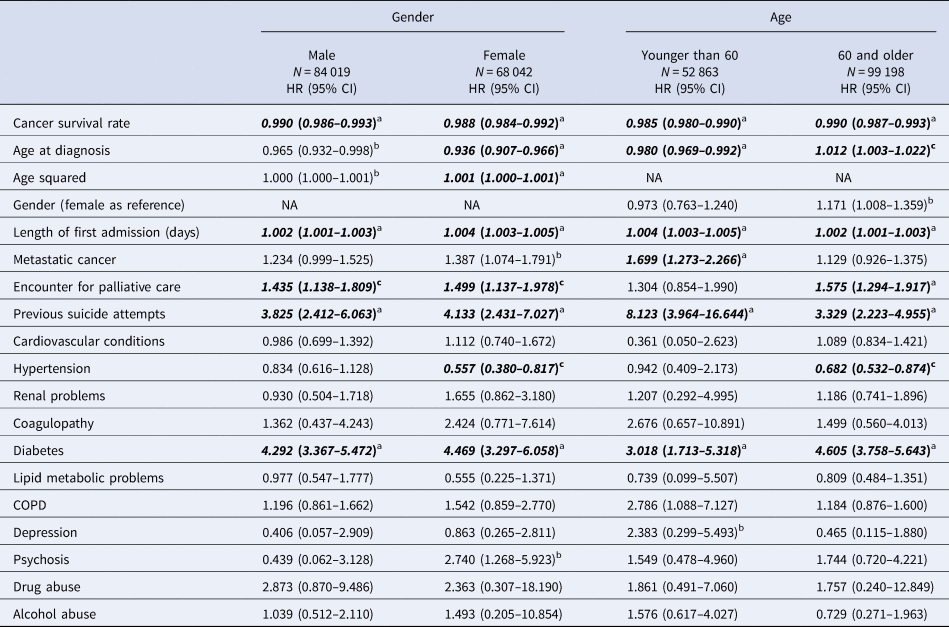
The relationships between study variables and the risk of suicidal/self-harm behaviors varied between males and females when stratifying by gender. The adjusted HRs and 95% CIs are summarized in Table 3. For both genders, the risk of suicidal/self-harm behaviors was higher among patients with lower survival rate, longer stay during the first cancer admission, an encounter for palliative care and history of suicidal/self-harm behaviors or diabetes. However, the age at diagnosis and having a history of hypertension were strongly associated with the risk of suicidal/self-harm behaviors among female patients (age = 0.936 [0.907–0.966]; hypertension = 0.557 [0.380–0.817]) but not males. Receiving a metastatic cancer and a history of psychosis were associated with increased risk of suicidal/self-harm behaviors among female patients with a marginal significance (0.01 < p < 0.05).
Adjusted HRs and 95% CIs for the association between variables of interest and suicidal/self-harm behaviors among cancer patients stratified by gender and age.

NA, not applicable.
Bold and italic indicate that the p value is significant (i.e. p < 0.01).
a p value less than 0.001.
b p value between 0.01 and 0.05.
c p value between 0.001 and 0.01.
The results for the age-stratified models are also reported in Table 3. The risk of suicidal/self-harm behaviors was higher among cancer patients with lower 5-year relative survival rate, longer stay during the first cancer admission and history of suicidal/self-harm behaviors or diabetes for both age groups. Regarding the influence of age at diagnosis, increases in age were negatively associated with the risk of suicidal/self-harm behaviors among the younger patients (HR = 0.980, [0.969–0.992]). However, the association turned positive for older patients (HR = 1.012, [1.003–1.022]). Among older patients, an encounter for palliative care during the first admission (HR = 1.575, [1.294–1.917]) and a history of hypertension (HR = 0.682, [0.532–0.874]) were strongly associated with risk of suicidal/self-harm behaviors. However, the associations were not statistically significant among younger patients. Receiving a metastatic cancer diagnosis during the first admission was associated with increased risk of suicidal/self-harm behaviors among younger patients (HR = 1.699, [1.273–2.266]) but not among their older counterparts.
Discussion
This study employed competing risk models to explore the risk of developing suicidal/self-harm behaviors within 1 year after patients' first cancer inpatient hospital admission and investigate the contributing factors using the electronic medical records in Hong Kong public hospitals. Our results indicated that cancer severity, age at diagnosis, previous suicidal/self-harm behaviors and some physical comorbidities were significant predictors of suicidal/self-harm behaviors. Some risk and protective factors also varied by gender and different age groups.
In our sample, the cumulative incidence of suicidal/self-harm behaviors within first year of cancer admission was 717.48/100 000 person-years. Previous literature looking at suicide deaths among cancer patients reported the rate ranging from 31.4/100 000 to 274.7/100 000 person-years (Anguiano, Mayer, Piven, & Rosenstein, Reference Anguiano, Mayer, Piven and Rosenstein2012; Kam et al., Reference Kam, Salib, Gorgy, Patel, Carniol, Eloy and Park2015; Misono, Weiss, Fann, Redman, & Yueh, Reference Misono, Weiss, Fann, Redman and Yueh2008; Siracuse, Gorgy, Ruskin, & Beebe, Reference Siracuse, Gorgy, Ruskin and Beebe2017). Another study investigating the self-harm behaviors among UK primary care patients reported the incidence being 123 and 179/100 000 person-years for male and female patients respectively (Carr et al., Reference Carr, Ashcroft, Kontopantelis, Awenat, Cooper, Chew-Graham and Webb2016). The high incidence of suicidal/self-harm behaviors among cancer patients suggests that cancer patients may be vulnerable to suicidality because of their physical conditions. Special attention and care are required during hospital visits and follow-ups to allow early prevention.
Our results indicated that the cancer severity, such as low survival rate, receiving a metastatic cancer diagnosis and longer stay in hospital elevated the risk of suicidal/self-harm behaviors among patients. The findings are supported by previous literature, which found that the suicide risk was higher among cancer patients with severe disease progress (Urban et al., Reference Urban, Rao, Bressel, Neiger, Solomon and Mileshkin2013; Vyssoki et al., Reference Vyssoki, Gleiss, Rockett, Hackl, Leitner, Sonneck and Kapusta2015). The effect of receiving a metastatic diagnosis varied by age, as having a metastatic cancer diagnosis increased the risk of suicidal/self-harm behaviors among younger patients, whereas the effect was insignificant among older patients. Younger cancer patients may perceive a metastatic cancer diagnosis as a more serious negative life event, which may explain the variation between age groups. Length of admission was not considered in previous research. However, the length of first admission may proxy the seriousness of the situation since a longer stay might indicate the patients require more medical care. Moreover, increasing the length of stay exposes the patients to the uncomfortable medical environment for a longer period.
Palliative care aims at improving the quality of life of the patients during the last stage of their illnesses. In contrast to the previous finding (Sullivan et al., Reference Sullivan, Forsberg, Golden, Ganzini, Dobscha and Slatore2018), this study concluded that encountering palliative care increased the risk of suicidal/self-harm behaviors among the patients overall. The discrepancy in findings may be explained by the difference in study population and outcomes, as previous research focused on suicide death among US lung cancer patients whereas we investigated suicidal/self-harm behaviors among all Hong Kong cancer patients. The positive relationship between palliative care and the risk of suicidal/self-harm behaviors in our study may occur because palliative care reduces pain (Kassianos, Ioannou, Koutsantoni, & Charalambous, Reference Kassianos, Ioannou, Koutsantoni and Charalambous2018) but also alters the patients' self-assessment of long-term survival (Zimmermann et al., Reference Zimmermann, Swami, Krzyzanowska, Leighl, Rydall, Rodin and Hannon2016). The stratified analysis provided further evidence that the impact of palliative care was stronger among older cancer patients. Patients who encountered palliative care were at the end stage of their life suffering from more severe physical pain compared to their counterparts who did not require the services (Riechelmann, Krzyzanowska, O'Carroll, & Zimmermann, Reference Riechelmann, Krzyzanowska, O'Carroll and Zimmermann2007). Moreover, cancer patients receiving palliative care often reported experiencing spiritual pain (Mako, Galek, & Poppito, Reference Mako, Galek and Poppito2006), and they were more likely to suffer from depression and anxiety symptoms (Wilson et al., Reference Wilson, Chochinov, Graham Skirko, Allard, Chary, Gagnon and Clinch2007). Therefore, they may be more likely to attempt suicidal/self-harm behaviors to end their suffering. On the other hand, palliative care may be interpreted differently in various cultural settings. Palliative care is relatively new in the Chinese society. Dying at home is a traditional concept. A previous study in Taiwan documented that about two-thirds of the cancer patients preferred dying at home since it was a place with a sense of belonging and security, greater control and more autonomy (Tang, Reference Tang2000). Compared to the younger generation, this concept may be more widely accepted in the older population. Hence, elderly patients who encountered palliative care may feel a loss of autonomy and insecurity which may increase their risk of suicidal/self-harm behaviors.
Our study hypothesized that the relationship between age and suicidal/self-harm behaviors may not be linear, and the study results suggested a U-shaped relationship with a turning point at around 58 years old. The stratified analysis further showed that there is a negative association between age and suicidal/self-harm behaviors for patients younger than 60 years old, but the association reversed over the age of 60 years. The higher risk among the younger patients may be because they are just at the beginning of their journey in life. They are more impulsive and vulnerable to risk taking compared to people at older age (Steinberg et al., Reference Steinberg, Albert, Cauffman, Banich, Graham and Woolard2008). Being admitted for cancer may be more devastating compared to those who are middle-aged. Among the old cancer patients, their physical conditions have already deteriorated. The feeling of being a burden to the family, low quality of life and loss of autonomy may trigger a wish for hastened death (McPherson, Wilson, & Murray, Reference McPherson, Wilson and Murray2007; Mystakidou, Parpa, Katsouda, Galanos, & Vlahos, Reference Mystakidou, Parpa, Katsouda, Galanos and Vlahos2004; Olden, Pessin, Lichtenthal, & Breitbart, Reference Olden, Pessin, Lichtenthal, Breitbart, Chochinov and Breitbart2012). Aged 60 years is the usual retirement age of many Hong Kong working adults and suicidal risk among older adults is also about two times than that of the general population in Hong Kong (Yip & Zheng, Reference Yip and Zheng2020). The presence of cancer among older adults will certainly increase the suicidal risk. The risk of suicidal/self-harm behaviors is relatively low among middle-aged patients, as they may have more resources for their disease treatment and autonomy for decision-making (Sheldon, Houser-Marko, & Kasser, Reference Sheldon, Houser-Marko and Kasser2006), and they may carry more responsibility for their families. This is crucial for suicide prevention since medical and public health professionals may currently focus more on the elderly but may overlook the risk among young people.
In our sample, the patients with previous history of suicidal/self-harm behaviors had a higher risk of repeating behaviors, regardless of patients' age and gender. Past literature is consistent with our findings in showing that previous self-harm behaviors and suicide attempts are strong predictors for future suicidal behaviors among cancer patients (Camidge et al., Reference Camidge, Stockton, Frame, Wood, Bain and Bateman2007).
In the past research, Schneider and Shenassa (Reference Schneider and Shenassa2008) found that cancer patients with one or more chronic diseases were more likely to develop suicidal ideation. Our findings confirmed that a history of diabetes was strongly associated with the elevated risk of suicidal/self-harm behaviors. Diabetes is a common physical comorbidity among cancer patients (Sarfati et al., Reference Sarfati, Gurney, Lim, Bagheri, Simpson, Koea and Dennett2016), and it is an independent risk factor for suicidality (Sarkar & Balhara, Reference Sarkar and Balhara2014). Unexpectedly, having a history of hypertension was a protective factor of suicidal/self-harm behaviors, especially among female and older cancer patients. A possible explanation is that patients with hypertension are usually advised to manage their stress, perform relaxation techniques (Abgrall-Barbry & Consoli, Reference Abgrall-Barbry and Consoli2006), and engage in more physical activities (Semlitsch et al., Reference Semlitsch, Jeitler, Hemkens, Horvath, Nagele, Schuermann and Siebenhofer2013) for symptom control, all of which are beneficial to people's mental health (Chiesa & Serretti, Reference Chiesa and Serretti2009; Dinas, Koutedakis, & Flouris, Reference Dinas, Koutedakis and Flouris2011; Song, Xu, Zhang, Ma, & Zhao, Reference Song, Xu, Zhang, Ma and Zhao2013) and may potentially decrease the risk of suicidal/self-harm behaviors.
Many other studies have identified a positive relationship between depression and mental distress and suicidal ideation (Tang et al., Reference Tang, Yan, Yan, Fu, Zhu, Zhou and Lei2016; Zhong et al., Reference Zhong, Li, Lv, Tian, Liu, Li and Zhuo2017) or suicide death (Aboumrad, Shiner, Riblet, Mills, & Watts, Reference Aboumrad, Shiner, Riblet, Mills and Watts2018; Klaassen et al., Reference Klaassen, Arora, Wilson, King, Madi, Neal and Terris2018) among cancer patients. However, our results indicated that having a history of psychiatric comorbidities was not associated with the risk of suicidal/self-harm behaviors. The discrepancy in results may be explained by the difference in the outcome measures, as our study focuses on suicidal/self-harm behaviors while previous studies mainly looked at suicidal ideation and death. Another possible explanation is that our study used inpatient medical records to look for psychiatric comorbidities, so that only the severe mental conditions resulting in clinical diagnosis were captured. Meanwhile, the diagnosis of depression can be difficult among cancer patients as the symptoms are overlapping (Weinberger, Roth, & Nelson, Reference Weinberger, Roth and Nelson2009), and the Chinese have stigma against depression (Georg Hsu et al., Reference Georg Hsu, Wan, Chang, Summergrad, Tsang and Chen2008) and express it differently compared to the West (Parker, Gladstone, & Chee, Reference Parker, Gladstone and Chee2001), all of which may contribute to the underdiagnosis of depression in our sample. This may disproportionally affect cancer patients with suicidal/self-harm behaviors if depression is a significant risk factor, leading the effect size toward the null. Therefore, the influence of psychiatric comorbidities on suicidal/self-harm behaviors may be underestimated in our study. However, it is also possible that mental health status may not be a significant predictor of suicide among cancer patients as Cheung, Douwes, and Sundram (Reference Cheung, Douwes and Sundram2017) found out that people who died from suicide with terminal cancer were less likely to have depression or have previous contact with mental health services compared with their cancer-free counterparts.
The current study has numerous strengths. To our knowledge, this is the first study systematically investigating suicidal/self-harm behaviors and related factors among Hong Kong cancer patients. Unlike previous studies which mainly focused on suicide deaths, the main outcomes of this study are suicidal/self-harm behaviors. Exploring the risk and protective factors for suicidal/self-harm behaviors instead of suicide deaths allows the implementation of earlier prevention. The stratified analysis and the use of competing risk models provide better understanding and more accurate estimation of the risk of suicidal/self-harm behaviors as well as the identification of the risk and protective factors. The large and representative sample ensures adequate statistical power and allows the study results to be generalized to other populations especially the Chinese and Asian populations.
Our study has several limitations. This study only used inpatient medical records to retrieve diagnosis of suicidal/self-harm behaviors and previous physical and psychiatric comorbidities, which means that cancer patients' private hospital visits, outpatient and A&E services utilization were not included. As a result, the cumulative incidence of suicidal/self-harm behaviors may be underestimated because the less severe cases are usually treated and discharged in the A&E department. This study also adopted a broader definition of suicidal/self-harm behaviors (E95X and E98X) due to a low number of strict defined cases (E95X) in our sample. In the inpatient medical records, there is no detailed information on patients' cancer disease progress, such as the stage of cancer and medicine prescription records. To address this issue, in our analysis, the age-specific 5-year relative survival rate for each cancer diagnosis was used to proxy cancer severity during patients' first admission. Additionally, whether receiving a metastatic cancer diagnosis, an encounter for palliative care and the length of stay were used to supplement information on the disease progress. Future research may provide more comprehensive understanding of the suicidal/self-harm behaviors among cancer patients by linking inpatient, outpatient and A&E records together using a strict defined definition.
Suicide usually progresses from suicidal ideation to attempting suicidal/self-harm behaviors and to tragic death. Suicidal/self-harm behaviors have been proved to be strong risk factors for suicide death (Centers for Disease Control and Protection, 2019). Our study has identified numerous contributing factors of suicidal/self-harm behaviors among cancer patients, making early warning systems and interventions for suicide viable. Special attention should be paid to cancer patients with low survival as they have a higher risk of attempting suicidal/self-harm behaviors. Although a longer stay in hospital is found to be a risk factor for suicidal/self-harm behaviors in the study, it can be an opportunity for suicide prevention. Currently, suicide prevention among cancer patients focuses on mental health screening and depression management not only in Hong Kong but also in many developed nations (Butow et al., Reference Butow, Price, Shaw, Turner, Clayton, Grimison and Kirsten2015; Walker & Sharpe, Reference Walker and Sharpe2009). However, the current study suggests that psychiatric conditions are not significant risk factors. Therefore, the current suicide prevention strategies may overlook some needs of the cancer patients. Patients with previous suicide attempts must receive additional attention. The current study also provides evidence that both genders require equal attention. Numerous studies have focused on the issue of suicide among elderly cancer patients. This study confirms that the elderly is one high-risk population, but more importantly, the higher risk among the younger population cannot be overlooked in suicide prevention. Healthcare professionals should not omit the potential suicidal/self-harm risks of the younger cancer patients, and more information and resources should be provided to this group. Palliative care is a relatively new concept in Chinese society. It aims at improving the quality of life of the last-stage patients. However, palliative care may conflict with the traditional Chinese concept of dying at home. It is essential for healthcare professionals to understand Chinese cultural beliefs and values related to dying and have comprehensive communication with the patients and their families to provide appropriate end-of-life care to enhance their sense of control over the unknown process of dying.
Acknowledgements
We thank Hong Kong Hospital Authority for their supports in getting access to the data. We would also like to show our gratitude to Cheuk Yui Yeung, M.P.H. at the Department of Social Work and Social Administration, The University of Hong Kong for helpful discussion and comments that greatly improved the manuscript.
Financial support
This work was supported by the Li Ka Shing Foundation (AR180055) and Hong Kong General Research Fund (GRF) (17103620).
Conflict of interest
None.