Introduction
Early diagnosis and intervention in dementia has emerged as a priority in national dementia strategies in high-income countries (Prince et al., Reference Prince, Bryce and Ferri2011). Thus, there has been an increasing focus on the development of effective and cost-effective interventions to support people with dementia and their family members to better adjust to and manage the condition. In addition, there has been a growing emphasis on helping people with chronic conditions to develop self-management skills in order to engage in self-care activities and take an active role in managing their condition (Department of Health, 2005; National Health Priority Action Council, 2006). Evidence suggests that a self-management approach can be helpful in a range of long-term conditions. It has been suggested that self-management may be relevant for people with early-stage dementia, but as yet there is little research in this area.
Self-management can be defined as an “individual's ability to manage the symptoms, treatment, physical and psychosocial consequences, and life style changes inherent in living with a chronic condition” (Barlow et al., Reference Barlow, Wright, Sheasby, Turner and Hainsworth2002, p. 178). Self-management interventions have drawn on a range of theoretical models. Social cognitive theory (Bandura, Reference Bandura1986) is the basis for the most common conceptualization of self-management. According to this theory, a person's behavior is influenced by his/her goals, level of self-efficacy, outcome expectations and sociocultural factors. The component of social cognitive theory that forms the basis for most self-management programs is self-efficacy, which refers to an individual's belief that she/he can successfully perform a specific action in a particular situation. Self-regulation theory provides a further theoretical basis for self-management. Leventhal et al. (Reference Leventhal, Brisette, Leventhal, Cameron and Leventhal2003) proposed that people process thoughts about their illness through two pathways; one pathway concerns cognitive beliefs, the other processes emotions. Cognitive beliefs include representations of the causes, timeline, controllability, and consequences of the chronic illness. These cognitive beliefs and emotional responses contribute to illness representations, which influence people's coping strategies.
Self-management can improve quality of life and clinical outcomes for people with chronic conditions, particularly if the intervention focuses on behavior change and enhancing self-efficacy (de Silva, Reference de Silva2011). However, the evidence is not conclusive as self-management interventions do not always improve primary symptoms. For instance, Buszewicz et al. (Reference Buszewicz2006) reported a self-management intervention for arthritis and found that although the intervention increased feelings of self-efficacy, it did not impact on pain, physical function, or reduce the number of consultations with primary practitioners. Whilst generic self-management programs have been developed for use with a variety of conditions, for instance the Chronic Disease Self-Management Program (CDSMP; Lorig et al., Reference Lorig1999), the content of such programs may need to be tailored for different conditions. For instance, the particular behaviors that are important for self-management may vary in different long-term conditions and certain conditions, such as neurodegenerative conditions, may require specific approaches to support self-management (de Silva, Reference de Silva2011).
It is possible that a self-management intervention could be beneficial for people with dementia. Whilst it may be assumed that self-management is not appropriate for people with dementia because of their cognitive impairments, the evidence does not support this (Quinn et al., Reference Quinn, Toms, Anderson and Clare2015). However, the self-management approach would need to be appropriately adapted to take account of the difficulties with memory and thinking that people with dementia experience. In relation to dementia, the self-management approach would need to focus on helping people with dementia to practically manage their memory difficulties and to find ways of dealing with changes in their lifestyle. Given the cognitive and functional decline involved in dementia, self-management would be most relevant to people in the early stages.
A systematic review (Quinn et al., Reference Quinn, Toms, Anderson and Clare2015) identified only two studies that were specifically designed to provide a self-management intervention for people with dementia (Laakkonen et al., Reference Laakkonen2013; Martin et al., Reference Martin, Turner, Wallace, Stanley, Jesuthasan and Bradbury2015). Neither of these studies reported quantitative outcomes; however, qualitative feedback indicates that participants found the groups useful. The findings from the review offer initial evidence that self-management interventions can be feasible and potentially beneficial for people with dementia. The recommendation of this review was that there is a need for well-designed RCTs of theoretically based self-management interventions to determine their effectiveness with people with dementia. For instance, social cognitive theory would predict that a self-management intervention for people with early-stage dementia would exert effects through an impact on self-efficacy, but the impact of self-management interventions on self-efficacy in people with dementia has not yet been examined.
Aims and objectives
The aim of this study was to develop and evaluate a self-management intervention for people with early-stage dementia. We gathered evidence to inform the development of the format and content of the intervention from two sources. We carried out a systematic literature review, which identified and examined previous studies that had explored self-management in people with dementia and MCI (Quinn et al., Reference Quinn, Toms, Anderson and Clare2015). We also interviewed people with dementia and caregivers about self-management and elicited their thoughts about the design and content of the intervention (Toms et al., Reference Toms, Quinn, Anderson and Clare2015). Based on this evidence, a manual for an eight-week self-management program was developed. Social cognitive theory (Bandura, Reference Bandura1986) and self-regulation theory (Leventhal et al., Reference Leventhal, Brisette, Leventhal, Cameron and Leventhal2003) provided the theoretical basis for the intervention and guided facilitation techniques.
Here we report the findings from a pilot RCT of the self-management intervention. We aimed to explore the feasibility of recruitment, retention of participants, assessment methods, the implementation of the intervention and its acceptability. As the self-management program was based on social cognitive theory, we wanted to make a preliminary assessment of whether the intervention enhanced participants’ sense of self-efficacy. We also wanted to explore the cost of setting up and delivering the intervention.
Methods
Design
This was a single-site, single-blind pilot RCT (see Quinn et al., Reference Quinn2014 for the trial protocol). The primary participants were people with early-stage dementia. In addition, a caregiver was identified for each person with dementia who could contribute information about them and support their participation in the program. Participants with dementia were randomly allocated to one of two conditions: a self-management group intervention lasting eight weeks or TAU. This study used a mixed methods approach. Quantitative outcomes were assessed by a blinded researcher at three and six months post-randomization. A qualitative interview was conducted with each participant randomized to the intervention at two months post-randomization, just after the program had finished. Caregivers were also invited to offer their perceptions of the group intervention in individual interviews. These interviews were conducted by a separate researcher who was not blind to condition allocation. The intervention facilitators recorded their reflections on the running of the group and on participant involvement after each session. Ethical approval was received from Bangor University and the Wales Research Ethics Committee 5 (Reference: 13/WA/0174). All participants provided written informed consent. The trial protocol was registered with Current Controlled Trials (reference: ISRCTN02023181).
Participants
The inclusion criteria for people with dementia were as follows:
-
1. An ICD-10 diagnosis of Alzheimer's disease, vascular dementia, or mixed Alzheimer's disease and vascular dementia (World Health Organization, 1992).
-
2. Being in the early-stages of dementia, as indicated by a Mini-Mental State Examination (MMSE; Folstein et al., Reference Folstein, Folstein and McHugh1975) score of 20 or above.
-
3. The ability to provide informed consent.
-
4. Taking a stable dose of cholinesterase inhibitors or Memantine (or not taking either medication), with no plan to change medication type or dose during the study.
-
5. Having a caregiver who was willing to participate. This could be a spouse, sibling, adult child, or friend.
The exclusion criteria were as follows:
-
1. A history of significant neurological problems, psychiatric conditions, or brain injury, as these diagnoses can affect cognitive, emotional, and behavioral functioning. People with a history of cerebrovascular accidents resulting in persistent and significant focal physical disability, such as hemiplegia, were excluded for similar reasons.
-
2. Having significant anxiety or depression that could impede cognitive, emotional, and behavioral functioning.
-
3. Having insufficient English to complete assessment measures.
-
4. Currently attending other group-based psychosocial interventions.
If the person with dementia was willing to take part in the study, then the caregiver was also eligible for inclusion. There were no specific inclusion/exclusion criteria for caregivers.
Measures
Demographics
Demographic information, for instance age and gender, was collected for both the person with dementia and caregiver. For the participants with dementia, the degree of cognitive impairment was assessed using the Addenbrooke's Cognitive Examination-III (ACE-III; Mioshi et al., Reference Mioshi, Dawson, Mitchell, Arnold and Hodges2006).
Primary outcome measure
General self-efficacy scale (GSES):
The primary outcome was the GSES score (Schwarzer and Jerusalem, Reference Schwarzer and Jerusalem1995). The GSES measures a person's sense of competence for dealing effectively with a variety of stressful situations. Questions are rated on a 4-point Likert scale and possible scores range from 10 to 40, with higher scores indicating greater self-efficacy. According to Luszczynska et al. (Reference Luszczynska, Gutiérrez-Doňa and Schwarzer2005), the GSES has good internal consistency with a Cronbach α ranging from 0.79 to 0.86.
Secondary outcome measures
Hospital anxiety and depression scale (HADS):
The HADS (Zigmond and Snaith, Reference Zigmond and Snaith1983) measures anxiety and depression. Possible scores on each subscale range from 0 to 21, with higher scores indicating poorer mood states.
Clinical outcomes in routine evaluation–outcome measure (CORE-OM):
The CORE-OM (Evans et al., 2002) is a measure of mental health symptoms exploring four domains: well-being, social functioning, problems/symptoms and risk to self. A global distress score is created and possible scores range from 0 to 122, with higher scores indicating worse psychological well-being.
E q -5 d -3 l:
The EQ-5D-3L (The EuroQol group, 1990) is a measure of health-related quality of life covering five domains: mobility, self-care, usual activities, pain/discomfort, and anxiety/depression. Responses are converted to an index value between -0.59 and 1, with 1 representing best possible health-related quality of life (Dolan, Reference Dolan1997). Participants also select how good their health is on a 0–100 scale, with a 100 representing best-imagined health.
ICECAP-O:
The ICECAP-O (Coast et al., Reference Coast2008) measures a person's sense of capability-related well-being in the domains of attachment, role, enjoyment, security, and control. Possible scores range from 0 to 1, with higher scores indicating better well-being.
Procedure
Recruitment took place between August 2013 and March 2014. Potential participants were identified from an NHS memory clinic serving a semi-rural area of North Wales, UK. Potential participants were initially approached either by a member of the clinic team or by a letter inviting them to take part in the study. Those who expressed interest in the study were visited by the researcher at their home. The researcher completed eligibility checks, received informed consent, and conducted the baseline assessments. The first baseline assessment was conducted on 22nd July 2013. After baseline assessments were completed participants were randomized by an independent organization (NWORTH: North Wales Organization for Randomized Trials in Health) using a computer-based algorithm. Randomization was balanced, one: one dynamic allocation (Russell et al., Reference Russell, Hoare, Whitaker, Whitaker and Russell2011), stratified for MMSE score (20–24, 25+) and gender (male, female). Following randomization, one of the study researchers received an email detailing the participant's allocation and then contacted the participant to inform him/her of the outcome. A researcher who was blind to participants’ allocation conducted the follow-up assessments at three and six months post-randomization. Data collection was completed on the 2nd October 2014. The statistician conducting the analysis was also blind to participant allocation until all analyses were completed.
At two months post-randomization, an independent non-blinded researcher invited participants allocated to the intervention to be interviewed. Participants were asked about what aspects of the program they enjoyed, what they had learnt and what could be improved. Their caregivers were also invited to be interviewed. Interviews were audio-recorded and then transcribed.
Intervention
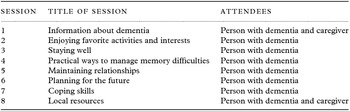
The self-management intervention consisted of eight weekly 90-minute group sessions and we ran two groups. To promote ownership of the program, the participants were asked to name the group. Each session had a consistent structure. Refreshments were provided at the start to allow group members to socialize informally and this led into a discussion about what group members had done since the previous meeting. Following this, the facilitators introduced and discussed the session topic. The topics covered are listed in Table 1. Within each topic, participants could select the most pertinent aspects to discuss and were encouraged to problem-solve and set goals. If necessary, the facilitators offered a short break half way through the session. Each session finished with a five-minute mindfulness-based exercise. Caregivers were invited to attend the first and final sessions and could join the end of each meeting to hear a summary of what had been discussed. To further encourage information sharing, group members received a handbook covering session content, in which they could write notes as reminders and which they could share with caregivers.
Topics covered in the SMART intervention

A staff nurse and a support worker (NHS band 5 and band 3, respectively) from the memory clinic facilitated the eight-week program. They had previous experience of running groups for people with dementia. Although the group was run by two people, we trained three facilitators to ensure cover for scenarios such as staff sickness and annual leave. The facilitators received guidance in how to deliver the intervention from the researcher (GT) in a series of five 30-minute meetings. A manual guided the facilitators through each session to ensure that facilitation was consistent across groups. In addition, the facilitators could access regular supervision throughout the study through weekly support, guidance, and advice from the researcher.
Guided by the theoretical basis of the program, facilitation techniques included providing information, enhancing self-efficacy, and encouraging vicarious learning. In the first session, the facilitators provided information about dementia and participants had the opportunity to learn about and discuss their understandings of the causes of dementia and issues surrounding its controllability and timeline. To enhance group members’ sense of self-efficacy, the program encouraged group members to develop skills in problem-solving, goal-setting, and mindfulness-based relaxation. Additionally, the facilitators encouraged group members to share ideas, strategies, and achievements and so learn from each other.
Tau condition
Participants allocated to TAU continued to receive routine memory clinic services, which included nurse-led review and access to services such as psychiatry, psychology, occupational therapy, and social services. Once the study was completed, participants allocated to the TAU group were offered the opportunity to attend the self-management program.
Data analysis
Quantitative analysis was conducted in IBM SPSS Statistics v.20. Baseline characteristics were explored using descriptive statistics. Outcomes were investigated through analysis of covariance (ANCOVA) using baseline scores and stratification variables as covariates. As this was a pilot trial and was not powered to show statistically significant differences in outcome measures, methods of multiple imputation analysis were not applied. As recommended by Thabane et al. (Reference Thabane2010), we focused on reporting the effect size and the 95% confidence interval. Analysis was conducted on an intention-to-treat basis, and participants who had data for at least two study data points were entered into the analysis. If an outcome measure was more than 80% complete for a given individual, a total score was calculated with missing data, pro-rated, using the participant's mean item score for the measure. When available, we applied published rules for completing missing data.
Qualitative data were explored using content analysis. The manuscripts were read several times and relevant content was extracted and analyzed. Inter-rater reliability was checked for 20% of transcripts and agreement on category presence was 95%. After the authors had discussed and resolved any coding differences, relationships between topics were explored and the final data synthesis was reviewed. The research team also reviewed the facilitators’ notes and reflections and used these to help inform the qualitative data interpretation. We have used pseudonyms in this manuscript.
Results
Participants
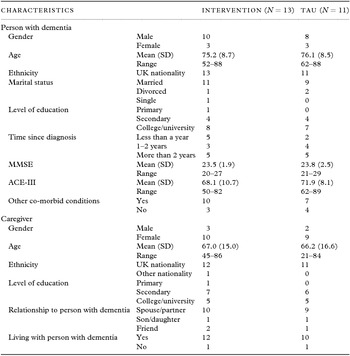
Table 2 contains baseline demographic details for the participants with dementia and caregivers. Most participants were male, had achieved a good level of education and were married.
Baseline characteristics of the participants

Recruitment and attrition
The CONSORT diagram in Figure 1 details the flow of participants through the study. We planned to recruit 42 people with dementia, each with a caregiver/friend willing to take part. After screening of clinic records, only 138 people were identified who were potentially eligible to take part in the study. The main reasons for exclusion were that the person was no longer in the early stages of dementia (MMSE score below 20) or had a diagnosis other than Alzheimer’s, vascular or mixed dementia. All eligible people were invited to participate in the study and 24 consented. Thirteen were randomized to the intervention condition and 11 to TAU. We ran the self-management program twice. On the first occasion, the group consisted of six people with dementia and on the second occasion there were seven people with dementia. Twenty-three people with dementia and 21 caregivers completed the study. One person with dementia withdrew due to illness, one caregiver moved away, and illness prevented another caregiver from completing assessments.
CONSORT diagram.

Attendance of the eight-week program
All participants with dementia attended six sessions or more. In the first group, five people with dementia attended all of the eight sessions, and one person with dementia attended only seven sessions. In the second group, one person with dementia attended all eight sessions, three attended seven sessions, and two attended six sessions, while one participant only attended three sessions before withdrawing from the study due to health reasons. The most common reasons for non-attendance were being unwell or being on holiday.
Changes in outcome measures
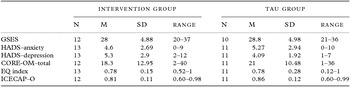
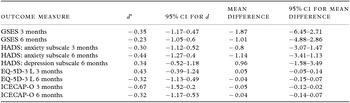
Participants’ baseline scores are reported in Table 3. Table 4 provides the adjusted mean difference and the standardized effect sizes from the ANCOVA analysis. Data for the CORE-OM and HADS at six months post-randomization are not reported, as the assumption of the normality of the residuals was violated. When comparing the standardized difference between the means, for the primary outcome measure the intervention participants showed gains in self-efficacy compared to the TAU participants with small effect sizes at both three (d = 0.35) and six months post-randomization (d = 0.23). Participants in the intervention condition also had lower depression scores at six months, with a small effect (d = 0.34). On the ICECAP-O (with higher scores indicating a better quality of life) the intervention condition participants had higher scores with a moderate effect at three months (d = 0.67) and a small effect at six months (d = 0.32). On the EQ-5D-3L, the intervention condition participants had lower quality of life scores at three months (d = 0.43) but higher scores at six months, with a small effect (d = 0.32). However, the intervention condition participants had higher anxiety scores with small effects at both three (d = 0.30) months and six months (d = 0.44).
Baseline scores on all the measures for the person with dementia

Note: GSES = eneral self-efficacy scale, HADS = hospital anxiety and depression scale, CORE-OM = clinical outcomes in routine evaluation–outcome measure.
ANCOVA analysis comparing scores on all measures between the intervention group and TAU

Note: GSES = general self-efficacy scale, HADS = hospital anxiety and depression scale. Higher scores indicate better ratings on the GSES, EQ-5D-3 L, and ICECAP-O. Lower scores indicate better ratings on the HADS.
*Negative effect indicates the TAU group score is less than the intervention group.
Qualitative reports
Twelve people with dementia and eleven caregivers participated in feedback interviews. Feedback was generally positive. Seventy-five percent of the people with dementia (9/12) reported the program was very enjoyable, 92% (11/12) found it helpful or very helpful, and 75% (9/12) said they would recommend the program to others. The findings from the qualitative analysis of the interviews are presented here.
The program fostered independence and reciprocity
People with dementia valued the opportunity to meet with others independently of their caregivers and this enhanced feelings of competency: “But you don’t, you don't need your relatives there all the time. . . you know cos you’re not doo lal completely are you” (Person with Dementia). The opportunity to take part in the program and to feel they were making a positive contribution enhanced participants’ confidence: “I was lacking a lot of confidence before I got there and I’ve got a bit of it back” (Person with Dementia).
Attending the program gave the person with dementia something to do and offered an opportunity to get involved and join in discussions with others. For some, it enabled them to express their own point of view: “You know to go out and he had a chance to talk and you know express things from his point of view and he quite liked that” (Caregiver). The program also gave people with dementia something to discuss with caregivers afterwards, enabling two-way conversations:
Well when he's come home from the group he's been . . . more animated . . . because we’ve got something to chat about . . . something that he's done on his own. He can chat about it and tell me about it and we’ve enjoyed the discussions we’ve had afterwards (Caregiver)
During group discussions, participants made suggestions and offered support to other group members. They recognized that they were giving something back as well as receiving. For instance, some participants contributed their own knowledge about the condition or were able to talk about their own strategies for managing their condition:
The best really was when everyone was . . . work working together . . . to solve problems you know really (Person with Dementia)
Being in the program with others who had the same condition gave participants the opportunity to discuss their condition with people who could understand their experiences:
He seems he looks forward to the group because he knows he can talk about his illness because he's going to the group with the same illness so he, he's happy and excited about it. In fact he wanted some more (Caregiver).
Additionally, some participants and caregivers reported learning vicariously from other group members: “I was able to look at them, each one of them and see how they’d handled their dementia and that was interesting” (Person with Dementia) and “Well he’s, because the group is . . . one of the persons in the group saying concentrate on what you can still do instead of what you cannot do and he's trying on that” (Caregiver).
The program promoted social support
Both people with dementia and caregivers valued the opportunity to meet with other people, and friendships developed which extended beyond the program: “But we do feel that we’ve bonded now. We’ve . . ., been out for lunch since” (Caregiver). For many, the support provided by other group members was an essential element of the intervention and people with dementia particularly valued meeting other people experiencing similar problems:
Well it was nice, it was not nice, it was comforting is perhaps the word, to know that there were other people of about my age and very similar backgrounds . . . all in the same conditions sort of thing (Person with Dementia)
Participants came to realize that they were not alone and their experiences were not dissimilar to those of others. The program encouraged sharing and this was possible because participants believed other group members would understand them:
they can open up with . . . no worries about . . . what is he going to think about me . . . because that's what he thinks . . . he might get humiliated . . . and embarrassed (Caregiver)
The program provided information and help
Participants said the program provided helpful information. Having the information provided in the participant handbook was particularly helpful for some people with dementia who could refer to the information to remember what was discussed: “It's there for reference and I do use it now and again for reference, so it's still there” (Person with Dementia). Having room to add their own notes in the participant handbook was also helpful. The information provided in the program could lead to new understandings about the condition, and for some this involved an acceptance of the condition and a change in their beliefs:
Because I think before he kept on saying there's nothing wrong with me . . . I’ve always had, I got, I’ve always had a bad memory and now he says . . . oh well you know my head's funny . . . so I think he's accepted it (Caregiver)
The program also helped people learn from others and identify other resources:
This is, you must be involved in understanding what's going on . . . and also . . . about what's available and what . . . people are doing in the same position as yourself . . . so you know all of these things are so important . . . I would recommend it a hundred percent” (Person with Dementia)
Some participants implied they had gained a new perspective and had implemented new coping strategies: “Yea, I . . . I tried to introduce my own strategy” (Person with Dementia). Some caregivers also adapted the way they provided support to enable the person with dementia to be able to do tasks themselves:
If he puts his clothes out now I’ll sort of say and I’m letting him get his own clothes before I was saying ‘Oh I’ll get your clothes out for you’ I’m letting him do a bit more for himself (Caregiver)
The program provided facilitator support
Participants thought that having staff facilitators moderating the group was important. Facilitators were able to navigate problems associated with dementia, such as someone forgetting the discussion topic, whilst protecting participants’ self-esteem:
You’re going to need somebody who is used to dealing with a group, that can lead the group because by the very nature of the condition, they’ve got Alzheimer's and they all go off at tangents (Caregiver)
Many participants appreciated the discursive approach to facilitation: “We were asked to try and keep open minds and things like that and it wasn't a question and answer session by any means” (Person with Dementia)
Recommendations for developing the program
Participants also gave suggestions for future development of the program. Only 33% of the people with dementia (4/12) thought the program ran for long enough: “I could have gone there for the rest of my life to be honest” (Person with Dementia). Some said they wanted a longer program because it took time for trust and friendships to develop between group members. As the weeks progressed, participants felt they could talk more freely with each other, and they would have liked more time with each other. Additionally, as some people were a little anxious at the first meeting, not knowing what the program would be like, one participant suggested offering more pre-program preparation.
For some participants, the mix of people attending the program was important. They commented that it was important for the group to be comprised of people from similar backgrounds and with a mix of genders. Despite this study only including people in the early stages of dementia, participants felt that the level of cognitive impairment differed: “He’d accepted his dementia. He’d had it for quite some time right. I’m at the beginning of my dementia” (Person with Dementia). Although, for some respondents, noticeable differences between group members tended to disappear as the group bonded and members got to know each other better:
In the first session I, I think they were there were one or two there who seemed slightly sort of worse than you know with their memories . . . but really when I went to the last session . . . I don't know, they just all seemed to have just blended in quite nicely, and, you didn't notice that disparity (Caregiver)
The reflections recorded by the program facilitators suggested that they enjoyed facilitating the program and quickly felt comfortable with the facilitation style and content. They particularly liked the consistent meeting structure and facilitator manual. Their positivity about the program was associated with seeing group members develop in confidence and relax in the program over the course of sessions. A comment made more than once was that a group member became ‘like a different person’. They witnessed group members experiencing a sense of achievement in sharing hobbies and becoming more open in sharing concerns, experiences, and emotions. They also commented on how group members had become friends and the participants were sad that the meetings were ending.
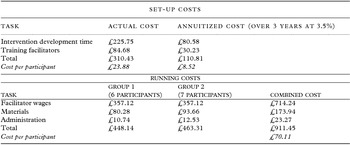
Cost
Table 5 shows the costs of developing and delivering the eight-week program. The costs of the intervention set-up were based on three members of staff being trained: one nurse (NHS band 5) and two support workers (NHS band 3), and the self-management program being facilitated by two members of staff (one band 5 nurse and one band 3 support worker). The set-up costs were annuitized over three years. The annuitized set-up cost was £8.52 per participant and the cost of providing the intervention was £70.11 per person with dementia/caregiver (approximately £9 per dyad per session), resulting in a total cost of £78.63 per participant. If the intervention was rolled out on a larger scale, the set-up cost per person would be negligible.
Cost of setting up and running the self-management groups

Discussion
This study focused on developing a low-cost self-management program for people with early-stage dementia that can be offered within existing services, and has provided preliminary evidence for possible benefits. It was feasible to offer the self-management program within the Memory Service; thus, the findings provide preliminary evidence that it is viable for a single service to offer the program. Attendance was good, attrition was low and feedback from both participants and program facilitators was generally positive. The findings on the feasibility of the program are similar to those reported by the two other studies published on self-management. Qualitative feedback from Laakkonen et al. (Reference Laakkonen2013) suggests that participants found the eight-week program helpful; similarly, Martin et al. (Reference Martin, Turner, Wallace, Stanley, Jesuthasan and Bradbury2015) reported their program had a positive impact on self-esteem. To date, the present study is the only study explicitly exploring self-management in dementia that has reported findings from quantitative outcome measures. This study was not powered to detect significance, but the standardized difference between the mean scores on the primary outcome measure indicated that people with dementia who took part in the intervention showed increases in self-efficacy, which were maintained six months post-intervention. The increase in self-efficacy would be consistent with social cognitive theory (Bandura, Reference Bandura1986), which provided the key theoretical background for the design of the intervention. The findings from the qualitative interviews suggest that this increased self-efficacy may be related to reports of increased confidence, and the widening of social support opportunities.
Participants allocated to the intervention condition reported better capability-related quality of life on the ICECAP-O measure at three and six months. In contrast, participants in the intervention condition rated themselves as having lower health-related quality of life at three-month assessment, although this improved at six months. The inconsistent findings may be due to the ICECAP-O measuring capability-related well-being, and the improvement in scores may relate to the increase in self-efficacy experienced by these participants. People with dementia who took part in the intervention had lower depression scores at six months, but rated themselves as more anxious. Increases in anxiety scores may reflect that the program focused on dementia and its management and this may have made participants more aware about their condition. This might have been uncomfortable for some participants in the short-to-medium-term. Thus, it is possible that a longer follow-up period would have shown that anxiety symptoms subsided in the longer term. In addition, the program did cover the management of emotions, such as worry, and this may have made the participants feel more confident in reporting their feelings to the researcher. It was clear that participants were sad that the program was ending and this may have resulted in feelings of anxiety about what they would do after it finished. In terms of the design of the program, this finding indicates that there needs to be more focus in the last session on “next steps”. It might also be that providing some follow-up sessions, which include a more social orientation, in addition to the eight-week program might reduce participant anxiety as participants would be assured of continuing access to some support.
The findings from both the quantitative and qualitative data suggest that there is a need to further consider how to effectively measure the effects of a self-management program for people with dementia. Whilst the GSES provides a measure of global self-efficacy, it may also be important to explore changes in competence in managing more dementia-specific problems, such as cognitive difficulties. In addition, as the qualitative feedback indicates that caregivers perceived improvements in the person with dementia this suggests that there should be measures to capture this. For instance, caregivers could provide ratings on changes in the person's confidence or abilities to manage his/her condition. The qualitative feedback in this study suggests that the outcome measures may not have captured all of the changes that were occurring as a result of the intervention. For instance, many participants commented that the program provided social support, and for one group this resulted in social outings, which continued after the group finished. However, none of the outcome measures captured changes in social contacts. Additionally, consistent with self-regulation models (Leventhal et al., Reference Leventhal, Brisette, Leventhal, Cameron and Leventhal2003), which was the basis for some of the program content, there were some qualitative reports of changes in participant's understandings of dementia, but there was no standardized measure of this. Furthermore, according to the facilitator's reflections, some of the most meaningful changes occurred ‘in the moment’ of the session. Their notes described how participants increasingly interacted and supported each other during the sessions. In addition, they described how participants gradually engaged with the topics and contributed to the group discussions over the course of the intervention.
Several support groups for people with dementia have used session observations and transcriptions to record change processes. For instance, Marshall et al. (Reference Marshall, Bucks and Mander2005) found that group members increasingly directed questions to each other and answered each other's questions. Other researchers have used observational tools to explore group change. Mason et al. (Reference Mason, Clare and Pistrang2005) coded group members’ comments using Behavioral Interaction Codes which covered the categories of disclosure, questioning, helping behavior, affective responses, and task orientation. Future work measuring the effectiveness of self-management programs for people with dementia may therefore need to consider how to capture and objectively measure these in-group changes, and observational tools could be a valuable method for exploring in-session behavior.
There were many aspects of the structure of the eight-week program that the participants enjoyed. Participant feedback endorsed the idea of keeping elements of the program flexible so that group members can contribute ideas and suggestions. This flexibility and the non-didactic facilitation style enabled participants to have ownership of the group and enabling people with dementia to meet separately from their caregivers promoted their independence. Equally, to help facilitate self-management it is important for caregivers to attend the initial session so that they can understand the aim of the program and support the person with dementia in trying to implement the self-management approach.
The feedback suggested that participants enjoyed meeting with other people who were experiencing similar difficulties. However, a few participants still thought the group members were too mixed in terms of ability and outlook. It is not possible to match group members exactly but perhaps people could be selected on the basis of a key shared interest to increase the probability that group members will perceive they have something in common. In addition, the majority of the participants would have liked the program to continue for longer. This is one of the challenges of trying to develop a cost-effective intervention that can run in existing services, such as a memory clinic. The length of self-management interventions can vary significantly (Quinn et al., Reference Quinn, Toms, Anderson and Clare2015), and rather than extending the program it may be more effective to integrate the intervention into a care pathway which includes other group activities. This would provide group members with the option of continuing to meet and they could feel more confident about their ability to access ongoing support.
Limitations
There were issues with recruiting participants from a single site, particularly as only 138 people with dementia were found to be eligible to take part in the study. This meant that we were only able to run two groups, instead of the three originally planned. The low uptake might have been because people may have been reluctant to take part in a group-based intervention and may have preferred a one-to-one approach. However, attrition was low as the majority of participants initially recruited into the study remained in the study on completion. In addition, the small sample limits the generalizability of the findings. Dementia is a progressive condition and even though feedback interviews took place at two months post-randomization, participant memory problems might have impacted on participants’ ability to feedback on their experiences.
It has been argued that pilot studies should not explore statistical significance as they are not powered to detect minimal clinically important differences, but should focus instead on feasibility (Thabane et al., Reference Thabane2010). This was a small-scale pilot study and as such was insufficiently powered to evaluate intervention effectiveness in terms of statistical significance. We did calculate effect sizes but these can be relatively unreliable in small samples. Therefore, although the effect sizes were promising, an appropriately powered larger scale trial is required with concurrent economic evaluation. Clinical significance will be more difficult to determine. Future studies will need to explore whether self-management interventions make an actual difference to people with dementia and their caregivers and therefore it is advisable that studies include observations and qualitative feedback as well as outcome measures. It is also likely that longer follow-up periods will be needed.
Conclusions
There is a need to develop and implement evidence-based, cost-effective psychosocial approaches to support people living with early-stage dementia. This study has provided preliminary evidence for such an approach, yielding initial indications of improvement in self-efficacy and indicating that self-management interventions can be feasible and acceptable for people with early-stage dementia, and these programs can be integrated into existing services. In addition, this program brought further benefits such as social support and the development of friendships. Further research is needed into ways of effectively measuring the effects of such programs and capturing change over the course of the group as well as within session changes. In addition, further work needs to consider integrating self-management interventions within care pathways.
Conflict of interest
None.
Description of authors’ roles
C. Quinn contributed to the study concept, study design, project management, interpretation of the data, and was primarily responsible for the drafting of the manuscript. G Toms contributed to the study design, was responsible for trial management, data collection, interpretation of the analysis, and the drafting of the manuscript. C. Jones contributed to the study design, the development of the economic analysis plan, the economic analysis, the interpretation of the analysis, and the drafting of the manuscript. A. Brand had oversight of data management and statistical analysis, the interpretation of the results, and the drafting of the manuscript. R. Tudor Edwards contributed to the study design, the development of the economic analysis plan, the interpretation of the statistical analysis, and review of the manuscript. F. Sanders contributed to the development of the intervention and the review of the manuscript. L. Clare contributed to the study concept, study design, interpretation of the analysis, and the drafting of the manuscript.
Acknowledgments
This study was funded by the Welsh National Institute for Social Care and Health Research, Health Award 2012, Grant RFS-12-35. The study funder and the study sponsor had no role in the study design, collection of data, analysis and interpretation of data, report writing, or decision to submit the report for publication. The research team would like to acknowledge the role of Glan Traeth Memory Clinic staff, in particular, Susan Davies and Maureen Davies in delivering the intervention and supporting recruitment. We would like to thank Dr Daniel Anderson for his contribution to the design of the study and his valued input into the design of the intervention. We would also like to thank Julie Nixon for her contribution to the study and role in conducting assessments. We would like to acknowledge the role that Dr Pamela Martin-Forbes had in developing the study and with regard to statistical support, we would like to thank Zoe Hoare, Yvonne Sylvestre, and Suijin Kang for their involvement in the randomization and statistical aspects of the study.