Introduction
The Pacific oyster Crassostrea gigas and mussels Mytilus spp. are commercially important shellfish species, which have contributed to the substantial growth of the aquaculture industry in Ireland. Both wild and cultured mussels, Mytilus edulis, Mytilus galloprovincialis and hybrids of both species, are distributed along the Irish coastline (Lynch et al. Reference Lynch, Morgan, Carlsson, Mackenzie, Wooton, Rowley, Malham and Culloty2014) and are often located in close proximity to cultured C. gigas stocks. Ostreid herpesvirus-1 (OsHV-1) and variants such as OsHV-1 var. and OsHV-1 microVar (μVar) belong to the family Malacoherpesviridae, the genus Ostrea virus containing the species OsHV-1 (Davison et al. Reference Davison, Eberle, Ehlers, Hayward, McGeoch, Minson, Pellet, Roizman, Studdert and Thiry2009). In recent years, OsHV-1 μVar have been associated with C. gigas mortalities in several countries worldwide, including France (Segarra et al. Reference Segarra, Pépin, Arzul, Morga, Faury and Renault2010), Australia (Jenkins et al. Reference Jenkins, Hick, Gabor, Spiers, Fell, Gu, Read, Go, Dove, O’ Connor, Kirkland and Frances2013), Italy (Dundon et al. Reference Dundon, Arzul, Omnes, Robert, Magnabosco, Zambon, Gennari, Toffan, Terregino, Capua and Arcangeli2011), Spain (Roque et al. Reference Roque, Carrasco, Andree, Lacuesta, Elandaloussi, Gairin, Rodgers and Furones2012) and Ireland (Peeler et al. Reference Peeler, Reese, Cheslett, Geoghegan, Power and Thrush2012), with an additional Irish genotype also being identified (Lynch et al. Reference Lynch, Carlsson, Reilly, Cotter and Culloty2012). In Ireland, C. gigas mortalities were first recorded in both adult and spat oysters in 1993 and were associated with OsHV-1 (Cotter et al. Reference Cotter, Malham, O'Keeffe, Lynch, Latchford, King, Beaumont and Culloty2010). OsHV-1 μVar was first identified in Ireland in 2008 following mortality events in three separate bays and by 2012 in a total of 29 bays around the Irish coastline (Morrissey et al. Reference Morrissey, McCleary, Collins, Henshilwood and Cheslett2015). The herpesvirus combined with suboptimal environmental factors forms the basis of high economic risk for Pacific oyster culture (Paredes et al. Reference Paredes, Bellas and Adams2013).
Herpes-like virus infection has been observed in bivalve species such as the flat oyster Tiostrea chilensis in New Zealand (Hine et al. Reference Hine, Wesney and Besant1998); Ostrea angasi in Australia (Hine and Thorne, Reference Hine and Thorne1997); European flat oyster, Ostrea edulis in France (Comps and Cochennec, Reference Comps and Cochennec1993; Renault et al. Reference Renault, Le Deuff, Chollet, Cochennec and Gérard2000); Manila clam, Ruditapes philippinarum (Renault, Reference Renault1998; Renault and Arzul, Reference Renault and Arzul2001; Renault et al. Reference Renault, Lipart and Arzul2001); scallop (Arzul et al. Reference Arzul, Nicolas, Davison and Renault2001) and abalone Haliotis diversicolor supertexta (Chang et al. Reference Chang, Kuo, Lai, Yang, Ting, Hsu and Chen2005; Tan et al. Reference Tan, Lancaster, Hyatt, van Driel, Wong and Warner2008). OsHV-1 μVar DNA was detected in wild Mediterranean mussels M. galloprovinciallis in California and in cultured M. galloprovinciallis in Italy (Burge et al. Reference Burge, Strenge and Friedman2011; Domeneghetti et al. Reference Domeneghetti, Varotto, Civettini, Rosani, Stauder, Pretto, Pezzati, Arcangeli, Turolla, Pallavicini and Venier2014). More recently OsHV-1 μVar DNA was detected in the Sydney rock oyster Saccostrea glomerata, Sydney cockle Anadara trapezia, blue mussels Mytilus spp., hairy mussel Trichomya hirsuta, whelks Batillaria australis and barnacles Balanus spp. in Australia (Evans et al. Reference Evans, Paul-Pont and Whittington2017). Filter feeding bivalves such as mussels, oysters and clams may typically harbour various pathogenic organisms such as Herpes and enteric viruses (Venier et al. Reference Venier, Varotto, Rosani, Millino, Celegato, Bernante, Lanfranchi, Novoa, Roch, Figueras and Pallavicini2011), as bivalves process large volumes of water during feeding thus maximizing their exposure (Witte et al. Reference Witte, Devriese, Bekaert, Hoffman, Vandermeersch, Cooreman and Robbens2014).
Burge et al. (Reference Burge, Strenge and Friedman2011) quantified OsHV-1 viral loads in C. gigas and wild M. galloprovincialis in California and viral copy numbers per ng of genomic DNA of OsHV-quantitative polymerase chain reaction (qPCR) in positive individuals observed was much lower in M. galloprovinicialis (0·0073 ± 0·006; 0·0005 to 0·025) compared with C. gigas (20·31 ± 12·40; 0·005 to 114·4). Domeneghetti et al. (Reference Domeneghetti, Varotto, Civettini, Rosani, Stauder, Pretto, Pezzati, Arcangeli, Turolla, Pallavicini and Venier2014) reported that OsHV-1 μVar in C. gigas and M. galloprovinciallis, co-cultured in an Italian lagoon with seawater temperatures of 17·6 °C, had lower levels of viral DNA in the asymptomatic mussels compared with the oyster spat (up to 8·4 104/ng DNA) sampled before an acute mortality event. OsHV-1 μVar was detected in asymptomatic mussels cohabiting with the virus-positive oysters and these M. galloprovincialis had a mean load of 3·9 virus copies/10 ng of DNA with a range of 1–7·6 virus copies/10 ng of DNA (Domeneghetti et al. Reference Domeneghetti, Varotto, Civettini, Rosani, Stauder, Pretto, Pezzati, Arcangeli, Turolla, Pallavicini and Venier2014). Although OsHV-1 μVar DNA was detected in M. galloprovinicialis in both of those studies, transmission of the virus from mussels to oysters and vice versa was not investigated.
Elucidating the role of mussels in viral maintenance and transmission, i.e. their ability to act as carriers, reservoirs or incidental hosts, is an important component in understanding viral dynamics and in developing risk management measures. A host that becomes infected, but is not required for the maintenance of the population of a pathogen, can be termed (a) an incidental host (Ashford, Reference Ashford2003). Haydon et al. (Reference Haydon, Cleaveland, Taylor and Laurenson2002) defined a (b) reservoir host as ‘one or more epidemiologically connected populations or environments in which the pathogen can be permanently maintained and from which infection is transmitted to the defined target population’. A (c) ‘carrier’ is an individual with no overt disease, which harbours infectious organisms (Brachman, Reference Brachman and Baron1996). A (d) viral reservoir has been defined ‘as a cell type in which a replication-competent form of the virus accumulates and persists with more stable properties than the main pool of actively replicating virus’ (Blankson et al. Reference Blankson, Persaud and Siliciano2002). Reservoirs of infection can be comprised of one or more interacting species (Haydon et al. Reference Haydon, Cleaveland, Taylor and Laurenson2002 cited in Viana et al. Reference Viana, Mancy, Biek, Cleaveland, Cross, Lloyd-Smith and Haydon2014).
The direct relationship between viral proliferation, transmission and environmental stressors has been demonstrated particularly temperature influence and increasing temperatures associated with oyster mortality, in field studies (Garcia et al. Reference Garcia, Thébault, Dégremont, Arzul, Miossec, Robert, Chollet, François, Joly, Ferrand, Kerdudou and Renault2011) and under experimental conditions (Sauvage et al. Reference Sauvage, Pépin, Lapègue, Boudry and Renault2009; Pernet et al. Reference Pernet, Barret, Gall, Corporeau, Dégremont, Lagarde, Pépin and Keck2012, Reference Pernet, Tamayo and Petton2015; Petton et al. Reference Petton, Pernet, Robert and Boudry2013; Martenot et al. Reference Martenot, Denechère, Hubert, Metayer, Oden, Trancart, Travaillé and Houssin2015). Oyster mortality events have followed increases in seawater temperature exceeding 19 °C (Pernet et al. Reference Pernet, Barret, Marty, Moal, Le Gall and Boudry2010). Pernet et al. (Reference Pernet, Tamayo and Petton2015) observed that OsHV-1 μVar was persistent in oysters held at a low temperature of 13 °C, with no associated mortalities, but the virus was reactivated during thermal elevation to 21 °C, thus highlighting that mortality in OsHV-1 μVar infected seed oysters was only delayed if those oysters were moved to low-temperature location because once temperatures increased the virus was activated and oyster mortalities occurred.
The study of viruses and the role of reservoirs is fundamental for a better understanding of the intrinsic relationship between the virus and host (Appolinaério et al. Reference Appolinário, Allendorf, Vicente, Ribeiro, da Fonseca, Antunes, Peres, Kotait, Carrieri and Megid2015). It is important to better manage the risks associated with this virus and knowing which additional carriers, hosts or reservoirs are involved in the maintenance of the virus is imperative for the implementation of future management strategies of disease control. Other studies have highlighted the importance of this including studies on the protistan pathogen Bonamia ostreae of the European flat oyster O. edulis, which highlighted the detection of this pathogen in non-typical hosts, such as C. gigas (Lynch et al. Reference Lynch, Abollo, Ramilo, Cao, Culloty and Villalba2010) and benthic macroinvertebrates and zooplankton (Lynch et al. Reference Lynch, Armitage, Coughlan, Mulcahy and Culloty2007). Implementing precautionary measures when moving shellfish consignments and non-typical hosts from pathogen infected to uninfected areas will benefit the control and management of such pathogens, including OsHV-1 μVar. The objectives of this study were (a) to determine if OsHV-1 μVar was present in Irish wild Mytilus spp. living in close proximity to oyster trestles, approximately 400–500 m from the oyster culture sites and up to 26 km from the oyster farms at non-culture sites and (b) investigate transmission dynamics and viral detection in mussels between naturally exposed mussels and naïve oysters under an elevated temperature regime in the laboratory. Findings from this study will contribute to a more comprehensive understanding of the underlying relationship between viral proliferation among cultivated oysters and mussel species and provide an insight into the interspecific species interactions and transmission that occurs in a marine environment.
Materials and methods
Study sites and field sampling
As the sites used in the study contain a mixture of M. edulis, M. galloprovincialis and hybrids mussels (with the exception of Carlingford Lough where M. edulis is exclusively found), all the following descriptions refer to Mytilus species (spp.). Wild mussels from both oyster culture and non-culture (control) sites were screened.
Field survey 1
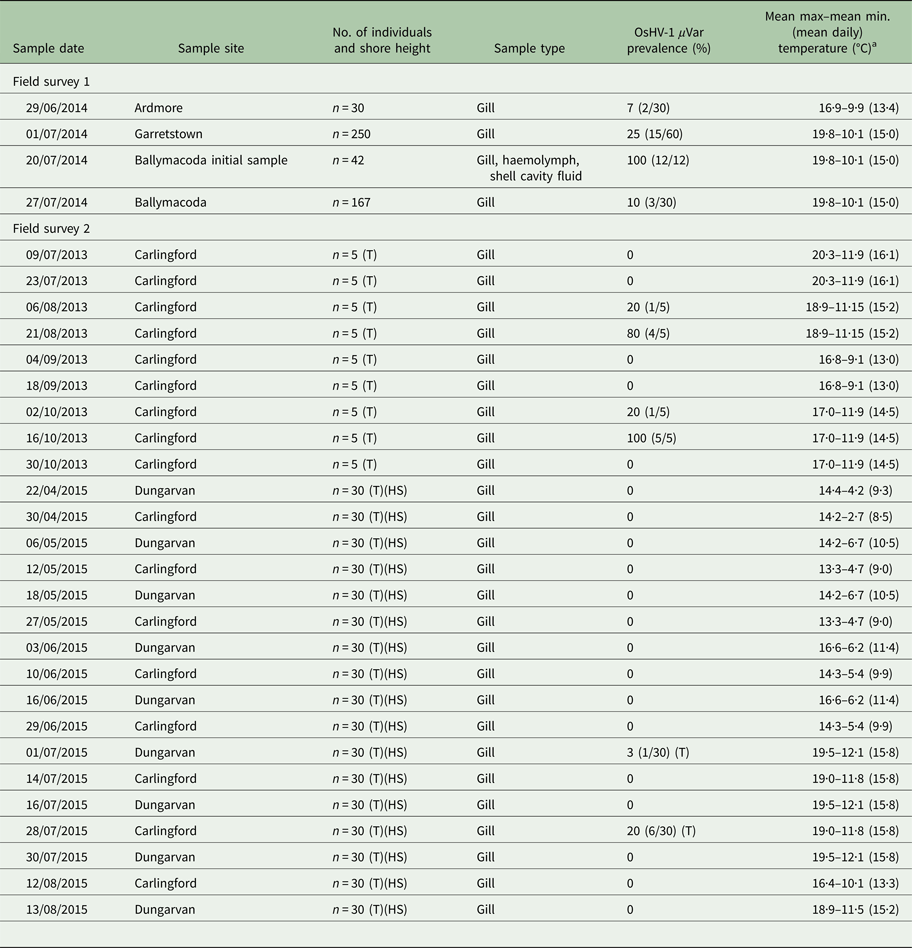
A preliminary field survey, to determine if OsHV-1 μVar could be detected in mussels from hybrid zones (M. edulis, M. galloprovincialis and hybrids of both parent species) in Ireland took place in 2014 with (a) a single mussel sample (n = 30) being collected in late June from Goat Island, approximately 5 km west of Ardmore, County Waterford (51°57′04″N, 7°43′23″W) and approximately 26 km from a OsHV-1 μVar endemic C. gigas culture site (Table 1), (b) a single mussel sample (n = 250) was collected in July from Garrettstown, Kinsale, Co. Cork (51°38′16·93″N, 8°34′21·41″W), which is approximately 22 km from a OsHV-1 μVar endemic C. gigas culture site from which (n = 30) mussels were initially screened. An additional Garrettstown mussel sample (n = 30) was screened after the mussels collected in July were held in the laboratory for 3 weeks and held at 13 °C and (c) several mussel samples were collected in July on the south east coast of Ireland at Ballymacoda Bay, Youghal Co. Cork (51°53′24″N, 7°55′57″W). At that site, wild mussels were sampled at a rocky outcrop on the mid to lower intertidal approximately 400 m from a C. gigas OsHV-1 μVar designated culture site, a site where significant oyster mortalities occurred in 2009 and 2010 (www.marine.ie/Home/site-area/news-events/news/update-oyster-mortalities). An initial sample (n = 42) of adult-sized mussels Mytilus spp. was collected in mid-July and a second random sample (n = 167) of Mytilus spp. was collected in late-July (Table 1).
Summary of Mytilus spp. samples collected at five Irish sites in field surveys 1 and 2 in 2013–2015
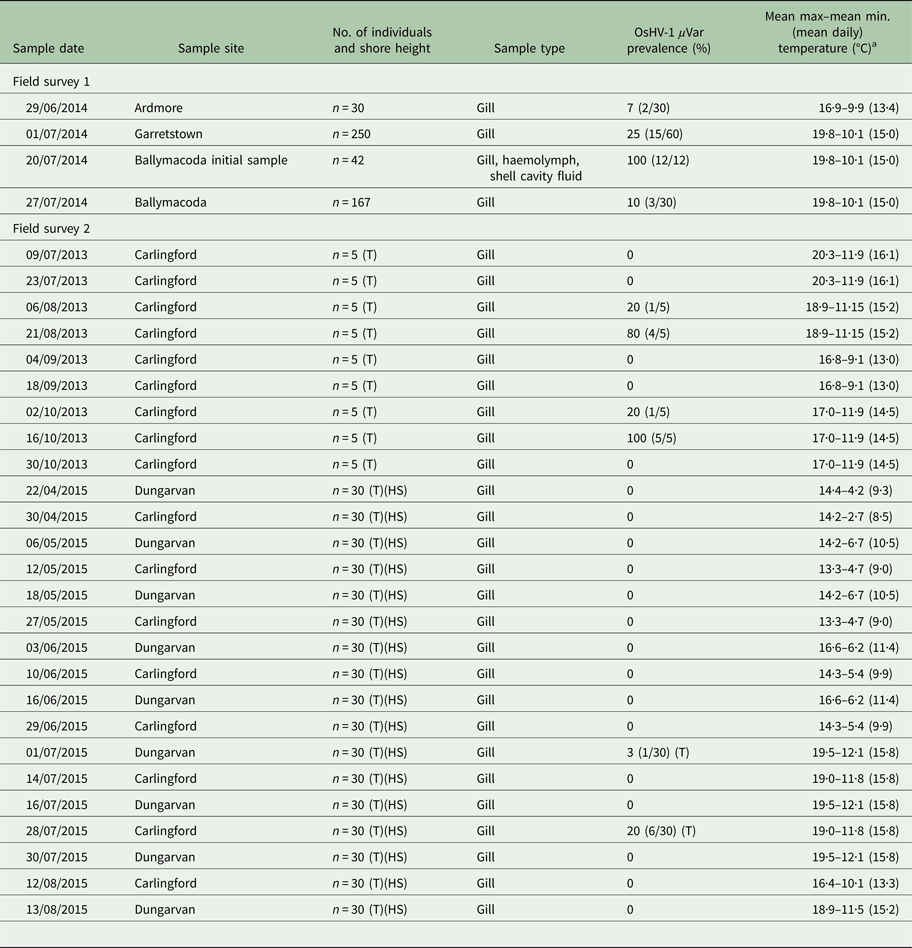
a Temperature data after: http://www.met.ie/climate/irish-climate-monthly-summary.asp.
T – denotes sampling, which occurred at the oyster trestles on the mid intertidal.
HS – denotes sampling, which occurred at the high shore.
Field survey 2
Further sampling and screening of mussels took place as part of a second larger field study between 2013 and 2015 at two C. gigas culture sites: (d) Carlingford Lough (54·0733° N, 6·1994° W), on the east coast of Ireland in the Irish Sea and (e) Dungarvan Harbour (52°03′ N, 007°35′ W), on the south east coast in the Celtic Sea. OsHV-1 μVar is endemic at both of these sites since 2009 (www.marine.ie/Home/site-area/news-events/news/update-oyster-mortalities). Dungarvan is a known hybrid zone, while only M. edulis is found at Carlingford Lough. At both culture sites, mussels were collected from the C. gigas PVC culture bags at the oyster trestles on the mid to lower intertidal and approximately 500 m from the trestles at the high shore. At Carlingford Lough, sampling took place on nine occasions, every 2 weeks from July to October in 2013 and on eight occasions, every 2 weeks from April to August in 2015. Similarly, at Dungarvan Harbour, sampling took place on nine occasions, every 2 weeks from April to August in 2015. All mussel samples were returned to the laboratory and processed immediately for histology and polymerase chain reaction (PCR) analysis to screen for OsHV-1 μVar (Table 1).
Laboratory trials
Naïve Pacific oyster spat (<3 cm, n = 600; <1-year-old) were obtained from a hatchery at New Quay, Galway Bay (53°09′16·27″N, 9°04′58·19″W). Oysters from this hatchery have been used as control oysters in previous studies as the location is deemed uninfected with the herpes virus OsHV-1 μVar and variants (Prado-Alvarez et al. Reference Prado-Alvarez, Darmody, Hutton, O'Reilly, Lynch and Culloty2016).
Crassostrea gigas spat were kept in a holding tank (50 L) in a constant temperature (CT) room at ~13 °C in trial 1 and at ~14 °C in trial 2 at a salinity of 35 for 2–3 days until the laboratory cohabitation trials began. The mussel stocks used in the laboratory transmission trials comprised of Mytilus spp. from Ballymacoda Bay (trial 1) and M. edulis from Carlingford Lough (trial 2).
All seawater used in the laboratory cohabitation trials was sourced from a OsHV-1 μVar uninfected site (Bantry Bay, Co. Cork, 51°38′59″N, 09°43′00′W) and was UV treated prior to being used.
Laboratory cohabitation transmission trial 1: naïve C. gigas and Mytilus spp. from a OsHV-1 μVar endemic culture site held together at 21 °C to determine if the virus can be transmitted between the two species
The combined effects of an elevated seawater temperature (21 °C) on oyster and mussel performance and OsHV-1 μVar pathogenicity were investigated in a laboratory transmission trial. A total of 3 × 10 L stand-alone control tanks, each containing 40 naïve Galway Bay C. gigas, and three experimental (10L) tanks, each containing 40 naïve Galway Bay C. gigas and 40 randomly sampled wild Mytilus spp. obtained from the Ballymacoda site, which would have experienced a mean seawater temperature in the field of approximately 16 °C were used. An initial sample (n = 30) of oyster and mussels was screened to assess prevalence of the virus at the beginning of the experiment. The control and experimental tanks were placed in a CT room at 21 °C and a salinity of 35. The trial ran for 7 days and the tanks were checked early in the morning and late afternoon for moribund mussels and oysters, which were removed immediately, processed and screened for OsHV-1 μVar.
Laboratory cohabitation transmission trial 2: naïve C. gigas and exposed Mytilus spp. from a OsHV-1 μVar endemic culture site held under an increasing temperature regimes to determine if transmission could occur between the two species
The combined effects of increasing seawater temperature (14, 21 and 28 °C), at a salinity of 35 on oyster and mussel performance and OsHV-1 μVar pathogenicity was investigated in a laboratory trial with wild M. edulis collected from a OsHV-1 μVar endemic oyster culture site and hatchery reared naïve C. gigas spat. The M. edulis were randomly collected from in, and around the oyster trestles during the seasonal field sampling conducted at Carlingford Lough in the summer of 2015 (Section Study sites and field sampling). An initial sample (n = 30) of oyster and mussels for both laboratory trials were screened to assess prevalence of the virus at the beginning of the experiment. Two control tanks, each containing 30 naïve Irish hatchery C. gigas, and three experimental tanks, each containing 30 naïve hatchery C. gigas and 30 exposed M. edulis were used. The control tanks and experimental tanks were placed in two separate CT rooms to avoid aerosol contamination. The temperature was initially set in both CT rooms at 14 °C (days 1–14); increased to 21 °C (days 15–20) and subsequently increased to 28 °C (days 21–29) in both CT rooms. The trial ran for 29 days and the tanks were checked early in the morning and late afternoon for moribund or dead oysters and mussels, which were removed and subsequently screened for OsHV-1 μVar. All moribund or dead individuals were screened over the trial and the remaining living oysters and mussels were also screened in both the experimental and control tanks at the end of the trial. A sampling regime of two oysters per tank per day was carried out in the experimental tanks from days 2 to 7. Screening recommenced in both mussels and oysters at day 13 to the end of the trial on day 29 with more randomized screening of approximately six mussels or six oysters being sampled every second day providing an additional 72 living oysters and 71 living mussels from the experimental tanks and 44 living oysters from the control tank being screened. Prior to the commencement of the trial, the shellfish were not cleaned, and over the duration of the trial, the tank water was not changed. The shellfish were fed twice a week using Reed Mariculture Shellfish Diet 1800 (5 ml per tank). Processing of animals from each CT room was carried out in separate laboratories to avoid cross-contamination.
Molecular diagnostic screening of Mytilus spp. and C. gigas
DNA extraction and PCR
Mytilus spp. sampled during the first field study (2014) at (a) Ardmore (n = 30) and (b) Garrettstown (n = 60) were screened by PCR for the herpes virus using DNA extracted from gill tissue. From the initial sample (n = 42) collected at (c) Ballymacoda, a subsample of 12 mussels were randomly screened by PCR using gill tissue, haemolymph and shell cavity fluid from each individual. DNA was extracted using the Chelex-100 method (Walsh et al. Reference Walsh, Metzger and Higuchi1991). All Mytilus spp. sampled during the second field study (2013–2015) at (d) Carlingford Lough and (e) Dungarvan Harbour were screened by PCR for the herpes virus (n = 646) using gill tissue. This screening comprised of 45 Mytilus spp. individuals in 2013 and 601 Mytilus spp. in 2015 with 240 in total from Carlingford lough and 361 from Dungarvan Harbour. Gill tissue (5 mm2) was excised and DNA extraction (Qiagen Blood and Tissue kit) was carried out. Mytilus spp. were also screened by PCR for the herpes virus during the laboratory cohabitation transmission trials trial 1 (n = 42) and trial 2 (n = 90).
PCRs using different primer pairs (OHVA/OHVB, OHVC/OHVD) that detect OsHV-1 and variants (Lynch et al. Reference Lynch, Dillane, Carlsson and Culloty2013) were used on all of the mussels sampled from the field sites. Both primer pairs amplify different locations in the C region in the ORF4 gene of the virus (Lynch et al. Reference Lynch, Dillane, Carlsson and Culloty2013). All PCRs used a total of 1 µL undiluted combined [host + pathogen (if present)] genomic DNA template per individual. The PCR using the OHVA/OHVB primers, which amplify a 385-bp fragment, was carried out in 25 µL L containing 12·9 µL L ddH20, 5 µL, 5× buffer, 5 µL dNTPs (0·2 mm), 0·5 µL MgCl2 (25 mm stock), 0·25 µL of each primer (100 pmol mL−1 stock) and 0·1 µL Taq DNA polymerase. Cycling conditions began with an initial denaturation of the sample at 95 °C for 1 min followed by 35 cycles of 94 °C for 20 s, 56 °C for 30 s and 72 °C for 30 s. A final elongation step took place at 72 °C for 7 min. The PCR using the OHVC/OHVD primers, which amplify a 296-bp fragment, had the same PCR master mix and thermocycling conditions as described for the OHVA/OHVB PCR (Lynch et al. Reference Lynch, Dillane, Carlsson and Culloty2013). Negative controls consisted of deionized distilled water and positive controls were OsHV-1 μVar DNA. DNA was quantified using a spectrophotometer (Thermo-Scientific NanoDrop 1000 spectrophotometer), and extracted DNA was visualized on a 2% agarose gel to ensure DNA was present and to avoid false negatives. Presence of amplified PCR products was confirmed by electrophoresis on a 2% agarose gel stained using 15 mL ethidium bromide (10 mg mL−1 stock) and the gel was run at 110 V for 45 min.
Quantitative polymerase chain reaction
A subsample of PCR-positive results observed in the mussels from both the second field trial (n = 7) and experimental laboratory cohabitation transmission trials (n = 7) were rescreened by qPCR to detect the viral load (OsHV-1 C region) and mean quantification (range min–max) using HVDP-F and HVDP-R primers (Pépin et al. Reference Pépin, Riou and Renault2008), which amplify a 197-bp fragment. Negative controls consisting of deionized distilled water were included in the assay. A total of 5 µl of 5 ng mL−1 combined DNA was screened. The qPCR mix included 12·5 µL qPCR master mix (Agilent Technologies Brilliant SYBR Green QPCR mix) and 12·5 µL each primer. A standard curve using dilutions of five viral genomic DNA suspensions of different quantities (1×10⁵, 1 × 10⁴, 1 × 10³, 1 × 10², 1 × 10) in triplicate was used. Amplification included a denaturation step of 10 min at 95 °C and 40 amplification cycles (30 s at 95 °C, 1 min at 60 °C and 45 s at 72 °C). Melting temperature curve analysis was 1 min at 95 °C, 30 s at 60 °C and 30 s at 95 °C. All samples were tested in duplicate (Lynch et al. Reference Lynch, Dillane, Carlsson and Culloty2013). Viral load was classified into three categories as described by Renault et al. (Reference Renault, Bouquet, Maurice, Lupo and Blachier2014): (i) category 0, no viral DNA; (ii) category 1, viral-DNA amounts of <104 DNA copies per mg of wet tissue; and (iii) category 2, viral-DNA amounts of >104 DNA copies per mg of wet tissue.
Sequencing
Direct Sanger sequencing on PCR products (385-bp) amplified from the samples using the OHVA/OHVB primers was carried out to ensure the amplified sequences were being recovered from the OsHV-1 genome. DNA isolated from PCR products amplified from separate mussel individuals (n = 5) from each site were pooled into replicates from each individual (4–5) to increase the DNA concentration. Both the forward and reverse strands of DNA samples were sequenced commercially (Eurofins MWG Operon, Ebersberg, Germany). Each sequence was matched against a nucleotide database (https://blast.ncbi.nlm.nih.gov/) to confirm the individual sequences were from the OsHV-1 and variants genome.
Histological screening
A subsample of mussels (n = 20) that were collected at Carlingford Lough in 2013 were prepared for histological analysis and in situ hybridization (ISH). For each animal, a 5 mm cross-section section of digestive gland, gonad, gills and mantle was removed and a 3 mm cross-section of the visceral mass was excised in front of the pericardial region for histological analysis and immediately fixed in Davidson's solution at 4 °C for 48 h after which they were placed in 70% ethanol. Samples were processed (Shandon Citadel 1000) and microtomed, 5 µ m tissue sections for histology and 7 µ m for ISH. Tissue sections were stained with haematoxylin and eosin while a digoxygenin (DIG) labelled probe was used for ISH. Sections were viewed with a Nikon Eclipse 80i and images were captured using NIS elements software (at 100×, 200×, 400× and 1000×. The presence of any abnormal and/or viral cells (Renault et al. Reference Renault, Cochennec, Le Deuff and Chollet1994a; Renault and Novoa, Reference Renault and Novoa2004) was noted.
ISH (DIG labelled probe)
ISH analysis was conducted in accordance with the Ifremer protocol (Renault and Lipart, Reference Renault and Lipart1998; Lipart and Renault, Reference Lipart and Renault2002; Segarra et al. Reference Segarra, Baillon, Faury, Delphine and Renault2016); however, the OHVA/B and OHVC/D primer pairs were used to create the probe (Lynch et al. Reference Lynch, Dillane, Carlsson and Culloty2013). ISH was conducted on the 20 Carlingford samples on silane-prep™ slides. A DIG labelled probe was produced using OsHV-1 primers and OsHV-1 DNA as a template which was used to hybridize to the target viral DNA within the tissue samples. The slides were mounted using Eukiit mounting medium and cover slips. As with histology, slides were viewed using a microscope (100×, 200×, 400× and 1000×) (Nikon Eclipse 80i) and images were captured using NIS elements software.
Data analysis
Statistical analyses were carried out using the IBM SPSS Statistics version 23. Statistical significance was determined using P < 0·05. Yates's continuity corrected χ 2 test was performed to compare percentage (%) mortality between experimental and control groups. Fisher's exact test was used to compare percentage (%) infected between experimental and control groups and to compare percentage (%) mortality in infected and non-infected animals. Fisher's exact test was used when one or more cells had an expected count of <5.
Results
Seasonal field sampling
Field survey 1
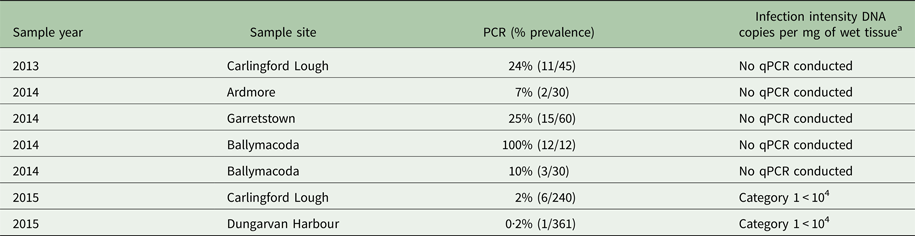
In the preliminary field survey conducted in 2014, a prevalence of infection of 7% (2/30) was observed in the initial sample at (a) Ardmore and 3·3% (1/30) in (b) Garrettstown. In the second Garrettstown mussel sample taken after mussels were placed into holding tanks for 3 weeks in the laboratory at 13 °C, a significant increase in virus detection with 46·7% (14/30) prevalence was observed. At (c) Ballymacoda, all mussels (n = 12) screened were positive for OsHV-1 μVar in each sample type, gill tissue, haemolymph and shell cavity fluid, taken from each mussel (Table 2).
Summary of all mussel samples screened for OsHV-1 μVar at the five Irish sites in field surveys 1 and 2 in 2013–2015
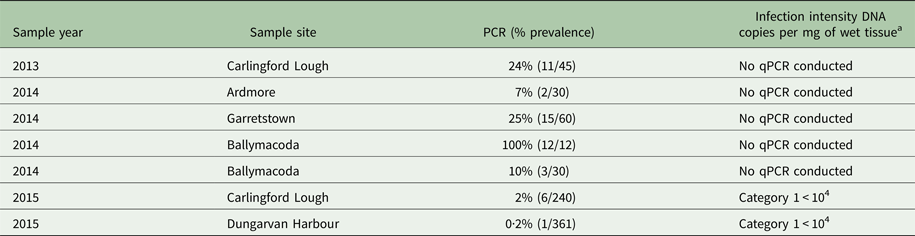
a Infection intensity after Renault et al. (Reference Renault, Bouquet, Maurice, Lupo and Blachier2014).
Field survey 2
OsHV-1 μVar DNA was detected in Mytilus spp. at (c) Carlingford Lough in 24% of the mussels screened at the oyster trestles (11/45) in 2013 and 2% (6/240) in 2015. The six Carlingford Lough mussels had a category 1 viral load with a range of 2·22 × 102 to 1·565 × 103 viral copies µL−1 of genomic DNA (n = 6) with a mean value of 6·8 × 102 viral copies μL−1 of genomic DNA. In the 2015 field study, prevalence of infection in C. gigas seed were minimal at Carlingford Lough at 10% (25/240). During the second field trial (2013–2015), a single mussel (0·2%, n = 361) was positive for OsHV-1 μVar and had a category 1 viral load with 1·23×102 viral copies µL−1 of genomic DNA at the trestles at (e) Dungarvan Harbour. qPCR was not conducted on the 2013 samples due to the degradation and reduction in quality of the genomic DNA (Table 2).
Laboratory cohabitation transmission trial 1: naïve C. gigas held with Mytilus spp. collected 400 m from a OsHV-1 μVar endemic culture site
In laboratory trial 1, the initial sample (n = 30) of Galway C. gigas was negative for OsHV-1 μVar; however, the initial sample (n = 12) of Mytilus spp. from Ballymacoda was positive for the virus with 100% (12/12) prevalence, using representative DNA from (i) gill tissue (n = 12), (ii) haemolymph (n = 12) and (iii) the shell cavity fluid (n = 12). No oyster or mussel mortalities were observed in the 7-day trial. During the trial, OsHV-1 μVar was not detected in the control oysters 0% (0/15); however, 10% (3/30) of the experimental mussels were positive and 100% (30/30) of the experimental oysters (i.e. naïve oysters exposed to infected mussels) were positive for OsHV-1 μVar.
Laboratory cohabitation transmission trial 2: naïve C. gigas and exposed Mytilus spp. collected at oyster trestles held at various increasing temperatures over a 4-week period in 2015
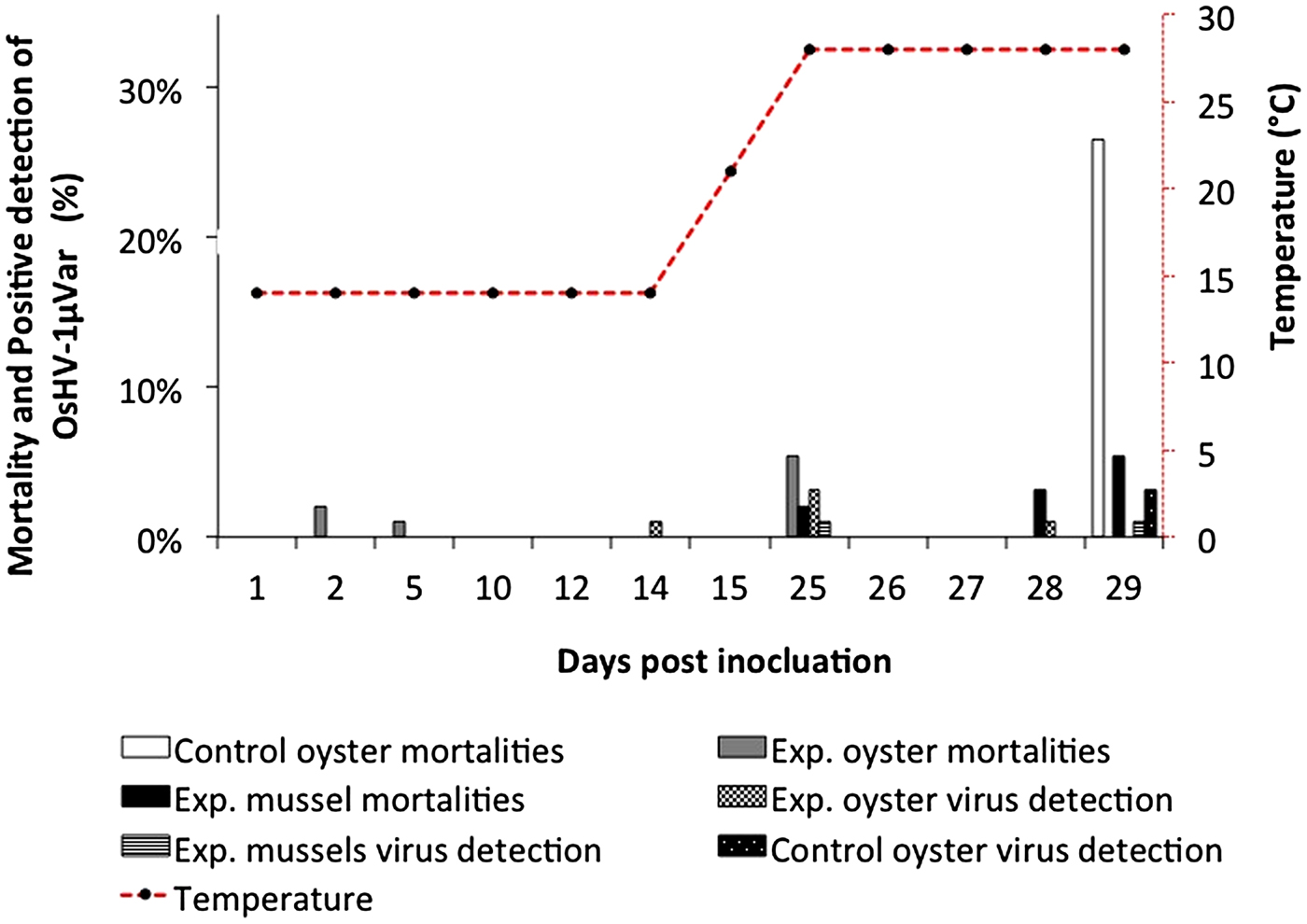
In laboratory trial 2, mortality was 26·7% (16/60) in the control group (oysters) and 10% (18/180) in the experimental groups [9% (8/90) in the experimental oysters and 11% (10/90) in the experimental mussels] (Fig. 1). A total of 14·1% (34/240) of the total animals tested, died over the duration of the study. Yate's continuity corrected χ 2 test indicated that the percentage (%) mortality differed significantly between the control and experimental groups [χ 2 (1) = 8·96, P<0·01]; experimental group had lower % mortality. Of the 16 (26·7%) oysters who died in the control groups, all were being held at 28 °C. Of the 18 (20%) animals (mussels and oysters) that died in the experimental groups, three mortalities occurred in the oysters at 14 °C and, five oyster and 10 mussel mortalities occurred at 28 °C (Fig. 1).
Mortality (%) and prevalence (%) of OsHV-1 μVar in co-habiting naïve Crassostrea gigas and Mytilus spp., naturally exposed to OsHV-1μVar, in laboratory trial 2.
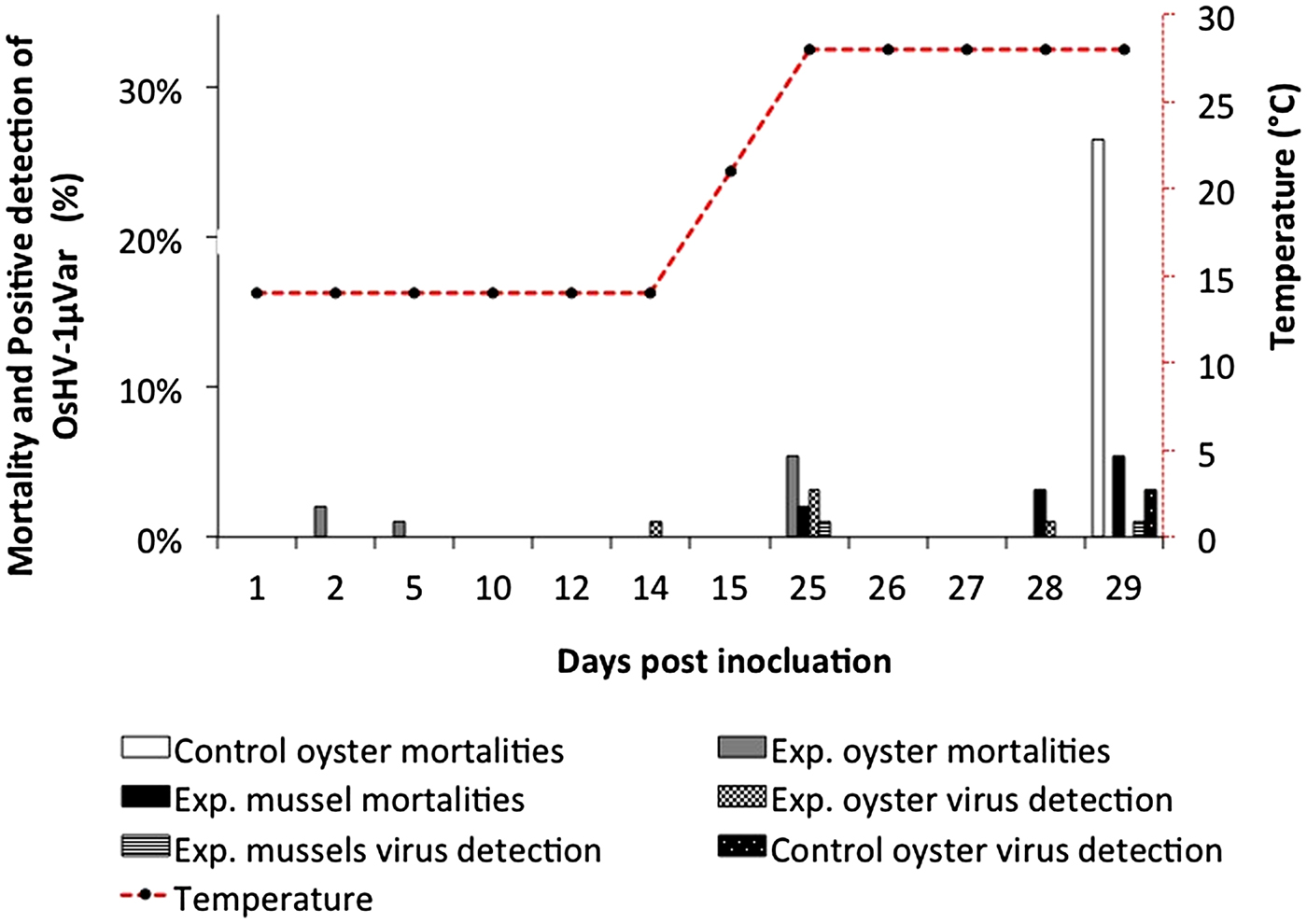
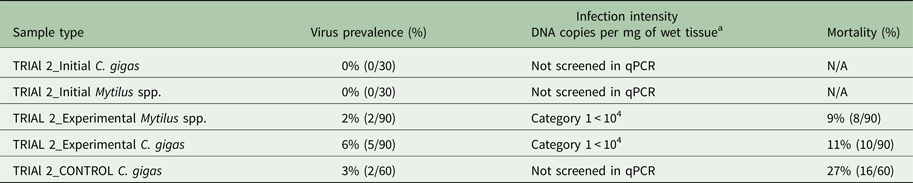
The initial samples (n = 30) of Galway C. gigas and Carlingford Lough M. edulis were both negative for OsHV-1 μVar. In the experimental groups, 3·9% (7/180) of animals [mussels (n = 2) and oysters (n = 5)] were positive for OsHV-1 μVar compared with 3·3% (2/60) in the control oyster group (Fig. 1). Fisher's exact test indicated that there was no significant difference in prevalence (%) of the virus between treatments (experimental and control groups) (P > 0·05). Of the seven infected animals in the treatment groups, a single oyster was infected at 14 °C (alive at the end of the study), and the remaining six individuals (four oysters and two mussels) were infected at 28 °C (five were alive and one mussel was dead at the end of the study). The two infected control animals occurred at 28 °C were found moribund at the end of the study. Of the positive oysters (n = 5) and mussels (n = 2), higher viral loads were observed in the oysters (n = 5, 3·84×102 to 3·67×103 viral copies µL−1 of genomic DNA with an average of 1·08×103 viral copies μL−1 of genomic DNA) than the mussels (n = 2, 4·16×102 to 6·6×102 viral copies µL−1 of genomic DNA with an average of 5·38×102 viral copies µL−1 of genomic DNA) (Table 3). These are classified as category 1, viral-DNA amounts of <104 DNA copies per mg of wet tissue (Renault et al. Reference Renault, Bouquet, Maurice, Lupo and Blachier2014). Fisher's exact test revealed that there was no statistically significant difference in percentage (%) mortality between individuals with the virus and those without (oysters and mussels) (P > 0·05). Mortality rates were 11·1% (1/9) in the infected group compared with 14·3% (33/231) in the non-infected group.
Summary of Crassostrea gigas and Mytilus spp. screened for OsHV-1 μVar in the laboratory cohabitation transmission trial 2 in 2015
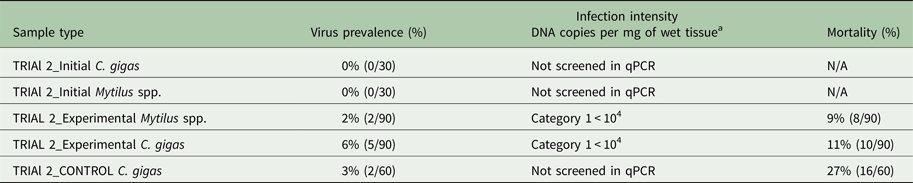
a Infection intensity after Renault et al. (Reference Renault, Bouquet, Maurice, Lupo and Blachier2014).
Histological examination and ISH
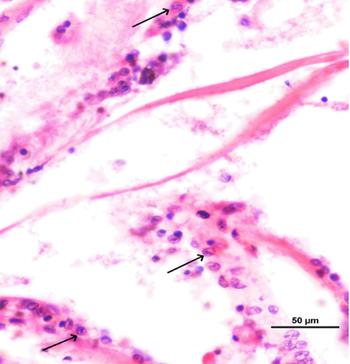
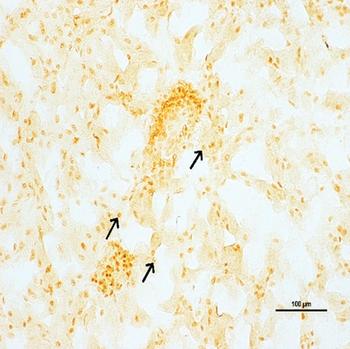
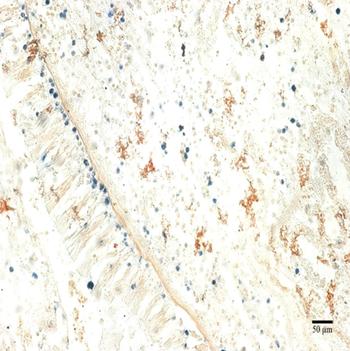
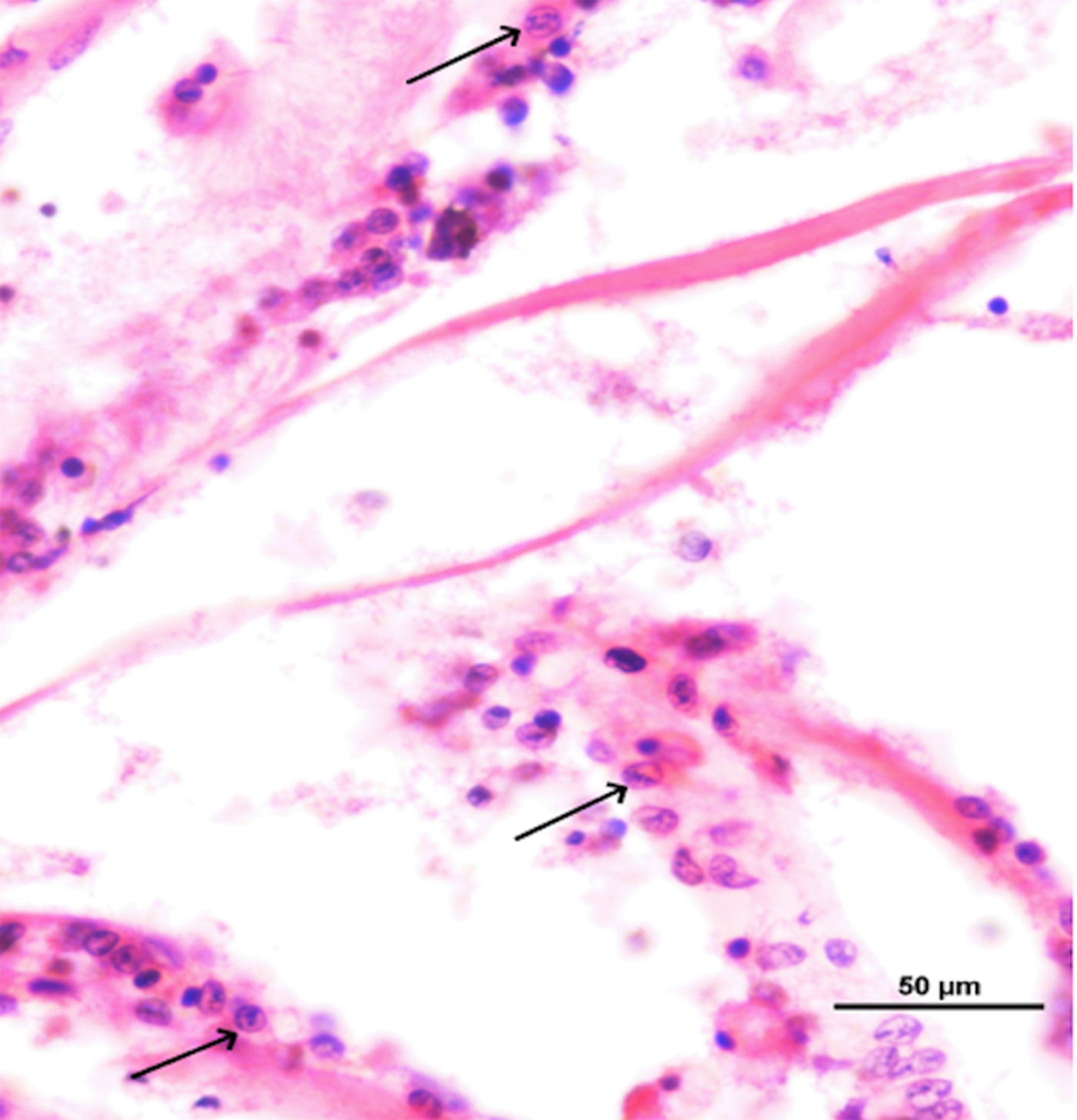
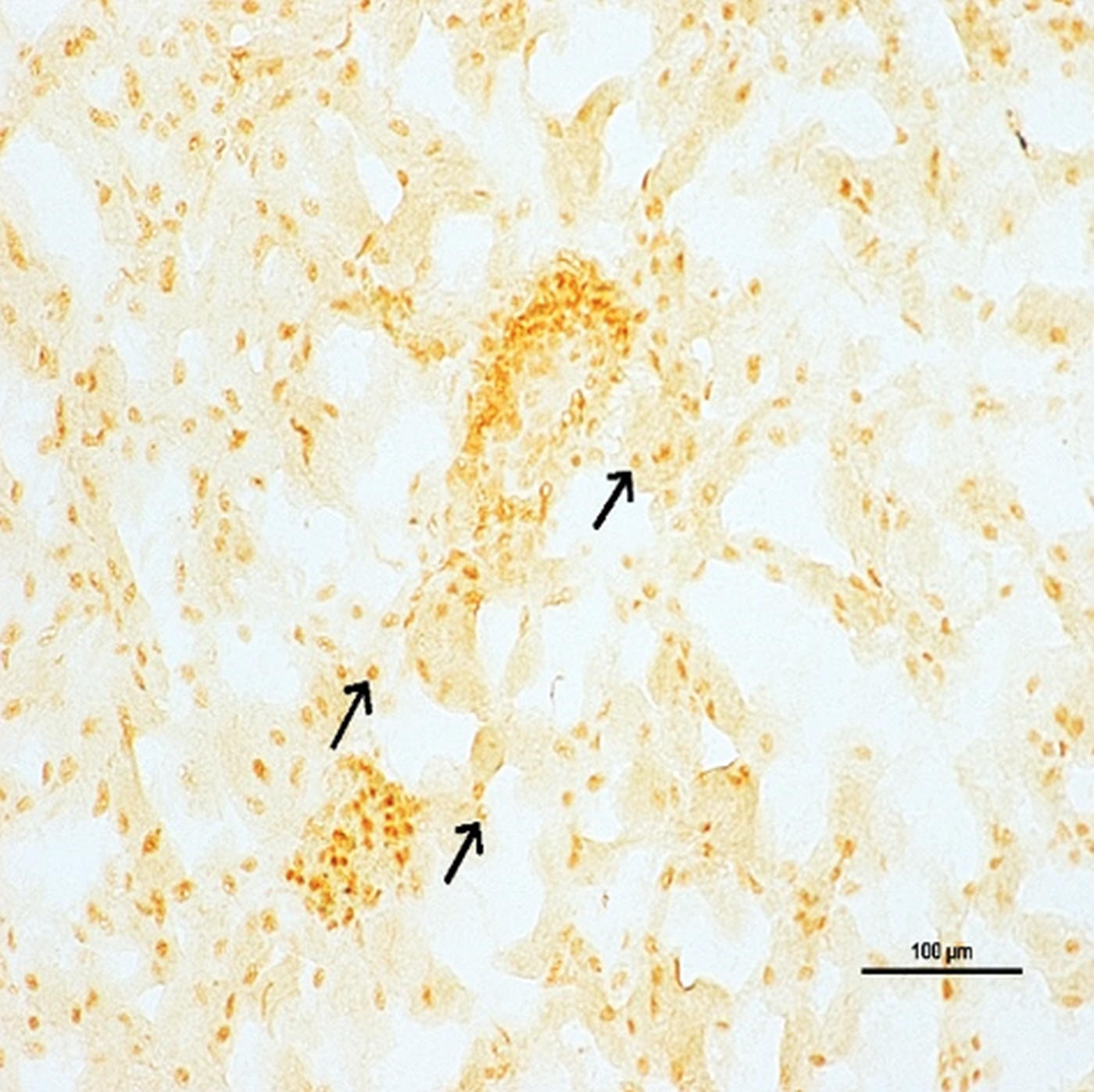
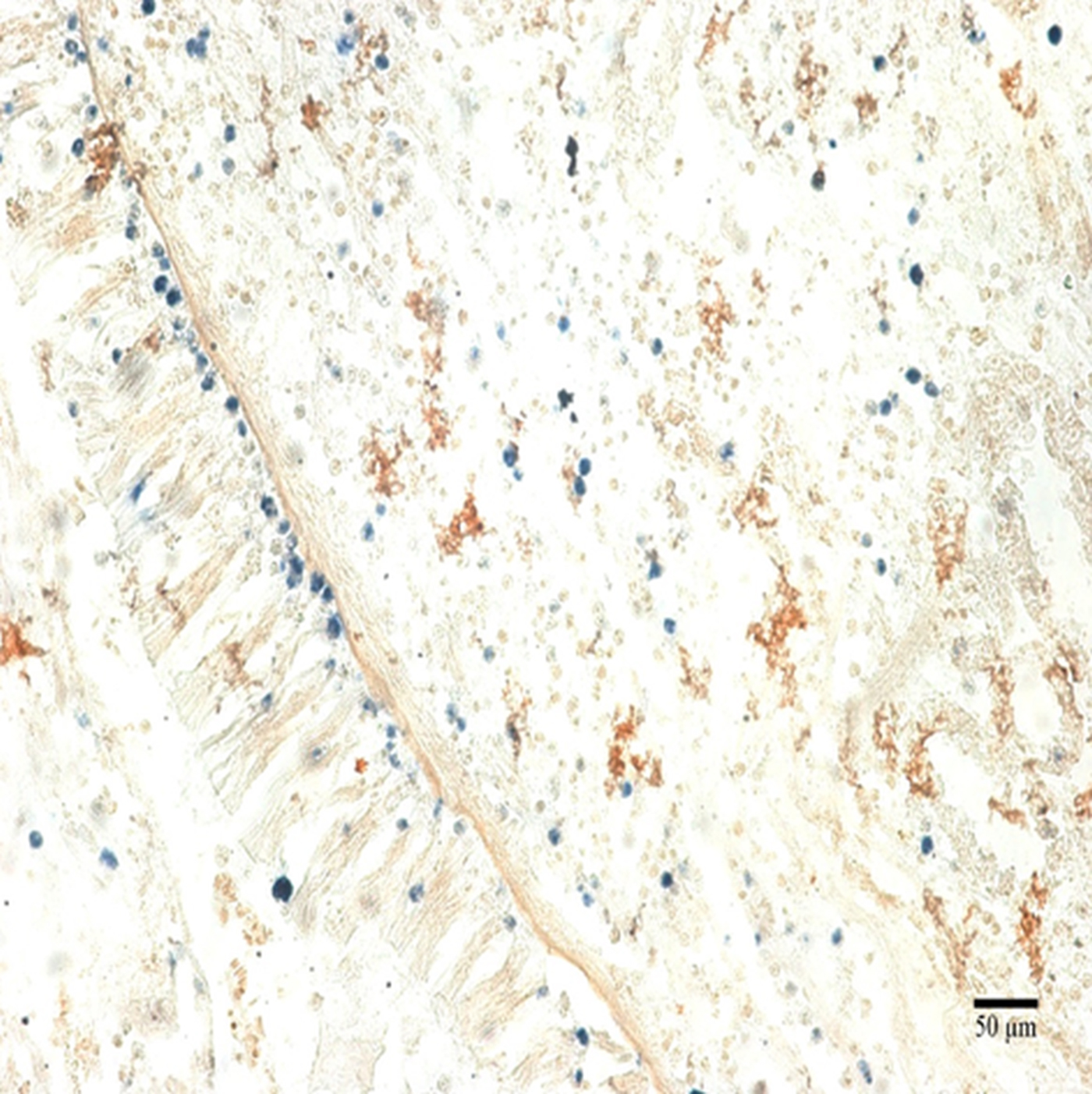
Abnormal cells consistent with the presence of OsHV-1 μVar were observed in the Mytilus spp. histology in individuals that were positive for OsHV-1 μVar by PCR. In Mytilus spp., collected from the field (Ballymacoda), abnormal cells, which were enlarged, rounded with the nuclei disrupted or pushed to the edge of the cell were detected in half (10/20) of the histology samples screened and were mostly observed throughout the connective tissue in the mantle and to a lesser extent in the gills and digestive tubules (Fig. 2). In the ISH analysis, a signal was not detected in individuals deemed to be uninfected with OsHV-1 μVar in the PCR (Fig. 3), while a positive signal for OsHV-1 μVar in 20% (4/20) of the mussels screened was detected using this method (Fig. 4).
Tissue section of Mytilus spp. with OsHV-1 μVar-infected blood cells.
In situ hybridization stained Mytilus spp. connective tissue of normal cells (orange-brown staining indicates uninfected, healthy normal tissue) (arrowheads).
In situ hybridization stained Mytilus spp. digestive epithelia tissue (left of image) and connective tissue showing cells infected with OsHV-1 microVar (stained blue) (orange-brown staining indicates uninfected, healthy tissue).
Sequencing
Five forward and reverse sequences from five individual mussels, which tested positive in the PCR, were generated in the direct Sanger sequencing. All forward and reverse sequences were identical and all sequences were confirmed by Blastn to be from the OsHV-1 genome with a 100% maximum identity and 99% query coverage (GenBank accession no. KU861511·1) with OsHV-1 strain μVar isolate Cg_C2C6 region genomic sequence.
Discussion
In this study, OsHV-1 μVar was detected in wild Mytilus spp. and M. edulis tissues with associated pathologies similar to those previously reported in oysters infected by herpes virus (Renault et al. Reference Renault, Cochennec, Le Deuff and Chollet1994a; Renault and Novoa, Reference Renault and Novoa2004). Although these histological changes and abnormalities associated with OsHV have not been previously described for Mytilus spp., similar changes have formerly been observed in a non-ostreid bivalve species, the Manila clam R. philippinarum (Renault et al. Reference Renault, Lipart and Arzul2001). Of significance, this study reports the first transmission of this virus from both M. edulis and Mytilus spp. to naïve C. gigas, which occurred in the laboratory under an increased and increasing temperature regime; however, it must also be highlighted that replication of the virus with a 14-fold increase also occurred in mussels, which were held in the laboratory at 13 °C during a 3-week period. The virus was detected in mussels cohabiting with oysters within the oyster bags at the trestles but it was also detected in wild mussels located 400 and 500 m from the oyster trestles and up to 26 km from the oyster farms at non-culture sites. The impact of the virus on mussel health is unclear, as OsHV-1 μVar was detected at an overall low prevalence in mussels and at a low viral load for those screened by qPCR and without associated mortality in the laboratory trials; however, cytopathic effects were observed in the mussels similar to those observed in C. gigas, which have been associated with oyster mortalities. A low prevalence of OsHV-1 μVar was observed in oyster populations in the field at the same time, possibly due to lower than average seawater and air temperatures experienced at those sites for the duration of the trials.
According to the World Organization for Animal Health (OIE), a ‘suspected’ case of infection with microvariants, can exist without evidence of mortality, whereas a ‘confirmed’ case occurs when detection by histology, transmission electron microscopy or PCR is followed by sequencing confirmation. In this study, detection of OsHV-1 μVar DNA was established by PCR in mussel samples from all five study sites, in the qPCR screening of mussel samples from two of the study sites, and visualized by histology and ISH in mussels from a single site. The DNA was confirmed by direct sequencing to be that of OsHV-1 μVar in samples from each study site. From the qPCR analysis, it can be concluded that both field sampled and laboratory experimental living and dead Mytilus spp. had detectable quantities of OsHV-1 μVar. The mussels used in the laboratory cohabitation transmission trial 2 were exclusively from Carlingford Lough, which represents the first record of OsHV-1 μVar in M. edulis. In contrast to our study, OsHV-1 DNA was previously detected in samples of Mytilus spp. in Australia with a 20% (n = 1/5) prevalence and viral concentrations below the quantification limit of the qPCR assay (<12 DNA copies per PCR reaction) (Evans et al. Reference Evans, Paul-Pont and Whittington2017); however, this was not the case in this study where up to 1565·37 viral copies µL−1 of genomic DNA were detected in Irish mussels. In addition, abnormal cells consistent with the pathology associated with OsHV-1 μVar infection were visualized in the mussel histology. The cytopathic effects (abnormal cell morphology) observed in infected mussels were similar to those visualized in infected oysters in previous studies (Renault et al. Reference Renault, Cochennec, Le Deuff and Chollet1994a, Reference Renault, Le Deuff, Chollet, Cochennec and Gérard2000; Renault and Novoa, Reference Renault and Novoa2004). This study demonstrated that elevated temperatures exacerbated OsHV-1 μVar prevalence and transmission between mussels and oysters in the laboratory but mortality was relatively low in both species. The differences in oyster performance in the laboratory, be they control or experimental animals, could be attributed to natural variation in the immune function and performance of individual oysters even within the same population/stock. During the summer of 2013 air temperatures higher than average (up to 3·5 °C above the average temperature) were experienced (Prado-Alvarez et al. Reference Prado-Alvarez, Darmody, Hutton, O'Reilly, Lynch and Culloty2016), while in the summer of 2015 all monthly mean air temperatures were below their long-term average (www.met.ie) and positive detection of the virus was observed primarily in July, August and October during phases of warmer weather and dry periods with low precipitation.
OsHV-1 μVar is generally detected in dying oysters when seawater temperatures are >16 °C (Pernet et al. Reference Pernet, Barret, Gall, Corporeau, Dégremont, Lagarde, Pépin and Keck2012). Higher temperatures appear to act as a stressor for C. gigas and exacerbate virus proliferation and transmission; and detection and mortality are associated with a marked increase in mean daily seawater temperature (Garcia et al. Reference Garcia, Thébault, Dégremont, Arzul, Miossec, Robert, Chollet, François, Joly, Ferrand, Kerdudou and Renault2011). Previous studies of Mytilus spp. have also observed that temperature is also a key driver of biological response (Hu et al. Reference Hu, Li, Sui, Li, Wang, Lu and Dupont2015) with elevated temperatures negatively impacting on the immune response in M. edulis by significantly increasing the antibacterial activity of cell-free haemolymph (Ellis et al. Reference Ellis, Widdicombe, Parry, Hutchinson and Spicer2015). Crassostrea gigas has a broad temperature tolerance, with a range of –1·8 to 35 °C (FAO, 2015); however, higher temperatures exacerbate virus proliferation, transmission, and mortality as was observed in this present study. OsHV-1 μVar is known to be persistent in oysters held at temperatures as low as 13 °C and reactivated during thermal elevation to 21 °C (Pernet et al. Reference Pernet, Tamayo and Petton2015), this was confirmed by the findings of our study following elevation of temperature during the laboratory trial. However, our results would further indicate that the virus is replicating also at 13 °C in the mussels. The stressful conditions of the artificial laboratory holding conditions and the close proximity of the mussels to one another in the tank/s for a prolonged period of time may have facilitated the activation of the virus in the mussels and its subsequent replication within a system where no water changes occurred. It may also be possible that the virus responds differently to the virus at a reduced temperature in mussels compared with oysters.
OsHV-1 μVar was detected in a small percentage of the control living oysters; however, this may have been attributed to background aerosol contamination as the initial sample was negative and this population is classified as disease free. Elevated temperature alone may not result in increased mortalities, e.g. C. gigas that experienced prolonged high temperature (21 °C for 14 days) in the Inland Sea, Wales, did not experience mass mortalities (Malham et al. Reference Malham, Cotter, O'Keeffe, Lynch, Culloty, King, Latchford and Beaumont2009). However, in the context of a changing climate, with future increases in seawater temperatures predicted, the ecological sustainability of marine fisheries and aquaculture may be threatened (Dang et al. Reference Dang, Speck and Benkendorff2012). Consideration of these results should be given in areas where both mussel and oyster cultures occur and for the movement of mussels from OsHV-1 μVar infected sites to sites where Pacific oysters may be cultured and are free of infection. Even with these viral loads and low number of animals testing positive, transmission of the virus was still effected to naive oysters, which highlights the risks involved with the movement of shellfish for aquaculture and the unintentional introduction of pathogens in non-typical hosts. Wild mussels approximately 400 m from a C. gigas culture site successfully transmitted OsHV-1 μVar to naïve C. gigas in the laboratory, thus indicating that the virus is viable and is being maintained outside the known host. Of interest, the virus was detected in all of the experimental naïve oysters that were held with exposed mussels in laboratory trial 1.
The full process of how the virus might maintain itself at Pacific oyster culture sites is unclear and the effects of OsHV-1 μVar infection on the mussel population in Ireland, in particular those at infected oyster culture sites, is yet to be determined. Mytilus spp. appears to act as a reservoir or carrier for OsHV-1 μVar but the nature of this interaction and impacts on mussel health need to be investigated further. What is certain from the findings of this study is that OsHV-1 μVar has the ability to be associated with other cohabiting bivalve species even at a distance from a disease ‘hot spot’ such as an OsHV-1 μVar endemic C. gigas culture site.
Acknowledgements
The authors would like to acknowledge and thank the shellfish growers for their assistance during fieldwork and for provision of samples.
Financial support
This study was carried out with financial assistance from the EUFP7 Bivalife Project ‘Controlling infectious diseases in oysters and mussels in Europe’. Project number: 266157. Call (part) identifier: FP7-KBBE-2010-4 Improving European mollusc aquaculture: disease detection and management. This study was also carried out with financial assistance from the REPOSUS Project ‘Reducing the impact of Pathogens and disease in the Irish Oyster industry to support the sustainability and growth of the sector’ funded under FIRM by DAFM 14 SF 820.