Framing research on fourteenth-century Singapore in the context of Malay history and culture can generate models and hypotheses testable with archaeological data. Specifically, it can yield information and insights on the relatively unknown nature of social, political and economic organisation. This research focuses on the relationship between metal production and the nature of society in ancient Singapore. Although metals were rare and valuable commodities, this analysis suggests that the ruling elite did not control production of the iron and copper-based goods which have been found on the island. Instead, metal production was by members of a social stratum capable of generating wealth and mobilising resources independent of the ruling elite.
Ancient Singapore is most often discussed as a backward projection of the modern, globally connected, independent city-state that we know today. However, more than three decades of archaeological excavations have yielded a wealth of material from the fourteenth century port-city of Temasek (see fig. 1).Footnote 1 This is not only significant to our understanding of early Singapore but, more importantly, can situate the history and culture of this early historic port-city within its Southeast Asian and Malay World contexts.Footnote 2 The archaeology of Singapore can provide models for understanding historical and sociocultural developments in early Southeast Asia and more specifically, the Malay World.
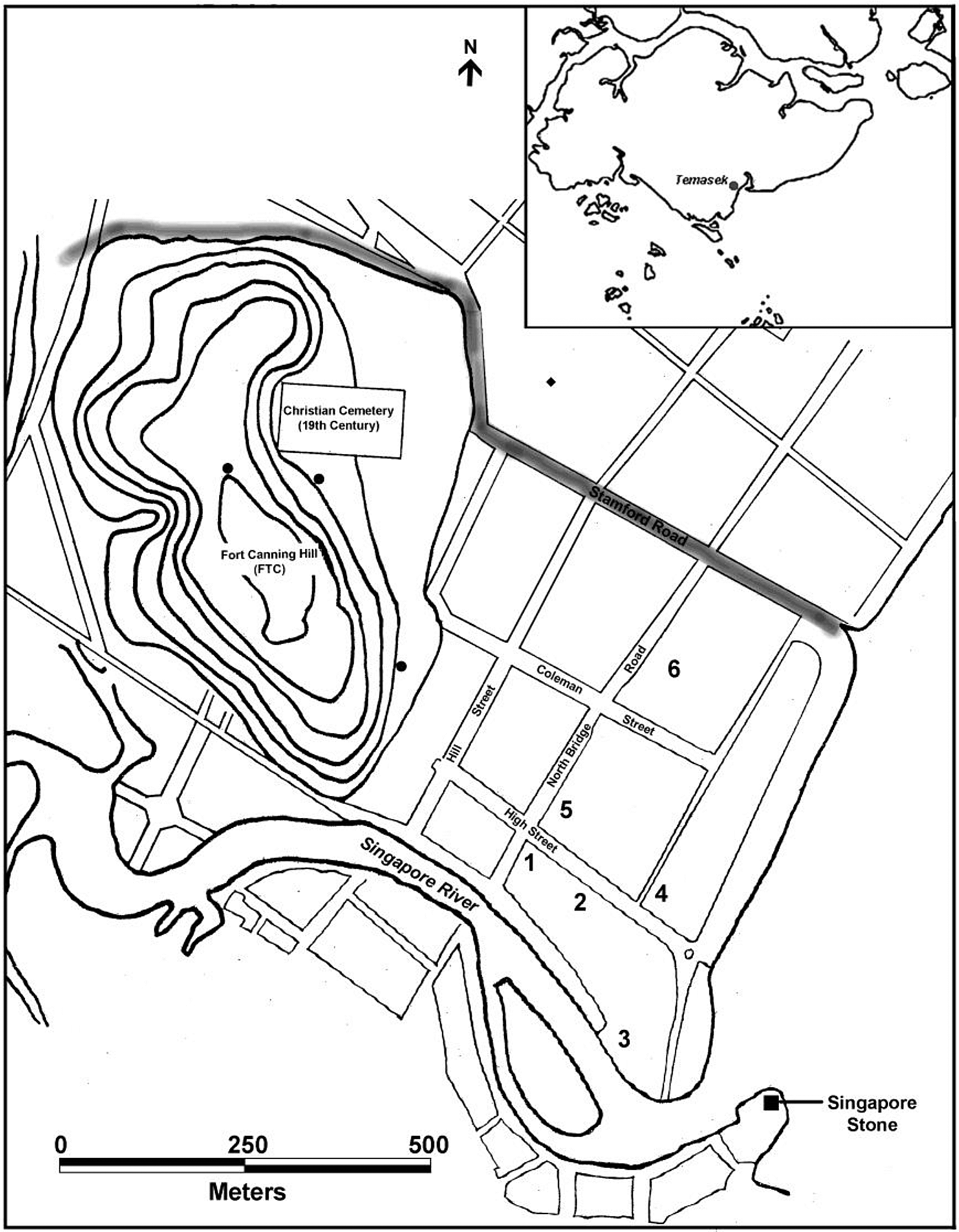
The archaeological site of Temasek before major land reclamation of the 1990s and showing locations of previous excavations (based on Miksic, Singapore, p. 213).
1 Fort Canning Hill (FTC), 2 Parliament House Complex (PHC), 3 Old Parliament House (OPH), 4 Empress Place (EMP) 5 Singapore Cricket Club (SCC), 6 Colombo Court (CCT), 7 Saint Andrew's Cathedral (STA), 8 Test excavations outside settlement boundary.

The social, political and economic organisation of complex, stratified societies is one aspect of ancient Southeast Asia that is not well understood. Generalised models propose that highly centralised hierarchies were not characteristic of these early historic polities (c. fifth to fifteenth centuries).Footnote 3 While this is often stated, it is seldom tested due to a lack of data.
An increasing amount of archaeological material is now available from the region, and in combination with historical texts these sometime contradictory sources can potentially yield new information and insights.Footnote 4 Historical and archaeological materials, however, have their limits. Research should not proceed in a theoretical vacuum; our assumptions need to be explicit in the form of constructs about past cultural phenomena.Footnote 5 In early Southeast Asia, indigenous historical sources were often created to serve the interests of elites or were messages of religious piety; day-to-day records are rare.Footnote 6 Foreign texts mainly reflect their external cultural perspective. The archaeological record, while providing some evidence of everyday life, is incomplete.
This research focuses on the relationship between metal production and internal organisation in Temasek. Anthropologists consider craft production as much a social and political phenomenon as an economic and technological one; studying production systems allows us to understand issues of power and control over resources and labour.Footnote 7 The social identity of metalworkers in ancient Singapore is the question that guides this research. The primary source of data is material from the Parliament House Complex (PHC) excavations (fig. 1).Footnote 8 This location is c.100 metres east of the Singapore River, and as in the rest of the ancient settlement, buried under part of the central business district of modern Singapore.
The discovery of a metal workshop presented interesting questions on the socioeconomic status of the producers. Metals were rare and valuable commodities in much of the pre-industrial world, including Southeast Asia.Footnote 9 Geographically, sources were unevenly distributed, while mining, smelting and manufacturing were resource-intensive activities. Ruling elites often controlled the production, distribution and consumption of such materials and commodities as part of their political strategy.Footnote 10 In addition, since the island of Singapore is deficient in metals, producers would have to have relied on imports and recycled scrap, and needed access to multiple resources, including labour, raw material, skills and tools.
Definitions and assumptions
A series of definitions and assumptions based on cross-cultural and multidisciplinary material guided this research. First, craft production is the non-industrial manufacture of utilitarian and prestige goods.Footnote 11 The complexities associated with mining, smelting, alloying and manufacturing, and the need for multiple resources and skills, meant that production of metals in the ancient world was primarily in the hands of specialists.Footnote 12
Specialisation is a way of organising production and occurs when there are fewer producers than consumers of a commodity.Footnote 13 Commonly associated with but not exclusive to complex societies, craft specialisation is neither a unilinear nor progressive development and is influenced by cultural and environmental factors.Footnote 14 Archaeologists view craft specialisation as either a dependent or independent variable. As a dependent variable, specialists emerged in conditions where sufficient surplus was generated to support them.Footnote 15 This research views the phenomenon as an independent variable, a means for amassing private wealth and enhancing socioeconomic status.Footnote 16
Second, cross-cultural research suggests that redistribution was never a total economy in ancient complex societies; recent studies highlight the importance of marketplace exchange and market systems.Footnote 17 Markets allowed producers to offer their goods as part of exchange networks, with little elite interference and probably hardly taxed. Third, ancient complex societies were not well-bounded, homogenous adaptive systems with clearly defined structures; factions, class and gender played important roles in their sociocultural development; this is a reasonably established perspective among scholars of early Southeast Asia.Footnote 18
Fourth, diversity and dynamism characterised production systems in ancient societies, including those of Southeast Asia.Footnote 19 Historical and archaeological material from Southeast Asia suggests that craft production was mainly in the hands of independent specialists. Ethno-historical, mainly European, sources mention that there were few full-time producers and that artisans were low status individuals ‘often described by outsiders as slaves or bondsmen’.Footnote 20 Yet in the early nineteenth century Malay Peninsula, woodworkers and silversmiths enjoyed prestige because of patronage by sultans and rajas.Footnote 21 However, there have been instances, as in mid-second millennium central Philippines, where elites centralised the production of utilitarian goods made by independent artisans as part of their political strategy. In this case, trade in utilitarian earthenware was part of alliance building with chiefs from the interior, exchanged for forest produce to meet demand from Chinese merchants.Footnote 22 Social rules also influenced production, for instance, the exclusive use of yellow by royalty in Malay society.Footnote 23
Fifth, Malay culture of the sixteenth to nineteenth centuries was relatively similar to its pre-Islamic and pre-European contact manifestations.Footnote 24 Descriptions from this period are useful in constructing hypotheses and models of early historic Malay society that can be tested with historical and archaeological data. The model, however, is not a checklist of traits but an ideal type. We need to be mindful of local historical processes, and the material variations these produce.
A significant observation is that Malay rulers did not exercise pre-eminent power. The raja or sultan was the apex of the social structure, however, below this was a class that exercised power and influence.Footnote 25 Status was measured by the ability to attract followers through the accumulation and display of wealth. These descriptions are probably later manifestations of a political culture inferred from the seventh century Telaga Batu inscription found in Palembang, then the political centre of Srivijaya.Footnote 26 This inscription is an oath of allegiance and lists occupations, titles and people considered potential threats to the ruler.
Temasek: An overview
Temasek was one of several entrepôts to emerge along the Straits of Melaka upon the decline of Srivijaya in the twelfth century.Footnote 27 The fourteenth century was its period of fluorescence, and the small amount of archaeological material that post-dates this period suggests a decline in size and importance, possibly in the 1390s.Footnote 28 A mid-fourteenth century description of ‘Banzu’ by Chinese merchant Wang Dayuan is generally accepted as referring to Temasek, and is the only known contemporary account.Footnote 29 Other textual sources date from the sixteenth century, the exception being the Singapore Stone, an inscription probably from the fourteenth century or earlier, but only a fragment survives.
As mentioned, the archaeological site is in the modern city centre. A wall and moat formed the northern boundary and the Singapore River marked the southern limit. To the east is the sea and Fort Canning Hill (FTC) was the western boundary. Limited testing north of the wall has yielded no pre-nineteenth century material.Footnote 30 The south bank of the Singapore River has not been tested although the Singapore Stone stood on this side.
Temasek's system of governance varies depending on the text consulted. Wang Dayuan mentions a chieftain.Footnote 31 Anthropologists generally recognise chiefdoms as a less complex form of sociopolitical organisation than ancient states. However, they also acknowledge that it is an overly broad concept that encompasses a great variation of sociopolitical, economic and territorial organisation.Footnote 32 In the seventeenth-century Sejarah Melayu, a prince from Palembang founded Singapura and was the first of five kings; the last king fled Singapore and founded Melaka.Footnote 33 Portuguese sources describe two sequential lineages, the second began and ended with the last ruler, a usurper prince from Palembang who founded Melaka after fleeing Singapore in the 1390s.Footnote 34
Paul Wheatley proposed a settlement layout, based on fourteenth and nineteenth century descriptions from which he made coarse-grained inferences of social organisation. It is a settlement pattern considered characteristic of Malay port-cities since at least the seventh century.Footnote 35
The main nucleus seems to have been sited on terraces in the slopes of the hill [FTC] which dominated the town. Here were the temples and other important buildings, structures of atap and bamboo raised on brick foundations. On the plain below were the dwellings of the citizens, surrounded by a rampart and ditch.Footnote 36
Wang also noted that the ‘soil is poor and grain scarce’.Footnote 37
Preliminary intra-site analysis of ceramics suggests diverse sets of activities and possibly social differentiation.Footnote 38 This is expected of an urban centre.Footnote 39 However, a significant part of the site is yet to be sampled (see fig. 1).Footnote 40 Temporal variation is more difficult to discern given the relatively short time span of about a hundred years, the nature of the material remains, and depositional processes.
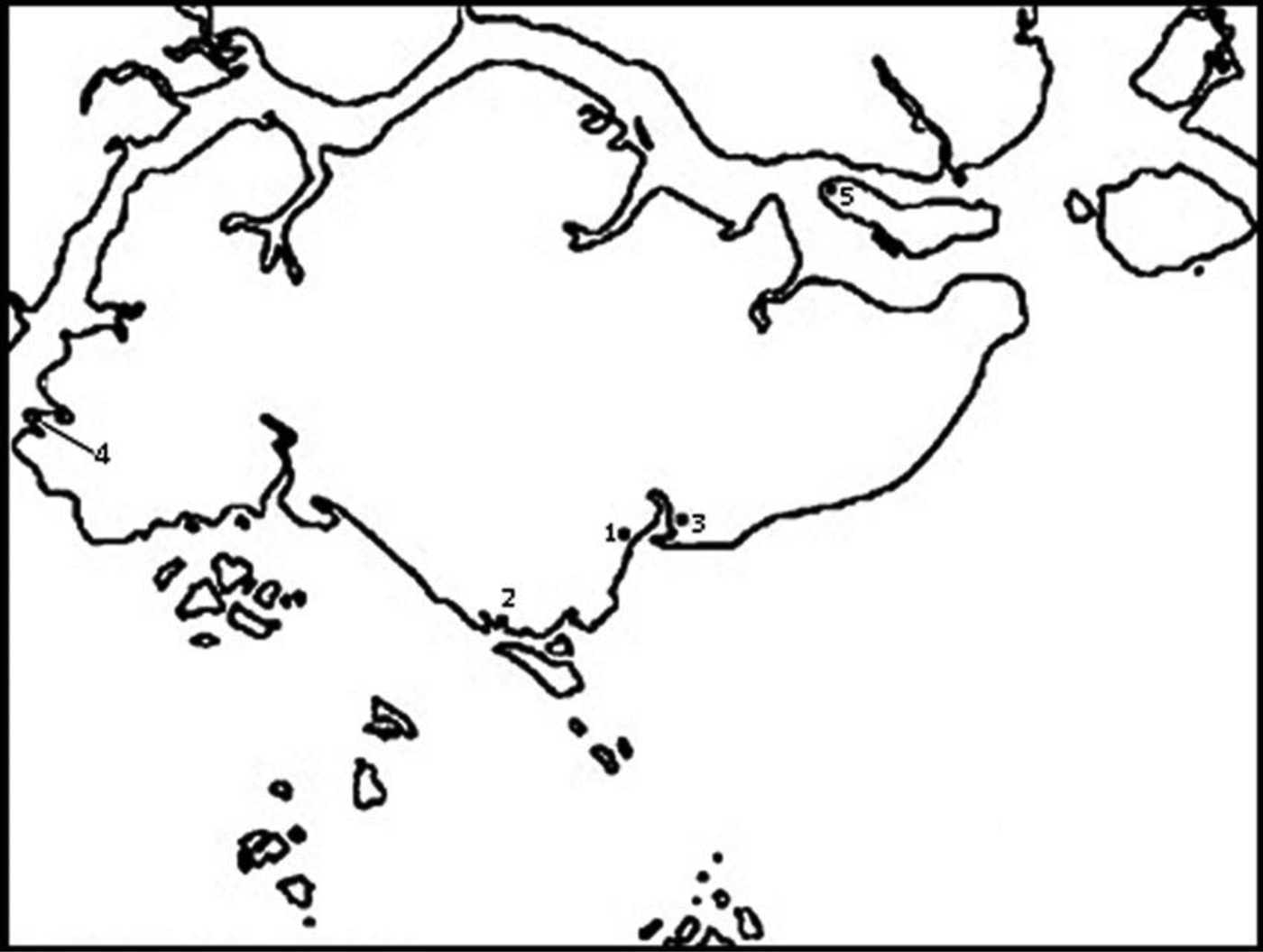
The hinterland probably comprised other settlements and Orang Laut communities along the coastal and riverine areas of Singapore Island, offshore islands and southern Malay Peninsula (see fig. 2). Historical and archaeological material suggest pre-1819 habitation in various parts of the island.Footnote 41 Although stone tools have been found in Tanjong Karang and Pulau Ubin, these do not necessarily date to the Stone Age; such tools were used in many parts of the world, including Southeast Asia, alongside metal implements.Footnote 42
Island of Singapore before major land reclamations, showing locations mentioned in historical texts and where archaeological material were recovered.
1 Temasek, 2 Longyamen, 3 Kallang River, 4 Tanjong Karang, 5 Pulau Ubin.

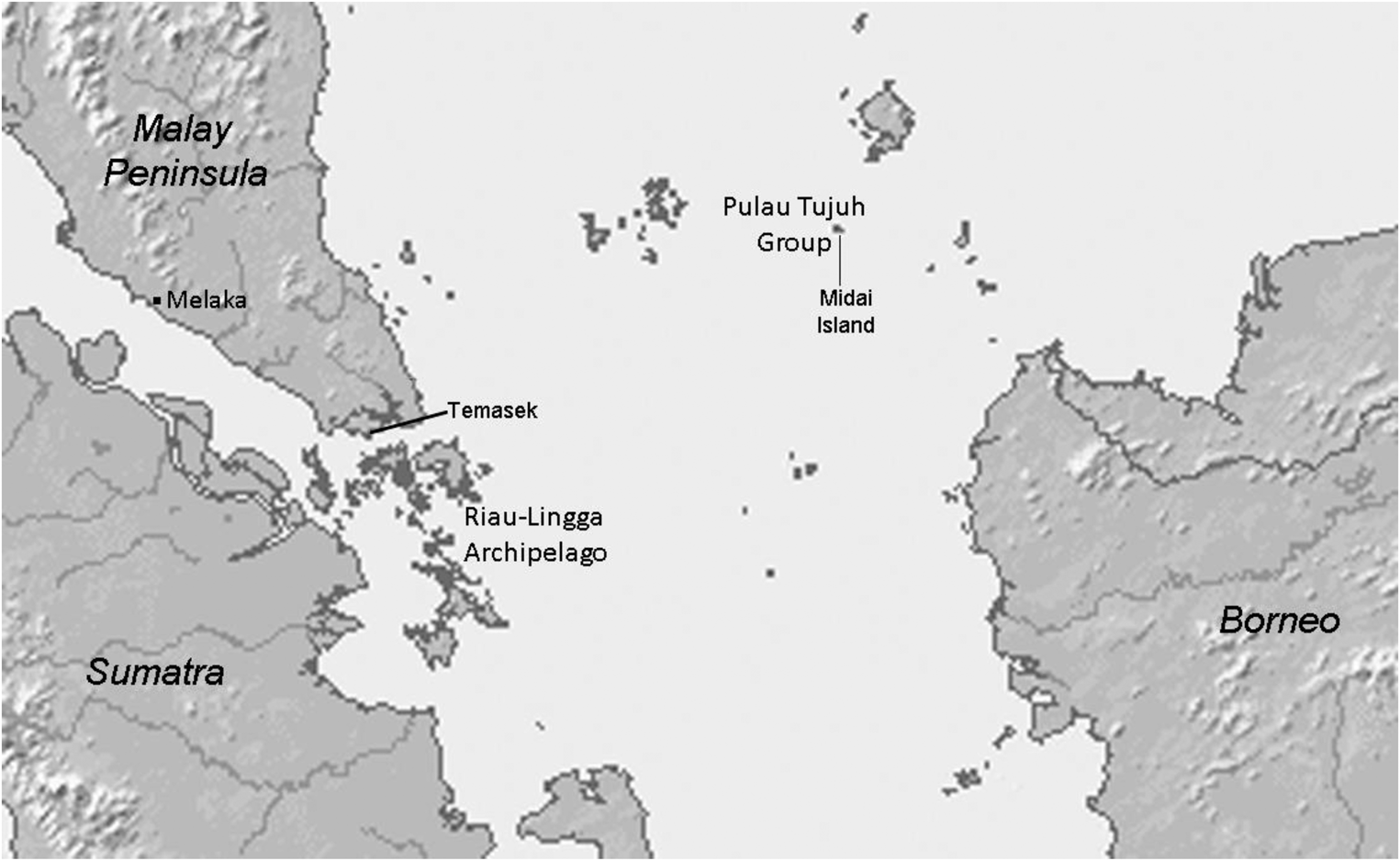
We know little of the relationship between Temasek and its hinterland (see fig. 3); the latter was probably a source of marine and forest produce traded in the port-city and of provisions. In turn, inhabitants of the hinterland were consumers of commodities from Temasek. Historically, the Orang Laut provided the rulers of Johor-Riau with part of its military force; although this relationship was probably more complex than just ruler–subject.Footnote 43 John Miksic believes that the Riau-Lingga Archipelago to the south and Pulau Tujuh, located between Borneo and the Malay Peninsula, were part of this hinterland.Footnote 44
Temasek and its hinterland.

Measuring production
Manufacturing, distribution and consumption are inextricable parts of production systems and should not be studied in isolation.Footnote 45 Cathy Costin proposes examining six interrelated components.Footnote 46 Her model includes the following and comprises people, objects and processes: artisans; means of production; organisation and social relations of production; objects; relationships of distribution; and consumers.
The social identity of artisans is important as it articulates with many other components of the production system. It is often a determining factor for access to the means of production and influences principles of artisan recruitment. When present, specialists are either attached or independent, extremes on a continuum measured by the degree of elite involvement. While independent specialists are generally associated with the manufacture of utilitarian goods by non-elites, research increasingly suggests this is a multifaceted phenomenon.Footnote 47 Ancient Mesoamerica provides some examples. Members of Mayan elite households engaged in the production of prestige goods for consumption within their own social class — the offspring of at least one Aztec ruler who were not destined to rule became specialist artisans of varying crafts to support themselves.Footnote 48 The case of the central Philippines was described above. Artisans can be full-time or part-time depending on time spent crafting; although households are known to have produced multiple types of craft goods as a means of diversifying risk.
Organisation and social relationships of production refer to spatial and social aspects of production. Social context is often inferred from the physical location of a production unit. The social organisation of production entails several things, most importantly, the constitution of production units and the social relationship between consumers and producers. Studies of production must include a characterisation of objects produced and an approximation of the amount of material used. Assumptions of organisation are based on the types of objects under study, and whether there were many or few in use.
Relationships of distribution relate to the transfer of goods from producer to consumer. There is an implicit understanding of a correlation between the nature of production systems and methods of transfer. Consumers are the people who use craft goods, and where relevant, the social institutions that shape or prescribe the use of craft goods.
Material correlates
Costin outlines archaeological correlates of production.Footnote 49 The most straightforward way is to locate places at which manufacturing took place. Appropriate data include raw materials, debris, tools and facilities associated with production. Debris and waste are often the primary material recovered. Tools tend to be curated or made of perishable materials. Facilities are rare. Slag, ingots, crucibles, furnaces and scrap are characteristic evidence of metalworking. Indirect evidence can only inform on the relative degree of specialisation, that is, the ratio of production groups to the total population, and is rarely unequivocal.
Production in Temasek
Material remnants of metalworking in PHC and glass manufacturing in FTC are the only direct evidence of production in Temasek to date.Footnote 50 Excavations on the grounds of the Singapore Cricket Club (SCC) and Saint Andrew's Cathedral (STA) also yielded possible evidence of metalworking, but the data is inconclusive (see fig. 1).Footnote 51
Miksic believes that the glassworkers were working under royal patronage, and that glass was almost exclusively the property of the ruling elite.Footnote 52 First, FTC was the political centre and the location of the palace, and second, excavations below the hill yielded miniscule amounts of glass. Evidence of manufacturing includes a hammer, a hearth, lime used as flux, glass shards and blobs, debris and discards. Glassworkers used recycled glass, a common practice in Asia.
Glass objects were probably part of an alliance-building strategy with the Orang Laut and possibly others within Temasek and the hinterland. Anecdotal evidence, mainly by looters, mention glass objects found in Orang Laut burials in the Riau-Lingga Archipelago and Pulau Tujuh, suggesting its importance in their ritual life.Footnote 53
Although brief, the description of Banzu provides hints of production. However, it is impossible to infer whether the commodities mentioned were imported, made for exchange or for household consumption. Wang Dayuan mentions trade in locally made cloth, although these were probably re-exported Javanese textiles.Footnote 54 He describes various types of cloth and accessories worn by the inhabitants, and that they made salt from seawater and wine from fermented rice.Footnote 55
Mollusc species exploited other than for food were also recovered from PHC. These include species commonly used for ornaments and for producing lime for betel nut chewing.Footnote 56 Shell ornaments have yet to be recovered. Chicoreus capucinus, a species known as a source of a prestigious dye, Tyrian purple, was also found.Footnote 57 The PHC excavations yielded worked bone, probably fragments of tools or ornaments.
Miksic believes that a large portion of earthenware from the site was made from local clay, and that gold working was conducted in FTC and perhaps one or two other locations.Footnote 58 To date, there is no evidence found of gold working in early Singapore. While there has been no study of ceramic production, it is highly probable that much of the earthenware found in excavations was made locally.
Metals and metalworking in PHC
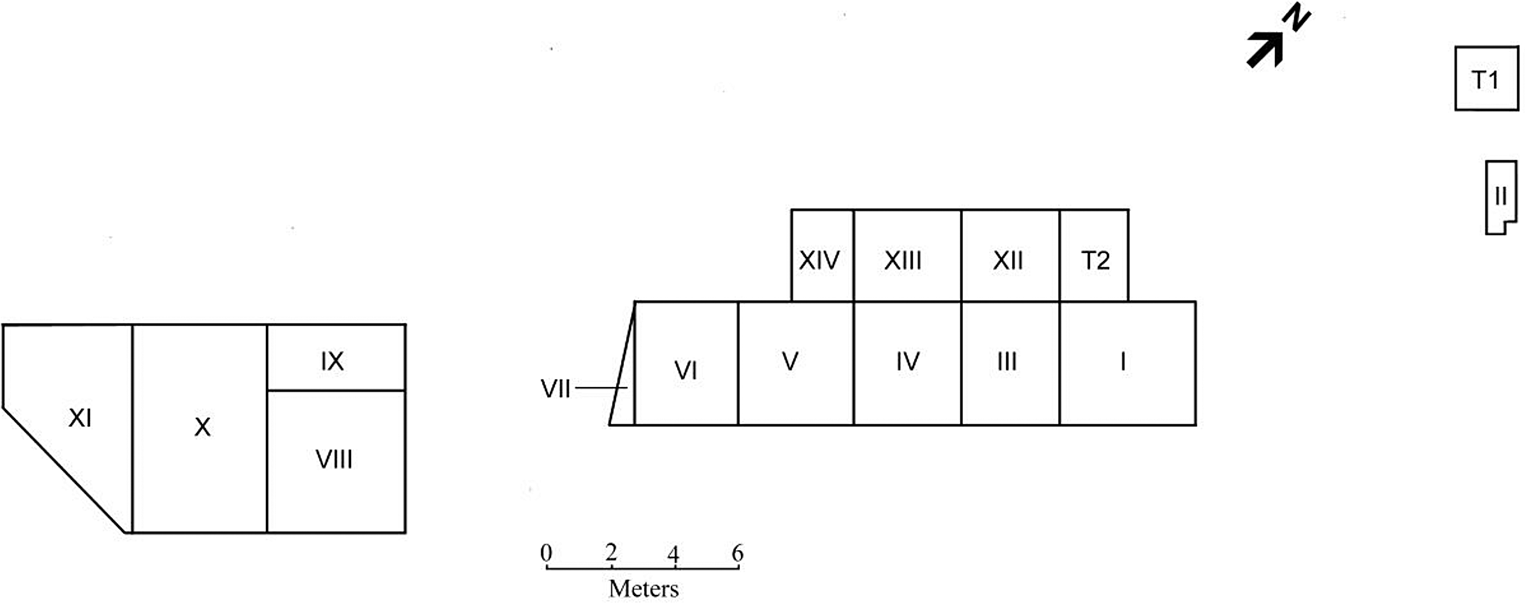
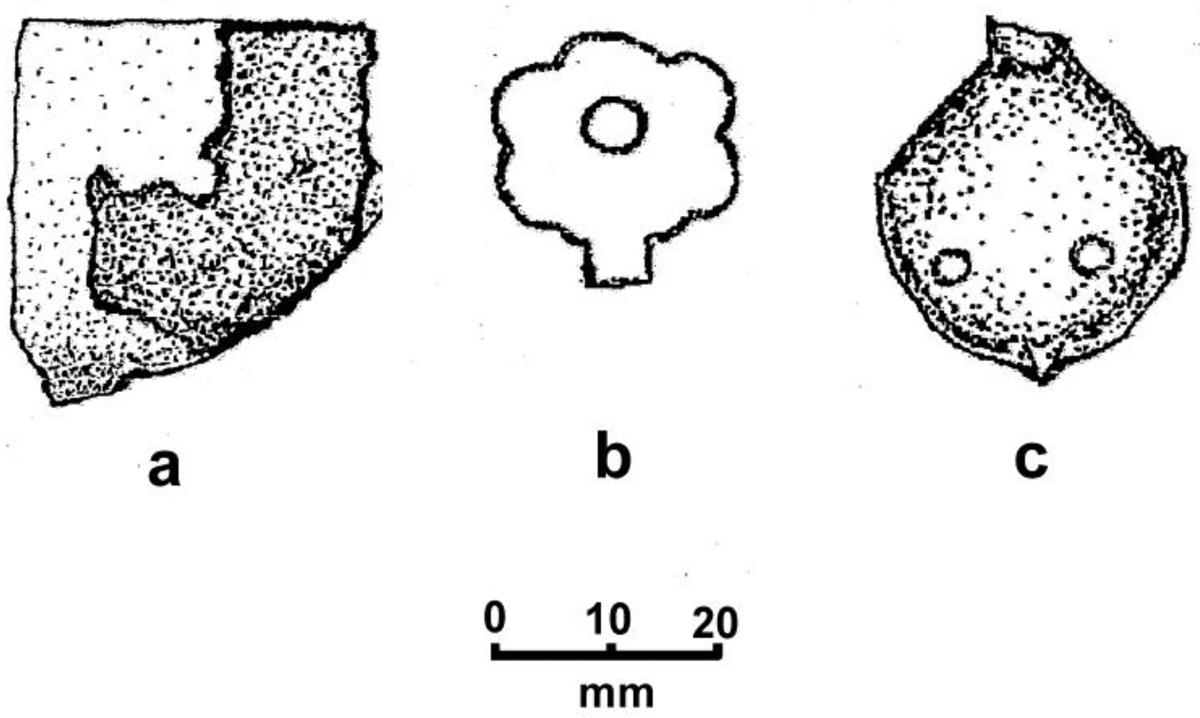
This is the only location to date with a significant amount of metal artefacts and unequivocal evidence of metalworking. The workshop manufactured iron and copper-based goods and engaged in smelting. Debris, slag, other by-products and unfinished iron and copper-based artefacts are the primary evidence. Other metal finds include fragments from iron and copper-based objects, and coins (fig. 4; fig. 5).
PHC excavation units.

Fragments of copper-based objects from PHC, a. Fragment of vessel, b. Floral ornament, c. Fragment of a bell.

The PHC yielded the largest number of coins recovered to date, including: 127 pieces of Chinese copper cash in various states of preservation from c. tenth to fourteenth centuries; a coin from what is today Sri Lanka dated between 1272 and 1302; a possible Javanese copy of a Chinese coin; and a post-fourteenth century coin of tin alloy, possibly from the Johor-Riau sultanate, c. seventeenth to eighteenth centuries.Footnote 59
Location
Located in what Wheatley described as the ‘plain below’, associated finds suggest that the production unit was either part of a household or a workshop within a residential area. The excavated area was a midden with household and workshop rubbish, mainly ceramics, faunal remains and charcoal. Ceramics are the dominant finds, including: Chinese stoneware and porcelain from the late thirteenth and fourteenth centuries; a small number of fifteenth-century Chinese wares; and earthenware.Footnote 60 Faunal remains include fish bones and mollusc shells, mostly discarded food remains.Footnote 61 Charcoal was probably used by the workshop and in cooking fires.
Iron and copper-based objects
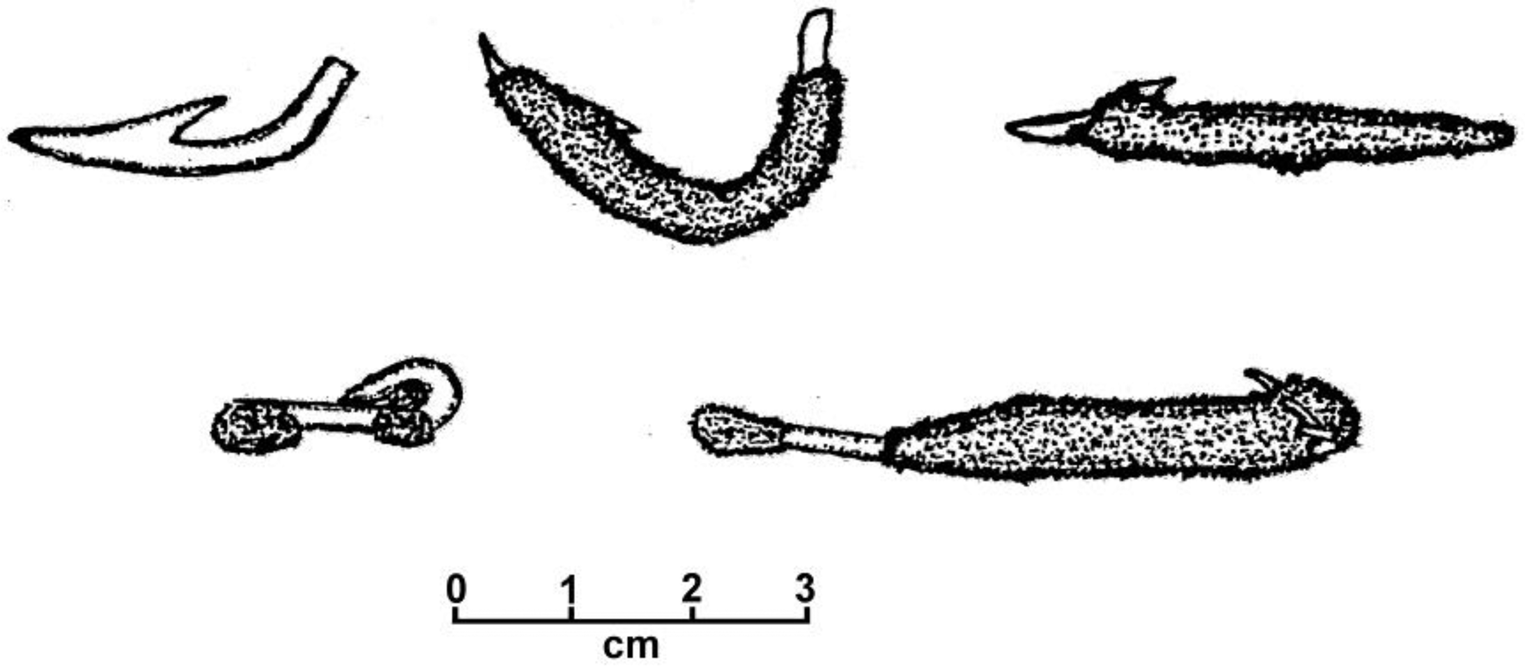
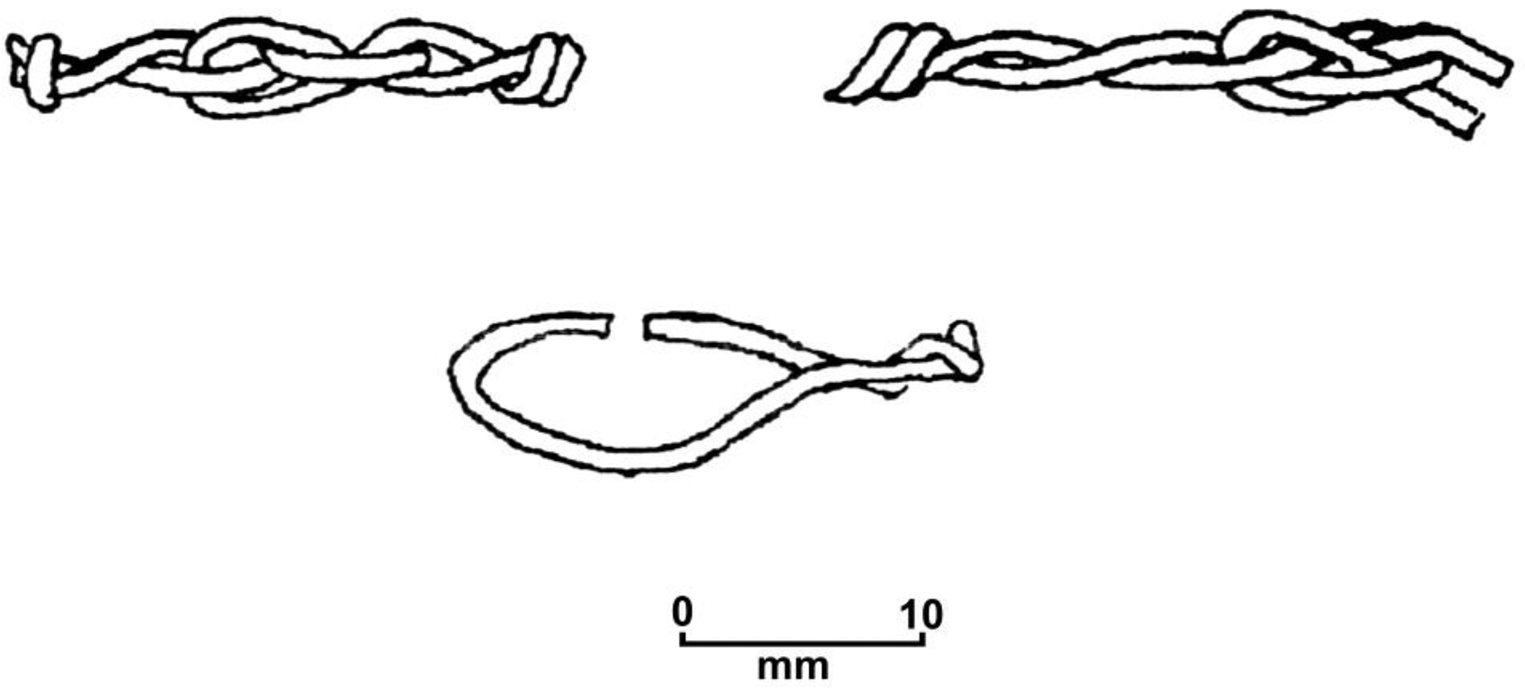
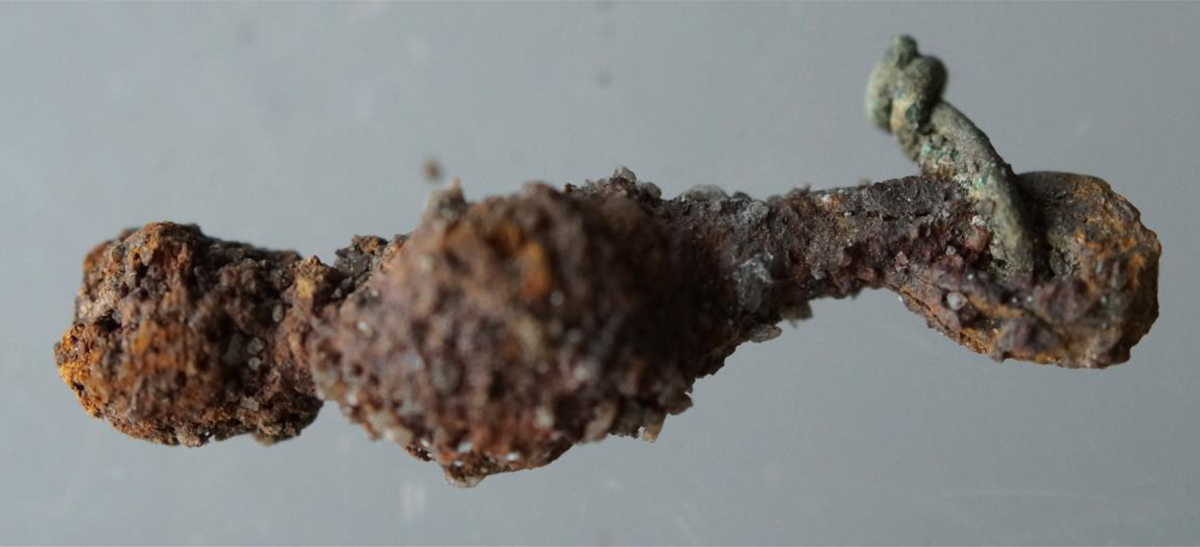
Material associated with the manufacture of iron and copper-based objects were recovered throughout the excavated area. These include: 1) intact and fragmented iron and copper-based fishhooks (fig. 6); 2) debris and discards mainly from forging of iron hooks; and 3) copper-based wires (fig. 7). A total of 11 iron and 11 copper-based hooks were recovered. The relatively higher value of copper-based metals may explain the larger amount of iron discards and fragments; these were probably recycled more often.
Iron fishhooks.

Copper-based wires.

Although found throughout the excavated area, the quantity of hooks is too small to isolate patterns related to spatial distribution and for constructing a typology. There is, however, a simple correlation between hook size and material, a pattern influenced by durability, malleability, labour input and cost. The smallest hooks are of pure copper, slightly larger hooks are of a harder copper alloy and the largest hooks are of iron. Essentially, the larger hooks were made of harder metals. Small hooks and wires were made using more flexible pure copper. Iron hooks were probably the most durable and cost the least to produce compared to copper-based ones. No hooks of other material were found.
Production catered primarily for local demand. Fish was a major source of protein, and the variation in hook sizes correspond with the variety of fish available in surrounding waters. Fish bones from various species were found in the PHC.Footnote 62 A study of 1950s fishing methods in the northeast Malay Peninsula illustrates the diverse use of hooks by Malay fishermen.Footnote 63 These were employed in single and multi-hook arrays and in combinations where one man can operate more than one hook, and were also used for other marine life.
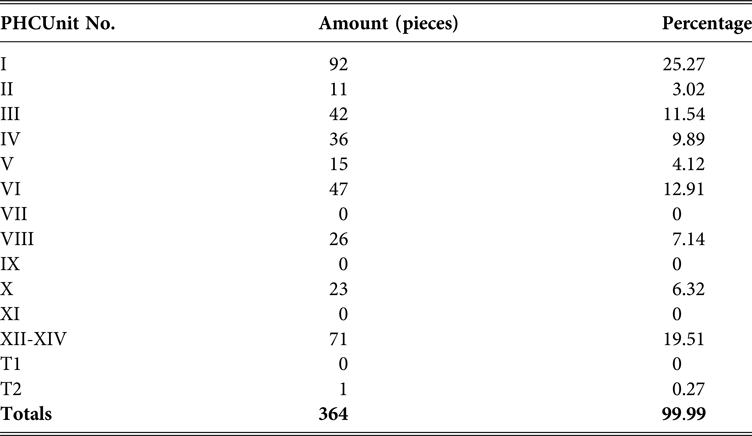
Imported raw iron and/or recycled scrap were probably used in the production of iron hooks. A total of 364 pieces of iron rods approximately 3–3.5 mm, blanks used to forge hooks and similar in diameter to the hooks, were recovered (table 1). There is one uncompleted iron hook, a straight iron rod with its ends pointed and barbed.
Distribution of fishhook billets.

A total of 233 pieces of wire in various shapes were recovered, with the largest concentrations in units I, X and XII to XIV (see fig. 4). One function of wires is as leaders for hooks (fig. 8). It is possible that some of the wires found were intended for the manufacture of smaller hooks or part of larger objects of metal and other materials. No intact wires were found. All were broken at one or both ends. There is a small quantity of straight wires. Microscopic examination of a sample indicates that it is pure copper.Footnote 64 There is no evidence of copper-based metal casting in the PHC, possibly a sampling bias.
Copper-based leader wire attached to iron fishhook eyelet.

By-products: Slag and copper prills
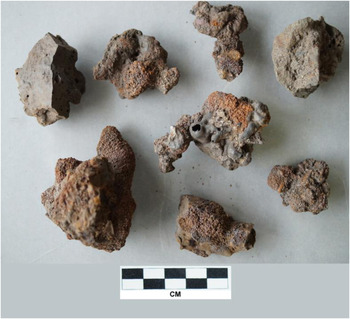
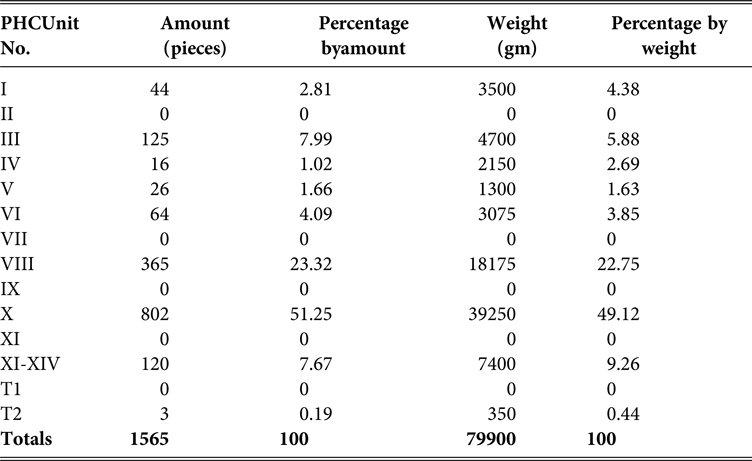
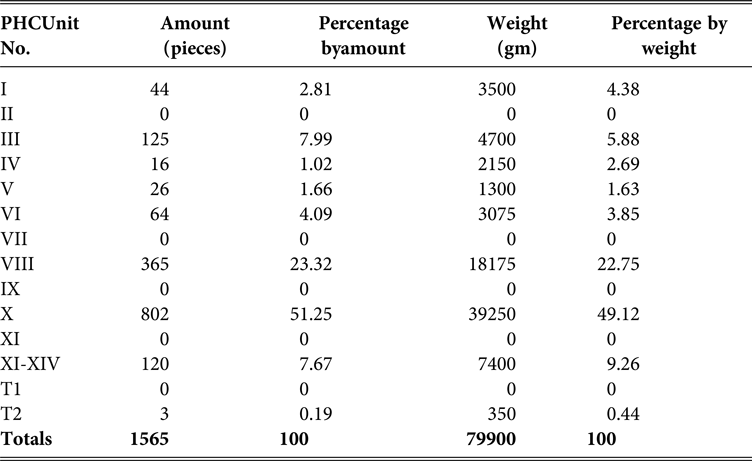
Copper prills and slag are two major categories of metalworking byproducts. Slag, formed by smelting and iron forging, is the largest category of byproducts: 1,565 pieces of varying sizes, weighing from 79 to 900 gm, were recovered (fig. 9). Although distributed throughout the excavated area, the largest concentrations are in Squares VII and X; this is by weight, approximately 75 per cent of the total recovered, and a reflection of disposal patterns (table 2). The largest samples measure 45–50 mm in diameter.
Slag.

Distribution of slag.
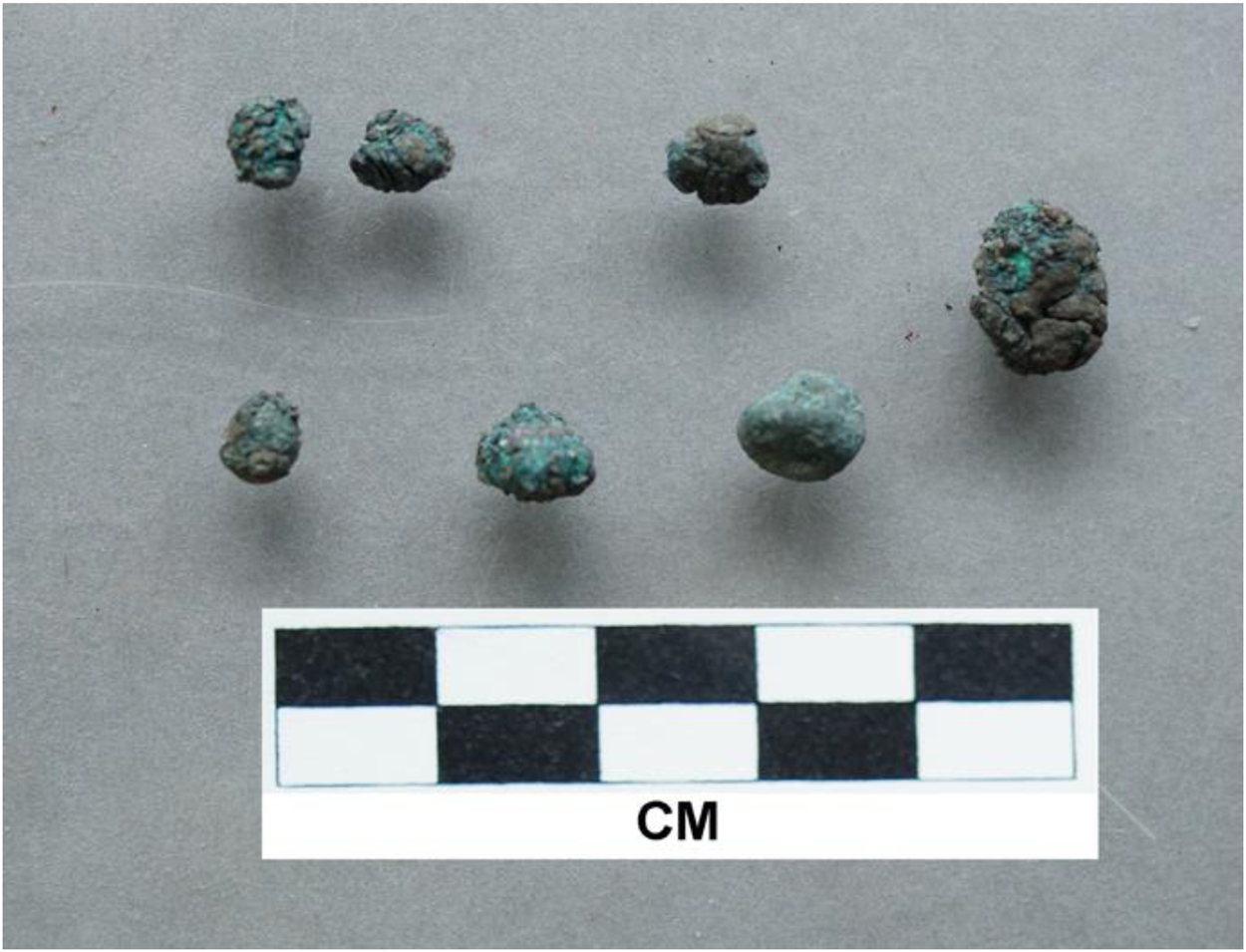
There were 10 copper prills, small spherical pieces, around 4–6 mm in diameter, of almost pure copper (fig. 10). Prills are produced when ore is smelted in a furnace to extract pure copper. These are embedded in the viscous slag as it cools and hardens, after which the slag is crushed to collect the copper; the broken pieces of slag are probably from this retrieval process. Prills are then melted to manufacture objects. Under ideal conditions smelting can lead to the formation of ingots. The small number of prills recovered suggests efficient recovery.
Copper prills.

The relatively large number of Chinese coins presents the possibility that these were melted down for raw material. Miksic suggests deformed coins from SCC were being melted.Footnote 65 While Chinese coins were used as currency, the willingness of metalworkers to melt these suggests it was for the manufacture of higher-value goods, produced only when commissioned. Similarly, fragments from iron and copper-based objects were probably scrap meant for recycling.
Summary and conclusions
The PHC workshop engaged in the production of utilitarian goods of iron and copper-based metals primarily for local consumption, and the smelting of iron and copper-based metals for raw material. Fishhooks and material associated with their manufacture form the majority of metal finds at the site. Prestige and luxury goods were made on commission, and the production, distribution and consumption of such goods were probably governed by social rules. Imports and recycled scrap were the primary source of raw material. The workshop was active in the fourteenth century, the diminished population after this period meant production on this scale was no longer economically viable.
Complex production processes required specialised skills and access to resources. No inferences can be made whether these specialists were full-time or part-time. However, the monsoons could have influenced consumption patterns of fishhooks and associated paraphernalia, although the artisans had the skills to produce other goods.
Associated finds suggest the workshop was either part of a household or an agglomeration of households. There is no evidence that the area was part of a metalworking quarter as material associated with metalworking was found in two other locations. While ethno-historical sources mainly described artisans in the region as low status individuals, the ability to acquire, manufacture and smelt metals indicates a social class with the ability to generate wealth and mobilise resources independent of the ruling elite.
This research cannot, however, establish the following: 1) whether artisans and those with the means of production were the same individuals; 2) whether artisans and those with the means of production were from the same social class and/or kin group; and 3) whether those with the means of production were directly engaged in maritime trade as a means of acquiring raw materials.
Elite attitudes toward metals contrast with the more restricted production and distribution of glass in Temasek. Although metals were relatively rare and valuable commodities, they were used to manufacture both utilitarian and prestige goods. This probably contributed to their relatively unrestricted access except when prescribed by social rules. In the case of glass, it is possible that there was a direct correlation in the control of production, distribution and consumption of glass, on the one hand, and its value as a tool for building alliances especially, as stated earlier, with the Orang Laut, and perhaps with other communities in Temasek and the hinterland, on the other. The significance of glass to the Orang Laut is to some degree supported by anecdotal evidence gathered from looters in the Riau-Lingga Archipelago mentioning glass as among the burial goods recovered. However, no study of early historic Orang Laut material culture has ever been carried out.
There were at least three if not four social strata in Temasek. A finer distinction is not possible at present, neither is correlation with later Malay social hierarchies prudent. Later historical and ethno-historical material, especially from the Malay World, suggests this was probably an affluent class that was between the majority and the ruling elite, but may not have been part of the aristocracy. This is to a degree supported by the location of the workshop; a residential area located a reasonable distance from the political centre of Temasek. It was a section of society with the ability to invest in raw materials and tools. Artisans were either part of the family unit, followers or may have been paid in some form for their services.
Future research
This is, however, a preliminary study that relies on material from a single production locale and excludes the manufacturing of silver and gold. It is also the first to address the social aspects of craft production in pre-colonial Singapore in greater detail. Holistic, multi-craft studies of production should be one long-term research objective. Such research can inform on how the phenomenon articulates with other aspects of economic, social and political processes.
Craft production systems are, however, not the only means of studying ancient social, political and economic organisation. The existing material provides more than sufficient opportunities for research on the internal structure of Temasek, especially in areas such as settlement patterns and ceramic analyses. What is needed are more varied research questions, and the application of appropriate theoretical and methodological approaches.
Finally, framing ancient Singapore in the larger context of the Malay World allowed the construction of a model of social organisation that could be tested with archaeological data. A better understanding of variations in craft production systems was achieved with a cross-cultural and multidisciplinary approach. The results of such research can generate models and hypotheses that can be tested with similar data from other areas of the Malay World.