Introduction
Although substantial evidence points to the detrimental impact of depression and anxiety in pregnancy on infant neurodevelopmental outcomes, there currently exists almost no published research evaluating whether this can be ameliorated by antenatal treatment of maternal moodReference Glover 1 . During pregnancy, the estimated prevalence rates of depression are 7.4%, 12.8% and 12.0% for the first, second, and third trimester, respectively.Reference Woody, Ferrari and Siskind 2 , Reference Gavin, Gaynes and Lohr 3 The overall estimated prevalence for a clinical diagnosis of any anxiety disorder in pregnancy is 15.2%.Reference Dennis, Falah-Hassani and Shiri 4 Depression and anxiety have profound repercussions for maternal well-being and incur large economic costs. A recent analysis by the London School of Economics has demonstrated that perinatal mental health problems together cost £8 billion for every 1-year cohort of births in the UK, the majority of which are attributable to the enduring negative impact on children’s developmental prospects.Reference Bauer, Parsonage and Knapp 5
There is substantial evidence on the impact of antenatal maternal distress on neurodevelopmental outcomes in infants and a growing understanding of the underlying mechanisms that may be involved. Many experimental studies in rodents and non-human primates report that offspring of mothers exposed to chronic antenatal stress show heightened responses to stress, and cognitive impairments.Reference O’Donnell, O’Connor and Glover 6 – Reference Weinstock 8 At the same time, a growing clinical literature links antenatal maternal depression and anxiety with negative effects on the developing fetus and poor long-term child neurodevelopmental outcome. Maternal prenatal anxiety or depression predicted altered fetal behaviour (heart rate and motor activity) and reduced scores on early neonatal assessments of temperament.Reference Netsi, Evans and Wulff 9 Attention deficit hyperactivity disorder,Reference O’Connor, Heron and Golding 10 , Reference Van Batenburg-Eddes, Brion and Henrichs 11 emotional problemsReference Barker, Jaffee and Uher 12 – Reference Van den Bergh and Marcoen 14 and impaired cognitive developmentReference Barker, Jaffee and Uher 12 , Reference Bergman, Sarkar and O’connor 15 , Reference Huizink, Robles de Medina and Mulder 16 are consistently reported longer-term problems for children of antenatally depressed or anxious mothers. O’Donnell et al. reported an approximately two-fold increase in prevalence rates of emotional/behavioural disorders in children and adolescents exposed to high levels of maternal prenatal anxiety or depression.Reference O’Donnell, Glover and Barker 13
The mechanisms through which maternal antenatal depression and anxiety may affect fetal development in utero are likely to involve a number of biological systems including, but not limited to, altered brain structure, estrogen, serotonin and neurotrophin signalling pathways, the HPA axis and (placental) glucocorticoid regulation.Reference O’Donnell, Glover and Barker 13 , Reference Blakeley, Capron and Jensen 17 – Reference Mehta, Klengel and Conneely 19 For example, increased placental transfer of cortisol may occur via downregulation of the enzyme that deactivates cortisol, 11β–hydroxysteroid dehydrogenase type II (11β–HSD2),Reference Mairesse, Lesage and Breton 20 , Reference O’Donnell, Bugge Jensen and Freeman 21 with neurotoxic effects leading to behavioural and emotional changes in later life, as has been shown in human primates.Reference Uno, Eisele and Sakai 22 , Reference Coe and Lubach 23 Also, maternal depression and anxiety may cause epigenetic modifications in fetal genes involved in neurodevelopment, for example by DNA methylation or histone modification, leading to changes in gene expression and function.Reference Babenko, Kovalchuk and Metz 24 In observational human studies, antenatal maternal mood has been associated with structural variation in the hippocampus, amygdala and prefrontal regions in neonates,Reference Qiu, Anh and Li 25 , Reference Qiu, Tuan and Ong 26 and also with alterations in DNA methylation status involved in stress reactivity, such as the glucocorticoid receptor (NR3C1).Reference Babenko, Kovalchuk and Metz 24 , Reference Oberlander, Weinberg and Papsdorf 27
Although substantial evidence from longitudinal studies points to the detrimental impact of depression and anxiety in pregnancy on offspring neurodevelopment, only an interventional randomized controlled trial (RCT) can test whether adverse infant neurodevelopmental outcomes can be ameliorated by antenatal treatment of maternal mood. Currently, there are two relevant published trials – our small pilot RCT validating the efficacy of our antenatal cognitive-behavioural therapy (CBT) treatment for depression and anxiety, which reported improved infant outcomes to 9 months of age,Reference Milgrom, Holt and Holt 28 and a small treatment study reporting on early neonatal temperament and sleep patterns by Netsi and colleagues.Reference Netsi, Evans and Wulff 9 In the latter trial, infant sleep duration and temperament 2 months postpartum was measured in offspring from women who had been treated for antenatal depression either with CBT or treatment as usual (TAU) for antenatal depression. Although they could not detect an evident treatment effect, they showed that improvement in depression scores during pregnancy was associated with easier temperament and short nocturnal sleep duration.
In our pilot RCTReference Milgrom, Holt and Holt 28 women and their infants (n = 54) were assessed when infants were 9 months of age. Large treatment effects on maternal depression and anxiety favouring the intervention were sustained at 9 months.Reference Milgrom, Holt and Holt 28 Large, significant treatment effects were also observed in infant problem solving, self-regulation and stress reactivity. Here we report a follow-up from this pilot RCT cohort of offspring at 2 years and 5 years. Both follow ups included blinded, observer-rated measures of neurodevelopment as well as mother-reported measures of child behaviour. In the context of the RCT of depression intervention we specifically hypothesised that: children whose mothers received specialised CBT for antenatal depression and anxiety would exhibit more favourable scores on developmental outcomes at the 2-year and 5-year follow-ups compared to children whose mothers received TAU. In addition, as previous evidence suggests that the severity of depression or anxiety in pregnancy correlates with neurodevelopmental outcomes in the offspring, we planned to additionally explore this association in our sample. We examined whether any underlying relationship exists, specifically whether severity of baseline anxiety and depression scores in pregnancy would show an inverse relationship with favourable child outcomes, despite treatment.
Methods
Design
This study was a longitudinal follow-up of a cohort from a previously reportedReference Milgrom, Holt and Holt 28 parallel two-group RCT comparing CBT treatment for antenatal depression and anxiety to TAU. At baseline, 54 pregnant women enrolled in the RCT, all of whom gave consent, were aged ≥18 years, less than 30 weeks pregnant and met diagnostic criteria for major or minor depression or adjustment disorder with mixed depression and anxiety using the Structured Clinical Interview for the DSM-IV (SCID).Reference First, Spitzer and Gibbon 29 As measured by the Beck Depression Inventory (BDI),Reference Beck, Steer and Brown 30 the severity of pregnant women’s depression symptoms in the full sample at baseline was, on average, in the severe range with a mean of 30.7 (SD = 9.4).Reference Milgrom, Holt and Holt 28 Half were allocated to either the Beating the Blues before Birth treatment program, an 8-week CBT program, and half to TAU. TAU meant that women were either referred to their GP for further evaluation and management or that they would be case managed by their midwife, as would usually have happened in routine practice. Two consecutive follow-up studies involved re-consenting the families from the RCT at two-time points; when children had reached approximately 2 and 5 years of age. The Human Research Ethics Committees of Northern Health, Austin Health, and Mercy Health, Melbourne, Australia approved the RCT (Trial Registration ACTRN12607000397415) and both follow-up studies.
Recruitment of participants
Families who had participated in the pilot RCT were re-contacted by telephone and by e-mail and were asked to provide renewed consent to take part in the follow-up studies.
Maternal characteristics
Sociodemographic variables at baseline, 2 years and 5 years
Baseline information on place of birth, as well as gestational age, parity, annual family income and relationship status were collected from study files from the original RCT. Sociodemographic information, including current annual family income and relationship status was again collected through questionnaires which were completed by mothers, at 2- and 5-year follow-ups. Baseline characteristics were reasonably well balanced between the CBT and TAU group, except for parity, with seemingly fewer nulliparous women in the CBT group at baseline. A Mann–Whitney U test was performed and showed that this difference was not statistically significant (U = 290, P = 0.13 in the 2-year follow-up sample and U = 52.5, P = 0.63 in the 5-year follow-up sample), and therefore the regression analyses were performed without the inclusion of parity as a potential confounder. Also, current income in the CBT group seemed to be higher at the 5-year follow-up. Results showed that income (U = 50.5, P = 0.22) was not significantly different between the groups, and therefore the regression analyses were performed without the inclusion of parity or income as a potential confounder.
Mental Health at baseline, 2 years and 5 years
The BDI-IIReference Beck, Steer and Brown 30 is a widely used, self-reported, well-validated, 21-item clinical measure of severity of depression. The BDI-II has been validated against gold-standard diagnostic criteria in perinatal populations.Reference Milgrom, Ericksen and Negri 31
The Beck Anxiety Inventory (BAI) 32 is a self-reported 21-item measure of anxiety with well-established properties, including in perinatal populations.Reference Milgrom, Ericksen and Negri 31 The BDI-II and BAI were completed at 2 and at 5 years, and symptom scores at baseline were collected from study files from the original RCT.
Response to treatment
To assess the rate of responsiveness to treatment in the initial RCT for both subsamples of the women that participated in the 2- and 5-year follow-up, we performed two analyses. First, we calculated the difference in BDI-II and BAI score before and after treatment in the RCT, and performed a student’s t-test to assess the difference in mean change in BDI-II and BAI score between the CBT and TAU group of the subsamples at 2- and 5-year follow-up. Second, we created a threshold to define ‘substantial response to treatment’, and divided the women in both subsamples into those who showed a substantial response to treatment v. those who had not. ‘Substantial response to treatment’ was defined as; a reduction in BDI-II symptom score after treatment of 50% of the symptom score before treatment, plus a BDI-II score of 18 points or less after treatment, which is the upper threshold for the ‘mild’ depression category.
2-Year follow-up
Child cognitive and motor development
Bayley Scales of Infant Development (BSID-III).Reference Bayley 33 This was the primary measure of cognitive and motor development at 2 years. The BSID-III is the most widely-used measure of child development, and yields information in cognitive and motor domains. It is clinician-administered and rated. Higher scores on the BSID-III are more favourable and indicate better performance on cognitive, language and motor tasks.
Parenting stress
The Parenting Stress Index (PSI) Reference Abidin 34 measures parent–child relationship functioning and attachment by parent report. Responses produce six ‘Child’ and seven ‘Parent’ subscales (including an attachment subscale), that reflect child and parent characteristics that may contribute to overall stress in parents. A score for each domain, and a Total score is then calculated. Higher scores on the PSI are less favourable and indicate higher overall parental experience of stress and increased risk for dysfunctional parenting and child behaviour problems.
Child behaviour
Child Behaviour Checklist (CBCL).Reference Achenbach 35 The Total Problems Score and the composite Difficulties in Emotional Regulation Scale of the CBCL were the primary measures of behavioural development. The CBCL is a widely used diagnostic screening assessment, completed by caregivers, which in this study, were the children’s mothers. It includes a preschool version for children aged 1.5–5 years, and a school-age version for children aged 6–18 years. At 2 years of age, we calculated and reported on seven subscale scores of the CBCL (Emotional/Reactivity, Anxiety/Depression, Somatic Problems, Withdrawn Behaviour, Sleeping Problems, Attention Problems, and Aggressive Behaviour), as well as Internalizing and Externalizing Behavioural Problems and Total Problems scores. Higher scores on the CBCL are less favourable and indicate more problems.
5-Year follow-up
Child cognition
Wechsler Pre-School and Primary Scale of Intelligence (WPPSI-III).Reference Wechsler 36 The WPPSI-III is an individually administered clinical instrument for assessing the intelligence of young children 2 years + 6 months to 7 years + 3 months of age. The tests provide composite scores in the Verbal IQ (acquired knowledge, verbal reasoning and comprehension and attention to verbal stimuli) Performance IQ (fluid reasoning, spatial processing, attention to detail, and visual–motor integration), Processing Speed (visual-motor processing speed and accuracy) and a composite measure that represents general intellectual ability – Full Scale IQ. The WPPSI-III was administered by one of the researchers, who was trained and blinded to the mothers’ allocation to treatment.
Child behaviour
CBCL.Reference Achenbach 35 The Total Problems Score and the composite Difficulties in Emotional Regulation Scale of the CBCL were again the primary measures of behavioural development. Although the target age of the participating children at the second follow-up was 5 years, some children were older. Therefore, we used either the pre-school or school-age versions of the CBCL in the 5-year follow-up. Similar questions are grouped into empirically based syndrome scale scores. At 5 years of age, we calculated and reported on four subscales of the CBCL corresponding to the subscales included at the 2-year follow-up (Anxiety/Depression, Somatic Problems, Attention problems and Aggressive Behaviour), as well as Internalizing and Externalizing Behavioural Problems and Total Problems scores.
Statistical analyses
For each outcome, a priori treatment comparisons were conducted by fitting general linear models controlling for baseline depression and anxiety as covariates to yield comparisons of the relative effectiveness of the two modes of management. In no cases did the inclusion of baseline covariates in the models substantially change either parameter estimates or significance levels. For ease of interpretation, results are therefore presented unadjusted for variation in baseline covariates. Linear regression was used to assess the effects of baseline prognostic variables on outcomes. Effect sizes (Cohen’s d Reference Cohen 37 ) are presented with 95% Confidence Intervals. Analyses were executed in IBM SPSS Statistics 22. Next, we conducted a series of univariate regressions using baseline BDI-II and BAI scores in pregnancy to predict the effect of antenatal depression and anxiety symptoms on child outcomes, irrespective of treatment allocation in the original RCT.
Results
Maternal characteristics
Response to treatment
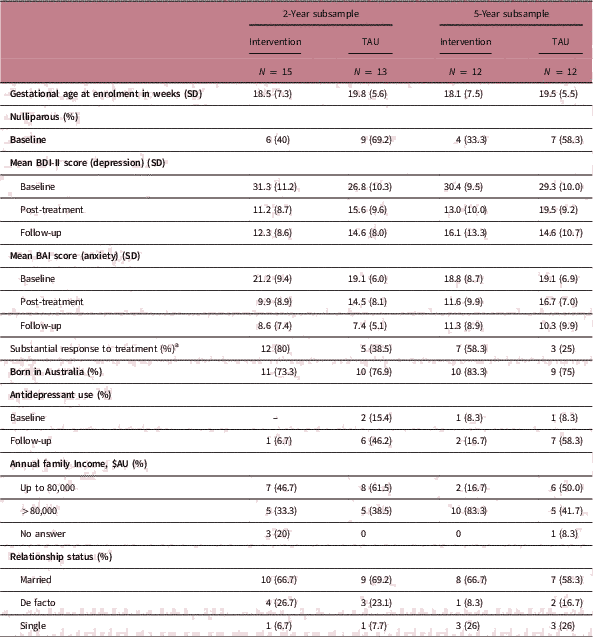
We have previously reported that women who received the intervention showed a significant improvement in depression and anxiety.Reference Milgrom, Holt and Holt 28 For the particular subsamples of women that participated in the 2- and at 5-year follow-ups, there was an overall pattern of larger improvements in depression and anxiety scores after treatment for the CBT group compared to TAU but this did not reach statistical significance (P > .05 in all cases). Nevertheless, the categorical subscales indicating a ‘substantial response to treatment’ v. ‘no substantial response to treatment’ showed that in both subsamples, the number of women with ‘substantial response to treatment’ was approximately double in the CBT compared to the TAU group.
2-Year follow-up
Attrition and demographics
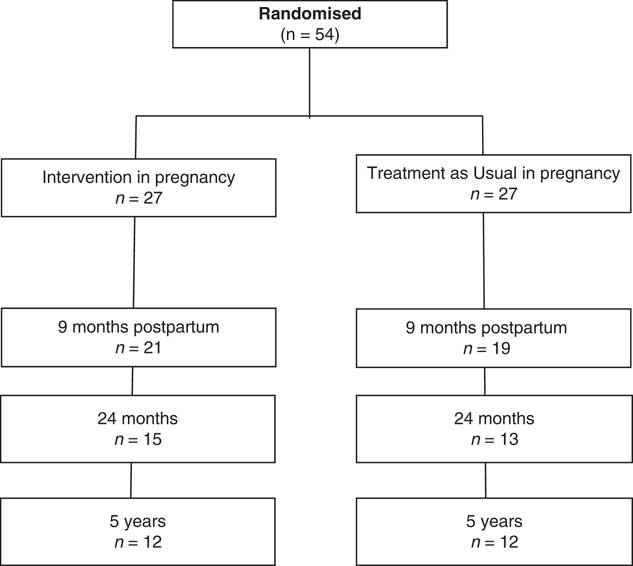
Of the 54 families from the original RCT, 28 families were recontacted, 10 families could not be contacted and 16 declined to take part. Of 28 families who re-consented, a further 3 failed to keep the clinic appointment for the BSID-III child assessment such that only maternal-report data on child development were collected. The mean age of the children was 2.49 years in the intervention group and (SD = 0.33) and 2.53 years in the TAU group (SD = 0.47). As shown in Table 1 the subsample had lower baseline depression scores in the TAU group compared to the intervention group (although this was not significant, P = .34). As a group, those 28 women who re-consented did not differ from the 26 non-respondents in the severity of their baseline depression symptoms at the time of their enrolment in the original RCT (mean baseline BDI-II scores of 29.2 v. 32.4 respectively, P = .19; mean baseline BAI scores of 20.5 v. 22.8 respectively, P = .41). It is also notable that the majority of respondents from the intervention group had received a diagnosis of major depressive disorder in pregnancy, whereas around half of the respondents from the TAU group had an initial diagnosis of minor depressive disorder. Further, six women in the TAU group reported using medication for depression compared to one woman in the intervention group, at the time of the 2-year follow-up.
The sub-samples of mothers who responded to the 2-year and 5-year follow ups

TAU, treatment as usual; BDI, Beck Depression Inventory; BAI, Beck Anxiety Inventory.
a Defined as a decrease of 50% or more in depression symptom score (BDI-II) plus a post-treatment depression symptom score (BDI-II) of 18 or lower, indicating minimal to mild depression.
Child cognitive and motor development
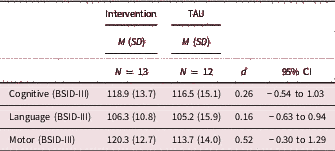
The between-group differences seen on the BSID-III and observed effect sizes (Cohen’s d) are shown in Table 2. Motor development showed a medium-to-large effect size favouring the intervention. Cognitive performance and language skills showed smaller effect sizes in the same direction. However, none of the results reached statistical significance. Cronbach’s alpha for internal consistency on the composite scale Total Cognition was 0.70.
Summary of between-group differences in cognitive and motor outcomes 2 years

TAU, treatment as usual; BSID-III, Bayley Scales of Infant Development: higher scores are more favourable. For the BSID-III only 25 sets of child data were collected (see text). Effect sizes (Cohen’s d) are shown with corresponding 95% confidence intervals.
Parenting stress
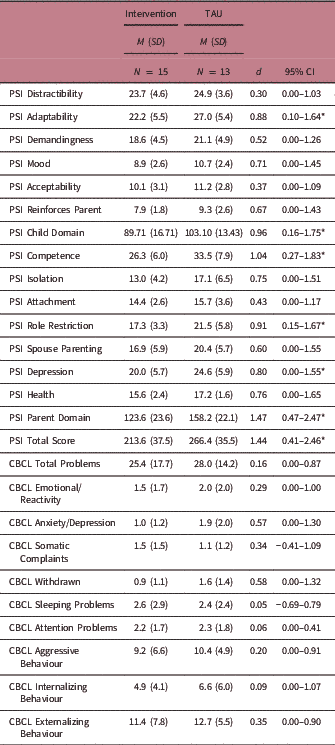
The Total score of the PSI favoured the intervention to a degree that was statistically significant (Table 3), with all subscales showing, on average, lower scores in the intervention representing medium to large effect sizes. In particular, the ‘adaptability’ subscale of the PSI, which is a subscale of the ‘PSI Child Domain’, which measures how readily a child regulates his or her own state in response to an emotional upset or a change of routine, showed a large treatment effect. Of the ‘PSI Parent Domain’, the ‘Role Restriction’ subscale showed the largest effect, which assesses the parent’s sense of limited freedom and constrained personal identity as a result of the parenting role. Cronbach’s alpha for internal consistency on the composite scales: Child Domain, Parent Domain and Total Parenting Stress were 0.80, 0.89 and 0.84 respectively.
Summary of between-group differences in behavioural outcomes 2 years

TAU, treatment as usual; CBCL, Child Behaviour Checklist: lower scores are more favourable. PSI, Parenting Stress Index: lower scores are more favourable. Effect sizes (Cohen’s d) are shown with corresponding 95% confidence intervals.
*P < 0.05.
Child behaviour
Whilst mean scores on four out of seven subscales calculated from the CBCL were lower in the intervention group, as was the Total Problems score and the combined Internalizing Behaviour and Externalizing Behaviour scores, none of these differences were statistically significant. The largest effect sizes on the CBCL were seen in the Anxious/Depressed and Withdrawn Behaviour subscale (Table 3). Cronbach’s alpha for internal consistency on the Total Problems composite scale was 0.81.
5-Year follow-up
Attrition and demographics
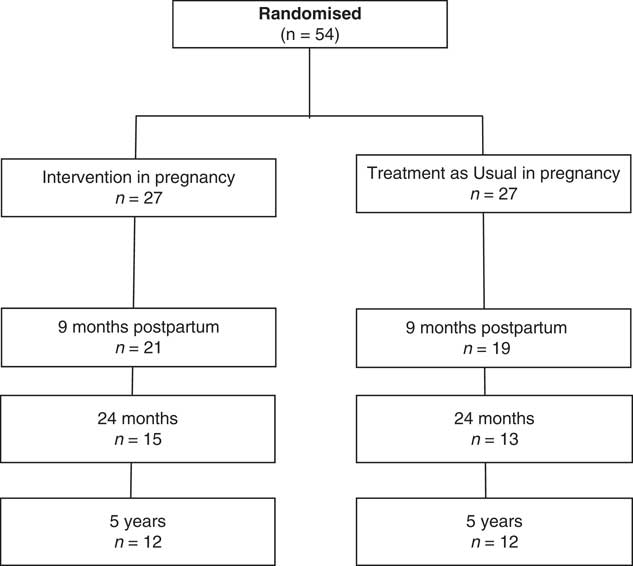
We were unable to re-contact 9 families, 18 declined to take part in the follow-up study and 3 children fell outside of the target age range. Of 24 families who re-consented, a further 5 were not able to visit the clinic for the WPPSI-III such that only maternal-report data on child development were collected (Fig. 1). The mean age of the children was 5.66 years in the intervention group (SD = 1.19), and 5.92 years in the TAU group (SD = 1.02). No significant differences between participants and non-respondents were seen in terms of depression symptoms at enrolment in the RCT (mean baseline BDI-II scores of 29.4 v. 31.6 respectively, P = .40; mean baseline BAI scores of 19.1 v. 23.6 respectively, P = 0.12). The subsample was also approximately balanced in terms of baseline BDI-II and BAI score between the intervention and treatment groups (Table 1). However, seven women in the TAU group reported using medication for depression compared to two women in the intervention group at the time of the 5-year follow-up.
Follow-up response rate for women in this study.
Child cognition
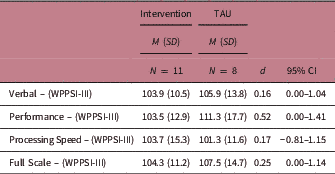
Table 4 shows the between-group differences seen on the WPPSI-III and observed effect sizes (Cohen’s d). No significant differences were found in Verbal, Performance, Processing or Full-Scale IQ scores between the intervention and the TAU groups. The largest effect size was seen on Performance IQ, in the opposite direction as was hypothesized, showing higher scores in the TAU group. Cronbach’s alpha for internal consistency on the composite scale Full-Scale IQ score was 0.67.
Summary of between-group differences in cognitive outcomes 5 years

TAU, treatment as usual; WPPSI-III, Wechsler Preschool and Primary Scale of Intelligence: higher scores are more favourable. Effect sizes (Cohen’s d) are shown with corresponding 95% confidence intervals.
Child behaviour
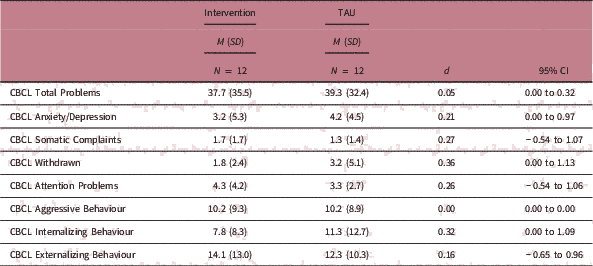
Table 5 shows behavioural subscale scores in the children of the intervention and the TAU groups. In 3 out of 5 subscales, the scores were equal or lower in the intervention group compared to the TAU group, as were Total Problems and Internalizing Behaviour. However, none of the differences was statistically significant. Cronbach’s alpha for internal consistency on the composite scales: Internalizing Behaviour, Externalizing Behaviour and Total Problems Score were 0.87, 0.85 and 0.87 respectively.
Summary of between-group differences in behavioural outcomes 5 years

TAU, treatment as usual; CBCL, Child Behaviour Checklist: lower scores are more favourable. Effect sizes (Cohen’s d) are shown with corresponding 95% confidence intervals.
Underlying relationship of antenatal mood and child outcomes
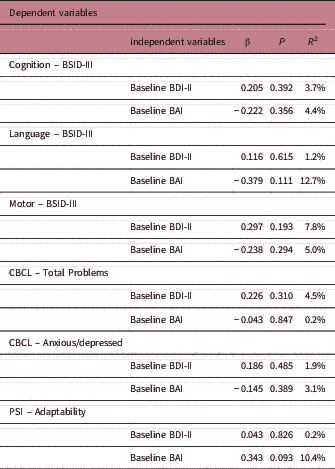
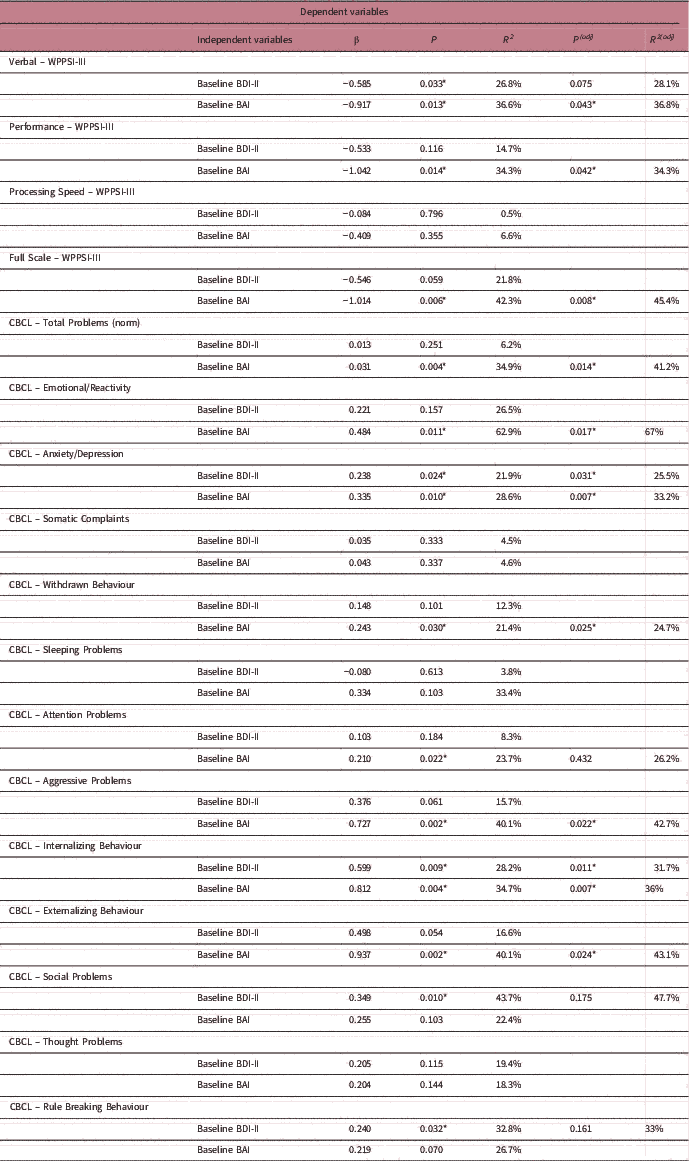
We aimed to explore whether previous findings in the literature indicating that symptom severity of depression and anxiety in pregnancy affect child outcomes, were also present in our sample. Although not significant, baseline anxiety scores accounted for the greatest proportion of the variance in models predicting the Language composite of the BSID-III and the Child Domain of the PSI at 2 years (Table 6). At 5 years, an association was found between higher baseline depression score and lower Verbal IQ, and with higher scores on the CBCL Anxiety/Depressed subscale, Social Behaviour, Rule-breaking Behaviour and Internalizing Behaviour. After adjusting for current depression, associations with the CBCL Anxiety/Depressed and Internalizing Behaviour survived. Higher symptoms of anxiety at baseline were associated with lower Verbal, Performance and Full-Scale IQ, and with higher scores on the CBCL Total Problems, Emotional/Reactivity, Anxiety/Depression, Withdrawn, Attention, Aggressive, Internalizing and Externalizing Behaviour. All associations survived adjusting for current anxiety symptoms, except the CBCL Attention Behavioural Problems scale (Table 7).
Regressions of 2-year child outcomes on baseline depression and anxiety scores in pregnancy

BSID-III, Bayley Scales of Infant Development; CBCL, Child Behaviour Checklist; PSI, Parenting Stress Index; BDI-II, Beck Depression Inventory; BAI, Beck Anxiety Inventory.
Regression of 5-year child outcomes on baseline depression and anxiety scores in pregnancy

WPPSI-III, Wechsler Preschool and Primary Scale of Intelligence; CBCL, Child Behaviour Checklist; BDI-II, Beck Depression Inventory; BAI, Beck Anxiety Inventory.
(adj): adjusted for current depression or anxiety symptoms.
*P < 0.05.
Discussion
In the current study, we found some evidence to support our hypothesis that antenatal depression treatment improves child outcomes in the longer term. At 2-year follow-up, PSI scores were significantly lower in the intervention group and there was a trend toward more beneficial scores in the intervention group on most subscales of the CBCL and BSID-III, with some of the observed effect sizes of a magnitude that could be clinically important. However, at 5-year follow-up, these effects were no longer seen.
At 2 years, significant differences were found on the Total score and the Child and Parent Domain scores of the PSI and also on its associated subscales. The largest and statistically significant advantage on the Child domain in the intervention group was seen in the ‘adaptability’ subscale which measures a child’s reactivity and self-regulation in response to emotional distress or unexpected change. Stress reactivity in infants is a specific area that is reported to be impacted negatively by maternal anxiety in pregnancy.Reference Talge, Neal and Glover 38 In our previous 9-month follow-up of the same cohort,Reference Milgrom, Holt and Holt 28 stress reactivity also showed a large effect size favouring the intervention group. Our current findings therefore suggest that the beneficial effects of CBT in pregnancy on stress reactivity in the offspring are maintained up until 2 years of age.
Qualitatively, the 2-year results reported here are also largely consistent with our previous report of infant developmental progress at 9 months of age. Between-group differences in motor development at 2 years showed a medium-to-large effect size favouring the intervention, which is consistent with longitudinal studies by others reporting a negative association between maternal antenatal psychological distress and child motor development up to 2 years.Reference Huizink, Robles de Medina and Mulder 16 , Reference Laplante, Barr and Brunet 39 Also, a non-significant trend towards a higher score on the cognitive domain of the BSID-III favouring the intervention group was seen. On the CBCL, Anxious/depressed and withdrawn behaviour showed a substantial between-group effect size which is consistent with the reports by O’Donnell et al.Reference O’Donnell, Glover and Barker 13 of an approximately two-fold increase in prevalence rates of emotional/behavioural disorders in children and adolescents exposed to high levels of maternal prenatal anxiety or depression.
At 5-year follow-up, significant treatment effects were no longer observed. Qualitatively, for cognitive outcomes, mean scores in the intervention group trended lower than the TAU group, with only Processing Speed scores slightly favouring the intervention group. For behavioural outcomes, anxious/depressed and withdrawn behaviour again favoured the CBT group, but the effect sizes were substantially smaller compared to the effect sizes on the corresponding scales at 2-year follow-up.
Lastly, at the 5-year follow-up, we were able to demonstrate an association between higher maternal depression or anxiety at baseline and lower cognitive scores when analysing data for the entire sample. We also found increased scores on several CBCL subscales including the CBCL total problems, internalizing and externalizing behavioural subscales in the offspring, despite treatment of half the sample. At the earlier 2-year follow-up, no such association was found.
A number of possibilities could explain the different findings at 2 and 5 years.
It is likely that, by reducing symptoms of depression and anxiety in pregnancy, the concurrent biochemical processes that are activated in response to maternal depression and anxiety are ameliorated, thereby improving child neurodevelopment. However, the effect of CBT on the underlying maternal and fetal biochemical systems may have been too weak to result in a significant improvement in neurodevelopmental outcome that could be sustained in the long-term. The treatment effects on infant neurodevelopmental outcome coupled with the poor associations with baseline depression and anxiety we observed at 2 years v. the strong associations with baseline depression and anxiety and the absence of any treatment effect at 5 years, may suggest that treatment has short-term effects only.
Alternatively, it is conceivable that our ability to measure the effects of prenatal stress on brain development might emerge gradually as infant cognitive capacity develops, and may only be detected in later life. It is also known that the prevalence of behavioural disorders in children increases with age,Reference Ford, Vostanis and Meltzer 40 and the subtle programming effects of prenatal depression and anxiety might be more distinct when children grow older.
It is also possible that if the treatment was given earlier in pregnancy, it would have had a stronger or more lasting effect on child outcomes, as some studies show the strongest effects of prenatal psychosocial stress exposure on outcomes such as schizophrenia and autism occur in those children who were prenatally exposed in the first trimester of pregnancy.Reference Rodriguez and Bohlin 41 , Reference Khashan, Abel and McNamee 42 A final explanation for the difference in the effect of CBT on children’s neurodevelopmental outcomes at 2 and 5 years, is that a larger proportion of women from the CBT group who participated in the 2-year follow-up showed a ‘successful’ response to treatment (defined as a 50% reduction in depression symptom score as well as a post-treatment depression symptom score (BDI-II) of 18 points or less, indicating minimal to mild depression), compared to women who participated in the 5-year follow-up (Table 1).
Future directions – Need to explore mechanisms
The underlying pathways that ‘transfer’ the effects of maternal depression and anxiety on to the fetus are largely unknown, but are important to identify in order to develop effective preventive strategies. Maternal HPA axis dysregulation is likely to play a role, but there is little evidence for a direct correlation between symptoms of depression and anxiety in pregnancy and maternal plasma cortisol, indicating that additional or additive mechanisms are involved.Reference Bleker, Roseboom and Vrijkotte 43 , Reference Voegtline, Costigan and Kivlighan 44 Epigenetic changes may be induced by antenatal depression and anxiety in fetal genes that are important for neurodevelopment.Reference Oberlander, Weinberg and Papsdorf 27 , Reference Cao-Lei, de Rooij and King 45 , Reference Palma-Gudiel, Córdova-Palomera and Eixarch 46 Another system that may be involved in prenatal programming of neurodevelopment is the immune system, with activation of inflammatory pathways in the depressed or anxious mother with consequences for functioning of tissue macrophages in the placenta and fetal brain.Reference Prins, Eskandar and Eggen 47 Also, fetal exposure to increased neurotransmitters such as serotonin may occur in women with depression, through alterations in the enzyme monoamine oxidase A, which regulates transplacental serotonin transfer.Reference Blakeley, Capron and Jensen 17 These proposed mechanisms all provide potential future directions that need to be explored in further research.
Limitations
Our study also has some important limitations that need to be carefully considered when interpreting the results. The main limitation of the study is the small sample size. Effects of antenatal depression treatment on child behaviour and cognition that are too small to detect in such a small sample size may be missed, despite being clinically meaningful. Another limitation is that attrition bias is likely to have occurred, as both samples at 2 and 5 years showed a (non-significant) trend towards less severe symptoms of depression and anxiety at baseline compared to the whole study sample, which may have led to an underestimation of the effect of treatment on long-term child outcomes. Also, there was a higher reported use of medication for depression in the TAU group at both follow-up time points.
Second, unmeasured previous and postnatal episodes of depression in the women of our sample, in combination with the unhealthy behaviours associated with depression may have substantially affected neurodevelopmental outcome in the children through various mechanisms. Nevertheless, because of the experimental nature of the current study, both women from the CBT as well as the TAU group are likely to have approximately similar risk profiles, increasing the likelihood that changes seen in offspring development can be attributed to (improvements of) antenatal depression and anxiety. Also, symptoms of maternal depression and anxiety at both follow-up rounds did not differ between the TAU and CBT group (Table 1), indicating that exposure to postnatal maternal mood and associated behavioural changes was approximately similar in both groups.
Another limitation is that anxiety and depression may affect neurodevelopment both through different underlying pathways, and we did not analyse their co-morbidity in relation to neurodevelopmental outcome in our sample. Another potential source of bias is the fact that most developmental and behavioural outcomes were based on maternal, and thus subjective, reports. In future studies, it would be highly informative to additionally acquire behavioural information from, for example, teachers, to gain more objective child behavioural outcome measures.
Conclusion
This was one of the first follow-up studies of an RCT assessing a treatment for antenatal depression and anxiety on cognitive and behavioural outcomes in children. Significant treatment effects were present at 2 but not at 5 years. As far as we are aware, only two published studies, by ourselves and one other group, have sought to evaluate the impact of actively treating antenatal depression on early child outcomes.Reference Netsi, Evans and Wulff 9 , Reference Milgrom, Holt and Holt 28 Netsi et al. found no effect of CBT on infant sleep behaviour and offspring temperament per se, but they did show that the decrease in symptom severity of depression was positively associated with sleep behaviour in the offspring, as well as an easier temperament, which was more pronounced in the CBT group compared to the TAU group. These findings, together with our results showing improvements in child outcomes up to 2 years highlight the importance of identification and treatment of depression and anxiety in antenatal care. During the design stage of future trials, careful attention should be paid to the most current evidence regarding the specific timing of fetal exposure to maternal antenatal emotional distress and its possible association with the emergence of particular child developmental problems at different ages.
Acknowledgements
We thank the women and children who took part in this study.
Role of the funding source
This stream of work was supported by funding from Australian Rotary Health, the MBF/BUPA foundations, the Urquhart Charitable Fund and the Austin Medical Research Foundation. The MBF/BUPA foundations funded the 2-year follow-up and the Brain and Behaviour research foundation, (NARSAD Young Investigator Grant, project 22975) funded the 5-year follow-up. The funding organizations had no role in the design and conduct of the study; collection, management, and analysis of the data; or preparation, review, and approval of the manuscript.
Conflict of interest
None.
Ethical standards
The authors assert that all procedures contributing to this work comply with the ethical standards of the relevant national guidelines on human experimentation (Australian Government - National Statement on Ethical Conduct in Human Research (2007)) and with the Helsinki Declaration of 1975, as revised in 2008, and has been approved by the institutional committee (The Human Research Ethics Committees of Northern Health, Austin Health, and Mercy Health, Melbourne, Australia).