





Introduction
Chronic non-communicable diseases (NCDs), including hypertension, type 2 diabetes mellitus, and dyslipidemia, pose persistent challenges to healthcare systems owing to their progressive trajectory and requisite longitudinal management (Mendoza Reyes, Reference Mendoza Reyes2021; World Health Organization, 2023). Clinical outcomes are determined not solely by disease pathophysiology, but rather as the result of the interplay of multiple factors, including comorbidity burden, therapeutic response variability, sustained adherence patterns, and psychosocial determinants. The latter, particularly salient in low-and middle-income contexts, are characterized by entrenched structural barriers to care access (Mendoza Reyes, Reference Mendoza Reyes2021; Khan et al., Reference Khan, Llinas, Danoff, Llinas and Marsh2022). Recognizing these complexities, international agencies, including the World Health Organization and Pan American Health Organization, have advocated for integrated, adaptable, patient-centred models ensuring continuity of care for individuals with chronic conditions (Pan American Health Organization, 2017). However, while these models are increasingly promoted, considerably less attention has been given to how patients are selected and allocated to different care modalities within routine clinical practice (Pan American Health Organization, 2017; World Health Organization, 2019).
Within this paradigm, service delivery models incorporating hybrid care components have garnered increasing attention (Pilosof et al., Reference Pilosof, Barrett, Oborn, Barkai, Zimlichman and Segal2023). Hybrid care programmes, which integrate remote monitoring and structured follow-up with periodic in-person consultations, exemplify strategies designed to enhance accessibility while preserving care quality (Mendoza Reyes, Reference Mendoza Reyes2021; World Health Organization, 2019). Although evidence evaluating hybrid care interventions for chronic NCD management has been presented, outcomes demonstrate considerable heterogeneity across populations, endpoints, and implementation contexts (Deng et al., Reference Deng, Wu, Ding, Liu, Shen, Lin, Shi, Zeng, Wu and Tong2022; Hamine et al., Reference Hamine, Gerth-Guyette, Faulx, Green and Ginsburg2015; Jaén-Extremera et al., Reference Jaén-Extremera, Afanador-Restrepo, Rivas-Campo, Gómez-Rodas, Aibar-Almazán, Hita-Contreras, Carcelén-Fraile, Castellote-Caballero and Ortiz-Quesada2023). Critically, existing literature has emphasized the effectiveness of these models, without detailing how patient selection and allocation to hybrid care occur in routine practice (Deng et al., Reference Deng, Wu, Ding, Liu, Shen, Lin, Shi, Zeng, Wu and Tong2022).
In naturalistic clinical environments, hybrid care allocation typically reflects clinical judgment rather than randomized allocation. Physicians may weigh disease severity, multimorbidity, adherence behaviours, psychosocial complexity, and perceived monitoring requirements when determining hybrid care allocation (Pilosof et al., Reference Pilosof, Barrett, Oborn, Barkai, Zimlichman and Segal2023; Hamine et al., Reference Hamine, Gerth-Guyette, Faulx, Green and Ginsburg2015; Mesa-Valencia and Gaviria-Jiménez, Reference Mesa-Valencia and Gaviria-Jiménez2023; Steverink et al., Reference Steverink, Slaets, Schuurmans and van Lis2001). In the context of the present study, allocation decisions were based on comprehensive baseline clinical evaluation, including disease severity, cardiometabolic control, comorbidity burden, functional status, medication adherence, and psychosocial characteristics, as documented in institutional records. No standardized algorithm or predefined scoring system was used to assign patients to care modalities. Neglecting these allocation dynamics introduces substantial indication bias, whereby observed differences between care models may represent baseline patient characteristics rather than effects attributable to hybrid care delivery (Jaén-Extremera et al., Reference Jaén-Extremera, Afanador-Restrepo, Rivas-Campo, Gómez-Rodas, Aibar-Almazán, Hita-Contreras, Carcelén-Fraile, Castellote-Caballero and Ortiz-Quesada2023; Ma et al., Reference Ma, Zhao, Zhao, Lu, Jiang, Cao and Xu2022).
Clinical and psychosocial complexity, encompassing metabolic control, cardiovascular risk, functional capacity, behavioural factors, and social context, provides a conceptual framework for understanding care model stratification processes; however, systematic operationalization of these dimensions remains infrequent in hybrid care evaluations (Ma et al., Reference Ma, Zhao, Zhao, Lu, Jiang, Cao and Xu2022; Mahoney and Barthel, Reference Mahoney and Barthel1965; Smulowitz et al., Reference Smulowitz, Weinreb, McWilliams, O’Malley and Landon2023; Steverink et al., Reference Steverink, Slaets, Schuurmans and van Lis2001).
Evidence evaluating hybrid and telemedicine-based chronic disease management programmes in Latin America has predominantly presented feasibility and short-term outcomes, often without adequately characterizing baseline complexity or physician-driven allocation patterns, despite pronounced regional social inequality and healthcare fragmentation (Mesa-Valencia and Gaviria-Jiménez, Reference Mesa-Valencia and Gaviria-Jiménez2023; Severe et al., Reference Severe, Pfeiffer, Palm-Cruz, Hoeft, Sripada, Hawrilenko, Chen and Fortney2022; Lucas and Mamani, Reference Lucas and Mamani2021; Castillo et al., Reference Castillo, Cano and Gonzalez-Argote2023). In this context, this study aimed to characterize baseline clinical and psychosocial factors associated with physician allocation to hybrid or in-person care within a chronic disease management programme implemented at Alma Mater Hospital, Antioquia, in partnership with the Living Lab Digital Hospital, University of Antioquia (Mesa-Valencia and Gaviria-Jiménez, Reference Mesa-Valencia and Gaviria-Jiménez2023), and to examine three-year therapeutic and healthcare use outcomes in light of these baseline differences.
Methods
Study design and setting
This retrospective cohort study was performed within an established chronic disease management initiative integrated into standard clinical operations at Alma Mater Hospital of Antioquia (HAMA), a tertiary-care institution in Medellín, Colombia. The programme delivers specialized longitudinal care for adult patients diagnosed with high-risk cardiometabolic conditions, particularly those presenting with advanced disease stages or inadequate therapeutic compliance. Beginning in 2019, care delivery was restructured following institutional integration with the Hospital Digital programme at the University of Antioquia. This reorganization established a hybrid care model that combines traditional face-to-face consultations and laboratory evaluations with digital components supporting hybrid care delivery, encompassing remote consultations, continuous monitoring, patient education platforms, and surveillance systems.
(Hospital Alma Máter de Antioquia (n.d.)).
The programme was structured to enhance care continuity, expand access to specialized providers, and enable timely detection and intervention for clinical deterioration or complications among vulnerable populations. Hybrid care allocation was not randomized and was determined by treating physicians during routine clinical practice. This study is reported in accordance with the Strengthening Reporting of Observational Studies in Epidemiology (STROBE) guidelines.
Study population
Eligible participants were adults aged 18 years or older with confirmed diagnoses of arterial hypertension, type 2 diabetes mellitus, dyslipidemia, or any combination of these diseases. Enrolment required a comprehensive baseline evaluation at programme initiation, incorporating predefined clinical, functional–behavioural, and psychosocial parameters essential for complexity stratification, alongside explicit documentation of care modality designation within institutional electronic records. Exclusion criteria were defined a priori for the present analysis across three dimensions. Clinical exclusions encompassed acute pathological states or severe concurrent illnesses anticipated that substantially influence short-term outcomes, thus precluding meaningful chronic disease trajectory evaluation. Ethical exclusions applied to individuals lacking documented consent for research utilization of clinical data. Data integrity exclusions addressed missing or insufficient baseline information necessary for complexity assessment, as well as ambiguous documentation regarding care modality allocation.
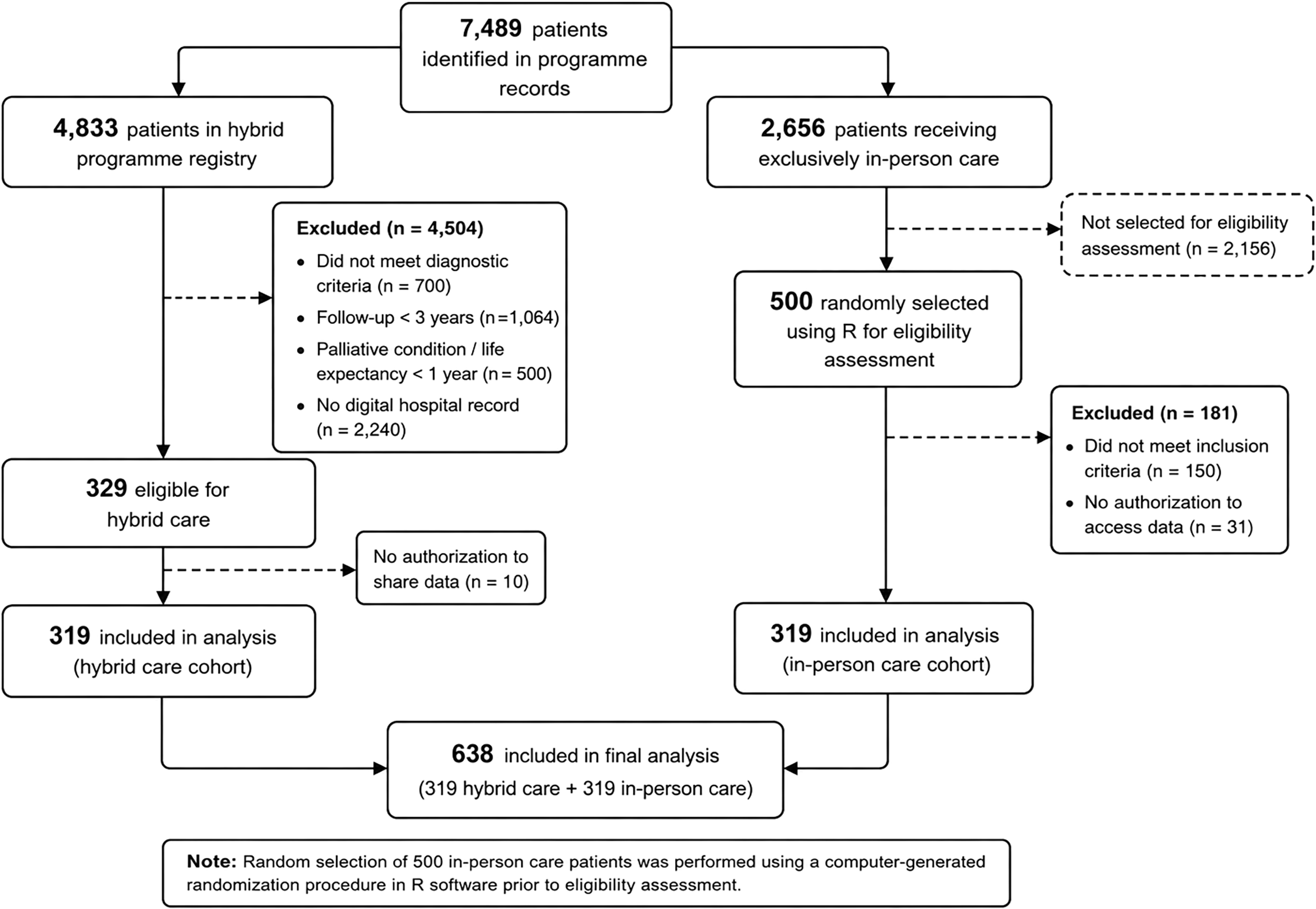
Because patients receiving exclusively in-person care substantially outnumbered those receiving hybrid care, all 319 eligible hybrid care participants were included, whereas 500 patients were randomly selected from the 2,656 patients receiving exclusively in-person care for detailed eligibility assessment. Random selection was performed using a computer-generated procedure in R software and was conducted before individual eligibility assessment, independently of patients’ clinical characteristics and subsequent outcomes. Of the 500 randomly selected patients, 150 did not meet the prespecified eligibility criteria, and 31 lacked authorization for research use of their clinical data, resulting in 319 eligible participants in the in-person cohort. The in-person cohort therefore represents a randomly sampled comparator rather than the full population of patients receiving in-person care.
Detailed clinical, functional–behavioural, psychosocial, and outcome variables were not available as a structured dataset for the full in-person population and required individual extraction from routine clinical records. Random sampling was therefore performed before detailed record review to obtain an unbiased and feasible sample of the in-person population for individual-level data collection. The in-person cohort consequently represents a randomly sampled comparator rather than the full population of patients receiving exclusively in-person care.
Included participants were followed for a minimum of three years from programme entry. Clinical assessments, laboratory measurements, and healthcare utilization events were documented as part of routine care within the programme’s electronic health record system. Emergency department (ED) visits, hospitalizations, and therapeutic goal attainment were ascertained using these routinely collected data over the predefined three-year observation period.
Data sources, baseline variables, and allocation framework
Baseline information was retrieved from institutional electronic health records at Hospital Alma Mater de Antioquia (HAMA) and from the digital platform supporting hybrid care delivery (Mesa-Valencia and Gaviria-Jiménez, Reference Mesa-Valencia and Gaviria-Jiménez2023). Data extraction and management were conducted using REDCap electronic data capture tools hosted at the University of Antioquia (Hospital Alma Máter de Antioquia, n.d.) .
Baseline variables encompassed demographic, clinical, functional–behavioural, and psychosocial dimensions measured at programme entry. Clinical indicators included cardiometabolic control, cardiovascular risk, comorbidity burden, and prior hospitalizations. Functional–behavioural variables comprised frailty status, medication adherence, physical activity, smoking status, alcohol consumption, and obesity. Psychosocial and socioeconomic factors included education level, employment status, socioeconomic stratum, and social support networks (Ma et al., Reference Ma, Zhao, Zhao, Lu, Jiang, Cao and Xu2022; Mahoney and Barthel, Reference Mahoney and Barthel1965; Smulowitz et al., Reference Smulowitz, Weinreb, McWilliams, O’Malley and Landon2023; Steverink et al., Reference Steverink, Slaets, Schuurmans and van Lis2001).
Care modality allocation (hybrid versus exclusively in-person care) was defined as the primary structural variable of interest. Allocation was determined by treating physicians during routine practice, based on a comprehensive baseline evaluation. No predefined algorithm or scoring system guided care modality allocation. Allocation was therefore analysed as a clinician-driven organizational decision reflecting baseline patient complexity.
Construction of clinical–psychosocial complexity
To systematically characterize multidimensional complexity underlying physician allocation decisions, baseline clinical, functional–behavioural, and psychosocial characteristics were integrated into a descriptive clinical–psychosocial complexity framework informed by multidimensional approaches to patient complexity and chronic disease management (Birtcher et al., Reference Birtcher, Allen, Anderson, Bonaca, Gluckman, Hussain, Kosiborod, Mehta and Virani2022; Marlikowska et al., Reference Marlikowska, Szcześniak, Kosowska, Wieczorek, Rymaszewska, Augustyniak-Bartosik, Krajewska and Rymaszewska2024; Shippee et al., Reference Shippee, Shah, May, Mair and Montori2012). Complexity was operationalized retrospectively from baseline variables available in the clinical records using three equally weighted domains: clinical, functional–behavioural, and psychosocial. The classification was developed as an operational framework for this study to summarize multidimensional patient complexity and was not intended as a previously validated prognostic instrument.
The clinical domain incorporated baseline cardiovascular risk, glycated haemoglobin (HbA1c), multimorbidity, and frequent hospitalization. Multimorbidity was defined as the presence of at least two of four chronic conditions (hypertension, type 2 diabetes, dyslipidemia, or sleep apnoea). The domain was classified as high when cardiovascular risk was high, HbA1c was ≥9%, or multimorbidity co-occurred with frequent hospitalization. In the absence of a high-level criterion, the domain was classified as intermediate when cardiovascular risk was intermediate, HbA1c was 7.0–<9.0%, or multimorbidity was present; otherwise, it was classified as low (Birtcher et al., 2023).
The functional–behavioural domain incorporated frailty, treatment adherence, and obesity. Frailty was defined using the Groningen Frailty Indicator, with a score ≥4 indicating frailty (Steverink et al., Reference Steverink, Slaets, Schuurmans and van Lis2001); low adherence was defined as an adherence score <4 (Mendoza Reyes, Reference Mendoza Reyes2021), and obesity as body mass index ≥30 kg/m2. The domain was classified as high when both frailty and low adherence were present, intermediate when frailty, low adherence, or obesity was present without meeting the high-complexity criterion, and low otherwise.
The psychosocial domain incorporated socioeconomic stratum, educational attainment, and employment status, reflecting socioeconomic dimensions that may contribute to patient complexity and healthcare access (American Psychological Association, 2019; Brandt et al., Reference Brandt, Tobb, Cambron, Ferdinand, Douglass, Nguyen, Vijayaraghavan, Islam, Thamman, Rahman, Pendyal, Sareen, Yong, Palaniappan, Ibebuogu, Tran, Bacong, Lundberg and Watson2023). Low socioeconomic stratum and low educational attainment were defined according to categories 1–2 of the respective variables. The domain was classified as high when low socioeconomic stratum, low educational attainment, and unemployment were all present, intermediate when at least one of these adverse indicators was present, and low otherwise.
The three domains were equally weighted in deriving the overall complexity classification. High overall complexity was assigned when at least two domains were classified as high. Intermediate complexity was assigned when one domain was high or at least two domains were intermediate. All remaining combinations were classified as low complexity. No differential numerical weighting was applied across domains. Overall complexity was used to characterize allocation gradients as a descriptive measure of baseline differences between care modalities rather than as an independent causal predictor of outcomes. Models incorporating individual baseline components were specified as the primary analyses to examine their independent associations with care allocation and study outcomes. The overall complexity classification was available for all 638 included participants. No imputation was performed for the construction of the complexity classification. Participants with insufficient baseline information to permit complexity assessment were excluded according to the prespecified data-integrity eligibility criteria. Missing data in individual variables used in subsequent regression models were handled using complete-case analysis, as described in the Statistical Analysis section. Complete operational definitions and classification rules are provided in Supplementary Table S1.
Study outcomes
Therapeutic goal attainment
Therapeutic goal attainment was assessed using the last available clinical evaluation recorded within the predefined three-year observation window from programme entry. For each participant, attainment was evaluated against the disease-specific therapeutic targets applicable to their individual clinical profile, as defined by the clinical guidelines used by the programme. Targets were individualized according to relevant clinical characteristics, including age, comorbidity burden, and cardiovascular risk, and therefore were not represented by a single universal threshold for hypertension, type 2 diabetes mellitus, or dyslipidemia. A participant was classified as achieving therapeutic goals when all applicable individualized targets were met at the final assessment. The same ascertainment procedure was applied to both care modalities, irrespective of the number of preceding visits or measurements. All included participants had at least one clinical assessment during the final year of the predefined observation window, allowing therapeutic goal attainment to be determined from the last recorded assessment for each participant. Participants who did not meet one or more of their applicable individualized targets at the final assessment were classified as not achieving therapeutic goals. The guideline-based definitions used to determine individual therapeutic targets are detailed in Supplementary File 1 (Mendoza Reyes, Reference Mendoza Reyes2021; World Health Organization, 2023).
Emergency department utilization
ED utilization was assessed over the predefined three-year follow-up period and classified based on the principal recorded diagnosis. Visits were categorized as attributable to chronic NCDs (hypertension, diabetes, dyslipidemia, or related cardiovascular, cerebrovascular, renal, or metabolic complications) or attributable to other causes. Outcomes were analysed as binary indicators reflecting the occurrence of at least one ED visit in each category.
Hospitalizations
Hospitalizations were evaluated using the same diagnostic classification framework as ED utilization. Admissions were categorized as related to chronic NCDs or to other causes, based on discharge diagnoses recorded in institutional electronic health records. Outcomes were defined as the occurrence of at least one hospitalization per category during follow-up.
Mortality
Mortality status was ascertained through institutional medical records and linkage with the Colombian national civil registry. Patients were classified as deceased if death was documented in either source. Cause of death was extracted from clinical records when available; otherwise, it was classified as unknown. Exact dates of death were not consistently available, particularly for deaths occurring outside the participating institution and subsequently identified through civil registry linkage. Consequently, mortality could not be restricted to an identical three-year observation window or analysed using time-to-event methods. Mortality was therefore summarized separately as an extended follow-up descriptive outcome and was not treated as directly comparable with the three-year clinical and healthcare utilization outcomes (Hosmer et al., Reference Hosmer, Lemeshow and Sturdivant2013; Vetter and Mascha, Reference Vetter and Mascha2018).
Therapeutic goal attainment, ED utilization, and hospitalizations were assessed within a fixed three-year observation window beginning at programme entry. Mortality was evaluated separately over the extended available follow-up because exact dates of death were not consistently available.
Statistical analysis
Continuous variables are summarized using means with standard deviations or medians with interquartile ranges, as appropriate. Categorical variables are presented as frequencies and proportions. Baseline comparisons between care modalities were performed without matching or multivariable adjustment, using Mann–Whitney U tests, chi-square tests, or Fisher’s exact tests as appropriate (Marlikowska et al., Reference Marlikowska, Szcześniak, Kosowska, Wieczorek, Rymaszewska, Augustyniak-Bartosik, Krajewska and Rymaszewska2024). Logistic regression models were first fitted with care modality (hybrid versus exclusively in-person care) as the binary dependent variable. Subsequently, additional binary logistic regression models were constructed with the study outcomes as dependent variables and care modality (hybrid versus exclusively in-person care) as the primary independent variable.
Covariate selection was guided by clinical relevance and prior evidence rather than solely by statistical significance in univariable analyses, to avoid data-driven model specification (Vetter and Mascha, Reference Vetter and Mascha2018). The primary allocation analysis included individual baseline clinical, functional–behavioural, and psychosocial characteristics entered simultaneously in a multivariable logistic regression model: age, sex, HbA1c, systolic and diastolic blood pressure, low-density lipoprotein (LDL) cholesterol, therapeutic goal attainment at baseline, medication adherence, socioeconomic stratum, educational attainment, employment status, and social support. Overall clinical–psychosocial complexity was not included in this primary model and was examined separately as a secondary analysis because of its composite and study-specific nature.
Separate multivariable logistic regression models were used to examine associations between baseline characteristics and follow-up outcomes. For outcome models with sparse event counts or evidence of separation, Firth penalized logistic regression was used to reduce small-sample and separation-related bias. Associations were quantified using odds ratios (ORs) with corresponding 95% confidence intervals (CIs). For the primary allocation model, model performance and assumptions were evaluated using discrimination, calibration, and multicollinearity diagnostics. The model showed good discrimination (area under the receiver operating characteristic curve [AUC] = 0.885), no evidence of poor calibration (Hosmer–Lemeshow χ2 = 13.50, df = 8, P = 0.096), and no concerning multicollinearity (maximum variance inflation factor [VIF] = 1.71). The model converged without evidence of separation; therefore, Firth penalized logistic regression was not required for the primary allocation model.
Given the clinician-driven nature of care modality allocation, regression analyses examining associations between care modality and outcomes were specified as associational analyses rather than causal effect estimations. The primary analytical objective was to identify baseline determinants of allocation and to characterize associations between baseline factors and subsequent outcomes. Primary analyses used complete cases without imputation. The primary allocation model included 632 participants with complete data for all included covariates (317 hybrid and 315 in-person). As a sensitivity analysis, missing continuous covariates were imputed using the median and the allocation model was refitted; estimates were materially similar to those obtained in the complete-case analysis. Additional sensitivity analyses, including alternative model specifications and Fisher’s exact tests where appropriate, were used to assess robustness for outcomes with sparse events. Analyses were conducted using R software (version 4.5.2) (R Core Team, 2025).
Because exact event dates were not consistently available in the underlying records, time-to-event analyses were not feasible. We therefore modelled the occurrence of outcomes within a fixed follow-up window using logistic regression. For comparative analyses, programme entry was defined as the index date, and therapeutic goal attainment, ED utilization, and hospitalizations were evaluated within the same three-year follow-up window for all participants. Participants were considered under observation from programme entry through completion of the three-year window. Because exact event dates were not consistently available, these outcomes were analysed as cumulative binary events rather than as incidence rates or hazards. Mortality was analysed separately over the extended available follow-up and was interpreted descriptively because an identical three-year mortality window could not be reconstructed.
Ethical approval
The study was conducted in accordance with the ethical principles of the Declaration of Helsinki (World Medical Association, 2013), the Belmont Report, and Colombian Ministry of Health Resolution 8430 of 1993 (Colombia. Ministry of Health, 2019). The research protocol was reviewed and approved by the Ethics Committee of the Instituto de Investigaciones Médicas, Faculty of Medicine, Universidad de Antioquia (Approval Act No. 109, May 28, 2026), and authorised by the Research Department of Hospital Alma Máter de Antioquia (Project code IN03-2025; Project Initiation Statement dated March 19, 2025). According to the ethics committee review, the study was classified as minimal-risk research involving secondary analysis of routinely collected clinical data.
Results
Study population
All 319 eligible patients receiving hybrid care were included in the study. During the same period, 2,656 patients received exclusively in-person care. Of these, 500 were randomly selected using R for detailed eligibility assessment, while the remaining 2,156 were not selected for individual record review. Among the 500 sampled patients, 181 were subsequently excluded: 150 did not meet the prespecified eligibility criteria, and 31 lacked authorization for research use of their clinical data. The final analytical cohort therefore comprised 638 participants: 319 receiving hybrid care and 319 receiving exclusively in-person care. Participant selection and cohort composition are presented in Figure 1. Missing data for outcome variables were minimal, and complete-case analyses were therefore considered appropriate.
Flowchart of patient selection and allocation by care modality. Flowchart describing participant identification, eligibility assessment, exclusions, and final cohort allocation. A total of 319 patients receiving hybrid care met the inclusion criteria. Among 2,656 patients receiving exclusively in-person care, 500 were randomly selected for eligibility assessment; 181 were excluded (150 did not meet inclusion criteria and 31 lacked authorization for data use), resulting in a final in-person cohort of 319 participants.

Figure 1. Long description
The flowchart describes the process of participant identification, eligibility assessment, exclusions, and final cohort allocation. It starts with 7,489 patients identified in program records. 4,833 patients are in the hybrid program registry, and 2,656 patients receive exclusively in-person care. From the hybrid program registry, 4,504 patients are excluded for various reasons, leaving 329 eligible for hybrid care. Of these, 10 patients are excluded due to lack of authorization to share data, resulting in 319 patients included in the hybrid care cohort. From the 2,656 patients receiving in-person care, 2,156 are not selected for eligibility assessment. 500 patients are randomly selected for eligibility assessment, of which 181 are excluded (150 did not meet inclusion criteria and 31 lacked authorization for data use), resulting in a final in-person care cohort of 319 participants. The final analysis includes 638 patients, combining 319 from hybrid care and 319 from in-person care.
Baseline characteristics by care modality
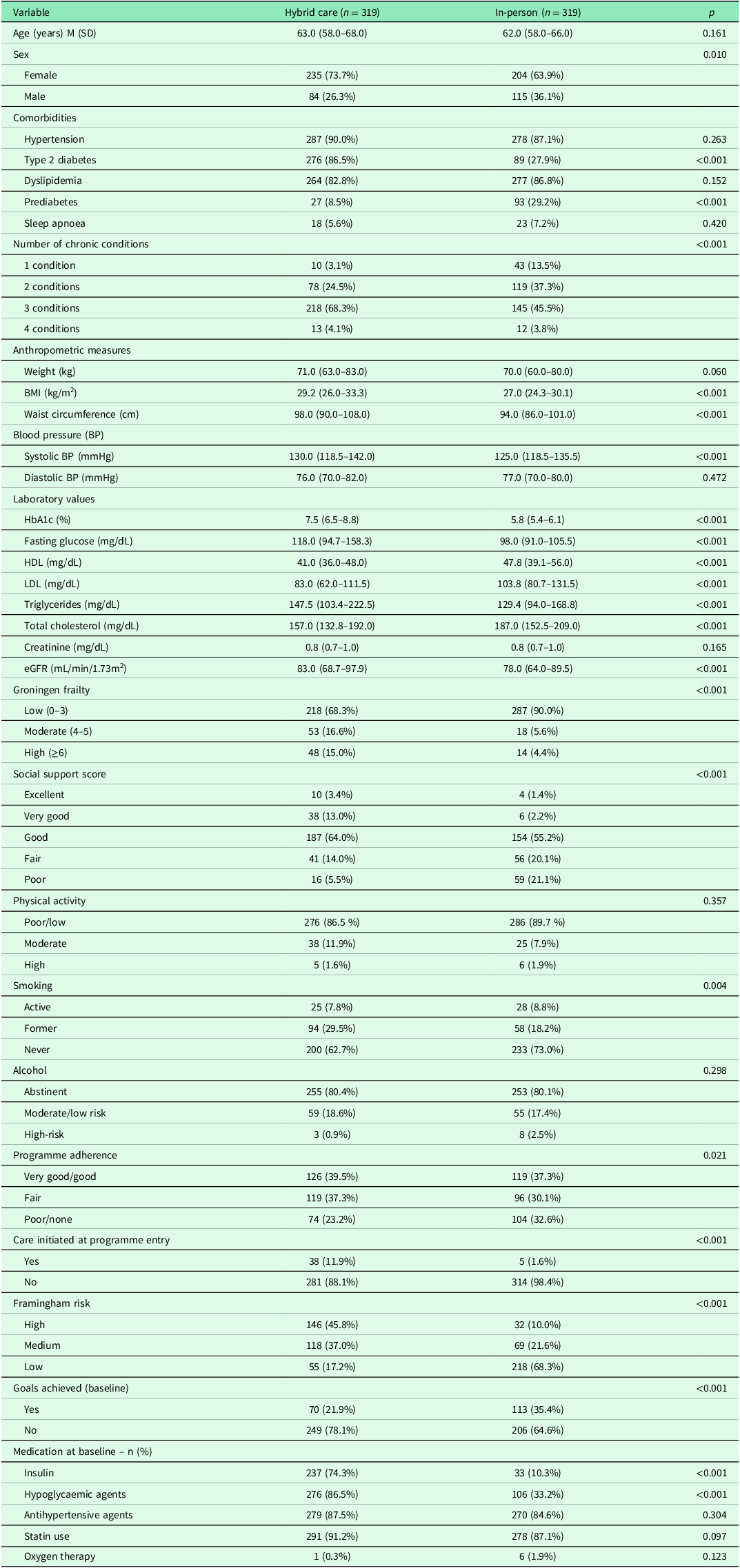
Baseline demographic, clinical, and functional characteristics are summarized in Table 1. Age distribution was similar between groups, while female sex was more frequent in the hybrid care group (73.7% in hybrid vs. 63.9% in in-person care). Follow-up duration was longer among patients managed exclusively through in-person care (median 6 years vs. 4 years in hybrid care; P < 0.001), reflecting the more recent implementation and progressive expansion of the hybrid care model within the programme.
Baseline clinical, functional, and psychosocial characteristics of patients by care modality

Table 1. Long description
A table comparing hybrid care and in-person care across various variables. The table has 31 rows and 4 columns, including variables such as age, sex, comorbidities, anthropometric measures, laboratory values, and more. Key data points include the average age for hybrid care being 63 years and for in-person care being 62 years. The table also shows the distribution of sex, with 73 percent female and 27 percent male for both care types. Comorbidities like hypertension, type 2 diabetes, and dyslipidemia are listed with their respective percentages. Anthropometric measures include weight, BMI, and waist circumference, with values provided for both care types. Laboratory values such as HbA1c, fasting glucose, HDL, LDL, triglycerides, and creatinine are also compared. The table further includes data on Groningen frailty score, social support score, physical activity, smoking status, alcohol consumption, programme adherence, care initiation, Framingham risk, goals achieved, and medication at baseline. All values are approximated.
HbA1c = glycated haemoglobin; HDL = high-density lipoprotein; LDL = low-density lipoprotein; eGFR = estimated glomerular filtration rate.
Marked clinical differences were observed at programme entry. Type 2 diabetes was substantially more prevalent in the hybrid care group (86.5% in hybrid vs. 27.9% in in-person care), accompanied by a greater burden of multimorbidity (68.3% in hybrid vs. 45.5% in in-person care with≥2 chronic conditions). Compared with in-person care, the hybrid group exhibited less favourable baseline metabolic indicators, including higher median HbA1c values (7.5% vs. 5.8%) and triglyceride levels (147.5 mg/dL vs. 129.4 mg/dL). Body mass index and systolic blood pressure were modestly higher in the hybrid group. In contrast, LDL cholesterol levels were lower among hybrid participants (83.0 mg/dL vs. 103.8 mg/dL), suggesting more intensive lipid-lowering therapy at baseline. Taken together, these differences indicate that patients managed through hybrid care presented with greater clinical complexity at programme entry, a pattern consistent with clinician-driven allocation in routine practice.
Functional complexity also differed between care modalities. High frailty was more common among hybrid care patients (15.0% in hybrid vs. 4.4% in in-person care), whereas poor social support was more frequent in the in-person group (21.1% in in-person care vs. 5.5% in hybrid). The distribution of clinical–psychosocial complexity differed between care modalities. Among participants receiving in-person care, 20 (6.3%) were classified as low complexity, 296 (92.8%) as intermediate complexity, and 3 (0.9%) as high complexity. Among participants receiving hybrid care, the corresponding counts were 8 (2.5%), 233 (73.0%), and 78 (24.5%), respectively. The remaining baseline clinical, laboratory, and psychosocial characteristics are detailed in Table 1.
Baseline factors associated with allocation to hybrid care
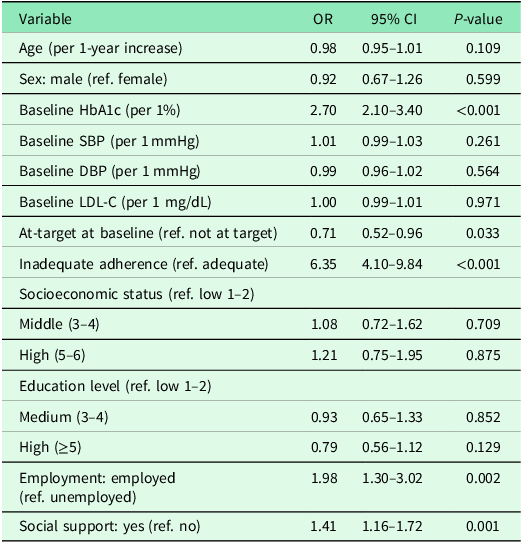
In univariable logistic regression analyses, allocation to hybrid care was associated with several baseline clinical, functional, and psychosocial characteristics (Table 2). Each 1% increase in baseline HbA1c was associated with higher odds of hybrid care allocation (OR 2.70, 95% CI 2.10–3.40), and inadequate medication adherence was also associated with higher odds of allocation (OR 6.35, 95% CI 4.10–9.84). These unadjusted associations were subsequently examined simultaneously in the primary multivariable allocation model.
Univariate baseline factors associated with allocation

Table 2. Long description
A table with 13 rows and 4 columns. The columns are labeled Variable, OR, 95% CI, and P-value. The table lists various baseline clinical, functional, and psychosocial characteristics and their association with hybrid care allocation. Each row provides the odds ratio (OR), 95% confidence interval (CI), and P-value for each variable. Notable variables include Age (per 1-year increase), Sex: male (ref. female), Baseline HbA1c (per 1%), Baseline SBP (per 1 mmHg), Baseline DBP (per 1 mmHg), Baseline LDL-C (per 1 mg/dL), At-target at baseline (ref. not at target), Inadequate adherence (ref. adequate), Socioeconomic status (ref. low 1-2), Education level (ref. low 1-2), Employment: employed (ref. unemployed), and Social support: yes (ref. no).
HbA1c = glycated haemoglobin; SBP = systolic blood pressure; DBP = diastolic blood pressure; LDL-C = low-density lipoprotein cholesterol.
The primary allocation analysis examined individual baseline clinical, functional–behavioural, and psychosocial characteristics as predictors of allocation to hybrid versus in-person care. The composite clinical–psychosocial complexity classification was examined separately as a secondary analysis and was not treated as an independent component of the primary allocation model.
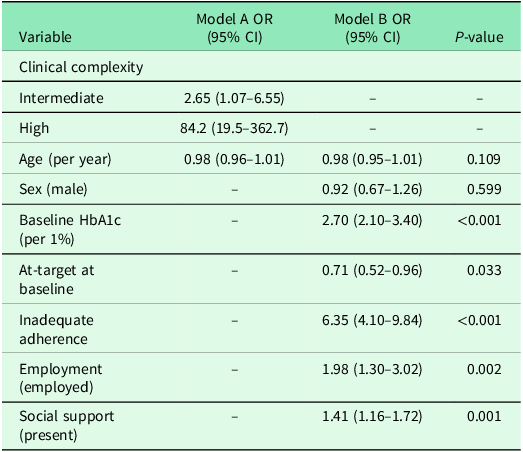
In the primary multivariable allocation analysis (Table 3), higher baseline HbA1c was associated with allocation to hybrid care (adjusted OR [aOR] 2.68 per 1% increase; 95% CI 2.17–3.31), as was inadequate medication adherence (aOR 1.96; 95% CI 1.17–3.28). Higher educational attainment was inversely associated with hybrid care allocation (middle vs low schooling: aOR 0.43; 95% CI 0.25–0.72; high vs low schooling: aOR 0.19; 95% CI 0.10–0.33). Baseline LDL-C showed a small inverse association (aOR 0.99 per mg/dL; 95% CI 0.98–1.00). Age, sex, baseline blood pressure, therapeutic goal attainment at baseline, socioeconomic stratum, employment status, and social support were not independently associated with care allocation after simultaneous adjustment.
Multivariable logistic regression analyses of baseline and follow-up predictors of clinical outcomes

Table 3. Long description
The table presents a comparison of various variables with their corresponding odds ratios (OR) and 95% confidence intervals (CI) for Model A and Model B, along with p-values. The variables include clinical complexity, age, sex, baseline HbA1c, at-target at baseline, inadequate adherence, employment, and social support. The table has 8 rows and 4 columns. Column headers are Variable, Model A OR (95% CI), Model B OR (95% CI), and P-value. Row labels include Intermediate, High, Age (per year), Sex (male), Baseline HbA1c (per 1%), At-target at baseline, Inadequate adherence, Employment (employed), and Social support (present). Notable values include high OR for High clinical complexity in Model A, significant p-values for Baseline HbA1c, At-target at baseline, Inadequate adherence, Employment, and Social support in Model B.
Model A adjusted for age, sex, and baseline clinical–psychosocial complexity. Model B included individual baseline clinical, metabolic, and social variables. Odds ratios represent comparisons between categories as defined in the original variable coding.
HbA1c = glycated haemoglobin.
Prognostic associations between baseline characteristics and follow-up outcomes
These analyses examined associations between individual baseline characteristics and subsequent clinical outcomes and were distinct from the care-allocation analyses described above. Multivariable models were fitted separately for each outcome using the prespecified baseline covariates. Care modality comparisons were considered separately and were not interpreted as estimates of causal treatment effects.
Therapeutic goal attainment
In the multivariable prognostic model for therapeutic goal attainment, female sex was associated with higher odds of achieving the predefined therapeutic targets (OR 1.71; 95% CI 1.17–2.50). Greater baseline functional capacity, as measured by the Barthel Index, was also associated with higher odds of goal attainment (OR 1.91; 95% CI 1.37–2.66), whereas higher baseline total cholesterol was associated with lower odds of meeting therapeutic objectives (OR 0.99 per unit; 95% CI 0.99–0.99). Overall clinical–psychosocial complexity was not independently associated with therapeutic goal attainment in this model.
Emergency department utilization
Within the three-year observation window, chronic disease-related ED visits occurred in 79 patients receiving in-person care (24.8%) and 49 patients receiving hybrid care (15.4%). For ED visits not directly linked to the underlying chronic condition, elevated baseline glycated haemoglobin (HbA1c) (unadjusted OR 1.22 per unit; 95% CI 1.11–1.33) and reduced programme adherence (unadjusted OR 5.04; 95% CI 2.56–9.94) were associated with higher risk in unadjusted analyses. However, these associations did not remain statistically significant in multivariable models after adjustment for baseline covariates.
Hospitalizations
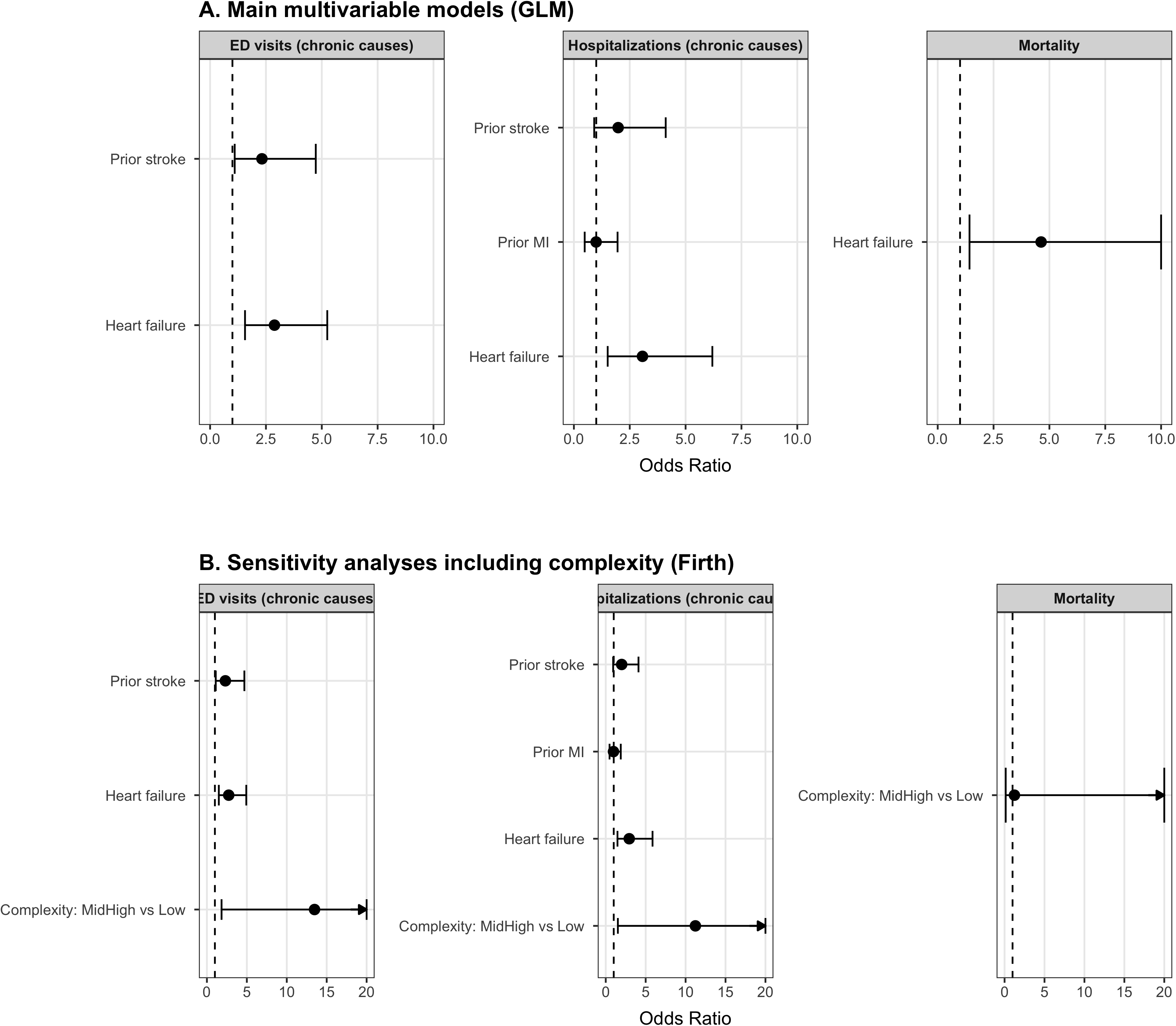
Chronic disease-related hospitalizations during the three-year observation window occurred in 77 patients receiving in-person care (24.1%) and 43 patients receiving hybrid care (13.5%). In the multivariable prognostic model for chronic disease-related hospitalization, heart failure was associated with higher odds of hospitalization (OR 3.07; 95% CI 1.52–6.22), whereas female sex was associated with lower odds (OR 0.61; 95% CI 0.40–0.94). For hospitalizations not attributable to chronic conditions, reduced programme adherence was associated with higher odds of hospitalization (OR 5.48; 95% CI 2.47–12.13). In sensitivity analyses examining the composite complexity classification, higher overall clinical–psychosocial complexity was associated with increased odds of hospitalization.
Mortality during extended follow-up
During the extended available follow-up, 19 deaths were recorded: 11 among participants receiving in-person care (3.4%) and 8 among those receiving hybrid care (2.5%). During the extended available follow-up, heart failure was associated with higher odds of mortality (OR 4.63; 95% CI 1.55–13.82). Overall clinical–psychosocial complexity did not demonstrate an independent association with mortality. Because exact dates of death were not consistently available, mortality could not be standardized to the same three-year observation window used for the other comparative outcomes and is therefore presented separately.
Figure 2 summarizes the adjusted associations between selected baseline characteristics and chronic disease-related ED visits, hospitalizations, and mortality in the main multivariable models, together with sensitivity analyses incorporating the composite clinical–psychosocial complexity classification.
Adjusted associations between baseline characteristics and adverse health outcomes. Forest plot showing adjusted odds ratios (ORs) and 95% confidence intervals (CIs) for selected baseline predictors associated with emergency department utilization, hospitalizations, and mortality. Estimates were derived from multivariable logistic regression models adjusted for relevant demographic, clinical, functional, and psychosocial covariates. Values greater than 1 indicate increased odds of the outcome, whereas values below 1 indicate reduced odds.

Figure 2. Long description
The image contains two sets of forest plots. Panel A shows the main multivariable models using Generalized Linear Models (GLM), while Panel B shows sensitivity analyses including complexity using Firth’s method. Each set includes three separate plots for ED visits, hospitalizations, and mortality. The x-axis represents the odds ratio, and the y-axis lists the baseline characteristics: prior stroke, prior myocardial infarction (MI), and heart failure. Each plot displays points with error bars indicating the 95 percent confidence intervals. The odds ratios greater than 1 indicate increased odds of the outcome, while values below 1 indicate reduced odds. Panel A and Panel B both show the impact of these baseline characteristics on ED visits, hospitalizations, and mortality, with varying odds ratios and confidence intervals.
Discussion
In this study, we characterized the clinical and psychosocial determinants underlying physician-driven allocation to hybrid versus exclusively in-person care within a real-world chronic disease management programme. Our findings reveal that allocation to hybrid care was not distributed uniformly across the study population but was instead systematically concentrated among patients presenting with markers of greater baseline clinical complexity, poorer glycemic control, elevated cardiovascular risk, higher multimorbidity burden, increased frailty, and suboptimal medication adherence. Taken together, these observations indicate that hybrid care was preferentially directed towards individuals with more complex cardiometabolic and functional profiles, consistent with a risk-stratified allocation pattern in routine practice rather than incidental or administrative allocation.
A notable finding was that care allocation reflected both clinical and contextual characteristics. In the fully adjusted individual-component model, poorer glycaemic control and inadequate medication adherence were independently associated with greater odds of hybrid care allocation, whereas higher educational attainment was associated with lower odds of allocation. The association with baseline LDL-C was statistically significant but small in magnitude. These findings suggest that clinician-driven allocation was not determined exclusively by physiological severity, but reflected a combination of clinical status and patient-level characteristics potentially relevant to chronic disease management and engagement with care. This pattern is consistent with hybrid care frameworks that emphasize selective, context-sensitive implementation rather than universally deployed technological models (Eberly et al., Reference Eberly, Kallan, Julien, Haynes, Khatana, Nathan, Snider, Chokshi, Eneanya, Takvorian, Anastos-Wallen, Chaiyachati, Ambrose, O’Quinn, Seigerman, Goldberg, Leri, Choi, Gitelman, Kolansky, Cappola, Ferrari, Hanson, Deleener and Adusumalli2020; Hamine et al., Reference Hamine, Gerth-Guyette, Faulx, Green and Ginsburg2015; Pilosof et al., Reference Pilosof, Barrett, Oborn, Barkai, Zimlichman and Segal2023; World Health Organization, 2019). More broadly, evidence from technology-enabled healthcare applications indicates that promising performance under specific study conditions requires careful validation before translation into routine clinical practice, while successful implementation also depends on human–technology interaction, accessibility, affordability, and integration within existing care pathways (Chen et al., Reference Chen, Chan and Chan2025a; Chen et al., Reference Chen, Chan and Chan2025b).
It is important to clarify that the multidimensional clinical–psychosocial complexity construct employed in our analyses did not prospectively determine care modality allocation. Rather, it served as an analytic framework to systematically characterize the constellation of clinical, functional–behavioural, and psychosocial attributes associated with physician decision-making at the point of allocation. This interpretation is consistent with contemporary models that conceptualize patient complexity as a form of multidimensional complexity shaped by the cumulative interaction of clinical burden and contextual factors (American Psychological Association, 2019; Birtcher et al., Reference Birtcher, Allen, Anderson, Bonaca, Gluckman, Hussain, Kosiborod, Mehta and Virani2022; Harris et al., Reference Harris, Taylor, Minor, Elliott, Fernandez, O’Neal, McLeod, Delacqua, Delacqua, Kirby and Duda2019; Shippee et al., Reference Shippee, Shah, May, Mair and Montori2012). In routine practice, care modality allocation reflects clinician judgment informed by disease severity, frailty, programme adherence, and anticipated programme adherence potential, frequently modulated by organizational and contextual considerations (Croskerry, Reference Croskerry2003; Eberly et al., Reference Eberly, Kallan, Julien, Haynes, Khatana, Nathan, Snider, Chokshi, Eneanya, Takvorian, Anastos-Wallen, Chaiyachati, Ambrose, O’Quinn, Seigerman, Goldberg, Leri, Choi, Gitelman, Kolansky, Cappola, Ferrari, Hanson, Deleener and Adusumalli2020; Ferguson et al., Reference Ferguson, Greene, Van Campen, Zulman and Wray2025; Hernán and Robins, Reference Hernán and Robins2020). Clinicians, in fact, appeared to select patients in line with the complexity framework.
However, the present quantitative analysis can identify characteristics associated with care allocation but cannot establish how clinicians weighed these factors when making individual allocation decisions. Future research could complement these findings using qualitative or mixed-methods approaches, including semi-structured interviews, focus groups, or direct observation of clinical decision-making, to examine how clinicians integrate disease severity, adherence, functional status, social circumstances, digital accessibility, and patient preferences when selecting care modalities. Such approaches may help distinguish factors that are merely associated with allocation from those explicitly considered by clinicians during decision-making.
When interpreting follow-up outcomes, considerable caution is warranted. Although patients assigned to hybrid pathways achieved higher rates of therapeutic target attainment and demonstrated reduced ED utilization despite carrying a greater complexity burden, these observations must not be understood as causal evidence of the superiority of hybrid care. They reflect, instead, outcome trajectories emerging within groups defined by distinct complexity profiles and differential care intensity structures. Hybrid pathways in this programme incorporate closer clinical monitoring, more frequent follow-up intervals, and structured digital surveillance, all of which may plausibly contribute to downstream clinical trajectories. Implementation research consistently indicates that improvements in chronic disease outcomes are more strongly linked to intensified organizational processes and coordinated follow-up structures than to digital infrastructure per se (Eberly et al., Reference Eberly, Kallan, Julien, Haynes, Khatana, Nathan, Snider, Chokshi, Eneanya, Takvorian, Anastos-Wallen, Chaiyachati, Ambrose, O’Quinn, Seigerman, Goldberg, Leri, Choi, Gitelman, Kolansky, Cappola, Ferrari, Hanson, Deleener and Adusumalli2020; Pilosof et al., Reference Pilosof, Barrett, Oborn, Barkai, Zimlichman and Segal2023; World Health Organization, 2019). Heterogeneity in treatment response and comparative outcomes across diabetes populations further underscores the importance of considering baseline risk profiles and clinical context when interpreting observed outcome differences, rather than assuming uniform effects across patient groups or therapeutic strategies (Chen et al., Reference Chen, Chan and Chan2025c; Chen et al., Reference Chen, Chan and Chan2025d).
From a methodological standpoint, clinician-driven allocation generated systematic baseline disparities between comparison groups. When clinically vulnerable patients are preferentially channelled towards hybrid pathways, outcome comparisons become susceptible to indication bias and confounding introduced by severity gradients (Hernán and Robins, Reference Hernán and Robins2020; Croskerry, Reference Croskerry2003; Rothman et al., Reference Rothman, Greenland and Lash2008). Although this limitation is well recognized in epidemiological methodology, a substantial proportion of real-world evaluations of digital health interventions do not explicitly document allocation mechanisms or characterize baseline complexity distributions, thereby constraining interpretability and limiting external validity (Jaén-Extremera et al., Reference Jaén-Extremera, Afanador-Restrepo, Rivas-Campo, Gómez-Rodas, Aibar-Almazán, Hita-Contreras, Carcelén-Fraile, Castellote-Caballero and Ortiz-Quesada2023; Hernán et al., Reference Hernán, Hernández-Díaz and Robins2004). By formally mapping allocation determinants alongside baseline complexity profiles, our study indeed presents a degree of transparency seldom reported in observational hybrid care evaluations.
From a health systems perspective, hybrid care in this programme functioned as an organizational mechanism that redistributed care intensity towards patients exhibiting greater physiological instability and functional complexity, in line with global guidance on digital health implementation (Pan American Health Organization, 2017; World Health Organization, 2019). Nevertheless, selective allocation also raises substantive equity considerations. Hybrid pathways appeared to concentrate resources among patients with high clinical complexity who simultaneously retained sufficient functional capacity and social support to engage meaningfully with digital follow-up structures. Individuals facing comparable clinical complexity but greater social, economic, or digital access barriers may remain systematically underrepresented in these pathways, a pattern repeatedly documented in digital health equity literature (Wakeman et al., Reference Wakeman, Buckman and El-Toukhy2025; Li et al., Reference Li, Shi, Yang and Ran2025; Brandt et al., Reference Brandt, Tobb, Cambron, Ferdinand, Douglass, Nguyen, Vijayaraghavan, Islam, Thamman, Rahman, Pendyal, Sareen, Yong, Palaniappan, Ibebuogu, Tran, Bacong, Lundberg and Watson2023; George et al., Reference George, Kc, Greenleaf, Shah, Lam and Hawkins2024; Ruda‐Santolaria et al., Reference Ruda‐Santolaria, Bergerot, Hernandez, Pena, Montana, Galindo‐Vazquez, Torres‐Blasco, Castro‐Figueroa, Esenarro, Sanchez‐Ramirez, Estapé, Gany and Costas‐Muniz2023). We therefore argue that transparent reporting of allocation criteria and baseline complexity distributions should be considered an essential standard for the valid and equitable evaluation of hybrid care policies, particularly in fragmented health system contexts prevalent across low-and middle-income settings (Brandt et al., Reference Brandt, Tobb, Cambron, Ferdinand, Douglass, Nguyen, Vijayaraghavan, Islam, Thamman, Rahman, Pendyal, Sareen, Yong, Palaniappan, Ibebuogu, Tran, Bacong, Lundberg and Watson2023; Castillo et al., Reference Castillo, Cano and Gonzalez-Argote2023; Li et al., Reference Li, Shi, Yang and Ran2025; Love-Koh et al., Reference Love-Koh, Griffin, Kataika, Revill, Sibandze and Walker2020; Pan American Health Organization, 2017).
Across the cohort, sustained therapeutic goal attainment was consistently associated with reduced ED utilization and lower hospitalization rates for chronic disease–related causes, a finding that aligns with the well-established evidence that improved chronic disease control reduces downstream acute care requirements (Brandt et al., Reference Brandt, Tobb, Cambron, Ferdinand, Douglass, Nguyen, Vijayaraghavan, Islam, Thamman, Rahman, Pendyal, Sareen, Yong, Palaniappan, Ibebuogu, Tran, Bacong, Lundberg and Watson2023; Li et al., Reference Li, Shi, Yang and Ran2025). Functional capacity, assessed using the Barthel Index, emerged as a meaningful factor associated with therapeutic success, reinforcing the established role of preserved functional status in supporting chronic disease self-management and sustained programme adherence (Mahoney and Barthel, Reference Mahoney and Barthel1965; Smulowitz et al., Reference Smulowitz, Weinreb, McWilliams, O’Malley and Landon2023). Programme adherence likewise demonstrated robust associations with utilization outcomes, consolidating its position as a critical intermediate pathway linking care process quality to health trajectories independently of care modality (Hamine et al., Reference Hamine, Gerth-Guyette, Faulx, Green and Ginsburg2015; Mendoza Reyes, Reference Mendoza Reyes2021).
Several methodological limitations of this study deserve acknowledgement. Follow-up duration differed between care modalities because of the staggered implementation and gradual expansion of hybrid care within the programme. To ensure comparable observation time, therapeutic goal attainment, ED utilization, and hospitalizations were restricted to the same three-year observation window from programme entry for all participants. Mortality could not be similarly standardized because exact dates of death were not consistently available, particularly for deaths occurring outside the participating institution and subsequently identified through linkage with the national civil registry. Mortality findings therefore reflect extended available follow-up and should not be interpreted as directly comparable cumulative three-year risks between care modalities. Because exact event dates were not consistently available for healthcare utilization outcomes, time-to-event analyses were not feasible, and these outcomes were analysed as cumulative events within the fixed three-year window rather than as incidence rates.
In addition, the in-person cohort was derived from a computer-generated random sample of the full in-person population rather than from exhaustive individual-level data collection for all patients receiving in-person care. Detailed study variables were not available in a structured format for non-sampled patients, precluding direct comparison of sampled and non-sampled individuals and full-cohort sensitivity analyses. Although random selection before eligibility assessment was used to minimize systematic sampling bias, the possibility that the sampled comparator may not fully represent the entire in-person population cannot be excluded (Wakeman et al., Reference Wakeman, Buckman and El-Toukhy2025). The limited number of events for certain outcomes, mortality in particular, reduced statistical precision and may have limited the ability to detect additional independent associations, as reflected by the wide confidence intervals (CIs). Residual confounding cannot be excluded, as unmeasured determinants, including digital literacy, patient preferences, caregiver availability, and clinician-specific practice variation, may have influenced both allocation decisions and subsequent outcomes (Hernán and Robins, Reference Hernán and Robins2020). Finally, gender identity data were not available; findings therefore pertain specifically to biological sex as recorded in the clinical record.
Collectively, our findings demonstrate that hybrid care allocation in this real-world programme was structured around baseline physiological instability, multimorbidity, frailty, and adherence complexity rather than constituting random or administratively driven care modality allocation. Recognizing the existence and direction of clinician-driven selection processes is essential when attributing meaning to outcome differences between care modalities in observational digital health research (Castillo et al., Reference Castillo, Cano and Gonzalez-Argote2023; Pan American Health Organization, 2017; World Health Organization, 2019). Careful documentation of allocation dynamics and baseline complexity profiles remains indispensable to ensure both methodological rigour and equitable implementation of hybrid care strategies across Latin American and other low-and middle-income health system contexts (Brandt et al., Reference Brandt, Tobb, Cambron, Ferdinand, Douglass, Nguyen, Vijayaraghavan, Islam, Thamman, Rahman, Pendyal, Sareen, Yong, Palaniappan, Ibebuogu, Tran, Bacong, Lundberg and Watson2023; Li et al., Reference Li, Shi, Yang and Ran2025; Love-Koh et al., Reference Love-Koh, Griffin, Kataika, Revill, Sibandze and Walker2020; Wakeman et al., Reference Wakeman, Buckman and El-Toukhy2025).
Conclusions
In this real-world chronic disease management programme, patients allocated to hybrid care differed substantially from those receiving exclusively in-person care in baseline clinical, functional, and psychosocial characteristics. In the fully adjusted allocation model, higher HbA1c, inadequate medication adherence, and lower educational attainment were independently associated with hybrid care allocation, while the association with LDL-C was small in magnitude. The strong gradient observed in the secondary composite complexity analysis further supports systematic clinician-driven selection, although the magnitude of the high-complexity estimate should be interpreted cautiously because of near-separation. Observed differences in follow-up outcomes should therefore be interpreted in the context of baseline prognostic differences and differential organizational care intensity rather than as evidence of an intrinsic effect of care modality.
From a health policy perspective, hybrid care should be understood not as a standalone technological intervention but as an organizational strategy that redistributes monitoring and follow-up intensity within health systems. Health outcomes may improve under such organizational strategies; however, transparent documentation of allocation mechanisms and baseline complexity remains essential for valid interpretation of observational evaluations and for equitable scaling of hybrid models, particularly in fragmented health systems and low-and middle-income settings. Failure to account for clinician-driven selection may lead to overestimation of digital modality effects and unintended reinforcement of existing social and digital inequities.
Supplementary material
The supplementary material for this article can be found at https://doi.org/10.1017/S1463423626102035.
Data availability statement
The data supporting the findings of this study are not publicly available due to institutional and ethical restrictions related to patient confidentiality. De-identified data may be available from the corresponding author upon reasonable request and subject to approval by the participating institution and ethics committee.
Acknowledgements
The authors express gratitude to clinical, administrative, and research staff at Alma Mater Hospital of Antioquia for their collaboration and support throughout study development. Recognition is extended to the Research Department for facilitating clinical information access and supporting study coordination. The contribution of the Living Lab Digital Hospital at the University of Antioquia is also acknowledged. Finally, sincere appreciation is conveyed to healthcare professionals, patients, and families whose participation enabled this research.
Author contributions
Kevin Saldarriaga Bedoya: Conceptualization, Methodology, Data curation, Formal analysis, Writing – original draft, Writing – review and editing, Supervision. Maarten Lahr: Conceptualization, Methodology, Formal analysis, Writing – review and editing, Supervision. Erik Buskens: Conceptualization, Methodology, Writing – review and editing, Supervision. Gladys Rocío Ariza-Sosa: Conceptualization, Data curation, Investigation, Writing – review and editing, Project administration. Carolina Carvajal Espinosa: Data curation, Investigation, Formal analysis, Writing – original draft. Esteban Castrillon Martínez: Data curation, Investigation, Formal analysis, Writing – original draft. Juan Fernando Mesa Valencia: Methodology, Formal analysis, Writing – original draft, Writing – review and editing.
Competing interests
No competing interests were declared.
Declaration of generative AI and AI-assisted technologies in the writing process
During manuscript preparation, the authors employed AI-assisted tools to enhance language quality and improve textual clarity. All content underwent critical review, revision, and approval by the authors, who assume complete responsibility for the accuracy and integrity of this work.


 Open access

