Introduction
The United Nations describes the elderly as those aged 60 years or older. The number of people in this population group is growing very fast. This is happening especially in developing countries. It is hypothesized that the older population will triple by 2050, reaching 1.6 billion. By this date, it is expected that 80% of the older population will live in developing countries, which have to be prepared to meet the needs of this group (United Nations, 2013).
While people are living longer, there has been an increase in the prevalence of chronic diseases, and disability (United Nations, 2013). In most countries around the world, it is families that are the most likely to be responsible for the care of an elderly dependent at home.
Studies show that the caregivers of older people are, in most cases, female, a daughter or wife, middle-aged, and live in the same house as the elderly dependent (Pinquart and Sorensen, Reference Pinquart and Sörensen2007; National Alliance for Caregiving, 2015; Lafferty et al., Reference Lafferty, Fealy, Downes and Drennan2014). However, some studies have stressed an increase in the number of elderly caregivers (Pinquart and Sorensen, Reference Pinquart and Sörensen2007; Lafferty et al., Reference Lafferty, Fealy, Downes and Drennan2014; National Alliance for Caregiving, 2015). This specific group of caregivers requires special attention, because in addition to being caregivers, they can also be patients, and require care.
Attitudes are beliefs related to an object that have an evaluative component (Neri, Reference Neri1991; Bryant et al., Reference Bryant, Bei, Gilson, Komiti, Jackson and Judd2012). Attitudes to aging are beliefs regarding elderly individuals in general, and the aging process (Loi et al., Reference Loi2015). They are receiving increasing attention because there is some evidence showing the impact of attitudes on health outcomes, and their influence on behaviors (Bryant et al., Reference Bryant, Bei, Gilson, Komiti, Jackson and Judd2012). The treatment that older people receive, public policies, and healthcare can be influenced by the attitudes toward aging (Ladtika et al., Reference Laditka, Fisher, Laditka and Segal2004).
An increasing body of research has examined the relationship between attitudes toward aging in the older people, and their effect on mental and physical health. There is some evidence showing that older people with positive perceptions of aging live longer, and in better health (Levy et al., Reference Levy, Slade and Kasl2002). However, negative attitudes are associated with chronic conditions, physical impairment, and health risks (Lai and Tong, Reference Lai and Tong2012; Bryant et al., Reference Bryant2014; Thorpe et al., Reference Thorpe, Pearson, Schluter, Spittlehouse and Joyce2014).
Many factors can be associated with positive attitudes, but the psychological variables are shown to have a greater effect on the attitudes toward the elderly than physical health, and socio-demographic characteristics (Chachamovich et al., Reference Chachamovich, Fleck, Laidlaw and Power2008; Bryant et al., Reference Bryant, Bei, Gilson, Komiti, Jackson and Judd2012; Shenkin et al., Reference Shenkin, Laidlaw, Allerhand, Mead, Starr and Deary2014; Thorpe et al., Reference Thorpe, Pearson, Schluter, Spittlehouse and Joyce2014). In Taiwan, more negative attitudes toward the elderly were influenced by depressive symptoms; and positive attitudes by happiness (Lu et al., Reference Lu, Kao and Hsieh2010).
Concerning elderly caregivers, few studies have evaluated the factors that influence their attitudes. A study conducted with 300 couples aged 50 years or older in Malaysia identified that positive attitudes toward the elderly affect not only their own well-being, but also that of the partner (Momtaz et al., Reference Momtaz, Hamid, Masud, Haron and Ibrahim2013). In Australia, a recent study conducted with 202 older carers (55 years and older) who lived with the person for whom they provided care (60 years and older), aimed to identify the factors associated with attitudes toward the elderly. Attitudes were overall positive, and some carer factors such as depression, burden, and personality traits contributed to the variance in attitudes toward the elderly (Loi et al., Reference Loi2015).
The factors associated with attitudes toward aging in the older population have been reported recently, but there are few studies focused on understanding these factors in elderly caregivers, a group with specific needs. Our aim, therefore, was to determine whether attitudes toward the elderly are associated with mental and psychical health, as well as satisfaction with life, subjective well-being, burden related to care, and level of dependence of the CR in a sample of elderly caregivers, after taking into account some possible confounding factors. We hypothesized that more positive attitudes to aging would be associated with lower levels of burden, stress, depressive symptoms, dependence of both caregiver and CR and greater satisfaction with life and well-being; after controlling for socio-demographic, health, and care factors.
Methods
Participants
This study is part of “The variables associated with cognition in elderly caregivers” study developed by Aging and Health research group at the Federal University of São Carlos, Brazil. It was developed in São Carlos, Brazil. The city is located in the Southeast region of Brazil, and has an estimated population of 221,950 residents, of which 4.0% lives in rural setting (2010 Brazilian records). It involved a sample of elderly caregivers (age ≥ 60 years) living in the community who were registered in all 18 primary healthcare centers in São Carlos. Of these centers, 16 were located in urban and two in rural settings.
The elderly caregivers who fulfilled the study's inclusion criteria – were 60 years of age and older, using primary care services in the city, and caring for a dependent older person (age ≥ 60 years), the CR, and living in the same household – were invited to participate in the study. To be considered dependent, the CR had to be dependent in at least one of ADLs/IADLs (Instrumental Activities of Daily Living) assessed by the Katz Index (Katz et al., Reference Katz, Ford, Moskowitz, Jackson and Jaffe1963) and Lawton and Brody's Scale (Lawton and Brody, Reference Lawton and Brody1969).
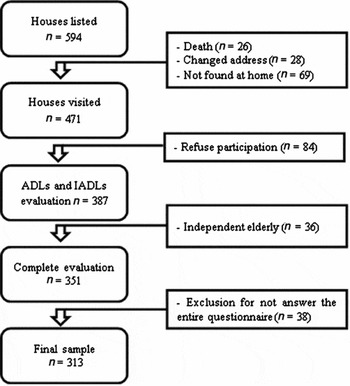
A list containing the total number of households within the catchment area of these 18 centers, and which had at least two elderly individuals living together, were provided by the professionals employed in these units. Figure 1 shows the flowchart of sample selection.
Flowchart of sample selection, São Carlos, Brazil, 2014.

The initial number of households was 594, but in 26 of them, one of the elderly people in the house had died, in 28 they had moved to a new address, and in 69 they were not at home after three visits. The remaining 471 households were visited, and the objectives of the study were explained to the elderly individuals living there. Elderly people living in 84 residences were discarded because they refused to participate in the study. All the elderly people living in a total of 387 residences (response rate 82.2%) were evaluated with regard to ADLs and IADLs. In 36 residences, all the elderly people in the household were independent in all ADLs and IADLs, and excluded. From the remaining 351, it was possible to identify couples comprising an elderly caregiver and a dependent CR, and these couples participated in the study. However, 38 couples did not complete the questionnaire (37 failed to answer the attitudinal scale, and one the perceived stress scale), and these were excluded from the analyses. There were no differences between the excluded couples and those included with regard to gender, age, and educational level. The excluded participants had a family monthly income higher than that of the participants included.
The final sample consisted of 313 elderly caregivers caring for a dependent CR at home.
Data collection
Before answering the questionnaire, the participants gave their written, informed consent. Ethical approval for the project was obtained from the Ethics Committee of the Federal University of São Carlos. Household interviews were conducted by trained professionals in the fields of Gerontology and Nursing.
The variables of interest were investigated using the following measures:
-
1. CR characteristics: the questions included age (60–69; 70–79; 80 or older) and gender.
-
2. Caregiver characteristics: the questions included age (60–69; 70–79; 80 or older), gender, marital status (with partner and without partner), literacy (illiterate; 1–7 years schooling; eight years and over), monthly family income (in Brazilian Real, continuous), number of people living in the household (continuous), living arrangement (living with partner; living with partner and children; living with partner, children and grandchildren; other arrangements – groups divided according to sampling distribution), and location of the residence (rural or urban setting). The age and gender variables of the elderly caregiver were used as control variables.
-
3. Functional status: evaluated in both the caregiver and CR. The Katz Index was used which included the evaluation of six basic ADLs. Participants were classified in two groups, dependent (in one to six ADLs) or independent (without any difficulty) (Katz et al., Reference Katz, Ford, Moskowitz, Jackson and Jaffe1963). The Scale of IADLs developed by Lawton and Brody was also used, which evaluated seven IADLs resulting in a possible score ranging from 7 (total dependence) to 21 (independent). Participants were classified into three groups, independence (21 points), partial dependence (8–20 points), and total dependence (seven points) (Lawton and Brody, Reference Lawton and Brody1969).
-
4. Burden related to care: this variable was assessed using the Zarit Burden Inventory (ZBI) (Scazufca, Reference Scazufca2002), which contains 22 items aimed at evaluating the carer's burden related to functional deficits at home. The final score ranges from 0 to 88, with higher scores representing more burden, and it was used as a continuous variable (current study Cronbach's α = 0.86).
-
5. Cognitive status: this was evaluated using the Mini-Mental State Examination (MMSE). The cut-off scores were adjusted according to educational level (≤13 to illiterate, ≤18 to 1–7 years of school and ≤26 to 8 years or over) (Bertolucci et al., Reference Bertolucci, Brucki, Campacci and Juliano1994) and based on these scores participants were divided into two groups, with or without cognitive impairment (current study Cronbach's α = 0.70).
-
6. Care characteristics: the questions focused on who was cared for by the caregiver, classified into five groups (spouse, parent, father or mother in law, sibling and other – groups divided according to sample distribution). Information was also collected on how many hours they spent per day on caring activities, used as a continuous variable.
-
7. Perceived Stress: the Perceived Stress Scale (PSS) 14 items (Luft et al., Reference Luft, Sanches, Mazo and Andrade2007) was used to evaluate how the caregivers perceived the life situations as stressful. The final score ranges from 0 to 56, with higher scores representing more stress, and it was used as a continuous variable (current study Cronbach's α = 0.81).
-
8. General health status: self-reported chronic conditions arthritis, cancer, cardiac disease, spine problems, diabetes, high blood pressure, or peripheral vascular disease were asked (yes/no). Use of medication (yes/no) and the number of medications they took per day were also asked. Self-rated health was evaluated using the question “How do you evaluate your general health?” Answers were classified into three groups, “very good/good,” “average,” or “very poor/poor.”
-
9. Life satisfaction: the question “Are you satisfied with your life?” was asked and the possible responses were “very,” “more or less,” or “barely.”
-
10. Depressive symptoms: the Geriatric Depressive Scale 15 items (Almeida and Almeida, Reference Almeida and Almeida1999) was applied. The final score ranges from 0 to 15, with higher scores representing more depressive symptoms, and it was used as a continuous variable (current study Cronbach's α = 0.73).
-
11. Attitudes Toward the Elderly: this variable was assessed using the Neri Scale to Assess Attitudes Toward the Elderly. This scale was developed based on Osgood Semantic Differential (Osgood et al., Reference Osgood, Suci and Tannenbaum1957) and the Aging Semantic Differential (Rosencranz and McNevin, Reference Rosencrantz and McNevin1969). The Semantic Differential comprises a finite group of semantic alternatives, defined by factor analysis. The answers show a definition of the concept that is evaluated, in terms of quality – the adjectives – and intensity (Osgood et al., Reference Osgood, Suci and Tannenbaum1957). The first Brazilian version of the scale (Neri, Reference Neri1991) included 40 pairs of adjectives aimed at evaluating the concept “The older person is.” The adjectives selected were chosen based on Brazilians’ public perceptions of the elderly, and were then evaluated by a committee of experts in the field of gerontology who decided which ones remained in the scale. Each pair of adjectives was evaluated in seven levels of intensity. The present study used the revised version of this scale (Neri, Reference Neri1997), which included 30 pairs of bipolar adjectives evaluated in five levels of intensity. Factor analysis was conducted and items were divided in four factorial domains: the Cognitive domain (ten items) referred to the ability to process information and solve problems, affecting social adaptation; Agency (six items) referred to autonomy and instrumentality to perform actions; Social Relationship (seven items) referred to affective and emotional aspects, reflecting the social interaction; and Persona (seven items) referred to social labels commonly used to designate or discriminate against the elderly. The final score in each domain was a mean of the items, and ranges from 1 to 5, in which one represents the most positive attitude, and five the most negative attitude (current study Cronbach's α = 0.89).
Data analyses procedure
The Stata 10 ® program was used for all data analysis. The dependent variable was the attitude toward the elderly in each four domains. Since it did not present normal distribution after Shapiro–Wilk test, it was categorized into tertiles according to the sampling distribution:
-
1. Cognitive domain: 1.0 < 1st tertile ≤ 2.8 > 2nd tertile ≤ 3.7 > 3rd tertile < 5.0;
-
2. Agency domain: 1.0 < 1st tertile ≤ 2.8 > 2nd tertile ≤ 3.4 > 3rd tertile < 5.0;
-
3. Social Relationship domain: 1.0 < 1st tertile ≤ 2.4 > 2nd tertile ≤ 3.0 > 3rd tertile < 5.0;
-
4. Persona domain: 1.0 < 1st tertile ≤ 2.6 > 2nd tertile ≤ 3.3 > 3rd tertile < 4.9.
The first tertile represents a more positive attitude and was considered as the reference in regression models. The second tertile was the intermediate one, and the third tertile represents more negative attitudes.
Multinomial logistic regression analysis was used to analyze factors associated with each of the four domains of attitudes toward the elderly. Associations with p-value ≤ 0.2 in the univariate analysis were selected for the multiple regression analysis, in which forward stepwise selection was used. Associations with p-value ≤ 0.05 in the multiple analysis remained in the final model, and the gender variable was used as a confounding factor.
Results
Sample characteristics
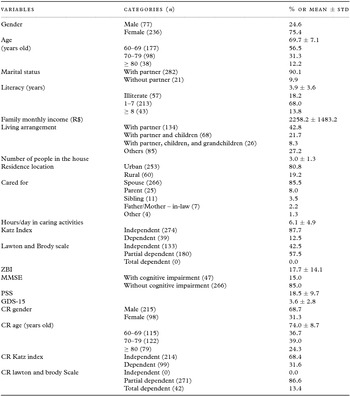
Table 1 summarizes the socio-demographic and care characteristics, functional status, and results of the measurements applied in a sample of elderly caregivers.
Descriptive characteristics of elderly caregivers in São Carlos, Brazil, 2014 (n = 313)

Std = Standard deviation; ZBI = Zarit Burden Inventory; MMSE = Mini-Mental State Examination; PSS-14 = Perceived Stress Scale-14; GDS-15 = Geriatric Depression Scale-15; CR = care recipient.
In most cases, the elderly caregivers were women (75.4%), between 60 and 69 years old (56.5%) and had 1–7 years of schooling (68.0%). Most of them had a partner (90.1%) and lived only with this partner (42.8%). The family monthly income was R$2258.2 ± 1483.2, the houses had a mean of 3.0 ± 1.3 people living together, and most of them were located in urban settings (80.8%). Regarding the care context, 85.5% cared for a spouse, for 6.1 ± 4.9 hours/day.
Caregivers were independent in ADLs (87.7%) and partially dependent in IADLs (57.5%). Mean scores in ZBI, PSS, and GDS were 17.7 ± 14.1, 18.5 ± 9.7, and 3.6 ± 2.8, respectively, and 85.0% were classified as without cognitive impairment in MMSE.
The health status revealed that 62.9% had high blood pressure, 46.6% spine problems, 35.4% arthritis, 31.3% peripheral vascular disease, 29.9% diabetes, 14.4% cardiac disease, and 8.3% cancer. Regarding the medications, 88.8% reported that they used at least one per day, and the mean was 3.1(±2.5)/day.
Self-rated health was evaluated as “very good/good” for 55.9% of the elderly caregivers, “average” for 36.4%, and “very poor/poor” for 7.7%. The majority of the elderly caregivers were very satisfied with their lives (78.0%), 36.4% were “more or less” satisfied, and 4.2% barely satisfied.
The elderly caregivers cared for dependent elderly CRs at home who were in the majority of cases male (68.7%), between 70 and 79 years old (39.0%, mean age of CRs 74.0 ± 8.7). CRs were in most of cases independent in six basic ADLs (68.4%), and 31.6% were dependent in 1–6 basic ADLs. Concerning the IADLs, 86.6% were partially dependent, and 13.4% totally dependent.
Attitudes toward the elderly
The mean score in Neri Attitudes Toward the Elderly Scale was 3.0 ± 0.7. In each domain, the means were: Cognitive (3.1 ± 0.8), Agency (3.2 ± 0.9), Social Relationship (2.7 ± 0.8), and Persona (2.9 ± 0.9), which signifies that the most negative domain was Agency and the most positive was Social Relationship.
Factors influencing attitudes toward the elderly
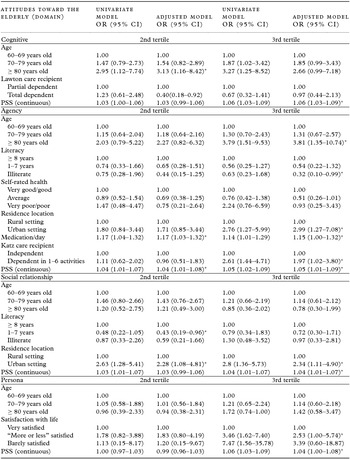
Table 2 represents the results of the multiple regression analysis.
Multinomial regression analysis for associated factors to attitudes toward elderly caregivers, São Carlos, Brazil, 2014 (n = 313)

OR = Odds Ratio. CI=Confidence Interval. PSS-14=Perceived Stress Scale-14. Controlled by gender.
*p ≤ 0.05.
In the Cognitive domain, being 80 years and older, and having higher scores on PSS were associated with more negative attitudes toward the elderly.
In Agency, illiterate caregivers were less likely to have more negative attitudes. However, being 80 years and older, living in an urban setting, caring for a dependent CR in basic ADLs, taking more medications per day, and having higher scores on PSS were associated with more negative attitudes in this domain.
More negative attitudes in the Social Relationship domain were significantly associated with living in urban settings, and had higher scores on PSS. There was a negative correlation between positive attitudes and educational level.
Being “more or less” satisfied with life and having higher scores on PSS were significantly associated with more negative attitudes toward the elderly in the Persona domain.
Discussion
In this sample, attitudes toward the elderly were considered neutral in the general score. It was more negative in the Agency domain, and more positive in the Social Relationship domain. Older age, living in an urban setting, taking more medications per day, caring for older people dependent in basic ADLs, being “more or less” satisfied with life, and having higher levels of perceived stress were associated with more negative attitudes toward the elderly. There was a negative association between positive attitudes and educational level.
A recent piece of research that evaluated attitudes toward the elderly and associated factors is cited to be the first one to describe attitudes in a sample of elderly carers. Their sample (n = 202) had similar characteristics, 74.3% women, mean age 70.8 and 85% were spouse caregivers. But they had higher levels of depression (GDS-15 median 4.0) and burden (ZBI mean 32.7); and found associations between these two variables and the variance in attitudes, particularly in the Physical and Loss subscales of the instrument that they used (Attitudes to Aging Questionnaire) (Loi et al. Reference Loi2015).
In our analyses, depressive symptoms were evaluated too, but when included in the adjusted model, this variable was not significant.
Other studies showed associations between depressive symptoms and perceptions related to aging in older participants, not caregivers. These studies used different instruments to evaluate depression: GDS-15 and -30 items (Chachamovich et al., Reference Chachamovich, Fleck, Laidlaw and Power2008; Kalfoss et al., Reference Kalfoss, Low and Molzahn2010; Lai and Tong, Reference Lai and Tong2012; Sindi et al., Reference Sindi, Juster, Wan, Nair, Kin and Lupien2012; Janecková et al., Reference Janecková, Dragomirecká, Holmerová and Vanková2013; Lucas-Carrasco et al., Reference Lucas-Carrasco, Laidlaw, Gómez-Benito and Power2013), the Center for Epidemiological Studies Depression Scale – CES-D (Lu et al., Reference Lu, Kao and Hsieh2010; Bryant et al., Reference Bryant, Bei, Gilson, Komiti, Jackson and Judd2012), the Hospital Anxiety and Depression Scale – HADS (Shewkin et al., Reference Shenkin, Laidlaw, Allerhand, Mead, Starr and Deary2014) and the Mini International Neuropsychiatric Interview – MINI (Thorpe et al., Reference Thorpe, Pearson, Schluter, Spittlehouse and Joyce2014). All of them considered that the evaluation of depressive symptoms was an important variable related to perceptions about aging.
The results presented here showed that perceived stress is another mental health variable that it is important to evaluate. Perceived stress was associated with all four domains of attitudes toward the elderly, which means that higher perceived stress was linked to more negative attitudes.
Other possible factors related to mental health included in the present analyses were the burden and cognitive status of the caregivers, but they were not significantly associated with the attitude evaluation.
Our sample had lower levels of depression and burden when compared to the elderly caregivers evaluated in the Australian study (Loi et al., Reference Loi2015). This may be the reason why in our sample these variables were not associated with attitudes. These associations need to be explored in future and longitudinal studies, in order to understand if the level of burden and depression can lead to different results in the analysis. Furthermore, new investigations should evaluate whether different instruments used to measure attitudes renders different associations with burden and depression given that the aforementioned study applied a different scale than the current study.
Older age in elderly caregiver's participants was associated with two domains of attitudes, Cognitive, and Agency. The more negative evaluation of these domains by caregivers aged 80 years and over, may be a reflection of their own lives. Perhaps, they are experiencing greater dependence, cognitive losses, and less autonomy and that is the reason why they evaluated attitudes more negatively.
Literature shows that the relationship between attitudes toward aging and the respondent's age is divergent. Some studies conducted with elderly adults found that there is no relation between the age of the respondent and attitudes and perceptions about aging in South Korea (Jang et al., Reference Jang, Poon, Kim and Shin2004), China (Chow and Bai, Reference Chow and Bai2011a; Lai and Tong, Reference Lai and Tong2012), Czech Republic (Janecková et al., Reference Janecková, Dragomirecká, Holmerová and Vanková2013), and UK (Shewkin et al., Reference Shenkin, Laidlaw, Allerhand, Mead, Starr and Deary2014). In the USA, three groups of a college community (20–34, 35–59, and >60 years old) had their attitudes evaluated using a semantic differential scale with 24 bipolar adjectives and seven points of intensity. They found that the older groups had more positive attitudes than the younger ones (Laditka et al., Reference Laditka, Fisher, Laditka and Segal2004). However, the evaluation of the attitudes, perceptions, and expectations with regard to aging in older adults living in the USA (Sarkisian et al., Reference Sarkisian, Hays and Mangione2002), Australia (Bryant et al., Reference Bryant, Bei, Gilson, Komiti, Jackson and Judd2012; Bryant et al., Reference Bryant2014), and Canada (Sindi et al., Reference Sindi, Juster, Wan, Nair, Kin and Lupien2012) found that the higher the age of the participant, the worse the results of the evaluations. In a sample of elderly carers in Australia, older age was associated with more negative attitudes in terms of Growth, and more positive in terms of Loss (Loi et al., Reference Loi2015). A literature review observed that some studies show that the attitudes are more negative in young people and become positive during the course of life, others that negative perceptions and attitudes appear in old age, and the authors suggested the need for more research focused on understanding this relation (National Centre for the Protection of Older People, 2009). These differences could exist because of the instrument used to evaluate attitudes or because of the context in which the evaluations occurred.
An intriguing data was the relationship between literacy and the attitudes toward the elderly. In the Social Relationship domain, elderly caregivers who received schooling for 1–7 years had more positive attitudes. The same happened in the Agency domain, in which being illiterate was associated with positive attitudes. We did not find a study to corroborate our findings. The one developed with 202 elderly carers found no association between literacy and attitudes, but their sample was relatively well-educated, 54.4% had achieved the tertiary level of education (Loi et al., Reference Loi2015). As the association occurred only in two domains in the present study, we cannot generally attribute this to the degree of literacy. This led to the need for new investigations.
Living in urban settings was associated with more negative attitudes toward aging in two domains, Social Relationship, and Agency. Living in rural communities was identified as a factor related to better images of aging in previous studies conducted in China with 445 elderly individuals (Chow and Bai, Reference Chow and Bai2011a) and in Australia with 421 elderly adults (Bryant et al., Reference Bryant, Bei, Gilson, Komiti, Jackson and Judd2012). Urban settings are in a continuous process of modernization, which has two important consequences. On the one hand, it provides a better standard of life and benefits that result from the society progress. On the other hand, this can have a negative impact on the social status of the elderly and stereotypes placed on them by society (Chow and Bai, Reference Chow and Bai2011b).
In addition to this, a Brazilian study evaluated the quality of life of elderly people living in rural and urban settings. They found that the elderly in rural areas had a better quality of life in most of domains and facets, including social relations and autonomy (Tavares et al., Reference Tavares, Bolina, Dias, Ferreira and Haas2014). In the present study, the more positive attitudes toward the elderly in Social Relationship and Agency domains that rural caregivers had compared to the urban ones, could have been partially due to their higher quality of life. Public policies should be developed to improve the image people have about the elderly and the quality of life of elderly individuals, especially in urban areas.
In our sample, care for a dependent older person at home did not appear to influence the development of negative attitudes toward the elderly, except for the Agency domain, in which the care provided to the CR dependent in ADLs was associated with more negative evaluations. The Agency domain reflects the evaluation of autonomy and instrumentality to perform actions. More negative attitudes to aging in this domain may be related to the household living with a more dependent older people. The study conducted with elderly caregivers did not evaluate that characteristic of the CR, and it is not possible to compare this data (Loi et al., Reference Loi2015). Future studies can explore the relation between the CR factors and their influence on caregivers’ attitudes.
The only variables related to the health aspects of elderly caregivers that showed some association with attitudes was the number of medications used per day and Agency domain. Each unit of medication used per day increases the chance of having more negative attitudes in this domain, which reflects the evaluation of autonomy and instrumentality of older people. The high number of medications taken per day by elderly individuals is worrying, particularly considering that these individuals are responsible for others and perform care activities daily. In the present study, this variable influenced the way that they evaluate older people. The more negative attitude showed by the caregivers in Agency domain may be related their own limitations and conditions that require them to take more medications. Indeed, a literature review showed that there is a relation between medication use and worse functional status (Peron et al., Reference Peron, Gray and Hanlon2011).
On the other hand, a more recent study showed no significance in multivariate regression analyses testing for associations between the number of medications prescribed and attitudes toward the elderly in older carers (Loi et al., Reference Loi2015). Given this discrepancy, further studies should explore the relation between medications taken by caregivers and their attitudes toward the elderly.
Being “more or less” satisfied with life was associated with more negative attitudes toward the elderly in the Persona domain. The fact that this association, in our study, occurred in the Persona domain, which reflects the social labels used to designate and discriminate against the elderly, may show that elderly people who are more satisfied with life tend to suffer less discrimination and to discriminate less against the elderly. In Australia, a study conducted with 421 older adults evaluated the satisfaction with life using a scale with five questions seven Likert points and found an association between greater satisfaction with life and attitudes toward the elderly (Bryant et al., Reference Bryant, Bei, Gilson, Komiti, Jackson and Judd2012; Reference Bryant2014).
The data shown in this paper are supported by the literature review, confirming the fact that attitudes to aging are complex and influenced by different factors (National Centre for the Protection of Older People, 2009). A previous literature review made some recommendations and our results corroborate to them. The recommendations were: development of new research to identify the variables associated with attitudes toward aging; the need for new educational programs related to aging in different groups in society, including the school curriculum; focus on training health and education professionals to deal with older people; and encouraging older people to engage in community activities (National Centre for the Protection of Older People, 2009).
Some limitations can be cited. First, the study was cross-sectional and did not allow us to establish temporal relationships between the variables. Second, the data refers only to elderly caregivers living in one city in Brazil and cannot be applied to older adults in general. Finally, we were not able to evaluate some aspects that may be associated with attitudes toward aging, for example, personality. According to previous reports, personality has greater influence on the attitudes (Jang et al., Reference Jang, Poon, Kim and Shin2004; Shewkin et al., Reference Shenkin, Laidlaw, Allerhand, Mead, Starr and Deary2014; Loi et al., Reference Loi2015) and these factors can be explored in future researches.
The results extend the knowledge about attitudes to aging in a sample of elderly caregivers and the factors associated with it. In this sample, attitudes to older people were considered neutral. There is a clear relationship between the attitudes and the mental health of the elderly caregivers. Perceived stress, more than other mental health variable, contributes to the development of negative attitudes. The location of the residence also contributes to the variance in attitudes. Future analyses can focus on understanding what different characteristics can promote more positive attitudes in rural settings. Being older was associated with more negative attitudes. The influence of educational level was not clear in our study, and it requires more research to analyze these associations. Our data shows that there is a need for public policies that promote more positive attitudes to aging and changing negative stereotypes usually used to designate older people. These public policies can be developed within all groups of society, including the elderly caregivers, trying to modify some predictors of negative attitudes, such as perceived stress.
Conflict of interest
None.
Description of author's role
Bruna Moretti Luchesi, Luciana Kusutmota, Sueli Marques, and Sofia Cristina Iost Pavarini planned the study. Bruna Moretti Luchesi, Allan Gustavo Brigola, and Nathalia Alves de Oliveira carried out data collection. Bruna Moretti Luchesi prepared draft paper. Tiago da Silva Alexandre was responsible for the statistical analyses. All authors contributed to the final revision.
Acknowledgments
We thank to all the elderly people who participated in the study. Thanks to Coordenação de Aperfeiçoamento de Pessoal de Nível Superior (CAPES) for funding the project.