Introduction
Long-term central venous catheters are now considered critical for delivering lifesaving drugs/treatment for cancer patients, transplant recipients, and long-term hemodialysis patients. Reference Raad, Chaftari and Zakhour1 They offer reliable access to the bloodstream and decrease the need for frequent unnecessary punctures. Cancer patients with indwelling venous catheters and hemodialysis patients have a higher incidence of bloodstream infection, with central venous catheter becoming an independent risk factor the developing infection. Reference Kanaa, Wright, Akbani, Laboi, Bhandari and Sandoe2 Catheter-related blood stream infections (CRBSI) or central line-associated bloodstream infection (CLABSI) are common in patients with catheters and they can elevate the risk of hospital admissions, mortality and overall cost of healthcare. Alarming reports of endocarditis, septic pulmonary emboli, osteomyelitis, and epidural abscess have been extensively documented in the literature as consequences of CRBSI or CLABSI. Reference Abdul Salim, Masoud and Thongprayoon3
Catheters provide a suitable environment for the growth of bacteria, so microbial colonization occurs. In addition, the biofilm coating of catheters can prevent bacteria from the attacking antibiotics and leucocytes. Microbial colonization can be detected by quantitative blood culture without removal of catheter. Average colony count of 3 samples can be taken to determine colonization status. Catheters exhibiting an average colony count of ≥1,000 CFU/mL from one or both lumens on at least one occasion are deemed to have achieved clinically significant colonization. Reference Kanaa, Wright, Akbani, Laboi, Bhandari and Sandoe2 CRBSI or CLABSI also adversely affects the patient’s quality of life due to frequent hospitalization and warrants intravenous antibiotic therapy according to the culture and sensitivity. The other complications related to the use of central venous catheters are thrombosis and exit site infection.
CRBSI and CLABSI are frequently used interchangeably; however, they carry distinct definitions. CRBSI is a clinical diagnosis requiring specific laboratory testing to identify the catheter as the infection source, not typically used for surveillance. Reference Baang, Inagaki and Nagel4 CLABSI, on the other hand, is a simpler surveillance definition used by the CDC, referring to primary bloodstream infections related to a central line within 48 hours. Reference Baang, Inagaki and Nagel4,24 However, CLABSI definitions may overestimate CRBSI incidence due to other potential infection sources. The guideline discussed here opts for the CRBSI terminology, also endorsed by the Infectious Disease Society of America Guidelines. Reference Baang, Inagaki and Nagel4,24 Conventionally, the CRBSI treatment includes the removal of the infected catheter and the insertion of a new venous catheter at a different site. CRBSI is characterized by bacteremia originating from a central venous catheter, where microbial growth in blood from the catheter precedes growth detected in blood collected simultaneously from a peripheral vein by at least 2 hours. Reference Bleyer, Mason, Russell, Raad and Sherertz5 However, reinsertion at a different site is difficult for hemodialysis and cancer patients owing to thrombocytopenia and coagulopathy. Lock therapy is contraindicated when there is an absolute indication of catheter removal.
Various catheter lock solutions, including heparin, citrate, ethanol, and antibiotic-based locks, have been explored to prevent CRBSI/CLABSI, with mixed efficacy and concerns over antimicrobial resistance. Reference Abdul Salim, Masoud and Thongprayoon3,Reference Dang, Li and Wang16 EDTA, a chelating agent, has gained attention for its dual antimicrobial and anti-biofilm properties, disrupting biofilm integrity and enhancing the efficacy of adjunctive antimicrobial agents. Reference Raad, Chatzinikolaou and Chaiban7,Reference Venkatesh, Rong, Raad and Versalovic19 Despite promising results from individual studies, the evidence remains fragmented, with variability in study designs, patient populations, and outcomes. Reference Campos, do Nascimento, Chula and Riella9,Reference Rijnders, DiSciullo and Csiky11 The complications associated with new venous catheters were bleeding, hemopneumothorax, and misplacement. Reference Raad, Chaftari and Zakhour1 Heparin has historically been used in hemodialysis catheters as the catheter flush solution, but it has never been demonstrated to prevent infectious complications, and its ability to stop clotting might be no greater than that of saline. Reference Bleyer, Mason, Russell, Raad and Sherertz5 Recently, studies have utilized locking solutions other than heparin and showed a decreased incidence of CRBSI or CLABSI. Reference Raad, Chaftari and Zakhour1,Reference Abdul Salim, Masoud and Thongprayoon3,Reference Sun, Wan and Liang6 The locking solution should have both anticoagulant and antimicrobial properties. EDTA is a known anticoagulant and evidence shows that it decreases biofilm formation and reduces bacterial colonization. Research has also shown that EDTA exhibits broad-spectrum activity against both gram-positive and gram-negative organisms embedded within biofilms in vivo. EDTA when used along with minocycline is highly effective in eliminating Staphylococcus, Streptococcus and Candida embedded in biofilms covering the surface of catheters. Reference Raad, Chatzinikolaou and Chaiban7,Reference Kite, Eastwood, Sugden and Percival8
EDTA, a chelating agent, disrupts bacterial biofilms by sequestering divalent cations essential for biofilm stability, such as calcium and magnesium. By chelating these ions, EDTA destabilizes the biofilm matrix, rendering it more susceptible to antimicrobial agents and host immune responses. This action not only inhibits biofilm formation but also promotes the dispersion of existing biofilms, thereby reducing the likelihood of catheter-related infections. Additionally, EDTA possesses direct antimicrobial properties, further contributing to its efficacy in preventing CLABSI or CRBSI. Understanding these mechanisms is crucial for elucidating the potential of EDTA-based interventions in combating catheter-related infections. Reference Campos, do Nascimento, Chula and Riella9,Reference Ferreira Chacon, Hato de Almeida and de Lourdes Simões10 This systematic review and meta-analysis aim to synthesize the available data on EDTA lock solutions, comparing their efficacy to other locking agents in preventing CRBSI/CLABSI, and addressing critical gaps in the current literature to inform clinical practice and future research.
To date, no studies have pooled the data to assess the effectiveness of EDTA as a lock solution in preventing catheter-related blood stream infections. Therefore, the objective of this study was to systematically review the literature and conduct a meta-analysis to evaluate the effectiveness of EDTA in reducing CRBSI or CLABSI in patients with indwelling venous catheters.
Method
Study protocol
We conducted searches of PubMed, Embase, Scopus, Cochrane CENTRAL, medRxiv (pre-print), bioRxiv (pre-print), and ClinicalTrials.gov to identify eligible studies published in English language up to July 10, 2023. The search was performed using carefully chosen search words. “EDTA,” “Catheter lock solution,” “venous catheter,” “prevention,” “bloodstream infection,” “hospitalized,” “catheter-related infection,” “CRBSI,” “CLABSI.” See supplemental material SM1 for further details. Prospero registration id: (CRD42024535355). PRISMA checklist attached.
Study objective
We employed PICO elements (P: Hospitalized patients with an indwelling central venous catheter I: EDTA lock solutions with or without antibiotics C: comparator as non-EDTA catheter lock solutions with or without antibiotics O (primary): occurrence of CRBSI and/or CLABSI as reported by the article; (secondary): catheter colonization, catheter survival, catheter dysfunction, catheter thrombosis, patients with thrombolytic treatment). This review aims to find out the role of EDTA catheter lock solution in the prevention of CRBSI or CLABSI.
Selection criteria
Inclusion criteria
Full articles on controlled/ uncontrolled trials and observational studies that evaluated the role of EDTA lock solution in preventing catheter-related bloodstream infections as compared to non-EDTA solution in hospitalized patients with an indwelling venous catheter were included in this study
Exclusion criteria
Articles with missing outcomes, conference proceedings, review articles, case reports, case series, commentaries etc. were excluded.
Data extraction
Two independent authors utilized the search strategy to identify relevant studies by reviewing titles and abstracts, without any language restrictions. In case of disagreement, resolution was done by a third independent reviewer (arbitrator). To assess suitability, we accessed the abstracts of the studies and retrieved the full text of articles as needed. The web-based Rayyan software (https://www.rayyan.ai/) was used for this purpose. SC1 and AG extracted data, SC2 and SB assessed quality.
Quality assessment
Two independent reviewers assessed the quality of included studies using appropriate scales. Primary assessments included evaluating exposure factors, comparability across groups, and criteria for patient selection. Studies achieving NOS scores of ≥6 were categorized as high-quality, while those with scores <6 were classified as low-quality.
Statistical analysis
Statistical analysis was conducted using RevMan version 5.3 software. Random-effects model was employed to ensure the robustness of the model across different populations and to account for potential outliers. Mantel-Haenszel Risk Ratio (RR) was utilized to summarize categorical data and 95% CI. The I2 statistic was employed to evaluate heterogeneity, with values of 25%–50% indicating low heterogeneity, 50%–75% indicating moderate heterogeneity, and values exceeding 75% indicating substantial heterogeneity. Publication bias was evaluated using a funnel plot.
Results
Study selection
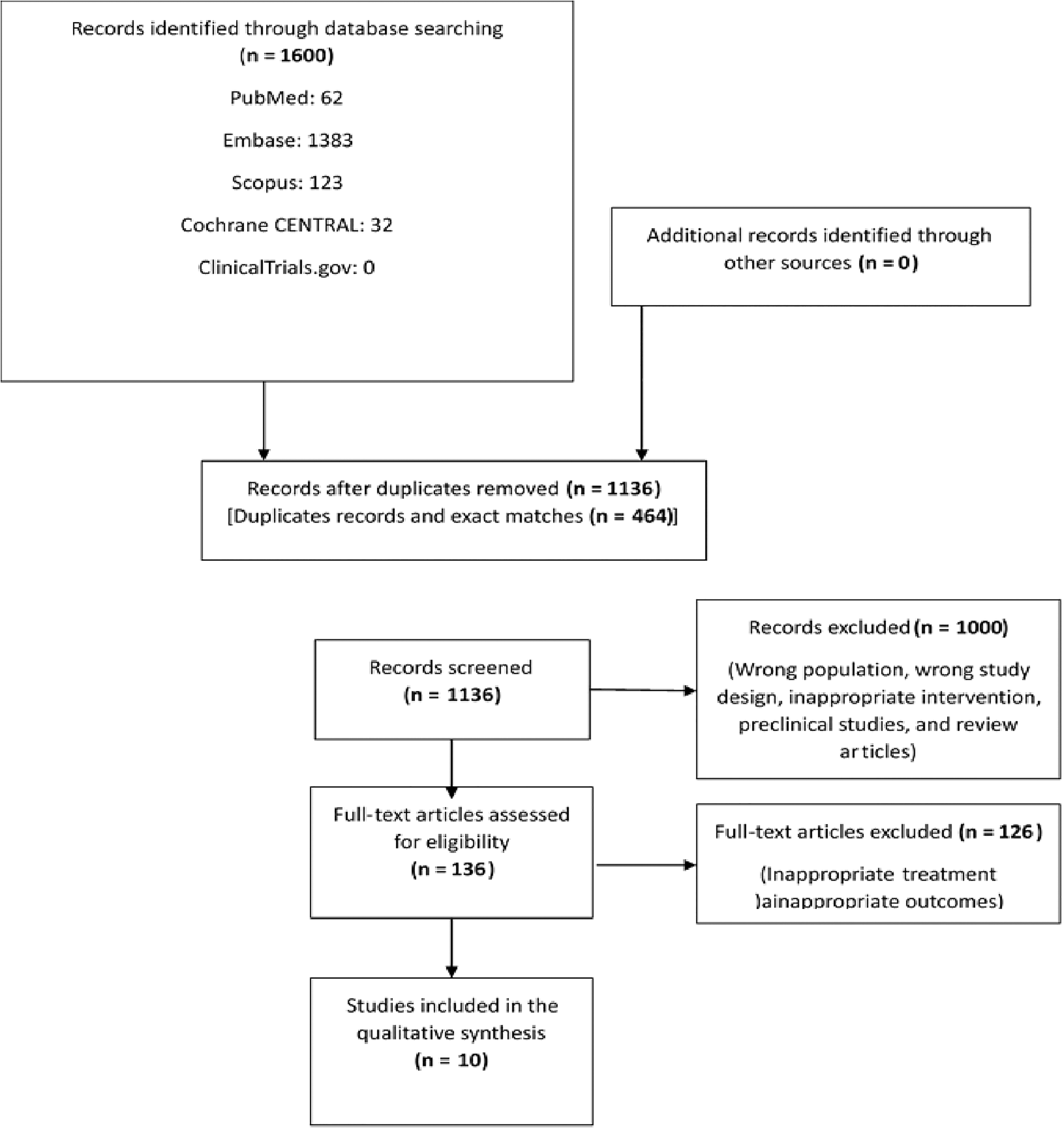
Our initial literature search identified 1600 studies. Following deduplication, 1136 articles underwent title and abstract screening, resulting in the exclusion of 1000. The remaining 136 articles were assessed based on predefined inclusion criteria. However, 126 were excluded due to inadequate information or missing outcomes. Ultimately, 10 articles (Seven RCTs, one quasi-experimental study and two observational studies) were deemed suitable for in-depth review. Meta-analysis was conducted on eligible nine articles (Figure 1).
Flow chart of the study selection process.

Study characteristics
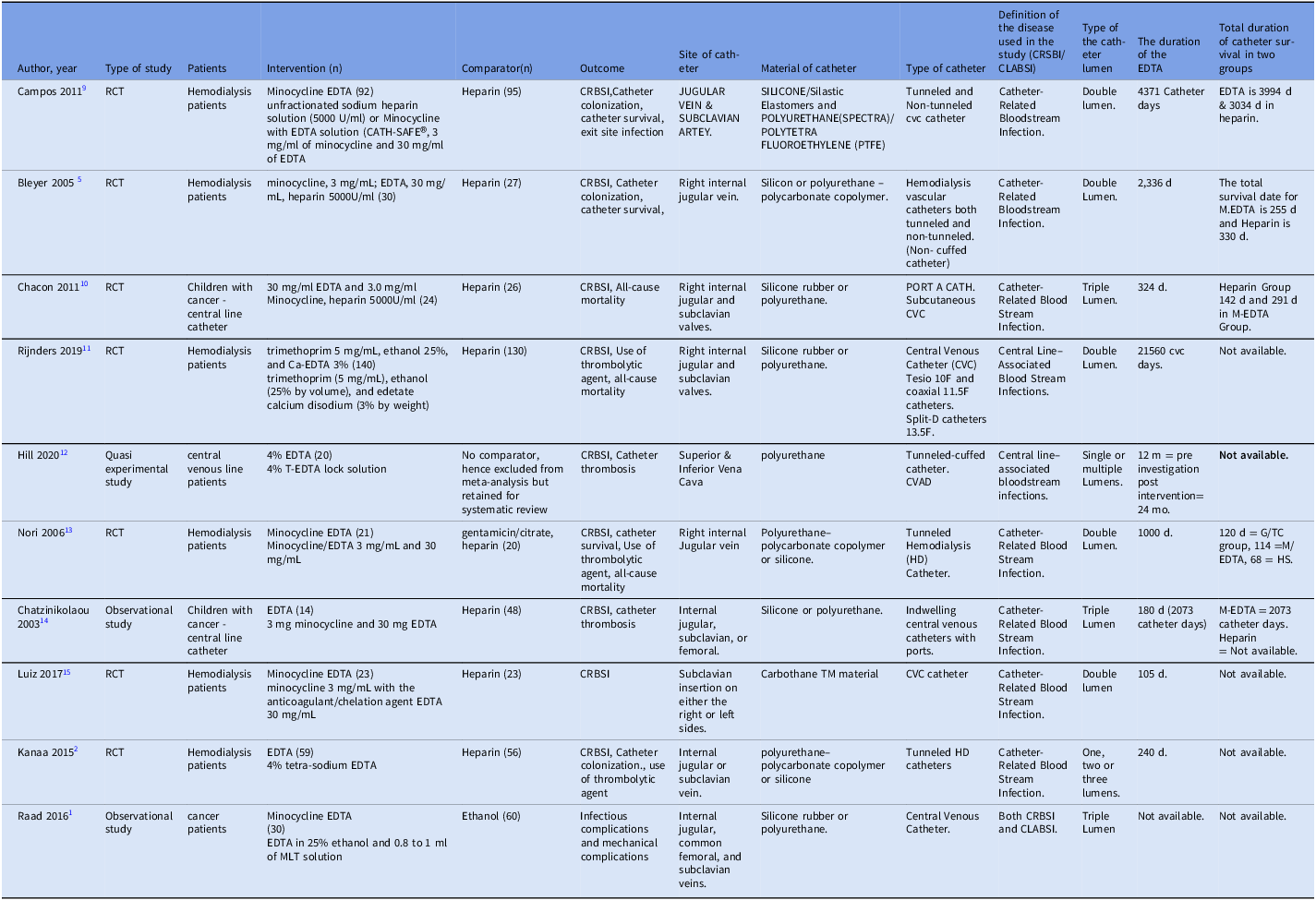
Table 1 summarizes essential information regarding the characteristics of the included studies. Briefly, studies were published from 2005 to 2019 with a total of 938 patients, including 453 in the EDTA group and 485 in the control group. The included studies employed randomized controlled trials as well as observational studies to investigate the efficacy of various interventions in reducing catheter-related bloodstream infections and other complications associated with central venous catheters. The patient populations varied, encompassing hemodialysis patients and pediatric oncology patients. Interventions included EDTA +/- antimicrobial combinations and control arm included non-EDTA compound (mostly heparin) +/- antimicrobial combinations. Outcomes of interest included CRBSI rates, catheter colonization, catheter survival, and all-cause mortality. The studies utilized different catheter types, materials, and lumen configurations, including tunneled and non-tunneled CVCs, port-a-cath systems, and hemodialysis catheters. The duration of catheterization and specific definitions of CRBSI varied across studies.
Characteristics of the included studies

CRBSI, Catheter-related blood stream infection; CLABSI, central line bloodstream infection (CLABSI); NOS, New castle Ottawa scale.
Outcomes
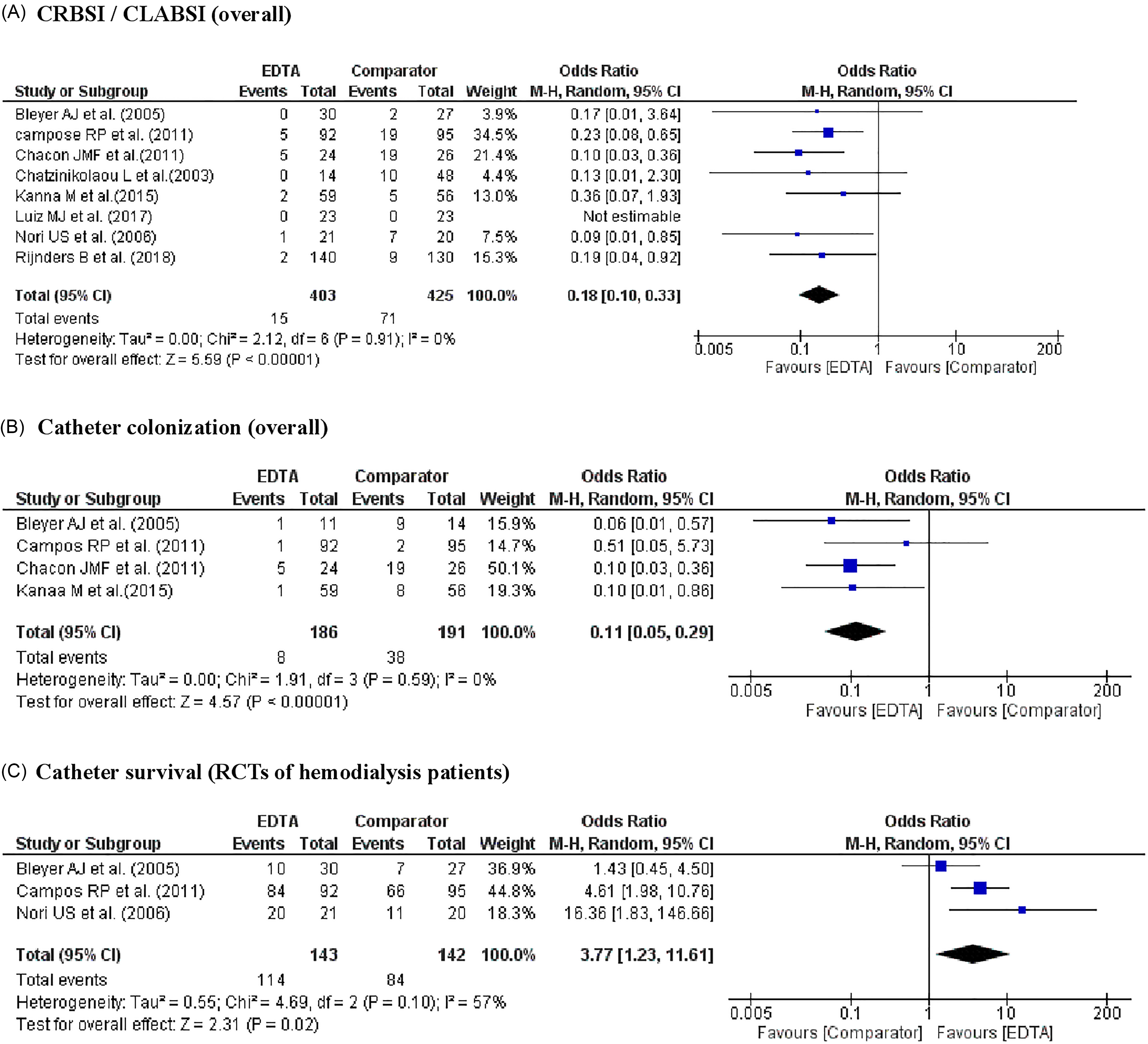
Eight studies reported the total number of CRBSI or CLABSI Data of 403 patients in the EDTA group were compared with 425 patients in the control group. We observed a statistically significant reduction in the total number of CRBSI or CLABSI with the EDTA group as compared to the control group (15 vs 71, respectively) (RR: 0.18; 95% CI: 0.10, 0.33; I2 = 0%; P < 0.00001) (Fig 2A). Corresponding funnel plot (supplemental fig S1) showed no publication bias of the included studies. Further subgroup analyses showed significant improvement with EDTA as compared to comparator [OR: 0.18 (95% CI: 0.09–0.35)] selectively among the included RCTs (supplemental figure S2) and among the hemodialysis patients [OR: 0.22 (95% CI: 0.10–0.49)] (supplemental figure S3). This unequivocally establishes advantage of EDTA in reducing CRBSI/CLABSI, regardless of quality of evidence, types of studies or subgroup specific evidence.
Meta-analysis of Catheter-related variables. 2A. There was significant improvement with EDTA as compared to comparator [OR: 0.18 (95% CI: 0.1–0.33)]. 2B. There was significant improvement with EDTA as compared to comparator [OR: 0.11 (95% CI: 0.05–0.29)]. 2C. There was significant improvement with EDTA as compared to comparator [OR: 3.77 (95% CI: 1.23–11.61)].

Four studies reported the total number of catheter colonization; data from 186 patients in the EDTA group were compared with 191 patients in the control group. We found a statistically significant decrease in the total incidence of catheter colonization in the EDTA group compared to the control group (8 vs 38, respectively) (OR: 0.11 (95% CI: 0.05–0.29), (Fig 2B). Further subgroup analyses revealed significant improvement with EDTA as compared to comparator [OR: 0.14 (95% CI: 0.04–0.51)] in the subset of hemodialysis patients as well (supplemental fig S6).
Three RCTs reported catheter survival in hemodialysis patients; data from 143 patients in the EDTA group were compared with 142 patients in the control group. We observed a significant increase in the catheter survival with the EDTA group as compared to the control group (114 vs 84, respectively) (OR: 3.77; 95% CI: 1.23–11.61; I2 = 57%; P < 0.02) (Fig 2C).
Three RCTs reported the number of patients requiring thrombolytic treatment in the hemodialysis patients. Despite a trend, there was no statistically significant difference in the number of patients requiring thrombolytic treatment with EDTA as compared to control (79/220 vs 27/206, respectively) (OR: 2.77 (95% CI: 0.99–7.79; I2 = 65%; P = 0.05) (supplemental figure S7).
The other outcomes including catheter thrombosis (overall) and catheter dysfunction (RCT-hemodialysis) were not statistically significant between the two groups. The subgroup information indicates data availability only in the mentioned group (see supplemental figure S4-S5). Although not included in the meta-analysis Hill et al reported no catheter thrombosis with EDTA lock solution. Reference Hill and Garner12
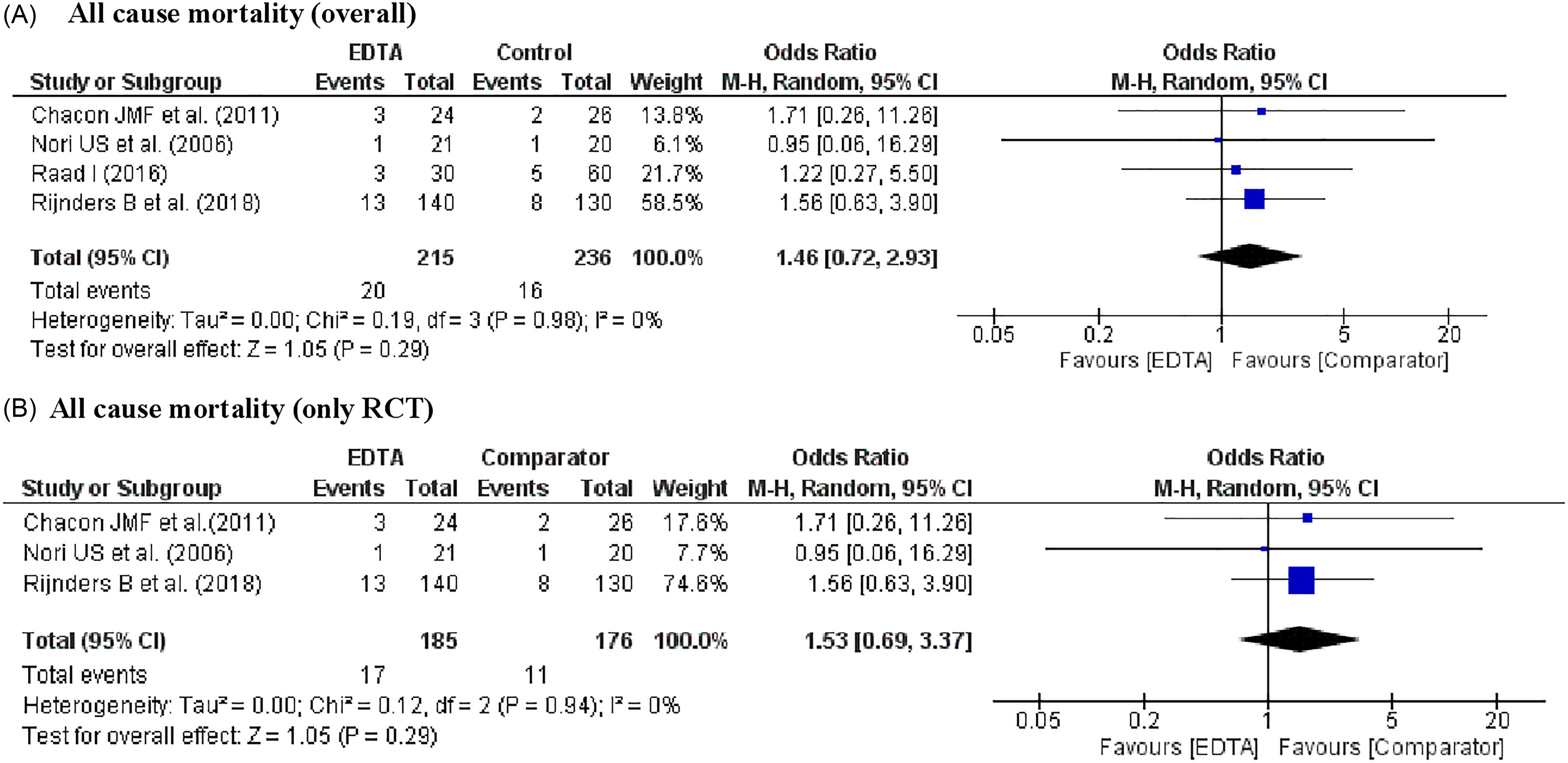
Three RCTs and one observational study reported all-cause mortality. Analysis revealed no statistically significant difference between EDTA and comparator for overall and for RCT specific subgroups (Fig 3A-B)
Meta-analysis of all-cause mortality. 3A. There was no significant difference [OR: 1.46 (95% CI: 0.72–2.93)]. 3B. There was no significant difference [OR: 1.53 (95% CI: 0.69–3.37)].

Bias analysis and GRADE of evidence
The funnel plot was made for CRBSI/ CLABSI. There was no publication bias detected as observed by the visual symmetry of the plots. (Supplementary figure S1)
The risk of bias assessment for the included studies was conducted using three standardized tools: the Cochrane Risk of Bias (RoB) tool for randomized controlled trials (RCTs), the ROBINS-I tool for quasi-experimental studies, and the Newcastle-Ottawa Scale (NOS) for observational studies. The majority of the RCTs demonstrated a low risk of bias across all domains, including randomization process, deviations from intended interventions, missing outcome data, measurement of outcomes, and selection of reported results. Specifically, Campos et al. (2011), Bleyer et al. (2005), Chacon et al. (2011), and Luiz et al. (2017) were assessed as having a low risk of bias in all domains. Rijnders et al. (2018) had a moderate risk of bias in the randomization process and selection of reported results, while Hill et al. (2020) and Nori et al. (2006) were rated as having a serious risk of bias due to issues in the measurement of outcomes and missing outcome data, respectively. Kanaa et al. (2015) showed a moderate risk of bias in the measurement of outcomes. The ROBINS-I tool was used to assess the single quasi-experimental study by Hill et al. (2020) which had a serious overall risk of bias, primarily due to serious bias in the measurement of outcomes and moderate bias in the selection of participants and classification of interventions. The Newcastle-Ottawa Scale (NOS) was employed to evaluate the two observational studies. Chatzinikolaou et al. (2003) scored seven out of nine, indicating a low risk of bias, with full marks in the selection and outcome domains but no points in comparability. Raad et al. (2016) scored five out of nine, reflecting a higher risk of bias, with lower scores in the selection and outcome domains and no points in comparability. (Supplemental tables ST1-ST3)
The GRADE assessment revealed low certainty of evidence for the effectiveness of EDTA lock solution in reducing catheter-related bloodstream infections (CRBSI) and catheter colonization, primarily due to serious risk of bias, though results were consistent and precise. For catheter survival, the evidence was of moderate certainty, with no serious concerns regarding risk of bias, inconsistency, indirectness, or imprecision. However, the evidence for all-cause mortality was of low certainty, as serious risk of bias and imprecision limited the confidence in the findings. (Supplemental tables ST4)
Discussion
Major findings of this meta-analysis are lower rate of CRBSI/CLABSI, lower catheter colonization, and higher catheter survival with EDTA in the lock solution compared to the control group. We report that there is a statistically significant 82% reduced risk of CRBSI or CLABSI in the EDTA group. The results are similar to the network meta-analysis of the comparative efficacy of various antimicrobial catheter lock solutions in preventing CRBSI or CLABSI by Dang FP et al. Reference Dang, Li and Wang16 The long-term use of central venous catheters resulted in bacterial colonization in the luminal side and this leads to bacteremia. Reference Milstone, Reich and Advani17 The formation of microbial biofilm inside the lumen of the catheter due to colonization either from infuscate or catheter hub, can cause CRBSI or CLABSI. Reference Zwiech, Adelt and Chrul18 The patients at high risk of CRBSI or CLABSI were those on hemodialysis and children with cancer. EDTA catheter lock solution disrupts the biofilm and it has anti-staphylococcal and anti-fungal action, thereby preventing the occurrence of CRBSI or CLABSI Reference Raad, Chatzinikolaou and Chaiban7 which are two of the important absolute indications of line removal. Furthermore, it has been demonstrated that EDTA acts as a biofilm matrix disruptor by chelating iron, calcium, and magnesium are three crucial components of the biofilm extracellular matrix. Reference Raad, Chaftari and Zakhour1 The combination of EDTA with minocycline provides a synergistic action of both the agents; EDTA will break the biofilm and facilitate the antibiotic penetration and its direct contact with bacteria. Reference Venkatesh, Rong, Raad and Versalovic19 Chacon JMF et al. analyzed the antibiotic usage reduction in EDTA and the control group in children with cancer. Reference Ferreira Chacon, Hato de Almeida and de Lourdes Simões10 They found that the mean time free of infection was 9.69 months in the M-EDTA group and 4.72 months in the heparin group. As a result, children using M-EDTA experienced a notable decrease in the necessity for antibiotic treatment. The M-EDTA group also required hospitalization at a much lower rate. On analyzing the results of individual studies, Luiz MJ et al. (2017) were the only study to report no difference in the incidence of CRBSI or CLABSI in the EDTA and control group. This could be attributed in part to the small sample size of the trial. Reference Luiz, Scavone and Tzanno15
Here we also reported a statistically significant 89% reduction in catheter colonization in the EDTA group compared to the control group. Catheter colonization is strongly correlated with CRBSI or CLABSI. A study by Rijinders.et al reported that there is a significant and strong association between catheter colonization and bloodstream infection. Reference Rijnders, Van Wijngaerden and Peetermans20 They also suggest that catheter colonization can also be used as a surrogate endpoint while evaluating the efficacy of various antimicrobial solutions in the prevention of CRBSI or CLABSI. A preclinical study by Sherertz et al. demonstrated that using EDTA-containing lock solution over heparin-vancomycin or heparin alone has a beneficial effect in preventing catheter colonization, CRBSI, or CLABSI and had better anticoagulant effect over heparin. Reference Sherertz, Heard and Raad21
EDTA, a chelating agent commonly used in catheter lock solutions, has been found to disrupt bacterial quorum sensing mechanisms. Quorum sensing is a communication process among bacteria that coordinates gene expression in response to cell population density. By chelating metal ions such as iron, zinc, and magnesium that serve as cofactors for quorum sensing regulatory proteins, EDTA interferes with bacterial signaling pathways. This disruption inhibits the production of quorum sensing signaling molecules, thereby attenuating virulence factor expression, biofilm formation, and bacterial pathogenicity. Consequently, EDTA’s ability to interfere with quorum sensing presents a promising strategy for combating bacterial infections associated with medical devices, including catheter-related bloodstream infections. Further research into the specific mechanisms underlying EDTA’s effects on quorum sensing will contribute to the development of novel antimicrobial therapies targeting bacterial communication systems. Reference Bari, Belalekar, Poojary and Rohra22
Catheter survival was higher in the EDTA group when compared with control. A study by Bleyer et al. reported that catheter failure was mainly due to clotting. They also reported that catheters were less frequently removed in the EDTA group when compared with the heparin group. Reference Bleyer, Mason, Russell, Raad and Sherertz5 The use of an anticoagulant agent may be due to the catheter thrombosis or may be due to poor blood flow unrelated to the catheter. A study by Campos et al. reported that the 90-day Catheter-related bacteremia-free catheter survival was 91.3% in the EDTA group and 69.3% in the heparin group. Reference Campos, do Nascimento, Chula and Riella9 One study demonstrated that catheter removal due to clotting was similar in both the EDTA and control groups. Reference Kanaa, Wright, Akbani, Laboi, Bhandari and Sandoe2 This explains that dysfunction of the catheter may be due to either intra-luminal or extra-luminal (formation of fibrin sheath) catheter problems. The study also reported that EDTA lock solution was not as effective as heparin for maintaining catheter patency evidenced by increased blood flow rate and decreased need for thrombolytic treatment in the heparin group.
Caution is warranted when interpreting our results. The material of the catheter, the site of catheterization might have an impact on catheter colonization rates, catheter survival rates, and catheter infection rates. This might affect the outcome. Only one study reported the exit site infection and incidence was 8.7% in the EDTA group and 9.4% in the control group. In patients with CVCs, exit site infections are an additional source of morbidity and can result in bloodstream infections even after the catheter is removed. Reference Dang, Li and Wang16 The exit site infection is influenced by the factors like education of the staff and skin preparations. Dressing care mainly plays a role in preventing exit site infection. Evidence shows that chlorhexidine-impregnated dressing was highly effective in preventing exit site infections. Reference Ho23
Conclusion
This review concludes that the EDTA catheter lock solution is effective in the prevention of catheter-related bloodstream infections compared to heparin/ethanol by reducing microbial catheter colonization & increasing catheter survival in hemodialysis patients, non-hemodialysis patients, and children with cancer. However, more evidence is required to establish the role of EDTA in preventing catheter dysfunction, catheter thrombosis, and all-cause mortality.
Supplementary material
The supplementary material for this article can be found at https://doi.org/10.1017/ice.2025.10246
Data availability statement
Data is available with the corresponding author on request.
Acknowledgements
This work was supported by Fusion Healthcare Private Limited (FHPL/FHC/PO/28/2024-25), who was not involved in the scientific aspect of the study.
Author contribution
(AG)& (SC1= Soumyadip Chatterji) prepared the protocol. (SC2= Sayan Chakraborty), SC1 and AG did the literature search and entered data in excel. SC1 and AG conducted the analysis and prepared the forest plots. SC1, SC2, and (SB) wrote the initial version of the manuscript. All authors edited and finalized the manuscript. SC1 and AG contributed equally as senior authors.
Financial support
This work was supported by Fusion Healthcare Private Limited (FHPL/FHC/PO/28/2024-25), who was not involved in the scientific aspect of the study.
Competing interests
Authors did not have any other conflict of interest.
Ethical standard
This systematic review did not involve direct experimentation with human participants or animals, so ethical approval was not required.
Transparency Declarations
Fusion Healthcare Private Limited has a commercial preparation of EDTA.