Environmental Education for Sustainability
In 2002, UNESCO launched the Decade of Education for Sustainable Development (DESD) with the founding principles of respect for others and respect for the planet's biodiversity and ecological processes. In response to the DESD, Australia launched sustainability education initiatives for schools and communities that culminated in the release of the national sustainability curriculum framework (Department of the Environment, Water, Heritage and the Arts, 2010). In line with the DESD approach, researchers for the Australian approach suggest that ‘Education for Sustainability motivates, equips and involves individuals and groups in moving towards a more sustainable world. Education for Sustainability consists of active participation in learning and engaging people in change’ (Australian Research Institute in Education for Sustainability, 2006, p. 2).
Researchers have also reviewed the effectiveness of coastal and marine education programs (Wortman, Cooke, Hebert, & Tilbury, Reference Wortman, Cooke, Hebert and Tilbury2006). The key findings of this review are that while most educational programs have focused on the provision of information about our coast, a more effective way of teaching is to give participants the opportunity to experience, discuss, and reflect on issues. Integrating more coastal and marine education programs that take these recommendations into account will be critical for progressing toward marine sustainability.
The Role of Experiential Learning
Experiential learning is an educational methodology that posits learning as a process in which understanding is created through the transformative power of participatory experience (Davis & Stocker, Reference Davis, Stocker, Wooltorton and Marinova2006; Down, Reference Down, Wooltorton and Marinova2006; Kolb, Reference Kolb1984; Netherwood, Stocker, & Palmer, Reference Netherwood, Stocker, Palmer, Wooltorton and Marinova2006; Wooltorton, Reference Wooltorton and Filho2006). Experiential learning includes an action that creates an experience, reflection on the action and experience, abstractions drawn from the reflection, and application of the abstraction to a new experience or action (Stehno, Reference Stehno1986). Experiential education has been used extensively for environmental education (Adkins, Reference Adkins and Simmons2002; Bogner, Reference Bogner1998; Brody, Reference Brody2005; Davis & Stocker, Reference Davis, Stocker, Wooltorton and Marinova2006; Netherwood et al., Reference Netherwood, Stocker, Palmer, Wooltorton and Marinova2006; Stepath, Reference Stepath2004, Reference Stepath2006, Reference Stepath2007; Wooltorton, Reference Wooltorton and Filho2006; Zeppel, Reference Zeppel2008). By deepening our understanding of what makes outdoor experiences meaningful to participants, we may be able to design programs that can foster spiritual connections, connections to others, and connections to self (Loeffler, Reference Loeffler2004).
Marine experiential education involves getting people to interact with the ocean. Stepath (Reference Stepath2006) provides an excellent summary of the state of marine experiential education, and demonstrates how people learn and change after interacting with the ocean. Marine experiential education may have the potential to transform the way people feel, think and behave in relation to the ocean. In the present article we explore this possibility.
Ecopsychology/Deep Ecology and Conservation Psychology
The theoretical framework of the research was nested within two related yet different disciplines: (a) ecopsychology and deep ecology, and (b) conservation psychology. Ecopsychology and deep ecology framed the emotional and experiential aspects, while conservation psychology focused on discovering perceived attitudes and behavioural changes. Use of the different theoretical backgrounds allowed for the emergence of a more holistic understanding of the educational impacts.
Ecopsychology and deep ecology call for experiential and emotional connections with the non-human world. These aspects of human awareness are often described with spiritual connotations, and many authors within ecopsychology and deep ecology view the natural world with reverence. Within these fields, there is a call for direct, sensory experiences in the natural world to increase awareness and a sense of connection (Abram, Reference Abram2011). Research within these fields is predominantly qualitative and interpretive.
In contrast, the field of conservation psychology, which is more empirical in its approach, is concerned with documenting connections between human behaviour and the achievement of conservation goals (Clayton & Meyers, Reference Clayton and Myers2009). Conservation psychology calls for a better understanding of how attitudes about the environment change and how these attitudes in turn affect behaviour.
The present research applied these two epistemologically different schools of thought and explored their possible integration.
Significance of the Research
The present research addressed the need for the creation and assessment of new, visually based, experiential marine educational techniques in order to foster connection to the ocean. Since humans learn more deeply from direct experience and engage well with visual education methods, and because images are now ubiquitous in our society, the combination of experiential and visual learning was justifiable (Ibanez, Reference Ibanez2004; Kolb, Reference Kolb1984). Our research also gave young people a chance to have a significant life experience (SLE) with the ocean, one that could make lasting impressions. Positive SLEs (Chawla, Reference Chawla1998) are powerful precursors of personal wellbeing and environmental action (Kals, Schumacher, & Montada, Reference Kals, Schumacher and Montada1999; Mayer, Reference Mayer2004; Pooley & O'Connor, Reference Pooley and O'Connor2000).
No prior research in experiential marine education had tested photo-elicitation as a research methodology, and this study was the first of its kind. Furthermore, there has been little research focusing on participants’ direct experiences of the marine environment within the context of marine education. Underwater photo-elicitation is a new research method and is a significant contribution to marine education. It uses photos taken by participants to augment interviews in eliciting deep thought and conversation about the ocean. This study remains one of few to have described direct participant experiences in the ocean. Photo-elicitation is described in more detail in the methodology section of this article.
Technology can cause us to be more isolated from nature. Children and adults alike are now drawn to an electronic screen, taking away time from direct experiences outside. This trend is becoming more widespread, especially with children, and its negative influence on the human psyche is only getting stronger (Louv, Reference Louv2008). However, technology can also help people reconnect to the Earth. New technologies are available at ever-decreasing prices, which allow for innovative educational tools to be developed that will enhance connection to the environment. Digital reusable underwater cameras allow participants to directly engage with the ocean and record and share their experiences.
Theoretical Background
Theoretical Models
A number of theoretical models were employed to frame the study. This section covers psychological models that justify attempts to foster change in people's attitudes and intention to act toward the marine environment. It sets forth which factors influence people to act a certain way, dissects what makes up attitudes, and explores why attitudes are important when studying human behaviour and interaction with the environment.
Cognitive-Affective-Behavioural Model
The cognitive-affective-behavioural (CAB) model was used in this research to frame the methodology (Ajzen & Fishbein, Reference Ajzen and Fishbein1980; Eagly & Chaiken, Reference Eagly and Chaiken1993; Kaiser, Wolfing, & Fuhrer Reference Kaiser, Wolfing and Fuhrer1999). This model allows for people's cognitive, affective, and behavioural components of attitudes to be qualitatively analysed. Using this model, the researcher can assess whether people's knowledge and feelings have changed, and whether their behaviour is likely to change (Clayton & Myers, Reference Clayton and Myers2009, pp. 189–197). In the context of this research, ‘behaviour change’ includes, for example, intended changes in participants’ recreational interactions with the sea and practices of care or political action.
The CAB model, discussed further in more detail, is significant for the research because one goal of environmental education is fostering behavioural change, and the model is useful for understanding the precursors (attitudes) to such change.
Cognition
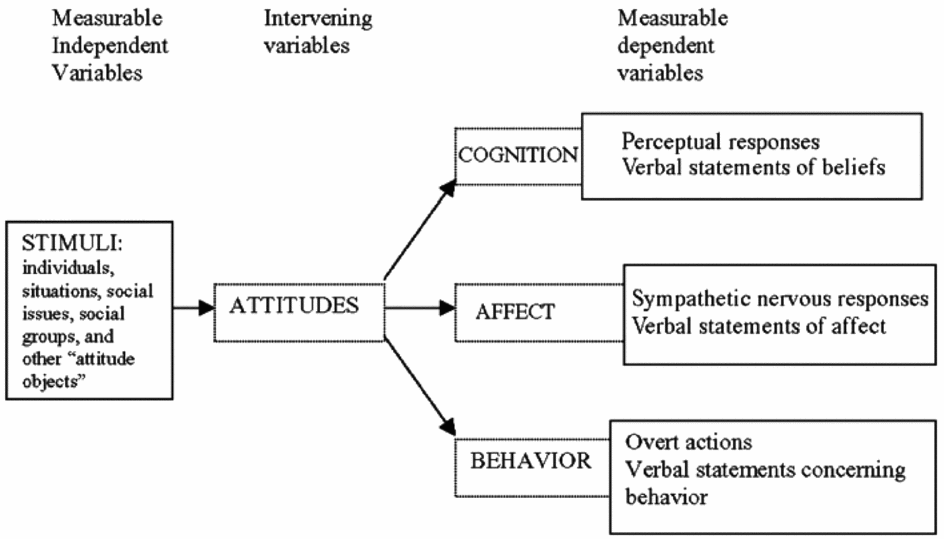
As a component of attitude, cognition includes perceptual responses and beliefs. Perceptual responses relate to awareness of the sensory world around and inside us. These responses include the five senses: touch, sight, taste, smell, and hearing. Beliefs play an important role in the formation of attitudes. According to some prominent theories, behaviour change ultimately comes from a change in beliefs (Ajzen & Fishbein, Reference Ajzen and Fishbein1980). If a goal of environmental education is to change environmental behaviours, the focus of educators must be the presentation of information that can lead to a change in environmental beliefs (Christensen, Reference Christensen2007; Pooley & O'Connor, Reference Pooley and O'Connor2000).
Affect
Affect includes sympathetic nervous responses and verbal statements of emotion. Emotional responses are very important in the formation of attitudes. For example, if someone has a painful experience in the ocean — for example, getting stung by jellyfish — s/he most likely will (at least initially) develop a negative attitude toward jellyfish. In contrast, if a positive emotion is associated with a particular experience, the person will most likely have a positive attitude toward that experience. Researchers have shown that attitudes resulting from direct experience are more likely formed through affect rather than cognition. In contrast, attitudes resulting from indirect experience (e.g., textbook learning) are more commonly cognitively based (Millar, Reference Millar1996; Pooley & O'Connor, Reference Pooley and O'Connor2000). Moreover, attitudes gained from direct experience (affect-based) have also been shown to be better indicators of behaviour than those gained from indirect experience (Millar, Reference Millar1996).
Behaviour
Behaviour includes overt actions by an individual and verbal statements regarding his/her actions. These statements can also express an intention to act (Ajzen & Fishbein, Reference Ajzen and Fishbein1980). Although this research does not focus specifically on fostering behaviour change, it does nevertheless assess, both qualitatively and quantitatively, change in intention to act in an environmentally responsible manner.
Theory of Planned Behaviour
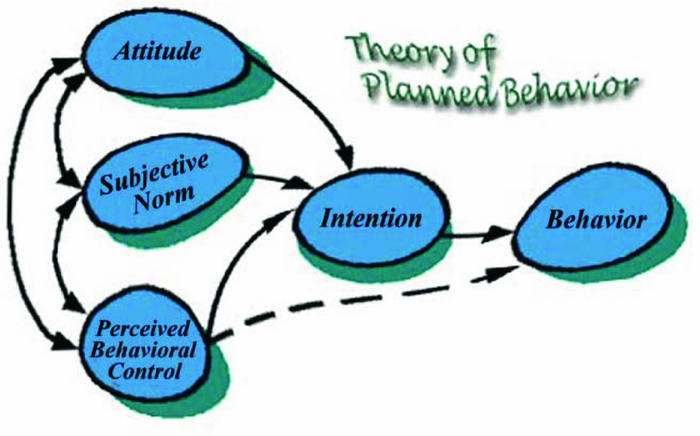
One of the most widely used concepts in environmental psychology and environmental education is Ajzen's (Reference Ajzen1991) theory of planned behaviour (TPB), which attempts to explain why individuals act in certain ways. The model is described below and shown in Figure 1.
Theory of planned behaviour, modified from Ajzen (Reference Ajzen1988) by Stepath (Reference Stepath2006).

According to the theory of planned behaviour, behaviours are influenced by intentions and perceived behavioural controls. Intentions are influenced by attitudes, subjective norms, and perceived behavioural controls.
Attitude is the degree to which a person has a favourable or unfavourable evaluation or appraisal of the behaviour in question. Subjective norms are the perceived social pressures to perform or not perform the behaviour. Perceived behavioural control is the perceived ease or difficulty of performing the behaviour that is assumed to reflect both past experience and anticipated impediments and obstacles (Ajzen, Reference Ajzen1991).
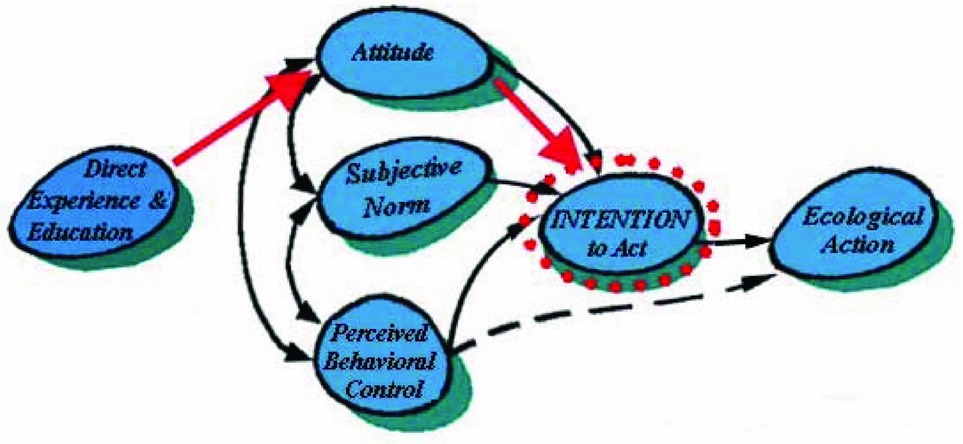
The model shown in Figure 2 shows how direct experience and education might influence attitude and lead to intention to act (Ajzen, Reference Ajzen1988; modified by Stepath, Reference Stepath2006). This model demonstrates one of the key ideas of this research, that direct experience in the ocean and sharing photos of this experience may lead to an attitude change.
Direct experience, education and theory of planned behaviour modified from Ajzen (Reference Ajzen1988) by Stepath (Reference Stepath2006).

If participating in an experiential environmental program can lead to a change of attitudes, this change could help influence intention to act (Hungerford & Volk, Reference Hungerford and Volk1990; Millar, Reference Millar1996; Mittelstaedt, Reference Mittelstaedt1999).
Components of Attitudes
Having examined how attitudes can influence intention to act, we will now examine the variables that make up attitudes themselves. This is a visual example of the CAB model discussed earlier. According to Susan Clayton and Gene Meyers, attitudes are evaluative reactions to objects or behaviours based on beliefs about those objects or behaviours. They serve to summarise and integrate our values and beliefs as they apply to a particular issue (Clayton & Meyers, Reference Clayton and Myers2009, p. 19).
Ajzen and Fishbein (Reference Ajzen and Fishbein1980) describe attitudes as comprising three major components: cognition, affect, and behaviour. The model shown in Figure 3 summarises their concept.
Cognitive-affective-behavioural model of attitudes (Ajzen & Fishbein, Reference Ajzen and Fishbein1980)

We chose to use the CAB model of attitudes in order to understand the impact of underwater photo-elicitation on the attitudes of research participants. The CAB model, often in conjunction with the TPB, is used extensively when researching attitudes and intention to act (Ajzen & Fishbein, Reference Ajzen and Fishbein1980; Armitage & Conner, Reference Armitage and Conner2001; Millar, Reference Millar1996).
The CAB model of attitudes is significant for the research because one goal of environmental education is fostering behavioural change, and the model is useful at understanding the precursors (attitudes) to such change.
Methodology
Photo-Elicitation
Photo-elicitation, first described by Collier (Reference Collier1967), includes an interview with a participant about photographic material that is often collected by the participant and used as a qualitative methodology for research (Collier, Reference Collier1967; Collier & Collier, Reference Collier and Collier1986; Harper, Reference Harper2002; Ibanez, Reference Ibanez2004). Photo-elicitation can be very beneficial in evoking deeper emotions from a participant than can a words-alone interview (Harper, Reference Harper2002). Outdoor photo-elicitation studies (Loeffler, Reference Loeffler2004) have shown that photos taken in non-human nature elicit spiritual connections, connections between people, and self-discovery. Underwater photo-elicitation is the concept of using waterproof cameras to capture the marine environment for educational purposes. Underwater photo-elicitation is a new technique and previously undocumented in the academic literature. However, this technique was expected to elicit similar kinds of responses in the participants as terrestrial photo-elicitation because during both experiences they are interacting intimately with non-human nature. Because our society is increasingly image and media based, photo-elicitation may enable and enhance ecologically sustainable thinking (Bergmann, Reference Bergmann2000).
Bergmann (Reference Bergmann2000) utilised photo-elicitation to study how people develop their cognitive perceptions towards environmental issues. Photographic aesthetic involvement makes it possible for the participants to develop a qualitatively new relationship with their topic, which is built on the final work as a participatory and uniting event (Bergmann, Reference Bergmann2000). While participants broaden their initial view, multiple perspectives can be constructed and their own positions and feelings clarified (Bergmann, Reference Bergmann2000). Photo-elicitation has also been used to study people's connections and emotions toward the coastal environment (Tonge, Moore, Ryan, & Beckley, Reference Tonge, Moore, Ryan and Beckley2013).
Mixed Methods
Mixed methods (qualitative and quantitative) were employed in this research to provide a more thorough understanding of the psychological and behavioural impacts of underwater photo-elicitation.
The qualitative component was multifaceted and consisted of workbook questions, individual and group interviews, classroom discussions, and the content (text) written on the photos chosen by participants (schools only).
The quantitative component utilised a pre- and post-study questionnaire (schools only). The questions were aimed at understanding possible attitude and behavioural changes. A demographic survey (schools only) was also taken to better understand the backgrounds of the participants.
Pilot Study
After receiving high-risk ethics approval from Curtin University, a pilot study with eight participants was completed on Rottnest Island, Western Australia. These were mostly colleagues and friends of the primary author. Through this pilot study, the methodology and research questions were refined. A paper discussing the pilot study was published in the 16th annual Australian Association of Environmental Education (AAEE) Conference proceedings (Andrews & Stocker, Reference Andrews, Stocker, Pearson, Hickey and Lummis2010).
SUYO! Community Program
Two Show Us Your Ocean! (SUYO!) programs were then run in Dunsborough, Western Australia, made up of a total of 17 adult community members between the ages of 18–35 and mostly female. They were recruited through flyers, emails, the project website, and word-of-mouth in the Dunsborough, Yallingup, and Margaret River communities. All those who applied were accepted. All of the participants had snorkelling experience; however, only a few had previous underwater photography experience.
At the beginning of each program, a training lecture was held at Samudra (a yoga studio and café in Dunsborough) to explain the basics of compositional photography and some technical aspects of underwater photography. Participants were encouraged to dive down, try different angles, and use the sun to help with lighting. After the training session was completed, they filled out a questionnaire that was designed to assess emotions regarding behaviour towards and experiences with the ocean. Cameras were handed out at the end of the lecture, and participants were given two weeks in which to take their photographs, and a date for interviews was chosen for each participant. Participants found places to snorkel around Yallingup and Dunsborough, Western Australia. The marine environment in general was very healthy, water visibility was good, and there was little to no urban development in most areas that were explored.
After the participant took their photos, in-depth, semi-structured interviews were conducted. Questions were asked about their experience and how taking these photos represented their coastal/marine values, and about how taking the photos may have changed their affective, behavioural, or cognitive domains towards the marine environment. At the conclusion of each interview, participants chose three to five of their favourite photos. Participants were deliberatively given no guidance or criteria for the choice of their favourite photographs. Many participants chose favourite photos either because of their aesthetic value, or the story or subject of the photograph. These photos formed the basis of discussion for the final workshop held after the interviews were concluded.
This workshop brought all the participants together again. Each participant had their favourite photos projected onto a large screen, and a group analysis of these photos followed. Each photograph was described and assessed for its subject, emotions and feelings, artistic elements, and new learning. While the facilitator (primary author) helped the dialogue along at times, he never defined the direction of the conversation and only occasionally prompted the group.
Responses were recorded and subsequently entered into Microsoft Excel for further analysis. At the end of the workshop, participants were asked to fill out a final questionnaire. This final workshop evaluation form provides data on the effectiveness of underwater photo-elicitation as an educational technique. Through this questionnaire, participants are given the opportunity to reflect on their entire experience. The questionnaire also allows an assessment of whether the participants’ cognitive, affective, or behavioural domains had been affected by participating in the study.
School Program
During 2010, five high schools in the Perth metropolitan region and the surrounding area were engaged in the research: South Fremantle State High School (SHS), Balcatta Senior High School, Busselton SHS, Comet Bay College, and Leeming SHS. All classes were Year 10s, with the exception of Busselton, which was Year 12.
At each of the schools, the program began with a one-hour PowerPoint presentation and training session using the underwater cameras. Students were given a workbook that described the program and that prompted them to fill out each section as it was completed. They also filled out a pre-module survey and a pre-fieldtrip questionnaire, including a demographic survey. The survey found that 42% of students had seldom snorkelled (1–5 times/year) and 35% had never snorkelled; 15% snorkelled frequently (minimum 5 times/year) and 8% were certified scuba divers.
Two schools opted for an additional 1-hour pool training session with the snorkelling equipment and cameras. Once these training sessions were completed, classes went to various coastal locations around Fremantle and Perth (listed later). Students snorkelled and took pictures. Because sometimes the weather was less than ideal and students and teachers wanted additional experiences, a few schools went on multiple fieldtrips. The snorkeling locations took place in relatively healthy environments, although most were offshore from urban development. Spots were located off Fremantle, Scarborough, and Busselton in Western Australia. The Fremantle spot included a shipwreck called the HMS Omeo. One school did not snorkel and instead photographed on a beach in Rockingham, Western Australia.
Once these fieldtrips were completed and students had assembled all their photos, one-hour (or more if needed) computer labs were run during which the students made PowerPoints of their favourite pictures. Afterwards, the students, as a group, discussed their favourite pictures using four questions as a focus of the discussion: (1) What is the subject of this photo? (2) Why did you take this photo? (3) What are the artistic elements in this photo? (4) How does this photo make you feel?
During the discussion, we talked about the students’ experiences in the water and asked the class to discuss each picture. The focus questions were often asked to get the student discussion back on track if students became distracted. In general, one hour was too short for students to complete both the PowerPoint and the class discussion. Students were given feedback forms and post-fieldtrip questionnaires at the completion of the program.
After the program was completed, additional sessions were run for interviewing students in groups of four and individual interviews with teachers. These interviews provided important and helpful feedback on the program.
Qualitative Methods
Community program
The data from the community program were drawn from worksheet questions, individual interviews, and group discussion.
School program
The data from the school program were drawn from student group interviews, individual teacher interviews, class discussions, and the participants’ PowerPoint slides.
The dominant research technique was qualitative. The majority of the data came from answers to questionnaires, excerpts from individual and group interviews, and group discussions. These data were analysed via coding, in which text-based information was arranged into themes that emerged from the data.
Commonly used by qualitative researchers, a code is most often a word or short phrase that symbolically assigns a summative, salient, essence-capturing and/or evocative attribute for a portion of language-based or visual data (Saldana, Reference Saldana2009, p. 3). The themes found in the text allowed a story to be induced from the data.
All coding was completed using Nvivo9, a Windows-based qualitative data analysis program produced by QSR International. Nvivo9 is used when there is a large amount of text-based or multimedia data that needs to be analysed and is used by a wide variety of social science disciplines (Nvivo International, 2012).
The data were broken down through two stages of coding.
First Cycle Coding
A provisional coding methodology was employed: The CAB domains of attitudes, which is common in conservation psychology research (Clayton & Meyers, Reference Clayton and Myers2009; Saldana, Reference Saldana2009).
Provisional coding employs a ‘start list’ set of codes determined prior to the time when fieldwork begins (Miles & Huberman, Reference Miles and Huberman1994, p. 58; Saldana, Reference Saldana2009). In this case, the CAB model was a good ‘start list’ because we knew that we wanted to examine attitudes and intended behaviour change. The CAB framework allowed for large blocks of data to be distributed between the CAB components present in the data through the process of holistic coding. Holistic coding is a broad-brush technique that does not break apart separate sentences. Rather, it attempts ‘to grasp basic themes or issues in the data by absorbing them as a whole [the coder as “lumper”] rather than analyzing them line by line [the coder as “splitter”]’ (Dey, Reference Dey1993, p. 104). Paragraphs are read and coded, often falling under multiple codes.
This first-stage coding allowed themes of the CAB framework to emerge from the data. Some subthemes, such as beliefs, linked with Ajzen's model of attitudes, while others, such as perspectives and skills, emerged from the data independently (Ajzen, Reference Ajzen1991).
Themes that emerged from the first stage coding were:
• Cognition: Perspectives, Beliefs, Observations, Knowledge
• Affect: Emotions, Spirituality
• Behaviour: New Behaviour, Skills.
These themes were then broken down into even more specific subthemes. A few are listed below:
• Knowledge: New Knowledge, No New Knowledge, Remembered Old Knowledge
• Perspectives: New Perspectives, No Change
• Beliefs: New Beliefs, Existing Beliefs
• Emotions: Negative, Neutral, and Positive
• Behaviour: Existing Behaviour, New Behaviour, Favourite Activity.
Second Cycle Coding
Second cycle coding methods are used to reorganise and reconfigure first-cycle codes into a smaller and more select list of themes (Saldana, Reference Saldana2009). This process allows the researcher to see how everything fits together and to reassemble the codes as needed in order to better tell the story emerging from the data.
After the coding was split into the CAB framework, we reshuffled the codes using a variation of ‘pattern coding’. Pattern codes are ‘explanatory or inferential codes, ones that identify an emergent theme, configuration, or explanation. They pull together a lot of material into a more meaningful and parsimonious unit of analysis’ (Miles & Huberman, Reference Miles and Huberman1994, p. 69)
The following core themes emerged from the second stage coding:
• Core Theme: Direct Ocean Experience
• Core Theme: Awareness
• Core Theme: Beliefs
• Core Theme: Affect
• Core Theme: Photo Attributes
• Core Theme: Perspectives
• Core Theme: Intended Behaviour Change
• Core Theme: Program Feedback.
The CAB framework was revisited and explored to determine whether any codes within the previous framework could be moved under the new categories. Once the new core themes had been established, each core theme was reviewed in depth. The new classification of data resulted in a new hierarchy: (1) core theme, (2) theme, (3) subtheme.
Through this review, themes within the core themes could be nested. For example, within the core theme of awareness, there were two themes — experience-based and knowledge-based — for which specific examples could be described. Sometimes, subthemes emerged from themes if further classification was necessary; however, for most of the data, subthemes were unnecessary. The example below lists a core theme with its associated themes and subthemes.
Core Theme: Beliefs
Theme: Spirituality
Subthemes: Connection to the Ocean, Self-Awareness, Sense of Wonder
Theme: Human-Ocean Relationship
Subthemes: Human Impacts, Stewardship, Respect, Humbleness, Bond To Nature, Appreciation, Personal Journey
Theme: Photography
Subtheme: Views of themselves as photographers
Once this structure was in place, the data were easily categorised and laid out, and the stories that emerged from the interviews and other qualitative sources were told. In order to consolidate these core themes further and make the data more easily accessible, a further categorisation occurred, grouping the core themes into four major sections: Awareness, Attitudes, Sense of Connection, and Intention to Act. The results of the research are categorised within these four sections for this article.
Quantitative Methods
Quantitative results for the school data came from pre- and post-questionnaires that revealed any shifts in environmental attitude or intention to act. The pre-module survey gave information about student and correlations about certain environmental attitudes and behaviours. These surveys were assessed empirically through statistical analyses. No quantitative data for the community program were collected, as the mixed-methods approach was only implemented with the school program. After the community program was completed, the researchers realised that using mixed methods would give more robust data.
Pre-SUYO! demographic survey
Pre-module surveys were handed out to participating classes. There were two major goals of the survey: to find out certain demographic information and to find out the amount and kinds of experience students had in and around the ocean and other outdoor environments.
The surveys were administered to all students, but in order to compare the survey results to the results of the pre- and post-attitude/intention to act questionnaires (described in the next section), the total number analysed was reduced to the number of individuals completing all of the requested surveys. For example, some questionnaires that did not have corresponding demographic surveys were not included in the final analysis. There were a total of 29 students who fully completed all surveys: demographic, pre- and post-attitude, and intention to act questionnaires. Therefore, the data analysed and presented below are based on this subset of the overall sample. Three schools are represented in the data (Leeming, Balcatta, and Busselton SHS).
Attitude and intention to act questionnaires
Students filled out attitude and intention to act questionnaires before participation in the program, and after the final lesson had been completed. The intention of the questionnaire was to find changes in student attitudes and intention to act towards the ocean. Statements were presented to the students and they answered how strongly they agreed or disagreed with that particular statement using a 1–6 point Likert scale format (1 = strongly disagree, 6 = strongly agree).
The data were tested for normality using both Kolmogorov-Smirnov and Shapiro-Wilk tests for distribution. Almost none of the data fell within the normal distribution; therefore a non-parametric test was chosen to analyse the data. The Wilcoxon signed-rank test was used to analyse the pre- and post-attitude and intention to act questionnaires. Significant changes between pre- and post-tests in the ranked means of the variables were determined.
Results
Qualitative Results
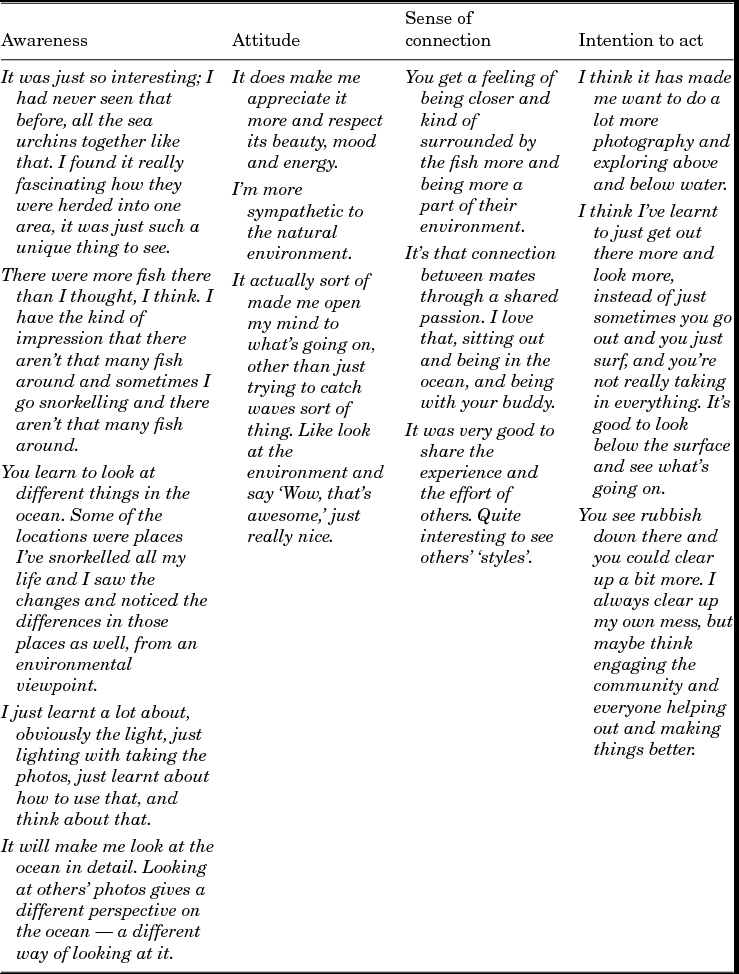
Tables 1 and 2 contain quotes from both community and school programs categorised into the four major sections of the data: Awareness, Attitudes, Intention to Act, and Sense of Connection. These emerged from final sorting of the themes and subthemes into these four major categories. While there were dozens of quotes to choose from, these quotes have been selected as prime examples of each category.
Community Quotes

School Quotes

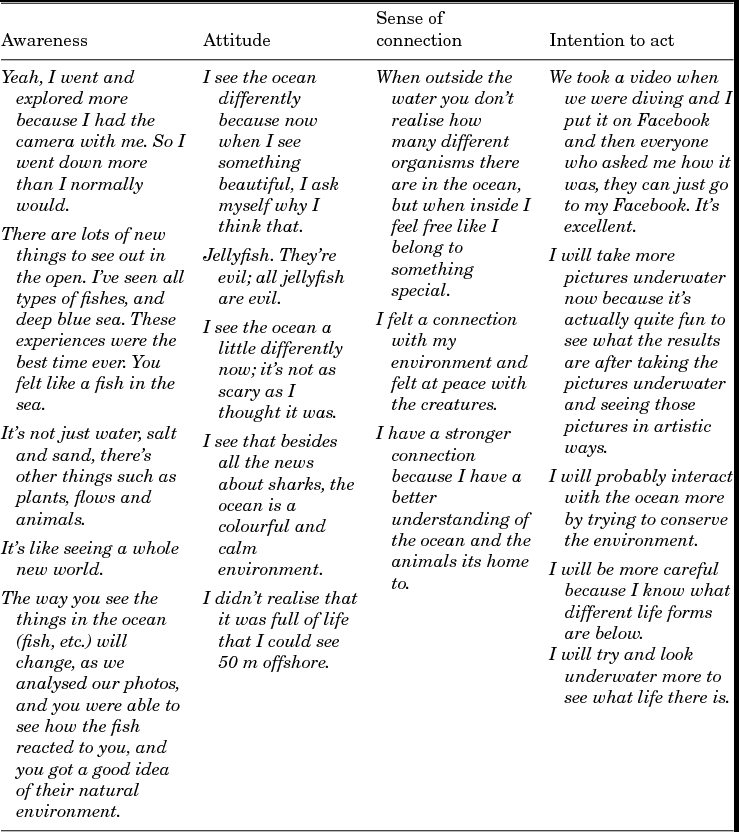
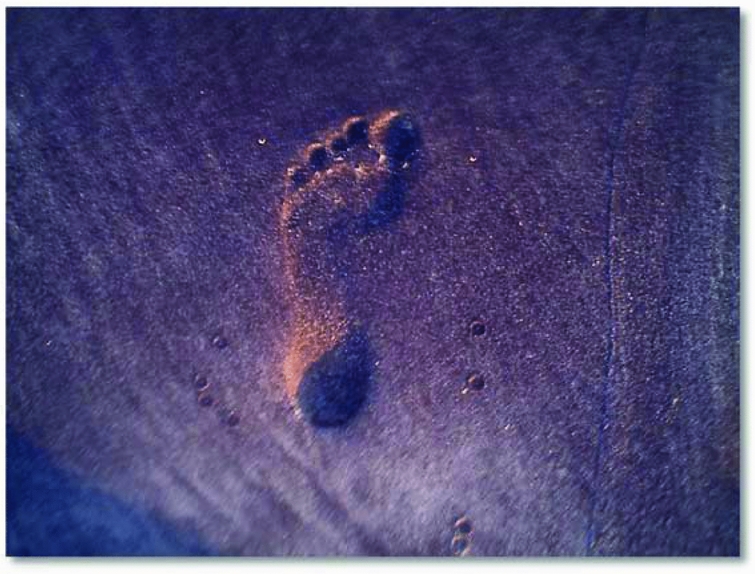
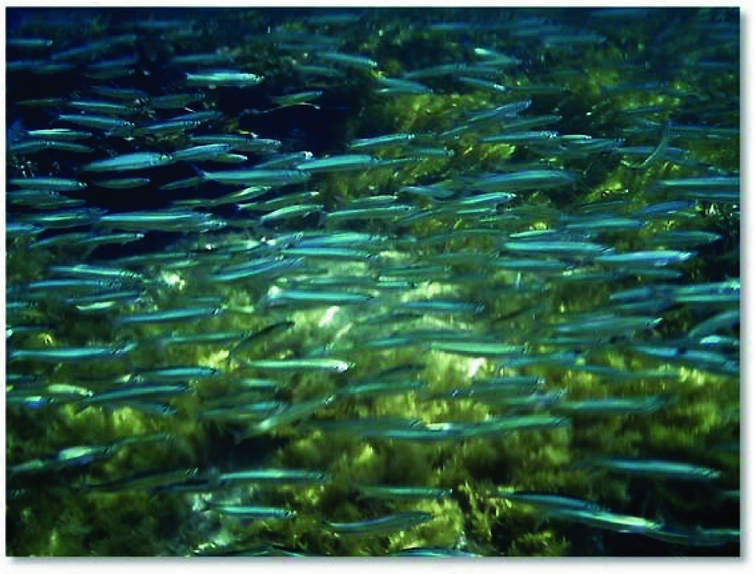
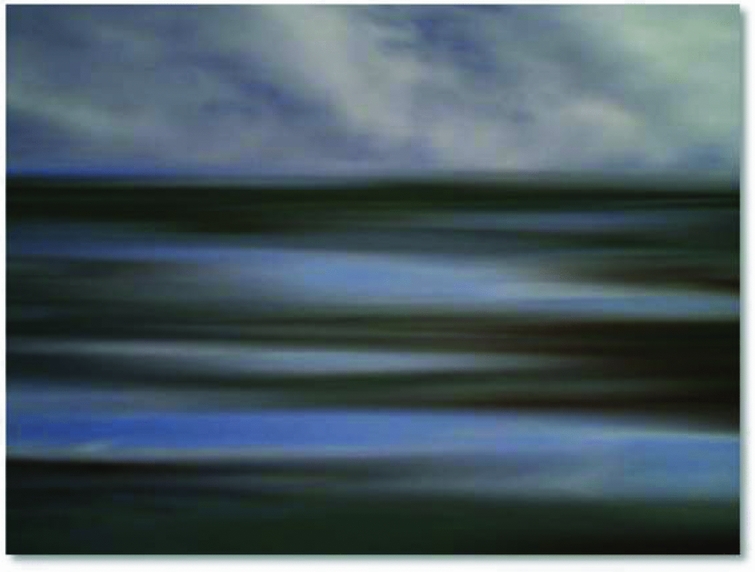
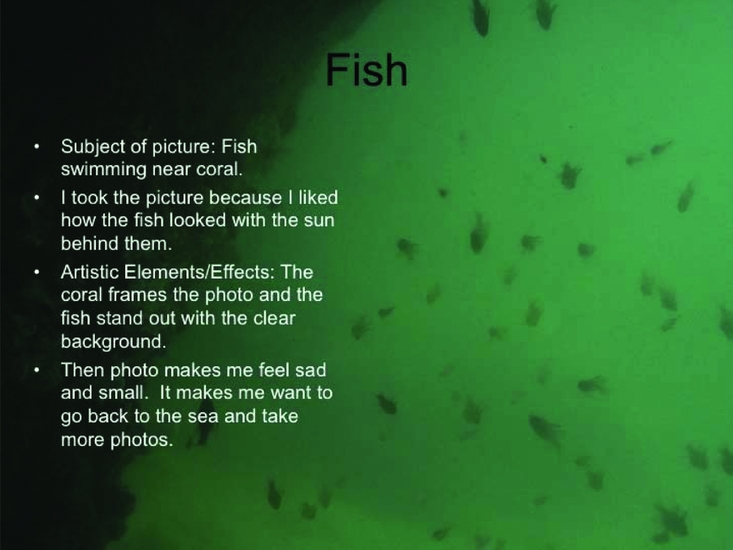
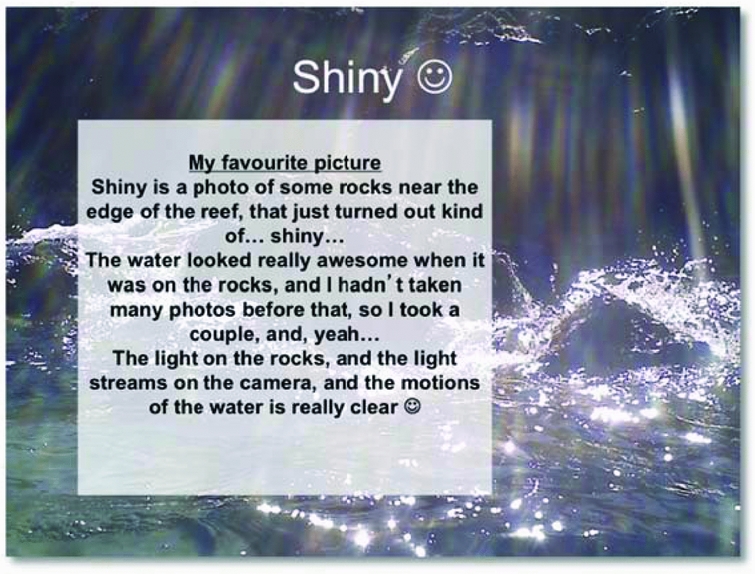
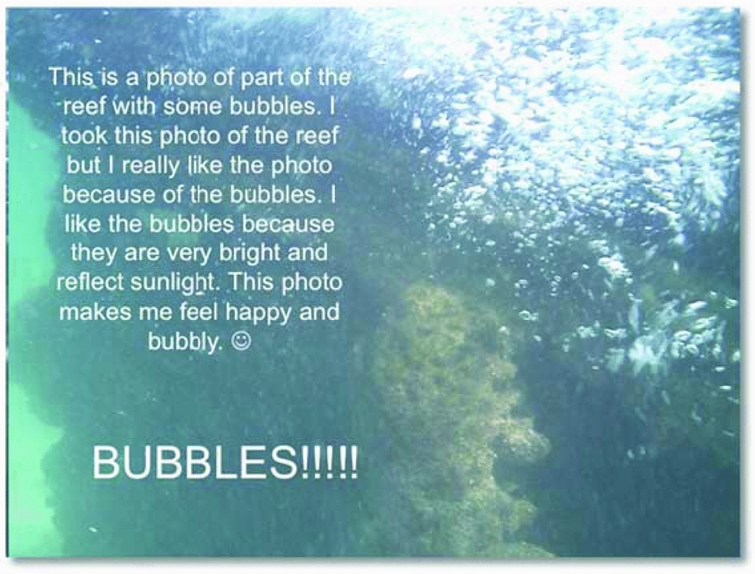
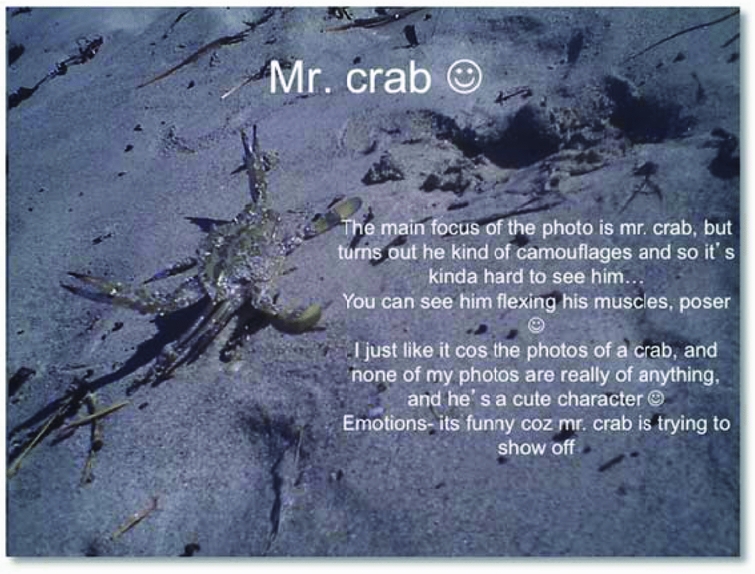
This section shows a few examples of community and school photographs. The community photos (Figures 4–10) have quotes below the photograph, while the school photographs are the PowerPoint slides that the students created. The questions relating to the photograph were answered on the slide itself.
I saw a few footprints, and it represents humans’ footprint on the environment. Obviously there's a lot of mining going on for those minerals in the sand, and the environment, but we've tried to minimise our footprint on that.

Now that's nice! That's what I was looking for. We've got the forward, the back and the middle. That's very good for that camera quality.

I put the camera half in the water and half out. What a painting that would be! That's just awesome. I love this one. This is my favourite I reckon. So, in between trying to get the splashes, this is like a crest of the wave coming at me and I just had it half out, half in.

Fish swimming near coral.

‘Shiny’.

‘Bubbles!!!!’.

‘Mr. Crab’.

Quantitative Results
The data were tested for normality using both Kolmogorov-Smirnov and Shapiro-Wilk tests for distribution. Almost none of the data fell within the normal distribution; therefore, a non-parametric test was chosen to analyse the data. The Wilcoxon signed-rank test was chosen to analyse the pre- and post-attitude and intention to act questionnaires since there were two sets of data to compare from the same participants. Significant changes in the ranked means of the variables were discovered.
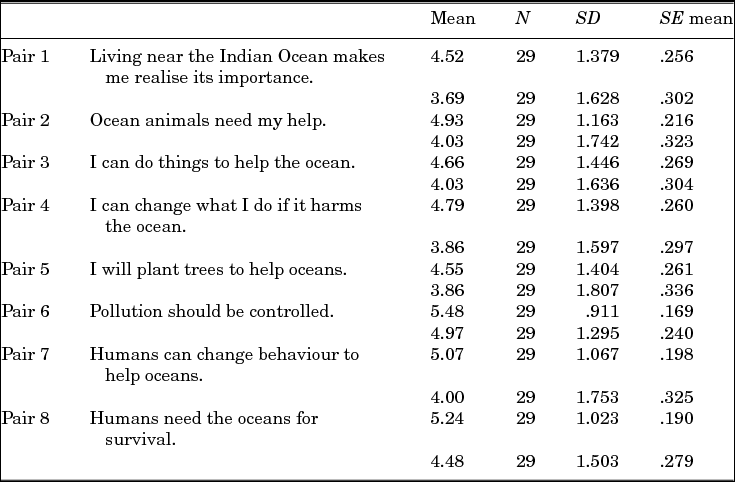
Of the quantitative questions asked, eight showed statistically significant differences before and after SUYO!. These eight questions are summarised below. Some of the effects of SUYO! were a surprise and/or opposite to the anticipated effect.
Table 3 shows the statistically significant differences between the means calculated for the answers in the pre- and post-questionnaires. A paired-samples t test was run to ascertain whether there were any significant differences between the pre- and post-answers.
Paired Samples t-Test Results

Means are based on the Likhert scale (1–6) with 1 being strongly disagree and 6 strongly agree.
Presented below are the pre- and post-survey result means, standard deviation (SD; how far the data point is from the mean) and standard error (SE; statistical accuracy of the measurement). Table 3 shows the statistically significant differences between the means calculated for the answers in the pre- and post-questionnaires. Eight questions demonstrated significant differences in the answers.
Initially, the results were disappointing in that students appeared less concerned and less worried about the oceans after SUYO! than before. Our interpretation of this is that in the absence of any formal instruction, the positive experiences of the students left them with the impression that the health of the oceans was actually stronger than they previously thought and less threatened than we believe it is. As a result of their generally positive experience in the ocean, according to this data, they were less worried about the future of the oceans than perhaps they should be. However, the positive experience of the students in the ocean environment will, hopefully, leave the students more sensitive to information in the future of needs for conservation and preservation of the ocean environment.
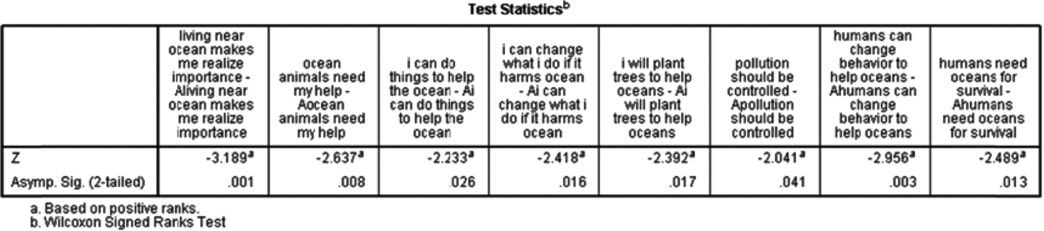
Figure 11 shows the significant results of the Wilcoxon signed-rank test. The Wilcoxon test was used when the data were analysed to determine whether the data were normally distributed using Kolmogorov-Smirnov and Shapiro-Wilk tests (Field, Reference Field2009). This test compares the scores in a sample to a normally distributed set that have the same mean and standard deviation as the sample. A non-significance result (p > .05) shows that the data is not significantly different from a normal distribution. However, if the test result is significant (p < .05), then the data are most likely not normally distributed (Field, Reference Field2009). Of the SUYO! data, only one pre- and post-questionnaire response was normally distributed. The rest of the data were not normally distributed. Therefore, another test was necessary to test for significance.
Kolmogorov-Smirnov and Shapiro-Wilk Tests (significant results).

The Wilcoxon signed-rank test was chosen as appropriate when there are two sets of scores to compare from the same participants that are not normally distributed. This test takes into account that the data violates the assumptions of the dependent t test (Wilcoxon, Reference Wilcoxon1945). The differences in these scores are calculated and then ranked. The sign of the difference (positive or negative) is assigned to each particular rank. This is essentially the non-parametric equivalent of the dependent t test, and allows for the data to be compared (Field, Reference Field2009). In short, all apparent difference in Table 1 are statistically significant at p < .05 (Table 2); z is the number of standard deviations from the mean where the data point lies.
The detailed evaluation of these quantitative results is as follows.
Student attitudes
Students were less likely to believe that animals in the ocean need their help after their SUYO! experience compared to before. This response could be attributed to the fact that because the students were exposed to a relatively healthy ocean environment in which they had mostly positive experiences, they did not understand that populations of marine animals are under pressure.
Students became less likely to believe that living near an ocean was a factor in making them realise its importance. This response could be attributed to the fact that students who participated in SUYO! developed the understanding that they did not have to live near the ocean to recognise its importance.
Students became less likely to believe that humans need the ocean for survival. This change in attitude is difficult to explain, especially in light of the previous finding. However, during the program, no information was conveyed to the students that minimised the dangers facing the oceans and what those dangers mean to human health and survival.
Students became less likely to believe that pollution should be controlled. Students might have relaxed their attitudes towards environmental problems because the ocean environment that they experienced was healthy. Of course, these students could not know how the ocean health has deteriorated. For them, the ocean was filled with new and interesting animals, and they did not understand how many more organisms that they would have seen decades ago. Also, students did not experience polluted waters or discover any major human impacts during their snorkelling journeys. In fact, one student was pleased that human debris (the shipwreck) was a home to a variety of marine organisms.
Intention to act
Students became less likely to believe that humans can change their behaviour to help oceans. Students became less likely to believe that they could change their behaviour if it harmed the ocean. These two statements demonstrate that after participating in the program, students felt less capable of making a difference in their behaviour or in the behaviour of others. This change in attitude clearly shows the need to educate students about their abilities to alter behaviour and thus to have a positive impact on the oceans. These responses make clear that students do not feel empowered to help the oceans.
Students became more likely to believe that they could not help the oceans. This response may have been due to the fact that students were not told how to help the ocean. For example, they did not learn about political activism or citizen science. Although they experienced first-hand engagement and exploration in the ocean and became more conscious of and positive toward the marine environment, they obviously lost confidence in their ability to foster change.
Students became less likely to plant trees to help the oceans. Again, this could result from students experiencing a relatively healthy ocean environment and therefore believing that they did not have to take positive action.
All of the significant quantitative results showed that the SUYO! program had the opposite effect to some of the intended outcomes. That is, the students’ attitudes and intentions to act became less favourable with respect to the need for care of the marine environment. This outcome is at odds to the outcome revealed by the qualitative data and points out the need to combine experiential activities with knowledge based activities and information. We believe that future programs can be significantly more effective, based on the information presented here.
Discussion
Model of Underwater Photo-Elicitation
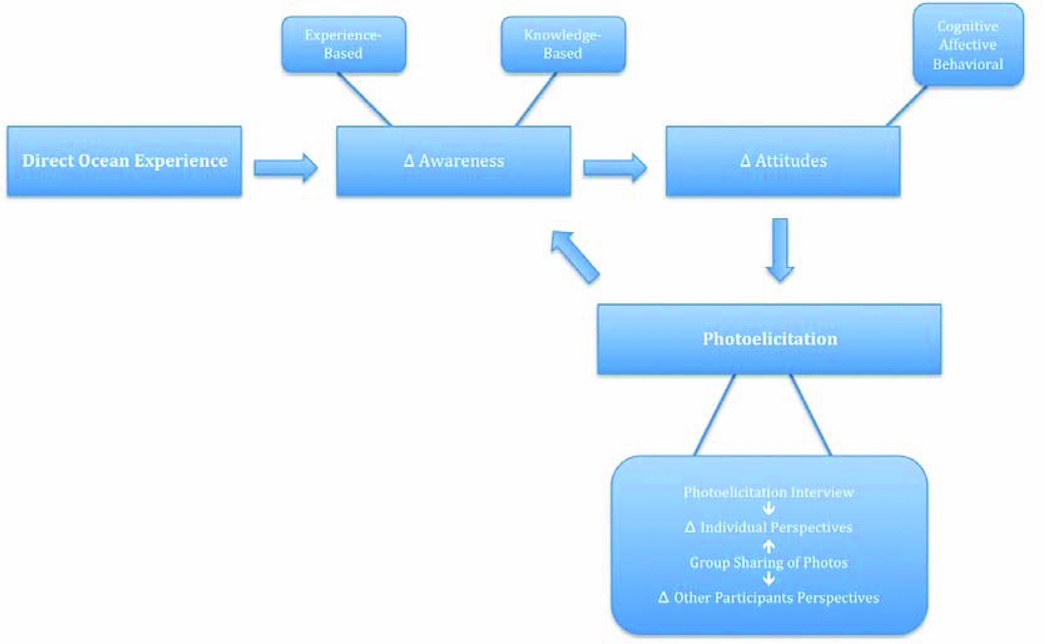
The underwater photo-elicitation (UPE) model (see Figure 12) that emerged from the qualitative and quantitative data summarises how UPE affects awareness of, perspectives on, and attitudes about the marine environment. It is an attempt to create a cohesive and comprehensive understanding of the learning processes underlying UPE.
Model of underwater photo-elicitation (UPE).

Similar to the action research and experiential learning cycles described by John Dewey, this model draws on the theory of planned behaviour (TPB; Ajzen, Reference Ajzen1991; Dewey, Reference Dewey1938). As with the process of UPE, both the experiential learning models and the action research models are cyclical in nature.
Definitions and Usages in the UPE Model
This section describes the model of UPE shown in Figure 12. Participants experience the ocean first hand by snorkelling (direct ocean experience), which leads to a change in awareness that is both experience based as well as knowledge based (even though the knowledge component was not focused on in this study). Change in awareness leads to a change in attitudes for the participant, which are comprised of cognitive, affective, and behavioural components. Once participants undergo the photo-elicitation process (look over their photos and share their experiences), there is another change in awareness and thus attitudes. This cycle continues if the participant undergoes the UPE process once more.
Direct ocean experience
In this instance, direct experience means snorkelling, exploring, and taking photos in the marine environment. The initial major intervention, direct experience can increase awareness of the ocean world. Some participants’ attitudes shifted following these activities, possibly because they may have felt more comfortable in or connected to the ocean after their first-hand experiences.
Photo-elicitation
The photo-elicitation process includes both individual and group work with photos taken in the marine environment. Through this process, which is the second major intervention, the participants gain new perspectives that can increase their awareness. Perspectives are a mental view or prospect (Webster, Reference Webster2012). When participants view and discuss photos of the underwater world, they are exposed to new perspectives as they see the different ways in which the ocean is portrayed and hear the different observations that people have about their experiences.
In this study, initial reactions to photographs were elicited from adults through individual interviews and from students through preparation of individual PowerPoint presentations of their chosen photos. Subsequent reactions to photographs were elicited from both adults and students through group discussions. Participants chose their favourite photographs from among the ones that they had taken and brought with them to the group discussions. Participants were exposed to new perspectives and gained a more complex awareness of the marine environment through the analysis and sharing of photos. Thus, their attitudes about the marine environment were re-examined.
Awareness
To have awareness means to be cognisant or conscious of. It can be both experience- and knowledge-based. Experience-based awareness derives from exploring environments directly and observing and discovering new animals, plants, and rocks, and so on. Knowledge-based awareness comes from the acquisition of information from an external source — for example, textbooks, classrooms, internet — and in the context of environmental education can mean knowledge of ecology and knowledge of how one can act with pro-environmental behaviour.
Attitudes
Attitudes are complex mental states made up of cognitive, affective, and behavioural (intention to act) components. Participants’ attitudes are examined before any interventions occur. Participants then have the chance to re-examine their attitudes about the ocean after the two major interventions — that is, direct experience and UPE. First, they are re-examined after direct experience in the marine environment. For example, participants may feel more comfortable interacting in the marine environment after direct experience. Next, they are re-examined after participation in the photo-elicitation process after they have gained new perspectives and new awareness.
Awareness of the Marine Environment
For both adults and students, awareness of the marine environment was increased through direct experiences in the ocean. Students who had never snorkelled before most likely sustained the greatest increase in awareness; however, almost all participants encountered new animals and marine environments. The SUYO! findings mirror the literature dealing with direct experience in the marine environment (and the non-human world in general) showing that direct experience has a major effect on awareness. The vast majority of studies have found that time exploring and learning about the non-human world increases participant awareness. SUYO! is a new educational technique that utilises direct experience in the marine environment to foster an increase of awareness of the ocean environment.
The photo-elicitation process also increased awareness of the marine environment. Participants were able to share their experiences, share new perspectives, and share new discoveries that they had on their excursions. Although the adults generally had more thorough and enthusiastic group discussions, and voiced more perspectives, the students also benefited from group work. SUYO!, whose results support earlier photo-elicitation literature discussing the technique's ability to increase participant awareness, provides a new tool for achieving that goal.
Attitude Change
One reason for studying and fostering attitude formation and change is that attitudes formed from direct experience can be strong indicators of future behaviour (Glasman, Reference Glasman2006). According to the qualitative data, mostly positive attitudes about the marine environment were fostered in participants. This outcome is a good indication that the program is useful at creating a general pro-environment attitude change. In addition, with the exception of South Fremantle SHS's encounter with a swarm of jellyfish, most of the experiences that participants had were positive. Participants, who enjoyed themselves and engaged well with the ocean environment, were also able to develop more positive attitudes toward one another.
In contrast, the quantitative data demonstrated some new and unexpected results. A similar marine education study by Carl Stepath found that a program comprising direct snorkelling experience on the Great Barrier Reef but, like SUYO!, lacked a classroom knowledge-based component, led to shifts toward pro-environmental attitudes (Stepath, Reference Stepath2006). This finding, which had been an expected result of SUYO!, was surprisingly not validated in quantitative data.
Standing alone, and on the positive site, the student qualitative data indicate the development of a stronger sense of connection to the marine environment and a desire for more interaction. However, the quantitative data showed unexpected shifts in attitudes that were not identified from the qualitative data. As a result of SUYO!, the quantitative analysis shows that, surprisingly, students were less likely to believe that the ocean needs more care from humans or that they themselves need to change their behaviour to be more environmentally conscious. Why some attitudes shifted in these surprising and unintended ways is discussed below.
Sense of Connection to the Environment
The qualitative data resulting from the current study demonstrate that UPE, applied both individually and during group workshops, is successful at eliciting emotional reactions from participants. In addition, it is clear that emotional reactions resulting from the underwater experience can be relived through photography (Harper, Reference Harper2002). Moreover, sharing photos as a group expands participants’ understanding that people can react quite differently to the same visual stimuli. Overall, both adults and students had positive experiences, and after these experiences they felt a stronger connection to the ocean. In all cases, participants engaged with and became more aware of the non-human world.
A sense of connection to the ocean appears stronger in SUYO! adults, probably because of the amount and quality of time that they spent interacting with the marine environment. In addition, the adult population was from an ocean-oriented community where they chose to live mainly because of its proximity to the water. In general, the students who seem to have had the strongest connection were from the Busselton SHS marine studies program. Their strong beliefs about the ocean were similar to those expressed by the adult participants. This similarity is most likely due to the fact not only that these students lived very close to the sea and that many of them interacted frequently with the marine environment, but also that they had selected to be in a marine studies program. Student beliefs could also have been influenced by their parents. Their parents might have chosen to live in Busselton (coastal, semi-rural Western Australia) because they value the seaside lifestyle and had passed these values onto their children.
After their SUYO! activities, both adults and students felt more connected to the marine environment and had a broader way of viewing and engaging with the ocean. Participants increased their understanding of and appreciation for how the ocean is, what kinds of life it harbours, and how they and others feel about the marine environment. Since most adult SUYO! participants entered the program with a strong sense of connection to and positive attitudes about the marine environment, these feelings were probably reinforced by the opportunity to share them with a group of like-minded people. Teachers thought that their students gained a better appreciation of the marine environment through their involvement in SUYO!.
The research demonstrates a new methodology to help people develop a sense of connection to the non-human world. The authors are aware of no other use in the literature of digital technology and direct experience in the marine environment to foster a sense of connection. Therefore, this study appears to add a new technique to the ecopsychology and deep ecology goals of establishing a sense of connection to the non-human world.
Intention to Act
After SUYO!, participants stated that they would not only interact more in the ocean but also engage in more photography. In addition, a few participants discussed having a stronger desire to be better environmental stewards. However, most likely because of a lack of empowerment information in the program, a trend emerged in the quantitative data demonstrating a disinclination to change negative behaviours, probably because the impact of these negative behaviours was not explained to the participants.
Although increasing awareness and engaging participants emotionally through direct experience and photography are important, the results of this research show that information leading to empowerment is also necessary if we are to create a balanced program and foster pro-environmental attitudes and perhaps responsible environmental behaviour. The next section discusses the need for and the way in which information can be integrated into a program such as SUYO!.
Modifications to Encourage Pro-Environmental Attitudes and Behaviour
In order to better understand why SUYO! appeared to lack effectiveness in fostering positive environmental behavior, we will briefly introduce the model of Responsible Environmental Behaviour (REB) and discuss how we could have better used this model when designing the research. REB is a theoretical construct that demonstrates how attitude is a basic driver of intention to act in an environmentally positive manner. The REB model sets forth variables that influence responsible environmental behaviour (Hines, Reference Hines1987). Environmental education research shows that programs must include information about ecology and the ownership variable of information about human impacts (Bogner, Reference Bogner1998).
However, previous studies vary in their conclusions regarding the effects of environmental knowledge and how attitude affects intention to act (Armstrong & Impara, Reference Armstrong and Impara1991; Bogner, Reference Bogner1998; Borden & Schettino, Reference Borden and Schettino1979; Bradley, Reference Bradley1999; Connell, Fien, Lee, Sykes, & Yencken, Reference Connell, Fien, Lee, Sykes and Yencken1999; Hines, Reference Hines1987; Hungerford & Volk, Reference Hungerford and Volk1990; Kuhlemeier, Van Den Bergh, & Lagerweij, Reference Kuhlemeier, Van den Bergh and Lagerweij1999; Maloney, Reference Maloney1975; Newhouse, Reference Newhouse1991; Ramsey & Rickson, Reference Ramsey and Rickson1976; Stepath, Reference Stepath2006; Tanner, Reference Tanner1980). A program such as SUYO! that uses technology in a holistic way and is already focused on shifting or fostering attitudes and values about the marine environment could also be improved by integrating ecological literacy/ocean literacy and critical thinking/action competence.
Ecological literacy is the understanding that humans are part of the ecology of the earth and that we are dependent on the Earth's resources to survive. Theoretically, a person who is eco-literate would understand the value of, and work toward, a sustainable society (Orr, Reference Orr1992). Ecological literacy is fairly low in the Australian school system and should be better integrated in order to advance the goals of environmental education within Australia (Cutter-Mackenzie & Smith, Reference Cutter-Mackenzie and Smith2003).
Closely related, ocean literacy is focused on imparting knowledge about marine ecology and human impacts, and how to become empowered to take positive environmental actions for the ocean (Greely, Reference Greely2008; Plankis & Marrero, Reference Plankis and Marrero2010).
If students become aware of the ocean through direct experience but do not know the ecologic significance of what they are experiencing, their awareness is only partial. If they do not learn about the impacts that humans are having on marine life, their lasting impressions might be only of the experiences that they had in the ocean on that day and the photos that they took. Although they might feel more connected to the sea, they will have little to no knowledge-based context in which to place their impressions. Despite the fact that their experiences, observations, and memories engage the students in terms of bridging the space of relation or helping them feel more connected to the ocean, these factors do not appear to directly encourage pro-environmental attitudes (Rose, Reference Rose, Massey, Allen and Sarre1999; Stepath, Reference Stepath2006).
Action competence within the field of environmental education fosters development of critical thinking as well as action via participation in democratic processes (Jensen & Schnack, Reference Jensen and Schnack1997). For instance, one could apply action competence by educating about how to get involved with environmental campaigns, or steps that students could use to reduce plastic pollution.
With the addition of information based upon the concept of ecological/ocean literacy, combined with action competence and integrated with proper use of the REB behaviour model, we might have fostered more pro-environmental attitudes and therefore more pro-environmental intended behaviour change (Hines, Reference Hines1987; Hungerford & Volk, Reference Hungerford and Volk1990; Plankis & Marrero, Reference Plankis and Marrero2010).
Further studies should be undertaken to see whether inclusion of knowledge-based components within a program of experiential UPE would be more successful in achieving this goal. Empowered with sufficient knowledge (ecological/ocean literacy) about marine ecology, human impacts on the marine environment, and how they could take positive action (critical thinking/action competence), the SUYO! students may not have experienced the unexpected attitude shifts that appear in the quantitative data.
Benefits of Bridging Disciplines
This study attempted to bridge the gap between two related disciplines, Ecopsychology and Conservation Psychology. The former focuses on experiential connection and emotional engagement with the non-human world and often describes these connections qualitatively. The latter focuses on quantitatively understanding attitudes and how they influence intention to act with pro-environmental behaviour.
Combining these disciplines contributed to a more holistic research methodology that appreciated and studied both the emotional and the intellectual aspects of learning. However, it also resulted in an unexpected outcome for the SUYO! program. The researchers began with the hypothesis that direct experience and emotional engagement would be enough to foster a shift with proactive environmental attitudes about the marine environment. While the attitudes about the marine environment and interest in the oceans was increased, attitudes about the need for proactive involvement in protection and restoration, and the magnitude of the environmental threats to the world's marine coastal ecosystems were not affected in the direction intended. Although some attitudes about the ocean did shift as expected, other environmental attitudes were either unaffected or shifted in an unexpected or even inappropriate way.
If the study had been only qualitative, almost all the data would have shown positive results for attitudes and intentions to act, and the matter of including knowledge-based components in SUYO! would not have been addressed. Thus, the addition of the quantitative methods (taken from conservation psychology research) led to a more thorough understanding of the underlying learning processes. In this way, the SUYO! research has taught us that mixed methods in research provide a fuller picture.
In addition, because we used both qualitative and quantitative methodologies and asked participants not only about connection and spirituality but also about attitudes and behaviour change, participants were encouraged to elaborate on more aspects of their experiences. Discussing all these elements allowed them to deepen their understanding of the ways in which they relate to the ocean.
Author Biographies
Dr Steve Andrews completed his PhD in Environmental Education from the Curtin University Sustainability Policy Institute in 2013 and received his BS from the University of California, Berkeley in 2007. His research and publication interests are environmental education, ecopsychology, deep ecology, and using technology to help people connect to nature. He is also interested in creating and evaluating educational programs that combine learning both through knowledge and emotional-sensory-bodily experiences in nature and rediscovering our human indigeneity. Steve teaches marine science courses at the University of Queensland Moreton Bay Research Station and is a researcher at the Southern Cross University Sustainability, Environment and Education research cluster.
Dr Laura Stocker researches and teaches at the Curtin University Sustainability Policy (CUSP) Institute in regional sustainability, coastal sustainability, climate adaptation, sustainability mapping, and sustainability planning. She coordinates the Masters in Sustainability and Climate Policy at CUSP. She was Deputy Leader of the Coastal Collaboration Cluster and is a Member of the Ocean Science Council of Australia. She and Gary Burke run monthly sustainability seminars at Margaret River in partnership with Transition Margaret River and the AMR Shire.
Dr Walter Oechel is recognised for his pioneering research on ecosystems and global change. His research has investigated the effects of climate change on ecosystem energy, water and carbon fluxes in Arctic, chaparral, and marine coastal ecosystems. He has also pioneered science education, winning the U.S. National Science Foundation, Director's Award for Distinguished Teaching and Scholarship with the introduction of the NSF GK-12 science education program PISCES that put graduate students in the classroom with K-8 teachers, significantly improving the performance of students and teachers. He was named one of Thomson Reuters ‘The Most Influential Scientific Minds’ in 2014.