Introduction
The incidence of head and neck cancer has risen by 30 per cent in the UK since the early 1990s. Head and neck cancers can be further divided into broader categories of laryngeal, oropharyngeal and thyroid cancers. Of these cancers, the prevalence of oral cancer is the highest in the UK, with over 6500 new diagnoses each year. This is followed by thyroid cancer and laryngeal cancer, with over 2500 and 2000 new diagnoses per year respectively.1
Because of the complex anatomy of head and neck structures, surgical interventions can pose serious detriments to patients’ physical and social wellbeing. Critical functions of speech, swallowing and breathing may all be affected. Therefore, there is a great need for an accurate and timely diagnostic process for head and neck cancers, in order to keep interventions as minimally invasive as possible, whilst also ensuring lower mortality rates and better outcomes for patients.
The symptoms and signs that patients present with are particularly variable within head and neck cancers as they largely depend upon the primary site affected. A two-week referral pathway with specific guidelines was devised to aid clinicians in making timely diagnoses. The two-week suspected cancer referral pathway was first introduced as part of the agenda laid out in The New NHS: Modern, Dependable,2 published in the UK in 1999, initially for breast cancers, and which was followed by the introduction of referral protocols for all other cancers in 2000.Reference Langton, Siau and Bankhead3 The underlying aim of this initiative was to ensure patients presenting to primary care with features in keeping with potential cancer diagnoses are promptly referred to specialist care providers within no more than two weeks. However, since its implementation, the two-week referral pathway has been subjected to a great deal of discussion, including whether or not it has had a significant effect on cancer diagnosis and survival.
In terms of head and neck cancers, it is said that the diagnostic yield from these referrals is fairly low, ranging from 10 to 15 per cent.Reference McKie, Ahmad, Fellows, Meikle, Stafford and Thomson4–Reference Hobson, Malla, Sinha, Kay and Ramamurthy6 In June 2015, the cancer referral guidelines were updated by the National Institute for Health and Care Excellence (NICE); this included renewal of the guideline ‘red flag’ symptoms.7 These symptoms were selected on the basis of their positive predictive values for high-risk associations with head and neck cancers from data collected from primary care settings. The NICE Guideline Development Group opted to include all symptoms with a positive predictive value threshold of 3 per cent or above, a slightly lower threshold than the previous guidelines where the positive predictive value cut-off was set at 5 per cent.Reference Tikka, Pracy and Paleri8 This was in the presumed hope that widening the risk factors prompting referral would aid diagnosis at earlier stages of disease progression, without overwhelming the system and over-investigating otherwise healthy individuals.
This study assessed referral rates to the head and neck cancer clinic in relation to: age range, incidence of a positive diagnosis by age range, which symptoms were most commonly referred to the head and neck clinic, and which symptoms were most likely to lead to a positive diagnosis of cancer. It subsequently assessed: which symptoms reached the positive predictive value threshold of 3 per cent (as recommended by NICE), how clinical risk stratification differed by clinician experience, and, finally, which risk factors were present in patients who were diagnosed with cancer. It is hoped that our findings can be used to establish new, updated referral criteria that increase the cost-effectiveness of the urgent referral pathway, with a higher rate of positive diagnoses and fewer overall referrals.
Aims
This study aimed to determine whether the risk factors and symptoms on the current referral guideline for suspected head and neck cancers are suitable. Our examination of patients diagnosed with cancer will hopefully improve our understanding of the risk factors and symptoms that occurred most frequently. Furthermore, we hope to clarify the relevance, for referrals, of risk factors and symptoms in patients who were not diagnosed with head and neck cancer.
Materials and methods
Study design
Data on the risk factors and symptoms of consecutive patients were collected retrospectively from referral letters to the University College London Hospital for suspected head and neck cancer on the two week wait pathway. The presence or absence of risk factors and symptoms was denoted by ‘Yes’ (score of 1) or ‘No’ (score of 0) respectively. We subsequently assessed: the initial clinic letter to the general practitioner, investigation findings, biopsy findings, and follow-up out-patient clinic letters concerning each patient's clinical and/or surgical management with a head and neck surgeon.
This study was approved by the University College London Hospital Caldecott Guardian as a service evaluation project.
Inclusion criteria
All patients with suspected head and neck cancer referred to the University College London Hospital between 30th May and 28th November 2016 were included, regardless of age, ethnicity, risk factors and symptoms. Data collected included patient age, risk factors and symptoms denoted on the referral form (Pan-London Head and Neck Urgent Referral Guidelines 2016; see Table 1 in the supplementary material, available on The Journal of Laryngology & Otology website). Other variables included the clinical risk stratification of patients based on the clinical assessment during their initial appointment, the grade of the doctor who saw them at the first appointment, and whether any investigations were requested by the clinician and their subsequent results.
Exclusion criteria
These were: referrals where head and neck cancer was not suspected; patients with incomplete records (the absence of a referral letter and/or letter to the general practitioner); patients who did not attend the first appointment after referral; patients who did not attend or who refused investigations; patients who did not attend follow-up appointments; patients with inconclusive histology results; and patients placed on ‘watch and wait’ management.
Patients who did not attend the first appointment, investigations or follow-up appointments more than two times were assumed not to require treatment, and were discharged from the University College London Hospital.
Outcome measures
The primary outcome was a diagnosis of cancer confirmed on biopsy and histology. The secondary outcome was the clinical risk of cancer, stratified into low, medium or high risk during the first appointment. Low-risk patients were either discharged, or asked to undergo clinical review with no further investigations. Medium-risk patients were sent for further investigations, such as ultrasound, barium swallow study, computed tomography or magnetic resonance imaging. High-risk patients underwent lesion biopsy and further imaging.
Statistical analysis
Sensitivity, specificity and positive predictive values were calculated to determine the diagnostic efficacy of symptoms and risk factors. The presence or absence of risk factors and symptoms are categorical data. Hence, a chi-square univariate analysis of risk factors was used to examine the relationship between individual risk factors and a head and neck cancer diagnosis. Odds ratio was used to approximate the risk of a cancer diagnosis for individual symptoms.
Results
Incidence
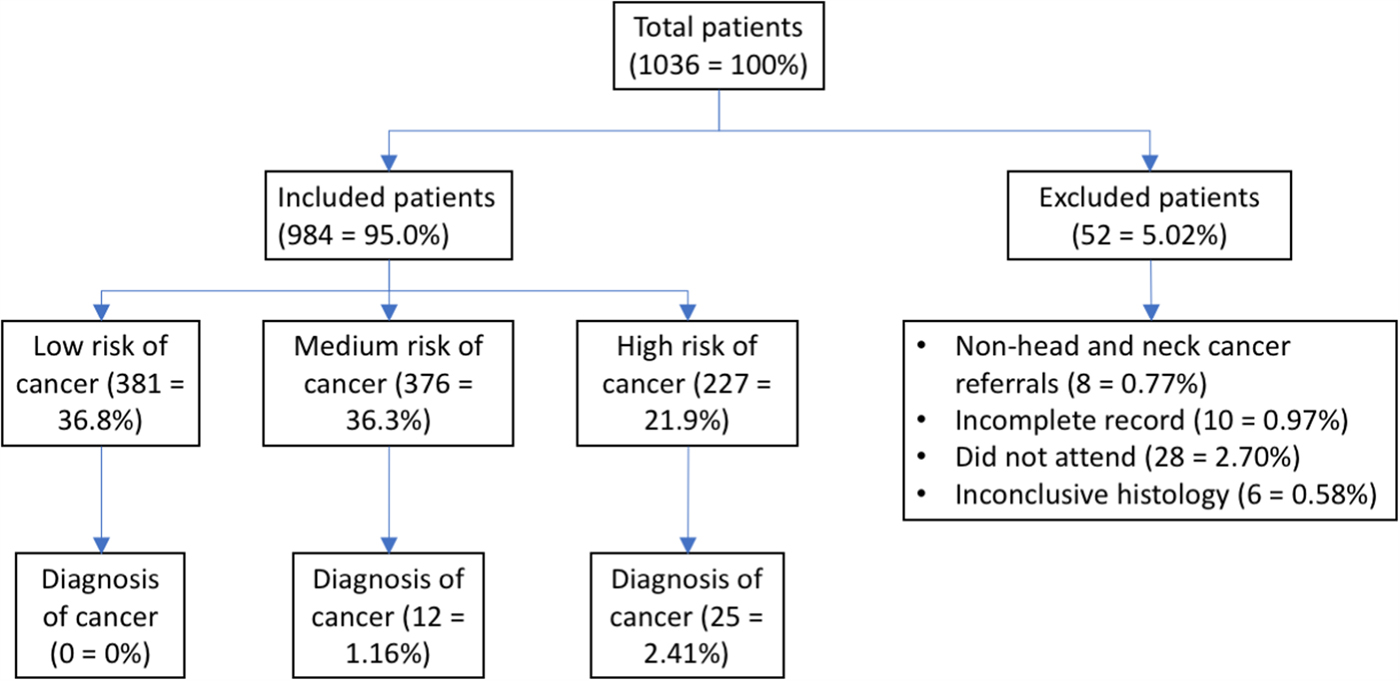
A total of 1036 patient referrals were made to the University College London Hospital under the two week wait head and neck cancer pathway during the six-month period. Fifty-two patients (out of 1036; 5.02 per cent) were excluded, as they were not referred using head and neck cancer referral forms, had incomplete records or failed to attend appointments. A total of 28 patients (out of 1036; 2.70 per cent) did not attend their initial appointments, follow-up appointments or investigations.
Of the 984 patients who were included in the study, on clinical assessment, 381 patients were stratified as low risk, 376 patients were classified as medium risk and 227 patients were classified as high risk. Patients who were classified as low risk were either discharged at the initial appointment or their lesions resolved spontaneously on subsequent follow-up appointments.
In total, 37 cases of head and neck cancer (out of 984; 3.76 per cent) were diagnosed. Of these, 12 cases were stratified as medium risk and 25 cases were stratified as high risk on clinical assessment during their initial appointments (Figure 1). The diagnostic yield is particularly low, at 3.76 per cent; 96.24 per cent of patients (947 out of 984) seen in the urgent head and neck cancer clinic did not have cancer.
Breakdown of patients included in and excluded from the study. Percentages were calculated as the number of patients in the respective categories divided by the total number of patients (n = 1036).

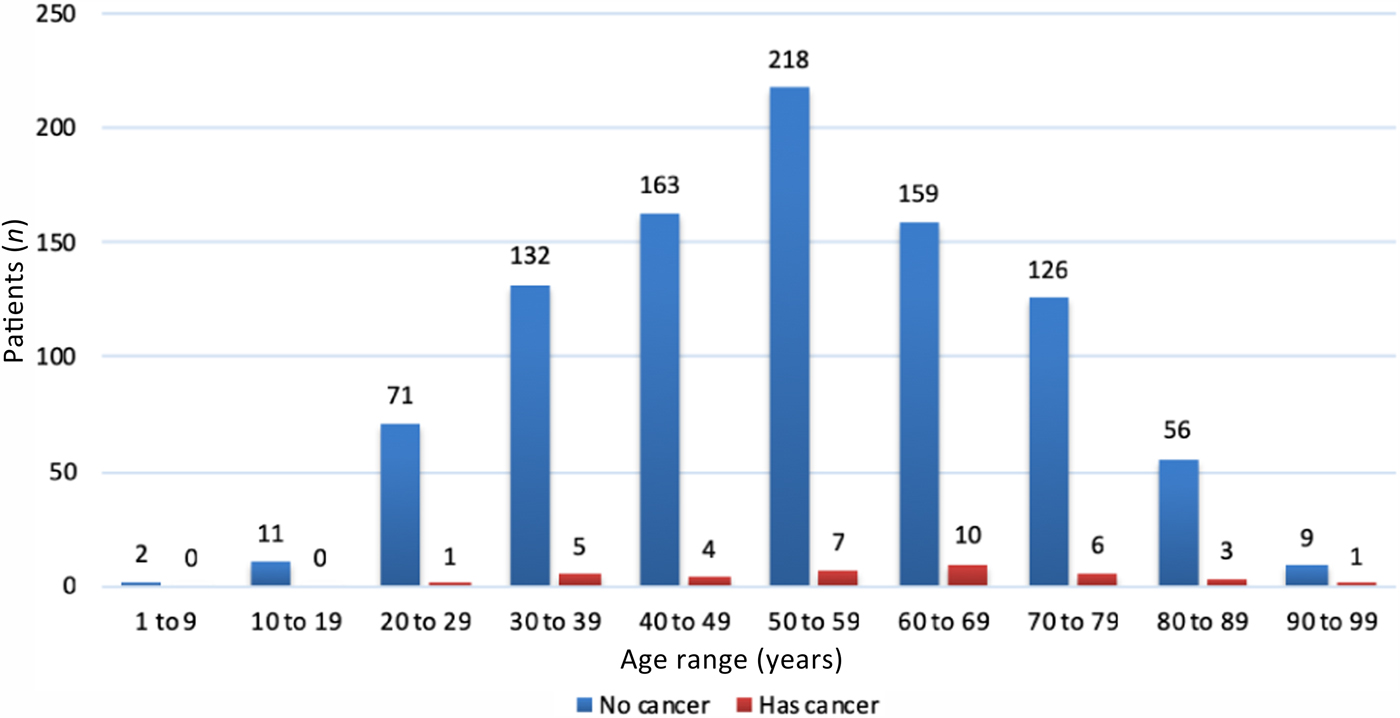
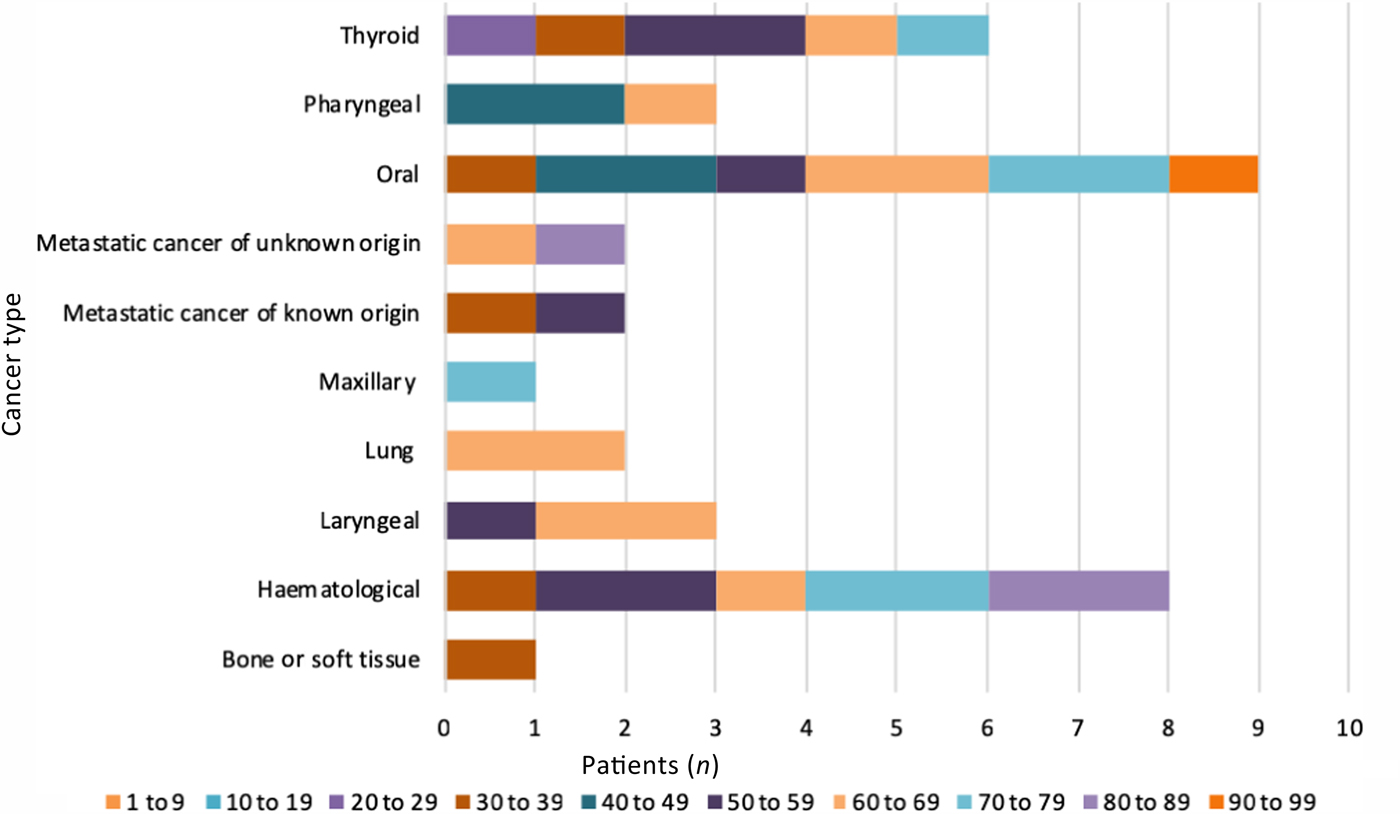
The mean age of patients was 53.8 years, ranging from 8 to 93 years. The age ranges of this patient cohort were normally distributed, where the highest number of referrals (n = 218) was made in the 50–59 years age group. The incidence of cancer was highest in the 60–69 years age group, accounting for 10 of the 37 diagnosed cancer cases (Figure 2). Given the rare occurrence and the varied location of cancers in the head and neck region, the correlation analysis between age and the diverse types of cancer (Figure 3) did not demonstrate any significant relationships.
Numbers of referrals and cancer diagnoses categorised by age.

Cancer diagnosis type categorised by age. (Key reflects age ranges, in years.)

Oral cancer was most commonly diagnosed within the dataset, with nine cases over the course of six months. This was followed by haematological cancer, with eight cases; this is explained by the pattern of extranodal manifestation of lymphoma, where head and neck was the second most common site of metastasis.Reference Smith, Rottscholl, Brosch and Reiter9 Thyroid cancer was the third most common cancer, accounting for six cases.
Risk factors
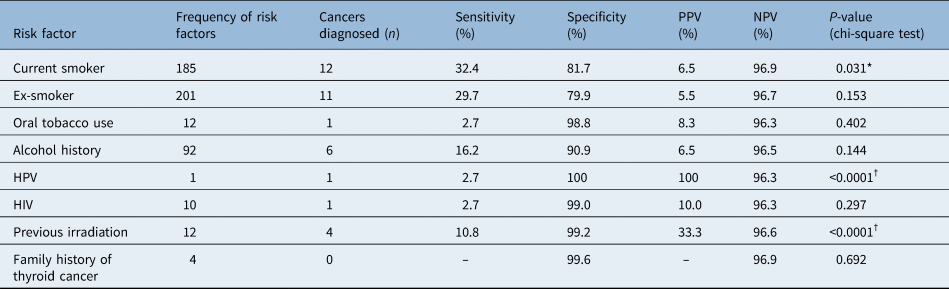
Being a current smoker or ex-smoker were the most common risk factors, found in 185 and 201 referrals respectively. This was followed by a history of alcohol use (n = 92), oral tobacco use (n = 12) and previous irradiation (n = 12). The number of cancers diagnosed was highest in patients who were current smokers (n = 12; 32.4 per cent) and ex-smokers (n = 11; 29.7 per cent). A history of alcohol use and previous irradiation were present in 6 (16.2 per cent) and 4 (10.8 per cent) out of 37 diagnosed cancer cases, respectively.
Risk factors including oral tobacco use, human papilloma virus (HPV) and human immunodeficiency virus infection each accounted for one head and neck cancer diagnosis. A family history of thyroid cancer was not present in any of the 37 cases diagnosed (see Table 1).
Risk factor frequencies, sensitivity, specificity, positive and negative predictive values, and chi-square test results

*P < 0.05; †p < 0.01. PPV = positive predictive value; NPV = negative predictive value; HPV = human papilloma virus; HIV = human immunodeficiency virus
A chi-square univariate analysis was used to examine whether individual risk factors were associated with a cancer diagnosis. Being a current smoker (p = 0.031), or having a history of HPV infection (p < 0.0001) or irradiation (p < 0.0001) were risk factors that had statistically significant associations with a diagnosis of cancer (Table 1). A history of HPV was significantly associated with a head and neck cancer diagnosis and had the highest positive predictive value, of 100 per cent. However, only one referral was made with this risk factor and this resulted in a cancer diagnosis.
A history of previous irradiation had the second highest positive predictive value, with one-third of patients (4 out of 12) with this risk factor having an eventual cancer diagnosis (Table 1). However, given that most of these patients had a previous history of cancer and radiotherapy treatment, they were already at an increased risk of cancer, and this might account for the increased incidence in this group.
Current smoker status, ex-smoker status and a history of alcohol use all had a relatively low positive predictive value (6.5 per cent, 5.5 per cent and 6.5 per cent, respectively) (Table 1), but were the most common risk factors and are well known in the literature to be major independent risk factors for head and neck cancer (Rimmer et al.,Reference Rimmer, Watson, O'Flynn and Vaz10 and Shaw and BeasleyReference Shaw and Beasley11).
In summary, current or ex-smoker status, a history of alcohol use, and previous irradiation were risk factors with the highest sensitivities, and they were also the most common risk factors in this cohort. Despite ex-smoker status and a history of alcohol use not being statistically significant risk factors, they are certainly important to consider when referring patients, given their prevalence in head and neck cancer patients and their recognised link to head and neck cancer. All risk factors had high sensitivities and negative predictive values of more than 0.96 per cent, indicating a much lower risk of cancer in their absence.
Thus, current smoking status and previous irradiation are the two risk factors most associated with predicting a positive cancer diagnosis.
Symptoms of patients diagnosed with cancer
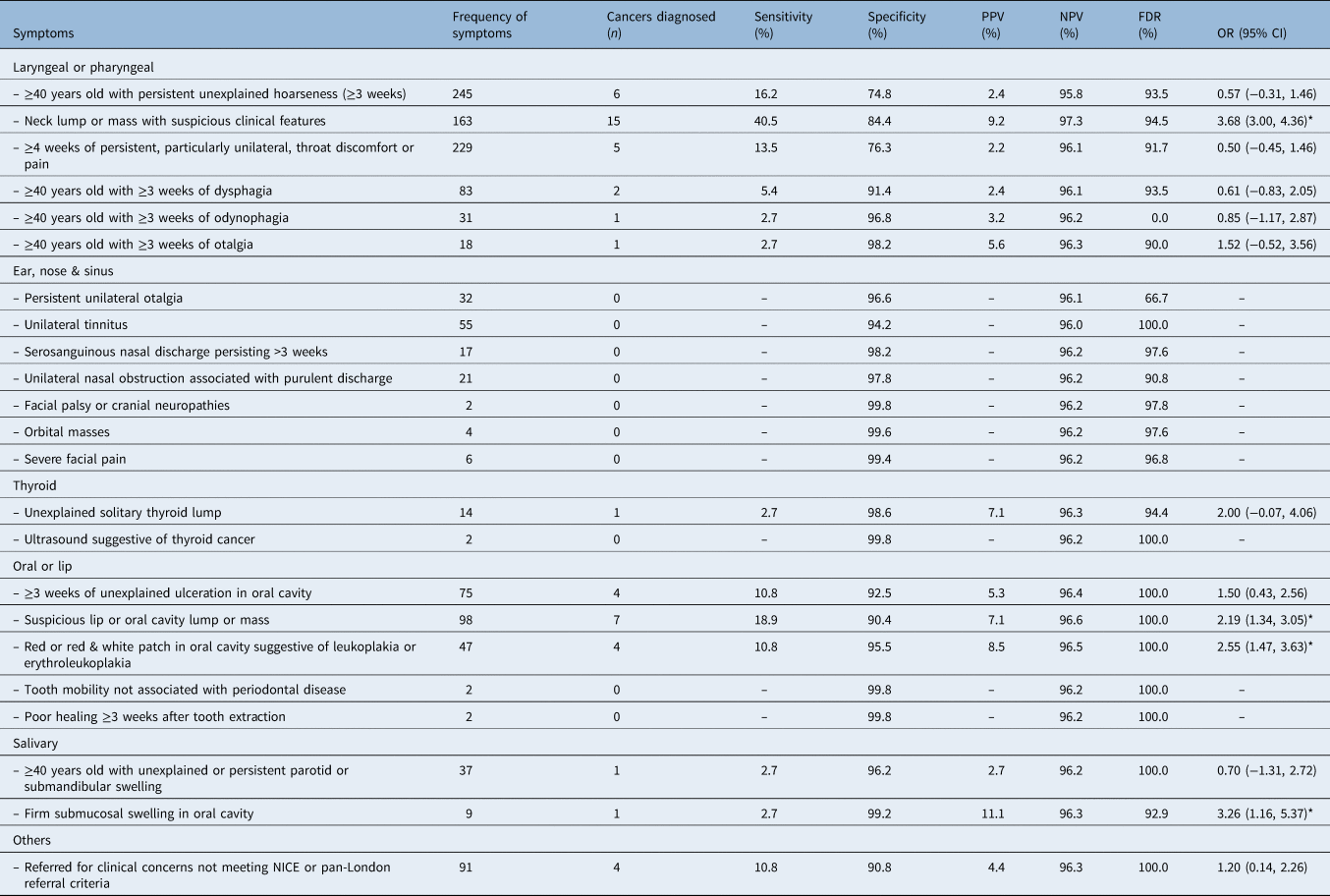
The most common presenting symptoms were: age of 40 years or more with persistent unexplained hoarseness (of 3 or more weeks’ duration); a neck lump or mass with suspicious clinical features; and 4 weeks or more of persistent, particularly unilateral, throat discomfort or pain. These 3 presenting symptoms accounted for 245, 163 and 229 referrals respectively (Table 2). However, only the symptom of a neck lump or mass with suspicious clinical features had a significant odds ratio (odds ratio = 3.68; 95 per cent confidence interval (CI) = 3.00–4.36). Compared with the other symptoms, this symptom also had the highest sensitivity, of 40.5 per cent, and second highest positive predictive value, of 9.2 per cent (the symptom with the highest positive predictive value was submucosal swelling in the oral cavity). Other symptoms suggestive of laryngeal and pharyngeal cancer did not show any significant results.
Symptom frequencies, false discovery rate, sensitivity, specificity, positive and negative predictive values, and odds ratio

*Clinically significant, 95 per cent confidence interval did not cross a value of 1. PPV = positive predictive value; NPV = negative predictive value; FDR = false discovery rate; OR = odds ratio; CI = confidence interval; NICE = National Institute for Health and Care Excellence
All ear, nose and sinus symptoms prompting referral failed to pick up any cases of cancer. Of the patients, 55 were referred with symptoms of unilateral tinnitus, 32 with persistent unilateral otalgia, 21 with unilateral nasal obstruction associated with a purulent discharge, and 17 with serosanguinous nasal discharge persisting for more than three weeks. In total, ear, nose and sinus symptoms accounted for 13.9 per cent of all head and neck referrals to the urgent head and neck cancer assessment clinic.
The five thyroid cancer patients presented with a variety of symptoms. Two patients were aged 40 years or more with persistent unexplained hoarseness (of 3 or more weeks’ duration). Two patients presented with four weeks or more of persistent, particularly unilateral, throat discomfort or pain. One patient had a neck lump or mass in the neck with suspicious clinical features, and one patient was aged 40 years or more with 3 weeks or more of dysphagia. There was only one patient diagnosed with thyroid cancer who was referred with an unexplained solitary thyroid lump (Table 2 in the supplementary material, available on The Journal of Laryngology & Otology website).
Regarding oral cavity cancers, the highest number of referrals was because of a suspicious lump or mass on the lip or in the oral cavity (n = 98), followed by three weeks or more of unexplained ulceration in the oral cavity (n = 75), and a red or red and white patch in the oral cavity suggestive of leukoplakia or erythroleukoplakia (n = 47). Seven out of 98 patients referred with a suspicious lump or mass on the lip or in the oral cavity were diagnosed with cancer. This symptom had a sensitivity of 18.9 per cent, a positive predictive value of 7.1 per cent and an odds ratio of 2.19 (95 per cent CI = 1.34–3.05). Of those 47 patients referred with a red or red and white patch in the oral cavity suggestive of leukoplakia or erythroleukoplakia, 4 were diagnosed with cancer. This symptom had a sensitivity of 10.8 per cent, a positive predictive value of 8.5 per cent and an odds ratio of 2.55 (95 per cent CI = 1.47–3.63).
Firm submucosal swelling in the oral cavity was one of the main referral symptoms for salivary gland cancer. Out of the nine patients referred with this symptom, one was diagnosed with metastatic cancer of unknown origin. Despite this symptom having the highest positive predictive value, of 11.1 per cent, and an odds ratio of 3.26 (95 per cent CI = 1.16–5.37), its sensitivity was low, at 2.7 per cent, and the single case of cancer diagnosed in a patient with this symptom was not of salivary gland origin.
Four cases of cancer were diagnosed from referrals associated with clinical concerns that did not meet the referral guidelines. These included one case of pharyngeal cancer, one bone or soft tissue cancer, and two haematological malignancies.
The negative predictive values of all symptoms were more than 95.8 per cent, reflecting the rare occurrence of cancer (Table 2). Hence, the absence of symptoms was a good predictor for the absence of cancer. The false discovery rate was lowest for unilateral otalgia (66.7 per cent), as there was no cancer diagnosis in patients with this symptom. Otherwise, all symptoms had a false discovery rate of more than 90.0 per cent, and eight symptoms had a rate of 100 per cent. This showed a high number of false-positive findings in patients without a cancer diagnosis.
Clinical risk
At the initial appointment, 381 (36.78 per cent), 376 (36.29 per cent) and 227 (21.91 per cent) out of 984 patients were grouped into low-, medium- and high-risk groups, respectively (Table 3 in the supplementary material, available on The Journal of Laryngology & Otology website). A three-way chi-square test was conducted between the presence or absence of symptoms and the clinical risk stratification. This showed significant differences between most patient groups classified. There were no significant differences, however, between each patient group and certain symptoms including: unilateral nasal obstruction associated with a purulent discharge, age of 40 years or more with 3 weeks or more of odynophagia, and age of 40 years or more with 3 weeks or more of otalgia.
Low risk
Lesions in low-risk patients were considered to be non-cancerous, and hence the patients were discharged from the clinic or underwent clinical follow up with no investigations. All lesions followed up clinically without investigations either resolved spontaneously or had no progression. Thus, no cancers were diagnosed in the 381 patients classified as low risk on initial assessment.
Of 246 patients who presented aged 40 years or more with persistent unexplained hoarseness (of 3 weeks or more duration), 119 (48.75 per cent) were considered low risk at the initial assessment. This was the most common presenting symptom amongst discharged patients (Table 3 in the supplementary material). Other symptoms associated with a high number of discharges at the first appointment included: four weeks or more of persistent, particularly unilateral, throat discomfort or pain (n = 94); unilateral tinnitus (n = 38); a suspicious lump or mass on the lip or in the oral cavity (n = 38); three weeks or more of unexplained ulceration in the oral cavity (n = 37); and referrals for clinical concerns that did not meet NICE or pan-London referral criteria (n = 30).
Medium risk
All patients classified as having a medium risk of cancer at their initial appointment were sent for investigations without biopsy. Twelve out of 37 patients diagnosed with cancer (32.4 per cent) were initially stratified as medium risk. Amongst these 12 patients, 5 were diagnosed with thyroid cancers, 4 were diagnosed with oral cancer, 2 were diagnosed with lung cancer and 1 was diagnosed with haematological cancer. Of note, the five thyroid cancer patients and two lung cancer patients presented with symptoms that met the laryngeal and pharyngeal cancer referral criteria (i.e. persistent unexplained hoarseness, persistent unexplained throat pain and the sensation of a lump in throat), demonstrating the lack of specificity of these symptoms. Fifty per cent of the 12 patients were either current or ex-smokers. One patient had a significant alcohol history, and another had previously undergone irradiation. However, given the small sample size, it is difficult to draw any meaningful conclusion from these symptoms and risk factors (Table 2 in the supplementary material).
High risk
Of the 227 patients stratified as high risk on initial consultation, only 25 (21.91 per cent) had a resultant cancer diagnosis. A total of 202 patients underwent lesion biopsy that revealed either no pathology or benign lesions.
Of the 25 cancer cases diagnosed, the most common cancer diagnosed was, interestingly, haematological in origin (7 cases). The next most common cancers diagnosed were: oral cancer (five cases), metastatic cancer of an unknown primary (four cases), laryngeal cancer (three cases) and pharyngeal cancer (three cases). There was a single case each of thyroid, maxillary, and bony or soft tissue cancers diagnosed (Table 2 in the supplementary material). Even though high-risk referrals resulted in 25 out of 37 of the eventual cancer diagnoses overall, the types of cancers diagnosed in this group were often not of head and neck origin.
Clinician experience
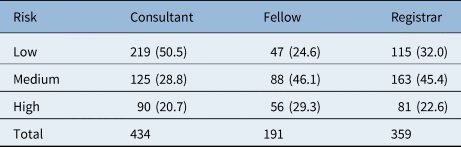
There was a significant difference in clinical risk stratification between specialist registrars, clinical fellows and consultants (p < 0.0001). Registrars and fellows were more likely to categorise patients as medium risk, with rates of 45.4 per cent and 46.1 per cent, respectively, amongst all patients seen (Table 3). In contrast, over half of all patients seen by consultants were considered as low risk and were subsequently discharged. However, there was no significant difference in the rates of cancer diagnosis between different grades of doctor (p = 0.555).
Clinical risk stratification by consultants, clinical fellows and specialist registrars

Data represent numbers (and percentages) of patients
Discussion
Our study has shown that only 37 cases of cancer (3.76 per cent) were picked up from the 984 two week wait referrals to the University College London Hospital over a six-month period. This is a much lower diagnostic yield compared to the average reported in the literature, of 10–15 per cent.Reference Langton, Siau and Bankhead3,Reference Lyons, Philpott, Hore and Watters5 This finding brings into question the appropriateness and efficacy of the pan-London head and neck cancer two week wait referral criteria. The diagnostic yields of two week wait referral guidelines for central nervous system and urological cancers have been reported as 32.0 per centReference Hamdan and Mitchell12 and 27.9 per centReference Hawary, Warburton, Brough, Collins, Brown and O'Reilly13 respectively. Additionally, this finding may be confounded by the over-referral of patients by general practitioners and general dental practitioners. For instance, the findings for those patients deemed to be of low clinical risk by head and neck surgeons all proved negative for cancer. This suggests that a targeted education programme for clinicians may be a worthwhile investment.
We have calculated the frequency, sensitivity, specificity and positive predictive values for individual presenting symptoms and risk factors associated with head and neck cancer. We have also shown the types of cancers diagnosed in patients presenting with certain symptoms and risk factors.
In keeping with previous studies,Reference Rimmer, Watson, O'Flynn and Vaz10,Reference Shaw and Beasley11 the most common risk factors in patients diagnosed with head and neck cancer were being a current smoker, an ex-smoker or having a history of alcohol use. However, only current smoker status, previous irradiation and previous HPV infection were statistically significant risk factors. Previous HPV infection resulted in only one referral in our study and a subsequent diagnosis of laryngeal cancer; nevertheless, it is well recognised as a strong risk factor for head and neck cancer, and its incidence is increasing in the developed world.Reference Heck, Berthiller, Vaccarella, Winn, Smith and Shan'gina14
In our cohort, the most common presenting symptom was persistent, unexplained hoarseness, consistent with previous studies.Reference Rimmer, Watson, O'Flynn and Vaz10,Reference Pracy, Prichard, Whitehead and Moorthy15 This symptom had a positive predictive value of 2.4 per cent, accounting for 6 cancer diagnoses out of 245 cancer referrals. This value is less than the NICE risk threshold of 3 per cent. However, only 9 out of 23 presenting symptoms had a positive predictive value of over 3 per cent, and, as shown by Gardner and Wijesekara's audit, most urgent ENT referral criteria have low positive predictive values.Reference Gardner and Wijesekara16 Additionally, two of the six diagnoses in patients referred with persistent hoarseness were a result of local invasion of the recurrent laryngeal nerves by lung cancers.
A neck lump or mass with suspicious clinical features was the third most common presenting complaint, accounting for 15 cancer diagnoses (positive predictive value = 9.2 per cent). This presenting symptom had a statistically significant association with cancer diagnosis. Furthermore, this symptom accounted for the greatest proportion of patients (38.65 per cent) stratified as ‘high risk’ on initial consultation. In Tikka and colleagues’ retrospective cohort study of 4715 referrals, this symptom was the most common presenting complaint, with a positive predictive value of 17 per cent, and was 1 of 9 symptoms to be significantly linked to a positive head and neck cancer diagnosis.Reference Tikka, Pracy and Paleri8 However, Tikka and colleagues’ study did not define whether the 180 cases of cancer in their cohort that were diagnosed on the basis of this symptom were in fact of head and neck origin. In our cohort, many of the cancers diagnosed from patients presenting with a neck lump or mass were haematological or thyroid in origin.
Overall, 14 out of 37 cancers diagnosed in our cohort were not of head and neck origin (Table 2 in the supplementary material). This highlights the non-specific, vague nature of head and neck cancer symptoms, which largely depend on the site of origin and the presence of metastases. As a result, this is a poor prognostic factor.Reference Dolan, Vaughan and Fuleihan17
Oral cancer was the most commonly diagnosed head and neck cancer overall. Presenting symptoms suggestive of oral or lip cancer accounted for 149 out of 984 referrals (15.1 per cent), and overall 11 oral cancer diagnoses. The symptoms of a suspicious lump or mass on the lip or in the oral cavity, and a red or red and white patch in the oral cavity suggestive of leukoplakia or erythroleukoplakia, both have positive predictive values of over 3 per cent and were statistically significant presenting symptoms. Hong and colleagues’ study also showed the high prevalence of oral cancers, particularly those of the tongue.Reference Hong, Shaikh, Adcock and Aldallal18 Interestingly, they found that the top nine most commonly referred benign lesions were also oral in origin. This further reinforces the need for general practitioner and general dental practitioner education in recognising both malignant and benign oral lesions.
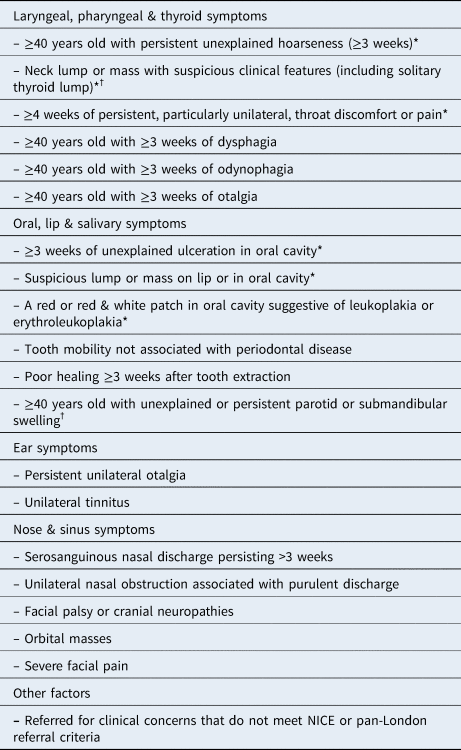
Overall, given the diversity of cancers within the head and neck region, and their clinical presentation, we have simplified the referral guideline by classifying complaints into common and rare symptoms (Table 4), and have grouped similar presenting symptoms under the same subheading by location. This is based on the sensitivity and positive predictive values of presenting symptoms. The symptoms that commonly lead to a positive cancer diagnosis (denoted by asterisks in Table 4) indicate to general practitioners the important features of head and neck cancer to assess, whilst encouraging general practitioners to follow up patients with rare symptoms in a primary care setting. Of note, these data are only representative of a relatively small cohort in London, and may not be applicable to other populations or ethnicities.
Suggested new referral guideline

*Denotes common symptoms; †denotes changes (note removal of thyroid and salivary symptoms). NICE = National Institute for Health and Care Excellence
As Pracy et al. previously suggested,Reference Pracy, Prichard, Whitehead and Moorthy15 it may be valuable to combine risk factors, such as smoking status, with presenting symptoms in referral guidelines, as is the case in lung cancer two week wait criteria.19 Similarly, the prevalence of head and neck cancer varies across ethnic groups and gender; it is more prevalent and tends to present later in Afro-Caribbean males, and confers a poorer prognosis in this group (Parasher et al.Reference Parasher, Abramowitz, Weed, Franzmann, Goodwin and Hu20 and Sethi et al.Reference Sethi, Sethi, Herr and Deschler21). One idea would be to produce a scoring system that takes into account the significant risk factors and symptoms, and combines these with patients’ demographic factors to predict a more accurate risk of head and neck cancer. This would aid general practitioner referrals. Indeed, Lau et al. has created an online prototype of a head and neck cancer scoring system; however, this system still requires further improvement as it was found to have a false-positive rate of 78 per cent when applied to 235 prospective patients.Reference Lau, Wilkinson and Moorthy22
Thyroid cancer referral guidelines are similar to the laryngeal and pharyngeal cancer symptom of a neck lump or mass with suspicious clinical features, and most patients with thyroid or haematological cancers had this symptom. Given the rare referral frequency for an ultrasound suggestive of a thyroid cancer, and given that general practitioners are more likely to refer patients with a suspicious lump to the one-stop head and neck cancer clinic where ultrasound can be performed more efficiently, we suggest that thyroid symptoms be combined with laryngeal and pharyngeal cancer symptoms.
Clinically, it is difficult for general practitioners and general dental practitioners to differentiate between a firm submucosal swelling in the oral cavity (a symptom of salivary gland cancer) and a suspicious lump or mass on the lip or in the oral cavity (a symptom of oral cancer). Hence, we feel that these two symptoms can be combined, and an age of 40 years with unexplained or persistent parotid or submandibular swelling should instead be considered an oral and lip cancer symptom.
• There were 1036 two week wait referrals during a six-month period; 3.76 per cent of cases assessed were diagnosed with head and neck cancer
• Risk factors statistically associated with a cancer diagnosis were: current smoker (p = 0.031), human papilloma virus infection history (p < 0.0001) and previous irradiation (p < 0.0001)
• The most common presenting symptoms were: aged 40 years or more with persistent hoarseness, neck lump with suspicious features, and 4 weeks’ persistent throat discomfort or pain
• The only symptoms with a significant odds ratio were: neck lump with suspicious clinical features, suspicious lip or oral cavity lump, and an oral cavity patch suggestive of leukoplakia or erythroleukoplakia
• There was a significant difference in clinical risk stratification between specialist registrars, clinical fellows and consultants
Whilst the head and neck cancer two week wait referral pathway has been shown to be better at detecting cancer than non-urgent referrals,Reference Pracy, Prichard, Whitehead and Moorthy15,Reference Hong, Shaikh, Adcock and Aldallal18 Wong and colleagues’ study found that there was no significant difference in clinical staging and survival benefit in patients referred urgently compared to those routinely referred.Reference Wong, Fischer and Cruickshank23 This is particularly alarming, and further research is needed to identify the reasons behind this.
Limitations
As the patients’ data were collected retrospectively, the examination findings and a detailed patient history were not present in all appointment letters to general practitioners. Hence, we were unable to confirm the reliability of symptoms noted on the referral letters and the duration of symptoms. Given the diverse range of presenting symptoms or different cancers, there are confounding factors that may have affected the statistical analysis of the study. However, this paper aims to examine the appropriateness of the referral guideline as a whole, and we feel that the statistical analysis shown has demonstrated as such.
Conclusion
We have shown that the current referral guideline is overly cautious when attempting to detect patients with cancer. It is not only costly for the National Health Service to review an increasing number of patients, but also sacrifices resources for head and neck cancer patients, with surgeons needing to spend more time in clinic. Our study has shown that only 9 out of 23 symptoms had a positive predictive value of over 3 per cent, which is substantially different from NICE recommendations. We have made suggestions for a new referral guideline. Together with increased education programmes targeted at general practitioners and general dental practitioners, we hope that this new guideline can reduce the number of referrals, and increase the efficiency of the head and neck referral pathway.
Competing interests
None declared
Supplementary material
The supplementary material for this article can be found at https://doi.org/10.1017/S002221511900149X.