Several studies of child and adolescent refugee populations find a high prevalence of mental disorders, particularly within the diagnostic category of posttraumatic stress disorder (PTSD; Fazel & Stein, Reference Fazel and Stein2002; Lustig et al., Reference Lustig, Kia-Keating, Knight, Geltman, Ellis and Kinzie2004; Pynoos, Kinzie, & Gordon, Reference Pynoos, Kinzie, Gordon, Gerrity, Keane and Tuma2001; Thomas & Lau, Reference Thomas and Lau2002). In a recent review of surveys including unselected refugee populations, 11% of refugee children (35% of refugee adolescents and young adults) were diagnosed with PTSD (Fazel, Wheeler, & Danesh, Reference Fazel, Wheeler and Danesh2005). In a study of 203 adolescent refugees from 35 nations in Canada, the 12-month prevalence of any form of psychopathology was 21%, with a prevalence of 13% for overanxious disorder, 5% for major depression, and 6% for conduct disorders (Tousignant et al., Reference Tousignant, Habimana, Biron, Malo, Sidoli-Leblanc and Bendris1999).
Prevalence of mental disorders is particularly high among asylum-seeking children; thus, 58% (N = 88) of the 11- to 16-year-old asylum seekers in Denmark, primarily from former Yugoslavia or Iraq (Nielsen et al., Reference Nielsen, Norredam, Christiansen, Obel, Hilden and Krasnik2008), and 100% (N = 20) of the 3- to 19-year-old asylum seekers in Australia, all from Southeast Asia (Steel et al., Reference Steel, Momartin, Bateman, Hafshejani, Silove and Everson2004) were found to have a mental disorder. At the time of assessment most of these children had spend several years in asylum centres. Refugee children and adolescents are vulnerable to the effects of premigration, most notably exposure to trauma, and categories particularly at risk are those with extended trauma experience, unaccompanied or separated children, and those who are still in the process of seeking asylum (Thomas & Lau, Reference Thomas and Lau2002).
Age and Sex Differences
Age and sex differences regarding the mental health of young refugees are not conclusive, similar to what has been found among the general population (Achenbach & Rescorla, Reference Achenbach and Rescorla2007). Some studies of young refugees have observed an increase in symptoms with age. Thus, in a study of adolescent refugees of mixed nationality in Belgium, age correlated positively with scores on all mental health scales for unaccompanied refugee minors (N = 1073), and this relationship could only be partially explained by the total number of stressful life experiences (Bean, Derluyn, Eurelings-Bontekoe, Broekaert, & Spinhoven, Reference Bean, Derluyn, Eurelings-Bontekoe, Broekaert and Spinhoven2007). However, among the immigrant/refugee adolescent group living with their family (N = 1,130) no such relationship with age was found. In a study of 38 12- to 24-year-old Afghan refugees in the United States, 11% of whom were diagnosed with PTSD and 29% with major depression, older age at arrival was associated with higher risk of being diagnosed with PTSD or major depression (Mghir, Freed, Raskin, & Katon, Reference Mghir, Freed, Raskin and Katon1995). Contrary to this, younger age was associated with internalizing, but not externalizing symptoms, in a study of 121 Palestinian 6- to 16-year-old refugees in Gaza (Qouta, Punamäki, & El-Sarraj, Reference Qouta, Punamäki and El-Sarraj2003, Reference Qouta, Punamäki and Sarraj2005). In a study of 95 8- to 13-year-old Bosnian refugees in Greece (Papageorgiou et al., Reference Papageorgiou, Frangou-Garunovic, Iordanidou, Yule, Smith and Vostanis2000), 47% of whom scored above the cutoff level on depression, 23% on anxiety and 29% on PTSD, only depression scores increased with age. The risk of being diagnosed with PTSD, but not with depression or anxiety, increased with age in a follow-up study of 209 13- to 25-year-old Cambodian refugees in the United States (Sack et al., Reference Sack, McSharry, Clarke, Kinney, Seeley and Lewinsohn1994). However, no association between age and emotional problems was observed in a study of 87 Cuban adolescent refugees in the United States (Rothe et al., Reference Rothe, Lewis, Castillo-Matos, Martinez, Busquets and Martinez2002); age had no association with most emotional and behavioral outcome measures in a study of 166 adolescent unaccompanied refugees in Belgium (Derluyn & Broekaert, Reference Derluyn and Broekaert2007), and age at arrival was not associated with psychopathology in the study of 203 adolescent refugees from 35 countries in Canada (Tousignant et al., Reference Tousignant, Habimana, Biron, Malo, Sidoli-Leblanc and Bendris1999).
Sex differences are even more varied among the studies reviewed. Thus, in most of the studies above no significant difference between boys and girls was observed (Bean et al., Reference Bean, Derluyn, Eurelings-Bontekoe, Broekaert and Spinhoven2007; Mghir et al., Reference Mghir, Freed, Raskin and Katon1995; Rothe et al., Reference Rothe, Lewis, Castillo-Matos, Martinez, Busquets and Martinez2002; Sack et al., Reference Sack, McSharry, Clarke, Kinney, Seeley and Lewinsohn1994). In some studies, however, a higher rate of psychopathology is found in girls than in boys in relation to emotional problems (anxiety, depression; Derluyn & Broekaert, Reference Derluyn and Broekaert2007; Tousignant et al., Reference Tousignant, Habimana, Biron, Malo, Sidoli-Leblanc and Bendris1999).
Long-Term Mental Health in Refugee Children and Adolescents
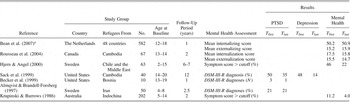
There is little evidence of the longitudinal course of psychopathology in refugee children and adolescents. Seven longitudinal studies were identified, which included the necessary minimum of two assessments of psychological problems and, furthermore, a follow-up period of reasonable length, that is, at least 1 year (Table 1). In all but two studies (one of them concerning unaccompanied refugee minors), the high prevalence of mental disorders or psychological problems identified at baseline decreased during the follow-up period. Participants in the longest lasting follow-up study identified were Cambodian refugees in the United States (Kinzie, Sack, Angell, Clarke, & Ben, Reference Kinzie, Sack, Angell, Clarke and Ben1989; Kinzie, Sack, Angell, Manson, & Rath, Reference Kinzie, Sack, Angell, Manson and Rath1986; Sack et al., Reference Sack, Clarke, Him, Dickason, Goff and Lanham1993; Sack, Him, & Dickason, Reference Sack, Him and Dickason1999). From an original sample of 40 17-year-old high school students, who as children had survived the horrors of the Pol Pot regime, 27, 29, and 27 were followed up after 3, 6, and 12 years, respectively. The prevalence of PTSD as well as depression, although still high 12 years after the initial investigation, fell considerably during the follow-up period and, despite the high rate of psychiatric morbidity, most subjects were observed to be functioning well.
Literature review of follow-up studies of mental problems in young refugee populations

Note: PTSD, posttraumatic stress disorder.
aUnaccompanied refugee minors.
Trauma and Resilience
The effects of early traumatizing experiences depend on characteristics both of the individual and of the social context before and after the atrocities (Schaffer, Reference Schaffer2000). An example of the reversibility of the effects of early experiences comes from the deprivation literature and concerns children who were reared from infancy in very depriving institutions, however, adopted into well-functioning families before the age of 6 (Rutter et al., Reference Rutter, Beckett, Castle, Colvert, Kreppner and Mehta2007; Rutter, O'Connor, & The English and Romanian Adoptees [ERA] Study Team, Reference Rutter and O'Connor2004). Early and prolonged adversity, however, in combination with low psychosocial resources, such as low parenting quality, can lead to even more adversity (Daud, Reference Daud2008; Masten et al., Reference Masten, Hubbard, Gest, Tellegen, Garmezy and Ramirez1999), and so community violence has been found to be associated with family violence, maybe because of the stress it elicits (Al-Krenawi & Graham, Reference Al-Krenawi and Graham2007; Khamis, Reference Khamis2000; Lynch & Cicchetti, Reference Lynch and Cicchetti1998). The effects of violence work in a cumulative way, with single factors explaining relatively little outcome (Appeleyard, Egeland, Van Dulmen, & Sroufe, Reference Appeleyard, Egeland, Van Dulmen and Sroufe2005; Atzaba-Poria, Pike, & Deater-Deckard, Reference Atzaba-Poria, Pike and Deater-Deckard2004; Fergusson & Lynskey, Reference Fergusson and Lynskey1996; Rutter, Reference Rutter1999). The effect of childhood trauma further depends on parental reactions; primarily mother's (Yehuda, Bell, Bierer, & Schmeidler, Reference Yehuda, Bell, Bierer and Schmeidler2008; Yehuda & Bierer, Reference Yehuda and Bierer2008), father's (Bronfenbrenner, Reference Bronfenbrenner1986; Mander, Reference Mander1999; Kilic, Ozguven, & Sayil, Reference Kilic, Ozguven and Sayil2003), or either parent's (Danieli, Reference Danieli, Wilson and Tang2007; Daud, Reference Daud2008) poor mental health following traumatic experiences has been found to be related to the mental health situation of their children. Parents' communication pattern concerning their own traumatic experiences can have consequences for the well-being of their children (Montgomery, Reference Montgomery2004; Weine et al., Reference Weine, Muzurovic, Kulauzovic, Besic, Lezic and Mujagic2004; Wiseman & Barber, Reference Wiseman, Barber, Lieblich, McAdams and Josselson2004).
Resilience refers to a dynamic process characterized by positive development despite significant adversity (Luthar, Cicchetti, & Becker, Reference Luthar, Cicchetti and Becker2000; Masten & Obradovic, Reference Masten and Obradovic2006). Some authors (e.g., Bonanno, Reference Bonanno2004) reserve the concept of resilience as a trajectory in which the individual maintains a stable equilibrium following adversity, with limited and only transient difficulties lasting for a short period of time (weeks), whereas a trajectory characterized by more severe initial reactions and a gradual return to preevent levels of functioning over a longer time period (several months or longer) is defined as recovery. Other authors (see Boyden, Reference Boyden and Ungar2005; Roisman, Reference Roisman2005) understand recovery as part of or a special case of the resilient trajectory as it emphasizes successful adaptation following a period of maladaptation, even if the process takes some time. Still others (Norris, Melissa, & Galea, Reference Norris, Melissa and Galea2009) maintain that resilience and recovery denote different trajectories of responses to trauma; however, they do not understand the difference in terms of initial reactions, only in terms of how long time it takes to return to pretrauma functioning.
Resilience is culturally shaped (Tummala-Narra, Reference Tummala-Narra2007; Ungar, Reference Ungar2006). A cross-cultural study of youth in 11 sites across the world has shown that resilience depends on individual, relational, community, cultural, and contextual factors (Ungar, Brown, Liebenberg, & Othman, Reference Ungar, Brown, Liebenberg and Othman2008). Resilience is both an outcome of interactions between the individual and his environment, and the process that contributes to such an outcome. Studies focusing on the process aim at understanding the mechanisms that act to modify the impact of adversity, whereas studies focussing on outcome aim at identifying patterns of competent or problematic behavior or functioning among at-risk groups (Olsson, Bond, Burns, Vella-Brodrick, & Sawyer, Reference Olsson, Bond, Burns, Vella-Brodrick and Sawyer2003).
Various factors that facilitate resilience in refugee children have been identified, that is, family cohesion and support and parental psychological health; individual dispositional factors such as adaptability, temperament, and positive self-esteem; and environmental factors such as peer and community support (Thomas & Lau, Reference Thomas and Lau2002). Resilience rests fundamentally on relationships (Luthar, Reference Luthar, Cicchetti and Cohen2006), and a stressful family situation can disrupt parenting and in this way increase problematic behavior among children (Masten, Reference Masten2001).
The Present Study
Based on present knowledge, trauma and resilience in refugee children and youth in this investigation is conceptualized and studied with regard to the interrelatedness of the various ecological systems in which the life of the child or young person is embedded (Bronfenbrenner, Reference Bronfenbrenner1986). In this conceptualization children are seen as both influenced by and influencing their surroundings, and it points to the complexities in studying and understanding the impact of traumatic life experiences on child development. This theoretical understanding has previously been used to study and understand the interplay between community violence, child maltreatment, and child symptomatology (Khamis, Reference Khamis2000; Lynch & Cicchetti, Reference Lynch and Cicchetti1998). In this group of potentially highly traumatized children, resilience is understood as the ability to recover from, rather than the absence of problems at arrival in Denmark.
The study is about a group of young refugees who escaped from countries in the Middle East that were affected by war and human rights violations and who arrived in Denmark with at least one of their parents during the early 1990s (Montgomery, Reference Montgomery1998). Many families had experienced the Iran–Iraq war (1980–1988); the revolution and establishment of the Islamic Republic in 1979 in Iran had resulted in several decades of serious human rights violations such as persecution, detention, torture, and execution of political opponents. In Iraq the Kurdish resistance was crushed by means of chemical weapons, massacres, and massive forced resettlement and any opposition against the dictatorship of Saddam Hussein was fiercely crushed, for example, by the bombing of densely populated areas. During the invasion of Kuwait in 1990 civilians were used as human “shields” against military attack. Lebanon had witnessed decades of civil war, and in the early 1990s large parts of the country were outside government control. Palestinians were exposed to constant harassment by national and Syrian intelligence operations and by various militias, and life in the refugee camps was very insecure. In Syria political opponents were detained without trial, the use of torture was widespread, and the Palestinian population had very limited rights.
The children arriving in Denmark had many experiences of war and other forms of organized violence and over half of them were part of a family in which one or both parents had been imprisoned and tortured. The children frequently reacted with anxiety and with other symptoms of emotional instability at arrival and there was a significant relationship between the experience of violence and psychological symptoms (Montgomery, Reference Montgomery1998; Montgomery & Foldspang, Reference Montgomery and Foldspang2001). The age of the child at the first time of a specific violent experience and at arrival was found to be less significant than the actual occurrence of the experience; however, the reactions were connected to disturbances in several of the ecological systems in which the child participated (Montgomery, Reference Montgomery and Willigen2000).
After 8–9 years children who were still in Denmark participated in a follow-up study. A variable-focused analysis identified the following predictors of more externalizing behavior at follow-up: witnessing attack on others after arrival, more schools attended, less “attending school or work,” lower mother's education in the home country, and lower age (Montgomery, Reference Montgomery2008a). Predictors of more internalizing behavior were the number of types of traumatic experiences before arrival, the number of types of stressful events after arrival, the number of types of experiences of discrimination, lower mother's education in the home country, fewer Danish friends, not Muslim or Christian religion, less Danish proficiency, and female gender. It was concluded that aspects of social life in Denmark, including mother's education and indicators of adaptation, as well as a stressful life context in exile, including discrimination, predicted psychological problems 8–9 years after arrival, more than did traumatic experiences before arrival. Younger age was thus associated with externalizing, but not with internalizing problems, and girls had more internalizing problems than boys.
However, children in this study differed both regarding their mental health situation at arrival and 8–9 years later; to understand the long-term psychopathological or resilient trajectory a person-focused approach became necessary. Person-focused approaches compare people who have different profiles within or across time on sets of criteria to ascertain what differentiates those who manage well despite adversity, from other groups (Bergman, von Eye, & Magnusson, Reference Bergman, von Eye, Magnusson, Cicchetti and Cohen2006; Masten, Reference Masten2001). Thus, the aim of the present analysis was to assess and understand the long-term trajectory of psychological problems among young Middle Eastern refugees 8–9 years after arrival in Denmark, focusing mainly on the reduction of problems over time and the effect of early traumatic experiences and stressful life events in exile on healthy long-term adaptation, but controlling for factors related to several important ecological levels pertaining to the individual, family, and social life context. Based on previous knowledge, the main hypotheses were the following:
1. The general level of psychological problems has diminished after 8–9 years in exile.
2. The cumulative effect of traumatic experiences is more important than the effect of specific experiences.
3. Children who recover from psychological problems differ from those with persistent problems on factors related to life in exile rather than on factors specifically related to their traumatic past.
Methods
Participants
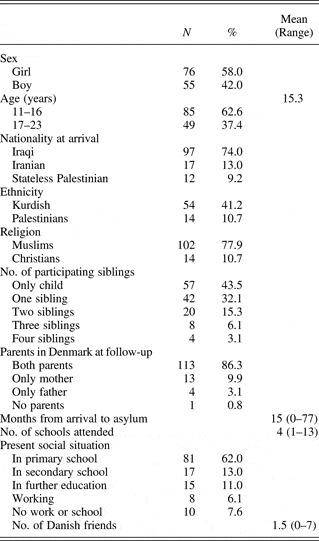
The study group comprises 131 young refugees from the Middle East (76 girls, 55 boys; ages = 11–23 years, mean age = 15.3 years) from 67 families. Mother and father both lived in Denmark in most of the families, and between one and four children in each family participated in the study (Table 2). They were assessed in 2000–2001 as part of a follow-up study of 311 children who, between February 1, 1992, and April 30, 1993, were consecutively registered in Denmark as childhood asylum seekers from Middle Eastern countries accompanied by at least one parent (Montgomery, Reference Montgomery1998). The response rate in the original study was 90.4%. According to information from the Danish asylum authorities, 190 children, adolescents, and young adults who were 11–23 years old from a total of 90 families had been granted permission to stay and could be followed up as of 2000. Of these, 1 had died, 6 had emigrated, and 1 was unknown to the Danish registry, leaving 182 for study. The parents of 37 young refugees declined to participate so that contact with the young refugee was not possible, and another 9 young refugees refused to participate, although the parents had accepted and been interviewed. Thus, 136 young refugees agreed to participate, but in five cases data turned out to be too incomplete for analysis. Finally, 131 (72%) of the 182 participated. Nonparticipants did not differ significantly from participants as concerns nationality (mostly Iraqi and Iranian), ethnicity (mostly Kurdish and Palestinian), parents' religion (mostly Islam), psychological problems at arrival (anxiety, sleep disturbance, and sadness), or the number of types of traumatic experiences before arrival. However, more girls participated (79.2% girls vs. 64.0% boys, p < .05), and younger age predicted participation (odds ratio [OR] = 0.90 per year, p < .04).
Background variables among 131 11- to 23-year-old Middle East refugees in Denmark

Data collection at arrival
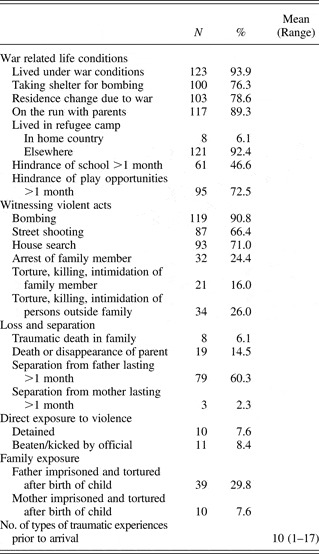
On arrival in Denmark in 1992–1993, the parents answered a structured interview with questions on their child's history of exile and eventual exposure to war conditions, organized violence and human rights violations, and the child's present psychological problems as indicated by emotional symptoms and behavioral reactions (Montgomery, Reference Montgomery1998). The questionnaire was developed for this study. All interviews were conducted by a Danish visiting nurse or by the author assisted by a professional interpreter. Parents reported exposure to 22 specific experiences of organized violence after the birth of the child, and a continuous variable “Numbers of types of traumatic experiences prior to arrival in Denmark” was constructed by adding these together (for details, see Table 3). Five major types of specific experiences of organized violence were included in the statistical analysis: living under conditions of war, residing in a refugee camp, imprisonment and torture of parents, witnessing events of violence (house search, arrest of family members, intimidation, torture, killing), and death or disappearance of a parent (Montgomery, Reference Montgomery1998). The parents' account of own exposure to torture was expert validated (Montgomery & Foldspang, Reference Montgomery and Foldspang1994). Parents also provided information about family structure, social situation of the family, and length of their own education.
Specific experiences related to war and other organized violence before arrival in Denmark among 131 refugees from the Middle East

Questions regarding specific emotional symptoms and behavioral problems of the child addressed concrete behavior observable by the parents (sample question: “Is your child sometimes afraid to be alone, for example when it is going to sleep”), and each symptom or problem was allocated to one out of three occurrence levels: “rare,” “somewhat or sometimes,” or “frequent or intense.” The structured interview with the parents at arrival included 12 symptom questions that were a priori assumed to indicate anxiety (Montgomery, Reference Montgomery1998). A clinical reference regarding symptoms of anxiety exceeding the normal range for the particular age was established by conducting in-depth clinical interviews, blinded from the results of the structured interviews, with the parents of 99 children, consecutively arriving at the main refugee reception centre during a 6-month period. The interviews were conducted as an empathic talk, including examples of the reactions of the child in different situations. A weighted anxiety scale was developed by estimation of the multivariate probability of the child being anxious, as assessed by the psychological interview, and the optimal cutoff level established at the level with the least amount of misclassification (Foldspang & Montgomery, Reference Foldspang and Montgomery2000). Sleeping problems were defined on the basis of the structured interview with the parents as at least one of three specific problems: nightmares, difficulty falling asleep, and difficulty staying asleep, at the highest level (frequent symptom; Montgomery & Foldspang, Reference Montgomery and Foldspang2001). Furthermore, the frequent and/or intense occurrence of the depressive symptom “sad or miserable appearance,” which has appeared to be a good discriminator between referred and nonreferred children (Bilenberg, Reference Bilenberg1999), was included. For the group comparison, a child was assessed as symptomatic at arrival if he/she was assessed to be suffering from anxiety, sleep disturbance, or sadness.
Data collection at follow-up
At follow-up in 2000–2001, the parents and the young refugees were interviewed separately using structured questionnaires basically focusing on family structure, parents' and the young refugee's social situation and health, and the young refugee's exposure to violence while in Denmark and his/her possible loss of and separation from parents. Interviews were conducted by the same visiting nurse as at arrival. All young refugees were interviewed in Danish, whereas their parents were interviewed with the aid of a professional interpreter whenever necessary.
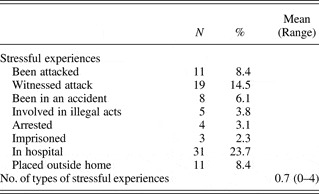
Parents provided information on family structure, time for the reception of a residence permit, and their own health problems, which in the present analysis was indicated by the regular intake of prescribed medicine. Information on how many schools the young refugee had attended since arrival was based on specific information on the different schools. Parents also provided information on the occurrence of eight specific stressful events happening to their child during the time in exile, and the variable “Number of types of stressful events in exile” was constructed by adding these together (for details, see Table 4). The young refugees themselves provided information about indicators of social adaptation (Montgomery & Foldspang, Reference Montgomery and Foldspang2008), in the present analysis indicated by the variables: attending school or work, number of Danish friends, and proficiency in reading and writing in Danish. Furthermore, they answered to questions about intrafamily communication, rated on a 0–1–2 scale (occurs rarely, sometimes, or frequently). The answer to the questions: “Do you speak with your mother/father if you have problems,” dichotomized between 1 (rarely, sometimes) and 2 (frequently), were included in the statistical analysis.
Parents' information of stressful experiences in exile among 131 Middle East refugees (aged 11–23) in Denmark (2000–2001)

Mental health assessment at follow-up
The mental health of the young refugees was assessed using the Achenbach System of Empirically Based Assessment (Achenbach, Reference Achenbach1991a, Reference Achenbach1991b, Reference Achenbach1997, http://www.aseba.org/), a system that has been widely used in transcultural research (Achenbach et al., Reference Achenbach, Becker, Döpfner, Heiervang, Roessner and Steinhausen2008). The system includes checklists for parents and self-reports for adolescents and young adults and covers important aspects of adolescent and young adult psychopathology. In accordance with recommendations from the Danish manual and standardization (Bilenberg, Reference Bilenberg1999; Bilenberg, Reference Bilenberg2000), young refugees up to the age of 16 years were assessed using the Youth Self-Report (YSR; Achenbach, Reference Achenbach1991a) and the Child Behavior Checklist (CBCL; Achenbach, Reference Achenbach1991b). Young refugees aged 17 and above were assessed with the Young Adult Self-Report (YASR; Achenbach, Reference Achenbach1997) and the Young Adult Behavior Checklist (YABC; Achenbach, Reference Achenbach1997). However, two young refugees filled in the YSR even though they had just turned 17. Either the official Danish translations of the YSR and the CBCL or the official Arabic translation of the CBCL were used. The YASR and the YABC were translated into Danish for this investigation in cooperation with the Danish CBCL distribution center; the translation followed the recommended procedure, with two independent translators.
All the scales refer to the past 6 months, and consist of closed questions concerning a wide range of behaviors and emotions. Each question was rated on a 0–1–2 scale according to whether the description was not true, somewhat or sometimes true, or very or often true. For each scale a total score and an externalizing and an internalizing score were computed based on general as well as age-specific behavior (Achenbach, Reference Achenbach1991a, Reference Achenbach1991b, Reference Achenbach1997).
To establish the cutoff level at follow-up, clinical interviews were carried out with participants selected on the basis of residence in municipalities with specific postal codes (at a distance of about a 1-hr journey from the office of the researcher). Refugees are placed in municipalities by the authorities upon being granted permission to stay, on the basis of availability of housing, so selection criteria was not assessed to introduce a systematic bias. Of the 76 young refugees selected for clinical interviews, 5 refused participation and 4 of the interviews could not be used for analysis because of incomplete data in the structured interview. All interviews were carried out by the author. The interviews of parents and young refugees were conducted using the Danish translation of the Schedule for Affective Disorders and Schizophrenia for School-Aged Children (Kaufman, Birmaher, Brent, Rao, & Ryan, Reference Kaufman, Birmaher, Brent, Rao and Ryan1996). This is a semistructured diagnostic interview schedule based on DSM-III-R and DSM-IV criteria, the final classification being a professional decision based on the information from both the young refugee himself/herself and the parents. In the analysis used for establishing proper cutoff levels for the self-reports and checklists the dichotomy “with or without a diagnosis” was applied as a clinical reference. Cutoff levels at the 83rd (borderline) and the 90th (clinical) percentile of the age and sex standardized original total scales were compared for their ability to correctly identify children with or without a diagnosis: sensitivity of the scale is defined by the proportion (%) of young refugees correctly identified at a certain scale level, among young refugees with a diagnosis in the clinical interview, and its specificity (%) corresponds to the proportion of young refugees without a diagnosis in the clinical interview, correctly identified as such at a certain scale level.
Analysis
The statistical analysis included a chi-square test for 2 × 2 and 2 × k tables (without Yates' correction), Fisher's exact test, Cronbach α, and Spearman rank correlation coefficient (r S; Altman, Reference Altman1991). As data included information on more than one child per family, implying a nonindependence of observations, a hierarchical model for multinomial data was used for group comparisons using the statistical software package HLM, version 6.03 (Raudenbush & Bryk, Reference Raudenbush and Bryk2002). For comparison, four groups of young refugees were constructed, using the appropriate cutoff levels of the relevant scales, which reflected different patterns of levels of significant psychological problems at arrival and follow-up: (a) unproblematic at both assessments, (b) problematic at follow-up only, (c) problematic at first assessment only, and (d) problematic at both assessments. The groups were compared regarding the number of types of traumatic experiences before arrival in Denmark and the number of types of stressful events during exile in Denmark, controlling for (a) age and sex, (b) lengths of parents education in the home country, (c) five specific experiences of violence, (d) parents' health at follow-up, (e) positive family communication, and (f) social situation (number of school placements, number of Danish friends, reading and spelling proficiency in Danish, and attending school or work).
The study was approved by the Regional Committee for Ethics in Medical Science and by the Danish Data Protection Agency.
Results
Background
Background characteristics of the 131 young refugees are presented in Table 2. More girls participated (58%) and two-thirds of them were below 17 years old. Three-quarters were from Iraq, and three-fourths were of Muslim religion. For most of the children, both parents were in Denmark, and a great majority attended school or an institution for further education.
Trauma
Specific life conditions and events related to war and other organized violence are presented in Table 3 and stressful life experiences in exile in Table 4. The young refugees had experienced a mean of 10 types of traumatic events (range = 1–17) before arrival and a mean of 0.7 (range = 0–4) types of stressful events during exile in Denmark. The number of types of traumatic experiences before arrival was not significantly correlated with the number of types of stressful events after arrival (r s = .02, p = .81).
Mental health at arrival and follow-up
At arrival, 90 (68.7%) of the children were assessed as anxious, 43 (32.8%) suffered from sleep disturbances, and 38 (29%) were sad and depressed. Eighty-nine (74.8%) suffered from at least one of these conditions.
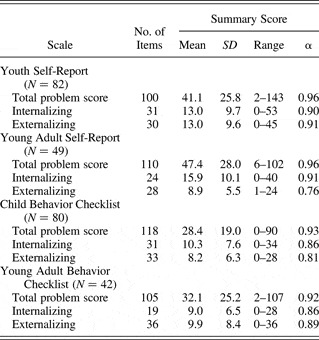
At follow-up, the mean scale scores from the two original self-reports and parent checklists varied between 9.0 and 15.9 (internalizing), 8.2 and 13.0 (externalizing), and 28.4 and 47.4 (total scale score), with α values between 0.76 and 0.96 (Table 5). Self- and parent-rated scale scores correlated moderately (YSR and CBCL: r S = .26, p < .05; YASR and YABC: r S = .55, p < .01). Applying cutoff levels at the 83rd and the 90th percentile of the age and sex standardized original scales (total scale score), 97 (74.0%), 8 (6.1%), and 26 (19.8%) fell in the normal, borderline, and clinical range, respectively, according to self-ratings, and 86 (71.7%), 14 (11.7%), and 20 (16.7%), respectively, according to parents' checklists (N = 120). Younger (11–16 years old) did not differ significantly from older (17–23 years old) refugees.
Problem scores at the self-reports (N = 131) and parent checklists (N = 122) among 11- to 23-year-old Middle East refugees in Denmark

Using “any mental diagnosis” (16 or 23.9% of the participating young refugees) as a reference, the best cutoff level was achieved at the 83rd percentile, that is, combining the borderline and clinical range, with a sensitivity of 0.75 and a specificity of 0.73 (73.1% correct classification), p < .001 (self-rating), and a sensitivity of 66.7% and a specificity of 74.0% (72.3% correct classification), p < .005 (parents checklists). Combining self-ratings and parents' checklists did not improve correct classification.
Group differences
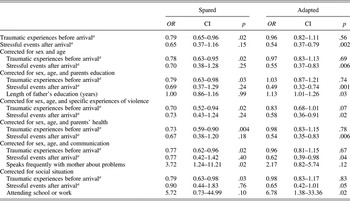
To examine different patterns of levels of significant psychological problems at arrival and follow-up, four groups were created on the basis of dichotomized mental health assessments at arrival (at least one condition) and at follow-up (borderline or clinical range): (a) spared: unproblematic at arrival and follow-up; (b) reacting: unproblematic at arrival, problems at follow-up; (c) adapted: problems at arrival, unproblematic at follow-up; and (d) traumatized: problems both at arrival and at follow-up. Based on self-reports at follow-up, 29 young refugees (22.1%) fell into Group a, 4 young refugees (3.1%) in b, 68 young refugees (51.9%) in c; and 30 young refugees (22.9%) in d. Because of the low number of reacting refugees, only Groups a, c, and d were included in the multivariate analysis. In multinomial regression analysis using traumatized as the reference group, the number of types of traumatic experiences before arrival distinguished between the spared and the traumatized young refugees (OR = 0.79, p < .05), whereas the number of types of stressful events after arrival distinguished between the adapted and the traumatized (OR = 0.54, p < .005), with no sex and age differences (Table 6). Length of father's education in the home country (OR = 1.13, p < .05) and the young refugee attending school or work (OR = 6.78, p < .05) were the only covariates that significantly distinguished between the adapted and the traumatized, and “speaks frequently with mother about problems” (OR = 3.72, p < .05) the only covariate that significantly distinguished between the spared and the traumatized. Correcting for sex, age, parents' education and health, and specific experiences of violence, indicators of family communication, and the social situation of the young refugee only slightly influenced the primary estimates.
Number of types of traumatic experiences before arrival and stressful events after arrival in the spared and adapted groups in comparison with the traumatized group in 127 11- to 23-year-old Middle East refugees in Denmark

Note: OR, odds ratio; CI, confidence interval.
aNumber of types.
Constructing the groups according to the parents' checklist at follow-up, 25 young refugees (20.8%) fell into Group a, 4 young refugees (3.3%) in b, 61 young refugees (50.8%) in c, and 30 young refugees (25.0%) in d. The number of types of traumatic experiences before arrival distinguished between the spared and the traumatized (OR = 0.78, confidence interval = 0.62–0.99, p < .05). This association remained when correcting for sex, age, parents education, specific experiences of violence, parent's health, and family interaction with limited influence on estimates (OR = 0.69–0.79); when correcting for social situation, however, the association lost significance (p = .09). Neither number of types of traumatic experiences before arrival (OR = 0.95, p = .54) nor number of stressful events after arrival (OR = 0.69, p = .20) distinguished between the adapted and the traumatized; however, when correcting for age, sex, and parents education, the number of types of stressful events after arrival approached significance (OR = 0.61, p = .09).
Discussion
Symptom reduction over time
A high prevalence of psychological problems was identified at arrival in the present study population similar to that of the original population of 311 children, that also included children whose families did not get permission to stay in Denmark (Montgomery, Reference Montgomery1998; Montgomery & Foldspang, Reference Montgomery and Foldspang2001, Reference Montgomery and Foldspang2005). However, the prevalence of clinically significant psychological problems was reduced from about three-fourths of the children at arrival in Denmark to one-fourth at follow-up, although the use of different assessment methods prevents a direct comparison. This trend is in accordance with most of the follow-up studies among refugee child populations referred to in Table 1. Among adult refugees a well, the high levels of PTSD and major depression identified at arrival decreases with time in the country of exile (Fazel et al., Reference Fazel, Wheeler and Danesh2005; Ozer, Best, Lipsey, & Weiss, Reference Ozer, Best, Lipsey and Weiss2003). The reduction of symptoms was not related to age (at arrival and follow-up), but younger age predicted participation and this might have influenced the result.
Mental health in community, migrant, and refugee populations
According to recent reviews of the epidemiology of child and adolescent psychiatric disorders, 20–25% of children and adolescents are reported to have a mental disorder (Costello, Mustillo, Keeler, & Angold, Reference Costello, Mustillo, Keeler, Angold, Levin, Petrila and Hennessy2004), whereas the median prevalence estimate of functionally impairing child and adolescent mental disorders is 12% (Costello, Egger, & Angold, Reference Costello, Egger and Angold2005). Epidemiological data appears relatively uniform globally (Belfer, Reference Belfer2008). These figures are comparable to the results of the present study (which found 26% in the borderline or clinical range at follow-up), but this study did not include an assessment of functional impairment. Using empirically based assessments (YSR) reported by adolescents (11–18 years old) from seven countries, Verhulst et al. (Reference Verhulst, Achenbach, van der Ende, Erol, Lambert and Leung2003) found an overall mean total problem score of 37.6, an internalizing score of 12.2, and an externalizing score of 10.4, which is a little lower than similar scores from the present study at follow-up. The cross-cultural differences were relatively small in Verhulst et al.'s study. Using parents' assessments (CBCL) in a Danish population sample and a clinical sample, Bilenberg (Reference Bilenberg1999) found a mean total problems score of 17.7 and 57.7, respectively, among 4- to 16-year-olds (mean score = 28.4 in the comparable population at follow-up in the present study). Parents tend to underestimate their children's symptoms in community samples and overestimate them in clinical samples, relative to self-assessments, which might account for some of the difference between the two samples (Montgomery, Reference Montgomery2008b).
Immigrant status has been hypothesized to be associated with greater psychological morbidity, but empirical data are not conclusive (Stevens & Vollebergh, Reference Stevens and Vollebergh2008). Thus, migrant school children had a higher symptom level than their native born peers in a study from the United Kingdom (Leavey et al., Reference Leavey, Hollins, King, Barnes, Papadopoulos and Grayson2004), whereas adolescents of Turkish origin in Norway and Sweden did not differ significantly from their respective host country peers, when results were controlled for demographic factors (Virta, Sam, & Westin, Reference Virta, Sam and Westin2004). Comparing Moroccan and Turkish immigrants with Dutch children and adolescents, Moroccans reported fewer problems than Turkish and Dutch adolescents, whereas Turkish adolescents reported fewer externalizing problems than Dutch children, but more internalizing problems (Stevens et al., Reference Stevens, Pels, Bengi-Arslan, Verhulst, Vollebergh and Crijnen2003). Thus, children sharing important cultural factors can react in different ways. In another study also comparing Turkish and Dutch adolescents, significantly more Turkish than Dutch adolescents scored above the cutoff on the internalizing scale, whereas more Dutch boys and the same number of Dutch and Turkish girls scored above the cutoff on the externalizing scale. In a study comparing recently arrived migrant adolescents with Belgian adolescents (Derluyn, Broekaert, & Schuyten, Reference Derluyn, Broekaert and Schuyten2008), more Belgian adolescents scored in the borderline or clinical range than migrants (24% vs. 20% on the Strengths and Difficulties Questionaire total score and 20% vs. 16% for emotional problems), but 27% of the migrants were assessed as having PTSD versus 13% of the Belgium adolescents.
Studies of the prevalence of psychological problems in refugee populations are also inconclusive, but such studies are fewer. No difference was found between Vietnamese refugees, second generation immigrants, immigrants, and native adolescents in Australia (Klimidis, Stuart, Minas, & Ata, Reference Klimidis, Stuart, Minas and Ata1994), and the profiles of emotional and behavioral symptoms reported by Cambodian-born refugee adolescents and native Canadians were similar (Rousseau & Drapeau, Reference Rousseau and Drapeau2003). The level of emotional and behavioral disorder in Indochinese refugee children in Australia, as perceived by their parents at the time of arrival, was similar to that of a comparable sample of Australian children, but considerably lower at follow-up 2 years later (Krupinski & Burrows, Reference Krupinski and Burrows1986). In a study of adolescent refugees in Canada, however, the 12-month prevalence of DSM-III-R diagnoses was 31% in the refugee group compared to 20.1% in the Canadian-born group (Tousignant et al., Reference Tousignant, Habimana, Biron, Malo, Sidoli-Leblanc and Bendris1999). Length of time since arrival was not reported in most of these studies, and this information seems to be crucial for the interpretation of the level of psychopathology in samples of young refugees.
Group differences
This person-focused analysis complements the results of the variable-focused analysis primarily by showing what distinguishes young people who either never had psychological symptoms in exile or who recovered from those who still suffered from problems 8–9 years after arrival. The number of types of traumatic experiences, which in the variable-focused analysis was found to be a predictor for internalizing problems at follow-up, only distinguished between spared young refugees (no problems at either arrival or follow-up) and young refugees with problems at both arrival and follow up (hence, the label “traumatized”); this association remained significant through all the corrections. The cumulative effect of traumatic experiences thus seems more important than the effect of specific experiences related to war and organized violence. Results based on parents' assessment of the mental health of their children were similar in this regard.
Traumatic experiences did not distinguish between young refugees with persistent problems and those with problems only at arrival; however, they differed regarding the number of types of stressful life events in exile confirming the hypothesis that children who recover from psychological problems related to war and organized violence differ from those with persisting problems concerning factors related to life in exile rather than factors specifically related to their traumatic past. This “bouncing back” from initial problems can be understood as a special case of resilience (Roisman, Reference Roisman2005) and as an indication of resilience as a process (Yates, Egeland, & Sroufe, Reference Yates, Egeland, Sroufe and Luthar2003): the child/young person's development is disturbed by his/her experience of adversity (as reflected by high symptoms closer to the time of immigration), but, during time in exile, normative processes take over and development resumes a more positive trajectory, unless interfered with by new stressors (hence, the label “adapted”). Results based on parents' assessment showed the same tendency, but without reaching statistical significance. As the children were assessed only at two points in time and with 8–9 years in between, we do not know how soon the high initial symptom level was reduced. Longitudinal studies involving assessments at more than two points in time are necessary to further understand this process, that is, when and how adaptation takes place.
A major environmental factor identified in early studies of resilience, that distinguished children who did well despite difficult life situations (poverty, biological risks, and family instability), was a low number of chronic, stressful life events (Bronfenbrenner, Reference Bronfenbrenner1986). Children whose behavior improves during the early school years generally are found to have experienced less psychosocial adversity than children with persistent behavioral difficulties (Ackerman, Brown, & Izard, Reference Ackerman, Brown and Izard2003). Children do not simply grow out of problems; rather, improvement is related systematically to change in environmental adversity. Repeated developmental disruptions of a maltreating environment both increase the risk for maladjustment, and work against positive personal attributes that could have served protective functions (Luthar, Reference Luthar, Cicchetti and Cohen2006). Only a few stressful events were included in the study, events that were assessed to be stressful for almost everybody. However, other events might have been equally stressful for the individual young refugee; further studies, particularly those using qualitative methodologies, are necessary to understand the impact of stress in exile on recovery. Although a stressful life context in exile also was found to predict psychological problems 8–9 years after arrival in the variable-focused analysis, the result of the present analysis particularly highlights the importance of such stress for adaptation over time.
Two covariates, both related to the social environment of the children, distinguish between the adapted and the traumatized children: length of father's education and the young refugee attending school or work. Length of mother's education predicted less psychological problems in the variable-focused analysis of the present data set, and low education of both mothers and fathers (Murad, Joung, Verhulst, Mackenbach, & Crijnen, Reference Murad, Joung, Verhulst, Mackenbach and Crijnen2004) was associated with more psychological problems among Turkish immigrants in The Netherlands. Parents' educational level might be an indication of resources in the family that could serve a buffering role, but this also needs to be studied further. Attending school or work was associated with less externalizing symptoms in the variable-focused analysis. However, it it is not possible to know from either analysis if attending school or work is important for the process of recovery or if children who have many psychological problems tend to drop out of school or work because of their problems.
Key family processes can mediate the recovery of family members in times of serious crises and persistent adversity (Luthar, Reference Luthar, Cicchetti and Cohen2006). In a qualitative analysis of family consequences of refugee trauma (Weine et al., Reference Weine, Muzurovic, Kulauzovic, Besic, Lezic and Mujagic2004), rebuilding trust through communication was identified as one of the family processes through which families manage difficulties arising as a consequence of traumatic experiences. In another qualitative analysis involving refugee families that had survived torture it was found that the ability of the children to create meaning in family stories depended on the manner in which the parents and children communicated (Montgomery, Reference Montgomery2004). Communication between family members can foster resilience by bringing clarity to the situation, encouraging open emotional expression, and fostering collaborative problem solving (Walsh, Reference Walsh2003). In this study, positive family communication was represented by only two questions, focusing on the young refugees' own experiences of being able to talk with either parent about their problems. Young refugees who were able to talk with their mother about problems more often belonged to the spared than the traumatized groups, but not more often to the adapted group. This could indicate that the buffering role of this form of family support was already apparent at the time of arrival, but it needs to be studied further. The processes underlying association between good family relationships and resilience are not very well understood. However, secure attachment and children's trust in their parents' ability to protect them against danger have been identified as important mechanisms (Luthar, Reference Luthar, Cicchetti and Cohen2006), and good communication might encourage or uphold such mechanisms.
It could be hypothesized that the difference between children who adapted and children who stayed symptomatic could be a result of the latter having a higher symptom level from the start (Ackerman et al., Reference Ackerman, Brown and Izard2003). However, the number of psychological symptoms at arrival did not differ significantly between the two groups.
Only four young refugees belonged to the reacting group (no problems at arrival, problems at follow-up) so they were omitted from the statistical analysis, but all of them tell about a difficult life situation in Denmark, particularly related to their family situation. A 13-year-old boy lived with his mother and two siblings in their home country for several years before his father returned to the family, and they all escaped because of his political activities. The father is aggressive and abusive, particularly toward the mother, and the mother has serious psychological problems. A 15-year-old girl arrived in Denmark with her mother while her father was in prison. He was released 1.5 years prior to the follow-up, but decided not to come to Denmark. The girl is very angry and feels that he is letting his family down, and after her mother and father got officially divorced she developed severe problems in school and was thrown out. She was not offered a new school during the following 6 months, which made her feel totally abandoned. A 17-year-old girl lost her father in the home country, and she arrived in Denmark with her mother and sibling. Her mother later remarried and the new husband brought two children into the family and several new children were born within a few years. The mother is totally unaware of the problems of her daughter (so the girl belongs to the spared group according to parent's assessment). A 19-year-old girl lives with her mother, father, and a sibling. She does not say anything about family problems, but talks about long periods of being bullied in school.
No age differences were identified in this analysis similar to several of the studies presented in the introduction. It is probable that other research methodologies as well as a larger sample are necessary to understand a more complex pattern of relationships between the child's age at different points in time (at the time of the traumatic experiences, at arrival, at follow-up), time in exile, and different types of reactions.
Limitations
This study has several limitations and the results must be regarded as tentative. Because of the relatively small sample size the number of factors that could be included in the analysis were limited and so factors that could be important for adaptation might have been omitted. Assessment methods at arrival and follow-up were not the same, preventing a direct comparison of symptom levels, and information at arrival was provided only by parents. Furthermore, the cutoff between symptomatic and nonsymptomatic children at arrival was based on the presence of internalizing problems only, which can be particularly difficult for parents to assess and this could have resulted in an underestimation of symptom level at arrival. Two approaches were used to reduce this potential bias: questions were worded to refer to a behavior observable by parents, and a clinical in-depth interview was used as a clinical reference regarding symptoms of anxiety. However, the prevalence of 75% symptomatic children at arrival could indicate that parents did not underestimate their children's problems.
We have no information about other types of traumatic or stressful life events before arrival, such as family violence or child abuse, and information about psychosocial resources, such as quality parenting, is very limited. This is a limitation because these kinds of early and prolonged adversity in the context of low psychosocial resources can influence the child's ability to cope with later adversity (Masten et al., Reference Masten, Hubbard, Gest, Tellegen, Garmezy and Ramirez1999). We also have no knowledge of the children's personality, temperament, or cognitive and emotional development prior to the traumatic events, factors that are known to promote resilience in children (Luthar et al., Reference Luthar, Cicchetti and Becker2000; Masten, Reference Masten2004; Masten et al., Reference Masten, Burt, Roisman, Obradovic, Long and Tellegen2004). It is possible that the young person's behavioral problems have contributed to the occurrence of some stressful life events (e.g., committing illegal acts or being arrested), which would indicate a confounding of predictors and outcome. However, such experiences could also be the result of group pressure, of being at the wrong place at the wrong time, or even of belonging to a minority group.
Data include information on more than one child per family, implying a nonindependence of observations. Although this was controlled for in the statistical analysis, it still could have influenced the cutoff levels, and thereby group allocation, because the clinical in-depth interviews used as a clinical reference included more than one child per family. Nonparticipation was high at 28%, and the age and sex differences between participants and nonparticipants may have influenced the findings. The results apply to the specific context of Middle Eastern young refugees in exile in a high-income country and cannot be generalized to other refugee groups without further investigation.