

Over the past few decades, the literature published on the experiences of beginning teachers has been dominated by their concerns (see, for example, Kokkinos, Panayiotou, & Davazoglou, Reference Kokkinos, Panayiotou and Davazoglou2004; Veenman, Reference Veenman1984). Among the possible causes of these concerns have been challenging teaching assignments (Public Agenda, 2007; Valli, Reference Valli1992), lack of support from school administrators (Ingersoll & Strong, Reference Ingersoll and Strong2011), poor student behaviour and motivation (Public Agenda, 2007), and inadequate preservice teacher preparation (Oliver & Reschly, Reference Oliver and Reschly2007). Many of these concerns have been linked to the high attrition rate of beginning teachers in both regular and special settings (Billingsley, Carlson, & Klein, Reference Billingsley, Carlson and Klein2004; Ingersoll & Strong, Reference Ingersoll and Strong2011), with classroom behaviour management problems reported as the main reason that some beginning teachers have left the teaching profession (Buchanan, Reference Buchanan2011; Eick, Reference Eick2002).
For beginning and experienced teachers, being able to manage a class is of prime importance (Merrett & Wheldall, Reference Merrett and Wheldall1993), with many claiming that their teacher preparation programs did not prepare them adequately for the realities of the classroom and in particular for classroom behaviour management (Atici, Reference Atici2007; Giallo & Little, Reference Giallo and Little2003; Merrett & Wheldall, Reference Merrett and Wheldall1993). In Australia and elsewhere, few studies have examined the content of preservice teacher preparation units in classroom behaviour management. Classroom behaviour management content appears to be most often delivered embedded within other units, rather than in dedicated units (Blum, Reference Blum1994; O'Neill & Stephenson, Reference O'Neill and Stephenson2011; Wesley & Vocke, Reference Wesley and Vocke1992). Typical units contained many psychological or philosophical models of management (Allen, Reference Allen2010; Banks, Reference Banks2003; O'Neill & Stephenson, Reference O'Neill and Stephenson2012a), and offered little more than a couple of hours of instruction per model (Blum, Reference Blum1994; O'Neill & Stephenson, Reference O'Neill and Stephenson2011, Reference O'Neill and Stephenson2012a). Seldom offered were stand-alone units or content on managing more challenging behaviours (O'Neill & Stephenson, Reference O'Neill and Stephenson2011, Reference O'Neill and Stephenson2012a). Teacher education program coursework cannot be expected to provide all of the classroom behaviour management knowledge and skills that teachers require (Martin, Linfoot, & Stephenson, Reference Martin, Linfoot and Stephenson1999), but they should provide content that ‘can give teachers a conceptual map or schema to understand what they are experiencing and trying to accomplish in the classroom’ (LePage et al., Reference LePage, Darling-Hammond, Akar, Gutierrez, Jenkins-Gunn, Rosebrock, Darling-Hammond and Bransford2005, p. 354).
In order to quantify the experiences of beginning teachers in classroom behaviour management, researchers have used various constructs to develop measurement instruments. One such construct has been teacher preparedness. Preparedness is akin to self-assessment of teaching competence, and is a measure based on personal perceptions (Housego, Reference Housego1990). Preparedness is thought to be related to self-efficacy in that teachers who feel well prepared to teach are likely to have a good sense of efficacy in executing teaching tasks (Giallo & Little, Reference Giallo and Little2003). Teachers with a greater sense of preparedness to teach have been shown to have a greater sense of classroom behaviour management efficacy (Giallo & Little, Reference Giallo and Little2003). What remains unexplored is whether the association between a teacher's sense of efficacy in classroom behaviour management and teaching preparedness extends more specifically to beginning teachers’ preparedness to manage a variety of problematic student behaviours. Given that behaviour management concerns are high for beginning teachers (Australian Education Union, 2008), understanding their perceived preparedness for managing specific problematic behaviours might be useful information for designers of coursework units in initial teacher education programs and for employers planning in-service training programs.
Beginning generalist and special education teachers have been asked to assess their preparedness to undertake a range of teaching tasks competently, including classroom management, with a focus on broader classroom behaviour management tasks such as managing difficult classes (Boe, Shin, & Cook, Reference Boe, Shin and Cook2007; Cains & Brown, Reference Cains and Brown1996, Reference Cains and Brown1998; Giallo & Little, Reference Giallo and Little2003; Housego, Reference Housego1990; Kee, Reference Kee2012). Longer teacher preparation was related to higher behaviour management preparedness scores of United Kingdom (UK) and United States (US) graduates (Boe et al., Reference Boe, Shin and Cook2007; Cains & Brown, Reference Cains and Brown1996; Kee, Reference Kee2012). Secondary teachers in the UK were found to feel better prepared than their primary counterparts (Cains & Brown, Reference Cains and Brown1998), and special education graduates in the US felt slightly better prepared than general education graduates (Boe et al., Reference Boe, Shin and Cook2007). In Australia, Giallo and Little (Reference Giallo and Little2003) reported that final-year primary preservice teachers felt slightly better prepared for teaching tasks than newly graduated teachers.
The Preparedness in Managing Behaviour Problems Scale (PMBPS; O'Neill & Stephenson, Reference O'Neill and Stephenson2012b) has been used to assess the preparedness of final-year Australian preservice primary teachers to manage problematic behaviours, based on their undergraduate classroom behaviour management coursework. The preservice teachers surveyed felt slightly more than somewhat prepared to manage disruption and noncompliance, and student disorganisation problems, but less than somewhat prepared to manage aggressive, antisocial, and destructive behaviours. What is not known is whether perceptions of preparedness change from the end of teacher education programs into the first years of teaching.
Another vein of research has focused on the confidence beginning teachers have in using classroom behaviour management strategies. Reupert and Woodcock (Reference Reupert and Woodcock2010) developed the 25-item Survey of Behaviour Management Practices (SOBMP) and found that Canadian preservice teachers felt most confident in using preventative and initial correction strategies, and least confident in using later correction strategies. They reported that Australian preservice teachers felt most confident in using rewards, and Canadians, preventative strategies (Reupert & Woodcock, Reference Reupert and Woodcock2011). Canadians and the Australians both felt least confident in using later correction strategies. The Behaviour Management Strategies Scale (BMSS) was used with a sample of Australian preservice primary teachers (O'Neill & Stephenson, Reference O'Neill and Stephenson2012b). These preservice teachers felt most confident about using praise, encouragement, and rewards, and least confident about collaboration with a school counsellor. There appear to be no longitudinal or one-year follow-up studies that explore changes in teacher confidence from the end of preservice teacher education programs into the first years of teaching. Understanding beginning teacher confidence in using behaviour management strategies, and in particular those strategies known to be effective, and the changes that occur in the first year of teaching, could alert teacher educators as to what parts of their classroom behaviour management curriculum to strengthen.
In order to extend what is known about the experiences of beginning teachers as they transition from their preservice teacher education into the first year of teaching, this study sought to answer the following research questions: How prepared do first-year primary teachers perceive themselves to be in managing problematic student behaviours based on their preservice coursework preparation in classroom behaviour management? Has their perceived level of preparedness changed since completing their teacher education programs? Is their preparedness to manage problematic student behaviours related to their sense of efficacy in classroom management? How confident do they feel in using classroom behaviour management strategies, particularly those suited to addressing challenging behaviours, and how frequently do they use them? Has their confidence in using these strategies changed since completing their teacher education programs?
Method
Participants
This study follows on from a survey of 573 final-year primary preservice teachers in Australia carried out in 2009 (O'Neill & Stephenson, Reference O'Neill and Stephenson2012b). The previous study recruited participants from 21 consenting tertiary institutions that had a 4-year undergraduate primary teaching program, via an invitational e-mail forwarded to the students by a nominated faculty liaison person at each institution. These 21 programs had approximately 4000 final-year students enrolled. In the earlier study, participants were asked to indicate an interest in a follow-up study to be conducted one year after completion of their teacher education programs. At that time 282 participants supplied their preferred contact details (e-mail address and a phone number). After ethical approval was granted, an invitation e-mail was sent to these possible participants with a link to an online survey questionnaire hosted by Surveymonkey.com. Invitees had 30 days in which to respond to the survey before the link was closed, and were sent two reminder e-mails, one 7 days after the initial invitation, and another 5 days before the survey closed. A total of 275 e-mails were delivered to operational e-mail addresses.
The response rate to the online survey questionnaire was 78.5%, with 216 invitees residing in six of the eight Australian states or territories responding. Of the 216, 12 (5.6%) had not worked as teachers in 2010, five (2.3%) were working in secondary schools, three (1.4%) in preschool settings, and one as an English teacher in South Korea, leaving 195 (90.3%) participants who were working as primary school teachers in 2010. Just over 10% (n = 20) had fulfilled specialist roles within primary schools. Five had taught students with special education needs, four in physical education, four in creative arts, two in technology, two in languages other than English, two as English as a second language teachers, one as a science teacher, and one as a librarian. Of the 195 primary teachers, 10 (5.1%) were working in locations other than where they had trained as teachers, eight in another Australian state, and two in the United Kingdom.
The mean age of the first-year teachers in this sample was 26.3 years (SD = 6.9, Mdn = 23), and was similar in mean age to other first-year teaching populations in the US (Çapa, Reference Çapa2005; Moore, Reference Moore2007) and Malaysia (Murshidi, Konting, Elias, & Fooi, Reference Murshidi, Konting, Elias and Fooi2006), but older than beginning teachers in Turkey (M = 22; Şahin & Atay, Reference Şahin and Atay2010). The sample appeared to be slightly gender biased as 89.8% of the participants were female, which is higher than the national average of 81% for Australian primary teachers (Australian Bureau of Statistics, 2011), and 81.8% for US elementary teachers (Bureau of Labor Statistics, 2010).
Instruments
The online survey questionnaire included items about respondents’ teaching experience in the past year (number of days taught, current working location including overseas if applicable, employment tenure, key teaching responsibility, and location of main employing school). Respondents were asked to complete three measurement instruments: the PMBPS, a scale that measures confidence in use of classroom behaviour management strategies, the BMSS, and the Teachers’ Sense of Efficacy Scale (TSES; Tschannen-Moran & Woolfolk Hoy, Reference Tschannen-Moran and Woolfolk Hoy2001). All three scales had been previously administered to the participants in 2009. A final item pertained to participation in a follow-up study in 2011. The focus of this paper is on the results of the preparedness scale (PMBPS) and the strategies scale (BMSS), and the relationship between participants’ preparedness scores and their sense of efficacy.
The Preparedness in Managing Behaviour Problems Scale
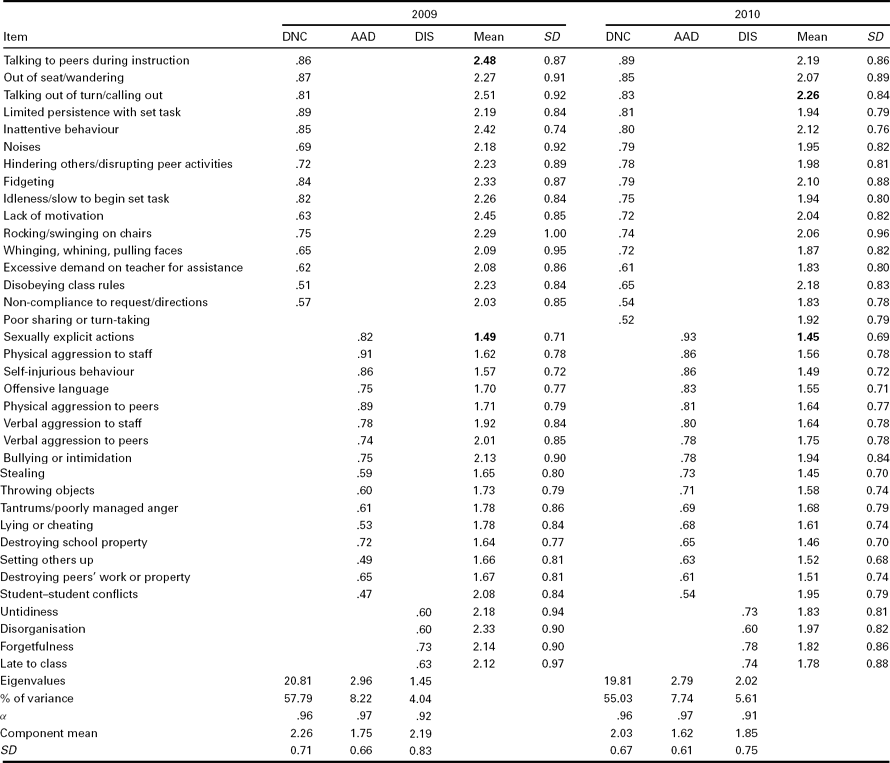
The 40-item PMBPS was designed to measure how prepared beginning teachers feel about managing specific problematic student behaviours based only on their preservice coursework preparation. Included items related to student disorganisation problems (e.g., forgetting materials), off-task behaviours (e.g., fidgeting), disruptive behaviours (e.g., hindering others), aggressive behaviours (e.g., verbal aggression directed at staff), destructive behaviours (e.g., throwing objects), noncompliant behaviours (e.g., defiant when corrected), and antisocial behaviours (e.g., lying; see Table 1 for all items). The problematic behaviours included in this scale were those reported in the research literature as troublesome or stressful to teachers (see, for example, Beaman, Wheldall, & Kemp, Reference Beaman, Wheldall and Kemp2007), and suggestions made by experts in the field and authors’ knowledge. Perceived preparedness was measured using a 4-point response scale, including unprepared (1), somewhat prepared (2), prepared (3), and well prepared (4).
Component Structure and Factor Loadings for the PMBPS (n = 181), With Oblimin Rotation, 2009 and 2010

Note. For the PCA, the Kaiser–Meyer–Olkin calculation 2009 = .96, 2010 = .95, and Bartlett's test of sphericity 2009, χ2 (630) = 7013.31, p < .001, 2010 χ2 (630) = 6635.47, p < .001. DNC = disruptive behaviours and noncompliance; DIS = disorganisation; AAD = aggressive, antisocial, and destructive.
Previous research conducted with the scale (see O'Neill & Stephenson, Reference O'Neill and Stephenson2012b) showed that three distinct types of misbehaviours were distinguishable by preservice teachers: (a) disrupted learning and noncompliance; (b) aggressive, antisocial, and destructive behaviours; and (c) disorganisation. Previously, this scale was reported to have a total scale split-half reliability of α = .98, and subscale reliabilities ranged from α = .93–.97. For this study, the total scale split-half reliability was α = .98 for both the 2009 and 2010 datasets, and subscale reliabilities ranged from α = .92–.97 (2009), and .91–.97 (2010).
The Behaviour Management Strategies Scale
The BMSS was designed by O'Neill and Stephenson (Reference O'Neill and Stephenson2012b) to collect data on beginning teachers’ confidence in using specific classroom behaviour management strategies based only on their preservice coursework. The strategies were drawn from classroom management texts, statements of knowledge required for teaching competency, and from experts’ and authors’ knowledge. It contained items comprising four main types of strategies: motivational (e.g., token economies); reductive (e.g., time-out); preventative (e.g., forming and establishing classroom rules); and communicative (e.g., reflective listening; see Table 2). The original scale used a 5-point response scale and included the response option of unfamiliar with. In 2010, a 4-point response scale was used where the category of unfamiliar with was replaced by an additional precursor Yes/No question for each strategy that asked participants if they could recall being taught about it. Respondents were asked about the frequency of the use of the strategy in the past year. Response options included, 1 = never used, 2 = once/twice this year, 3 = once/twice a month, 4 = weekly, and 5 = daily. The split-half reliability for the full BMSS was α = .98.
Comparison Component Median Scores for the PMBPS 2009–2010 (n = 181)
Teachers’ Sense of Efficacy Scale
Participants also completed the 24-item TSES. The scale was designed to measure teachers’ sense of efficacy in important teaching tasks or activities across a number of domains that were representative of teachers’ work lives, and includes classroom management, instruction, and student engagement items (see Tschannen-Moran & Woolfolk Hoy, Reference Tschannen-Moran and Woolfolk Hoy2001 for scale items). The scale employs a 9-point response scale, with options ranging from nothing (1) to a great deal (9), to indicate how much influence they feel they have over student learning and behaviour. Previous research conducted using this scale with beginning teachers has shown that the scale and subscales have excellent internal consistency reliability (O'Neill & Stephenson, Reference O'Neill and Stephenson2012c). The split-half reliability for the total TSES was α = .96, with component reliability scores ranging from α = .92–.94 (O'Neill & Stephenson, Reference O'Neill and Stephenson2012c).
Instrument Validation
Pilot-testing of the online survey questionnaire was conducted with five first-year teachers known to the first author who had not participated in the previous studies. Testers were asked to comment on item clarity, time taken to complete the survey (not including optional open-ended items), and online functionality. The survey took approximately 30 minutes to complete, instructions and item wording were reported to be clear by the five pilot-testers, and minor issues reported regarding the online functionality were subsequently rectified.
Data Collection and Analysis
Respondents could complete the survey anonymously or in confidence if they were interested in participating in a follow-up study toward the end of 2011. All were invited to enter a prize draw (a chance to win one of five A$150 gift vouchers) for survey completion, and, if interested, were asked to supply a nonidentifiable e-mail address to ensure their anonymity.
As the PMBPS is a relatively new measurement instrument that had not been previously used with first-year teachers, it seemed appropriate to explore its component structure using principal component analysis (PCA). The TSES was also subjected to a PCA as previous studies conducted with beginning teachers had not shown the existence of a stable factor structure for the TSES (O'Neill & Stephenson, Reference O'Neill and Stephenson2012d). Our sample was not large enough to split to allow us to conduct both exploratory and confirmatory factor analysis techniques. To determine the correct component rotation method, orthogonal and oblique rotations were conducted. If the oblique rotation component correlation matrix yielded correlation coefficients in excess of .30, then the components were not independent, and the orthogonal rotation solution should not be used (Pedhazur & Schmelkin, Reference Pedhazur and Schmelkin1991). Components to be retained were determined by multiple means: eigenvalues greater than one; examination of the scree plot for the point of inflexion; and parallel analysis (Thompson & Daniels, Reference Thompson and Daniels1996).
For the PMBPS and the TSES, subscale reliability was calculated using the split-half reliability method (Cronbach's alpha). For the PMBPS and TSES, component means for each participant were calculated by summing item scores that belonged to the constituent component and then dividing the dividend by the number of items. For the PMBPS, BMSS and the TSES, missing values were examined for any patterns, and if participants had in excess of 25% of item scores missing, they were removed from further analysis. Missing values for individual items were few (PMBPS 2009, n = 6, 0.09%, 2010, n = 0; BMSS 2009, n = 366, 4.5%, 2010, n = 0; and TSES 2010, n = 0). Missing values were replaced with the sample mean score for that item (Tabachnick & Fidell, Reference Tabachnick and Fidell2007). When conducting PCA, missing values were excluded pairwise rather than listwise to preserve as much data as possible (Tabachnick & Fidell, Reference Tabachnick and Fidell2007).
To explore if statistically significant changes had occurred in participants’ scores from 2009 to 2010 for the PMBPS and BMSS, 2009 scores were subtracted from 2010 scores and the quotient became a new variable called difference. The difference variable data was checked for a normal distribution via Kolmogorov–Smirnov tests as parametric texts require data to be normally distributed (Field, Reference Field2009). Data that were found to be non-normal in distribution (p < .05) were subjected to nonparametric tests such as the Wilcoxon matched-pairs test and Spearman's correlation coefficient test for exploring associations between variables. Where the difference variable had a normal distribution, paired t-tests were conducted. Where multiple tests were conducted, a Bonferroni correction factor (p < .05/number of tests conducted) was applied to reduce the likelihood of Type I errors (Field, Reference Field2009).
Results
Preparedness in Managing Behaviour Problems
The participants’ PMBPS data from 2009 and 2010 was subjected separately to principal components analysis first using orthogonal (Varimax) rotation and then an oblique (Oblimin) rotation. For the 2009 and 2010 datasets, the correlations between the identified components were greater than .30, suggesting that the components were not independent, leading to the retention of the oblique rotation solution. Examination of the scree plots for the point of inflexion for the 2009 and 2010 data suggested that for both datasets, a three-to-five component solution was possible. One item, argumentative, loaded highly onto two factors, and three items, absconding, tattling, and ignoring the feelings of others, had factor loadings below .40, leading to all four items being removed from further analyses. A parallel analysis was conducted to determine the correct number of components to retain for a matrix of 36 items (variables) with 181 participants. Only the first three eigenvalues generated by the parallel analysis were larger than the first three eigenvalues obtained from the PCA for the 2009 and the 2010 datasets, confirming that three components should be retained. The PCA was then re-run with 36 items for the 2009 and 2010 datasets.
The three component model for the 2009 PMBPS data explained 70.1% of the variance in participants’ scores, and a three component model for the 2010 data explained 68.4% of the variance in their scores. Table 1 shows the component structure and factor loadings for the PMBPS for the 2009 and 2010 datasets. The component item constituents for the 2009 and 2010 PMBPS data were almost identical except for poor sharing and turn-taking, which had a factor loading of less than .40 for the 2009 PMBPS data. This item's score was omitted when comparing component means. Factor loadings for the three components for the 2009 and 2010 PMBPS were good to high (2009, M = .71, 2010, M = .74) indicating that the components had stable and reliable structures, with items sharing 50% and 54%, respectively, of their variability with the component they had aligned with.
Component one contained items related to student behaviour problems that disrupted learning and indicated noncompliance (disruptive behaviours and noncompliance). The second component contained problem behaviours associated with aggressive, antisocial, and destructive behaviours, and the third component contained four disorganisation items. The component mean scores for the 2009 and 2010 datasets are shown in Table 1. Disruptive behaviours and noncompliance had the highest component mean scores for 2009 (M = 2.26) and 2010 (M = 2.03), equating to respondents feeling somewhat prepared to manage this type of misbehaviour. The component with the lowest mean score was aggressive, antisocial, and destructive behaviours for both the 2009 (M = 1.75) and 2010 (M = 1.62) data, and equated to participants feeling less than somewhat prepared to manage this type of misbehaviour.
Change in Component Mean Scores From 2009 to 2010
The distribution of scores for the three components of the PMBPS was checked for a normal distribution prior to conducting statistical analyses. For all three components, the distribution of the change in scores from 2009 to 2010 was found to be non-normal, disorganisation, D(181) = 0.12, p < .05; disruptive behaviours and noncompliance, D(181) = 0.08, p < .05; aggression, antisocial, and destructive, D(181) = 0.08, p < .05. As the distribution was non-normal, Wilcoxon signed-rank tests were used, with p adjusted to .017 (.05/3) to reduce the likelihood of Type I error. Participants’ preparedness scores for all three components were found to have significantly (p < .001) declined from 2009 to 2010, and the effect was low to medium in size (see Table 2).
Relationship Between Preparedness to Manage Misbehaviour and Sense of Efficacy in Classroom Management
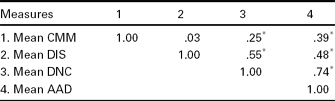
As previously reported in O'Neill and Stephenson (Reference O'Neill and Stephenson2012c), the results of the principal component analysis of the TSES resulted in two distinct components emerging that were named classroom management and motivation, and instruction and learning (see O'Neill & Stephenson, Reference O'Neill and Stephenson2012c). Spearman correlation coefficients were calculated to assess the relationships between participants’ classroom management and motivation subscale scores and their PMBPS subscales scores (disorganisation, disruptive behaviours and noncompliance, and aggressive, antisocial, and destructive behaviours). There was a highly significant positive correlation between participants’ classroom management and motivation efficacy scores and their preparedness to manage disruptive behaviours and noncompliance (r s = .25, p < .001) and aggressive, antisocial, and destructive behaviours (r s = .39, p < .001), and a nonsignificant positive correlation between their classroom management and motivation scores and preparedness to manage disorganisation behaviours (r s = .03, ns). All three PMBPS subscale scores were also strongly correlated to one another, especially the disruptive behaviours and noncompliance and aggressive, antisocial, and destructive behaviour subscale scores (r s = .74; see Table 3).
Correlations Among Sense of Efficacy in Classroom Management and Motivation Scores and Preparedness to Manage Problematic Student Behaviour Category Scores (n = 181)
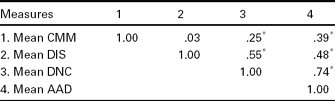
Note. CMM = classroom management and motivation; DIS = disorganisation; DNC = disruptive behaviours and noncompliance; AAD = aggressive, antisocial, and destructive.
*p < .001.
Behaviour Management Strategies Scale
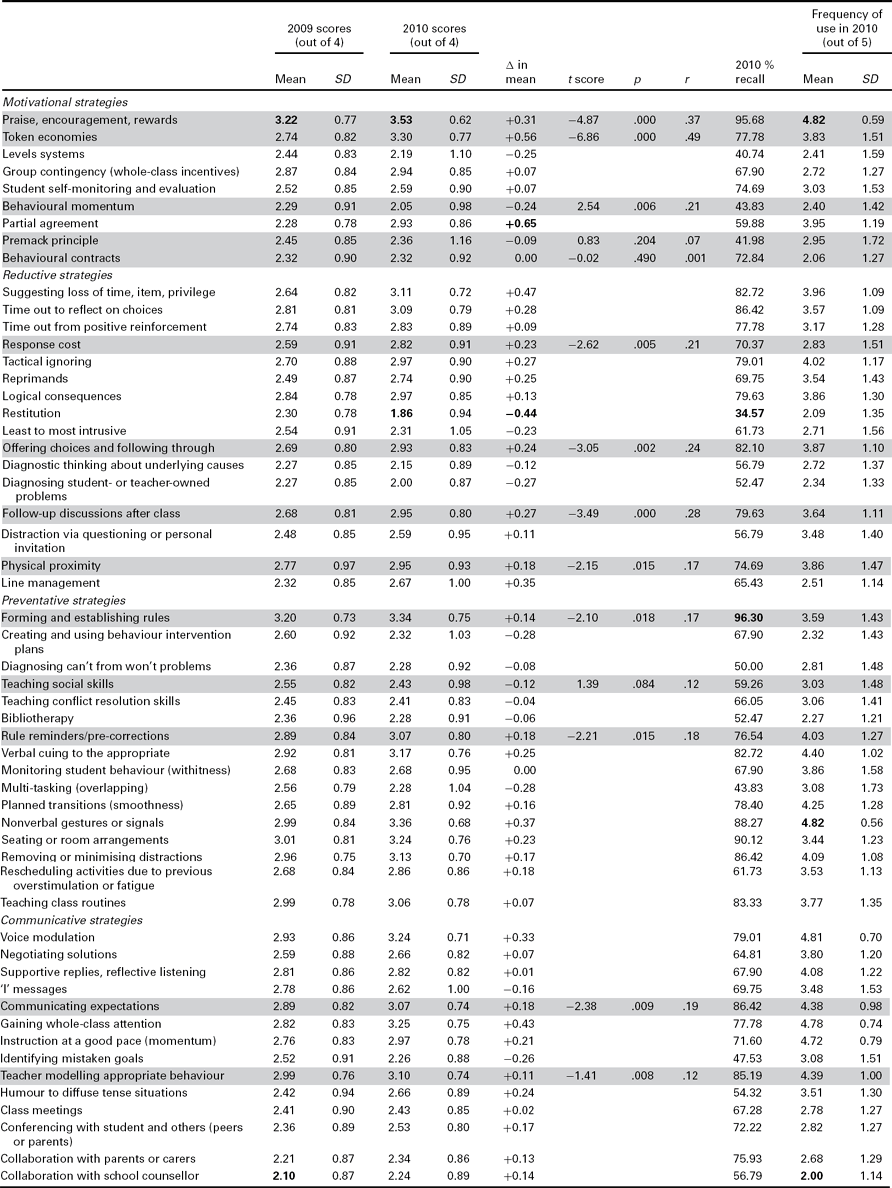
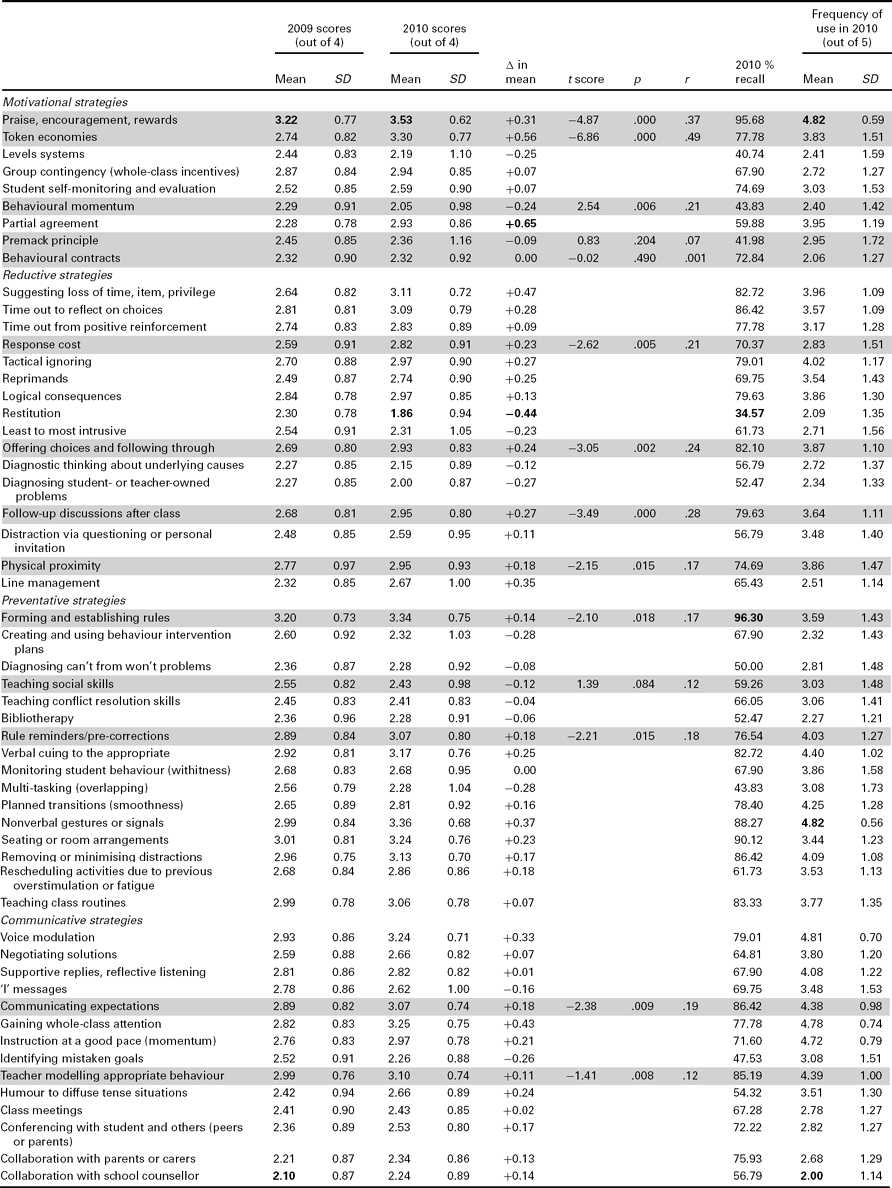
In October 2010, with the passing of a full year, it was of interest to determine what respondents could recall being taught. Table 4 shows the percentage recall for each strategy. More than 95% of first-year teachers could recall being taught about forming and establishing rules, and praise, encouragement, and rewards. Conversely, just over one-third could recall being taught about restitution (34.6%), or levels systems (40.7%).
Item Mean Scores for 2009 and 2010 and Frequency of Use of Behaviour Management Strategies Scale for 2010 (n = 149)
Note. Items in bold are those with the highest and lowest scores. Items shaded in grey were the strategies selected by the authors that are suitable for use with aggressive, antisocial, and destructive behaviours.
Table 4 shows the item mean scores for confidence in using the 55 different listed strategies in the BMSS for this sample of beginning teachers from 2009 and 2010, and the change in item mean score. The strategy with the highest mean confidence score in 2009 and 2010 was using praise, encouragement, or rewards (2009, M = 3.22, SD = 0.77; 2010, M = 3.53, SD = 0.62). The strategy with the lowest mean confidence score in 2009 was collaboration with the school counsellor (M = 2.10, SD = 0.87), and in 2010, it was restitution (M = 1.86, SD = 0.94). A score of 3 represents feeling confident, and a score of 2, somewhat confident.
First-year teachers’ mean confidence scores increased for 38 of the 55 items in the BMSS from the end of preservice training in October 2009 to October 2010. Changes in mean scores ranged from 0.00 to 0.65 (out of a score of 4), representing overall changes of 0% to 16.3% in mean scores, respectively. The mean change in item score was 0.10 (2.4%). Of the four main types of strategies, participants’ confidence in use increased for 12 out of 14 communication strategies, but for only nine out of 16 preventative strategies.
Given that our sample of first-year teachers had the lowest mean score for aggressive, antisocial, and destructive behaviours from the PMBPS scale, it was of interest to more closely examine a selected number of strategies (n = 14) listed in the BMSS (see Table 4 items shaded in grey) for 2010 mean confidence scores, and change in mean item scores from 2009 to 2010. The selected strategies included, for example, behavioural contracts, response cost, and praise, encouragement, and rewards (forms of positive reinforcement). These strategies have received support in the literature as effective in managing aggressive, antisocial, and destructive behaviours (see Akin-Little, Little, Bray, & Kehle, Reference Akin-Little, Little, Bray and Kehle2009; Colvin, Reference Colvin2010; Lane, Menzies, Bruhn, & Crnobori, Reference Lane, Menzies, Bruhn and Crnobori2011; Larson & Lochman, Reference Larson and Lochman2005; Walker, Colvin, & Ramsey, Reference Walker, Colvin and Ramsey1995).
In October 2010, the first-year teachers felt confident or nearer to confident (as indicated by a score of ≥ 2.75) in using 10 out of the 14 strategies, but only somewhat confident in using behavioural momentum, Premack principle, behavioural contracts, and social skills instruction (see Table 4). As explained more fully in the Method, for these 14 items, the difference between the mean 2009 and mean 2010 item scores was calculated by subtracting 2010 from 2009 scores, and this new variable labelled difference was tested for, and found to have, a normal distribution via a Kolmogorov–Smirnov test, D(14) = 0.16, p > .05. To determine if the changes in mean score were statistically significant (a p value of less than .05/14 = .004 was required, 1-tailed), repeated t-tests were conducted on the 14 item scores from 2009 and 2010. Statistically significant increases in mean confidence scores were found for using praise, encouragement, and rewards, token economies, delivering choices and then following through, and follow-up discussions after class (see Table 4). The effect sizes of these changes were medium to strong for praise, encouragement, and rewards, and for token economies, and close to medium in effect for delivering choices and follow-up discussions (see Table 4).
First-year teachers were also asked about the frequency with which they had used the strategies listed in the BMSS. Response choices included never (score of 1), once a year, once a month, weekly, and daily (score of 5). Table 4 shows that all of the listed strategies were used by first-year teachers at least on a yearly basis (score of 2). Five strategies had mean scores in the range of closer to daily (above midpoint of 4.5); praise, encouragement, and rewards (a selected aggressive, antisocial, and destructive strategy), nonverbal gestures, voice modulation, gaining whole-class attention, and momentum. The least frequently used was collaboration with the school counsellor with a mean score that suggested that first-year teachers used this strategy once or twice a year (M = 2.00). Seven of the selected strategies useful in managing aggressive, antisocial, and destructive behaviours were used on a weekly basis (see Table 4), with Premack principle, response cost, and social skills instruction used less than once a month, and behavioural momentum and behavioural contracts used once or twice a year.
Discussion
Preparedness in Managing Problem Behaviours
The results from the principal component analyses of the 2009 and 2010 data from the PMBPS suggest that beginning teachers do not view all student misbehaviours similarly. Three distinct problem behaviour components were discernible (disruptive behaviours and noncompliance, disorganisation, and aggressive, antisocial, and destructive behaviours) from the 2009 and 2010 data, suggesting the scale has good component stability when used with beginning teachers. This three-component model explained a good proportion of the variance in participants’ scores from 2009 and 2010. The split-half reliability for the components was also very high for the 2009 and 2010 data, indicating that the scale reliably measures the construct under investigation.
It seems likely that the first-year teachers sampled had personally or vicariously experienced a range of problematic student behaviours. A year since completing their teacher education programs, they perceived themselves, at best, as only somewhat prepared to manage disruptive behaviours and noncompliance, then less than somewhat prepared to manage student disorganisation, and, lastly, just above the midpoint between not at all prepared and somewhat prepared to manage aggressive, antisocial, and destructive behaviours based on their coursework preparation in classroom behaviour management. Over the past year, a statistically significant decrease of low to medium effect size had occurred in their perceived preparedness to manage all three types of problem behaviours. That their perceived preparedness to manage disruptive behaviours and noncompliance decreased appears consistent with previous research on beginning teacher concerns conducted by Watzke (Reference Watzke2007). Using a longitudinal research design, Watzke found that over the course of the first year of teaching, K–12 teachers in the US experienced an increase in their concerns for managing disruptive students, and became moderately concerned about managing this behaviour.
The results reported here are, however, different to previous preparedness research conducted in Australia. Using cross-sectional research methods, Giallo and Little (Reference Giallo and Little2003) found no significant difference in preparedness scores for behaviour management between Australian preservice and newly graduated teachers, with final-year preservice teachers having a mean score of 4.90/7 and the graduate teachers, who had up to two years of teaching experience, a mean score of 4.84. The scale they used, however, contained only one specific item on managing a disruptive student, and the other items were more general than those in the PMPBS (see Cains & Brown, Reference Cains and Brown1998). Participants in that study were not asked to judge preparedness based solely on their coursework preparation.
Although disorganisation and disruptive and noncomplaint behaviour problems can impact on teacher instruction, and reduce on-task behaviours in students (Colvin, Reference Colvin2010), these types of problems are more likely frustrating to teachers (Beaman et al., Reference Beaman, Wheldall and Kemp2007; Merrett & Wheldall, Reference Merrett and Wheldall1993). Of greater risk to the physical, psychological, and emotional wellbeing of teachers, classmates, and the student displaying the behaviours are aggressive, antisocial, and destructive behaviours (Stephenson, Linfoot, & Martin, Reference Stephenson, Linfoot and Martin2000; Walker, Colvin, & Ramsey, Reference Walker, Colvin and Ramsey1995). Very aggressive behaviour is exhibited by 5–10% of children, more so by boys (Kazdin, Reference Kazdin, Morris and Kratochwill1998). Carter, Clayton, and Stephenson (Reference Carter, Clayton and Stephenson2006) showed that more than 50% of students exhibiting challenging behaviours (n = 51) from a sample of 43 Catholic primary schools in Australia exhibited verbal aggression, threw objects, or bullied or intimidated others on a daily basis. More than 20% destroyed property or exhibited physical aggression toward peers on a daily basis, and more than 50% were physically aggressive on a weekly basis. Students displaying such behaviours are least welcomed in regular classrooms, even with assistance (Kauffman, Lloyd, & McGee, Reference Kauffman, Lloyd and McGee1989), their presence is associated with teachers’ lowered sense of efficacy in classroom behaviour management (Giallo & Little, Reference Giallo and Little2003), and teachers would like more information and support in managing them (Stephenson, Linfoot, & Martin, Reference Stephenson, Linfoot and Martin1999).
With the likelihood of at least one student, on average, who displays aggressive, antisocial, and destructive behaviours in every school, if not most classes (Atici, Reference Atici2007), all teachers need to be prepared to deal with these behaviours to ensure a safe environment in classrooms and in the playground. The results reported here suggest that first-year teachers do not feel that their preservice classroom behaviour management coursework has prepared them well. It is conceded that even with training, teachers may never truly feel psychologically prepared to manage the more severe forms of aggressive, antisocial, and destructive behaviours, but with adequate training, they may be better informed about effective proactive and reactive strategies that increase instruction and learning (Allen, Reference Allen2010; Alvarez, Reference Alvarez2007; Lane et al., Reference Lane, Menzies, Bruhn and Crnobori2011).
Previous research conducted with this sample of teachers (see O'Neill & Stephenson, Reference O'Neill and Stephenson2012b) showed that those who had completed two or more focused preservice classroom behaviour management units had statistically significantly higher preparedness scores for managing aggressive, antisocial, and destructive behaviours than those who had completed only one or none. Their level of preparedness was, however, still less than somewhat prepared, but was better than those who had completed none, whose scores were closer to not at all prepared. Martin (Reference Martin2004) also noted the benefits of completing focused classroom management units on first-year teachers’ feelings of competence.
An examination of the content of Australian preservice coursework units in classroom behaviour management may, in part, explain why first-year teachers felt at best only somewhat prepared to manage problematic student behaviours. The classroom behaviour management content of preservice teacher education programs has shown a lack of evidence-based models, and a tendency for units to cover a wide range of models and strategies in a relatively short period of time (O'Neill & Stephenson, Reference O'Neill and Stephenson2011, Reference O'Neill and Stephenson2012a). In addition, only 24% of the Australian primary teacher education programs surveyed by O'Neill and Stephenson (Reference O'Neill and Stephenson2011) offered a specific unit on managing challenging behaviours, and only 22.6% of units that included content on classroom behaviour management specifically mentioned managing challenging behaviours in their unit descriptions (O'Neill & Stephenson, Reference O'Neill and Stephenson2011).
Although first-year teachers preparedness for managing aggressive, antisocial, and destructive and disruptive behaviours and noncompliance was less than desirable, the finding that their sense of efficacy in classroom management and motivation tasks was moderately associated with their aggressive, antisocial, and destructive and disruptive and noncompliance scores (and vice versa) is potentially useful for teacher educators, and established some measure of construct validity for the PMBPS subscales. Enhanced instruction in classroom behaviour management will likely raise both perceptions, and may protect the beginning teachers against burnout and attrition (Brouwers & Tomic, Reference Brouwers and Tomic2000). The moderate association found between the disruptive behaviours and noncompliance preparedness subscale and classroom management and motivation efficacy subscale scores seems logical as this subscale contains five items that pertain to disruptive or defiant type behaviours. It is less clear why a moderately strong association (r s = .39) existed between the aggressive, antisocial, and destructive preparedness and the classroom management and motivation subscale scores, as only one item on getting through to the most difficult students might be viewed as pertaining to aggressive, antisocial, and destructive behaviours. The strong correlation (r s = .74) between the disruptive behaviours and noncompliance and aggressive, antisocial, and destructive subscale scores might, in part, explain this result. Giallo and Little (Reference Giallo and Little2003) reported a similar moderately strong and highly significant association (r = .35, p = .002) between Australian beginning teachers’ classroom behaviour management self-efficacy scores and their preparedness to teach scores. The results of these two studies would appear to partially confirm Housego's (Reference Housego1990) suggestion that the constructs of perceived preparedness and sense of efficacy are related.
Behaviour Management Strategies
More than half of the first-year teachers could recall being taught 49 of the 55 strategies in the BMSS from their teacher education program coursework. Of the listed strategies, they felt most confident about using praise, encouragement, and rewards, and least confident in using restitution. Praise, encouragement, and rewards can act as positive reinforcers of desirable student behaviours (Alberto & Troutman, Reference Alberto and Troutman2009), and when praise is given descriptively, it is a highly effective strategy (Simonsen, Fairbanks, Briesch, Myers, & Sugai, Reference Simonsen, Fairbanks, Briesch, Myers and Sugai2008). Confidence in using restitution was below somewhat confident. It may be that newly graduated teachers do not feel confident in providing monitoring and feedback in the restitution process, preferring instead to act as managers, determining and delivering consequences (Gossen, Reference Gossen1996).
The sample reported increased confidence in using 38 of the 55 listed behaviour management strategies, but most increases (and decreases) were small. It would appear that their confidence in use ratings of behaviour management strategies imparted in their preservice coursework are somewhat set by the end of their teacher education programs. Most increases (albeit mostly small) were in the communication strategies category, and perhaps the daily to weekly frequency with which they were using communication strategies, such as voice modulation and stating expectations, afforded greater opportunities to hone these strategies, leading to additional confidence. The largest increases in confidence were for the motivational strategies of partial agreement and using token economies. The first-year teachers’ weekly use of these strategies may have assisted in their increased confidence in use, and perhaps they realised the benefits of these strategies in promoting positive classroom interactions (Kazdin & Bootzin, Reference Kazdin and Bootzin1972; Rogers, Reference Rogers1995). Of the 14 strategies selected that can be useful in managing aggressive, antisocial, and destructive behaviours, participants’ confidence for using 11 of the strategies increased, four significantly so, which is an encouraging finding in itself.
Few of the behaviour management strategies listed in the BMSS were reported to be used on a daily basis, despite some being advocated as effective strategies suitable for daily use, such as smooth transitions (Kounin, Reference Kounin1970) and token economies (Simonsen et al., Reference Simonsen, Fairbanks, Briesch, Myers and Sugai2008). Praise, encouragement, and reward were the most frequently used. Reupert and Woodcock (Reference Reupert and Woodcock2011) reported that reward-type strategies were the second most frequently used by preservice Australian teachers after initial correction strategies. It may be that once teachers are wholly responsible for the management of their classrooms, they realise the benefits of using positive approaches to promote desirable student behaviours (Simonsen et al., Reference Simonsen, Fairbanks, Briesch, Myers and Sugai2008), rather than drawing attention to the inappropriate behaviours by using correction strategies.
Apart from praise, encouragement, and rewards, respondents reported using strategies suitable for aggressive, antisocial, and destructive behaviours on a weekly basis or less. Not all strategies may be required on a daily basis (e.g., follow-up discussions after class) for students who display aggressive, antisocial, or destructive behaviours, and not all classes may have had a student who displayed aggressive, antisocial, or destructive behaviours. Other strategies such as physical proximity, rule reminders, and communicating expectations were reported to be used on a weekly basis, but these effective strategies are suitable for daily use with all students (Kounin, Reference Kounin1970; Simonsen et al., Reference Simonsen, Fairbanks, Briesch, Myers and Sugai2008). Beginning teachers may be underestimating the frequency with which they used many of the strategies in the BMSS, or underusing potentially valuable strategies such as behavioural momentum and the Premack principle.
Limitations
The sample was slightly gender biased with more females than males responding to the survey (by proportion) than have been reported in the Australian Bureau of Statistics employment data. Another limitation lies within the nature of self-report data, which may suffer from inaccurate recall or over- or underestimation of confidence (Bandura, Reference Bandura1997; Roehrig, Bohn, Turner, & Pressley, Reference Roehrig, Bohn, Turner and Pressley2008), preparedness (Housego, Reference Housego1990), or use. Another limitation is that observations were not conducted of the beginning teachers responding to problem behaviours, such as those listed in the PMBPS or using the strategies listed in the BMSS, to validate their preparedness or confidence data. A further limitation was that the participants were not asked about the frequency at which they were encountering problem behaviours, or the perceived severity of those problem behaviours listed in the PMBPS. Doing so may have provided prevalence data that allowed greater exploration of the relationship between prevalence and perceived severity of problem behaviours encountered, and preparedness to deal with them.
Conclusions and Recommendations
The responses of the first-year teachers surveyed suggested that, in their minds, their preservice teacher coursework in classroom behaviour management had been only moderately adequate in preparing them for general classroom and behaviour management, and their perceptions about the adequacy of their coursework instruction in this area had decreased significantly over the past year. Preparation for dealing with challenging behaviours was even less adequate. The rapid presentation of many models of management, many of which lack evidence of effectiveness, in classroom behaviour management coursework units in Australian primary preservice teaching programs (O'Neill & Stephenson, Reference O'Neill and Stephenson2012a) may be a contributing factor. Research that examines the coursework content delivered to beginning teachers, coupled with observations of their actual responses to student misbehaviour, could further explain and confirm their preparedness scores.
First-year teachers’ preparedness in managing disruptive behaviours and noncompliance and aggressive, antisocial, and destructive behaviour scores were significantly positively correlated with their sense of efficacy in classroom management scores, suggesting that efforts to improve either perception with improved instruction could result in wider benefits. Respondents reported that their classroom behaviour management coursework included a wide range of behaviour management strategies that they felt reasonably confident about using, and their level of confidence appeared to remain stable from the end of their teacher education program to toward the end of their first year of teaching. The first-year teachers, however, reported using some known effective strategies suitable for daily use at lower frequencies than is desirable. What teacher education programs do to prepare their teachers is then important, and ensuring sufficient quantity and quality of coursework content and the time to practice strategies in real classrooms under cooperating teacher supervision is needed.
If teacher educators believe that coursework preparation in classroom behaviour management is important, as a number of experts in the field do (see Brophy, Reference Brophy1988; Evertson & Weinstein, Reference Evertson, Weinstein, Evertson and Weinstein2006), then all teacher education programs should schedule mandatory coursework that focuses exclusively on content providing foundational knowledge, skills, and understanding in evidence-based classroom behaviour management (Lasley, Reference Lasley1989; Simonsen et al., Reference Simonsen, Fairbanks, Briesch, Myers and Sugai2008). Ideally, general classroom behaviour management content would be delivered in mandatory stand-alone units by academics who have an active research interest in this area. Past research has shown that when embedded in other units, as little as two hours of instructional time has been allocated (O'Neill & Stephenson, Reference O'Neill and Stephenson2011, Reference O'Neill and Stephenson2012a).
Additionally, to better meet the new national teaching competency standards that require graduates to ‘demonstrate knowledge of practical approaches to manage challenging behaviour’ (Australian Institute for Teaching and School Leadership, 2011, p. 14), programs should contain evidence-based content in managing challenging student behaviours (see Lane et al., Reference Lane, Menzies, Bruhn and Crnobori2011). The unit content needs to include propositional and procedural knowledge, as well as conditional knowledge of when and why to use various strategies and approaches (Brophy, Reference Brophy1988). Future research that compares the preparedness of beginning teachers who have been provided with a stand-alone unit on evidence-based classroom behaviour management practices and an additional unit on managing challenging behaviour during their preservice training, to those who have not completed a managing challenging behaviour unit could clarify the value of this additional training.
Author Note
This research was undertaken as part of the first author's doctoral degree at Macquarie University, Sydney, Australia, under supervision of the second author.