INTRODUCTION
Malignant tumours of the eye are classified as “orbital” (involving the bone surrounding the orbital cavity) or “intraocular” (in the eye). Ocular melanoma comes under the intraocular classification, mostly affecting the uveal tract, in particular the choroid.Reference Bomford and Kunkler1 Uveal melanoma is the most common type of ocular melanoma, arising along the uveal tract of the eye, specifically affecting the choroid, ciliary body and iris, and accounts for 5% of all melanomas.Reference Wöll, Bedikian and Legha2 Each of these structures is heavily coloured with melanin. Malignant melanoma of the uveal tract affects six in every million people per annum, with 15% arising in the ciliary body and the remaining 85% in the choroid.Reference Souhami and Tobias3
Treatment options
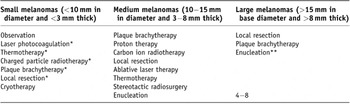
When considering the treatment option for uveal melanoma, factors such as tumour size, activity, location, growth pattern, the patient’s general health, age and status of the fellow eye must be taken into consideration.Reference Sagerman and Alberti4Table 1 demonstrates the treatment options according to tumour size.
Treatment options according to tumour size

*Used for tumours that show clinical risks for metastasis.
**Preferred method due to ocular intolerance of conservative methods.Reference Sagerman and Alberti4,Reference Shields, Naseripour, Cater, Shields, Demirci, Youseff and Freire30, Reference Augsburger45–Reference Peyman, Juarez, Diamond and Raichand48
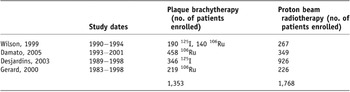
Of these, episcleral plaque brachytherapy (EPB) and proton therapy are commonly accepted treatment options, as summarised in Table 2, and are more favourable than conventional radiotherapy due to their physical characteristics.Reference Wilson and Hungerford5–Reference Munzenrider and Szechter7 EPB treats a small volume with an extremely heterogeneous dose distribution. A radioactive plaque is used to produce γ or β rays. The dose to the tumour base can be greater than or equal to the dose to the tumour apex. The plaque is placed directly over the tumour allowing a high dose to be delivered with rapid fall off in dose to adjacent normal tissue.
Brachytherapy and proton therapy studies

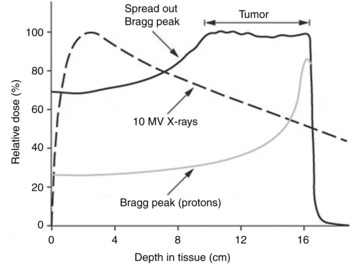
Proton therapy involves highly conformal target volume shapes. Clinically useful protons are produced using a particle accelerator such as cyclotron or synchrotron. The high-dose region or “Bragg peak” is narrow due to the proton beams being monoenergetic; this allows for a uniform dose to be delivered to the entire tumour with minimal entrance and exit dose (Figure 1).
Depth-dose distribution in tissue of a single Bragg peak (grey), a spread-out Bragg peak (black), which consists of multiple Bragg peaks of different energy added together, and a 10 MV X-ray beam (dashed). Reference Yock and Tarbell41Both EPB and proton therapy offer improved conformality and preservation of normal tissue compared to conventional radiotherapy. Reference Sagerman and Alberti4,Reference Landwehr, Umbach and Haase42–Reference Delvin44EPB, episcleral plaque brachytherapy.

Normal tissue morbidity and local tumour control
Due to the anatomical location of ocular melanomas, critical structures are abundant and in close proximity to each other. Radiation damage to key structures within the eye causes increased morbidity and consequent quality-of-life issues.Reference Melia, Moy, Reynolds, Hayman, Murray, Hovland, Earle, Kurinij, Dong, Miskala, Fountain, Cella and Mangione8 Accurate and highly localised treatment are paramount in order to achieve as little normal tissue morbidity as possible while providing good tumour control probability.Reference Regillo, Brown and Flynn9 Many studiesReference Damato, Kacperek, Chopra, Campbell and Errington10–Reference Gündüz, Shields, Shields, Cater, Freire and Brady13 have investigated the normal tissue morbidity and local tumour control in patients treated with EPB or proton therapy for choroidal melanoma. Within this review, a comparison of the outcomes in patients treated with the two modalities was made to determine which treatment option is superior. There is currently a lack of clinical availability of proton therapy facilities, and this is largely associated with the cost of proton centres.Reference Thornton, Fitzek, Klein, Dickey, Sullivan, O’Ryan-Blair, Schreuder, Allgower, Mascia, Farr and Cameron14 Whether treatment outcomes can justify additional proton centres will also be considered.
METHODS
A literature review was performed to compare normal tissue morbidity and local tumour control for proton therapy and EPB in order to determine optimum treatment choice and inform decisions concerning new equipment purchase.
Design limitations
Much of the literature reviewed consisted of studies that were single centre, retrospective, cohort studies. To generalise findings from a single centre and apply them to other centres can introduce bias into the findings. Retrospective studies use data that was not necessarily collected for research purposes; therefore, they may lack essential information. Reviewed articles were scrutinised for evidence of potential bias during the critical review process.
Reliability and validity
The reliability and validity of the literature reviewed in this research project was ensured by use of the CASP literature appraisal tool.15 By applying a series of questions to the literature, it was possible to assess the credibility, reliability and validity of the article.
Outcome measures
Ocular preservation, function and cosmesis are important factors for patients with a choroidal melanoma diagnosis.Reference Fuss, Loredo, Blacharski, Grove and Slater12 In addition to this, other aims of therapy are to maintain local control, patient survival and good visual acuity (VA).Reference Dawson, Sagoo, Mehta, Comer, Hungerford and Lee16 VA is the ability of the eye to perceive details. Evidence indicates that these can be achieved with EPB or proton therapy, which are both well-recognised conservative methods of treatment.Reference Munzenrider6,Reference Damato, Kacperek, Chopra, Campbell and Errington10–Reference Gündüz, Shields, Shields, Cater, Freire and Brady13,15–Reference Dendale, Rouic, Noel, Feuvret, Levy, Delacroix, Meyer, Nauraye, Mazal, Mammar, Garcia, D'Hermies, Frau, Plancher, Asselain, Schlienger, Mazeron and Desjardins17
Both of these treatment options involve the use of radiation therapy, and consequently, radiation damage to surrounding healthy tissue can result in acute and late effects, such as poor VA, ocular pain and discomfort.Reference Finger18,Reference Anderson, Keith and Novak19 Late effects can develop months or years after treatment; these can be problematic with effects having permanent damage and resulting in partial or complete loss of function.Reference Anderson, Keith and Novak19 It is the level of normal tissue irradiation that ultimately results in frequency and severity of late effects.
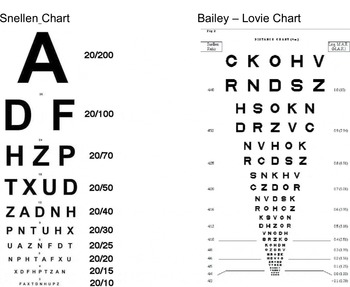
Many authors have used radiation-related complication as an outcome measure to determine normal tissue morbidity.Reference Fuss, Loredo, Blacharski, Grove and Slater12,Reference Gündüz, Shields, Shields, Cater, Freire and Brady13,Reference Dendale, Rouic, Noel, Feuvret, Levy, Delacroix, Meyer, Nauraye, Mazal, Mammar, Garcia, D'Hermies, Frau, Plancher, Asselain, Schlienger, Mazeron and Desjardins17,Reference Conway, Poothullil, Daftari, Weinberg, Chung and O'Brien20 Outcome measures of radiation-related complications are presented as ocular complications and tumour events, such as recurrence, metastases and melanoma-related mortality. These outcome measures have been used for both proton therapy and EPB. Normal tissue morbidity can result in conditions that have an impact on the quality of life of a patient.Reference Finger18,Reference Jensen, Petersen, Kline, Stafford, Schomberg and Robertson21 Normal tissue morbidity is relative to the level of radiation-related ocular complications, ocular function and VA. These are used as outcome measures to determine the normal tissue morbidity as a result of radiation treatment.Reference Dendale, Rouic, Noel, Feuvret, Levy, Delacroix, Meyer, Nauraye, Mazal, Mammar, Garcia, D'Hermies, Frau, Plancher, Asselain, Schlienger, Mazeron and Desjardins17,Reference Conway, Poothullil, Daftari, Weinberg, Chung and O'Brien20 VA loss has an impact on quality of life as it affects many activities of daily living.Reference Cocchiarella22 VA can be used as a single outcome measure or in addition to radiation-related complication measures to demonstrate normal tissue morbidity. Much of the data and results demonstrate VA as measured using Snellen or Bailey–Lovie charts (Figure 2).23,24

Patient condition
Findings suggest that normal tissue morbidity was similar for both types of treatment.Reference Munzenrider6 Patients with predisposing medical conditions such as diabetes, retinal detachment or glaucoma were more likely to experience a greater degree of normal tissue morbidity, irrespective of modality of choice.Reference Conway, Poothullil, Daftari, Weinberg, Chung and O'Brien20,25 Other influencing prognostic factors included male gender and a median age of 55 years.Reference Dendale, Rouic, Noel, Feuvret, Levy, Delacroix, Meyer, Nauraye, Mazal, Mammar, Garcia, D'Hermies, Frau, Plancher, Asselain, Schlienger, Mazeron and Desjardins17,25
Tumour location
Tumour location was also found to be a determining factor. A tumour located near to the optic disc or fovea is more problematic and likely to result in greater ocular morbidity.Reference Damato, Patel, Campbell, Mayles and Errington11,Reference Fuss, Loredo, Blacharski, Grove and Slater12 With both EPB and proton therapy, ideally a 2–2.5 mm margin is required to ensure adequate tumour coverage.Reference Damato, Kacperek, Chopra, Campbell and Errington10,Reference Damato, Patel, Campbell, Mayles and Errington11 Although there was little evidence to indicate that either proton therapy or EPB predominantly results in greater normal tissue morbidity, some findings did suggest that anterior segment complication was higher when using proton therapy.Reference Fuss, Loredo, Blacharski, Grove and Slater12,Reference Conway, Poothullil, Daftari, Weinberg, Chung and O'Brien20 This occurs due to the beam having to pass through critical structures within the anterior segment.
VA comparison
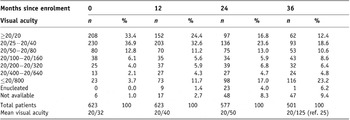
The Collaborative Ocular Melanoma Study (COMS)26 was a large-scale multicentre randomised controlled trials consisting of three arms. The second arm of the COMS compared the effectiveness of brachytherapy to enucleation for treatment of medium-sized choroidal melanomas. Patients with medium choroidal melanomas were randomised to iodine-125 (125I) EPB or enucleation. COMS report no. 16 reported VA during 3 years after treatment in patients in the 125I brachytherapy arm. The sample consisted of 657 randomly assigned patients, of which the VA data of 623 was included in the report. VA was determined using Snellen and Bailey–Lovie charts and standard lighting. A baseline VA was carried out prior to treatment, which was later to be used for comparison. A loss of six or more Snellen VA lines from baseline was defined as VA loss. All 623 patients were enrolled for at least 12 months following treatment; VA follow-up results of 93 and 80% at 2- and 3-year follow-up intervals, respectively, are tabulated below (Table 3).
COMS visual acuity follow-up

COMS, Collaborative Ocular Melanoma Study.
The results showed that treatment using 125I brachytherapy preserved a relatively high level of VA in over 50% of patients within the first year after treatment. This declined at an average rate of approximately two lines per year, with 43–49% of treated eyes having significant VA impairment 3 years after treatment.
In a single centre, retrospective analysis of a series of 136 patients treated with 125I brachytherapy between 1990 and 2000, Lumbroso-Le Rouic et al. found that the mean VA at 5 years was 20/40; this is considerably higher level of VA than the findings in the COMS.Reference Lumbroso-Le Rouic, Charif Chefchaouni, Levy, Plancher, Dendale, Asselain, Solignac, Mazal and Desjardins27 Sagoo et al.Reference Sagoo, Shields, Mashayekhi, Freire, Emrich, Reiff, Komarnicky and Shields28 conducted a retrospective medical record review over 31 years. Although this study had a long review period, it had a limited number of participants. Thirty-seven consecutive patients were involved, who were monitored for long-term VA; the findings were similar to that in the COMS with VA of 20/200 or worse being observed in 62% of patients with 57% losing more than five Snellen VA lines.Reference Sagoo, Shields, Mashayekhi, Freire, Emrich, Reiff, Komarnicky and Shields28
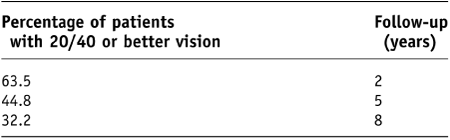
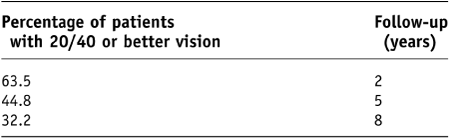
Damato et al.Reference Damato, Kacperek, Chopra, Campbell and Errington10 used VA as an outcome measure in 349 patients treated with proton beam therapy. This was a single centre study, which was carried out over a period of 10 years. Patients were prospectively and consecutively included. To measure VA, the Snellen chart was used, as well as counting fingers method. Baseline VA in the tumour-affected eye was logged prior to the start of treatment. Two hundred and twelve patients had 20/40 or better vision at this time. VA conservation of this level at follow-up is summarised as follows (Table 4):301 patients had 20/200 or better initial VA. This level of VA was conserved in 81.9% at 2 years, 61.1% at 5 years and 41.7% at 8 years. The study demonstrated that the greater the initial tumour height, the sooner loss of VA occurred.Reference Damato, Kacperek, Chopra, Campbell and Errington10
Visual acuity conservation
Courdi et al. looked at VA following proton beam therapy for uveal melanoma.Reference Courdi, Caujolle, Grange, Diallo-Rosier, Sahel, Bacin, Zur, Gastaud, Iborra-Brassart, Hérault and Chauvel29 This was a single centre prospective study reporting on 538 patients treated over a period of 5 years; the VA of 284 patients was adequately scored before and during follow-up. Patients were assessed according to a scale other than the Snellen or Bailey–Lovie chart to allow easy estimation of the change in VA following treatment. The scale ranged from 0 (being no light perception) to 14 (being 200/200 vision). The results showed that VA was initially improved in many patients immediately after treatment; however, it became gradually more impaired as length of follow-up time increased.
Local control
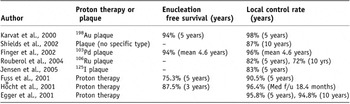
Local control is defined as tumour shrinkage and growth cessation.Reference Shields, Naseripour, Cater, Shields, Demirci, Youseff and Freire30,Reference Gragoudas, Lane, Munzenrider, Egan and Li31 As an outcome measure, local control failure was considered to be tumour regrowth, recurrence, metastases or the need for enucleation.Reference Damato, Kacperek, Chopra, Campbell and Errington10–Reference Gündüz, Shields, Shields, Cater, Freire and Brady13,15–Reference Jensen, Petersen, Kline, Stafford, Schomberg and Robertson21,Reference Sagoo, Shields, Mashayekhi, Freire, Emrich, Reiff, Komarnicky and Shields28,Reference Gragoudas, Lane, Munzenrider, Egan and Li31–Reference Sia, Harper, McAllister and Perry36 The review suggested that overall proton therapy was slightly more favourable than EPB (see Table 5) in terms of local control rates at 5- and 10-year follow-up.Reference Fuss, Loredo, Blacharski, Grove and Slater12,Reference Gragoudas, Lane, Munzenrider, Egan and Li31,Reference Höcht, Bechrakis, Nausner, Kreusel, Kluge, Heese, Heufelder, Cordini, Homeyer, Fuchs, Martus, Foerster, Wiegel and Hinkelbein37
Enucleation free survival and local control rates

Med f/u, medical follow-up.
Choice of radioisotope
The local control outcome for proton beam therapy is consistent within the literature; however, EPB outcomes vary depending on radioisotope used. Radioisotopes such as gold-198 (198Au) plaque and palladium-103 (103Pd) plaque are less widely used within clinical practice, with 125I being the most commonly used. Based on the findings in this review, local control rates for patients treated with 125I are lower than those with 103Pd or 198Au. Further research should be carried out to provide a more sound evidence base for the use of 103Pd and 198Au, with a view to these becoming more routinely used over 125I.
DISCUSSION
Modality choice
Proton beam radiotherapy and EPB are both effective treatment options in the management of choroidal melanoma.Reference Munzenrider6 The efficacy of each option, measured by comparing normal tissue morbidity and local tumour control, is largely dependent on factors such as tumour size and location, and in EPB, the radioisotope used.Reference Wilson and Hungerford5 The relatively low incidence of choroidal melanoma and the variety of treatment options make it difficult to gather data on long-term results for a large number of equally treated patients.Reference Egger, Schalenbourg, Zografos, Bercher, Boehringer, Chamot and Goitein38 This limitation makes it difficult to establish conclusively which treatment method is most effective.
The literature does, however, suggest that EPB is most effective in the treatment of medium and large posterior choroidal melanoma,25,Reference Shields, Naseripour, Cater, Shields, Demirci, Youseff and Freire30 while proton therapy is most effective for small posterior tumours close to the optic nerve and fovea.Reference Damato, Kacperek, Chopra, Campbell and Errington10 Proton is also effective for tumours that are too large for EPB when the patient is unsuitable for surgery. However, given the variability in methods and patient selection criteria in the literature reviewed, a comparison of the results does not provide reliable support for this recommendation. In order to do this, a prospective, multicentre, randomised controlled trial would be necessary. Because treatment outcome is influenced by a variety of prognostic factors, many controls with highly specific inclusion and exclusion criteria would need to be considered in order to ensure reliability.
Clinical availability
The clinical availability of proton therapy is limited due to the small number of clinical sites with proton facilities; there are currently only 26 facilities in operation worldwide.39 Inevitably, this has an impact on its viability as a treatment option. This limitation is largely associated with the cost of proton centres, including installation fees, equipment and software expenses and personnel to maintain the equipment.Reference Thornton, Fitzek, Klein, Dickey, Sullivan, O’Ryan-Blair, Schreuder, Allgower, Mascia, Farr and Cameron14 Had the findings within this study demonstrated more favourable outcomes in patients treated with proton therapy, a comprehensive cost analysis would have been suggested to consider costs arising as a result of treatment failure using EPB.
Conversely, ophthalmic EPB is a widely available, well-established, conservative treatment option for choroidal melanoma.Reference Finger18,Reference Finger, Berson, Ng and Szechter33 The increased commercial availability of this option compared to proton therapy unsurprisingly makes plaque brachytherapy first-choice option in ocular-conserving treatment for patients with choroidal melanoma.Reference Finger, Berson, Ng and Szechter33 However, this alone should not govern the choice of modality.
CONCLUSION
EPB and proton therapy treatments induce growth arrest and its slow involution over several years.Reference Boyd, Gittos, Richter, Hungerford, Errington and Cree40 Both are comparable with regards to normal tissue morbidity, as measured by VA and radiation-related complications. Prognostic factors such as gender and predisposed medical conditions influence ocular complications after treatment, more than radiation type.Reference Dendale, Rouic, Noel, Feuvret, Levy, Delacroix, Meyer, Nauraye, Mazal, Mammar, Garcia, D'Hermies, Frau, Plancher, Asselain, Schlienger, Mazeron and Desjardins17 Results suggest proton beam therapy offers better local control at 5- and 10-year follow-up when compared to EPB. This review has highlighted the need for a large-scale, prospective, randomised controlled trial to determine the reproducibility of these results.Reference Fuss, Loredo, Blacharski, Grove and Slater12
Tumour size and location affect local control and normal tissue morbidity outcomes. Tumours located close to the optic nerve can be difficult to plaque, and there is higher risk of developing radiation maculopathy or optic neuropathy, and marginal failure.Reference Conway, Poothullil, Daftari, Weinberg, Chung and O'Brien20 Proton therapy is indicated for tumours close to critical structures as the beam can be highly focused.Reference Damato, Kacperek, Chopra, Campbell and Errington10 Posterior tumours are often best treated with EPB, as anterior segment complications can arise if proton therapy is given.Reference Fuss, Loredo, Blacharski, Grove and Slater12,Reference Conway, Poothullil, Daftari, Weinberg, Chung and O'Brien20
The numbers of requests for an eye-preserving therapy as an alternative to enucleation have increased due to the availability of long-term results of proton therapy.Reference Fuss, Loredo, Blacharski, Grove and Slater12 Either treatment option can be routinely used within the clinical setting. In order to reap the benefits of each treatment option and achieve ocular retention with good VA and local control, it is necessary to select patients carefully and appropriately when choosing modality.Reference Dawson, Sagoo, Mehta, Comer, Hungerford and Lee16 Proton therapy is less routinely used due to the lack of clinical availability; however, 20 new proton therapy facilities are in the planning phase or currently under construction.39 Based on this review, neither option is significantly superior to the other; clinically, therefore, further research should be undertaken before establishing whether more proton therapy facilities or EPB facilities should be pursued.