At present, 0.8–1% of all children are born with a CHD.Reference Egbe, Uppu, Lee, Stroustrup, Ho and Srivastava 1 – Reference van der Linde, Konings and Slager 3 Most of these children survive, and an increasing number reach adulthood. Registry data have indicated that 90–95% of all patients with CHDs reach adulthood.Reference Moons, Bovijn, Budts, Belmans and Gewillig 4
Approximately 1% of all Swedish children develop type 1 diabetes mellitus.Reference Rawshani, Landin-Olsson and Svensson 5 – Reference Svensson, Guðbjörnsdóttir and Samuelsson 7 The incidence of type 1 diabetes mellitus is variable at the ages of 0–15 years, with the lowest incidence of type 1 diabetes mellitus in Mauritius, (1.1/100,000 persons/year) and the highest in Estonia (39.9/100,000 persons/year).Reference Diaz-Valencia, Bougneres and Valleron 8 A total of 50,000 (among 10,000,000) of the Swedish population have type 1 diabetes mellitus, and the annual incidence of type 1 diabetes mellitus among people aged <25 years is ~1000 cases a year nationally.Reference Gudbjornsdottir 9 Increased exposure to infections, lifestyle changes, and increased biological stress-strain could contribute to an increased risk of developing type 1 diabetes mellitus.Reference Ahadi, Tabatabaeiyan and Moazzami 10 Type 1 diabetes mellitus, immune-mediated diabetes, or juvenile-onset diabetes is insulin dependent and considered to be caused by an autoimmune reaction where the body’s immune system attacks insulin-producing cells.Reference Devendra, Liu and Eisenbarth 11 , Reference Maahs, Daniels and de Ferranti 12
CHD may increase the risk of having multiple and more serious infections, and may also possibly lead to a change in lifestyle such as a more sedentary lifestyle. In addition, having a CHD can result in stress-strain as a result of receiving repeat diagnostic and therapeutic interventions.
The presence and development of type 1 diabetes mellitus in CHD patients have not been previously studied. We hypothesised that the coexistence of type 1 diabetes mellitus and CHD has a combined effect on individuals with both diseases, resulting in increased co-morbidity and mortality.
Material and methods
Registry data
The Swedish National Patient Register was started in the 1960s, and includes statistics of diseases and surgical treatments of patients in Sweden. From 1987, the National Patient Register has included all in-patient care in Sweden, and from 2001 it has also included outpatient hospital visits, including day surgery and psychiatric care from private and public caregivers. The National Patient Register is updated once a year and includes information on patient data, geographical data, administrative data, and medical data. This register is considered to be highly reliable because the Swedish personal registration number enables each individual to be followed-up over time. The number of people in Sweden missing a personal registration number was calculated to be 0.6% in 2006. The Swedish National Patient Register includes mandatory information on all primary and secondary discharge diagnoses, which are classified according to the International Classification of Diseases. Patients are also being reported as alive or deceased when discharged, and this is consistent with the Swedish Cause of Death Register. 13
The Swedish National Diabetes Register was established in 1996 as a tool for quality improvement in the care of adult patients with diabetes. When the National Diabetes Register was established, registry data were collected from hospitals and primary healthcare centres. The register includes almost all Swedish patients with diabetes and includes only patients aged above 18 years on entry in the register. Children with diabetes are registered in SWEDIABKIDS, and data are transferred to the National Diabetes Register at 18 years of age. Annual reporting to the National Diabetes Register is based on information that is collected during patients’ visits to hospitals and primary healthcare centres nationwide at least once yearly. The register contains data on demographics, duration of diabetes, treatment modalities, cardiovascular risk factors, and associated complications of diabetes.Reference Gudbjornsdottir 9
To distinguish patients with type 1 diabetes mellitus from those with type 2 diabetes mellitus in the register, type 1 diabetes mellitus was defined in epidemiological terms as follows: treatment with insulin only or in combination with oral hypoglycaemic agents and the age onset of diabetes ⩽30 years. Data from the National Diabetes Register were linked with the Swedish National Patient Register and the Swedish Cause of Death Register through the personal registration number. Information on date and cause of death was collected from the Cause of Death Register.
All included patients provided their informed consent for registration in the National Diabetes Register before inclusion to the study. The study protocol conformed to the ethical guidelines of the 1975 Declaration of Helsinki as reflected in an a priori approval by the Regional Ethical Review Board in Gothenburg, Sweden.
Subjects
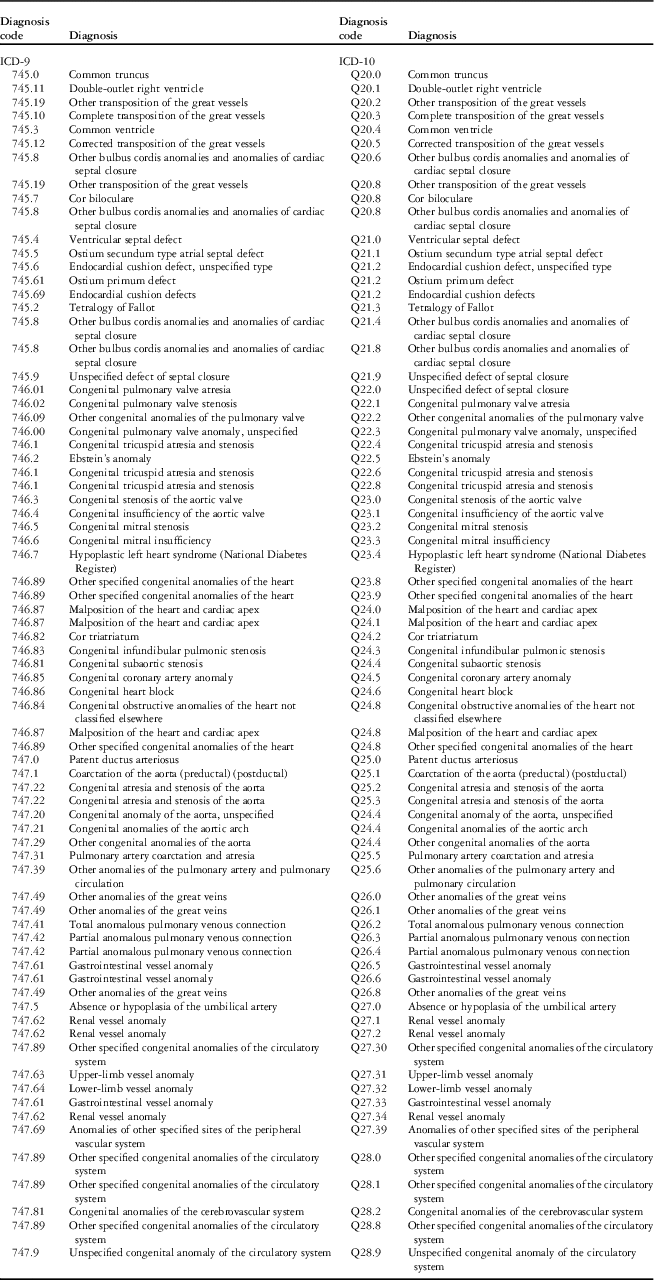
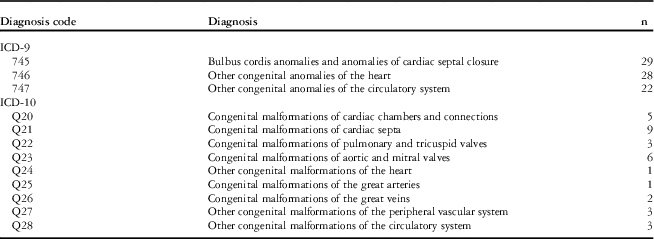
For patients with CHD, information was retrieved from the National Patient Register on hospitalisations for CHD, history of ischaemic heart disease, heart failure, atrial fibrillation, stroke, percutaneous coronary intervention, coronary artery bypass grafting, renal failure, and cardiovascular death. CHD was defined according to the ICD-9 codes 745–747 and ICD-10 codes Q20–28 (Appendices 1 and 2 for the distribution of CHD diagnoses). Other ICD-10 codes used were I50 for heart failure, I48 for atrial fibrillation, and I20, I22, I24.8, I24.9, and I25 for ischaemic heart disease.
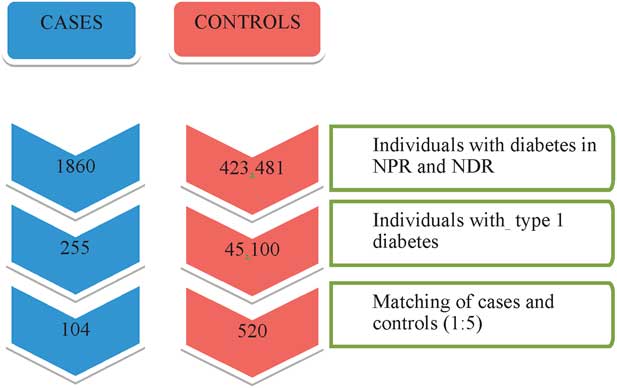
From the National Diabetes Register and National Patient Register, 423,481 adults with diabetes (types 1 or 2), but without CHD, and 1860 adults with diabetes and CHD were identified by the personal registration number and a specific coded identification number linked to the personal registration number (Fig 1). Among the patients with diabetes and CHD, 255 individuals with type 1 diabetes mellitus with the known year of onset of diabetes were identified. Among patients with type 1 diabetes mellitus without CHD, 45,100 with known year of onset of diabetes were selected. These two groups were then used to select exact matched controls, with five controls per CHD case matched for sex, year of birth, and year of first entry into the National Diabetes Register. Patients were excluded if they had an unknown duration of diabetes, were diagnosed with type 1 diabetes mellitus, but had no insulin treatment, those with a body mass index <18.5 or >45 kg/m2, glycosylated haemoglobin (HbA1c) levels <25 or >135 mmol/mol, and systolic blood pressure <80 or >236 mmHg. Patients who had migrated from Sweden were also excluded.
The matching procedure for patients with CHD and type 1 diabetes mellitus (cases) and patients with type 1 diabetes mellitus but no CHD (controls). NDR=National Diabetes Register; NPR=National Patient Register.

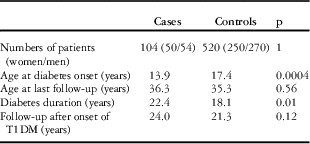
The 255 patients identified in the National Diabetes Register with CHD and type 1 diabetes mellitus were exactly matched to controls at a ratio of 1:5. After patients were excluded according to criteria described above, a final study population of 104 cases (50 women and 54 men), comprising individuals with type 1 diabetes mellitus and CHD, was compared with 520 (250 women and 270 men) controls with type 1 diabetes mellitus but without CHD. The follow-up period was from entry into the register until death or 30 June, 2012. The mean age at the last follow-up was 36.3 years among patients with type 1 diabetes mellitus and CHD compared with 35.3 years in controls (p=0.56, Table 1).
Characteristics and follow-up of the patients.

T1DM=type 1 diabetes mellitus
Cases: patients with T1DM and CHD
Controls: patients with T1DM without CHD
Statistical analysis
All statistical analyses were performed using SAS version 9.1.3 (SAS Institute, Cary, North Carolina, United States of America), MedCalc® (MedCalc Software bvba, Ostend, Belgium), and Microsoft Office Excel 2007, 2010 (Microsoft AB, Kista, Sweden). A two-tailed t-test with a p value of <0.05 was considered statistically significant. Data are shown as mean values for continuous variables, and as percentages for categorical variables.
Results
As type 1 diabetes mellitus in some cases was diagnosed during hospitalisation for other diseases, the incidence of other cardiovascular diseases the year before the onset of diabetes was examined. There were no apparent differences in diseases occurring before the onset of diabetes.
Patients with CHD developed type 1 diabetes mellitus earlier and had a lower age of onset of diabetes (13.9 versus 17.4 years, p=0.0004) compared with those with type 1 diabetes mellitus without CHD. Consequently, patients with type 1 diabetes mellitus and CHD had a longer duration of diabetes than those with type 1 diabetes mellitus without CHD (22.4 versus 18.1 years, p=0.01, Table 1).
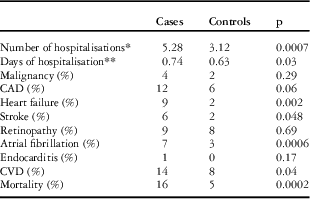
Patients with CHD and type 1 diabetes mellitus had a higher rate of co-morbidities, expressed as multiple co-morbidity diagnoses in the National Patient Register after onset of type 1 diabetes mellitus (5.28 versus 3.18 p=0.0007) and a higher rate of hospitalisation than those with type 1 diabetes mellitus without CHD (Table 2). Patients with CHD and type 1 diabetes mellitus were more frequently diagnosed with heart failure and stroke, and there was a trend for a higher rate of coronary artery disease after onset of type 1 diabetes mellitus. Patients with CHD and type 1 diabetes mellitus had a higher rate of all-cause mortality compared with patients with type 1 diabetes mellitus without CHD (16 versus 5%, p=0.0002, Table 2); five cases had a trisomy diagnosed as Q21 (ICD-10) or 758 (ICD-9).
Characteristics of the patients after onset of diabetes.

CAD=coronary artery disease; CVD=cardiovascular disease; T1DM=type 1 diabetes mellitus
Cases: patients with T1DM and CHD. Controls: patients with T1DM without CHD.
* Number of hospital visits for at least 4 days
** Days at hospital for at least 4 days before the year of onset of diabetes
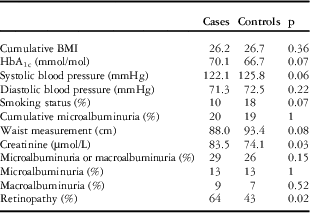
Patients with CHD and type 1 diabetes mellitus tended to have higher HbA1C levels, lower systolic blood pressure, and were less frequently smokers than those with type 1 diabetes mellitus without CHD. Numerical differences regarding several clinical parameters were small and non-significant, except for retinopathy, which was significantly more common in patients with type 1 diabetes mellitus and CHD compared with those with type 1 diabetes mellitus without CHD (Table 3).
Characteristics of the patients at the last follow-up.

T1DM=type 1 diabetes mellitus
Cases: patients with T1DM and CHD
Controls: patients with T1DM without CHD
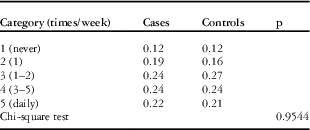
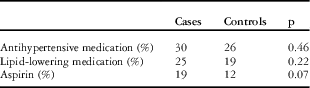
The extent of physical activity was similar, with no clear differences between patients with type 1 diabetes mellitus with or without CHD (Table 4). Medication was similar between the groups, but a trend for a higher rate of aspirin use was observed in patients with type 1 diabetes mellitus and CHD than in those with type 1 diabetes mellitus without CHD (Table 5).
Physical activity.

T1DM=type 1 diabetes mellitus
Cases: patients with T1DM and CHD
Controls: patients with T1DM without CHD
Medications of patients with type 1 diabetes mellitus and CHD and those with type 1 diabetes mellitus without CHD.

Cases: patients with type 1 diabetes mellitus and CHD
Controls: patients with type 1 diabetes mellitus without CHD
Discussion
The presence and development of type 1 diabetes mellitus in CHD patients have not been extensively studied; however, type 1 diabetes mellitus is considered to be caused by an autoimmune reaction and exposure to infections and lifestyle changes, and increased physical and mental stress could theoretically contribute to an increased risk of developing type 1 diabetes mellitus.
In the present study, patients with type 1 diabetes mellitus and CHD had an earlier onset of diabetes compared with patients with type 1 diabetes mellitus without CHD. The earlier onset of type 1 diabetes mellitus in patients with CHD could be due to increased physical and mental stress in these patients, as well as more illnesses and hospitalisations. The present study did not show that patients with CHD had more severe illnesses and hospitalisations compared with controls during the year before the onset of type 1 diabetes mellitus. Our data, however, only reflect severe conditions that required hospitalisation. Patients with CHD may have had a higher rate of infections that did not require hospitalisation.
In the present study, all-cause mortality was significantly higher in patients with type 1 diabetes mellitus and CHD compared with those with type 1 diabetes mellitus without CHD. The reason for the approximately three times higher mortality rate in patients with type 1 diabetes mellitus and CHD is unclear, and the present study did not investigate the causes of mortality. This finding, however, could potentially be explained by the additional effects of the heart defects resulting in more vascular defects and harder to control diabetes and its complications. This is in line with earlier previous studies of type 2 diabetes mellitus in CHD patients showing high mortality in patients with type 2 diabetes mellitus and CHD compared with patients with only type 2 diabetes mellitus.Reference Dellborg, Bjork and Pirouzi Fard 14 As the present study did not include a control group with CHD, but without diabetes, we cannot draw any conclusions regarding the effect of the combination of type 1 diabetes mellitus and CHD on mortality. The increased mortality in patients with type 1 diabetes mellitus and CHD could be related mainly to the CHD itself, rather than the combination of type 1 diabetes mellitus and CHD; however, patients with type 1 diabetes mellitus have higher mortality because of a higher risk of cardiovascular disease.Reference de Ferranti, de Boera and Fonseca 15 These data suggest that patients with CHD and type 1 diabetes mellitus are likely to have additionally increased risk of cardiovascular disease. Patients with type 1 diabetes mellitus and CHD had a significantly higher risk of subsequent morbidity – that is, heart failure, cardiovascular disease, and stroke.
The rate of cardiovascular disease in patients with type 1 diabetes mellitus was higher in patients with less-intensive glycaemic control.Reference Maahs, Daniels and de Ferranti 12 Generally, the metabolic situation for patients with type 1 diabetes mellitus without CHD and those with type 1 diabetes mellitus and CHD was similar, although there was a trend for higher HbA1C levels in patients with type 1 diabetes mellitus and CHD. Despite similar metabolic control, we found that the combination of type 1 diabetes mellitus and CHD generated a significantly higher risk of cardiovascular disease, probably owing more to CHD itself; however, the possibility that the combined effects of CHD and type 1 diabetes mellitus will increase the risk of cardiovascular disease cannot be excluded.
A sedentary lifestyle in patients with CHD is a prominent problem and a risk factor for cardiovascular disease and mortality.Reference Zomer, Vaartjes and Uiterwaal 16 , Reference Zethelius, Gudbjornsdottir, Eliasson, Eeg-Olofsson and Cederholm 17 Both groups in our study appeared to exercise to the same extent, and patients with type 1 diabetes mellitus and CHD did not appear to exercise less because of their heart defects. Our findings suggest that the level of physical activity per se is not affected by the presence of CHD.
We found no significant difference in cumulative body mass index or cumulative microalbuminuria, which is in line with the lack of difference in physical activity. Patients with type 1 diabetes mellitus and CHD, however, had significantly higher creatinine levels than those with type 1 diabetes mellitus without CHD. Creatinine levels affect the risk for morbidity and mortality in adults with CHD.Reference Dimopoulos, Diller and Koltsida 18 This may reflect an earlier onset of type 1 diabetes mellitus, and subsequently a longer duration of disease, which could also be reflected in the occurrence of a higher rate of retinopathy.
The present study is based on registry data. It is limited in the amount and precision of data recorded, and the number of patients in the study is relatively modest. Detailed information on the effect of prognostic factors associated with CHDs, such as exercise capacity, and the number and complexity of previous surgeries, is not available in this registry.
This study reports a first observation of morbidity and mortality among patients with CHD and type 1 diabetes mellitus. The results could be due to the correlation between CHD and diabetes as discussed above; however, it could be further discussed whether the results also could be biased by other unknown factors, such as unknown genetic mechanisms, for example, syndromes. In this study, among the 104 cases, only 5% had a trisomy that presented as Q21 (ICD-10) or 758 (ICD-9), which is in line with other studies presenting 4.8% of a population with CHD also having Down syndrome according to the National Diabetes Register.Reference Matthiesen, Henriksen and Gaynor 19 A syndrome such as trisomy thus cannot explain the generally increased morbidity and mortality among cases in this study.
Type 1 diabetes mellitus and CHD patients are both known to have increased risk of other cardiovascular diseases, morbidity, and mortality. Therefore, it is intuitive that patients with CHD and type 1 diabetes mellitus have increased risk of developing cardiovascular disease mortality compared with those who do not have CHD, which these data also suggest.
The present study did not have access to a control group with CHD, but without type 1 diabetes mellitus, which could limit the conclusions regarding the contributing effect of type 1 diabetes mellitus on a CHD population. A control group without type 1 diabetes mellitus would provide more reliable conclusions and be preferred in future studies.
In a broad sample of patients from a nationwide register of patients with type 1 diabetes mellitus, the coexistence of CHD and type 1 diabetes mellitus was associated with significantly higher rates of microvascular complications, concurrent cardiovascular disease, and all-cause mortality. To the best of our knowledge, clinical characteristics of patients with CHD and type 1 diabetes mellitus have not been previously described. The high mortality and morbidity among these patients merit further study and focussed clinical attention. Furthermore, differences in characteristics and mortality of CHD and type 1 diabetes mellitus compared with a control group without type 1 diabetes mellitus need to be studied.
Acknowledgements
None.
Financial Support
This work was supported by a grant from the Swedish Heart Lung Foundation (20090724) and by ALF-LUA grants from Sahlgrenska University Hospital.
Conflicts of Interest
None.
Ethical Standards
All included patients provided their informed consents to be registered in the National Diabetes Register before inclusion to the study. The study protocol conforms to the ethical guidelines of the 1975 Declaration of Helsinki as reflected in an a priori approval by the Regional Ethical Review Board in Gothenburg, Sweden.