Introduction
Cashew nut shell liquid (CNSL) is an economically important by-product obtained from the cashew nut Anacardium occidentale L. (Anacardiaceae). It is a caustic, viscous dark pericarp liquid found between the seed coat (pericarp) and the nut of the cashew. Natural CNSL has been found to be versatile with a wide range of uses, including as a raw material in the polymer industry, in the development of drugs (antioxidants) and in pest control. It is also known to be toxic and corrosive to the skin (Idah et al., Reference Idah, Simeon and Mohammed2014).
Cold solvent extracted CNSL consists of three major components: 70% anacardic acid, 18% cardol and 5% cardanol. However, upon heating CNSL, anacardic acid is decarboxylated to produce a technical grade of CNSL that is rich in cardanol. Thus, cardanol refers to the decarboxylated derivatives obtained from the decomposition of naturally occurring anacardic acid. It is a monohydroxyl phenol having a long mono-, di- or tri-unsaturated hydrocarbon chain (Scott, Reference Scott2003; Rodrigues et al., Reference Rodrigues, Feitosa, Ricardo, de França and Carioca2006; Tullo, Reference Tullo2008).
The various components of CNSL have attracted considerable attention, because of their fungicidal activity (Kubo et al., Reference Kubo, Masuoka, Ha and Tsujimoto2006), anti-inflammatory activity (Schmourlo et al., Reference Schmourlo, Mendoça-Filho, Alviano and Costa2005), anti-oxidant activity (Amorati et al., Reference Amorati, Pedulli, Valgimgli, Attanasi, Fillipone, Fiorucci and Saladino2001) and xanthine oxidase inhibition (Masuoka and Kubo, Reference Masuoka and Kubo2004).
Tribolium castaneum Hebst (Coleoptera: Tenebrionidae) is one of the insect pests that attack the cashew nut at storage. This stored product pest attacks and feeds on the shelled nuts, making tunnels and laying eggs. The larvae develop in the nuts and emerge through feeding tunnels created in the nuts. The feeding leads to a loss in the economic value of the crop. However, the liquid in the shell protects the nut against insect attack, and shelled nuts are more susceptible to attack by storage insects and rodents.
In the current study, using a bioassay guided approach, we isolated cardanol from the CNSL and explored its insecticidal and progeny development inhibition activities against T. castaneum in the laboratory.
Materials and Methods
Insect rearing
The initial stock of T. castaneum used for the culture was obtained from a laboratory stock and was cultured in wheat flour, kept and maintained at 29 ±2 °C temperature, 70% relative humidity and 12 L:12D photoperiod.
Extraction of cashew nut shell liquid and isolation of cardanol
The cashew nuts with their shells were harvested from the University Farms, University of Ghana, Legon, in March 2014. The shells were removed from the nuts and were dried in the laboratory at room temperature. The dried shells were kept in Ziplock® polythene bags and transported by air from Ghana to Japan for the extraction and isolation of cardanol. Samples were kept below 4 °C while awaiting extraction. The solvent extraction method was used to extract the CNSL. Dried shells were blended, and shell liquid was extracted twice from 200 g of the blended shells using 4.0 L of 100% methanol. The crude extract was concentrated using a rotary evaporator, and concentrations of 1 g equivalent (eq.)/ml and 2 g eq./ml were prepared from the dry weight (11.71 g) using distilled methanol as solvent and were used in bioassays. The isolation of cardanol was bioassay guided using the method adopted by Buxton et al. (Reference Buxton, Takahashi, Niwata, Owusu and Kim2017). The methanol extract was separated twice by liquid–liquid partitioning with hexane, diethyl ether and ethyl acetate, one after the other after being dissolved in water. The bioactive hexane layer was chromatographed on silica gel open column using 5% ethyl acetate in hexane, 30% ethyl acetate in hexane, 50% ethyl acetate in hexane, 70% ethyl acetate in hexane, ethyl acetate and methanol as the mobile phase. The 5% ethyl acetate in hexane fraction was further submitted to normal phase silica gel HPLC (column: Cosmosil 5SL Waters, 10 mm × 250 mm) eluted with 2% ethyl acetate in hexane at a flow rate of 3 ml/min and detected under UV (254 nm) to isolate the cardanol.
Insecticidal bioactivity
Ten adult insects were dipped into the treatment samples and then transferred into a clean Petri dish containing 5 g of wheat flour. Three replicates were made per treatment and insects were observed every 6 h for 24 h, after which they were observed daily for five more days. An insect was considered dead if it failed to respond to probing with a blunt probe. Control adults were dipped in methanol.
Progeny development inhibition bioassay
Ten 1-week-old larvae were dipped into the treatment samples and then transferred into a clean Petri dish containing 10 g of wheat flour. These larvae were incubated in a rearing chamber for a period of six weeks under 29 ± 2 °C temperature, 70% relative humidity and 12 L:12D photoperiod.
Cultures were observed weekly to examine the developmental stages from larvae to adult. Three replicates per treatment were made, and methanol was used for the control. To assess the effect of the samples on the different developmental stages of T. castaneum, insect mortality and growth activity were determined following the modified scale adopted by Liška et al. (Reference Liška, Rozman, Brmez, Rebekić and Lucić2015). Using the modified scale, the number of dead larvae (stage 1), the number of larvae in the transformation stage from larvae to pupae (stage 2), the number of dead pupae (stage 3), the number of adultoids (stage 4, alive and dead), the number of adults with deformity (stage 5) and the number of normal adults (stage 6) were defined.
Adultoids are defined as pupae having a characteristic appearance with the front part of the body appearing adult, being pigmented and possessing forewings and hind wings that are spread out (if developed), while the abdomen has the typical appearance of a pupa and is unpigmented (Liška et al., Reference Liška, Rozman, Brmez, Rebekić and Lucić2015). An adult with a deformity is defined as a fully developed adult with some part of its body undeveloped. Features considered deformities include broken or underdeveloped wings, legs or antennae.
Instrumentation
GC–MS data (EI-positive) were recorded with GC 2010 Plus (Shimadzu) equipped with an HP-5 MS Column (Cross-linked 5% PH ME Siloxane, 3.0 m × 0.32 mm × 0.25 µm thick film). The carrier gas was helium, at a flow rate of 11.7 ml/min, the split ratio was 1:10, and the detector and vaporizer temperature was held at 300 °C. The column temperature was initially at 150 °C for 6 min, raised to 300 °C at 5 °C/min and held for 10 min. The identification of the components was confirmed by the comparison with the mass spectra of compounds documented by the National Institute of Standards and Technology 14 online library. 1H- and 13C-NMR spectra were measured with Jeol JNM-ECX500, TMS as internal standard.
Dose–response relationship and LC50 of isolated compound 3
Six different concentrations (316.0 mg/ml, 174.0 mg/ml, 87.0 mg/ml, 43.5 mg/ml, 21.75 mg/ml and 10.88 mg/ml) of the isolated compound 3 were prepared and used for insecticidal and progeny development inhibition bioassays. Methanol was used as the control, and the set-up was observed periodically for larval and adult mortalities until no changes in insect mortalities occurred over the period. Data recorded were analysed statistically, and the LC50 values of the isolated compound against the adults and larvae were determined.
Data analysis
Data collected were analysed using GenStat Statistical Package 9.2 (9th edition). In each case, analysis of variance (ANOVA) was run at 95% confidence level. Mean separation was done using Tukey's HSD test. Data involving counts were transformed using square root 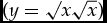 $( {y = \surd x\sqrt x } )$ transformation, while those involving percentages were transformed using arcsine
 $(y = {\sin ^{ - 1}}\surd x/100\sqrt x /100)$ transformation before analysis. Percentage survival and mortality were calculated, and survival curves were plotted using Microsoft Excel.
Results
Insecticidal activity
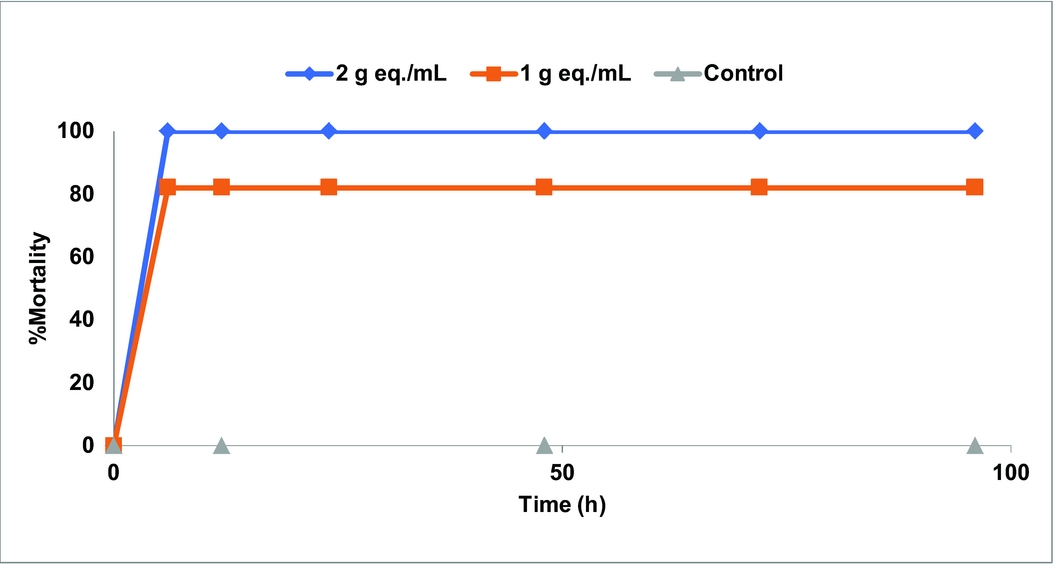
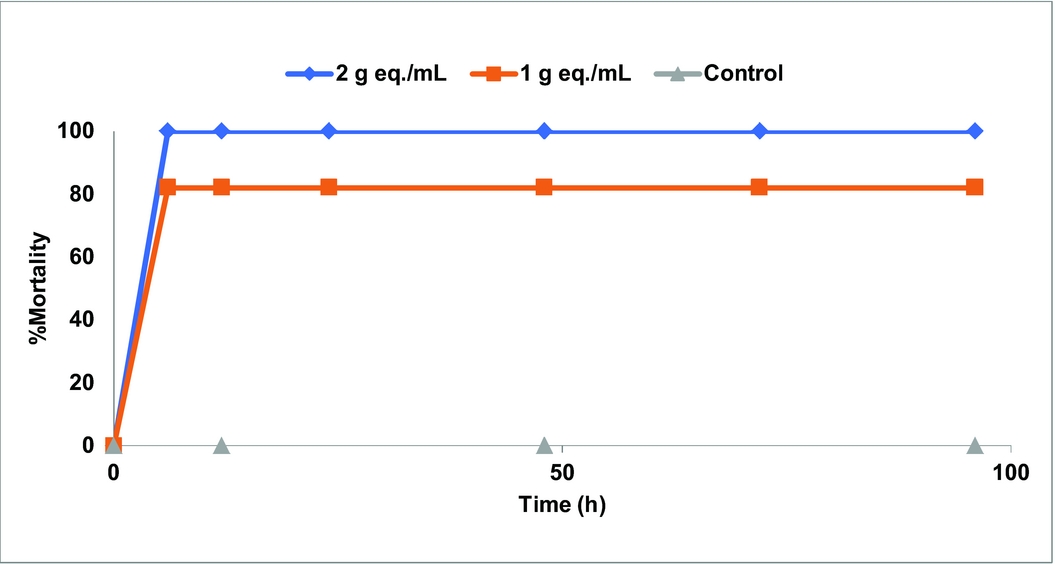
The percentage mortality of T. castaneum adults to 1 g eq./ml and 2 g eq./ml of the methanol extracts of CNSL is shown in Fig. 1. The 2 g eq./ml concentration showed the highest insecticidal activity with 100% mortality after 6 h. The 1 g eq./ml concentration also demonstrated insecticidal activity with 82% insect mortality after 6 h. No insect mortality was observed in any of the experimental controls throughout our study.
Percentage mortality of Tribolium castaneum adults on exposure to different concentrations of methanol extracts of CNSL (p < 0.05, number of replicates: 3).
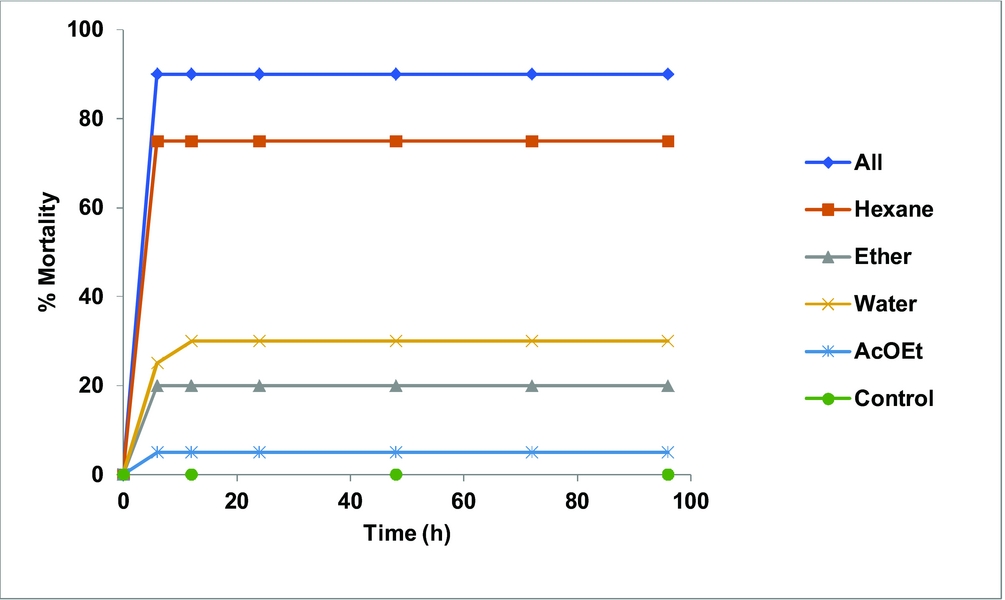
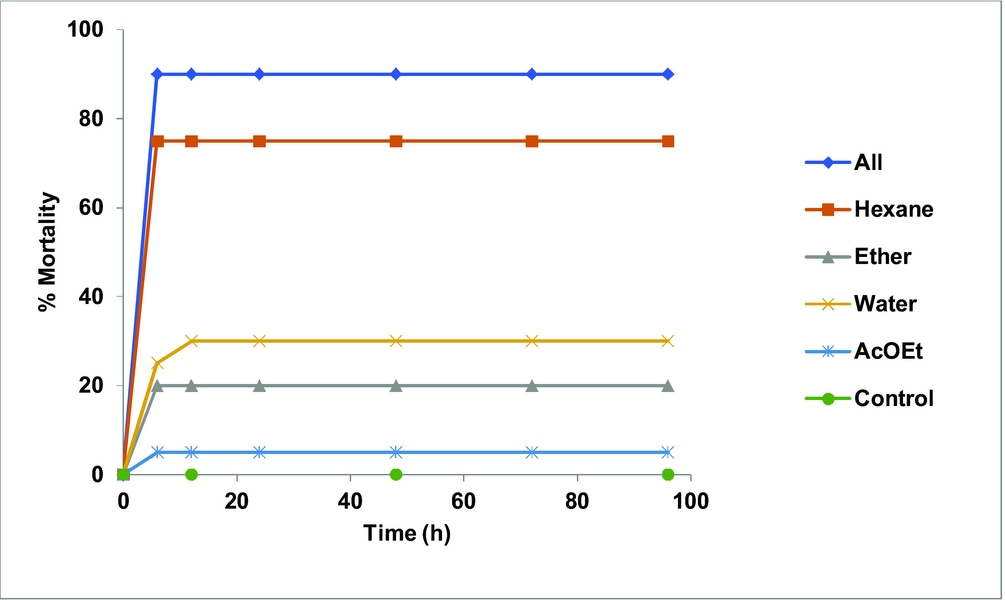
When the methanol extract of CNSL was extracted twice with hexane, diethyl ether and ethyl acetate and was followed by bioassay, the hexane layer was found to show the highest insecticidal activity with 75% mortality, while the ethyl acetate layer showed the least insecticidal activity with 5% mortality (Fig. 2). The combination of all the layers in equal amounts, however, increased the insecticidal activity with a percentage mortality of 90%. The control on the other hand showed no insect mortalities.
Percentage mortality of Tribolium castaneum adults on exposure to the four separated layers from liquid–liquid partitioning (p < 0.05, number of replicates: 3). AcOEt: ethyl acetate.
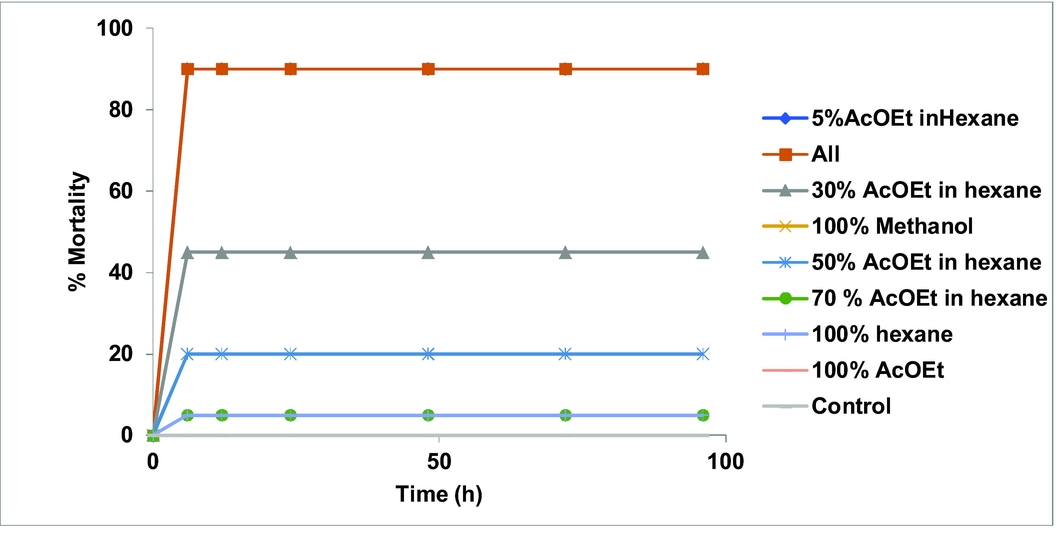
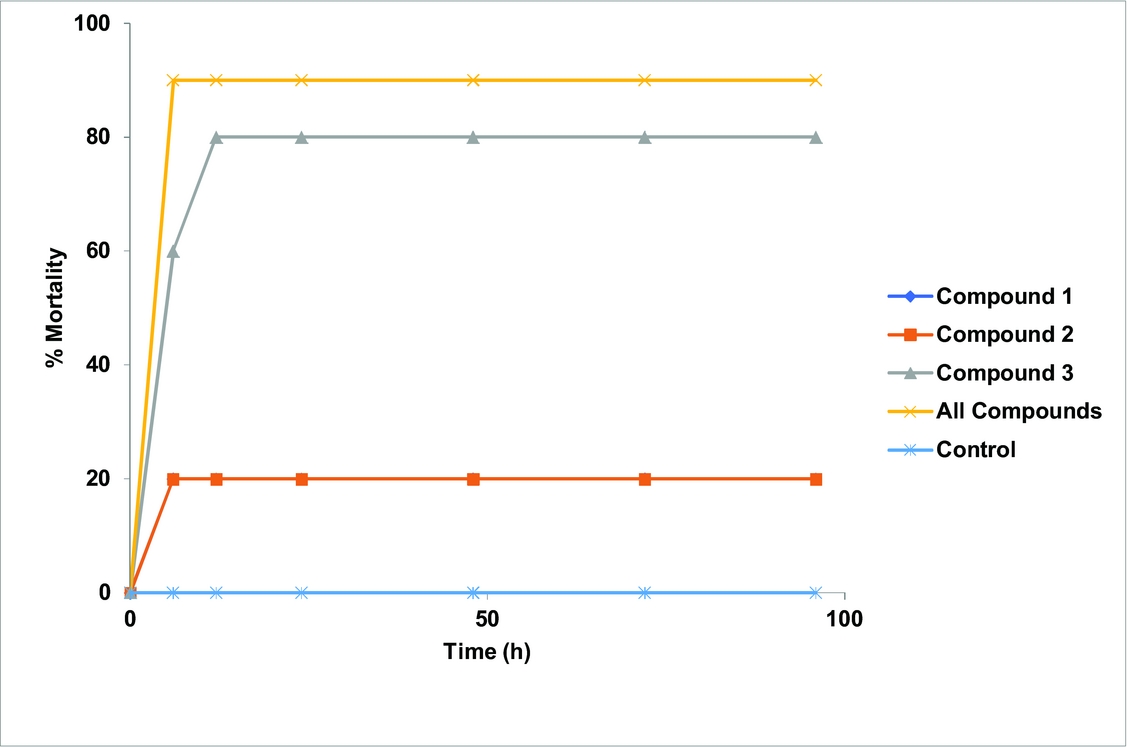
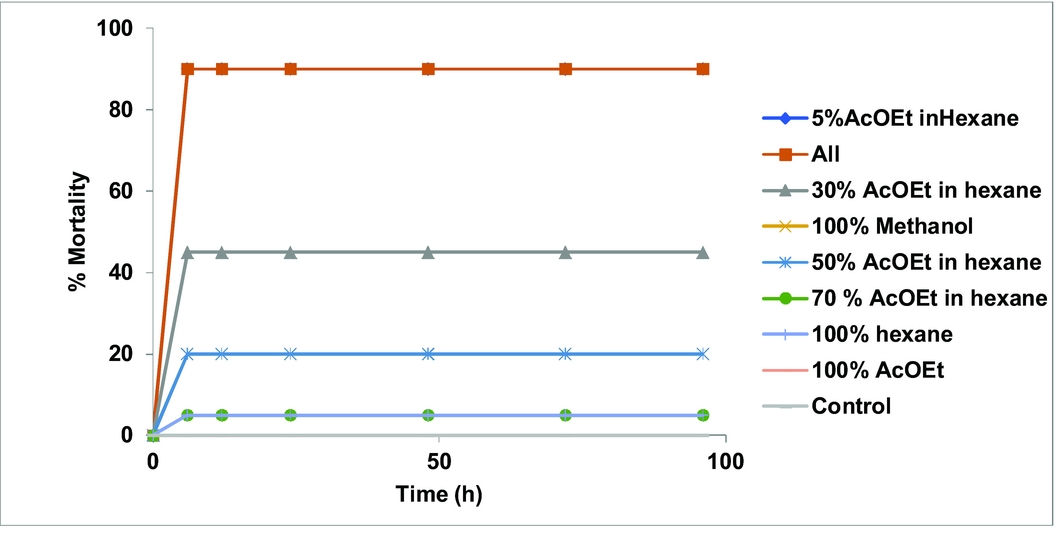
The insecticidal activities of the various silica gel open column chromatography fractions are shown in Fig. 3. The 5% ethyl acetate in hexane fraction yielded a percentage mortality of 90% after 6 h making it the most insecticidally bioactive fraction. The 30%, 50% and 70% ethyl acetate in hexane fractions also showed various levels of insecticidal activity, but the 100% ethyl acetate fraction and the control showed no insecticidal activities. When all the fractions were combined in equal amounts and used for the bioassay, 90% mortality was seen. The 5% ethyl acetate in hexane fraction submitted to the HPLC yielded three peaks designated as compounds 1, 2 and 3, and their insecticidal activities are shown in Fig. 4.
Percentage mortality of Tribolium castaneum adults on exposure to the various fractions from the silica-gel open column chromatography (p < 0.05, number of replicates 3). AcOEt: ethyl acetate.
Percentage survival of Tribolium castaneum adults on exposure to three compounds isolated from the 5% ethyl acetate in hexane fraction. Single line for compounds 1 and 2, both showing the same percentage mortality (p < 0.05, number of replicates: 3).
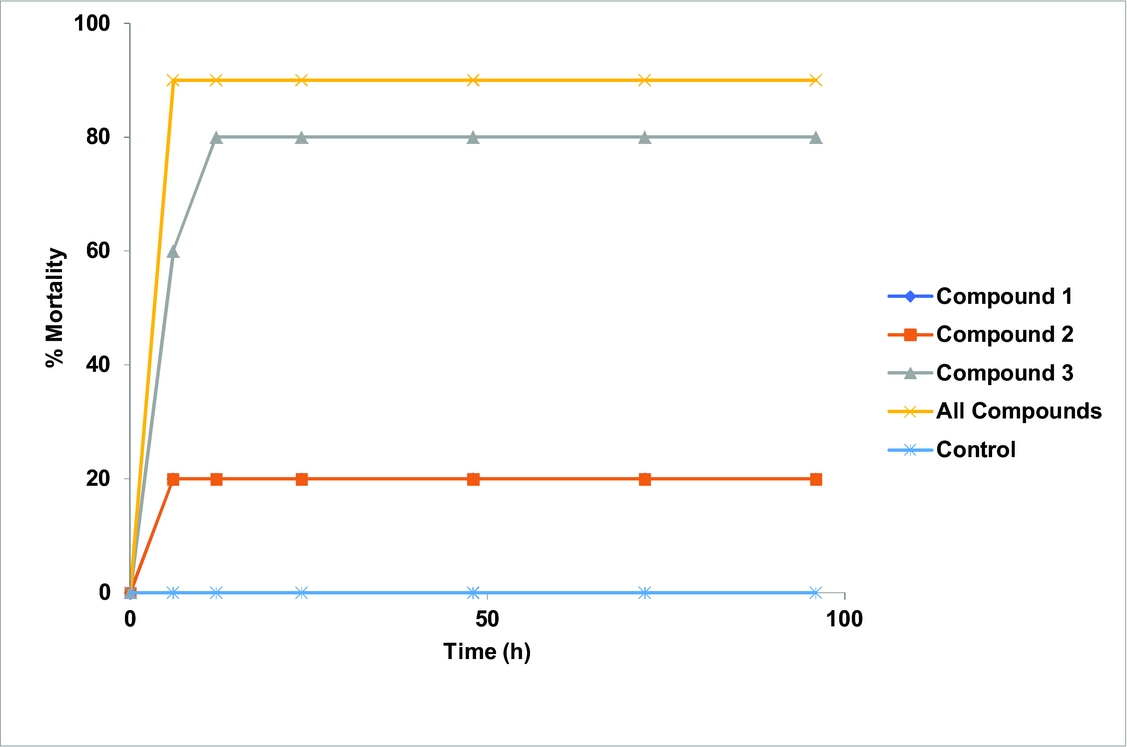
While compounds 1 and 2 yielded percentage mortality of 20% adults, they yielded a mortality of 80% after treatment with compound 3. When all the compounds were combined in equal amounts, mortality increased to 90%. The control on the other hand showed no insecticidal activity. From these results, compound 3 can be considered the main insecticidal bioactive compound in CNSL against T. castaneum.
Effect on progeny development
The larval growth and development activities of the different concentrations of the methanol extract of CNSL are shown in Table 1. The 2 g eq./ml and the 1 g eq./ml extracts showed no significant differences in their larval growth and development activities against T. castaneum. After the six-week period of studies, 90 ± 10% larvae were recorded dead and no adults emerged from either treatment. In the control, there was no larval mortality and 100% of adults without deformities emerged.
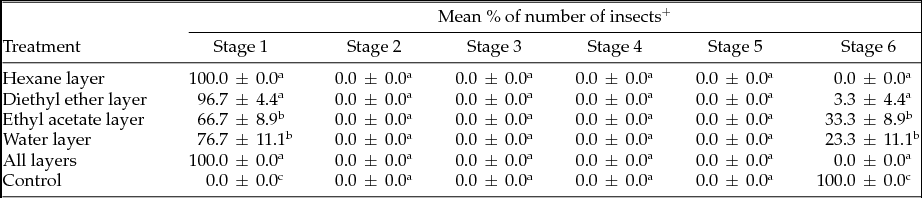
Effect of methanol extract of CNSL on larval to adult development of Tribolium castaneum

Values with different small letters within the columns are significantly different (p < 0.05). Those with the same small letters are not significantly different (p > 0.05) based on Tukey's HSD test following ANOVA.
+Each value is expressed as mean ± standard error of three replicates. Stage 1: dead larvae; stage 2: larvae transforming to pupae; stage 3: dead pupae; stage 4: adultoids (alive and dead); stage 5: deformed adults; stage 6: normal adults).
The hexane and diethyl ether layers from the liquid–liquid partitioning of the methanol extract of CNSL showed no significant difference in their effect against larval growth (Table 2). Larval mortality was 100% for the hexane layer, while for the diethyl ether layer larval mortality was 96.7 ± 4.4% with 3.3 ± 4.4% individuals emerging as apparently normal adults (i.e. without visible deformities). The ethyl acetate and water layers showed larvicidal and progeny development inhibition activities with larval mortality of 66.7 ± 8.9% and 76.7 ± 11.1%, respectively. For both treatments, surviving larvae went on to emerge apparently as normal adults: 33.3 ± 8.9% and 23.3 ± 11.1%, respectively. No larval mortality was seen in controls with 100% of individuals reaching adulthood.
Effect of the four layers of liquid–liquid partitioning of the methanol extract of CNSL on larval to adult development of Tribolium castaneum

Values with different small letters within the columns are significantly different (p < 0.05). Those with the same small letters are not significantly different (p > 0.05) based on Tukey's HSD test following ANOVA.
+Each value is expressed as mean ± standard error of three replicates. Stages defined as for Table 1.
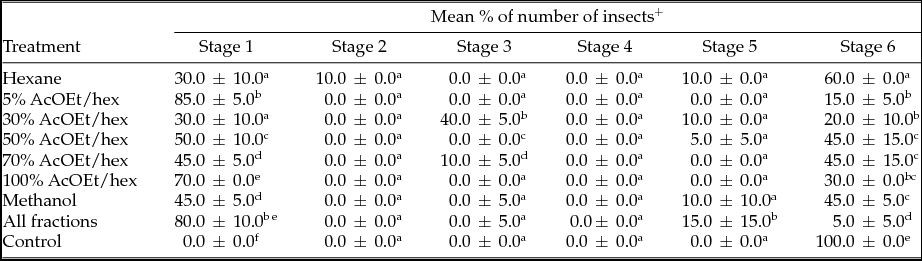
The various separated fractions from the silica gel open column chromatography showed significant differences (p < 0.05) in their effect on larval growth and development (Table 3). The 5% ethyl acetate in hexane fraction showed the highest bioactivity among the separated fractions with larval mortality of 85 ± 5% while all surviving larvae developed normally, emerging as undeformed adults. Other fractions (30%, 50%, 70% and 100% ethyl acetate in hexane) were significantly less effective against larvae recording 30%, 50%, 45% and 70%, respectively. When all the fractions were combined in equal amounts, larval mortality (80%) approached that of the 5% ethyl acetate in hexane fraction. From these results, it appears that the bioactive components in the CNSL are found in highest concentration in the 5% ethyl acetate in hexane fraction.
Effect of the isolated fractions from the silica gel open column chromatography of CNSL on larval to adult development of Tribolium castaneum

AcOEt: ethyl acetate; hex: hexane.
Values with different small letters within the columns are significantly different (p < 0.05). Those with the same small letters are not significantly different (p > 0.05) based on Tukey's HSD test following ANOVA.
+Each value is expressed as mean ± standard error of three replicates. Stages defined as for Table 1.
All three compounds isolated from the 5% ethyl acetate in hexane fraction showed significantly different (p < 0.05) levels of larval growth and development inhibition activities against T. castaneum with compound 3 being the most effective (Table 4). At the end of the experiment, 46.7 ± 11.1%, 33.3 ± 8.9% and 20.0 ± 6.7% of apparently normal adults emerged from larvae treated with compounds 1, 2 and 3, respectively. The remaining larvae died as larvae, pupae or adultoids, or emerged as undeformed adults. The control on the other hand recorded 100% adult emergence. Thus, compound 3 can be considered the main compound responsible for the larval growth and inhibition activity in CNSL.
Effect of the three isolated compounds on larval to adult development of Tribolium castaneum

Values with different small letters within the columns are significantly different (p < 0.05). Those with the same small letters are not significantly different (p > 0.05) based on Tukey's HSD test following ANOVA.
+Each value is expressed as mean + standard error of three replicates. Stages defined as for Table 1.
Identification of compound 3
The 1H-NMR spectrum in Methanol-d4 (400 MHz) of the isolated bioactive compound 3 showed peaks at δ7.03 (1H, triplet, J = 8.0 Hz), 6.61 (2H, multiplet), 6.57 (1H, multiplet), 5.78 (1H, multiplet), 5.36 (4H, multiplet), 5.01 (1H, octet, J = 17 Hz, 4 Hz, 1.8 Hz), 4.94 (1H. octet, J = 10 Hz, 4 Hz, 2 Hz), 2.78 (2H, multiplet), 2.50 (1H, triplet, J = 7.8 Hz), 2.03 (2H, double doublet, J = 7.0 Hz) and 1.33 (9H, multiplet).
The 13C-NMR spectrum (Methanol d4, 100 Hz) indicates sp2 carbon signals at δ158.2, 145.6, 137.9, 131.1, 130.3, 128.7, 127.8, 120.7, 116.2, 115.1 and 113.5 ppm. Other carbon signals were at 36.9, 32.6, 32.5, 30.7, 30.5, 30.4, 30.3, 28.1 and 26.5 ppm.
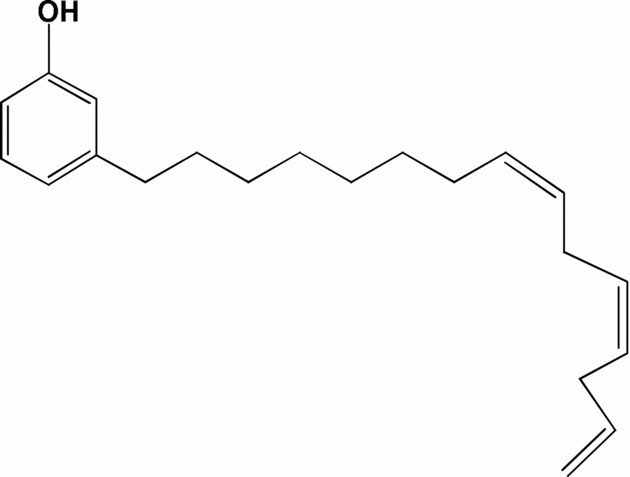
Through arrangement of all structural elements identified from the NMR spectra, and comparison with the GC–MS data and with those in the literature (Darroman et al., Reference Darroman, Bonnot, Auvergne, Boutevin and Caillol2015; Schneider et al., Reference Schneider, Meza, Beatriz, Pesarini, Carvalho, Mauro Mde, Karaziack, Cunha-Laura, Monreal, Matuo, Lima and Oliveira2016; Buxton et al., Reference Buxton, Takahashi, Niwata, Owusu and Kim2017), compound 3 was identified as (8Z,11Z)-3-(8,11,14-pentadecatrienyl)phenol. Its chemical structure is shown in Fig. 5.
The structure of isolated (8Z,11Z)-3-(8,11,14-pentadecatrienyl)phenol (cardanol).

Dose–response relationship and LC50 of cardanol
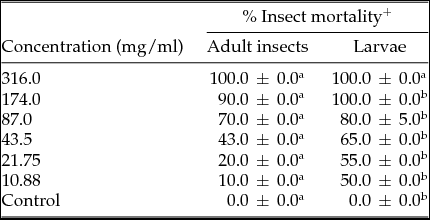
Cardanol showed a positive dose-dependent toxicity towards the mortality of both larvae and adults of T. castaneum (Table 5). Adult and larval mortality increased with increasing cardanol concentration. The LC50 values were found to be 47.88 mg/ml against adult T. castaneum and 13.28 mg/ml against its larvae. From these results, cardanol is considered to be more lethal against the larvae of T. castaneum than its adults.
Effect of different amounts (mg/ml) of compound 3 on the mortalities of adults and larvae of Tribolium castaneum

Values with different small letters within the same row are significantly different (p < 0.05). Those with the same small letters are not significantly different (p > 0.05) based on Tukey's HSD test following ANOVA.
+Each value is expressed as mean ± standard error of three replicates after 96 h.
Discussion
Cardanol consists of a monohydroxyl phenol with a long mono-, di- or tri-unsaturated hydrocarbon chain (Rodrigues et al., Reference Rodrigues, Feitosa, Ricardo, de França and Carioca2006; Tullo, Reference Tullo2008). This compound, (8Z,11Z)-3-(8,11,14-pentadecatrienyl)phenol, is a tri-unsaturated cardanol that has been isolated and identified as one of the bioactive compounds found in CNSL (Andrade et al., Reference Andrade, Araújo, Citó, da Silva, Saffi, Richter and Ferraz2011; Suwanprasop et al., Reference Suwanprasop, Nhujak, Roengsumran and Petsom2004). The compound has also been found to be one of the bioactive compounds in CNSL against Sitophilus oryzae (Buxton et al., Reference Buxton, Takahashi, Niwata, Owusu and Kim2017). The higher bioactivities of the n-hexane layer and the 5% ethyl acetate in hexane fractions observed during this study suggest the presence of cardanol in this fraction. The presence of this bioactive compound in the 5% ethyl acetate in hexane fraction could also explain why it was more lethal than 30%, 50% and 70% ethyl acetate in hexane fractions.
Although we did not identify the other components of CNSL in this study, anacardic acids and cardol have also been identified to be bioactive components. These phenolic compounds form a much-diversified group of compounds with a strong amphiphilic character (Andrade et al., Reference Andrade, Araújo, Citó, da Silva, Saffi, Richter and Ferraz2011). Erythrocytes and liposomal membranes can incorporate phenolic compounds by exerting antioxidant, antigenotoxic and cytostatic activities (Stasiuk and Kozubek, Reference Stasiuk and Kozubek2010).
Bioactivity of naturally occurring compounds has been related to the chemical structure of these compounds. Toxicity of these compounds is often associated with the presence of one or two functional groups present in them. Lomonaco et al. (Reference Lomonaco, Santiago, Ferreira, Arriaga, Mazzetto, Mele and Vasapollo2009) reported that the bioactivity of cardanol might be due to the presence of the double bonds in its side chain. In their study, the hydrogenation of the double bonds in the side chain of cardanol and cardol resulted in decreased larvicidal activities against Aedes aegypti L. (Lomonaco et al., Reference Lomonaco, Santiago, Ferreira, Arriaga, Mazzetto, Mele and Vasapollo2009).
According to the findings of Andrade et al. (Reference Andrade, Araújo, Citó, da Silva, Saffi, Richter and Ferraz2011), cardanol is a major anti-oxidative constituent of technical CNSL with a positive response to 2,2-diphenyl-1-picrylhydrazyl scavenging assay, xanthine oxidase assay as well as Salmonella cerevisiae assay. It has shown various levels of larvicidal activities against the larvae of A. aegypti. According to Oliveira et al. (Reference Oliveira, de Morais, Magalhães, Batista, Viera, Craveiro, de Manezes, Carvalho and de Lima2011), cardanol, which constitutes 6.99% of the compounds from natural CNSL, yielded 100% larval mortality when larvae of A. aegypti were exposed to it. A substantial effect of CNSL was also seen in the work of Asogwa et al. (Reference Asogwa, Mokwunye, Yahaya and Ajao2007), where they showed 100% mortality of termites at concentrations of 6%, 8% and 10% of CNSL.
Conclusion
Cardanol (8Z,11Z)-3-(8,11,14-pentadecatrienyl) phenol was isolated from CNSL as an important compound responsible for the insecticidal and progeny growth and development inhibition activities against T. castaneum with LC50 values of 47.88 mg/ml and 13.28 mg/ml against adult T. castaneum and its larvae, respectively. This compound is well noted for its bioactivity in living organisms and can be considered potentially useful in managing stored product insect pests, especially T. castaneum, based on the results of this study. However, due to the toxic and corrosive properties of cardanol, much care should be taken when handling and applying it.
Acknowledgement
This work was financially supported by the Japanese Government (The Monbukagaksho Scholarship).