INTRODUCTION
Unilateral spatial neglect is a common consequence of brain damage and mainly consists in a deficit affecting the orienting of attention towards the contralesional hemifield. Its prevalence ranges from 13% to 82% after a right hemispheric stroke (Bowen et al., Reference Bowen, McKenna and Tallis1999). This huge variability across studies is not only due to the use of different inclusion criteria, but also relates to the heterogeneous assessment procedures. In most studies, neglect diagnosis relies on the performance on paper-and-pencil tests. Despite still being considered the gold standard, their sensitivity is variable (Azouvi et al., Reference Azouvi, Samuel, Louis-Dreyfus, Bernati, Bartolomeo, Beis, Chokron, Leclercq, Marchal, Martin, de Montety, Olivier, Perennou, Pradat-Diehl, Prairial, Rode, Siéroff and Wiart2002; Halligan et al., Reference Halligan, Marshall and Wade1989) and too low to detect subtle and even moderate forms of neglect (e.g., Buxbaum et al., Reference Buxbaum, Ferraro, Veramonti, Farne, Whyte, Ladavas, Frassinetti and Coslett2004).
Moreover, symptoms of neglect become less evident as time passes. Studies suggest that recovery rates from acute neglect range from 60% to 90% within 3–12 months from lesion onset (Karnath et al., Reference Karnath, Rennig, Johannsen and Rorden2011). In the acute phase, neglect is often noticeable without standardized tests because patients deviate their head and eyes toward the ipsilesional side of space (Karnath & Rorden, Reference Karnath and Rorden2012). With time and through the implementation of a rehabilitation treatment, the deviation usually decreases and symptoms become more difficult to detect (Bonato, Reference Bonato2015). This has led to the widespread impression that the majority of right hemisphere-damaged patients, who exhibit neglect in the acute phase, are likely to completely recover in the chronic phase. In many cases, chronic patients start to exhibit extinction, which is defined as the inability to detect a contralesional stimulus when it is presented simultaneously with a correctly detected ipsilesional stimulus (Becker & Karnath, Reference Becker and Karnath2007). Hence, it is often considered as a residual manifestation that is typically observed during or after the chronic phase when the patient has partially recovered from neglect.
The popular impression of a spontaneous remission stems its roots in longitudinal studies that evaluate neglect by administering the same paper-and-pencil tests across multiple sessions. Noteworthy, brain-lesioned patients often repeatedly undergo rehabilitation exercises that resemble diagnostic tests. According to these repeated measures, patients typically show an initial fast recovery (Nijboer et al., Reference Nijboer, Kollen and Kwakkel2013), which is followed by a stabilization or complete normalization of performance after 2–4 months (Cassidy et al., Reference Cassidy, Lewis and Gray1998). Converging evidence suggests that the severity and even the presence of neglect closely depend on the difficulty of these tests. Indeed, increasing the complexity of a task or increasing attentional demands by adding a nonlateralized secondary task would hamper patients’ ability to compensate for their spatial deficit and can worsen or unmask neglect and extinction symptoms (Cherney & Halper, Reference Cherney and Halper2001; Deouell et al., Reference Deouell, Sacher and Soroker2005; List et al., Reference List, Brooks, Esterman, Flevaris, Landau, Bowman, Stanton, Vanvleet, Robertson and Schendel2008; Mennemeier et al., Reference Mennemeier, Morris and Heilman2004; Rengachary et al., Reference Rengachary, d’Avossa, Sapir, Shulman and Corbetta2009; Ricci & Chatterjee, Reference Ricci and Chatterjee2004; Ricci et al., Reference Ricci, Genero, Colombatti, Zampieri and Chatterjee2005, Reference Ricci, Salatino, Garbarini, Ronga, Genero, Berti and Neppi-Mòdona2016; Robertson & Frasca, Reference Robertson and Frasca1992). In short, the assumption that most patients recover from neglect within few months might be misleading because of the lack of sensitivity and novelty of the tests employed. Following this trend, Bonato et al. (Reference Bonato, Priftis, Marenzi, Umiltà and Zorzi2010) developed a computerized and resource-demanding assessment technique in which patients have to perform spatial monitoring with or without a concurrent task. This test combines the higher sensitivity of computerized measures (i.e., brief presentation times, standardized procedures) and an increased attentional engagement that affects the ability of patients to compensate for their neglect. This dual-task method succeeds in revealing neglect and extinction signs in patients who perform above the cut-off scores on classic tests (Blini et al., Reference Blini, Romeo, Spironelli, Pitteri, Meneghello, Bonato and Zorzi2016; Bonato, Reference Bonato2015; Bonato et al., Reference Bonato, Priftis, Marenzi, Umiltà and Zorzi2012). So far, the dual-task approach has been used to undercover neglect in patients up to 1 year after stroke, with the exception of one case who was followed until 3.5 years after stroke, but who had the particularity of not having undergone any neglect rehabilitation (Bonato, Reference Bonato2015).
We studied two right hemisphere-lesioned patients more than 3 years after stroke. A longitudinal evaluation was performed over the first 3 years, using standard assessment methods, and both patients had seemingly recovered from neglect after rehabilitation. The objective was to reveal the limits of neglect assessment in a chronic stage and then refine the picture of the patient’s difficulties at this stage, quantitatively and qualitatively. While the dual-task approach has been repeatedly used to investigate neglect for targets presented along the horizontal axis, its sensitivity to spatial deficits along the vertical axis is currently unknown. To do so, we created an original dual task that avoids processing numbers or letters as in previous studies (Bonato, Reference Bonato2015; Bonato et al., Reference Bonato, Priftis, Marenzi, Umiltà and Zorzi2010, Reference Bonato, Priftis, Marenzi, Umiltà and Zorzi2012). Numbers and letters are indeed characterized by a position within a sequence, and the processing of serial position in working memory is known to involve internal attention shifts (van Dijck et al., Reference van Dijck, Abrahamse, Majerus and Fias2013). The effect of the dual task, as described in previous studies, could thus result from concurrent attention shifts in the physical and mental space. Building on the rationale of studies in healthy people and left brain-damaged patients (Blini et al., Reference Blini, Romeo, Spironelli, Pitteri, Meneghello, Bonato and Zorzi2016; Bonato et al., Reference Bonato, Spironelli, Lisi, Priftis and Zorzi2015), we used a computerized dual task that combines left/right or lower/upper target detection with central shape recognition. Finally, we compared the influence of cognitive load in the target detection paradigm and in the Brown–Peterson paradigm that combines verbal rather than spatial tasks (Brown, Reference Brown1958; Geurten et al., Reference Geurten, Vincent, Van der Linden, Coyette and Meulemans2016; Peterson & Peterson, Reference Peterson and Peterson1959). A selective deficit in the target detection paradigm would indicate that neglect arises from the interaction of cognitive load with impaired spatial function, and not just from a general deficit of divided attention.
METHOD
Case 1
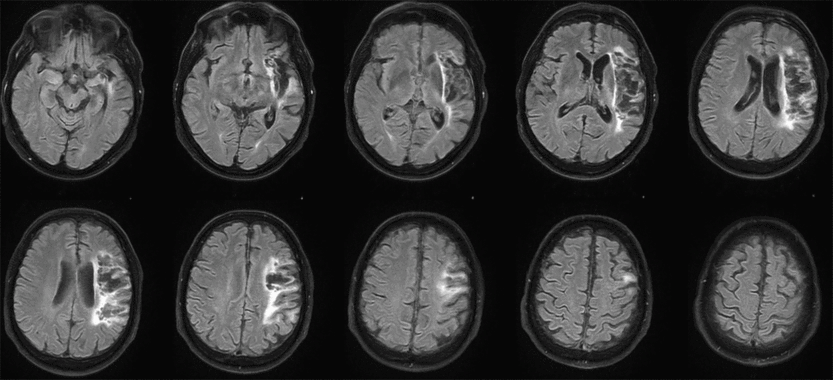
The first patient was a 73-year-old right-handed male with a graduate degree (>17 years of education) who sustained an ischemic stroke because of an obstruction of the right Sylvian vein. The CT scan performed on the same day showed an extensive right fronto-parieto-insular infarction. Twenty-two months after stroke onset, magnetic resonance imaging (MRI) revealed cerebral atrophy; encephalomalacia in the frontal, parietal, and insular cortex of the right hemisphere; discrete ventricular asymmetry, but no additional acute brain lesions (Figure 1). At stroke onset, the patient showed clinical signs of left neglect, including rightward gaze deviation. The first neuropsychological examination (T1), conducted between 1 and 3 months following the stroke onset, confirmed the presence of left neglect, while the second examination conducted between 5 and 6 months after stroke onset (T2) revealed no signs of left neglect (see Table 1 for attention performance, and Supplemental Material for other cognitive abilities). The patient was referred to us 4 years after stroke (T3). In the meanwhile, he had a single episode of tonic-clonic seizure that was attributed to the sequels of the stroke and was treated pharmacologically. He had received extensive rehabilitation of spatial attention, including exercises from the training program Cogniplus (https://www.schuhfried.com) that were occasionally performed in dual-task conditions (e.g., while reciting the alphabet) to stimulate divided attention.
MRI images from a T2-weighted fluid attenuation inversion recovery sequence showing the sequels of the right ischemic stroke of patient #1 22 months after the lesion, suggesting cerebral atrophy, encephalomalacia in the frontal, parietal, and insular cortex of the right hemisphere, and discrete ventricular asymmetry. There was no trace of acute ischemic lesion.

Tests of attention

Patient #1 was examined between 1 and 3 months (T1) and between 5 and 6 months (T2) after stroke. Patient #2 was examined between 1 and 3 months (T1) and between 6 and 15 months (T2) after stroke. The scores in bold indicate that the performance of the patients deviated by more than 2 standard deviations from the norm (Bells) or was inferior to percentile 10 (TAP).
a Performed without central fixation.
b Partial results: interrupted due to tiredness.
Case 2
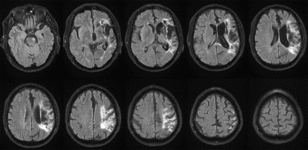
The second patient was a 57-year-old, left-handed male with a graduate degree (>15 years of education) who sustained a right Sylvian ischemic stroke that caused right fronto-parieto-temporal lesions. An MRI examination of the patient’s brain was made 39 months after the stroke and revealed cerebral atrophy; encephalomalacia in the frontal, parietal, and superior temporal cortex of the right hemisphere; discrete ventricular asymmetry; Wallerian degeneration in the descending right white matter tract, but no recent additional acute lesions (Figure 2). In the acute phase, the patient suffered from left hemiplegia and showed clinical signs of left neglect, such as a rightward gaze deviation and visual extinction. The first neuropsychological examination (T1), conducted between 1 and 3 months following the stroke onset, confirmed the presence of left neglect. The patient was administered a second neuropsychological assessment, between 6 and 15 months after stroke onset (T2). His performance had improved on all tests previously used to assess neglect (see Table 1 for attention performance, and Supplemental Material for other cognitive abilities). When the patient came to our attention 3 years after stroke onset (T3), left hemiplegia had partially recovered and he had received extensive rehabilitation of spatial attention.
MRI images from a T2-weighted fluid attenuation inversion recovery sequence showing the sequels of the right ischemic stroke of patient #2 39 months after the lesion, suggesting cerebral atrophy, encephalomalacia in the frontal, parietal, and insular cortex of the right hemisphere, and discrete ventricular asymmetry; and Wallerian degeneration in the descending right white matter tract. There was no trace of acute ischemic lesion.

Experimental study
The present investigation received the approval of the local ethical committee. The patients gave informed consent to participate in this study as required by the Declaration of Helsinki. Because our study took place more than 3 years after the first neuropsychological examination, we first performed a standard, paper-and-pencil neglect assessment. These tests were interleaved with the horizontal and vertical conditions of the dual-task, computer-based experiment, described below. An adapted version of the Brown–Peterson paradigm was also included in the study to get an independent measure of the ability to divide attention between two tasks.
Bells test (Gauthier et al., Reference Gauthier, Dehaut and Joanette1989). This cancellation test was used in previous neuropsychological examinations. It was included to allow direct comparisons with the evaluation performed in the acute and postacute stages. We referred to the same normative data as those used for the former neuropsychological examination.
Apples test (The Birmingham Cognitive Screen; Bickerton et al., Reference Bickerton, Samson, Williamson and Humphreys2011). This test was not included in previous examinations and was new for the patients. Patients had to cross out, in maximum 5 min, all the full apples interspersed with incomplete apples (i.e. with a gap on the left or right side) on a A4 sheet of landscape format aligned with the body midline. Scores were the number of full apples crossed out, the number of false-positives with a left opening, and the number of false-positives with a right opening. An asymmetry index was also computed for full (egocentric neglect) and incomplete apples (allocentric neglect), respectively. We compared the performance to the norms.
Line bisection test (Schenkenberg et al., Reference Schenkenberg, Bradford and Ajax1980). This test required participants to mark the midpoint of 12 black lines of 20 cm, each printed on a white A4 sheet of landscape format. The sheet was placed at the participant’s midline, 30 cm on the left or 30 cm on the right, in a counterbalanced order. The difference between the real midpoint and the participant’s mark was computed. The test was administered to our sample of control participants to judge the abnormality of the patients’ performance.
Dual-task experiment. The dual-task experiment required participants to detect one or two targets, displayed in black on a white background on a Dell laptop computer (17” screen, 60 Hz refresh rate) under the control of the Psychopy software (Peirce, Reference Peirce2007). Participants sat at a viewing distance of 60 cm. We used the dual-task approach by Bonato and colleagues (Reference Bonato, Priftis, Marenzi, Umiltà and Zorzi2010) to test spatial awareness not only along the horizontal but also, for the first time, along the vertical dimension. In the horizontal condition, the targets appeared along the horizontal meridian on the left, on the right, or on both locations simultaneously. In the vertical condition, the targets appeared along the vertical meridian on the lower side, on the upper side, or on both locations simultaneously. The two conditions were tested in separate sessions. Within each session, participants first performed the experiment in a single-task context and then in a dual-task context. Patient #1 was tested in the vertical condition first, and patient #2 in the horizontal condition first. Participants had to fixate the center of the screen for the whole trial. Each trial started with a 1000 ms blank screen, immediately followed by the display of a central fixation cross. The cross remained on the screen for 1000 ms and was then replaced by a central geometrical shape appearing simultaneously with one or two eccentric stimuli that remained on the screen for 32 ms; a visual mask then covered all stimuli and remained on the screen until the participant’s response. The eccentric stimuli were filled circles, with a diameter of 8 mm, flashed at a horizontal distance of 13.5 cm or a vertical distance of 9 cm from the center of the screen. The central geometrical shape was 8 mm high and could be a triangle, a diamond, or a square. Catch trials were included, where the central shape was displayed alone. In a single-task context, participants were asked to identify the location of the eccentric stimulus by saying “left/upper,” “right/lower,” “both locations,” or “none” if they did not notice any stimulus. On the dual task, participants were asked to identify the central geometrical shape by saying “triangle”, “diamond”, or “square” and then to report the location of the eccentric stimulus. The experimenter encoded the participant’s response and started the next trial, allowing for a pause if necessary. Participants performed one block of 80 trials on each task (single vs. dual) and in each condition (horizontal vs. vertical). The block contained eight catch trials and 72 target-present trials, with an equal proportion of left/lower-sided targets (N = 24), right/upper-sided targets (N = 24), and bilateral targets (N = 24). The trials were randomly intermixed, but each central shape was equiprobable among the three target-present conditions. Unilateral and bilateral trials were analyzed separately to evaluate the presence of neglect and extinction. Chi-square tests (SPSS) were used to determine whether there was a difference between the proportion of omissions in the left and right side of the space. The proportion of omissions was computed after removing trials where another type of error was identified, such as allochiria (i.e., a target presented in one hemifield was perceived in the other hemifield) or synchiria (i.e., a target presented in one hemifield was perceived as presented in both hemifields). As a control, we asked six healthy male participants (age range 52–78 years; >12 years of education) to perform the task. They obtained an average correct detection rate of 99% in all conditions and never committed more than three errors per orientation.
Brown–Peterson test (Brown, Reference Brown1958; Peterson & Peterson, Reference Peterson and Peterson1959). We used a computerized version in French that required participants to read three consonants presented on the screen at a rate of 1 Hz and report them in the same order after a delay of 0, 5, 10, 20 s filled with a dual task consisting in the repetition of verbally presented numbers (e.g., 7–9) in the reverse order (e.g., 9–7). The test encompassed 24 trials. The results of each patient were compared to the normative data available for their age category (Geurten et al., Reference Geurten, Vincent, Van der Linden, Coyette and Meulemans2016).
RESULTS
Case 1
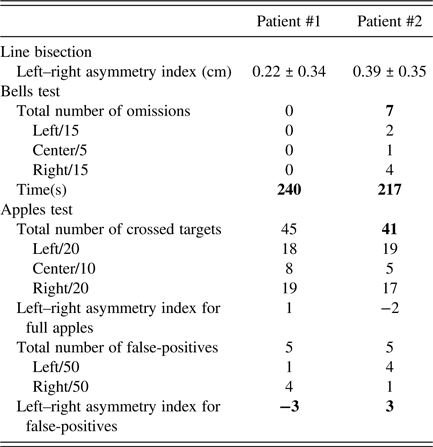
At the time of the experimental study, the performance on line bisection and cancellation tests was normal, except for a general slowdown and a performance suggesting left-sided allocentric neglect in the Apples test (Table 2).
Longitudinal assessment of hemineglect.

The paper-and-pencil tests revealed no signs of left visual neglect at the time the experimental study was conducted, more than 3 years after stroke (T3), but the patients were very slow and they produced false-positives in the cancellation tests. The scores in bold signal a time or a number of omissions superior by 2 standard deviations to the average of the normative sample or a performance below the cut-off score. A positive asymmetry index suggests left neglect, whereas a negative asymmetry index suggests right neglect.
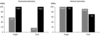
On trials where unilateral targets were presented along the horizontal axis on a single-task context, the patient made one error, perceiving a left-sided target as a right-sided, but he made no omission. On a dual-task context, he correctly named the geometric shapes but omitted 58% of left-sided targets versus 0% of right-sided targets, χ 2(1, 48) = 19.8, p < .001, phi = .64 (Figure 3). When the patient had to detect single targets presented along the vertical axis on a single-task context, he omitted 8% of lower-sided targets and 0% of upper-sided target, but this difference was not significant, χ 2(1, 48) = 2.08, p = .15, phi = .2. In the dual-task context, he made 0% omissions but, on 8% of the trials, he reported having seen a stimulus in both parts of the screen, while there was a stimulus in the upper part only. This phenomenon is reminiscent of synchiria (Bonato & Cutini, Reference Bonato and Cutini2016).
Percentage of unilateral targets correctly detected by patient #1, along the horizontal or the vertical axis, in a single-task or dual-task context (left/down in grey vs. right/up in black).

On trials where targets were presented bilaterally along the horizontal axis, the patient omitted left targets more often than right ones (Figure 4). In the single-task context, there were 42% of left-sided and no right-sided omissions, χ 2(1, 48) = 12.6, p < .001, phi = .51. In the dual-task context, there were 83% of left-sided and 0% of right-sided omissions (0/24), χ 2(1, 48) = 34.3, p < .001, phi = .84. In the vertical condition, the patient detected 100% simultaneously presented targets in a single-task context. In the dual-task context, he selectively omitted the lower-sided target on 8% of the trials and the upper-sided target on 29% of the trials. This difference was not significant, χ 2(1, 48) = 3.4, p = .064, phi = .26. The patient committed one (right) false alarm on catch trials.
Percentage of bilateral targets correctly detected by patient #1, along the horizontal or the vertical axis, in a single-task or dual-task context (left/down in grey vs. right/up in black).

On the Brown–Peterson test, the percentage of letters correctly recalled was 89% in the immediate recall condition (percentile >5), 100% in the 5-s condition (percentile >95), 89% in the 10-s condition (percentile >75), and 83% in the 20-s condition (percentile >50). These scores are within the normal range.
Case 2
At the time of the experimental study, the patient’s performance on line bisection revealed no significant deviation (Table 2). The patient obtained a score just below the cut-off on the Bells and on the Apples test, but a closer look at his performance showed that he actually omitted more right- than left-sided targets, resulting in a positive asymmetry score. The patient, however, obtained a negative asymmetry score for incomplete apples on the Apples test. The opposite direction of these asymmetry scores, apparently suggesting right egocentric neglect and left allocentric neglect, is likely due to the implementation of a compensation strategy.
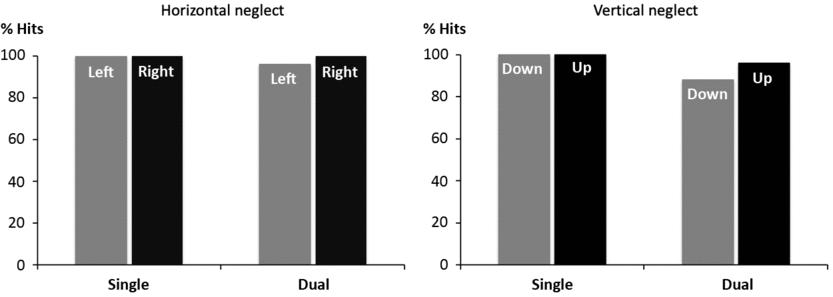
In the dual-task experiment, on trials where unilateral targets were presented along the horizontal axis, the patient made no omissions at all in the single-task context. On a dual-task context, he correctly named the geometric shapes but omitted 4% of left-sided targets and 0% of right-sided targets, χ 2(1, 48) = 1.02, p = .31, phi = .15 (Figure 5). In the vertical condition, the patient made no omissions at all in the single-task context and 13% of lower-sided omissions versus 0% of upper-sided omissions in the dual-task context, but the upper-lower difference was not significant, χ 2(1, 47) = 3.07, p = .08, phi = .26 the patient also produced one error reminiscent of allochiria he identified one upper-sided stimulus as if it was lower-sided.
Percentage of unilateral targets correctly detected by patient #2, along the horizontal or the vertical axis, in a single-task or dual-task context (left/down in grey vs. right/up in black).

On trials where targets were presented bilaterally along the horizontal axis, the patient obtained a perfect score both on the single- and on the dual-task contexts (Figure 6). On trials where targets were presented along the vertical axis, his performance was affected by the dual task. The patient omitted 4% of the lower-sided targets and 0% of the upper-sided targets on the single-task context, χ 2 (1, 48) = 1.02, p = .31, phi = .15. However, on the dual-task context, the patient selectively omitted the lower-sided target on 58% of the trials and the upper-sided target on 4% of the trials, χ 2 (1, 48) = 16.39, p < .001, phi = .58. The patient did not produce any false alarm on catch trials.
Percentage of bilateral targets correctly detected by patient #2, along the horizontal or the vertical axis, in a single-task or dual-task context (left/down in grey vs. right/up in black).

On the Brown–Peterson test, the percentage of letters correctly recalled was 100% in the immediate recall condition (percentile >95), 100% in the 5-s condition (percentile >95), 89% in the 10-s condition (percentile >25), and 67% in the 20-s condition (percentile >10). These scores are within the normal range.
DISCUSSION
The present results show how dual tasking may improve the quantitative and qualitative assessment of spatial disorders in a chronic stage. Left neglect is difficult to evidence at this stage, although patients continue to face important limitations in daily activities and make unsuccessful attempts to regain autonomy, which may affect their mood and self-esteem. In our study, two right-hemisphere-stroke patients who already underwent a neuropsychological rehabilitation protocol were tested more than 3 years after lesion onset. Paper-and-pencil tests failed to provide clear and quantifiable evidence of neglect. We therefore assessed the detection of left and right targets in a dual-task condition that was meant to limit the resources available to compensate the deficit. We also included a vertical version of the task to assess deficits in the vertical space.
Patient #1 performed normally when detecting targets in the single-task condition. In the dual-task condition, his ability to detect targets located on the left side was dramatically hampered. The specificity of the attention orientation deficit is shown by the finding that dual tasking only affected the detection of left-sided targets. The processing of vertically presented items was unaffected. It is reasonable to assume that neglect signs on paper-and-pencil tests were reduced because they are often and repeatedly employed for therapeutic exercises. Patients trained with paper-and-pencil tests during rehabilitation can be successful when assessed later on with the same materials, which falsely suggests full recovery. Our study shows that, when a patient is assessed by means of demanding computerized tests, neglect and extinction can be elicited. These tests are preferred when measuring the effect of rehabilitation because they are more sensitive than paper-and-pencil tests and even computerized tasks with no dual-task requirement (e.g., TAP). It is worth noting that rehabilitation, in the present study, included computerized exercises from the Cogniplus training program (https://www.schuhfried.com). Despite this, the dual-task paradigm revealed true neglect under high cognitive load. This finding shows that the “normality” line separating the presence from the absence of neglect is a function of the attention resources required for patients to perform the task. Previous attempts to operationalize neglect, in terms of deviations or cut-off scores, did not take into account attention demands. This considerably limits their ability to detect neglect, estimate its severity, and provide follow-up measures. We argue in favor of a paradigmatic shift where neglect severity is defined as a function of the amount of attentional demands the patient is able to tackle. Under this definition, full recovery is reached when a patient is able to detect stimuli, with no spatial asymmetry, under conditions of divided attention mimicking those encountered in everyday life. As we observed in our control sample, healthy people have no difficulties in detecting lateralized targets under cognitive load, while the performance of patients often remains asymmetric in this condition, even after rehabilitation. This should prompt clinicians to change their approach and/or think about compensatory devices that free patients from the need to monitor their visual environment on a voluntary basis and reduce the attention load. The dual-task paradigm here described may help clinicians to predict the spatial behavior of patients in daily life because the test reproduces the constraint of dealing with multiple tasks at the same time. But the possible advantage of a dual-task evaluation in predicting the functional outcome of neglect still needs to be demonstrated. We made the test freely accessible to allow further investigation and continuous adaptation (https://osf.io/z3ahn/?view_only=efa1979871f0447580d144e5f06df982).
Patient #2 exhibited left neglect in line bisection, but he omitted right-sided targets on cancellation tasks. This inconsistent pattern reflects the compensatory strategies that patients typically learned while being confronted with similar cancellation tasks during rehabilitation. In the dual-task experiment, this patient correctly detected left and right targets but, surprisingly, he was impaired at reporting lower targets when those were presented simultaneously with upper targets in a dual-task context. Notably, two factors allow us to a priori exclude the presence of load-induced simultanagnosia. The first is the absence of omissions for the horizontal condition, and the second is the fact that omissions were spatially selective. The atypical performance of the patient rather evokes altitudinal (or vertical) extinction. Altitudinal neglect is better known than altitudinal extinction, although both phenomena have been reported together (e.g., Rapcsak et al., Reference Rapcsak, Cimino and Heilman1988). Previous studies showed that altitudinal neglect is multimodal, as evidenced by tests of visual or tactile bisection (Butter et al., Reference Butter, Evans, Kirsch and Kewman1989; Shelton et al., Reference Shelton, Bowers and Heilman1990). The patients typically show a spatial bias toward the upper or the lower part of a vertical display, leading to bisection errors, target omissions, or unbalanced drawings. So far, altitudinal neglect has been reported after bilateral damage in the temporal cortex (i.e., neglected upper visual field; Shelton et al., Reference Shelton, Bowers and Heilman1990) or in the parieto-occipital cortex (i.e., neglected lower visual field; Butter et al., Reference Butter, Evans, Kirsch and Kewman1989). However, MRI scans in patient #2 attest that lesions were restricted to the right hemisphere, indicating that bilateral lesions are not a prerequisite to observe vertical defects. It is unclear whether patient #2 had altitudinal extinction already in the acute and postacute stage or whether this phenomenon resulted from a redistribution of spatial attention resources along the horizontal axis that seemed well preserved in the chronic stage, even under dual-task conditions. It seems also unclear whether altitudinal extinction should be considered as a residual form that would persist in the chronic stage after vertical neglect had disappeared. Out of our study, we have no information about the presence of altitudinal neglect or extinction in patient #2. The counting of the targets he crossed in the lower and upper quadrants of the cancellation tests did not reveal any difference, but these tests are oriented along the radial axis and are not specifically designed to assess vertical neglect. Altitudinal extinction in patient #2 might also indicate a partial recovery process that favors attention allocation in the upper rather than the lower quadrant of the left hemispace. Under the assumption that the patient showed a slight deviation of his egocentric reference (Ventre et al., Reference Ventre, Flandrin and Jeannerod1984), the neglected targets would indeed pertain to the left lower quadrant of the patient’s visual field. Our assumption is supported by behavioral and electrophysiological data showing that both the horizontal and vertical dimensions of space can be affected in neglect patients, most omissions being present in the left lower quadrant (Pitzalis et al., Reference Pitzalis, Spinelli and Zoccolotti1997). Informal observations made by caregivers participating in this study suggest that the left lower quadrant is often the last location to regain attention. Future studies should investigate the existence of such sequential recovery process and its link with altitudinal neglect. They should also investigate the implications of altitudinal neglect for daily living. As suggested elsewhere (Glazer et al., Reference Glazer, Saadatpour, Doty and Heilman2017), altitudinal neglect for lower targets could complicate the ability of patients to move in their environment because it prevents the detection of objects or furniture on their way. However, the functional outcome of altitudinal neglect also needs to be validated by clinical data before its importance for the patient’s security and autonomy can be appreciated. The small number of studies reporting altitudinal neglect or extinction might be due to the fact that this condition is rarely assessed in clinical work and is difficult to evidence with classical paper-and-pencil tests. This fits with our finding that the inability to detect lower targets was only detectable when concurrent vertical targets were presented in a dual-task context.
Finally, we provided evidence that the effect of dual tasking is specific to attention orientation in the visual space. It is well known that neglect patients often show non-lateralized impairments and it is assumed that these deficits might enhance lateralized spatial deficits (Corbetta & Shulman, Reference Corbetta and Shulman2011; Husain & Rorden, Reference Husain and Rorden2003). The results of the Brown–Peterson test showed that performance was within the normal range for both patients, meaning that they were able to divide their attention between two verbal tasks. Dividing attention was not a problem in the verbal domain but well in the spatial domain because the cognitive load imposed by the dual task added to the resources needed to compensate neglect, creating an attentional bottleneck. We conclude from this finding that their spatial attention deficit was pervasive – not residual; and normal performance in paper-and-pencil tests reflected compensation – not recovery. The level of compensation may vary across patients, depending on the severity of the deficit, which underlines the need to provide clinicians with tests of calibrated difficulty.
ACKNOWLEDGMENTS
L.G. and N.M. are research fellows and M.A. is a research associate at the Fonds National de la Recherche Scientifique (Belgium). This work was supported by grant T.0047.18 and T.0245.16 from the Fonds National de la Recherche Scientifique (Belgium) and from the Fonds National de la Recherche (Luxembourg); grant IPSY-FSR16 ANDRES from the Fonds Spéciaux de Rercherche of the Université catholique de Louvain (Belgium); and was carried out within the scope of the research program “Dipartimenti di Eccellenza” supported by a grant from MIUR to the Department of General Psychology of the University of Padua. We thank Thierry Meulemans for providing us with the computerized version of the Brown–Peterson test.
SUPPLEMENTARY MATERIAL
To view supplementary material for this article, please visit https://doi.org/10.1017/S1355617719000249
CONFLICTS OF INTEREST
The authors have nothing to disclose.