Introduction
Globally, about 800 women die from pregnancy and childbirth-related complications every day. In 2010, 287,000 women died during and following pregnancy and childbirth, but the estimate was 543,000 in 1990 (WHO et. al., 2012). From 1990 to 2010, the maternal mortality ratio in developed regions declined by 26 to 16 per 100,000 live births, and in developing region from 440 to 240 per 100,000 live births, which is very high compared with developed regions of the world (WHO et. al., 2012). The high number of maternal deaths in developing regions has been attributed to inequalities in access to health services, unsafe abortion, hypertensive disorders of pregnancy, severe bleeding (mostly postpartum) and postpartum infection. Virtually all of these deaths (about 99%) have been reported to occur in low-resource settings. More than half take place in sub-Saharan Africa and almost one-third in South Asia (WHO, 2012). Over the past decade, India has made considerable efforts towards improving health outcomes in the population. As a result the health care system has recorded significant progress: the national maternal mortality ratio decreased from 327 per 100,000 live births in 1999–2001 to 212 per 100,000 live births in 2007–09, indicating a decline of 35.2% over a span of eight years (CSO, 2013). However, the absolute level of this estimate of maternal mortality remains high for the country.
Reducing maternal mortality and morbidity has been a major concern for the developing world since the launch of the safe motherhood initiatives as far back as 1987 (WHO, 1996). High maternal deaths was identified as an urgent human rights concern as well as an important health issue. In India, the National Health Policy (1982) targeted the reduction of maternal deaths from 400 per 100,000 live births to less than 200 per 100,000 live births by the end of year 2000. A decade later this target was achieved (178 per 100,000 live births in 2010–12), indicating a slow decline in maternal death in India (Registrar General of India, 2011). The causes of maternal deaths in India have been identified as haemorrhage (25.6%), which ranks the highest, followed by sepsis (13%), toxaemia of pregnancy (11.9%), abortion (8%) and obstructed labour (6.2 %). All other causes account for 35.3% of maternal deaths (Vadm & Arora, Reference Vadm and Arora2005). In addition, a recent study by Montgomery and colleagues (Reference Montgomery, Ram, Kumar and Jha2013) indicated that a quarter of all maternal death are due to obstetric haemorrhage, a quarter to ‘other obstetric complications’, which include ill-defined causes of death in labour and the antenatal and postpartum period and 15% are due to indirect causes.
Saving mothers' lives is widely considered an obligation for social and economic development. Therefore, in this context, there has been some debate as to the effectiveness of one aspect of maternal health service provision, namely antenatal care (Carroli et al., Reference Carroli, Rooney and Villar2001). The main purpose of antenatal care is to prevent complications such as anaemia and identify women with established pregnancy complications for treatment or referral. The lack of an efficient health system, along with inadequate utilization of available health services, especially by women of reproductive age, is a major factor affecting the health of mothers in India. Anaemia is directly or indirectly accountable for 40% of maternal deaths in the country (Toteja & Singh, Reference Toteja and Singh2004; Kalaivani, Reference Kalaivani2009).
Access to, and use of, maternal services remain particularly low among the poor, minorities and those living in remote and disadvantaged areas. The poor continue to use less prenatal care and, when they do use it, it tends to be inadequate in terms of required number of visits and quality. According to NFHS-3 (2005–06), in the five years preceding the survey, almost one in five women in India did not receive any antenatal care for their last birth. Women not receiving antenatal care tend to be disproportionately older, have children of higher birth orders, be from scheduled tribes, have no formal education and come from poor households. These differentials suggest that improving the coverage of antenatal programmes requires special efforts to reach older and high-parity women, as well as women who are socioeconomically disadvantaged.
Maintaining health care standards at the grassroot level calls for interdisciplinary collaboration between doctors, midwives, nurses, other paramedical staff and the women themselves (Vadm & Arora, Reference Vadm and Arora2005). The percentage of skilled birth attendants is comprehensively accepted as one of the key indicators for assessing progress in maternal health care services. The presence of skilled personnel during pregnancy, delivery and the postnatal period is one of the most critical interventions for improving the survival of mother and child; deliveries at home by untrained personnel contribute to high maternal deaths. In India, skilled personnel include a variety of providers in the absence of a formal midwifery cadre, including auxiliary nurse midwives, lady health visitors, staff nurses and doctors (Bajpai et al., Reference Bajpai, Dholkia and Towel2013). Findings of the NFHS-3 (2005–06) suggest that, in India, births delivered at home are more likely than births delivered in a health facility to be assisted by a health professional. Less than 40% of births in India take place in health facilities. More than half take place in the women's own home and 9% take place in the parent's home (IIPS & Macro International, 2007).
The postnatal period, defined as the first six weeks after birth (42 days), is critical for the health and survival of both the mother and her newborn. The WHO guidelines for postnatal care recommend that during routine postnatal care, extra attention should be paid to all low-birth-weight infants. It is further recommended that, if the birth takes place in a health facility, mother and newborn should be observed for at least 24 hours after birth. In addition, at least three postnatal check-up visits are recommended for all mothers and infants, within 48–72 hours of birth, between days 7–14 after birth and six weeks after birth (WHO, 2013). However, it is important to have the first postnatal check-up within a few hours of birth. Lack of proper care during this period can result in either death or disability. The 2005–06 India NFHS reports that only 42% of women received a postnatal check-up at any time. Only a quarter of women (27%) received a health check-up within the first four hours after birth. Births at the woman's home or her parent's home are rarely followed by immediate postnatal check-ups, whereas women delivering in health care facilities are more likely to have postnatal check-ups.
Given the value of each of the three maternal health care services, it becomes important to provide all of them in a continuum of care to ensure the health of both mother and child. The concept of a continuum of care has two dimensions. First is continuity of care over time for women, newborns and children, and second is integrated service delivery provided by health facilities and communities (Tinker et al., Reference Tinker, Hoope, Azfar, Bustreo and Bell2005). Several studies conducted in varied settings (Andersen & Newman, Reference Andersen and Newman1973; Berker et al., Reference Berker, Peters, Gray, Gultiano and Blake1993; Sarin, Reference Sarin1997) and India (Stephenson & Tsui, Reference Stephenson and Tsui2002) have realized that socioeconomic factors and service delivery environment are important factors contributing to the use of maternal health services. Studies on the use of maternal health care services have focused on the influence of individual and household characteristics and have mostly dismissed the influence of community features.
Despite the plethora of research on maternal health care services and their utilization in India, very few studies have attempted to assess the impact of community-level factors on the utilization of maternal health care. Thus, this research aims to evaluate empirically the impact of individual and community (neighbourhood) factors on the use of maternal health care services with special focus on antenatal care, safe delivery and postnatal care among women of reproductive age in India, and furthermore to identify community factors that have more influence on the use of maternal health care services. This information can inform the development of contextually appropriate community-based programmes.
Data and Methods
The study used data from the third round of the National Family Health Survey (NFHS) conducted in 2005–06. This survey was designed to provide estimates on various aspects of demographic behaviour, including mortality and health. It was done in collaboration with the International Institute for Population Sciences (IIPS), Mumbai, India, ORC Macro, Calverton, Maryland, USA and the East–West Centre, Honolulu, Hawaii, USA. The surveys were co-ordinated by IIPS, which collaborated with a number of field organizations for survey implementation.
The survey covered a representative sample of about 124,385 ever-married women aged 15–49, who were ‘captured’ in two phases from 29 Indian states. The response rate among women interviewed was quite high (94.5%). The survey adopted a two-stage sampling technique in rural areas and a three-stage sampling technique in urban areas. In rural areas, the villages were selected at the first stage using a probability proportional to size (PPS) sampling scheme. The required number of households were selected at the second stage using systematic sampling. In urban areas, blocks were selected at the first stage, census enumeration blocks (CEB) containing approximately 150–200 households were selected at the second stage, and the required number of households were selected at the third stage, using the systematic sampling technique. Questions regarding maternal health care services were asked only from those women who had given birth in the last five years preceding the survey, accounting for 36,850 women. Of these 36,850 women, 4126 cases were missing information regarding antenatal care services, 1339 cases were missing information on place of delivery and 1330 cases were missing information regarding postnatal care services. So, for the present study final sample sizes for full ANC, safe delivery and postnatal care were 31,553, 35,511 and 35,520 respectively. For the multilevel analysis, missing cases were dropped from the analysis.
The present study analysed three outcome variables to investigate the use of maternal health care services: (1) full antenatal care, which includes mothers who had a minimum of three antenatal visits, received at least two tetanus toxoid injections during pregnancy or one tetanus toxoid injection during the pregnancy and at least one in the three years preceding the pregnancy, and received iron and folic acid tablets for 90 days or more (WHO, 2006); (2) safe delivery, which includes institutional deliveries and deliveries at home conducted by skilled birth attendants; and (3) received postnatal check-ups, which covers at least one check-up by health professionals within two weeks of delivery.
Explanatory variables were separated into individual- and community-level factors.
Individual-level factors
Individual-level factors included age at birth, parity, woman's education, mother's occupation, caste, religion, household wealth index, autonomy index and mass media exposure. Age at birth was grouped into three categories: less than 18 years, 18–24 years and 24+ years. Parity was categorized into three: 1, 2–4 and 5 or more. Woman's education was divided into four categories: illiterate, primary, middle and higher secondary/more on the basis of years of schooling. Women with zero years of formal schooling were considered as illiterate. Women with 1–5 years, 6–8 years and 9 or more years of schooling were regarded as having primary, middle and higher secondary/more education respectively. Women's occupation was grouped into four categories: unemployed, agricultural worker, professional/services and skilled/unskilled. Mother's caste (scheduled caste, scheduled tribes and other castes) and mother's religion (Hindu, Muslim and other) were also examined. Household wealth index was calculated in the survey by combining household amenities, assets and durables and then characterizing households from the poorest to the richest, corresponding to the lowest to the highest wealth quintiles.
Women's autonomy was computed by taking three dimensions into account, namely, women's mobility, involvement in decision-making and economic security (Singh et al., Reference Singh, Hazra and Ram2007). The questions asked of women were as follows: Women's mobility: Do you need permission to go to market? Do you need permission to visit relatives or friends? Involvement in decision making: Who makes the decision on obtaining health care of yourself? Who makes the decision on purchasing the major household items? Who makes decision on going and staying with parents or siblings? Economic security: Are you allowed to have some money set aside that you can use as you wish? The question, ‘who decides what to cook’ was not included in the construction of women's autonomy index because there was no variability in responses since in Indian households women are responsible for domestic work and mostly women decide what to cook. For all three dimensions (i.e. women's mobility, involvement in decision-making and economic security), women who took decisions independently or jointly were assigned the value ‘1’ and those who did not were assigned ‘0’. On this basis, a composite index for women's autonomy was constructed. Two categories of this composite index (i.e. lower and higher) were created with a cut-off point at the median value of the index. The women with an index value less than the median were placed in the lower autonomy category. The remaining women were treated as having greater autonomy.
Exposure to mass media was defined by considering how often women read newspapers, listened to the radio and watched television.
Community-level factors
Community-level factors were of two types: integral variables (community type) and derived variables (wealth concentration, education concentration and prevalence of larger family size) (Sagna & Sunil, Reference Sagna and Sunil2012). The derived community variables were constructed by aggregating the individual-level characteristics of respondents to the primary sampling unit (PSU) level, considered a unit of analysis for community-level analysis. At the community level, the role of place of residence (urban or rural) was assessed. Two categories of wealth concentration were used (low and high) based on the average household wealth score. Communities receiving a score less than the average scores were placed in the ‘low’ category and all others were categorized as ‘high.’ Similarly, educational concentration was based on the average of mother's education at the household level, and prevalence of large family size as an indicator of a high-fertility community (coded as low and high) was constructed based on the average number of children in the household. A multilevel model with two levels was fitted to assess the influence of individual and community factors (fixed effect) on the use of maternal health care services. In addition, the community random effects were estimated using the xtmelogit command in Stata 11 (StataCorp, 2009). The application of the multilevel modelling technique was justified by the hierarchal structure of the survey, where women were nested within households and households were nested within PSUs. For each of the three outcome variables (full ANC, safe delivery and postnatal care), two models were fitted. In the first model, no explanatory variables were included, and this model represents the total variance in the use of three maternal health care services at the community level. The second model included fixed effects at individual and community levels, and community-level random effects. For all the estimated models, the significance of the random effects was evaluated using p-values.
The mathematical description of the model is written as follows:
 $$\displaystyle {\rm logit} (\pi _{ij}) ={\rm log}\left({\pi _{ij}\over 1- \pi _{ij}}\right)= \beta_0+ \beta_1 I_{ij} + \beta_2 C_j+ \mu _j$$
, where π ij is the probability that the outcome is 1 (i.e. propensity of using a maternal service) for woman i in community j; β 0 is the intercept; βs are the fixed coefficients; I and C represent individual- and community-level variables, respectively; and μ j ∼N(0, σ 2) represents the random effects for the jth community.
The third wave of the National Family Health Survey (2005–06), which was used for the present study, was conducted under the scientific and administrative supervision of IIPS, Mumbai, India. The Institute conducted an independent ethics review of the 2005–06 NFHS protocol. Data collection procedures were also monitored and approved by the ORC Macro Institutional Review Board.
Results
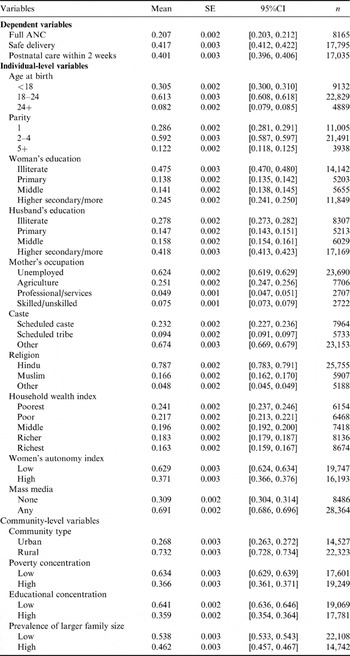
Table 1 shows the general profile of women of reproductive age in the selected sample. The results show that about 21% of the women received full ANC during their most recent live birth. The percentage of women whose last delivery was assisted by skilled personnel was about 42%, while only 40% of women received postnatal care within two weeks of their most recent live birth. At the time of their most recent birth, 30% of women were less than 18 years of age, 61% were 18–24 years old and only 8% of women were over 24 years of age. Regarding parity, 29% of women reported having one child, 59% of the women had 2–4 children, while about 12% of women had five or more. Almost 48% of the women were illiterate, and only 25% of women had completed higher secondary/more education. Many women had husbands with higher secondary/more education (42%), while 29% of the women had husbands with no education.
Summary characteristics of women aged 15–49 who had most recent live birth during the last five years preceding the survey, NFHS-3 (2005–06), India

Note: all numerical values are unweighted.
Approximately 5% of women were employed in professional/services, and 8% in skilled/unskilled occupations. Only 25% of women were involved in agricultural activity, and 62% of women were unemployed. Nine per cent of women were from scheduled tribes and about 23% were of scheduled caste. Sixty-seven per cent of the women belonged to other castes, including general and other backward classes. Almost 5% belonged to ‘other’ religions (Sikh, Jain and Jewish etc.), 17% were Muslim and almost 79% were Hindu.
The distribution of women by household wealth index indicates that 16% of women lived in households in the ‘richest’ wealth quintile, while 18% were from households in the ‘richer’ quintile; 20% lived in households in the ‘middle’ wealth quintile and nearly 24% lived in the ‘poorest’ households. The autonomy index was high for only 37% of women, and almost 31% of women had no exposure to mass media.
Very few women were urban residents, accounting for only 27% of the sample. Thirty-seven per cent of communities had a high poverty concentration, only 36% had a high concentration of education and 46% of communities were found to have a high prevalence of large families.
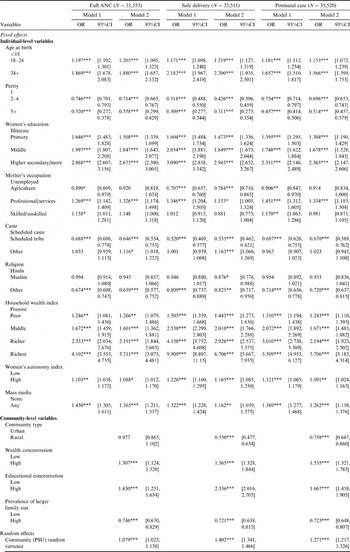
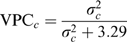
The first step in multilevel analysis is to consider if the data set justifies assessing random effects at the community (PSU) level. Table 2 demonstrates the result of the random intercept null model. There was a significant amount of variation in the use of the three types of maternal health care service across the communities. The results, based on the variation partition coefficient (VPC) values, suggest that about 46% of the total variance in the use of full antenatal care (ANC), 62% of the variance in the use of safe delivery and 51% of the variance in the use of postnatal care were attributable to differences across communities.
Parameter coefficient for the multilevel model for various indicators of the use of maternal health care services: empty model, without covariates

Note: in the two-level logistic regression model, the variance partition coefficient (VPC) is calculated as:
 $$\displaystyle VPC_c = {\sigma ^2_c\over \sigma^2_c+ 3.29}$$
where σ2 c represents community variance.
Table 3 depicts the parameter estimates of individual and community variables for full ANC, safe delivery and postnatal care. For each indicator, odds ratio, standard error and 95% confidence intervals were calculated. Only the full model (Model 2) for each indicator is explained here.
Result of multilevel logistic regression for maternal health care service use by ever-married women aged 15–49 who had their most recent live birth during the five years preceding the survey, NFHS-3 (2005–06), India
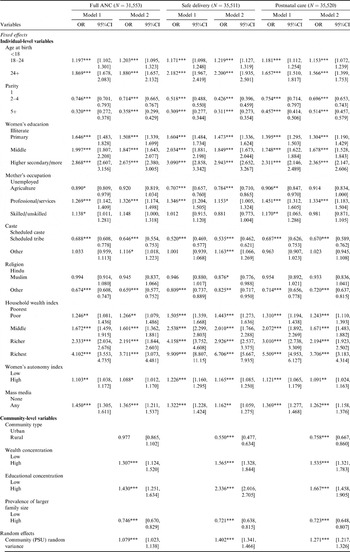
***p<0.01; **p<0.05; *p<0.1.
Full antenatal care
Individual-level effects
Women's age at birth was positively associated with utilization of full ANC. Older women appeared to have higher odds of using maternal health care services. For instance, women aged 18–24 were 1.2 times more likely, and women aged 24+ were 1.8 times more likely, to use full ANC as compared with younger women (women below age 18). Higher parity women were associated with a lower chance of receiving full ANC. Women of parity 2–4 (OR=0.714) and women with parity 5 and above (OR=0.358) were significantly less likelihood to report receiving full ANC. The education of women plays a vital role in the utilization of full ANC. Women with primary, middle and higher secondary and above education were 1.5, 1.8 and 2.7 times more likely, respectively, to use full ANC as compared with illiterate women. Women who worked in professional jobs/services (OR=1.326) and skilled/unskilled workers (1.148) were more likely to use full ANC than their counterparts who were not working. Caste was included in the analysis to assess the differential in utilization of services among different social groups. Scheduled tribe women were less likely to use full ANC, whereas women of other castes were significantly more likely to receive full ANC services as compared with women of scheduled caste. Muslim women (OR=0.945) and women of ‘other’ religions (OR=0.659) were less likely to utilize full ANC. The wealth quintile showed a significant positive association with the utilization of full ANC. Women from the richer and richest wealth quintiles were 2.1 times and 3.7 times, respectively, significantly more likely to use full ANC as compared with women belonging to the poorest wealth quintile. Women's autonomy and mass media were positively associated with the use of maternal health care services in terms of full ANC. Women with high autonomy were more likely to use full ANC as compared with their counterparts with low autonomy. Mass media played a significant role for women in the utilization of health care services. Women who had exposure to any mass media were 1.3 times more likely to use full ANC when compared with women who were not exposed.
Community-level effects
After adjusting for other variables in the multilevel model, the variables used at community level become significant for the use of full ANC. Community wealth concentration was found to be positively associated with the use of full ANC. Communities with high wealth concentration were significantly more likely to use full ANC when compared with those of low wealth concentration. Likewise, women who lived in rural communities had lower odds of utilizing full ANC when compared with their counterparts living in urban communities. Women living in communities of higher education concentration had 1.4 times higher odds of using ANC services than women living in communities with low education concentration. The prevalence of larger families in a community had a significant impact on the receipt of full ANC. The odds of receiving full ANC were significantly lower in communities with a high prevalence of larger family size, compared with communities with a low prevalence of larger families.
Safe delivery
Individual-level effects
Women's age at birth, women's education and household wealth index were the factors with the strongest association with use of safe delivery. Older women had significantly higher odds of experiencing safe delivery. Women aged 18–24 and 24+ at the time of birth had significantly higher odds of receiving safe delivery in comparison with women aged less than 18. High-parity women had significantly lower odds of receiving safe delivery compared with women with one child. Women with higher secondary education and above had 2.9 times higher odds of experiencing safe delivery compared with illiterate women. Women from the richest quintile of the community were also more likely to receive skilled attendant care at delivery than women from the poorest quintile. Women working in professional/service sectors and those belonging to ‘other’ castes reported more use of skilled attendants at delivery. Women with higher autonomy and exposure to mass media had higher odds of using skilled attendants during delivery.
Community-level effects
At community level, rural residence was found to be associated with lower odds of receiving skilled attendance at the time of delivery. High wealth concentration and high education concentration were positively associated with the use of safe delivery. For instance, communities with high wealth concentration had 1.3 times higher odds of receiving skilled birth attendance at the time of delivery compared with communities with low wealth concentration. Prevalence of larger families was negatively associated with the use of skilled attendants. Communities with a high prevalence of larger families were less likely to use skilled attendants at the time of delivery than communities with a low prevalence of larger families.
Postnatal care
Individual-level effects
Age at birth, parity, women's education, household wealth index, autonomy index, mass media and community-level variables were statistically significant determinants of postnatal care. Women's age at birth was found to be positively associated with the utilization of postnatal care. Older women were more likely to use postnatal care as compared with younger women. Higher parity was negatively associated with the use of postnatal care. Women with parity 2–4 and parity 5 and above were significantly less likely to use postnatal care compared with single-parity women. Furthermore, women from the richest households had a higher likelihood of using postnatal care compared with women from the poorest wealth households. The odds of reporting use of postnatal care among women who had higher secondary education and above were 2.3 times higher than among those who were illiterate. Women who were working in professional/service occupations were 1.3 times more likely to use postnatal care as compared with women who were unemployed. Women who had exposure to any mass media were more likely (OR=1.262) to use postnatal care than women who did not have any mass media exposure.
Community-level effects
At community level, rural residents were found to be significantly less likely to use postnatal care than their counterparts living in urban communities. This may also reflect the availability of medical facilities in urban areas as compared with rural areas. Like the previous two maternal health indicators, postnatal care was influenced by wealth concentration and educational concentration in a community. Women living in communities with higher education concentration were 1.7 times more likely to use postnatal care services than women living in communities with a low education concentration. The prevalence of larger families in a community has a significant impact on the receipt of postnatal care. The odds of receiving postnatal care were significantly lower in communities with a high prevalence of larger families compared with communities with a low prevalence of larger families.
Discussion and Conclusions
This study addressed the influence of individual- and community-level characteristics on the utilization of maternal health care services in India. Unlike previous studies, this covered three dimensions of maternal health care services: full antenatal care, safe delivery and postnatal care. There is widespread belief that care during pregnancy, delivery and the postnatal period can improve the health of the mother and the infant. Although the effectiveness of preventive antenatal and postnatal care has not been clearly established, there are certain conditions whose early detection can reduce maternal mortality and reproductive morbidity. The use of maternal health care services in India remains low. For example, this study found that only 20.7% of women received full ANC in 2005–06; 41.7% received safe delivery care and 40.1% received postnatal care within two weeks of delivery. The study identified several factors that have a significant impact on the utilization of maternal health care services in India. These include women's age at birth, parity, women's education, caste, religion, household wealth index, autonomy index and mass media at individual level. Also, the community-level variables that influence the use of maternal health care services are community type, poverty concentration, educational concentration and larger family size concentration.
The results showed a strong positive influence of higher household socioeconomic status on the use of all three indicators of maternal health care service. Previous studies have also reported a positive association between socioeconomic status and full ANC, safe delivery and postnatal care (Gertler et al., Reference Gertler, Rahman, Feifer and Ashley1993; Bhatia & Cleland, Reference Bhatia and Cleland1995; Navneetham & Dharmalingam, Reference Navneetham and Dharmalingum2002; Babalola & Fatusi, Reference Babalola and Fatusi2009; Jat et al., Reference Jat, Ng and Sebastian2011; Singh et al., Reference Singh, Rai and Singh2011). The present study found a curvilinear relationship, such that women of middle childbearing ages are more likely to use maternal services compared with their peers of younger childbearing ages. These findings are consistent with the previous studies of Obermeyer & Potter (Reference Obermeyer and Potter1991) and Gage (Reference Gage1998). As for the effect of parity on the utilization of maternal health care services, the study's findings appear to be consistent with those of most studies in that women are significantly more likely to use maternal services for their first child than for later children (Leslie & Gupta, Reference Leslie and Gupta1989; Adekunle et al., Reference Adekunle, Filippi, Graham, Onyemunva, Udjo and Hill1990; Stewart & Sommerfelt, Reference Stewart and Sommerfelt1991; Akin & Munevver, Reference Akin and Munevver1996; Mekonnen, Reference Mekonnen1998). A possible explanation for this could be that women who are pregnant with their first baby are usually more likely to have difficulties during labour and delivery than women of high parity. This may result in low-parity women being more motivated to deliver in medical facilities than high-parity women.
The findings suggest that women's education has a strong influence on the use of maternal health care services. The general argument explaining this positive association includes the fact that increased education enhances women's knowledge of health problems, increases awareness of the health services availability and accessibility, enhances female decision-making power and produces changes in household dynamics (Obermeyer, Reference Obermeyer1993; Raghupathy, Reference Raghupathy1996; Navneetham & Dharmalingam, Reference Navneetham and Dharmalingum2002; Sagna & Sunil, Reference Sagna and Sunil2012). The present study found socioeconomic status to be positively associated with each of the three indicators of utilization of maternal health care service. The pattern clearly shows the wide range of inequality that exists across economic groups. Previous studies have also documented that the poor–rich gap in the utilization of maternal and child health care services has widened and that programmes are barely reaching the poorest section of society (Mohanty & Pathak, Reference Mohanty and Pathak2009; Pathak & Mohanty, Reference Pathak and Mohanty2010). This is probably because poor households do not have the resources for health care expenses, as their priority is to meet the basic needs of daily life, whereas wealthier household can spend a higher proportion of their earning on health care (Singh et al., Reference Singh, Rai and Singh2011).
Women's autonomy, on the other hand, failed to emerge as a strong predictor of the use of maternal health care services, even though it is significantly related to all three maternal health care services. Previous studies have concluded that women's decision-making autonomy is a determining factor in receiving pregnancy care (Basu, Reference Basu1992; Bloom et al., Reference Bloom, Wypij and Dasgupta2001; Das et al., Reference Das, Gandotra, Pandey and Shah2002; Mistry et al., Reference Mistry, Galal and Lu2009). Furthermore, women who were exposed to mass media were more likely to use maternal health care services. Previous studies have shown that exposure to mass media at the individual and community level has a positive influence on the utilization of maternal health care services (Thind et al., Reference Thind, Mohani, Banerjee and Hagigi2008; Babalola & Fatusi, Reference Babalola and Fatusi2009; Islam & Odland, Reference Islam and Odland2011; Agha & Carton, Reference Agha and Carton2011; Sagna & Sunil, Reference Sagna and Sunil2012).
The major significance of this study is that it went beyond individual-level characteristics and investigated the effects of community-level factors on the use of maternal health care services. At the community level, rural residence was found to be associated with a lower odds of utilization of maternal health care services. This finding is consistent with previous studies that have reported significantly higher use of services in urban compared with rural areas (Gertler et al., Reference Gertler, Rahman, Feifer and Ashley1993; Magadi et al., Reference Magadi, Diamond and Nascimento Rodrigues2000; Navneetham & Dharmalingam, Reference Navneetham and Dharmalingum2002). The increased availability and accessibility of health services in urban areas may explain this disparity. The findings of this paper suggest the importance of investment in greater numbers of health facilities and also improving access to health care for antenatal care. The higher wealth concentration indicates higher odds of receiving full ANC, safe delivery and postnatal care. Higher education concentration of women in the community increases the odds of using maternal health care services. This study found that communities with large family norms are associated with a low propensity to seek maternal health care services. The finding that the prevalence of small family norms in the community and personal fertility-related attitudes are associated with differences in service utilization suggests that promoting the use of family planning may ultimately help to foster the utilization of other maternal health services. Finally, this study found that random effects of the community on each of the three indicators of maternal health care services are significant. This shows that unmeasured factors operating at the community level play a significant role in determining utilization of maternal health care services beyond the influence of individual factors.
There are a few limitations to this study. First, it used PSU as the higher level unit of analysis, yet PSU boundaries do not necessarily coincide with community boundaries; therefore, they may not necessarily measure community and their impact on aggregate maternal health outcomes. Another drawback is that information regarding women who died due to childbirth-related complications and nulliparous women were not included in the study sample. Thus, the associations found may be underestimates and future research should address this issue. Further, the study relied on cross-sectional data with the attendant and potentially biased selectivity and endogeneity bias. Therefore, there is a possibility that the relationships found in this study are due to the influence of unmeasured individual- and community-level variables that are associated with both the independent and dependent variables in estimated models. In addition, due to the use of cross-sectional data, it becomes very tough to differentiate between cause and effect from sample association and to furnish an exact explanation for their findings.
The significant community-level random effects found in this study indicate a need to contextualize efforts aimed at promoting maternal health services utilization in India. There are some unmeasured factors at the community level that predict service utilization. Increased utilization of maternal health care services will require a strong focus on community-level intervention. Future research should investigate those factors that may account for the unexplained community variation in the use of maternal health care services. Policymakers have to appreciate that these factors affect different maternal health care services differently. Consequently, strategies to improve the uptake of maternal health care such as mass media and health workers, particularly for the disadvantaged sections of the population like rural and uneducated women, should be targeted at specific components rather than planning umbrella strategies. These measures would help to reduce the rate of maternal deaths due to childbirth and to achieve the Millennium Development Goal of reducing maternal mortality (Goal 5).
Acknowledgments
The authors gratefully acknowledge the editor and anonymous reviewers whose constructive suggestions helped to improve this paper immensely.