INTRODUCTION
Turner Station, Maryland, located just outside of the City of Baltimore, was for one hundred years the home of African American steelworkers and their families. They were sustained by jobs at a huge Bethlehem Steel plant on nearby Sparrows Point and at other factories as well. The population reached its apex around 1950 at approximately 8500. To its proud current and former residents, it was an engine of upward mobility. It became the home of, among other people, an astronaut, a national civil rights leader and member of Congress, and a professional football star. Little known at the time, it was also the home of Henrietta Lacks, who would eventually become its most famous former resident (Skloot Reference Skloot2010).Footnote 1 Today, the industrial jobs are largely gone; one by one the factories closed, including the steel plant in 2012. The area now has the characteristics of a troubled neighborhood: a sharp drop in population, a high housing vacancy rate, a loss of businesses and institutions, and a substantial number of low-income families. One might reasonably assume that the current residents are the children and grandchildren of the blue-collar factory workers of the past, having descended into poverty or near-poverty as the jobs that supported their parents and grandparents disappeared.
But that is not true. The descendants of the steelworkers by and large live elsewhere. They reside in working-class or middle-class neighborhoods in the Baltimore metropolitan area and beyond. The people of what we may call the Turner Station diaspora attained more education than their steelworker parents and grandparents; and many have used their educations to find steady employment and, for some, professional or technical careers. As opportunities to live in working-class and middle-class areas in the region grew, most moved out, leaving an aging housing stock available to new, low-income renters.
Consequently, Turner Station today is best thought of as what Robert Bellah and colleagues (Reference Bellah, Madsen, Sullivan, Swidler and Tipton1985) called a “community of memory,” one that has a history and does not forget it. The members of such a community tell and retell stories of people who embody its most salient qualities, even, in this case, after the community has geographically dispersed. Studies of steelworker communities of memory have commonly centered on the experiences of White workers and their families in places such as Youngstown, Ohio (Linkon and Russo, Reference Linkon and Russo2002) or Homestead, Pennsylvania (Modell and Hinshaw, Reference Modell, Hinshaw, Leydesdorff, Passerini and Thompson2017). Their memories have little to do with race and racism. The Turner Station community, in contrast, remembers racial struggles vividly. But in telling their story, they emphasize the positive values that, in their minds, led to upward mobility. These values include providing a better education for their children; having a collective responsibility for those children’s upbringing; and maintaining a tight, self-contained neighborhood that protected their children, to the extent possible, from the indignities of the outside world.
The story of the Turner Station community of memory shows how an African American working-class neighborhood fostered upward mobility for its children during the peak decades of industrial employment. It demonstrates how an intense focus on education and moving up in the world can transform a generation. It shows how entrepreneurial activity can strengthen a community. It highlights the efforts of the Black working class, a group that has not received the attention it deserves because of the focus in the literature on the contrast between the Black middle class and the Black poor (Arena Reference Arena2011; Horton et al., Reference Horton, Allen, Herring and Thomas2000; Martin et al. Reference Martin, Horton, Booker, Wright and Wallace2016; Wilson and Roscigno, Reference Wilson and Roscigno2018). Above all, it shows what African Americans with access to stable, decent-paying, unionized employment—uncommon even then and almost nonexistent now—could accomplish, even within the bounds of racial segregation and discrimination. It is also, however, a story that links upward mobility with social class differentiation (Sugrue Reference Sugrue1996) and community decline. It shows how the constraints of segregation contributed to the strength of community ties and how, paradoxically, the easing of those constraints weakened the community. And it does so in ways that evoke classic community studies such as Black Metropolis (Drake and Cayton, Reference Drake and Cayton1945).
In order to tell this story, I have made use of several sources. Local historian Louis S. Diggs (Reference Diggs2003) wrote a book that included an historical overview of Turner Station and twenty-five oral histories of residents born between 1907 and 1950. I will refer to them as the Diggs oral histories. Other sources include an illustrated history of Turner Station (Watson Reference Watson2008); several accounts of its dependence on Bethlehem Steel and its relationship with the adjacent White steelworker community of Dundalk (Barry Reference Barry2019; Niedt Reference Niedt2007; Olson Reference Olson2005; Reutter Reference Reutter2004; Rudacille Reference Rudacille2010); and U.S. Bureau of the Census data from the Decennial Censuses of 1950 through 2010 and the pooled 2014 to 2018 sample collected by the Census Bureau’s American Community Survey. In addition, I conducted twenty-five interviews in 2018 and 2019. These included three individuals who were in the Diggs (Reference Diggs2003) sample, nine other individuals born between 1932 and 1952, three adult children of these individuals, and key informants such as community leaders, faculty members at local colleges, and the heads of non-profit and government agencies. I also obtained responses to a short survey from ninety-eight members of a Facebook group for former residents. And I attended events and lectures sponsored by neighborhood-revival and former steelworker organizations. Footnote 2
THE EARLY COMMUNITY
In the late 1880s the Pennsylvania Steel Company, soon to be renamed the Maryland Steel Company, built a plant at Sparrows Point, a vast thirty-one-thousand-acre site projecting into the Chesapeake Bay, southeast of the City of Baltimore. From the start, the steel company recruited rural African Americans from Virginia, North Carolina, and South Carolina. In 1902, the general superintendent wrote, “I have personally known and supervised hundreds of coloured iron workers capable of competing with white labour in any country” (Reutter Reference Reutter2004, p. 65).Footnote 3 The steel firm built a company town, Sparrows Point, to house its workers.Footnote 4 African Americans were only allowed to live on two of the eight streets. The housing on these streets soon became inadequate for the growing Black workforce, so workers began to move to a settlement known as Turner Station, across a creek from Sparrows Point, where several African American families had already built homes in a marshy, wooded area (Diggs Reference Diggs2003). After the Bethlehem Steel Company bought the Sparrows Point plant in 1916, it supported the construction of homes in Turner Station for Black workers who could not find housing for their families in the company town.
By 1920 about 1500 African Americans were employed at Bethlehem Steel. The size of the plant grew rapidly and by 1930, about 6000 of the 18,000 workers at the plant were African American (Reutter Reference Reutter2004). Bethlehem Steel was unusual, compared to other Northern and Midwestern steel plants, in its reliance on Black workers for a large share of its labor force. At the steel mills in Pittsburgh, according to Dickerson (Reference Dickerson1986), just 3% of the workers were Black in 1910, although World War I production brought the percentage up to 13% in 1920, after which it declined to 10% in 1930. Joe William Trotter, Jr. (Reference Trotter2019) estimates that 15% to 20% of steel workers in Western Pennsylvania were Black in the years between the world wars. In steel plants, as in other industries at the time, marginalized Black workers were repeatedly brought in as strikebreakers (Linkon and Russo, Reference Linkon and Russo2002; Trotter Reference Trotter2019). At the Wisconsin Steel Mill Number 3 in South Chicago, Black workers were not hired until World War II (Kornblum Reference Kornblum1974).
Moreover, the Turner Station settlement was distinctive among Black steelworker communities in the North and Midwest. It comprised a self-contained neighborhood located close to its main source of employment and isolated from other Black neighborhoods. It sits on a peninsula jutting into the Chesapeake Bay, bounded to the east, south, and west by water and to the north by Dundalk Avenue, which was the dividing line between Turner Station and Dundalk, a White steelworker community in which African Americans were not allowed to live. Turner Station residents had close ties to the African Americans who lived in the Sparrows Point company town across the creek, which they could access by streetcar; but they had less interaction with residents in Black neighborhoods in Baltimore City that were more distant. In contrast, there were no well-defined Black neighborhoods near the major steel plants in Pittsburgh, South Chicago, or Youngstown in the early twentieth century (Gottlieb Reference Gottlieb1987; Kornblum Reference Kornblum1974; Linkon and Russo, Reference Linkon and Russo2002). In the Pittsburgh area, steel companies built bunkhouses and tenements for Black workers and community centers in the 1910s and 1920s, but they discouraged the formation of independent communities. When a Black welfare officer employed by a steel plant in Duquesne urged a group of steelworkers to pool their money to start a business, the employment director of the plant reacted angrily; and the Black welfare officer soon lost his job (Dickerson Reference Dickerson1986). The closest analogy may be to Black autoworkers at the Ford Motor Company River Rouge Assembly Plant in Dearborn, Michigan: After Henry Ford began to build the plant in 1917, Black workers had no nearby place that they could live because Dearborn was closed to African Americans. They began to settle in the nearby town of Inkster, which became a largely African-American community sustained by jobs at the River Rouge plant and by the patronage of the Ford family (Binelli Reference Binelli2012; Thomas Reference Thomas1992).
THE MID-CENTURY COMMUNITY
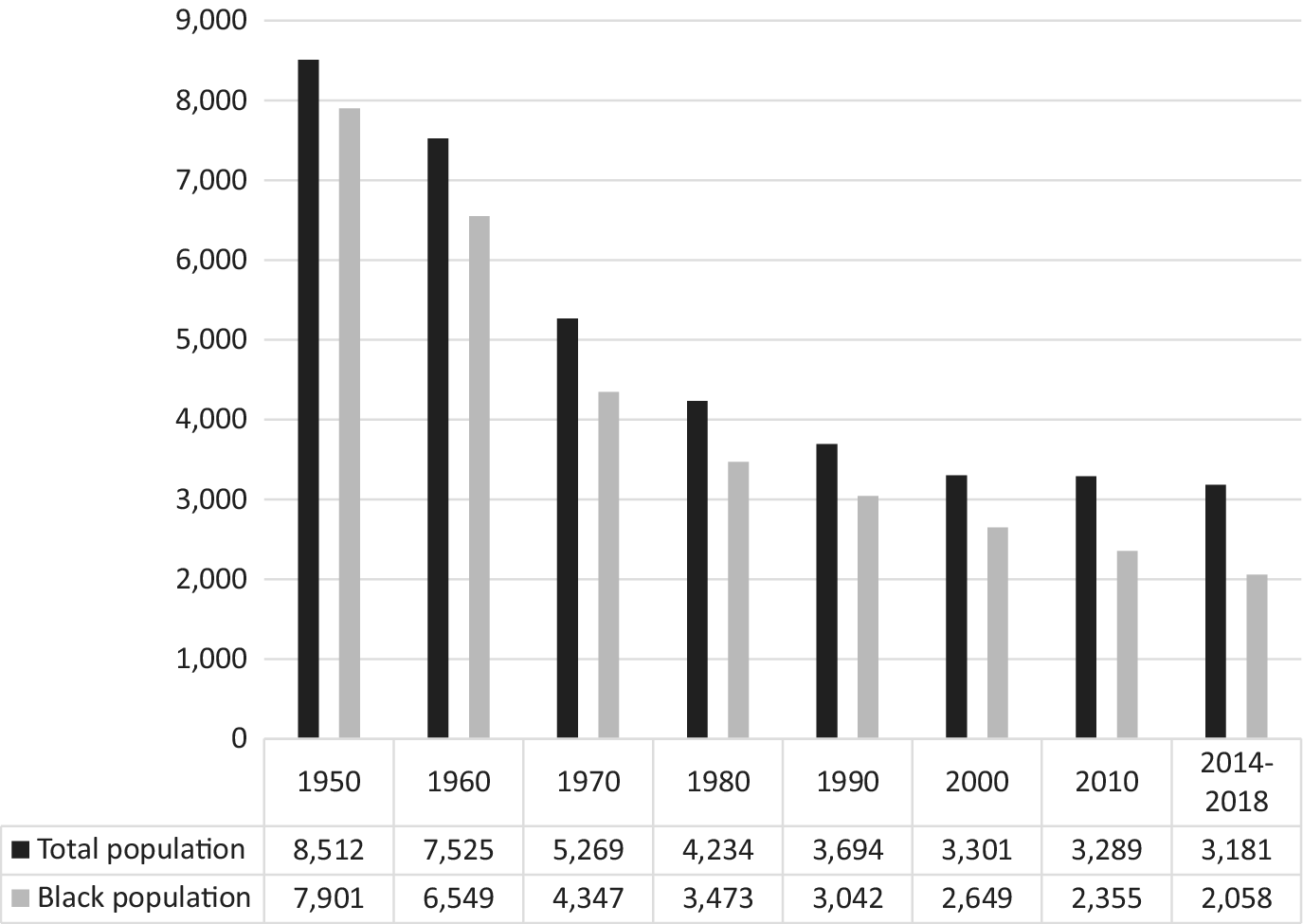
The 1950s and 1960s were the peak time at which industrial employment provided job opportunities for African Americans in the Baltimore area. The workforce at the Sparrows Point plant crested at about 30,000 in 1960. “All around us,” a Black worker formerly active in the steelworkers’ union told me, “was blue-collar jobs. You had Western Electric. You had General Motors. You had Bethlehem Steel.” His father, also a union official, had told Bill Barry (Reference Barry2019) in a 2002 interview, “Keep in mind thirty years ago a guy could go in the steel mill and make more than a professor at the university at Morgan,” referring to Morgan State, a historically Black university in Baltimore (p. 74). In 1960, 38% of employed Black men in Turner Station were classified as “operatives” or “craftsmen,”—essentially, skilled blue-collar workers—and another 34% were classified as “laborers.” The population of Turner Station cannot be estimated with precision until 1950, but it likely reached its high point then. I estimate that the population at the time of the 1950 Census was 8512, of which 7901 were Black.Footnote 5 The population was almost certainly lower before World War II because Lyon Homes, a development of 300 duplexes and rowhouses, and Day Village, a second development of about 500 rental units along the waterfront, were constructed during World War II to accommodate the expanded wartime African American labor force (Niedt Reference Niedt2007).
Earnings
Compared to the national Black population, Turner Station Black residents had a relatively high standard of living. To be sure, Black workers faced discrimination at the steel plant at Sparrows Point (often just called “the Point”). Most were originally hired for jobs in the hotter, more dangerous steel production side of the plant with its blast furnaces and open hearths, whereas Whites predominated in the finishing side, where products such as pipes were made and special coatings such as tin were added (Reutter Reference Reutter2004; Rudacille Reference Rudacille2010).Footnote 6 Work rules effectively prohibited African Americans from transferring to better jobs. As a result, African American workers at the Point made less money, on average, than White workers. Nevertheless, African American workers in Turner Station made more money than did the typical African American worker in Baltimore City (recall that Turner Station is located just outside of the city line) and the nation. In 1960, when employment at Bethlehem Steel was at its peak, the mean family income of non-WhiteFootnote 7 residents in the Turner Station census tract was about $4900.Footnote 8 In contrast, non-White families in Baltimore City had a mean income of about $4500, and non-White families in the United States had a mean income of about $3800. In other words, Turner Station families typically earned about 9% more than non-White families in Baltimore City and about 29% more than did non-White families nationwide.
African American families in Turner Station, then, had two different comparisons that they could make: Relative to White families, they earned less; but relative to other Black families they earned more. Both comparisons were relevant but for different reasons: The comparison with Whites showed continuing racial discrimination, which Black workers fought with increasing success over the ensuing decades—particularly after a 1974 court decree that invalidated some of the restrictive hiring and promotion procedures at the Point and at other steel factories nationwide. The comparison with other African Americans, on the other hand, showed that they were doing relatively well compared to Black workers who did not have industrial jobs. A retired worker told me:
You know, you taking guys that were making way above their pay grade educational-wise, right? Because they should have been making minimum wage, right, but they weren’t making minimum wage. And they were sending their kids to college for the first time. It was some guys were buying farms down south, buying homes …
The comparison with other Blacks instilled pride in the workers and their family members, who saw themselves as having a strong work ethic and enduring family values, as the Diggs oral histories and my interviews showed.
Family Life
Most households consisted of married-couple families. Of the twenty-two people in the Diggs oral histories who had children, all but one had had their children within marriages. Everyone who I interviewed had been born within their parents’ marriages. It may be that some people were reluctant to disclose nonmarital births, and in any case the interviews are not a random sample of the population. But Census data for 1960 are consistent with these observations: 81% of the non-White children under age eighteen in the Turner Station census tracts were living with both parents. That was well above the figure of 64% for non-White children in Baltimore City and the figure of 66% for all non-White children nationwide.
Very few Black women worked at the Bethlehem Steel plant, which had a largely male workforce. But as in other Black communities nationwide, married women commonly worked outside the home (Landry Reference Landry2000). According to the 1960 Census, 43% of married women in Turner Station had an occupation; and, again reflecting the national picture, a majority of them were private household workers or did other kinds of service work. Still, it is notable that more than half of Black married women in Turner Station were not working outside the home at the time of the census. The relatively high, stable wages of male workers allowed some married couples to establish the breadwinner-homemaker families that were common among Whites in the 1950s. A history of the women in the Dundalk and Turner Station communities (Olson Reference Olson2005) includes recollections from Turner Station residents which suggest that both kinds of marriage-based families were common. One woman told Olson:
Most of the women I knew worked outside the home. They were nurses, hospital workers, teachers, and domestics. In my own family all of the women worked, and it was just assumed that women would work (2005, pp. 72–73).
Another said:
I came from a block where most of the mothers stayed home. Most of the men worked at Sparrows Point, and the wives took care of everything that had to be done at home, including cut the grass, plant the flowers, make market, and have their dinner on the table when the men came home (Olson Reference Olson2005, pp. 73–74).
Given the restricted occupational opportunities that Black women faced in the labor market, having a sufficient family income to remain at home may have seemed like an achievement.
Entrepreneurship
When older residents and former residents reflect on Turner Station at mid-century, they describe a thriving, self-reliant community. A long-time resident told me, “We didn’t need to go out of Turner Station for nothing. And when I say nothing, except for working at Beth Steel, we had everything.” She had prepared a hand-written list of about sixty-five establishments that she remembered from the 1950s, including eleven stores, eight service stations, seven beauty shops, six doctors and dentists, three funeral homes, three cleaners, two restaurants, a taxicab company, and an insurance agency. In a separate interview, her adult daughter talked about the many establishments and said, “All these were run by people in the community. Everything was self-sufficient.” Diggs (Reference Diggs2003) listed sixty establishments covering a similarly wide range of businesses. They extended well beyond the funeral homes, barber shops, and beauty salons that were able to operate without White competition in most Black neighborhoods.
James Shelton was born in 1922 in Fairfield, South Carolina. He told Diggs (Reference Diggs2003) that he finished the eighth grade and then worked on his father’s farm until 1939, when he migrated to Baltimore and began to work at Bethlehem Steel. In 1941 he started a taxicab company in Turner Station. After he amassed the funds to purchase four cabs, he quit work at the plant and ran the taxi business. He also operated a charter bus company, owned a gas station for fifteen years, converted an old school bus into a mini-store, purchased a coal business, and bought three additional homes in the neighborhood. He said to Diggs:
During the many years I have lived in Turner Station, I have helped many people out financially with the rent, food, etc., and never expected to be repaid, but people were very nice to me, supporting me in the many business ventures I had in Turner Station, so I felt I had to give something back to the community (Diggs Reference Diggs2003, p. 91).
Dr. Joseph Thomas opened a medical practice in Turner Station in 1918. His father had been one of the founders of a savings and loan association that enabled local residents to purchase homes. Thomas developed a waterfront beach and amusement park, owned a Negro League baseball team, and opened a movie theater (Watson Reference Watson2008). Turner Station was really “a booming place,” another resident told Diggs, “We had almost as much to offer people as Baltimore City” (Reference Diggs2003, p. 95).
The unfortunate background for this high degree of entrepreneurial activity and self-reliance was racial segregation in the Baltimore area. African Americans in Baltimore, as in other urban areas, had great difficulty obtaining mortgages because of redlining. In the 1930s, a Federal home loan agency, with the cooperation of local real estate agents and lenders, issued city maps in which neighborhoods with a substantial number of Black residents were colored in red to indicate that mortgage lending was very risky for the lenders (Pietila Reference Pietila2010). Without an alternative source of funds, such as the Thomas’s Black-owned savings and loan association, most African Americans could not purchase homes. They were not welcome in many White-owned restaurants. Some Baltimore area movie theaters did not admit them (Marbella Reference Marbella2013). White cab drivers may not have been willing to enter their neighborhoods. Nevertheless, even though they were constrained, residents took pride in the business activity of the neighborhood.
To be sure, entrepreneurial activity in a Black neighborhood is not unique to Turner Station—or to Baltimore. Richard W. Thomas (Reference Thomas1992) described the development of Black businesses and a Black professional class in Detroit between 1910 and 1940. Trotter (Reference Trotter2019) wrote that vibrant Black business districts could be found in major cities around the country in the 1930s. St. Clair Drake and Horace R. Cayton (Reference Drake and Cayton1945) wrote of the Bronzeville neighborhood of Chicago:
In 1938, Negroes in Bronzeville owned and operated some 2600 business enterprises. Most of these were small retail stores and service enterprises on side streets, or in the older, less desirable communities. There were also about 2800 white businesses within the Black Belt. While Negro enterprises constituted almost half of all the businesses in Negro neighborhoods, they received less than a tenth of all the money spent by Negroes within these areas (Drake and Cayton, Reference Drake and Cayton1945, p. 438, italics in original).
Turner Station, however, did not have many White-owned businesses. Residents recall two general stores and one drug store owned by Whites. Whereas community leaders in Bronzeville were concerned about the small share of money that was spent at Black businesses, Turner Station residents boasted that a dollar spent in the neighborhood circulated through local businesses several times before it left. Geographic isolation may have played a role in the small number of White businesses. But Blacks could still have chosen to shop in Dundalk, the adjacent White neighborhood, rather than to patronize Turner Station businesses. Several of the people in the Diggs oral histories stated that they experienced no problems while shopping in Dundalk despite residential segregation. Perhaps the relatively strong economic position of Turner Station families contributed to the success of Black businesses. With wages higher than in most Black communities, and with a growing population peaking in 1950, the demand for goods and services—a restaurant meal, a taxi ride instead of the bus—may have been greater, too.
Class Heterogeneity
The older residents and their adult children who have moved out also describe a neighborhood that was home to people of different social classes, with middle-class professionals, working-class families, and laborers all living in the same area. Here again, the nature of the community was reinforced by segregation: Black professionals were not able to buy homes in White middle-class neighborhoods. The enforced heterogeneity was nevertheless beneficial to the residents. The son of a Black physician who lived and practiced in Turner Station said to me:
Yeah, I mean if my father would—if they would have let him move in other areas he wouldn’t have stayed there, because the housing wasn’t [so great], so you’ve got all these professionals [who were] good for the community forced in the area —doctors, lawyers, teachers—you force them [to reside] with people who are laborers and all … People across the street from me, they sold rags for a living, everybody, you get a doctor on one end of the corner and then you got a truck driver.
Instead of moving to a middle-class community, his father became involved in the neighborhood and encouraged local children to do well in school—treating students with good grades to free ice cream cones at the drug store and even paying for a semester of college for a young man whose family he knew. His son said, “My father knew everybody who was a good student in Turner Station for sure.”
Black teachers were doubly restricted. They generally could not obtain jobs in White schools and they could not live in White neighborhoods. But their students benefited from the limitations they faced. “The school teachers were great,” I was told by a resident, “because the best ones had to stay in the neighborhood because they couldn’t get better jobs due to segregation. Some might otherwise have taught in college.” Instead, they inspired a generation of Black students.
Collective Efficacy
The stories of life in Turner Station at mid-century are infused with accounts of what is called in the sociological literature “collective efficacy”: the capacity of a community to attain goals such as maintaining a safe and orderly environment (Sampson et al., Reference Sampson, Raudenbush and Earls1997). Collective efficacy, it is said, depends first upon the amount of trust and social cohesion in a community. Researchers measure social cohesion by asking whether residents agree with statements such as “this is a close-knit neighborhood” and “people around here are willing to help their neighbors.” Second, collective efficacy also depends upon the willingness of residents to intervene in situations to protect the common good. Residents are asked questions such as whether they would step in if children were spray-painting a public building or if a fight broke out in front of their house.
Reports of high collective efficacy abound in the interviews I conducted and in the Diggs oral histories. When I asked one former resident what it was like to grow up in Turner Station, she replied:
Very close-knit. Everybody knew everybody. You leave the doors open, the windows down. The neighbors, if they saw you do anything wrong, they had permission to beat your tail, and then tell your mom, who would beat your tail. Everybody know everybody….back then it was a nice place to live.
A resident told Diggs:
As a child growing up in Turner Station you did not just have your own family to look after you, you had the entire community looking after you. Other family members disciplined you if you were caught being bad, or if you did nice things, they were there to congratulate you and make you feel good. Likewise, there was a lot of respect for elders. The saying that it takes a village to raise a child is very true, or it was in Turner Station when I was growing up. It was truly a safe, crime free community (Diggs Reference Diggs2003, p. 79).
Interlocking ties of church and school help maintain this sense of community, said another resident to Diggs:
In the Turner Station community, church and school played an important role. This was the first place we learned to become public speakers, leaders, and most of all had wonderful role models. You were taught honesty, values, and respect. One of the ways you were taught honesty, values, and respect [was] that everyone knew your family. If you did anything that a grownup thought was wrong, that grownup would discipline you, and by the time you got home your parents knew that you had been disciplined for something (Diggs Reference Diggs2003, p. 158).
Church membership was an important marker of who you were. Three-fourths of the women and half of the men who spoke with Diggs mentioned the name of the church they belonged to. A community leader who moved to Turner Station in her early twenties told Diggs (Reference Diggs2003), “I became mesmerized by this community of nine churches [that] put so much emphasis on spiritual values, education values, and achievement values” (Diggs Reference Diggs2003, pp. 137–138).
Tight social cohesion was visible on a daily basis. The Turner Station Auxiliary Police Detachment worked with the Dundalk police barracks to provide local security (Watson Reference Watson2008). People told stories of Turner Station residents patrolling the community to keep others out day and night—including Black people from Baltimore City. I was told, “If you didn’t know someone in the community, you didn’t enter the community. You had to know somebody to get in here.” Another person said to me, “I recall if you came from Baltimore City and went to Turner Station, there was always the chance that you’d get beat up.” A woman related to Diggs what happened in Turner Station during the riots in Baltimore City following the assassination of Martin Luther King, Jr.:
In 1968 when the riots were going on in Baltimore City, and people were running amok in the city, there was a group of fathers and men walking through Turner Station, saying to the youth that you won’t go into the city in the riots. They stood in the streets and stopped the young people from Turner Station from going into Baltimore to participate in the riots (Diggs Reference Diggs2003, p. 151).
Socially cohesive and full of neighbors who did not hesitate to intervene, Turner Station clearly had a very high level of collective efficacy at mid-century.
Education
In addition, residents frequently mentioned the high value of getting a good education and moving up in the social world, much as the desire for learning and racial uplift during that period has been noted in the narratives of Black writers and in the efforts of other Black communities (Payne and Strickland, Reference Payne and Strickland2008; Perry Reference Perry, Perry, Steele and Hilliard2003). I met with three older women who had lived in the neighborhood for most of their lives, and when the conversation turned to education, one of them began to recite a rhyme she was taught as a child. The other two quickly joined in, and they recited in unison:
This was the credo that they remembered from their youth: Always strive to better yourself through education. Black steelworkers viewed education as the pathway to a better life for their children. I asked a man who had worked in the shipyard at the Point, unloading the raw materials needed to make steel, about his children. He responded immediately that all four of them had gone to college. He explained:
Because I didn’t want my kids to go through what I went through down at the Point, and the only way I was going see that through, they need to be educated … I seen it that way to make their life better. And their lives are better.
He added, “None of my sons ever had handcuffs on ‘em”—another achievement for a Black parent in contemporary Baltimore.
A woman who grew up in the 1960s and 1970s in Turner Station spoke to me about her elders:
They believe in education. They believe in doing your best and achieving. They believe in, too, like if you can get a good skill, you can get a good skill, too. But you just don’t sit on your behind and do nothing.
She is now a teacher. Her brother, who is deceased, was a college professor. Her daughter graduated from an Ivy League college, earned a master’s degree, and has a professional position with the federal government. A son works for a local bank. She also observed:
And if you were in organizations, they wanted your grades to be right. ‘Cause see the thing is, they always—I remember everybody telling me: You do better than us.
“You do better than us.” The theme that the next generation should do better than the current one and that education is the surest way up is another echo of Bronzeville, where, according to Drake and Cayton (Reference Drake and Cayton1945):
…securing an education is the most effective short-cut to the top of the Negro social pyramid. Money and occupation are important, but an educated man without a high-status occupation or a very large income, might be admitted to circles that a wealthy policy king or prize-fighter would find it hard to enter (p. 516).
Additionally, they noted:
Most lower-middle-class adults, aware of the strata above them, feel that they have reached their limit in social mobility and place their hopes for family advancement in the children. They see the key to success in “education” plus hard work, and they drive this point home to their children (Drake and Cayton Reference Drake and Cayton1945, p. 666).
THE COMMUNITY TODAY
Today, the vast majority of people who grew up and were educated in mid-to-late-century Turner Station have moved out of the neighborhood. An observer encounters older residents in their sixties, seventies, and eighties, most of whom own their own homes, along with a modest number of their adult children and a larger population of families who have entered the neighborhood relatively recently and are renting apartments and townhouses. The homeowners typically have been in Turner Station for decades. Many are from steelworker families. They understand but lament the exodus of their children’s generation. “We’re still here,” a long-time resident told me, “but we’re getting older.”
Figure 1 displays the population of Turner Station from 1950 to the 2014–2018 period.Footnote 10 Since the 1950 Census, the population has fallen by 63% to 3181. Moreover, Turner Station is more racially mixed than in the past. In the 2014–2018 period, the Turner Station census tract was 65% Black, 23% White, and 9% Asian. As a result, the Black population of Turner Station was a little more than 2000, a drop of 74% from its 1950 peak. These figures actually may understate the number of long-time residents who have left in recent decades: The latest figures include newer residents who have moved in to take the place of some of the people who have left.
Total Population and Black Population of Turner Station, 1950 to 2014–2018
Sources: Baltimore County census tracts. See endnote 5.

The population decline has two causes. The first is the precipitous decline in industrial employment. The workforce at Bethlehem Steel decreased steadily after 1960 and numbered about 2000 when the plant closed in 2012. In 2005 General Motors had closed a nearby assembly plant that had employed about 7000 people at its peak. In 1984, Western Electric had shuttered a factory that made wires, cords, and cables for telephone systems. Two shipyards had also closed. Many smaller factories had shut their doors (Nawrozki Reference Nawrozki2005). The share of employed men in Turner Station whom the Census Bureau classified as production workers—essentially factory workers and craftsman—declined from 25% in 1960 to 3% between 2014–2018.Footnote 11 The location of Turner Station near these plants was no longer an asset.
The second cause was the easing of residential segregation and the resulting movement of African Americans into neighborhoods that previously had been restricted to Whites. The housing units in Turner Station are old—80% were built before 1960—and by contemporary standards, many are quite modest. Although housing discrimination certainly has not disappeared, African Americans with enough income to rent or buy better-quality housing are no longer constrained to live in neighborhoods like Turner Station. A teacher who has moved to a lower-middle-class neighborhood in Baltimore City rather than staying in Turner Station said of the old neighborhood, “The row homes that are down there really are too small. I can’t deal with that smallness.” The son of the revered Turner Station physician said to me, “People wanted that American dream of a house, and the backyard, and a nice community and access to stuff that just wasn’t at Turner Station.” Another resident who had moved to the suburbs, only to return after a divorce, commented in an ironic tone about the wish to live elsewhere:
When we graduated, instead of coming back to Turner’s after we got our education and our degrees, and keeping Turner’s going like our parents did, we decided to move to Woodlawn. We wanted big houses! Big cars! We wanted a different style of life.
Woodlawn, a suburb of Baltimore City on the other side of the metropolitan area, has a substantial Black population and is the home of the headquarters of the Social Security Administration, a major source of professional and clerical employment for African Americans.
THE DIASPORA
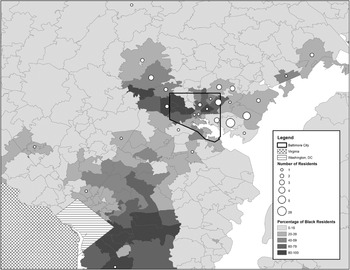
There is unfortunately no list of addresses that can be used to track the residential moves of former residents of Turner Station and to determine how they are faring. But in 2020, I was allowed to post a short survey on the homepage of a Facebook group that is maintained by and for former residents, although it includes some current residents. Of the ninety-eight people who responded to the survey, all but one had lived in Turner Station at some point, and eighty-eight responded that they had lived in Turner Station most of the time while growing up. Two-thirds still had family members who live in Turner Station. All were African American, and all except one were over the age of thirty-five. Ninety-one respondents provided valid zip codes of their current places of residence.Footnote 12 At the time of the survey, seventeen lived in Turner Station and seventy-nine lived elsewhere. Figure 2 shows the locations of all seventy-six respondents who resided in the state of Maryland, including those in Turner Station. The boundaries of the City of Baltimore are outlined. Eighty-six percent of the Maryland residents lived in zip codes that were either entirely outside of the cities of Baltimore and Washington, DC, or which straddled the Baltimore City boundary.
Zip code residential locations of Turner Station Facebook group members, by percent of the population that is African American (Source: American Community Survey 2014–2018).

The percentage of the population of each zip code that was African American, divided into quintiles, is shown by shadings on the map. There is a range of percentages, with most residents in areas in the middle three quintiles. To be sure, the shadings may understate the actual concentration of African Americans, who may have been located in largely-Black enclaves within zip codes. For instance, twenty-eight people lived in the zip code just east of Baltimore City that encompasses both Turner Station (seventeen people) and Dundalk (eleven people). The Turner Station residents were clustered in one census tract within this zip code area that was 65% Black, whereas the other eleven lived in the largely White balance of the zip code area. Nevertheless, Figure 2 shows that only a minority of the Maryland residents in the Facebook group lived in zip code areas in the highest quintile of African American population. Most were in at least moderately integrated areas straddling or outside of Baltimore City.
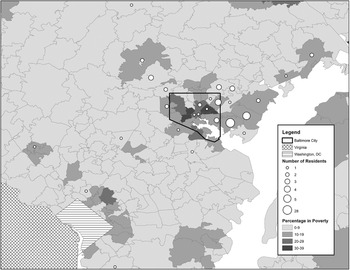
Figure 3 shows the same zip code locations with the shadings indicating the percentage of people in each zip code area who were living in families with incomes below the federal poverty line. The Census Bureau’s definition of a “poverty area” is a census tract with more than 20% of the population living in families with incomes below the poverty line (U.S. Bureau of the Census 1995). If we apply that definition to the zip code areas, then only five of the seventy-six Maryland residents were living in poverty areas—all in central Baltimore. The heavily-Black areas to the west of Baltimore City and in the Washington, DC suburbs did not qualify as poverty areas. Most Facebook group members were living in areas in which 10–19% of the population was poor. Here again, African Americans may have been clustered within these zip code areas in enclaves that had higher concentrations of poor residents. Few, however, lived in zip code areas that, as a whole, met the criterion for being poverty areas.
Zip code residential locations of Turner Station Facebook group members, by percent of the population living in families with incomes below the federal poverty line (Source: American Community Survey 2014–2018).

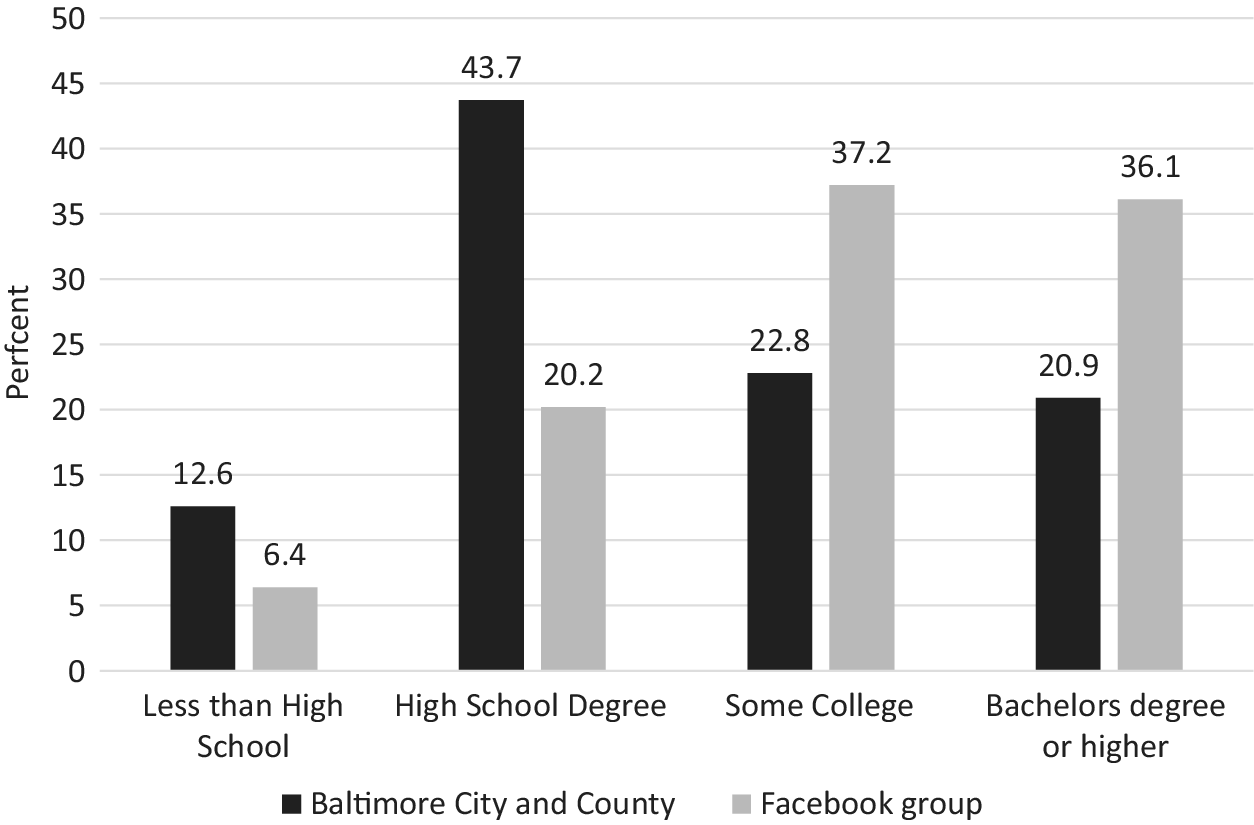
Figure 4 shows the educational attainment of the Facebook group respondents compared to the educational attainment of African Americans living in Baltimore City or Baltimore County, according to the pooled 2014–2018 American Community Surveys. (Baltimore County is a suburban ring that surrounds, but does not include, the City of Baltimore.) The city and county figures have been age-standardized. That is to say, I calculated age-specific educational distributions from the ACS data and then weighted them so that the age distribution of the City and County sample matched the age distribution of the Facebook group. As can be seen, the educational attainment of the Facebook group surpassed that of City and County African Americans. Thirty-six percent had a bachelor’s degree or higher degree compared to 21% of the age-standardized city and county residents. Thirty-seven percent had some college education (but not a bachelor’s degree), compared to 23% of the city and county residents. To be sure, the Facebook group may not be representative of all former residents who grew up in Turner Station. Consequently, I cannot say with certainty whether the educational distribution of former Turner Station residents exceeded that of the broader African American population. Nor can I conclude with certainty that few were living in highly segregated, high-poverty neighborhoods that may have been nested within larger zip code areas. But the data do suggest that the members of the Turner Station diaspora have attained relatively high levels of education and live in areas that are dispersed broadly throughout the Baltimore metropolitan area and beyond and that typically have moderate percentages of
Educational attainment of the Turner Station Facebook group compared to the age-standardized educational attainment of all African Americans living in Baltimore City and County (Source: American Community Survey, 2014–2018).

African Americans and low- to moderate-levels of poverty.Footnote 13
LOSS OF COMMUNITY
To walk around the neighborhood today is to see the loss of community. Most of the churches are still there, sustained by deeply religious older parishioners and by former residents who drive in for services. But virtually all of the businesses that had made the neighborhood dynamic and instilled such pride in its residents are gone. There are convenience stores, laundromats, barbershops, auto repair places, a funeral home, and a beauty salon. But no restaurants, no service stations, no doctors or dentists, no cleaners, no cab companies. The nightclub that featured acts such as Pearl Bailey and Cab Calloway is long gone. The movie theater is now a church. Boarded up homes and apartments are common. Eighteen percent of the housing units were vacant in the 2014–2018 period, which is similar to the 19% vacancy rate in Baltimore City and well above the national average of 12%.Footnote 14 At a small shopping center just outside of the neighborhood where many people had bought groceries, the supermarket has closed. Only a dollar store remains.
As the sons and daughters of the steelworkers have moved out, a more transient population has moved in. The residents of Turner Station are no longer prosperous, even compared to other African Americans. Seventy-four percent of the people in the neighborhood live in rental housing, compared to 59% in 1960. More than half had moved into their current rental units since 2010. Footnote 15 The renters tend to be much younger than the homeowners: In the 2014–2018 period, 49% of the homeowners were age sixty-five or older, compared to 12% of the renters. And the older homeowners have little to do with the renters. They don’t seem to know many of them. They sometimes refer to the renters as “Section 8” people—a reference to the Housing Choice Voucher Program that allows low-income families to choose housing units (assuming that landlords agree to accept the vouchers) and subsidizes the rent that the families pay.
According to data from the U.S. Department of Housing and Urban Development, 9% of the population in Turner Station lived in Section-8 subsidized housing in 2018.Footnote 16 But in popular usage, “Section 8” has become a label for all poor families. Long-time Turner Station residents talk about “Section 8” people in terms that are little different from the disparaging language that White Dundalk residents whom I have met talk about “Section 8” people. An older homeowner in Turner Station told me that although Section 8 residents have the same skin color as the homeowner:
They are so different from us …The people that are moving in are all about what the government can give you. They feel entitled … Government is keeping them from progressing.
Another resident criticized the current management of a large rental property:
They started letting people move in here, and just tear up the houses. We never rented to Section 8 per se because we knew what they did. We knew they didn’t take care of stuff.
For many long-term Black residents in the neighborhood, as in some lower-middle-class and middle-class Black neighborhoods elsewhere in the nation (Pattillo Reference Pattillo2013), Section 8 has become a label for recent, low-income African-American residents who are perceived to come from a lower class and who are said to be less responsible and more prone to committing crimes than the established residents are. By making this distinction, long-term Turner Station residents maintain a social class distance between the newer residents and themselves.
THE COMMUNITY OF MEMORY
The connections among upward mobility, the end of legal segregation, and the decline of Turner Station are apparent to the long-term residents and their adult children. An older woman said to me ruefully, “Integration was not good for our community.” She was referring to the exodus of the more prosperous and better-educated residents. She did not mean to suggest, of course, that she wished to return to the days of segregation. The current and former residents still remember the inequities of that era. Since I conducted my observations during the Donald Trump presidency, I asked people what they thought when they heard Trump’s campaign slogan, “Make America Great Again.” Several used the same phrase: It wasn’t that great for us. The son of the Black physician, who grew up in a privileged position in Turner Station, nevertheless said:
When he said he wants to make America great again, it was great for them during the time. But like I got friends, White friends, who like maybe a little bit older than me, say “Wasn’t it great?”… It wasn’t great for me then. But they don’t— they tell me how great it was, but the society has been separated so long that they never had any contact with Blacks, so how would you know that things weren’t great for us if you don’t think about it?
If the trade-off for bringing back a vital community sustained by industrial jobs were the re-imposition of White dominance, Turner Station would want no part of it. That is the trade-off Turner Station voters thought they heard in Trump’s slogan. (Hillary Clinton, Trump’s opponent and the Democratic candidate for President in 2016, received 95% of the votes in the Turner Station precinct; Joe Biden, his Democratic opponent in 2020, received 94%.Footnote 17) Yet they believe that something of value has been lost (Boyd Reference Boyd2008).
What endures is the community of memory. The older people in the neighborhood bemoan the loss of physical closeness and the lack of vibrant daily life, but they understand why many of their children have moved to other neighborhoods and undertaken better careers—the kinds of neighborhoods and careers that were not available to them when they were young adults in segregated Baltimore. The former steelworkers are proud of the way that they supported their families by doing difficult and dangerous work at the Point, but they wanted their children to move up in the world, even if that meant leaving Turner’s. A man who grew up in Turner Station, the son of a father who was a truck driver and a mother who worked in an aircraft factory, and who became a college professor, said of his generation (the generation that left):
We cherish what it was, but we’re not stupid. We understand that it wasn’t the best thing, it was somebody’s seconds. …Some of us had to leave in order to get something better.
Still, the neighborhood remains a part of their lives. They return to visit parents or to attend church. They come back for an annual community celebration. They trade Facebook posts. They join community organizations composed of current and former residents. They strive to keep alive the memory of Henrietta Lacks and to advocate for neighborhood revival.Footnote 18
Moreover, in moving out of their childhood homes, the women and men of the Turner Station diaspora have acted no differently than have White ethnics of their generation. The Little Italies of Baltimore and other central cities have lost population as young Italian Americans moved to the suburbs. The populations in many Greek Towns have moved on, leaving little more than grandparents and restaurants. Like these White ethnic groups, the original Turner Station residents were immigrants, people who chose to leave their homes in the South to pursue better economic opportunities. It has often been noted that Black migrants from the South could not shed their identity the way that White immigrants, because of the color of their skin, could manage to do—and that consequently they did not have the opportunity to grab their piece of the growing economic pie (Lieberson Reference Lieberson1980; Wilkerson Reference Wilkerson2011). In most cities at most times, this proposition was correct. Mid-century Turner Station was perhaps the rare exception. The Turner Station generation that grew up in the 1950s, 1960s, and 1970s faced not the perfect storm but rather the perfectly clear day: Their fathers had access to stable, unionized jobs that provided relatively high wages but did not require advanced educations. They were born into two-parent families for whom religious faith was important. They lived in a community with high collective efficacy; a place in which adults trusted each other and did not hesitate to intervene to maintain public order and to ensure that children learned how to behave. In addition, they had the good fortune to be born just as the legal apparatus of racial segregation was crumbling. One cannot fault them for seizing this rare opportunity by leaving Turner Station.
To be sure, we need to qualify this seeming success story. African Americans have not been able to translate their educational gains into occupations with higher earnings as fully as Whites can (Wilson Reference Wilson2017). It is therefore likely that the members of the Turner Station diaspora are earning less than, and are less upwardly mobile than, comparably-educated Whites (Acs Reference Acs2011). African Americans, as is well-known, are more vulnerable to economic crises. The subprime mortgage crisis cost many upwardly-mobile Black families their homes during the Great Recession (Mendenhall Reference Mendenhall2010; Rugh and Massey, Reference Rugh and Massey2010), and African Americans experienced greater drops in employment and in wealth than did Whites (Danziger Reference Danziger2013; Pfeffer, et al., Reference Pfeffer, Danziger and Schoeni2013). Black middle-class families often live in places that are close to poor, more crime-ridden areas, which they cannot totally escape (Pattillo Reference Pattillo2005). The teacher who said that she couldn’t deal with the smallness of Turner Station homes reported that she likes the size of her row house in a lower-middle-class neighborhood in northeast Baltimore, but she is unhappy about the drug dealing that sometimes happens on her block.
What is more, since that perfectly clear day, the clouds have gathered again. Industrial employment has declined as factories have moved out of the country and as production has been computerized. Although the rise of Donald Trump caused observers to focus on the effects of deindustrialization on the White working class, it hit the Black working class hard too. “All around us was blue-collar jobs,” my informant said of the past. In the Baltimore area today, those jobs are largely gone. The steel plant at Sparrows Point was razed after it closed. In its place stand an Amazon warehouse, a FedEx warehouse, and an Under Armour warehouse. They offer what passes for decent jobs in contemporary Baltimore, but the jobs pay less and have less job security and fewer fringe benefits than the unionized steelworker jobs provided. The level of collective efficacy in Turner station is much lower; homeowners have little trust in the renters and would be afraid to intervene to correct the behavior of children and adolescents. Nationally, levels of social trust among Blacks are low (Smith Reference Smith2010), although living in a African American neighborhood may benefit Black children and youth by providing more social support (Hurd et al., Reference Hurd, Stoddard and Zimmerman2013). The conditions that allowed this working-class community to promote intergenerational mobility are now limited.Footnote 19
The history of Turner Station shows what African American working-class communities are capable of accomplishing. It reveals not what is typical (although it was not the only community that did well) but rather what, in the right circumstances, is possible. The members of the Turner Station community of memory fondly recall their childhood days, and they appreciate their parents’ devotion to education and self-betterment. They are proud of their heritage and their childhood neighborhood. Their achievements show what happened when a generation of African Americans—their parents and grandparents—were given access to decent-paying jobs that didn’t require a college education. The success of these African American steelworker families in providing a better life for their children and grandchildren is the most impressive legacy of Turner Station.
ACKNOWLEDGMENTS
I thank the Henrietta Lacks Legacy Group for welcoming this study and providing generous assistance; and I thank Mary Pattillo for comments on an earlier version.