The implementation of effective antimicrobial stewardship (AMS) programs in hematology and oncology patients is challenging, given the high acuity and complexity of these patients, high prevalence of antimicrobial resistant organisms, and the necessary role of hematology and oncology specialist staff in clinical care.Reference Abbo and Ariza-Heredia1-Reference Trubiano, Worth and Thursky5 Hematology and allogeneic transplant clinicians may also have different prescribing practices than oncologists. Typically, the differences in service delivery include more outpatient service and more regional or decentralized management in oncology; hence, levels of exposure to AMS activities and education differ between these groups.Reference Fleming-Dutra, Hersh and Shapiro6,Reference Krantz, Zier and Stohs7 Access to locally curated and endorsed guidelines may also differ. Published data related to prescribing practices for Australian hematology and oncology patients are currently lacking.
The Hospital National Antimicrobial Prescribing Survey (Hospital NAPS) is a key contributor to Australia’s National Antimicrobial Resistance Strategy8; it provides data for public reports,9,10 for hospital accreditation programs, and to drive AMS programs.11 The platform was first introduced in 2013 to enable the monitoring of appropriateness of antimicrobial use as well as the benchmarking of practices.Reference James, Upjohn and Cotta12 It supports the measurement of concordance with the national antimicrobial guidelines13 and the appropriateness of prescribing. We used the Hospital NAPS to describe the patterns of antimicrobial use in hematology and oncology patients and to assess the utilization of guidelines and the rate of appropriateness of use in these groups. Ultimately, we sought to identify areas for targeted AMS intervention.
Methods
Deidentified data were extracted from the Hospital NAPS database in all jurisdictions for all entries pertaining to adults (aged ≥18 years) in participating Australian healthcare facilities from November 4, 2014 (the date of first nationally coordinated survey), to December 31, 2018. Although participation in Hospital NAPS is voluntary, >80% of all principal referral hospitals and 60% of large acute public and private hospitals contribute data.14 Deidentified patient data are submitted via a web-based platform to a central database.10 Facilities can choose to perform the survey at any time; however, a coordinated annual survey is performed in the months surrounding Antibiotic Awareness Week in November. Hospitals may conduct a point-prevalence survey of their whole facility or of selected wards or specialties; they may conduct repeated, targeted, point-prevalence surveys; or they may randomly select patients for audit. Patient data are included in the Hospital NAPS if the patient was prescribed an antimicrobial (for treatment or prophylactic intent) at 8:00 a.m. on the audit day or had received a single dose in the previous 24 hours (eg, as surgical prophylaxis). Outpatients, day procedures, and nonadmitted emergency department patients were not included. Ethics approval as a quality assurance project was obtained for production of the NAPS database through the Melbourne Health Human Research Ethics Committee.
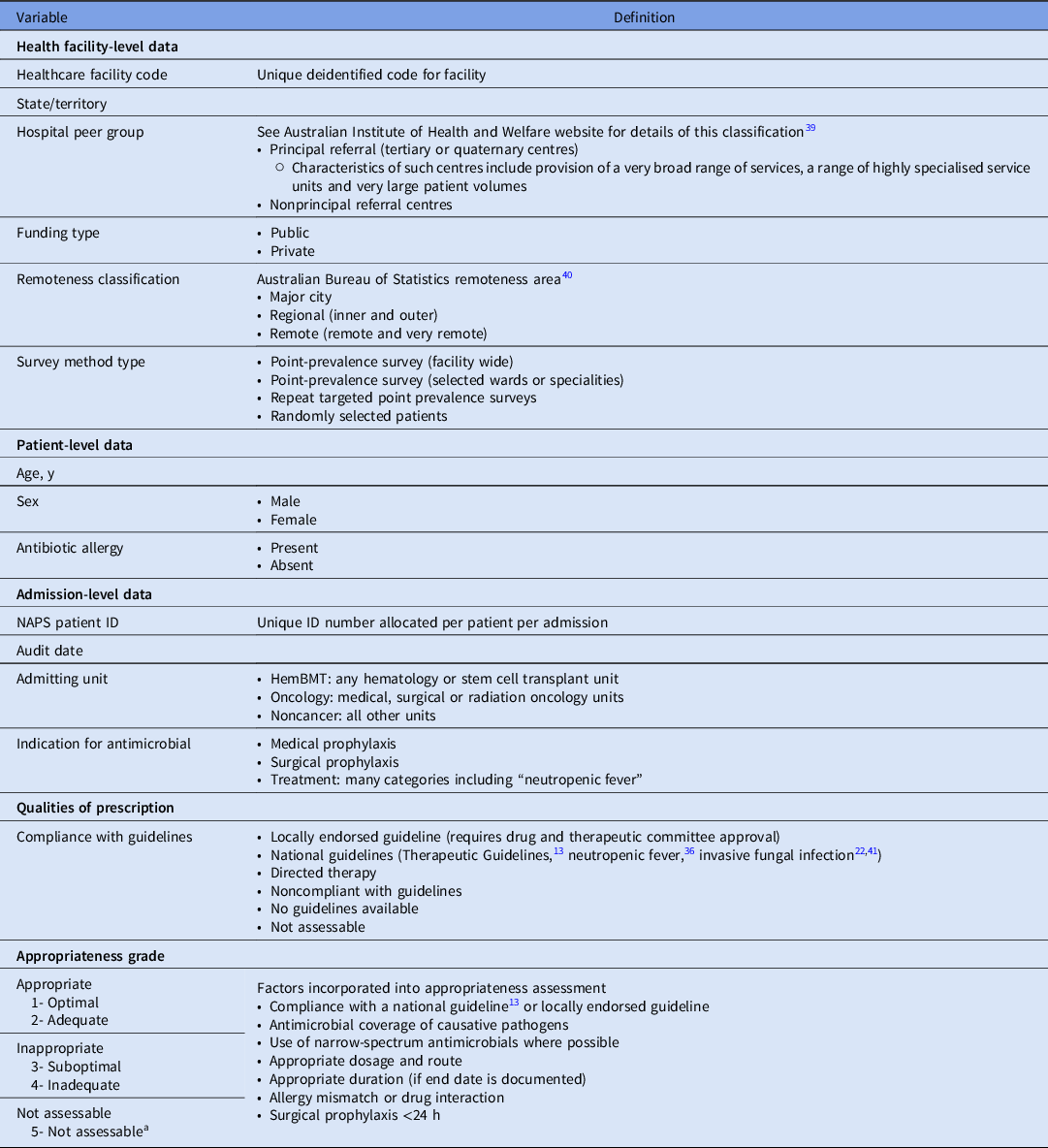
Data extracted from the Hospital NAPS survey are outlined in Table 1. Assessments of antimicrobial appropriateness are undertaken by staff responsible for AMS (infectious diseases specialists, clinical microbiologists, other trained medical practitioners, pharmacists, nurses or infection control practitioners) according to a structured matrix (appropriateness is defined in Table 1 and Supplementary Fig. 1). Indications are mapped and coded using SnoMed-CT to the national antimicrobial guidelines of Australia (ie, Therapeutic Guidelines).13 Local guidelines were defined as those that were approved by a local drug and therapeutics committee following stakeholder engagement.
Data Extracted From NAPS Survey

a If inadequate documentation or significant patient complexity.
For this analysis, patients were excluded if they were <18 years of age; were in a subacute facility; were under obstetric, dental, psychiatric, or palliative care; or were receiving care for drug and alcohol abuse. Inconsistent recording of specialty unit care occurred for patients admitted to ICU (often unit listed as “ICU” rather than a particular specialist unit), which led to the need to exclude all ICU-based prescriptions from the analysis (n = 5,126 prescriptions). Prescriptions were excluded if they were administered via a topical route, including intracameral, intravitreal, intraperitoneal, rectal, subconjunctival and vaginal routes. The remaining patients were classified as being admitted under hematology/bone marrow transplant (hemBMT), oncology (including surgical, medical and radiation oncology), or noncancer if they were neither of the former.
Antimicrobials were classified as antibacterial (including all prescriptions for cotrimoxazole for treatment purposes), antifungal, antiviral, antiparasitic, and anti-Pneumocystis (including all prescriptions of cotrimoxazole for prophylactic purposes). Prescriptions were classified as follows (1) prophylactic or treatment intent, (2) principal referral center versus other location, (3) major city versus regional versus remote. Baseline demographics, antimicrobial use, antimicrobial appropriateness, and compliance with guidelines were compared among the hemBMT, oncology, and noncancer groups.
Statistical analysis
Categorical variables were compared between groups using a χ2 test. Continuous variables were compared using a Student t test or Kruskal-Wallis test as appropriate. Univariate and multivariate logistic regression analyses were performed for the outcomes of appropriateness (yes or no) and compliance with locally endorsed versus national guidelines (in those compliant with guidelines). All clinically relevant covariates were identified a priori and included in the multivariate model. A P value of <.05 (2-tailed) was deemed statistically significant. The core data set had few missing data. Those missing a data point (21 of 94,226 or 0.02% of records) were excluded from the multivariate analysis. Statistical analysis was performed using Stata version 15.1 software (StataCorp, College Station, TX).
Results
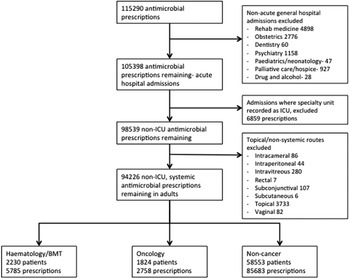
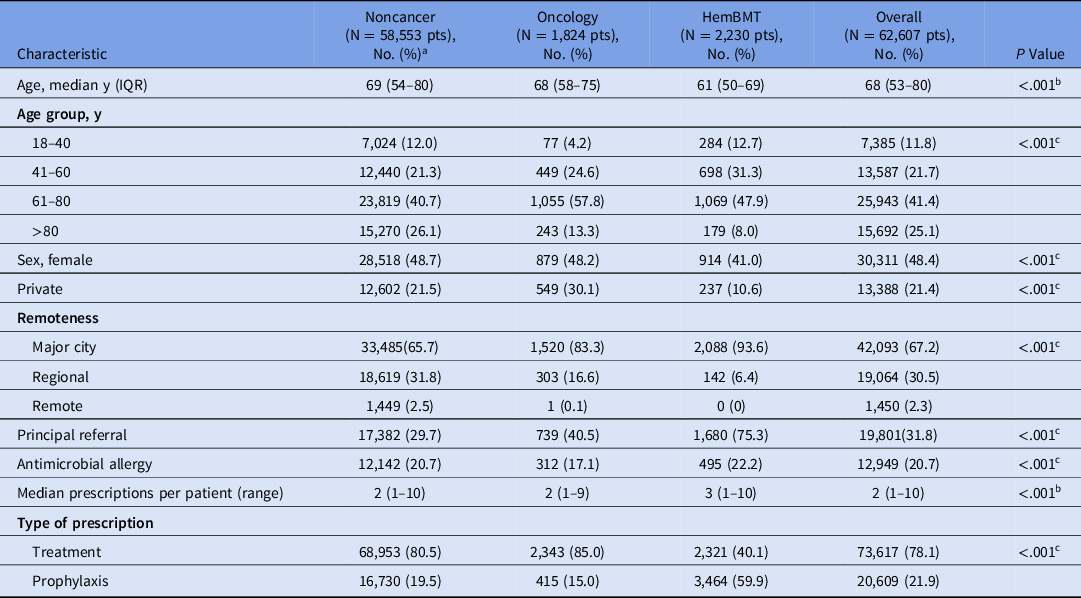
Overall, 115,290 antimicrobial prescriptions obtained from 454 health facilities were submitted in surveys for adults from November 4, 2014, to December 31, 2018. Contributing facilities spanned quaternary or specialist cancer and other specialist hospitals, large principal referral centers, and small remote facilities. Figure 1 illustrates prescriptions excluded on the basis of nonacute and/or nonmedical or surgical admission, being of pediatric age, admitted to ICU, and prescription for a topical or local application route. We identified 94,226 evaluable prescriptions over 62,607 patient admissions. Patient demographics and number and type of prescriptions (treatment vs prophylaxis) are shown in Table 2. Noncancer and oncology patients were generally older than hemBMT patients. Oncology patients and particularly hemBMT patients, were cared for mostly in major cities, and very few patients received care in remote facilities. HemBMT care occurred mostly in principal referral centers, and oncology services were spread across nonprincipal and principal referral centers. The proportion of prescriptions for prophylactic intent was significantly higher in hemBMT patients than in oncology and noncancer patients.
Flowchart of inclusion of prescription level data from the Hospital National Antimicrobial Prescribing Survey (Hospital NAPS).

Demographics of the Study Cohort

Note. Pts, patients; IQR, interquartile range.
a Unless otherwise stated.
b Using Kruskal-Wallis equality-of-populations rank test.
c Using χ2 test.
Antimicrobial agents for treatment
The most common indication for antimicrobial treatment in hospitalized hemBMT patients was neutropenic fever (32.6% of all treatment prescriptions). Community-acquired pneumonia was the most common indication in oncology and noncancer patients (15.7% and 17.2% of prescriptions, respectively).
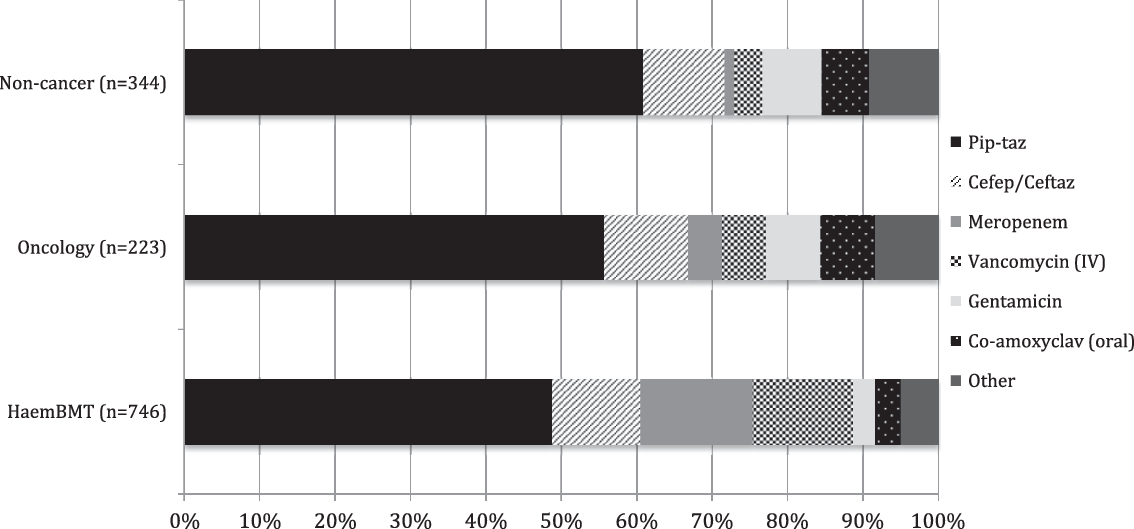
Neutropenic fever
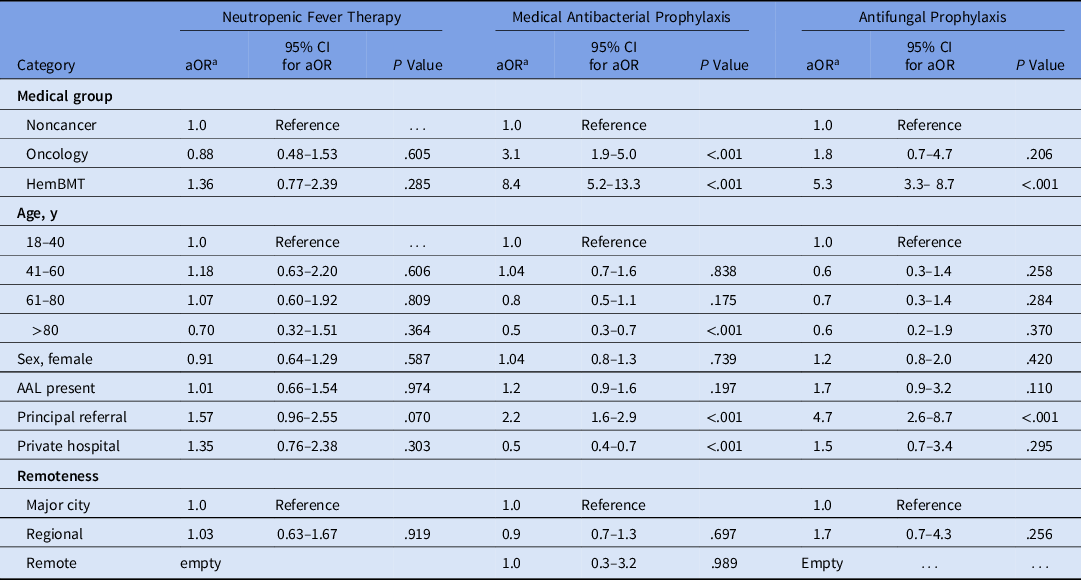
Figure 2 demonstrates the most frequently prescribed antibiotics for neutropenic fever therapy per patient group. Piperacillin-tazobactam was the most commonly used antibiotic across all groups. Meropenem represented 14.9% of neutropenic fever therapy in the hemBMT group. Neutropenic fever therapy was highly appropriate across all groups (90.5% vs 85.2% vs 83.4% appropriate in the hemBMT, oncology, and noncancer groups, respectively). However, in the hemBMT group, meropenem use was inappropriate 20.2% of the time and vancomycin was inappropriate 11.3% of the time. “Spectrum too broad” was the key description of inappropriate prescriptions of both antibiotics (20 of 22 meropenem and 6 of 10 vancomycin). In the adjusted analysis, no difference was detected in neutropenic fever therapy prescribing appropriateness between the hemBMT, oncology, and noncancer groups (Table 3).
Proportion of antibiotics for treatment of neutropenic fever per patient group. Note. Pip-taz, piperacillin-tazobactam; Cefep, cefepime; Ceftaz, ceftazidime.

Multivariate Logistic Regression Analysis of Association Between Medical Group and Appropriateness of Neutropenic Fever Therapy, Antifungal and Medical Antibacterial Prophylaxis

Note. aOR, adjusted odds ratio; CI, confidence interval; AAL, antimicrobial allergy label.
a OR>1 is associated with national guideline use (Therapeutic guidelines); OR<1 is associated with locally endorsed guideline use.
In neutropenic fever guideline compliance, hemBMT patients were more likely to have care that followed local guidelines (in comparison to national guideline use) compared to patients in the oncology and noncancer groups (OR, 0.55 compared to noncancer; 95% CI, 0.34–0.89; P = .016) (Supplementary Table 1 online).
Antimicrobial agents for prophylaxis
Antibacterial prophylaxis
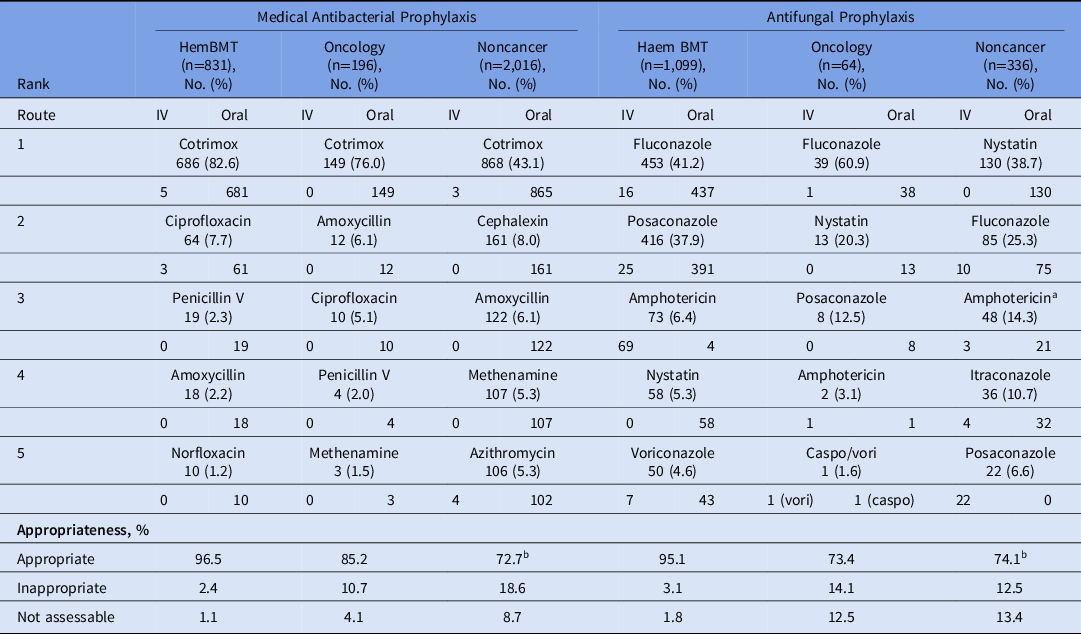
We analyzed 16,846 antibacterial prophylaxis prescriptions in this study. Most antibacterial prophylaxis in noncancer patients was for a surgical indication (87.2%), in contrast to smaller proportions in the hemBMT and oncology groups (0.8% and 20.3%, respectively). Table 4 lists the 5 most frequently prescribed antibacterial agents used for prophylaxis in each studied patient population (surgical prophylaxis excluded).
Top 5 Antifungal and Medical Antibacterial Prophylaxes Used and Appropriateness of Prescriptions Per Medical Group

Note. Caspo, caspofungin; Cotrimox, cotrimoxazole; Flucon, fluconazole; Itra, itraconazole; L-AMB, liposomal amphotericin B; Methenamine, methenamine hippurate; Nystat, nystatin; Posa, Posaconazole; Vori, voriconazole.
a 24 prescriptions were for inhaled amphotericin.
b P < .001 for comparison of rates of appropriateness of both antifungal and medical antibacterial prophylaxis between hemBMT and oncology and noncancer groups.
Most antibacterial prophylaxis prescribed in the hemBMT group was for Pneumocystis jiroveci pneumonia prophylaxis (cotrimoxazole, 81.9%). Ciprofloxacin was the second most frequently prescribed antibacterial agent for prophylaxis in the hemBMT group. Overall, 86% of prescribed ciprofloxacin was deemed appropriate, 6% of prescribed ciprofloxacin was deemed inappropriate, and 8% was deemed nonassessable. The ciprofloxacin prescribed in the hemBMT group was mostly complaint with locally endorsed guidelines (95%) rather than national guidelines. Most ciprofloxacin was prescribed in facilities located in Victoria and New South Wales (the most populous Australian states), and 86% of these prescriptions were in principal referral centers.
Overall, appropriateness of medical antibacterial prophylaxis was 96.5% in the hemBMT group, 85.2% in the oncology group, and 72.7% in the noncancer group. A hemBMT setting was strongly associated with appropriateness of antibacterial prophylaxis (aOR, 8.4; 95% CI, 5.3–13.3). An oncology setting was associated with appropriateness of antibacterial prophylaxis to a lesser extent (aOR, 3.1; 95% CI, 1.9–5.0) when compared to the noncancer group (Table 3).
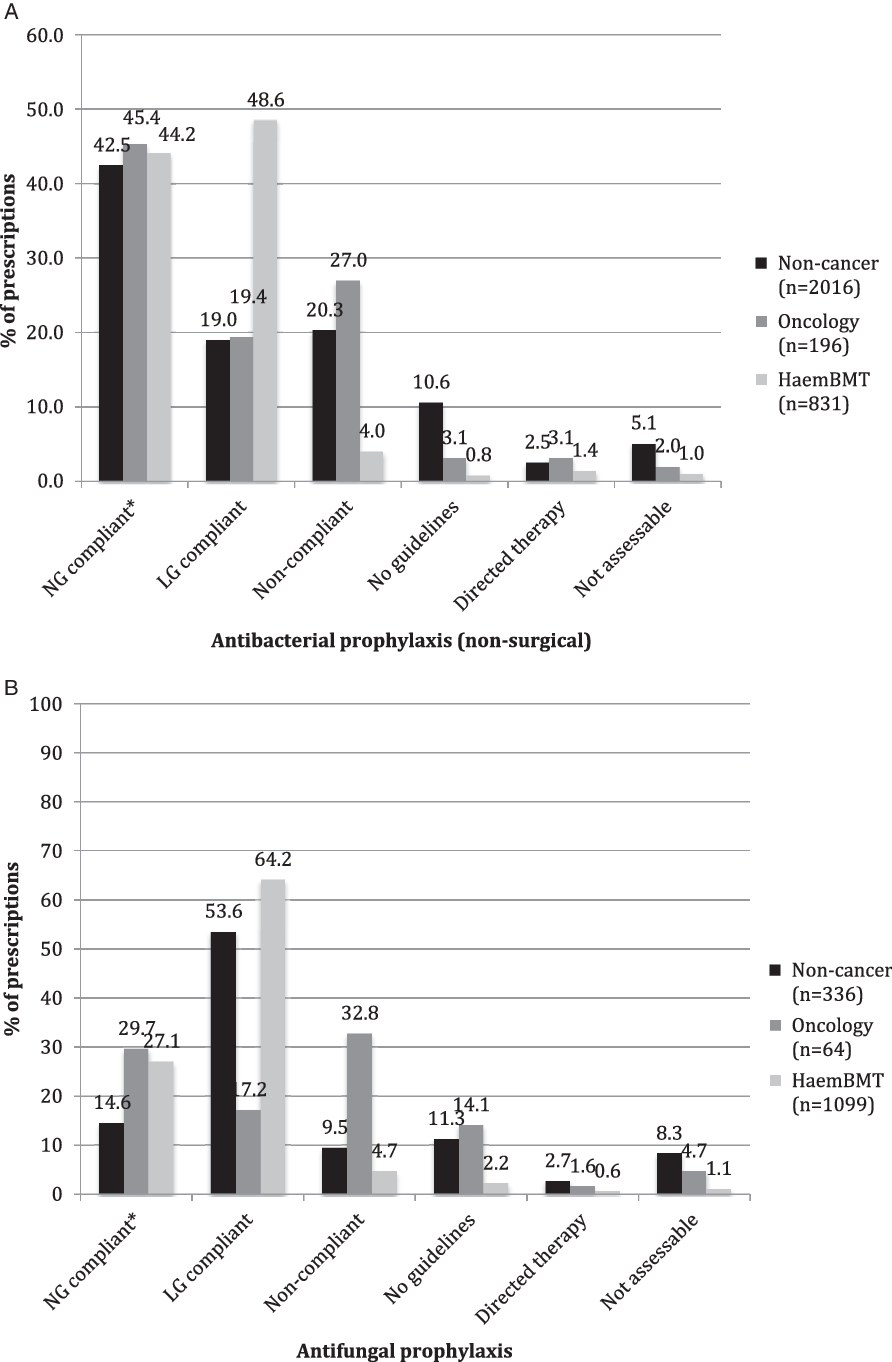
Figure 3 illustrates the proportion of prescriptions per category of compliance with guidelines. Noncancer and oncology groups had a large proportion of prescriptions that were not compliant with local or national guidelines. In contrast, the hemBMT group had a low rate of noncompliance, but a significant proportion of prescriptions were issued in facilities that used locally endorsed guidelines (48.6%). When compliant with guidelines, oncology and noncancer clinicians were predominantly following national guidelines, compared to hemBMT clinicians. The hemBMT group had an adjusted OR of 0.4 for national guideline use compared to local guideline use (95% CI, 0.4–0.5; P < .001) (Supplementary Table 1). Care in a principal referral center was also significantly associated with local guideline use.
Compliance with guidelines for (A) antifungal prophylaxis, and (B) antibacterial prophylaxis by medical group. Note. NG, national guidelines; LG, locally endorsed guidelines. *National guidelines include Therapeutic Guidelines, ANZMIG.

Supplementary Table 2 lists factors contributing to noncompliance with guidelines. A key factor across all groups was incorrect dosage or frequency of prophylaxis. In oncology, where a reason for noncompliance was recorded, most noncompliant prescriptions were due to incorrect dosage and/or frequency (32 of 43, 75%), followed by “antimicrobial not indicated” (7 of 26, 27%).
Antifungal prophylaxis
In total, 1,499 antifungal prophylaxis prescriptions, representing 7.3% of all antimicrobial prophylaxis, were prescribed. Table 4 lists the most commonly prescribed antifungal prophylaxis and appropriateness of this prophylaxis per group. Fluconazole was the most commonly prescribed antifungal in both the hemBMT and oncology groups, and posaconazole accounted for 37.9% of use in the hemBMT group. Being admitted under a hemBMT service was strongly associated with improved appropriateness of antifungal prophylaxis compared with noncancer services (OR, 5.3; P < .001) (Table 3). Prescriptions for oncology patients were not significantly more appropriate than those for noncancer patients. Treatment in a principal referral center, compared with all other hospitals, was also significantly associated with antifungal prophylaxis appropriateness (OR, 4.7; P < .001).
Compliance with guidelines for antifungal prophylaxis is illustrated in Figure 3. Overall, 32.8% of antifungal prophylaxis agents prescribed for oncology patients were noncompliant with guidelines, compared with 9.5% for noncancer patients and 4.7% for hemBMT patients. When compliant with guidelines, hemBMT and noncancer clinicians were more likely to follow local guidelines (70.3% and 78.6% local, respectively), whereas oncology clinicians were more likely to follow national guidelines (63.3% national). In the oncology group, noncompliant factors were incorrect dosage or frequency (17 of 19), spectrum too narrow (2 of 13), and antifungal not indicated (3 of 14).
Discussion
Australia’s NAPS platform is a unique resource that has provided a more detailed understanding of patterns of use and appropriateness of antimicrobials across public and private hospitals. These data support identifying targets for action, and they are a core contributor to both patient safety11 and AMR initiatives.9,Reference Ierano, Thursky and Marshall15,Reference McMullan, Hall and James16 In this study, we provided a detailed Australia-wide snapshot of hematology and oncology patients, which allows in-depth evaluation of antimicrobial prescribing and utilization among these vulnerable patient groups. We identified a number of areas unique to hemBMT and to oncology suitable for stewardship intervention.
Hematology and bone marrow transplant patients
Overall, the prescribing quality for hemBMT patients is encouraging, but several key areas need improvement. The higher number of median prescriptions per patient in the hemBMT group underscores the infection risk in this patient group as well as the need for antimicrobials for both prevention and treatment of infections. Although antifungal prophylaxis in general was very appropriate, we identified a higher than expected utilization of liposomal amphotericin B prophylaxis. Currently, evidence for liposomal amphotericin prophylaxis in high-risk patients is limitedReference Cornely, Leguay and Maertens17,Reference Penack, Schwartz and Martus18 ; however, liposomal amphotericin prophylaxis is often used in situations in which triazole agents are contraindicated due to drug–drug interaction (eg, vinca alkaloids),Reference Agarwal, DiNardo and Potluri19-Reference Moriyama, Henning and Leung21 and intolerance to triazoles. Secondly, across all patient groups, a substantial number of nystatin prescriptions were listed for medical prophylaxis. There is no indication for nystatin prophylaxis in our national guidelines, either general or fungus specific.13,Reference Fleming, Yannakou and Haeusler22 Antifungal stewardship and review of antifungal prescription quality is recognized as a complex and challenging area requiring specific data, methods, and expertise that were beyond the scope of the Hospital NAPS survey.Reference Khanina, Douglas and Thursky23 Consensus definitions of feasible core antifungal auditing metrics have recently been established by an international Delphi methodReference Khanina, Urbancic and Haeusler24 and will inform development of a targeted antifungal NAPS tool.
The high rates of carbapenem use in neutropenic fever is another potential target for stewardship programs. For example, 1 in 5 meropenem prescriptions were deemed inappropriate in the hemBMT group. Furthermore, the data we analyzed were collected before the end of 2018 and for those not currently in the ICU, so we may have underestimated the true rates of current carbapenem use. Conversely, reported rates of extended-spectrum β-lactamases are comparatively low in Australia,25 and meropenem is therefore not recommended as a first-line antibiotic for neutropenic fever. Although carbapenems may be necessary in some instances, the assessment of appropriateness does consider microbiology results. Inappropriate prescriptions, therefore, reflect the use of agents that are unnecessarily broad. Unwarranted carbapenem use is a key target for quality improvement that was identified by this study.
Finally, fluoroquinolone prophylaxis use was unexpectedly high among hemBMT patients because this practice is not typically recommended in Australia considering safety issues,26 the tendency to encourage multidrug-resistant bacterial infection,Reference Macesic, Morrissey and Cheng27 adverse effects on the microbiome,Reference Taur and Pamer28 and their position as important oral antimicrobials for the treatment of drug-resistant gram-negative infections.Reference Slavin, Worth and Seymour29 Although most fluoroquinolone prescriptions were deemed appropriate, these were largely due to compliance with local guidelines and not with national guidelines. The prescriptions occurred in a select few centers, highlighting health services where practices may deviate from the norm and local guidelines may have been written to reflect the recommendations of local clinicians.
Oncology
Oncology services in Australia could benefit from more targeted AMS activity, particularly in relation to antimicrobial prophylaxis. We detected moderate rates of inappropriate antibacterial prophylaxis use and significant rates of guideline noncompliance. We identified factors for targeted interventions such as incorrect dosing and frequency.
We also identified some marked differences between the quality of oncology and hematology prescribing. Multivariate analysis accounted for several important factors, including patient age and being in a principal referral and/or metropolitan center versus a private facility, which could explain this difference. Overall, prescriptions in private hospital settings tended to follow national guidelines, which is likely explained by the relative lack of locally curated guidelines in private facilities and the fact that reimbursement is restricted to those agents specified in national guidelines. A potential explanation for lower antimicrobial appropriateness in oncology is that patients tend to be cared for mostly in the ambulatory/outpatient setting, with less exposure of clinicians to oversight by infectious disease specialists or inpatient-based AMS activities.Reference Robilotti, Holubar and Seo3,Reference Fleming-Dutra, Hersh and Shapiro6,Reference Pillinger, Bouchard and Withers30-Reference Zetts, Stoesz and Smith32 In contrast, among hemBMT patients, particularly acute leukemia and BMT patients, who receive a significant amount of inpatient care, there may be more exposure to the input of infectious diseases physicians, clinician education, and AMS rounds. Certainly, less literature about AMS is available in oncology groups as a whole than about hematology,Reference Krantz, Zier and Stohs7,Reference Rosa, Goldani and dos Santos33-Reference So, Mamdani and Morris35 which is likely a result of AMS efforts being targeted to inpatient admission and not ambulatory care.
Finally, oncology clinicians were more likely to utilize national guidelines for prophylaxis and treatment, whereas hemBMT clinicians more often follwed local guidelines. This finding most likely reflects more ready access to locally curated guidelines specific to the hematology patient populationReference Fleming, Yannakou and Haeusler22,Reference Tam, O’Reilly and Andresen36 compared to the oncology population. This difference highlights the focus of AMS and infectious disease involvement in hematology and a potential gap in targeted provision of AMS for oncology patients.
Areas of strong performance
Neutropenic fever therapy in all groups and antifungal prophylaxis in the hemBMT group performed well regarding appropriateness of antimicrobial use. This success is likely due to several factors: (1) the existence of a clear and concise treatment algorithm that is freely available to all cliniciansReference Fleming, Yannakou and Haeusler22,Reference Tam, O’Reilly and Andresen36 and (2) clear criteria for the diagnosis and hence initiation of this treatment pathway. In contrast, the most common indication for antimicrobial prescription in oncology and noncancer groups was “community-acquired pneumonia,” which is an often loosely used diagnosis for many respiratory and febrile complaints. Lessons may be learned from clinical guidelines and decision support tools that have focused on neutropenic fever and sepsis in cancer.Reference Thursky, Lingaratnam and Jayarajan37
Strengths and limitations
The Hospital NAPS is a well-established audit tool that has proven sustainable at a national level across different types of health services and cases. It allows detailed auditing of appropriateness and compliance with guidelines in specific patient groups (ie, hematology), and it provides more granularity in prescriptions of importance to immunocompromised patients (eg, antifungal prescriptions) compared to other large-scale point-prevalence surveys.Reference Versporten, Zarb and Caniaux38 The Hospital NAPS can assess the impact of implementing new guidelines on clinical practice and the utility of and compliance with such guidelines. Guidelines are only useful if they are followed, and implementation of any guideline requires feedback and auditing to assess its usability and applicability. Reasons for noncompliance must be assessed, and the guidelines must be further tailored to meet the needs of the patient group. The Hospital NAPS is particularly suited to this task.
This study has several limitations. A nationwide snapshot of prescribing data was evaluated rather than an in-depth review of individual services and individual indications. Possibly, some practices assessed as noncompliant with guidelines were related to recent changes in the local antibiogram, suggesting a need for different empiric therapy. Although this is possible, it is not highly likely in Australia due to relatively low and stable antimicrobial resistance patterns.9 Furthermore, we were unable to provide data regarding ICU-based antimicrobial prescriptions, which is an important area to assess in future research. This study also has several strengths. We utilized a large data set that facilitated comparisons among patient groups and indications, in both prophylaxis and treatment, providing a broad overview of opportunities for quality improvement in hematology and oncology in Australia.
Future directions
This is the first report of a national survey of hematology and oncology antimicrobial prescriptions. We have demonstrated key and distinct areas for improvement in oncology and hemBMT. Areas of highly restricted antibiotic use in hemBMT are of concern and would benefit from targeted intervention. Appropriateness of antibacterial prophylaxis, and problems generally with incorrect antimicrobial dosage and frequency, were of particular concern in the oncology patient group. Importantly, AMS teams should place more focus on oncology services to improve appropriateness of antimicrobial prescribing.
Acknowledgments
We thank all the contributors to the Hospital NAPS survey for their hard work and dedication to collecting quality data related to antimicrobial prescribing.
Financial support
A. P. Douglas received doctoral funding from the University of Melbourne. Since 2013, the Australian Commission on Safety and Quality in Heath Care have supported the NAPS program for the AURA Surveillance System. No direct funding was provided for the preparation or revision of this manuscript.
Conflicts of interest
All authors report no conflicts of interest relevant to this article.
Supplementary material
To view supplementary material for this article, please visit https://doi.org/10.1017/ice.2020.1398