This issue of Cardiology in the Young represents the 11th annual publication in Cardiology in the Young generated from the two meetings that compose “HeartWeek in Florida”.Reference Jacobs and Anderson1–Reference Jacobs, Cooper and Dadlani10 The first nine previous publications were free-standing supplements to Cardiology in the Young; however, in December, 2012 we transitioned to publishing these proceedings as a regular issue of Cardiology in the Young, as the December issue. Many of the manuscripts published in the 10 previous HeartWeek supplements and issues rank among the most referenced manuscripts in Cardiology in the Young. Consequently, we intend to keep the proceedings from HeartWeek as the December issue of Cardiology in the Young in the future. This December, 2013 issue of Cardiology in the Young that you are about to read is unique because it highlights the Sessions from HeartWeek 2013 that were held at The Sixth World Congress of Paediatric Cardiology and Cardiac Surgery in Cape Town, South Africa.
As I have emphasised in previous HeartWeek publications, Florida is the fourth largest state in the United States of America. The programme for care of children with congenital cardiac malformations at Children's Hospital of Philadelphia is one of the largest and most comprehensive in the world. Similarly, Johns Hopkins Children's Heart Surgery is one of the largest and most comprehensive programmes in the world. “HeartWeek in Florida”, the joint collaborative project sponsored by the Cardiac Center at the Children's Hospital of Philadelphia, together with Johns Hopkins All Children's Heart Institute of Saint Petersburg, averages over 1000 attendees every year and is now recognised as one of the major planks of continuing medical and nursing education for those working in the fields of diagnosis and treatment of cardiac disease in the foetus, neonate, infant, child, and adult.
In 2013, the two HeartWeek Meetings were not held in the United States of America. Gil Wernovsky and I, and the leaders of HeartWeek, decided to cancel the North American HeartWeek Meetings to support the Sixth World Congress of Paediatric Cardiology and Cardiac Surgery that was held in Cape Town, South Africa, in 2013, under the leadership of Christopher Hugo-Hamman (http://www.pccs2013.co.za/). Gil and I have made this decision with the hope all of the usual attendees of HeartWeek would attend the World Congress, which truly is the “Olympics of our profession”!!Reference Hugo-Hamman and Jacobs11
• The Sixth World Congress of Paediatric Cardiology and Cardiac Surgery took place in Cape Town, South Africa, between 17 and 22 February, 2013. The Paediatric Cardiac Society of South Africa was the host and organiser of this prestigious Congress, which took place at the Cape Town International Convention Centre. For information, please visit: (http://www.pccs2013.co.za/).
All institutions involved with the organisation of the events of “HeartWeek in Florida” are very grateful to Ted Baker, Bob Anderson, and the team at Cardiology in the Young for their support and for the opportunity to publish this HeartWeek issue of Cardiology in the Young, as well as the 10 prior HeartWeek supplements and issues. On a personal note, I would like to thank Ted Baker for his awesome leadership as Editor in Chief of Cardiology in the Young. It has been a true pleasure for Allen Everett and me to serve as Associate Editors of Cardiology in the Young and collaborate with Ted. Also on a personal note, I would like once again to congratulate Bob Anderson for his ability to remain massively involved in the academic world of professionals caring for patients with congenitally malformed hearts, even after his official so-called “retirement”. I would again like to thank Bob for his support, friendship, mentorship, professional guidance, and advice over the past 15 years. Bob has played a major role in the development of my own career, and I am appreciative for all that he has done for me. He placed an amazingly high level of trust in me when I was very young, and I appreciate this support. Bob has also been a strong supporter and advocate of our programme at All Children's Hospital for quite some time. In February of 2014, Bob will be a featured speaker at our annual February meeting at All Children's Hospital for the thirteenth consecutive year. Every day for the past 12 years, we have started our sessions with an anatomy lesson from Bob. On a daily basis, he sets the stage for the rest of the day, and raises the academic level of our meeting.
At the Sixth World Congress of Paediatric Cardiology and Cardiac Surgery in Cape Town, The Cardiac Center at the Children's Hospital of Philadelphia hosted two symposiums under the direction of Jack Rychik and Tina Mannices:
• Perinatal Care for the Fetus with Congenital Heart Disease.
• The Fontan Survivor: Life and its Challenges with only one Ventricle.
The second of these symposiums will be featured in this December issue of Cardiology in the Young.
The Annual Update on Pediatric and Congenital Cardiovascular Disease hosted by the Cardiac Center at the Children's Hospital of Philadelphia returns to Orlando Florida in February, 2014. This meeting is typically attended by over 750 professionals and exhibitors gathered from around the globe to hear late-breaking research, to discuss controversial topics, to review current practices, and to enjoy each others’ company and insight.Reference Wernovsky12 Physicians make up approximately half of the attendees, and include representation from all disciplines involved in the care of children with cardiac disease, including cardiologists, intensivists, surgeons, anaesthesiologists, neonatologists, and maternal foetal specialists. The remaining attendees include advanced practice, operating room, catheterisation lab and bedside nurses, sonographers, physician assistants, respiratory therapists, perfusionists, and administrators.
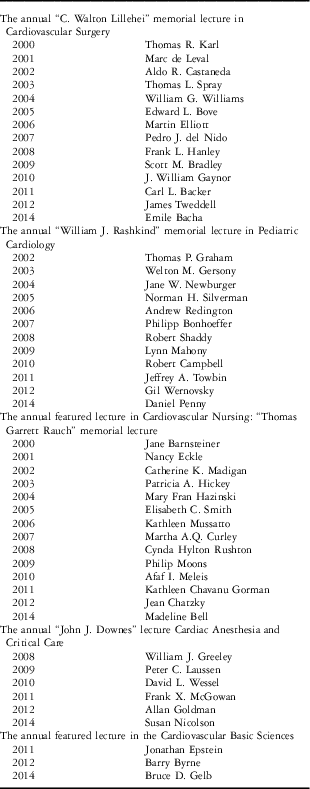
A highlight of the meeting organised by Children's Hospital of Philadelphia is the featured lectures in Cardiovascular Surgery, Cardiology, Nursing, Anesthesia and Critical Care, and Basic Sciences (Table 1).
The featured lectures given thus far during the Annual Postgraduate Course in Pediatric Cardiovascular Disease organised by Children's Hospital of Philadelphia.

In February, 2014, the meeting organised by Children's Hospital of Philadelphia will again return to Orlando, Florida. The 17th Annual Update on Pediatric and Congenital Cardiovascular Disease, organised by Children's Hospital of Philadelphia, will be held at Disney's Yacht and Beach Club Resorts in Lake Buena Vista, Florida, from February 19 to 23, 2014. To view the entire programme and register for the meeting, please visit the following web site: (heart.chop.edu/cardiology2014). For detailed information, please e-mail Tina Mannices at: (mannices@email.chop.edu), or call +1 (215) 590–5263.
At the Sixth World Congress of Paediatric Cardiology and Cardiac Surgery in Cape Town, The Johns Hopkins All Children's Heart Institute hosted the following Symposium:
• The Birth of Heart Surgery: Lessons Learned from Tetralogy – A Dinner Conversation [http://www.allkids.org/wcpccs].
Videos from this Symposium can be viewed at the following hyperlink (http://www.allkids.org/wcpccs). This symposium will also be featured in this December issue of Cardiology in the Young.
In 2014, the component of the HeartWeek in Florida organised by The Johns Hopkins All Children's Heart Institute, and representing our own 14th Annual International Symposium on Congenital Heart Disease, will be held from Friday February 14, 2014 to Tuesday February 18, 2014, with its focus being on Diseases of the Cardiac Valves from the Fetus to the Adult. Our Annual International Symposium on Congenital Heart Disease with Echocardiographic, Anatomic, Surgical, and Pathologic Correlation is held every February, and is now entering its 14th year. The first 11 meetings were sponsored by All Children's Hospital (www.allkids.org), The Congenital Heart Institute of Florida (www.chif.us), and the University of South Florida. Beginning in 2012, our meeting has been presented by All Children's Hospital and sponsored by Johns Hopkins Medicine. Our meetings in 2009, 2010, 2011, and 2012 were co-sponsored by The American Association for Thoracic Surgery (http://www.aats.org/CME/Programs.html), and our 2014 meeting will also be co-sponsored by The American Association for Thoracic Surgery. Our meeting in 2014 has as its focus Diseases of the Cardiac Valves from the Fetus to the Adult, with sessions aimed specifically at multidisciplinary issues related to the following topics:
• Anatomy of the cardiac valves.
• Echocardiography of the cardiac valves.
• Critical care of patients with diseases of the cardiac valves.
• Surgery of the cardiac valves.
• Ethics.
We also continued two exciting new symposia that we first held in 2011:
• Nursing Symposium.
• Ethics Symposium.
Finally, we continued several of our popular features:
• Hands-on demonstrations,
• Panel discussions,
• Q&A sessions, and
• Pathologic heart specimens on exhibit.
A new feature starting in 2014 is that our meeting will now feature three unique pathways:
• Primary Pathway (Main Conference) (Plenary Pathway)
• Nurses Pathway
• Administrators Pathway
The overall emphasis of the meeting is multidisciplinary, with involvement of paediatric cardiac surgery, paediatric cardiology, paediatric cardiac critical care, paediatric cardiac anaesthesia, nursing, perfusion, and ultrasonography. Attendance at our meeting is typically between 250 and 300 participants.
• Our meeting held in 2007 had 269 attendees from 30 states of the United States of America and 14 countries. The attendees were 43% physicians, 41% nurses, perfusionists, and ultrasonographers, and 16% allied health-care professionals. The University of South Florida designated this educational activity for a maximum of 24.25 AMA PRA Category 1 credits.
• Our meeting held in 2008 had 270 attendees from 32 states of the United States of America and 16 countries. The attendees were 52% physicians, 31% nurses, perfusionists, and ultrasonographers, and 17% allied health-care professionals. The University of South Florida College of Medicine designated this educational activity for a maximum of 30.25 AMA PRA Category 1 credits.
• Our meeting held in 2009 had 270 attendees from 32 states of the United States of America and 16 countries. The attendees were 40% physicians, 49% nurses and physician's assistants, and 11% perfusionists, ultrasonographers, and allied health-care professionals. The University of South Florida College of Medicine designated this educational activity for a maximum of 29.5 AMA PRA Category 1 Credits (Program #BD2009399/1170).
• Our meeting held in 2010 had 230 attendees from 29 states of the United States of America and 18 countries. The attendees were from the following categories: physicians (115), physician's assistants (7), nurse practitioners (17), registered nurses (35), sonographers (16), perfusionists (4), and others (36).
• Our meeting held in 2011 had 263 attendees including 116 physicians and 147 non-physicians. The highlight of the 2011 conference was the George R. Daicoff Dinner Presentation, which was presented by Edward L. Bove, MD titled: “Innovation and Regulation: Can They Both Exist in Today's Medical Environment?” (Dr Bove is the Helen and Marvin Kirsch Professor and Head of the Section of Cardiac Surgery [which includes Divisions of Pediatric and Adult Cardiac Surgery] at the University of Michigan C. S. Mott Children's Hospital. The Division of Pediatric Cardiac Surgery is one of the busiest congenital heart programmes in the United States of America, performing over 900 procedures annually.) Additional featured speakers included William I. Norwood, Leonard L. Bailey, Robert Anderson, Tom Spray, and Constantine Mavroudis.
• Our meeting held in 2012 had 309 attendees including 112 physicians and 187 non-physicians from 27 countries including the United States of America. The highlight of the 2012 conference was the George R. Daicoff Dinner Presentation, which was presented by Richard A. Jonas, MD, and was titled: “A View of Shanghai from Washington, DC: 25 Years of Change”. (Dr Jonas is Chief of Cardiac Surgery, Co-Director of the Children's National Heart Institute, and Cohen Funger Professor of Cardiac Surgery at Children's National Medical Center in Washington, DC. He is a world-renowned paediatric cardiac surgeon specialising in optimising the developmental and cognitive outcomes of patients after surgery for congenital heart disease. Dr Jonas also has helped in the development of a number of international cardiac surgical programmes around the world and is a coveted international speaker and guest surgeon.) Additional featured speakers included Robert Anderson, Tom Spray, and Constantine Mavroudis.
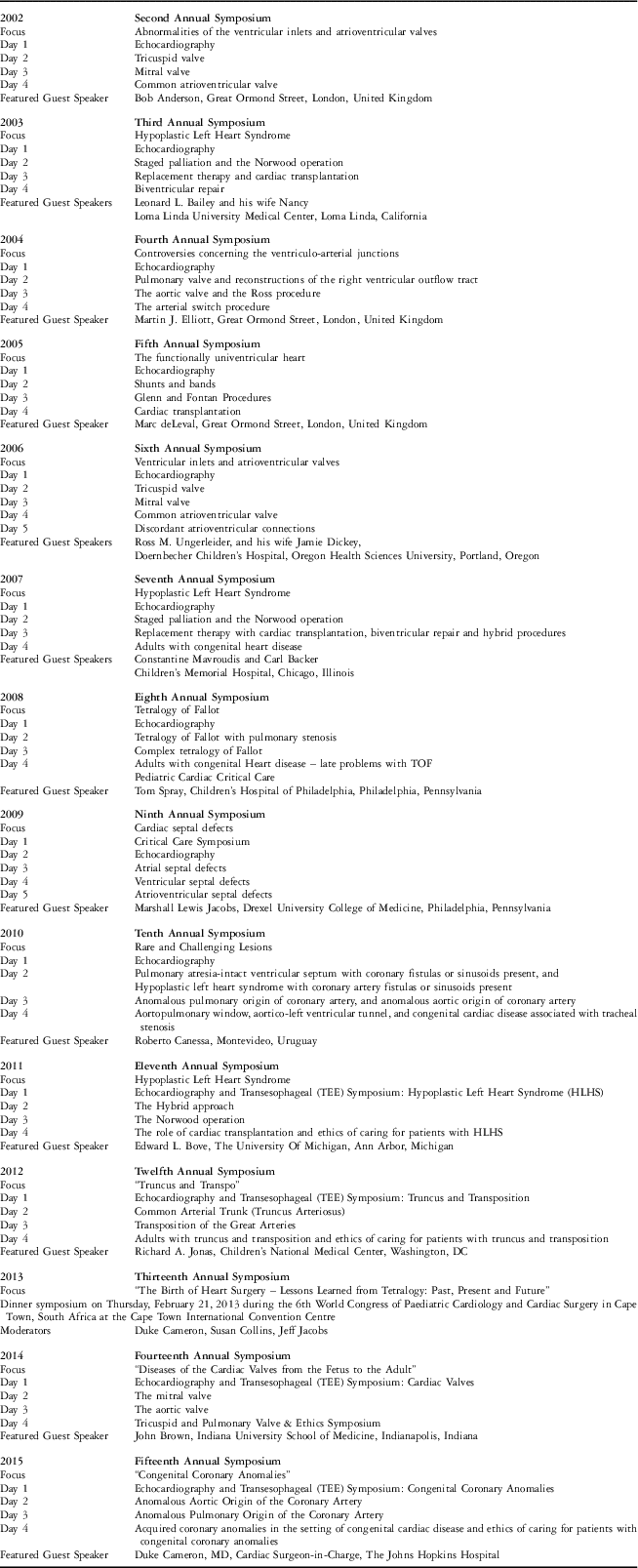
Table 2 highlights the featured topics and speakers from the meeting held in Saint Petersburg. The true summit of this meeting is the George Daicoff Lecture, given by the featured speaker to honour the founder of our surgical programme in Saint Petersburg. Previous and future Daicoff Lectures are presented below:
Featured topics and speakers during the symposiums organised by the Congenital Heart Institute of Florida and All Children's Hospital.
• 2003: Leonard L. Bailey and his wife Nancy from Loma Linda University Medical Center, California
• 2004: Martin J. Elliott from The Great Ormond Street Hospital for Children, London, United Kingdom
• 2005: Marc deLeval from The Great Ormond Street Hospital for Children, London, United Kingdom
• 2006: Ross M. Ungerleider and his wife Jamie Dickey from Oregon Health Sciences University, Oregon
• 2007: Constantine Mavroudis and Carl Backer from Children's Memorial Hospital, Chicago
• 2008: Tom Spray from Children's Hospital of Philadelphia, Philadelphia
• 2009: Marshall Lewis Jacobs from Drexel University College of Medicine, Philadelphia, Pennsylvania
• 2010: Roberto Canessa from Montevideo, Uruguay
• 2011: Edward L. Bove from the University of Michigan, Ann Arbor, Michigan
• 2012: Richard A. Jonas from Children's National Medical Center, Washington, DC
• 2013: Sixth World Congress of Paediatric Cardiology and Cardiac Surgery in Cape Town, South Africa, under the leadership of Christopher Hugo-Hamman (http://www.pccs2013.co.za/)
• 2014: John Brown from Indiana University School of Medicine, Indianapolis, Indiana
• 2016: Duke Cameron, MD, Cardiac Surgeon-in-Charge, The Johns Hopkins Hospital
In 2014, our 14th annual meeting will take place from February 14 to 18, 2014, presented by All Children's Hospital, Sponsored by Johns Hopkins Medicine, and co-sponsored by The American Association of Thoracic Surgery. The focus will be “Diseases of the Cardiac Valves from the Fetus to the Adult”. The George Daicoff Lecture for 2014 will be given by John Brown, MD, Harris B. Shumacker Emeritus Professor of Surgery at Indiana University School of Medicine and current President of The Congenital Heart Surgeons’ Society. To view the entire programme for our 2014 meeting and to register for the meeting, please visit the following web site: (www.allkids.org/conferences). For detailed information, please e-mail Melodye Farrar at: (Melodye.Farrar@allkids.org), or contact us at +1 (727) 767–8584 or (cme@allkids.org).
We have now reached the situation whereby the proceedings of the meetings held in 2003, 2004, 2005, 2006, 2007, 2008, 2009, 2010, 2011, 2012, and 2013 have been published as HeartWeek supplements or issues of Cardiology in the Young.Reference Jacobs and Anderson1–Reference Jacobs, Cooper and Dadlani10 This December, 2013 HeartWeek issue of Cardiology in the Young is therefore the 11th supplement or issue of Cardiology in the Young that we have produced from the annual meeting held in Saint Petersburg; this December, 2013 HeartWeek issue of Cardiology in the Young is also the 9th that we have produced jointly with Children's Hospital of Philadelphia (2004, 2006, 2007, 2008, 2009, 2010, 2011, 2012, and 2013Reference Jacobs, Wernovsky, Gaynor and Anderson2, Reference Jacobs, Wernovsky, Gaynor and Anderson4–Reference Jacobs, Cooper and Dadlani10):
The part of the joint programme of HeartWeek organised by Johns Hopkins All Children's Heart Institute and Sponsored by Johns Hopkins Medicine will continue to take place in Saint Petersburg, even in the years when the part designed by the Children's Hospital of Philadelphia will be held outside of Florida, as occurred in 2009 in the Bahamas, and in 2011 when the meeting organised by the team from the Children's Hospital of Philadelphia returned to Arizona. Even during these years when the meeting organised by Children's Hospital of Philadelphia is held outside of Florida, “HeartWeek” will continue to be a collaborative project as manifest by the collaborative publication of this December, 2013 HeartWeek issue of Cardiology in the Young, as well the various shared members of our international faculties. As has been stated on the web site for the programme coordinated by the Children's Hospital of Philadelphia, “Providing optimal care for neonates, children and young adults with heart disease requires a multidisciplinary team approach, including physicians (from cardiology, cardiac surgery, cardiothoracic anesthesia, neonatal and paediatric critical care medicine, and multiple consulting services), nurses, perfusionists, respiratory therapists, social workers and many others. All of these various practitioners must be experts in their own area, but should also be knowledgeable in what the other members of the team provide to the overall care of the patient”. This statement presents the rationale not only for the annual part of the meeting emanating from the Children's Hospital of Philadelphia, but also for “HeartWeek in Florida”. Both meetings are proud to emphasise collaboration that spans traditional geographic, subspeciality, and professional boundaries.
In recent years, we have dedicated this “HeartWeek Supplement or Issue” to leaders in the field of caring for patients with paediatric and congenital cardiac disease:
• The supplement from the 2007 HeartWeek was dedicated to Professor Robert Anderson.
• The supplement from the 2008 HeartWeek was dedicated to Hiromi Kurosawa of The Heart Institute of Japan and Tokyo Women's Medical University, Tokyo, Japan, and Norman Silverman of Stanford University and Lucile Packard Children's Hospital, Palo Alto, California, United States of America.
• The supplement from the 2009 HeartWeek was dedicated to Marshall Lewis Jacobs and Charles S. Kleinman.
• The supplement from the 2010 HeartWeek was dedicated to Constantine Mavroudis and Gerald Marx.
• The supplement from the 2011 HeartWeek was dedicated to Martin Elliott and Gil Wernovsky.
• The December, 2012 HeartWeek issue of Cardiology in the Young was dedicated to Richard A. Jonas.
• This December, 2013 HeartWeek issue of Cardiology in the Young is dedicated to John Brown.
Tribute to: John Brown
We would like to dedicate this December, 2013 HeartWeek issue of Cardiology in the Young to a global leader in the field of caring for patients with paediatric and congenital cardiac disease: John Brown, MD, the Harris B. Shumacker Emeritus Professor of Surgery at Indiana University School of Medicine and the current President of The Congenital Heart Surgeons’ Society. I have always been impressed that for essentially any paediatric cardiac operation, John can give an outstanding talk that is filled with practical advice summarising his experience of over several decades. John has been a Visiting Professor at All Children's Hospital where he has taught out team about using the pulmonary autograft for aortic valve replacement and for mitral valve replacement. In 2014, we are honoured to have John Brown as our George R. Daicoff Visiting Professor where he will present the Daicoff Keynote Dinner Presentation titled: “Pediatric Cardiac Surgery – It's a Wonderful Life”.
In the final manuscript of the HeartWeek 2010 supplement,Reference Campbell13 Robert Campbell, Chief of Pediatric Cardiology at Children's Healthcare of Atlanta Sibley Heart Center, Emory University School of Medicine in Atlanta, Georgia, presented his 9th Annual William J. Rashkind Memorial Lecture in Paediatric Cardiology: “The Reimbursement Tsunami: Preserving the Passion”. In this manuscript, Robert Campbell describes the “quintuple threat” professional as the health-care professional with excellence in the following five domains:
• clinical care,
• teaching,
• research,
• business leadership, and
• alignment.
John Brown is truly a “quintuple threat” professional, with sustained excellence in all five of these areas. It is our honour to dedicate this HeartWeek issue of Cardiology in the Young to John Brown, a world-leading surgeon, a dedicated teacher, a devoted husband and father, and an accomplished outdoorsman (Figs 1–15). I have asked three surgeons to provide their thoughts about John Brown:
Ed and Linda Bove, John and Carol Ann Brown, Rich and Laurie Prager in Snowmass, Colorado, United States of America.
John Brown in Snowmass, Colorado, United States of America.
John and Carol Ann Brown in Snowmass, Colorado, United States of America.
John and Carol Ann Brown.
Ed Bove, John Brown, and Rich Prager skiing in Snowmass, Colorado, United States of America.
John and Carol Ann Brown.
A much younger Ed Bove and John Brown as residents in Ann Arbor (yikes!!).
John Brown and Ed Bove at the Indianapolis speedway.
Left to right: John Brown, Ed Bove, Rich Prager, Laurie Prager, and Linda Bove at the Speedway in Indianapolis before a Formula 1 Race.
Carol Ann and John Brown polishing off a bottle of wine.
John Brown on a Montana Indian Reservation where he visits one week every September to help with building projects.
John and Carol Ann Brown and Richard Jonas at the Third Scientific Meeting of The World Society for Pediatric and Congenital Heart Surgery hosted by Sertac Cicek, June 23–26, 2011, Swissotel, The Bosphorus, Istanbul, Turkey.
John Brown with one of his young patients with congenitally corrected transposition and Ebstein's anomaly who has had two mitral valve replacements and one tricuspid valve replacement. He is now 20 years old and as of June, 2013, finished his second year of college in Chicago.
Executive Council Meeting of the Congenital Heart Surgeons Society. Congenital Heart Surgeons’ Society: President John Brown and Vice President Marshall Jacobs in a goose blind on Maryland's Eastern Shore.
John Brown and fish.
• Constantine Mavroudis from Johns Hopkins University and a Past President of The Congenital Heart Surgeons’ Society.
• Marshall Lewis Jacobs from Johns Hopkins University the Incoming President of The Congenital Heart Surgeons’ Society.
• Edward L. Bove from University of Michigan and a Past President of The Congenital Heart Surgeons’ Society.
Tribute to John William Brown, MD written by Constantine Mavroudis, MD: John Brown “The Salt of the Earth”
If there is any American who can be defined as “Salt of the Earth”, it is John Brown. He was born in Gosport, Indiana, America's heartland, of humble, hard-working parents and grandparents. They were from the Carolinas of probable Scottish-Irish descent and made their living by farming. John was born into this family, and it was during the early years of his life that he learned the virtues of hard work and familial service, helping on the farm well into his second year of medical school. As he tells it, he met his wife-to-be when he was two years old at Sunday school; she was a toddler then. He started dating Carol Ann when she was in the seventh grade and he was a sophomore in high school. It was obviously love at first sight. Together they walked through life, arm in arm, raised 3 children, have been blessed with 5 grandchildren, and handled the vagaries of life with charm, class, and resolve. This is the Brown family of whom the father, John, is the focus of affection, admiration, and attention.
In high school, John played 4 sports owing to the small size of his class (17 students). He excelled at basketball, baseball, and track. He planned to become an engineer, like his brother, but took an aptitude test that ranked him high for medicine. Four high school students went to college; John was one of them. His initial days at Indiana University were challenged by his meager high school academic preparation for college courses. After several preparatory courses, he was able to excel in all the premedical subjects that successfully prepared him for admission to Indiana University School of Medicine.
After graduation in 1970, he completed both the general surgery program (1976) and the cardiothoracic surgery program (1978) at the University of Michigan. From 1972 to 1974 he served as clinical associate in cardiac surgery at the United States Department of Health and Human Services National Heart, Lung, and Blood Institute in Bethesda, Maryland. He was a model general surgery and cardiothoracic resident; so much so that well after his residency, some of his former fellow residents who were still in training, noted that he “walked on water” and offered, in absentia, the sobriquet, “St. John”. Nobody consulted him about his American Baptist upbringing having not recognized saints. In keeping with his character, he took the appellation as a compliment and spoke no more of it. He did offer however that any water on which he could walk would have to be a frozen lake at 18° F. Religion and philosophy notwithstanding, John accepted a position in cardiac surgery at Indiana University School of Medicine in Indianapolis in 1978 as assistant professor. He credits his success in congenital heart surgery to Drs Doug Behrendt and Marvin Kirsh, both mentors at University of Michigan who took the time to nurture his talents.
John continued his clinical and research interests that led to a career-long academic inquiry into valve solutions for patients with congenital heart disease, cardiac transplantation, and acquired heart disease in adults. His vast experience with the Ross operation has set a standard for technical excellence and conscientious follow up.
He was rewarded with timely promotions and became Chief of the Division of Cardiothoracic Surgery as the Harris B Shumacker Professor of Surgery at Indiana University School of Medicine. He has maintained this position for some 20 years, as well serving as residency program director, having nurtured and trained his younger faculty and 80+ cardiothoracic surgeons who currently practice in the United States and several who practice abroad.
He has been active throughout his career and has published more than 300 articles and book chapters in the field of cardiothoracic surgery. He is a member of many national and international societies that include The Society of Thoracic Surgeons, American Association for Thoracic Surgery, European Association for Cardio-Thoracic Surgery, and the American Surgical Association. He has served on the Thoracic Surgery Residency Review Committee of the American Council for Graduate Medical Education and was chairman for 2 years. He served as President of the Thoracic Surgery Directors Association from 2007 to 2009. He is now serving as President of the Congenital Heart Surgeons’ Society from 2012 to 2014.
John never forgot his roots. He and Carol Ann actively own and operate a crop and livestock farm near Gosport, Indiana where they both grew up. They enjoy outdoor activities and share their affection and attention with their ever blossoming family.
John stands out; he has moral traits and Aristotelian virtues that make him a stellar friend. He will answer all phone calls; he will help with difficult cases, truthfully and with precision; and when he asks how you are, he will mean it. It is not without reason why colleagues congregate around him during meetings to seek advice and to enjoy the camaraderie that his personality fosters. He is firm in his convictions and finds ways to express them in a thoughtful, collegial, and persuasive manner. He seemingly is a man for all seasons. No snooty airs here; “he is the Salt of the Earth”.
Tribute to John William Brown, MD written by Marshall Lewis Jacobs, MD:
John Brown and his wife Carol Ann both grew up in Gosport Indiana, and they continue to operate a family farm there. John's professional biography is well known to most of us in the community of congenital heart surgeons. Some know John because they've had direct associations with John at Indiana University, where he served as Chief of the Division of Cardiothoracic Surgery for 20 years and is the Harris B Shumacker Emeritus Professor of Surgery at Indiana University School of Medicine. John trained many dozens of cardiac surgery residents at Indiana University, including a large number of individuals currently practicing paediatric and congenital heart surgery at centres in the U.S. and around the world. Some of us know him through the Congenital Heart Surgeons Society, which he serves as the current President. But even those in the congenital heart surgery community who have not had direct interactions with John are aware of his many contributions and look up to him as one of a small group of extraordinarily accomplished leaders in the field.
If you've aspired to understand “the state of the art” with respect to management of left ventricular outflow tract anomalies, then you are aware of the fact that John has one of the world's most extensive experiences with the Ross operation in both children and adults, and has contributed important technical modifications to extend the functional durability of the autograft by reducing the risk of progressive dilatation of the reconstructed root. If you've studied the alternatives to in situ relief of complex obstruction of the left ventricular-aortic complex then you are aware of John's pioneering work on extra-anatomical left ventricular apex-to-thoracic aorta conduit bypass. While John's interest in this challenging problem originally dates back to his days as a Clinical Associate at the National Heart & Lung Institute of the National Institute Health in 1972 to 1974, John continues to make major contributions in this area, having recently developed improved devices that simplify the technique of apical cannulation and implantation of valved apical aortic conduits. Much of the recent resurgence of interest in aortic valve bypass surgery in both adults and children is related to much enhanced predictability and safety which are benefits of the devices and techniques John has developed, and as importantly, to John's tremendous effectiveness in objective analysis of outcomes and in teaching the appropriate selection criteria and safest surgical techniques.
If you have strived to find the most effective and durable techniques for right ventricular outflow tract (RVOT) reconstruction, then you've undoubtedly read John's work on monocusp patch reconstruction and his pioneering work with valved homograft conduits and with valved bovine jugular vein conduits. If you've searched the literature or have sought advice from professional colleagues regarding the options for management of the most complicated mitral valve anomalies in infants, children, and young adults, then you've become aware of John's contributions to techniques for mitral valve repair and his experience with homograft and pulmonary autograft replacement of the mitral valve (the so-called “Ross II operation”). And if you have strived to find the optimal individualized solution for each patient with Scimitar Syndrome, then you have become aware of John's extensive and very favourable experience with direct anastomosis of the abnormal pulmonary vein to the left atrium by means of a right thoracotomy approach in appropriately selected patients. The list goes on….and on. There is hardly an area in the multi-faceted field of surgery for congenital heart disease where John has not made important contributions.
But, here's the important thing. If you've read John's studies and familiarized yourself with the data, or if you've had the good fortune to see and hear John's crystal clear presentations at national and international forums, then you've enjoyed the benefit and had the satisfaction of learning “the straight stuff” from a master clinician, conscientious investigator, and scrupulously honest communicator of the unadulterated truth. When you combine an unsurpassed level of clinical experience with the equally rare commodities of innovation, critical thinking, and objectivity, what you get is John Brown. Oh, and combine that with a healthy dose of humility and add the fact that he's one of the nicest guys you'll ever meet. John Brown is the role model for young congenital heart surgeons in the early stages of their career. I know that to be a fact. He is what we aspire to become.…. as a physician, a surgeon, an investigator, a teacher, a mentor, and more. But if you're not certain, just ask Carol Ann! Or any of their three children and five grandchildren.
Tribute to John William Brown, MD written by Edward L. Bove, MD:
Having been asked to write a tribute to John Brown for Cardiology in the Young, I jumped at the chance to put in writing many of the incredible attributes of a man I have known and admired for over 30 years. As I thought about what to write, however, it became apparent to me that John is somewhat “indescribable,” defying simple adjectives and even superlatives…they just don't do the man justice. After all, how does one describe a man nicknamed “Saint John” to rest of us mere mortals? Nonetheless, I will do my best to describe one of the most remarkable individuals I've had the honour of calling my friend.
I first met John as a general surgery junior resident working in the research lab at the University of Michigan. John had returned from the National Institutes of Health in Bethesda to rejoin the residency program and wanted to remain active with his research while back in Ann Arbor. Both of us had aspirations to enter the Michigan cardiothoracic surgery residency after general surgery and eventually become congenital heart surgeons. From that time on, we became instant friends and have remained so to this day. John was my senior resident and, fortunately for me, it seemed that we were assigned to many of the same rotations together…a fact likely not lost on the faculty who must have wondered if we were attached at the hip. As the junior resident on the surgical services, I got to carry the “scut book,” which John continues to remind me of to this day. As the years went by, our families became close and our children became friends as well. With the two of us in the hospital so much, our wives often shared babysitting duties for each other's kids. Our second children were even born within 24 hours of each other and our wives were roommates in the hospital, provoking some to wonder just how close we really were! I cannot imagine that either of us really imagined at that time what the future would bring in terms of our careers, but I realized even then that John would go on to do great things, both as a surgeon and as an outstanding human being. I tried very hard to emulate John during our residency years, something I've continued to do even to this day.
After completing his residency in Ann Arbor, John returned to his roots in Indiana to join the faculty at Indiana University where his career as a cardiac surgeon flourished. John eventually became the Head of Cardiothoracic Surgery at IU and developed one of the country's outstanding cardiothoracic surgery residency programs, a tribute to his devotion to mentorship and education. The Indiana cardiac surgical program, most especially the division of congenital heart surgery, thrived under his leadership, and many seminal contributions have come from John and his colleagues. John has always been an innovator, constantly coming up with new ideas and approaches. He continued throughout his career to improve the care of patients with congenital heart defects and encouraged his colleagues to do so as well. Among his many contributions, John's work with aortic valve disease in children has been particularly important. Starting back in his early lab days at Michigan, John pursued an interest in apical aortic conduits, a technique being rejuvenated today. He has contributed immensely to our understanding and management of aortic stenosis in infants and children, particularly with the use of the Ross procedure. Numerous other publications reporting the outcomes of a variety of congenital heart defects treated at IU's Riley Children's Hospital under John's leadership have improved our management of these complex patients. John has always been a great mentor and many medical students and residents have been drawn to a career in cardiac surgery because of their admiration for him.
John is an avid outdoorsman with a passion for hunting and fishing. He proudly displays many of his prize hunting trophies, which are mounted on the walls of his family's farmhouse south of Indianapolis. He is also a devoted family man, blessed with his beautiful wife Carol Ann and 3 wonderful children all of whom have careers and families of their own. As a further testament to John and Carol Ann's passion to help those in need, they continue to travel every year to an Indian reservation out west to help provide many of the basic needs of life to those less fortunate. He is now a grandfather to 5 wonderful grandchildren. Over many years, our families continue to get together in the winter to ski in Colorado and in the summer to enjoy golf and auto racing in Indianapolis. My wife Linda and I truly enjoy our combined family times together, catching up on each other's activities and plans.
John Brown is a remarkable human being, husband, father, and surgeon. He contributes to the betterment of all who meet him, both in and out of the hospital where he has dedicated his life to his profession. He is truly “indescribable” for he possesses all the qualities so desirable for all of us: caring, passion, humility, humour, and leadership…to name but a few. John has enormous talent and skill, without ego or hubris. So, yes it's true that I have spent a good deal of my life trying to be more like John…I'm still trying!!
This December, 2013 HeartWeek issue of Cardiology in the Young
We are pleased and honoured to dedicate this December, 2013 HeartWeek issue of Cardiology in the Young to John Brown.
All manuscripts in this December, 2013 HeartWeek issue of Cardiology in the Young underwent formal peer review and were reviewed by the Editor-in-Chief of Cardiology in the Young: Professor Edward Baker, Medical Director, Oxford Radcliffe Hospitals NHS Trust, John Radcliffe Hospital, Headington, Oxford, United Kingdom. All manuscripts in Cardiology in the Young, and all manuscripts in all supplements to Cardiology in the Young, including this December, 2013 HeartWeek issue of Cardiology in the Young, are listed in Medline®, which is the premier bibliographic database of the National Library of Medicine of the United States of America covering the fields of medicine, nursing, dentistry, veterinary medicine, the health-care system, and the preclinical sciences. All manuscripts in Cardiology in the Young, and all manuscripts in all supplements to Cardiology in the Young, including this December, 2013 HeartWeek issue of Cardiology in the Young, are assigned a Digital Object Identifier (DO or DOI), which is a unique and persistent digital identification code for any object of intellectual property. The references to these articles and their Digital Object Identifier can be found in PubMed, which comprises more than 20 million citations for biomedical literature from MEDLINE, life science journals, and online books. Citations in PubMed may include links to full-text content from PubMed Central and publisher web sites.
It is gratifying for me, as a representative of Johns Hopkins All Children's Heart Institute, to confirm our ongoing commitment to continue “HeartWeek in Florida”, combining the International Symposium on Congenital Heart Disease now organised by All Children's Hospital and Johns Hopkins Medicine, with the annual postgraduate course in Pediatric Cardiovascular Disease organised by Children's Hospital of Philadelphia. I thank Jack Rychik, Director of the meeting organised by Children's Hospital of Philadelphia, as well as Tina Mannices, Manager of Continuing Medical Education at the Children's Hospital of Philadelphia, and also Tom Spray and Bill Gaynor, for their support.
The HeartWeek issue of Cardiology in the Young that you are now about to read, therefore, focuses on “Highlights of HeartWeek 2013 at The Sixth World Congress of Paediatric Cardiology and Cardiac Surgery in Cape Town South Africa”. It has been prepared to give a flavour of the following two symposiums held at The Sixth World Congress:
• The Fontan Survivor: Life and Its Challenges with Only One Ventricle.
• The Birth of Heart Surgery: Lessons Learned from Tetralogy – A Dinner Conversation (http://wcpccs2013.co.za/images/WCPCCS_Dinner_Symposium_Postcard_v4_(2)[1].pdf)
This December, 2013 HeartWeek issue of Cardiology in the Young is divided into three parts:
• Part 1 includes a summary of The Sixth World Congress of Paediatric Cardiology and Cardiac Surgery (2013) in Cape Town South Africa written by Christopher Hugo-Hamman and a description of The Seventh World Congress of Paediatric Cardiology and Cardiac Surgery in Istanbul, Turkey (2017) written by Sertac Cicek.
• Part 2 is written by the team from The Children's Hospital of Philadelphia under the direction of Jack Rychik and is titled: “The Fontan Survivor: Life and Its Challenges with Only One Ventricle”. The team from The Children's Hospital of Philadelphia is a world leader in caring for patients with a functionally univentricular heart, and the five manuscripts in this section provide valuable insight into this topic. It has been a true pleasure to collaborate with Jack in the preparation of this HeartWeek issue of Cardiology in the Young, and I look forward to our ongoing collaboration in the preparation of future HeartWeek issues of Cardiology in the Young.
• Part 3 addresses tetralogy of Fallot. The International Society for Nomenclature of Paediatric and Congenital Heart Disease (ISNPCHD) offers the following definition for tetralogy of Fallot:14–16
A group of congenital cardiovascular malformations with biventricular atrioventricular alignments or connections characterised by anterosuperior deviation of the conal or outlet septum or its fibrous remnant, narrowing or atresia of the pulmonary outflow, a ventricular septal defect of the malalignment type, and biventricular origin of the aorta. Tetralogy of Fallot will always have a ventricular septal defect, narrowing or atresia of the pulmonary outflow, aortic override, and most often right ventricular hypertrophy.
The relevance of this topic has been previously described by Marshall Jacobs:Reference Jacobs and Jacobs17
So many of the surgical concepts integral to present day surgical management of patients with tetralogy of Fallot, therefore, were conceptualized and validated by visionary surgical pioneers four and five decades ago. Of similar significance is the fact that so many of the basic strategies for cardiac surgery in general were developed by these pioneers while performing surgical procedures in, and caring for, patients with tetralogy of Fallot.
Over the years, HeartWeek in Florida has provided many opportunities for the excellent scientific exchange of ideas, and the development of awesome friendships. I would like again to thank Bob Anderson and Ted Baker for all of their help, support, trust, and patience during the preparation of this HeartWeek issue of Cardiology in the Young. I would also like to thank my good friends who compose the Editorial Board of this December, 2012 HeartWeek issue of Cardiology in the Young: Jack Rychik, Gul Dadlani, Allan D. Everett, and Robert H. Anderson. Each of the members of the Editorial Board of this HeartWeek issue of Cardiology in the Young has made important and valued contributions.
I would especially like to thank Nicki Marshall and Susie Bloor of Cardiology in the Young for their incredible editorial support during the creation of this December, 2013 HeartWeek issue of Cardiology in the Young. I would also like to thank Ted Baker, the Editor in Chief of Cardiology in the Young, and Sarah Maddox, Editor, Commercial and Special Projects, Cambridge University Press for their support. Without their help, this project would not have been possible.
I am especially grateful to Jonathan Ellen, MD, President and Physician-in-Chief at All Children's Hospital and Vice Dean and Professor of Pediatrics, Johns Hopkins University School of Medicine, for facilitating the publication of this HeartWeek issue of Cardiology in the Young. I would also like to thank several additional members of our team at All Children's Hospital, namely, Bill Horton, Cindy Rose, Pat Clark, Melodye Farrar, Suzanne Anderson, Susan Collins, Jean Wilhelm, Lisa Moore, and all our cardiac nurses. I would also like to thank the Co-Chairs of our symposium in South Africa: Duke Cameron and Susan Collins.
Jim Huhta and I have now collaborated on this meeting for 14 years. The meeting would not have been possible without the leadership and vision of Jim. Finally, I would like to thank my current partners, Jim Quintessenza, Gus Mavroudis, Marshall Jacobs, Duke Cameron, and Luca A. Vricella, and my former partners, Victor Morell, Harald Lindberg, and Paul Chai, for their constant support and guidance, and my wife Stacy, and children Jessica and Joshua, for their understanding and patience. It continues to be an ongoing fact, as I have emphasised in previous introductions to supplements, that all of the family members of the authors of the reviews included in this December, 2013 HeartWeek issue of Cardiology in the Young are owed a debt of gratitude, because writing manuscripts markedly decreases the time available with them.
Acknowledgement
The authors would like to dedicate this December, 2013 HeartWeek issue of Cardiology in the Young to a global leader in the field of caring for patients with paediatric and congenital cardiac disease: John Brown, MD, the Harris B. Shumacker Emeritus Professor of Surgery at Indiana University School of Medicine and the current President of The Congenital Heart Surgeons' Society.