Introduction
An estimated 10 million people worldwide are affected every year by a new traumatic brain injury (TBI) (Hyder, Winderlick, Puvanachandra, Gururaj, & Kobusingye, Reference Hyder, Winderlick, Puvanachandra, Gururaj and Kobusingye2007). The World Health Organisation defines TBI as an acute brain injury resulting from mechanical injury to the head from external physical forces (Maas, Stocchett, & Bullock, Reference Maas, Stocchett and Bullock2008). The risk of sustaining a mild TBI is 18 times greater than the risk for moderate to severe TBI, with incidence of mild TBI in those aged 15–64 years being 1,392 per 100,000 person-years (Feigin et al., Reference Feigin, Theadom, Barker-Collo, Starkey, McPherson and Ameratunga2013). Due to such a high prevalence of mild TBI in people's most productive income earning years, return to work is an important outcome in terms of measuring recovery from TBI (Cancelliere et al., Reference Cancelliere, Kristman, Cassidy, Hincapié, Côté, Boyle and Borg2014; Greenspan, Wrigley, Kresnow, Branche-Dorsey, & Fine, Reference Greenspan, Wrigley, Kresnow, Branche-Dorsey and Fine1996; McCrimmon & Oddy, Reference McCrimmon and Oddy2006; Ownsworth & McKenna, Reference Ownsworth and McKenna2004; Vikane et al., Reference Vikane, Hellstrøm, Røe, Bautz-Holter, Aßmus and Sture Skouen2016).
Links between unemployment and moderate to severe TBI have been well established (Dikmen et al., Reference Dikmen, Temkin, Machamer, Holubkov, Fraser and Winn1994). However, less is known about employment patterns following mild TBI. Due to the high incidence of mild TBI among working aged adults (Feigin et al., Reference Feigin, Theadom, Barker-Collo, Starkey, McPherson and Ameratunga2013), it is important to determine the impact of milder injuries on employment. In addition, current research supports a link between productive employment and enhanced recovery following brain injury (Corrigan, Bogner, Mysiw, Clinchot, & Fugate, Reference Corrigan, Bogner, Mysiw, Clinchot and Fugate2001; Steadman-Pare, Colantonio, Ratcliff, Chase, & Vernich, Reference Steadman-Pare, Colantonio, Ratcliff, Chase and Vernich2001; Wehman, Targett, West, & Kregel, Reference Wehman, Targett, West and Kregel2005). For these reasons, return to pre-injury employment should be considered an important indicator of TBI recovery.
Symptoms after mild TBI include deficits in attention, non-verbal fluency, verbal memory, information processing (Mathias, Beall, & Bigler, Reference Mathias, Beall and Bigler2004) and post-traumatic symptoms (Dikmen, Machamer, & Temkin, Reference Dikmen, Machamer and Temkin2016). Almost half of those with mild TBI experience a range of persistent symptoms 12 months later (Theadom et al., Reference Theadom, Parag, Dowell, McPherson, Starkey, Barker-Collo and Feigin2016). Theadom and colleagues found that 47.9% of adults reported four or more cognitive, emotional, and/or physical post-concussive symptoms at 1-year post-injury. Colantonio et al. (Reference Colantonio, Salehi, Kristman, Cassidy, Carter, Vartanian and Vernich2016) examined return to work in 50 adults with mild to moderate TBI and found that common barriers to return to work were difficulties in thinking and concentrating. Rao and Lyketsos (Reference Rao and Lyketsos2000) found that a minority (about 10%) of adults with mild TBI experience a permanent or long-term psychological disability. Such difficulties may interfere with their capacity for return to paid employment.
The variability of symptoms may affect the length of time taken to return to work. A review of 43 studies from 1981 to 2010 suggests that 48%–100% of adults with TBI return to work within 3–6 months following injury (Iverson, Silverberg, Lange, & Zasler, Reference Iverson, Silverberg, Lange, Zasler, Zasler, Katz, Zafonte, Arciniegas, Bullock and Kreutzer2013b). This finding aligns with general agreement that most individuals with mild TBI return to work within a 3–6-month period (Cancelliere et al., Reference Cancelliere, Kristman, Cassidy, Hincapié, Côté, Boyle and Borg2014; Dikmen et al., Reference Dikmen, Temkin, Machamer, Holubkov, Fraser and Winn1994; Iverson, Silverberg, Lange, & Zasler, Reference Iverson, Silverberg, Lange, Zasler, Zasler, Katz, Zafonte, Arciniegas, Bullock and Kreutzer2013b). Cancelliere and colleagues (Reference Cancelliere, Kristman, Cassidy, Hincapié, Côté, Boyle and Borg2014) conducted a systematic review of return to work after mild TBI and identified 77,914 records. However, only four articles were deemed to be scientifically robust and included return to work or employment outcomes. They concluded that more well designed studies are required to better understand the nature of return to work following mild TBI and to identify potential factors that contribute to the timing of return to work. As evident in Colantonio et al. (2016) many return to work studies of TBI populations have tended to include or focus solely on hospital samples with moderate and/or severe TBI and that may be affected by selection bias.
A number of individual person-level factors have been found to be associated with delayed timing of return to work following TBI, including lower level of education and younger age at injury (Cancelliere et al., Reference Cancelliere, Kristman, Cassidy, Hincapié, Côté, Boyle and Borg2014; Vikane et al., Reference Vikane, Hellstrøm, Røe, Bautz-Holter, Aßmus and Sture Skouen2016). Dikmen and colleagues cohort study examining 366 hospitalised patients who were employed prior to TBI found that return to work is related to individual patient characteristics (i.e., education, pre-injury work history), injury severity, neuropsychological problems, and severity of other injuries (Dikmen et al., Reference Dikmen, Temkin, Machamer, Holubkov, Fraser and Winn1994). Consequently, knowledge of the factors that contribute to successful return to work and time taken to return to work shows some variability and remains poorly understood (Iverson, Lange, Gaetz, & Zasler, Reference Iverson, Lange, Gaetz, Zasler, Zasler, Katz, Zafonte, Arciniegas, Bullock and Kreutzer2013a), especially following mild TBI.
To summarise, there is a high incidence of mild TBI within the working population. Research to date shows considerable variability in the time taken to return to paid employment and the factors that influence an individual's return to paid employment. The purpose of this exploratory study is to determine the patterns of return to pre-injury job in adults following mild TBI over 12-month post-injury, and to identify individual and injury factors associated with prolonged non-return to pre-injury job in a population-based sample.
Methods
Ethical Approval
The study was approved by the Northern Y Health and Disability Ethics Committee (NTY/09/09/095) and Auckland University of Technology Ethics Committee (09/265).
Participants
Adults (≥16 years of age at time of TBI) with mild TBI were identified as part of a population-based Brain Injury Incidence and Outcomes New Zealand In the Community (BIONIC) study. The full methodology of the parent study is reported in Theadom et al., (Reference Theadom, Barker-Collo, Feigin, Starkey, Parag, Jones, Dowell and McPherson2012). In brief, prospective and retrospective surveillance systems were used to identify all TBI events in all ages over a 12-month period, including mild non-hospitalised cases that have often been missed in other studies. The use of prospective and retrospective surveillance systems supported the registration of all TBI events in residents in the study area of all ages, over the 12-month period. Multiple overlapping sources of information on all new hospitalised and non-hospitalised cases were used. TBI was defined operationally as including the presence of one or more of the following: (1) confusion or disorientation; (2) any loss of consciousness; (3) post-traumatic amnesia (<24 hours–7 days or more); and (4) other neurological abnormalities (e.g., focal signs and seizure) (Carroll, Cassidy, Holm, Kraus, & Coronado, Reference Carroll, Cassidy, Holm, Kraus and Coronado2004). Information on all potential TBI cases based on self-report and information obtained from medical records was reviewed by a diagnostic adjudication group to determine if they met the inclusion criteria for TBI. TBI severity was defined using standard definitions (Ponsford et al., Reference Ponsford, Willmott, Rothwell, Kelly, Nelms and Ng2004; Shores, Marosszeky, Sandanam, & Batchelor, Reference Shores, Marosszeky, Sandanam and Batchelor1986; Teasdale & Jennett, Reference Teasdale and Jennett1974). Mild TBI was defined using accepted criteria based on the Glasgow Coma Score (GCS; 13–15 score = mild) and post-traumatic amnesia (<24 hours) (Ponsford et al., Reference Ponsford, Willmott, Rothwell, Kelly, Nelms and Ng2004). For inclusion, these symptoms needed to be primarily related to the TBI and not due to other causes (e.g., substance use or dementia). Additional inclusion criteria included residing in the study region (Hamilton and Waikato region of New Zealand) and sustaining a TBI between 01 March 2010 and 28 February 2011. No exclusion criteria were applied given the population-based nature of the study.
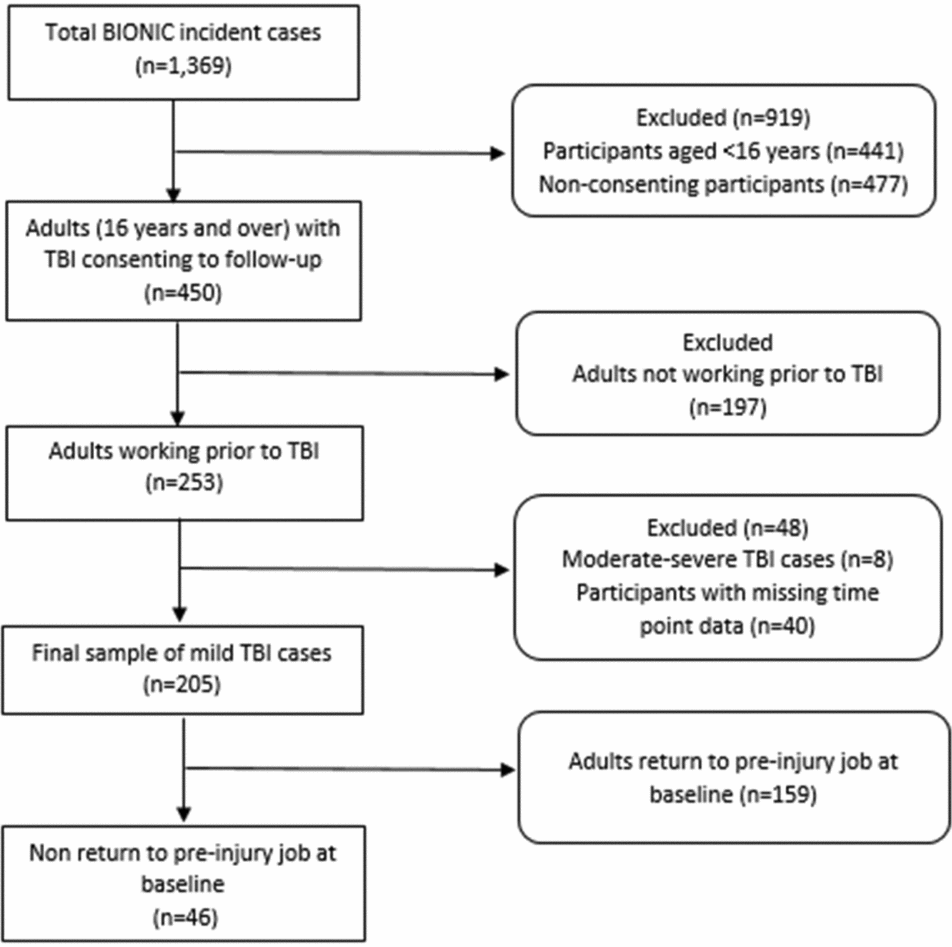
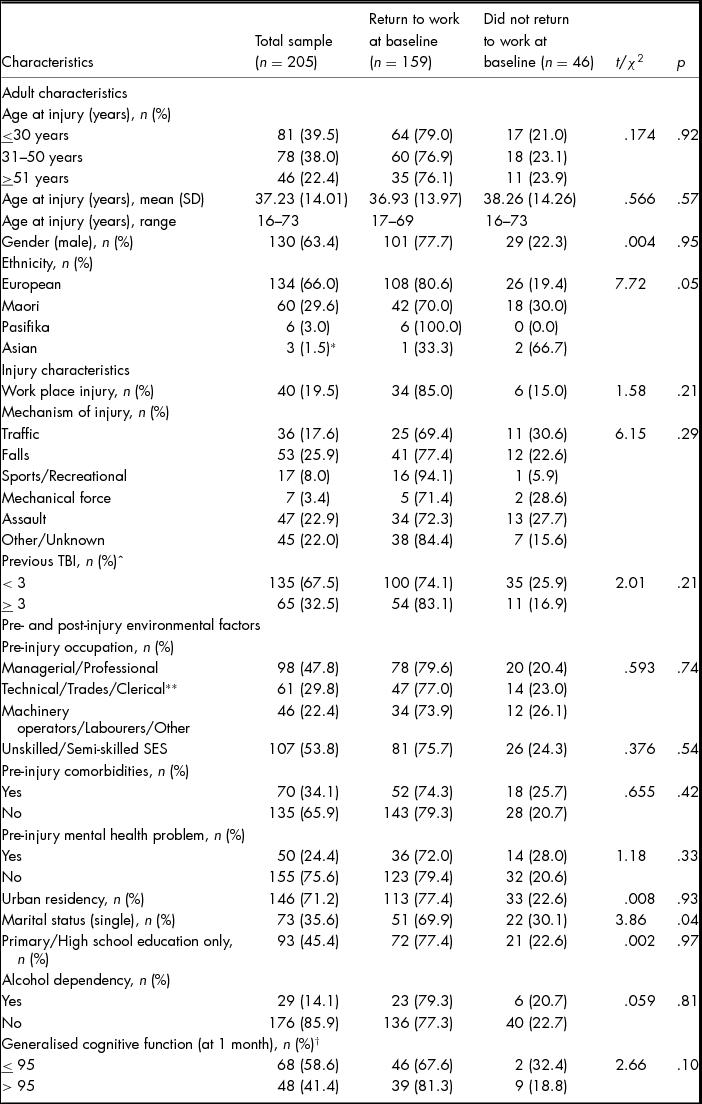
For the purposes of this analysis, data on adults who experienced a mild TBI, who were employed prior to their TBI, and who completed a follow-up assessment were extracted from the main study database. Adult were those aged 16 years or over given this is the formal school leaving age in New Zealand and, therefore, deemed a legitimate time for entry to employment. Figure 1 highlights the selection of participants for inclusion in the current analysis. This analysis includes data from 205 adults with mild TBI who consented to the follow-up portion of the study. Table 1 shows the mean age of participants was 37.23 years, with 63.4% being male. The majority of participants were of New Zealand European ethnicity (66%) and sought treatment after injury at the local hospital (70%) or a primary health setting (23%). Nearly one-fifth (20%) of the sample sustained a mild TBI at work. With regards to mechanism of injury, falls accounted for the largest proportion of mild TBIs (26%), followed by assaults (23%) and traffic accidents (18%).
Flowchart of study participants.

Characteristics of the Total Sample and Those Who Did or Did Not Return to Work at Baseline

*Total for ethnicity is 203, due to 2 × missing data. SD = Standard deviation. **Also includes occupations in admin/community and personal services/sales. ^Total for previous TBI is 200, due to 5 × missing data. †Total for CNS scores at 1 month is 116, due to 89 × missing data.
Procedure
All adults with confirmed TBI were invited to participate in assessments at baseline and 1, 6, and 12-month post-injury. The timing of assessments was determined by the need to feasibly and consistently confirm TBI diagnosis in the setting of evolving symptoms, to establish a reliable baseline, and to regularly track the natural course of recovery. Written consent was obtained before completion of the baseline assessment. At baseline and each follow-up time point, participants were invited to take part in an in-person assessment at their usual place of residence or another suitable location. Participants completed a semi-structured interview and a computerised test of generalised cognitive functioning at each assessment. On average, each assessment took 120 minutes to complete.
Measures
Working status
Participants’ working status was defined as full-time or part-time paid employment. Students, volunteers, and those aged under 16 years were excluded.
Generalised cognitive functioning
CNS-Vital Signs (CNS-VS) is a 30-minute computerised and age-standardised test that captures objective scores on nine cognitive domains: verbal, visual and composite memory, psychomotor speed, reaction time, complex attention, cognitive flexibility, processing speed, and executive functioning (Gualtieri & Johnson, 2006). Using automated and age-standardised scoring to eliminate variability, this measure is specifically designed for repeated administration (i.e., content of subtests alters across repeat administrations). The normal function range is a standard score of 90–109. Lower scores indicate poor cognitive ability. The CNS-VS have extensive norms available (N = 8000), established concurrent and discriminant validity, and sensitivity within TBI populations (Gualtieri, Reference Gualtieri2008). The resulting overall neurocognition index (mean 100 ± SD 15) at 1 month was used in the current analysis.
Demographic and clinical variables
A study-specific questionnaire gathered information using medical records and self-report to determine the role of a range of factors in the timing of return to work. Adult characteristics included age at injury, gender, and ethnicity (Māori, Pasifika, Asian, and New Zealand European). Injury characteristics included place of injury (work place; other location), injury mechanism, and self-reported history of previous TBI (yes; no). Pre- and post-injury environmental factors included area of residency (urban; rural), and self-reported pre-injury occupation (to determine socio-economic status (unskilled/semi-skilled; skilled profession), marital status (married; single), highest education level (primary/high school; higher education); pre-injury co-morbidities (yes; no), alcohol dependency (yes; no), and overall pre-injury mental health problems (yes; no). Self-reported ethnicity was prioritised in the order shown above. TBI injury mechanism was guided by the ICD-10 classification system (World Health Organisation, 1992). Socio-economic status was estimated using the Australia and New Zealand Standard Classification of Occupations (Trewin & Pink, Reference Trewin and Pink2006). Alcohol dependency was determined by the number of units of alcohol per week (≥14 units for females; ≥21 units for males).
Statistical Analysis
Timing of return to work was examined using descriptive statistics to report frequencies, percentages, means, and standard deviations (SDs). Individual, injury, and pre- and post-injury environmental factors associated with the timing of return to work were examined using chi-square tests of independence. Due to the small sample size (some of the expected cell counts for some cells were below 5), we report the Fisher's exact and likelihood ratio chi-square test p values. Ideally, one would use logistic regression analysis so that all the factors could be considered together. However, this was not possible given the small sample size. As a result, we have limited our analysis to chi-square tests that consider each factor in isolation. All data were analysed using Statistical Package for the Social Sciences (SPSS, version 23). Significance was tested at the p = .05 level.
Results
Sensitivity analyses using t-tests for independent samples for continuous variables and chi-square tests for dichotomous variables compared those adults with mild TBI and pre-injury employment who were included in the current analysis (n = 205) to all other adults identified in the larger incidence sample who were not (n = 725). The groups did not differ significantly on gender, age, area of residence, or prioritised self-reported ethnicity (Māori, Pasifika, Asian, and New Zealand European) (p >.05).
Timing of Return to Pre-Injury Job
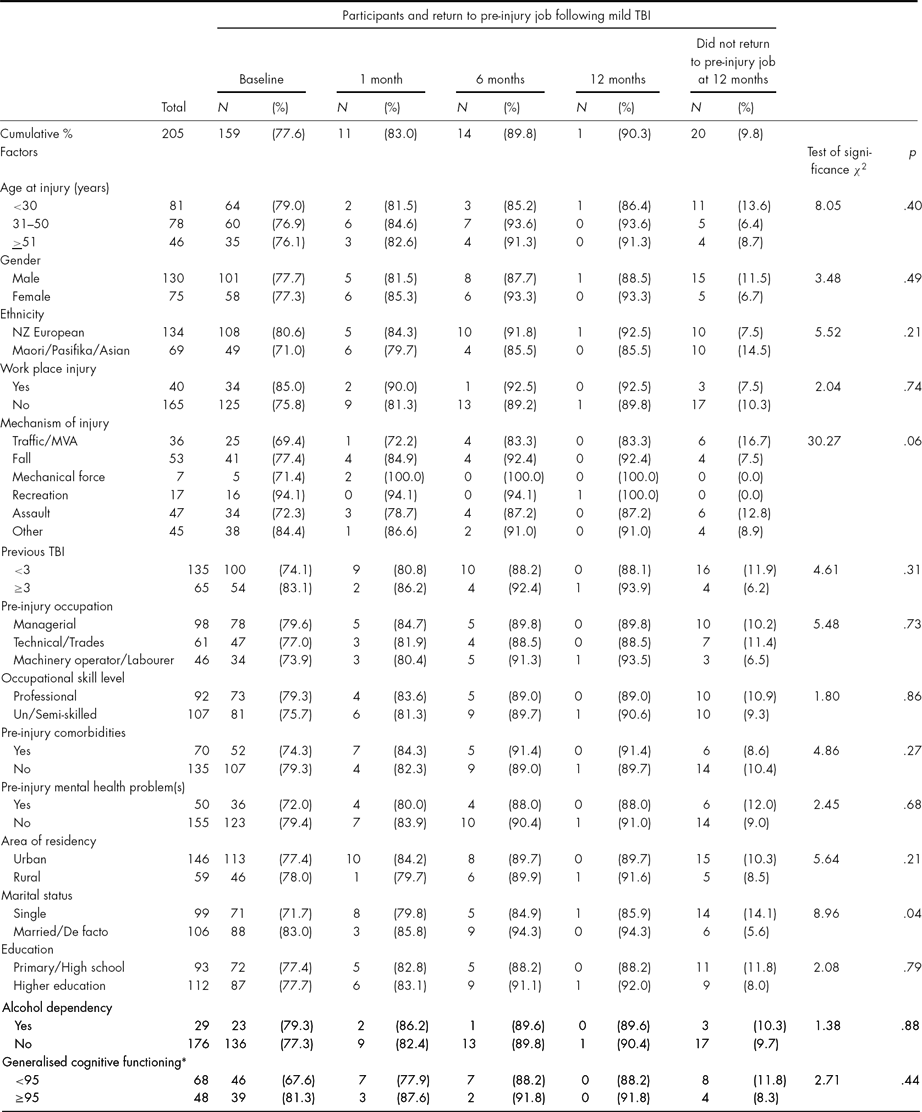
The majority of adults (n = 159, 77%) returned to their pre-injury job within 14 days of injury (Table 2). Forty six (23%) of participants did not return to their pre-injury job within 14 days. By 12-months post injury, 26 (56%) of those had returned to their pre-injury job, 16 (35%) had secured other paid employment, and 4 (9%) were without paid employment. A total of 185 (90.2%) adults had returned to their pre-injury job within 12 months.
Timing of Return to Pre-injury Job and Associations with Potential Return to Work Factors

*1-month CNS-VS scores were only available for 116 of the 205 participants.
Data are shown as N (%) unless otherwise stated.
Factors Associated with Return to Pre-Injury Job
Associations between the timing of return to pre-injury job and those factors listed in Table 1 were examined. Adults who did not return to work within 14 days of injury were more likely to be single (including those divorced or widowed; 47.8% single vs. married 32.0%, p = .04). Adults who did or did not return to work differed significantly in terms of ethnicity (p = .05). More than half of those who did return to pre-injury work within 14 days were of New Zealand European ethnicity (68%). No significant associations were found between any other factors and those who did or did not return to their pre-injury job within 14 days of TBI (p >.05).
Similarly, when examining the timing of return to work across the entire study sample, those who were single were more likely to have greater delays in their return to work than those who were married (p = .04). No other significant associations were found between any of the factors listed in Table 1 and the timing of return to pre-injury work over the first 12 months following mild TBI (p >.05).
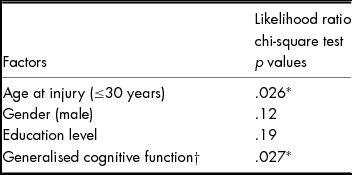
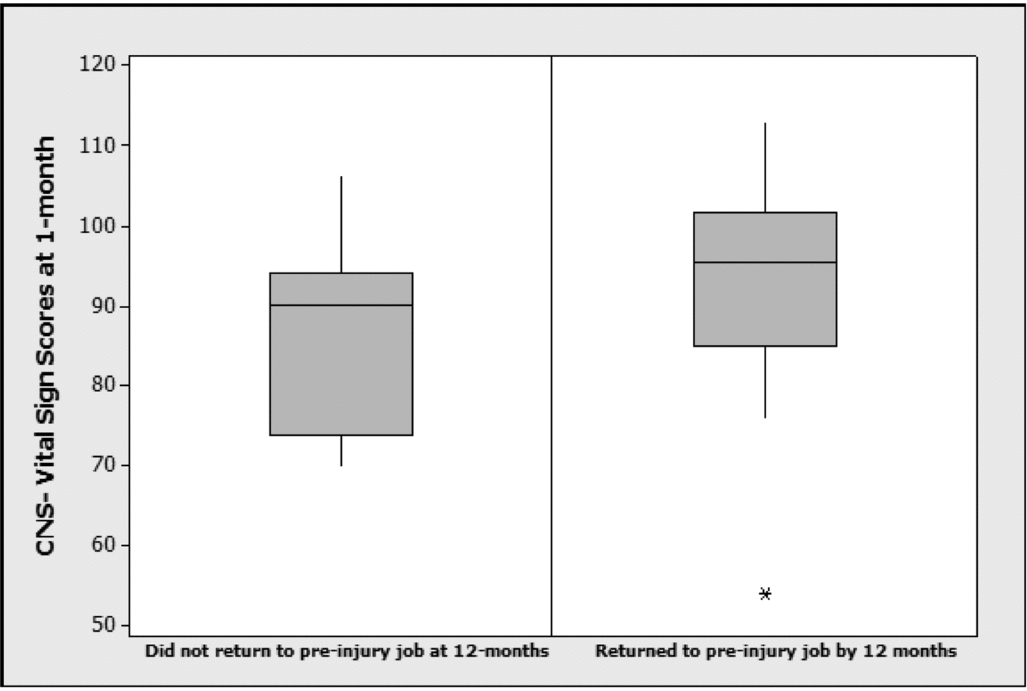
Further analyses examined those who did not return to their pre-injury job at baseline (n = 46) to identify any differences between those who had (n = 26, 57%) or had not (n = 20, 43%) gone on to return to their pre-injury job within 12 months. Chi-squared analyses were used to examine age at injury (≤30 years; >30 years); gender (male; female); education level (primary/high school; higher education); and generalised cognitive function (CNS-VS total score <95; total score ≥95) in each group. Those who did not return to their pre-injury job at 12 months (n = 20) tended to be younger at the time of injury (aged ≤ 30 years: non-return to work n = 11 (55.0%) vs. return to work n = 6 (23.1%); χ 2 p = .02), and to have poorer generalised cognitive function (CNS-VS total score <95: non-return to work n = 9 (90.0%) vs. return to work n = 7 (43.8%); χ 2 p = .02) than those who did return to their pre-injury job between 14-day and 12-month post-injury (Table 3). The distribution of generalised cognitive function scores for each group is shown in Figure 2. No between-group differences were found for gender (p = .12) and education level (p = .19). It is important to note that CNS-VS scores were only available for 26 (non-return to work n = 10; return to work n = 16) of the 46 participants who failed to return to their pre-injury job within 14 days.
Associations Between Non-return to Pre-injury Job at 12 Months and Age, Gender, Education, and Generalised Cognitive Function

*p <.05; †CNS-VS total score (≥95) at 1 month (n = 26 due to 20 × missing data)
Mean CNS-VS total scores for those who did or did not return to their pre-injury job between 14 days and 12 months. *p = .02.

Discussion
In this study, we examined patterns of return to work in a population-based adult sample following mild TBI. In addition, we examined associations between a range of individual, injury, and environmental factors and delays in peoples’ return to their pre-injury job. While this is primarily an exploratory study due to the small sample size, we found that the majority of adults with mild TBI had returned to their work within 14 days of injury. We also found significant associations between delays in the timing of return to work and those who were single (including those who were divorced, widowed, or never married), younger age at injury (<30 years), and poor generalised cognitive function (defined as a CNS-VS score of < 95) at 1-month post-mild TBI.
Consistent with previous findings, 77% of adults had returned to pre-injury job within 14 days. This rate is similar to reports of 80% of adults returning to work within the first month and 96% returning to paid employment within 6 months (Cancelliere et al., Reference Cancelliere, Kristman, Cassidy, Hincapié, Côté, Boyle and Borg2014; Iverson, Silverberg, Lange, & Zasler, Reference Iverson, Silverberg, Lange, Zasler, Zasler, Katz, Zafonte, Arciniegas, Bullock and Kreutzer2013b). We also found that those who did not return to their pre-injury job within 14 days of injury were significantly more likely to be single than those who did return to work earlier. Similarly, delays in returning to pre-injury work were more evident among those of ethnic minority status compared to those of New Zealand European ethnicity. These findings are consistent with studies by Ip, Dornan, and Schentag (Reference Ip, Dornan and Schentag1995) and Kreutzer et al., (Reference Kreutzer, Marwitz, Walker, Sander, Sherer, Bogner, Fraser and Bushnik2003). Both found that single adults were less likely to be employed or to be in stable employment following mild, moderate, and severe TBI compared to those who were married. Kreutzer et al. (Reference Kreutzer, Marwitz, Walker, Sander, Sherer, Bogner, Fraser and Bushnik2003) also found associations between ethnic minority status and greater risks for persistent unemployment after TBI, up to 4-year post injury. Our findings suggest that similar associations between marital status, ethnicity, and the timing of return to pre-injury work are also evident following mild TBI.
The effects of age at the time of injury on return to work have been extensively studied, with most research showing that older adults take longer to return to work. In contrast, this study suggests that younger adults and adolescents may be more likely to experience prolonged delays in return to work. This finding is similar to findings that younger individuals in the military experience greater employment difficulties following mild TBI than older individuals due to their lower level of practical work experience (Drake, Gray, Yoder, Pramuka, & Llewellyn, Reference Drake, Gray, Yoder, Pramuka and Llewellyn2000). Relationships between younger age and great difficulty returning to work may be due to less seniority and flexibility in the young person's job that may offer less support for graduated return to work programmes. Friedland and Dawson (Reference Friedland and Dawson2001) found that adults with mild TBI in managerial/professional positions had a significantly higher rate of return to work compared to those in lower level positions. Consideration of the nature of an individual's pre-injury employment may be important in planning for their return to work (Greenwald, Burnett, & Miller, Reference Greenwald, Burnett and Miller2003).
Cognitive deficits associated with mild TBI are considered to be temporary and to improve significantly within 6- to 12-month post-injury (Belanger, Curtiss, Demery, Lebowitz, & Vanderploeg, Reference Belanger, Curtiss, Demery, Lebowitz and Vanderploeg2005). Consistent with previous research, our findings suggest a link, between overall cognitive function and the timing of return to work up to 12 months after injury, even following mild TBI. Sherer et al. (Reference Sherer, Novack, Sander, Struchen, Alderson and Thompson2002) reviewed 23 studies examining associations between neuropsychological test results and return to work. Findings suggest that higher cognitive function scores (within 1 month of injury) are associated with greater likelihood of successfully returning to work. While generalised cognitive function was examined in the current study, it is worth mentioning that the measure used is particularly sensitive to those functions that are most likely to be affected by mild TBI (i.e., complex attention, executive functioning, and cognitive flexibility) (Ownsworth & McKenna, Reference Ownsworth and McKenna2004). These particular functions may warrant more attention in future studies examining factors contributing to return to work after mild TBI. Further, findings from the current study showing that adults with a cognitive function score of <95 experienced delays in their return to pre-injury. This finding suggests that even those adults at the lower limits of the ‘normal range’ for cognitive testing may require careful management and support to return to work. It is important to note that normative CNS-VS data were not available for the unique ethnic groups that are common to New Zealand. While the results of the current exploratory study should be interpreted cautiously, findings suggest that some form of standardised cognitive assessment could help to identify those adults who may be at risk of delayed return to work following mild TBI. While poorer performance on generalised cognitive testing was associated with delays in return to pre-injury work, further research is needed to better understand associations between standardised cognitive testing and ‘real-life’ performance across a range of work environments and roles.
This study has some limitations. Given there were only 46 participants who did not return to their pre-injury job within 14 days of injury, some factors may not have been identified as significant predictors due to a Type II error. A second limitation is the extent of missing cognitive data and the proportion of adults in the larger incidence study who did not consent to take part in study assessments. However, as stated earlier, adults included in the current analysis were similar in key characteristics to those who declined. Further, we did not explore relationships between return to work and employment tenure pre-injury; return to another paid and unpaid role; nor the nature of the relationship between the worker and their employer. Closer attention to these factors may help to elucidate why those age <30 years tended to take longer to return to their pre-injury work than their older aged counterparts. Our results cannot be generalised to studies that use different return to work definitions such as return to study, or broad concepts such as meaningful activities. To build upon the published literature investigating the association between return to pre-injury work and post-mild TBI, a larger sample and greater breadth of employment-related data concerning return to work is required to assess relationships between return to work and influencing factors. From the decades of research on return to work following mild TBI, researchers have noted that return to work is a complex interplay of many factors (Iverson, Silverberg, Lange & Zasler, Reference Iverson, Silverberg, Lange, Zasler, Zasler, Katz, Zafonte, Arciniegas, Bullock and Kreutzer2013b). An advantage of this study is that the sample included participants identified from a range of community and hospital-based sources reducing the risk of bias from ascertaining participants from hospital sources alone.
In conclusion, this exploratory study of employed adults showed that the majority returned to their pre-injury job within 14 days of mild TBI. Younger age and lower cognitive functioning were identified as barriers to return to work. Interventions to support younger workers may facilitate their return to pre-injury employment.
Acknowledgements
This work was supported by the Health Research Council of New Zealand HRC 09/063A and HRC 13/408. The funding for this study was awarded before Kathryn McPherson became Chief Executive of the Health Research Council of New Zealand and she had no influence on the funding decision.
Conflict of Interest
Dr Michael Kahan has no conflicts of interest to disclose. Dr Kelly Jones has no conflicts of interest to disclose. Ms Shivanthi Balalla has no conflicts of interest to disclose. Professor Kathryn McPherson has no conflicts of interest to disclose. Ms Elisabeth Stedman has no conflicts of interest to disclose. Professor Valery Feigin has no conflicts of interest to disclose.
Ethical Standards
The authors assert that all procedures contributing to this work comply with the ethical standards of the relevant national and institutional committees on human experimentation and with the Helsinki Declaration of 1975, as revised in 2008.