The story of anti-tuberculosis vaccines cuts an odd figure in the landscape of twentieth-century therapeutics. The BCG vaccine was developed over the course of two decades between 1905 and 1924 (Bonah and Menut Reference Bonah and Menut2002; Bonah Reference Bonah, Bonah, Lepicard and Roelcke2003; Bonah Reference Bonah2005; Bonah Reference Bonah, Schlich and Troehler2006), but it never obtained universal international agreement concerning its safety and efficacy. Nor was it ever a completely stable product, as has been revealed by recent phylogeny analysis of the vaccine strains from the 1920s to today (Inserm 2004, 33). Nevertheless, in a classic 1928 manual on tuberculosis, the author Albert Calmette (1863–1933), clearly states in the foreword: “The reader should excuse my detailed presentation of my own research. . . . First, this research has clarified the mechanisms of bacterial infection and anti-tuberculosis immunity, furthermore, it covers experiments concerning a new preventive vaccination that has today integrated mainstream medical and veterinarian practice for the preservation of young subjects, infants, and animals” (Calmette [1920] Reference Calmette1928, vi).
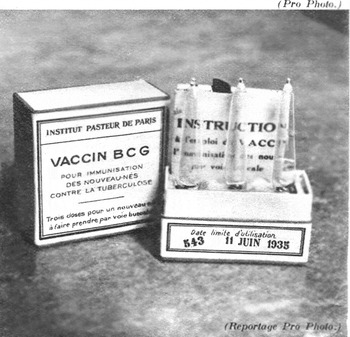
The present article wants to look behind or beyond this advocacy of the BCG by its inventor and producer at the Pasteur Institute in Paris, and address the question of how, in the local and national French setting, BCG became what the above citation suggests: a genuine standard preventive vaccine packaged and commercialized in a small cardboard box (see fig. 1). Secondly, the paper addresses the question of why and how this local laboratory process of standardization reached its limits with the arrival of international distribution. Finally, the paper returns to changes in practice and organization of BCG production and distribution in the 1930s. Accordingly, standardization is understood here as a spiral, never ending process where progressive transformation of the vaccine in its production and medical uses periodically created and recreated the necessity for standardizing the product and its use. The development of BCG clearly falls into the same sphere as the production of sera, vaccines, and toxins, which can be seen as central preventive and/or therapeutic enterprises during the first three decades of the twentieth century.
Packaged BCG sample ready for shipping, 1935 (Source: Personal archives Christian Bonah).

Following the employment of organisms attenuated by successive passage through animals (Jennerization), and Pasteur's work using chemical and other methods of reducing bacterial “virulence” for the protection of animals and humans against disease in the 1880s (Geison Reference Geison1995; Cassier Reference Cassier2005), the early 1890s were characterized by the dissociation of a line of inquiries using sera and antitoxins on the one hand, and attenuated bacterial vaccines on the other (Bosanquet and Eyre Reference Bosanquet and Eyre1916, 60–61; Calmette et al. Reference Calmette, Guérin, Nègre and Boquet1926, 90–93; Calmette Reference Calmette1927a, 13–58). By the 1900s, Almroth Right proposed that in certain cases vaccines could be used to treat existing infections in a theoretical and practical framework that came to be known as vaccine therapy (Keating Reference Keating1988; Worboys Reference Worboys and Pickstone1992). In 1916, the list of potential serum and vaccine products included not only the successful treatment of diphtheria, but also treatments for tetanus, snake-bites, rabies, smallpox, anthrax, plague, cholera, enteric fever, dysentery, leprosy, streptococcal infections and evidently tuberculosis. Following Robert Koch's identification of the tuberculosis bacillus in 1882 and his own disastrous attempt to develop a toxin treatment in the form of tuberculin in 1890 (Gradmann Reference Gradmann2000; Gradmann Reference Gradmann2001; Gradmann Reference Gradmann2005), therapeutic and preventive investigations were continued by Koch himself and by numerous contemporaries. From Koch's “Oberes Tuberkulin” (T.O.) in 1897 to innumerable other modifications of tuberculin in the early twentieth century, associated with names such as Carl Spengler, Emil von Behring, Alessandro Bruschettini, Friedrich Friedmann, and even Albert Calmette, amongst others, these attempts to find remedial preparations of the tubercle bacilli were manifold and confusing (Bosanquet and Eyre Reference Bosanquet and Eyre1916, 277–289; Calmette Reference Calmette1927a, 13–15). While at the turn of the century, tuberculin became primarily recognized for its diagnostic value in establishing the presence of tuberculosis when clinical examination failed, it also remained in specific and limited therapeutic use (Bosanquet and Eyre Reference Bosanquet and Eyre1916, 312–314). In 1903, tuberculin was adopted by the supporters of vaccine therapy as one of their agents. At the time, tuberculin was seen essentially as a vaccine and not as an antitoxin, despite the fact that the actual bacteria were removed using a porcelain filter. Thus, it is important to bear in mind, in contrast to Calmette's claim cited above, that in the 1910s and 1920s authors generally acknowledged that “the toxins of the tubercle bacillus were not yet well understood” (Bosanquet and Eyre Reference Bosanquet and Eyre1916, 270).
1. Wertbestimmung: From Evaluation and Laboratory Standardization to Quality Control and Medical Use
As intriguing as it may seem, standardization as a historical phenomena and moment in the history of drug development was initially intrinsically linked to a problem of underdetermination and to a knowledge gap. In their 1916 handbook, “Serums, vaccines and toxins in treatment and diagnosis,” Cecil Bosanquet and John Eyre offer the following reflection under the entry “standardization of serums”:
Since it has hitherto been found impossible to isolate the actual toxins of bacteria, so that no process of weighing or measuring can be applied to them, it is necessary to devise some other way of calculating their strength. A physiological test of some sort is the only available means of measuring their effects. For this purpose it is necessary to find some animal which reacts in a constant manner to the poison, dying regularly within a certain time as the result of a given dose of toxin. (Ibid., 45)
Accordingly the standard dose of a poison, or “minimal lethal dose” was the quantity of a particular product that would invariably cause the death of a guinea pig of a certain weight on the fourth day. A “unit” of antitoxin could then be fixed as the amount required to neutralize exactly 100 minimal lethal doses of a given poison. This method of standardization was the one inaugurated by Ehrlich. Thus, a physiological test was necessary in the first instance to establish a toxic unit, and then to calculate the antitoxic unit based on the toxic one. Once this initial set of standards had been established, however, it became easier to calculate backwards from antitoxin to toxin, since the units of antitoxin were more easily preserved, and could be kept for considerable lengths of time without varying. Thus, one specific antitoxin could become “a standard.” In the case of diphtheria, a standard antitoxin unit was preserved and supplied by the Serumprüfungs-Institut at Frankfurt-on-Main, and served as the measure against which researchers could compare the activity of other serums. This standard was universally adopted after World War I.
In the case of bacterial vaccine treatment – the prophylactic administration of bacterial cultures – as in the case of the later BCG vaccine, standardization could in principal be obtained by the determination of “numerical strength”: the number of bacteria present in each cubic centimeter of the bacterial emulsion. Despite the fact that determination of vaccine strength seems relatively straightforward since the bacteria were clearly identified and their number could be estimated by weighing or by counting, in their 1916 discussion of the standardization of vaccines text, Bosanquet and Eyre comment that unfortunately “there is at present no special method which has obtained general acceptance; indeed some workers appear to standardize these vaccines merely by visual inspection of the density of the emulsion” (ibid., 66).
Tuberculin itself had been produced since the 1890s in a multitude of different ways in different laboratories using different bacterial strains, a variety of culture media, and heterogeneous practices that differed with respect to the age of cultures, methods of culture sterilization, filtration, concentration, and conservation. In 1897, Wilhelm Dönitz developed a first technique of Wertbestimmung for the preparation, but soon after methods and ways of evaluation and standardization multiplied and differed as much as the product itself. Eventually, diversity led to the point that the standardization of tuberculin needed to be standardized itself. To this end the Hygiene Committee of the League of Nations, engaged in the promotion of tuberculosis studies, recommended in 1924 to the League's Standardization Committee to consider establishing guidelines aimed at standardizing the tittering of tuberculin, an enterprise that will be discussed in more detail below. As portrayed in other contributions to this volume, Wertbestimmung (evaluation) in Ehrlich's original meaning can be understood as a concept and practice of physiologically testing the effects of a product whose strength could not be evaluated simply by weighing or counting since precise knowledge of its constituents was not available. But beyond this purely technical understanding of product standardization as a means for measuring the effects of ill-defined antitoxins, standardization also became a state-run system of quality control for biological therapeutic agents produced by a variety of industrial entrepreneurs. Multiple private production sites and settings for supposedly identical substances led to the request for a control of uniformity. From an economic point of view, standardization was the process of establishing a standard for “therapeutic or preventive value” among competing actors in the pharmaceutical market.
In a broader sense standardization can be defined as the development and implementation of concepts, doctrines, procedures, and laboratory practices and designs to achieve and maintain the required levels of compatibility and commonality in operational, procedural, material, technical, and administrative fields to open up a substance for exchange. Exchange in the case of serums and vaccines not only meant that the substances could be shipped and distributed but exchange also concerned medical and therapeutic knowledge. The overall standardization process analyzed here can thus be considered as a stabilization process that aligned laboratory settings, products, and practices with medical theories and practices through technical, bureaucratic, and organizational systems.
More precisely, what follows is intended to put into perspective practices, visual representations, and spatial arrangements for the production of the BCG vaccine at the Pasteur Institute in Paris. It will be argued that they were part and parcel of a larger organizational setting intended to establish, evaluate, and guarantee the “therapeutic value” of the vaccine and to standardize practices for large-scale production and use. In this context, Wertbestimmung is understood on the one hand as a means for establishing initial knowledge about an attenuated yet fixed bacteria representing, when materially produced, a safe and effective vaccine. At the center of this process lies the creation of a new pharmaceutical agent and its subsequent stabilization within a local laboratory setting. Once created, the identity, stability, and value of BCG as a product were guaranteed through the standardization of laboratory procedures and tools. On the other hand, the preventive value of BCG and its evaluation also depended upon medical usage made of it. Thus, a second part of the analysis deals with the codification and standardization of medical procedures, administration and their consequences.
Contingent and constitutive of the standardization process of the BCG vaccine, risk-benefit analysis in the context of laboratory practice and medical use has been described elsewhere (Bonah Reference Bonah2005) and will simply be summarized here. “Standardizing scientific proof,” safety, and efficacy of BCG were established along three lines producing evidence: laboratory animal experiments, clinical observations and case reports, and finally, statistical compilations and analysis. In practice, such proof depended partially on regimen producing evidence but partially, as well, on the new preparation and its stability. The present contribution will concentrate on these more material aspects of laboratory standardization of the product as such.
Once the relative safety and efficacy of BCG had been established, the laboratory product integrated a medical procedure: human vaccination. How clinical use and expertise subsequently modified and modeled practical aspects of the vaccination and of the product constituted a second line of the risk-benefit analysis. This procedure has been designated as “standardizing medical use.” Choices concerning target groups, routes and techniques of administration, the necessity for booster administrations, and questions of dosing needed to be made in the case of clinical use. If they were to some extent independent from the product itself, they nevertheless contributed to the determination of the final evaluation of its preventive value. The appropriation of the laboratory product by medical practice could and did challenge scientific and laboratory standardization through an interrogatory feed-back mechanism. Although the ultimate goal of this second form of standardization was similar to the first one, namely to establish the compatibility of results in terms of strength, safety, and efficacy, the immediate aspects to be standardized were substantially different.
2. Local Standards for the Nation's Protection: Packaging BCG
Concomitant with the development and multiplication of different forms of tuberculin in the early 1900s, researchers attempted to produce a protective vaccination rendering animals immune to tuberculosis using attenuated living bacilli. The administration of bacterial cultures for purposes of prophylaxis, known as vaccination or “premunition,” represented a return to the initial vaccine principle put into practice by Jenner in the eighteenth century and brought up to date by nineteenth-century bacteriology. The idea was to introduce a dose of “virus”Footnote 1 that individuals would be capable of overcoming by means of their natural powers of resistance, thereby forming a supply of antibodies or stimulating tissue-cells. To introduce infective material into persons without effectively infecting them with the naturally occurring disease implied the dissociation of the disease from the virus, leading to the development of a range of methods aimed at doing just that. During the early decades of the twentieth century the following methods were available to Western medicine for inoculating a patient without conveying the actual disease: attenuationFootnote 2 of living bacteria; injecting killed bacteria; inoculation using a different port of entry from normal disease; or the use of a very small number of bacteria, “sensitized” bacteria, or parallel administration of bacteria and antitoxic serum.
Although first announced by Maragliano and von Behring in 1902–1903, and followed by Friedmann and Moeller amongst others in the following years, attempts to vaccinate against tuberculosis using attenuated living tubercle bacteria remained experimental in nature and were limited to animals for more than a decade (Calmette et al. Reference Calmette, Guérin, Nègre and Boquet1926, 91; Calmette Reference Calmette1927a, 27–58). It was in this context that Albert Calmette and Camille Guérin (1872–1961) developed an oral vaccination against tuberculosis between 1905 and 1921, as part of their wide ranging tuberculosis research that included investigations into tuberculin production. Their bacillus-vaccine consisted of an attenuated living bacterial strain derived from the virulent bovine Koch bacillus. Attenuation was obtained by growing the initial bacteria on specific culture media (ox bile) that, after 230 uninterrupted passages (13 years) (Calmette Reference Calmette1927b, 204–205; Rosenthal Reference Rosenthal1957; Feldberg Reference Feldberg1995; Hahn Reference Hahn1995; Menut Reference Menut, Moulin and Cambrosio2001; Menut Reference Menut, Bonah, Lepicard and Roelcke2003; Bonah Reference Bonah, Bonah, Lepicard and Roelcke2003; Inserm 2004) appeared to produce a specific “race of a-virulent bovine bacillus” (Calmette and Guérin Reference Calmette and Guérin1924, 373). Between 1921 and 1927 the scientific evaluation of safety and effectiveness of the BCG vaccine was based on laboratory, clinical, and statistical evidence gathered by Calmette that led to extensive publications between 1926 and 1928 (Bonah Reference Bonah2007, 199–285). After initial animal and laboratory work leading to the invention of a stable and reliable “vaccine-bacteria” between 1905 and 1921, research and production related to its use in humans started in 1921 and went through three distinct periods. Between 1921 and 1924 there was a phase of secret clinical trials and collaborations. This was followed from 1924 to 1927 by a second period of distribution and evaluation limited essentially to France (with a few exceptions).
Finally, a period of international distribution and evaluation started in 1927 and has continued up until today. During its transition from trial to distribution and from laboratory research to production, the bacillus-vaccine was relabeled. From its genuine designation as bacillus-vaccine, it acquired in the laboratory setting its microbiological identity as the bacillus that had undergone bile treatment by the experimenters Calmette and Guérin. Personal names indicated at first ownership of the Petri dishes and flasks in the lab. Almost unnoticeably the initial abbreviation bacillus bilié Calmette Guérin was converted to what became almost a brand name Bacillus Calmette Guérin or BCG indicating after 1921 ownership of what was then considered a newly created fixed bacteria – an invention. With the transfer of the two names from the lab to the public sphere, the two experimenters became Pasteur's trusted heirs guaranteeing the know-how and the product, functioning like a brand name.
2.1 Techniques and Technologies for Local BCG Laboratory Standardization
The attenuation history of bovine tuberculosis bacteria started in 1908 with the accidental discovery that ox bile, initially used to dissolve lumps of bacteria, had the inherent capacity to diminish the virulence of bacteria. The bile was then systematically added to the experimental potato medium used to culture the bacteria in the hope of further attenuating its virulence. This process continued until in 1912 the researchers had a strain – Bile-Calmette-Guérin bacillus – that was avirulent in cattle and guinea pigs. Continued experimental culturing at the precise temperature of 38° Celsius on the bile-potato medium until 1921 stabilized the avirulence of the bacteria. Its creators then considered it to be a specific “race of a-virulent bovine bacillus.” At this point the experimental bacterial strain changed status, becoming the original source for the preparation of the BCG vaccine for human use.
The concrete preparation of the BCG vaccine consisted in sowing the bacteria in a 5 per cent glycerinated water-potato medium every three weeks to form mass-cultures that were then harvested and used for vaccine preparation. To increase bacteria production a Sauton medium could be used instead of the water-potato one. Cultures were subcultured on the bile-potato medium every other month, a transfer considered essential by Calmette for maintaining the stability of the vaccine and preserving its avirulence. Strict laboratory rules concerning culturing temperature, growth period, and of course sterile handling of the strains and cultures were strictly enforced. For Calmette, the slightest error in these procedures could alter the quality of the vaccine preparations, with potentially fatal consequences.
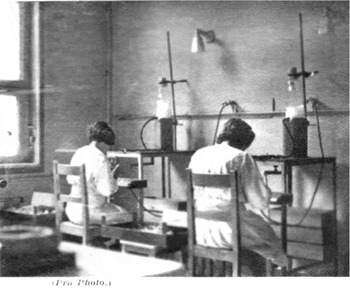
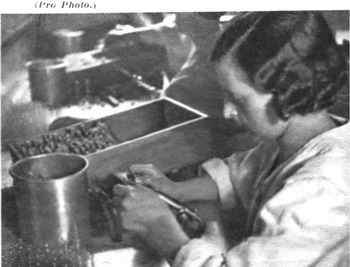
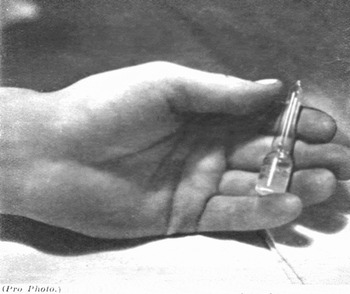
Further preparation of the vaccine solutions consisted in filtering off the fluid portion of the culture by pouring it through Berzelius paper filters in a funnel. Once it had been filtered and pressed between filter paper, the bacterial “wet mass” was weighed on a precision scale and then disaggregated in a glass test-tube containing a number of metal beads agitated manually. Later, mechanical shakers were used to achieve further emulsification. Finally a diluting fluid was added in distinct and precise quantities calculated as a function of bacteria weight. The homogenous emulsion was then poured into sterile phials and sealed by flame. The doses were determined according to the vaccine's use: 1 centigram for infants and 5 centigrams for cattle. At the end of the cultivation period 5 centigrams of the vaccine were inoculated into two guinea pigs in order to control avirulence experimentally over a period of at least five months (see figs. 2, 3, and 4).
BCG production process: filling of the sterile phials (Source: Personal archives Christian Bonah).

BCG production process: sealing of the phials (Source: Personal archives Christian Bonah).

A single dose final product BCG phial presented at the Pasteur Institute, 1935 (Source: Personal archives Christian Bonah).

At the beginning in 1921, all the BCG vaccine was produced at one site: the Pasteur Institute in Paris. In this particular local setting standardization of the product was obtained by determination of “numerical strength” through weighing of the wet bacteria after filtering, with the weight being subsequently translated into a specific number of BCG bacteria. Furthermore, specific, if not to our mind pedantic, laboratory guidelines determined the everyday production routine in Calmette and Guérin's Laboratoires de la tuberculose at the Pasteur Institute. These guidelines covered the smallest details concerning flasks, rods, and other apparatus, including the use of specific spatulas dedicated exclusively to each BCG culture, as well as more important management tools such as a specific color-coding scheme for the BCG cultures. The spatial arrangement of the BCG production site was also specified, with restricted access to the production rooms, and the laboratory recruited highly qualified assistants to work in it. Thus, standardization was obtained very much through standard operating procedures created and enforced by the two directors of the laboratory. Quality and quality control were thus mainly achieved through the tight local control of the production procedure at a unique production site. As with the diphtheria antitoxin production, standards and quality control were organized lab-internally without state interference. Only the producer needed official approval from the Academy of Medicine and the Consultative Committee on Public Health. Thus, by June 24th 1924, when Calmette and Guérin made their first official presentation of the BCG vaccination for use in newborns at the Academy in order to obtain state approval for its medical use, BCG had become a standardized pharmaceutical object in their laboratory. But BCG vaccination was not solely a product, it still needed to become a medical practice, and its overall medical value would depend on both the object and its use.
2.2 From Clinical Charts to Administrative Compilation: The BCG Card-File System and the Standardization of Medical Use
Beyond the attenuation of bacteria, a second principle used to dissociate vaccination from normal disease infection exploited the idea of introducing the infective agent in a way different from normal disease entry. In 1905, Calmette and Guérin had observed that in young cattle resistance to tubercular infection could be obtained by the oral administration of a very small number of virulent bacteria. As suggested in theoretical form since 1906, oral administration remained for Calmette and Guérin the route of choice for administration with newborns arguing for a special capacity of the intestinal mucosa to absorb the bacteria during the first ten days after birth (Calmette et al. Reference Calmette, Guérin, Nègre and Boquet1926, 94–95). The qualification of the procedure as a vaccination was specific in the sense that “immunity” to tuberculosis infection depended on the presence of living vaccine-bacteria in the lymphatic organs of the vaccinated subject and not antibody production. This specificity, although immunologically unexplained, was accounted for by designating the procedure as prémunition implying some priming process.
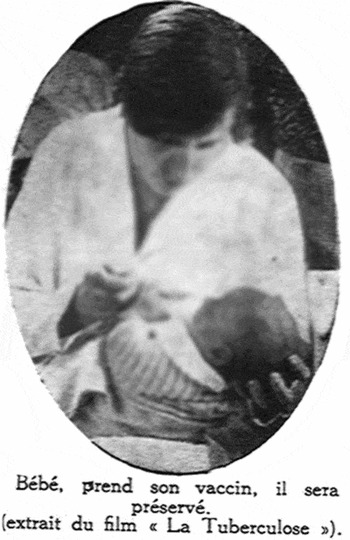
In July 1921, the first secret phase of human trials with the vaccine took place with the aim of establishing a clinical evaluation of the vaccine's safety. This required a close but very limited collaboration between Calmette and Benjamin Weill-Hallé (Bonah and Menut Reference Bonah, Menut, Roelcke and Maio2004; Bonah Reference Bonah, Schlich and Troehler2006). The Paris hospital physician responsible for the first human administration fed three oral doses of 2 milligrams of BCG to a baby on days 3, 5, and 7 after its birth. Subsequent vaccination series started in 1922 increased the dose to three 1-centigram administrations, considered equivalent to 1.2 billion bacilli. In 1924, this dosage became the standard when BCG was bottled in phials and distributed for oral use throughout France and its colonies (Calmette et al. Reference Calmette, Guérin, Nègre and Boquet1926, 114) (see fig. 5).
Oral administration of BCG by a nurse (Source: Personal archives Christian Bonah).

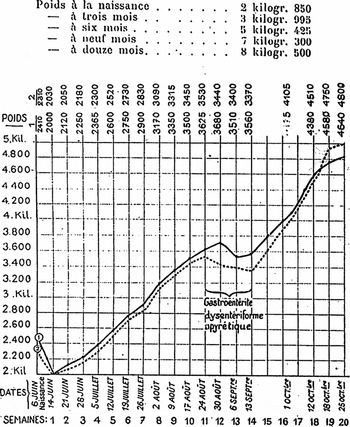
Questions about the security and the preventive value of BCG in its clinical evaluation were addressed by Calmette, Guérin, and Weill-Hallé, whose evidence was given in rather general terms in their initial presentations at the Academy of Medicine in 1924 and 1925 (Calmette et al. Reference Calmette, Guérin and Weill-Hallé1924, 792–793; Calmette et al. Reference Calmette, Guérin, Weill-Hallé, Nègre, Boquet, Wilbert and Turpin1925). Numbers of vaccinated babies were simply related to numbers of deaths among the vaccinated, and the tuberculin skin tests were dismissed as irrelevant for the appreciation of acquired immunity. Clinical evidence for the safety of the vaccine became more detailed in 1925 when Weill-Hallé and Turpin presented the first results of their series of vaccinations at the Medical Society of Paris Hospitals (Weill-Hallé and Turpin Reference Weill-Hallé and Turpin1925). Clinical case histories were presented, with the weight charts of individual babies indicating normal growth after vaccination (see fig. 6). Fatal cases were documented with emphasis on the final diagnosis and were correlated, where possible, with reports from autopsies. Wherever possible, lymph-tissue samples were injected into guinea pigs to test for the presence of virulent bacteria. The authors also reported non-lethal episodes of tuberculosis infection after vaccination and considered them as cases where the fortunate children had escaped probable death from tuberculosis thanks to the vaccine. Four years of clinical experience with the vaccine authorized the physicians to conclude that it was safe and probably useful, although observations remained too recent and fragmentary to draw any definite final conclusions. Furthermore the medical value of a preventive vaccination was difficult to prove on the basis of individual observations. Rather what was needed was statistical comparison of tuberculosis mortality rates between vaccinated and non-vaccinated infants. Once the safety of BCG had been clinically established, the extended trials that Calmette wanted to see in order to establish the efficacy of the vaccine could be undertaken. This meant beginning the mass production of BCG and recruiting participating investigators.
Clinical chart of two vaccinated infants showing weight change over 20 weeks indicating normal growth (Source: Personal archives Christian Bonah).

National distribution after the 1924–25 Academy of Medicine presentations was based on a system of centralized production of the vaccine at the Pasteur Institute in Paris from where it was distributed around France to be administered by individual physicians to children in the local area. Physicians anywhere in France could directly solicit the Pasteur Institute by mail or by telegraph requesting a vaccine package from the “Service des Vaccins, 22 rue Dutot, Paris XVe, Telegr. Serpasteur” (Calmette Reference Calmette1927a, 231). The initial request simply required that the recipient physician indicate his address as well as the name and date of birth of the baby to be vaccinated (ibid.). The vaccine would then be sent by mail the following day, packaged as three sealed phials with a small file and an insert explaining standard medical use. Intended to standardize medical use, the insert insisted on the fact that the product needed to be freshly prepared and its use could not be extended beyond the official ten-day limit. Furthermore administration was to be limited to the first ten days after birth and the route of administration was per os. The phials of vaccine were to be shaken before pouring the contents onto a spoon, where it was to be mixed with some milk at body temperature. The newborn was to drink the preparation half an hour before feeding. Last but not least, the insert insisted on the necessity for three administrations at two-day intervals. Indications for medical use were just as precise as the laboratory operating standards.
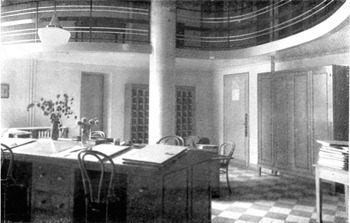
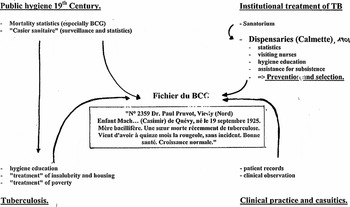
Physicians and parents were asked to proceed to ensure follow up examinations of the vaccinated newborns, and a standardized form was to be returned to the Pasteur Institute tuberculosis laboratory with information on the identity of the child, date of birth, and date of vaccination, an evaluation of risks of contamination by contact with tuberculosis-infected close relatives, and clinical results of follow-up examinations concerning growth and possible pathologies during the following two years. All the demands and any responses that came back were centralized in a card-file data bank at the Pasteur Institute in Paris, known as the Fichier du BCG, with Albert Calmette as its central producer-administrator (see figs. 7 and 8).
Photograph of the the BCG card file system strategically located at the main entrance to the Nouveaux laboratoires de la tuberculose (Source: Personal archives Christian Bonah).

Theoretical conception of the BCG card file system (Source: Personal archives Christian Bonah).

Beyond the members of the medical profession, Calmette also used public hygiene services as relays for the distribution of the vaccine. Departmental or municipal physician-administrators (inspecteurs) of public hygiene services, such as dispensaries or other institutions associated with public hygiene, could introduce routine vaccinations for newborns under their control, e.g. Dr. Ott, Office départemental d'Hygiène de la Seine-Inférieure (ibid., 231–233). Certain municipalities went as far as organizing conferences and posters for newlyweds and systematically sent childcare nurses to visit every declared newborn with the aim of promoting the vaccination (ibid., 243; Bonah and Menut Reference Bonah, Menut, Roelcke and Maio2004).
The strategy of the Pasteur Institute in adopting this form of organization was twofold. First there were cases of non-monetary exchange with the medical profession, trading the vaccine for information. In this respect the organization of BCG distribution clearly reproduced what Jonathan Simon and Axel Hüntelmann have described as a philanthropic exercise for the diphtheria case (see also Hess in this issue). Second, as with the diphtheria serum, BCG was also sold to patients who could afford to pay, and financial contributions were requested and obtained from the central government, administrative departments, and local communes. Again, as with diphtheria, the distinction between gift and payment remained unclear in the complex finances of the BCG vaccine within the Pasteur Institute. Building the product image of the BCG emphasized that the vaccine was not “a commercial specialty” (Calmette Reference Calmette1927a, 243). Repeatedly the Pasteur Institute insisted that BCG had nothing in common with dubious ready-made pharmaceutical specialties flourishing on the medical market. At the same time the package clearly indicated that the product belonged to a line of products that by the 1920s carried a non-commercial trademark, the name of the Pasteur Institute in Paris.
A striking difference between the BCG and diphtheria cases is the fact that Calmette extended the partially charitable humanitarian organization into a full-fledged non-monetary system of exchange, trading the vaccine against information. The medical profession was effectively enrolled in the assessment of BCG, with its members invited to participate in the clinical use and evaluation of the vaccine in an unrestricted manner starting from July 1st 1924 (ibid., 213). The decision to give the vaccination was made by the individual medical practitioner with the consent of the baby's family, and the treating physician was also responsible for following up the treated children. Thus, the immediate, direct responsibility for the administration of the vaccine lay with this particular physician. The results and observations were to be reported in Paris to Calmette who himself transferred them to the central BCG card file mentioned above. It is worthwhile noting four important points about the vaccination program. First, the procedure was initially established in undefined medical territory somewhere between human experimentation and routine preventive treatment since safety and efficacy evaluation of a vaccination needed long-term observations not yet available in 1924 (Bonah Reference Bonah2007). Second, administration and evaluation of the vaccine were conducted outside the established medical structures of elite hospitals that were usually the only ones involved in therapeutic trials. Third, the card-file method used by Calmette resembled on the one hand simple commercial book-keeping practices, where files were established for shipped merchandise, and on the other hand, the follow-up practices deployed by dispensaries such as the one established under his direction in Lille, with nurses going to visit patients at home and recording a delimited set of clinical observations. Fourth, decentralization and geographical dispersion turned this exercise into what could almost be considered a huge national “field trial.” The unrestricted availability of the BCG to the French medical profession suited the physicians' aspirations for independence and liberty of therapeutic choice. By contrast, the production of the vaccine and the collection of the information were centralized at the Pasteur Institute, and any use made of this information remained at the entire discretion of Calmette. This organization gave Calmette immense power over the overall interpretation of results, meaning that he alone was able to standardize evaluation criteria and results for security and efficacy in medical use at the national level. Isolated individual physicians had very limited means to contradict the interpretations and evaluations promulgated by the central producer-coordinator.
From a total of 840 infants vaccinated by physicians and midwives in December 1924, the numbers progressively increased to over 5,000 the following year and almost 20,000 infants in December 1926. In terms of production, this meant that more than 50,000 phials of BCG were produced annually. Calmette established a different procedure in order to deal with institutions for public hygiene and dispensaries, involving a greater delegation of power. Calmette just furnished the vaccine, and the institutions themselves were responsible for the management of information concerning vaccination as well as any follow-up procedures and results.
The centralized BCG card-file would eventually lead to the first large-scale statistical analysis of the safety and efficacy of the vaccine for human beings. In 1927 Calmette transformed individual observations into statistical evidence (Calmette Reference Calmette1927b, 217; Bonah Reference Bonah, Schlich and Troehler2006; Bonah Reference Bonah2007, 199–285). Based on their analysis of the BCG card-file system, two professional statisticians M. Moine and Y. Biraud established a statistical standard for evaluating the vaccine's efficacy. The two statisticians reported on a batch of infants who had been vaccinated between one and two years previously and had been brought up in tubercular environments. They compared mortality rates from tuberculosis and general mortality rates of the vaccinated infants with mortality rates of infants from similar environments who had not been vaccinated.
Based on this analysis, Calmette was able to conclude that the “efficacy of protection with BCG against the effects of family contagion were proven” (Calmette Reference Calmette1927b, 218). The centralized system of BCG production, distribution, use, and evaluation had definitively established a national standard for the vaccine. It was twofold in nature: bacteriological and laboratory based on one side, and clinical and statistical based on the other. Produced locally the BCG vaccine was applied nationwide. A single approved national producer had set his own standards through laboratory operating procedures and product definition.
On the basis of this success in France, Calmette proposed in 1928 that the vaccine be evaluated on the international scene by the Hygiene Commission of the League of Nations. This led to the first international conference on BCG held in Paris between 15 and 18 October 1928 ushering in BCG's more troubled international career.
3. Distributing Internationally: BCG Meets the League of Nations
The initial attenuation and production of the BCG vaccine strain had taken Calmette and Guérin almost 13 years of uninterrupted culturing. In principle, someone else who wanted to copy the procedure would require just as long, if they could even manage to obtain an equivalent a-virulent strain. In contrast to the production of diphtheria antitoxin that could be imitated and organized quickly by competitors, the procedure that had given rise to the BCG created the de facto equivalent of a product patent. Under these circumstances complete disclosure of the production process was not a problem and in 1927 Calmette published a comprehensive manual on the use and production of the vaccine putting his entire knowledge of the subject into the public domain (Calmette Reference Calmette1927a). The manual was quickly translated into the major European languages in a context where the production of the vaccine for human use was restricted to Calmette's laboratory at the Pasteur Institute in Paris and distribution to metropolitan France. It was not Calmette's intention to deprive those outside France of the BCG vaccine, but the limited 10-day conservation period for the vaccine posed a serious problem for international distribution. Calmette therefore entrusted the original vaccine strain free of charge to fellow bacteriologists, who could then set up their own small, local vaccine production laboratories outside France. Starting in 1924, the BCG therefore became available via the Pasteur Institutes in the French colonies, the Pasteur Institute in Brussels, and the bacteriological Institute in Liège in Belgium, the laboratories of the National Research Council in Canada, the State Serological Institute at Copenhagen in Denmark, the New York City Department of Health Laboratories in the United States, as well as serological or bacteriological institutes in the Netherlands, Italy, Poland, Romania, and the USSR. In Germany, distribution of BCG for experimental studies included the Robert Koch Institute and the bacteriological laboratories of the Reichsgesundheitsamt as well as the Serum Institute in Frankfurt, the Pediatric University Clinic in Düsseldorf, the Tuberculosis Research Institute in Hamburg, and the Hygiene Institute at the University of Breslau. Calmette took charge of each case of distribution of the BCG strain personally, choosing competent colleagues and, in contrast to the diphtheria antitoxin, BCG remained completely outside the circle of commercial pharmaceutical companies. Distribution followed academic traditions – the medical equivalent of the Republic of letters – and was based principally on acquaintances within the network of former Pasteur Institute visitors, students, or collaborators.
Laboratories around the world that produced the BCG vaccine in the late 1920s all used BCG cultures that were descendants of the original Calmette and Guérin strains. Nevertheless, the multiplication of producers and production sites led to a great variety in the use of culture media and the timing of the harvesting for vaccine production (Rosenthal Reference Rosenthal1957, 123). In view of this fact it was not surprising that the clinical appreciation of the vaccine in respect to local lesions in case of injection, as well as tuberculin reaction and resistance produced in the host, could be appreciated differently as well. But even strictly medical concerns such as route of administration, dosages, and booster administrations became subject to diverging opinions. The observed differences could be quantitative or qualitative and called for an international standardization for comparability of products and evaluation of preventive value.
The 1927 and 1928 articles by Calmette and Guérin in the Annales de l'Institut Pasteur attracted substantial attention and criticism from the international scientific community working in the field of tuberculosis. In May 1927, the British Medical Journal published a critical editorial (Anonymous 1927) indicating that British physicians were less eager than their French counterparts to accept the 1927 standards and evaluations of the BCG vaccine as they had been presented in France. At the end of May 1927 Major Greenwood, professor of epidemiology and vital statistics at the University of London, lent his voice to the chorus of British criticism (Greenwood Reference Greenwood1927; Bonah Reference Bonah2007, 199–285). In the autumn, Arvid Wallgren, a physician at the Gothenburg Children's Hospital in Sweden, questioned the standards for medical use and especially the oral route of administration (Wallgren Reference Wallgren1927; Bonah Reference Bonah2007). Further objections indicate not only that some observers were skeptical about the laboratory and clinical evidence, but also that others were equally skeptical about the statistical assessments of risks and effectiveness. What had been successfully packaged and standardized on the French national level became fragile and variable again as international distribution multiplied the producers and users of the vaccine. To escape from what might become an endless series of scientific controversies, the vaccine would need to be standardized once again, but this time on an international level.
Questions of standardization and titers were not new in the field of tuberculosis research in 1928. In October 1924, the League of Nations had already proposed to include tuberculin in the program of its Standardization Committee. Its mission was to study and compare practical methods used in various laboratories for measuring tuberculin activity and to establish, if possible, the choice of one of them as a reference method for standardization and titers. Calmette and De Potter were appointed as experts to conduct experiments. Their inquiry took two different directions. On the one side they sent a questionnaire to official establishments, both private and public, that produced tuberculin in 16 different countries. On the other side they conducted their own experiments in order to evaluate the procedures and methods used for standardization.
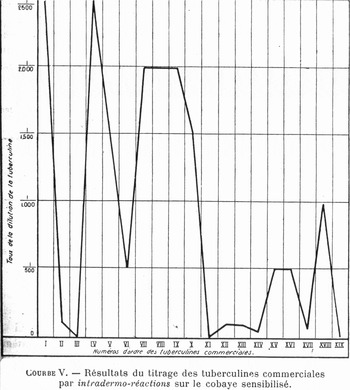
The questionnaires concerned the preparation of tuberculin in its practical details, including issues of bacterial strains, culture media, the age of the cultures, the means of sterilization, as well as filtration, conservation, and the forms of presentation for the tuberculin. A substantial part of the preparations were pharmaceutical specialties of “purely commercial interest” covered by “industrial” secrecy rules (Calmette Reference Calmette and de Potter1926b, 358). By this time, the variety of production methods had pushed several countries such as Germany, France, Brazil, Italy, Japan, and Czechoslovakia to impose titers as legal requirements. But methods for titration also varied, ranging from immunological precipitation tests and complement-fixation reactions to clinical intradermal or transcutaneous skin tests. Calmette and De Potter themselves preferred the clinical Mantoux-Moussu test. After the intradermal injection of the standard and the tuberculin to be tested, skin reactions were read and graded according to their intensity. After the choice of a reference method, the two experts themselves tested different commercial tuberculin products and found that some products needed to be diluted 2500 times to provoke the same reaction as their standard (see fig. 9). Their report for the Committee concluded: “due to our present ignorance about the active substances entering into the composition of tuberculin it is certainly premature to propose to adopt international rules for measuring the activity of tuberculin. Nevertheless it can be recommended to laboratories producing tuberculin commercially to control their products preferably using the procedure of serial intradermal reaction” (Calmette and Potter Reference Calmette and de Potter1926, 395).
Graphic presentation of tuberculin tests of different commercial tuberculin products indicating variations up to 2500 times (Source: Personal archives Christian Bonah).

As Calmette finished up the tuberculin report for the League of Nations he started gathering his evidence advocating the BCG vaccine for his first major synthetic publication for the Annales de l'Institut Pasteur at the end of the year. He certainly did not quite foresee that a year later he was going to approach the same international body in order to organize an international congress to discuss standardization of his vaccine. Thanks to his early membership in the League of Nations and his tuberculin work, however, he had already been introduced to the institution and was certainly well aware of its mode of functioning.
On the national level, the Academy of Medicine and the Consultative Committee on Public Health were the state advisory bodies responsible for granting producer approval. On the international level, Calmette requested an evaluation of the vaccine in the fall of 1928 in the form of a public statement from the Hygiene Commission of the League of Nations. The Commission decided to convene an international expert conference in October 1928 in order to establish compatible methods for evaluating the preventive value and results of the BCG vaccination. The conference president was Emile Roux, and the bureau was composed of Thorvald Madsen, director of the State Serological Institute of Denmark in Copenhagen, and Ludwik Rajchman, medical director of the Hygiene Organization of the League of Nations in Geneva. The conference included three commissions, one for bacteriology (Jules Bordet, Rudolf Kraus, Fred Neufeld, Tsekhnovitzer, and Carl Prausnitz), one for clinical issues (Léon Bernard, Johannes Heimbeck, Edmund Nobel, Gaetano Ronzoni, Louis Sayé, Arthur Schlossmann, and Eduard van Beneden), and one for the veterinarian aspects (Juljan Nowak, Alberto Ascoli, H. Berger, André Vallée, Hermann Zeller and Franz Gerlach).
The commission endorsed the favorable conclusions presented by Calmette almost as strongly as the French Academy of Medicine, publishing an official resolution certifying:
Unanimously the bacteriologists present in the commission esteem that the experimental results authorize the conclusion that the BCG is an innocuous vaccine . . . . Concerning the preventive action of the BCG against tuberculosis, the BCG vaccine produces a certain degree of immunity. But further research on the vaccinated children, carried out over a longer period and in a uniform manner is needed. (Société des Nations 1928, 7–9)
The experts requested that dosage and specific standard strains for experimental virulent test infections should be determined. The conference also concluded that it was necessary to entrust the manipulation and production of BCG exclusively to institutes with recognized international authority in bacteriology.
The clinical commission insisted for its part on the need for improved statistics on tuberculosis morbidity and mortality as well as complete follow up examinations especially including autopsy in the case of death. While much remained to be desired, the conference nevertheless came to the overall conclusion that the BCG was definitely harmless and probably useful. While in the interests of international standardization the conference favored the precise operating standards that were employed by Calmette in France, the need for international distribution and the multiplication of producers and users introduced many levels of diversity, meaning that, realistically, only minimal standards could be established. Thus, while Calmette's precise recommendations for laboratory production and medical use were included in the Commission's statement they were featured only as an appendix. The oversight of production and medical use remained with individual producers and those who used the vaccine. As we have seen, in the absence of any specific legislation or patents, approval of potential international producers was not granted by states but via the transfer of the original vaccine bacteria by Calmette. This transfer started with former foreign students who had followed the cours de microbie technique at the Pasteur Institute and was later extended to trustworthy bacteriologists outside this limited circle of Pasteurians. Foreign physicians could visit the Pasteur Institute and observe the production of BCG in Paris before receiving the strain for their own production. The vaccine strain was delivered to foreign scientific laboratories free of charge and Calmette requested only that “every country established regulations of its own for the production, distribution and control of the vaccine.”Footnote 3 What was clear after the conference was the fact that BCG was not going to become a commercial product following the model of the diphtheria antitoxin or tuberculin.
4. Standardizing the Object or Controlling Production: From Lübeck to the New Tuberculosis Laboratories at the Pasteur Institute in Paris
4.1 Product or Production: The Lübeck BCG Disaster
The statement issued by the League of Nations provided a solid basis for foreign countries to introduce the vaccine officially. And indeed, the 1928 League of Nations report was the document that initiated and justified the introduction of the BCG vaccination in Lübeck. This mid-size German city already possessed a fairly advanced and well-organized system of public health in 1930. Prior to the introduction of a public vaccination campaign, the physicians in charge had to inform and convince the representatives of the local Council of Public Health (Gesundheitsrat) of the effectiveness and safety of the project (LASH: 352/297, Urteil, 13–36). In the winter of 1929, the two physicians in charge E. Altstaedt (1885–1953) and F.B.G. Deycke (1865–1937) organized meetings with the public health institutions concerned (LASH: 352/297, Urteil, 23–38). They presented information concerning the BCG vaccine based exclusively upon Calmette's French statistics and the official approval given by the League of Nations hygiene commission. A prior disapproval of the vaccination published in 1927 by the Imperial Health Council (Reichsgesundheitsrat) and still in force in 1929 was completely omitted from this procedure. The officially published statement by the Reichsgesundheitsrat declared that the efficacy of “Calmette protection” was not sufficiently proven and that further experimental inquiries were needed before the agent could be used on a large scale in humans (LASH: 352/297, Urteil, 19–21).Footnote 4 Public health authorities were convinced and declared themselves in favor of local vaccine production and general vaccination.
Started in 1930, the campaign turned into a major catastrophe with 76 new-born babies dying in the course of the following year (LASH: 352/297, Urteil, 59–60). Analysis of the subsequent public outcry and the major lawsuit that took place in 1931–1932 offer varying, often contradictory, perspectives on the scientific evaluation of risk, safety, and effectiveness of the vaccine. They amplified criticism that had already been vaguely voiced at the 1928 conference and they established new guidelines for a national standard for proper laboratory practice in Germany, a range of reactions that have been analyzed elsewhere (Bonah Reference Bonah, Bonah, Lepicard and Roelcke2003).
Following a long court case, the Lübeck judges finally concluded that the probable cause of the tragic events in Lübeck was not a potential change of virulence inherent to the vaccine itself, but an error in its large-scale local production. In France, Calmette's BCG was still considered to be a harmless and safe preventive vaccine even after Lübeck, although it was admitted that local production could spoil these supposedly fixed characteristics. Product and production were dissociated in this procedure, and separate, yet related risks were recognized for each of the two elements. The Lübeck tragedy was considered to be related to only the production side of the vaccine. In the view of the French, BCG produced by the Pasteur Institute had nothing to do with this scandal, and so vaccination was pursued without any restrictions during the following decades.
The early practices of the Pasteur Institute in Paris with respect to the production and distribution of the BCG vaccine avoided both the multiplication of production sites and any commercialization of the product. As long as the distribution of the BCG vaccine remained confined to France, the monopoly of the Pasteur Institute in Paris over the vaccine production meant that only one single laboratory had to be monitored for any potential problems. By contrast, the international distribution of the BCG and its production by local laboratories outside France progressively created the need for a different form of standardization of the bacterial agent in order to ensure safety, efficacy, and especially the comparability of scientific results and clinical observations from around the world.
Exhaustive correspondence kept in the Calmette papers at the Archives of the Pasteur Institute indicate that the foreign culturing and production of the vaccine led to numerous situations where the morphological and bacteriological characteristics of the strain diverged from those produced by the strict uniform practices at the Paris Institute. Repeated requests for the renewal of strains that had become spoiled, for further details on culture media, and for strains for control and comparison with local cultures indicate clearly that the Paris Pasteur Institute was the semi-official reference for BCG production standards during the 1920s and 1930s. As with Lübeck in 1930–31, if there were any complications or accidents outside France, the culprit was always assumed to be shortcomings in local production, thereby protecting the central French production site and the product itself. Nevertheless, the price paid for the geographical extension of the vaccination was loss of power and control over the agent.
Indeed, the 7th Conference of the International Union against Tuberculosis held in Oslo in August 1930 might well have become the second phase of international standardization of the vaccine. But in the wake of the Lübeck disaster and without any firm conclusions having been reached concerning this case, all further developments were put on hold. An account of the conference presented to the Academy of Medicine by Léon Bernard indicated that the head of the German delegation and president of the Reichsgesundheitsrat Hamel wanted to exclude the Lübeck events from discussions until the final report by his colleagues, Professors Ludwig Lange and Bruno Lange, had been presented. While, therefore, Bernard could declare that according to the official statements the BCG vaccine was considered in no way responsible for the events (Bernard Reference Bernard1930), the Lübeck disaster nevertheless did considerable damage to future international developments and postponed further initiatives for a decade. The German Reichsgesundheitsrat issued in winter 1930 a policy disapproving anti-tuberculosis vaccines with living bacteria, a guideline maintained after political changes in 1933 by Nazi public health officials (Bonah Reference Bonah, Bonah, Lepicard and Roelcke2003; Reuland Reference Reuland2004).
In France, vaccination continued but the untimely death of Albert Calmette in 1933 left a void difficult to fill especially for the international promotion of BCG. In Britain, skepticism towards BCG prevailed and further results of inquiries and evaluation were expected. In the North American context, BCG trials with specific risk groups, especially Native Americans, were initiated in the mid-1930s but results could not be expected before the end of the decade (Feldberg Reference Feldberg1995). Scandinavian countries remained generally interested in BCG during the 1930s but never implemented statewide initiatives for vaccination. Thus BCG's international development was stalled due to individual, scientific, and general political factors concurring during the decade. But it was hampered even more so by the impossibility to export SOPs for the production laboratories as a means of quality control, a fact that the Lübeck trial painfully illustrates. At the same time end product controls, such as reinoculation of guinea pigs and rabbits after production, were insufficiently codified and not effective as the trial indicates as well.
The blocked 1930 situation changed again, however, as health officials in many countries anticipated a significant increase of tuberculosis rates in belligerent countries with the outbreak of World War II. By this time the general context in France and Germany was very different. The main protagonist who had initiated and carried out the early development and promotion of the vaccine had died. Especially in Germany, it was more difficult to obtain BCG strains from France. Nevertheless, from 1940 onwards, Nazi health officials showed a growing interest in tuberculosis research and BCG, e.g. in the Reichs-Tuberkulose-Ausschuss (Dahl Reference Dahl2002; Beddies and Schmiedebach Reference Beddies and Schmiedebach2004). A detailed analysis of initiatives and activities during World War II in Germany and in the Western hemisphere are beyond the scope of this analysis and of minor significance for the history of the standardization of BCG. In contrast, international reconstruction and sanitization of war-torn Europe immediately after 1945 are of significant interest for the standardization of the BCG. War had devastated many European countries undermining if not eliminating the usual public health measures taken against tuberculosis. Under these circumstances the BCG vaccination made its return as a means for controlling the rise of tuberculosis. The memory of Lübeck was less present, as the main preoccupation of society and medical and political dignitaries was the implementation of some effective medical intervention in this area as rapidly as possible. Research in Scandinavian countries had modified the interpretation of the functioning of the BCG vaccination as well as its use. Above all, the modest price of vaccination by the BCG as compared to other means of treatment determined the choices made by hard-pressed health authorities. In 1947 the Danish Red Cross started the first mass BCG vaccination campaigns in Germany, as well as in Poland, Hungary, and Czechoslovakia. The Scandinavian BCG program was sponsored by the Norwegian Relief for Europe and Swedish Red Cross, and with the support of UNICEF developed into the International Tuberculosis Campaign (ITC), also known as the Joint Enterprise (TRO 1949). Under the directorship of Johannes Holm, Chief of the Tuberculosis Division of the Danish Staten Serum Institute, the ITC helped start campaigns in 23 countries before it turned over its activities to WHO/UNICEF in June 1951 (TRO 1954, 1–7). Further international standardization was an issue that was taken up in June 1948 – and also after the immediate postwar medical emergency – on the occasion of the First International Congress of the BCG in Paris (Rosenthal Reference Rosenthal1957, 48–57).
4.2 Keeping with Production Control: the Nouveaux laboratories de la tuberculose (New laboratories)
By 1930, when the news of the accident in Lübeck spread all over Europe, more than 210,000 children had already been vaccinated in France (Calmette Reference Calmette1930c, 58–68). In 1931, 20 to 30 per cent of French newborns received the oral BCG vaccination. The country could not possibly be indifferent to the events in Germany, particularly when official press releases from the German Ministry of the Interior and discussions in the Reichstag in May and June 1930 were translated into French and transmitted via the general press. The documents indicated that the scientific question of the safety and efficacy of the vaccination was delegated to the scientists at the laboratory of the Reichsgesundheitsamt and that the question of the possible responsibility of the Lübeck physicians in the preparation of the vaccine had to be investigated by the State of Lübeck and the court.Footnote 5 Medical journals and the Academy of Medicine in France remained silent throughout 1930, just like Calmette himself. His official position, as expressed for example in a reply sent to the editors of the Anti-Vivisection and Humanitarian Review was that the Lübeck affair had nothing to do with the BCG and that it was a German affair. As far as any further explanation was concerned, Calmette protected himself and the BCG using the official German declarations (Calmette Reference Calmette1930a, 167):
The mystery of the “Lübeck tragedy” has been unveiled since the German Ministry of the Interior made the following statement on September 10th: The BCG culture, sent to Lübeck by the Pasteur Institute preserved on a liquid media and not used for the preparation of the vaccine has been recognized as a pure culture of BCG, not virulent in guinea-pigs. It has been stated by the experts (Professors Ludwig Lange and Bruno Lange), that without any doubt BCG is not responsible for the terrible accidents in Lübeck.
Calmette could have wished for no better authority than these independent German experts to testify in favor of the innocence of the BCG in this affair. Thus, Calmette restricted himself to repeatedly echoing their, for him at least, satisfactory conclusions, without adding any significant comments of his own.
The Lübeck trial also underlined the significance of technical notes for vaccine production, like those found in Calmette's 1927 manual, emphasizing how important it was to put sufficient precautions in place to avoid accidental contamination of the vaccine bacteria, especially by the virulent Koch bacillus, which closely resembled the BCG strain in appearance. Prescriptions went as far as demanding a completely separate laboratory for manipulation of the BCG using instruments and containers that never served for anything else. As the case at Lübeck illustrated, such stringent demands were not easy to comply with, neither in small production centers nor even, at least initially, in Paris.
After conducting initial research in Lille, Calmette organized the production of the vaccinal solutions on a limited scale in the research facilities he was allocated upon his arrival in Paris in 1919. These included Chamberland's former laboratory, described as “two rooms with one being rather cramped” and an isolated space in the cellar where BCG production was first “improvised” (AIP, CAL.Man/4 Autobiographie, 24–25). These rooms remained the base for production for the next ten years.
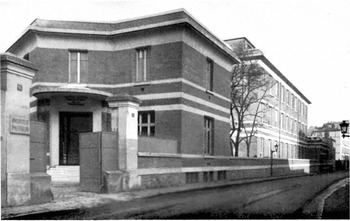
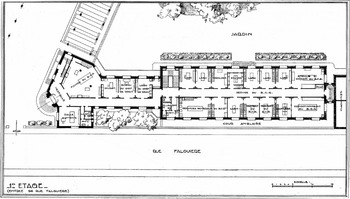
Continued research on tuberculosis at the Pasteur Institute as well as a growing demand for tuberculin and the BCG vaccine in the late 1920s created the need for improved and extended facilities for both research and production. In 1929, Roux proposed the construction of a spacious new building in the Institute's backyard, and, despite the Institute's financial hardships at the time, the Council and General Assembly of the Institute voted in favor of the proposition. In contrast to the production of the diphtheria antitoxin at Garches, the New laboratories for research on tuberculosis and the preparation of BCG were to be located at the heart of the central Institute running along the Rue Falguière. The construction was to be financed using 8 million francs from the special reserve fund of the Institute with the Ministry of Labor and Hygiene according an additional state subsidy of 2 million francs. Based on plans drawn up by Government architects, the construction started in 1929, after the League of Nations conference but before the Lübeck scandal. Construction was finished two years later establishing a vast model-institution that combined research laboratories with industry-style production facilities (Institut Pasteur 1932). The 70-meter-long building scrupulously implemented the separation of BCG production from all other activities, especially tuberculosis research (see fig. 10). The entire first floor of the building was dedicated exclusively to BCG production with separate rooms, tools, personnel, and even specific animal stables and dissecting rooms. The entrance to the building led first to a central hall where the BCG card-file system was located (see fig. 7), next to Calmette's personal secretary and laboratory. Next there was a break in the building, beyond which extended the BCG production site. The second floor of the building was occupied by tuberculosis research laboratories and the third floor housed the laboratories for tuberculosis chemistry and chemotherapy (see fig. 11). Separate animal stables were located on two underground floors. In 1932, the running costs of the New laboratories amounted to 4 million francs and BCG production alone accounted for 45 per cent of the Pasteur Institute's annual budget.
Nouveaux laboratoires de la tuberculose, rue Falguière. Pasteur Institute, Paris (Source: Personal archives Christian Bonah).

Construction plan for the Nouveaux laboratoires de la tuberculose (Source: Personal archives Christian Bonah).

As for the diphtheria antitoxin, the New laboratories created an industrial setting for vaccine production but this time on the central site of the Pasteur Institute. Financing was provided by a mixture of private funds from the Institute and state subsidies. Research and production were adjacent but strictly separated for security reasons. And after the Lübeck disaster, the New laboratories promoted a new standard for BCG production facilities. The lesson that had been learned from the early days of BCG was that stability and purity of the BCG could best be obtained through spatial and procedural standardization and the new facilities were the architectural translation of these ideals into research and production facilities.
Conclusion
In spite of the Lübeck tragedy, the BCG vaccine was widely employed in the early 1930s and its use still depended largely on the clinical judgment of the individual health provider concerned. Key elements still needed to be standardized concerning BCG's practical medical use in an international context. The major issue in this area concerned the medical problems associated with its route of administration, clear definition of groups of individuals to be vaccinated, the question of booster administrations, and finally the dosing of the vaccine administered. While all of these points were debated at an international level, they also became issues in France following a series of complications associated with some trials in the army (Bonah Reference Bonah2007). The standardization of the practical conditions for medical use had not been developed through collaboration between Calmette and other physicians using the BCG, but was dictated centrally. On the international scene, however, there were exchanges between practitioners and decision makers, although they were mostly indirect, occurring via published literature and international congresses on tuberculosis. In France, physicians had few opportunities to participate in the concrete development of vaccination procedures and had no say in the relevant decisions, since Calmette and the Pasteur Institute maintained its centralized control over production and the relevant information. Thus, there was very little room for collaborative efforts between clinicians, individual physicians, and Calmette, who aimed at determining standards and introducing modifications. Indeed, the vaccination procedures were essentially imposed by the official and dogmatic prescriptions that emanated from the Pasteur Institute. Despite the analysis of the preventive agent by the League of Nations in 1928, the practices for standardization for medical use adopted around the world reflected the overall distribution system for the vaccine, with strong centralization within France versus dispersion and multiplicity outside the Pasteur Institute's immediate sphere of influence. Although it remained difficult, international standardization did, however, become possible after World War II.
In contrast to the diphtheria case, the BCG was a biological product consisting of living attenuated bacteria rather than an antitoxin. Furthermore, its long and complicated stabilization and production process lent the BCG inherent protection against copies and competition from other potential producers. Animal and clinical testing of the BCG progressively transformed an experimental system into a production system without any clear turning point and distinction between the two. The construction of the New laboratories for research on tuberculosis and the preparation of BCG between 1929 and 1931 led finally to the creation of a central production site coupled with research and control facilities located at the central Pasteur Institute. Regulation and control of the product was essentially based on bacteriological practices established long before in the setting of the microbiological laboratory. Packaging resembled pharmaceutical practices whereas distribution was closely linked to practices of preventive hygiene and institutions of social treatment of tuberculosis. Key features of the diphtheria antitoxin standardization system were reproduced and maintained for the BCG but they were adapted to the specificities and peculiar necessities associated with this new pharmaceutical agent.
A 1935 photo-reportage on “the war on tuberculosis and the history of the BCG vaccine” (Guerin Reference Guérin1935) presented the BCG vaccine in the form of a small cardboard box containing three phials of Calmette-Guerrin bacillus, a small file to break the glass phials and an instruction leaflet. The top of the box bore the inscription “Pasteur Institute,” below the product indication “vaccine BCG” as well as a brief description explaining that the product was indicated for the “immunization of newborns against tuberculosis.” Additional information explained that the package held three doses for oral administration. Finally, the box carried a use-by date but no information concerning any titer or the concentration of the solutions. Thus, by 1935 the vaccine had become a handy and standardized pharmaceutical agent packaged in this small cardboard box. The passage from invention to medical use was now effaced, as was the history of its production and conditioning. As Calmette's report showed, the production of the BCG vaccine was tightly controlled and routine based, with the quality and efficacy of the product guaranteed by the state via approval of producers and ensured inside the main producer by internal procedural standardization. In this setting the Pasteur Institute in Paris became a pharmaceutical-like industry oriented around the exploitation of a trademark rather than any patents. Nevertheless, the status of the product remained somewhat undefined, located somewhere between a humanitarian gift and a commercial commodity. All these elements suggest a stability in what can be seen as a national French pattern for producing, and distributing “science-based” medicines in the early twentieth century. In the passage from diphtheria to BCG, the monopoly and centralized control of the Pasteur Institute seem to have increased rather than diminished. The history of the standardization of the BCG in France illustrates how wider societal changes involving the implementation of general principles of social organization characteristic of the twentieth century, such as bureaucratization, entered research institutions such as the Pasteur Institute. At the same time, the BCG card-file system provides a perfect, if not emblematic illustration of the specific role that the Pasteur Institute played for public health policies during France's Third Republic (Murard and Zylberman Reference Murard and Zylberman1996).
Finally, the anti-tuberculosis BCG vaccine illustrates the perpetuation and adaptation in the interwar period of a model for transforming an experimental system aimed at invention into a reliable system for production. This included an internal system of control centered on the Pasteur Institute that had become typical for microbiological products in France. While this kind of organization could work in the context of individual nation-states it clearly showed its limits when in the context of the internationalization of health issues early in the twentieth century, and broke down when international organizations took over the matter after World War II.
Abbreviations
AIP Archives de l'Institut Pasteur, Paris, France
LASH Landesarchiv Schleswig-Holstein
TRO Tuberculosis Research Office – World Health Organization