Introduction
A peritonsillar abscess (quinsy) is the most common deep head and neck infection,1 often arising from bacterial spread after acute tonsillitis, resulting in a polymicrobial pus collection.Reference Klug, Rusan, Fuursted and Ovesen2 If untreated, serious complications such as descending mediastinitis, retropharyngeal abscesses and necrotising fasciitis can occur.Reference Klug, Greve and Hentze3 Whilst there is no universally accepted best practice for treating a peritonsillar abscess, prompt treatment involves drainage of the abscess via needle aspiration or incision and drainage with a scalpel, antibiotic administration, analgesia, corticosteroids and hydration.1 It is not uncommon for the most junior member of the ENT team to perform this procedure, which can be daunting for both the doctor and the patient.Reference Jegatheeswaran, Naing, Choi, Collins, Luke and Gokani4
General practitioners (GPs) also play a key role in quinsy diagnosis, with studies showing they refer over 90 per cent of cases to ENT specialists.Reference Fitzsimons, Williams, Knowles and Caroll5 However, many GPs report insufficient ENT education both at undergraduate and postgraduate levels, despite ENT conditions being a significant part of their workload, especially in paediatrics.Reference Fitzsimons, Williams, Knowles and Caroll5, Reference Dimitrov, Unadkat, Khanna, Rennie and Saleh6 Patients with quinsy are likely to present to GPs complaining of dysphagia, odynophagia, fever, drooling, trismus and sore throat.1 As this presentation is common but not unique to this condition, it is important that GPs feel confident in their ability to diagnose and advise correct treatment for quinsy. Misdiagnosis can lead to unnecessary patient discomfort and complications, highlighting the need for better ENT training at the undergraduate level.Reference Jegatheeswaran, Naing, Choi, Collins, Luke and Gokani4
Currently, ENT training in medical school is limited, with placements averaging one to two weeks over five years, which many ENT consultants deem insufficient.Reference Khan and Saeed7 A study at Newcastle Medical School revealed less than 50 per cent of final years had attended an ENT clinic or theatre and urged for improvements to be made and the need to promote otolaryngology.Reference Doshi and Carrie8, Reference Ferguson, Bacila and Swamy9 Lack of exposure, hands-on learning and inspiration for the specialty are persistent key issues noted in literature, and these begin at undergraduate level.Reference Jegatheeswaran, Naing, Choi, Collins, Luke and Gokani4, Reference Khan and Saeed7–Reference Ferguson, Bacila and Swamy9
Following the coronavirus disease 2019 (Covid-19) pandemic, online learning and interactive e-modules have been developed to aid teaching ENT anatomy and some common ENT procedures. While the use of online learning has improved confidence in some areas, limitations remain, particularly for procedural skills.Reference Ijaz, Sundar, Zuberi and Richards10 Interactive e-modules appear more beneficial for students,Reference Chin, Tjahjono, Rutledge, Lambert and Deboever11 allowing for its incorporation within virtual reality (VR) teaching. VR offers a promising solution for enhancing ENT education. VR platforms provide immersive, interactive simulations that improve cognitive and psychomotor skills through features like gesture controls, eye-tracking and spatial sound.Reference Radianti, Majchrzak, Fromm and Wohlgenannt12–Reference Jensen and Konradsen14 At undergraduate level, successful applications have predominantly been found within anatomy teaching.Reference Venail, Deveze, Lallemant, Guevara and Mondain15, Reference Dharmawardana, Ruthenbeck, Woods, Elmiyeh, Diment and Ooi16 At post-graduate level, successful applications have been noted in ear surgeries, such as temporal bone dissection,Reference Zhao, Kennedy, Yukawa, Pyman and O’Leary17 cochlear implant surgeryReference Copson, Wijewickrema, Zhou, Piromchai, Briggs and Bailey18 and cholesteatoma surgery,Reference Hardcastle and Wood19 but fewer focus on throat pathologies like quinsy.
Thus, this study aimed to develop a cost-effective VR teaching course to simulate quinsy drainage and examine its efficacy and suitability as a teaching tool in the medical student cohort. This could enhance ENT education, increase interest in the specialty and improve procedural skills for managing peritonsillar abscesses.
Materials and methods
Ethical approval for this study was given by the Biomedical and Scientific Research Ethics Committee (BSREC) at Warwick Medical School (WMS) and by the University of Coventry and Warwickshire NHS Trust Research and Development Department (BSREC-CDA-SSC2-2024- 18).
Third-year medical students from WMS were invited to an online sign-up for the study. This cohort was selected based on course structure.20 Given that they would have finished their first clinical year in practice, this cohort would have the core knowledge and competencies to benefit from the workshop. As WMS consists of graduate-entry medical students, any participant with previous ENT experience or who had performed quinsy drainage was excluded from this study. Study participation was voluntary, and no identifying information, including email address, was collected to maintain anonymity.
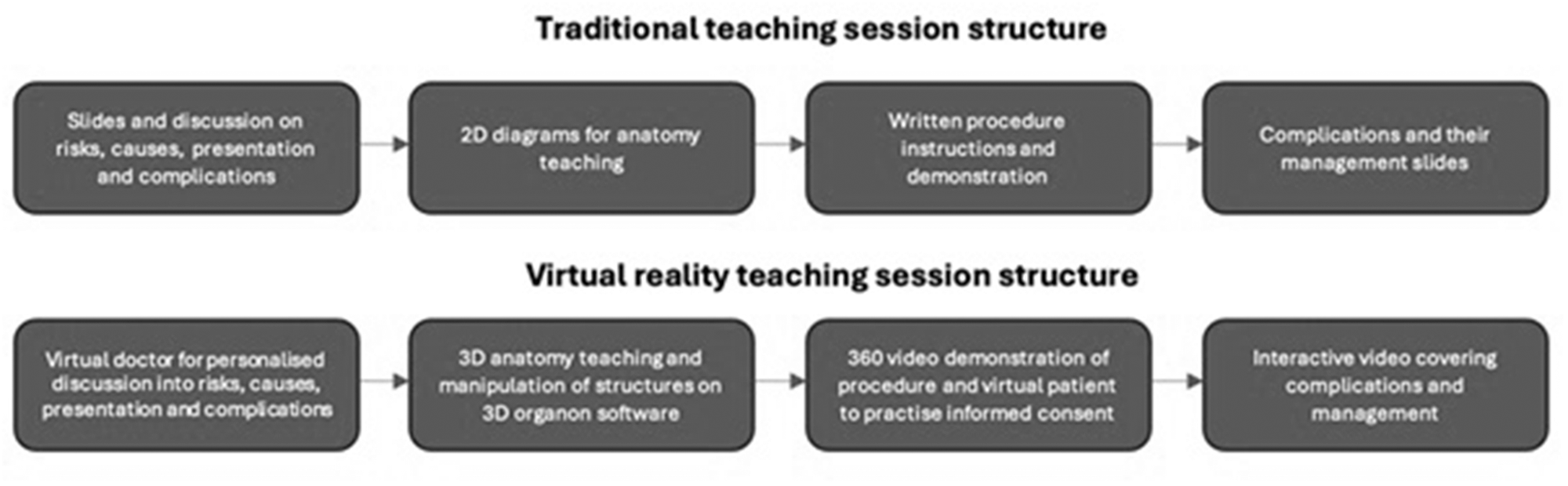
Participants were subjected to simple randomisation into two study groups using research randomiser, a secure online software designed for research purposes. Both groups were given 90 minutes of teaching, either through traditional methods or through virtual reality headsets, with a quinsy drainage objective structured clinical examination (OSCE) assessment performed at the end of the study. The virtual reality workshop was delivered using HTC Vive Focus 3 headsets. The Virti platform was used to deliver the interactive virtual doctor and patient discussions, 3D Organon was used to deliver the virtual 3D anatomy and the EXR platform was used to showcase a 360 video demonstrating the procedural elements of quinsy drainage. The course content for both groups was reviewed, approved and delivered by an ENT consultant and registrar. Figure 1 details the exact breakdown of the teaching sessions delivered to both groups. To mitigate the impact of cybersickness in the VR teaching cohort,Reference Oh and Son21 regular short breaks were given and headsets were fitted to the participants.
Teaching session structures.

A pre- and post-session questionnaire was distributed to assess participant’s perception of confidence levels, interest in ENT and session enjoyment. Those randomly allocated to the VR teaching session were asked specific questions about motion sickness experienced during their session to assess the prevalence of cybersickness in this cohort. Pre- and post-session questionnaires are available to view in Appendix 1.
An OSCE-style skills assessment and pre- and post-session knowledge tests were also given to provide objective performance measures. Skills test marking criteria were based on an OSCE format which Warwick medical students are all familiar with and have previously passed. This was to minimise the impact of performance ability on scores. An example of the OSCE checklist is shown in Appendix 2. A pass mark of 75 per cent has frequently been suggested as appropriate in medical education studies and line with Kirkpatrick’s levels of learning.Reference McKinley and Norcini22, Reference Steensma and Groeneveld23 The same assessor was used for all participants to standardise the scoring.
The knowledge tests focused on the anatomy of the oropharynx (Appendix 3) and the optimal drainage location, which was difficult to assess during the OSCE. A photo of the oropharynx was given to both groups to determine where they would insert the needle to aspirate the abscess. The most appropriate position was determined by Delphi opinion sought by two ENT consultants. The distance the participants drew the X from the correct location was then measured pre- and post-session to determine if there was any significant change.
Statistics were performed using IBM SPSS Statistics 30.0.0.
Results
Twenty students were recruited for this pilot study. They were randomised accordingly so that there were 10 students in the VR teaching arm and 10 students in the traditional teaching arm. Pre-session questionnaires identified no statistical difference between the two groups concerning their subjective perception of confidence in the anatomy of the peritonsillar space (p = 0.445), confidence in identifying the signs and symptoms of a peritonsillar abscess (0.689) and confidence in performing a drainage of a peritonsillar abscess (0.746).
The majority of participants (strongly disagree 20 per cent [n = 4], disagree 40 per cent [n = 8]) stated that they did not have a good insight into what a career in ENT would entail.
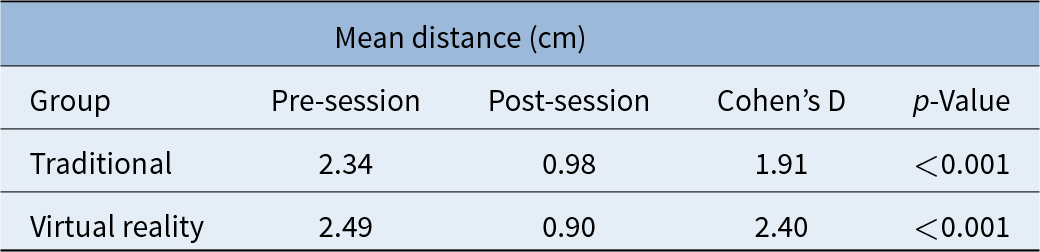
Both teaching groups were given identical pre- and post-session knowledge tests (Appendix 2). The anatomy aspect of the knowledge test was marked out of 7. The mean pre-knowledge test score was 5.2 for both groups (p = 0.475), suggesting a fair baseline knowledge amongst participants. 90 per cent of participants marked an unsafe location for drainage in the pre-knowledge test (n = 18). The mean distance from the optimal peritonsillar abscess drainage site in the pre-knowledge test was 2.34 cm for the traditional teaching arm and 2.49 cm for the VR teaching arm. Both teaching groups improved significantly in the post-session knowledge test with the mean distance from the optimal peritonsillar abscess drainage site being 0.98 cm in the traditional teaching arm (p < 0.001) and 0.90 cm in the VR teaching arm (p < 0.001). There was no significant difference between the post-session knowledge test scores being the two intervention arms (p = 0.701). A breakdown of scores can be seen in Table 1.
Comparison of pre-session and post-session mean distances for optimal peritonsillar abscess drainage sites in both traditional and virtual reality teaching groups

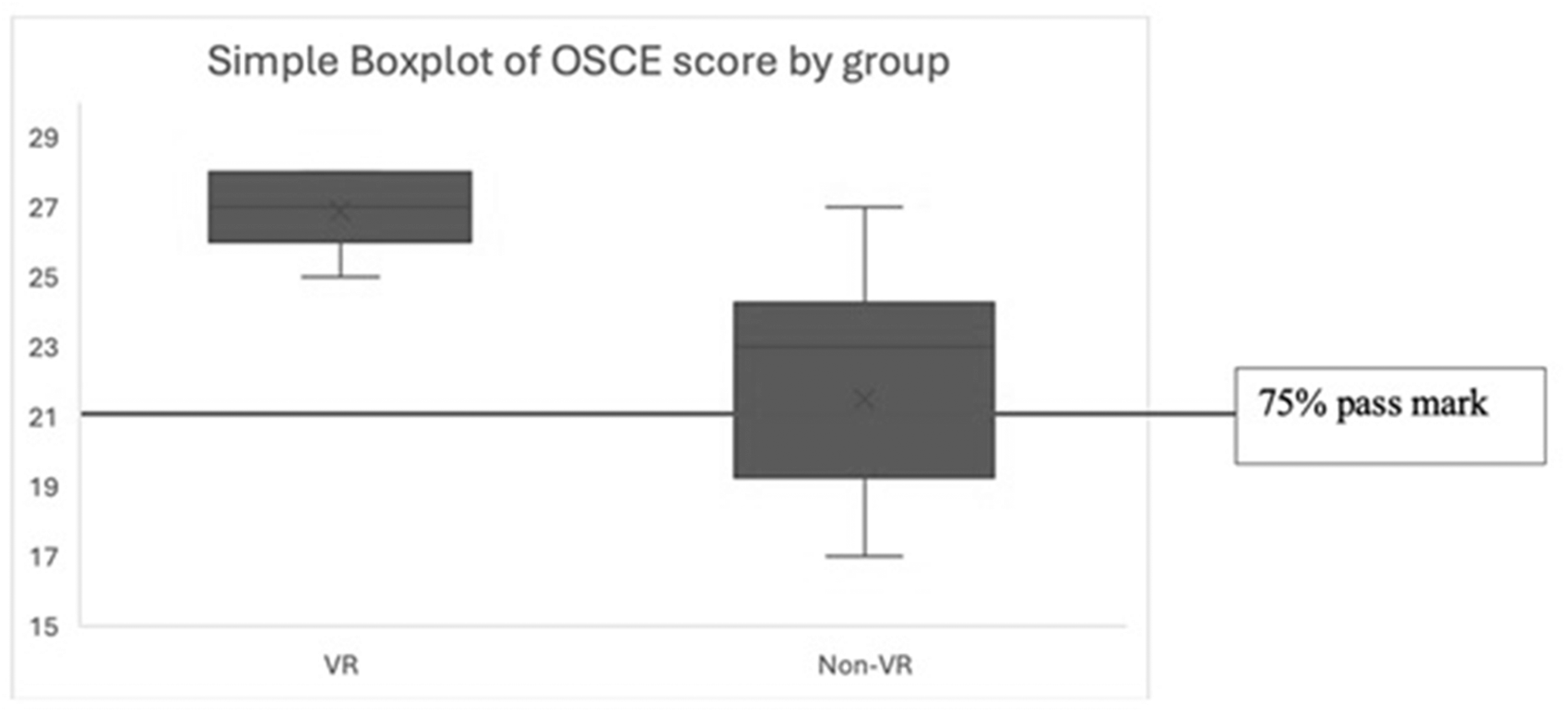
There was a significant improvement in the mean OSCE score performed post-session (p = 0.005) for the VR group (26.9) when compared to the mean OSCE score for the traditional group (21.5). The distribution of OSCE scores can be seen in Figure 2.
Simple box plots of objective structured clinical examination (OSCE) score by group.

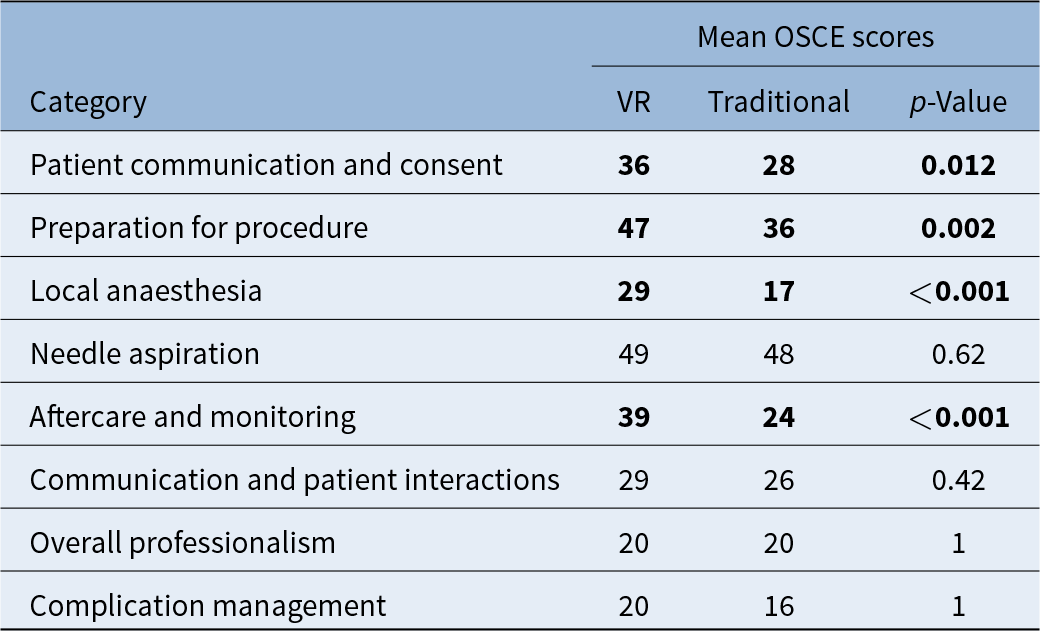
The breakdown of performance per section of the OSCE (Table 2) shows the VR group performing better in most of domains being tested, with statistically significant improvement noted in aftercare and monitoring (p < 0.001), local anaesthesia administration (p < 0.001), patient communication and consent (p = 0.012) and preparation for the procedure (p = 0.002).
Comparison of individual OSCE score performance between traditional and VR teaching groups

Note: Data in boldface are statistically significant.
Abbreviations: OSCE, objective structured clinical examination; VR, virtual reality.
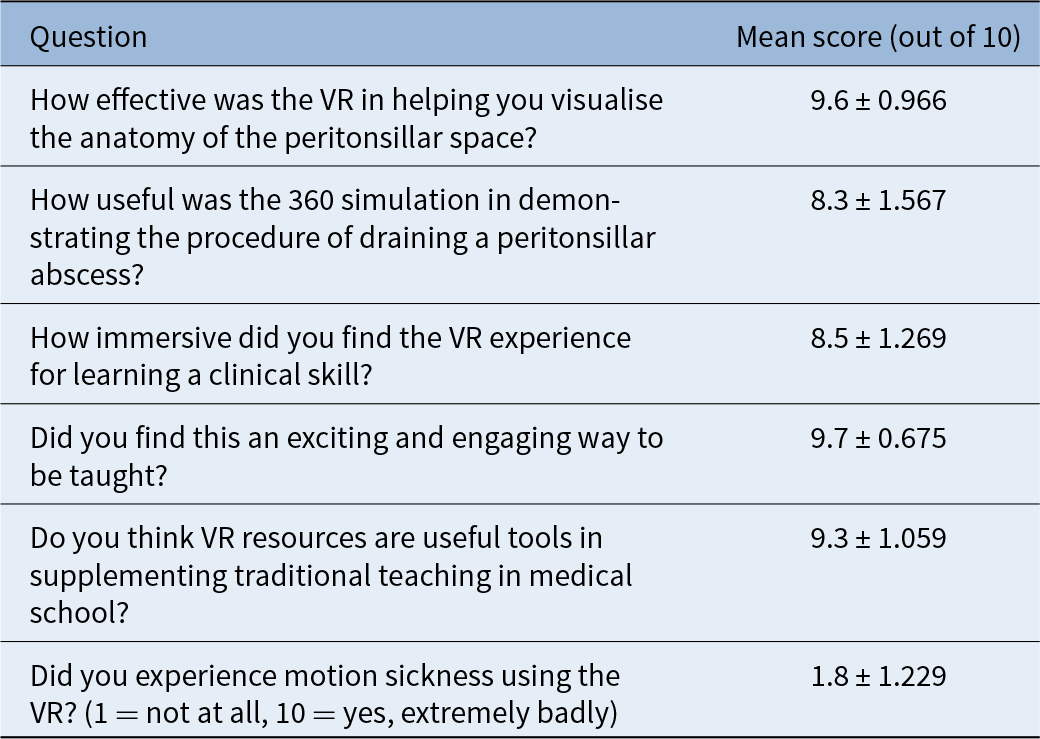
Motion sickness amongst the participants in the VR teaching group was deemed to be low. Participants in this group responded positively across all domains in determining the effectiveness and usefulness of the teaching method for peritonsillar abscess drainage. A breakdown of mean scores can be seen in Table 3.
Breakdown of post-session VR-specific questionnaire scores

Abbreviation: VR, virtual reality.
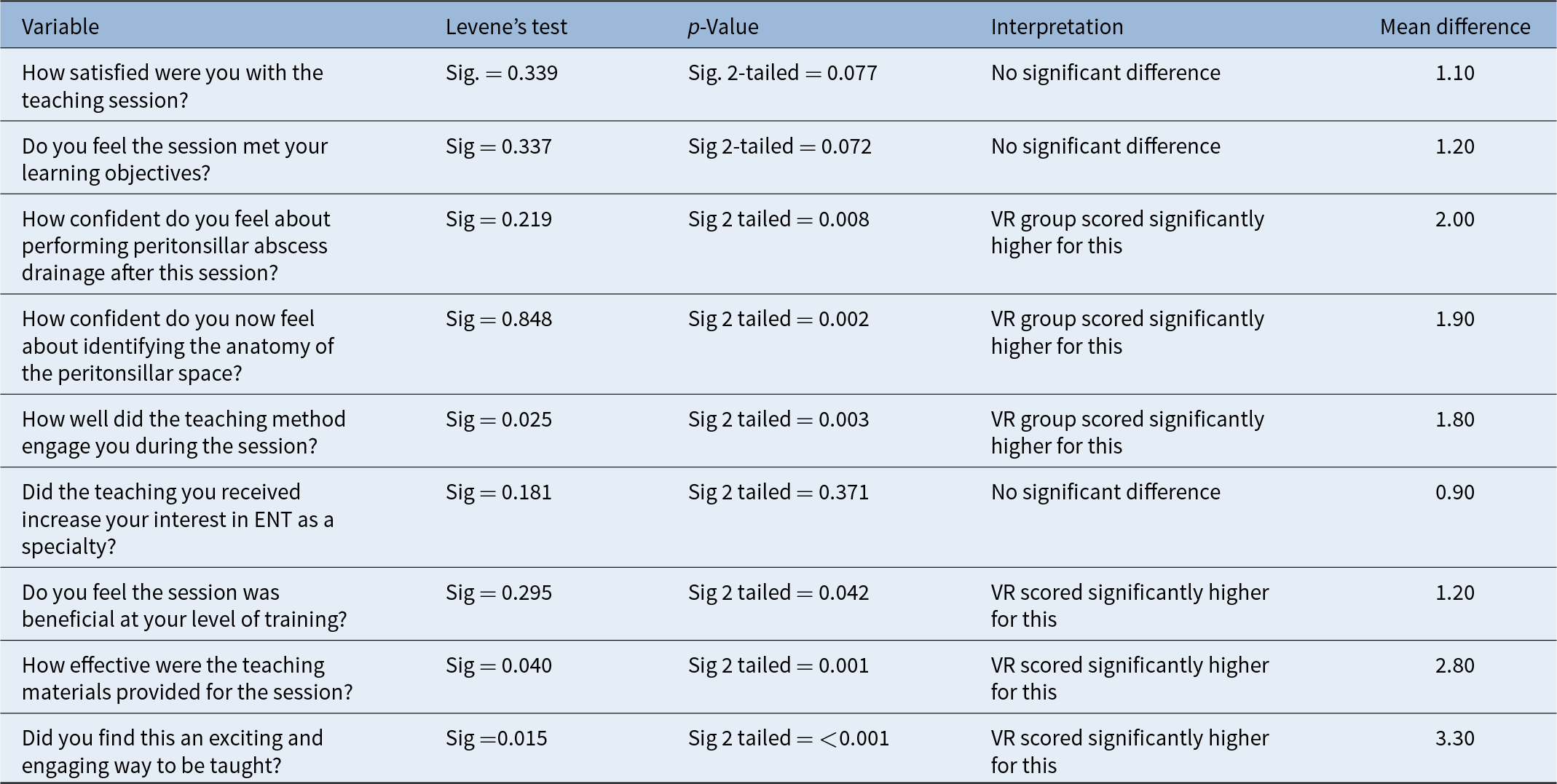
Both teaching groups did not exhibit any statistical difference in: their satisfaction with the teaching session (p = 0.077); their perceptions of the learning objectives being met (p = 0.072); or their interest in ENT as a specialty increasing (p = 0.371) post-session. The VR teaching group showed significant differences in improvement with regards to: their confidence in performing peritonsillar abscess drainage (p = 0.008), their confidence with the anatomy (p = 0.002), their engagement of the teaching method (p = 0.003), their perception of the benefits of the teaching method (p = 0.042), the effectiveness of the teaching materials (p = 0.001) or their perceived excitement of the teaching method (p < 0.001). A breakdown of scores can be seen in Table 4.
Breakdown of individual post-session questionnaire responses between the traditional and VR teaching groups

Abbreviation: VR, virtual reality.
Discussion
This study aimed to evaluate the effectiveness of VR in improving medical students’ understanding and procedural competency in peritonsillar abscess drainage. The findings demonstrate that VR-based teaching significantly enhanced participants’ confidence, engagement and performance in an OSCE-style assessment when compared to traditional teaching methods. These results support the growing body of literature advocating for the integration of immersive technology into medical education.
Current undergraduate exposure to ENT
The majority of participants in this study admitted to having limited insight into what ENT as a career would entail. This is mirrored in other studies in literature and may be partly down to the limited ENT experience that is provided to students during medical school.Reference Khan and Saeed7, Reference Doshi and Carrie8 In WMS, students experience one week of ENT-specific teaching in their first year of study, with this focusing predominantly on the anatomy of the ear, nose and throat. In the second year, WMS students do spend some time in ENT as part of their surgery rotation; however, the quality and quantity of the teaching experience is variable. This may explain the scores seen in the pre-session questionnaires and skills tests in this pilot study which highlighted a consistent lack of knowledge and confidence in performing a peritonsillar abscess drainage procedure. This trend is also seen in literature with many resident doctors feeling a lack of confidence across all ENT procedures.Reference Jegatheeswaran, Naing, Choi, Collins, Luke and Gokani4, Reference Ferguson, Bacila and Swamy9 With 90 per cent of participants originally indicating an incorrect peritonsillar abscess drainage location, this suggests having ENT-specific teaching workshops in this cohort would be beneficial, particularly as peritonsillar abscesses are the most common deep tissue infection of the head and neck.1
Whilst the decision to specialise has many contributing factors, there is evidence to suggest that effective surgical placements can increase the likelihood of students choosing a career in that specialty.Reference Marshall, Salciccioli, Walton, Pitkin, Shalhoub and Malietzis24 In this study, whilst there was no significant difference between the two teaching methods, there was an increase in the interest in ENT as a career post-session for both groups compared to pre-session scores. Promoting the specialty through engaging and effective surgical placements may increase student’s interest in the specialty.Reference Marshall, Salciccioli, Walton, Pitkin, Shalhoub and Malietzis24
Improvement in knowledge and procedural skills
Both the traditional and VR teaching groups showed significant improvement in their ability to identify the optimal drainage site for a peritonsillar abscess. The mean distance from the correct drainage location decreased significantly post-session in both groups (p < 0.001), indicating that the teaching intervention was effective. However, while both groups improved, the VR group outperformed the traditional group in the OSCE skills assessment (mean OSCE score: 26.9 vs. 21.5; p = 0.005). This aligns with previous studies where VR-based training enhanced procedural competence, particularly for surgical skills requiring spatial awareness and precision.Reference Dharmawardana, Ruthenbeck, Woods, Elmiyeh, Diment and Ooi16–Reference Copson, Wijewickrema, Zhou, Piromchai, Briggs and Bailey18
The breakdown of OSCE performance highlights that VR training particularly benefited key procedural domains, such as local anaesthesia administration, procedural preparation and aftercare. This suggests that the immersive nature of VR enhances not only knowledge acquisition but also practical decision-making and confidence in procedural execution. These findings are consistent with existing literature on VR applications in surgical training, which suggests that VR provides a valuable supplement to traditional education by allowing for repeated, self-directed practice in a risk-free environment.Reference Venail, Deveze, Lallemant, Guevara and Mondain15, Reference Copson, Wijewickrema, Zhou, Piromchai, Briggs and Bailey18, Reference Arora, Lau, Awad, Darzi, Singh and Tolley25
Engagement and perceived effectiveness of VR teaching
Subjective feedback from participants further supports the advantages of VR-based education. The VR group rated the effectiveness of VR in visualising anatomy (9.6 ± 0.966) and its usefulness in demonstrating the procedure (8.3 ± 1.567) highly. Engagement scores were significantly higher in the VR group (p = 0.003), and students found VR to be a more exciting and engaging method of instruction (p < 0.001). These findings align with prior studies that emphasise the ability of VR to enhance engagement and motivation in medical training.Reference Ijaz, Sundar, Zuberi and Richards10, Reference Radianti, Majchrzak, Fromm and Wohlgenannt12
It is important to consider whether the outcomes observed from this pilot study were the result of the use of the VR headset and the immersive experience it provides, or the interactive elements and educational quality of the software. We predict that, for this pilot VR cohort, it is a combination of both based on the feedback received, which described a positive experience with the VR headsets and software independently. There is a possibility that using the same software without the VR aspect on a 2D computer screen may provide the same educational benefit as utilising it on a VR headset. Future research comparing immersive (VR) and non-immersive (2D) delivery of the same educational content may help clarify the specific contribution of the VR headset.
While VR was not associated with a statistically significant increase in interest in ENT as a specialty (p = 0.371), the overall satisfaction with the session was high, indicating that VR can serve as an effective supplementary tool to traditional teaching. The absence of a significant increase in interest in ENT could reflect broader systemic issues, such as limited exposure to ENT in medical curricula,Reference Jegatheeswaran, Naing, Choi, Collins, Luke and Gokani4, Reference Fitzsimons, Williams, Knowles and Caroll5, Reference Doshi and Carrie8 rather than limitations in the teaching modality itself.
Relative costs of VR vs traditional teaching methods
VR typically involves higher upfront costs compared to traditional simulation models; primarily due to the expense of headset procurement and platform licensing. As VR in medical education is a rapidly evolving field, there is also a risk that current headsets may become outdated with newer models offering substantial improvements. However, VR offers significant advantages such as reduced staffing requirements for teaching sessions and the ability for learners to repeat sessions at minimal additional cost.Reference Farra, Gneuhs, Hodgson, Kawosa, Miller and Simon26 Over time, the authors predict that this could significantly reduce the cost per use. Nonetheless, a large-scale cost–benefit analysis is needed to validate this hypothesis.
Limitations
Despite the promising findings, there are limitations to this study. As this was a pilot study, the sample size was relatively small (n = 20), thus limiting the generalisability of the results. Another potential limitation is the short-term nature of the study. It is known that simulation allows participants to repeatedly practice a procedural skill, thus improving the participant’s performance of the skill.Reference Chin, Tjahjono, Rutledge, Lambert and Deboever11, Reference Arora, Lau, Awad, Darzi, Singh and Tolley25 Future research should explore long-term retention of knowledge and skills following VR-based training.
Furthermore, while VR training was beneficial for procedural confidence and performance, it is unlikely to replace hands-on experience with real patients. Instead, VR should be viewed as a complementary tool that allows students to gain familiarity and confidence before performing procedures in clinical settings. Future studies should explore its integration into the broader medical curriculum, particularly for procedural training in specialties with limited undergraduate exposure, such as ENT.Reference Jegatheeswaran, Naing, Choi, Collins, Luke and Gokani4, Reference Ferguson, Bacila and Swamy9
• Undergraduate exposure to ENT is limited in UK medical schools, leaving resident doctors underprepared for ENT emergencies, such as peritonsillar abscess drainage.
• Virtual reality (VR) has demonstrated educational benefits in surgical training, particularly in improving anatomical understanding and procedural skills.
• A cost-effective VR course was developed specifically to teach peritonsillar abscess drainage to medical students.
• Students taught using VR showed significantly improved objective structured clinical examination (OSCE) performance in key procedural domains compared to those receiving traditional teaching.
• VR-based teaching significantly enhanced learner engagement, confidence and perceived effectiveness, with minimal motion sickness reported.
• This pilot study supports the integration of immersive VR simulation into undergraduate ENT training to address current educational gaps.
Conclusion
This study supports the use of VR as a valuable tool for enhancing procedural education in ENT, particularly in peritonsillar abscess drainage. The significant improvement in OSCE performance, engagement and perceived effectiveness of VR-based learning suggests that it may bridge existing gaps in medical education. Given the ongoing advancements in VR technology and its increasing accessibility, its incorporation into medical training should be further explored. Future research with larger sample sizes and long-term follow-up will be crucial in validating these findings and optimising VR-based teaching methodologies for clinical education.
Supplementary material
The supplementary material for this article can be found at https://doi.org/10.1017/S0022215125102983.
Financial support
This research received no specific grant from any funding agency, commercial or not-for-profit sectors.
Ethical standards
The authors assert that all procedures contributing to this work comply with the ethical standards of the relevant national and institutional guidelines on human experimentation and with the Helsinki Declaration of 1975, as revised in 2008. Ethical approval for this study was given by the Biomedical and Scientific Research Ethics Committee (BSREC) at Warwick Medical School (WMS) and by the University of Coventry and Warwickshire NHS Trust Research and Development Department (BSREC-CDA-SSC2-2024- 18).
Competing interests
The authors do not declare any conflicts of interest.