People face different kinds of adverse situations during their lives. However, not all of them develop maladjustment; some are able to achieve positive adaptation following experiences of significant adversity. Those people are said to show resilience. Luthar’s review (2006) showed that it is usual for individuals exposed to different adversities to develop positive adaptation. Research on resilience could provide ways to help people achieve resilient outcomes. However, the diversity of conceptualizations and some methodological problems (e.g., Luthar, Cicchetti, & Becker, Reference Luthar, Cicchetti and Becker2000) make progress difficult.
According to Luthar (Reference Luthar, Cicchetti and Cohen2006) and Leipold and Greve (Reference Leipold and Greve2009), we understand resilience as the phenomenon of bouncing back after a significant adversity. Therefore, to measure resilience, it is necessary to measure the phenomenon itself, that is, the degree of positive adaptation reached after significant adversity. Moreover, resilience is not an “all or none” concept, since people can demonstrate varying degrees of resilience towards different kinds of adversities (Luthar, Reference Luthar, Cicchetti and Cohen2006; Reaching IN... Reaching OUT, 2010). For this reason, researchers should be able to assess resilience in different types of adverse situations to test whether an index of positive adaptation when facing a specific adverse context generalizes to others, but such a measure does not seem to be available.
The methodological review of resilience measurement scales carried out by Windle, Bennet, and Noyes (Reference Windle, Bennett and Noyes2011) concluded that most of them are focused on factors favoring resilience but do not measure resilience itself, except for the Brief Resilience Scale (Smith et al., Reference Smith, Dalen, Wiggins, Tooley, Christopher and Bernard2008). However, this scale does not take into account different risk contexts but considers adversity in general without any specification (e.g., “I tend to bounce back quickly after hard times”). Nonetheless, since different resilience outcomes are possible depending on the type of adverse situation, a suitable scale is needed to ascertain the degree to which subjective resilience is specific for each kind of adversity or whether it generalizes across situations.
Consequently, we decided to develop and validate a subjective resilience scale for adults that explicitly dealt with different adverse situations. In order to study its convergent and discriminant validity, we resolved on examining its relationship with other well-known resilience scales and with other constructs which have been found to be related to resilience: Coping (problem-, emotion-, and social-focused coping) (Alonso-Tapia, Rodríguez-Rey, Garrido-Hernansaiz, Ruiz, & Nieto, Reference Alonso-Tapia, Rodríguez-Rey, Garrido-Hernansaiz, Ruiz and Nieto2016; Leipold & Greve, Reference Leipold and Greve2009; Luthar, Reference Luthar, Cicchetti and Cohen2006), optimism (Sabouripour & Roslan, Reference Sabouripour and Roslan2015; Segovia, Moore, Linnville, Hoyt, & Hain, Reference Segovia, Moore, Linnville, Hoyt and Hain2012), and self-efficacy (Benight & Cieslak, Reference Benight, Cieslak, Southwick, Litz, Charney and Friedman2011; Keye & Pidgeon, Reference Keye and Pidgeon2013).
We also decided to assess the degree to which each adverse situation had been experienced, with the aim of exploring the relationship between past adverse experiences of certain types and resilience when faced with them. There is an ongoing debate regarding the link between prior stress exposure and a better or worse response to future adversities (Bonanno, Brewin, Kaniasty, & La Greca, Reference Bonanno, Brewin, Kaniasty and La Greca2010). The inoculation model proposes a protective effect of experiencing stressful situations with regard to future adaptation in adverse events, whereas the sensitization model postulates a vulnerability effect (Masten & Narayan, Reference Masten and Narayan2012). Also, the possibility of nonlinear models has been suggested, where moderate degrees of challenge would be beneficial in preparing an organism for future challenges better than either no exposure or too much exposure (Seery, Holman, & Silver, Reference Seery, Holman and Silver2010). Extant literature has provided support for all models (Masten & Narayan, Reference Masten and Narayan2012). Consequently, we expect a relationship between resilience and severity of experienced adversity, but we cannot specify its direction. Our hypothesis is that there will be differences between the degree in which resilience will manifest in each situation, but a hypothesis cannot be proposed with regard to the particular effects of each situation.
To summarize, this study seeks to develop and validate a resilience questionnaire in Spanish language that takes into account different adverse situations. Such validation will be in terms of structural, convergent, and discriminant validity. An additional objective is to test whether resilience in the face of each type of adverse situation is related to the degree of exposure to such situation. We do not have a hypothesis regarding the direction of the relationship, given the mixed findings in the literature.
Methods
Participants
The initial sample for this study was composed of 584 adults from Spain. To ensure diversity regarding the degree of experienced stress, three subsamples of different populations were recruited; a general population subsample (n = 328) and two additional subsamples: 149 adults with health issues (e.g., HIV, cancer, heart disease) and 107 parents of children with severe problems (e.g., cancer, intellectual disability, autism, deafness, osteogenesis imperfecta). In addition to recruiting adults from the general population who reported their subjective degree of experienced adversity in several life areas, we also wanted to include individuals who objectively had experienced a significant adversity, so as to ensure that the proposed scale is tested in a diverse sample comprising both general population adults reporting subjective adversities and adults who were objectively facing a potentially traumatic experience. It is well-known that facing health problems or being a parent of a child with a health-related condition or a disability may be an important source of stress (e.g., Conti, Maccauro, & Fulcheri, Reference Conti, Maccauro and Fulcheri2011; Vrijmoet-Wiersma et al., Reference Vrijmoet-Wiersma, van Klink, Kolk, Koopman, Ball and Egeler2008).
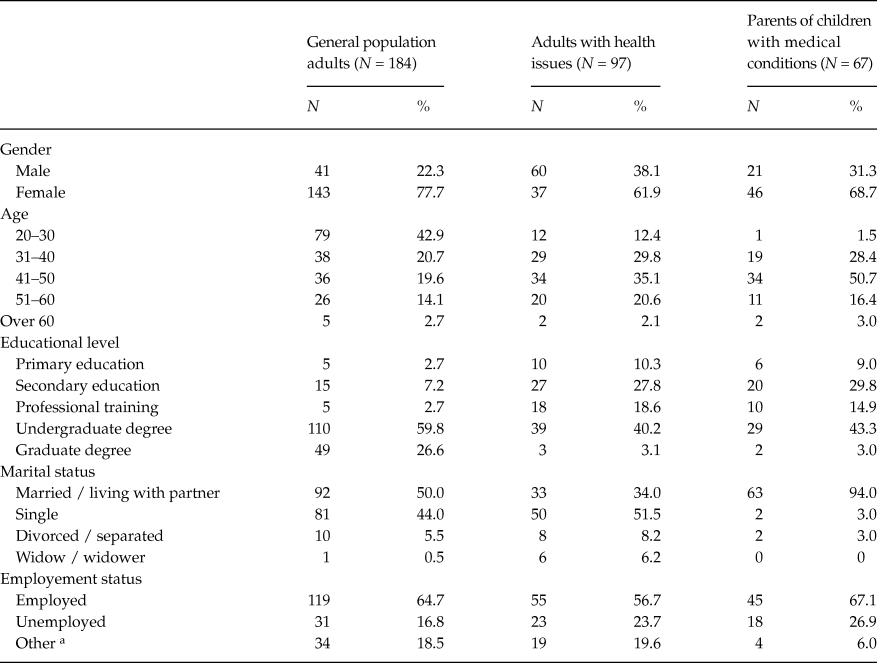
To ensure that answers to the SSRQA were appropriate (i.e., participants need to have experienced adversity to report on their bouncing back from it), we selected participants who reported having experienced adversity in the five areas considered. Thus, those participants who reported having never experienced adversity in at least one of the five areas considered were removed from the sample. A final sample of 348 participants who had experienced some degree of adversity in the five areas was used for the analyses (184 adults from the general population, 97 adults with health issues, and 67 parents of children with medical conditions). Table 1 shows the characteristics of the three subsamples.
Demographic Characteristics of the Subsamples

Note: N = Number of participants; % = Percentage of participants; a e.g., student, retired…
Instruments
Situated Subjective Resilience Questionnaire for Adults (SSRQA). The questionnaire, designed for this study, and in which resilience is considered as the phenomenon of bouncing back after a significant adversity, assesses the extent to which a person’s subjective resilience generalizes across situations or varies depending on the kind of adverse situation. Four experts with theoretical knowledge working in the field of resilience and health psychology suggested 20 relevant items in Spanish, four for each of the five kinds of adverse situations (work-related problems, problems with close relationships, own health issues, health issues of a close person, and financial problems). These situations were selected based on literature on coping with adversity that indicated that these are among the most frequent and important areas of adversity (Alonso-Tapia et al., Reference Alonso-Tapia, Rodríguez-Rey, Garrido-Hernansaiz, Ruiz and Nieto2016; Mattlin, Wethington, & Kessler, Reference Mattlin, Wethington and Kessler1990). A psychometric expert reviewed the phrasing of the items and made improvements. Half of the items were positively worded and the other half negatively worded in order to avoid acquiescence bias. Respondents were asked to rate items on a 5-point agreement Likert scale (1 = Strongly disagree, 5 = Strongly agree). Subscale and scale scores were designed to be calculated by recoding the inverse items and adding item response values. The original Spanish questionnaire and English translation are included in the Appendix.
Brief Resilience Scale (BRS; Rodríguez-Rey, Alonso-Tapia, & Hernansaiz-Garrido, Reference Rodríguez-Rey, Alonso-Tapia and Hernansaiz-Garrido2016). This is the Spanish adaptation of the questionnaire by Smith et al. (Reference Smith, Dalen, Wiggins, Tooley, Christopher and Bernard2008), which assesses subjective resilience as the ability to bounce back from adversity. It consists of 6 items rated on a 5-point Likert scale (1 = Strongly disagree, 5 = Strongly agree), and showed adequate internal consistency within the Spanish validation sample (α = .83) and the sample for this study (α = .85). Scores are calculated as the sum of the item responses, after recoding its three inverse items.
Connor Davidson Resilience Scale 10-item version (10-item CD-RISC; Campbell-Sills & Stein, Reference Campbell-Sills and Stein2007). This measure assesses resilience as the personal qualities that enable one to thrive in the face of adversity, that is, factors positively related to resilience (Windle et al., Reference Windle, Bennett and Noyes2011). It includes 10 items with five response options (0 = Never; 4 = Almost always), all of which are positively worded. The scale scores, which are calculated as the sum of the item responses, showed adequate reliability among Spanish university students (α = .85; Notario-Pacheco et al., Reference Notario-Pacheco, Solera-Martínez, Serrano-Parra, Bartolomé-Gutiérrez, García-Campayo and Martínez-Vizcaíno2011) and fibromyalgia patients (α = .88; Notario-Pacheco et al., Reference Notario-Pacheco, Martínez-Vizcaíno, Trillo-Calvo, Pérez-Yus, Serrano-Parra and García-Campayo2014), and within the sample for this study (α = .89).
Likert scales for assessing the degree of experienced adversity. Participants indicated the degree to which they had experienced problems in each of the areas assessed in the SSRQA using a 5-point Likert scale (1 = Never; 5 = Almost always).
Situated Coping Questionnaire for Adults (SCQA; Alonso-Tapia et al., Reference Alonso-Tapia, Rodríguez-Rey, Garrido-Hernansaiz, Ruiz and Nieto2016). This questionnaire comprises 40 items, which take into account three coping styles: Problem-focused coping (e.g., problem solving, positive thinking, and thinking avoidance; α = .86 in this sample), emotion-focused coping (e.g., rumination, emotional expression, and self-blame; α = .88) and social-focused coping (e.g., help seeking, self-isolation; α = .89). Respondents rated the items on a 5-point Likert scale (1 = Never, 5 = Almost always). Higher scores indicate higher use of the coping style.
Optimism and Self-efficacy. Two scales within the Resiliency Questionnaire for Adults (Alonso-Tapia, Garrido-Hernansaiz, Rodríguez-Rey, Ruiz, & Nieto, Reference Alonso-Tapia, Garrido-Hernansaiz, Rodríguez-Rey, Ruiz and Nieto2017). Each scale comprises four items (e.g., ‘In general, I tend to think that things will turn out well’, ‘In general, I think I am a person who can overcome problems successfully’), which were rated on a 5-point Likert scale (1 = Strongly disagree, 5 = Strongly agree). Reliability in this sample was adequate for both optimism (α = .77) and self-efficacy (α = .71).
Procedure
Ethics approval for this study was granted by the Research Ethics Committee at the authors’ University. To collect the general population data, university workers were asked to support the project by sending acquaintances an invitation to participate. Several NGOs were contacted regarding the collection of the health-distressed samples data, and were asked to send out invitation emails, which contained information about the study and a link to the informed consent and the questionnaires. Those willing to participate completed the questionnaires online.
Data analyses
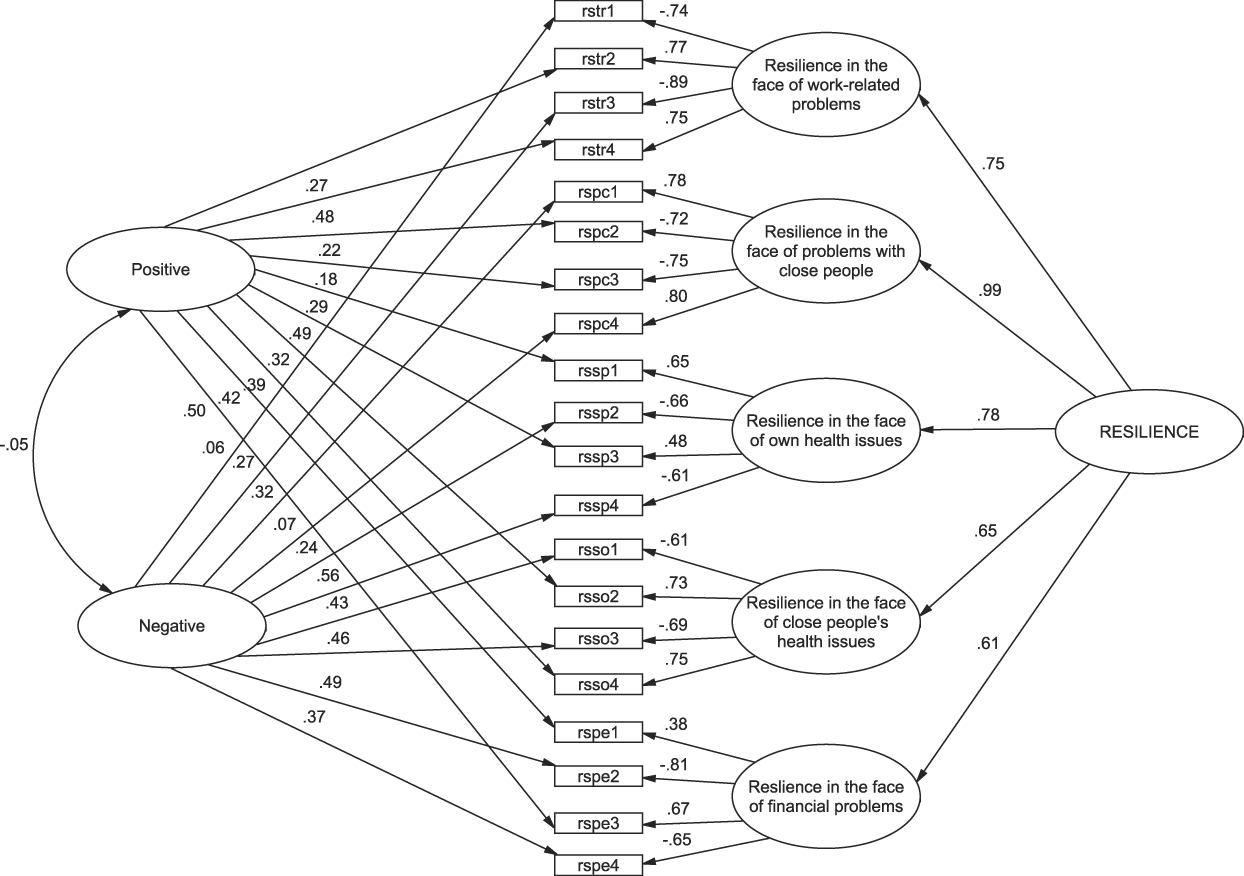
In relation to testing factorial validity, five models were specified and analyzed through Structural Equations Modeling to determine which model explained the factorial structure of the SSRQA best, and whether any of the subsequent additions worsened the fit to data rather than help explain them. All models include the items of the scale as the central element. Model 1 (M1) introduces a general resilience factor, while Model 2 (M2) considers instead five correlated situated resilience factors. Model 3 (M3) is a hierarchical model that combines the five situated resilience first-order factors with a general resilience second-order factor. Model 4 (M4) uses a bi-factor model to combine the general resilience factor and the assessment method, with two factors named “positive” (which include all the items positively worded) and “negative” (which include all the items negatively worded).
This fourth model was specified due to respondents’ tendency to reply differently to positively and negatively worded items, thus these items often form two separate factors, even when their content is consistent. This is known as the wording effect (e.g., Wu, Reference Wu2008). It does not constitute a methodological artifact, since people respond in a different way to positively and negatively worded items because they are sensitive to the apparent implications of content (i.e., negatively worded items make threats more salient as people have different sensitivities to stressful contexts; Boyce & Ellis, Reference Boyce and Ellis2005). This is a consideration that some authors in different areas of research are beginning to address (e.g., Aguado et al., Reference Aguado, Luciano, Cebolla, Serrano-Blanco, Soler and García-Campayo2015). Finally, Model 5 (M5) includes all the elements: Five situated resilience first-order factors, a general resilience second-order factor, and the two assessment method factors. This model used a combination of hierarchical and bi-factor models, which allowed for the disentanglement of the sources of variance (Guftafsson & Åberg-Bengtsson, Reference Guftafsson, Åberg-Bengtsson and Embretson2010), thus it is our hypothesis that it will demonstrate the best fit.
The sample was randomly divided into two subgroups (n 1 = 174; n 2 = 174). Each model was tested using confirmatory factor analysis using the first subsample, while model fit was compared to distinguish the effect of allowing for the general character, the situational dimension and the assessment method of resilience. Following this, a multi-group analysis was carried out to cross-validate the results of the best model across both randomized subsamples (i.e., an invariance test to ascertain if the model is estimated similarly in both subsamples). Then, a second multi-group analysis was carried out to cross-validate the best model, this time comparing the subsamples of included participants (n 1 = 348, who had experienced some degree of adversity in the five areas) and excluded participants (n 2 = 236, who reported no adversities in at least one of the five areas). Our expectation was that the model would demonstrate invariance in both multi-group analyses.
As variables were ordinal, we used the weighted least squares mean and variance adjusted (WLSMV) estimation method. Absolute fit indexes (χ2, χ2/df), relative fit indexes (TLI), and non-centrality fit indexes (CFI, RMSEA) were used to assess model fit, as well as criteria for acceptance or rejection based on the degree of adjustment—ratio χ2/df < 3; RMSEA < .08; CFI and TLI > .90 (Hair, Black, Babin, & Anderson, Reference Hair, Black, Babin and Anderson2010). Finally, Chen’s criteria (Chen, Reference Chen2007) were used for the invariance test. In accordance with these criteria, given a sample size greater than 300, a decrease greater than .010 for CFI and an increase greater than .015 for RMSEA would indicate non-invariance (i.e., the model is not estimated similarly in both samples). These analyses were performed with Mplus 7.2 (Muthén & Muthén, Reference Muthén and Muthén2012).
Reliability of each specific scale and that of the overall scale were calculated using Cronbach’s alpha coefficient. ANOVAs were performed to test mean differences across the three subsamples. In order to study the convergent and discriminant validity of SSRQA, we computed the correlations of the SSRQA scales scores with the BRS scores and the 10-item CD-RISC scores, as well as with several related constructs: Coping (problem-focused, emotion-focused, and social-focused), optimism, and self-efficacy.
According to Hair (Reference Hair2014), the correlation, r, should be equal or greater than .70 (R 2 ≥ .50) to obtain positive evidence of convergent validity. This is the result we expected for the relationship between the scores of the SSRQA and the BRS, as they both measure resilience (not factors which favor it) and they share the same understanding of resilience as the ability to bounce back (Smith et al., Reference Smith, Dalen, Wiggins, Tooley, Christopher and Bernard2008; Windle et al., Reference Windle, Bennett and Noyes2011).
We also expected positive correlations between the SSRQA and the CD-RISC scores, but we did not expect positive evidence of convergent validity because they do not measure the same construct—the CD-RISC measures personal qualities favoring resilience (Windle et al., Reference Windle, Bennett and Noyes2011) while the SSRQA measures resilience itself, understood as the ability to bounce back (Windle et al., Reference Windle, Bennett and Noyes2011). Thus, to assess discriminant validity we have followed the Fornell-Larcker criterion (Fornell & Larcker, Reference Fornell and Larcker1981), which states that the square root of the construct average variance extracted (AVE) should be greater than the squared correlation with the constructs with which it is compared. In the same way, we expected positive correlations with coping, optimism, and self-efficacy, as they are supposed to favor resilience (e.g., Alonso-Tapia et al., Reference Alonso-Tapia, Rodríguez-Rey, Garrido-Hernansaiz, Ruiz and Nieto2016; Keye & Pidgeon, Reference Keye and Pidgeon2013; Sabouripour & Roslan, Reference Sabouripour and Roslan2015), but we expected that the squared correlations would be lower than the square root of the SSRQA AVE, as these constructs do not constitute resilience.
Lastly, correlations were calculated to explore the relationship between degree of exposure to adverse situations and resilience in the face of these situations. To explore the possibility of non-linear associations between degree of exposure and resilience, a quadratic solution was calculated for each situation and compared to a linear solution. These analyses were performed with SPSS 23.
Results
Factor structure (model comparison) and cross-validation analyses
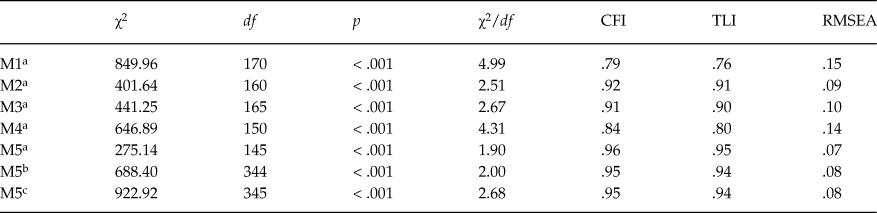
Each of the five models of the SSRQA were tested with the first randomized subsample. Table 2 shows the fit statistics for each model. As can be seen, the models including the type of adversity (M2, M3) and the assessment method (M4) had a better fit than the model including only a general resilience factor (M1). However, the best fit was obtained when all elements were considered (M5; see Figure 1)—chi-square statistic was significant probably due to the sample size (Hair et al., Reference Hair, Black, Babin and Anderson2010), but the remaining indices fell within the standard limits of acceptance.
Goodness of Fit Statistics of Different Models and of Multi-Group Cross-Validation Analyses of the Best Model

Note: a n 1 = 174; b Cross-validation analysis with random subsamples, n 1 = 174, n 2 = 174; c Cross-validation analysis by experienced adversity: n 1 = 348 (participants who have experienced adversity in all the situations included in the SSRQA), n 2 = 236 (participants who have not experienced adversity in all the situations included in the SSRQA).
Situated Subjective Resilience Questionnaire for Adults: Model 5 Standardized Solution.

Model 5 was then tested for invariance using both randomized subsamples (n 1 = 174; n 2 = 174) with a cross-validation analysis, showing very similar fit indices (see Table 2). Moreover, as the model syntax was the same in the two cases, results show that fit levels are adequate when restrictions were imposed for equality in measurement weights, structural weights, structural covariances, structural residuals, and measurement residuals. Furthermore, according to Chen’s criteria (2007), when testing M5 with one group and in cross-validation, CFI change did not decrease more than .010 and RMSEA did not increase more than .015, thus indicating invariance. This means that the tested model fitted the data similarly in both randomized subsamples, which would support the sample invariance of the model.
Model 5 was again subjected to cross-validation, this time using the subsamples of included participants (n 1 = 348) and excluded participants (n 2 = 236). The fit indices were also very similar this time (see Table 2) and, as the model syntax was the same in the two cases, results again indicated an adequate goodness of fit when restrictions were imposed for equality in measurement weights, structural weights, structural covariances, structural residuals, and measurement residuals. Chen’s criteria (2007) were also met this time, indicating model invariance—the tested model fitted the data similarly for the included and the excluded participants, which supports the sample invariance of the model.
Reliability
Regarding reliability, Cronbach’s alpha of the scores of the general resilience scale was very satisfactory (α = .90). The subscales also showed acceptable to good reliability, Cronbach’s alpha being .84 for the work resilience subscale, .80 for the close person relationship resilience subscale, .72 for the own health resilience subscale, .78 for the close person’s health resilience subscale, and .71 for the finances resilience subscale.
Differences across samples
No mean differences emerged across samples for general resilience and for resilience in the face of work problems, own health issues, and financial problems (p > .05). A marginally significant difference emerged for resilience in the face of close people relationship problems, F(2, 347) = 3.26, p = .040, but post-hoc Bonferroni analysis indicated no differences. There was a significant difference for resilience in the face of close people’s health issues, F(2, 347) = 3.10, p = .046, and post-hoc Bonferroni analysis revealed that those with health issues showed more resilience when a loved one had an important health issue (M = 11.22) than the general population adults (M = 10.05).
Convergent and discriminant validity
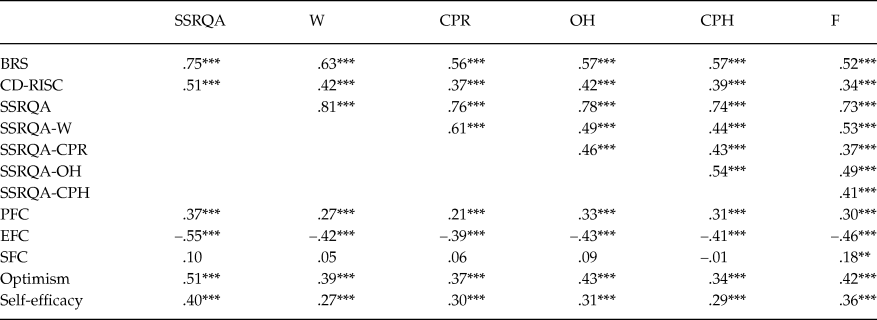
Concerning convergent validity, correlations among the scores of the general SSRQA scale, the situated subscales, and the BRS are shown in Table 3. All correlations were positive and significant (p < .01). The correlation between the SSRQA and the BRS was greater than .70, which, according to Hair’s criterion (2014), is adequate evidence of the SSRQA’s convergent validity. The lower correlations among the scores of the SSRQA subscales indicate that, although somewhat stable across circumstances, resilience varies to a certain extent depending on each situation.
Convergent and Discriminant Validity: SSRQA’s Correlations with Resilience Measures and other Related Constructs

Note: BRS = Brief Resilience Scale; CD-RISC = 10-item Connor-Davidson Resilience Scale; SSRQA = Situated Subjective Resilience Questionnaire for Adults; W = Work resilience subscale; CPR = Close person relationship resilience subscale; OH = Own health resilience subscale; CPH = Close person’s health resilience subscale; F = Finances resilience subscale; PFC = Problem-focused coping; EFC = Emotion-focused coping; SFC = Social-focused coping.
*** p < .001. ** p < .01.
As for discriminant validity, correlations among the scores of the SSRQA with the 10-item CD-RISC and with coping, optimism, and self-efficacy are also shown in Table 3. Regarding the CD-RISC, Hair’s criterion (2014) for evidence of convergent validity was not met, which matched our expectations, as the SSRQA assesses resilience as the ability to bounce back while the CD-RISC assesses resilience as the personal qualities that enable one to thrive in the face of adversity. Moreover, the squared correlation (.512 = .26), was quite lower than the square root of the SSRQA AVE (√.54 = .74), being indicative of discriminant validity according to the Fornell-Larcker criterion (1981).
The relationships between the SSRQA scores with coping, optimism, and self-efficacy provided evidence of discriminant validity again, according to the Fornell-Larcker criterion (1981), as the squared correlations were in all cases lower than the square root of the SSRQA AVE (√.54 = .74). It is noteworthy that the correlations of the SSRQA with emotion-focused coping and optimism were similar to those of the SSRQA with the 10-item CD-RISC. As noted before, the 10-item CD-RISC evaluates personality characteristics predisposing to resilience, including optimism. It thus makes sense that the relationships between the SSRQA and the CD-RISC are similar to the relationships between the SSRQA and other personal resources like optimism, as they assess factors affecting resilience, but not resilience itself.
Relationship between experienced adversity and resilience
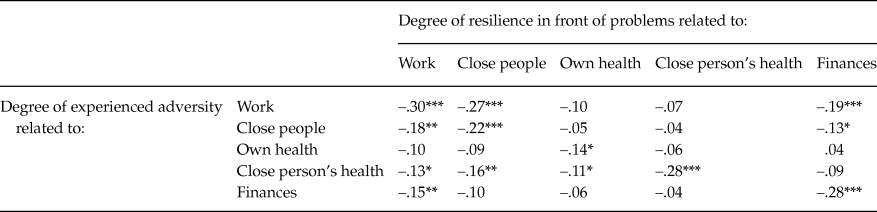
Table 4 shows the correlations between the situated resilience scale score and the degree to which the different types of adverse situations have been experienced. All the correlations between corresponding elements (e.g., resilience in the face of work-related problems and the degree to which work-related problems have been experienced) were inverse and significant, and higher than those between non-corresponding elements (e.g., resilience in the face of work-related problems and the degree to which one’s own health problems have been experienced), which were mostly non-significant or very low. As an exception, resilience in the face of close people relationship problems had a greater association with the degree of experienced work-related problems than with the degree of experienced problems with close people relationships.
Correlations between the Degree of Experienced Adversity and the SSRQA Subscales

Note: SSRQA = Situated Subjective Resilience Questionnaire for Adults.
* p < .05. ** p < .01. *** p < .001.
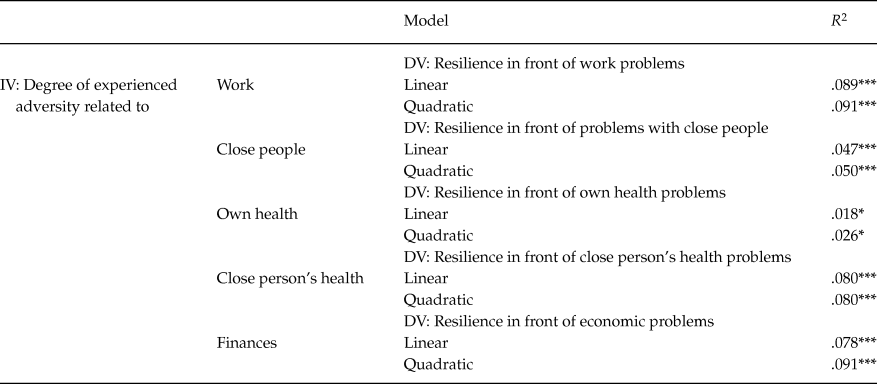
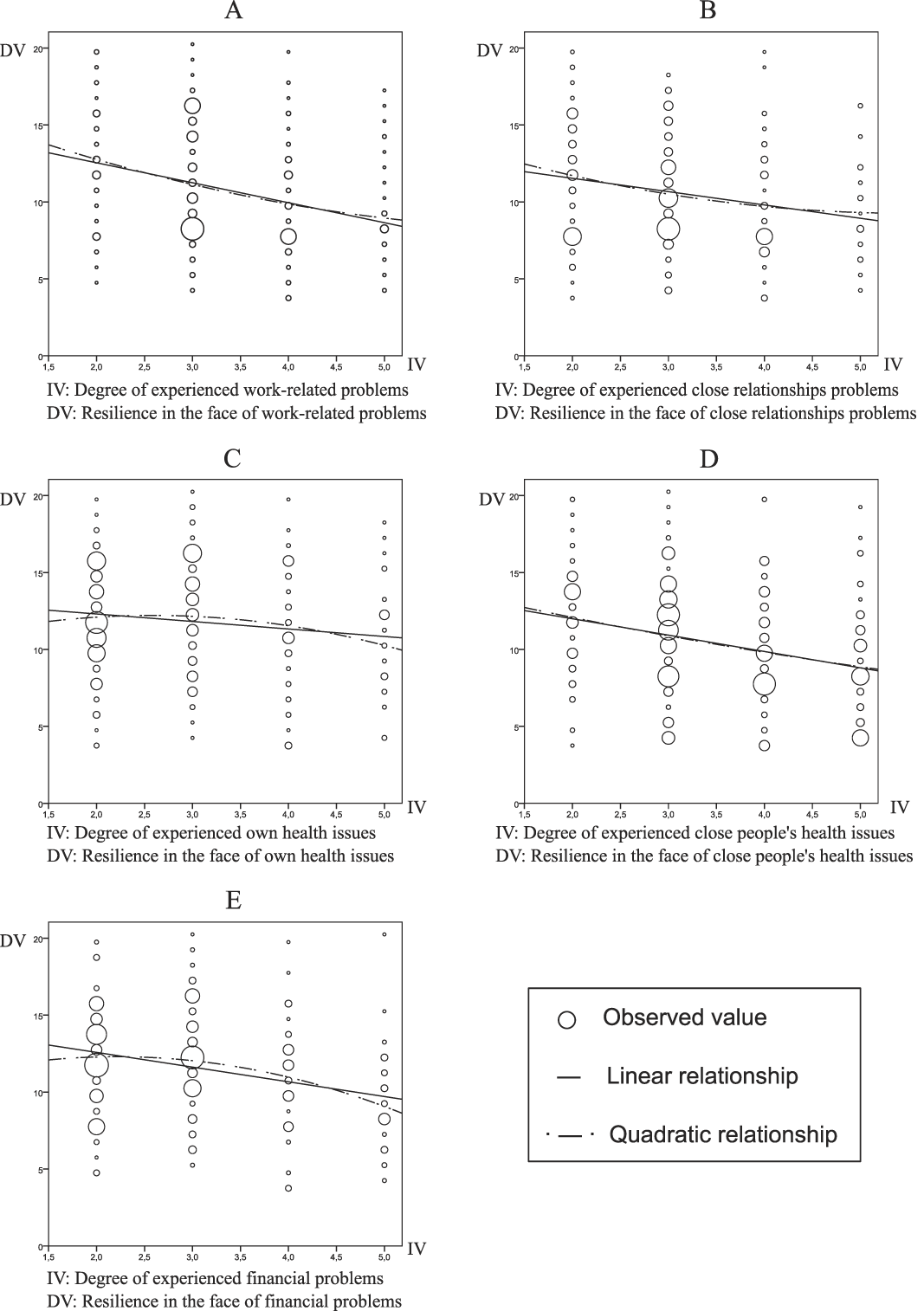
In order to study the possible nonlinear relation between the degree of exposure to each situation and resilience in each of these situations, the quadratic and linear associations between degree of exposure to each of the five situations, and resilience in the face of each situation, were calculated. These results are shown in Table 5 and Figure 2. In all cases, the difference between how the linear and quadratic relations explained the data was negligible. Thus, the data do not support the idea of a U-shaped inverse relation between stress exposure and adaptation.
Linear and Quadratic Relations between the Degree of Experienced Adversity Related to each Situation (IV) and Resilience in each Situation (DV)

Note: IV = Independent variable; DV = Dependent variable.
* p < .05. *** p < .001.
Linear and Quadratic Relationships between Degree of Kind of Experienced Adversity (Independent Variable—IV) and Degree of Resilience in front of such Adversity (Dependent Variable—DV).
Circle size represents the quantity of observed values.

Discussion
The results have provided evidence that supports the initial expectations about the structure of the SSRQA. The confirmatory factor analyses showed that non-situational models are unable to explain data which refer to different situations, while the situated model with a general resilience factor, and which takes into account the differential sensitivity to positively and negatively worded items (M5), demonstrated the best fit. Moreover, the cross-validation analyses indicated that this model was consistent across the two randomized subsamples and also across the included participants (who had experienced some degree of adversity in the five areas) and the excluded participants (who reported no adversities in at least one of the five areas). These results provide support for the hypothesized situational model with a general resilience factor in several populations, including people who may have not experienced difficulties in all the situations included in the SSRQA.
Thus, situations play an important role in determining the degree in which individuals demonstrate resilience in the aftermath of an adversity. Accordingly, resilience cannot be considered a relatively general tendency, as it depends on the specific demands (Luthar, Reference Luthar, Cicchetti and Cohen2006; Reaching IN... Reaching OUT, 2010). However, resilience also tends to generalize across contexts to some extent. This may be due to the fact that strategies for dealing with a particular problem may be first learned in a specific context, and then transferred to other situations over time. The lack of total generalization across situations may be due to the fact that not all kinds of adversity can be successfully dealt with in the same way.
Reliability was acceptable to good for the subscales scores, and very good for the general scale’s scores. Convergent and discriminant validity of the SSRQA scores was supported by their correlations with the BRS scores fulfilling Hair’s criterion (2014) and their correlations with the 10-item CD-RISC scores not doing it. These results were expected because, as previously stated, the SSRQA and the BRS share a similar understanding of resilience as the ability to bounce back (Smith et al., Reference Smith, Dalen, Wiggins, Tooley, Christopher and Bernard2008), whereas the 10-item CD-RISC was designed to measure personal qualities that enable one to thrive in the face of adversity (Windle et al., Reference Windle, Bennett and Noyes2011). In accordance with this, the correlations of CD-RISC’s scores with SSRQA’s were lower than the standard criterion for convergent validity and they also met Fornell-Larcker’s criterion (1981) for discriminant validity.
Discriminant validity was also supported by the weaker association that SSRQA scores had with coping and with personal factors (i.e., optimism, self-efficacy). In these cases, the correlations met the Fornell-Larcker criterion (1981) for discriminant validity. Some of those associations were similar in strength to the ones found with the 10-item CD-RISC, which again was expected as the latter measures personality traits. The associations followed the expected direction in all cases: positive for problem-focused coping (Alonso-Tapia et al., Reference Alonso-Tapia, Rodríguez-Rey, Garrido-Hernansaiz, Ruiz and Nieto2016), optimism (Sabouripour & Roslan, Reference Sabouripour and Roslan2015; Segovia et al., Reference Segovia, Moore, Linnville, Hoyt and Hain2012), and self-efficacy (Benight & Cieslak, Reference Benight, Cieslak, Southwick, Litz, Charney and Friedman2011; Keye & Pidgeon, Reference Keye and Pidgeon2013), negative for emotion-focused coping (Alonso-Tapia et al., Reference Alonso-Tapia, Rodríguez-Rey, Garrido-Hernansaiz, Ruiz and Nieto2016), and very weak or non-significant for social-focused coping (Alonso-Tapia et al., Reference Alonso-Tapia, Rodríguez-Rey, Garrido-Hernansaiz, Ruiz and Nieto2016).
The degree to which people had experienced a particular kind of adversity was negatively correlated with subjective resilience in the face of that situation and was generally not associated with resilience in the face of other situations. The exception was resilience in the face of close people relationship problems, which had a greater association with the degree of experienced work-related problems than with the degree of experienced problems with close people relationships. An explanation to this finding may be that (1) the workplace constitutes an avenue for problems that usually involve the relationship between two persons; (2) people also build close relationships with co-workers and other people from work; and (3) serious problems arising at work are often unavoidable in the short-term, as people usually need to keep attending work. Thus, having relationship problems at work might affect the global perception of the ability to bounce back from relationship problems in general, including those with close people (who may or may not be from work).
The correlations between the corresponding elements (degree of experienced adversity and subjective resilience), though low, were significant. This fact implies that the SSRQA measures multiple, context-specific resilience constructs, speaking in favor of the scales’ ability to discriminate different degrees of resilience in different adverse situations. In addition, the negative associations found would indicate that repeated exposure to adversity could undermine resilience, which would be congruent with the sensitization model (Bonanno et al., Reference Bonanno, Brewin, Kaniasty and La Greca2010). However, as these analyses are correlational, it could also mean that the individuals who perceived themselves as less resilient also perceived the adversities they had faced as greater or more frequent. Concerning these negative associations, the data did not support the idea that a curvilinear inverse U–shaped model would explain them better than a linear one (Seery et al., Reference Seery, Holman and Silver2010). Nevertheless, this finding is limited by the fact that the data are retrospective, and thus very susceptible to bias (Masten & Narayan, Reference Masten and Narayan2012). Furthermore, only a number of adverse situations were considered, so these findings need to be further replicated and also investigated in adverse situations different from the ones included the SSRQA.
The findings of this study have important implications, both for research and clinical practice. Since resilience depends on both the difficult situation and the individual, measures that include different situations should be used to accurately assess to which degree an individual shows resilience in different contexts. Moreover, these instruments might be useful to better predict adaptation following a specific threat. This situated questionnaire took into account both the general tendency of the individuals and their situational specificity, constituting an innovative resilience measure. Hence, paths for future research suggest the development of questionnaires that address different or more particular threatening situations typically faced by specific populations (e.g., people with health conditions, individuals with financial difficulties). This would generate both a general indicator of resilience in the face of that threat (e.g., HIV diagnosis, having a child admitted to pediatric intensive care) and specific indicators of resilience towards different aspects of that threatening event (e.g., disclosing HIV diagnosis, seeing the child surrounded by machines). This could allow for the improvement of adaptation prediction, which could guide the implementation of preventive psychological interventions and modify the maladaptive recovery path and foster resilience.
This study presents with some limitations. First, online recruitment and participation limited the access to the study to those individuals with access to—and knowledge about—computers, emails and web-browsing, which could imply a sample biasing (e.g., more than 70% of the sample had university education). Second, as the data are correlational, causal relationships cannot be stablished, therefore longitudinal studies are needed. Third, as we already mentioned, the measure included five possible adverse situations, thus being narrow in range and thus requires expansion. Finally, while this study included a sample from the general population, people with health related conditions, and individuals whose children had a health-related problem, it was not necessarily representative of people who had experienced the other three adversities (financial, work-related, or close relationships problems). Further research should address these limitations and expand our knowledge on the psychometric properties of the SSRQA, especially with regard to different populations exposed to adversities.
In conclusion, although more research is necessary, we believe that the Subjective Situated Resilience Questionnaire for Adults is a reliable measure with a well-defined structure that is valid for measurement purposes in Spanish populations.
Appendix
Situated Subjective Resilience Questionnaire for Adults (SSRQA)
Original questionnaire (Spanish)
Instrucciones: A continuación, encontrará una serie de afirmaciones sobre sí mismo/a con las que puede estar más o menos de acuerdo. Señale la opción que representa su grado de acuerdo con el contenido de la afirmación, según la siguiente escala:
Escala de respuesta:

Ítems:
1. Cuando he tenido problemas en el trabajo que me han generado mucho malestar, el disgusto me ha durado mucho tiempo
2. Cuando he tenido problemas (como discusiones, etc.) que me han afectado mucho con personas cercanas de mi entorno (familiares, amigos, etc.) me he recuperado rápidamente
3. Me ha costado mucho dejar de sentirme mal cuando he tenido problemas importantes (como enfados, etc.) con personas cercanas (familiares, amigos, etc.)
4. Me he recuperado fácilmente del malestar cuando ha surgido algún problema relacionado con mi propia salud que me ha causado un disgusto importante
5. Cuando un familiar u otra persona cercana ha tenido un problema de salud serio, me ha resultado difícil reponerme del impacto que me ha causado
6. Cuando he tenido dificultades económicas que han supuesto un auténtico problema para mí, he tardado poco tiempo en superar el malestar
7. Cuando he tenido problemas importantes en el trabajo, el disgusto se me ha pasado rápidamente
8. Cuando he tenido problemas (como disputas, etc.) con personas cercanas de mi entorno (familiares, amigos, etc.), he tardado mucho tiempo en dejar de sentirme mal
9. Cuando he tenido problemas importantes con personas cercanas de mi entorno (familiares, amigos, etc.) -por ejemplo, cuando hemos discutido- me he recuperado fácilmente del disgusto
10. Cuando he tenido un problema de salud importante me ha resultado difícil superar el disgusto que me ha causado
11. Cuando un familiar o persona cercana a mí han tenido un problema de salud serio, me he recuperado fácilmente del malestar que me producía esa situación
12. En situaciones en que he tenido dificultades económicas que han supuesto un importante problema para mí, me ha sido muy difícil dejar de sentirme mal
13. Me ha llevado mucho tiempo recuperarme cuando he tenido problemas en el trabajo que me han afectado fuertemente
14. Cuando he tenido un problema de salud que me ha afectado psicológicamente, el malestar me ha durado poco tiempo
15. He tardado mucho en superar el malestar cuando un familiar o alguien cercano a mí ha tenido un serio problema de salud que me ha generado mucho estrés
16. En las situaciones en que he tenido dificultades económicas que han supuesto un serio problema para mí, no me ha costado mucho superar el malestar
17. Cuando he tenido dificultades en el trabajo que me han supuesto un estrés importante me he repuesto fácilmente
18. Cuando he tenido problemas de salud serios que me han afectado profundamente, no he dejado de sentirme mal hasta que ha pasado el problema de salud
19. He sido capaz de reponerme rápidamente en los casos en que un familiar o persona cercana a mí ha tenido un problema de salud importante que me ha afectado
20. Cuando he tenido dificultades económicas importantes que me han generado mucho malestar, no he dejado de sentir ese malestar hasta que la situación económica se ha estabilizado
English translation
Instructions: This questionnaire consists of several statements about oneself. Please use the rating scale below to indicate the degree to which you agree with each statement.
Response scale:

Items:
1. When I have had problems at work that made me feel very upset, the distress lasted a long time
2. When I have had problems with close people (such as arguments with family or friends) that affected me deeply, I have quickly recovered
3. I have found it difficult to stop feeling bad when I have had important problems (such as arguments) with close people (family or friends).
4. When I have had a health issue that I was badly affected by, I easily recovered from that distress
5. When a family member or another close person has suffered from a serious health problem, I have had a hard time recovering from the distress
6. When I have had financial problems that were a real worry for me, it did not take me long to overcome the stress
7. When I have had important problems at work, the distress went away quickly
8. When I have had problems (such as arguments, etc.) with close people (family or friends), it took me a long time to stop feeling bad
9. When I have had important problems with close people (family, friends, etc.), for instance when we have had an argument, I have easily recovered from the distress
10. When I have had an important health issue, I had a hard time overcoming the distress that it caused me
11. When a family member or a close person has had a serious health issue, I have quickly recovered from the upset caused by that situation
12. When I have had a financial difficulty that was a real problem for me, it was difficult to stop feeling bad
13. It took me a long time to recover when I have had problems at work which affected me deeply
14. When I have had a health issue that has psychologically affected me, the upset has not lasted long
15. It has taken me a long time to overcome the distress when a family member or a close person has had a serious health issue that caused me great stress
16. When I have had a financial difficulty that was a serious problem for me, it was not hard for me to overcome the stress
17. When I have had work difficulties that caused me great stress, I have easily recovered
18. When I have had serious health problems that deeply affected me, I have felt bad until the health issue was gone
19. I have been able to recover quickly when a family member or a close person has had an important health issue that disturbed me
20. When I have had an important financial difficulty that caused me great distress, I have felt bad until the financial situation was resolved