INTRODUCTION
In this review, we summarize the progress that has been made on the sequencing and analysis of the genome of Trichinella spiralis. Genome information from T. spiralis has immediate application to both intraspecific (T. spiralis) and interspecific investigations into the biology of parasitic nematodes. Major groups belonging to the phylum Nematoda have been categorized into 5 clades (I to V; Blaxter et al. Reference Blaxter, De Ley, Garey, Liu, Scheldeman, Vierstraete, Vanfleteren, Mackey, Dorris, Frisse, Vida and Thomas1998). The bulk of genomic data represents clade V-nematodes, which includes the free-living nematode Caenorhabditis elegans, and Clade III-nematodes in relation to filarial parasites. T. spiralis is a nematode of clade I, the most distant evolutionarily from clade V. Hence, the genome sequence of T. spiralis will allow an important survey of representatives that span the phylogenetic extremes of the Nematoda. There is keen interest in identifying biological features that uniquely define the nematodes. Insights into unique aspects of host-nematode interactions could assist in developing control strategies with broad applicability. Knowledge of characteristics that are broadly conserved, whether unique or not to nematodes, have considerable potential. In addition, comparative genomic analyses provide useful information that should be able to explain adaptations responsible for the radiation of nematode lineages and species. Thus, studies of genomic data are expected to provide exciting insights into molecular determinants of parasitism. The preliminary analyses presented herein provide examples of such applications.
The biological characteristics of T. spiralis and related species within this genus are complex, diverse and challenging to study. The importance of the genome sequence to advance progress in this area has been discussed (Mitreva and Jasmer, Reference Mitreva and Jasmer2006). A few examples of contemporary biological topics will be mentioned here to illustrate some expected benefits.
A part of the diversity amongst Trichinella spp. stems from the dichotomy of two distinct evolutionary lineages within the genus, the encapsulated lineage and the non-encapsulated lineage. These two lineages diverged an estimated 15–20 million years ago (Zarlenga et al. Reference Zarlenga, Rosenthal, La Rosa, Pozio and Hoberg2006). The designation of the encapsulated form relates to the morphological characteristic of the collagen capsule, which develops early during the muscle stage of the infection to surround host muscle cells infected by first-stage larvae (L1). In contrast, non-encapsulated species do not provoke the production of the capsule. While the collagen capsule appears to be host derived (Haehling et al. Reference Haehling, Niederkorn and Stewart1995; Polvere et al. Reference Polvere, Kabbash, Capo, Kadan and Despommier1997), cellular mechanisms responsible for its development and maintenance are not well understood. Nevertheless, the differential induction of this structure is associated with other dichotomies between lineages, including major changes induced in host muscle cells, relative cold tolerance of muscle larvae and disparate immunological interactions with their hosts (Stewart et al. Reference Stewart, Wood and Boley1985). It is possible that the collective differences that distinguish the two lineages represent biologically inter-related consequences of a basal adaptation that led to the initial diversification. Consequently, comparative genomics across the two lineages is expected to provide significant evolutionary and other biological insights. The genetic characteristics of both newborn larvae (referred to here as immature L1, immL1), which migrate and invade host muscle cells, and the L1 muscle larvae (ML) that develop within muscle cells are two stages relevant to interactions with the infected muscle cells.
The enteric stage of infection is equally fascinating, in that T. spiralis and presumably other Trichinella species, invade and simultaneously occupy multiple host intestinal epithelial cells (Despommier, Reference Despommier and Campbell1983) as appears to be the case for other nematodes in the Trichuroidea. Developmental stages of Trichinella that inhabit the small intestinal niche include ML digested from muscle, which develop through to the adult (Ad). The stages presently most amenable to research during the intestinal phase of infection are the ML and Ad, as there is a rapid development (days) from L1 to L5 and the previous need for in vivo infections to initiate that development. Advances in in vitro culture of intestinal stages may help alleviate this obstacle (Gagliardo et al. Reference Gagliardo, McVay and Appleton2002). While the specific advantages conferred by this unusual mode of multi-intracellular infection are unresolved, the invasion process involves exquisite coordination in the parasite among sensory and motor control as well as mechanisms of host cell recognition and penetration. It is presently unclear whether the parasite actively manipulates the host epithelial cell for its own purposes, or simply extracts benefit (sustenance and protection) as it passes through.
An extracellular existence characterizes ML following its release from muscle tissue and prior to intestinal cell invasion. ImmL1 also have an extracellular existence prior to the invasion of muscle cells. After their release from adult females, immL1 must translocate from the small intestine into the skeletal musculature of the host. This journey involves the entry into the circulatory system, transport and the invasion of muscle cells. In this sense, the immL1 is the only stage of infection that is extracellularly exposed to the peripheral immune system. In contrast to ML, which rapidly invade epithelial cells, immL1 are produced and released for a prolonged period during a single infection. Hence, there is potential for acquired immunity to develop against this stage, which can be induced (Marti et al. Reference Marti, Murrell and Gamble1987). The prolonged extracellular existence in a peripheral tissue compartment may demand adaptations that are unique to immL1.
In addition to the basic biological interactions with host cells invaded by Trichinella species, there are numerous accounts of interactions with the host immune system during the enteric, muscle and migratory phases of the infection. Documented interactions relate to protective immune responses, immunopathological changes, immunosuppression, polarization of responses related to host cytokines and specific parasite antigens, modulation of responses against other pathogens, and immune responses of diagnostic value (summarized by Mitreva and Jasmer, Reference Mitreva and Jasmer2006). Some advances have been made through knowledge of parasite molecules involved in some of these interactions, but we are at an early stage in identifying specific molecules and the mechanisms involved.
From the considerations presented in this article, the diversity of host niches occupied by Trichinella spp., known interactions with the host immune system and cells invaded by the parasite lead to an expectation of numerous molecular and cellular adaptations that facilitate success of these parasite life-cycles. Information on the genomes of Trichinella species should provide a useful platform for the discovery of adaptations and dissection of mechanisms that mediate these interactions. Genomic investigations will also assist studies of the biodiversity and ecology of Trichinella spp. Although recognized as having broad host ranges, differences in host compatibility characterize individual species representing both encapsulated and non-encapsulated forms. These differences among species have important links to their distribution and dynamics of transmission in the environment. With an improved understanding of the phylogeny within the genus (Zarlenga et al. Reference Zarlenga, Rosenthal, La Rosa, Pozio and Hoberg2006), comparative genomics may provide insights into the molecular determinants of these differences and hence basic information on the more global epidemiology of trichinellosis.
EXPRESSED SEQUENCE TAG (EST) DATASETS
The genomic analysis of T. spiralis began with the generation of expressed sequence tag (EST) databases for 3 life-cycle stages; immL1, ML and Ad. Results from this work have been published (Mitreva et al. Reference Mitreva, Jasmer, Appleton, Martin, Dante, Wylie, Clifton, Waterston and McCarter2004) and reviewed (Mitreva et al. Reference Mitreva, Appleton, McCarter and Jasmer2005), such that they are not considered here, except for selected applications. Some useful statistics include: (i) 10 130 ESTs were generated and condensed into 3454 gene clusters (overlapping ESTs are condensed into contigs and contigs are grouped into clusters of related sequences); (ii) ESTs were conservatively predicted to represent 3262 genes; (iii) EST representation for stages was 3234 (immL1, 1046 clusters), 4028 (ML, 1908 clusters) and 2891 (Ad, 995 clusters); and (iv) 12·6% of clusters (which likely includes housekeeping genes) were recognized as similar among multiple developmental stages. The percentage of expressed genes that are common among these stages is expected to be much higher, and will require deeper sampling. In addition to observations summarized in published accounts, the EST data clearly supported the ancient phylogenetic divergence of T. spiralis (clade I) from other nematodes in clades III, IV and V of the Nematoda. Gene sequences apparently unique to T. spiralis by comparison with data for C. elegans and other nematodes and organisms, indicated possible lineage or species-specific characteristics. ESTs also identified stage-specific characteristics in an unexpected way. For instance, a family of ESTs encoding DNase II-like protein sequences in the immL1 stage, displayed extensive diversity by comparison with related sequences expressed by a prototypical DNase-II like protein (p43), which is secreted from ML (Vassilatis et al. Reference Vassilatis, Despommier, Misek, Polvere, Gold and Van Der Ploeg1992; discussed below). Comparisons with other species showed that 56·2% of all clusters of translated molecules had significant similarity with proteins from other organisms, including nematodes, whereas 4·5% had similarity restricted exclusively to other nematodes. These data support the proposal that sequences from a clade I-nematode should contribute to our understanding of nematode biology at multiple phylogenetic and intraspecific levels. Therefore, based on findings derived from this EST project, the value of the genome sequence from a clade I-nematode was substantiated. The EST data, in the context of the rich biological history of Trichinella spp., provided a foundation for the sequencing of the genome of T. spiralis. The EST and clusters of sequences provide an essential starting point for the analysis of the T. spiralis genome sequence. In addition to their use as probes for assessing, for example, the quality of the genome sequence, the content of specific genes and gene families, EST data can also be used effectively for developing algorithms for gene models (start sites, intron/exon boundaries) to be used for large-scale gene discovery.
THE GENOME SEQUENCING PROCESS
The rapid increase in sequence data submitted to public databases in the past 10 years reflects the substantial improvements in DNA sequencing techniques. DNA sequencing procedures date back to the mid-1970's; of the two early techniques, Maxam-Gilbert chemical analysis method (Maxam and Gilbert, Reference Maxam and Gilbert1977, Reference Maxam and Gilbert1980) and Sanger's enzymatic procedure, employing chain-terminating nucleotides (Sanger et al. Reference Sanger, Niklen and Coulson1977), only the latter has been used routinely for high throughput sequencing. Since the introduction of these techniques, numerous technological refinements in DNA sequencing have been reported, aimed at producing more information per sequencing run, and increasing throughput. These refinements and advances have contributed to a continuous decline in the costs of sequencing and rapid data collection, making it more feasible to carry out sequencing projects on ‘neglected parasites’, such as T. spiralis.
The two most frequently used approaches for the sequencing of genomes include the ‘clone-by-clone’ and the ‘whole genome’ methods. For the clone-by-clone method, a genetic resource is needed to map genes, and the DNA sequence is derived from a known region. In whole genome shotgun (WGS) sequencing, the DNA is first broken into fragments and then sequenced at random and assembled together by looking for overlaps (Sanger et al. Reference Sanger, Coulson, Hong, Hill and Petersen1982). To date, this approach has dominated in the sequencing of the T. spiralis genome. The advantage of WGS is that it requires no prior mapping. Experience tells us that whole-genome shotgun sequencing leaves gaps. To close these gaps a primer-directed sequencing (pre-finishing) is performed (http://genome.wustl.edu/platforms.cgi?id=5), which reduces the number of contigs and resolves low quality regions.
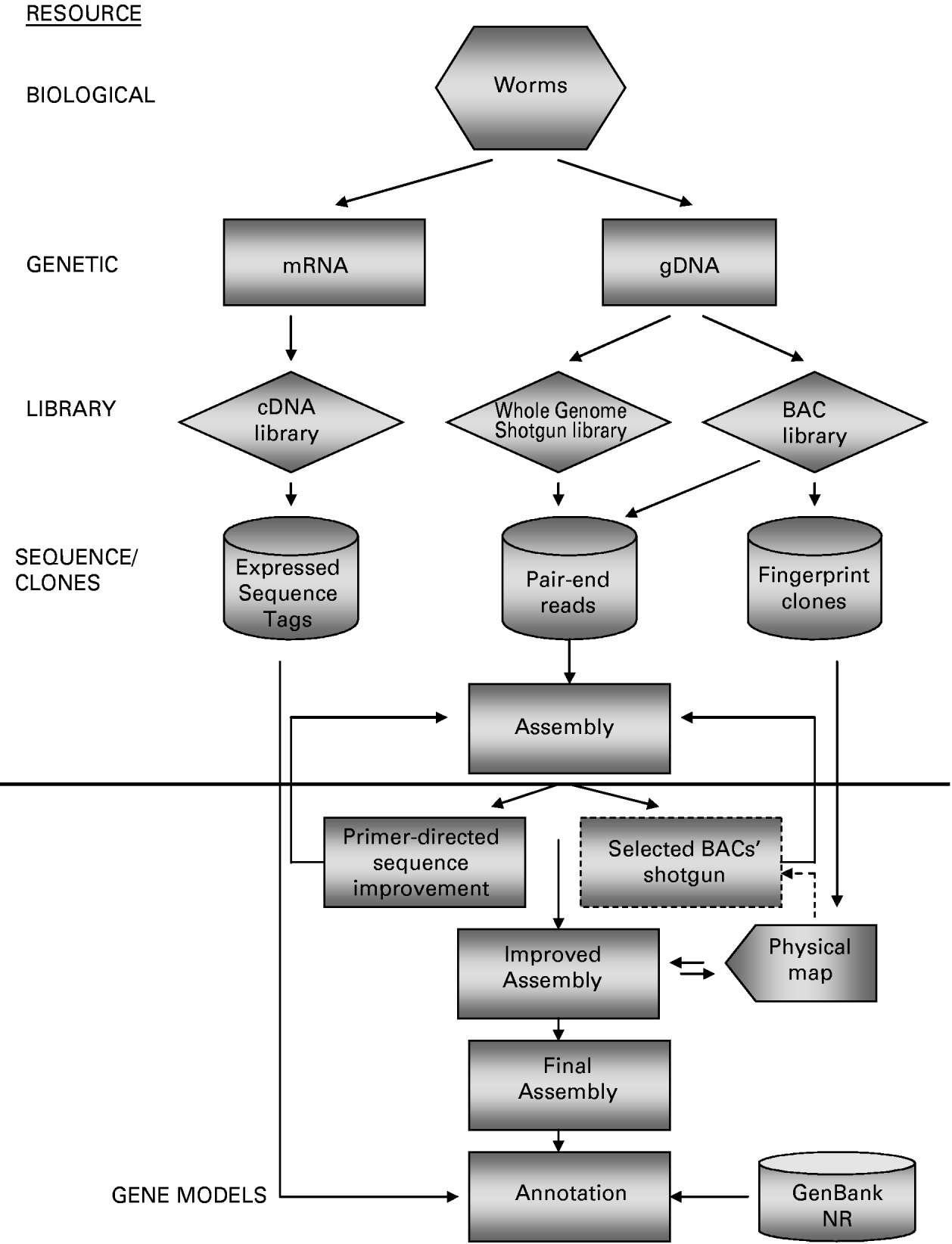
Fig. 1 shows the major steps involved in the sequencing of the genome of T. spiralis. The strategy required a bacterial artificial chromosome (BAC) fingerprint map, BAC end-sequencing, 8-fold sequence coverage in plasmids, end sequence of a filamentous phage-plasmid (fosmid) library at 0·3-fold coverage, followed by 2 rounds of directed sequence improvement. The line represents the present status of the T. spiralis genome project. The project is currently focused on the final assembly and annotation.
Outline of a genome sequencing process. The horizontal line demarcates the current status of the Trichinella spiralis genome project. The dotted line indicates a clone-by-clone approach which was not undertaken when sequencing the T. spiralis genome.

For the annotation of the T. spiralis genome, the first step was to identify repeat elements (e.g. Bao and Eddy, Reference Bao and Eddy2002) in the final assembly, which enables masking of the genome prior to ‘gene calling’. Different protein-coding prediction algorithms usually have concordance for predicting genes, but they disagree on the grouping of exons into genes (Reese et al. Reference Reese, Hartzell, Harris, Ohler, Abril and Lewis2000). Generally, a combined approach is used to minimize the number of occasions on which different gene prediction algorithms give different results for the same region of the genome. Genes can be predicted using several evidence-based prediction programs, such as Genewise (Birney et al. Reference Birney, Clamp and Durbin2004), FGENESH_PLUS (Salamov and Solovyev, Reference Salamov and Solovyev2000), Eannot (Ding et al. Reference Ding, Sabo, Berkowicz, Meyer, Shotland, Johnson, Pepin, Wilson and Spieth2004), and ab initio predictions, such as Fgenesh (Salamov and Solovyev, Reference Salamov and Solovyev2000), GeneMark (Besemer and Borodovsky, Reference Besmer and Borodovsky2005) and Snap (Korf, Reference Korf2004) and the Ensembl annotation pipeline (Clamp et al. Reference Clamp, Andrews, Barker, Bevan, Cameron, Chen, Clark, Cox, Cuff, Curwen, Down, Durbin, Eyras, Gilbert, Hammond, Hubbard, Kasprzyk, Keefe, Lehvaslaiho, Iyer, Melsopp, Mongin, Pettett, Potter, Rust, Schmidt, Searle, Slater, Smith, Spooner, Stabenau, Stalker, Stupka, Ureta-Vidal, Vastrik and Birney2003). The available ESTs from T. spiralis (Mitreva et al. Reference Mitreva, Jasmer, Appleton, Martin, Dante, Wylie, Clifton, Waterston and McCarter2004) will provide valuable information when used via the evidence-based gene prediction algorithms to determine exon/intron and gene boundaries as well as splice-isoforms. The long-term goal of the project is to produce a fully annotated genome of T. spiralis, which offers the greatest utility for researchers.
STATUS OF THE T. SPIRALIS GENOME
In December 2007, a total of 4 168 619 traces were available in the National Center for Biotechnology Information (NCBI) trace archive from T. spiralis generated using different sequencing substrates: 3 940 023 are genomic sequences, 29 360 BAC end reads, and 199 236 fosmid hybrid vector end sequences.
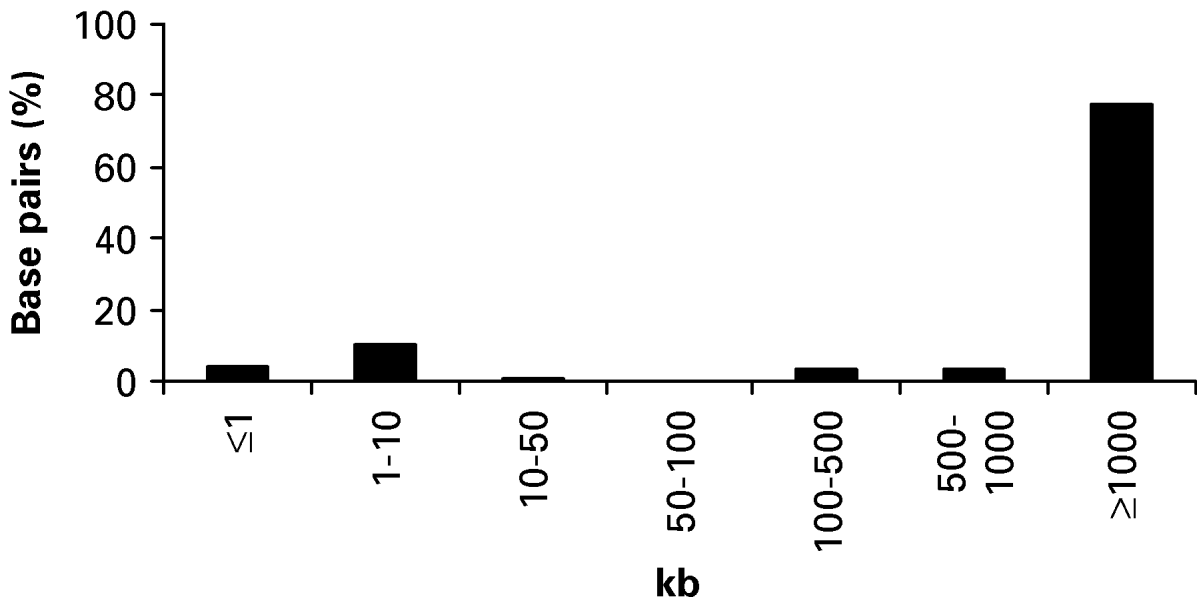
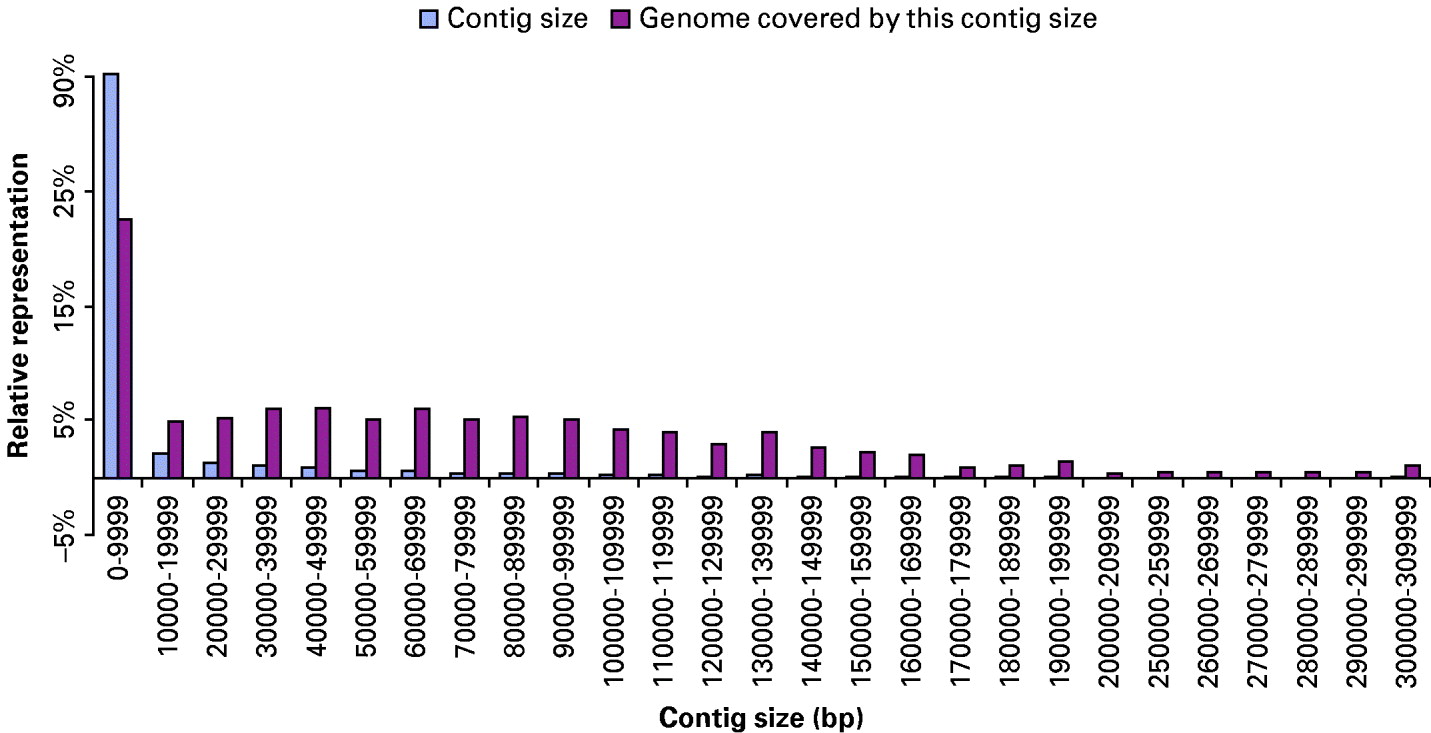
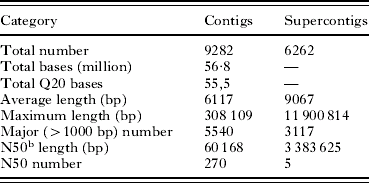
The assembly of the T. spiralis genome is an on-going process and the initial assembly is expected to be improved after gap closure by primer-directed reactions (see Fig. 1). The initial assembly was generated using the PCAP package (Huang et al. Reference Huang, Yang, Chinwalla, Hillier, Minx, Mardis and Wilson2006) on the paired-end sequences from plasmid, fosmid and BAC end clones. Ninety-six % (3 389 303/3 534 683) of the reads were placed in the assembly with 97% (55 472 619/56 779 425) of the sequences having output contig quality scores of ⩾Q20 (Table 1). The assembled genome size (56·8 Mb) was smaller than estimates published earlier (Searcy and MacInnis, Reference Searcy and MacInnis1970), but was similar to a recent genome size estimate of 1C=71·3+/11·2 Mb, based on flow-sorted nuclei, stained with propidium iodide (Spencer Johnston, unpublished). The data provided an average coverage of 35x, and the genome is represented by 6262 large regions (supercontigs) comprised of ordered and oriented fragments (contigs) interspersed with gaps. The majority of the sequence generated (78%) is in 14 supercontigs of size ⩾1 Mb (Fig. 2); 9% of the contigs are larger than 10 kb, covering 77% of the genome (Fig. 3). Primer-directed sequence improvement (automated closure) and a BAC-based physical map, intended to close gaps and improve the assembly, are underway. The automated closure will target the gaps within the supercontigs, in addition to regions of low sequence coverage. The clones which contain these regions are automatically selected, primers are generated, and these areas are to be sequenced using a ‘primer walking’ approach.
Distribution of bp per supercontig size bin: cumulative percentage of bp in each size bin. Example: 10% of all bp in the assembly (~5·8 Mb) are in supercontigs of size 1–10 kb.

Distribution of contigs per size, and coverage per contig size group. For example, 90% of the contigs are smaller than 10 kb, but they cover only 23% of the genome. Hence, 77% of the genome is in 816 contigs.

Trichinella spiralis assembly characteristicsFootnote a

a Assembly version v-1.0; 03/22/2006.
b The N50 length is the length such that 50% of the sequence is contained in segments of length X or greater.
With the availability of an extensive amount of the genomic sequence of T. spiralis, a preliminary assessment was made of the quality and utility of the data. While some chromosomal and cDNA sequences already existed for a number of T. spiralis genes, we chose to utilize the EST database to begin this assessment, due to the large representation of genes in this database. Consensus nucleotide sequences for contigs of overlapping EST sequences were used [contigs are then grouped into clusters, as described (Mitreva et al. Reference Mitreva, Jasmer, Appleton, Martin, Dante, Wylie, Clifton, Waterston and McCarter2004)] in BLASTN analyses. Approximately 95% of all contigs had matches to the genome sequence equal to or greater than a cut-off value of 99% identity. This level of agreement indicates that a high percentage of the T. spiralis genome has been sequenced. Gene ontology analysis of T. spiralis ESTs implicated protein sequences in a broad range of cellular functions and pathways. With improved gene prediction programs, the stage is set to make useful predictions of functional aspects of molecules.
PRELIMINARY FINDINGS FROM THE GENOMIC DATA
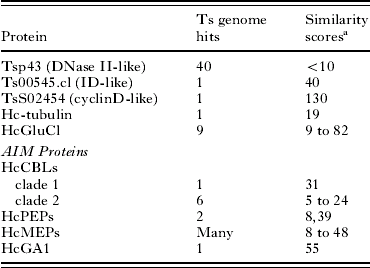
In the following section, we address some selected questions that have evolved from this and related projects, the rationale for which is provided within each section. It is important to note that the results described (Table 2) are preliminary and based on a draft genome sequence for T. spiralis; therefore, findings are subject to some change over time.
Summary of Ttichinella spiralis genome hits obtained with various protein probes, as described in the text

a Only the negative exponent for the similarity score is shown. Hc, Haemonchus contortus; Ts, Trichinella spiralis.
DNase II-like genes
DNase II-like genes can be used to illustrate how the genome sequence of T. spiralis can provide extensive information on biological characteristics of this parasite. Although not initially recognized as one, the secreted ML p43 protein is a DNase II homologue (MacLea et al. Reference MacLea, Krieser and Eastman2003) and has been investigated in the context of host-parasite interactions (Vassilatis et al. Reference Vassilatis, Despommier, Misek, Polvere, Gold and Van Der Ploeg1992). The analysis of EST data has identified related DNase II-like genes expressed by immL1 displaying unusually high diversity. The cluster TS00013.cl is composed of 29 contigs, in which the diversity of ESTs comprising contigs in this cluster approached 20% (Mitreva et al. Reference Mitreva, Jasmer, Appleton, Martin, Dante, Wylie, Clifton, Waterston and McCarter2004). To determine whether this diversity was reflected at the genomic level, the p43 protein sequence was used to screen the genome by TBLASTN (protein query versus translated database). The probe (DGAWIVHTVPGFPKARTGYSWPAAEIAKGHLLICMTIAKTQINAI) represented the translation of an exon, as indicated by an identical match from a genome BLAST analysis using the entire p43 protein. The probe identified 40 distinct genome hits with scores of 1×e−10 or greater (Table 2). Other examples showed that scores were only slightly higher, but <1×e−5, a standard cut-off for homology. Numerous matches were found to localize consecutively to multiple single-genome contigs, which suggests contiguous gene amplification. To assess the possibility of sequencing anomalies, several other probe sequences were used in similar searches. An example involved a search using a β-tubulin sequence from the trichostrongylid (clade V) nematode Haemonchus contortus. There was a single, high match with this sequence and several other sequences derived from the EST database (TBLASTX, translated nucleotide query versus translated database). The variable contig sequences that comprise TS00013.cl were then used and identified perfect or almost perfect matches in the genome. There are also 15 related cDNA sequences from immL1 that are in the public database (Liu et al. direct submission; http://www.ncbi.nlm.nih.gov/entrez/viewer.fcgi?db=nucleotide&val=63095190). Therefore, the diversity appears to be authentic and amplification of DNase II-like genes for expression by immL1 is a distinct possibility. The related p43 protein expressed by the ML stage is a secreted product, but only minor diversity of p43 ESTs is evident in this stage (Mitreva et al. Reference Mitreva, Jasmer, Appleton, Martin, Dante, Wylie, Clifton, Waterston and McCarter2004).
In relation to this diversity, it may be significant that the immL1 stage migrates extracellularly to infect muscle cells, while being released by Ad over a prolonged course of enteric infection. Hence, the potential for acquired immunity against the immL1 stage is high. Secreted DNases could be beneficial for the migration of the parasite through host tissues, and amino acid diversity could dampen host immune responses to these proteins. Functional relationships of these diverse DNase II-like molecules with tissue migration and evasion of the host immunity are intriguing in this context. Interestingly, no apparent diversity of this kind was found for related BLAST hits from genome sequences of C. elegans, H. contortus or filarial nematodes, or EST sequences from other nematode species (data not shown). This apparent, phylogenetically restricted gene amplification and diversification parallels the situation found for intestinal cathepsin B-like cysteine proteases expressed on the apical surface of H. contortus intestine (Jasmer et al. Reference Jasmer, Dautova Mitreva and McCarter2004). Such examples could reflect seminal adaptations that have promoted parasitism for given species or lineages. When related to other biological information (e.g., expression and tissue location), the functional importance of these observations may be better resolved.
Interactions with the host
There are relatively few candidate proteins or biosynthetic products from Trichinella species that are known to mediate interactions with host cells infected by these parasites. In this context, the application of molecular approaches and genomic sequence data are likely to contribute to the discovery of relevant molecules. The application of mass spectrometry will identify parasite proteins, isolated in a number of contexts. Amino acid sequences translated from T. spiralis EST data have already proven valuable for identification of proteins in excretory-secretory products (ESP) from ML released from infected muscle (Robinson and Connolly, Reference Robinson and Connolly2005). ESP from ML could mediate interactions with host cells in either the infected muscle cell or host intestinal cell compartments. The identification of nuclear antigens that localize to host muscle cell nuclei during the muscle phase of the infection might also be facilitated by mass spectrometric approaches. There are increasing numbers of proteins in ESP, for which information on function has become available, and secreted enzymes involved in nucleotide metabolism provide one interesting case (Gounaris and Selkirk, Reference Gounaris and Selkirk2005). The screening of the genome for examples of these enzymes can rapidly assess the size, content and diversity of the family under investigation. Tyvelose-containing glycans engage in significant interactions with host antibody responses (Denkers et al. Reference Denkers, Wassom and Hayes1990; Carlisle et al. Reference Carlisle, McGregor and Appleton1991), but it is uncertain whether glycans play more fundamental roles in the host-parasite interaction. One approach to investigate other roles is to inhibit glycan synthesis by genetic or chemical means, which may become possible via the identification of enzymes involved in glycan synthesis. Putative enzymes of relevance were identified by EST analysis (Mitreva et al. Reference Mitreva, Jasmer, Appleton, Martin, Dante, Wylie, Clifton, Waterston and McCarter2004) and genomic data should enhance prospects.
The muscle stage of infection involves the loss of the differentiated state and cell-cycle repositioning in host muscle cells (Jasmer, Reference Jasmer1993). Parasite-derived helix-loop-helix (HLH) antagonists of basic-HLH muscle differentiation factors have received attention as possible mediators of this effect (Vassilatis et al. Reference Vassilatis, Despommier, Misek, Polvere, Gold and Van Der Ploeg1992; Connolly et al. Reference Connolly, Trenholme and Smith1996; Jasmer and Kwak, Reference Jasmer and Kwak2006). In this regard, one T. spiralis EST was identified that had some similarity to the mammalian HLH inhibitor of differentiation (TS00545.cl; Mitreva et al. Reference Mitreva, Jasmer, Appleton, Martin, Dante, Wylie, Clifton, Waterston and McCarter2004), whereas another displayed similarity to cyclin D (TS02454.cl), which is a G1 cyclin which can cause an inhibition of muscle differentiation and influence cell cycle position (Table 2). In each case, these ESTs identified a single locus in the genome sequence. However, neither of the translated proteins had classic signal peptides. While these examples illustrate how genomic data may aid in the identification of proteins which mediate infected cell changes, these specific proteins do not yet meet expected criteria for consideration as likely mediator candidates.
Comparative analyses with data for other nematodes
Comparative genomics offers an important application of genome data to elucidate broadly conserved nematode characteristics of potential value for the development of new methods of parasite control. The availability of a clade I-nematode genome establishes a critical anchor point, which together with existing clade III- and V-nematode genomes provides preliminary coverage of the phylum. The genome sequence of T. spiralis is of importance in this context. The integration of genome and EST data from multiple nematode species from the different clades will lead to a rapid expansion of knowledge and application of these resources. We present selected examples to illustrate some benefits of these data.
A useful example is β-tubulin, which appears to be a primary cellular target for benzimidazoles, a group of anthelmintics (Martin, Reference Martin1997). Benzimidazoles are variably effective against T. spiralis, with more reliable efficacy against enteric stages and the early muscle stage of infection (Campbell and Denham, Reference Campbell, Denham and Campbell1983). There was a single, high quality match between one sequence in the T. spiralis genome using a β-tubulin protein sequence from benzimidazole sensitive H. contortus (KVSDTVVEPY NATLSVHQLVENTDETFCIDNEALYDICFRTLKLTNP, Accession number AAA29168). Phenylalanine (phe) at position 200 (underlined) has been associated with benzimidazole sensitivity, whereas a tyrosine substitution at this site is linked to resistance (Kwa et al. Reference Kwa, Veenstra, Van Dijk and Roos1995). The apparent T. spiralis β-tubulin sequence has a Phe at this position, which may explain T. spiralis susceptibility to benzimidazole treatment under some circumstances. Since a single gene was identified, other factors may explain the inconsistent susceptibility among life-cycle stages of T. spiralis. This example could be extended to other applications related to known or prospective targets for anthelmintics. For instance, glutamate-gated chloride channel proteins (GluCl) are implicated in conferring nematode sensitivity to macrocyclic lactones, but ivermectin is relatively ineffective against T. spiralis (Campbell and Denham, Reference Campbell, Denham and Campbell1983). Sequence and structural comparisons among these proteins from other nematode species, including T. spiralis orthologues, could provide valuable functional information. A GluClα probe from H. contortus gave at least 9 matches to sequences in the T. spiralis genome (Table 2). The T. spiralis genome sequences have now been used in broader analyses of cys-loop gated ion channels (Williamson et al. Reference Williamson, Walsh and Wolstenholme2007).
Molecules in the intestine of T. spiralis
The classification of proteins involved in basic functions of nematode tissues provides an important dimension to functionally analyse nematode genomes. Resultant information is expected to identify broadly conserved characteristics that could have applications to parasite intervention. Molecules in the intestine of nematodes represent one example. The lumenal surface of the intestine (apical membrane) is an important interface with the host molecules. Research on H. contortus has emphatically demonstrated that the intestine from this parasite has application to parenteral immunization, mucosal immunization and chemotherapy (Jasmer et al. Reference Jasmer, Yao, Rehman and Johnson2000, Reference Jasmer, Lahmers and Brown2007; Knox and Smith, Reference Knox and Smith2001). While the application of these observations to other parasitic nematodes is of interest, direct investigation of the intestine and other tissues is complicated either by the small size of many parasitic nematodes or constraints with the supply of parasite material. These obstacles exist for many nematodes of interest. We were interested in assessing the use of genome data to facilitate studies of particular tissues.
The examples that follow draw heavily on progress made with H. contortus because of the information available for this species. Nevertheless, we have initiated comparative genomics with intestinal ESTs and other data from species that are evolving as models for this research. The major focus has been on two parasites, H. contortus, and A. suum, and the free-living nematode C. elegans, due to the experimental advantages each has to offer. We have compared 41 106 intestinal ESTs from the two parasites and 5065 intestinal genes from C. elegans which grouped in 5586 protein families (unpublished data). Valuable progress has also been made with hookworms (Ranjit et al. Reference Ranjit, Jones, Stenzel, Gasser and Loukas2006).
Apical intestinal membrane (AIM) proteins from H. contortus are expected to have fundamental roles in nutrient digestion and acquisition as well as in immune responses. Accordingly, AIM proteins provide a specific example for discussion here. The best known AIM proteins include a diverse group of proteases, which includes aspartyl (pepsin-like, PEPs), cysteine (cathepsin B-like, CBLs), and metallo (MEPs) protease classes (Table 2). In H. contortus, these AIM proteases appear to reside in a large complex or complexes on the apical membrane surface (Smith et al. Reference Smith, Pettit, Newlands, Redmond, Skuce, Knox and Smith1999), perhaps functioning as a unit (a digestosome) in nutrient digestion. In addition to these proteases, the GA1 AIM proteins from H. contortus are of interest because they induced significant protective immunity against this parasite (Jasmer, Reference Jasmer1993; Jasmer et al. Reference Jasmer, Perryman, Conder, Crow and McGuire1993), although their functions are presently not known.
Pertinent questions regarding this group of molecules include (i) how conserved are the AIM proteins, and (ii) do they have application for the control of other parasitic nematodes? Some observations (Jolodar et al. Reference Jolodar, Fischer, Buttner, Miller, Schmetz and Brattig2004; Mitreva and Jasmer, unpublished) indicate that proteases related to AIM proteins are expressed in the intestine in at least some of the nematodes of clades I and III. To extend these observations, the T. spiralis genome was interrogated using protein sequence probes for each of the AIM proteins discussed (summarized in Table 2). Different search strategies were used, as dictated by the genomic characteristics of each protein or protein family. For instance, when a large number of prospective genes was identified using complete protein sequences, short probes representing exons were used to simplify the analysis and allow enumeration. In some cases, when apparent T. spiralis homologues were identified, the T. spiralis sequence identified was subsequently used to interrogate the genome.
Intestinal CBLs in H. contortus comprise a large family of diverse genes and proteins. An estimated 16% of H. contortus adult intestinal ESTs encoded CBL sequences (Jasmer et al. Reference Jasmer, Dautova Mitreva and McCarter2004). The relative abundance and diversity of these CBL ESTs are unique compared with other nematodes evaluated across the phylum. Accurate estimates are not yet available, but the number of distinct CBL loci could reach many tens of genes. The H. contortus genome sequence is incomplete, but a preliminary analysis supports this proposal. Two major CBL subfamilies (referred to as CBL clades) were identified based on the presence of a classic form of the occluding loop (CBL clade 1) or an altered version of this loop (CBL clade 2) (Rehman and Jasmer, Reference Rehman and Jasmer1999). In contrast, CBL ESTs were identified from A. suum intestinal RNA that represented 0·1% of those ESTs and encoded a classic occluding loop sequence. An estimated 12 CBL genes were found in the C. elegans genome, some of which are known to be expressed in the intestine (for summary, see Rehman and Jasmer, Reference Rehman and Jasmer1999) and encode a mix of classic and modified occluding loops. Intestinal CBLs are also known from other nematodes (summarized by Jasmer et al. Reference Jasmer, Dautova Mitreva and McCarter2004). Using a CBL probe for a clade 1-occluding loop, only 1 strong match was found in T. spiralis genomic sequences, while a CBL probe for a clade 2-occluding loop identified 6 T. spiralis genomic matches. Since CBLs are expressed in the intestine of diverse nematode species, some or all of the T. spiralis genomic sequences may represent ‘intestinal genes’. Specific reagents can now be produced to determine whether CBLs represent a conserved intestinal component for clade I-nematodes. While it seems likely that CBLs represent a broadly conserved characteristic of the intestine across the phylum Nematoda, the term ‘conserved’ is conditional. For instance, the relative representation of CBL mRNA and diversity does not seem to be conserved, different CBL lineages appear to have undergone expansion among species, and no CBLs were identified for filarial nematodes. Nevertheless, even the diverse CBLs expressed in intestinal cells of H. contortus are of interest as vaccine candidates (Redmond and Knox, Reference Redmond and Knox2006), and may have significance for other parasitic nematodes. From these considerations, CBL proteins appear to represent a highly plastic family, the composition of which has been ‘customized’ extensively during the evolution of nematodes.
Intestinal aspartyl proteases (PEPs) have been investigated for a number of nematode species. There are at least 2 related but distinct intestinal examples found in H. contortus, HcPEP-1 and HcPEP-2 (Longbottom et al. Reference Longbottom, Redmond, Russell, Liddell, Smith and Knox1997). Related proteases have been described from the intestine of C. elegans (see Tcherepanova et al. Reference Tcherepanova, Bhattacharyya, Rubin and Freedman2000) and Ancylostoma caninum (see Williamson et al. Reference Williamson, Lecchi, Turk, Choe, Hotez, McKerrow, Cantley, Sajid, Craik and Loukas2004). Evidence for 2 aspartyl proteases exists in intestinal ESTs from A. suum (unpublished data), and an intestinal aspartyl protease has been reported for Onchocerca volvulus (see Jolodar et al. Reference Jolodar, Fischer, Buttner, Miller, Schmetz and Brattig2004). The HcPEP-1 sequence was used to probe T. spiralis EST clusters, and the translated sequence of the ‘best cluster match’ was used to probe the T. spiralis genome. Two examples were identified, which were similarly identified when the HcPEP-1 sequence was used to probe the T. spiralis genome. Hence, we identified at least 2 putative aspartyl proteases, which may be intestinal proteases. It was noted that the protein sequences for clade I-nematodes were divergent from the clade V-nematodes. We have also noticed substantial diversity in these protein sequences among clade V-nematodes. The low number of prospective genes in the T. spiralis genome is consistent with observations made for the other nematodes.
MEPs comprise a family of AIM metalloproteases in H. contortus (see Knox et al. Reference Knox, Redmond, Newlands, Skuce, Pettit and Smith2003). The H. contortus MEP-1b sequence identified a best match from the T. spiralis genome, which was one long continuous sequence of 708 amino acid residues. This sequence was used to probe the T. spiralis genome, which identified an additional series of segmental sequences with spacing, suggesting separation by introns. In addition, multiple other high similarity hits were obtained, the large number of which complicated the interpretation of the results. It is possible that numerous metalloprotease genes were detected. The best matches represent prospective intestinal MEPs, which can now be investigated.
Although the functions are unknown, GA1 proteins of H. contortus have been shown to induce significant immunity against challenge infection (Jasmer et al. Reference Jasmer, Perryman and McGuire1996). The H. contortus GA1 polyprotein p100GA1 is evidently processed to produce 2 closely related AIM proteins, p46GA1 and p52GA1 (Jasmer et al. Reference Jasmer, Perryman and McGuire1996); p52GA1 has an apparent C-terminal glycosylinositolphospholipid anchor sequence and its membrane attachment is phospholipase C-sensitive. In contrast, there are two p52GA1 homologues in C. elegans (see Rehman and Jasmer, Reference Rehman and Jasmer1998, and unpublished observations), which appear to have undergone a tandem duplication but lack a polyprotein organization. While not yet identified in A. suum, GA1 homologues have been detected in EST data for T. spiralis, A. caninum and Trichuris muris (unpublished observation). A single contig match was found in the T. spiralis genome with a combined length (over exons) which was equivalent to a single GA1 protein, and the highest similarity was to p52GA1. The T. spiralis sequence had similarity to bacterial TolB proteins, as did the GA1 proteins. The highest TolB similarities for these proteins located to a region encoding a β-propeller domain, but have not yet clarified the putative function of the GA1 proteins. While functions remain unknown, the GA1 AIM proteins do appear to have ancient origins within the phylum Nematoda. This perspective may be important given the immunological significance of these proteins. Also, the broader phylogenetic conservation that can be attributed to GA1 proteins should stimulate interest in establishing their functional roles.
In summary, the analysis of genes linked to intestinal tissues identified a number of prospective proteins in T. spiralis that are predicted to function as AIM proteins. While non-intestinal homologues may have been identified, similarities with molecules from H. contortus support the proposal that at least some of the emphasized T. spiralis sequences do possess related intestinal functions. This prediction can now be investigated at both the molecular and the cellular level. This example demonstrates how rapid advancements can be made in the nematode system, such as for molecules involved in nutrient digestion and acquisition. AIM proteins and cellular processes that transport these proteins to the intestinal surface have been implicated as targets for control of clade V-nematodes. Genes identified from T. spiralis should support experiments to determine how general these inferences might be. A much larger database of ‘intestinal genes’ is under development (Mitreva and Jasmer, unpublished), intended to support much more extensive applications of this kind. With the ongoing development of relevant databases, parallel applications seem eminently achievable for other parasite tissues, stages, cells and cellular pathways.
CONCLUSIONS
The genome sequence for T. spiralis is nearing completion. This progress combined with a comprehensive EST database offers valuable resources for investigating the intriguing biology of T. spiralis and related species. The standing of T. spiralis in clade I means that anchor points of genome sequences now exist that span the phylum (clades I, III and V), which facilitates comparative analysis across the phylum. Consequently, the T. spiralis genome sequence provides a valuable dimension to dissect the biology of parasitic nematodes and elucidate their evolution. Selected examples of molecules were used to assess anticipated applications of the genome sequence in relation to T. spiralis and other nematodes. The integration of EST and genome data provided insights into lineage and or species-specific characteristics, such as the T. spiralis genes encoding DNase II-like proteins and H. contortus genes encoding CBL proteins. The unique characteristics of these families of genes and gene products in each species may reflect key adaptations to parasitism. Applications of the genome sequence to discovering potential drug targets is particularly valuable in the context of similarities and differences in target sequences, genome organization and gene content. This proposal is clearly supported by data presented here and in published accounts, drawing on this and other genome sequences. A useful demonstration of pan-phylum application was the identification of a substantial set of prospective AIM protein genes for a clade I-nematode, based on similarities to a clade V-nematode. While suggesting that multiple AIM proteins are conserved in a pan-phylum context, reagents can also be designed to test this possibility at the molecular and cellular levels. Consequently, emerging tools provide unique prospects to support pan-phylum investigations of molecules, such as those involved in nutrient digestion in nematodes. The genome sequence of T. spiralis provides an important anchor point for coverage that now spans the phylum. Recognized benefits of this coverage will be enhanced upon the completion of the genomes for multiple additional nematode species currently being sequenced (Mitreva et al. Reference Mitreva, Zarlenga, McCarter and Jasmer2007).
Funding for the sequence characterization of the Trichinella genome is being provided by the National Human Genome Research Institute (NHGRI), National Institutes of Health (NIH).