Introduction
Poultry is an important sector that contributes to food security and availability worldwide. Poultry meat remains the most consumed meat around the world, accounting for nearly two thirds of all animal meat products (Poultry trends, 2013; OECD/Food and Agriculture Organisation of the United Nations, 2013). Despite rising feed costs, global poultry meat and egg production continues to increase. Meat production increased steadily from 56 million metric tons in 1996 to 104 million metric tons in 2012, and production is projected to reach 108 million metric tons in 2013 (Poultry Trends, 2013). World egg production increased (2000-2012) by 28.4% with China and the United States being the top egg-producing countries in the world (Poultry trends, 2013).
Global exports of broiler meat expanded by over 25% during the past five years, with more than 80% of that growth attributed to Middle Eastern and Sub-Saharan African demand (USDA/FAS, 2013). In Middle Eastern countries, consumption of poultry meat and eggs vary, depending on the population size and the economic situation in that country. In Kuwait, poultry meat is popular and a major source of human dietary protein (Al-Nasser, Reference AL-NASSER2006; Rose and Al-Saffar, Reference ROSE and AL-SAFFAR2014). The poultry industry in Kuwait is an important source of chicken meat and eggs, and the industry is dominated by two large poultry companies that are completely integrated with broilers, pullets and layers, and broiler breeders operations, in addition to feed mill, hatchery and slaughterhouse facilities. These companies cover about 80-90% of the local production of meat and table eggs. Two other companies are considered to be medium size and are specialised mainly in the production of table eggs. The rest are small producers who produce only broilers from one or two houses, each containing 5,000 to 10,000 broilers. The medium-size companies, together, with the small producers cover about 10 to 20% of the local production (Taha and Henney, Reference TAHA and HENNEY2005; Al-Nasser, Reference AL-NASSER2006; Rose and Al-Saffar, Reference ROSE and AL-SAFFAR2014).
Despite the importance and major role played by the poultry industry in Kuwait as a source of chicken meat and eggs, the industry faces several challenges Therefore, the objective of this paper is to discuss the problems facing poultry production in Kuwait and to discuss possible solutions for these constraints.
Poultry meat production and demand in Kuwait
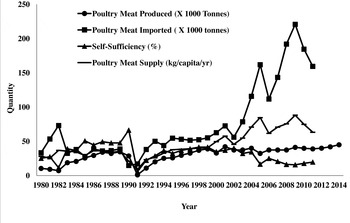
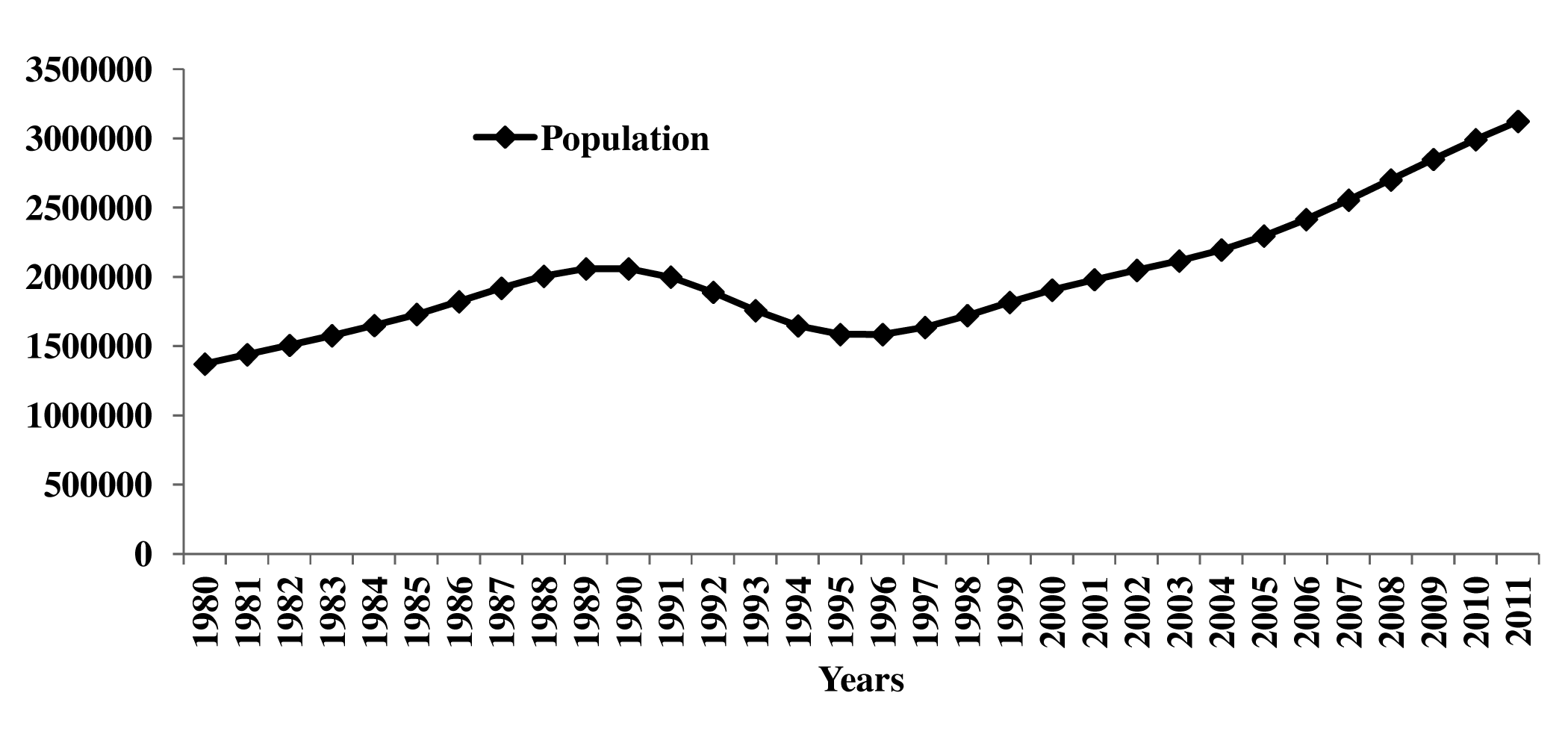
The majority of poultry production in Kuwait concentrates on chicken meat and table eggs because of consumer demand. Chicken meat is considered one of the most important food commodities produced in Kuwait (FAOSTAT, 2014). Local production of poultry meat increased from 10,504.00 Mt in year 1980 to 39558.96 Mt in 2012 (FAOSTAT, 2014). In addition, the local production of poultry meat in Kuwait is estimated at 42,000 Mt in 2013 and the forecasts reach 45,000 Mt in 2014 (FAO, 2014; USDA, 2014a). In spite of the increase in local production, the importation of poultry meat to Kuwait has increased to cover the high local demand (Figure 1). Local production succeeded providing more than 50% of the local demand for poultry meat in 1985 and an average of 47% from 1986-1989. During the Iraqi invasion of Kuwait in 1990, self-sufficiency reached 66% in 1990 because of the reduction in importation and the dependency of the country on strategic stores of poultry meat, which confirms the importance of the poultry for food security. Local production increased steadily from 10,943 Mt in 1992 to 42,000 Mt in 2013. Local production covered 41% of the local demand in 1998-1999, but from year 2000 the self-sufficiency percentage began declining, being only 20% of the local demand in 2011 (Figure 1) (FAOSTAT, 2014; Rose and Al-Saffar, Reference ROSE and AL-SAFFAR2014). This may be due to the continuous increase in the human population (Figure 2) and an increased consumption per capita for poultry meat, and, whilst the local production fluctuates with a slight increase in meat production, this cannot not cover local demand. The per capita poultry meat consumption in Kuwait has increased steadily from 1992 (23.3 kg/capita/yr) to reach 63.3 kg/capita/yr in 2011 with an average of 75.3 kg/capita/yr from year 2000 to 2011. A similar trend has been reported in Saudi Arabia and the United Arab Emirates (UAE). In Saudi Arabia, poultry consumption has been growing steadily at an average annual rate of 5% over the last two decades. Despite the steady growth in poultry consumption, domestic poultry production has not kept pace with demand. Saudi Arabia's poultry production satisfied about 51.6% of its consumption needs in 2007. However, in 2010, poultry production declined to 39% of the country needs and poultry imports increased by 62% (USDA, 2012a; 2013). Expansion in broiler production operations by the largest poultry producers in Saudi Arabia resulted in an increasing production from 426,000 Mt in 2010 to 640,000 Mt in 2013. In the UAE, poultry production increased steadily from 36,000 Mt in 2008 to 41,000 Mt in 2013 and is projected to reach 43,000 Mt in 2014. However, the local production in the UAE in 2013 covered only about 17% of total market demand for poultry meat with the remaining 83% from imports (USDA, 2012b; 2014b). Poultry meat consumption is expected to remain strong in the UAE, supported by rising human population, growing tourism and transit passengers passing through the UAE airport, and its price advantage over other meats (USDA, 2014b).
Poultry meat produced (Tonnes), imported (Tonnes), poultry meat supply (kg/capita/yr) and self- sufficiency (%) in Kuwait during the period 1980-2011.
(FAOSTAT, FAO Statistics Division 2014).

Kuwait occupies the 12th position worldwide in meat consumption, and chicken is the most consumed meat in Kuwait, where red meat consumption was 22.6 kg/capita/yr in 2011 (BAC, 2012; FAOSTAT, 2014). Worldwide poultry meat consumption increased and surpassed livestock meat and pork consumption (Poultry trends, 2013). As reported by USDA/FAS (2014) the total domestic demand for broiler meat (ready-to-cook equivalent) of foreign countries (China, EU, Brazil, Mexico, India, Russia, Japan, South Africa, Argentina, Indonesia and others) increased from 63,623,000 tons (2010) to 70,988,000 tons (2014). In United States, the total domestic demand for broiler meat increased from 13,472,000 tons (2010) tons to 14,087,000 tons (2014) (USDA/FAS, 2014). The increase in the demand for poultry meat in Kuwait is mainly due to health-related concerns about fat, saturated fat and cholesterol levels being less in chicken than in mutton. In addition, poultry meat is a very popular dish in Kuwaiti meals due to the increased convenience of chicken products (skinless, boneless breast, chicken nuggets) and other products in the market, and its lower price when compared to red meat. As part of Kuwait government-funded food subsidy programme, frozen poultry meat is provided at low prices to Kuwaiti nationals, (Al-Nasser, Reference AL-NASSER2006; Trostle et al., Reference TROSTLE, MARTI, ROSEN and WESTCOTT2011; Adeyemo and Onikoyi, Reference ADEYEMO and ONIKOYI2012; USDA/FAS, 2013; Rose and Al-Saffar, Reference ROSE and AL-SAFFAR2014).
Kuwait populations during the period 1980-2011.
(FAOSTAT, FAO Statistics Division 2014).
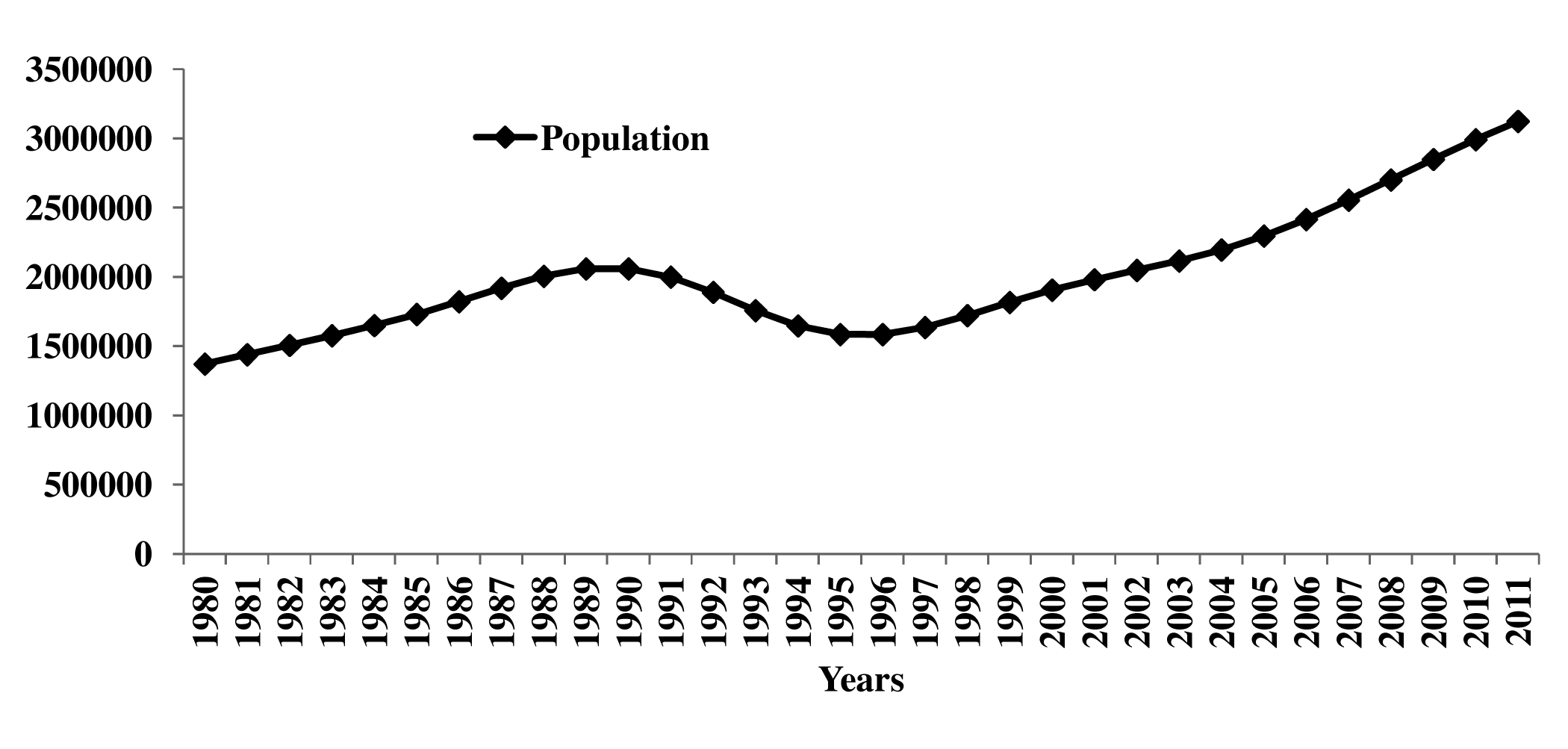
Table egg production and demand in Kuwait
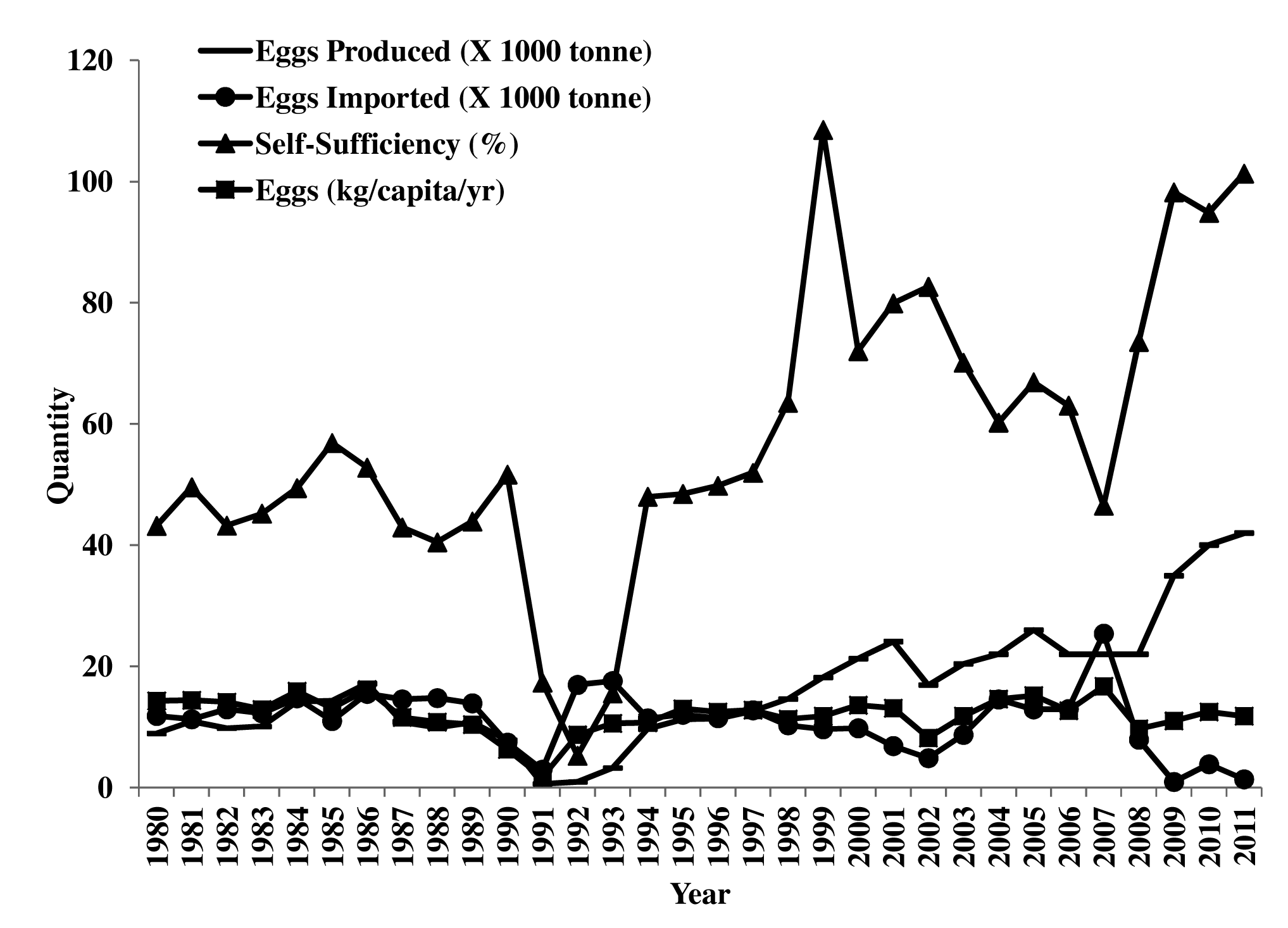
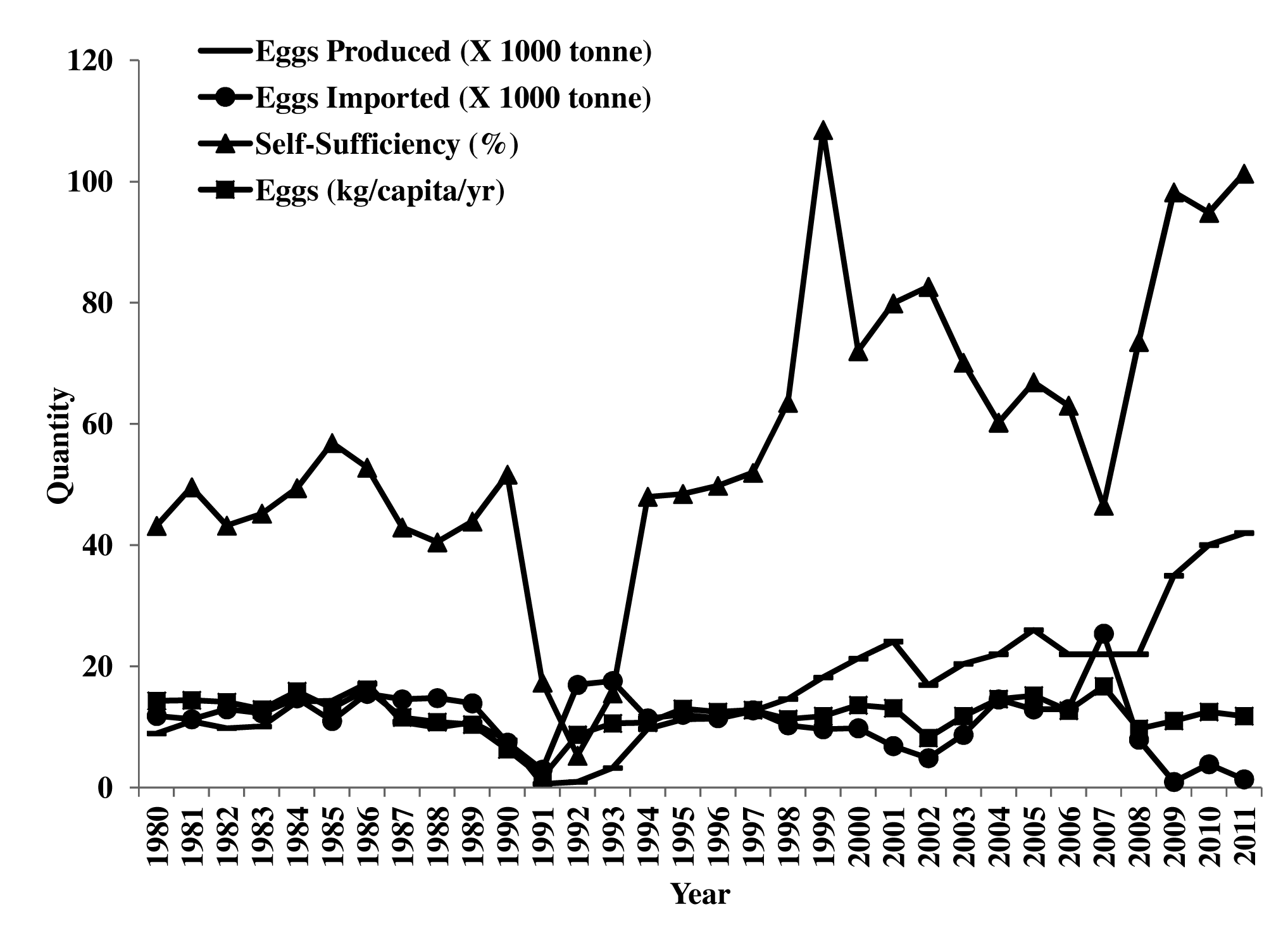
Table egg production in Kuwait increased steadily from 1980-1989 (before the Iraqi invasion) from 8,940 Mt in 1980 to 10,745 Mt in 1989, with an average per capita egg consumption was 13.3 kg/capita/year (about 223 eggs/capita/yr), and maximum consumption of 16.2 kg/capita in 1986 (about 270 eggs/capita/year). During this period (1980-1989), the poultry industry covered about 47% of the local demand for eggs. After liberation, local egg production increased from 940 tons in the year 1992 to 42,000 tons in 2011 (FAOSTAT, 2014), and imported eggs reduced from 16,951 tons in 1992 to 1,367 tons in 2011. Self-sufficiency increased drastically from 5% in 1992 to 101% in 2011 (FAOSTAT, 2014). Hence, the local poultry industry succeeded in covering the local demand for poultry eggs and reducing reliance on imports (Figure 3).
It is important to note that, post liberation, the average per capita egg supply was 12 kg/capita/year (about 200 egg/capita/yr) with maximum egg supply of 16.7 kg/capita/yr in 2007 (about 278 eggs/capita/yr) (FAOSTAT, 2014). Figure 3 shows the fluctuation in egg consumption which may be related to consistent change in producer numbers throughout the years, and to consumer health concern related to cholesterol problems and to the change in breakfast items from eggs to cereals (Al-Nasser, Reference AL-NASSER2006; FAOSTAT, 2014). In addition, the national and international media reports on avian influenza and salmonella outbreaks may have had an impact on consumption of eggs (Al-Nasser, Reference AL-NASSER2006). The situation in Saudi Arabia is different however, as, despite the increase in egg production from 120,387 Mt in 1992 to 217,996 Mt in 2011, the average per capita egg supply was only 4.6 kg/capita/yr. Also, in the UAE, egg production increased steadily from 10,900 Mt in 1992 to 28,500 Mt in 2011 with a continuous reduction in the per capita egg supply from 12.4 kg/capita/yr in 1992 to 5.4 kg/capita/yr in 2011 and an average consumption of 10 kg/capita/yr (FAOSTAT, 2014).Worldwide egg production reached 66 million Mt in 2012, 56% produced in Asia and 21% was produced in the Americas (FAOSTAT, 2014).
Eggs produced (Tonnes), imported (Tonnes), eggs supply per capita per year, and self-sufficiency in Kuwait (1980-2011).
(FAOSTAT, FAO Statistics Division 2014).
Major challenges and possible solutions
Despite the high demand on poultry products worldwide, the poultry industry is facing numerous challenges on the global level. Some of these include high feed costs (which had a great impact on production cost and subsequently on eggs and meat prices), biofuel production and availability of corn as a major feed ingredient for poultry, poultry diseases, quality of products, antibiotic use in feed, environmental impacts, strong global competition and consumer perception with regards to food safety and animal welfare (Beck, Reference BECK2011; Penz and Beno, 2011; Hafez, Reference HAFEZ2013; Linden, Reference LINDEN2010).The poultry industry in Kuwait depends mainly on the import of major feed ingredients such as corn and soybean from USA and India, and the industry imports day-old chicks for layers and hatching eggs for broilers from Europe. Therefore, any changes in the quality or price in Europe and USA will affect the local poultry industry in Kuwait. Hence, the major challenges facing the poultry industry in Kuwait include production costs, production efficiency, health monitoring programmes, impact on the environment, and changes in policies and trade practices in the country.
High production cost
The high cost of local poultry production in Kuwait could be attributed to two major factors, namely dependency on importation of feed and other operational items, and product limitations.
Importation of feed and other operational items
The poultry industry in Kuwait depends on the importation of feed raw materials, chicks and other operational items such as vitamins, minerals, some vaccines, medicinal products and disinfectants. Worldwide, the biggest challenges remain high feed grain prices. In 2010, an estimated one-third of the US corn crop was used for ethanol production, and is projected that, by 2015, the amount of corn going into ethanol production in the US will be 150 Mt, which is about 50% of the amount going into poultry feed worldwide (Linden, Reference LINDEN2010; USDA, 2011). Increased feed cost accompanied by the reduction in availability of corn will affect production efficiency of poultry at a global level. Since the poultry producers in Kuwait depend on the import of corn and soybean meal from USA and Europe, higher feed prices increase the local costs drastically. Moreover, the reduced quantity of corn and soya for the use of biofuel will create another problem for the local poultry producers. Production cost of poultry meat and eggs in Kuwait is more than double that of the countries producing their own feed and other operational materials.
Feed cost could be reduced indirectly by proper management practices on the poultry farm such as reducing feed waste. This could be done by using only quantities required for optimum production without overfeeding. Feeding birds to match their requirements and to improve the efficiency of nutrient utilisation will reduce the nutrient load in the manure, and hence on the environment (Linden, Reference LINDEN2010; Penz and Bruno, Reference PENZ and BRUNO2011). In addition, using pelleted or crumbled feed will help in reducing feed waste and improving nutrient utilisation. Jahan et al. (Reference JAHAN, ASADUZZAMAN and SAKAR2006) reported that the crumble form of feed is better than mash and pellet for the production of commercial broiler for the age duration 21 to 56 days. Cerrate et al. (Reference CERRATE, WANG, COTO, YAN and WALDROUP2008) reported that the pellet diameters of 1.59 or 2.38 mm can be beneficial during the pre-starter period and can be more useful with 2.5% poultry oil. Zohair et al. (Reference ZOHAIR, AL-MAKTARI and AMER2012) reported that although improved broiler performance is an advantage for pellet feeding, some disadvantages seem to be connected to this feeding method with respect to animal health, whereby increased growth rate from pellet feeding may increase mortality due to ascites, especially in male birds. More research should be conducted on the pellet quality for poultry feed under local production conditions. In addition, using locally produced, alternative ingredients in the feed would help with costs.
The use of plant and animal wastes as feed ingredients in poultry rations have investigated in several studies (Sathishkumar and Prabakaran, Reference SATHISHKUMAR and PRABAKARAN2008; Glatz et al., Reference GLATZ, ZHIHONG and BELINDA2011; Abiola, et al., 2012; Jayathilakan et al., Reference JAYATHILAKAN, SULTANA, RADHAKRISHNA and BAWA2012). These studies indicated that hatchery by-products can be converted into a nutritionally-dense meal through proper processing and could be used as source of calcium and protein for broilers and layers. However, the regulatory requirements must be looked at since many countries restrict the use of animal by-products for reasons of food safety and quality. Other potential feed ingredients include green algae, whole dates and date pits and other plant materials such as barley, oats, rye and wheat with the addition of appropriate enzymes to improve nutrients digestibility and availability for poultry (Frieseni et al., Reference FRIESENI, GUENTER, MARQUARDT and ROTTER1992; Al-Nasser et al., Reference AL-NASSER, HOLLEMAN, AL-KHALAIFA, AL-SAFFAR, BEHBEHANI, AL-HADDAD and AL-MATROUK1997; Khattak et al., Reference KHATTAK, PASHA and HAYAT2006; Pourreza et al., Reference POURREZA, SAMIE and ROWGHAN2007). However, Brake et al. (Reference BRAKE, BRANN and GRIFFEY1997) reported that barley could be used without enzyme supplementation at up to 20% of the diet in broiler grower and finisher diets without having any adverse effects on weight gain, feed conversion, liveability and the yield of broiler grown to 42 days of age. In addition, Hozlar et al. (Reference HOZLAR, VALCUHOVA and JANCIK2014) investigated the use of naked oat-based feed mixture for laying hens, and found that this could improve the intensity of egg production, increase egg weight, reduce number of non-standard eggs and reduce cost of egg production. Saki and Alipana (Reference SAKI and ALIPANA2005) reported that using 20% of wheat screenings in broiler rations had no adverse effect on broiler performance and that it could lead to a decrease in ration price.
Product limitations
Most international poultry companies produce products such as specialised breeding with grandparents and parent farming in dedicated hatcheries, cereal and oil-plant production, processing of oil plants, vitamin and mineral production, production of finished feed, production of vaccines, slaughter plant including meat processing and further processing, table egg grading and manufacturing processing equipment and packaging materials (Freiji, Reference FREIJI2008). The production of all these items through the same poultry company reduces the cost of production and increasing profitability. However, in Kuwait, poultry producers focus on the production of table eggs and broiler meat. Some large companies produce hatching eggs and meat processing; hence they are able to sell their products in the local market and through restaurants.
Improvements of production efficiency
Improving productivity to the levels achieved in the exporting countries is needed in Kuwait. This includes reduction of mortality in broilers flocks to a yearly average of below 5%, reduction of feed efficiency to below 1.7 and improving broiler parent stock productivity (Freiji, Reference FREIJI2008; Rose and Al-Saffar, Reference ROSE and AL-SAFFAR2014).
Local research work related to improved nutrient utilisation and feed conversion rate could help in reducing the production cost and increasing production quality and quantity. Technology transfer and the use of scientific achievements in poultry management are important to reduce mortality rate and improve feed conversion rate. The transfer may occur in many ways, through patents, flow of technical information, educational programmes, workshops and conferences, training activities for the poultry personnel, meetings with the poultry producers, paying visits to large enterprises, and direct communications with poultry producers and preparation and dissemination of pamphlets and brochures related to scientific achievements to the poultry producers. Advances in communication and transportation have enabled the technology and scientific knowledge to move across national borders more rapidly than in the past (Narrod, Reference NARROD1997). In addition, working closely with government organisations and local and/or regional scientific institutions is important for the industry to be continuously updated and to utilise the latest technical information to improve production. This could be done by the involvement of the producers to work closely with research institution in Kuwait such as Kuwait Institute for Scientific Research (KISR) and adopt scientific achievements accomplished by KISR.
Developments of health monitoring programmes
Health status of the birds in the poultry farm is a major concern to the managers, as these are associated with economic losses. Several pathogens cause many diseases of poultry either alone or in synergy with different microorganisms or accompanied by non-infectious factors which influence bird health. These factors include house structure, climatic conditions, stocking density, feed and water supply, hygiene as well education of the farm manager. To achieve good performance results, the farm manager should integrate good environment, husbandry, nutrition, biosecurity and disease control programmes (Hafez, Reference HAFEZ2013).
Health programmes include cleaning and disinfection, vaccination, pest control and disease monitoring. In addition, immediate notification and recording of problem situations, and monitoring for infectious disease control and eradication must be implemented (Penz and Bruno, Reference PENZ and BRUNO2011). It is important to mention that the most effective way of controlling infectious diseases is to prevent them from entering the flock, utilising key measures such as improved biosecurity, robust monitoring and surveillance and implementing a well-executed vaccination programme to reduce host susceptibility to infection (Feedstuffs, 2014). In addition, enhancing the immune response of the flock is of great importance for disease resistance.
Hence it is important for the poultry producers in Kuwait to develop health monitoring programmes on their farms and to work closely with the government organisation dealing with veterinary services to benefit from the local services. In addition, it is important to strengthen biosecurity plans with strict implementation of measures to protect the farm from disease transmission.
Impact of poultry production on the environment
The environmental impact related to poultry production will become a major issue during the next decade. New methods have been developed to evaluate the impact of poultry during the entire flock life cycle on the environment. One example is the Life Cycle Assessment (LCA), an ISO-standardised procedure that proposes to evaluate the production cycle from the raw material purchase, waste production and treatment, to production of surplus recycling and disposal on the environment (Penz and Burno, 2011). Food production, environmental quality and human quality of life issues is expected to be increasingly exacerbated by global climate change (Beck, Reference BECK2011).
Changes in policies and trade practices in the country
Since the poultry producers in Kuwait depend mainly on importation, any changes in the policies and trade practices in Kuwait could have an effect on the trend of production of poultry meat in Kuwait, such as a ban of importation of some feed ingredients and one-day-old chicks from some countries due to disease outbreak (Trostle et al., Reference TROSTLE, MARTI, ROSEN and WESTCOTT2011). Hence, improving local production of hatching eggs and the development of alternative feed ingredients would help reduce dependency on importers. In addition, compensation paid to the producers and increasing feed subsidy during any ban period would help producers improve their production.
Conclusions
Poultry producers in Kuwait supply 100% of the local demand for table eggs and have been successful in reducing the table eggs imports. However, local producers covered only 20% of the local demand for poultry meat, with the remainder imported from other countries. More developments and improvements in poultry meat production are needed through technology transfer and R&D achievements to meet the demands for meat. This could be done by working closely with the local scientific institutions and government organisations to enhance and develop the poultry sector's capability of reducing production cost and to improve profit.