

The case for intervening when an acquired health condition significantly affects an adult's work capacity before they exit the workforce into the disability pension system is clear from recent reviews of national policy and statistical data (Organisation for Economic Co-operation and Development [OECD], 2003; 2010; Statistics Canada, 2012). This requires that proactive interventions are available at an early stage to support people to return to their own jobs or an alternative with the same or another employer (Arnetz, Sjogren, Rydehn, & Meisel, Reference Arnetz, Sjogren, Rydehn and Meisel2003). This is the case whether the health condition arises from occupational or nonoccupational causes. Over 50% of those who reported a long-standing health problem or disability in a European survey indicated that the health condition(s) was as a result of nonwork-related diseases (Dupre & Karjalainen, Reference Dupre and Karjalainen2003). In a Danish study on absence from work due to accidents, less than 20% of absences were due to occupational causes (Jørgensen & Laursen, Reference Jørgensen and Laursen2013). People with acquired disabilities, whether they are in employment or are economically inactive, are estimated to account for almost 85% of people with disabilities of working age (e.g., Central Statistics Office, 2002, p. 12; Statistics Canada, 2012).
One promising and proactive approach to job retention and return to work is referred to as disability management (Harder & Geisen, Reference Harder, Geisen, Geisen and Harder2011; Akabas Gates, & Galvin, Reference Akabas, Gates and Galvin1992). There are other terms to describe these interventions, some of which vary depending on the jurisdiction, including occupational rehabilitation (Casey & Cameron, Reference Casey and Cameron2014), tertiary prevention (Institute for Work and Health, 2015); injury management and rehabilitation (Office of Regulatory Services, 2010); workplace rehabilitation (Health Service Executive, 2013); and work disability prevention (Loisel & Anema, Reference Loisel and Anema2013). Even the term disability management has evolved a number of specific types including integrated disability management (Angeloni, Reference Angeloni2013); comprehensive disability management (Harder & Scott, Reference Harder and Scott2005); workplace disability management (Gensby et al., Reference Gensby, Lund, Kowalski, Saidj, Jørgensen, Filges and Labriola2012); and consensus-based disability management (National Institute of Disability Management and Research, 2003). In addition, disability management practice differs among jurisdictions and needs to be placed within the sociopolitical constraints in research across jurisdictional boundaries (Bernhard, MacEachen, & Lippel, Reference Bernhard, MacEachen and Lippel2010). However, few outcome assessments of employer-based disability management programs exist, and much evidence for its effectiveness is based on workers compensation systems.
Nevertheless, characterisations of disability management share many components, not least of which include early and appropriate intervention before a worker loses their job, workplace accommodations and return to work coordination, and a hierarchy of return to work outcomes that prioritises return to the person's own job with or without accommodations. This approach, which emerged in the late 1980s (Murphy & O'Hare, Reference Murphy, O'Hare, Harder and Geisen2011), developed more rapidly in jurisdictions that operated a no-fault occupational injury or illness compensation system (McAnaney, Webster, Lohan, & Wynne, Reference McAnaney, Webster, Lohan and Wynne2001; Thorne, McAnaney, Biggs, & Wynne, Reference Thorne, McAnaney, Biggs and Wynne2002; Wynne, McAnaney, Thorne, Hinnka, & Jarvisalo, Reference Wynne, McAnaney, Thorne, Hinkka, Jarvisalo, Mannila and Jarvikoski2005). As a consequence, much of the evidence for its effectiveness is based on workers compensation systems (Gensby et al., Reference Gensby, Lund, Kowalski, Saidj, Jørgensen, Filges and Labriola2012).
The International Social Security Association (ISSA) has acknowledged that best practice in return to work and reintegration needs to be disseminated beyond occupational health insurance systems and be seen as a responsibility of all social security agencies administering disability supports (ISSA, 2013). The ISSA guidelines of particular relevance to this study are:
-
• Guideline 6. Comprehensive and integrated approach with an emphasis on prevention
-
• Guideline 7. Beginning at the workplace
-
• Guideline 8. Combining medical treatment and vocational rehabilitation
-
• Guideline 10. Early identification and intervention
-
• Guideline 12. Beginning during acute medical treatment
-
• Guideline 14. Case management
-
• Guideline 15. Individual plan.
The OECD has made a number of recommendations relating to the deployment of vocational rehabilitation within social protection systems. It contends that vocational rehabilitation should be seen as an early option or as a requirement for access to income support. An application for disability benefit should be treated as a request for vocational rehabilitation. Vocational rehabilitation must work in tune with other policies and measures such as antidiscrimination legislation, employment incentives, more stringent obligations on employers in relation to sickness absence, individual placement and support models, wage subsidies, one-stop-shops and incentives for authorities and providers to achieve more effective outcomes (OECD, 2010). It is acknowledged that the development and implementation of effective return to work strategies needs to involve, not only the public sector institutions responsible for disability and employment, but also employers and worker representative organisations (International Labour Organisation, 2001). This requires that the issues and challenges facing workers experiencing reduced work capacity as a result of health conditions be addressed by all stakeholders through social dialogue (OECD, 2016). At least in the European Union (EU), there is evidence that issues such as equality, older workers and psychosocial risks are being addressed through dialogue between the social partners (Eurofound, 2016). In Finland, occupational health has been included in national social partner agreements. The health sector in British Columbia, Canada, provides an example of the effect of social dialogue and collective agreements on the deployment of disability management on an industry-wide scale (McAnaney, Reference McAnaney2016).
The importance and positive impact of early intervention in return to work for workers and employers was identified in a systematic review (Franche et al., Reference Franche, Cullen, Clarke, Irvin, Sinclair and Frank2005). Early contact ranged from one to twelve weeks after onset. Gradually introducing rehabilitation while the person was still actively working, or as soon as it was safe, was associated with more effective outcomes (Dutta, Gervey, Chan, Chou, & Ditchman, Reference Dutta, Gervey, Chan, Chou and Ditchman2008; Main & Haig, Reference Main and Haig2006). Early intervention can prevent many of the negative personal, social and economic correlates of long-term absence and economic inactivity. It can help workers retain general and specific occupational skills that could be lost in a more prolonged period of inactivity. A focus on job retention can increase the duration of employment and prevent the deterioration of physical health and psychological well being. It can lessen the likelihood of progression to benefits dependency and enhance quality of life outcomes (Allaire, Niu, & LaValley, Reference Allaire, Niu and LaValley2005; Fraser, McMahon, & Danczyk-Hawley, Reference Fraser, McMahon and Danczyk-Hawley2003; Rumrill & Roessler, Reference Rumrill and Roessler2015; Tansey et al., Reference Tansey, Strauser, Frain, Bishop, Chiu, Kaya and Chan2015).
Thus, there is a policy imperative towards the provision of early intervention for people with nonoccupational health conditions who are at risk of exiting the workforce to disability dependency, and there is also a practical imperative with an accumulating evidence base for its effectiveness. It is not clear, however, how social protection agencies are responding to this in terms of targeting employment rehabilitation supports for employed people with acquired disabilities.
The objective of this study was to explore the extent to which social protection services, that bear no financial risk for the absent worker, were addressing job retention or return to work, using the ISSA guidelines as a lens to identify proactive approaches in four jurisdictions: Queensland (Australia), Finland, New Zealand and Slovenia.
Definitions
Differences in definitions represented a major challenge to gathering consistent and comparable information across national and disciplinary boundaries. Consequently, in preparation for the study, effort was invested in producing an agreed terminology and framework for a reporting template in consultation with four expert informants in the jurisdictions included in the study. The term disability management was not used widely outside workers compensation systems and was a peripheral concept in some jurisdictions. In addition, models of disability management frequently placed the worker and employer at the centre of the process and emphasised a continuum of interventions that included risk management, occupational health and safety and workplace health promotion, in addition to return to work coordination (Harder & Geisen, Reference Harder, Geisen, Geisen and Harder2011).
While the need to reach out to employers and workplaces and the relevance of the disability management approach to vocational rehabilitation service providers has been highlighted (van Hooser & Rice, Reference van Hooser and Rice1989), the links with business and industry in many systems are relatively underdeveloped and the focus continues to tend towards the individual in terms of person-centred planning, capacity building interventions and employment subsidies rather than interfacing with employers (Høgelund & Pedersen Reference Høgelund and Pedersen2002; Waddell, Burton, & Kendall, Reference Waddell, Burton, Nicholas and Kendall2008).
Given that the focus of the study was on social protection systems in which contact with specific employers is less frequent, an alternative term was required. A review of the literature on return to work revealed distinctions between vocational rehabilitation, occupational rehabilitation and disability management. Consequently, expert informants were directed to narrow the scope of their reports to the domains of vocational and occupational rehabilitation. Both terms were used in the study because occupational rehabilitation was not a common term in some jurisdictions.
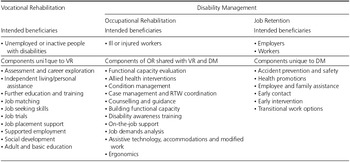
The basic distinction between vocational and occupational rehabilitation is the employment status of the beneficiaries and consequent outcomes (Casey & Cameron, Reference Casey and Cameron2014; Tansey et al., Reference Tansey, Strauser, Frain, Bishop, Chiu, Kaya and Chan2015). The differences and shared components of vocational and occupational rehabilitation and disability management are presented in Table 1. The left column presents the characteristics of vocational rehabilitation and the two columns to the right present the two main pillars of disability management; that is, job retention and occupational rehabilitation. The middle column presents the components that occupational rehabilitation shares with both of vocational rehabilitation and job retention.
Vocational and Occupational Rehabilitation Compared to Disability Management

Note: DM = disability management; OR = occupational rehabilitation; RTW = return to work, VR = vocational rehabilitation.
The definitions that informed the study were derived from a review of the literature on job retention and return to work carried out for the Irish National Disability Authority (McAnaney & Wynne, Reference McAnaney and Wynne2017) and agreed with the expert informants. The definitions for each term were synthesised from a number of sources that are indicated after each definition:
-
• Disability management: A proactive approach to promote the health and productivity of the workforce that includes prevention of workplace illnesses or injuries; job retention for workers experiencing reduced work capacity and return to work for absent employees through occupational rehabilitation and case management (Akabas et al., Reference Akabas, Gates and Galvin1992; Harder & Scott, Reference Harder and Scott2005; McAnaney, Reference McAnaney, Geisen and Harder2011; National Institute of Disability Management and Research, 2003; Wynne & McAnaney, Reference Wynne and McAnaney2004).
-
• Occupational rehabilitation: A range of services and supports aimed at people with acquired disabilities who already have a job with the primary objective of facilitating return to work in the original job or an alternative with or without accommodations or supports (Casey & Cameron, Reference Casey and Cameron2014; Franche et al., Reference Franche, Cullen, Clarke, Irvin, Sinclair and Frank2005; Hoefsmit, Houkes, & Nijhuis, Reference Hoefsmit, Houkes and Nijhuis2012; Loisel, Durand, Baril, Gervais, & Falardeau. Reference Loisel, Durand, Baril, Gervais and Falardeau2005; Nastasia, Tcaciuc, & Coutu, Reference Nastasia, Tcaciuc and Coutu2011).
-
• Vocational rehabilitation: A range of services aimed at people with disabilities who are currently unemployed or economically inactive, with the primary objective of placement in employment with a new employer (Escorpizo et al., Reference Escorpizo, Reneman, Ekholm, Fritz, Krupa, Marnetoft and Chan2011; Chamberlain et al., Reference Chamberlain, Fialka-Moser, Schüldt-Ekholm, O'Connor, Herceg and Ekholm2009; Rubin, Roessler, & Rumrill, Jr., Reference Rubin, Roessler and Rumrill2016; Waddell et al., Reference Waddell, Burton, Nicholas and Kendall2008).
Occupational rehabilitation is aimed at people who already have a job or who have existing links to the workplace. As such, it is usually unnecessary to provide vocational guidance or address job-seeking skills for these people, unless return to their own job is deemed not possible. Vocational retraining may be required in the event of redeployment to an alternative job. The primary goal of occupational rehabilitation is to work with the person and his or her employer to facilitate return to work.
Consequently, the main activities involved include such elements as functional capacity evaluation, allied health interventions, return to work coordination and on-the-job support including modified work (see column 2, Table 1). All of these activities may also be made available to people participating in vocational rehabilitation and to people benefitting from workplace disability management programs.
Approach and Methodology
Approach
The approaches available to research system mechanisms range from document research, which is based on a review of policy documents, peer-reviewed articles and operational and evaluation reports, on the one hand, to data driven studies in which individual beneficiaries are tracked through the system using case study procedures or collecting data from a random sample over a period of time (longitudinal). There are shortcomings to both of these approaches. The former does not provide a basis for targeting specific mechanisms that may or may not have been the focus of previous studies or of reports. It is more difficult to distinguish between what is intended by a system (at policy level) and what is currently being implemented and lacks currency because the documentary information on which it is based reflects previous states rather than the present state. The latter requires data capture procedures that are time consuming and overly specific; for example, case notes, diaries, surveys and interviews. Apart from the time required for a longitudinal study, from an interpretative perspective, the main drawback is achieving representativeness in the sample that would permit extrapolation to the system mechanisms and procedures that are the core focus of this study.
One way to balance a system perspective with an individual perspective is to use expert informants. This is the approach adopted in this study. This type of approach can be characterised as a ‘jurisdictional case study approach’ in which an expert respondent is guided through an agreed template to report on the mechanisms and procedures that are central to the research question at a number of levels including policies and measures, mechanisms and procedures, service provision and intended beneficiaries and outcomes. This approach has been used by many international agencies to document and evaluate systems including social protection systems (e.g., Brewer & Comyn, Reference Brewer and Comyn2015; OECD, 2010; World Bank 2013; Wynne & McAnaney, Reference Wynne and McAnaney2004). The approach implemented has also formed the basis for previous studies in this domain by the researchers (Hauben, Coucheir, Spooren, McAnaney, & Delfosse, Reference Hauben, Coucheir, Spooren, McAnaney and Delfosse2012; Wynne, & McAnaney, Reference Wynne and McAnaney2009; Wynne, McAnaney, O'Kelly, & Fleming, Reference Wynne, McAnaney, O'Kelly and Fleming2006; Wynne, McAnaney, Thorne, Hinkka, & Jarvisalo, Reference Wynne, McAnaney, Thorne, Hinkka, Jarvisalo, Mannila and Jarvikoski2005).
Methodology
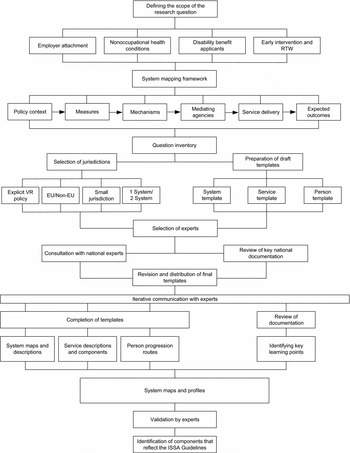
The research methods included a review of relevant literature and web resources, building on previous work carried out by the authors augmented by a keyword search of academic research and additional reports, in addition to gathering detailed system descriptions from national expert respondents (see Appendix) in the four target jurisdictions. This involved developing system maps and profiles for each jurisdiction based on guided expert opinion and mapping these to selected ISSA guidelines (see Figure 1).
Research methodology for the study.

The basic framework for each jurisdiction assumed a hierarchical implementation process that operated between policy imperatives, as documented in statutory documents, and the delivery of services to intended beneficiaries of the policy at the frontline. The levels of the model assume that for a policy to be effectively implemented at individual level, the policy must be enshrined in legal or regulatory measures which are resourced through a range of mechanisms including budgetary provision, action lines and/or targeted programs. These mechanisms are administered by mediating agencies (usually statutory) that distribute resources and specify eligibility criteria, service specifications, quality standards and expected outcomes. Frontline delivery is generally within the remit of a range of statutory, private and nongovernmental providers and qualified professionals.
Specifying the Domain of Enquiry
The primary focus of the study was on people who acquired disabilities during their working lives. This included people with a wide range impairments arising from injuries or as a result of physical, sensory, mental or neurological conditions.
They included people with chronic illness such as heart problems or cancer, acquired brain injury (including stroke), musculoskeletal impairments including spinal and other physical injuries and arthritis, back pain, hearing or visual impairments, progressive health conditions such as muscular sclerosis and mental health problems.
The main characteristic that they shared was that their health conditions had resulted in reduced work capacity and they required specialist interventions and supports to access, maintain or return to employment.
Selection of Jurisdictions
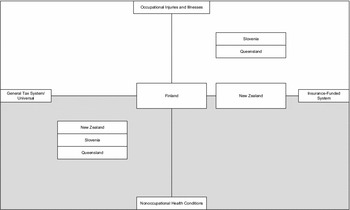
Figure 2 is included to illustrate key characteristics of the system of interest in each jurisdiction. In this figure, the dimensions specify whether a system addresses occupational or nonoccupational health conditions (y axis) and the extent to which these systems are funded through insurance contributions or general taxation. The shaded area of the figure indicates the scope of the current study. Each jurisdiction is located in the quartile which best matches each system's characteristics. From the figure, it should be clear that both Queensland and Slovenia operate two distinct systems, one for occupational health conditions that is funded through insurance contributions, and one for nonoccupational health conditions, which is funded through general taxation. New Zealand operates an insurance-based system for both occupational and nonoccupational accidents and injuries and a separate system other health conditions. In Finland, all health conditions regardless of the cause are covered by the maintenance of work ability (MWA) system that is funded through a combination of contributions and general taxation.
The relationship between funding mechanisms and services for occupational and nonoccupational health conditions.

In addition from Figure 2, it should be clear that each of the four jurisdictions represented different policy contexts. They were chosen on the basis of both common and contrasting characteristics. All jurisdictions were small (less than 5 million population) and vocational rehabilitation was explicitly specified in policy and legislative terms. Two of the jurisdictions were members of the EU (Finland and Slovenia) and two were in the same non-EU region (New Zealand and Queensland). Two of the jurisdictions operated parallel systems for occupational and nonoccupational health conditions (Slovenia and Queensland), one operated a no-fault insurance-based system for all accidents regardless of cause (New Zealand) and one operated a single system for all health conditions funded through a combination of social insurance and general taxation. The specific descriptions of each of the jurisdictions are presented here:
-
• Queensland (Australia) was selected as representing a system that had invested substantial effort in refining its approach to early intervention and active participation. It operates a dual system in which people with work and nonwork illnesses and injuries are covered by different systems of provision. (The State of Queensland, rather than Australia as a whole, was selected because the state systems differ within Australia).
-
• Finland was selected because of its unique approach to workplace health and productivity, which is central to the MWA concept (Ilmarinen, Reference Ilmarinen2009). This concept views the right to rehabilitation as a central component of a system for protecting workers’ health and productivity regardless of the cause of the impairment.
-
• New Zealand was selected on the grounds that it operates a no-fault approach to all injuries including work accidents, road traffic accidents and domestic accidents. It has recently revised its system of provision of vocational rehabilitation on the basis of a comprehensive review. In the new system both job seeking and job retention are addressed.
-
• Slovenia was selected as a new EU member state that has energetically revised its approach over the last 10 years. It has taken a top-down approach by putting in place a coherent policy and legislative context for the development and delivery of medical and vocational rehabilitation. Continuity of provision and the seamless transition from one phase of rehabilitation to subsequent phases are key objectives.
Procedures
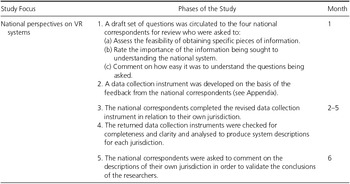
The information from national expert respondents in the four jurisdictions was collected through an iterative process in which the designated experts completed an agreed semistructured template, derived from previous studies, which explored the characteristics of vocational and occupational rehabilitation and return to work systems in each jurisdiction (Optiwork, 2007; Wynne et al., Reference Wynne, McAnaney, Thorne, Hinkka, Jarvisalo, Mannila and Jarvikoski2005; Wynne et al., Reference Wynne, McAnaney, O'Kelly and Fleming2006). The procedures are presented in Table 2.
Overview of Study Methodology

Note: VR = vocational rehabilitation.
The starting point for the framework was a set of 39 items (see Appendix). These items present an outline of the structure and content of the expert report template. Some items were provided in an open-ended format and others consisted of lists of elements relating to a particular topic. For example, the legal and policy context template and description of system characteristics comprised a set of open-ended items to be completed for vocational rehabilitation provision funded by social protection and by insurance contributions. In contrast, many of the structure and content items were formatted in the template as a list of elements and respondents were asked to specify which elements were considered to be part of the vocational rehabilitation system, operating within the social protection domain, and the agencies involved. Respondents were also asked to specify how the insurance-based vocational rehabilitation system differed in terms of the availability of the elements.
The structured open-ended and list-type items addressed a complex set of relevant issues and was intended to provide a comprehensive system overview.
An initial consultation was undertaken with correspondents to explore the feasibility of obtaining the information required to answer the questions. Correspondents were asked to rate how possible it was to obtain specific pieces of information and to rate how important the information was to understand their national system. They were also asked to comment on how easy it was to understand what information was being requested. As a result the listings were agreed, which enabled coherent reporting across jurisdictions and increased the likelihood that information to answer each question was available in each jurisdiction.
The national correspondents completed the data collection instrument in relation to the systems in their own jurisdiction, and in relation to both insurance-based and social protection services and supports.
The returned templates were then analysed to produce system maps and profiles of vocational and occupational rehabilitation provisions for each jurisdiction. The national correspondents were then asked to comment on these and validate that they represented the situation in their own jurisdictions (see Figure 1 for the process flow of the study).
The study took place over a 28-week period between January and July 2016. The development and agreement of the data collection instruments with the respondents took place in Month 1. The final template was distributed in Month 2 and returned in Month 5. The analysis and synthesis was produced in Month 6 and distributed for comment to the experts. The final version of the findings was produced in Month 7.
Data Analysis
The focus of this article is the extent to which social protection–funded systems and services were designed to meet the needs of workers with disabilities at risk of losing their jobs, as a result of nonoccupational health conditions, through early intervention and return to work supports.
The expert response template consisted of both open-ended and structured items. Structured items were specified either in terms of the elements considered to be part of the vocational rehabilitation system, operating within the social protection domain, and the agencies involved. These elements were transformed into profile tables in which the responses were displayed in parallel columns for each jurisdiction's system. The open-ended items were analysed using a directed content analysis in which relevant research findings were used as guidance for initial codes (Hsieh & Shannon, Reference Hsieh and Shannon2005). The data analysis resulted in a system map for each jurisdiction documenting the implementation process from policy, through measures and mechanisms to frontline delivery and outcome monitoring. These were augmented with profile tables indicating the elements of the process at each level of the system.
Results
A Summary of Systems Characteristics
A primary objective of the study was to identify system elements that supported the implementation of the ISSA guidelines for return to work and reintegration in the four jurisdictions. By directing the expert response template towards different levels of the system and providing specific cues to the experts, it was possible to gain a perspective on the existing measures, mechanism and service components. This provided a basis for extrapolating the extent to which each system had a structural fit with the ISSA guidelines. As argued earlier, this approach provided the most direct methodology to answer the key questions generated to inform the study. As such this study provides a much needed overview of the extent to which the ISSA guidelines have been incorporated into the vocational and occupational rehabilitation policies, processes and procedures in these four jurisdictions.
Apart from Finland, two systems of provision were identified, one was funded from general taxation and operated as part of the social protection or employment services system, and another, which was an insurance funded system. All insurance-funded systems were no-fault schemes where people were entitled to compensation, care and support regardless of liability. Many of the ISSA guidelines were evident in the policies and processes operated within insurance-based systems.
Apart from the Job in Jeopardy Assistance (JJA) program in Queensland (described later), there was no formal separation between vocational and occupational rehabilitation services in the other jurisdictions. The definitional distinctions evident in the literature were not reflected in systems and structures. The most widely accepted characteristics included a process and set of services aimed at improving a person's capacity for work so as to help them cope with work demands, help them overcome impairments and assist them to enter or re-enter work.
The target groups and eligibility criteria for services varied across the systems, but the basis for eligibility involved administrative criteria such as residency, age and being in receipt of a social protection payment. In addition, an assessment to determine the suitability of the person for services was used. Employers were not explicitly specified as a target group in any system.
The most common information and referral sources to vocational/occupational rehabilitation included employers, employment services, vocational rehabilitation providers, disability nongovernment organisations, public information sources and social insurance or protection services. General practitioners (GPs) or family doctors were the most frequent referral source in the health area.
The common components of vocational rehabilitation and occupational rehabilitation were:
-
• assessment and evaluation
-
• advice and guidance
-
• vocational education and training
-
• health and well being support
-
• on-the-job support
-
• adaptations and technologies
-
• service coordination
-
• alternative employment options.
All jurisdictions provided incentives and support to individuals and employers to make it easier to gain employment or return to work. Incentives focused at different levels within the systems and they could be positive or negative. The incentives offered by each of the four systems to support disability employment are presented in Table 3.
Incentives Identified in Each Jurisdiction

Note: FI = Finland, NZ = New Zealand, QLD = Queensland, SI = Slovenia; VR = vocational rehabilitation.
All jurisdictions offered advice, assistance, support for workplace adaptations, financial support for commuting to work and wage subsidies. Three of the jurisdictions, apart from Queensland, offered financial support to people participating in vocational rehabilitation. Only Slovenia did not operate a flexible benefits system for people in employments, or withdraw benefits from people who refused to participate. Slovenia was unique in operating a quota–levy system for employers and offering positive to disability accreditation to employers. Both Queensland and Slovenia both offered positive action programs to incentivise the employment of people with disabilities.
Only in Queensland were services operated under mandatory standards enshrined in national social security legislation. Impact indicators reflected these standards and particularly focused on improved access to services; meeting training and skills needs of participants and employers; service effectiveness; and providing timely and efficient services.
In Slovenia, the Ministry of Labour, Family, Social Affairs and Equal Opportunities encouraged and co-financed providers to gain accreditation under the European Quality in Social Services (EQUASS; 2012) initiative. This system of accreditation is operating on a voluntary basis in a number other European jurisdictions.
A Review of Mechanisms to Support the ISSA Guidelines
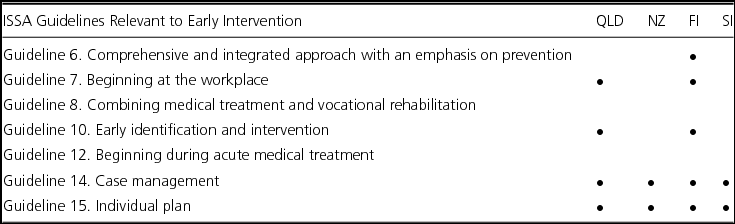
The approaches taken by social protection agencies that are related to specific ISSA guidelines on return to work and reintegration that are relevant to this study are described as follows (see also Table 4).
Mechanisms Identified to Support the ISSA Guidelines Relevant to Early Intervention in Each Jurisdiction

Note: FI = Finland, NZ = New Zealand, QLD = Queensland, SI = Slovenia.
Guidelines 6 and 7: Emphasis on Prevention; and Beginning at the Workplace
The ISSA guidelines specify that agencies must provide a comprehensive and integrated approach with an emphasis on prevention (Guideline 6) and which begins at the workplace. This is effectively about job retention.
No specific social security programs were identified in New Zealand or Slovenia that addressed the return to work of employed workers with nonoccupational health conditions. The MWA approach (Finland) and the JJA program (Queensland) were the only examples of mechanisms that addressed many of the guidelines, specified by ISSA. On this basis, it is worthwhile reviewing these in more detail.
Queensland — Job in Jeopardy Assistance
Assistance for people with acquired disabilities at risk of losing their job was provided under the JJAFootnote 1 program, which is being implemented on a pilot basis. This program operates through a tripartite arrangement between employer, the employee and a Disability Employment Service (DES) provider. The core elements of the service included job tailoring or job matching within the current workplace and employment support. Outcomes were paid for on the basis that a worker was still working their normal hours with the same employer in their original job or an alternative after 26 weeks.
The main components for the program were:
-
• job redesign advice and assistance
-
• workplace assessment to identify adaptations and modifications
-
• the procurement of specialised equipment for job maintenance.
JJA services were targeted at workers with at least eight hours a week employment, averaged over the previous 13 weeks, and who were not in another DES. People who met these requirements could approach a DES provider directly for assistance.
An evaluation study, carried out by the Department of Social Services in 2014, concluded that outcomes for JJA were very promising with over half of the jobs of applicants protected (Department of Social Services, 2014). The main limiting factor identified in the 2014 evaluation was its restricted reach (less than 1000 participants as of June 2012) that was estimated to be less than 0.1% of the potential number of beneficiaries (Department of Social Services, 2014). The evaluation concluded that there was a strong case to be made for enhancing access to the program and that there may be scope to assist more eligible people before they become unemployed. JJA is intended to do this but fails because of its restrictive parameters. In particular, applicants can find it difficult to demonstrate that sickness or disability is the reason that employment is at risk and that they may not be able to meet the 13-week continuous employment criterion due to illness.
Finland — Maintenance of Work Ability
MWA is a Finnish national strategy aimed at maintaining and improving workers’ health, well being and employability (Ilmarinen, Reference Ilmarinen2009). It involves collaboration between pension funds, occupational health services, employers and workers. It covers areas such as occupational health, health and safety, workplace health promotion, rehabilitation and reintegration, as well as human resources, personnel development and organisational change. It is funded through both insurance contributions and general taxation. The MWA strategy was initiated by employers and trade unions and developed primarily by the Ministry of Social Affairs and Health. It has been integrated into national social partner agreements. The program has been reviewed, and results were considered very positive — there was a high level of employer and employee awareness and occupational health services had enhanced their capacity for early intervention. Job retention outcomes and health and well being outcomes were significantly enhanced (Peltomäki et al., Reference Peltomäki, Hussi, Julin, Launis, Liira and Räsänen2002).
In operating the program, there is a feature that allows for interventions to improve work ability before health breakdown or absence might occur. An Index of Work Ability can be reviewed, whereby a combination of self-report questionnaires and medical tests may be used to identify people (or groups) at risk of becoming long-term absent due to health problems. Tailored intervention programs may then be put in place to boost the work ability of the individual.
Guidelines 8 and 12: Combining Medical Treatment and Vocational Rehabilitation; and Beginning During Acute Medical Treatment
Another key question in the study concerned the ways in which the transition from the medical domain to the vocational domain is managed. The overall process would ideally involve a seamless journey from acute medical care to post-acute hospital based rehabilitation, then onto community based functional rehabilitation and finally to vocational or occupational rehabilitation.
Queensland has a model where rehabilitation operates on three levels. Primary rehabilitation offers treatment and medical interventions. Secondary rehabilitation includes inpatient and outpatient post-acute functional rehabilitation. Tertiary rehabilitation refers to community-based interventions including social and vocational rehabilitation. Movement through these systems is progressed through onward referral where staff in an earlier stage of the system refer clients to later services. The system operates through medical practitioners, hospital-based allied health staff, and welfare and social security staff. Self-referral to tertiary rehabilitation providers is also possible. The case manager becomes involved during secondary rehabilitation.
The New Zealand system is based around a pathways approach to inclusion and operates through case manager involvement and GP referrals. However, it was reported that the approach needs improvement and particularly a greater awareness among GPs of the benefits of vocational rehabilitation is needed. While the process works relatively smoothly for people with an injury, the system is less effective for people with an illness.
There are some innovative approaches being trialled in direct referrals and early intervention. One example is a service for people with spinal cord injury that makes contact with injured people within hours or days of their injury in order to make an initial connection and to inform the person that return to work will be addressed at a later stage. For others with injury, discussions about work tend to occur on discharge home and contact by a case manager or rehabilitation practitioner.
For Finnish workers, the occupational health system is key in ensuring that people are referred to appropriate services. Early identification of vocational rehabilitation needs occurs through tools such as workplace surveys, health examinations and absenteeism follow-ups. Once the person engages with vocational rehabilitation services, the occupational health professional monitors the impact on the worker's performance. For people with acquired disabilities, the onus is on the medical rehabilitation service provider to ensure that the person is referred onwards to a rehabilitation needs assessment by the Social Insurance Institute. This is used to document the person's requirements in relation to the workplace, medical, social or vocational rehabilitation, employment services, education and training, health and social care services and social security.
In Slovenia, the medical profession is tasked with ensuring that a person is referred to the Slovenian Employment Service (ESS). In addition, GPs can refer patients to medical rehabilitation programs offered by the health system. Once within the system, social workers in the medical rehabilitation team can encourage the person to contact their local ESS adviser who can in turn refer the person to a vocational rehabilitation counsellor or, if they are eligible for insurance based funding, advise the GP to make a referral to the Pension and Disability Institute.
Guideline 10: Early Identification and Intervention
Only Finland had placed specific requirements upon employers to ensure that an absent worker with a health condition can access appropriate services while still in employment and at an early stage. The milestones of the ‘30-60-90 model’ include a requirement for the employer to notify an occupational health service once the person has been out of work for 30 days. A sickness allowance becomes available within two months and a decision is made as to whether rehabilitation is required. At 90 days a physician assesses the residual work capacity and return to work opportunities in collaboration with the worker and employer.
The timeliness of services was considered to be an important indicator of the efficiency of system delivery, particularly in Queensland. This related to the time that applicants spent on waiting lists between referral and first contact rather than time to contact or intervention after the onset of a health condition.
In New Zealand, the emphasis in all service types is on keeping workers employed and preventing their dislocation from the workplace. All applicants were asked about their need for employment supports regardless of their employment status. As a result, the guideline for early intervention is ‘as soon as possible’. In addition, the knowledge and awareness of GPs and family physicians about how to talk about the benefits of work and better links to primary care practices was being promoted so as to facilitate early contact.
There was a recommendation that intervention should occur early (as soon as possible) in the Slovenian standards for vocational rehabilitation. However, a lack of formal pathways between education, health and vocational rehabilitation (employment services) was a major barrier to achieving this objective for the majority of people with acquired disabilities.
Guidelines 14 and 15: Case Management; and Individual Planning
A specific question of interest concerned the role of case management in the provision of services, as this is widely acknowledged to be an essential element of good return to work practice. In the systems studied in each of the four jurisdictions, some form of case management was central to the service delivery model.
In Queensland, case managers play a key role in facilitating access to supports and, in some cases, provide vocational counselling. They coordinate and manage access to services in relation to the person's expressed goals. These services can be provided by a number of different suppliers and are paid for by the DES. For services beyond the scope of the DES, the case manager can support the person through education and emotional support. Case management resources were higher for people with more complex needs.
A case manager in the Ministry of Social Development (MSD) in New Zealand acted as a personal employment advisor who also provided coaching to build work readiness and job search skills. The emphasis was upon well-being and restoration of function including return to work. Case management was also at the core of the services offered by the Accident Compensation Corporation (ACC). There is a growing recognition of the need for case managers to work across sectors including health, education, social welfare and housing and to work across the two pillars of provision (i.e., the ACC and the MSD systems).
The basis for the provision of services in Finland was an individual rehabilitation plan, drawn up on the basis of a needs assessment with the individual and if appropriate with family members. It specified the measures required across the domains of social welfare, labour and educational authorities, the Social Insurance Institute (KELA) and other agencies arranging rehabilitation. Medical rehabilitation service providers were required to ensure that they coordinated with other types of rehabilitation provided by other agencies.
In Slovenia, people were provided with advocacy, guidance and support by a multidisciplinary team including an occupational physician, social worker, psychologist, occupational therapist, rehabilitation technologist or trainer. The team was responsible for coordinating interventions across different legal contexts and for collaborating with other stakeholders including social systems and employers, particularly in relation to post-placement support.
Discussion
In 1997, Chan and colleagues characterised vocational rehabilitation as a dynamic process, involving a set of sequential processes, beginning with initial referral and ending with successful employment, which addresses the full range of needs of a person. Activities in the vocational rehabilitation process are implemented in parallel and timeframes overlap (Chan et al., Reference Chan, Reid, Kaskel, Roldan, Rahimi and Mpofu1997). However, the concepts used and the context for vocational and occupational rehabilitation vary considerably between jurisdictions and over time. In many countries, systems have evolved incrementally rather than being designed de novo, and consist of collections of regulations, provisions and services that are not necessarily coherent or well integrated. In addition, countries differ in the structure of their welfare systems in terms of such key variables as funding and eligibility for benefits. Moreover, there are regional variations in some federal countries, all of which contribute to the complexity of how vocational and occupational rehabilitation is conceived of and delivered. Further, in each jurisdiction there operate a number of systems of provision that have within their scope employment and disability including insurance based, social security based and public employment services. While this complexity of context has led to variations in how vocational and occupational rehabilitation are defined and delivered, the focus of this study was upon the roles that social protection played in early intervention and return to work in each jurisdiction.
It is widely acknowledged that effective vocational and occupational rehabilitation responses are essential for individuals and for society. The number of people of working age entering the disability benefits system in most developed economies is increasing and likely to become unsustainable (OECD, 2003; 2010). Disability benefit recipients have a less than a 2% chance of exiting the disability benefits system to employment in any year. This results in dependency and poverty for individuals, unsustainable social protection costs and increasing numbers of disability benefits recipients. Sickness and disability spending excluding early retirement accounts for about 10% of total social expenditure across Europe (OECD, 2008).
In contrast, vocational rehabilitation has a demonstrated impact on disability recipiency rates and recovery. Return on investment (ROI) estimates for vocational rehabilitation have been estimated to range from 4 to 1 to 10 to 1. The investment in vocational rehabilitation by public social security systems is likely to be recouped within two to four years simply on the basis of increased income tax revenues of participants successfully placed in employment (Hanophy, Reference Hanophy2012). Average earnings of people who engaged in vocational rehabilitation exceeded income of those who did not, by a factor of seven over 10 years (Dean, Pepper, & Schmidt, Reference Dean, Pepper and Schmidt2014).
There is a growing consensus that vocational rehabilitation in the domain of social affairs should take a more proactive approach prior to loss of employment (ISSA, 2013; Tansey et al., Reference Tansey, Strauser, Frain, Bishop, Chiu, Kaya and Chan2015). This effectively supports a greater emphasis on occupational rehabilitation.
Main Results
The contributions of the expert respondents provided some insight into the extent to which this more proactive approach was being adopted in the participating jurisdictions. Even though there was evidence of an acknowledgement of the needs of employed people with disabilities, this was not consistently reflected in procedures, processes or outcome measurements.
Only two jurisdictions (Queensland and Finland) had formal job retention services that sought to retain workers in employment and prevent them from entering into long-term absence on health grounds.
All jurisdictions had a system of service coordination and the majority had formal case management arrangements where a person was supported from the early stages of assessment and planning to case closure.
Outside the domain of workers compensation or other insurance-based provision, there were no formal systems to refer people to vocational or occupational rehabilitation while undergoing medical treatment. The pathway generally operated by onward referral by medical practitioners, hospital based allied health staff, welfare and social security staff. Self-referral to vocational/occupational rehabilitation providers was also possible in some countries. The Finnish occupational health system was the most systematic approach in which early identification operated through workplace surveys, health examinations and absenteeism follow-up.
Positive indicators of a proactive approach included:
-
• Both job seekers and workers with disabilities were specified as target groups in all jurisdictions.
-
• Return to work was among the intended outcomes of the all agencies.
-
• Service components common to all jurisdictions included a mix of interventions relevant to vocational and occupational rehabilitation.
-
• All jurisdictions operated a system of incentives for both individuals and employers (see Table 3).
-
• Service coordination or case management was a feature of the majority of systems.
However, a number of areas for improvement were also identified:
-
• In a number of jurisdictions eligibility criteria included being in receipt of a social protection payment which is inconsistent with a job retention approach.
-
• Early intervention job retention programs were only identified in two of the 4 jurisdictions studied.
-
• Unlike some workers’ compensation and other insurance based systems, the support needs of the employer were not formally addressed in any of the social security systems explored in this study.
-
• No formal pathways from medical to vocational or occupational rehabilitation operated in any system.
-
• Quality systems and impact indicators, where they existed, did not explicitly reflect job retention and return to work outcomes.
Methodological Considerations
The approach adopted for this study was designed to cast light upon occupational rehabilitation system characteristics in each of the jurisdictions from the perspective of disability benefit applicants, with nonoccupational health conditions, who were still employed. It was based on a structured framework derived from previous research and on International good practice guidelines and policy. It analysed expert reports from four jurisdictions based on this framework to generate system maps and jurisdictional profiles. These provided the basis for identifying measures, mechanisms and frontline services that could be viewed as contributing to more effective return to work outcomes for employed disability benefit applicants with non-occupational health conditions.
This approach has an advantage over documentary research in providing insight into implementation processes and procedures. On the other hand, it lacks the grain of a more data driven approach based on the experiences of actual applicants and cannot reach any conclusions about the effectiveness nor the impact of the systems from this perspective. It is important to note that the conclusions are based on a sample of four relatively small jurisdictions. These were selected to allow for comparison and contrast and to reflect approaches operating in a wide range of jurisdictions. However, it must be acknowledged that this places a limit on the generalisability of the findings.
Nevertheless, the results can provide the foundation for more data driven studies focusing on this cohort of disability applicants that have been relatively invisible in passive social protection systems (OECD, 2010).
Implications for Policymakers
The ISSA Guidelines: Return to Work and Reintegration were developed to provide social security institutions with a tool to respond to the imperative for more proactive approaches to assisting disability benefit applicants, who still have a job, to go back to work rather than exiting into the benefits system. There is a growing body of evidence that early intervention, linking medical and occupational rehabilitation and workplace based interventions can be effective in preventing job loss on the grounds of disability. These strategies are increasingly found in the processes and procedures adopted by insurance based systems and particularly in workers, compensation systems.
Little research to date has focused on the application of these good practices for people non-occupational health conditions who represent over 50% of those experiencing difficulties at work. The ISSA guidelines make it clear that they apply to people with all types and causes of impairment and thus a major question from a policy perspective must be what are the factors that have inhibited the development of early intervention policies and strategies in systems aimed at protecting and promoting employment for such people. There is a case to be made that workers experiencing reduced capacity as a result of a health condition, regardless of the cause, have a right not to be disabled by this. Early intervention is one way that this can be achieved. The JJA program and the MWA approach provide interesting possibilities for how to design an active system of social protection.
Conclusions
This study set out to explore the extent to which social protection systems, which have no financial risk for the absent worker, approached job retention or return to work, specified as occupational rehabilitation. It used the ISSA Guidelines: Return to Work and Reintegration (ISSA, 2013) as a reference framework. Systems of provision in four jurisdictions, Queensland (Australia), Finland, New Zealand and Slovenia, were analysed on the basis of expert reports. Experts used a system analysis template that focused on the ways in which policies were reflected in legal and regulatory measures; the mechanisms that were in place to implement the policies and how these were resourced; the mediating agencies that administered programs and financing; and service provision in terms of providers, professionals, quality standards and expected outcomes. The expert reports were analysed using directed content analysis to produce system maps and profiles. These were returned to the experts for validation. The analysis was supported by a review of key national documentation and international literature.
The ISSA Guidelines: Return to Work and Reintegration offer a timely and detailed set of principles and processes that could make a major contribution to the redesign and enactment of occupational rehabilitation services. While this study identified some promising characteristics, there was substantial room for improvement in the job retention and return to work strategies of social protection agencies in all participating jurisdictions. While two approaches that have the potential to inform future practice were identified, the deployment of the guidelines had yet to make a substantial impact on services and approaches in the domain of nonoccupational illness or injury particularly as they relate to prevention, early intervention and bridging the gap between medical and vocational or occupational rehabilitation.
Limitations of the Study
One challenge faced in designing the study was the inconsistency of terminology and definitions of vocational and occupational rehabilitation across the four jurisdictions and within the literature. As a result, the expert reports must be viewed as indicative rather than definitive.
There is a need for more data driven studies that explore the experiences of workers with nonoccupational health conditions who need support to retain employment.
The limited sample of jurisdictions restricts the generalisability of the findings. Nevertheless, the results of this study can serve to inform future jurisdictional studies with a wider scope that include a greater diversity of system characteristics reflecting a range of clearly defined system types. The methodology and approach adopted in this study could form a basis for such studies.
Acknowledgements
This article was prepared with the financial support of the National Disability Authority, Dublin, Ireland.
The authors wish to acknowledge the contribution of the national rapporteurs who completed the survey in the key jurisdictions: Dr Elizabeth Kendall, Professor and Director of Research (Healthy People, Healthy Places) and Dr Vanette McLennan, Griffith University, School of Human Service and Social Work, Brisbane, Australia; Dr Kathryn McPherson, Professor of Rehabilitation (Laura Ferguson Chair), Auckland University of Technology, Health and Rehabilitation Research Centre, New Zealand; Dr Anna-Liisa Lamsa, Research Manager, Luovi College, Finland; and Andreja Svajger, Occupational Therapist, University Rehabilitation Institute, Republic of Slovenia, Vocational Rehabilitation Centre, Ljubljana, Slovenia.
Supplementary material
To view supplementary material for this article, please visit https://doi.org/10.1017/idm.2017.2