Introduction
Northeast China, a region of about 1 260 000 km2, has a variety of forest types, ranging from temperate broad leaf forests in the south to boreal coniferous forests in the north. These forest ecosystems favour approximately 21 species of seven genera of ticks in the area, including Ixodes, Dermacentor, Haemaphysalis, Hyalomma, Rhipicephalus and Argas. Ixodes persulcatus, Dermacentor silvarum, Haemaphysalis concinna and Haemaphysalis japonica are major species known to transmit tick-borne infectious disease. Lyme borreliosis (LB) is endemic in the area, and the infection rate of Borrelia, the agent of disease, ranges from 2.1 to 33.8% in ticks (Cao et al., Reference Cao, Zhao, Zhang, Yang, Wu, Wen, Zhang and Habbema2003; Chu et al., Reference Chu, Jiang, He, Gao, Zhang, Wu, Zhang, Shi, Gaowa, Wang, Foley, Liu and Cao2011). Tick-borne encephalitis (TBE) has also been endemic (Lu et al., Reference Lu, Broker and Liang2008). In addition, the infection rate of Anaplasma phagocytophilum, Babesia microti and spotted fever group rickettsiae in ticks are 0.8–4.6% (Cao et al., Reference Cao, Zhao, Zhang, Dumler, Zhang, Fang and Yang2000, Reference Cao, Zhao, Zhang, Yang, Wu, Wen, Zhang and Habbema2003, Reference Cao, Zhan, He, Foley, SJ, Wu, Yang, Richardus and Habbema2006; Jiang et al., Reference Jiang, Jiang, Yu, Zhang, Gao, Zhan, Sun, Zhang, Zhang, Liu, Wu, Xu and Cao2011), 3.6–4.0% (Sun et al., Reference Sun, Liu, Yang, Xu and Cao2008b) and 8.3–13.0% (Cao et al., Reference Cao, Zhan, De Vlas, Wen, Yang, Richardus and Habbema2008), respectively. These infectious agents can cause human granulocytic anaplasmosis (HGA), human babesiosis and spotted fever group rickettsiosis (SFGR), respectively. Moreover, co-infection with Borrelia burgdorferi and A. phagocytophilum in ticks is also reported in this region (Sun et al., Reference Sun, Liu, Lu, Ding, Guo, Fu, Zhang, Meng, Wu, Song, Ren, Li, Guo, Wang, Li, Liu and Lin2008a).
Consequently, residents and travellers there are at risk of infection with tick-borne diseases. To ensure correct diagnosis and prompt treatment, it is critical for doctors to understand symptoms and signs of patients with tick bites, the aetiology of these illnesses and to recognize co-infections with different tick-borne agents. Although there are other publications focusing on the symptoms of tick-borne diseases after tick bite (Belongia, Reference Belongia2002; Swanson et al., Reference Swanson, Neitzel, Reed and Belongia2006; Tijsse-Klasen et al., Reference Tijsse-Klasen, Jacobs, Swart, Fonville, Reimerink, Brandenburg, van der Giessen, Hofhuis and Sprong2011), none of these have never been systematically reported in China.
To fill this knowledge gap, we summarized results of a study from 2010 to 2011 at Mudanjiang Forestry Central Hospital, one of the largest hospitals for tick-borne diseases in Northeast China.
Materials and methods
Patients and specimen collections
People with a tick bite usually sought treatment at Mudanjiang Forestry Central Hospital, which is surrounded by both rural and urban areas and is one of the largest hospitals in Mudanjiang City, located in Heilongjiang Province of Northeastern China. Most of the patients worked on farms or in forests. From May 2010 to September 2011, we enrolled patients with history of a tick bite in the past 2 months at the tick-borne disease outpatient clinic. The participants usually presented with clinical symptoms or signs such as headache, fatigue, myalgia, malaise, arthralgia, fever, dizziness, chills, nausea, lymphadenopathy, skin lesions and neurological manifestation. Some asymptomatic individuals seeing doctor to have feeding ticks removed from their skin were also enrolled. Patients suffering the following diseases that are potentially cross-reactive with Lyme disease in serological tests were excluded, that is, rheumatoid arthritis, systemic lupus erythematosus, multiple sclerosis, syphilis, leptospirosis and group A streptococcal sequelae.
For each patient, the acute-phase serum, EDTA-anticoagulated whole blood and peripheral blood smears were collected or prepared. A convalescent serum specimen and additional patient evaluations were requested at least 14 days and at most 2 months after the onset of acute illness. The samples were all stored at −40°C until use. Patients were interviewed by a trained doctor according to a standardized questionnaire to collect tick-bite exposure, demographic, clinical and epidemiological data. Medical records were reviewed, and necessary information was extracted. The study-related information was used anonymously. All participants provided written informed consent in this study, which was approved by the Mudanjiang Forestry Central Hospital Review Board and Academy of Military Medical Sciences Review Board, China. The study was carried out in accordance with the medical research regulations of China.
Laboratory assays
Genomic DNA was extracted from whole blood sample by using a QIAamp DNA Blood Mini Kit and DNeasy Tissue Kit (Qiagen, Tokyo, Japan) according to the manufacturer's instructions. The nested PCR with primers 23S3/23Sa and 23S5/23S6 of the B. burgdorferi 5S-23S rRNA intergenic spacer gene was performed, and followed by amplification of flagellin, outer surface protein C (ospC), 16S rRNA and ospA genes as described (Ni et al., Reference Ni, Jia, Jiang, Sun, Zheng, Huo, Liu, Ma, Zhao, Yang, Wang, Jiang and Cao2014). At least three genes positive indicated B. burgdorferi infection. DNA of the agents of rickettsiosis, HGA and babesiosis was detected by the nested PCR for SFGR-specific citrate synthase coding gene (gltA) and outer membrane protein A coding gene (ompA) (Jia et al., Reference Jia, Zheng, Jiang, Ma and Cao2013b), the nested PCR for Anaplasmataceae-specific 16S rRNA gene with primers Eh-out1/Eh-out2 and Eh-gs1/Eh-gs2 (Wen et al., Reference Wen, Cao and Pan2003), and a PCR targeting the partial 18S rRNA gene of Babesia species with primers PIRO-A and PIRO-B (Jiang et al., Reference Jiang, Zheng, Jiang, Li, Huo, Jiang, Sun, Jia, Wang, Ma, Liu, Chu, Ni, Liu, Song, Yao, Wang, Sun and Cao2015) as described, respectively (Additional file 1: Table S1). Positive PCR products were purified by TIAN gel Mini Purification Kit (Tiangen Biotechnique Inc., Beijing, China) and sequenced on a 3730 DNA Sequencer (Applied Biosystems, Foster City, CA, USA) for confirmation.
Acute- and convalescent-phase serum samples were tested by indirect fluorescent antibody (IFA) assays in parallel by use of a TBE strain (MDJ01) (Zhang et al., Reference Zhang, Si, Liu, Chang, Yang, Huo, Zheng and Zhu2012), a combined antigens of B. burgdorferi (B. garinii strain NMS2 and B. afezlii strain VH6) (Chu et al., Reference Chu, Jiang, He, Gao, Zhang, Wu, Zhang, Shi, Gaowa, Wang, Foley, Liu and Cao2011), a Rickettsia heilongjiangensis strain (054) (Duan et al., Reference Duan, Tong, Huang, Wang, Xiong and Wen2011) and an A. phagocytophilum strain (China-C-Y) (Zhan et al., Reference Zhan, Cao, Jiang, Zhang, Liu, Wu, Zhang, Zhang, Bian, Dumler, Yang, Zuo, Chu, Liu, Richardus and Habbema2010) as antigens, respectively. These strains were all isolated from the Northeast China. A negative control (sterile PBS) was concurrently included in each IFA assay. Anti-serum (mouse origin) against TBE, Borrelia, Rickettsia and Anaplasma isolates, respectively, was used as a positive control. Babesia-specific IFA was not performed due to lack of the specific antigen. For IgM/IgG antibodies of TBE, the sera were screened at a 1:20 dilution and titrated if reactive, and for IgG antibodies of Lyme, SFGR and HGA, respectively, the initial dilution was 1:64 and sera were titrated if reactive. We chose these titres (1:20 for TBE, and 1:64 for the other three tick-borne diseases) as positive indicators on the basis of previous reports on the antibody responses of healthy control subjects (Brouqui et al., Reference Brouqui, Bacellar, Baranton, Birtles, Bjoersdorff, Blanco, Caruso, Cinco, Fournier, Francavilla, Jensenius, Kazar, Laferl, Lakos, Lotric Furlan, Maurin, Oteo, Parola, Perez-Eid, Peter, Postic, Raoult, Tellez, Tselentis and Wilske2004).
Wright Giemsa/Giemsa-stained peripheral blood smears were examined by light microscopy for the presence of morulae within leucocytes and protozoal parasites in erythrocytes. Wright Giemsa staining was for checking possible Anaplasma infection, while Giemsa staining was for Babesia infection. At least 300 microscope fields were reviewed for each smear at 1000× magnification.
Case definitions
A case of TBE was considered with the following findings: signs or symptoms of aseptic meningitis or meningoencephalitis, and the presence of serum IgM antibodies to tick-borne encephalitis virus (TBEV) or seroconversion or the titre increased by at least one 4-fold dilution in IgG IFA.
A case of LB was considered with either (1) erythema migrans (EM; single or multiple expanding rash with diameter equal or more than 5 cm with or without central clearing) with or without laboratory confirmation; or (2) clinical disseminated signs (e.g. meningitis, carditis, or arthritis or arthralgias) and one of the following: seropositive to borrelial antigens (IgG), or a positive PCR with subsequent sequencing of the amplicons that demonstrated Borrelia-specific DNA.
A case of rickettsiosis was considered with the following findings: suspected spotted fever symptoms or signs such as fever, rash, eschar, local lymphadenopathy and seroconversion or a 4-fold change in serum IgG antibody titre to rickettsial IFA, and/or a positive SFGR-specific PCR.
A case of HGA was considered with the following findings: suspected clinical symptoms or signs or laboratory abnormalities such as fever, headache, dizziness, malaise, myalgias, chill, nausea or vomiting, leucopenia, thrombocytopenia and elevated hepatic transaminase levels, and seroconversion or a 4-fold change of IFA IgG antibodies against A. phagocytophilum antigens and/or a positive Anaplasmataceae-specific PCR with subsequent sequencing demonstrating A. phagocytophilum-specific DNA and/or the findings of intragranulocytic morulae.
A case of human babesiosis was considered with the following findings: suspected clinical symptoms or signs or laboratory abnormalities such as fever, anaemia, thrombocytopenia, chills, sweating, headache, myalgia and arthralgia, and Babesia-specific DNA detection in the blood and/or presence of protozoal parasites in erythrocytes of peripheral blood smears. There was no malaria in this region for differential diagnosis of babesial infection.
Statistical analysis
Differences in continuous variables were analysed by the non-parametric Mann–Whitney U test (when the variables were skewed), and differences in categorical variables were assessed by the Pearson χ 2 test or Fisher's exact test (when expected cell frequencies were <5), with the use of SPSS 18.0 (https://www.ibm.com/analytics/data-science/predictive-analytics/spss-statistical-software). A two-tailed P value <0.05 was considered to be statistically significant.
Results
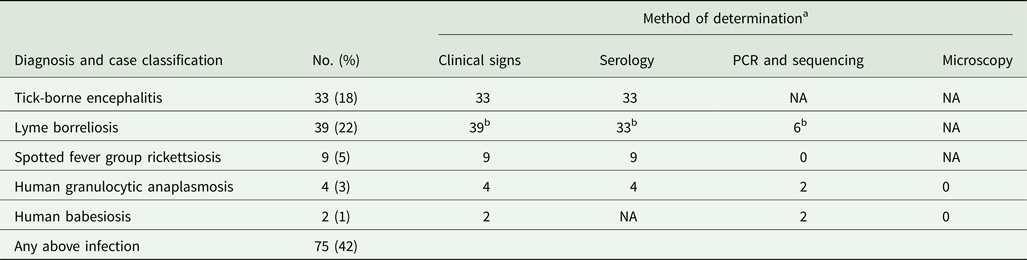
During a 2-year study, 180 patients were included and 75 (42%) could be successfully diagnosed with ⩾1 tick-borne disease in the area. The most common disease was 39 cases of LB (22%), followed by 33 of TBE (18%), nine of SFGR (5%), four of HGA (3%) and two of human babesiosis (1%) (Table 1). The sequence analysis indicated that PCR products amplified from samples from Lyme, HGA and human babesiosis cases were B. garinii (3), A. phagocytophilum (2) and ‘Babesia venatorum’ (2), respectively. Among 39 LB cases, nine were suspected cases as they were diagnosed only based on IFA serological test without EM. Two human babesiosis cases were also suspected cases as only short 18S rRNA (408 bp) gene sequences were available and no typical intraerythrocytic parasite was observed in blood smear.
The disease aetiologies of patients following a tick bite for 180 individuals in Northeastern China, 2010–2011

NA, not applicable.
a More than one method of determination may have been used to identify a single case.
b Clinical signs of Lyme included erythema migrans (n = 27) and disseminated signs (n = 12). Serology positives included 24 cases with EM and nine patients with disseminated signs. PCR and sequencing positives referred to three cases with EM and three ones with disseminated signs. Those nine patients with disseminated signs were suspected cases based on IFA serological test.
The median age of the 180 patients was 44 years old (range 1–80 years), with 57% male. The median interval from tick bite to illness onset was 5 days (range 0–55 days). The locations of tick bite appeared mostly on the trunk and abdomen (27%), followed by head and neck (24%), arm and shoulder (19%), and leg (11%). Multiple tick bites were seen in 16% of patients. These demographic and epidemiological features did not show significant differences between the patients with tick-borne pathogens and the patients without tick-borne pathogens (P > 0.05).
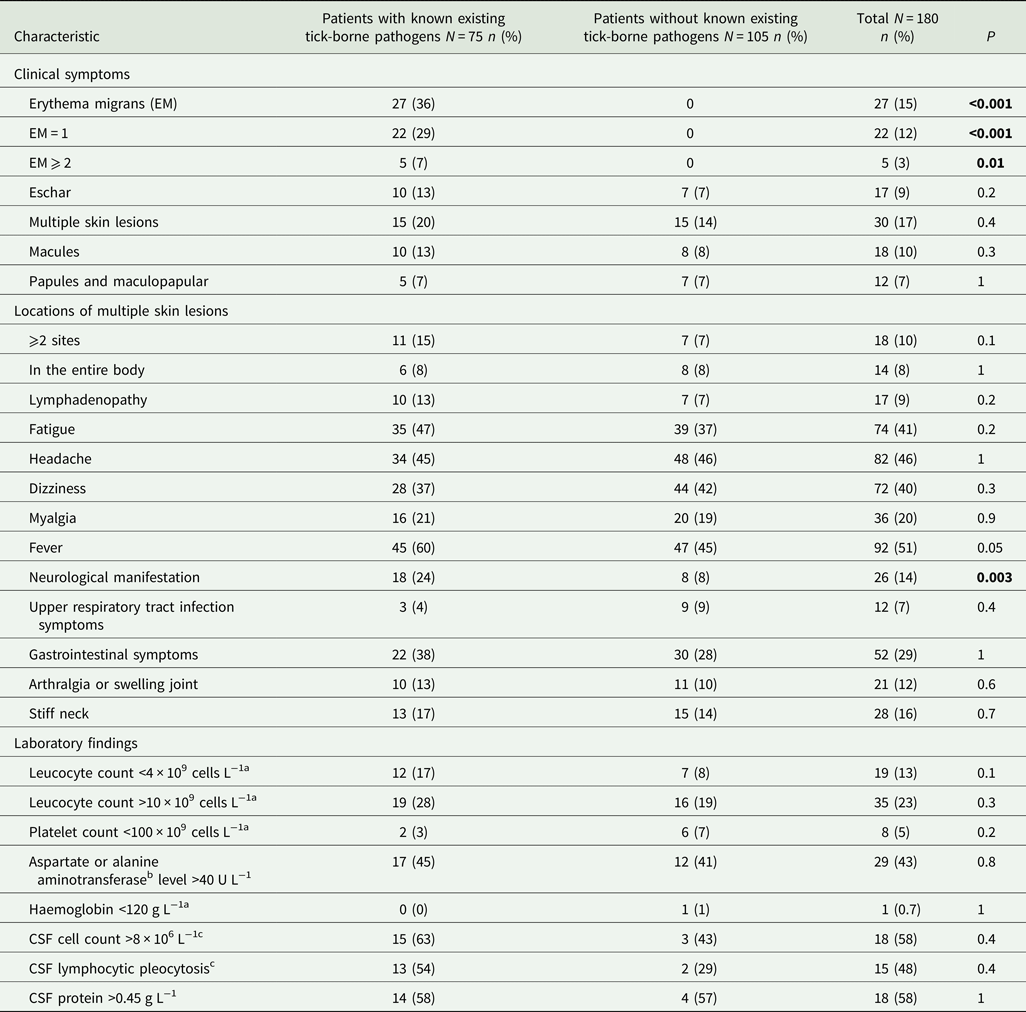
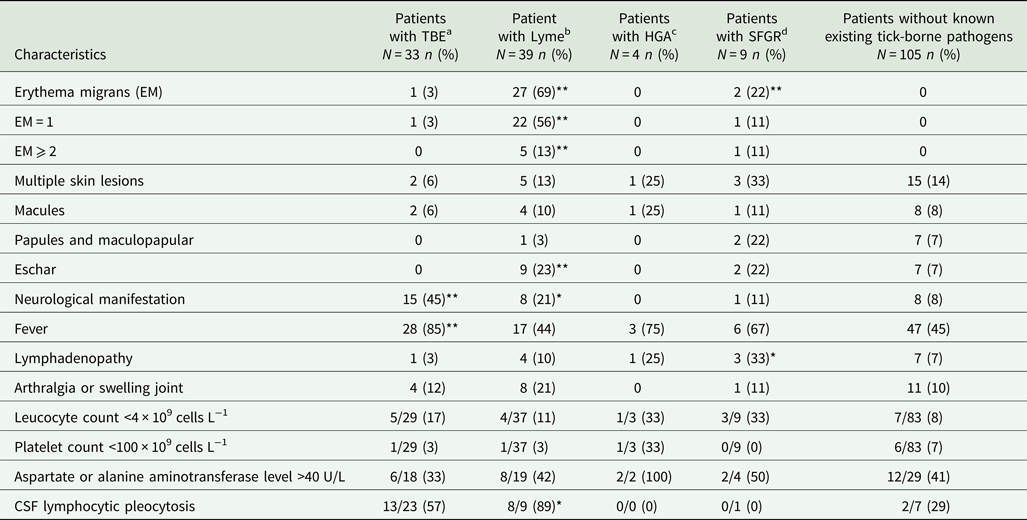
After bitten by a tick, the most common symptoms or signs were fever (51%), headache (46%), fatigue (41%), dizziness (40%), skin lesions (32%), gastrointestinal symptoms (29%) and myalgia (20%). Among 58 patients with skin lesions after tick bites, 44 had a single lesion including 23 (40%) macules/papules/maculopapular, 14 (24%) EM and seven (12%) eschar, and 14 patients (24%) had at least two types of skin lesions. In order to detect clinical indicators that could discriminate patients with tick-borne pathogens from the ones without, we compared the clinical symptoms or signs and laboratory parameters between two groups (Table 2). The patients with tick-borne disease were more likely to have EM lesions and neurological manifestations than the ones without. TBE patients were more likely to have fever and neurological manifestations; Lyme patients displayed more EM, eschar, neurological manifestations and cerebrospinal fluid (CSF) lymphocytic pleocytosis, while SFGR patients presented more frequently with EM and lymphadenopathy, and EM presentation might be due to co-infection with Lyme disease in two cases (Table 3).
Clinical characteristics of 180 patients after tick bites in Northeastern China, 2010–2011
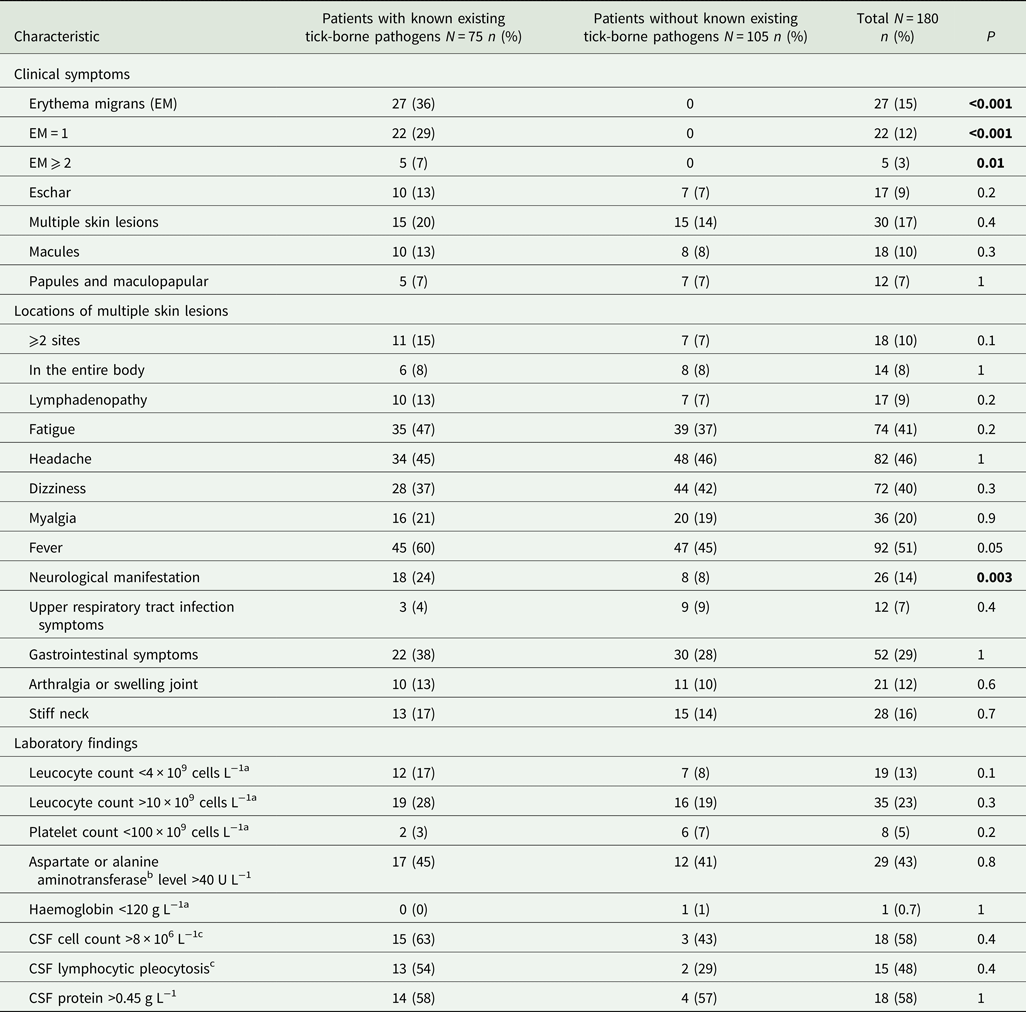
The p values in bold mean that the characteristics are statistically significantly differently presented between those with and without documented aetiologies.
a Assessed for 69 patients with known existing tick-borne pathogens and 83 patients without known existing tick-borne pathogens.
b Assessed for 38 patients with known existing tick-borne pathogens and 29 patients without known existing tick-borne pathogens.
c Assessed for 24 patients with known existing tick-borne pathogens and seven patients without known existing tick-borne pathogens.
Clinical characteristics of patients with different tick-borne infectious diseases in Northeastern China, 2010–2011

TBE, tick-borne encephalitis; Lyme, Lyme disease; HGA, human granulocytic anaplasmosis; SFGR, spotted fever group rickettsiosis.
a Including eight co-infections with TBE and Lyme, one co-infection with TBE and HGA and one co-infection with TBE and human babesiosis.
b Including eight co-infections with Lyme and TBE, two co-infections with Lyme and SFGR.
c Including one co-infection with HGA and TBE.
d Including two co-infections with SFGR and Lyme.
**Compared with patients without known existing tick-borne pathogens, χ 2 or Fisher's exact test P < 0.01; *P < 0.
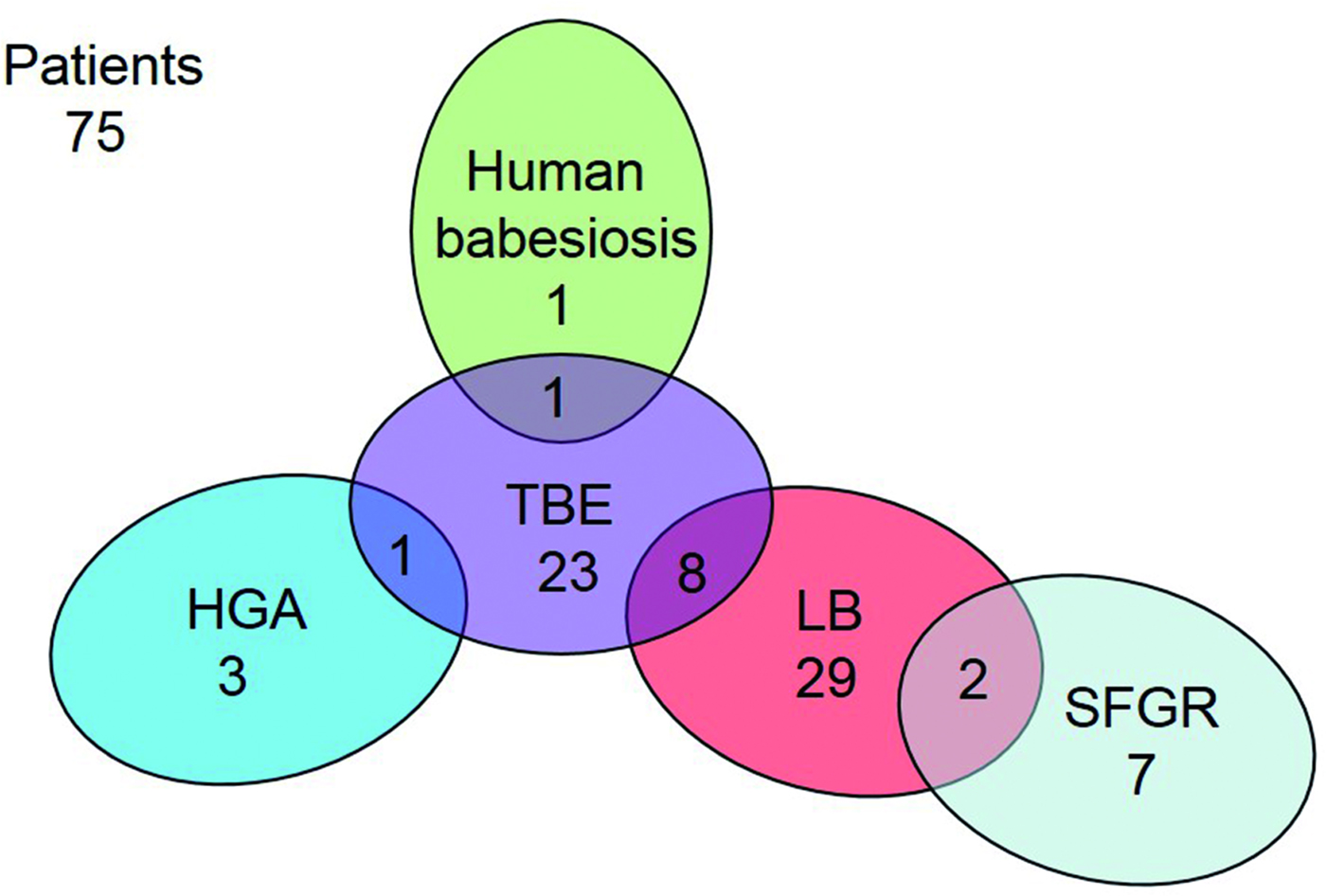
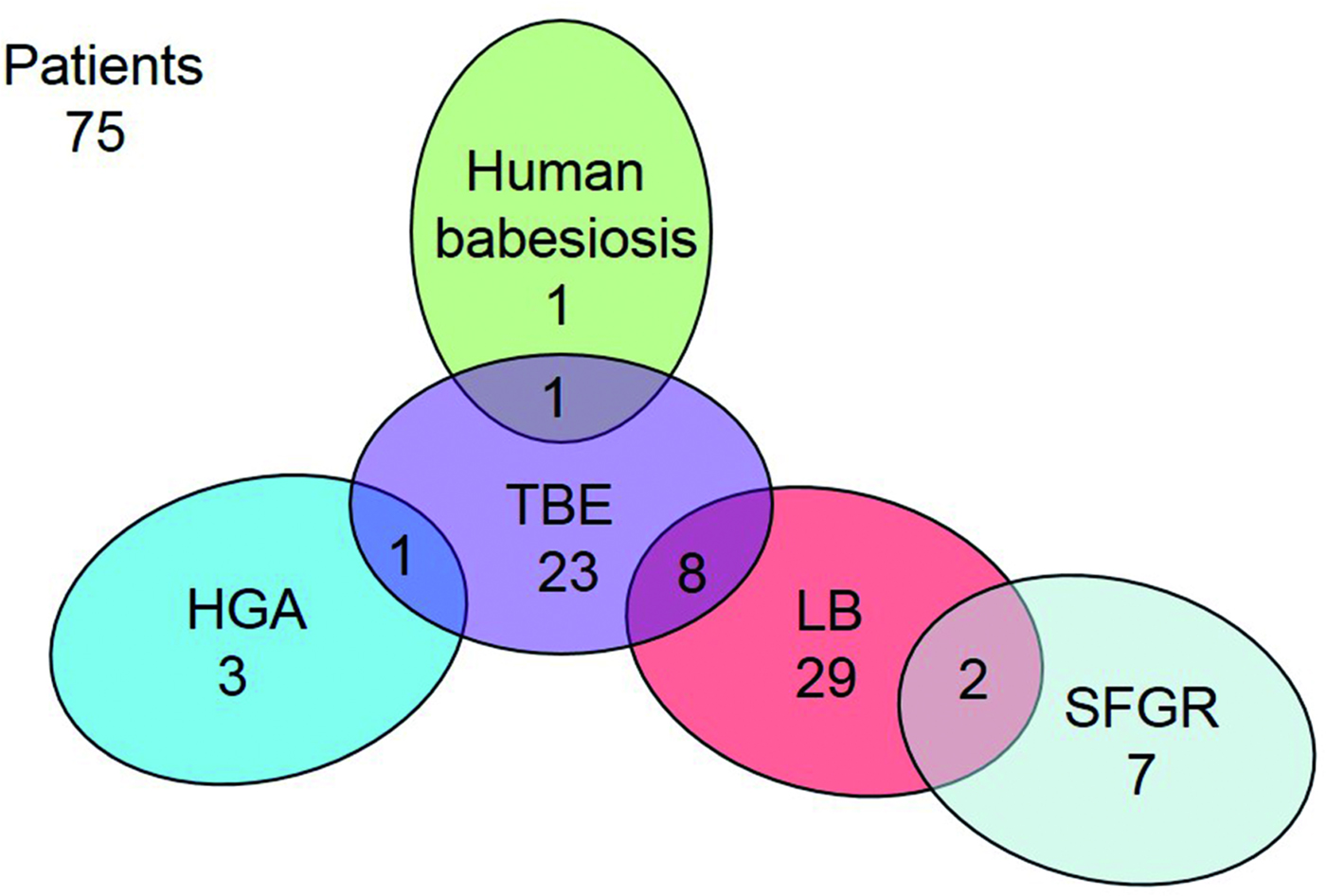
Sixty-three individuals were solely infected with one tick-borne organism, whereas 12 had co-infections, including eight TBEV cases co-infected by B. burgdorferi sensu lato, one TBEV co-infected by B. venatorum, one TBEV co-infected by A. phagocytophilum and two LB cases co-infected by SFGR (Fig. 1). We compared demographic, clinical and laboratory results within co-infected, mono-infected and uninfected patients (Additional file 2: Table S2). The age was not a risk factor for co-infection (P > 0.05). When comparing co-infection and mono-infection, only the percentage of CSF lymphocytic pleocytosis was significantly higher in co-infected patients than in mono-infected ones (P = 0.03) (Additional file 2: Table S2). We further analysed CSF parameters between TBE/LB co-infected and TBE solely infected patients; the median value of CSF cell count were, respectively, 58.0 × 10⁶ and 22.5 × 10⁶ L−1, CSF protein was 0.6 and 0.5 g L−1 and 86% of TBE/LB co-infected patients had lymphocytic pleocytosis whereas 44% of TBE-only patients had lymphocytic pleocytosis.
Co-infection of the 75 diagnosed patients. TBE, tick-borne encephalitis; LB, Lyme borreliosis; HGA, human granulocytic anaplasmosis; SFGR, spotted fever group rickettsiosis.
In the clinic, among 39 laboratory-confirmed LB cases, 67% were correctly diagnosed as LB by doctors, while 27% were misdiagnosed as TBE, and 3% were misdiagnosed as haemorrhagic fever with renal syndrome (HFRS). Among 33 laboratory-confirmed TBE cases, 85% were diagnosed to be TBE, while others were misdiagnosed as LB. The misdiagnosed SFGR patients were diagnosed as Lyme (4), HFRS (1) and fever of unknown origin (2), the misdiagnosed HGA was diagnosed as fever of unknown origin (3) and TBE (1), and the misdiagnosed human babesiosis was diagnosed as fever of unknown origin (1) and TBE (1).
Discussion
A variety of tick-borne pathogens have been detected in ticks in Northeast China; however, the aetiology of disease and the systematic understanding of clinical symptoms and signs in patients with tick bites have never been described in this region. In this report, we performed a study in which we combined clinical descriptions with laboratory confirmation of the tick-borne agents of patients with the tick bite in one of the largest hospitals in this area. We found around half of tick-bite patients presented with non-specific febrile illness, including fever, headache, fatigue and gastrointestinal symptoms, and about one-third had detectable skin lesions. Forty-two per cent of patients received a diagnosis of ⩾1 tick-borne disease based on laboratory and clinical evidence. Using currently available diagnostic assays, we identified EM and neurological manifestations as having statistical significance to distinguish patients with from patients without known existing tick-borne illness. This finding was in accordance with a previous report (Belongia et al., Reference Belongia, Reed, Mitchell, Mueller-Rizner, Vandermause, Finkel and Kazmierczak2001). The most common co-infection involved LB and TBE, although TBE and human babesiosis or HGA, LB and SFGR co-infections were also detected.
The current study had some limitations. Firstly, there is no certificated immunoblot assay for Lyme disease in China that could be used to confirm neurologic, cardiac and rheumatologic Lyme disease in the absence of concomitant EM (Wormser et al., Reference Wormser, Dattwyler, Shapiro, Halperin, Steere, Klempner, Krause, Bakken, Strle, Stanek, Bockenstedt, Fish, Dumler and Nadelman2006). In the present study, Lyme disease was defined on the premise of presenting with a typical sign (EM and/or clinical disseminated signs of meningitis, carditis or arthritis) (Trevejo et al., Reference Trevejo, Krause, Sikand, Schriefer, Ryan, Lepore, Porter and Dennis1999). In addition, it is difficult to gain biopsy of EM lesions to culture the bacteria because of cultural difficulties and poor patient compliance. The serological method for babesia infection is also unavailable. Secondly, although serological tests on paired samples may be adequate to diagnose SFGR infection (Centers for Disease, Control and Prevention, 2004), PCR can definitively identify the aetiologic agent. Since PCR is poorly sensitive for SFGR detection in blood, it is likely that some infections were not diagnosed (Parola et al., Reference Parola, Paddock and Raoult2005). A more sensitive PCR should be developed in future. Thirdly, this report focused on the aetiology of known tick-borne pathogens in the area. New pathogens emerging in other regions were not included, such as severe fever with thrombocytopenia syndrome (Yu et al., Reference Yu, Liang, Zhang, Liu, Li, Sun, Zhang, Zhang, Popov, Li, Qu, Li, Zhang, Hai, Wu, Wang, Zhan, Wang, Kan, Wang, Wan, Jing, Lu, Yin, Zhou, Guan, Liu, Bi, Liu, Ren, Wang, Zhao, Song, He, Wan, Zhang, Fu, Sun, Dong, Feng, Yang, Hong, Zhang, Walker, Wang and Li2011). Finally, the clinical symptom analysis might be biased by the predominance of TBE and Lyme disease, which explained why only EM and neurologic manifestations were significantly associated with an established tick-borne disease aetiology. However, this weakness was offset in part by the inclusion of disaggregated clinical details as shown in Table 3. Although limited by the above conditions, the work is valuable in providing a detailed description of clinical symptoms or signs of patients with tick bite, and evidence of co-infection with various tick-borne pathogens in the area. More importantly, the aetiology of tick-borne diseases was far beyond what had been diagnosed by clinicians, which led us to identify a series of new pathogens during the following years in the same hospital, including Candidatus Rickettsia tarasevichiae, Rickettsia sibirica sp. BJ-90, Rickettsia raoultii, Candidatus Neoehrlichia mikurensis, ‘B. venatorum’ and ‘Anaplasma capra’ (Li et al., Reference Li, Jiang, Liu, Zheng, Huo, Tang, Zuo, Liu, Jiang, Yang and Cao2012; Jia et al., Reference Jia, Jiang, Huo, Jiang and Cao2013a, Reference Jia, Zheng, Jiang, Ma and Cao2013b, Reference Jia, Zheng, Ma, Huo, Ni, Jiang, Chu, Jiang, Jiang and Cao2014; Jiang et al., Reference Jiang, Zheng, Jiang, Li, Huo, Jiang, Sun, Jia, Wang, Ma, Liu, Chu, Ni, Liu, Song, Yao, Wang, Sun and Cao2015; Li et al., Reference Li, Zheng, Ma, Jia, Jiang, Jiang, Huo, Wang, Liu, Chu, Song, Yao, Sun, Zeng, Dumler, Jiang and Cao2015).
The concurrent infection in the area deserved careful attention. Serological evidences of antibodies to multiple pathogens have been well recognized in human sera in the northeastern and northern Midwestern USA (Magnarelli et al., Reference Magnarelli, Dumler, Anderson, Johnson and Fikrig1995; Krause et al., Reference Krause, Telford, Spielman, Sikand, Ryan, Christianson, Burke, Brassard, Pollack, Peck and Persing1996; Duffy et al., Reference Duffy, Pittlekow, Kolbert, Rutledge and Persing1997; Magnarelli et al., Reference Magnarelli, Ijdo, Anderson, Padula, Flavell and Fikrig1998; Wang et al., Reference Wang, Liang, Sangha, Phillips, Lew, Wright, Berardi, Fossel and Shadick2000). Four systematic studies independently confirmed the simultaneous infection with LB and HGA, but the frequency varied from 2 to 11.7% depending on the different case definition for HGA (Belongia et al., Reference Belongia, Reed, Mitchell, Chyou, Mueller-Rizner, Finkel and Schriefer1999; Krause et al., Reference Krause, McKay, Thompson, Sikand, Lentz, Lepore, Closter, Christianson, Telford, Persing, Radolf and Spielman2002; Steere et al., Reference Steere, McHugh, Suarez, Hoitt, Damle and Sikand2003; Horowitz et al., Reference Horowitz, Aguero-Rosenfeld, Holmgren, McKenna, Schwartz, Cox and Wormser2013). Few reports indicated the concurrent infection with TBEV and B. burgdorferi (Cimperman et al., Reference Cimperman, Maraspin, Lotric-Furlan, Ruzic-Sabljic, Avsic-Zupanc and Strle2002; Moniuszko et al., Reference Moniuszko, Dunaj, Swiecicka, Zambrowski, Chmielewska-Badora, Zukiewicz-Sobczak, Zajkowska, Czupryna, Kondrusik, Grygorczuk, Swierzbinska and Pancewicz2014). Rare co-infections with LB and SFGR, or with TBE and HGA were recorded (Hilton et al., Reference Hilton, DeVoti, Benach, Halluska, White, Paxton and Dumler1999; Moniuszko et al., Reference Moniuszko, Dunaj, Swiecicka, Zambrowski, Chmielewska-Badora, Zukiewicz-Sobczak, Zajkowska, Czupryna, Kondrusik, Grygorczuk, Swierzbinska and Pancewicz2014). Concurrent infections with tick-borne pathogens were recognized in our patients, and the majority were co-infected with TBE and LB.
After being bitten by ticks, patients appear with diverse clinical syndromes, including around half of flu-like illness (fever, headache, fatigue, gastrointestinal symptoms and myalgia). As reported by others, it was difficult to distinguish patients with and without tick-borne illness based on non-specific clinical symptoms. The specific symptoms were more important for diagnosis (Wormser et al., Reference Wormser, Dattwyler, Shapiro, Halperin, Steere, Klempner, Krause, Bakken, Strle, Stanek, Bockenstedt, Fish, Dumler and Nadelman2006). Consequently, misdiagnosis is a big problem in the study hospital. Doctors there should be more familiar with HGA, human babesiosis and SFGR so that they could provide optimal diagnosis and appropriate treatment. ELISA assays for tick-borne diseases had been used in the study hospital before our research, while after our work, the good improvement in the diagnostic platform was that PCR molecular testing system was added and serological IFA assay against Rickettsia was used. However, as it is difficult to distinguish patients with tick-borne pathogens from those without, the development of specific laboratory testing should be strengthened.
Supplementary material
The supplementary material for this article can be found at https://doi.org/10.1017/S0031182018001178.
Acknowledgements
We thank Yu-Dong Song, Nan-Nan Yao, and all doctors and nurses in the Department of Tick-borne Infectious Disease in Mudanjiang Forestry Central Hospital for their kind help on sample collection.
Financial support
This work was supported by the State Key Research Development Program of China (2016|YFC1200301, 2016YFC 1201902) and Natural Science Foundation of China (81621005, 81773492 and 81673235).
Conflicts of interest
None.
Ethics approval
The study was approved by the Mudanjiang Forestry Central Hospital Review Board and Academy of Military Medical Sciences Review Board.