Introduction
The array antenna is a radiating device composed of multiple antenna elements arranged in a specific configuration [Reference Agha, Al-Adwany, Bayat and Hamdoon1] with wide applications in fields such as satellite communications, satellite Internet of Things, radar, and astronomy [Reference Hong, Shao, Lv, Wang, Peng and Jiang2–Reference Brandt-Møller, Mattes, Breinbjerg, Zhou and Jørgensen4]. In contrast to uniform array antennas, sparse array antennas require fewer elements while providing better angular resolution and gain [Reference Buonanno, Costanzo and Solimene5, Reference Li, Qu, Yang and Hu6]. These array antennas attain the desired peak sidelobe level (PSLL), main lobe width, and directivity coefficient by strategically manipulating the quantity and arrangement of elements within the uniform array, thereby achieving high gain, narrow beamwidth, and low sidelobe levels [Reference Wang, Wu, Ye, Sun and Hua7–Reference Zhang, Mao, Zhang, Hirokawa and Liu9]. However, the design of sparse array antennas poses a complex nonlinear optimization problem. Highlighting the necessity for efficient and timely determination of the distribution of array element parameters to attain of desired radiation patterns through optimization methods in the design of array antennas.
A multitude of researchers have integrated Taylor synthesis, convex optimal synthesis, and Bayesian synthesis into the optimization of direction map for array antennas. Rahardjo et al. [Reference Rahardjo, Sandi and Zulkifli10] introduced a novel approach that employs Taylor line source distribution to optimize linear sparse array antennas through the manipulation of spacing coefficients. Their results indicate effective matching of sparse array antenna distributions for various beam configurations without the necessity of iterative solution. Lou et al. [Reference Lou, Jin, Wang, Wu, Xia, Wang, Yuan and Wang11] proposed a sparse array synthesis method based on joint convex optimization, which seeks to enhance the data transmission rate of large-scale multiple-input multiple-output systems. Simulation results reveal that this approach outperforms both uniform arrays and existing convex optimization techniques. Additionally, Lee [Reference Lee12] and Kedar [Reference Kedar, Vangol and Mahesh13] et al. presented sparse array design strategies based on convex optimization and Bayesian compressed perception, which resulted in improved outcomes in sparse optimization. However, these approaches require the establishment of appropriate reference modes, have lower optimization efficiency, and stronger dependencies, which limit practical applicability in engineering environments.
In recent years, swarm intelligence optimization algorithms have been widely applied to sparse array antenna directional map optimization [Reference Li, Zhang and Shi14]. These natural law-based approaches have shown significant efficacy in a wide range of experiments [Reference He and Wang15, Reference Elkhawaga, Mahmoud, AbdElnaby and Hussein16]. Genetic algorithm (GA) has been applied to large planar sparse arrays with low sidelobe levels, which exceeds the expected results [Reference Mevada, Gupta, Chakrabarty and Mahajan17, Reference Karasev and Stepanov18]. However, GA’s search for the objective function is too singular and exclusive, making it prone to premature convergence. The existing literature [Reference Zheng, You, Zhang, Zhu, Ding and He19, Reference Vankayalapati, Lakshman, Kumar, Batch, Dalali, Inti and Netinti20] employs the particle swarm optimization (PSO) algorithm to address the optimization challenges associated with sparse array antennas and obtains better PSLL. Nonetheless, it has been observed that the convergence of the algorithm tends to reach a saturation point in the later phases. Consequently, this indicates that the algorithm experiences a premature convergence problem when tasked with optimizing the radiation pattern of the array antenna. The sparrow search algorithm (SSA) [Reference Liang, Chen, Wu, Ma and Li21], social group optimization (SGO) algorithm [Reference Owoola, Xia, Ogunjo, Mukase and Mohamed22], mayfly algorithm (MA) [Reference Owoola, Xia, Wang, Umar and Akindele23], and marine predators algorithm (MPA) [Reference Srinivasareddy, Narayana and Krishna24] have been utilized for the optimization of radiation patterns in array antennas. However, the substantial quantity of parameters inherent in these algorithms renders them less appropriate for application to array antennas with varying element scales. In order to facilitate more sophisticated beamforming and spatial multiple access technologies, forthcoming B5G and 6 G networks necessitate array antennas that exhibit enhanced accuracy, convergence speed, and control capabilities regarding the main lobe direction of the radiation pattern. Consequently, there is a pressing requirement to develop an intelligent optimization algorithm that effectively integrates applicability and efficiency for the optimization of array antenna radiation patterns [Reference Guo, Ansari and Fonseca25, Reference Ikram, Sultan, Lateef and Alqadami26]. Therefore, there is an urgent need to design an intelligent optimization algorithm that integrates both applicability and efficiency for the optimization of array antenna radiation patterns.
The DO algorithm, introduced by Zhao et al. [Reference Zhao, Zhang, Ma and Chen27], represents a novel approach within the realm of swarm intelligence optimization [Reference Zhao, Zhang, Ma and Chen27]. This algorithm exhibits several advantages, including a high degree of adaptability, a well-defined structural framework, a robust capacity for global search, and a reduced number of parameters. Furthermore, it has been shown to perform effectively in optimizing both continuous and discontinuous problems [Reference Fu, Wu, Wang, Haque, Geng and Meng28, Reference He, Guo, Wang, Chen, Guo and Li29]. The literature [Reference Zhao, Zhang, Ma and Chen27] demonstrated the efficacy of the DO algorithm by employing classic test functions. A comparative analysis with several established optimization algorithms revealed that the DO algorithm exhibits superior global search capabilities, enhanced accuracy, and improved convergence characteristics. Subsequently, Li et al. [Reference Li, Liu, Zhao and Zhu30–Reference Li, Liu, Zhu and Zhao32] applied DO to the synthesis optimization problem of linear array antenna radiation patterns. In particular, proposed a chaotic exchange nonlinear dandelion optimization (CENDO) algorithm and applied to time-modulated array antenna (TMAA) to reduce sidelobe and sideband levels, achieving satisfactory optimization results. However, previous studies were limited to one-dimensional optimization problems for linear arrays. This paper introduces DO into the synthesis optimization problem of sparse planar arrays for the first time, aiming to reduce two-dimensional planar sidelobe levels. It continuously optimizes the activation status of each array element in the planar array to determine the optimal configuration and achieve higher array gain. However, the algorithm has a weak ability to solve nonlinear complex problems and exhibits an imbalance between global search and local development performance, resulting in the occurrence of local optima [Reference Hu, Zheng, Abualigah and Hussien33, Reference Han, Zhu and Wang34]. Therefore, this paper proposes a novel sparse array optimization algorithm referred to as the DO algorithm based on logistic chaotic mapping and spiral flight strategy. This algorithm incorporates a mutation mechanism and adaptively modifies the search strategy to improve both global search efficiency and local convergence.
Problem model definition
Sparse planar array model
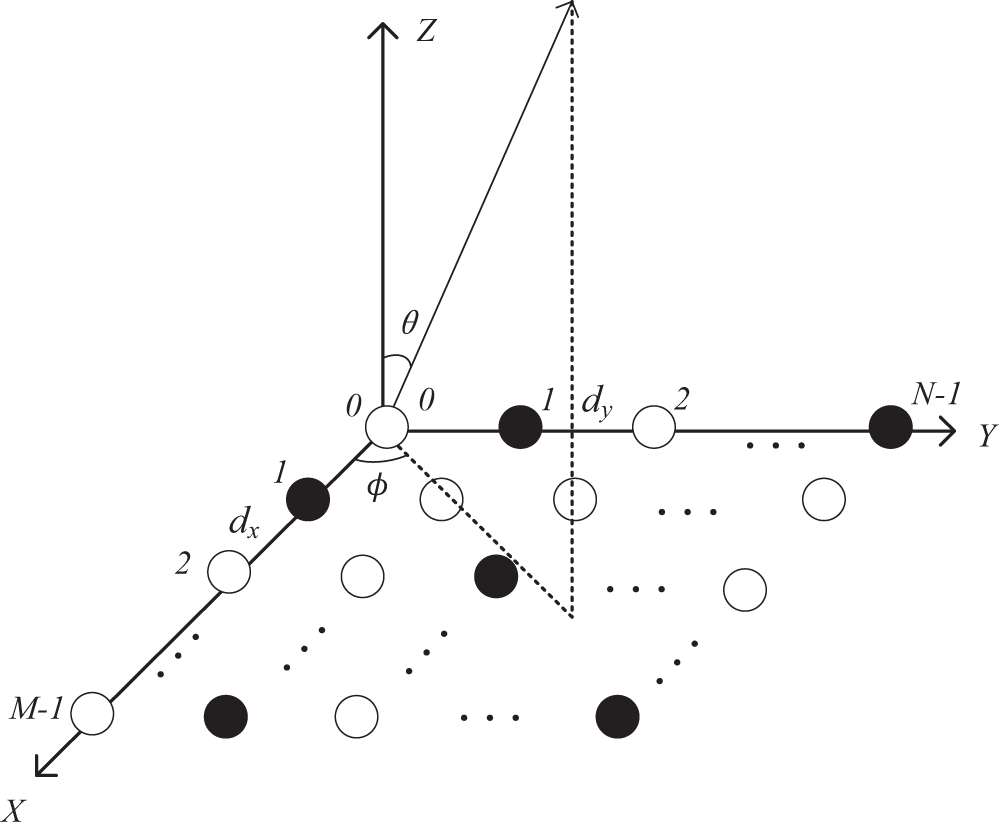
Fig. 1 is a rectangular planar sparse array with a sparsity level of f and aperture size of M × N.
Schematic of a sparse planar array.

The grid spacing of the array is set at dx = dy = λ/2, where λ represents the wavelength of the radiation. The total number of elements in the array is determined by T = f × M × N. Assuming the array meets the condition of equal-amplitude omnidirectionality, and in accordance with the principle of electromagnetic wave superposition, the directional pattern function of the array can be articulated and formulated as:
 \begin{equation}\begin{gathered}
F(u,v) = \sum\limits_{m = 0}^{M - 1} {\sum\limits_{n = 0}^{N - 1} {{f_{mn}}} } {A_{mn}}{e^{jk\left[ {nd\left( {u - {u_0}} \right) + md\left( {v - {v_0}} \right)} \right]}} \hfill \\
\left\{ \begin{gathered}
u = \sin \theta \cos \phi ,v = \sin \theta \sin \phi \hfill \nonumber \\
{u_0} = \sin {\theta _0}\cos {\phi _0},{v_0} = \sin {\theta _0}\sin {\phi _0} \hfill \nonumber \\
\end{gathered} \right. \hfill \nonumber \\
\end{gathered} \end{equation}
where  $k = 2\pi $, θ and ϕ represent the pitch and azimuth angles, and (θ 0, ϕ 0) indicates the optimal pointing direction of the array beam. The term fmn is used to describe the operational status of the array element positioned at coordinates (m, n), where fmn = 1 signifies the presence of an array element at that specific location, while fmn = 0 indicates the absence of an array element at that position. Additionally, Amn denotes the amplitude excitation coefficient of the array element located at coordinates (m, n), with a value of 1 signifying compliance with isotropic omnidirectionality.
Optimized model
The primary goal of sparse array optimization is to minimize the PSLL of the directional pattern while maintaining equal amplitude omnidirectionality. This study focuses on identifying the PSLL in two specific planes at angles of ϕ = 0° and ϕ = 90°. According to the definition of PSLL, the fitness function is represented as:
 \begin{align}
PSLL =& \mathop {\max }\limits_{\phi \in {S_1}} \left( {\frac{{F\left( {\phi ,{\theta _0};{\phi _0},{\theta _0}} \right)}}{{\max F\left( {\phi ,{\theta _0};{\phi _0},{\theta _0}} \right)}}} \right) \nonumber \\
&\quad + \mathop {\max }\limits_{\phi \in {S_2}} \left( {\frac{{F\left( {\phi ,{\theta _0};{\phi _0},{\theta _0}} \right)}}{{\max F\left( {\phi ,{\theta _0};{\phi _0},{\theta _0}} \right)}}} \right)
\end{align}
where S 1 represents the sidelobe interval of the azimuthal direction map at a specific angle θ = θ 0, while S 2 represents the sidelobe interval of the pitch direction map at a particular angle ϕ = ϕ 0. The optimization model can be formally expressed as:
 \begin{equation}\mathop {\min }\limits_f \left( {PSLL} \right)\end{equation}
The dandelion optimizer and its improvements
Dandelion optimizer
The DO updates and optimizes the positions by simulating the wind-assisted flight behavior of mature dandelions, dividing it into three stages: ascending, descending, and landing [Reference Khalil, Boghdady, Alham and Ibrahim35, Reference Liu and Qin36].
Ascending phase
Dandelion seeds are affected by factors such as wind speed and air humidity in the rising stage. Therefore, the weather can be classified as sunny or rainy.
On sunny days, wind speed follows a log-normal distribution, which facilitates the simulation of randomness in the global search for antenna array elements. This approach helps explore more optimal array layouts, thereby reducing side lobe levels in the directional pattern. The mathematical model for the dandelion seeds in the ascent phase is represented as:
 \begin{equation}{X_{t + 1}} = {X_t} + \alpha {v_x}{v_y}\ln Y\left( {{X_s} - {X_t}} \right)\end{equation}
where Xt is the position of the seed at the tth iteration (current array status). lnY signifies the lognormal distribution with parameters μ = 0 and σ 2 = 1. ex and vy denote the coefficients of the lift components of the dandelion seed. Xs represent the randomly selected position.
 \begin{equation}{X_s} = \operatorname{rand} (1,\operatorname{Dim} ) \times (UB - LB) + LB\end{equation}
where UB and LB are the upper and lower bounds of the problem, respectively. The Dim represents the dimensionality of the problem. α is an adaptive parameter influenced by the current iteration (t) and the maximum number of iterations (T).
 \begin{equation}\alpha = \operatorname{rand} () \times \left( {\frac{{{t^2}}}{{{T^2}}} - \frac{{2t}}{T} + 1} \right)\end{equation}
On rainy days, factors such as air humidity and air resistance cause the DO algorithm to emphasize local area development. By locally adjusting the positions of the array elements, the algorithm suppresses diffraction side lobes and enhances the efficiency of the main lobe in the directional pattern. The equation is as follows:
 \begin{equation}{X_{t + 1}} = k{X_t}\end{equation}
 \begin{equation}k = 1 - q \times \operatorname{rand} ()\end{equation}
 \begin{equation}q = \frac{{{t^2} - 2t + 1}}{{{T^2} - 2T + 1}} + 1\end{equation}
where k is employed to control the scope of the local search area and q is an adaptive parameter.
In conclusion, the mathematical model for dandelion seeds during the ascending stage is defined as:
 \begin{equation}{X_{t + 1}} = \left\{ {\begin{array}{*{20}{l}}
{{X_t} + \alpha {v_x}{v_y}\ln Y\left( {{X_s} - {X_t}} \right)}&{{\text{ rand }} \lt 1.5} \\
{k{X_t}}&{{\text{ else }}}
\end{array}} \right.\end{equation}
Descending phase
The DO algorithm emphasizes global optimization during the descent phase. The average position obtained from the ascent phase is used to reflect the stability of the dandelion decline and to facilitate the movement of the dandelion population to the most desirable breeding sites. Dynamically balance the sparsity and directionality coefficients of the array through Brownian motion to improve PSLL performance. The mathematical model for the descent phase is formulated as:
 \begin{equation}{X_{t + 1}} = {X_t} - \alpha {\beta _t}\left( {{X_{mean\_t}} - \alpha {\beta _t}{X_t}} \right)\end{equation}
 \begin{equation}{X_{mean\_t}} = \frac{1}{{{N_p}}}\sum\limits_{i = 1}^{{N_p}} {{X_i}} \end{equation}
where Xmean_t is the average position information of the dandelion population at the tth iteration. βt denotes a random number following Brownian motion with a normal distribution. Np signifies the total number of dandelion populations.
Landing phase
The DO algorithm focuses on local exploitation during the landing phase. In order for the seed to reach the most survivable position, the current elite individual information can be used for local exploitation, which helps the algorithm to converge exactly to the global optimal solution. The Levy(λ) strategy can simulate the fine-tuning process of array element positions. By employing nonlinear perturbations to escape local optima significantly reduces the PSLL. Simultaneously, the δ function avoids the lobe problem caused by excessive sparsity. The mathematical representation is described as:
 \begin{equation}{X_{t + 1}} = {X_{{\text{elite }}}} + \operatorname{Levy} (\lambda ) \times \alpha \times \left( {{X_{{\text{elite }}}} - \delta {X_t}} \right)\end{equation}
 \begin{equation}\delta = \frac{{2t}}{T}\end{equation}
where Xelite is the current elite individual; Levy(λ) is the Levy flight function to enhance the local search capability; δ  $ \in $ [0,2] is a linearly increasing function to prevent over-exploitation and ensure precise convergence to the global optimum.
Improved dandelion optimizer
Logistic chaotic mapping
The DO algorithm is initialized by randomly generating the positions of the dandelion seeds within the upper and lower bounds. Such an initialization may lead to uneven distribution of dandelions, causing the algorithm to mature prematurely and fall into local optimal solutions. In order to solve this problem, this paper proposes a logistic chaotic mapping strategy to generate initial solutions with a more uniform distribution. The principle involves utilizing the sequence generated by chaotic mapping between [0,1], and then initializing the dandelion population according to the chaos factor. Dandelion’s initial distribution is more rational and avoids premature maturity through this approach. Fig. 2 shows the two-dimensional distribution map of these two initialization methods, revealing that the initial distribution of logistic chaotic mapping is more uniform. The mathematical model of logistic mapping is described as follows:
 \begin{equation}{X_{t + 1}} = a \times {X_t} \times \left( {1 - {X_t}} \right)\end{equation}
Where a  $ \in $ [0,4] is a logistic parameter.
Comparison of two different distributions. (a) Logistic chaos distribution; (b) stochastic distribution.

Spiral flight
The DO algorithm based on logistic chaotic mapping reduces the probability of premature convergence, but the self-learning capability of dandelion seeds remains suboptimal and requires enhancement. Position updates increasingly become constrained as the dandelion seeds reach the local optimal survival position, which restricts the dandelion seeds to searching exclusively within their surrounding area. In this paper, we propose a spiral flight position update strategy to guide the flights of dandelion seeds. This strategy dynamically adjusts the spiral shape of dandelion seed flight by incorporating multiple parameters to regulate the radial and angular aspects of the flight trajectory. A schematic representation of the spiral flight search methodology is illustrated in Fig. 3. The mathematical formulation for the spiral flight position update strategy is delineated as:
 \begin{equation}z = {\operatorname{e} ^{k\cos ((1 - \frac{t}{{{\text{ T }}}})\pi )}}\end{equation}
 \begin{equation}{X_{t + 1}} = {X_{{\text{elite }}}} + \left| {{X_{{\text{elite }}}} - {X_t}} \right| \times {e^{zL}} \times \cos (2\pi L)\end{equation}
where k represents the step size of the spiral flight, and the parameter z consists of an exponential function that is based on e and varies with the number of iterations. L  $ \in $ [−1,1] is a uniformly distributed random number.
Spiral flight search schematic. (a) Two-dimensional figure; (b) three-dimensional figure.

A novel spiral flight position updating strategy is employed in the later stages of the DO algorithm to escape local optima. This spiral flight approach utilizes the characteristics of the cosine function to dynamically adjust the size and amplitude of the spiral trajectory. This enables the dandelion seeds to fly at a certain angle of rotation, making it possible to minimize the creation of duplicate individuals. Consequently, the proposed strategy effectively balances the local and global search of the DO algorithm.
LSDO synthesis procedure
This paper presents an improved dandelion optimization algorithm that incorporates logistic chaotic mapping and spiral flight strategy. Initially, the pertinent parameters of the LSDO algorithm are established, including population size, maximum iteration, and problem dimensions. Subsequently, logistic chaotic mappings were employed to initialize more uniformly distributed populations. Ultimately, the LSDO algorithm considers each arrival position of a dandelion seed as a potential solution. These seeds find the most suitable locations for survival within the search interval, representing the optimal solution to the objective function. The pseudocode for the LSDO algorithm is presented in Table 1.
Pseudocode for the LSDO algorithm

Numerical results
Overall competency
To assess the algorithmic effectiveness of LSDO, two classical benchmark functions have been employed for evaluation. Detailed information about these functions and their graphical representations are provided as shown in Table 2 and Fig. 4, respectively.
Images of test functions. (a) Rosenbrock; (b) Ackley.

Benchmark functions information

The performance of LSDO has been compared with that of CENDO [Reference Li, Liu, Zhao, Zhu, Wang and Hu31], the original DO, and several popular evolutionary algorithms such as PSO and IWO. The parameters for these algorithms are established as follows: a population size of N = 100 and a maximum iteration count of Tmax = 1000 for the benchmark functions. All simulations are executed using MATLAB R2023b on a single computer. Fig. 5(a) and 5(b) illustrate the iterative processes of the four algorithms for the Rosenbrock and Ackley functions, respectively. The results indicate that the LSDO algorithm exhibits a superior convergence rate and enhanced solution accuracy relative to the other traditional algorithms when applied to both the Rosenbrock and Ackley functions. Table 3 presents the statistical outcomes from 30 independent experiments, detailing the best and worst fitness values, as well as the mean and standard deviation for each algorithm. Notably, the LSDO algorithm consistently outperforms the other three algorithms across all four metrics: optimal value, worst value, mean value, and variance. The low mean value signifies the algorithm’s exceptional overall search capability and convergence performance, while the low variance underscores its stability. Consequently, it is evident that the LSDO algorithm proposed in this study demonstrates superior search performance, an enhanced capacity to escape local optima, and robust resilience when compared to the CENDO [Reference Li, Liu, Zhao, Zhu, Wang and Hu31], DO, PSO, and IWO algorithms.
Convergence curves for each algorithm. (a) Rosenbrock; (b) Ackley.

Benchmark functions simulation results

Beam pattern
To evaluate the efficiency of the sparse array optimization achieved through the proposed LSDO algorithm, two simulation experiments have been conducted. These experiments aim to evaluate the optimization of sparse planar array antennas characterized by varying sparsity rates and distinct constraint requirements, with the primary objective of reducing the PSLL in the directional radiation pattern. The outcomes of these experiments are subsequently compared and analyzed against those obtained from a classical optimization algorithm. The parameters for the experiments are standardized, with a population size and maximum number of iterations set at 60 and 200 for all algorithms, respectively. The array configuration is established as 20 × 10, with inter-element spacing defined as dx = dy = d = Institute of Geography, /2 = 0.5 m. The beam is directed at an angle of (θ, ϕ) = (0°, 0°), and the coupling effects between the array elements are disregarded.
Different sparsity
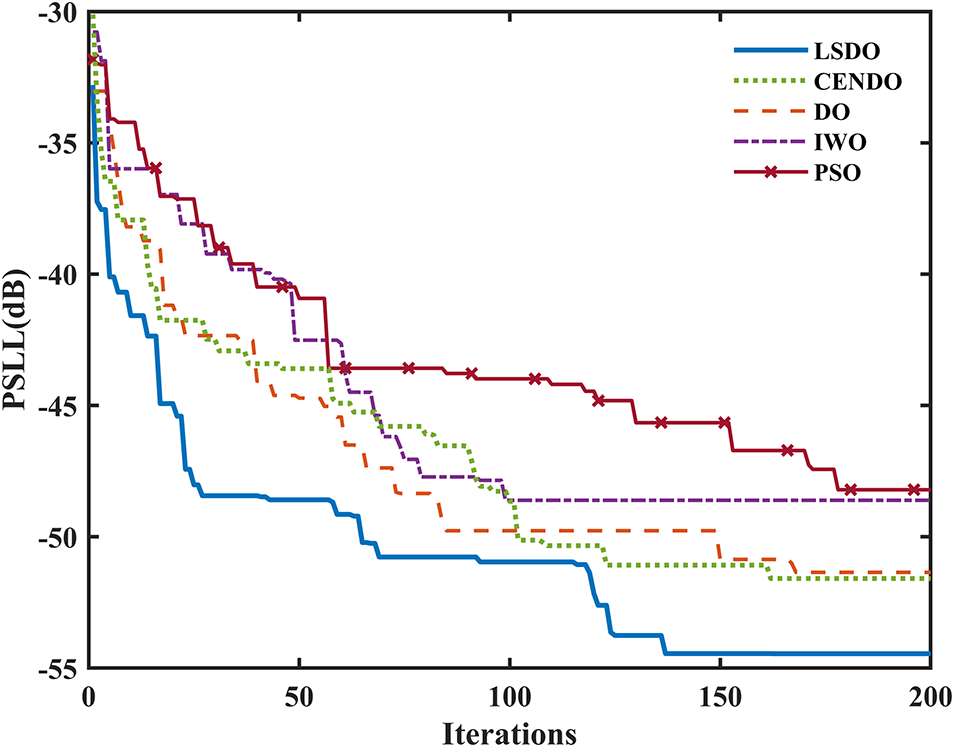
In this simulation, the LSDO, CENDO [Reference Li, Liu, Zhao, Zhu, Wang and Hu31], DO, PSO, and IWO are employed to optimize a planar array consisting of 200 elements, characterized by a sparsity rate of 50%. The fitness iteration curves for sparse array optimization using the four optimization algorithms are presented in Fig. 6.
Iterative curves of fitness for different algorithms.

As it shows, both the PSO and IWO algorithms exhibit a high degree of similarity in their early iteration curves, ultimately converging to comparable values in the later stages. Conversely, the CENDO [Reference Li, Liu, Zhao, Zhu, Wang and Hu31] and DO algorithm demonstrate a more rapid optimization speed during the initial iterations and perform well in exploration in the middle period, although they tend to fall into local optima in the later stages. Notably, the LSDO algorithm not only achieves a quicker optimization speed in the early iterations but also consistently updates toward the optimal solution in the later stages, attaining the lowest PSLL of −54.45 dB.
The findings indicate that the PSO and IWO algorithms exhibit slower convergence in the early stages, while the CENDO [Reference Li, Liu, Zhao, Zhu, Wang and Hu31] and DO algorithm tends to become trapped in local optima during the later stages. In contrast, the LSDO algorithm outperforms the other three algorithms. It extensively explores the solution space through a global search strategy in the initial phase. In addition, it mitigates the local optimum through an individual variation strategy in the later stages. The combination of the two strategies promotes faster convergence to the global optimum solution.
Figure. 7 illustrates the orientation of azimuthal and pitch directions for the four algorithms used in sparse array optimization. First, it is evident that the 3 dB width of the main lobe remains consistent across all algorithms, aligning with the intended goal. Additionally, it is noticeable that the PSLL of the LSDO algorithm is considerably lower than that of the other algorithms in both sections. The PSLL values are recorded as follows: −56.34 dB for the LSDO algorithm, −50.11 dB for the CENDO [Reference Li, Liu, Zhao, Zhu, Wang and Hu31] algorithm, −48.8 dB for the DO algorithm, −51.69 dB for the PSO algorithm, and −50.03 dB for the IWO algorithm. The LSDO algorithm reduces the PSLL by 12.4%, 15.5%, 9%, and 12.61%, respectively, compared to conventional optimization algorithms (CENDO [Reference Li, Liu, Zhao, Zhu, Wang and Hu31], DO, PSO, and IWO).
Orientation maps for sparse arrays using various algorithms. (a) Azimuth pattern; (b) pitch pattern.

The optimization performance of sparse arrays is influenced by their level of sparsity. To further investigate how the proposed algorithms perform on planar arrays with varying sparsity, experiments are conducted with different levels of sparsity, and the PSLL of the direction maps for the optimized arrays using the LSDO, CENDO [Reference Li, Liu, Zhao, Zhu, Wang and Hu31], DO, PSO, and IWO algorithms are recorded. Table 4 presents the PSLL, which was derived by averaging the outcomes of executing multiple optimization algorithms five times under consistent simulation conditions across varying levels of sparsity. From Table 4, it is evident that the optimization performance of sparse arrays varies with different sparsity rates, showing a gradual decrease in the maximum sidelobe level for each algorithm as the sparsity rate decreases from 90% to 20%. Notably, the LSDO algorithm consistently outperforms the others, achieving the lowest PSLL most frequently. These results indicate that the LSDO algorithm is more effective than the other optimization algorithms for planar array antenna optimization across different sparsity levels.
Statistics of PSLL for various sparsity

Symmetric and asymmetric distributions
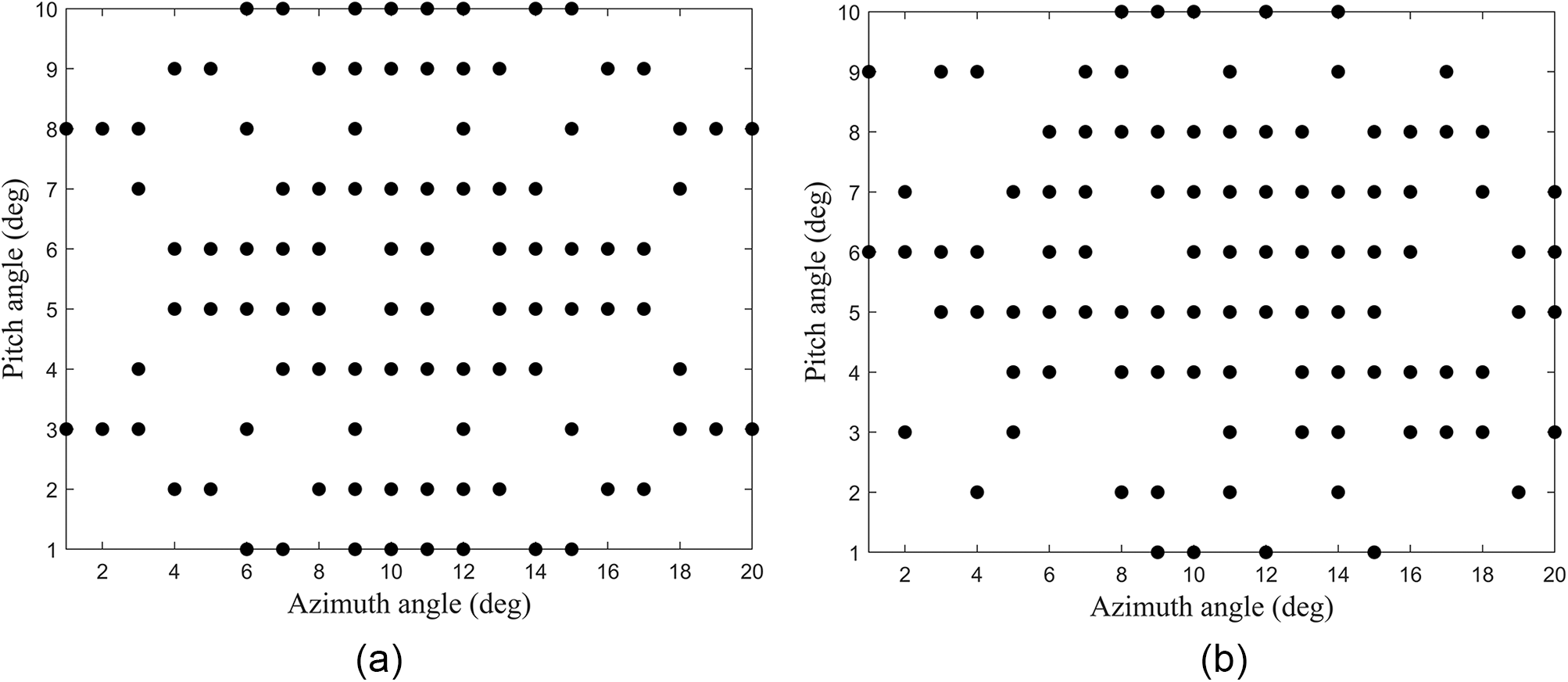
In this simulation, the LSDO algorithm is applied to a planar array with specific constraints to further evaluate the performance of the LSDO algorithm. Specifically, we use the algorithm to optimize a symmetric sparse array antenna and compare it to an asymmetric one. The parameters in this simulation are the same as previously described, but the array elements satisfy a symmetric distribution with a sparsity of 50%. The locations of the symmetrically distributed array elements are illustrated in Fig. 8(a), while Fig. 8(b) shows the positions of the asymmetrically distributed array elements, with solid circles indicating the activated array elements. The configuration of the array elements in Fig. 8(a) satisfies the criteria for symmetric distribution, and the centrally clustered arrangement helps to reduce the global PSLL.
The element positions in the x−y plane. (a) Symmetric distribution of elements; (b) asymmetric distribution of elements.

Figures 9(a) and 10(a) illustrate the three-dimensional direction maps corresponding to symmetric and asymmetric array element distributions, respectively. As shown in the figures, the overall sidelobe levels have decreased significantly, providing strong evidence of the LSDO algorithm’s effectiveness in suppressing sidelobes. To further analyze the sidelobe levels of the direction maps, Figs. 9(b) and 10(b) show cut-away direction maps of the 3D direction maps in the azimuthal and pitch directions. As depicted in the figures, the sum of PSLL for the symmetric array element distribution is −51.79 dB, with PSLL of −24.44 dB at ϕ = 0° and −27.35 dB at ϕ = 90°. Conversely, the sum of PSLLs for the asymmetric array element distribution is −52.86 dB, with PSLL values of −23.07 dB at ϕ = 0° and −29.35 dB at ϕ = 90°. The experimental results indicate that the optimization effects of the symmetric and asymmetric array element distributions are nearly equivalent, which confirms the effectiveness of the LSDO algorithm in suppressing the sidelobe levels of the symmetric array.
Symmetric sparse planar array orientation diagram. (a) 3D radiation pattern; (b) cut-away direction maps.

Asymmetric sparse planar array orientation diagram. (a) Three-dimensional direction; (b) cut-away direction maps.

Simulation results show that the proposed LSDO algorithm achieves superior PSLL in sparse array antenna design compared to DO, PSO, and IWO. This improvement is mainly attributed to the logistic chaotic mapping strategy, which helps to generate more uniform and higher-quality initial positions of the array elements, thereby improving the overall antenna configuration. Furthermore, the implementation of the spiral flight strategy effectively balances the local development and global search capability, further optimizing the PSLL of the array antenna.
Conclusion
This paper addresses the challenges of premature convergence and local optima encountered by intelligent optimization algorithms in the context of optimizing sidelobe levels for sparse array antennas. A novel dandelion optimizer algorithm is introduced, which incorporates logistic chaotic mapping and a spiral flight strategy. We aim to improve the original Dandelion optimizer by implementing these strategies to improve the algorithm’s overall performance. The logistic chaotic mapping strategy generates a more homogeneous and higher-quality initial solution set, while the spiral flight approach enhances the flexibility of local variability. The integration of these strategies significantly enhances the algorithm’s ability to explore globally, escape local optima, and accelerate convergence rates. Simulation results demonstrate that the proposed LSDO algorithm markedly reduces the PSLL of the sparse planar array antenna in comparison to traditional algorithms, exhibiting superior optimal performance and robustness as evidenced by various test functions. Furthermore, the algorithm demonstrates exceptional applicability and optimization performance across different sparsity rates and constraints in application tests.
In this paper, we propose an antenna optimization method based on the improved dandelion optimizer algorithm, which achieves significant results in optimizing planar arrays. However, the optimization model employed is limited to a single objective function. Future research will focus on developing a constrained optimization framework that accommodates multiple objective functions, as well as exploring the optimization of sparse cylindrical arrays.
Data availability statement
The data used to support the findings of this study are included within the article.
Acknowledgements
This work was supported by the China Postdoctoral Science Foundation (No.2023M741480), Jiangxi Provincial Natural Science Foundation (No. 20242BAB20142), Science and Technology Research Project of Jiangxi Provincial Department of Education, China (No. GJJ2200528), and the 18th Student Research Project of Jiangxi University of Finance and Economics (No. 20231016142326884).
Author contributions
Ruiyou Li: Writing—original draft, methodology and data curation; Min Li: Writing—original draft and software, supervision and validation; Yong Zhang: Methodology and investigation; Long Zhang: Validation, format modification, manuscript layout and correction.
Competing interests
The authors declare that they have no known competing financial interests or personal relationships that could have appeared to influence the work reported in this paper.

Ruiyou Li received the B.S. degree in electrical engineering from Harbin University of Science and Technology, Harbin, China, in 2017, and the Ph.D. degree in electrical engineering from Chongqing University, Chongqing, China, in 2022. Currently, he is a lecturer with the School of Software and Internet-of-Things Engineering at Jiangxi University of Finance and Economics in China. His research interests focus on the fields of electromagnetic inversion, antenna optimization, and artificial intelligence.

Min Li received the B.S. degree in Internet of Things engineering from Jiujiang University, Jiangxi, China, in 2023. She is currently pursuing the M.S. degree in software engineering with Jiangxi University of Finance and Economics, Jiangxi, China. Her research interests include array antenna optimization and artificial intelligence.

Yong Zhang received the M.S. degree in communication and information systems and the Ph.D. degree in circuits and systems, both from the University of Electronic Science and Technology of China, in 2003 and in 2006, respectively. He worked as a visiting scholar with the School of Electronics, Engineering, and Computer Science of Peking University in China in 2019. Currently, he is a professor with the School of Software and Internet-of-Things Engineering and the director of the Research Center for Quantum Computing at Jiangxi University of Finance and Economics in China. His research interests focus on the fields of cryptography, intelligent systems, and quantum computing.

Long Zhang is currently an undergraduate student at the School of Software and Internet of Things Engineering at Jiangxi University of Finance and Economics. She is pursuing a Bachelor of Engineering degree in software engineering, with an expected graduation date in 2026. Her research interests include intelligent algorithms and electromagnetic field theory.