Introduction
The loss of biodiversity, at all levels, including species extinctions and functional and phylogenetic diversity erosion, can lead to a breakdown of ecosystems (IPBES 2019, Rockström et al. Reference Rockström, Steffen, Noone, Persson, Chapin and Lambin2009). The characteristics of this risk, including its high probability of occurrence and potential damage, are well known (Liu et al. Reference Liu, Mooney, Hull, Davis, Gaskell and Hertel2015), but barely recognized by the general public, possibly due to its complexity, ambiguity and insidious nature (Renn Reference Renn2008).
Thus, effective communication of biodiversity loss to society is not as efficient in comparison to other environmental problems such as climate change (Arroz et al. Reference Arroz, Gabriel, Amorim, São Marcos, Borges, Castro, Azeiteiro, Bacelar-Nicolau, Leal Filho and Azul2016). Evidence of communication failure includes the poor progress on the 20 ‘Aichi Targets’ of the Strategic Plan on Biodiversity 2011–2020 of the Convention on Biological Diversity (Díaz et al. Reference Díaz, Settele, Brondízio, Ngo and Arneth A2019) and the need for the global coalition for biodiversity launched by the European Commission in March 2020.
The lack of visibility regarding biodiversity loss has not been accompanied by research on the reasons underling people’s detachment from this issue or on understanding their perspectives on biodiversity (but see Fischer & Young Reference Fischer and Young2007, Dikmenli Reference Dikmenli2010), yet individuals can use biodiversity with different scientific, political and symbolic meanings, depending on the context and timing; both knowledge and value associated with biodiversity vary. Investigating people’s perspectives on biodiversity, including their arguments in order to be able to counter them, would thus allow for an expansion of knowledge and an increase in biodiversity awareness.
Education is key because it constitutes a beneficial instrument for conceptual change, ensuring the development of skills and the confidence to protect biodiversity (Edison Reference Edison, Pradeep Kumar, Pradeep, Abdulhameed, Pradeep and Sugathan2017). However, this effectiveness requires teachers’ perspectives to be aligned with the curricula and with national and international goals for biodiversity and nature conservation. Although there is little research regarding teachers’ perspectives on biodiversity, teachers are aware of its inherent complexity and express concern about biodiversity loss (Gayford Reference Gayford2000). Despite this, given the time constraints posed by covering the entire curriculum, teachers fail to seize opportunities to explore essential links regarding biodiversity, which would enable students to relate knowledge and understanding with behaviours and attitudes (Gayford Reference Gayford2000).
The disconnection between people and nature is considered one of four major challenges in biodiversity education (Navarro-Perez & Tidball Reference Navarro-Perez and Tidball2012); however, it is not limited to school settings. Due to its unpredictable consequences, this ‘extinction of experience’ (Miller Reference Miller2005, Gaston & Soga Reference Gaston and Soga2020) is an actual challenge facing society.
The growing importance of technology has certainly contributed to withdrawal from nature (Hasebrink Reference Hasebrink, Livingstone, Haddon and Ólafsson2009, Brennen & Kreiss Reference Brennen, Kreiss, Jensen, Rothenbuhler, Pooley and Craig2016), and this has led to a concept of ‘technological nature’, comprising the technologies that, in various ways, mediate, augment or simulate the natural world (Kahn et al. Reference Kahn, Severson and Ruckert2009). However, the relationship between this technological nature and ‘real nature’ is complex: the former can simultaneously dispute and remove space from the relationship with real nature (e.g., Pergams & Zaradic Reference Pergams and Zaradic2006) or constitute an awareness tool for nature conservation and biodiversity loss (e.g., Selby & Kagawa Reference Selby and Kagawa2018).
Thus, a new realm has emerged between teaching young people and creating new pedagogical opportunities that take advantage of digital information and communication technology (ICT) (Navarro-Perez & Tidball Reference Navarro-Perez and Tidball2012), since such technologies are particularly popular amongst younger generations (Kouper Reference Kouper2010). There has been an increase in biodiversity education methods such as experiential learning (Fattorini et al. Reference Fattorini, Gabriel, Arroz, Amorim, Borges and Cafaro2017), enquiry-based learning or place-based learning (Barnes et al. Reference Barnes, Cox and Spott2019) and digital technologies connecting students to living environments (Yli-Panula et al. Reference Yli-Panula, Jeronen, Lemmetty and Pauna2018). When adjusted to teachers’ and students’ interests, ICT can enhance learning techniques, allowing effective and efficient communication skills, knowledge and attitudes to develop in support of biodiversity conservation goals (Jacobson et al. Reference Jacobson, McDuff and Monroe2006, Ferreira et al. Reference Ferreira, Moreira, Santos-Pereira and Durão2015).
Little is known about the experiences of teachers as Internet users and what they think about it (but see Lagarto & Lopes Reference Lagarto and Lopes2018). For instance, there are several digital teaching platforms for biodiversity (e.g., biodiversity4all (iNaturalist), Naturdata, Biodiversity Learning Platform), but studies on their impacts on teaching and learning are scarce; furthermore, the information sources provided by these platforms are not always validated and updated. On the other hand, several biodiversity web portals play a central role in the exchange of accurate information, mainly for cooperation and exchanging knowledge among researchers (Borges et al. Reference Borges, Gabriel, Arroz, Costa, Cunha and Silva2010). For instance, a Google Scholar search on Global Biodiversity Information Facility (GBIF) returned 25 300 results, and a similar search on ‘Atlas of Living Australia’ returned 2800 results, while the more generic concept ‘Biodiversity Portal’ returned 690 results. When adding the term ‘teaching’ to each search, the number of citations fell to less than 10% of their original values, with this fall suggesting that portals represent a much-underused resource by the educational community. We did not find any studies addressing biodiversity teaching using web portals. The educational potential of web portals becomes even more evident when local communities benefit from the existence of portals specialized in local biodiversity, which can be mobilized for place-based learning and allow for efficient dialogue between the digital and real ‘versions’ of biodiversity.
It is therefore relevant to understand how teachers in a region such as the Azores value ICT as a communication strategy, how comfortable they feel with digital tools and how and whether they mobilize them in teaching biodiversity. We formulated the following sets of research questions: (1) How do teachers incorporate the ICT in their work? What are their thoughts about the Internet and how do they use it? (2) How do teachers perceive biodiversity? What aspects do they emphasize? What are their conceptual gaps? What helps explain their representations? (3) To what extent are biodiversity portals a relevant tool for the teaching–learning process? How do teachers envisage their usefulness and contributions?
Methodology
Study area and participants
The Azores is a Portuguese archipelago located in the North Atlantic between 37°–40°N and 25°–31°W. It consists of nine volcanic islands with 242 723 inhabitants, 122 300 of whom are professionally active, 40% of them with a secondary or higher education degree (SREA 2019). This region is known for its high biodiversity importance in the context of the Macaronesia hotspot (Myers Reference Myers, Mittermeier, Mittermeier, da Fonseca and Kent2000, Borges et al. Reference Borges, Gabriel, Arroz, Costa, Cunha and Silva2010).
From August to October 2019, 243 public school teachers (197 female, 43 male, 3 unknown gender) between the ages of 29 and 67 years (mean ± SD: 46.2 ± 6.8 years), with an average work experience of 22 years (±7 years), working on eight Azorean islands, completed an online survey (Supplementary Table S1, available online). Approximately half of the participants (53%) were native to the Azores (Table S1). This sample represents 6% of the total 4635 Azorean teachers, with significant differences of gender (3194 female, 1044 male, χ2 (1 df) = 5.58, p < 0.002), age (49 ± 7.5 years, χ2 (3 df) = 30.49, p < 1.09E–06) and teaching experience (18 ± 8 years, χ2 (5 df) = 91.55, p < 3.18E–18).
Instrument and procedure
The online survey by questionnaire (Appendix S0) comprised: (1) three free-word association tests regarding the inductive terms ‘Internet’, ‘biodiversity’ and ‘a familiar web portal related to biodiversity and/or nature conservation’ to reveal the cognitive structures of the collective representations (Moscovici Reference Moscovici1991, Abric Reference Abric and Abric2003); (2) 20 questions about the use of ICT/Internet and web portals as educational resources; (3) the Nature Exposure Scale (NES), a five-point Likert-type instrument, from 1 (minimum) to 5 (maximum), measuring the representations of ‘direct physical and/or sensory contact with the natural environment’ (Kamitsis & Francis Reference Kamitsis and Francis2013, p. 137). The scale has four items: two assessing exposure to nature in everyday life and two assessing exposure to nature in rich environments. The scale shows acceptable psychometric qualities (Appendix S4); and (4) nine sociodemographic questions about age, gender, place of birth, residence, educational background, years of teaching experience, teaching subject, teaching educational level and teaching school.
Upon approval of the study by the Azores University Ethics Committee, all teachers working in Azorean public schools received a link to an anonymous Google Forms questionnaire through an official e-mail from the Education Services.
Data analysis
Data were downloaded from Google Forms into an Excel file, and the resulting database was exported to different software according to the data properties and the research questions. All evocations were translated from Portuguese to English.
Descriptive statistical analysis was conducted for all nominal and ordinal variables; the total sum of values was also calculated for the NES scale.
The study used a multimethod approach to explore the free-word association results in order to identify the structure of social representations (SRs), to deepen their understanding and to strengthen their validity (Abric Reference Abric and Abric2003). The tests started with the analysis of the ‘semantic field’, calculating the indices of Fluidity (total number of evocations; nF), Amplitude (number of different evocations; nA) and Richness (ratio between them) (Poelsch & Ribeiro Reference Poelsch and Ribeiro2010).
Data were also subject to a prototypical analysis (e.g., Vale & Maciel Reference Vale and Maciel2019) to reveal a hypothetical organization of SR contents resulting in the division of evoked terms into four quadrants, according to the crossover of frequency and order of evocation (Abric Reference Abric and Abric2003): the first quadrant (upper left) has words with high frequency and low evocation order and aggregates the central core of the SR; the second quadrant (upper right) has words with high frequency and high evocation order and completes and protects the SR core; the third quadrant (lower left) has words with low frequency and evocation order showing possible alternatives to the core SR or complementing it; and the fourth quadrant (lower right) has words with low frequency and high evocation order exhibiting more transitional elements. We calculated threshold values according to the recommendations of Wachelke and Wolter (Reference Wachelke and Wolter2011). Ellegard’s Rn index compares the resemblance between the lexicons of two semantic fields organized by predictive variables (e.g., older versus younger); it considers the number of words common to the two semantic fields divided by the square root of the product of the amplitude of the two fields, and it varies from 0 to 1 (Di Giacomo Reference Di Giacomo, Doise and Palmonari1986).
The same data were then subjected to a similarity analysis to test and consolidate the SR. This analysis is based on graph theory and identifies the organization of the various elements of the representation through the degree of connectivity between the evoked terms, resulting in a maximum tree, which indicates the visual distribution of the differently sized categories and micro-categories and their relationship with the core representation (Alves-Mazzoti Reference Alves-Mazzotti2007).
Data of the free-word association tests were processed using the freeware program IRAMUTEQ (Ratinaud Reference Ratinaud2009, Camargo & Justo Reference Camargo and Justo2013).
Results
How do teachers incorporate the ICT in their work? What are their thoughts about the Internet and how do they use it?
Using ‘Internet’ as an inductive term, the 243 teachers produced 1064 evocations, 239 of which were different words and 213 were repeated words; 123 words were mentioned only once and thus disregarded from the analysis (Appendix S1).
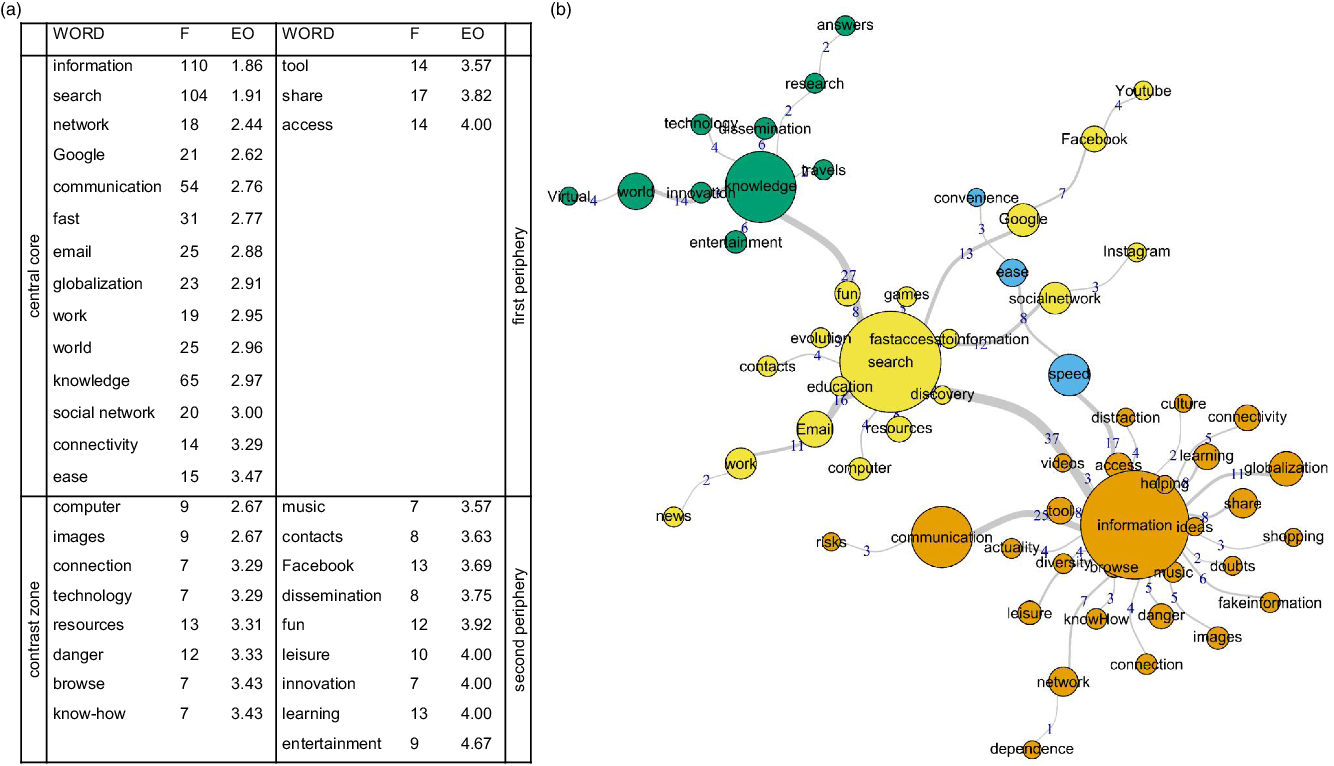
The central core of the prototypical analysis of ‘Internet’, corresponding to 51% of the total evocations (Fig. 1a), revealed a kind of ‘global information database’ that people access to search, communicate and work with, individually or collaboratively, through Google, social networks or e-mail. The contrast zone shows the risks associated with web surfing. Most terms used by teachers tended to describe the ‘what’ and ‘how’ of the Internet, while their qualifying properties, such as ‘fast’, ‘ease’ and ‘fun’, were distributed across the various quadrants (Fig. 1a).
Prototypical analysis of the inductive term ‘Internet’: (a) four-box matrix; (b) maximum tree of a similarity analysis of the most frequent evocations (n = 243 teachers, 2019). Line thicknesses and numbers correspond to frequency of co-occurrence, circle sizes correspond to word frequency and circle colours indicate evocation order similarity clusters. EO = evocation order; F = frequency.

Bearing in mind that the content of the central core of the prototypical analysis constitutes only a hypothesis of the centrality of SR (Abric Reference Abric and Abric2003), the subsequent similarity analysis allowed us to understand the groupings and the organization of the various elements identified and thus to capture the meaning of the representation (Fig. 1b).
The word ‘Internet’ elicited three groups or stars, centralized around the terms ‘information’, ‘search’ and ‘knowledge’ (Fig. 1b). ‘Information’ took the lead in terms of both frequency and number of points of co-occurrence (frequency of co-occurrence (fc)). A series of terms revolved around ‘information’, even though its meaning is in close relationship with ‘communication’. The Internet’s global character, contents, means and risks associated with this repository and its sharing were emphasized. Furthermore, the quality of the surfing experience was highlighted in an autonomous branch, grouping ‘speed’, ‘ease’ and ‘convenience’. Enjoying a strong co-occurrence with ‘information’ (fc = 37), the term ‘search’ was connected with different devices, including search engines, social networks and various applications. It related to the third star, ‘knowledge’ (fc = 27), which associated different ways of understanding and experiencing the world: scientific, ludic and virtual.
Our analysis shows a collective and homogeneous representation of the ‘Internet’, since we did not find significant differences with the tested predictors (Appendix S1).
The surveyed Azorean teachers were commonly using the Internet: 216 (90%) more than once a day and using multiple hardware ICT tools to access it (Fig. S1a), reflecting a routine use of the Internet, which has most likely increased due to mandatory confinement and telework during the COVID-19 pandemic.
Among teachers’ activities performed online, there were two non-mutually exclusive cores: one revealed a personal pattern of Internet use, grouped around ‘getting information’ (n = 165) and also comprising ‘keep updated on the news’ and ‘keep in contact with friends’; the other revealed a professional pattern, aggregated around ‘class preparation’ (n = 168) and including ‘social networking’, ‘file-sharing’ or ‘researching in books and science texts’. The use of e-mail was common among almost all teachers (96%) (Fig. S1b & S1c).
How do teachers perceive biodiversity? What aspects do they emphasize? What are their conceptual gaps? What helps explain their representations?
In a free-word association on the concept of ‘biodiversity’, 240 teachers mentioned 857 words, 90 of which were different. The evocation frequencies varied between 1 (35 single words) and 86.
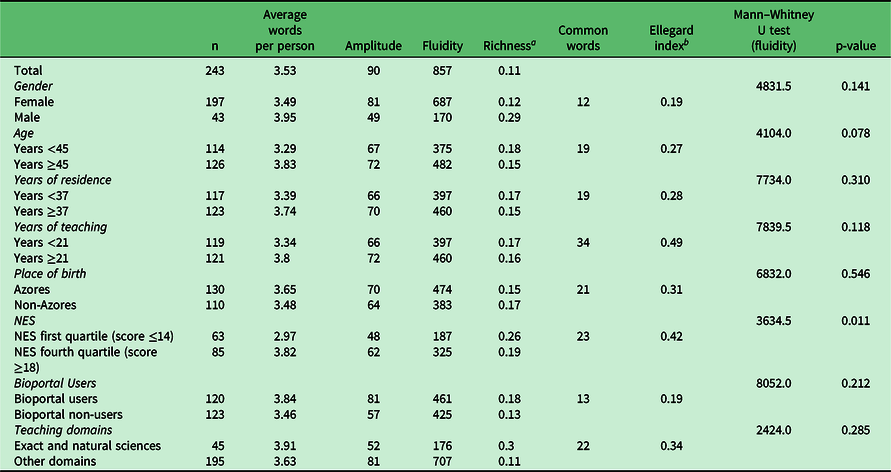
The number of teachers’ evocations concerning ‘biodiversity’ was much lower than that relating to ‘Internet’, although it remained quite homogeneous and weak (Table 1). The fluidity of the semantic fields differed only according to nature exposure (NES; U = 3634.5, p < 0.05), where teachers with higher exposure to nature were more prolix.
Data on the evocations of the term ‘biodiversity’ (n = 243).

a The richness index varies between 0 and 1, from total consensus to total divergence.
b The Ellegard index varies between 0 and 1, from totally different to totally equal.
NES = Nature Exposure Scale.
Ellegard’s Rn index (cf. Table 1) comparing the degree of similarity between the semantic fields of the tested predictors suggests that gender (Rn = 0.19) and use of web portals concerning biodiversity (Rn = 0.19) differentiated information about biodiversity more than any other predictor.
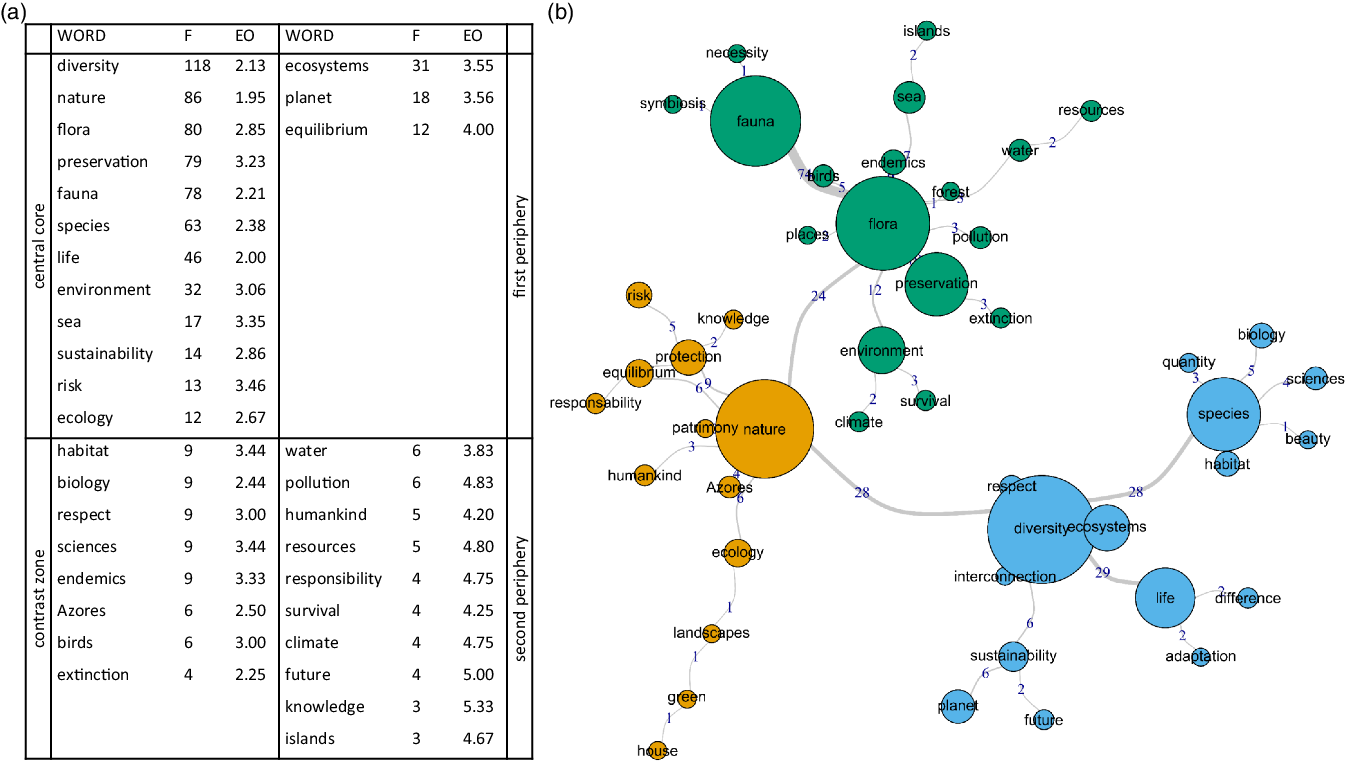
The prototypical analysis revealed the content of the SR of biodiversity for the 234 Azorean teachers, presenting a descriptive central core mentioning ‘diversity’, ‘life’ and ‘nature’. Among the three levels of the concept recognized by the Convention on Biological Diversity (CBD 1993), the focus was on the specific level (e.g., fauna, flora, species), while the genetic and ecosystem levels were practically absent (Fig. 2a & Appendix S2). Complementing the central core, there was also the recognition of the need for environmental conservation, underlined by terms such as ‘risk’, ‘planet’, ‘preservation’ and ‘sustainability’.
Prototypical analysis of the inductive term ‘biodiversity’: (a) four-box matrix; (b) maximum tree of a similarity analysis of the most frequent evocations (n = 234 teachers, 2019). Line thicknesses and numbers correspond to frequency of co-occurrence, circle sizes correspond to word frequency and circle colours indicate evocation order similarity clusters. EO = evocation order; F = frequency.

The first periphery quadrant shows the terms ‘ecosystems’ and ‘equilibrium’, supplementing the specific level with the relationships among living beings (Fig. 2a). The contrast zone focused on the geographical context – the Azores, a biodiversity hotspot, and its ‘endemic species’. Furthermore, it contained evocations about the scientific background of biodiversity (‘sciences’, ‘biology’). It is noticeable that ‘birds’ are the only taxonomic class mentioned (Fig. 2a). The recognition that biodiversity is crucial for the ‘survival’ and the ‘future’ of ‘humankind’ emerged only in the second periphery that aggregates the terms evoked fewer times and with lower evocation orders (Fig. 2a).
The similarity analysis of the same lexicon revealed three clusters, represented by nature preservation, ecosystem diversity and fauna and flora, all bearing strong co-occurrence links (fc = 24 and fc = 28, respectively) (Fig. 2b). The ‘diversity’ cluster had the highest number of co-occurrence links. The metaphor that emerged from the semantic relationship between the terms that composed it leads us to a global ecosystem, Gaia, which encompasses not only the species and their habitats, but also the knowledge produced about them and the need to ensure life sustainability (Fig. 2b). In the second cluster, the main idea was the preservation of nature and the environment, given human responsibility to ensure the necessary balance for species and planetary survival (Fig. 2b). The third cluster was more focused on elements such as living beings, their habitats and resources needed. However, there were no evident relationships among them, hence the link between these elements and the second cluster, since it connected with ‘nature’ and not with ecosystems’ relationships (Fig. 2b).
For the first cluster, biodiversity was ‘Gaia’. For the second cluster, biodiversity was a natural heritage to be preserved, while in the third cluster, biodiversity was the set of living beings and their habits (Fig. 2b).
To what extent are biodiversity portals relevant tools for the teaching–learning process? How do teachers envisage their usefulness and contributions?
Approximately two-thirds of the teachers (67%) were using different portals to prepare classes, and more than three-quarters (79%) were doing so during classes. Although only 6 of the 82 spontaneously mentioned that portals were related to biodiversity and/or nature conservation, when asked to select portals they knew from a list including 10 portals concerning Azorean biodiversity, about half of the teachers (n = 125) selected at least one, although more than half selected only one or two portals (2.7 portals on average). The teachers that use biodiversity portals are a small subset of the ones that have heard about them. These teachers are mostly from nature-related scientific domains (U = 1984.5; p < 0.05) and exhibit higher levels of nature exposure (U = 2026.5; p < 0.05).
To characterize the perspectives regarding biodiversity portals, these teachers provided 376 response terms, including 150 different words, with an average of 3.1 words per teacher (Appendix S3).
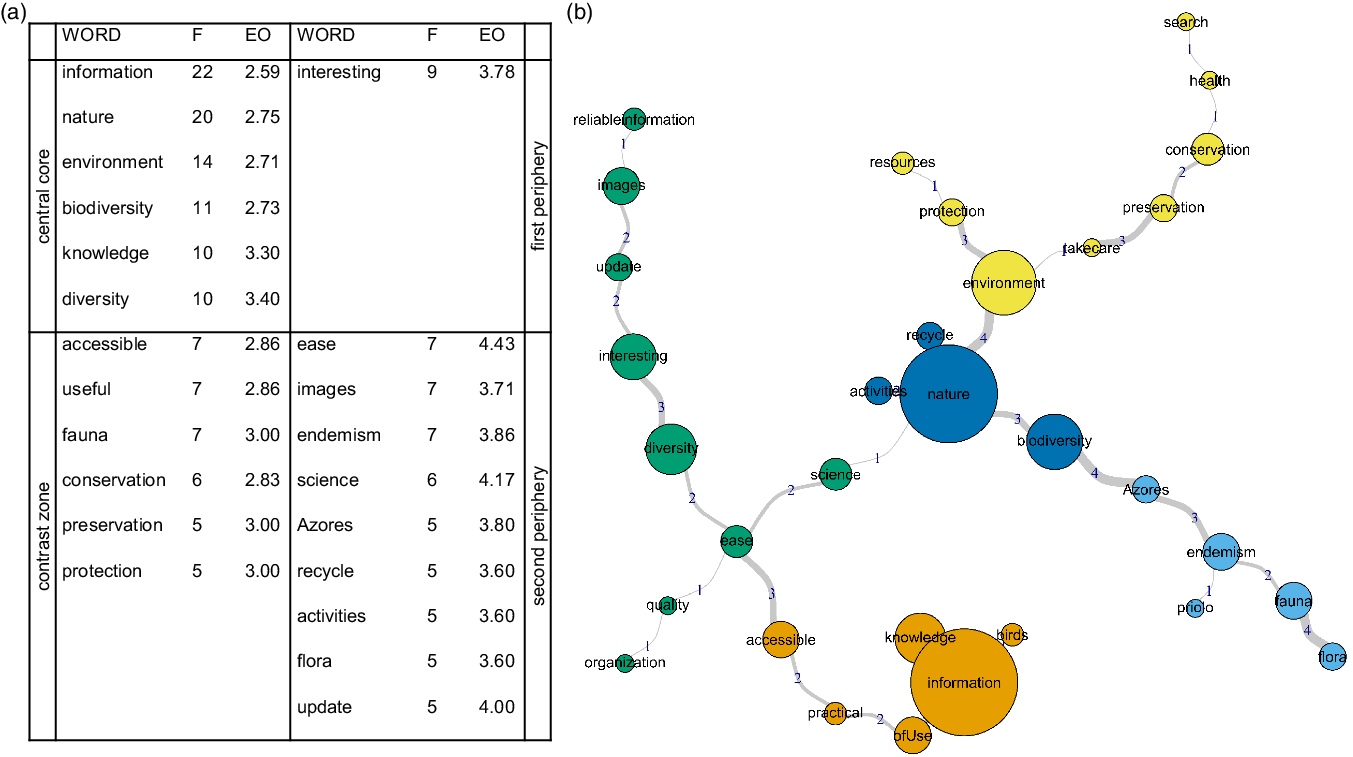
The evocations that constituted the central core of the prototypical analysis focused on generic content evident on any biodiversity platform; the descriptive contents were frequently associated with portals. The contrast zone combined both the purposes and experience of portal usage. Although it is not common to include user experience in the dominant depictions of biodiversity portals, usage was qualified as positive and accessible. Aspects associated with the evaluation of usability, quality and certification of portal contents represented 19.7% of the evocations. References to portals as repositories of resources and educational activities were less frequently expressed (11.5%) (Appendix S3).
From the similarity analysis, four complementary clusters emerged (Fig. 3b). The term ‘nature’ led the content of the portals related to ‘biodiversity’, associated in turn with a small cluster of content with a more regional bent (Fig. 3b). A cluster related to the purpose of the portals grouped terms associated with what the portals are for and what they can be used for (Fig. 3b). The cluster led by ‘information’ represented the type and characteristics of the available contents, moving from the theme of biodiversity to more functional aspects related to accessibility and other attributes of the available knowledge. The fourth cluster specified the evaluation of the portals’ contents as a quality resource (useful, updated information, easy to access), although in low frequencies (Fig. 3b).
Prototypical analysis of the inductive term ‘web portals related to biodiversity’: (a) four-box matrix; (b) maximum tree of a similarity analysis of the most frequent evocations (n = 117 teachers, 2019). Line thicknesses and numbers correspond to frequency of co-occurrence, circle sizes correspond to word frequency and circle colours indicates evocation order similarity clusters. EO = evocation order; F = frequency.

There were significant absences in the evocations regarding the instrumentality of portals for teaching, which is corroborated by teachers’ incipient use of the portals (Fig. 3a).
When explicitly asked about the type of use teachers make of portals, it is clear that they used them more as a repository of audio-visual (33.5%) and pedagogical (14.9%) resources or specialized information (taxonomic (9.3%), ecological (19.1%), etc.) than as a tool to engage students in teaching activities (14.9%) meant to foster scientific research skills (Fig. S2a & Table S2a).
The biodiversity portals were not perceived as being identical, nor did they enjoy the same popularity among teachers. The five portals most referred to were, in descending order and with frequencies above 14: PARQUESAZ, SIARAM, PBA, REDA and EDUCARAZ (cf. Table S2b). Considering the percentage of evocations related to each portal, PARQUESAZ presented the highest instrumental value due to the available resources (15%), while SIARAM and REDA were, respectively, the portals where quality and usability were more often highlighted (22% each).
The content highlighted for the SPEA and PBA portals referred to information, and in the latter to its scientific origin; for SIARAM, it was regional biodiversity that stood out; for REDA, resource diversity and accessibility were emphasized, while the terms ‘conservation’ and ‘environmental protection’ emerged for EDUCARAZ. The attributes assigned to the PARQUESAZ portal exhibited less homogeneity (Fig. S2b).
Descriptive statistics show that the biodiversity portals’ users among Azorean teachers did not significantly differ from the teachers that did not use them (χ2 (1 df) = 0.22, p < 0.63) (Table S3).
Discussion
Teachers showed greater fluidity and terminological diversity for the ‘Internet’ (nF = 1064, nA = 240) than for the ‘biodiversity’ (nF = 857, nA = 90) stimulus, suggesting that the latter is less accessible to individual consciousness and a more peripheral phenomenon in their social groups. Curiously, the same trend is seen among teachers of natural sciences (nF = 217, nA = 96 versus nF = 176, nA = 52), despite their specific domain training.
Teachers’ visions of biodiversity share some common points with the long-established definition of the concept (CBD 1993), although most focus only on the species dimension. An incomplete understanding of biodiversity has also been acknowledged by Dikmenli (Reference Dikmenli2010) when studying the conceptual framework of biodiversity in 130 biology training teachers who, however, exhibited a more varied and technical lexicon. The multidimensionality of the biodiversity concept is more evident among the training teachers, who included genetic diversity, technological terms and major scientists, which are absent in our data. Even more sophisticated views on biodiversity were found by Fischer and Young (Reference Fischer and Young2007), focusing on notions of balance, food chains and human–nature interactions and showing desirable or ideal states of nature. This may be related to different methodological devices used, such as focus group discussions and drawings. The diversity of the participants may also have contributed to that conceptual richness. Yet, more than in the previous studies, our results incorporate the ideas of conservation and extinction risk, even if only in the contrast zone, as well as an idea of interdependence between biodiversity and the future and well-being of humanity.
Reviews on biodiversity teaching methods (Navarro-Perez & Tidball Reference Navarro-Perez and Tidball2012, Yli-Panula et al. Reference Yli-Panula, Jeronen, Lemmetty and Pauna2018) do not mention strategies focusing on the digital realm; instead, the most common pedagogical methods involve active participation, including experimental work and experiential learning. ICT certainly poses a set of challenges concerning biodiversity teaching. Biodiversity web portals, as sound scientific tools, could link research and teaching, and their contents may support learning, particularly on islands. Additionally, as online free tools, biodiversity web portals are resources that are easily accessible to both teachers and students, thus serving as mediating instruments between the environment and the quest for knowledge (Flavian Reference Flavian2019). Nevertheless, our data reveal that teachers use biodiversity portals mainly to search for images and other audio-visual content. To further clarify the role that web portals may play towards biodiversity education in schools, and ultimately towards biodiversity conservation, the relationship between technology and nature needs further reflection.
Considering that the ‘extinction of experience’ with nature is fast approaching (Miller Reference Miller2005, Gaston & Soga Reference Gaston and Soga2020), we wonder: can ICTs mediate connection and reconnection with the natural world? Although the positive impacts of technological nature on cognitive functioning and human well-being are well documented (Kahn et al. Reference Kahn, Severson and Ruckert2009), whether ‘technological windows’ can reconnect people with nature is still under debate.
The dominant view is that ‘technological nature’ opposes and replaces experiencing ‘real nature’ in person and in loco (Pergams & Zaradic Reference Pergams and Zaradic2006). However, with or without technology, a departure from ‘real nature’ has already been witnessed. If nature and the Internet are useful parts of our daily lives, and if nature does not have to be close to be valued (Clayton Reference Clayton, Clayton and Opotow2003), why not take advantage of ICT to promote the connection and reconnection?
Facilitating this type of scenario involves dealing with the problems/limitations identified by research on technological nature (Kahn et al. Reference Kahn, Severson and Ruckert2009). One of the most relevant caveats regarding technological nature is the lack of differentiation between the global and local geographical scale, in the sense that, when experiencing nature through technological windows, people become equally close (Selby & Kagawa Reference Selby and Kagawa2018). It is therefore worthwhile to explore whether biodiversity portals with regional contents may address this risk. Indeed, although we might observe local biodiversity through a technological window, portals may promote nature relatedness via a ‘zoom lens’, allowing a glimpse into an unknown world in our backyards (Amorim et al. Reference Amorim, Arroz, São Marcos, Borges, Gabriel, Castro, Azeiteiro, Bacelar-Nicolau, Leal Filho and Azul2016).
Given that ICT has the potential to reshape human existence by mediating, increasing or simulating the natural world, biodiversity web portals may constitute relevant tools to raise biodiversity awareness, and even to promote biophilia. However, our data showed that teachers did not acknowledge much usefulness of biodiversity portals.
Portal managers should therefore create, enhance and promote specific pedagogical resources, closely related to school curriculums, and increase the portals’ instrumentality. Thus, in order to meet teaching and learning needs, resources should emerge from multidisciplinary projects involving teachers, students, scientists and science communicators (Novacek Reference Novacek2008). Furthermore, the development of such pedagogical resources should take into account the importance of message ‘crafting’, according to people’s values and interests, to achieve effective engagement (Coffin & Elder Reference Coffin, Elder, Johnson and Klemens2005).
Our data show that teachers do not acknowledge many of the dimensions of the biodiversity concept. They also show that teachers attribute importance to conservation and are proficient Internet users. Web portals may thus provide teachers with an effective link between the Internet and biodiversity, even more so given that half of the surveyed teachers are already familiar with several biodiversity portals.
Biodiversity communication in the learning–teaching process must adapt to societal trends and emerging potentialities within ICT. Biodiversity web portals represent an example of this potential that has not been fully explored in education and could ultimately help halt biodiversity loss.
Supplementary material
To view supplementary material for this article, please visit https://doi.org/10.1017/S0376892920000405
Acknowledgements
We are very grateful to all of the teachers who answered our survey. We acknowledge the support of Sandra Silva and ‘Direção Regional da Educação dos Açores’, and we would like to thank Paulo AV Borges for useful insights and Simone Fattorini and Nicholas Polunin for their important contributions to improving an earlier version of the manuscript.
Author contributions
RG, AMA, IRA and AP designed the study. AP, AMA and RG led the writing of the manuscript and performed data analyses. All authors contributed substantially through additions and revisions to the text and gave final approval for publication.
Financial support
This work was supported by Portuguese funds through ‘Fundação para a Ciência e a Tecnologia, I.P.’ (FCT), under the project ‘Field Guide’ (PTDC/CED-EDG/31182/2017), the ‘FCT multi-year project 2020–2023’ (cE3c/GBA UIDB/00329/2020) and by FEDER in 85% and Azorean Public funds in 15% through ‘Operational Program Azores 2020’, under the project AZORESBIOPORTAL–PORBIOTA (ACORES-01-0145-FEDER-000072). IRA was supported by FCT, under the ‘Norma Transitória’ (DL57/2016/CP1375/CT0003).
Conflict of interest
None.
Ethical standards
None.