Introduction
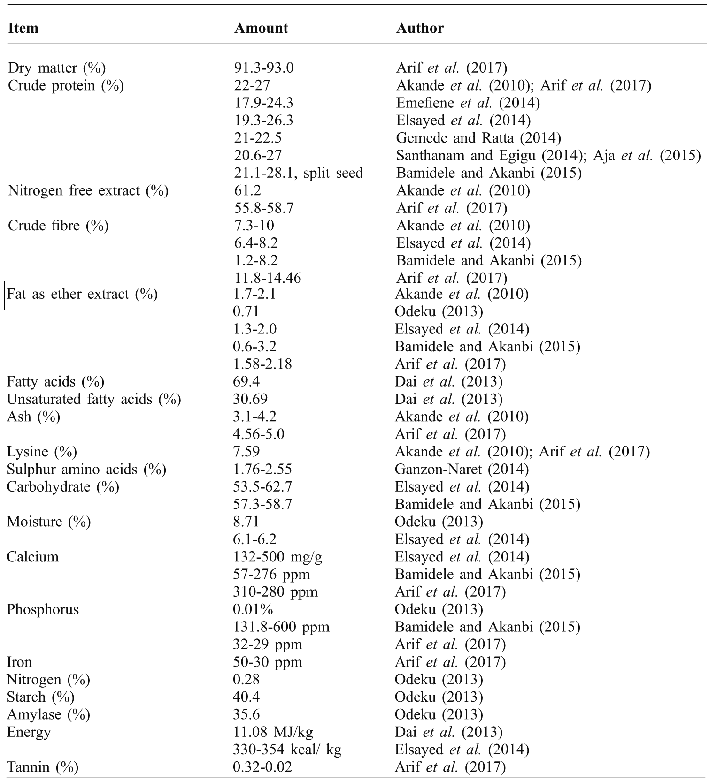
Pigeon pea (Cajanus cajan) is an important grain legume, commonly grown and consumed in both tropical and subtropical regions of the world, and also has the common name ‘lobiaadassy’ (Tangtaweewipat and Elliott, Reference TANGTAWEEWIPAT and ELLIOTT1989; Jambunathan et al., Reference JAMBUNATHAN, HALL, SUDHIR, RAJAN and SADHANA1991; Arif et al., Reference ARIF, REHMAN, SAEED, ABD EL-HACK, ALAGAWANY, ABBAS, ARIAN, FAZLANI, ABBASI and AYAȘAN2017). The estimated area of cultivated pigeon pea (PP) globally in 2014 was 46,000 km2, with 82% grown in India (Emefiene et al., Reference EMEFIENE, JOSHUA, NWADIKE, YAROSON and ZWALNAN2014). PP is a nitrogen fixing plant used as a source of animal feed, firewood, and fodder. The protein content in the seeds, young stems, leaves and shells may be suitable for feeding broilers. Compared with other tropical legumes, this plant is well adapted to poor soils, and tolerates drought conditions (Narina et al., Reference NARINA, PHATAK and BHARDWAJ2014; Khoury et al., Reference KHOURY, CASTAÑEDA-ALVAREZ, ACHICANOY, SOSA, BERNAU, KASSA and JARVIS2015). In the tropics, it is cultivated on a large scale because of its high dry matter content, as a cover crop or as green manure. On a dry matter basis, PP seed has a CP level of 22-27%, crude fibre (CF) 7.3-10%, nitrogen free extract (NFE) 61.2%, ether extract (EE) 1.7-2.1%, ash 3.1-4.2%, and approximately 7.59% lysine (Akande et al., Reference AKANDE, ABUBAKAR, ADEGBOLA, BOGORO and DOMA2010; Arif et al., Reference ARIF, REHMAN, SAEED, ABD EL-HACK, ALAGAWANY, ABBAS, ARIAN, FAZLANI, ABBASI and AYAȘAN2017). Its thiamine, riboflavin, niacin and choline content make it a good source of vitamins.
The use of PP in poultry diets is limited by the presence of the anti-nutritional factors, trypsin inhibitors, haemagglutinin and saponin, which reduce intake, feed efficiency and nutritional value. These detrimental effects can be minimised by processing, such as fermentation, boiling, grinding, soaking and cooking, as they are easily destroyed by heat (Gemede and Ratta, Reference GEMEDE and RATTA2014). Swathi et al. (Reference SWATHI, LOKYA, SWAROOP, MALLIKARJUNA, KANNAN, DUTTA-GUPTA and PADMASREE2014) reported that the true protein digestibility of PP seeds increased significantly with cooking at 37°C for 12 hours. Amaefule et al. (Reference AMAEFULE, UKPANAH and IBOK2011) commented that the low palatability of PP seeds diminished their importance compared to other grain legumes, and processing may aid in this.
There may be potential for PP to be used human food and animal feed (Al-Saeedi and Hossain, Reference AL-SAEEDI and HOSSAIN2015), and hence this review article focuses on the evaluation of the effects of PP on broiler performance, and its potential as an alternative protein source in poultry diets.
Nutritive value of PP
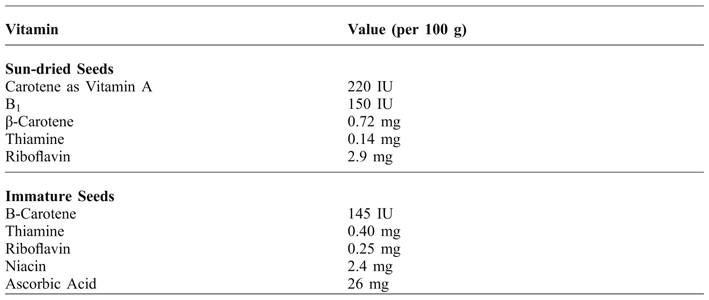
The common pigeon pea cultivars contain between 17.9% and 24.3% protein in whole grain samples, and between 21.1% and 28.1% for split seeds (Emefiene et al., Reference EMEFIENE, JOSHUA, NWADIKE, YAROSON and ZWALNAN2014; Bamidele and Akanbi, Reference BAMIDELE and AKANBI2015; Table 1). Table 1 shows the typical composition of PP and Table 2 shows the vitamin content.
Chemical composition of pigeon pea.

Vitamin contents in pigeon pea.

According to Aja et al. (Reference AJA, ALUM, EZEANI, NWALI and EDWIN2015)
Anti-nutritional factors in PP
Using legumes as the only protein source for growing animals can lead to growth retardation and other undesirable physiological and biochemical alterations (Lüscher et al., Reference LÜSCHER, MUELLER-HARVEY, SOUSSANA, REES and PEYRAUD2014). Al-Saeedi and Hossain (Reference AL-SAEEDI and HOSSAIN2015) stated that plant proteins are more resistant to breakdown in the gastrointestinal tract than animal sources, due to the existence of anti-nutritional factors. They claimed that there are two main classes of protein anti-nutritional factors, lectins and proteolytic enzyme inhibitors such as trypsin inhibitors. Trypsin and chymotrypsin inhibitors are considered to be the main anti-nutritional factors present in legumes Ganzon-Naret (Reference GANZON-NARET2014). Wisaniyasa et al. (Reference WISANIYASA, SUTER, MARSONO and PUTRA2015) reported that PP has lower levels of trypsin and chymotrypsin inhibitor activities compared with soybean. However, there is little information on the presence or absence of other undesirable components in PP, such as oligosaccharides. The seeds contain at least nine trypsin inhibitors and four amylase iso-inhibitors (Gemede and Ratta, 2014) which have been extensively studied as anti-nutritional factors and as potential defences against pests.
The trypsin inhibitors, tannins, phytate, phytic acid, and phosphorous in PP were studied by Gemede and Ratta (Reference GEMEDE and RATTA2014). They found a protein content of 21-22.5%, trypsin inhibitors were present at levels of 7.5-14.4 mg/g and phytate content of 8.13-11.13 mg/g, whereas phytic acid contributed 66.75% to the phosphorous in PP. They reported an in vitro protein digestibility coefficient of 77.8%.
The growth-depressing and toxicity effects of tannin, which is present in PP, in chicks has been studied by Uwangbaoje (Reference UWANGBAOJE2012) and Emefiene et al. (Reference EMEFIENE, JOSHUA, NWADIKE, YAROSON and ZWALNAN2014). They illustrated that growth was reduced when they were fed a ration containing as little as 0.5% tannic acid, and PP has a reported level of 0.32%. Moreover, a level of 5% caused chick mortality of about 70% at 7-14 days old, and tannic acid reduced the metabolisable energy (ME) and nitrogen retention in chicks.
Processing
Gemede and Ratta (Reference GEMEDE and RATTA2014) stated that soaking of PP for 24 hours followed by cooking for 20 minutes was more effective in destroying the trypsin and chymotrypsin inhibitors. Tekale et al. (Reference TEKALE, JAIWAL and PADUL2016) monitored the effect of processing and autoclaving on total phenols and chemical composition of PP. Cooking soaked and dehulled seeds lowered total phenols by 49%; whereas sprouting legume PP seeds increased protein and reduced carbohydrate content. Rani et al. (Reference RANI, JOOD and SEHGAL1996) concluded that soaking for 12 hours at 37°C, and/or boiling, reduced trypsin inhibitor activity and improved protein (pepsin) and starch digestibility. Wisaniyasa et al. (Reference WISANIYASA, SUTER, MARSONO and PUTRA2015) studied the effect of various types of processing on PP. They found that germination decreased phytic acid content by 50%, whereas autoclaving and roasting were more effective in reducing phytic acid. Fermentation was found to cause a major increase in protein digestibility in vitro. Arif et al. (Reference ARIF, REHMAN, SAEED, ABD EL-HACK, ALAGAWANY, ABBAS, ARIAN, FAZLANI, ABBASI and AYAȘAN2017) reported that decortication of legume seeds increased the nitrogen-free extract (NFE), sulphur and dry matter (DM) levels; however, seed CP, crude fibre (CF) and fat as ether extract (EE) decreased. Tannin content also decreased to 0.02%, compared to 0.32% in corticated seeds. Wisaniyasa et al. (Reference WISANIYASA, SUTER, MARSONO and PUTRA2015) noted that heat treatment reduced trypsin inhibitor, lectin, HCN, and tannin content of guar seeds. Swathi et al. (Reference SWATHI, LOKYA, SWAROOP, MALLIKARJUNA, KANNAN, DUTTA-GUPTA and PADMASREE2014) observed that trypsin and chemotrypsin inhibitor activities were reduced by soaking in salt solution, compared to soaking in distilled water. Both these processing methods altered the composition of legumes without causing any change to the carbohydrate fraction. In comparison to other work on legumes, Abdulla et al. (Reference ABDULLA, ROSE, MACKENZIE and PIRGOZLIEV2017) reported that digestibility of starch, lipids, and amino acids for broilers fed on a diet containing tannin-free faba bean were lower than for those fed on a control diet, and that dehulling did not reduce all anti-nutritional factors, because lectin and trypsin inhibitors are concentrated in the cotyledons.
Use of PP in broiler nutrition
Many studies have been performed to examine the effects of PP as an alternative protein source in broiler nutrition. Castillo et al. (Reference CASTILLO, GALLO, PERALTA and SOLIS2016) evaluated the effect of substitution of PP (cooked) seed meal for corn and soybean meal in the starter diet for broilers, at rates of 0%, 20%, 30%, 40%, and 50%. After cooking the seed meal, the protein content decreased very little. Crude protein in the seed meal resulted in a significant linear decrease in weight gain with increasing dietary level of PP seed meal. The experimental groups had lower feed consumption than the control diet (0% PP seed meal). Nevertheless, the poorest feed conversion ratio (FCR) was observed for the control group.
Amaefule et al. (Reference AMAEFULE, OJEWOLA and IRONKWE2006) used 150 black Bovan Nera pullets to evaluate growth performance with diets of raw or processed PP seeds. The treatments consisted of feeding 10% PP seed meal for eight weeks. For the first treatment, the seeds were toasted for 30 minutes, for the second, boiled for 30 minutes, and for the third, soaked in water for 24 hours. They observed that there was no significant difference in the parameters analysed between treatments with processed or raw diets of PP seeds. They concluded that the inclusion of up to 10% of PP seed meal in poultry diets could be a good source of protein. The results of this trial showed that live weight, daily weight gain, FCR, and average mortality did not statistically differ within groups fed a diet of raw or processed PP seed meal. However, feed and protein consumption decreased for chickens fed with a raw PP seed meal diet, although using this diet significantly reduced the daily feed cost.
Ahmed et al. (Reference AHMED, ABDEL ATI and ELAWAD2006) studied a total of 200 day-old broiler chicks in four treatments for six weeks, to evaluate the effect of soaked PP at various levels. Treatments consisted of four levels of supplementation in the diet (0, 50, 100, 150 g/kg). Feed intake, energy intake, live weight dressing percentage, pancreas and spleen weight, serum cholesterol, and protein efficiency ratio were not different between treatments. However, the addition of 100 g/kg of PP seed to broiler diet improved FCR, feed intake, total serum lipids, cholesterol, protein, methionine, and lysine in the birds (Tusar et al., Reference TUSAR, ALI, DAS, ALAM, MATIN, SUFIAN and PAUL2015).
Different research projects have been developed with the objective of reducing feed cost and improving performance in poultry (Castillo et al., Reference CASTILLO, GALLO, PERALTA and SOLIS2016). Using 30% inclusion levels in the diet of broiler chicks, Castillo et al. (Reference CASTILLO, GALLO, PERALTA and SOLIS2016) found that body weight decreased and FCR increased, likely due to high concentrations of anti-nutritional factors (Santhanam and Egigu, Reference SANTHANAM and EGIGU2014; Aja et al., Reference AJA, ALUM, EZEANI, NWALI and EDWIN2015). Other authors indicated that decortication may reduce anti-nutritional factor levels (Arif et al., Reference ARIF, REHMAN, SAEED, ABD EL-HACK, ALAGAWANY, ABBAS, ARIAN, FAZLANI, ABBASI and AYAȘAN2017), for example, Arif et al. (Reference ARIF, REHMAN, SAEED, ABD EL-HACK, ALAGAWANY, ABBAS, ARIAN, FAZLANI, ABBASI and AYAȘAN2017) reported beneficial effect by feeding diets containing 7.5% of decorticated PP seeds on Lohman broiler chicks, by improving body weight and FCR. Amaefule and Nwagehara (Reference AMAEFULE and NWAGEHARA2004) showed that the digestion of crude protein and dry matter improved following processing of PP seeds. Research on a 10% dietary addition of PP seeds, which had either been soaked, decorticated with added enzymes, or decorticated toast, had no effect on the performance of broiler chickens (Arif et al., Reference ARIF, REHMAN, SAEED, ABD EL-HACK, ALAGAWANY, ABBAS, ARIAN, FAZLANI, ABBASI and AYAȘAN2017). However, CP, ash, and CF from cooked and roasted PP seed meal were lower, and EE and NFE were higher, compared to crude PP seed meal, according to Ogbu et al. (Reference OGBU, OGBU and OKORIE2015).
Others have reported that 40% inclusion of PP meal in the starter broiler diet increased productive performance when compared to a 30% inclusion; however, this level increased the cost of the diet (Amaefule et al., Reference AMAEFULE, UKPANAH and IBOK2011).
Optimising inclusion is important for any ingredient in poultry diets. Two experiments were conducted with the objective of determining the optimum level of inclusion of roasted PP meal in starter and finisher broiler diets (Ani and Okeke, Reference ANI and OKEKE2011). Inclusion levels ranged from 0% to 32.5% in the starter phase, and from 0% to 27% in the finisher diet, and the diets were isoenergetic and isonitrogenous. The experimental diets positively affected daily feed intake, FCR, and weight gain during the starter period; however, in the finisher phase, there were no significant differences. The authors concluded that inclusion of 26% of PP seed meal in starter feed, and 27% in the finisher phase may have beneficial effects on the productive performance of the birds.
Igene et al. (Reference IGENE, ISIKA, OBON, EKUNDAYO, AMAEFULE, UKPANAH and IBOK2012) determined the effect of boiled PP on performance, carcass characteristics, and haematological parameters in broilers. In the starter phase, up to 80% PP was included in replacement for soybean meal, and at the finishing stage, up to 100% was replaced. At the finishing stage, a substitution of 50% PP for soybean meal increased growth and final weight, without affecting other parameters, however, when using higher levels of inclusion, body weight declined significantly. Likewise, in line with the increased level of PP replacing soybean meal, the weight of edible organs (liver, gizzard and heart) decreased linearly. These authors reported that, in the control diet, haemoglobin, white blood cells, packed cell volume, neutrophils, and white blood cell differential counts were greater than at increasing levels of PP inclusion. Samples from birds fed the experimental diets had lower total serum protein, albumin, and globulin concentrations than the control treatment.
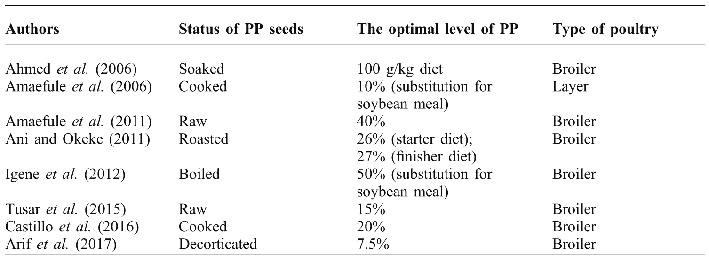
In other trials, Tusar et al. (Reference TUSAR, ALI, DAS, ALAM, MATIN, SUFIAN and PAUL2015) included 0, 5, 10, and 15% of PP seeds in the broiler diet. The body weight gain increased with the inclusion of 10% and 15% PP, compared to the other treatment groups; and live weight and the breast weights were higher with these levels of addition. These authors concluded that the optimal level of inclusion of PP as a protein source in broilers diet was 15%. Table 3 shows a comparison between studies for the optimal dietary inclusion levels of PP.
Comparison between studies for the optimal dietary inclusion levels of PP.

Conclusions
The available literature from broiler feeding studies suggests that Cajanus cajan could be successfully used as an alternate protein source in broiler diets, mainly because it has a good CP levels. Reports showed that crude protein content in common pigeon pea ranges from 17.9 to 24.3% in whole grain samples, and from 21.1 to 28.1% in split seeds. High proteins genotypes contain 32.5% CP. Processing of pigeon pea, especially when fermented or boiled, improved nutritive quality, and thus enhanced broiler growth performance. Levels of inclusion of PP in broiler diets may vary from 7.5% in total or up to 50% as a substitution for soybean meal. Pigeon pea may increase growth and meat yield and could be used to reduce the cost of feeding, without having a negative effect on performance.
Acknowledgments
The author thanks and acknowledges King Saud University and Zagazig University for their support while preparing this review.
Conflict of interest
The author does not have any conflicts of interest in this work.