On 5 September 1794, Philibert Chabert, the director of the Ecole vétérinaire d'Alfort, sent a request to the Commission d'agriculture et des arts for thirty pints of a transparent volatile alcohol called esprit de vin.Footnote 1 Esteemed chemist and member of the recently dissolved Académie royale des sciences Antoine Baumé had explained its diverse medical properties: when taken internally it coagulated blood and all other humours, hardened fibres and reduced their suppleness; when applied topically it closed open wounds, enhanced sweating for purification, and treated fresh burns. He cautioned, however, that overuse was associated with paralysis, withering and engorgement.Footnote 2 Claude Bourgelat, founder of French veterinary education, had meanwhile written that esprit de vin was integral to topical medicines for permeating the skin into the humours.Footnote 3 None of these medicinal characteristics spurred Chabert's particular request, however. His concern at that moment was not the conservation of life in the school's hospital, but rather the preservation of death.
The Ecole vétérinaire d'Alfort, the Ecole de santé, the Académie royale des sciences and many other institutions used esprit de vin to arrest the decomposition of their preserved anatomical and natural-historical specimens. The penetrating qualities that enabled esprit de vin to move through the tissue of the skin, to harden fibres and to close wounds also produced the retention of lifelike qualities in specimens after death. The alcohol was used in the desiccation process for dried specimens, and had also become the new preservative environment for wet ones.Footnote 4 Under the Revolutionary government, without access to the necessary materials, the veterinary school's specimen collection – a critical component of the school's identity from its foundation in 1766 – was at risk of rotting away. Additionally, as a royal institution, the entire school itself was vulnerable to liquidation. At the heart of Chabert's request lay the question, how does a corpse survive the French Revolution?
The political instability accompanying the French Revolution was felt in all cultural institutions of France, including scientific ones. Both Emma Spary and Roger Hahn have investigated the collapse and endurance of scientific institutions during the French Revolution.Footnote 5 Hahn explains how aristocratic elitism destroyed the Académie royale des sciences under the republican values of democratized education and science in service of the state. The Académie des sciences became the quintessential example of what was wrong with science under the monarchy; the culture of polite science at the expense of the masses was decried as anathema to visions of the new idealized republic. For Hahn, the two years between the closing of the Académie des sciences and the opening of the Institut de France represented a clear ideological break; the institutions were incomparable to each other, built under different governments and born of different ideologies. Spary, in contrast, shows how the Jardin du roi persisted as the Muséum nationale d'histoire naturelle. The Jardin du roi's collection of natural history specimens, the menagerie and its staff mostly survived a geographic relocation through a global network of support and prestige. Natural historians commenced a public education campaign that successfully promoted their field as the ideal discipline to give scientific insight into the future governance of the French citizenry, a project manifested in the museum.
Rather than using the Ecole vétérinaire d'Alfort as another case study of the survival or demise of a particular scientific institution through the Revolution, I argue that resource constraints imposed on the management and distribution of anatomical/natural history specimens produced new disciplinary boundaries between natural history, veterinary medicine and human medicine, while reinforcing geographic divisions between the local and the foreign in the study of non-human animals. Like other scientific and cultural institutions, the social and political merits of veterinary education endured repeated attacks throughout the Revolution. Scientific institutions did not need to change hands in terms of management or relocate in terms of territory to have the content of their research altered by the new priorities of new governments. The content of Alfort's anatomy cabinet, a symbol of its prestige and a representation of its intellectual priorities, played an especially important part in public debates about the role of veterinary education in the future of French agriculture. These public debates raised the stakes of private inter-institutional and governmental correspondence managing the scarcity of many basic pedagogical materials.
Historian Saurabh Mishra calls for veterinary history to take a more prominent role within the history of medicine, treating the history of medicine as its natural home.Footnote 6 As veterinary history becomes increasingly robust through studies of early modern folk medicine and a modern vision of ‘one medicine’, human medicine remains its central reference point.Footnote 7 Caution is necessary, however, when appropriating methodology from the historian of (human) medicine's toolkit. Just as the distinct social, legal and biological status of veterinary patients relative to human ones made borrowing from human medicine sometimes inappropriate or unimaginable, overuse of the historian of medicine's analytical frameworks may prematurely set the terms of a conversation. In late eighteenth-century France, where veterinary education was first institutionalized, veterinary medicine drew knowledge from many sources, of which human medicine was only one.
One of the aims of this article is to show how entrenched the early years of veterinary education were in the practices of specimen collection and preservation borrowed from natural history and human anatomy and to historicize how veterinary arts became predominantly conceived as veterinary medicine.Footnote 8 Thus, using the correspondence papers of the Muséum nationale d'histoire naturelle, the Ecole vétérinaire d'Alfort, the Ecole de santé and the various governmental administrative bodies charged with managing the resources of scientific institutions, I argue that the government in effect domesticated veterinary medicine, thereby constraining the idea of France during a period of territorial expansion throughout the Revolutionary and Napoleonic Wars. Knowledge of how to treat local epizootics was severed from the project of collecting the world's creatures and from human medicine. Universalism was subordinated to a new agenda of keeping the French pastures populated with herds and tending to warhorses, even as those warhorses were instrumental in reshaping the hexagon, and expanding those pasture lands into annexed territory.Footnote 9
Honoré Fragonard's legacy and the print culture of the cabinet
The Ecole vétérinaire d'Alfort opened on the outskirts of Paris in 1766 with the hope of accruing greater international recognition and support through proximity to the capital just four years after the first veterinary school had opened in Lyon.Footnote 10 Alfort is best known to modern historians for its exceptional museum, and most of the English-language scholarship examining the school during the Ancien Régime and Revolution focuses on the flayed and desiccated specimens of its first anatomist, Honoré Fragonard.Footnote 11 For Joan Landes, Fragonard's specimens display Enlightenment hierarchies between art and science; for Jonathan Simon they call into question traditional narratives of progress, science and secularism in the late eighteenth century; and most recently Lianne McTavish has interpreted Fragonard's figures as an attempt at resisting death through anatomical immortality. The overwhelming spectacle of Fragonard's work, combined with lascivious rumours of forbidden romance and grave robbing in the production of its most infamous figure – le chevalier – results, though, in a narrower appreciation of the collection as a whole than of its Ancien Régime and Revolutionary contemporaries.Footnote 12 Fragonard's work fits seamlessly among histories of artisanal practices of scientific scholars in the early modern period and among stories of death and destruction during the Revolution, and consequently scholarship on his écorchés tends to situate these specimens within the framework of anatomical theatre and museology. The significance of this collection for veterinary medicine as an emerging scientific field remains unexplored.
From the beginning of the school's first classes, domestic and foreign print culture was captivated by the Ecole vétérinaire d'Alfort and its cabinet, but reducing the cabinet's value to Fragonard's écorchés seems to be a modern fascination. The earliest reference to the cabinet that I have uncovered comes from Dutch naturalist Eduard Sandifort, who in 1767 espoused the virtues of the school, complete with cabinet, garden and hospital, just one year after it accepted its first students.Footnote 13 However, he directed special interest towards no particular object. At its quinquennial anniversary, Robert de Hesseln's Dictionnaire universel de la France boasted that Alfort's ‘anatomy cabinet’ was the most beautiful and perhaps most complete in all of Europe, a sentiment many authors would reiterate over the next two decades.Footnote 14 Meanwhile, veterinary educators built allies across scientific fields on both local and international scales, and the school's public image was further promoted and reinforced by regional geographers and travel writers. Chabert's own efforts as director to augment the cabinet, now swelling with stuffed and dissected specimens, received praise in German-language travel writing and guides to the French countryside.Footnote 15 The strengths of the collection were thought to be its size, its diversity and its juxtaposition of the world's fauna and stages of growth. This is not to say that there were no references to Fragonard's ostentatious specimens, but to contextualize such mentions as sparse and ambiguous descriptions. One German professor, Heinrich Sanders, at the sight of Fragonard's young boy (flayed) mounted on a horse (also flayed), silk reins in one hand, whip in the other, described the piece as capturing the playful spirit of a nation that should perhaps be less playful.Footnote 16 Though Sanders clearly acknowledged Fragonard's work as exceptional, his description of it follows paragraphs listing the collection's hedgehogs, weasels, birds, donkeys, goats, oxen and horses (shy their chevaliers), as well as assorted stomachs, intestines, kidneys, spleens and bezoars. Fragonard's works may have been jarring, but it was the aggregate quality of the total collection that drew fame in its day.
Repetition and expansion
Whether written by naturalists like Sandifort or geographers like Hesseln, descriptions of the school's cabinet emphasized grandeur, completeness and the unification of domestic and foreign elements more than the curious anatomical oddities or foreign exotica in isolation.Footnote 17 Alfort was said to have the most complete and detailed collection of brains set in esprit de vin in all of France, and was compared favourably even to John Hunter's collection.Footnote 18 The 1795 inventory of Alfort's collection reveals thirty-one wet specimens of woman's gestation, forty-three for mares, forty-eight for cows and fifty-seven for ewes, and two bitch uteri.Footnote 19 Extensive repetition of similar specimens gave this collection a sense of value through scale. At the dawn of the Revolution, physician and encyclopedist Michel-Augustin Thouret finally put into words what everyone else seemed to have withheld under absolutism: the school had established ‘a superb cabinet of animal anatomy, which grows considerably enriched every year, and which is already quite superior to that of the Jardin du roi’.Footnote 20 It was a celebration of consummate totality. The animal body as a whole disguised something that needed to be broken down and compared. This was what Chabert's jars accomplished, and it is what the evaporating liquor threatened to disintegrate.
Before the Revolution, the school procured specimens the way any other institution did, via a combination of donation, expedition and purchase.Footnote 21 The philosophe Voltaire furnished the school with a collection of kidney stones.Footnote 22 Chabert organized student trips to the northern coast of France at Saint Malo to collect and preserve fish, and at least one of Alfort's dolphins that attracted so much attention came from Chabert's west coast trip to Boulogne.Footnote 23 He pulled aquatic specimens from the different port cities of France and made them a part of veterinary canon. Pierre Flandrin, another of the Ecole vétérinaire d'Alfort's administrators, had transported from England a number of live animaux exotiques acquired on other continents, including buffalo, llama and vicuña, as well as Indian rams and ewes.Footnote 24 By one report these were to be become experiments in domestication, but Flandrin died before publishing his papers.Footnote 25 As Lorraine Daston and Fernando Vidal have pointed out, ‘naturalization’ as a term for human and non-human immigration reminds us that the foreignness of these specimens was temporally dependent; the foreignness of a specimen, like that of a family, could be transcended through generational reproduction on French soil.Footnote 26 Flandrin was a collaborator with Louis-Jean-Marie Daubenton, who imported Merino sheep from Spain into France and brought the idea of animal ‘acclimatization’ into popular scientific and agricultural parlance.Footnote 27 Words such as ‘expedition’ and ‘voyage’ might seem inappropriate in the case of such nearby travel, but they appropriately capture the task of pulling the world together through mass acquisition, even as it was reliant on merchants, traders and local intermediaries within Europe. They also evoke something of the experience of transporting live animals. Such collecting was rarely achieved by single, direct trips; live animals would pass through many hands and generations of ownership before ending up at Alfort for public display. Paris, too, has its own marketplace legacy as the ‘metropolis of curiosité’.Footnote 28 When a Bactrian camel arrived in the Paris market at place Maubert in 1787, Alfort graduate and instructor François-Hilaire Gilbert eagerly insisted that the cabinet should not lose the opportunity to include the creature within their collection.Footnote 29 This and the records of students returning specimens after graduation indicate that, under the Ancien Régime, at least some had firmly internalized the belief that domestic livestock management benefited from a diverse and ever-growing cabinet.Footnote 30 This position, however, was not universal – a point to which we shall return.
Importantly, it was not just veterinarians who saw the virtue of connecting domestic with foreign animals. Among the most important naturalists of the time, Georges-Louis Leclerc, Comte de Buffon, promoted the addition of a llama from the Spanish Americas to the school's collection, having noted that she died shortly after arrival at the school's menagerie with her cria offspring from England: ‘we can see the stuffed skin and the body injected subcutaneously in Bourgelat's beautiful anatomy cabinet’.Footnote 31 Under the Ancien Régime, naturalists such as Buffon and Daubenton approved of veterinarians linking French and foreign specimens. Applying comparative anatomy and global ordering to veterinary studies was understood as support for those fields of inquiry, rather than competition. Alfort's collection was able to be separate from the Jardin du roi and still contribute to the project of natural history.
In Alfort's cabinet, as in many others, anatomical specimens did not just cross borders; they transferred environments too. The fish were mounted on plates and exposed to the air, while ruminants became aquatic within jars. A dolphin, like a cow and a monkey, could be stuffed, desiccated or defleshed. The abundance of animal remains and matching epistemic interest rejected an imperative to choose ideal preservation methods; instead, different techniques provided students with varying perspectives of internal and external anatomy. Specimens were formed as quickly as supplies permitted and as particular scientific gazes demanded. Exotica doubtlessly drew some attention to the collection, but all appeals to the size of the collection acknowledged that the bulk of the specimens came from sources familiar to the French citizenry. A third of their animal specimens came from horses, and when Fragonard was the school's anatomist, other livestock specimens came from the same butcher who furnished their students with meat.Footnote 32
Sickly resources
In addition to these expected means of furnishing an anatomy cabinet, Alfort had a unique but underemphasized advantage in the ability to gather specimens from its hospital and from its sister school in Lyon.Footnote 33 Though other animal hospitals existed in Ancien Régime France, none appear to have been comparable in scope or longevity.Footnote 34 For instance, short-term emergency hospitals were one response to cattle plague, though reuse of animal material in such cases was expressly forbidden.Footnote 35 From the foundation of veterinary education, in-house medical care was envisioned as a part of the school's essential services, and the school's hospital advertising focused on the needs of horses, cattle and mules at thirty-five sols a day, and sheep and ‘other’ animals at twelve sols a day.Footnote 36 The livestock of the poor were not subjected to any lodging fees, though their owners were charged for any pharmaceuticals used.Footnote 37 Of the three paid services for horses – farriery, pharmaceutical dispensing and hospital stays – the last generated 90 per cent of the school's medical services revenue, but it ought not to be understood as a profit-driven enterprise.Footnote 38 Increasing the price of hospital stays risked losing the school's most important teaching resource, dying animals.Footnote 39 Though this is not the place to give a comprehensive history of the school's hospital, it is important to understand how medical pedagogy, ailing patients and access to corpses intersected in the production of the school's cabinet specimens. Two sets of surviving hospital registers make this work possible. One is a detailed patient history covering the early years of the hospital (1767–1771) and another is a set of hospital financial registers that cover the dawn of the Revolution (1788–1790).Footnote 40
Between October 1767 and September 1771, the school documented the treatment of 1,066 animals.Footnote 41 At any given moment, the hospital was treating between twenty and sixty patients with an average stay of forty-five days, with some animals dying on the day of entry and others staying more than one year.Footnote 42 For those patients that died, the typical hospital duration before death was two months. Only eight of these 1,066 animals were not horses: a female donkey, a male and a female mule, and five cows, all of which survived. The remaining 1,058 horse patients were primarily noted as cheval, with at least seventy-three females documented; only five were marked as colts or fillies.Footnote 43 Outside observers interested in the broader agriculture applications were struck by the equine overrepresentation.Footnote 44
The hospital's medical services were notably diverse. Admittance diagnoses included skin infections (warts, scabies), gait interference (grapple, vertigo), injuries and wear (sand cracks, nail pricks), elective surgeries (castration, docking), and various forms of tumours or swelling, especially in the legs. Treatment success varied, and even patients with some of the more seemingly benign maladies, such as warts, can be found among the listed fatalities. The most common diagnosis, however, was glanders, which had an exceptionally high mortality rate and is understood today to be a deadly but treatable bacterial infection.Footnote 45 Animals died on campus frequently, either as disease ran its course, following surgery, or through intentional slaughter. During these early four years of the hospital's history, Alfort lost 16 per cent of its patients. While this death rate is comparable to that of the human hospitals Paris Saint Sulpice and Béziers Hôpital Mage, the circumstances of these deaths differ substantially in that 42 per cent of Alfort's ‘incurable’ patients were deliberately euthanized.Footnote 46 Reflecting on later changes in human medical ethics, Dora Weiner has argued that, under the Revolutionary hospital reforms, and in return for health care, patients newly owed their bodies back to the state in the form of medical observation and experimentation and – in cases of their death – as cadavers.Footnote 47 Non-human animals functioned as a precursor example of such models of medical exchange.
While death was crucial for the collection, and the collection was crucial for the school, the role of the school's animal hospital as a source of materials was rarely discussed explicitly. Instead, specimens accrued from the menagerie were more likely to have been publicly documented, as was the case in Buffon's description of the llama and cria. The loss of a notable attraction was normalized as a consequence of climatic response and redeemed by total scientific interest: ‘This is without a doubt one of the greatest advantages that Alfort's menagerie has above all others that exist, where the animal, having been the object of a sterile curiosity, after its death is lost to science.’Footnote 48 A similar logical approach was taken to hospital death, but to reveal this would undermine the confidence in its medical function and hinder further access to patients as pedagogic material. Death was necessary and productive for teaching, but the school's utility was ultimately defined by its ability to improve and provide medical care.
By 1782 Alfort boasted eleven stables, where twenty students could manage eighty sick ‘animals’.Footnote 49 The contrast between the overwhelming representation of horse patients in Alfort's hospital and the advertising of their services with species-neutral ‘animals’ is striking. Veterinary administrators insisted that they treated mules, asses, cattle and sheep as well as horses on site, which was as much an aspirational statement as it was a dissembling one. Other scholars have assumed that the overrepresentation of horse medicine in the collection could be attributed to an epistemic privileging of militarization, but this misses the species-specific conditions of animal treatment. Horses were frequently brought directly to campus and were immediately dissected and preserved with supplies on hand, while it was always easier for the veterinarian to go to a flock of sheep or herd of cattle than to transport a farm's worth of patients to hospital. Outpatients did not so easily lend themselves to the mass collection that occurred on site.
With 988 horses admitted to the hospital between November 1787 and January 1791, other inpatient species remained exceptional: ten cows, one bull, three mules, two goats and two donkeys. The average hospital stay for horses was by then shaved down to a month. Given that the Revolutionary records are primarily financial rather than medical in nature, very little comparison is possible regarding diagnoses, as these were only noted in one-third of cases. However, when calculated from this third, the numbers look much the same as before. Glanders remained the diagnosis most likely to predict mortality, with nearly half of those patients having died on site. The most visible shift in hospital management between the late 1760s and the 1780s is the rate of abandonment. Only 1 per cent of horses from the first cohort were abandoned, whereas in the years leading up the Revolution, marked by harvest failures and increasing financial desperation, 11 per cent of horses were abandoned. Nearly half of those animals were euthanized, often accompanied by the explicit statement ‘killed [tué] for the operations course’.
Bourgelat had believed that the corpse was a window into the life of an animal, and he had written that by ‘playing [joüer] with the tendons in a cadaver’ students could better understand the muscular and skeletal structures that dictated animal movement.Footnote 50 He had not been alone in that perspective. Christian Andreas Cothenius, physician to Friedrich II, advocated that any ‘animal-physician’ must first be ‘an anatomist’ and ‘a butcher’.Footnote 51 Cothenius further had proposed the experimental model of slaughtering animals at several stages of disease to better understand the pathological impact on the body's interior before addressing curatives.Footnote 52 At Alfort the lives of veterinary patients were explicitly weighed in narratives of economy: dead horses stopped bringing in revenue, and cured abandoned horses were often sold or put to work on school grounds. One abandoned horse that had suffered from a dislocated shoulder was killed ‘for instruction’ after three months of treatment. The record noted that its shoulder could be consulted in the cabinet.Footnote 53 Hospital management spurred creative calculations in the management of life and death. When disease meant that neither meat nor hide could be consumed or sold, pedagogical utility was the next metric.
During the Ancien Régime and the Revolution, students practised diagnostics, pharmacology, surgery and external anatomy on their on-site patients, and every patient death was a further didactic opportunity in autopsy, internal anatomy and preservation. This post-mortem training included the production and preservation of specimens, a didactic practice that combined the rote memory work of anatomy with tactile and visual knowledge to create new scientific objects. A fundamental distinction between Fragonard's artisanal crafts and the majority of the collection is that most pieces were not aesthetic crafts of experts, but the work of students in training. The school's collection had grown so full of such specimens that a retired Commis des Haras described Alfort as little more than a repository for churning out specimens for fools who ‘confused the size of a collection with erudition’.Footnote 54 In at least one case, Flandrin purchased a horse with a large testicular tumour with the explicit aim of preserving visual representations of the pathology, with seemingly little hope of curing it.Footnote 55 The collected tumour measured fourteen inches at its widest point and weighed fifty pounds, and required four containers for storage.
Prior to the Revolution, the breadth of Alfort's cabinet collection played a critical role in the school's national and international acclaim. Excesses of completion and comparison could render a cabinet of the ordinary as spectacular as that of monstrosities. Indeed, Harriet Ritvo argues that private cabinets opened to the public may have done as much to affirm the existence of monsters as to deny them, because there the public could see the bizarre intermingled with ordinary domestic elements.Footnote 56 Whereas popular tourist guides stressed the breadth of the collection, description of those more monstrous and curious specimens was confined to more scholarly publications, available to experts but less so to a lay public. Louis Bredin, the director of Lyon's veterinary school, instructed the readership of the Journal encyclopédique to compare his findings against the specimen of a deformed cat skeleton held in Alfort's cabinet.Footnote 57 François Rozier, an instructor at the Ecole vétérinaire de Lyon, directed people to Alfort to find the jumart, nullifying Buffon's refutation of the animal's existence.Footnote 58 And Jean-Baptiste Huzard added a long description of the jumart's head kept in Alfort's cabinet when he translated Georg Hartmann's Anleitung zur Verbesserung der Pferdezucht (1786) into French.Footnote 59 Such attention to Alfort's cabinet by lyonnais scholars was no accident. One travelling physician who had spent time at both schools claimed that Alfort took the best of the anatomical specimens produced at Lyon.Footnote 60 Alfort became the place where readers were directed to see for themselves; it was the keeper of the evidence of another's claims.
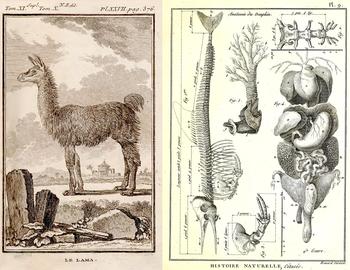
These early labours of broad collection, trade and preservation culminated in Alfort's inventory boasting 3,033 items, supposedly crushing other French anatomy collections in number. But answering the question whether or not the cabinet at Alfort was actually the largest of its kind presents both empirical and analytical difficulties. For instance, the Académie des sciences had 1,079 zoological specimens at the time of the Revolutionary inventory, but its natural history collection numbered well over 3,500 when including botanical materials.Footnote 61 Alfort's collection could not be described as strictly zoological or anatomical either. In its tabulations, 128 medical, surgical and blacksmithing instruments, 150 stones, ninety-five extracted parasites/insects and more than fifty flat images populated the ranks alongside the terrestrial, aquatic and aerial fauna. Further, the number of other items at Alfort does not correspond to the number of bodies or body parts. Horses anatomized for the veterinary cabinet did not just have their four hooves; they had shoes, plaster casts and moulds, meaning that the possible number of feet from a single horse was not four but sixteen.Footnote 62 Broken bones were sometimes listed as two separate items, while single jars were sometimes stuffed with several specimens of a similar type. Beasts of burden were worked to death and worked to pieces; collections of bone fractures relayed human–animal labour relations, upon which veterinarians were trained to advise. The skin made one stuffed reindeer, its skeletal structure made two, and extracted organs dropped in alcohol continued the count. The school borrowed equally from the methods, optics and epistemologies of natural history through its stuffed or defleshed actors given dynamic poses, and of human anatomy through its representation of ‘normal’ and ‘pathological’ organs. Just as visitors were invited to see a textually described specimen ‘live’, artists who sought to represent the natural world came to Alfort for its dual display of interior and exterior (Figure 1). In death the body multiplied, and, with its management, so did the school's capacity to satisfy multiple forms of inquiry.
Two plates attributed to specimens held at Alfort. The left is a representational drawing of a live llama standing in its habitat. The right is the internal anatomy of a dolphin, including skeleton and organs. The llama lived in Alfort's menagerie and the skeleton came from Alfort's cabinet. Left: Georges-Louis Leclerc, Comte de Buffon, Oeuvres complètes de M. le Comte de Buffon, vol. 10, Paris: Imprimerie royale, 1775, Planche XXVII; right; [Piere Joseph] Bonnaterre, Tableau encyclopédique et méthodique des trois règnes de la nature: Cétalogie, Paris: Panckoucke, 1789, Planche IX. Images retrieved from the Biodiversity Heritage Library (www.biodiversitylibrary.org), used with permission.

Trading horses
By the time of the French Revolution, Fragonard had been disassociated from the veterinary school for nearly twenty years.Footnote 63 Under the Revolutionary government, he joined the Commission temporaire des arts, a group tasked with the appraisal and redistribution of resources of those imprisoned, exiled, in hiding or dead in the wake of the Terror. The land, libraries, galleries and scientific collections left behind were taken as national property. Monarchical institutions were likewise appraised to determine how useful they could be to the new government, and austerity models replaced monarchical extravagance. A decree from 6 February 1794 named Fragonard, Jean-Baptiste-Jacques Thillaye and Félix Vicq d'Azyr as the advisers on the anatomical acquisitions; Jean-Baptiste Lamarck, René Louiche Desfontaines and André Thoüin were among the eight charged with managing natural history acquisitions and were also affiliates of the newly formed Muséum d'histoire naturelle.Footnote 64 Choosing experts to determine institutional redistribution often resulted in complex conflicts of interest. Many of these men had previously held or would simultaneously hold posts at the very same institutions where resources were up for redistribution.
On 14 May 1794 Fragonard wrote a scathing report on the state of Alfort's collection. Rats and insects were eating dried specimens, wet specimens were drying out from not having their liquors replenished, an employed caretaker was desperately needed, and the room could use some new windows and a good cleaning.Footnote 65 Just weeks later a second report authored by Fragonard and Vicq d'Azyr, another former veterinary instructor, took an even sterner tone.Footnote 66 No longer a list of ways to improve the facility, it suggested that Alfort's collection was too far degraded and too far outside Paris to serve French citizens, and that it should be gathered up and moved to the city centre. To the veterinary administration, this was a hostile proposition that had been gaining traction since 1789.Footnote 67 A consequence of having the greatest collection in France (if not all of Europe), at a moment of mass restructuring, was that it became a target for those seeking power and prestige.
Bettina Dietz and Thomas Nutz describe the anatomical collections of Ancien Régime Paris as having ‘aesthetic codes’.Footnote 68 Cultural capital was not just located in the possession of a collection, but also in its location and the aesthetics of display; the presentation of a cabinet enabled ‘an elaborate performance of style within a framework of competitive social spectacle’.Footnote 69 When found negligent of such codes, collections came under scrutiny. In the Ancien Régime, attacks on the quality of display had been used when the king sought to gain control over a collection.Footnote 70 Government officials looking to seize patronage would emphasize the negligence of a previous owner. After the Revolution, the wet, rotting and endangered inhabitants of Alfort's museum relayed both the precarity of the segmented body and the uncertain future of veterinary education itself.
A month passed after Chabert's initial request, and his letters became increasingly desperate:
The esprit de vin of the anatomy cabinet's specimens has been evaporating now for a long time … Several pieces are dried out and if we again delay replenishing the esprit de vin and resealing the jars the loss will be infinite. I have done all that I can to procure this liquor, but I have found none.Footnote 71
He proposed as a workaround that sixty pints of the less potent liquor eau de vie might be procured from Orléans instead, and that the school could also acquire distillery equipment to produce their own esprit de vin from that, at least enough for the year.Footnote 72 As the school's future was being threatened by resource uncertainty, Chabert redirected his attention to making it more self-sustaining. He closed his letter insisting that his demands required the Commission d'agriculture's full attention, but, as is the case for many stories in the history of French administration, his requests would shuffle across many desks before being addressed.Footnote 73 All the while, air breathed the destruction of exposure upon his dead prizes. Four months after Chabert's initial request, he finally received the requested thirty pints; however, the quantity was no longer enough.Footnote 74 Death required constant maintenance, and Chabert would spend the remaining years under the republican government requesting more pints, distillery equipment, turpentine and mercury, all to keep this collection literally and figuratively afloat.
Meanwhile, Thouret, on behalf of the Ecole de santé, and Jussieu and Lamarck of the Muséum d'histoire naturelle placed their own requests to poach several specimens from the Ecole vétérinaire d'Alfort.Footnote 75 The Ecole de santé had taken vegetal specimens from the suppressed Académie des sciences, and the museum had been taking the live animals from Versailles and Raincy as well as the dead specimens from suppressed collections across the country.Footnote 76 Just as Alfort had appropriated the anatomical specimens produced at Lyon, so institutions under the Revolution employed cannibalism as a strategy of survival. Thouret's observation that Alfort's cabinet surpassed that of the Jardin du roi was now being used against it. Jussieu and Lamarck protested that the people's natural history collection was missing just a few items to restore and unveil the universal natural order: ‘Reunited with our objects, Alfort's specimens will acquire a greater value … incorporated into such a large collection, they will be seen among their analogues to be compared against, but also to complete their families.’Footnote 77 Whether it was the administrators of the Jardin du roi or of the Jardin des plantes speaking, the order of the natural world was always in reach but also always just a few more objects away. This is the language that garnered support for expeditions, even if in this case they were merely to the Parisian suburbs. Lamarck and Jussieu knew that specimens from the ‘Indian Orient’ and the Cape of Good Hope could be found locally and that they already belonged to the citizenry. They simply asked that the specimens be relocated to where they could do the most good.Footnote 78
That completeness which had garnered Alfort so much praise under the Ancien Régime made it a target under the republic. What business did veterinarians have claiming possession over the building blocks of natural history? Distinct from Buffon, Revolutionary natural historians saw Alfort's collection as a subtraction of their resources, rather than additive to and collaborative with theirs. Only one field, by their estimation, held rightful claim to the description and cataloguing of the global order. They advised that veterinarians limit their services to the French domestic animal, stretching only as far as mixed breeds of livestock. To a veterinarian, they insisted, all foreign specimens were mere curiosities; they advocated for boundaries between comparative anatomy and studies of domestic pathologies. Marking foreign specimens as curiosities to veterinarians may seem intuitive to the modern reader, but this apparently natural distinction was forged out of the epistemic break between natural history and veterinary medicine in the final years of the Revolution. Since the beginning of veterinary education before the Revolution, the school's founder had explicitly advocated that veterinary medicine's knowledge of the animal kingdom could neither begin nor end with livestock. The most common inter-species comparison in Bourgelat's writings was that between horses and humans. The body of the veterinarian was the primary analogue. His texts stressed the diverse range of animal substances that furnished pharmacopoeia, and he understood that the apothecary's storefront was filled from both global flora and global fauna.Footnote 79 Bad air threatened the lives of veterinary patients, and so did insects, serpents and wolves, making all of them critical points of veterinary investigative study. The early textbooks of veterinary education made physiological and also social comparisons between French domestic animals and panthers, elephants, monkeys and bears.Footnote 80 Chabert himself continued this tradition when he studied the transmissibility and experience of a common skin infection across sheep, pigs, goats, monkeys and veterinary students, and suggested a shared experience of glanders between ‘horses, asses, mules and probably jumarts and zebras’.Footnote 81 The collection's diversity was more than a magnet for attention; it was an intellectual and methodological insistence that animals’ diseases partly described their connections in the global order.
Before the Revolution, Alfort's cabinet had been described as one of natural history and anatomy, with little consequence from either description.Footnote 82 Importantly, its students never took classes in natural history. Instead, in the mid- to late eighteenth century, anatomy was the primary study that allowed the comparison of domestic animals with global fauna. In one student notebook, between transcriptions of lecture notes on domestic breeding experiments on horses, are references to Jean-François Gerbillon's observations on the jumart in Nipchou.Footnote 83 For veterinarians, anatomy was the analytic starting point, under which natural history was a subset of interest – a proposition that seemed inoffensive to naturalists of its day. As the museum worked to take ownership of Alfort's possessions in 1796, they quickly turned the administrative debate toward the school's ‘natural history collection’ as a means of separating the fields of inquiry.Footnote 84 By lumping Alfort's collection into the natural history category, the museum in Paris proper could claim priority. Other individuals trying to move the whole institution to Paris, not just its collection, also used similar rhetorical tactics. Alfort's value through excess was rhetorically dismantled; it represented something indiscriminate and non-systematic.Footnote 85 If it was a natural history collection, it was misplaced, mismanaged and underutilized; if it was an anatomical collection, then the human anatomical figures were decidedly of less value to Alfort's students than to those of the Ecole de santé. Pieces were inscribed as veterinary, (human) medical, or natural-historical in order to justify relocation, and these fields became increasingly disjoint.
It was not just the foreign specimens that were pulled onto the bargaining table during the Revolution. The Ecole de santé wanted the human and comparative-anatomy specimens and the chemistry equipment from Alfort as well, to fulfil its future students’ needs.Footnote 86 This terminology of ‘human and comparative-anatomy specimens’ mirrored non-specific syntax used in the administrative management of specimen exchange. Governmental administrators adjudicating resource transfers between these scientific institutions rarely dealt with the minutiae of particular objects. Rather, generic types such as ‘natural history’ or ‘human anatomy’ were the building blocks of bureaucratic arrangements. It was only after both institutions agreed to the exchange of specimens of a kind that the contents of those exchanges received any clarification.
On 15 January 1795, the Comité d'agriculture presented to the National Convention a list of reforms that would be necessary in order for the Ecole vétérinaire d'Alfort to continue receiving government support. ‘The cabinet's formation has prevented more than a quarter of even the best students from graduating’, the Comité d'agriculture argued, while wholly rejecting any pedagogical merit to the production of specimens.Footnote 87 Anatomy was only essential to veterinary medicine if it was properly bounded by attention to essential, focused and specialized necessary knowledge. The Old Regime mentality – that one never wasted a corpse – was supplanted by a world view that students should not waste mental space or physical labour. Though the impact on veterinary education was slow, and felt more strongly under the Napoleonic reign than during the Revolution, the increase of government surveillance on distribution of scientific resources took hold at this moment.
While veterinary historians have often leaned on anthropocentrism to explain the historiographic subordination of veterinary medicine to human medicine, such an explanation would fail to capture the particular modes of argumentation deployed at the turn of the century. At the dawn of veterinary education, its value was regularly contested: should animals have access to health care when humans were still struggling for the same?Footnote 88 More than thirty years into its existence, however, by the time of the Revolution, veterinary education was indisputably important in an economy still overwhelmingly dependent on the labour of non-human animals and the sale of animal-commodity products. When the Ecole de santé petitioned to move resources out of Alfort and into their own classrooms they made no appeals to human superiority in the great chain of being. Instead they matched administrative austerity with pleas around intellectual restraint. Determining which pieces of knowledge were essential and peripheral to the future of each field was separate from determining the value of the fields of study themselves. Thillaye, both a member of the Commission temporaires des arts and a professor charged with the anatomy cabinet at the Ecole de santé, petitioned the Commission d'agriculture and insisted that it was the government's ‘project to conserve only those pieces absolutely necessary for the veterinary school’ and redistribute the rest.Footnote 89 The Commission d'agriculture sided with the Ecole de santé, and Thillaye was given permission to take what he needed.Footnote 90 The veterinarians could keep their horseshoes and hybrid breeding experiments, but the Ecole de santé would get the chemistry equipment, some of their human specimens and even comparative-animal specimens. The veterinarian's domain was being boxed into a smaller and smaller geographic and epistemic corner. With the precedent of a lack of administrative support, Chabert acquiesced gracefully.
Resolute to conserve the school's capacity to continue expanding its collection, Chabert offered the museum the taxidermy specimens they wanted, asking only for some glass jars and esprit de vin in return.Footnote 91 His act of beneficence was rewarded, but not as he had hoped. Administrative intermediaries, seemingly deaf to the urgency of Chabert's focus upon the materials of preservation, instead instructed the museum to survey their collection for specimen duplicates they could offer Alfort in kind.Footnote 92 The museum would take, among other things, Alfort's coati, adult and infant reindeer, mouflon, Indian hog-deer, bushbuck, seal and dolphin in exchange for a collection of bezoars.Footnote 93 Such trades marked veterinarians as increasingly agriculturally focused, as bodily stones transitioned from pharmaceutical exotica to juridical tools, newly emerging as evidence in criminal cases of livestock poisoning, for which Chabert would serve as an authority.Footnote 94 Meanwhile, Chabert's list of desiderata expanded; he now needed 250 pints of eau de vie and a hundred pints of esprit de vin for the Alfort cabinet, along with a laundry list of other items including surgical and farrier's tools as well as ready-made pharmaceuticals following the loss of the museum's chemistry equipment.
Although tourist manuals had described the impressive cabinet display, the school's requests stressed an increasing struggle to keep their specimens in displaying order. Preservation was not something done in the past tense. It was a process that needed greater and greater resources; the volatile esprit de vin needed to be constantly replenished. But the inability to keep the jars full was only one of Alfort's struggles. What seemed most detrimental to the integrity of the collection was an inability to craft a narrative that made all the pieces fit together. Resource competition culminated in epistemic competition. In the Ancien Régime the collection's diversity supported the work of naturalists, but under the new regime it became reconstructed as a hindrance. This shift in perspective happened to individuals too. Gilbert, who had previously insisted that Alfort acquire the camel, reversed his position working for the Conseil d'agriculture, and, with another former student, accused Alfort of ‘abandoning as unimportant all that was essential to veterinary arts to attach themselves to its most peripheral branches’; they were especially harsh on the inclusion of aquatic species.Footnote 95 Animality no longer served as a uniting justification for placement in a medical pedagogic setting. The veterinary students stood accused of ignorance of the anatomy of cattle and sheep, having spent their time studying dolphins and sharks instead.Footnote 96 What had started as a universalist and cosmopolitan project, bridging the local and the global, became framed as a distraction. Veterinarians would be slotted into anatomy, and natural history would be extracted from their purview, and the human body would become less of a reference for veterinarians even as other animals continued to serve human medicine at the Ecole de santé. After the Revolution, travelogues would continue to stress the importance of anatomical specimens to the school's functioning, but one Dutch author noted that its remaining ‘natural history specimens’ had been segregated from the domestic anatomy collection, and placed instead among the library books.Footnote 97
Chabert's request for esprit de vin was only one of many moments throughout the Revolution when various branches of the Revolutionary government (including the Commission d'agriculture et des arts, the Ministère de la guerre, and the Commission temporaire des arts), adjudicated on whether or not potential preservation materials would be provided to the school, and eventually which specimens Alfort deserved to keep. Veterinary administrators responded to extra-institutional petitions for transfer of specimen ownership – especially from the Ecole de santé and the Muséum d'histoire naturelle – by privileging the continuance of preserving future specimens over protection of anything already preserved. Materials of preservation such as esprit de vin, mercury and turpentine became aligned with Alfort's future, and its expansive anatomical explorations a legacy of the past. These decisions collectively reframed the future pedagogical model of veterinary education under a new regime, centring on the relationship between French citizens and their livestock, and dividing the local specimens from the foreign ones. The Revolutionary discourse transformed the Ancien Régime’s veterinary cabinet from a symbol of intellectual mastery into one of chaos, and, as the Revolutionary Wars expanded France's geographic domain, the priorities of veterinary education would be reshaped from a broad study of animality to an art focused upon the French domestic.
In 1799, minister of the interior François de Neufchâteau proselytized a new vision for veterinary services to the group of veterinary students competing against each other during their public oral exams.Footnote 98 ‘The monarchy’, he explained, ‘had founded an aristocracy even among the animals’.Footnote 99 The task of this generation was to specialize their services for the herd animals upon which the nation's economy and food supply were dependent; their attention was to be newly focused, at least in the government's eyes, upon the cattle that fertilized France's furlongs and the dogs that herded sheep alongside shepherds. ‘It is for the herds, in general, that liberty requests your devotion … to those animals whose labours nourish the patrie, whose sweat fertilizes, whose skins decorate, and who carry into battle free men armed with the republican sword.’ That this very sword was redrawing the French map to include territories in modern Italy, Belgium, Germany and the Netherlands, and that Napoleon had captured Jaffa in the week of the speech, went without contemporaneous comment. As France pursued territorial and commercial control at a near-global scale, the relationship between the local and the global was severed.