INTRODUCTION
According to the hypothesis of spatial heterogeneity, a highly heterogeneous environment must provide additional niches for numerous species; the correlation between habitat complexity and species diversity has been widely reported from marine gastropods to birds (Heck & Wetstone, Reference Heck and Wetstone1977; Huston, Reference Huston1979). Epibenthic macroalgae, seagrasses or mangroves that cover hard substrates or soft sediments compose the phytal habitats of aquatic regions, which represent particular infaunal communities. Seagrass beds, one of the most productive marine ecosystems, are sources of habitats and food for diverse organisms and are extensively distributed from tropical to temperate coastal regions (Duarte & Chiscano, Reference Duarte and Chiscano1999). The structure and shape of macrophytes increase habitat complexity, enhance settlement, provide shelter, and reduce water flow for the benthic community (Heck & Wetstone, Reference Heck and Wetstone1977; Orth et al., Reference Orth, Heck and van Montfrans1984; Castel et al., Reference Castel, Labourg, Escaravage, Auby and Garcia1989). In addition, the epiphytes and detritus retained by the plants supplement the food sources of infauna (Heip et al., Reference Heip, Vincx and Vranken1985; Leduc et al., Reference Leduc, Probert and Duncan2009; Lebreton et al., Reference Lebreton, Richard, Galois, Radenac, Brahmia, Colli, Grouazel, André, Guillou and Blanchard2012; Vafeiadou et al., Reference Vafeiadou, Materatski, Adão, De Troch and Moens2014).
The morphological complexity of seagrass (i.e. shoot density and leaf shape) plays a crucial role in promoting colonization by associated invertebrates (Bell & Hicks, Reference Bell and Hicks1991; Boström & Bonsdorff, Reference Boström and Bonsdorff2000; Jenkins et al., Reference Jenkins, Walker-Smith and Hamer2002; De Troch et al., Reference De Troch, Vandepitte, Raes, Suàrez-Morales and Vincx2005). Meiofauna (benthic organisms that can pass through a 1 mm mesh but are retained by a 42–63 μm mesh) associated with sediments underneath seagrass are commonly more abundant and diverse than that at adjacent unvegetated sediments (Fisher & Sheaves, Reference Fisher and Sheaves2003; Hourston et al., Reference Hourston, Warwick, Valesini and Potter2005; Monthum & Aryuthaka, Reference Monthum and Aryuthaka2006; Leduc & Probert, Reference Leduc and Probert2011), although equivocal results have been reported (Ndaro & Ólafsson, Reference Ndaro and Ólafsson1999). A higher proportion of meiofauna inhabit the fuzzy shoots of seagrass than the smooth thalli (Giere, Reference Giere2009). Even in the same seagrass species, the simple vegetative shoots and highly branched reproductive shoots of Zostera marina harbour dissimilar macrofaunal assemblages (Nakaoka et al., Reference Nakaoka, Matsumasa, Toyohara and Williams2008). Similarly, more surface area of artificial substrates reduces water flow and substantially increases the abundance and species richness of meiofauna (Atilla et al., Reference Atilla, Fleeger and Finelli2005; De Troch et al., Reference De Troch, Vandepitte, Raes, Suàrez-Morales and Vincx2005). However, most seagrass studies have merely focused on macrofauna even though meiofauna may produce varying responses to identical environmental factors (Bell et al., Reference Bell, Walters and Kern1984; Giere, Reference Giere2009). For example, meiofauna are more tolerant to hypoxia and less influenced by predation than macrofauna (Josefson & Widbom, Reference Josefson and Widbom1988; Castel et al., Reference Castel, Labourg, Escaravage, Auby and Garcia1989). Moreover, in general, meiofauna have species-specific diets including plant tissue, detritus, epiphytes and microorganisms (Moens et al., Reference Moens, Luyten, Middelburg, Herman and Vincx2002, Reference Moens, Bouillon and Gallucci2005; Rzeznik-Orignac et al., Reference Rzeznik-Orignac, Boucher, Fichet and Richard2008; Leduc et al., Reference Leduc, Probert and Duncan2009; Lebreton et al., Reference Lebreton, Richard, Galois, Radenac, Brahmia, Colli, Grouazel, André, Guillou and Blanchard2012; Vafeiadou et al., Reference Vafeiadou, Materatski, Adão, De Troch and Moens2014), whereas most seagrass macrofauna have been evaluated as generalized feeders (Heck & Wetstone, Reference Heck and Wetstone1977).
Species of seagrass with distinct physical structures (e.g. leaves and roots) supply various microhabitats, which influence the benthic community (De Troch et al., Reference De Troch, Fiers and Vincx2001a, Reference De Troch, Gurdebeke, Fiers and Vincxb). In addition, the size and architecture of seagrass species, including the leaves, rhizomes and roots, affect their productivity (Duarte, Reference Duarte1991; Duarte et al., Reference Duarte, Merino, Agawin, Uri, Fortes, Gallegos, Marbá and Hemminga1998; Duarte & Chiscano, Reference Duarte and Chiscano1999). Aboveground canopies and belowground root–rhizome systems probably have varying effects on epifaunal and infaunal compositions, respectively. Sediments underneath seagrasses generally occur as fine particles, with highly organic matter content and hypoxia, which substantially influence the meiofaunal communities (e.g. Fonseca et al., Reference Fonseca, Hutchings and Gallucci2011; Leduc & Probert, Reference Leduc and Probert2011; Gallucci et al., Reference Gallucci, Hutchings, Gribben and Fonseca2012). The compact root–rhizome mats of several seagrasses may hamper the burrowing of large macrofauna, predators or competitors for sediment meiofauna (Orth et al., Reference Orth, Heck and van Montfrans1984). In salt marshes, live Spartina roots with micro-oxygenated zones are positively correlated with nematode abundance (Osenga & Coull, Reference Osenga and Coull1983), and the seagrass roots have been suggested as responsible for the sizable production of oxygen and dissolved organic matter in the sediments (Duarte et al., Reference Duarte, Merino, Agawin, Uri, Fortes, Gallegos, Marbá and Hemminga1998). Thus, the biomass and structural complexity of root–rhizome systems of various seagrass species might influence the infaunal communities. However, most seagrass studies have focused on epiphytic meiofauna (i.e. copepods) rather than interstitial nematodes (e.g. Bell & Hicks, Reference Bell and Hicks1991; De Troch et al., Reference De Troch, Fiers and Vincx2001a; Jenkins et al., Reference Jenkins, Walker-Smith and Hamer2002). Although they constitute the most abundant taxa in seagrass habitats, copepods and nematodes exploit differing trophic resources and occupy distinct niches (Rzeznik-Orignac et al., Reference Rzeznik-Orignac, Boucher, Fichet and Richard2008; Leduc et al., Reference Leduc and Probert2009; Lebreton et al., Reference Lebreton, Richard, Galois, Radenac, Brahmia, Colli, Grouazel, André, Guillou and Blanchard2012).
The distribution of free-living nematodes is closely associated with ambient sediment structures and is considered an indicator of the prevailing environmental status, such as that of a particular seagrass patch (Bongers & Ferris, Reference Bongers and Ferris1999; Somerfield et al., Reference Somerfield, Yodnarasri and Aryuthaka2002). Distinct nematode communities inhabit patches by assembling with a number of different seagrass species, whereas the role of individual seagrass species is unclear (Somerfield et al., Reference Somerfield, Yodnarasri and Aryuthaka2002). The same common species of nematodes exist on multiple macrophytes, but have exhibited varying dominance in qualitative samples (Heip et al., Reference Heip, Vincx and Vranken1985; Da Rocha et al., Reference Da Rocha, Venekey, Bezerra and Souza2006). In Kenya, examination of the habitats of five seagrass species revealed that meiofaunal communities correspond with seagrass species, whereas the seagrass-species-specific effect on meiofauna was suggested to be indirect, i.e. the environmental factors simultaneously influence meiofauna and seagrass (De Troch et al., Reference De Troch, Fiers and Vincx2001a, Reference De Troch, Gurdebeke, Fiers and Vincxb). However, because of the characteristic zonation of seagrass species and the large scale of the sampling distribution in the Kenyan study, the effect of water depth may have exceeded or disturbed the seagrass effect. In a study conducted in Thailand, nematode communities from three seagrass species and adjacent unvegetated areas were distinguished, but the distances among patches were not reported (Monthum & Aryuthaka, Reference Monthum and Aryuthaka2006). Thus, a study on a small spatial scale may yield more crucial information regarding the seagrass effect than a study comparing sites over long distances (Leduc & Probert, Reference Leduc and Probert2011).
In this study, the meiofaunal communities in a Halodule uninervis (Forsskål) Ascherson-dominant seagrass bed interspersed with patches of Thalassia hemprichii (Ehrenberg) Ascherson and Halophila ovalis (R. Brown) J.D. Hooker were investigated. In order of size, T. hemprichii, H. uninervis and H. ovalis possess varying biomass both aboveground and belowground (Duarte, Reference Duarte1991; Duarte et al., Reference Duarte, Merino, Agawin, Uri, Fortes, Gallegos, Marbá and Hemminga1998; Duarte & Chiscano, Reference Duarte and Chiscano1999). Samples from the monospecies patches of the three seagrass species and the adjacent unvegetated sediments were inspected to demonstrate the species-specific effects of seagrass on meiofaunal composition. In addition to the taxonomic approach, the trophic types of nematode were classified according to the morphology of buccal cavities and teeth (Wieser, Reference Wieser1953). Although there is some revision and modification for Wieser's scheme (e.g. Moens & Vincx, Reference Moens and Vincx1997; Moens et al., Reference Moens, Bouillon and Gallucci2005), this method remains the most feasible classification of marine nematodes and widely applies to ecological issues (Schratzberger et al., Reference Schratzberger, Forster, Goodsir and Jennings2008). The following propositions were tested: (1) the community structures of meiofauna and nematodes vary between seagrass beds and adjacent unvegetated habitats, (2) the large and structurally complex (highly branched) seagrass species harbour meiofaunal communities distinct from the small and simple ones, and (3) the proportions of the trophic types of nematodes change in sediments under unvegetated areas and varying seagrass species.
MATERIALS AND METHODS
Study site and sampling design
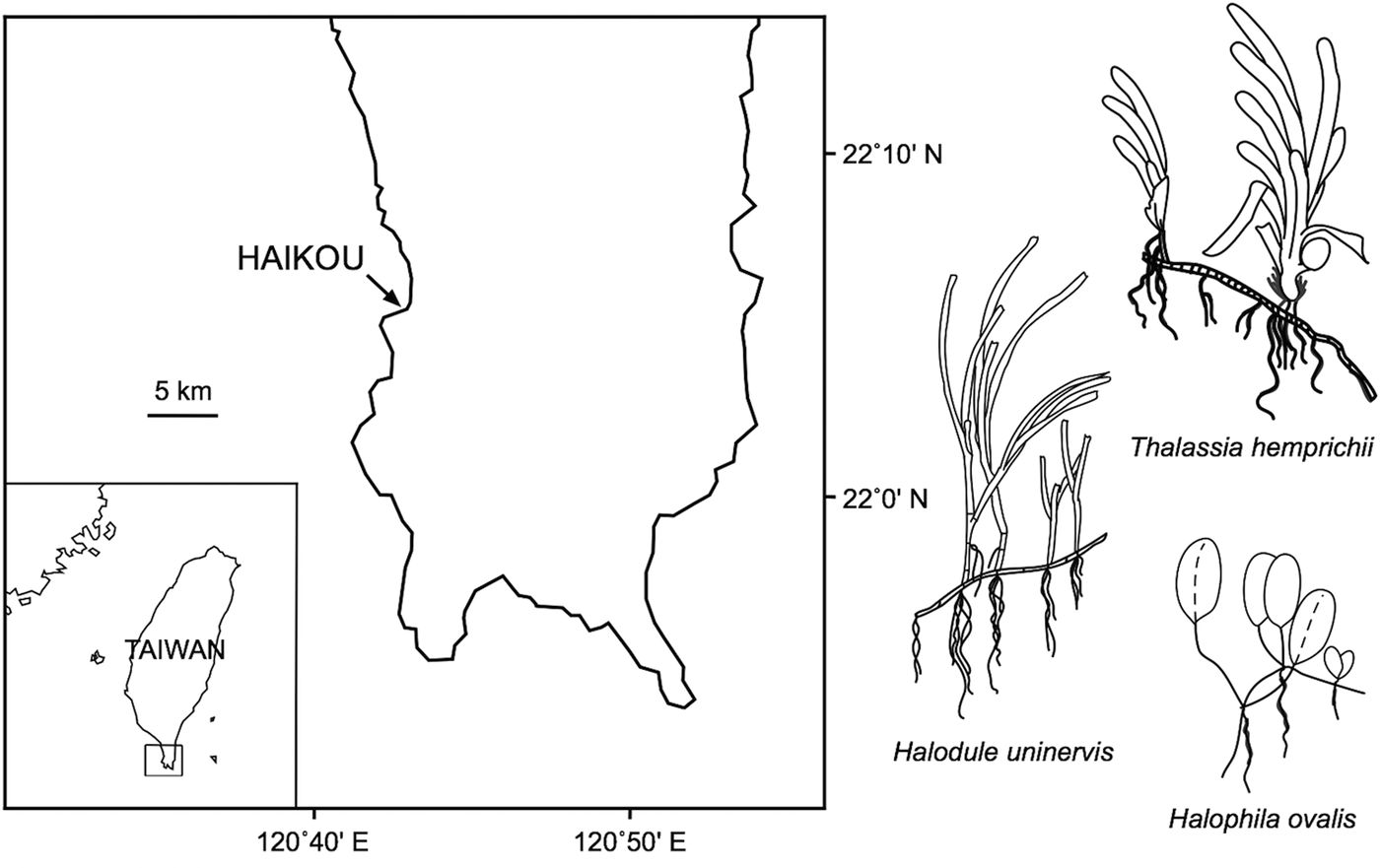
Haikou is a small tropical fishing harbour on the south-western coast of Taiwan. A patchy mixed seagrass meadow (20°5′23″N 120°42′44″E) approximately 300 m in length and 30 m in width is situated in a subtidal sandy platform at the south of the breakwaters (Figure 1). Halodule uninervis covers more than 80% of the seagrass region. Patches of Thalassia hemprichii, Halophila ovalis and some macroalgae are occasionally encountered and interspersed with H. uninervis. According to size (the diameter and biomass of roots and rhizomes) and structural complexity (shoot density), T. hemprichii is the largest species with wide linear leaves and robust root–rhizome systems, which form a deeply penetrating mat and possess densely filiform root hairs (Meñez et al., Reference Meñez, Phillips and Calumpong1983; Duarte et al., Reference Duarte, Merino, Agawin, Uri, Fortes, Gallegos, Marbá and Hemminga1998); followed by H. uninervis with fine linear leaves, slender rhizomes and sparsely branched roots; the smallest is H. ovalis with ovate leaves, narrow rhizomes and commonly one root each nodule (Meñez et al., Reference Meñez, Phillips and Calumpong1983). No obvious zonation across the seagrass beds exists among seagrass species. Megafaunal or macrofaunal bioturbators, mainly fish, crustaceans and echinoderms, are incidentally found.
Sampling site in Haikou (indicated with an arrow), Taiwan and the architecture of Thalassia hemprichii, Halodule uninervis and Halophila ovalis.

Sediment samples were collected from four 3 × 3 m2 quadrats, one quadrat per habitat: (1) unvegetated sediments, (2) sediments underneath H. ovalis, (3) sediments underneath H. uninervis, and (4) sediments underneath T. hemprichii. Every quadrat edge was separated from each other by at least 5 m, and the distances between all habitats were within 50 m; thus, the habitats were assumed to be under identical local environmental conditions (e.g. water current, temperature, salinity and light intensity). Sample collection was conducted by snorkelling at a 1-m water depth during low tide, and salinity was approximately 28 on 7 September 2012. Within each quadrat, three cores with 3.6-cm internal diameter and 5-cm depth were obtained for meiofauna. In addition, every three cores with a 2-cm internal diameter and a 5-cm depth were obtained to measure the (1) water content, (2) grain size and (3) total organic matter content. Each meiofaunal core was separated by approximately 1 m. A stainless steel core was used to penetrate into the sediment with dense seagrass rhizomes.
Laboratory processing
The sediment samples were dried at 60°C for 2 days to assess the water content according to weight loss. For granulometric analysis, the samples were washed with fresh water to remove salt and then dried. Subsequently, the sediments were separated using a series of mesh screens of varying sizes (i.e. 1000, 500, 250, 125, 62 μm) and then individually weighed. The median diameter of granules was calculated from the cumulative per cent plots of the particle sizes. The total organic matter content of the samples was estimated by igniting dried sediments at 550°C for 2 h. The weight that the samples lost after ignition was expressed as the relative percentage of organic matter.
Live meiofaunal samples were anaesthetized using a 7% MgCl2 solution to promote tissue relaxation, and then preserved using 4% formalin. The meiofaunal samples were stained using 0.5 g L−1 of rose bengal for 1 h and washed using fresh water through 1000-μm and 42-μm sieves. The animals retained on 42-μm sieves were extracted and counted, and their major taxon levels were identified using a stereo microscope. Nematodes entangled in the rhizome system of seagrass were carefully unravelled. From each replicate sample, the first 100 nematodes randomly encountered (or all individuals if fewer than 100 were present) were picked out and transferred to a solution of 5% glycerol and 5% ethanol in water. The mixture was allowed to evaporate overnight on a warm hotplate, leaving the nematodes in pure glycerol; subsequently, the nematodes were mounted onto permanent slides, and their putative morphospecies was identified using pictorial keys (Platt & Warwick, Reference Platt and Warwick1988; Warwick et al., Reference Warwick, Platt and Somerfield1998) and referring to literature (e.g. Tchesunov, Reference Tchesunov2013). Based on the morphology of the buccal cavities, the nematodes were classified according to trophic type, namely selective deposit feeders (1A), non-selective deposit feeders (1B), epistrate feeders (2A) and omnivores/predators (2B) (Wieser, Reference Wieser1953).
Statistical analyses
The water content, median grain size, silt/clay content (sediments <63 μm), total organic matter content, and meiofauna and nematode abundance of each sample were calculated to describe the ecological parameters of the habitats. The diversity indices of nematodes, including species abundance (S), expected species number for 51 individuals (ES(51)), Shannon–Wiener diversity (H’ = −∑P i lnP i), and Pielou's evenness (J’ = H’/lnS), were compared between sediments obtained from the seagrass habitats of various species and those obtained from the adjacent unvegetated quadrat. The untransformed datasets were analysed using a one-way analysis of variance (ANOVA). When significant differences were observed, Tukey's post hoc test was used in pairwise comparisons of distinct habitats.
Multivariate statistical methods were used to compare the environmental parameters, meiofaunal communities, and nematode communities in the various sediments obtained from seagrass habitats and those obtained from the adjacent unvegetated quadrat. The community structures of higher meiofaunal taxa and nematode species in relation to sediment characteristics (median grain size, water content, silt/clay content, and total organic matter content) were ordinated using canonical correspondence analysis (CCA; ter Braak, Reference ter Braak1986). The values of water content, silt/clay content, and total organic matter content and the abundance data of meiofaunal taxa and nematode species were square-root transformed to reduce skewness before conducting the multivariate analysis as well as to reduce the comparative importance of dominant taxa. CCA was performed with MVSP version 3.22 (Kovach Computing Services, UK). The structure of nematode assemblages was further explored by applying similarity percentages program (SIMPER) analysis based on the Bray–Curtis dissimilarities to determine the contribution of individual species to the average dissimilarity between the seagrass and unvegetated habitats. The PRIMER v6 software package was used to calculate the diversity indices and conduct SIMPER analyses (Clarke & Gorley, Reference Clarke and Gorley2006).
RESULTS
Sediment environment
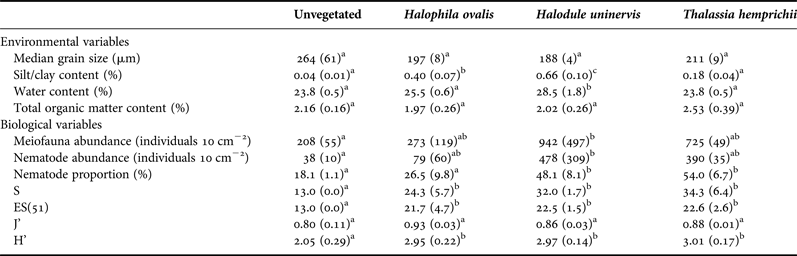
Regarding median grain size, fine sand (125–250 μm) was the most common type of sediment in all seagrass habitats (Table 1). The adjacent unvegetated sediments exhibited coarser grains than those obtained from the seagrass beds and, thus, were classified as medium sand (250–500 μm); however, the difference was insignificant (F 3,8 = 3.64, P = 0.064). The percentage of silt/clay (<62 μm) was low at the study site, but the silt/clay content differed significantly among habitats (F 3,8 = 52.47, P < 0.001). According to the results of Tukey's test, the silt/clay content was higher in the sediments under Halodule uninervis and Halophila ovalis than in those under Thalassia hemprichii and the unvegetated areas (P < 0.05). The water content of the sediments underneath H. uninervis was significantly higher than that in the other habitats (P < 0.05). Regarding total organic matter, a one-way ANOVA revealed no significant difference between the habitats (F 3,8 = 2.51, P = 0.132).
Environmental and biological variables in seagrass beds (Halophila ovalis, Halodule uninervis and Thalassia hemprichii) and adjacent unvegetated sediments. The results (N = 3) are expressed as means (SD). Within each variable, the values following various superscript letters are statistically different from each other according to a one-way ANOVA with Tukey's test. Diversity indices of nematode: S, species richness; ES(51), expected species number for 51 individuals; J’, Pielou's evenness; H’, Shannon–Wiener diversity.

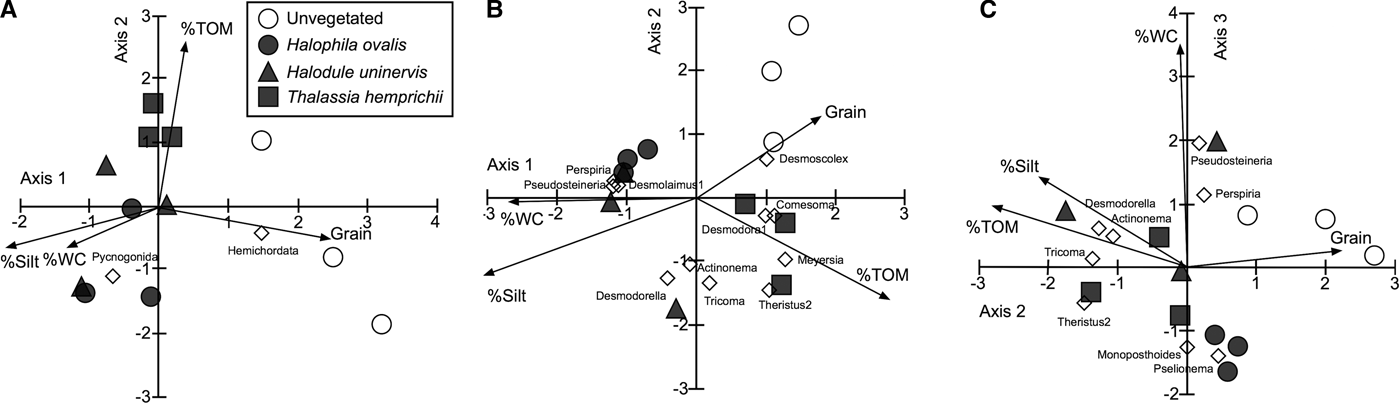
Ordination of the sediment characteristics combined with meiofauna distribution by conducting a CCA yielded results similar to those of univariate analysis. For higher meiofaunal taxa, the eigenvalues of the first two axes were 0.095, 0.03 and accounted for 33.2%, 10.4% of the variation, respectively (Figure 2A). The axis 1 was primarily related to median grain size, whereas the axis 2 was related to total organic matter content. For nematode species, the eigenvalues of the first three axes were 0.267, 0.134, 0.111, and accounted for 18.9%, 9.5%, 7.9% of the variation, respectively (Figure 2B, C). However, the eigenvalues of the axes 5 and 6, which were not environmentally constrained, were 0.23, 0.158, and also accounted for 16.3%, 11.3% of the variation, respectively. It indicated that the environmental variables of CCA did not completely explain the nematode communities. The water content and silt/clay content in T. hemprichii and unvegetated sediments differed from those in H. uninervis and H. ovalis samples. In addition, the unvegetated sediments had a larger grain size and lower organic matter content than did the samples from T. hemprichii.
Scatter plots by canonical correspondence analysis (CCA) from the square-root transformed abundance data on (A) higher meiofaunal taxa and (B, C) nematode species in seagrass beds (Halophila ovalis, Halodule uninervis and Thalassia hemprichii) and adjacent unvegetated sediments. The points of meiofaunal taxa and nematode species (white diamonds) are shown in the plots if the values are >1 or <−1 in axis 1, 2 or 3. Grain, median grain size; %Silt, silt/clay content; %WC, water content; %TOM, total organic matter content.

Meiofaunal communities
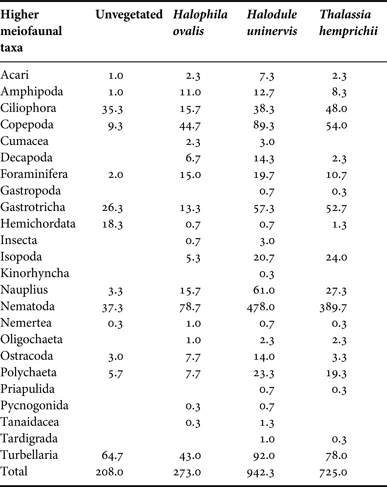
The abundance of meiofauna was significantly higher in H. uninervis than in the adjacent unvegetated sediments (ANOVA with Tukey's post hoc test, P < 0.05; Table 1). The proportion of nematodes was significantly higher in samples from H. uninervis and T. hemprichii than those from H. ovalis and the unvegetated sediments (ANOVA with Tukey's post hoc test, P < 0.05). A total of 24 higher meiofaunal taxa were identified in the present study (Table 2), with average abundance of 208–942 individuals 10 cm−2. Nematodes were the most abundant taxon in seagrass beds (from 26.5% in H. ovalis to 54% in H. uninervis), followed by copepods or turbellarians. However, turbellarians were dominant (31.1%) in the adjacent unvegetated sediments and nematodes accounted for only 18.1%. In addition to copepods, other crustacean taxa (e.g. amphipods, decapods, isopods and nauplii) were dominant or exclusively present in seagrass habitats. Seagrass beds contained more diverse meiofauna (19–24 taxa) than the adjacent unvegetated sediments did (13 taxa).
Average abundance of higher meiofaunal taxa from seagrass beds (Halophila ovalis, Halodule uninervis and Thalassia hemprichii) and adjacent unvegetated sediments. The average abundance values (N = 3) are expressed as individuals 10 cm−2.

The CCA ordination of square-root transformed meiofauna data showed a clear cluster of seagrass samples that was separated from the cluster of unvegetated substrates, which was more widely distributed (Figure 2A). Samples from T. hemprichii were split from those of H. uninervis and H. ovalis, and several samples of the latter two seagrass species were mixed in the plot.
Nematode assemblages
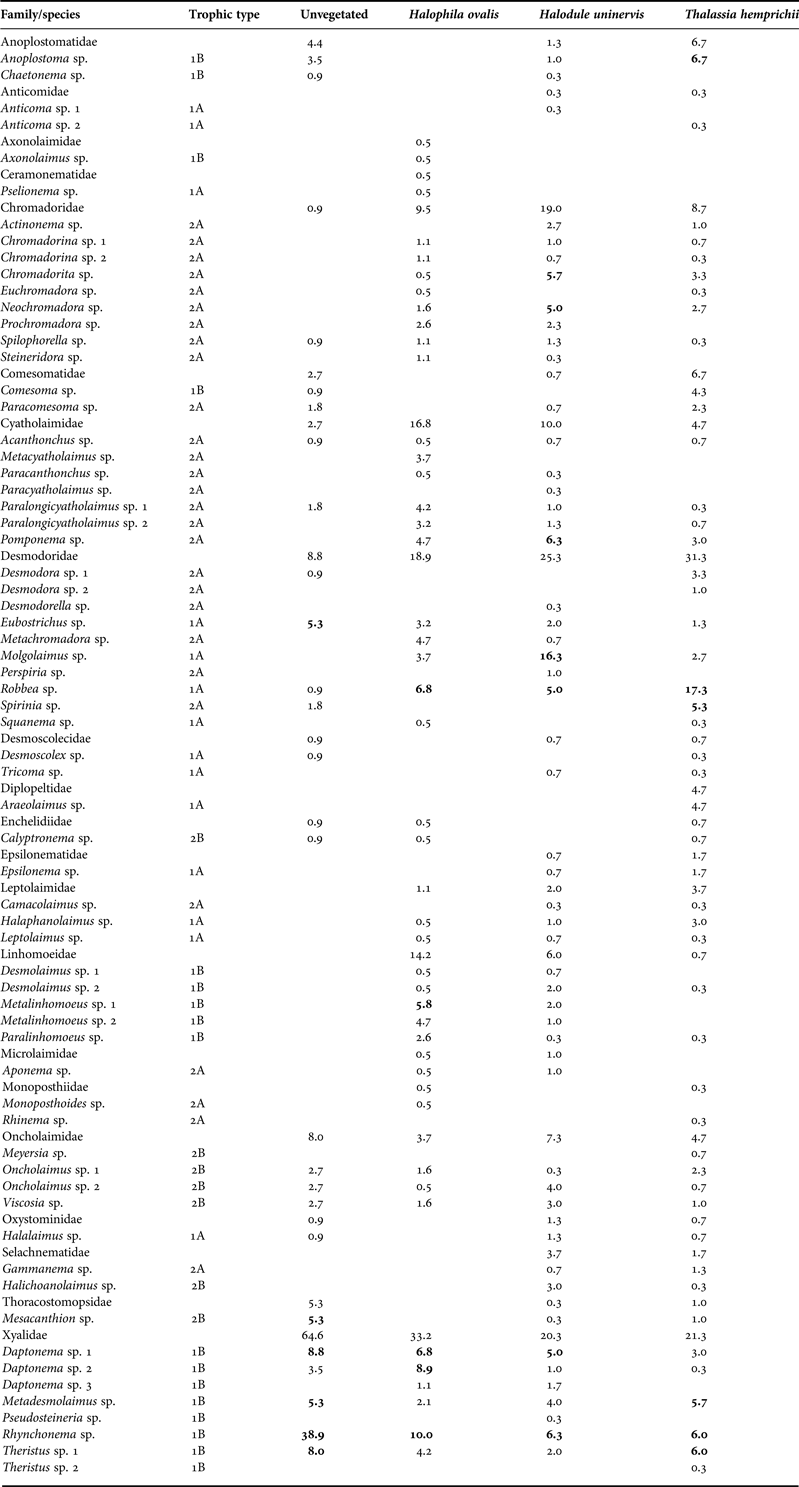
A total of 66 nematode species belonging to 56 genera and 21 families were identified from 903 individuals (Table 3). Xyalidae was the most dominant family in H. ovalis and unvegetated sediments, whereas Desmodoridae dominated in H. uninervis and T. hemprichii habitats. Leptolaimidae and Linhomoeidae were restricted to seagrass habitats, and Chromadoridae was much more abundant and diverse in seagrass bed sediments than in adjacent unvegetated sediments. Approximately 22.7% of the nematode species (15 out of 66) were exclusively distributed in single habitats; four species only occurred in the H. ovalis site, five in H. uninervis and six in T. hemprichii. No species were restricted to the adjacent unvegetated sediments. Among the 13 species occurring in all habitats, Daptonema sp. 1 and Rhynchonema sp. were predominant in the study sites. Robbea sp. was dominant in seagrass beds, whereas Eubostrichus sp. (which also belongs to Stilbonematinae) exhibited high abundance in unvegetated areas. The three most abundant species constituted more than 50% of the total abundance at adjacent unvegetated sediments, and the seven to eight most abundant species constituted up to 50% of the species in the three seagrass habitats.
Average percentages of the identified nematodes from seagrass beds (Halophila ovalis, Halodule uninervis and Thalassia hemprichii) and adjacent unvegetated sediments. Trophic types are classified according to Wieser (Reference Wieser1953). Marine nematodes are classified mainly based on Warwick et al. (Reference Warwick, Platt and Somerfield1998). The percentage values (N = 3) of dominant species (i.e. contribution > 5%) are shown in bold.

The species abundance (S, F 3,8 = 14.5, P = 0.001), expected species richness (ES(51), F 3,8 = 8.32, P = 0.008) and diversity (H’, F 3,8 = 14.5, P = 0.001) of nematodes differed significantly between the seagrass bed sediments and the adjacent unvegetated sediments, whereas there was no significant difference among the three seagrass sites (Table 1). Species evenness (J’, F 3,8 = 2.45, P = 0.138) did not exhibit any significant difference.
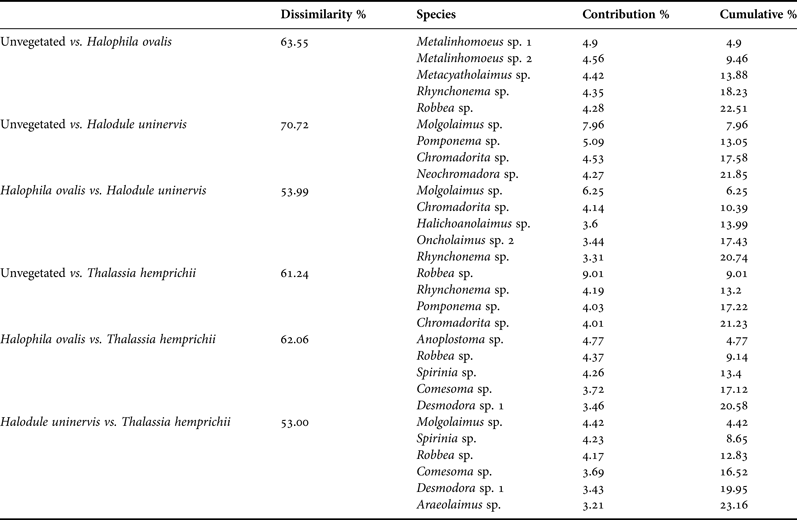
The axes 1 and 2 of the CCA ordination for nematode species suggested four relatively discrete groups (Figure 2B). Samples from T. hemprichii and the unvegetated sediments were clustered respectively, and the H. ovalis and two H. uninervis samples were grouped together. One discrete H. uninervis sample, which contained several rare species (e.g. Actinonema sp. and Desmodorella sp.), was separated from the others. However, the axes 2 and 3 of CCA indicated that the T. hemprichii and H. uninervis samples were mixed, and samples from H. ovalis and the unvegetated sediments were clustered respectively (Figure 2C). In general, the rare species showed relative dominance in the CCA ordination. According to a SIMPER analysis, the indicator species mainly contributed to the sites that characterized the local habitat (e.g. Metalinhomoeus sp. 1 and Metacyatholaimus sp. in H. ovalis, Molgolaimus sp. and Chromadorita sp. in H. uninervis, and Robbea sp. and Spirinia sp. in T. hemprichii; Table 4). However, when all seagrass samples were combined, SIMPER analysis revealed that Robbea sp., Molgolaimus sp., Pomponema sp., Rhynchonema sp. and Neochromadora sp., in this order, accounted for a 20% dissimilarity between the seagrass and unvegetated habitats (average dissimilarity = 65.45).
Dissimilarity results from the SIMPER analysis between habitat types (samples from Halophila ovalis, Halodule uninervis, Thalassia hemprichii and adjacent unvegetated sediments) and nematode species responsible for the estimated differences. SIMPER analysis run with a 20% cut off.

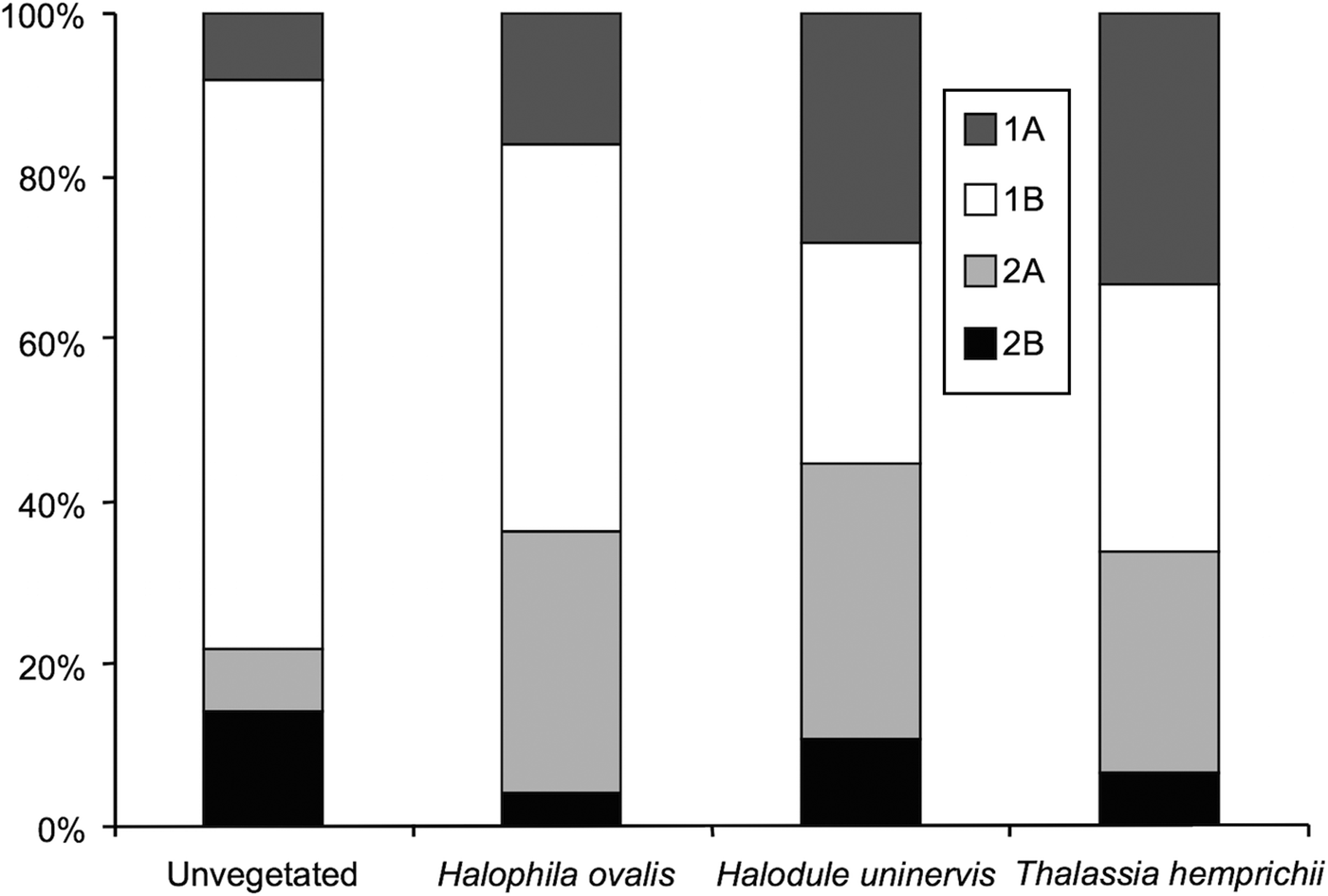
Regarding the trophic type of nematode, the non-selective deposit feeders (1B) obviously dominated and constituted 69.9% in the unvegetated sediments (Figure 3). By contrast, the percentage of non-selective deposit feeders was lower in the seagrass habitats, whereas the percentage of selective deposit feeders (1A) and epistrate feeders (2A) was higher. Excluding the selective deposit feeders of the H. ovalis samples, both trophic types (1A and 2A) accounted for approximately 30% of the nematodes in all seagrass habitats.
Composition of nematode trophic types in seagrass beds (Halophila ovalis, Halodule uninervis and Thalassia hemprichii) and adjacent unvegetated sediments. Trophic types are classified according to Wieser (Reference Wieser1953). 1A, selective deposit feeders; 1B, non-selective deposit feeders; 2A, epistrate feeders; 2B, omnivores/predators.

DISCUSSION
Meiofauna between seagrass beds and unvegetated sediments
A similar pattern in sediment characteristics (water and silt/clay contents) was observed in Thalassia hemprichii and unvegetated sediments, whereas meiofaunal communities underneath various seagrass species resembled each other more than those of unvegetated areas. The characterized filiform root hairs of T. hemprichii are commonly stuck with sediment grains, which may affect the precision of silt/clay measurement. Although the plants and sediments were carefully separated in the laboratory process, the extremely low silt/clay content among samples (<1%) might intensify the possible errors. The crustacean taxa that are predominant in seagrass beds have been addressed in most studies (e.g. Ansari & Parulekar, Reference Ansari and Parulekar1994; De Troch et al., Reference De Troch, Gurdebeke, Fiers and Vincx2001b). However, contrary results have been reported, such as the low abundance of copepods inside the intertidal Zostera muelleri beds in New Zealand (Leduc & Probert, Reference Leduc and Probert2011), and that some crustacean taxa occur more abundantly in unvegetated sediments than in Zostera capricorni beds in Australia (Fonseca et al., Reference Fonseca, Hutchings and Gallucci2011). The effect of seagrass on crustaceans might be significant only in deeper waters, whereas the effects of physical disturbance are obvious in the shallow intertidal zone (De Troch et al., Reference De Troch, Gurdebeke, Fiers and Vincx2001b). Moreover, active invertebrates may temporarily forage in the unvegetated area but remain in close proximity to protective seagrass beds (Orth et al., Reference Orth, Heck and van Montfrans1984).
In this study, the proportion of nematodes was quite low and similar to the records in medium or coarse sands from a tropical African lagoon (Ndaro & Ólafsson, Reference Ndaro and Ólafsson1999). Nematodes tend to distribute to a deeper layer (beneath 5 cm) in sandy habitats (Heip et al., Reference Heip, Vincx and Vranken1985; Steyaert et al., Reference Steyaert, Vanaverbeke, Vanreusel, Barranguet, Lucas and Vincx2003), whereas the cores were sampled merely down to 5 cm in the present study. The abundant turbellarians (approximately 10–30%) may also compete with nematodes for the interstitial niches. The diversity of nematodes was significantly higher in seagrass habitats than in adjacent unvegetated sediments, and several specific taxa were restricted to individual seagrass habitats. Distinctive nematode assemblages from each habitat were also observed in Australian seagrass beds (Fonseca et al., Reference Fonseca, Hutchings and Gallucci2011), whereas macrofaunal communities of unvegetated sediments merely resemble a reduced vegetated community (Van Houte-Howes et al., Reference Van Houte-Howes, Turner and Pilditch2004). The protection from predators that macrophytes provide positively influences the abundance of benthos, whereas the provision of microhabitats and various food resources might increase the diversity of meiofauna through the presence of particular species (Heck & Wetstone, Reference Heck and Wetstone1977; Orth et al., Reference Orth, Heck and van Montfrans1984). Rhynchonema sp., which is characterized by distinctly annulated cuticles, is primarily encountered in adjacent unvegetated sediments. Species with strong ornamented cuticles are dominant in fluid environments or sandy sediments because the cuticular ornamentation may facilitate interstitial locomotion and reduce the influence of water flow on unstable sediments (Heip et al., Reference Heip, Vincx and Vranken1985; Pinto et al., Reference Pinto, Austen, Warwick, Somerfield, Esteves, Castro, Fonseca-Genevois and Santos2013). Members of the family Linhomoeidae, which are characterized by elongated bodies and finely striated cuticles, also show affinities to seagrass beds in Australia (Fonseca et al., Reference Fonseca, Hutchings and Gallucci2011). Nematodes in seagrass habitats commonly adjust to high organic matter input and are tolerant to hypoxic conditions (Gambi et al., Reference Gambi, Bianchelli, Pérez, Invers, Ruiz and Danovaro2009; Fonseca et al., Reference Fonseca, Hutchings and Gallucci2011; Leduc & Probert, Reference Leduc and Probert2011), and the presence of highly heterogeneous food sources provides the trophic niches for various nematodes (Danovaro & Gambi, Reference Danovaro and Gambi2002).
Meiofauna in seagrass patches of various species
Fifteen of 66 nematode species occurred exclusively in a single habitat, exhibiting a distribution pattern similar to the profile of nematode assemblages in a mangrove region in Brazil, where 29% of the genera exist in a single microhabitat (Pinto et al., Reference Pinto, Austen, Warwick, Somerfield, Esteves, Castro, Fonseca-Genevois and Santos2013). However, although T. hemprichii, Halodule uninervis and Halophila ovalis possess varying biomass, which is correlated with their primary production (Duarte et al., Reference Duarte, Merino, Agawin, Uri, Fortes, Gallegos, Marbá and Hemminga1998; Duarte & Chiscano, Reference Duarte and Chiscano1999), the differences in total organic matter content among habitats were not determined in this study. The hydrodynamic disturbance and close distribution of sampling areas probably mitigated the local patchiness. The morphological differences in the root–rhizome systems of various seagrass species are correlated with the flux of oxygen, and the micro-oxygenated zones of macrophyte roots influenced the community structure of sediment meiofauna (Osenga & Coull, Reference Osenga and Coull1983; Duarte et al., Reference Duarte, Merino, Agawin, Uri, Fortes, Gallegos, Marbá and Hemminga1998). However, because of the limitation of the experimental design (i.e. lack of replication of seagrass habitats and only one quadrat per species), the site effect may have masked the seagrass effect, even though the quadrats are close to each other. In addition, according to the CCA ordination of nematode data, the sediment parameters recorded in this study may not completely represent the environmental conditions underneath various seagrass species. The oxygen concentration, redox potential and deeper (beneath 5 cm) core samples with vertical subdividing will elucidate the effect of specific seagrass species.
The dominance of specific nematode taxa in habitats comprising distinct seagrass species has been observed. Metalinhomoeus also dominates other tropical seagrass beds of H. ovalis (Fisher, Reference Fisher2003; Fisher & Sheaves, Reference Fisher and Sheaves2003; Monthum & Aryuthaka, Reference Monthum and Aryuthaka2006), whereas the proportion of nematodes is replaced by the genera of Desmodoridae, such as Molgolaimus, Robbea and Spirinia in meadows of H. uninervis and T. hemprichii. The difference in nematode assemblages between T. hemprichii and the other seagrass species is mainly attributed to the dominance of Robbea sp., Araeolaimus sp., Spirinia sp., Anoplostoma sp. and Comesoma sp. Robbea is also common in other seagrass beds, and Araeolaimus is restricted to T. hemprichii beds, whereas the latter three species are predominant in T. hemprichii and unvegetated sediments. Although the composition of seagrass species is the same, nematodes are more abundant under H. ovalis than under the other two species in Thailand (Monthum & Aryuthaka, Reference Monthum and Aryuthaka2006). However, the local condition should be considered; for example, the aboveground biomass of H. ovalis is extremely high in Tha Len Bay, Thailand (Monthum & Aryuthaka, Reference Monthum and Aryuthaka2006).
Robbea sp., a member of the subfamily Stilbonematinae, also accounts for a high percentage of the nematode species in samples underneath T. hemprichii at Ludao, Taiwan (Liao et al., Reference Liao, Yeh and Mok2015). Several nematodes are adapted to hypoxic conditions under seagrass or other reduced sediments, and these taxa commonly have long and slender bodies, which enable them to move between the oxidized surface and the deep anoxic layer (Gambi et al., Reference Gambi, Bianchelli, Pérez, Invers, Ruiz and Danovaro2009; Gallucci et al., Reference Gallucci, Hutchings, Gribben and Fonseca2012; Tchesunov, Reference Tchesunov2013). Furthermore, the symbiotic bacteria coating the cuticles of Robbea sp. probably enable the nematode hosts to engage in primary production through chemosynthesis (Tchesunov, Reference Tchesunov2013). Catanema, a closely related stilbonematid genus, is predominant in tropical Australian seagrass beds (Fisher, Reference Fisher2003; Fisher & Sheaves, Reference Fisher and Sheaves2003). Eubostrichus sp., another stilbonematid coated with distinct symbiotic bacteria (Tchesunov, Reference Tchesunov2013), is predominant in unvegetated areas but is comparatively rare in seagrass habitats. This profile might be a competitive result between similar species or due to differences in species preference among microhabitats.
Trophic types of nematodes
Recently, a stable isotope study has pointed out that the trophic types of nematodes based on the buccal morphology are far from precise and misleading (Vafeiadou et al., Reference Vafeiadou, Materatski, Adão, De Troch and Moens2014). However, most nematode species have never been examined by stable isotope analysis. Combining the traditional trophic types and taxonomic classification (i.e. family, genus, and species) of nematodes were used to outline the local trophic ecosystem in this studied region.
The percentage of non-selective deposit feeders (1B) was 69.9% at unvegetated sites, whereas that in seagrass beds was approximately 30–40% (Figure 3). This pattern primarily reflects that the highly abundant Rhynchonema sp., which are non-selective deposit feeders, in unvegetated areas is replaced by various species of Chromadoridae and Desmodoridae in seagrass habitats. Chromadoridae is generally predominant in phytal habitats and contributes to the dominance of epistrate feeders (2A) at tropical coasts (Ndaro & Ólafsson, Reference Ndaro and Ólafsson1999; Da Rocha et al., Reference Da Rocha, Venekey, Bezerra and Souza2006). Most studies have reported that epistrate feeders are predominant in seagrass beds, suggesting that seagrass modifies the ambient environment and exerts a direct effect on the trophic groups of nematode assemblages (Hopper & Meyers, Reference Hopper and Meyers1967; Danovaro & Gambi, Reference Danovaro and Gambi2002; Fonseca et al., Reference Fonseca, Hutchings and Gallucci2011). The results obtained using the SIMPER reveal that the typifying species Metalinhomoeus spp. and Metacyatholaimus sp., which are non-selective feeders and epistrate feeders, respectively, can be found among the smaller seagrass species, H. ovalis. Furthermore, the percentage contribution of both epistrate feeders (i.e. Chromadorita sp., Neochromadora sp., Pomponema sp. and Spirinia sp.) and selective deposit feeders (1A) (i.e. Molgolaimus sp. and Robbea sp.) was higher in habitats containing the larger seagrass species, H. uninervis and T. hemprichii. Another Australian seagrass study indicates that the dominance of selective deposit feeders mainly contributes to the abundance of Catanema and Terchellingia (Fisher & Sheaves, Reference Fisher and Sheaves2003). Nevertheless, considering the inaccuracy of the morphological trophic types, further trophic studies based on stable isotope analysis are needed to distinguish the abundant feeders between habitats underneath the large and small seagrass species.
ACKNOWLEDGEMENTS
We thank Shih-Wei Su, Shih-Chia Wu and Jen-chun Hsueh for their assistance in fieldwork. We are grateful to two anonymous reviewers for their constructive suggestions on the manuscript.